 Скачать презентацию BRANCH Operations Management making your strategy work
e703ca870bbd456b54a0691ab305cd06.ppt
- Количество слайдов: 73



BRANCH Operations & Management {making your strategy work} University of Industrial Distribution Indianapolis, Indiana March 12, 2013 Michael E. Workman, Ph. D. mike@mworkman. com
…. . if you don’t have a strategy, you can’t make manage…
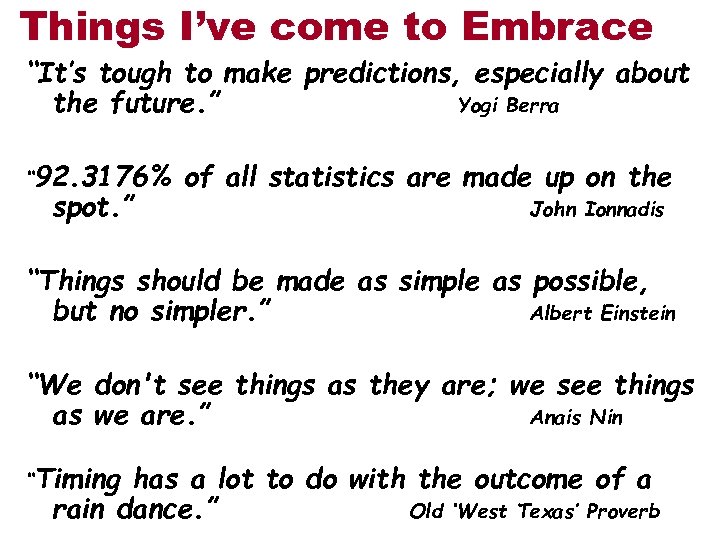
Things I’ve come to Embrace “It’s tough to make predictions, especially about the future. ” Yogi Berra “ 92. 3176% spot. ” of all statistics are made up on the John Ionnadis “Things should be made as simple as possible, but no simpler. ” Albert Einstein “We don't see things as they are; we see things as we are. ” Anais Nin “Timing has a lot to do with the outcome of a rain dance. ” Old ‘West Texas’ Proverb
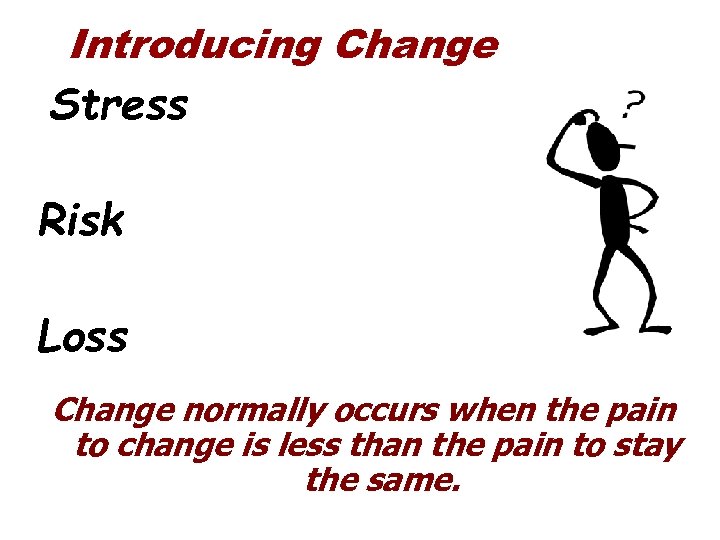
Introducing Change Stress Risk Loss Change normally occurs when the pain to change is less than the pain to stay the same.
Purpose of a Business The purpose of a business is to create a customer. Profit is only a test of management decision making. Profit is required to maintain the customer. A business has two primary functions; everything else is just cost. Innovation & Marketing The world according to Peter Drucker
Predictors of Business Failure Declining Margins Increasing People Costs Increasing Sales Volume All in Concert
Distribution Basics: in any Economy Buy Better Sell at Higher Margins Collect Sooner Pay Later Turn Inventory More Often Increase Operating Efficiencies
Branch Management; Primary Objectives Increase Revenues Define Customer Service Optimize Pricing Decrease our cost to serve Develop new customers / markets Increase gross margins Represent chosen suppliers Provide product & process expertise …. . and then some
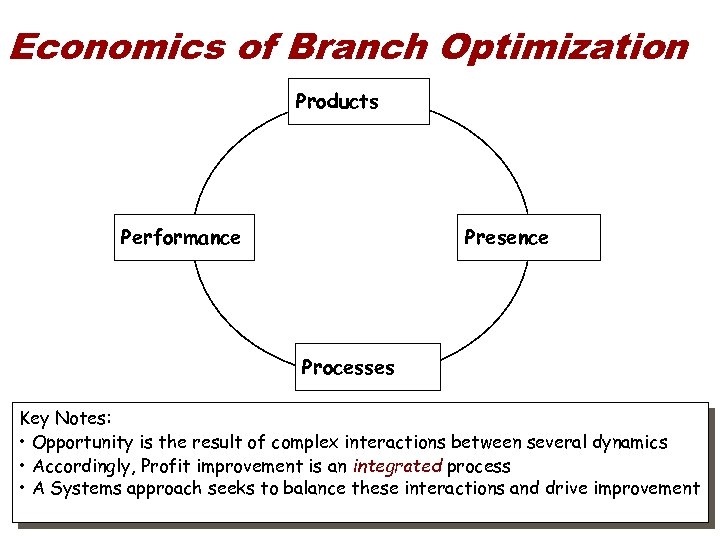
Economics of Branch Optimization Products Performance Presence Processes Key Notes: • Opportunity is the result of complex interactions between several dynamics • Accordingly, Profit improvement is an integrated process • A Systems approach seeks to balance these interactions and drive improvement
How Distributors Compete Three key performance factors by which customers judge distributors. {other than price} Reliability - Does the distributor perform consistently? Timeliness – Is the solution there when the customer needs them? Accuracy - Is it the right product in the right quantity at the right price, correctly billed?
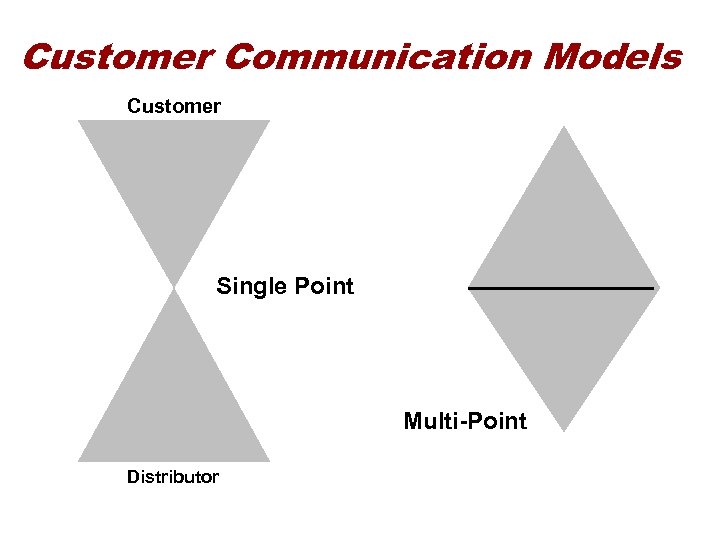
Customer Communication Models Customer Single Point Multi-Point Distributor
Branch Management Paradox Challenges Growth / Profitability Operational Systems / Reaction Assets / Information Speed / Direction Management / Leadership Performance / Efforts Succession / Consistency
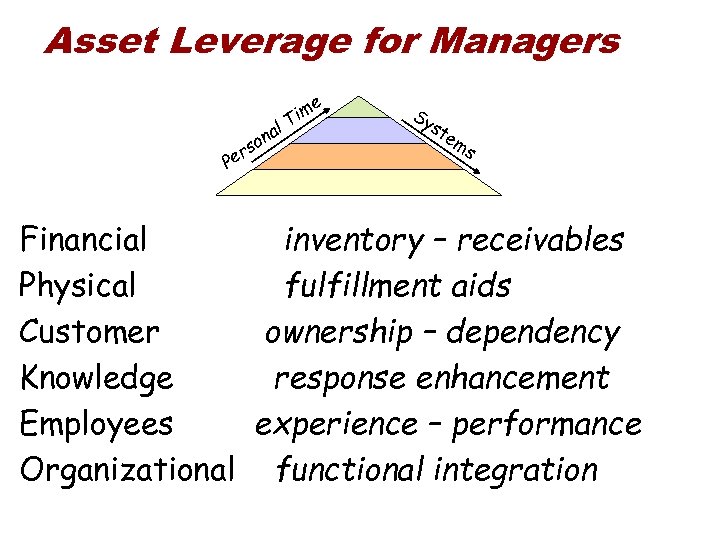
Asset Leverage for Managers l er a on s P e m Ti Sy st e ms Financial inventory – receivables Physical fulfillment aids Customer ownership – dependency Knowledge response enhancement Employees experience – performance Organizational functional integration
13 Predictions for 2013 1. Company branding will increase in importance as communicating product & service offerings becomes more central to growth. Energy must be directed to strategy, technology, and performance players. 2. Progressive distributors will engage marketing techniques unique to their strategies. They'll drive higher, more profitable, sales.
3. Distributor acquisitions will continue, albeit not at the same multiples as last year, as owners seek to cash out for retirement, lack of succession, or recognition that the market will continue to be slow. 4. With distributors offering comparable customer services; demand creation and idea generation become more important.
5. Strategic management of special collaborative efforts and contracts, as well as price optimization, will enable progressive players to grow profits. 6. Top Players will purchase or engage players in peripheral channels to expand their markets. 7. Significant in-roads will be made in formal collaboration efforts with select distributors and manufacturers.
8. Many will react to new laws by hiring more part-timers & part-time industry veterans; avoiding additional costs of medical insurance. 9. Non-traditional selling will become the initiative. New business technologies will improved customer information, enabling service commoditization. 10. Manufacturers will escalate their efforts to segment and stratify distribution, based on performance.
11. Manufacturers will seriously overhaul rebate and "preferred" distributor programs and move to a differentiated model that supports those who perform. 12. Customers are seeking fewer relationships, therefore opportunity will be enhanced by those who offer a broader scope of customized solutions. 13. Local data, converted to usable information will become the most valuable asset distributors bring to the channel.
If people don’t have the mindset that sharing information is good, then it doesn’t matter what technology does.
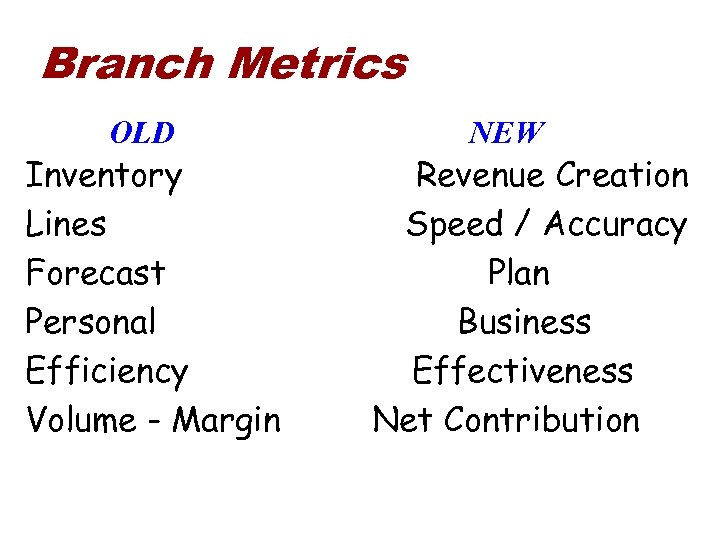
Branch Metrics OLD Inventory Lines Forecast Personal Efficiency Volume - Margin NEW Revenue Creation Speed / Accuracy Plan Business Effectiveness Net Contribution
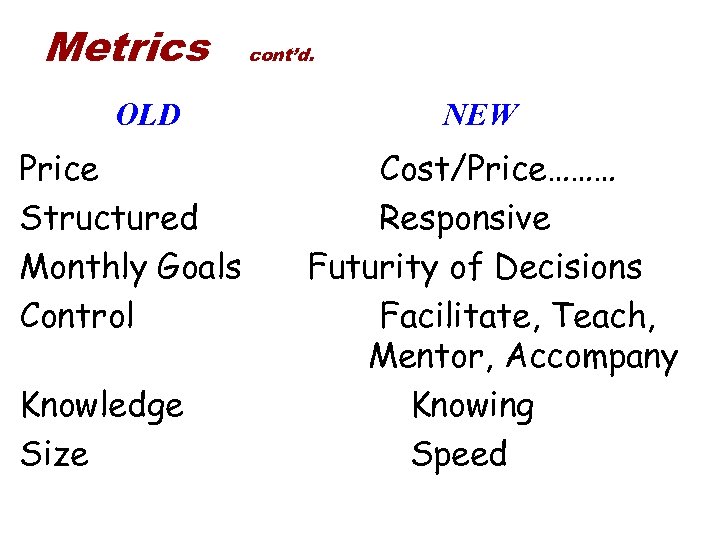
Metrics OLD Price Structured Monthly Goals Control Knowledge Size cont’d. NEW Cost/Price……… Responsive Futurity of Decisions Facilitate, Teach, Mentor, Accompany Knowing Speed
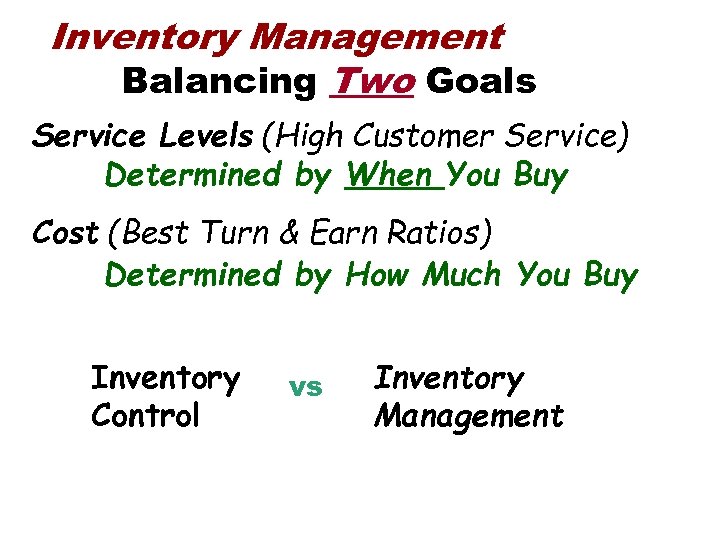
Inventory Management Balancing Two Goals Service Levels (High Customer Service) Determined by When You Buy Cost (Best Turn & Earn Ratios) Determined by How Much You Buy Inventory Control vs Inventory Management
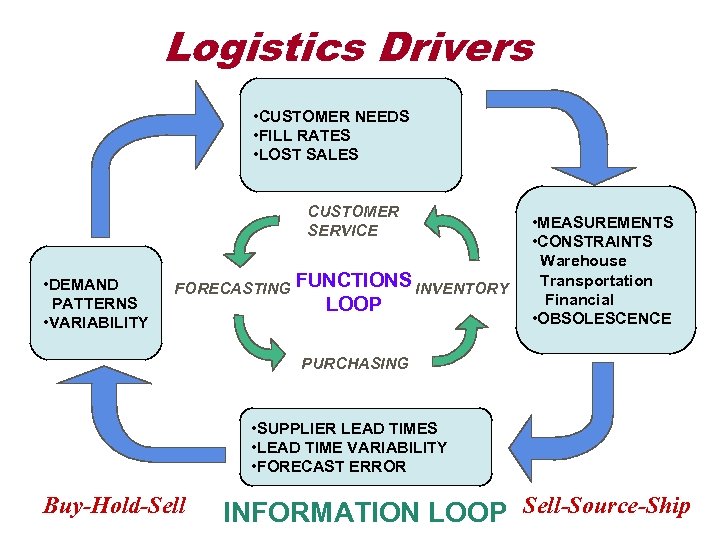
Logistics Drivers • CUSTOMER NEEDS • FILL RATES • LOST SALES CUSTOMER SERVICE • DEMAND PATTERNS • VARIABILITY FORECASTING FUNCTIONS INVENTORY LOOP • MEASUREMENTS • CONSTRAINTS Warehouse Transportation Financial • OBSOLESCENCE PURCHASING • SUPPLIER LEAD TIMES • LEAD TIME VARIABILITY • FORECAST ERROR Buy-Hold-Sell INFORMATION LOOP Sell-Source-Ship
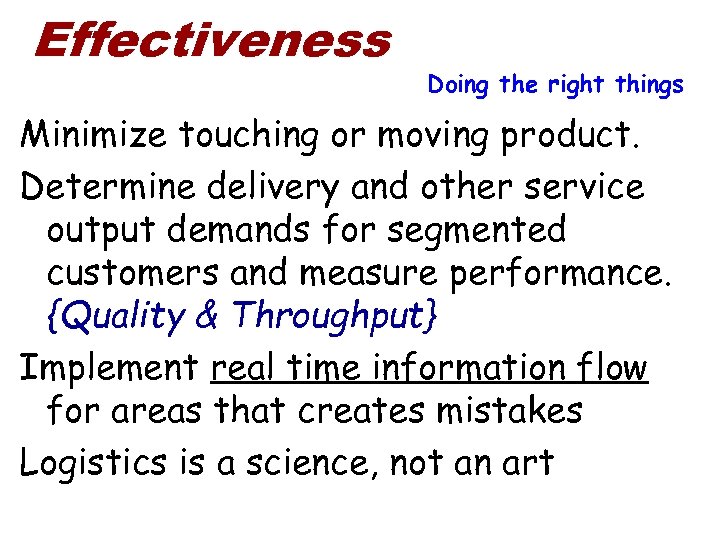
Effectiveness Doing the right things Minimize touching or moving product. Determine delivery and other service output demands for segmented customers and measure performance. {Quality & Throughput} Implement real time information flow for areas that creates mistakes Logistics is a science, not an art
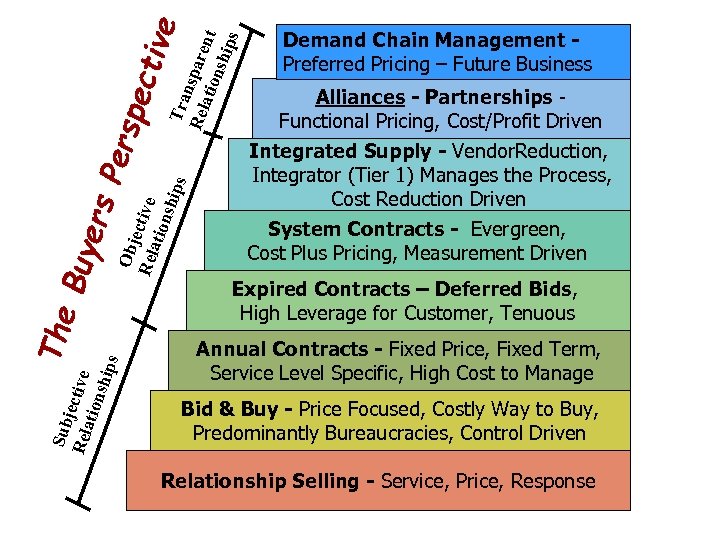
Tra n Rel spare atio n nsh t ips ive Per spe ct Obj e Rel ctive atio nsh ips Buy ers The Sub j Rela ective tion ship s Demand Chain Management Preferred Pricing – Future Business Alliances - Partnerships Functional Pricing, Cost/Profit Driven Integrated Supply - Vendor. Reduction, Integrator (Tier 1) Manages the Process, Cost Reduction Driven System Contracts - Evergreen, Cost Plus Pricing, Measurement Driven Expired Contracts – Deferred Bids, High Leverage for Customer, Tenuous Annual Contracts - Fixed Price, Fixed Term, Service Level Specific, High Cost to Manage Bid & Buy - Price Focused, Costly Way to Buy, Predominantly Bureaucracies, Control Driven Relationship Selling - Service, Price, Response
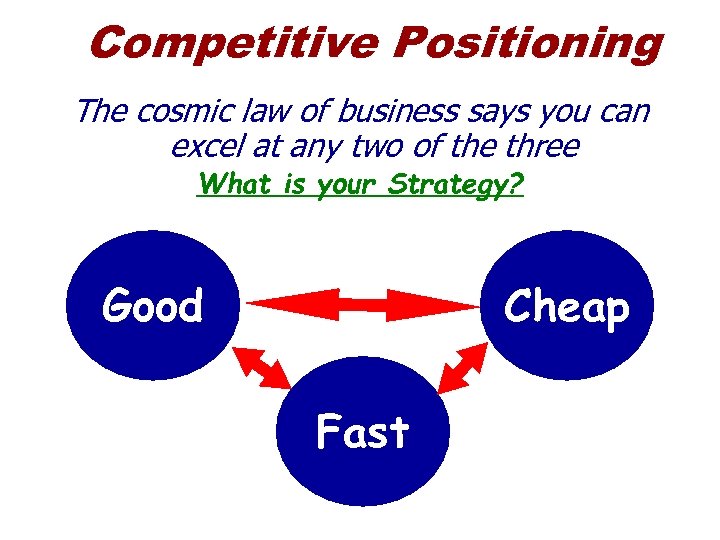
Competitive Positioning The cosmic law of business says you can excel at any two of the three What is your Strategy? Good Cheap Fast
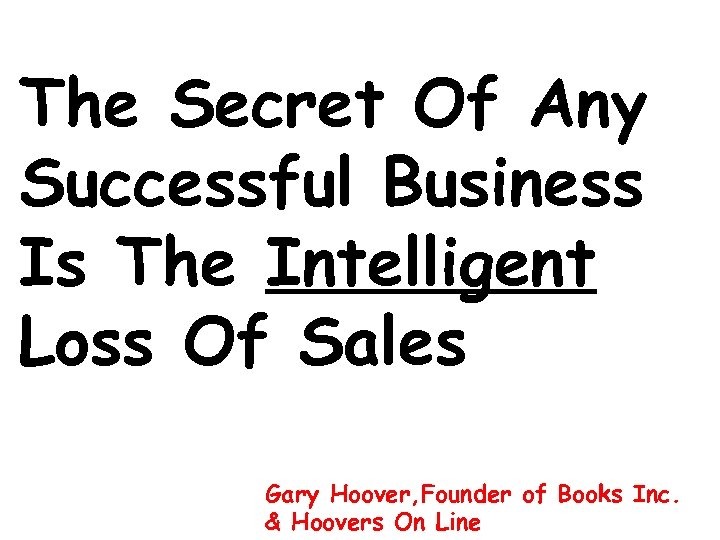
The Secret Of Any Successful Business Is The Intelligent Loss Of Sales Gary Hoover, Founder of Books Inc. & Hoovers On Line
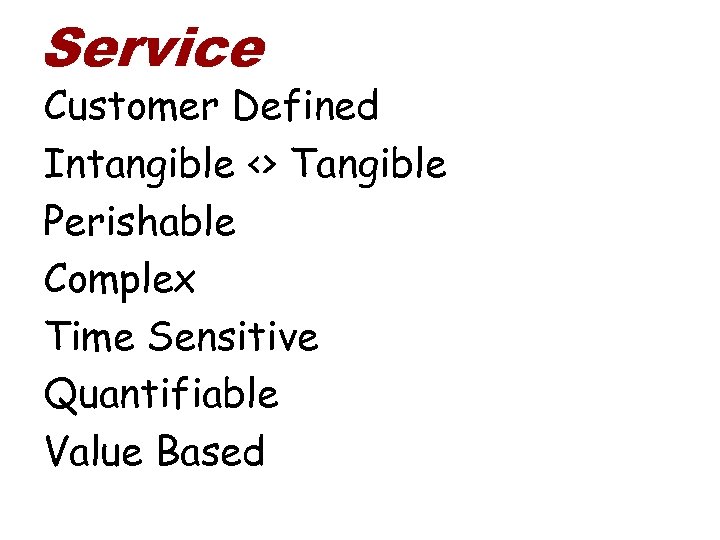
Service Customer Defined Intangible <> Tangible Perishable Complex Time Sensitive Quantifiable Value Based
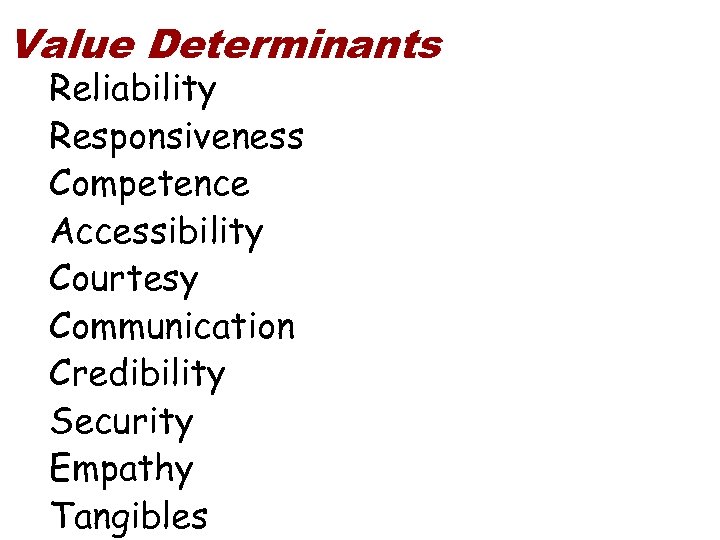
Value Determinants Reliability Responsiveness Competence Accessibility Courtesy Communication Credibility Security Empathy Tangibles
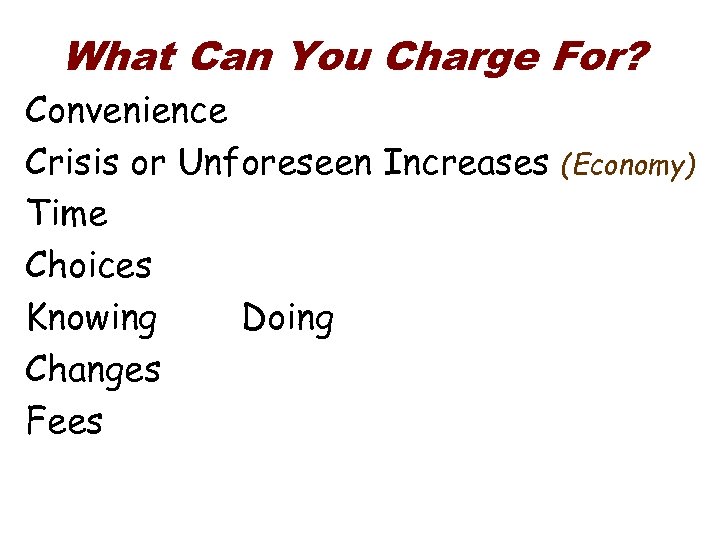
What Can You Charge For? Convenience Crisis or Unforeseen Increases Time Choices Knowing Doing Changes Fees (Economy)
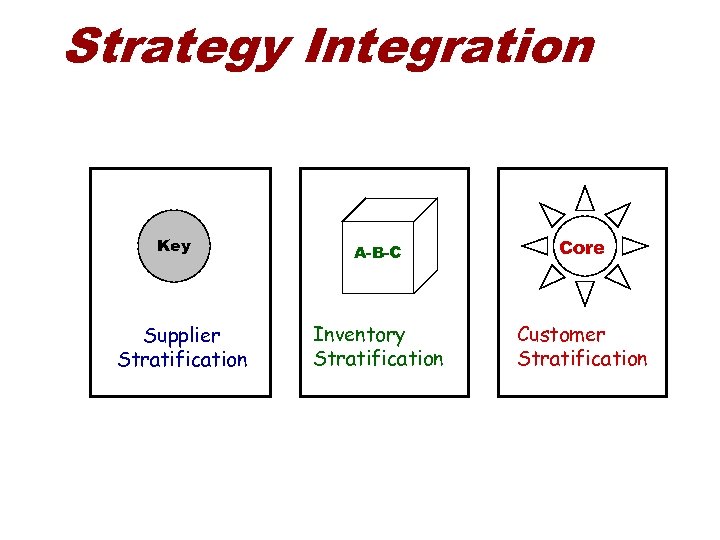
Strategy Integration Key Supplier Stratification A-B-C Core Inventory Stratification Customer Stratification
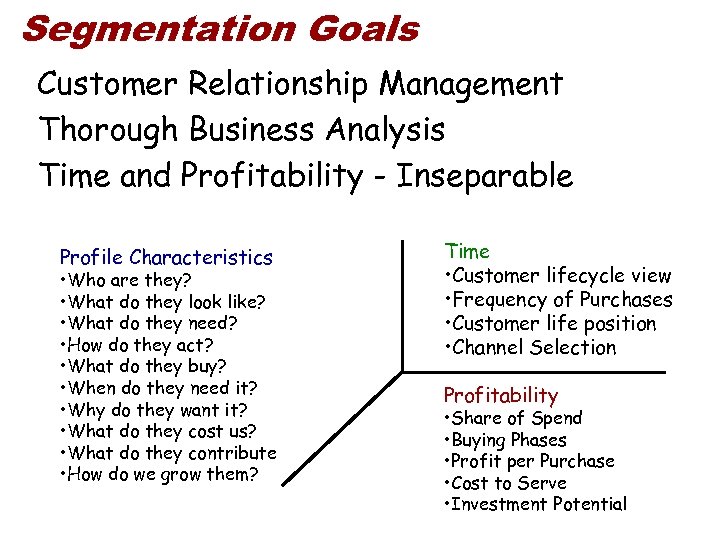
Segmentation Goals Customer Relationship Management Thorough Business Analysis Time and Profitability - Inseparable Profile Characteristics • Who are they? • What do they look like? • What do they need? • How do they act? • What do they buy? • When do they need it? • Why do they want it? • What do they cost us? • What do they contribute • How do we grow them? Time • Customer lifecycle view • Frequency of Purchases • Customer life position • Channel Selection Profitability • Share of Spend • Buying Phases • Profit per Purchase • Cost to Serve • Investment Potential
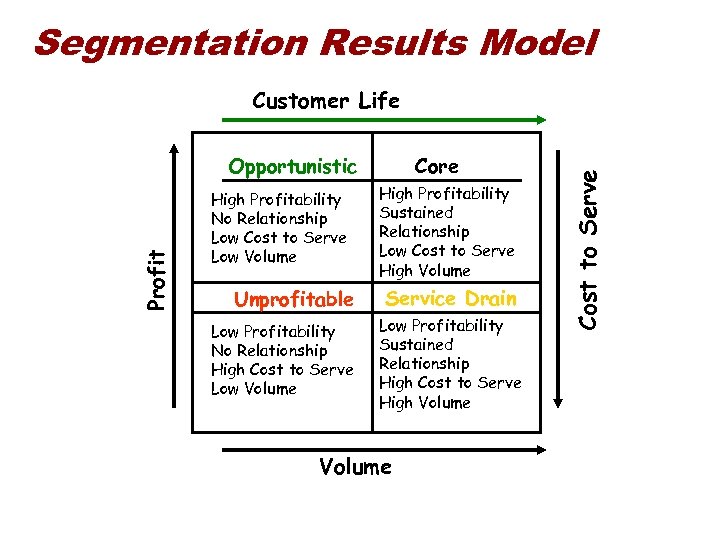
Segmentation Results Model Profit Opportunistic High Profitability No Relationship Low Cost to Serve Low Volume Unprofitable Low Profitability No Relationship High Cost to Serve Low Volume Core High Profitability Sustained Relationship Low Cost to Serve High Volume Service Drain Low Profitability Sustained Relationship High Cost to Serve High Volume Cost to Serve Customer Life
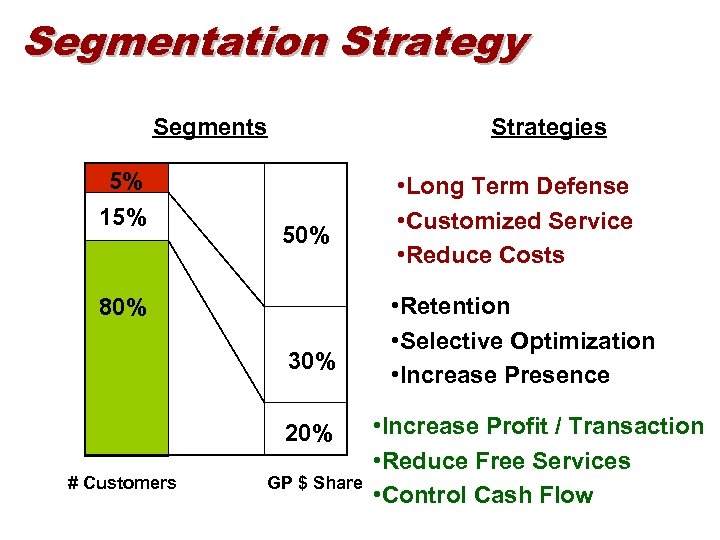
Segmentation Strategy Segments 5% 15% Strategies 50% 80% 30% 20% # Customers GP $ Share • Long Term Defense • Customized Service • Reduce Costs • Retention • Selective Optimization • Increase Presence • Increase Profit / Transaction • Reduce Free Services • Control Cash Flow
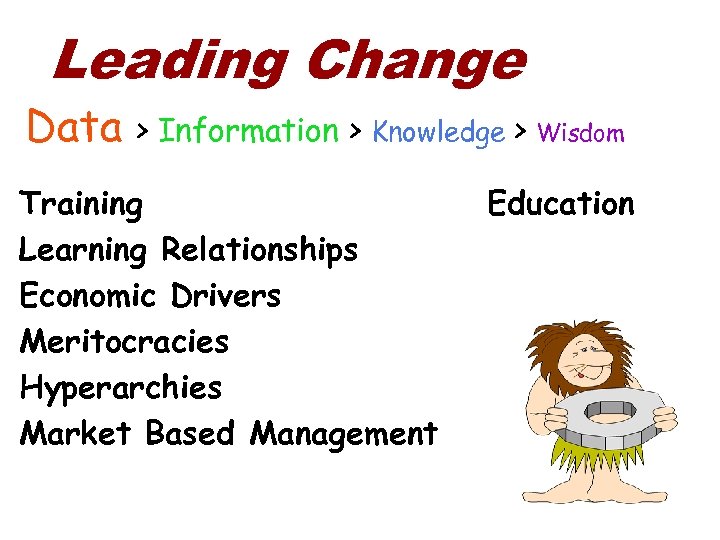
Leading Change Data > Information > Knowledge > Wisdom Training Learning Relationships Economic Drivers Meritocracies Hyperarchies Market Based Management Education
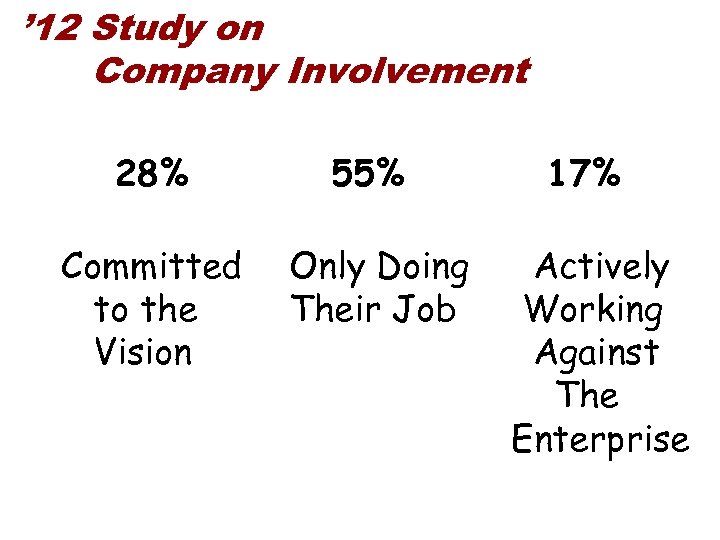
’ 12 Study on Company Involvement 28% Committed to the Vision 55% Only Doing Their Job 17% Actively Working Against The Enterprise
Rules for Collaboration Hyperarchies Individual Pieces Loosely Joined Structurally Invisible Inv Community of Trust (where trust is a currency – reputation is a source of power) Selective Collaboration {value based} Rethink: distribution, customers, suppliers, providers, goals, metrics, rewards Strategic Collaboration; Less About the Strategy, More About the Team
No Plan of War ever survives its first encounter with the enemy Napoleon No Plan of Analysis ever survives its first encounter with the data ORMS Magazine
Performance Enhancement Motivation & Measurement Accountability Ownership Employability Empowerment Knowing Doing Gaps Shared Intent
Personal Observations: Mutual Trust is not between firms, but individuals. It’s earned over time by taking several small hits for a long term relationship It’s lost very quickly, usually by making an expedient short term decision Its’ about Performance not Intent
Integrity Interactions with friends, family, co-workers, customers, suppliers, co-volunteers, groups, organizations, community, country, and the spirits of the dead.
Definitions Webster’s New World Dictionary. 1. the quality or state of being complete; unbroken condition; wholeness; entirety 2. the quality or state of being unimpaired; perfect condition; soundness 3. the quality or state of being of sound moral principle; uprightness, honesty, and sincerity
An object or process has integrity when its Whole and Complete. Any diminution in whole and complete results in diminution in workability. Think of a wheel with missing spokes, it’s not whole. It will become out-of-round, work less well and eventually stop working entirely. Likewise, a system or a channel has integrity when it is whole and complete. Focus on the present, plan for the future.
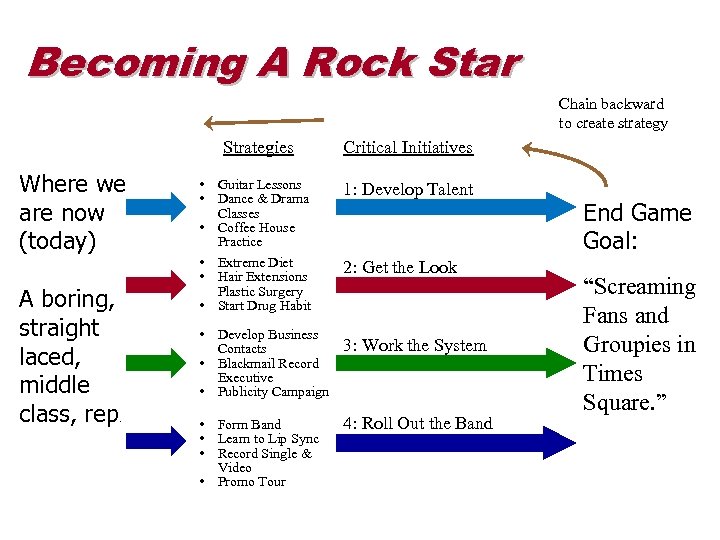
Becoming A Rock Star Chain backward to create strategy Strategies Where we are now (today) A boring, straight laced, middle class, rep. Critical Initiatives • Guitar Lessons • Dance & Drama Classes • Coffee House Practice • Extreme Diet • Hair Extensions Plastic Surgery • Start Drug Habit 1: Develop Talent • Develop Business Contacts • Blackmail Record Executive • Publicity Campaign • Form Band • Learn to Lip Sync • Record Single & Video • Promo Tour 2: Get the Look 3: Work the System 4: Roll Out the Band End Game Goal: “Screaming Fans and Groupies in Times Square. ”
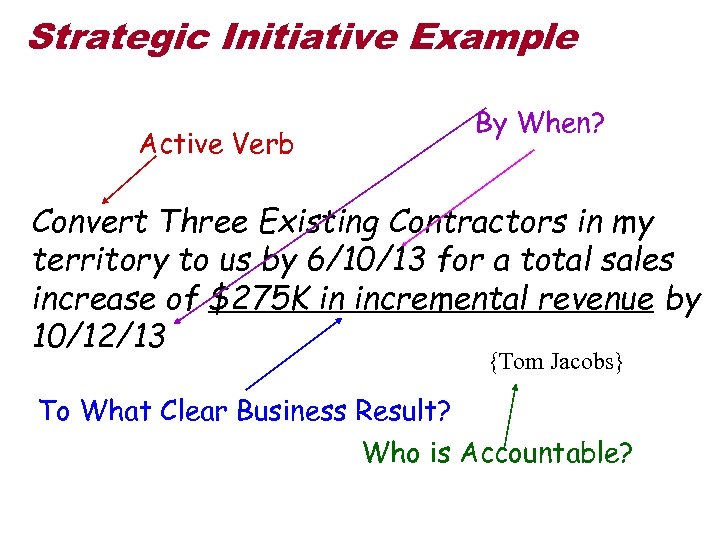
Strategic Initiative Example Active Verb By When? Convert Three Existing Contractors in my territory to us by 6/10/13 for a total sales increase of $275 K in incremental revenue by 10/12/13 {Tom Jacobs} To What Clear Business Result? Who is Accountable?
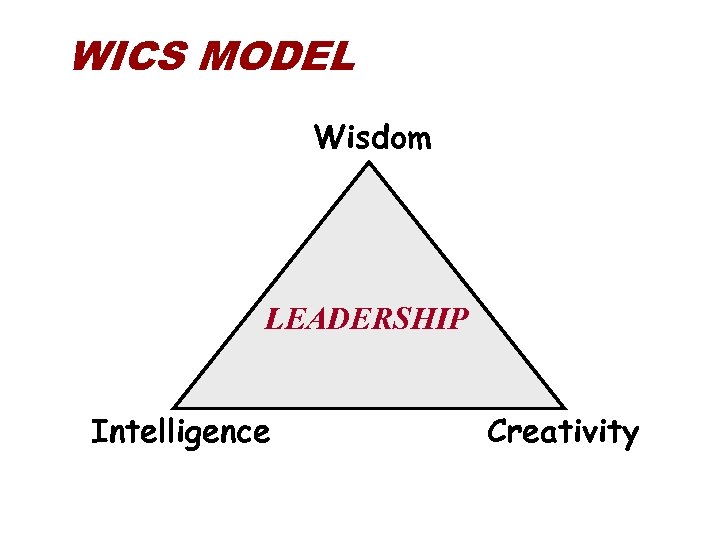
WICS MODEL Wisdom LEADERSHIP Intelligence Creativity
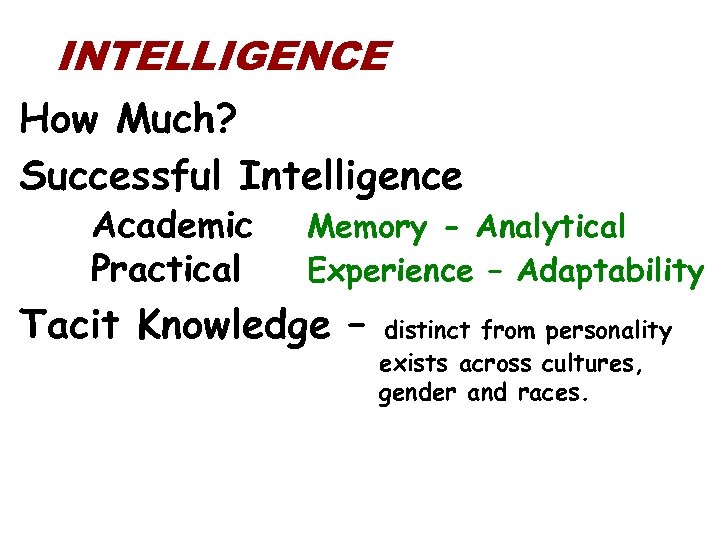
INTELLIGENCE How Much? Successful Intelligence Academic Practical Memory - Analytical Experience – Adaptability Tacit Knowledge – distinct from personality exists across cultures, gender and races.
There is a mute who wants to buy a toothbrush. By imitating the action of brushing one's teeth, he successfully expresses himself to the shopkeeper and the purchase is made. Now, if there is a blind man who wishes to buy a pair of sunglasses in the same shop, how should he express himself?
He opens his mouth and says, "I would like to buy a pair of sunglasses. "
CREATIVITY Skill in Generating ideas that are; relatively novel, high in quality, appropriate Doing Something NEW or Doing Something OLD in a NEW WAY People DECIDE to be Creative Not related to age, gender, education, or socioeconomic status
Creativity is correlated with the ability to withstand the lack of structure, the lack of future, the lack of predictability, of control; the tolerance for ambiguity, for planlessness. Abraham Maslow
WISDOM Not AGE but CAPACITY Choices Life, business, current Based on experience, pragmatism, understanding, knowing…… CHARACTERISTICS Reasoning Ability, Sagacity, Learning, Judgment, Use of Information, Perspicacity Balance – interests – mine - ours
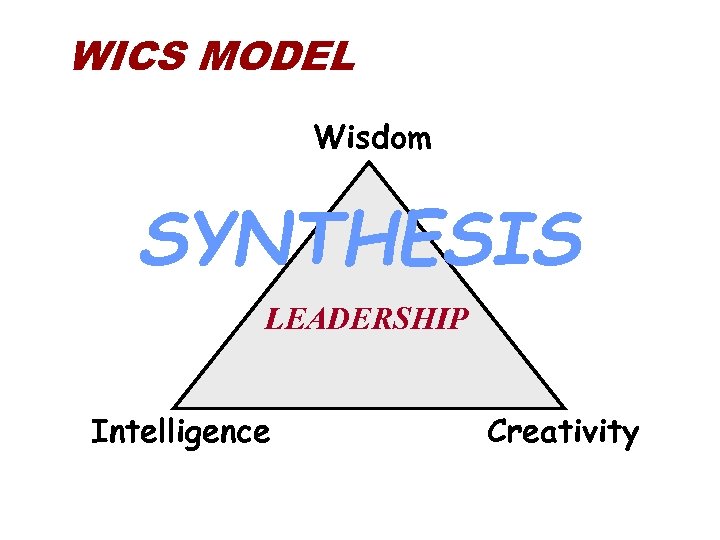
WICS MODEL Wisdom SYNTHESIS LEADERSHIP Intelligence Creativity
The Role of LEADERSHIP The first task of a business leader is to take the past out of the future and put it back in the past. The past has nothing to do with the present. Who and where we are in the present is a given. The second task of a leader is to enable people to articulate a future that calls them to be alive and productive in the present.
TEAMS: Some Observations The Best are Self-Selecting Life Expectancy is Short Performance Outweighs Efforts Leadership NOT Management Purpose Drives Results Metrics Fuel the Process Easy to Say …. . Hard to Do
Obstacles to Strategy Execution Inability to Manage Change Poor or Vague Strategy Not Having a Model for Guidance Poor Information Sharing Strategy Conflicts with Existing Power Structure Lack of Leadership
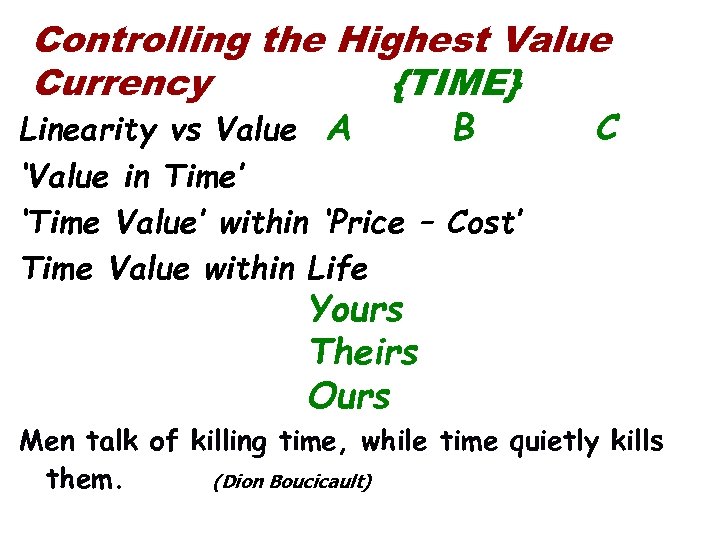
Controlling the Highest Value Currency {TIME} Linearity vs Value A B ‘Value in Time’ ‘Time Value’ within ‘Price – Cost’ Time Value within Life C Yours Theirs Ours Men talk of killing time, while time quietly kills them. (Dion Boucicault)
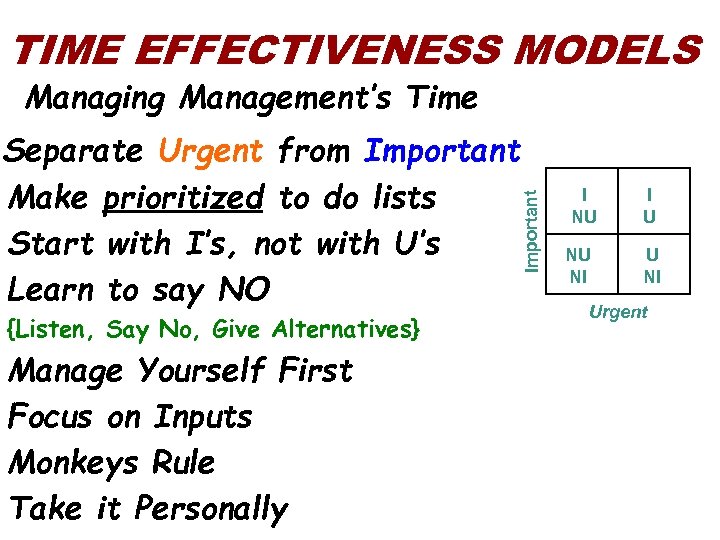
TIME EFFECTIVENESS MODELS Separate Urgent from Important Make prioritized to do lists Start with I’s, not with U’s Learn to say NO {Listen, Say No, Give Alternatives} Manage Yourself First Focus on Inputs Monkeys Rule Take it Personally Important Managing Management’s Time I NU NU NI I U U NI Urgent
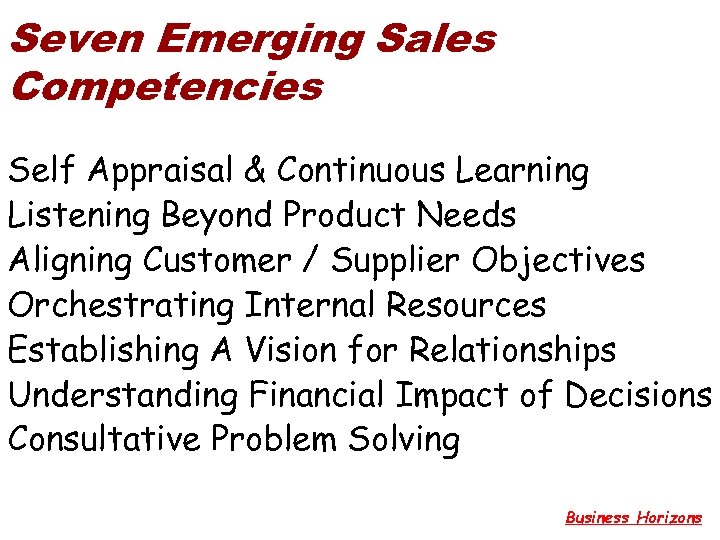
Seven Emerging Sales Competencies Self Appraisal & Continuous Learning Listening Beyond Product Needs Aligning Customer / Supplier Objectives Orchestrating Internal Resources Establishing A Vision for Relationships Understanding Financial Impact of Decisions Consultative Problem Solving Business Horizons
COMPENSATION BASICS TIME AND VALUE INFLUENCE AND VALUE MOTIVATION –WHAT IS IT? WHAT WORKS? DURATION OF COMPENSATION PLAN EFFECTIVENESS INCENTIVES MATTER
Recent Comp Study Findings There is absolutely no relationship, in any dimension, with respect to sales incentive plan structure and gain in market share There is a very strong relationship between share gainers and the alignment of their incentive structures with corporate and sales objectives There were clear differences between share gainers and share losers with respect to how incentive structures were developed Share gainers had real sales management processes in place
Excellent Salespeople: 1. OFF THE CHARTS Hard Working 2. OFF THE CHARTS Competitive 3. Technically Competent 4. Very Relational and Bond Forming 5. 24/7 Available and Responsive 6. Coin Operated 7. Data Driven 8. Technologically Current 9. Methodical and Organized with Great Writing Skills 10. Highly Accountable 11. Never Forgets Who Signs the Checks 12. Complete Integrity
Performance Appraisal The purpose is to maintain good performance or improve performance. Good appraisal processes are valued by all employees. Avoids “Gotcha Management. ” Answers “How am I doing, coach? ” Greatest Limitation is wimpy managers. It ain’t a human resources “touchy feely” thing!!
The race is not always to the swift, nor the battle to the strong, but that’s the way to bet. (Damon Runyan)
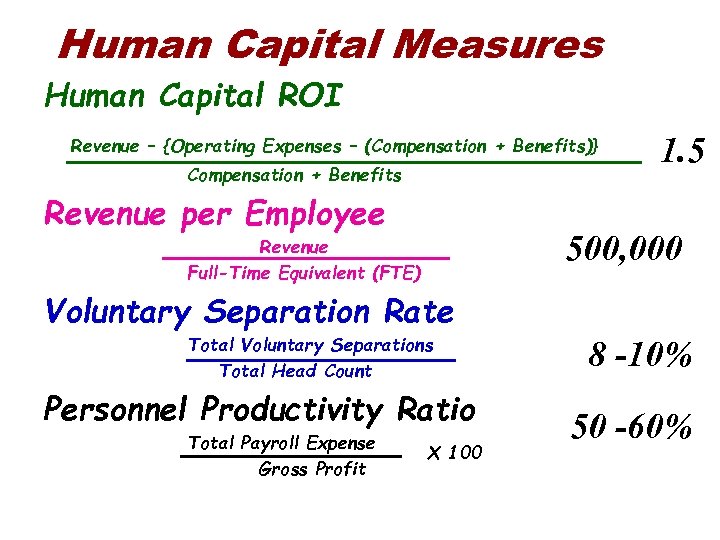
Human Capital Measures Human Capital ROI Revenue – {Operating Expenses – (Compensation + Benefits)} Compensation + Benefits Revenue per Employee 1. 5 500, 000 Revenue Full-Time Equivalent (FTE) Voluntary Separation Rate Total Voluntary Separations Total Head Count Personnel Productivity Ratio Total Payroll Expense Gross Profit X 100 8 -10% 50 -60%
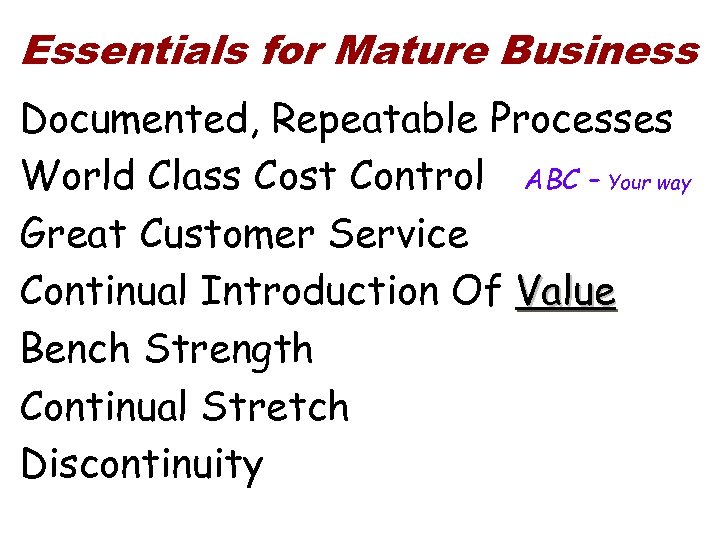
Essentials for Mature Business Documented, Repeatable Processes World Class Cost Control ABC – Your way Great Customer Service Continual Introduction Of Value Bench Strength Continual Stretch Discontinuity
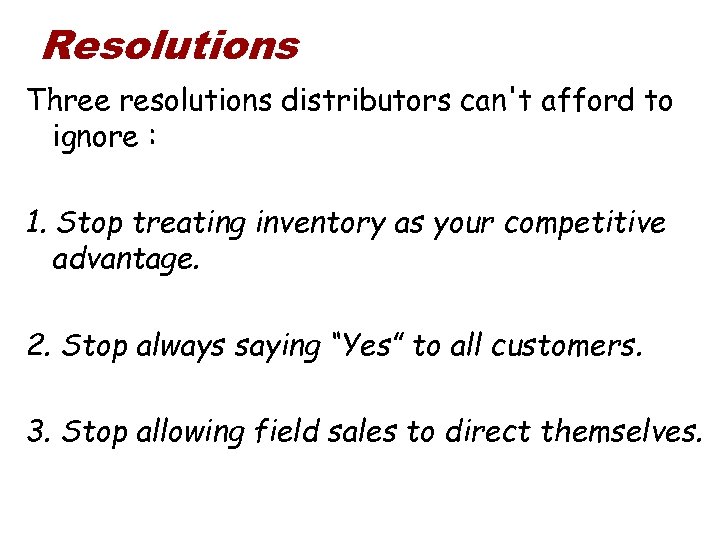
Resolutions Three resolutions distributors can't afford to ignore : 1. Stop treating inventory as your competitive advantage. 2. Stop always saying “Yes” to all customers. 3. Stop allowing field sales to direct themselves.
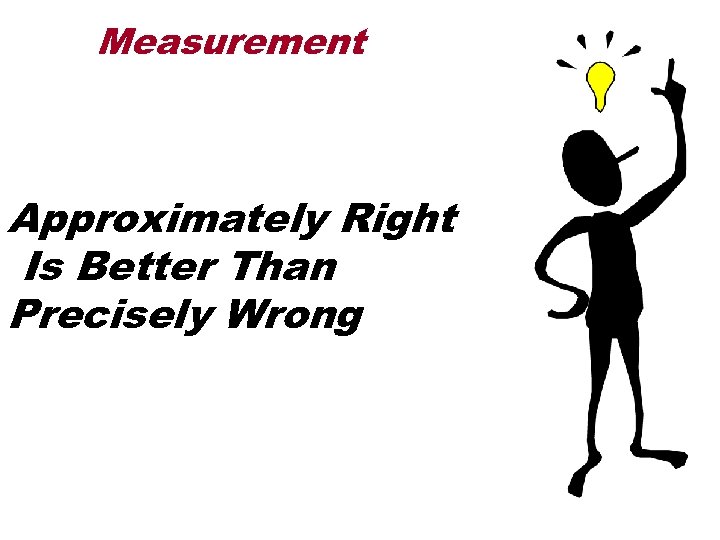
Measurement Approximately Right Is Better Than Precisely Wrong
Biggest Business Blunders Taking your eye off your business economics Overextension {overpromising} Lack of Follow-Through Selling by the hour instead of the opportunity Giving real value away Reaction without information Ignoring the way customers buy Not understanding ‘systems’ Not understanding the power of the question Tolerating incompetence
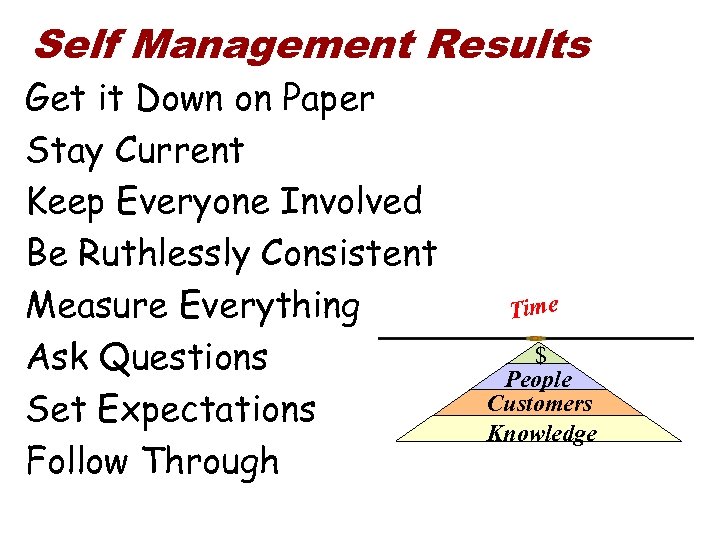
Self Management Results Get it Down on Paper Stay Current Keep Everyone Involved Be Ruthlessly Consistent Measure Everything Ask Questions Set Expectations Follow Through Time $ People Customers Knowledge
Key Messages Play your own game. (But have a game plan) Don’t carry your dead, just your wounded. (Understand Employability) Don’t confuse the needs of the owners with the needs of the business. Focus on Performance and Opportunity Use technology only as an enhancer {How} Don’t let the accountants set your strategy.
“How you get there is where you’ll arrive. ” Mad Hatter in Alice in Wonderland

THANK YOU!!!
Скачать презентацию BRANCH Operations Management making your strategy work
e703ca870bbd456b54a0691ab305cd06.ppt