 Скачать презентацию Brain Stimulation Therapies for Treatment Resistant Depression John
110b73f5ffd878ed80f387f768cd6728.ppt
- Количество слайдов: 64



Brain Stimulation Therapies for Treatment Resistant Depression John P. O’Reardon, MD Associate Professor, Department of Psychiatry Director, TMS Laboratory and Treatment Resistant Depression Clinic University of Pennsylvania
Disclosures Consultant: None Full-time Employee: None Grant/Research Support: Bristol Myers Squibb, Cyberonics, Neuronetics, Pfizer Speakers' Bureau/ Lecture Honoraria: Bristol Myers Squibb, Lilly Pharmaceuticals Major Stockholder: None Other Financial/ Material Interest: None
Pre-Lecture Exam Question 1 Magnetic Seizure Therapy (MST) differs from ECT in that: a. the goal is not to induce a therapeutic seizure b. the use of focused stimulation to produce a seizure c. general anesthesia is not required d. daily sessions of MST are needed to produce a therapeutic effect e. it has a more benign profile in terms of cognitive adverse effects
Question 2 The most common side effect reports with VNS is: a. weight gain b. sexual dysfunction c. cognitive impairment d. hoarseness e. chest pain
Question 3 Deep brain stimulation is currently FDA approved for the treatment of: a. auditory hallucinations in schizophrenia b. chronic neuropathic pain c. obsessive compulsive disorder d. parkinson’s Disease e. intractable migraine
Question 4 Transcranial Magnetic Stimulation (TMS) differs from Magnetic Resonance Imaging (MRI) technology in that: a. the magnetic fields produced are much weaker in intensity b. the rate of change of the magnetic field is higher with an MRI versus TMS c. MRI technology activates neurons whereas TMS does not d. scalp discomfort is common with TMS but not with an MRI
Question 5 Which of the following statements about ECT is not true? a. ECT appears to be particularly efficacious in psychotic depression b. ECT is not effective in the treatment of mania c. ECT is effective in the treatment of bipolar depression d. ECT is associate with retrograde memory impairments e. ECT is effective in the treatment of pharmacotherapy-resistant major depression
Educational Goals Describe the range of brain stimulation technologies (TMS, VNS, DBS, & DCS) being currently investigated in psychiatry for possible therapeutic application n Examine current evidence for application of these devices in a number of clinical disorders n Understand the comparative safety profile and adverse events associated with these device technologies for brain stimulation n
Overview n Neurotherapeutics - Definitions n Electroconvulsive Therapy (ECT) n Transcranial Magnetic Stimulation (TMS) n Magnetic Seizure Therapy (MST) n Vagus Nerve Stimulation (VNS) n Deep Brain Stimulation (DBS)
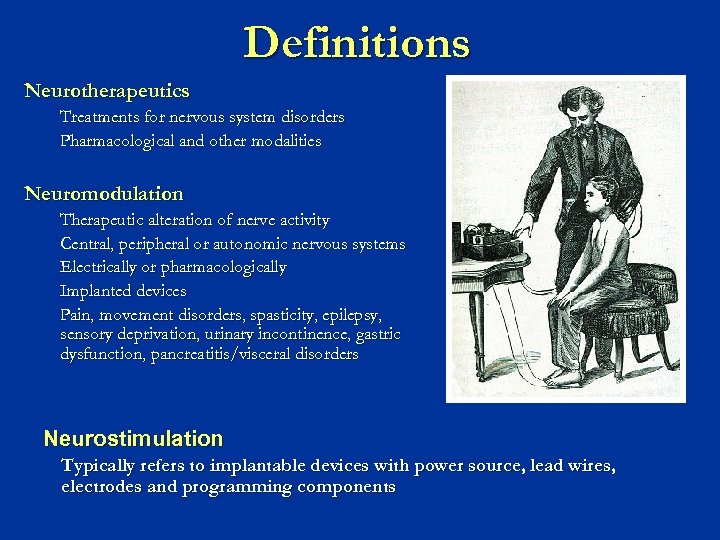
Definitions Neurotherapeutics Treatments for nervous system disorders Pharmacological and other modalities Neuromodulation Therapeutic alteration of nerve activity Central, peripheral or autonomic nervous systems Electrically or pharmacologically Implanted devices Pain, movement disorders, spasticity, epilepsy, sensory deprivation, urinary incontinence, gastric dysfunction, pancreatitis/visceral disorders Neurostimulation Typically refers to implantable devices with power source, lead wires, electrodes and programming components
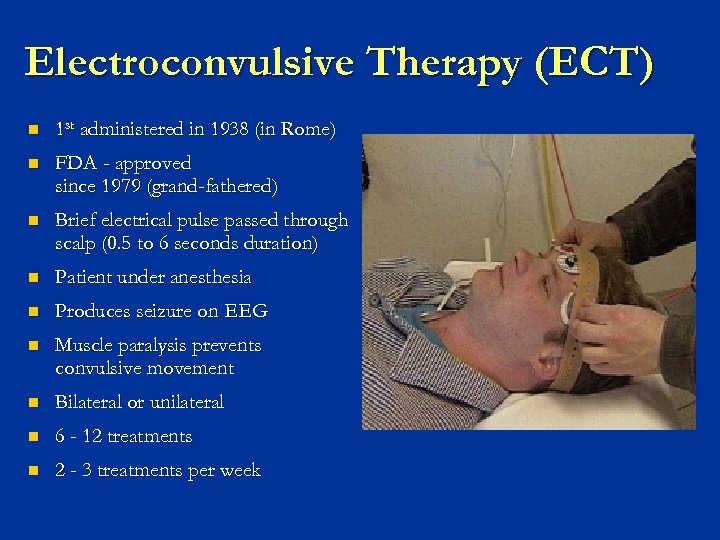
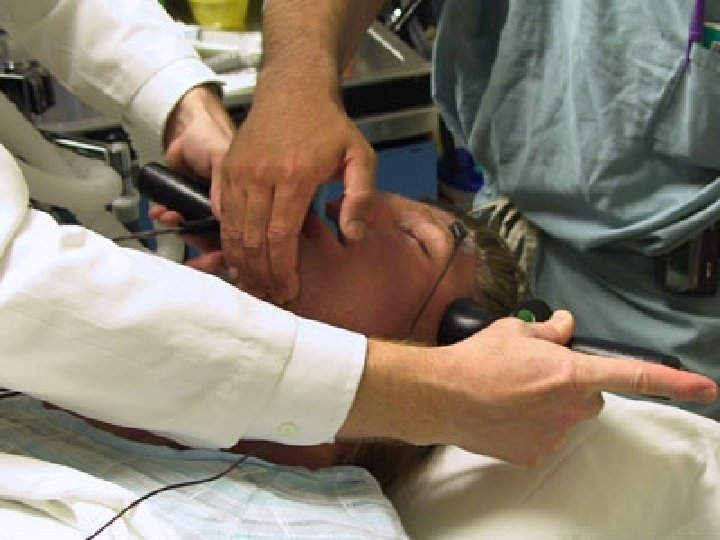
Electroconvulsive Therapy (ECT) n 1 st administered in 1938 (in Rome) n FDA - approved since 1979 (grand-fathered) n Brief electrical pulse passed through scalp (0. 5 to 6 seconds duration) n Patient under anesthesia n Produces seizure on EEG n Muscle paralysis prevents convulsive movement n Bilateral or unilateral n 6 - 12 treatments n 2 - 3 treatments per week
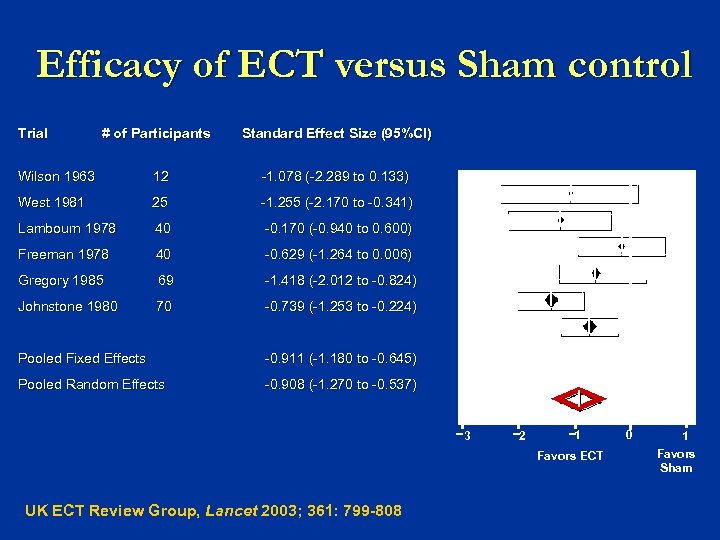
Efficacy of ECT versus Sham control Trial # of Participants Standard Effect Size (95%CI) Wilson 1963 12 -1. 078 (-2. 289 to 0. 133) West 1981 25 -1. 255 (-2. 170 to -0. 341) Lambourn 1978 40 -0. 170 (-0. 940 to 0. 600) Freeman 1978 40 -0. 629 (-1. 264 to 0. 006) Gregory 1985 69 -1. 418 (-2. 012 to -0. 824) Johnstone 1980 70 -0. 739 (-1. 253 to -0. 224) Pooled Fixed Effects -0. 911 (-1. 180 to -0. 645) Pooled Random Effects -0. 908 (-1. 270 to -0. 537) 3 2 1 Favors ECT UK ECT Review Group, Lancet 2003; 361: 799 -808 0 1 Favors Sham
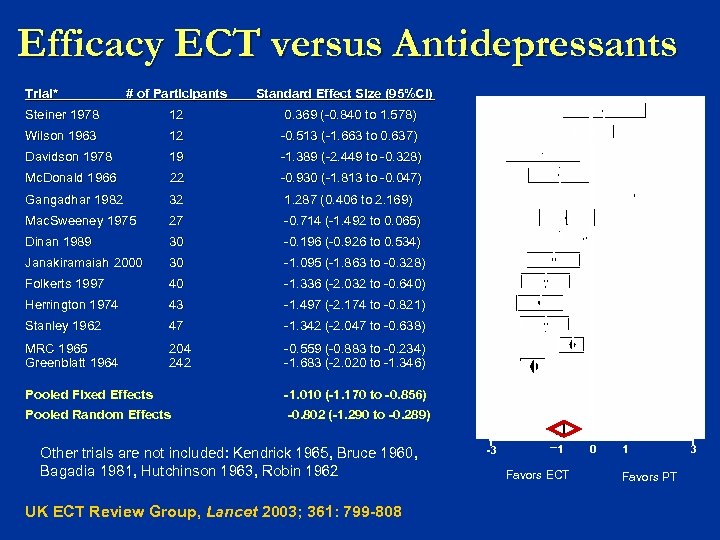
Efficacy ECT versus Antidepressants Trial* # of Participants Standard Effect Size (95%CI) Steiner 1978 12 0. 369 (-0. 840 to 1. 578) Wilson 1963 12 -0. 513 (-1. 663 to 0. 637) Davidson 1978 19 -1. 389 (-2. 449 to -0. 328) Mc. Donald 1966 22 -0. 930 (-1. 813 to -0. 047) Gangadhar 1982 32 1. 287 (0. 406 to 2. 169) Mac. Sweeney 1975 27 -0. 714 (-1. 492 to 0. 065) Dinan 1989 30 -0. 196 (-0. 926 to 0. 534) Janakiramaiah 2000 30 -1. 095 (-1. 863 to -0. 328) Folkerts 1997 40 -1. 336 (-2. 032 to -0. 640) Herrington 1974 43 -1. 497 (-2. 174 to -0. 821) Stanley 1962 47 -1. 342 (-2. 047 to -0. 638) MRC 1965 Greenblatt 1964 204 242 -0. 559 (-0. 883 to -0. 234) -1. 683 (-2. 020 to -1. 346) Pooled Fixed Effects -1. 010 (-1. 170 to -0. 856) Pooled Random Effects -0. 802 (-1. 290 to -0. 289) Other trials are not included: Kendrick 1965, Bruce 1960, Bagadia 1981, Hutchinson 1963, Robin 1962 UK ECT Review Group, Lancet 2003; 361: 799 -808 -3 1 Favors ECT 0 1 Favors PT 3
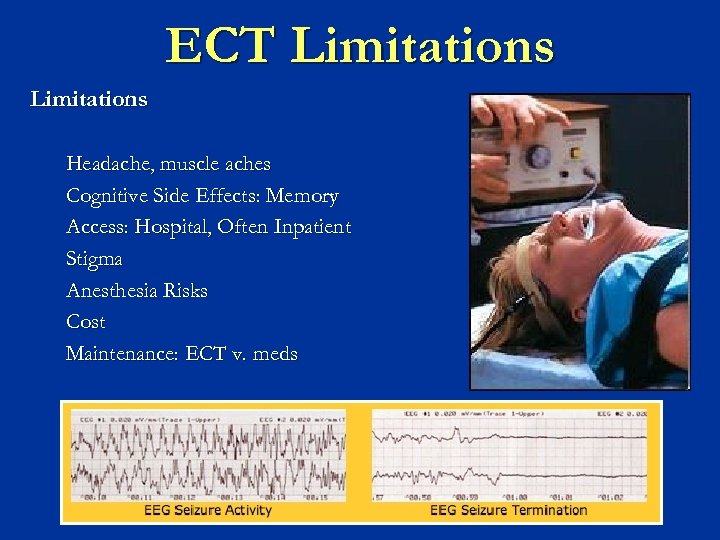
ECT Limitations Headache, muscle aches Cognitive Side Effects: Memory Access: Hospital, Often Inpatient Stigma Anesthesia Risks Cost Maintenance: ECT v. meds
Role of ECT in st 21 century n ECT remains a gold standard treatment for severe depression and has yet to be superseded by medication or by any other brain stimulation treatment n In recent multicenter trials remission rates with ECT are about 75% n This is 3 -4 fold superior to antidepressants
Clinical indications for ECT n Unipolar and Bipolar Depression n Catatonia (due to schizophrenia, mood disorders, or medical disorders) n Mania non-responsive to medication n Occasionally - schizoaffective disorder, NMS, PD, severe depression in pregnancy
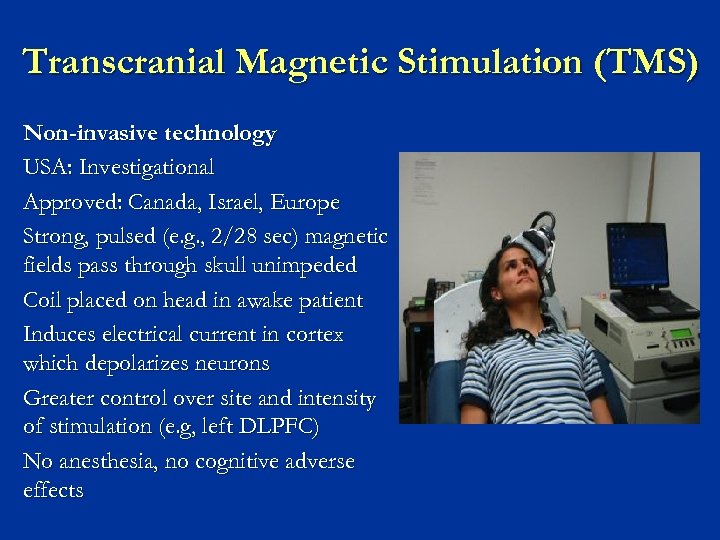
Transcranial Magnetic Stimulation (TMS) Non-invasive technology USA: Investigational Approved: Canada, Israel, Europe Strong, pulsed (e. g. , 2/28 sec) magnetic fields pass through skull unimpeded Coil placed on head in awake patient Induces electrical current in cortex which depolarizes neurons Greater control over site and intensity of stimulation (e. g, left DLPFC) No anesthesia, no cognitive adverse effects This information concerns a use that has not been approved by the U. S. Food and Drug Administration
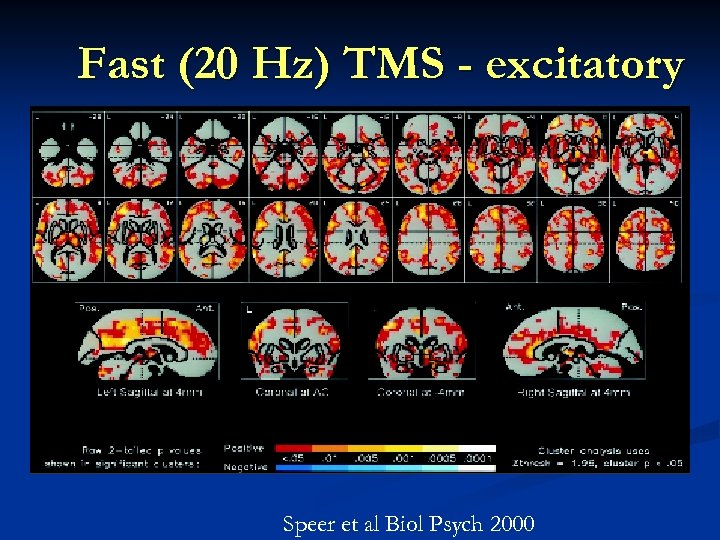
Fast (20 Hz) TMS - excitatory Speer et al Biol Psych 2000
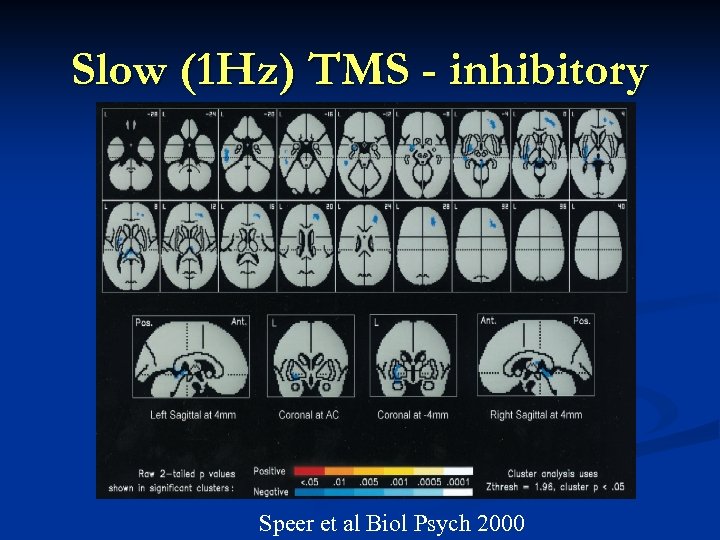
Slow (1 Hz) TMS - inhibitory Speer et al Biol Psych 2000
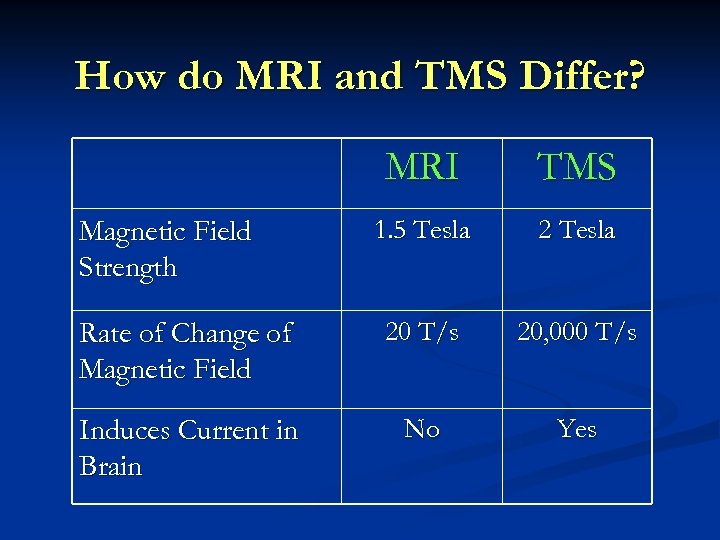
How do MRI and TMS Differ? MRI TMS 1. 5 Tesla 2 Tesla Rate of Change of Magnetic Field 20 T/s 20, 000 T/s Induces Current in Brain No Yes Magnetic Field Strength
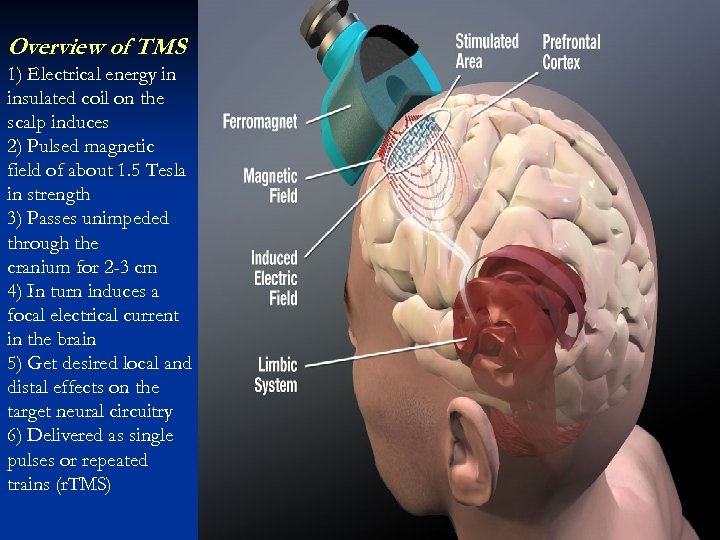
Overview of TMS 1) Electrical energy in insulated coil on the scalp induces 2) Pulsed magnetic field of about 1. 5 Tesla in strength 3) Passes unimpeded through the cranium for 2 -3 cm 4) In turn induces a focal electrical current in the brain 5) Get desired local and distal effects on the target neural circuitry 6) Delivered as single pulses or repeated trains (r. TMS)
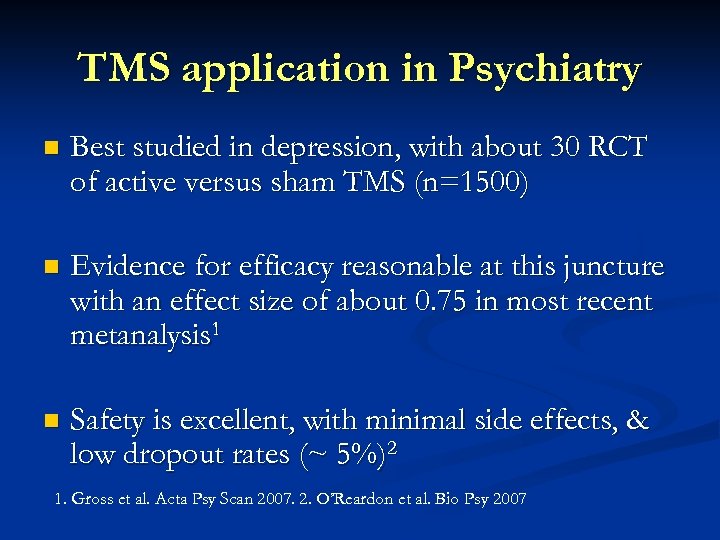
TMS application in Psychiatry n Best studied in depression, with about 30 RCT of active versus sham TMS (n=1500) n Evidence for efficacy reasonable at this juncture with an effect size of about 0. 75 in most recent metanalysis 1 n Safety is excellent, with minimal side effects, & low dropout rates (~ 5%)2 1. Gross et al. Acta Psy Scan 2007. 2. O’Reardon et al. Bio Psy 2007
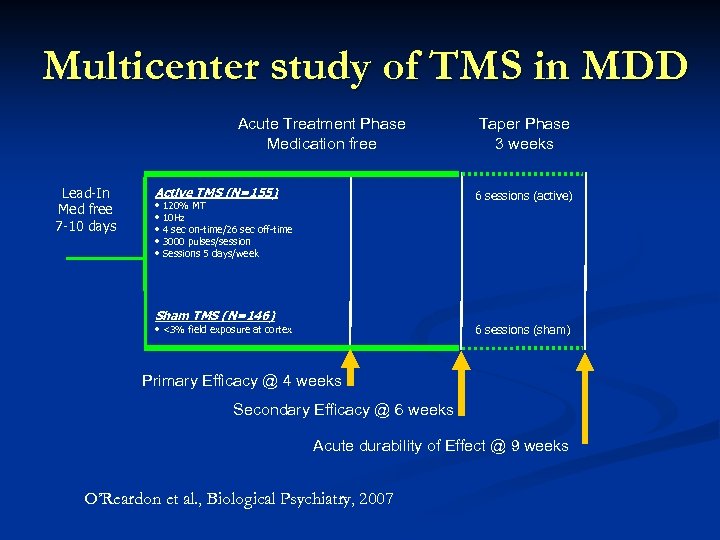
Multicenter study of TMS in MDD Acute Treatment Phase Medication free Lead-In Med free 7 -10 days Active TMS (N=155) Taper Phase 3 weeks 6 sessions (active) • 120% MT • 10 Hz • 4 sec on-time/26 sec off-time • 3000 pulses/session • Sessions 5 days/week Sham TMS (N=146) 6 sessions (sham) • <3% field exposure at cortex Primary Efficacy @ 4 weeks Secondary Efficacy @ 6 weeks Acute durability of Effect @ 9 weeks O’Reardon et al. , Biological Psychiatry, 2007
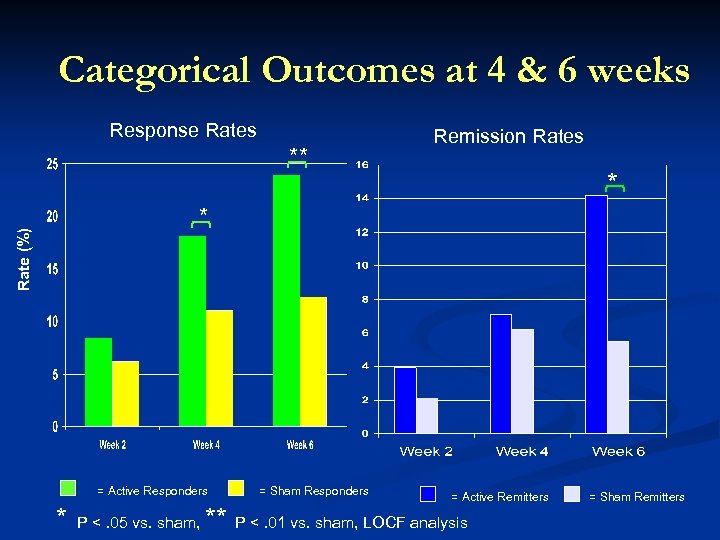
Categorical Outcomes at 4 & 6 weeks Response Rates ** Remission Rates * Rate (%) * = Active Responders * P <. 05 vs. sham, = Sham Responders = Active Remitters ** P <. 01 vs. sham, LOCF analysis = Sham Remitters
TMS for other disorders n TMS has an inbuilt flexibility in treatment targeting n Electromagnet can be moved over scalp and targeted to desired area of the cortex n Frequency selection allows activation or inhibition of circuits accessible at the level of cortex, guided by imaging findings
Other possible applications of TMS n Auditory hallucinations in schizophrenia – 1 Hz TMS over superior temporal gyrus n PTSD – 10 Hz over R prefrontal cortex n ADHD – to target the R medial frontal gyrus n Other areas being studied include stroke rehab, migraine, Tourette’s Syndrome
Schizophrenia and TMS Application of continuous 1 Hz TMS over temperoparietal cortex to inhibit generation of AH n Recent metaanalysis of 10 controlled studies (n=212) was positive, with a substantial ES of 0. 76 (95% CI range 0. 36 -1. 17) n Sample sizes generally small (range 10 -50 subjects) n Well tolerated, implies language perceptual disturbance key to etiology of AH n Aleman et al. J Clin Psy 2007; 68: 416 -21
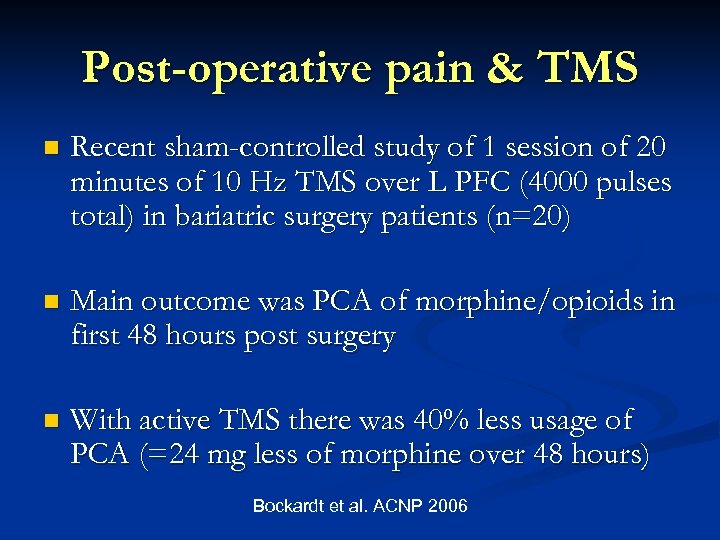
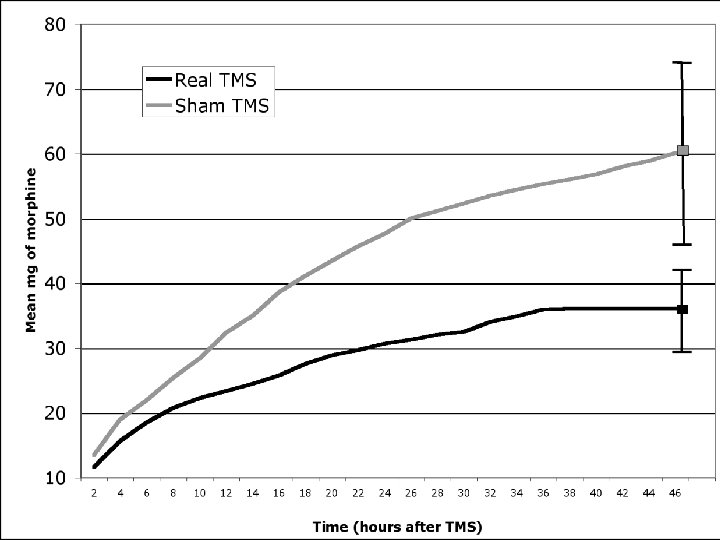
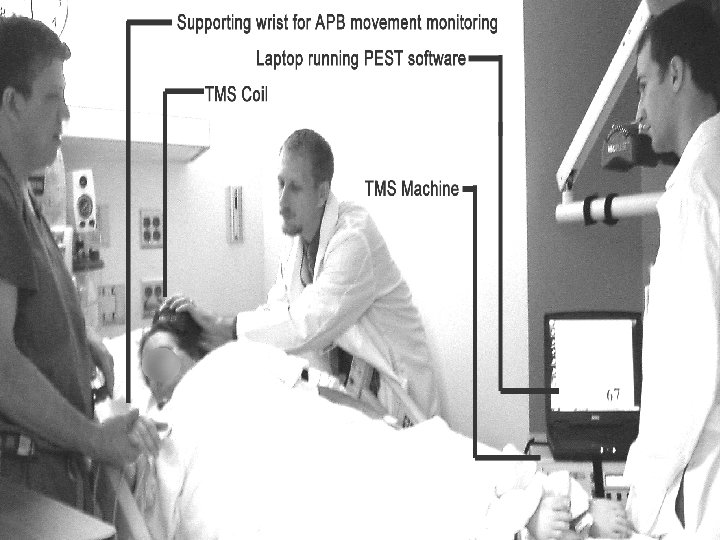
Post-operative pain & TMS n Recent sham-controlled study of 1 session of 20 minutes of 10 Hz TMS over L PFC (4000 pulses total) in bariatric surgery patients (n=20) n Main outcome was PCA of morphine/opioids in first 48 hours post surgery n With active TMS there was 40% less usage of PCA (=24 mg less of morphine over 48 hours) Bockardt et al. ACNP 2006
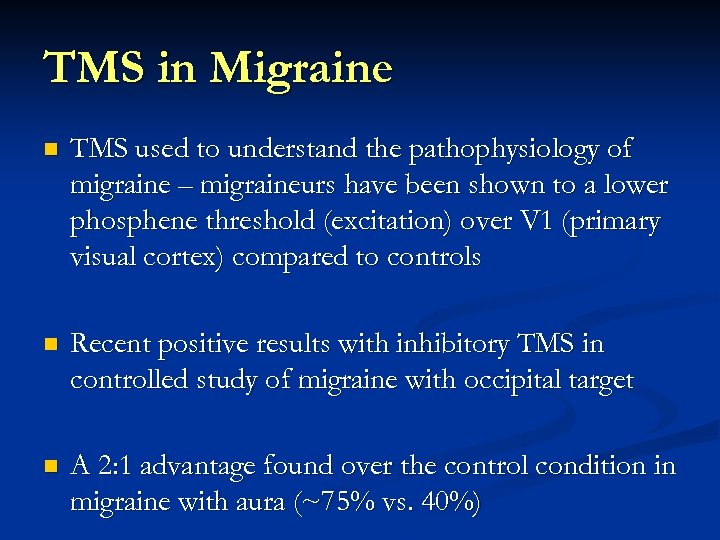
TMS in Migraine n TMS used to understand the pathophysiology of migraine – migraineurs have been shown to a lower phosphene threshold (excitation) over V 1 (primary visual cortex) compared to controls n Recent positive results with inhibitory TMS in controlled study of migraine with occipital target n A 2: 1 advantage found over the control condition in migraine with aura (~75% vs. 40%)
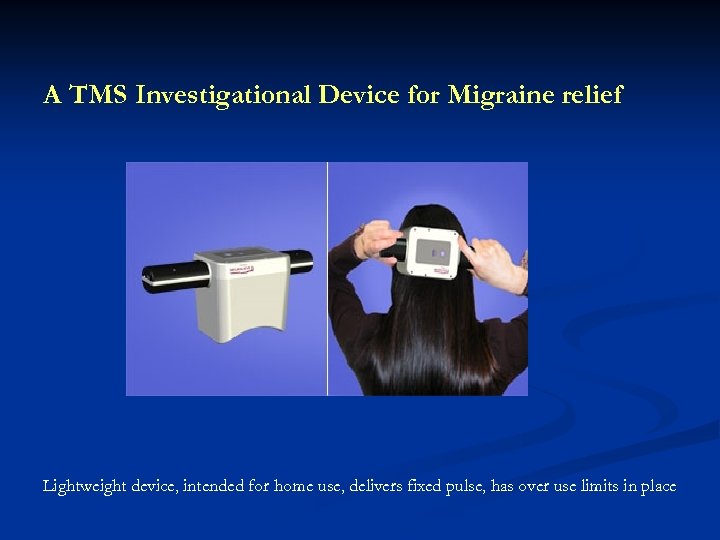
A TMS Investigational Device for Migraine relief Lightweight device, intended for home use, delivers fixed pulse, has over use limits in place
TMS future as clinical treatment Ø Currently FDA reviewing application for approval for TMS as a treatment for major depression Ø TMS clinically available in Canada, Australia, Israel & Europe Ø Available off-label in some centers in the US Ø TMS is a safe intervention & may be promising option for a number of psychiatric & neurological disorders
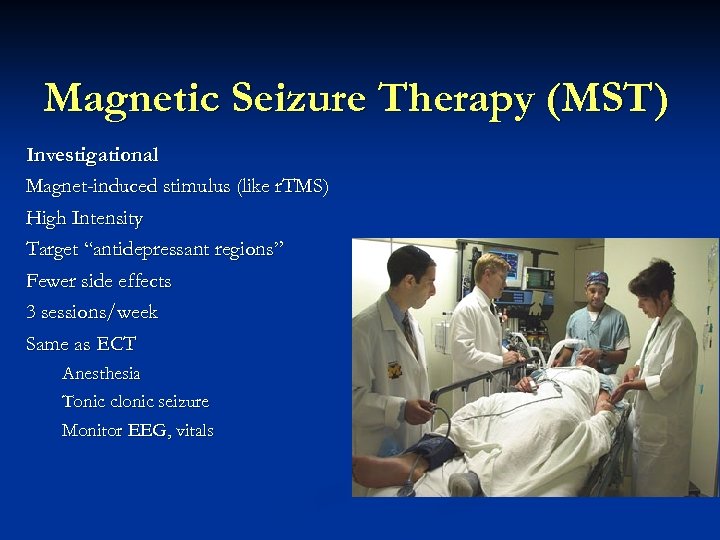
Magnetic Seizure Therapy (MST) Investigational Magnet-induced stimulus (like r. TMS) High Intensity Target “antidepressant regions” Fewer side effects 3 sessions/week Same as ECT Anesthesia Tonic clonic seizure Monitor EEG, vitals This information concerns a use that has not been approved by the U. S. Food and Drug Administrat
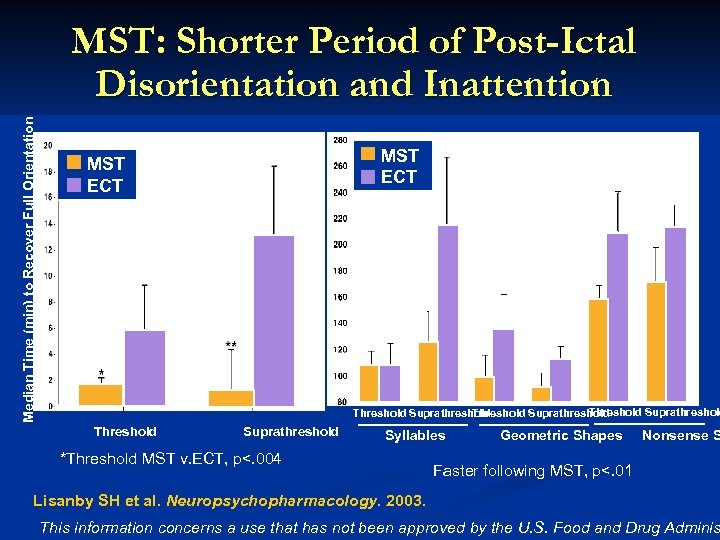
Median Time (min) to Recover Full Orientation MST: Shorter Period of Post-Ictal Disorientation and Inattention MST ECT Threshold Suprathreshold Syllables *Threshold MST v. ECT, p<. 004 Geometric Shapes Nonsense S Faster following MST, p<. 01 Lisanby SH et al. Neuropsychopharmacology. 2003. This information concerns a use that has not been approved by the U. S. Food and Drug Adminis
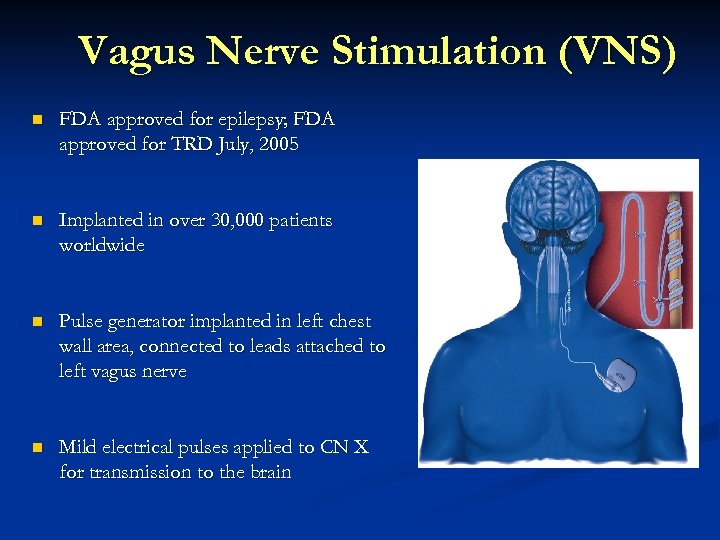
Vagus Nerve Stimulation (VNS) n FDA approved for epilepsy; FDA approved for TRD July, 2005 n Implanted in over 30, 000 patients worldwide n Pulse generator implanted in left chest wall area, connected to leads attached to left vagus nerve n Mild electrical pulses applied to CN X for transmission to the brain
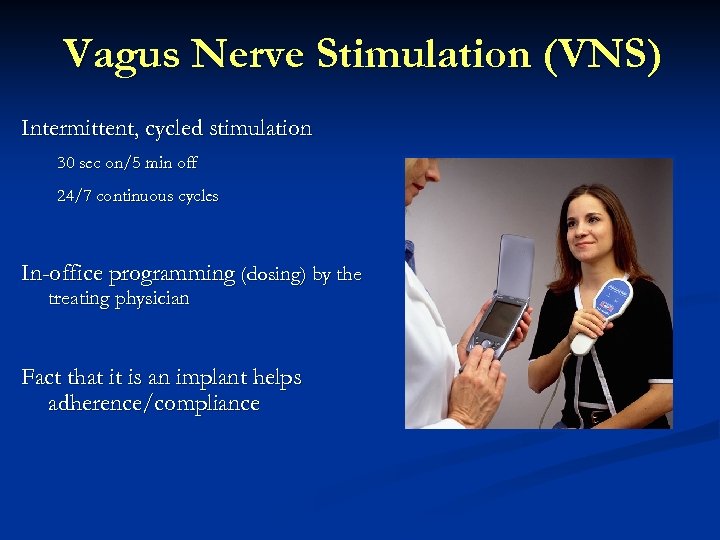
Vagus Nerve Stimulation (VNS) Intermittent, cycled stimulation 30 sec on/5 min off 24/7 continuous cycles In-office programming (dosing) by the treating physician Fact that it is an implant helps adherence/compliance
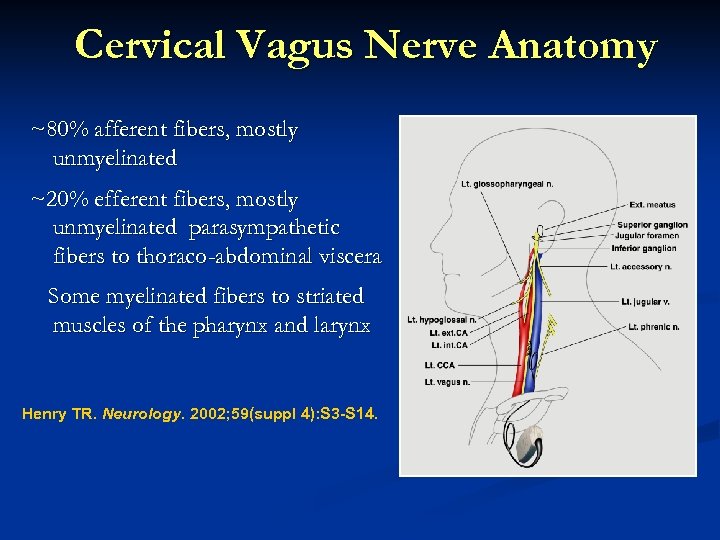
Cervical Vagus Nerve Anatomy ~80% afferent fibers, mostly unmyelinated ~20% efferent fibers, mostly unmyelinated parasympathetic fibers to thoraco-abdominal viscera Some myelinated fibers to striated muscles of the pharynx and larynx Henry TR. Neurology. 2002; 59(suppl 4): S 3 -S 14.
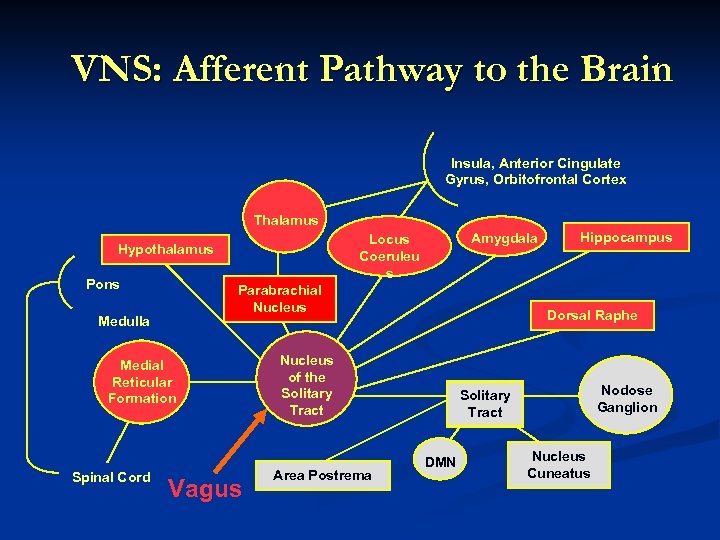
VNS: Afferent Pathway to the Brain Insula, Anterior Cingulate Gyrus, Orbitofrontal Cortex Thalamus Pons Parabrachial Nucleus Medulla Medial Reticular Formation Spinal Cord Amygdala Locus Coeruleu s Hypothalamus Vagus Dorsal Raphe Nucleus of the Solitary Tract Area Postrema Hippocampus Nodose Ganglion Solitary Tract DMN Nucleus Cuneatus
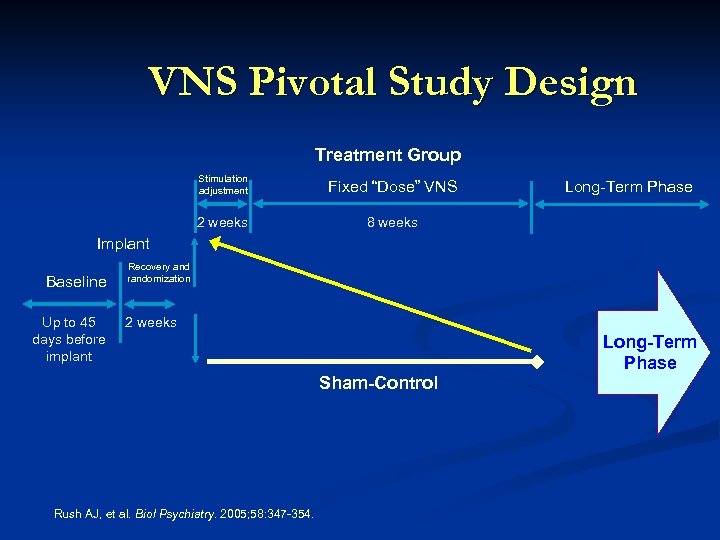
VNS Pivotal Study Design Treatment Group Stimulation adjustment Fixed “Dose” VNS 2 weeks 8 weeks Long-Term Phase Implant Baseline Up to 45 days before implant Recovery and randomization 2 weeks Sham-Control Rush AJ, et al. Biol Psychiatry. 2005; 58: 347 -354. Long-Term Phase
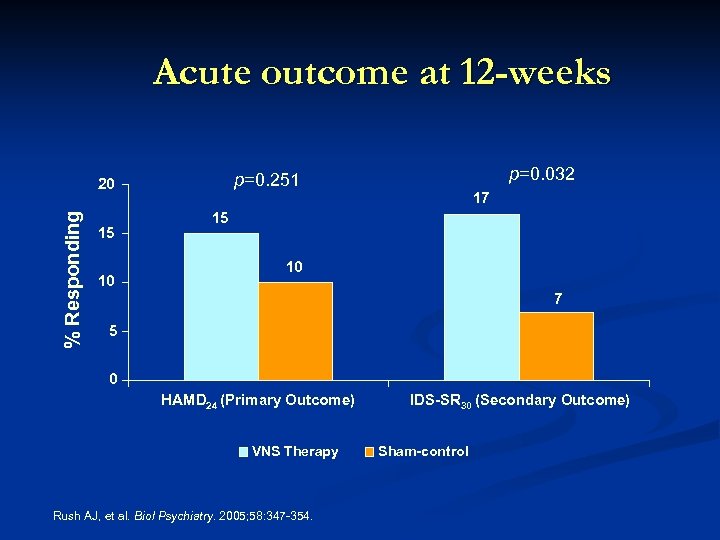
Acute outcome at 12 -weeks % Responding 15 10 p=0. 032 p=0. 251 20 17 15 10 7 5 0 HAMD 24 (Primary Outcome) VNS Therapy Rush AJ, et al. Biol Psychiatry. 2005; 58: 347 -354. IDS-SR 30 (Secondary Outcome) Sham-control
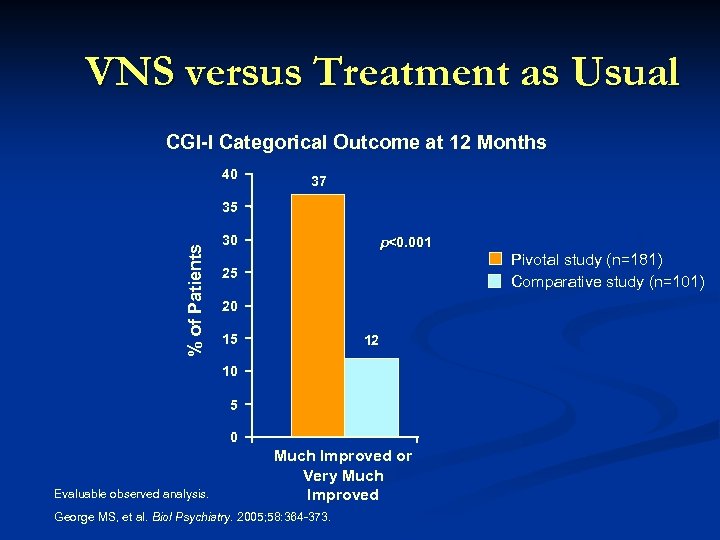
VNS versus Treatment as Usual CGI-I Categorical Outcome at 12 Months 40 37 % of Patients 35 30 p<0. 001 25 20 15 12 10 5 0 Evaluable observed analysis. Much Improved or Very Much Improved George MS, et al. Biol Psychiatry. 2005; 58: 364 -373. Pivotal study (n=181) Comparative study (n=101)
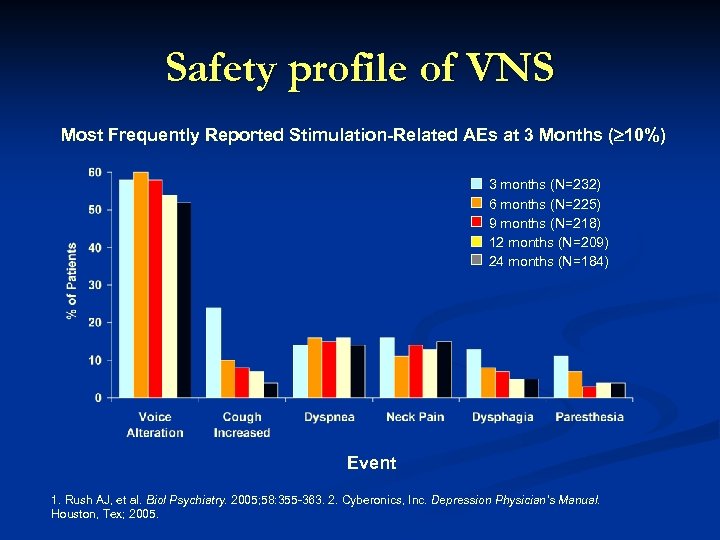
Safety profile of VNS Most Frequently Reported Stimulation-Related AEs at 3 Months ( 10%) 3 months (N=232) 6 months (N=225) 9 months (N=218) 12 months (N=209) 24 months (N=184) Event 1. Rush AJ, et al. Biol Psychiatry. 2005; 58: 355 -363. 2. Cyberonics, Inc. Depression Physician’s Manual. Houston, Tex; 2005.
VNS Advantages ü Well tolerated with high adherence rates ü Implant so guaranteed treatment delivery ü No cognitive impairment, or related stigma ü No weight gain, no known metabolic issues, no sexual dysfunction side effects
Disadvantages/Controversies Ø Surgery is an obstacle for some patients, and overall costs upfront are high relative to pharmacotherapy and psychotherapy Ø Controversy associated with FDA approval, given failed pivotal trial, has limited access in practice for patients – Medicare has decided against covering VNS for TRD Ø May be a disincentive for future development of neuromodulation devices in psychiatry
CMS denial of VNS coverage n "CMS does not believe there is a treatment effect directly attributable to VNS therapy based on the current evidence” 1 n “The pivotal randomized, controlled trial of VNS, subsequent to a pilot study, failed” 1 n Medicare, however, has covered VNS for epilepsy since 1999, where evidence for efficacy is similar to TRD 1. www. cms. hhs. gov/MCD/viewdraftdecisionmemo. asp? id=195, accessed 2/13/07
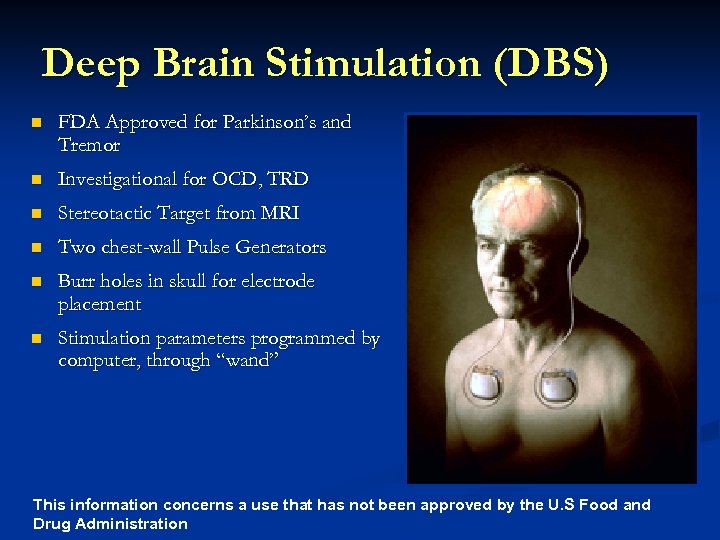
Deep Brain Stimulation (DBS) n FDA Approved for Parkinson’s and Tremor n Investigational for OCD, TRD n Stereotactic Target from MRI n Two chest-wall Pulse Generators n Burr holes in skull for electrode placement n Stimulation parameters programmed by computer, through “wand” This information concerns a use that has not been approved by the U. S Food and Drug Administration
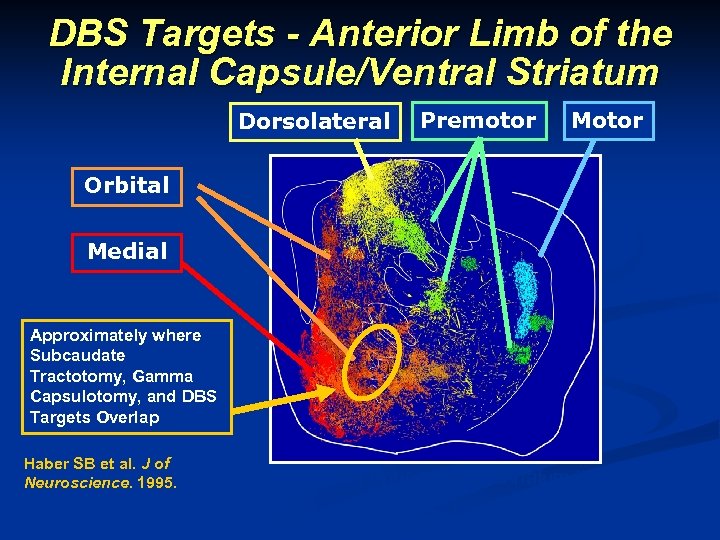
DBS Targets - Anterior Limb of the Internal Capsule/Ventral Striatum Dorsolateral Premotor Motor Orbital Medial Approximately where Subcaudate Tractotomy, Gamma Capsulotomy, and DBS Targets Overlap Haber SB et al. J of Neuroscience. 1995. Fronto-Basal Projections to Striatum in Primate This information concerns a use that has not been approved by the U. S Food and Drug Administration
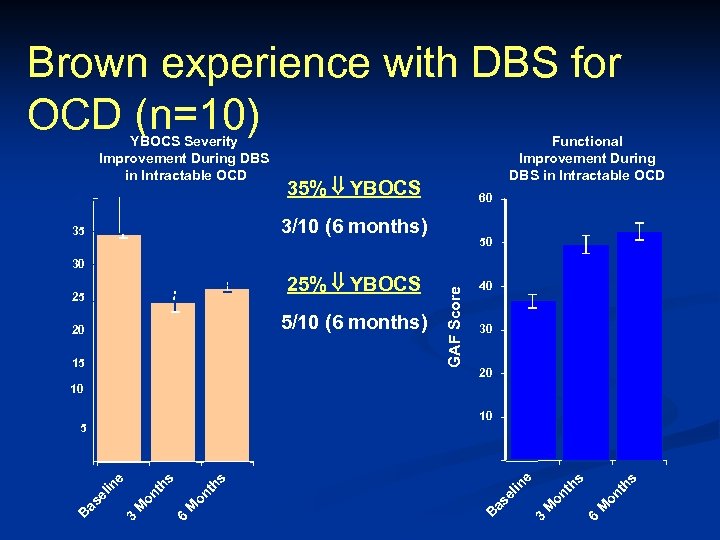
Brown experience with DBS for OCD (n=10) YBOCS Severity Improvement During DBS in Intractable OCD 40 35% YBOCS 35 Functional Improvement During DBS in Intractable OCD 3/10 (6 months) 60 50 5/10 (6 months) 20 15 GAF Score 25% YBOCS 25 40 30 20 10 10 5 s s 6 M on th M 3 B as el s M 6 on th M 3 on th s e in as el in e 0 0 B YBOCS Score 30
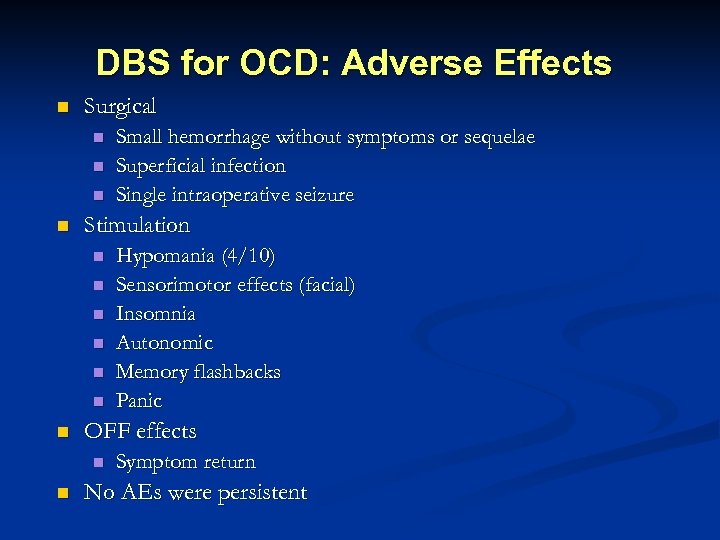
DBS for OCD: Adverse Effects n Surgical n n Stimulation n n n Hypomania (4/10) Sensorimotor effects (facial) Insomnia Autonomic Memory flashbacks Panic OFF effects n n Small hemorrhage without symptoms or sequelae Superficial infection Single intraoperative seizure Symptom return No AEs were persistent
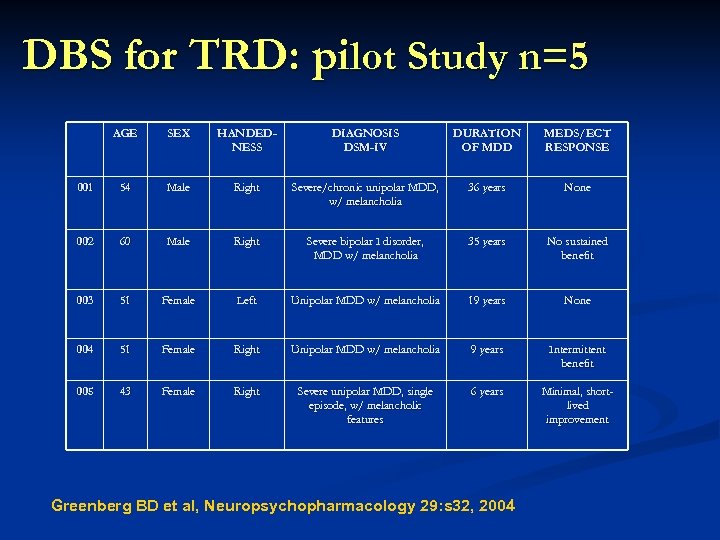
DBS for TRD: pilot Study n=5 AGE SEX HANDEDNESS DIAGNOSIS DSM-IV DURATION OF MDD MEDS/ECT RESPONSE 001 54 Male Right Severe/chronic unipolar MDD, w/ melancholia 36 years None 002 60 Male Right Severe bipolar I disorder, MDD w/ melancholia 35 years No sustained benefit 003 51 Female Left Unipolar MDD w/ melancholia 19 years None 004 51 Female Right Unipolar MDD w/ melancholia 9 years Intermittent benefit 005 43 Female Right Severe unipolar MDD, single episode, w/ melancholic features 6 years Minimal, shortlived improvement Greenberg BD et al, Neuropsychopharmacology 29: s 32, 2004
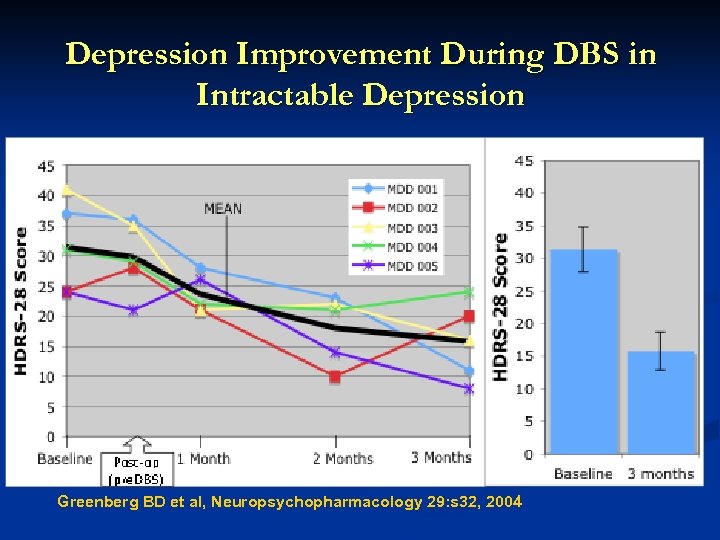
Depression Improvement During DBS in Intractable Depression Greenberg BD et al, Neuropsychopharmacology 29: s 32, 2004
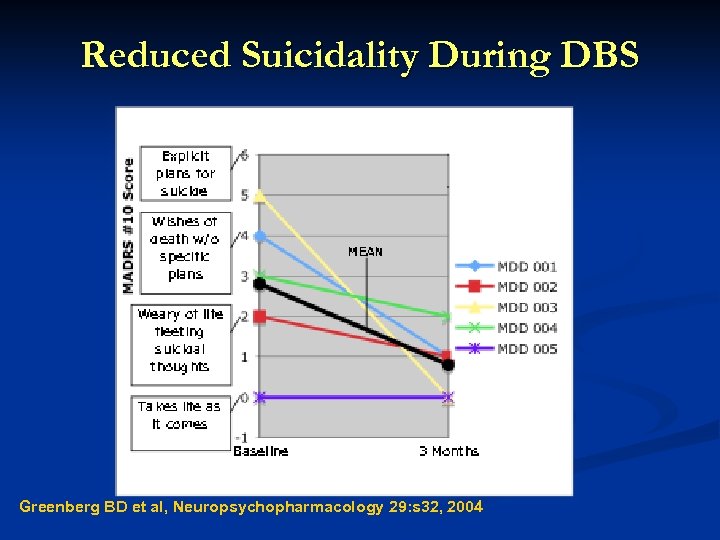
Reduced Suicidality During DBS Greenberg BD et al, Neuropsychopharmacology 29: s 32, 2004
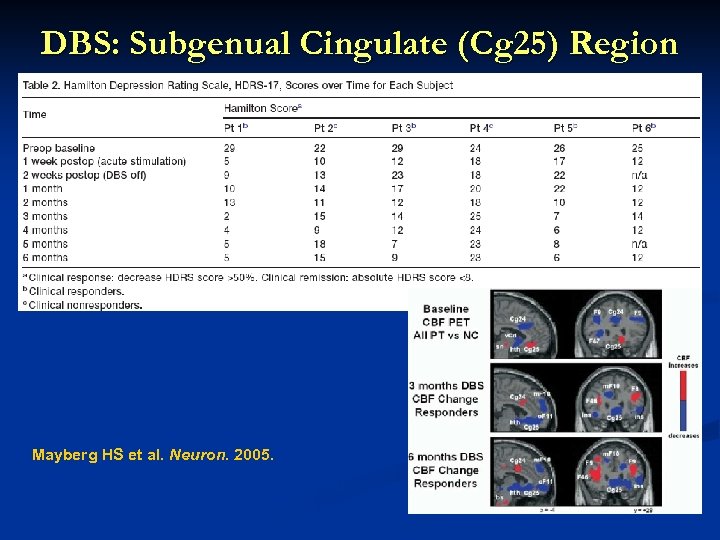
DBS: Subgenual Cingulate (Cg 25) Region Response in 4 of 6 patients Response associated with reduction in local and downstream limbic CBF on PET Mayberg HS et al. Neuron. 2005. This information concerns a use that has not been approved by the U. S Food and Drug Administration
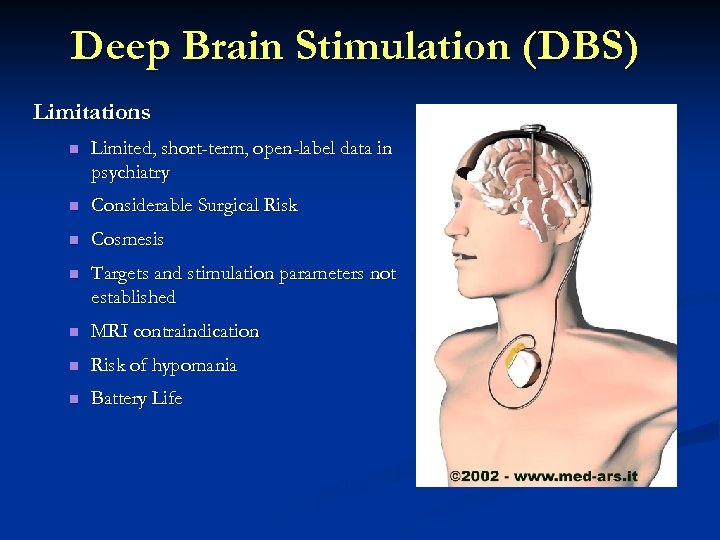
Deep Brain Stimulation (DBS) Limitations n Limited, short-term, open-label data in psychiatry n Considerable Surgical Risk n Cosmesis n Targets and stimulation parameters not established n MRI contraindication n Risk of hypomania n Battery Life This information concerns a use that has not been approved by the U. S Food and Drug Administration
Neuromodulation overview Ø Ø ECT non-invasive, hospital procedure, requires anesthesia, safe, very efficacious, but stigmatized, no clear neurology application TMS is non-invasive, office based, most flexible, possible multiple applications, very acceptable to patients, but is it robust enough? VNS bottom-up modulation, limited surgery, but efficacy less than hoped for, & access problems DBS most invasive, only preliminary data to date (n~50), but looks robust
21 st century neuromodulation therapies in psychiatry ü Psychiatry treatment may be at similar threshold as cardiology 25 years ago, in terms of potential for devices to improve our therapeutics ü Effective medications & psychosocial interventions help many but by no means all of our patients ü Devices have potential to help our severely ill patients and clearly warrant intensive research going forwards
Post-Lecture Exam Question 1 Magnetic Seizure Therapy (MST) differs from ECT in that: a. the goal is not to induce a therapeutic seizure b. the use of focused stimulation to produce a seizure c. general anesthesia is not required d. daily sessions of MST are needed to produce a therapeutic effect e. it has a more benign profile in terms of cognitive adverse effects
Question 2 The most common side effect reports with VNS is: a. weight gain b. sexual dysfunction c. cognitive impairment d. hoarseness e. chest pain
Question 3 Deep brain stimulation is currently FDA approved for the treatment of: a. auditory hallucinations in schizophrenia b. chronic neuropathic pain c. obsessive compulsive disorder d. parkinson’s Disease e. intractable migraine
Question 4 Transcranial Magnetic Stimulation (TMS) differs from Magnetic Resonance Imaging (MRI) technology in that: a. the magnetic fields produced are much weaker in intensity b. the rate of change of the magnetic field is higher with an MRI versus TMS c. MRI technology activates neurons whereas TMS does not d. scalp discomfort is common with TMS but not with an MRI
Question 5 Which of the following statements about ECT is not true? a. ECT appears to be particularly efficacious in psychotic depression b. ECT is not effective in the treatment of mania c. ECT is effective in the treatment of bipolar depression d. ECT is associate with retrograde memory impairments e. ECT is effective in the treatment of pharmacotherapy-resistant major depression
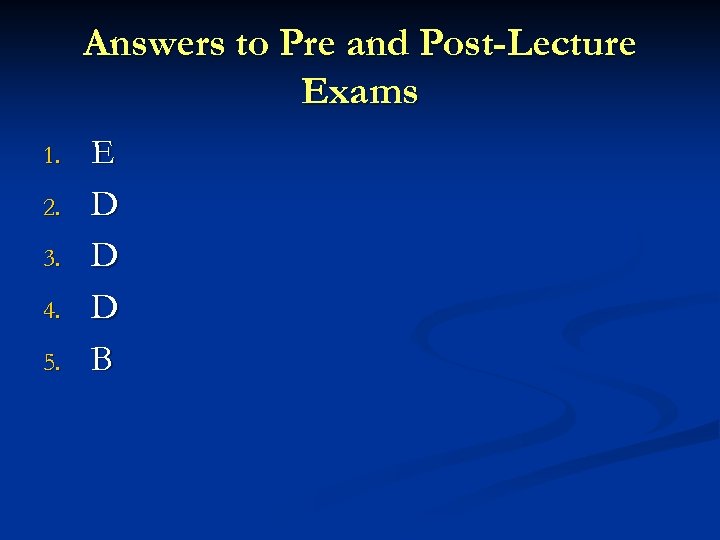
Answers to Pre and Post-Lecture Exams 1. 2. 3. 4. 5. E D D D B
Скачать презентацию Brain Stimulation Therapies for Treatment Resistant Depression John
110b73f5ffd878ed80f387f768cd6728.ppt