 Скачать презентацию Brain and Memory Brainkillers Remind remember learn
2015, Sep 11th Memory (presentation).pptx
- Количество слайдов: 69



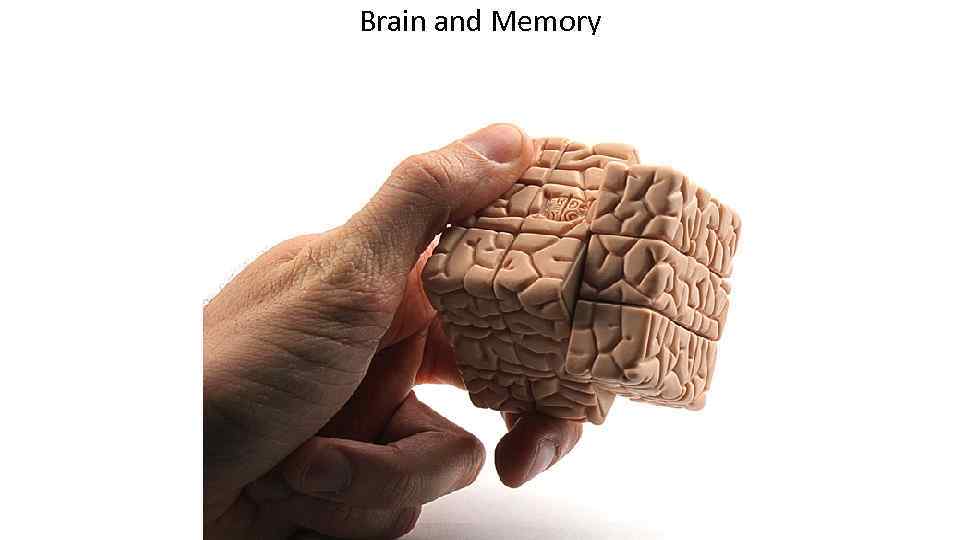
Brain and Memory
Brainkillers: Remind, remember, learn, recall and recollect.
When you LEARN you put new data into your memory so you can manipulate and use it easily: • learn words, poems, quotes (by heart).
When you REMEMBER you: • Confirm that you already know this information Yes, I remember that crazy guy from our school who wore unpaired socks. • You refer to capacity of your memory or your ability to learn new things I don’t remember faces very well, they slip from my memory easily • You keep in your mind something that you often recall and think about, and it’s important. I will always remember my friends, no matter what happens.
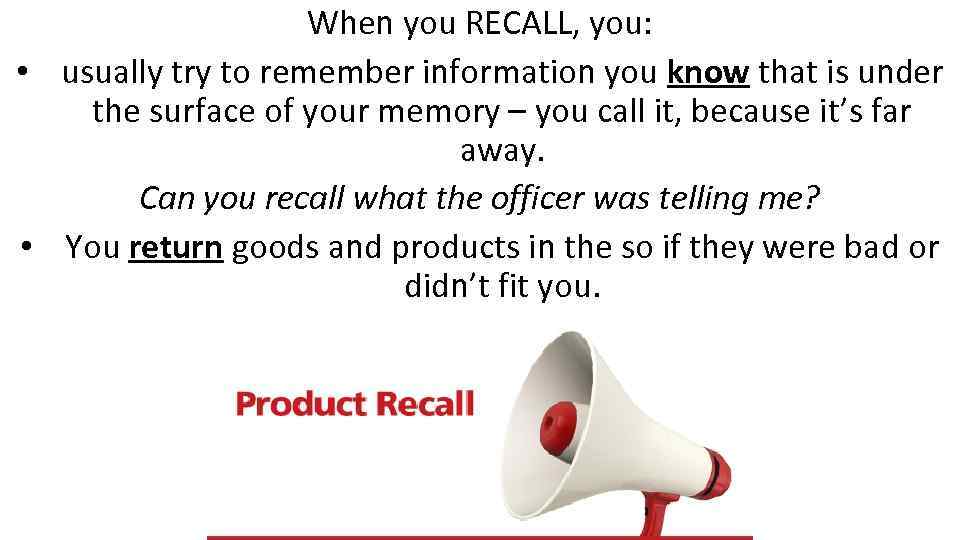
When you RECALL, you: • usually try to remember information you know that is under the surface of your memory – you call it, because it’s far away. Can you recall what the officer was telling me? • You return goods and products in the so if they were bad or didn’t fit you.
When you RECOLLECT: • It means you still remember something, but you have to retrieve it piece by piece to return it to the memory, and then collect from pieces, as if you are trying to read a torn letter. Basically, it means the same as recall, but it means more effort is needed to access the memory. I can barely recollect our first meeting, can you tell me what happened?
When you REMIND something: You usually make someone else remember something they don’t remember or don’t focus on – you bring it back to their mind. You don’t have to know the information they recall when they are being reminded. Usually you trigger the effort needed to recall something for someone. This verb is transitive, but you can remind yourself do something (if you send yourself a message or turn on an alarm) I reminded him of the wonderful times we had in the college.
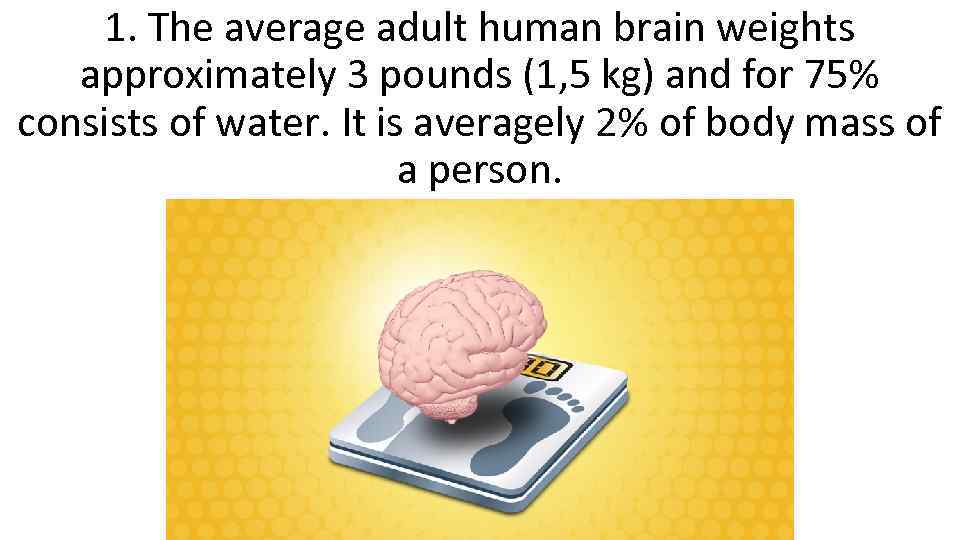
1. The average adult human brain weights approximately 3 pounds (1, 5 kg) and for 75% consists of water. It is averagely 2% of body mass of a person.
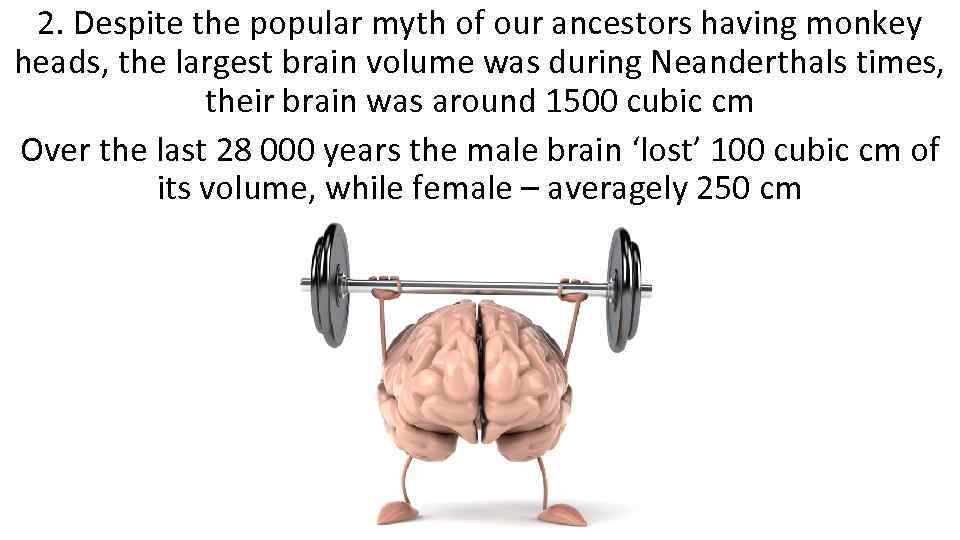
2. Despite the popular myth of our ancestors having monkey heads, the largest brain volume was during Neanderthals times, their brain was around 1500 cubic cm Over the last 28 000 years the male brain ‘lost’ 100 cubic cm of its volume, while female – averagely 250 cm
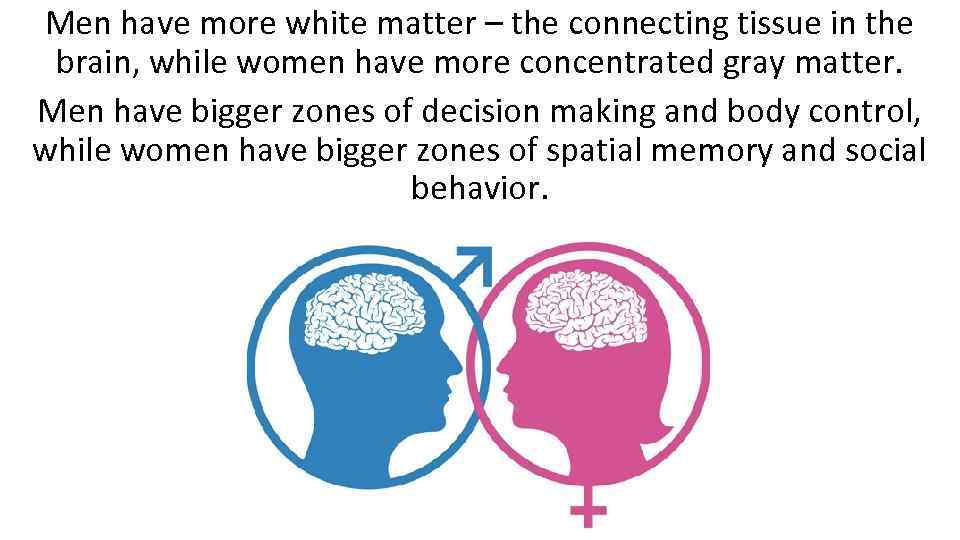
Men have more white matter – the connecting tissue in the brain, while women have more concentrated gray matter. Men have bigger zones of decision making and body control, while women have bigger zones of spatial memory and social behavior.
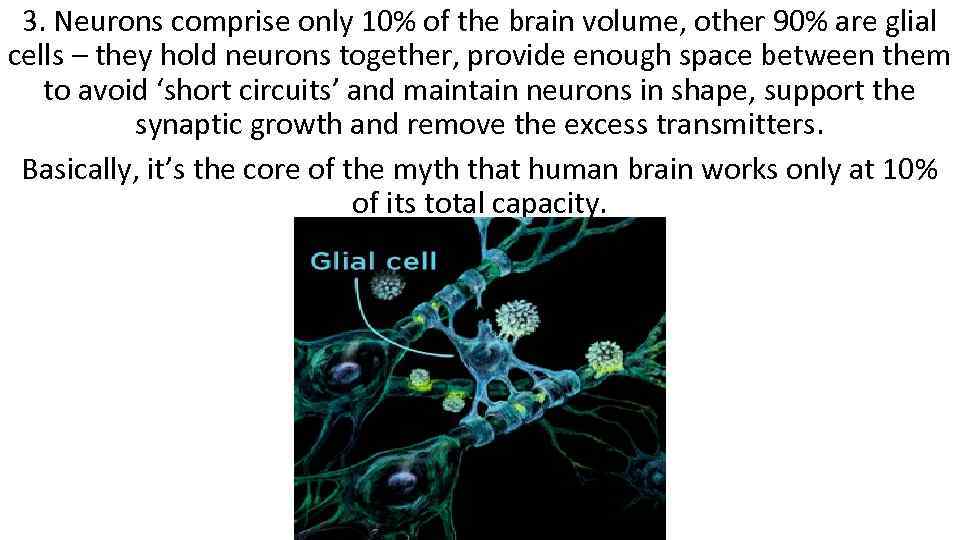
3. Neurons comprise only 10% of the brain volume, other 90% are glial cells – they hold neurons together, provide enough space between them to avoid ‘short circuits’ and maintain neurons in shape, support the synaptic growth and remove the excess transmitters. Basically, it’s the core of the myth that human brain works only at 10% of its total capacity.
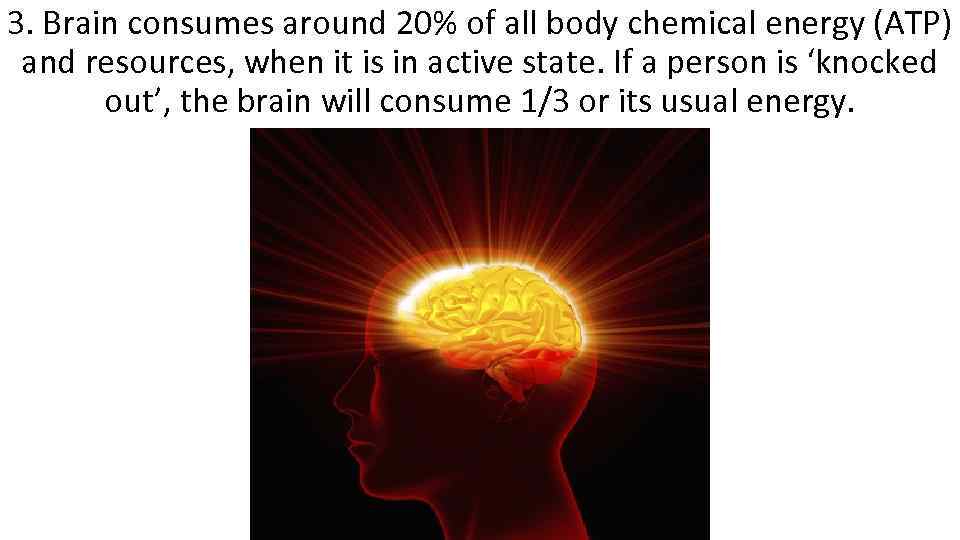
3. Brain consumes around 20% of all body chemical energy (ATP) and resources, when it is in active state. If a person is ‘knocked out’, the brain will consume 1/3 or its usual energy.
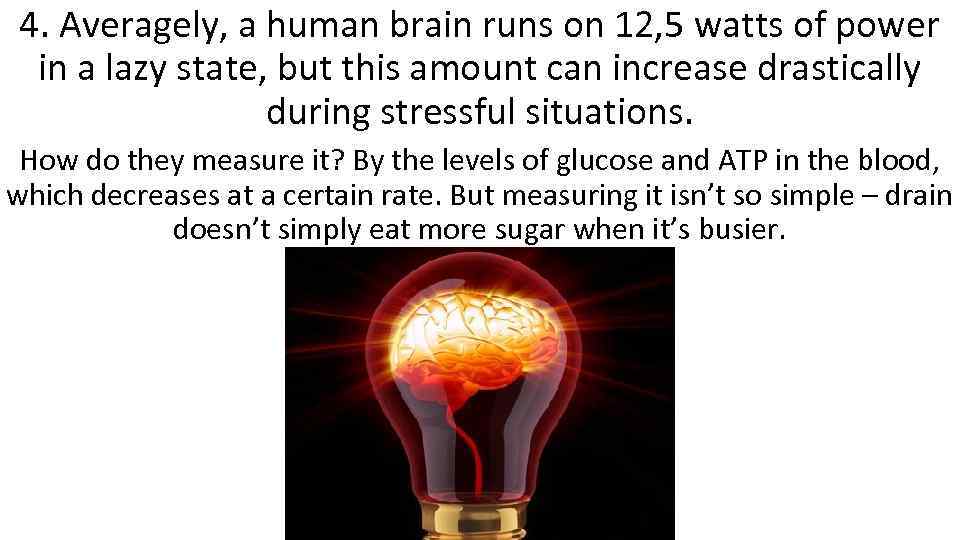
4. Averagely, a human brain runs on 12, 5 watts of power in a lazy state, but this amount can increase drastically during stressful situations. How do they measure it? By the levels of glucose and ATP in the blood, which decreases at a certain rate. But measuring it isn’t so simple – drain doesn’t simply eat more sugar when it’s busier.
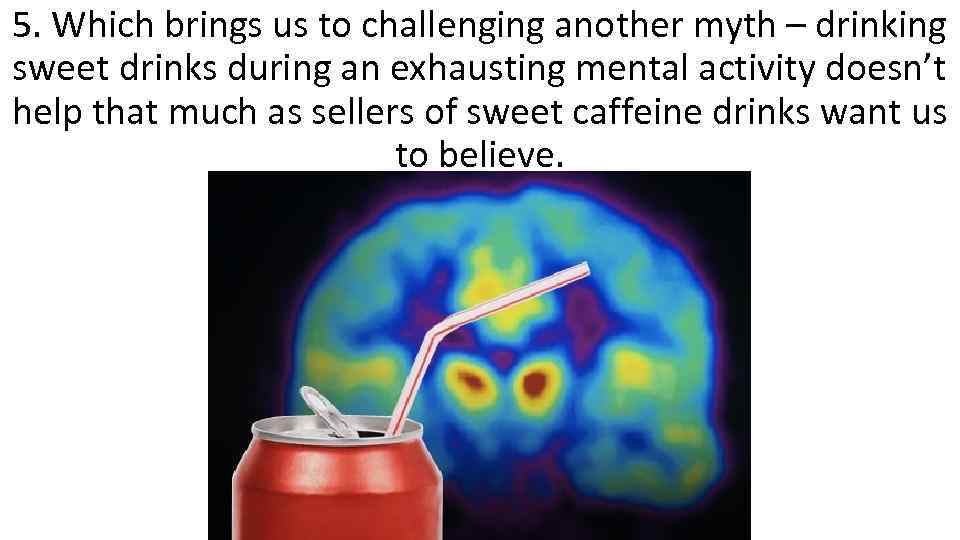
5. Which brings us to challenging another myth – drinking sweet drinks during an exhausting mental activity doesn’t help that much as sellers of sweet caffeine drinks want us to believe.
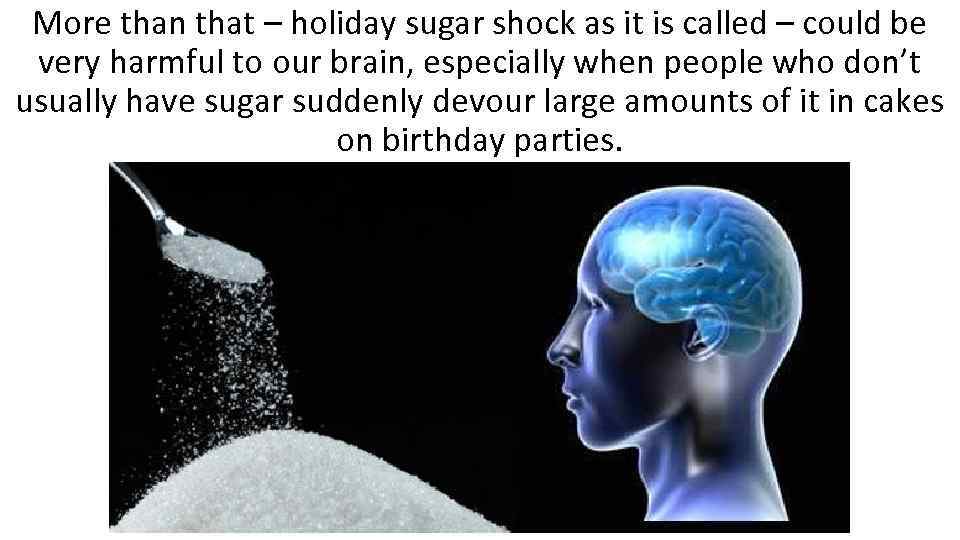
More than that – holiday sugar shock as it is called – could be very harmful to our brain, especially when people who don’t usually have sugar suddenly devour large amounts of it in cakes on birthday parties.
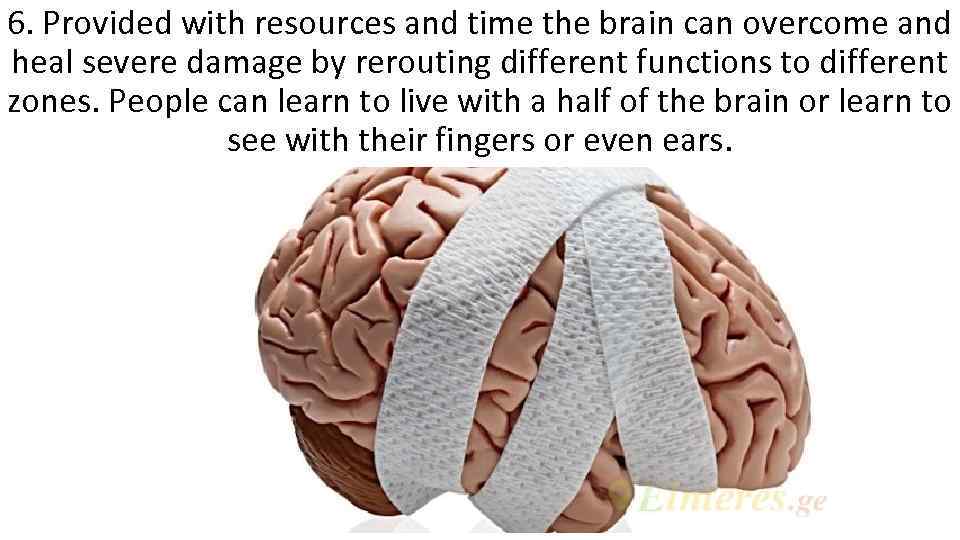
6. Provided with resources and time the brain can overcome and heal severe damage by rerouting different functions to different zones. People can learn to live with a half of the brain or learn to see with their fingers or even ears.
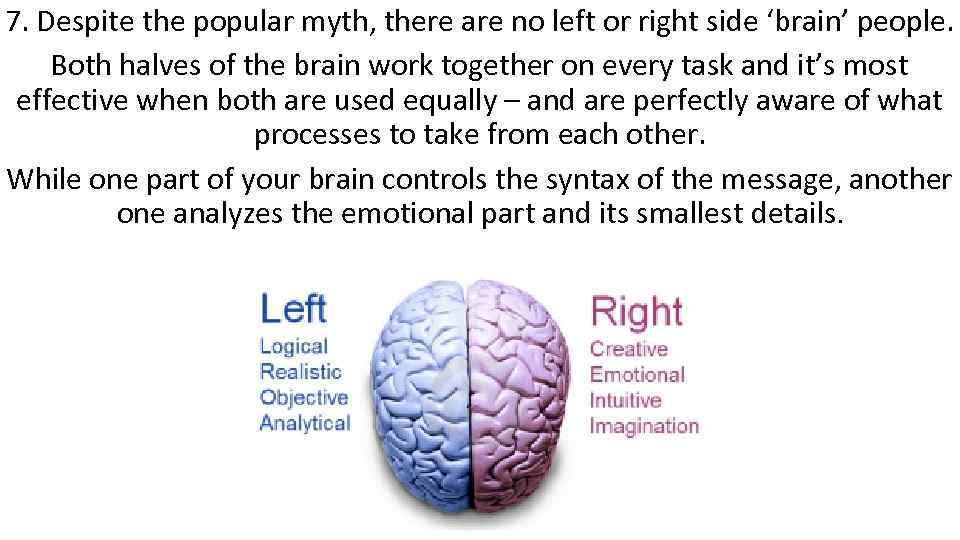
7. Despite the popular myth, there are no left or right side ‘brain’ people. Both halves of the brain work together on every task and it’s most effective when both are used equally – and are perfectly aware of what processes to take from each other. While one part of your brain controls the syntax of the message, another one analyzes the emotional part and its smallest details.
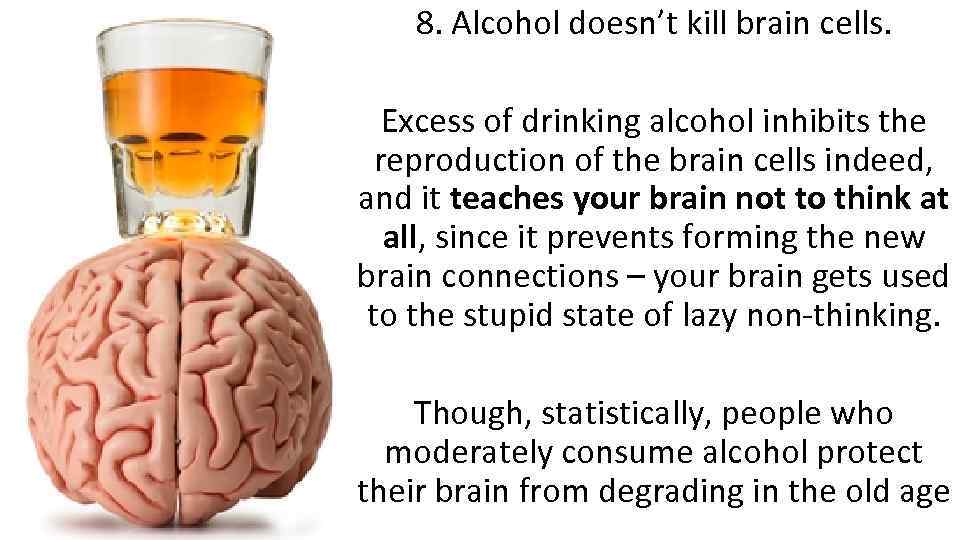
8. Alcohol doesn’t kill brain cells. Excess of drinking alcohol inhibits the reproduction of the brain cells indeed, and it teaches your brain not to think at all, since it prevents forming the new brain connections – your brain gets used to the stupid state of lazy non-thinking. Though, statistically, people who moderately consume alcohol protect their brain from degrading in the old age
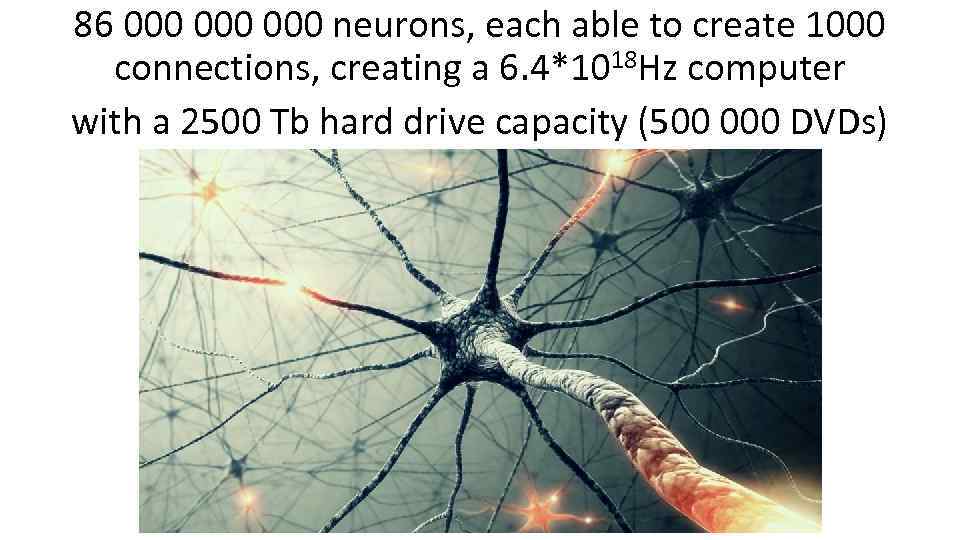
86 000 000 neurons, each able to create 1000 connections, creating a 6. 4*1018 Hz computer with a 2500 Tb hard drive capacity (500 000 DVDs)
Hippocampus is that small part of your brain that transfers the information from your immediate, short-term memory into the longterm memory that you can refer to as knowledge. Since it’s a part of a limbic system, highly dependent on emotions, it will more accurately copy the data that is emotionally aggressive
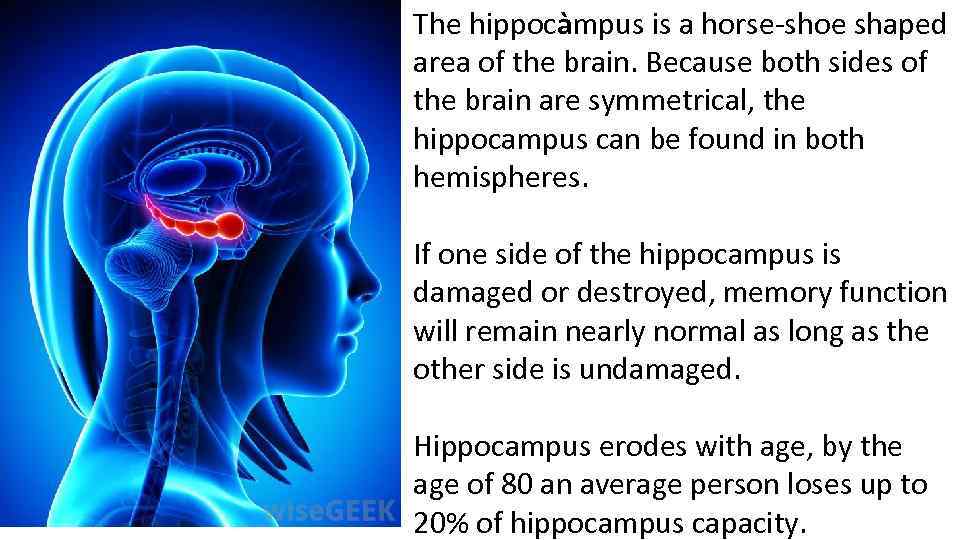
The hippocàmpus is a horse-shoe shaped area of the brain. Because both sides of the brain are symmetrical, the hippocampus can be found in both hemispheres. If one side of the hippocampus is damaged or destroyed, memory function will remain nearly normal as long as the other side is undamaged. Hippocampus erodes with age, by the age of 80 an average person loses up to 20% of hippocampus capacity.
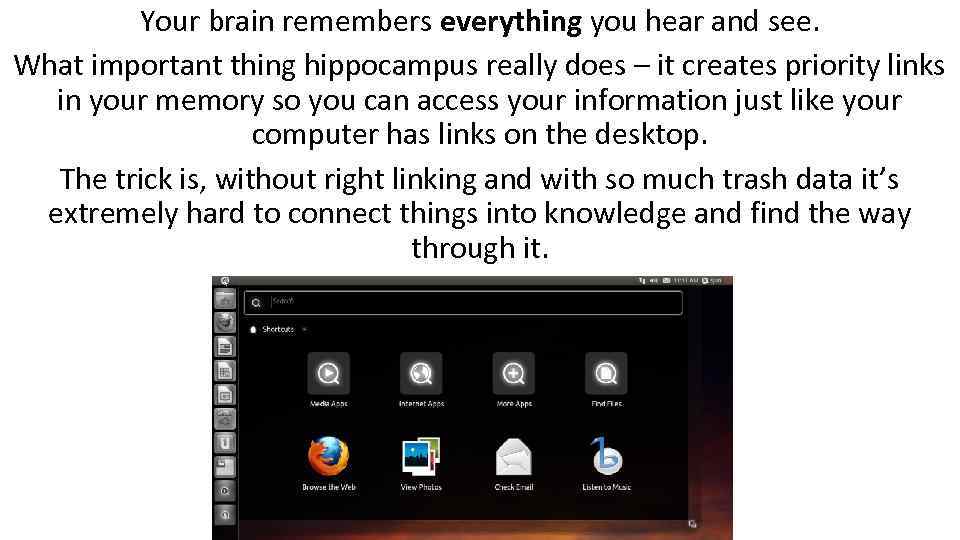
Your brain remembers everything you hear and see. What important thing hippocampus really does – it creates priority links in your memory so you can access your information just like your computer has links on the desktop. The trick is, without right linking and with so much trash data it’s extremely hard to connect things into knowledge and find the way through it.
Brain glitches: Memory 1. Our focus on remembering defines how well we chunk information that comes into our working memory and associate it with things we know in our long-term memory. 2. We remember more if we are forced to reread what we learned before being tested. 3. We remember even more if we are preparing for teaching other people the material we are being taught – our brain chunks information differently.
The sequence of our memorizing fully depends on position of different zones of the brain in relation to each other. For example, olfactory nerve which works on developing the data you smell, is located just between amygdala – the emotional memory center – and hippocampus – the data processing center. That’s why our scent memory is very bright, since it’s a good neighbor of the memory admins in your brain.

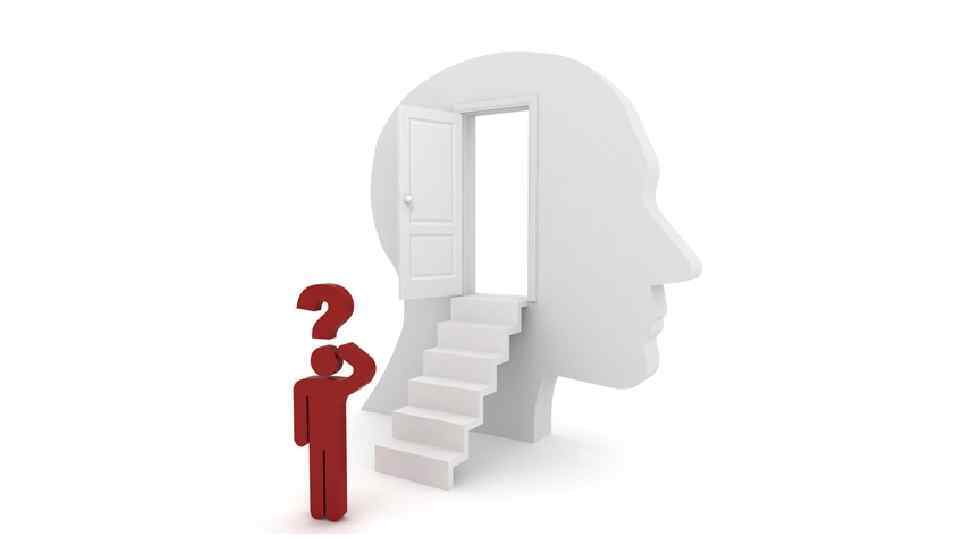
• Your memories are closely associated with space these events happen in. • Brain specifies the usual activities at each location – when you walk into kitchen it recalls items you use most often – kettle, fridge, table, TV. It saves you time tracking mundane tasks, but it challenges your memory when you don’t go to that room to put a kettle on fire. • Since all current data is wrapped up and saved when you leave the previous location, there exists a so-called doorway phenomenon – you open the door and you forget what you came there for.
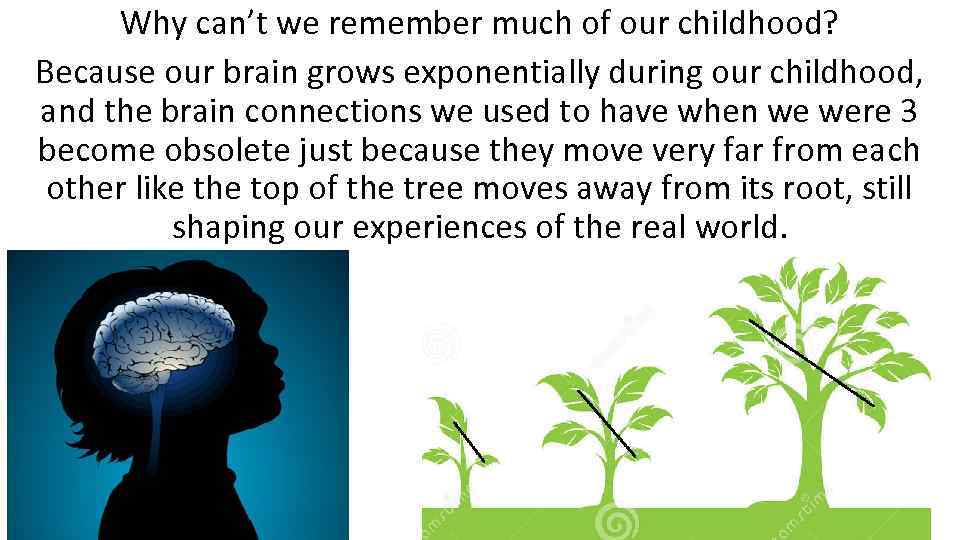
Why can’t we remember much of our childhood? Because our brain grows exponentially during our childhood, and the brain connections we used to have when we were 3 become obsolete just because they move very far from each other like the top of the tree moves away from its root, still shaping our experiences of the real world.
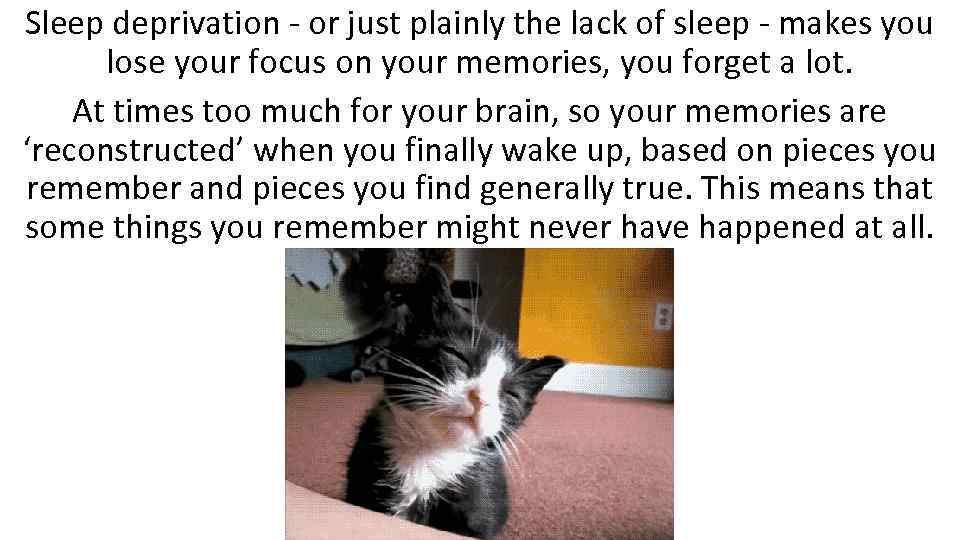
Sleep deprivation - or just plainly the lack of sleep - makes you lose your focus on your memories, you forget a lot. At times too much for your brain, so your memories are ‘reconstructed’ when you finally wake up, based on pieces you remember and pieces you find generally true. This means that some things you remember might never have happened at all.
Your brain is very lazy, and it doesn’t need to store things you store elsewhere. So remember – if you write things down not to forget (unless you have a perfect visual memory) will make them go away from your dynamic memory. "Never Memorize What You Can Look Up in a Book“ Albert Einstein
• • How many different meanings does memory have? Are you audial, visual or kinesthetic? What is the most important date for you to remember? What's your most vivid (clear or sharp) memory? When was it? What memory is your funniest? What memory is your scariest? Would you like to have a perfect memory? Why or why not? How would it change your life? Memories make the man. What do you think this means?
• What do you usually forget? • What do you need your memory most for? • Do you easily memorize information? • Do you have good memory for names/faces/numbers? • Does music or scents bring memories easier for you? • Do certain photographs bring back memories? • Has visiting childhood places ever been a bright experience for your memory? • Have you ever walked into a room and forgotten why you went there? • Do you train your memory? • How many English words a week do you learn? • What things is it important to remember? Why?



































http: //www. scientificamerican. com/article/why-does-the-brain-need-s/ http: //www. scientificamerican. com/article/thinking-hard-calories/ http: //www. health. harvard. edu/newsweek/Calories-burned-in-30 -minutes-of-leisure-androutine-activities. htm
Скачать презентацию Brain and Memory Brainkillers Remind remember learn
2015, Sep 11th Memory (presentation).pptx