 Скачать презентацию Borscht Borscht also borsch bortsch borstch borshch
Borscht.pptx
- Количество слайдов: 6



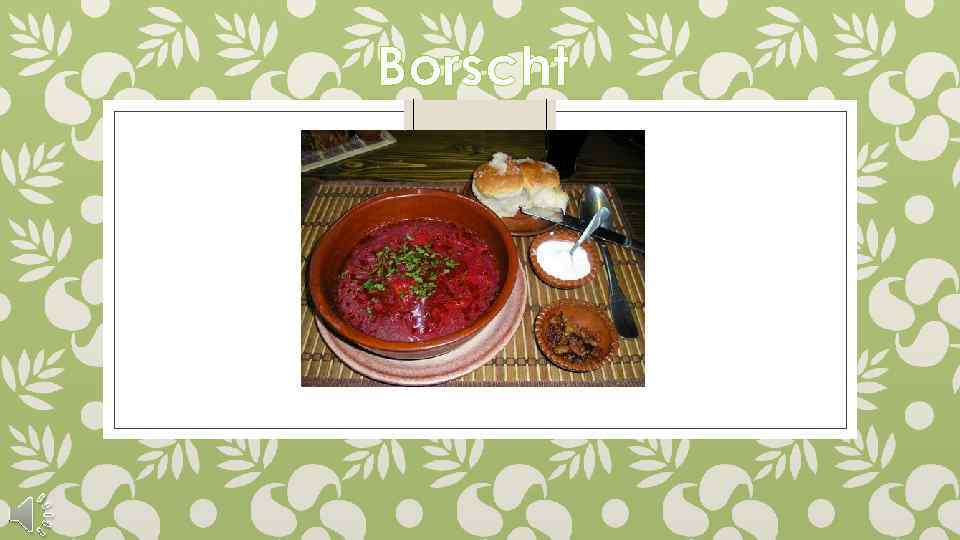
Borscht
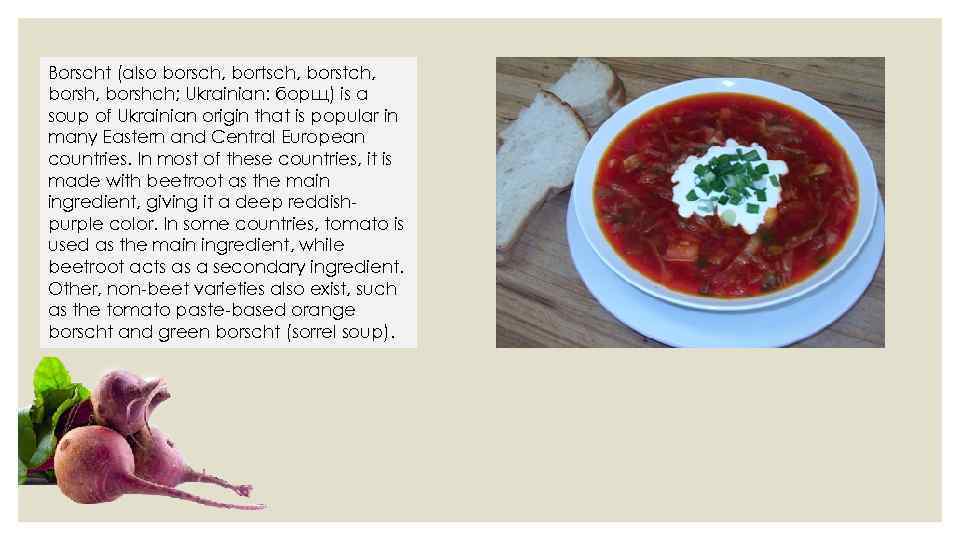
Borscht (also borsch, bortsch, borstch, borshch; Ukrainian: борщ) is a soup of Ukrainian origin that is popular in many Eastern and Central European countries. In most of these countries, it is made with beetroot as the main ingredient, giving it a deep reddishpurple color. In some countries, tomato is used as the main ingredient, while beetroot acts as a secondary ingredient. Other, non-beet varieties also exist, such as the tomato paste-based orange borscht and green borscht (sorrel soup).
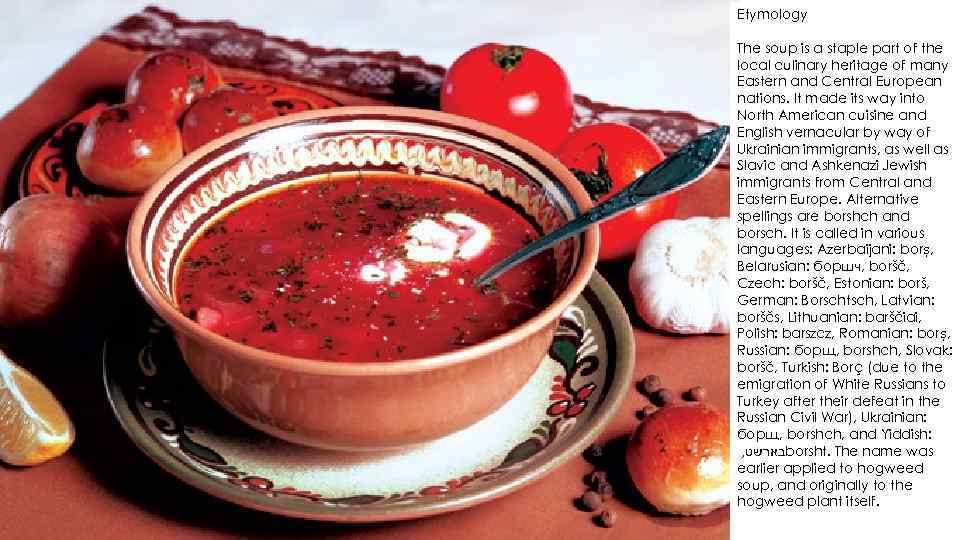
Etymology The soup is a staple part of the local culinary heritage of many Eastern and Central European nations. It made its way into North American cuisine and English vernacular by way of Ukrainian immigrants, as well as Slavic and Ashkenazi Jewish immigrants from Central and Eastern Europe. Alternative spellings are borshch and borsch. It is called in various languages: Azerbaijani: borș, Belarusian: боршч, boršč, Czech: boršč, Estonian: borš, German: Borschtsch, Latvian: borščs, Lithuanian: barščiai, Polish: barszcz, Romanian: borș, Russian: борщ, borshch, Slovak: boršč, Turkish: Borç (due to the emigration of White Russians to Turkey after their defeat in the Russian Civil War), Ukrainian: борщ, borshch, and Yiddish: , בארשט borsht. The name was earlier applied to hogweed soup, and originally to the hogweed plant itself.
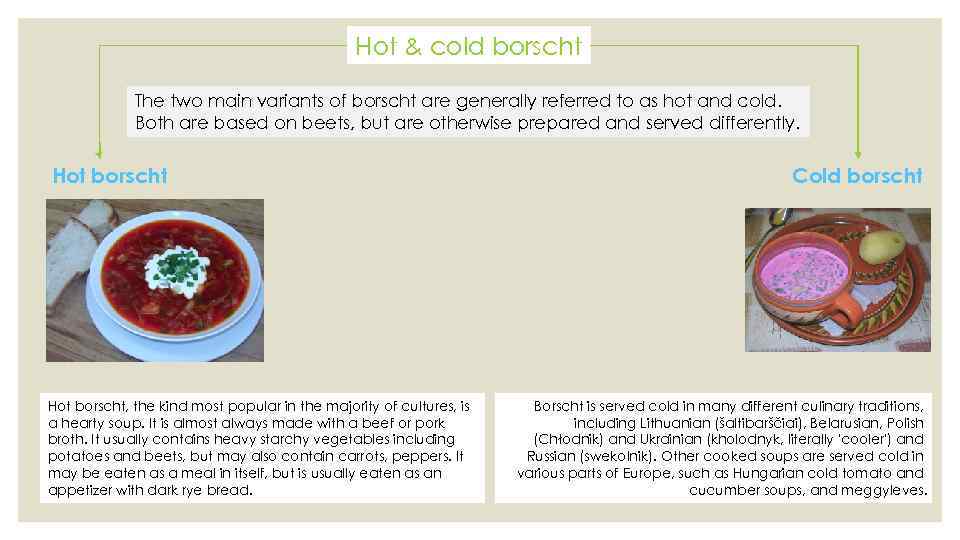
Hot & cold borscht The two main variants of borscht are generally referred to as hot and cold. Both are based on beets, but are otherwise prepared and served differently. Hot borscht, the kind most popular in the majority of cultures, is a hearty soup. It is almost always made with a beef or pork broth. It usually contains heavy starchy vegetables including potatoes and beets, but may also contain carrots, peppers. It may be eaten as a meal in itself, but is usually eaten as an appetizer with dark rye bread. Cold borscht Borscht is served cold in many different culinary traditions, including Lithuanian (šaltibarščiai), Belarusian, Polish (Chłodnik) and Ukrainian (kholodnyk, literally 'cooler') and Russian (swekolnik). Other cooked soups are served cold in various parts of Europe, such as Hungarian cold tomato and cucumber soups, and meggyleves.
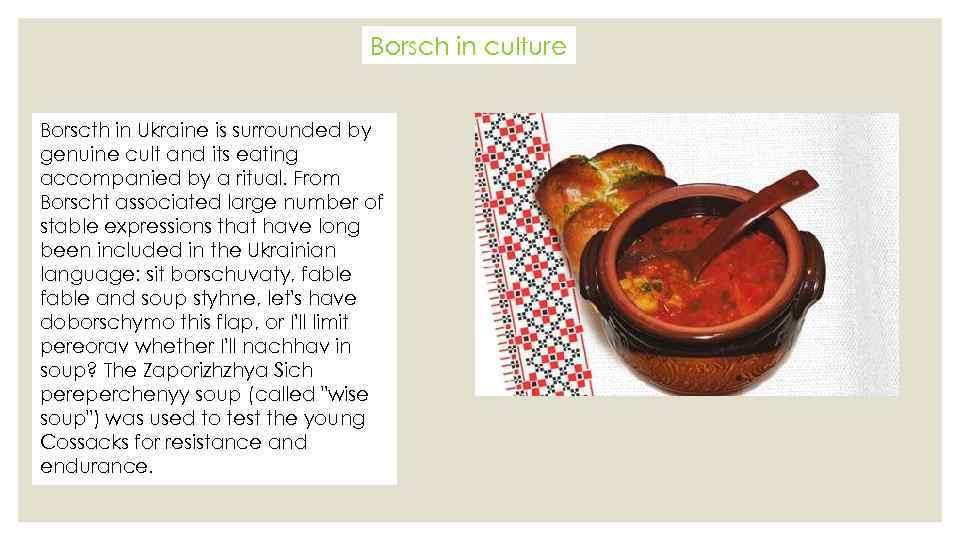
Borsch in culture Borscth in Ukraine is surrounded by genuine cult and its eating accompanied by a ritual. From Borscht associated large number of stable expressions that have long been included in the Ukrainian language: sit borschuvaty, fable and soup styhne, let's have doborschymo this flap, or I'll limit pereorav whether I'll nachhav in soup? The Zaporizhzhya Sich pereperchenyy soup (called "wise soup") was used to test the young Cossacks for resistance and endurance.

The end ☺
Скачать презентацию Borscht Borscht also borsch bortsch borstch borshch
Borscht.pptx