 Скачать презентацию Borderline Personality Disorder Comprehensive Management in Ordinary Clinical
3101b4c959333d6172b15556c5af6ff2.ppt
- Количество слайдов: 35



Borderline Personality Disorder: Comprehensive Management in Ordinary Clinical Practice Michael H Stone, MD Professor of Clinical Psychiatry Columbia College of Physicians & Surgeons
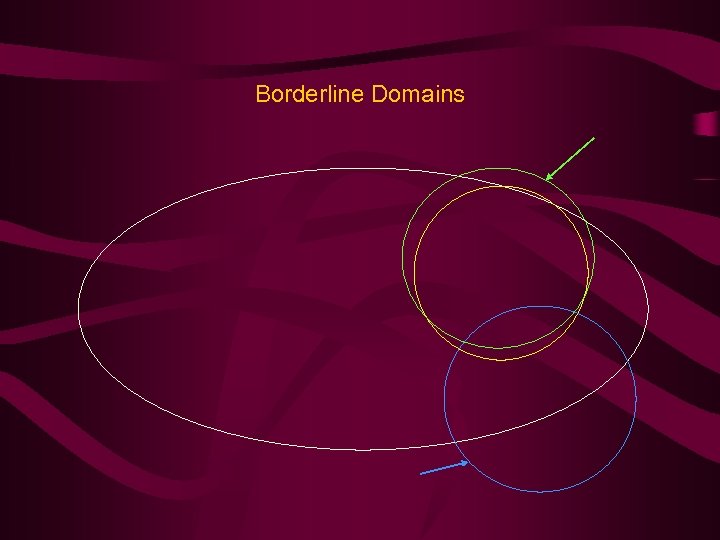
Borderline Domains
BPD: More a Syndrome than a True Personality Disorder
Common Symptom Disorders that may Accompany BPD
Some Less Common Symptoms Disorders in BPD Patients
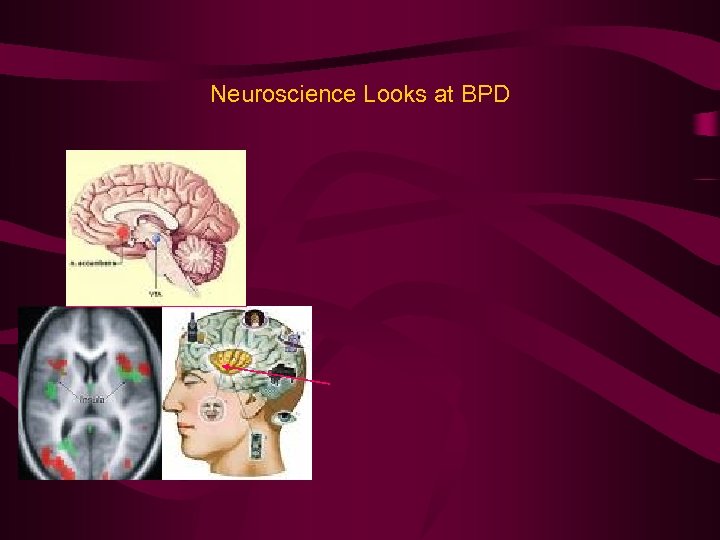
Neuroscience Looks at BPD
Mary Zanarini’s Comments on the Essential Nature of BPD Psychopathology BPD

Management Issues
Common Personality Configurations that may Accompany BPD
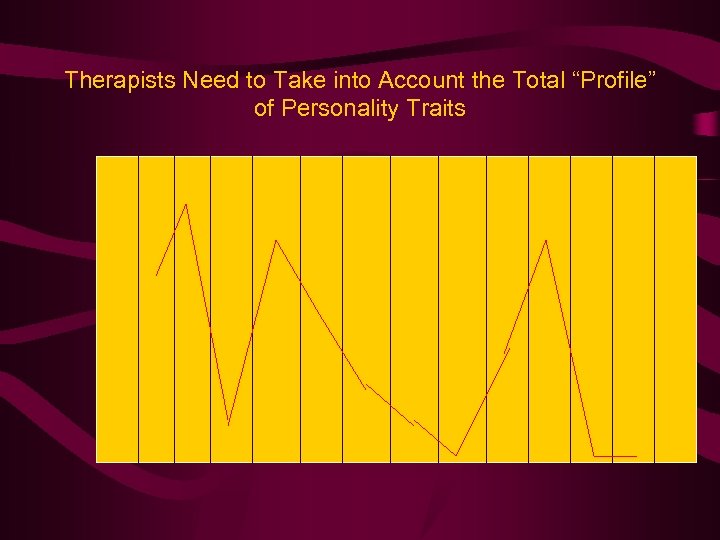
Therapists Need to Take into Account the Total “Profile” of Personality Traits
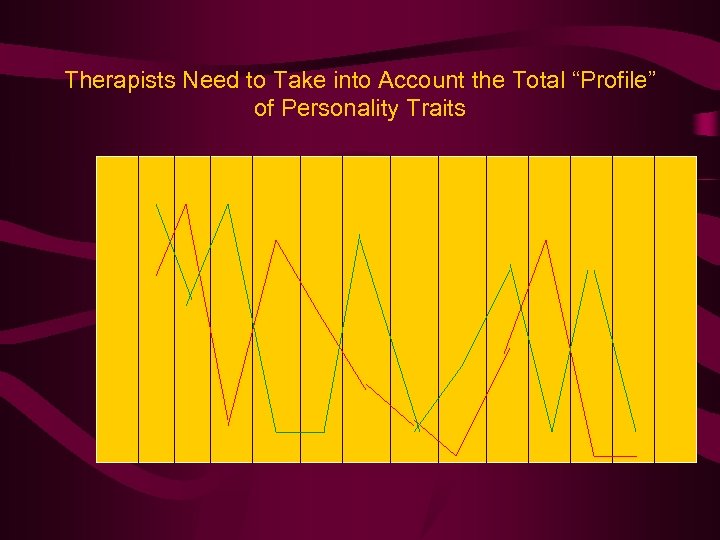
Therapists Need to Take into Account the Total “Profile” of Personality Traits
Good vs Bad Prognosis, as judged by the array of other traits The BPD patient who showed the profile of traits in the first diagram (red lines) was predominantly histrionic, masochistic, avoidant, depressive, and narcissistic. This is a much more favorable situation, prognostically, than the profile of the second BPD patient (green lines), who was predominantly narcissistic, antisocial, paranoid, passiveaggressive, and hypomanic. Such a patient would be less amenable to any of the treatment approaches now in common usage, whereas the first might do well with any of a variety of approaches.

Demographic & Background Factors
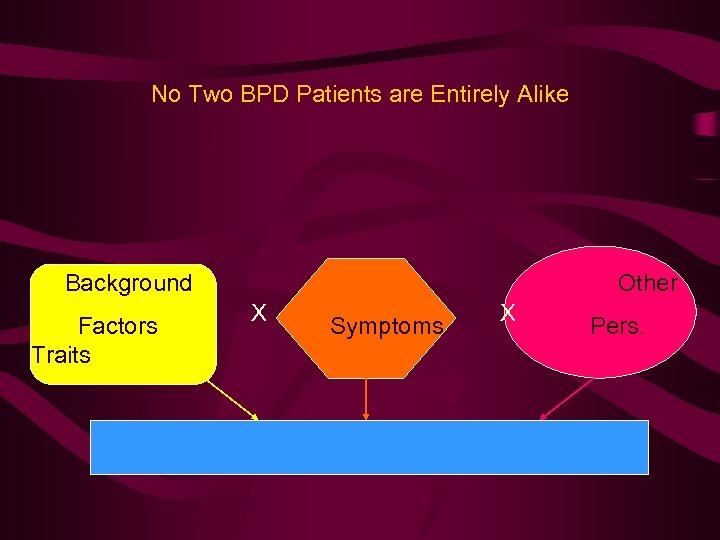
No Two BPD Patients are Entirely Alike Background Factors Traits Other X Symptoms X Pers.
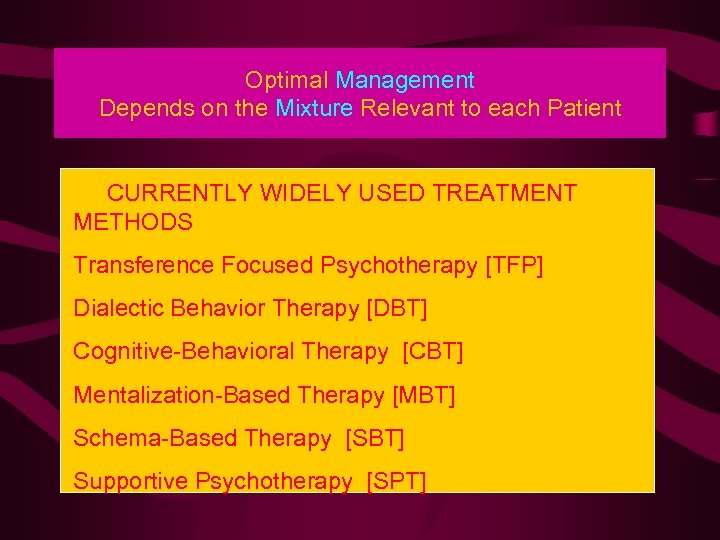
Optimal Management Depends on the Mixture Relevant to each Patient CURRENTLY WIDELY USED TREATMENT METHODS Transference Focused Psychotherapy [TFP] Dialectic Behavior Therapy [DBT] Cognitive-Behavioral Therapy [CBT] Mentalization-Based Therapy [MBT] Schema-Based Therapy [SBT] Supportive Psychotherapy [SPT]

Therapeutic Approaches & their Primary Goals
The Situation with Typical Borderline (BPD) Patients




Inordinate Anger

The Importance of Motivation Collaborative Relationship Motivation


More than One Approach is Often Necessary
The Patient’s Cognitive Style

Mechanisms Intrinsic to Any Therapeutic Modality

Factors Related to Outcome
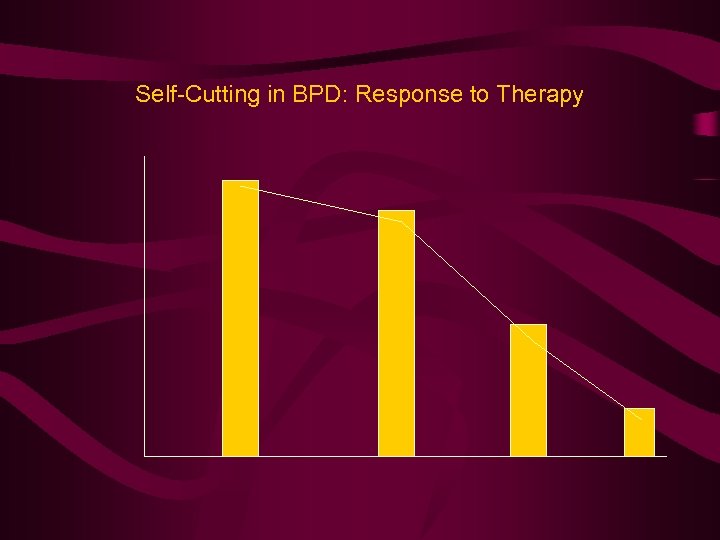
Self-Cutting in BPD: Response to Therapy

Hierarchy of Treatment Goals
Controversial Issues in the Management of BPD
Controversial Issues, cont’d Handling Suicidal BPD Patients
Peculiarities in the Treatment Course & in the Life Course of BPD Patients

 Скачать презентацию Borderline Personality Disorder Comprehensive Management in Ordinary Clinical
3101b4c959333d6172b15556c5af6ff2.ppt