 Скачать презентацию BORDER ENVIRONMENT COOPERATION COMMISSION Mitigating Impacts on Water
f97d33bb1a69ebdae2095247811733ba.ppt
- Количество слайдов: 9



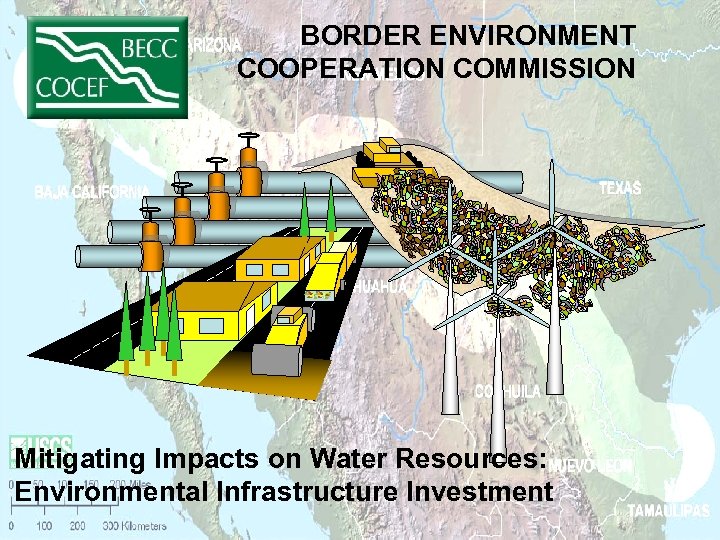
BORDER ENVIRONMENT COOPERATION COMMISSION Mitigating Impacts on Water Resources: Environmental Infrastructure Investment
Our Role in the US/Mexico Border • US-Mexico Border Environment Cooperation Agreement Signed in October 1993 – Border Environment Cooperation Commission (BECC) • Preserve, protect, and enhance US-MEX border region by identifying, developing, certifying, implementing and overseeing environmental infrastructure projects. – North American Development Bank (NADB) • Finance the construction of projects certified by BECC • Accomplishing our Mandate: – By Strengthening Cooperation and Supporting Sustainable Projects through a Transparent Binational Process in Coordination with the NADB, federal, state and local agencies, the private sector, and civil society. • Project Development and Certification – Green Building Practices – Sustainable Development
Border-wide Environmental Objectives • Effective water management practices will be applied, incorporating conservation and pollution prevention for three primary uses (urban, agriculture, and eco-systems). • Effective wastewater management practices will be applied, incorporating pollution prevention and reuse. • Effective municipal and hazardous waste management practices will be implemented encouraging pollution prevention, waste reduction, recycling, proper disposal and site remediation/restoration. • Improved air quality will be in place through compliance with air quality standards, by strategies including pollution prevention, emission reductions, and efficient transportation. • Energy generation and use will be achieved in a sustainable manner.
Water Management: Conservation and Efficiency • Agriculture – – Modernization of Irrigation Practices Sustainable Agriculture Practices – Crop Management Improved Delivery Services Policy Support • Municipal and Industrial (M&I) – – – Planned Development Investment in Rehab and Replacement Diversifying Water Supply Capacity Building Conservation and Drought-Management Plans Education and Recycling
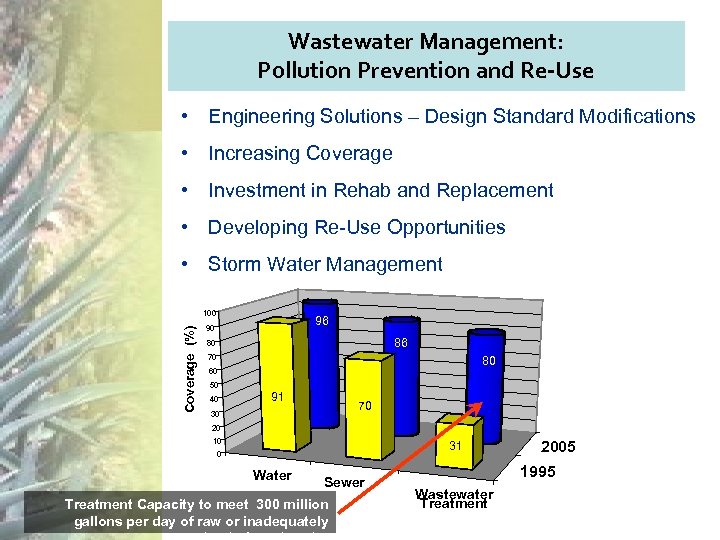
Wastewater Management: Pollution Prevention and Re-Use • Engineering Solutions – Design Standard Modifications • Increasing Coverage • Investment in Rehab and Replacement • Developing Re-Use Opportunities • Storm Water Management Coverage (%) 100 96 90 86 80 70 80 60 50 40 91 70 30 20 10 31 0 Water Sewer Treatment Capacity to meet 300 million gallons per day of raw or inadequately 2005 1995 Wastewater Treatment
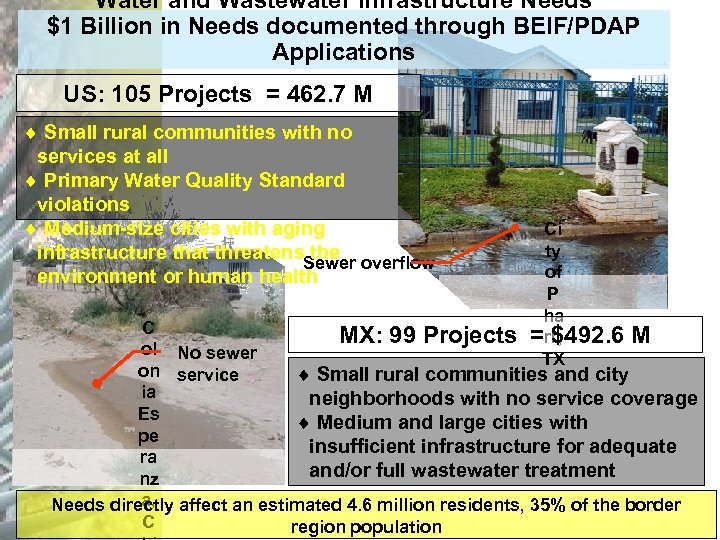
Water and Wastewater Infrastructure Needs $1 Billion in Needs documented through BEIF/PDAP Applications US: 105 Projects = 462. 7 M ¨ Small rural communities with no services at all ¨ Primary Water Quality Standard violations ¨ Medium-size cities with aging infrastructure that threatens. Sewer overflow the environment or human health Ci ty of P ha =rr, $492. 6 TX C MX: 99 Projects M ol No sewer on service ¨ Small rural communities and city ia neighborhoods with no service coverage Es ¨ Medium and large cities with pe insufficient infrastructure for adequate ra and/or full wastewater treatment nz a, Needs directly affect an estimated 4. 6 million residents, 35% of the border C region population
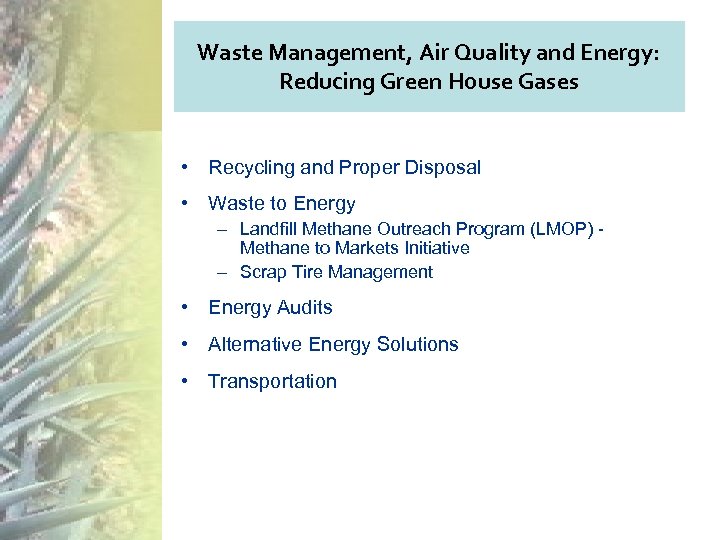
Waste Management, Air Quality and Energy: Reducing Green House Gases • Recycling and Proper Disposal • Waste to Energy – Landfill Methane Outreach Program (LMOP) Methane to Markets Initiative – Scrap Tire Management • Energy Audits • Alternative Energy Solutions • Transportation
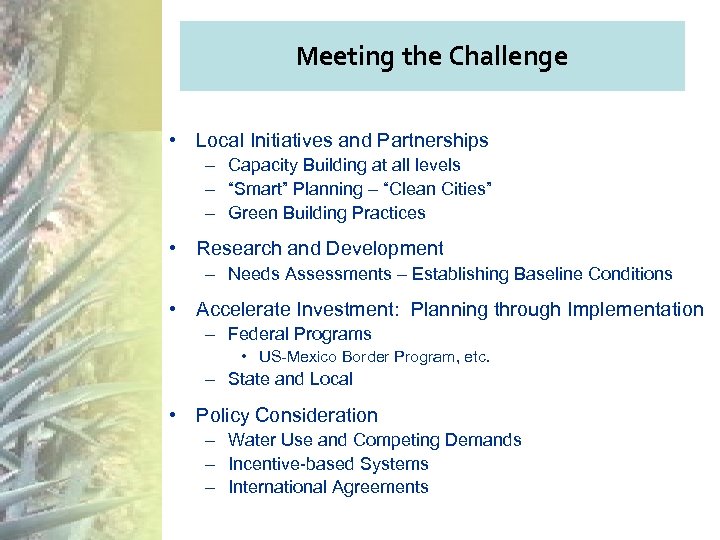
Meeting the Challenge • Local Initiatives and Partnerships – Capacity Building at all levels – “Smart” Planning – “Clean Cities” – Green Building Practices • Research and Development – Needs Assessments – Establishing Baseline Conditions • Accelerate Investment: Planning through Implementation – Federal Programs • US-Mexico Border Program, etc. – State and Local • Policy Consideration – Water Use and Competing Demands – Incentive-based Systems – International Agreements
Thank You Renata Manning-Gbogbo Senior Policy Advisor rmanning@cocef. org
Скачать презентацию BORDER ENVIRONMENT COOPERATION COMMISSION Mitigating Impacts on Water
f97d33bb1a69ebdae2095247811733ba.ppt