 Скачать презентацию Borås May 2007 PD Dr T Brinkmann
4a3b22e653e5293c839a4b6201243e1e.ppt
- Количество слайдов: 85




Borås, May, 2007 PD Dr. T. Brinkmann

Borås, May, 2007 PD Dr. T. Brinkmann
Anaemia Disease State Management Borås, May, 2007 PD Dr. T. Brinkmann
PD Dr. Thomas BRINKMANN Eur. Clin. Chem European Scientific Group Manager Diagnostics and Life Science Europe, Middle East, Africa and India Beckman Coulter Eurocenter Nyon, Switzerland Associate Professor of Clinical Biochemistry Medical Faculty Ruhr University of Bochum, Germany Borås, May, 2007 PD Dr. T. Brinkmann
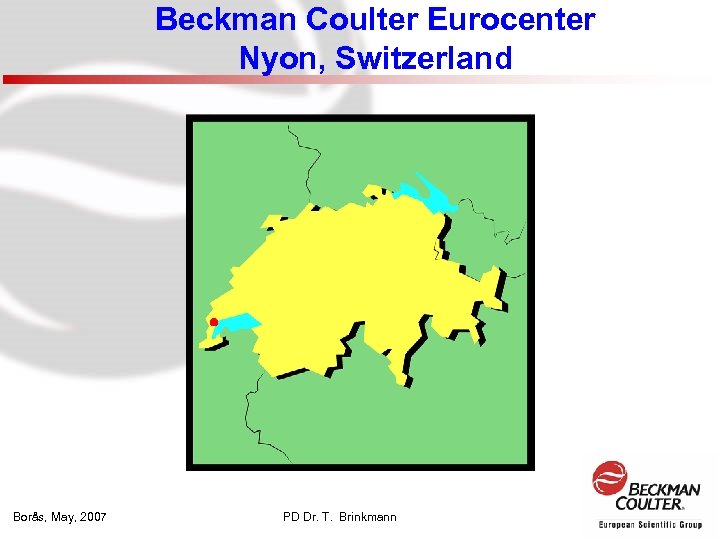
Beckman Coulter Eurocenter Nyon, Switzerland Borås, May, 2007 PD Dr. T. Brinkmann

NYON Borås, May, 2007 PD Dr. T. Brinkmann
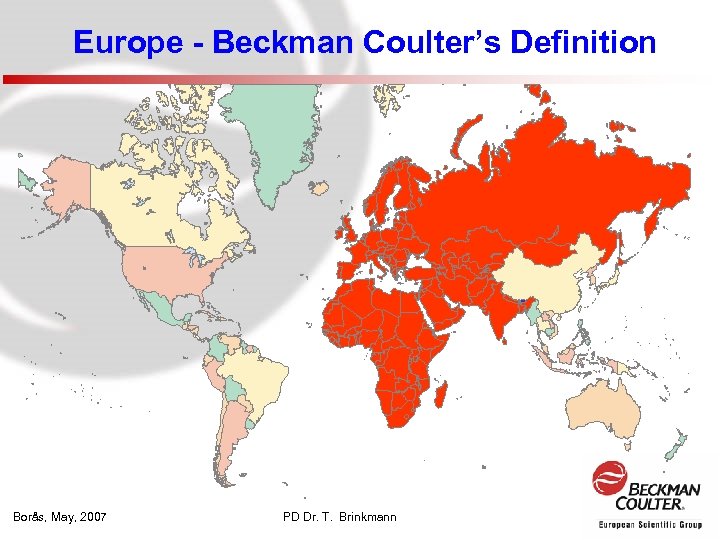
Europe - Beckman Coulter’s Definition Borås, May, 2007 PD Dr. T. Brinkmann
Objective Anaemia is an important health issue Anaemia Iron Deficiency Anaemia of Cancer Anaemia of Renal Failure Anaemia in elderly people and chronic diseases How to detect anaemia? Anaemia Disease State Management Anaemia in Chronic Diseases (+IDA) Haematological Malignancies (EPO) Summary Borås, May, 2007 PD Dr. T. Brinkmann
Anaemia – is an important public health issue Borås, May, 2007 PD Dr. T. Brinkmann
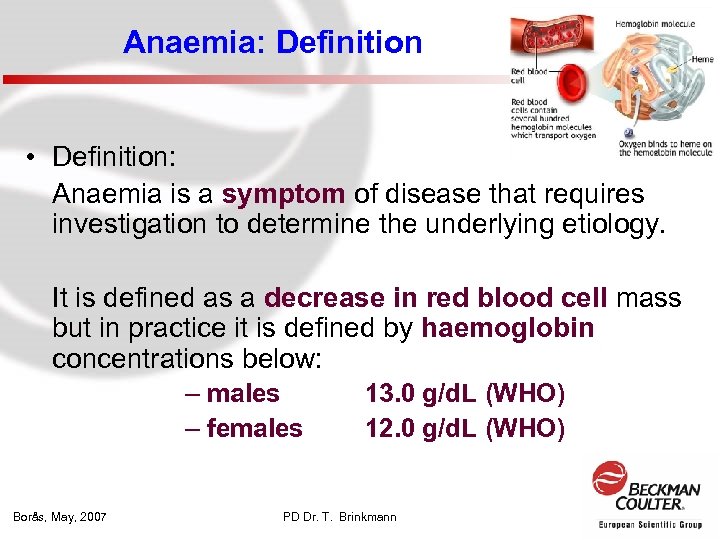
Anaemia: Definition • Definition: Anaemia is a symptom of disease that requires investigation to determine the underlying etiology. It is defined as a decrease in red blood cell mass but in practice it is defined by haemoglobin concentrations below: – males – females 13. 0 g/d. L (WHO) 12. 0 g/d. L (WHO) Borås, May, 2007 PD Dr. T. Brinkmann
Anaemia • Prevalence – Widespread public health problem with major consequences for human health and socio-economic development – WHO estimates 2 billion people are affected worldwide – >50% due to iron deficiency • Effects on health – – Increased maternal and child mortality Decreased cognitive and physical development in children Decreased productivity in adults Increased risk of postoperative morbidity and mortality Borås, May, 2007 PD Dr. T. Brinkmann
Anaemia • Causes – Nutritional deficiencies • Iron, B 12, Folate, Vitamin A – Infectious diseases • Malaria, helminth infections (hookworm and schistosomiasis), HIV – Thalassaemias, sickle cell, haemolytic anaemia, leukaemia – Cancer, chronic renal disease, diabetes, heart disease, rheumatoid arthritis, gastrointestinal disease – Chemotherapy, radiotherapy Borås, May, 2007 PD Dr. T. Brinkmann
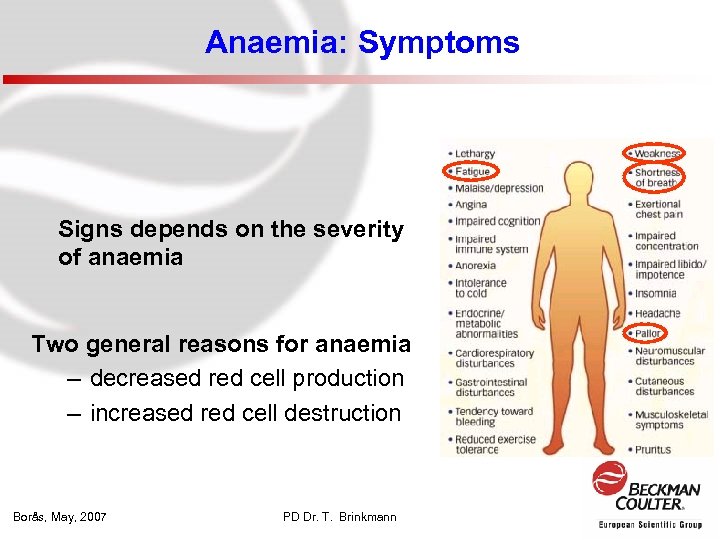
Anaemia: Symptoms Signs depends on the severity of anaemia Two general reasons for anaemia – decreased red cell production – increased red cell destruction Borås, May, 2007 PD Dr. T. Brinkmann
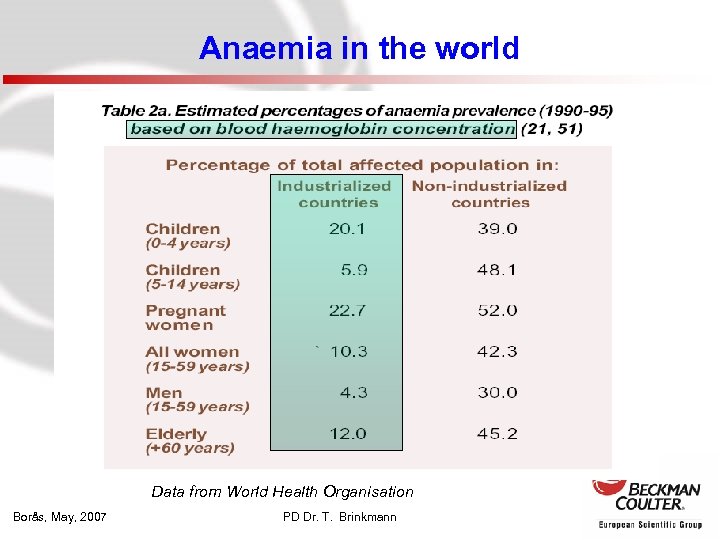
Anaemia in the world Data from World Health Organisation Borås, May, 2007 PD Dr. T. Brinkmann
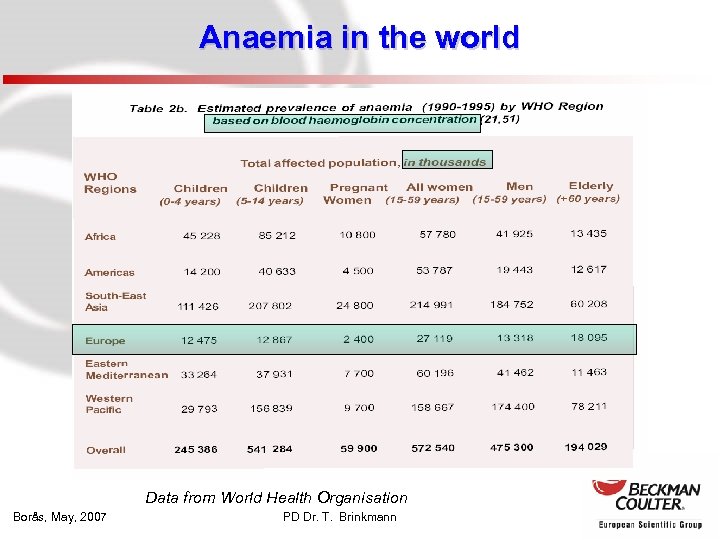
Anaemia in the world Data from World Health Organisation Borås, May, 2007 PD Dr. T. Brinkmann
Anaemia in Iron Deficiency Borås, May, 2007 PD Dr. T. Brinkmann
Iron Deficiency Anaemia • The most frequent cause of anaemia • Causes of iron deficiency – Diet low iron: only 1 mg absorbed for 10 -20 mg ingested – Body changes that increase requirement: growth in children, pregnancy, lactation – Gastrointestinal tract abnormalities (post surgery) – Blood loss: gastrointestinal bleeding, menstruation, injury Borås, May, 2007 PD Dr. T. Brinkmann
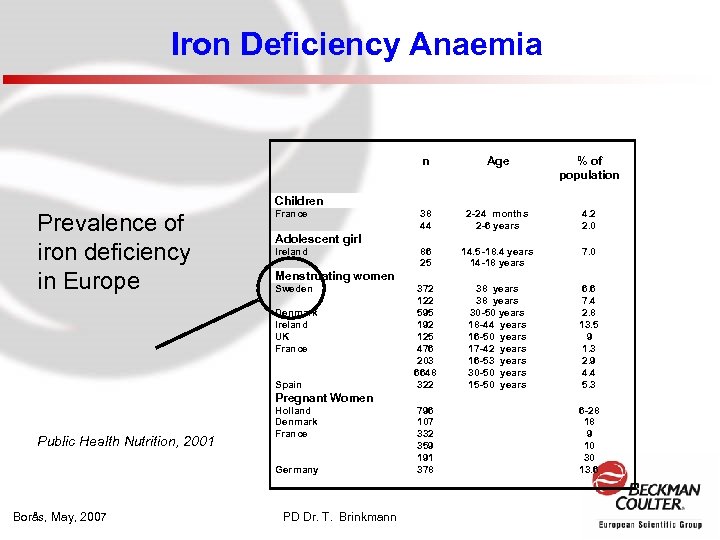
Iron Deficiency Anaemia n Age % of population Children Prevalence of iron deficiency in Europe France 38 44 2 -24 months 2 -6 years 4. 2 2. 0 86 25 14. 5 -18. 4 years 14 -18 years 7. 0 372 122 595 192 125 476 203 6648 322 38 years 30 -50 years 18 -44 years 16 -50 years 17 -42 years 16 -53 years 30 -50 years 15 -50 years 6. 6 7. 4 2. 8 13. 5 9 1. 3 2. 9 4. 4 5. 3 Adolescent girl Ireland Menstruating women Sweden Denmark Ireland UK France Spain Pregnant Women Public Health Nutrition, 2001 Holland Denmark France Germany Borås, May, 2007 PD Dr. T. Brinkmann 796 107 332 359 191 378 6 -28 18 9 10 30 13. 6
Iron Deficiency Anaemia • Anaemia in children – Range from 4 to 7% – Impaired cognitive performance, motor development, coordination, language development • Anaemia in pregnant women – Range from 6 to 30% – Risk factor for premature delivery, low birth weight, possible inferior neonatal health Borås, May, 2007 PD Dr. T. Brinkmann
Anaemia of Cancer Borås, May, 2007 PD Dr. T. Brinkmann
Anaemia of Cancer • Many factors contribute to anaemia in cancer: – Bleeding – Haemolysis – Marrow infiltration by tumor cells – Nutritional deficiencies – Cytokine-mediated anaemia – Chemotherapy – Radio-induced myelosuppression Borås, May, 2007 PD Dr. T. Brinkmann
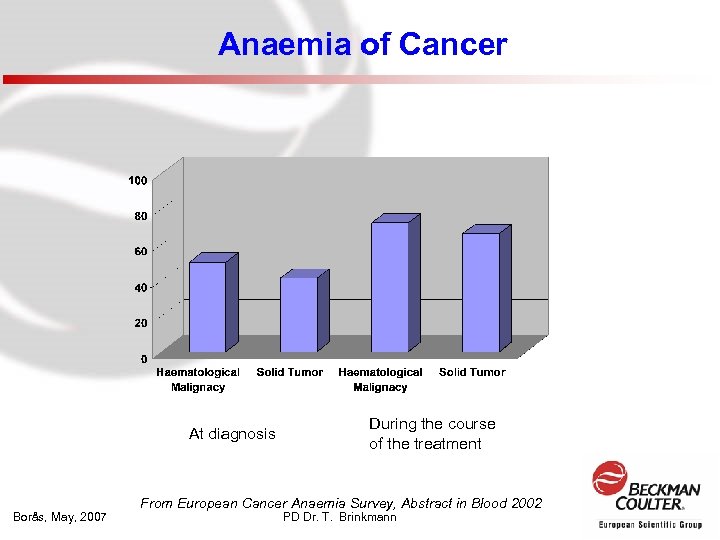
Anaemia of Cancer At diagnosis During the course of the treatment From European Cancer Anaemia Survey, Abstract in Blood 2002 Borås, May, 2007 PD Dr. T. Brinkmann
Anaemia of Renal Failure Borås, May, 2007 PD Dr. T. Brinkmann
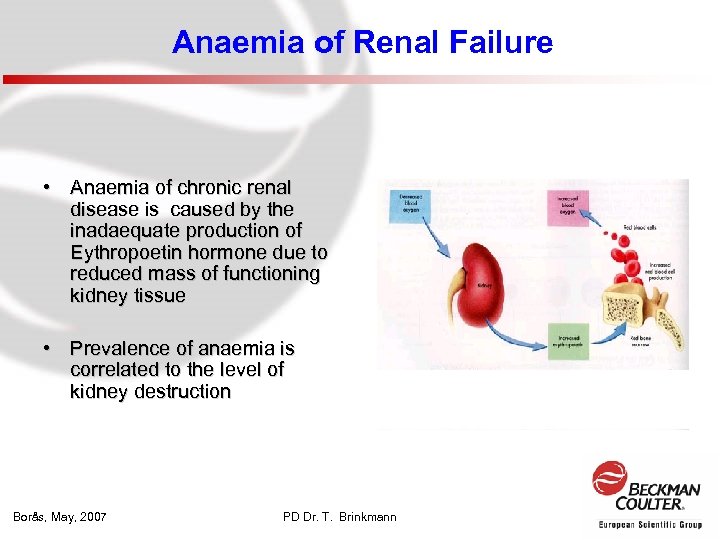
Anaemia of Renal Failure • Anaemia of chronic renal disease is caused by the inadaequate production of Eythropoetin hormone due to reduced mass of functioning kidney tissue • Prevalence of anaemia is correlated to the level of kidney destruction Borås, May, 2007 PD Dr. T. Brinkmann
Anaemia of Renal Disease • Chronic Renal Insufficiency – Progressive destruction of renal mass – Evaluated and staged with rate of glomerular filtration (not only, Creatinin clearance: 15 -80 m. L/min) • Anaemia in Chronic Renal Insufficiency: – Increased risk of mortality and cardiac complications • For every 1 g decrease in Hb concentration, there is a 6% increase in the risk of left ventricular hypertrophy – Third National Health and Nutrition Examination Survey in US ( Hb < 12 g / d. L) • 1, 200, 000 women • 300, 000 men ( J Am Soc Nephrol, 2002) Borås, May, 2007 PD Dr. T. Brinkmann
Anaemia of Renal Disease • Chronic renal failure: – Very low glomerular filtration rate ( <10 -15 m. L/min) – Treatment: kidney transplantation or dialysis – Anaemia is corrected by substitutive rh. Epo but Hb monitoring is required – In US: • 1, 200 people per million population – In Europe: • 700 people per million population ( Nephrol Dial Transplant, 2002) Borås, May, 2007 PD Dr. T. Brinkmann
Anaemia in elderly people and chronic diseases Borås, May, 2007 PD Dr. T. Brinkmann
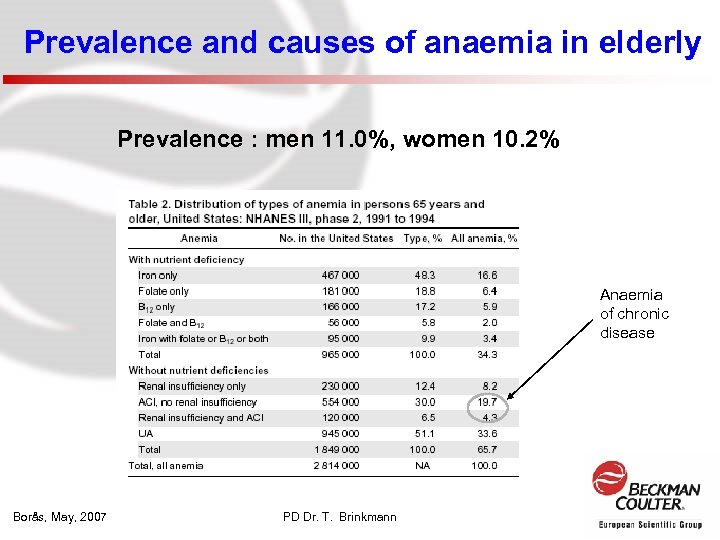
Prevalence and causes of anaemia in elderly Prevalence : men 11. 0%, women 10. 2% Anaemia of chronic disease Borås, May, 2007 PD Dr. T. Brinkmann
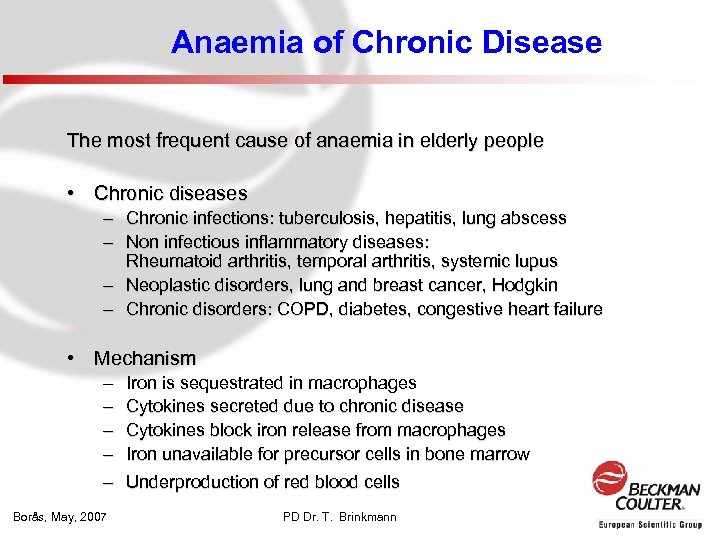
Anaemia of Chronic Disease The most frequent cause of anaemia in elderly people • Chronic diseases – Chronic infections: tuberculosis, hepatitis, lung abscess – Non infectious inflammatory diseases: Rheumatoid arthritis, temporal arthritis, systemic lupus – Neoplastic disorders, lung and breast cancer, Hodgkin – Chronic disorders: COPD, diabetes, congestive heart failure • Mechanism – – – Iron is sequestrated in macrophages Cytokines secreted due to chronic disease Cytokines block iron release from macrophages Iron unavailable for precursor cells in bone marrow Underproduction of red blood cells Borås, May, 2007 PD Dr. T. Brinkmann
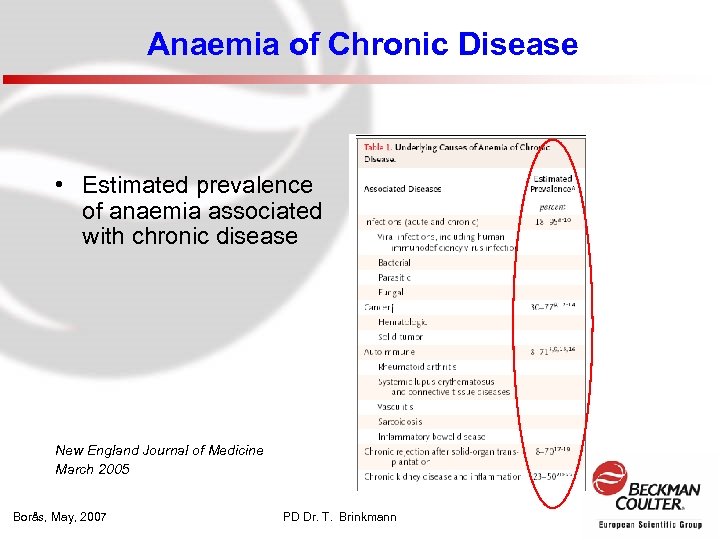
Anaemia of Chronic Disease • Estimated prevalence of anaemia associated with chronic disease New England Journal of Medicine March 2005 Borås, May, 2007 PD Dr. T. Brinkmann
Anaemia • Iron deficiency anaemia • Anaemia of cancer • Anaemia in pregnancy • Anaemia of renal disease • Anaemia in elderly • Anaemia in chronic disease Borås, May, 2007 PD Dr. T. Brinkmann
How to detect anaemia ? Borås, May, 2007 PD Dr. T. Brinkmann
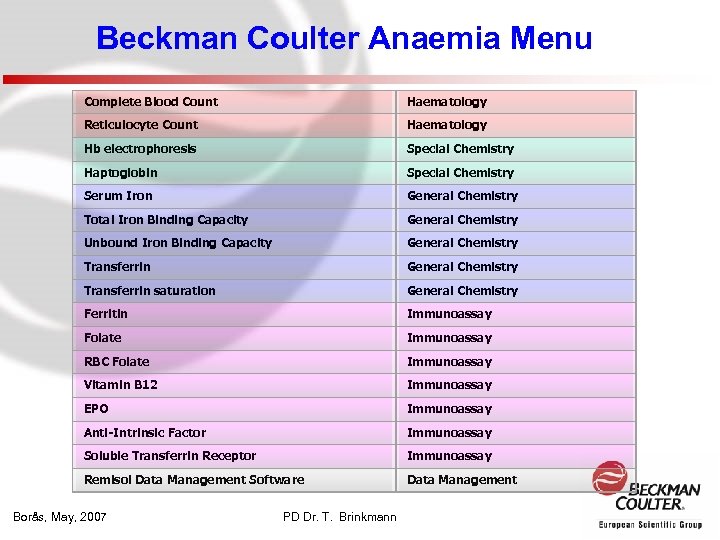
Beckman Coulter Anaemia Menu Complete Blood Count Haematology Reticulocyte Count Haematology Hb electrophoresis Special Chemistry Haptoglobin Special Chemistry Serum Iron General Chemistry Total Iron Binding Capacity General Chemistry Unbound Iron Binding Capacity General Chemistry Transferrin saturation General Chemistry Ferritin Immunoassay Folate Immunoassay RBC Folate Immunoassay Vitamin B 12 Immunoassay EPO Immunoassay Anti-Intrinsic Factor Immunoassay Soluble Transferrin Receptor Immunoassay Remisol Data Management Software Data Management Borås, May, 2007 PD Dr. T. Brinkmann
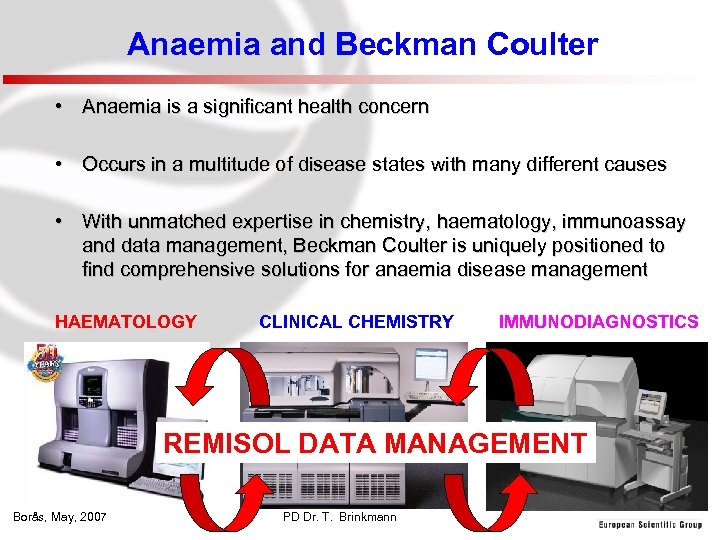
Anaemia and Beckman Coulter • Anaemia is a significant health concern • Occurs in a multitude of disease states with many different causes • With unmatched expertise in chemistry, haematology, immunoassay and data management, Beckman Coulter is uniquely positioned to find comprehensive solutions for anaemia disease management HAEMATOLOGY CLINICAL CHEMISTRY IMMUNODIAGNOSTICS REMISOL DATA MANAGEMENT Borås, May, 2007 PD Dr. T. Brinkmann
Our Solution Borås, May, 2007 PD Dr. T. Brinkmann
Our Solution The family of Uni. Cel systems is designed for flexible multi-platform configuration and connectivity, enabling labs to consolidate and optimize workload and labor resources and hence to reduce costs Borås, May, 2007 PD Dr. T. Brinkmann
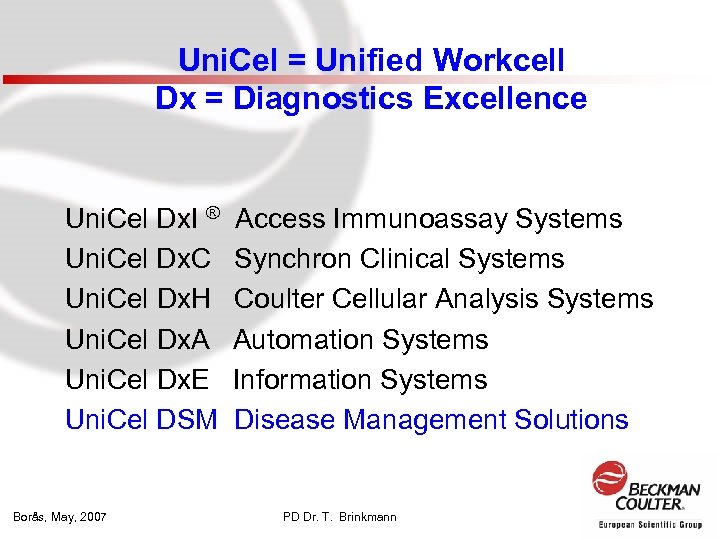
Uni. Cel = Unified Workcell Dx = Diagnostics Excellence Uni. Cel Dx. I ® Access Immunoassay Systems Uni. Cel Dx. C Synchron Clinical Systems Uni. Cel Dx. H Coulter Cellular Analysis Systems Uni. Cel Dx. A Automation Systems Uni. Cel Dx. E Information Systems Uni. Cel DSM Disease Management Solutions Borås, May, 2007 PD Dr. T. Brinkmann
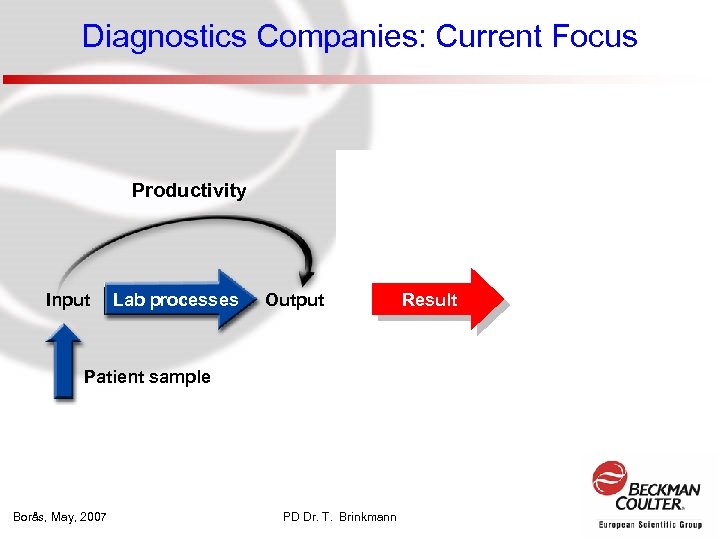
Diagnostics Companies: Current Focus Productivity Input Lab processes Output Result Patient sample Borås, May, 2007 PD Dr. T. Brinkmann
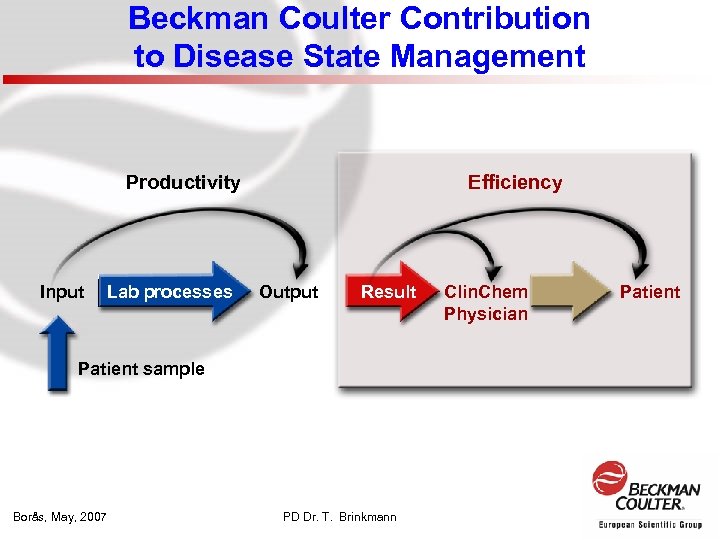
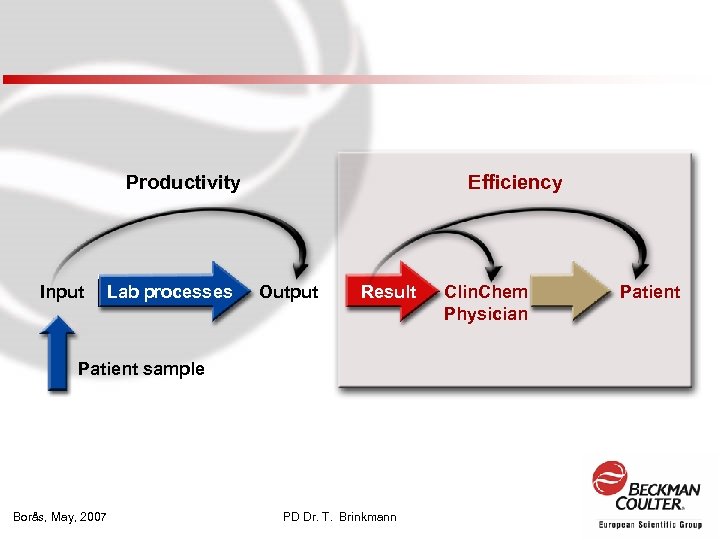
Beckman Coulter Contribution to Disease State Management Productivity Input Lab processes Efficiency Output Result Patient sample Borås, May, 2007 PD Dr. T. Brinkmann Clin. Chem Physician Patient
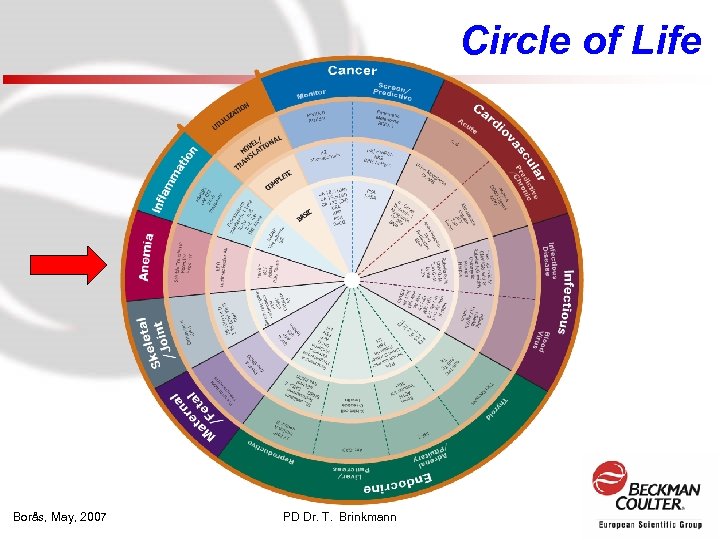
Circle of Life Borås, May, 2007 PD Dr. T. Brinkmann
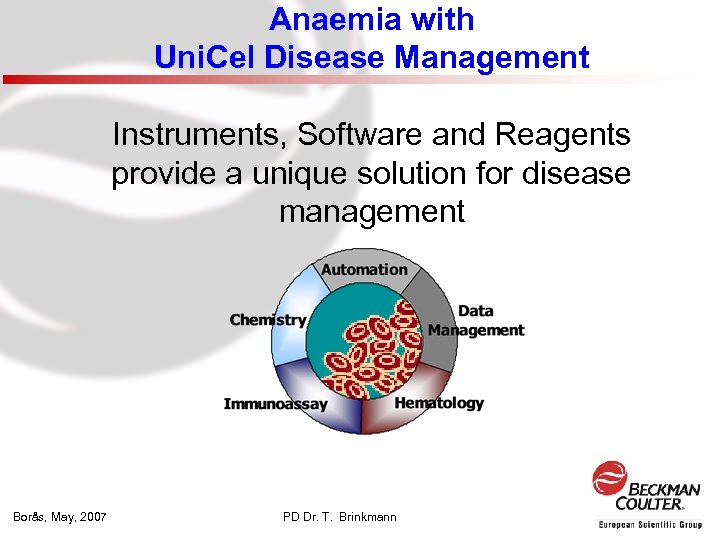
Anaemia with Uni. Cel Disease Management Instruments, Software and Reagents provide a unique solution for disease management Borås, May, 2007 PD Dr. T. Brinkmann
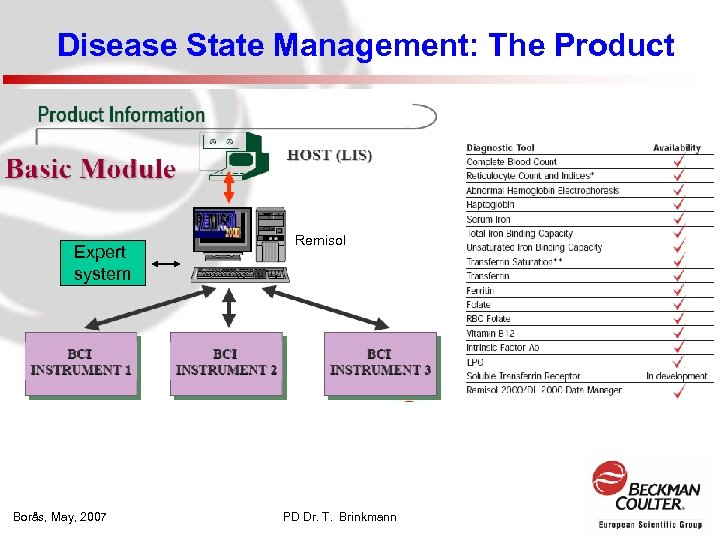
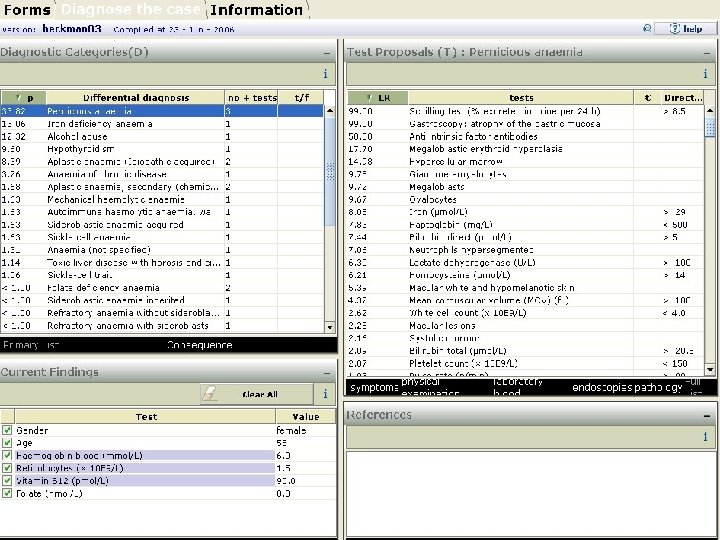
Disease State Management: The Product Expert system Remisol Borås, May, 2007 PD Dr. T. Brinkmann
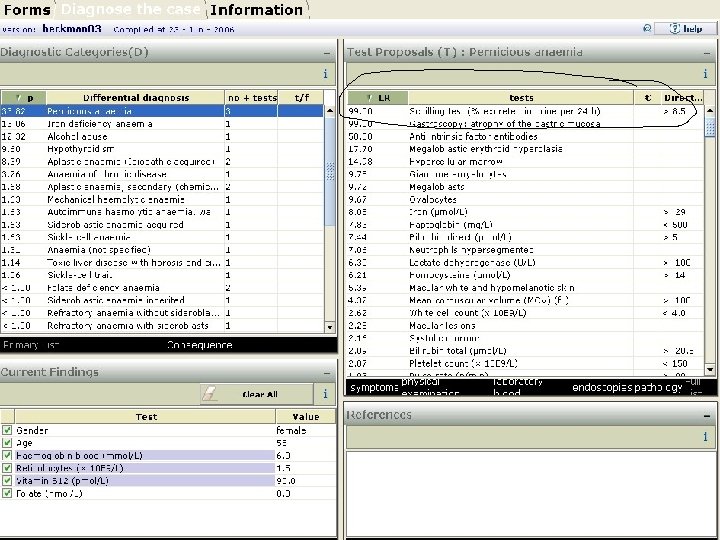
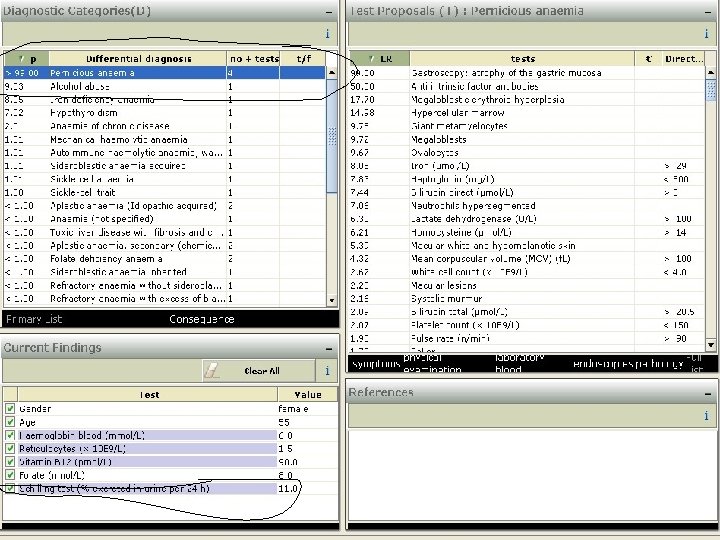
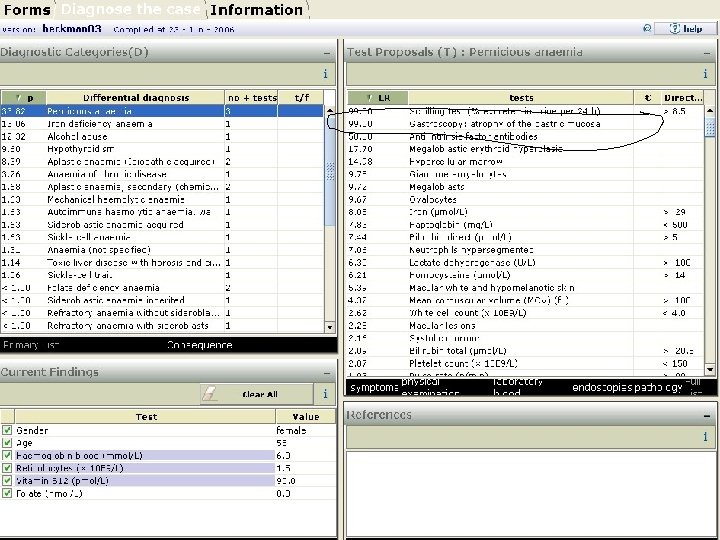
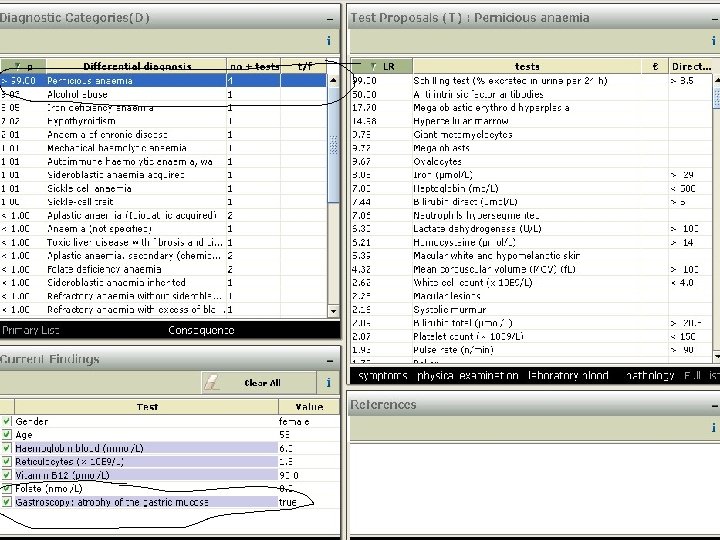
Combining Hardware, Reagents and Information Example: Pernicious Anaemia • Prevalence – Major cause of vitamin B 12 deficiency in developed countries. – Underdiagnosed. • Chronic and autoimmune illness with malabsorption of B 12 due to Intrinsic Factor deficiency – Destruction of parietal cells from the gastric mucosa leading to failure of IF production. – Occurrence of autoantibodies to gastric parietal cells or to IF. – End-stage of autoimmune destruction of gastric mucosa. • Clinical signs – Silent until the end-stage. – First: megaloblastic anaemia – Weakness, weight loss, non specific GI symptoms, neurological symptoms ( senile dementia. . . ) – Associated with other autoimmune diseases: hypothyroidism, Graves' disease, thyroiditis, Addison's disease – Associated with a higher risk to develop gastric cancer Borås, May, 2007 PD Dr. T. Brinkmann
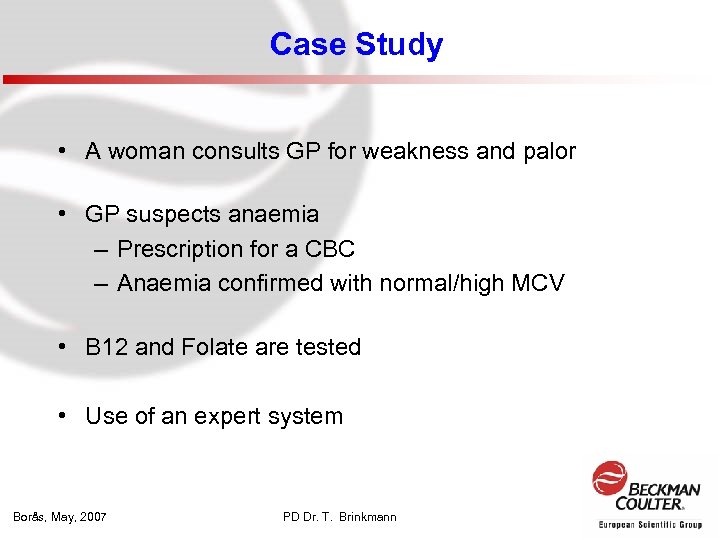
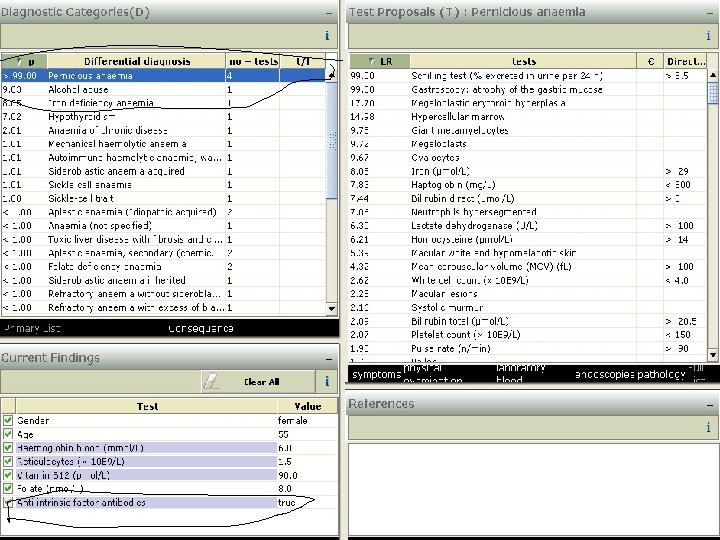
Case Study • A woman consults GP for weakness and palor • GP suspects anaemia – Prescription for a CBC – Anaemia confirmed with normal/high MCV • B 12 and Folate are tested • Use of an expert system Borås, May, 2007 PD Dr. T. Brinkmann
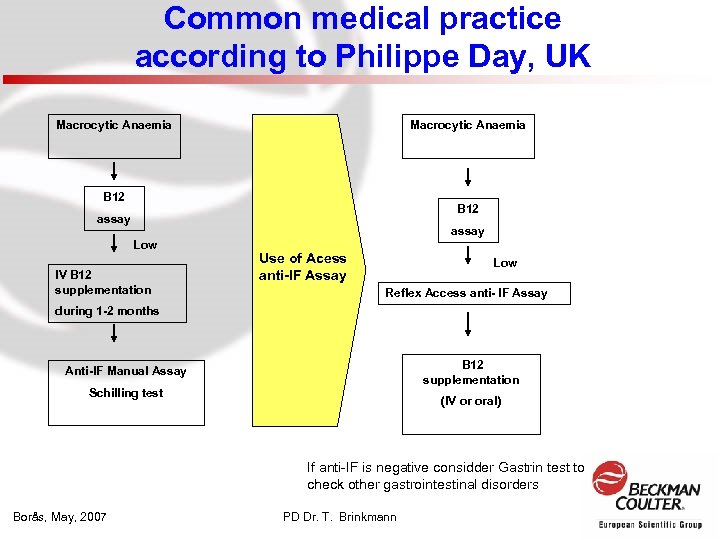
Common medical practice according to Philippe Day, UK Macrocytic Anaemia B 12 assay Low IV B 12 supplementation Use of Acess anti-IF Assay Low Reflex Access anti- IF Assay during 1 -2 months B 12 supplementation Anti-IF Manual Assay Schilling test (IV or oral) If anti-IF is negative considder Gastrin test to check other gastrointestinal disorders Borås, May, 2007 PD Dr. T. Brinkmann
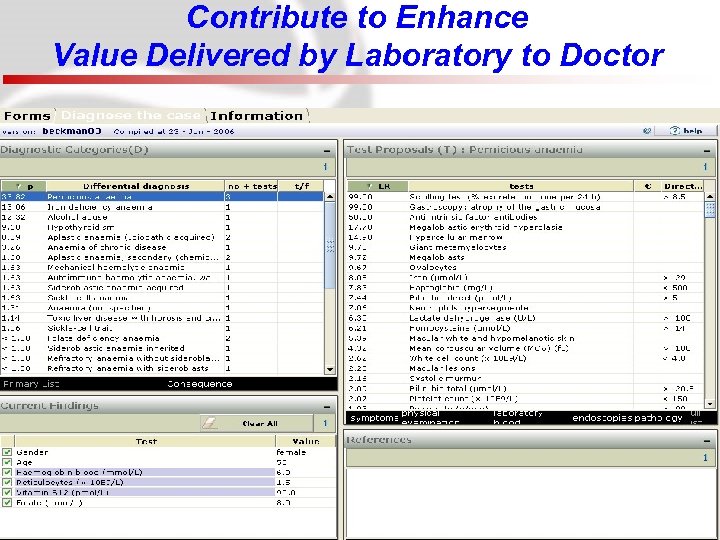
Contribute to Enhance Value Delivered by Laboratory to Doctor Borås, May, 2007 PD Dr. T. Brinkmann
Borås, May, 2007 PD Dr. T. Brinkmann
Borås, May, 2007 PD Dr. T. Brinkmann
Borås, May, 2007 PD Dr. T. Brinkmann
Borås, May, 2007 PD Dr. T. Brinkmann
Borås, May, 2007 PD Dr. T. Brinkmann
Borås, May, 2007 PD Dr. T. Brinkmann
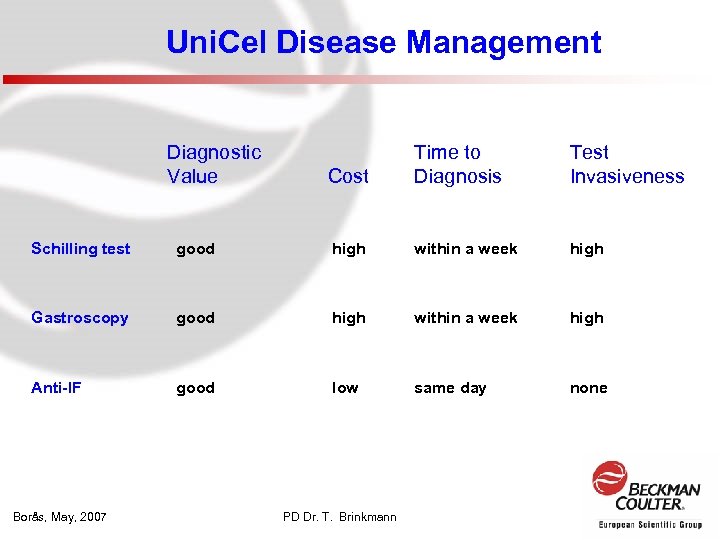
Uni. Cel Disease Management Diagnostic Value Cost Time to Diagnosis Test Invasiveness Schilling test good high within a week high Gastroscopy good high within a week high Anti-IF good low same day none Borås, May, 2007 PD Dr. T. Brinkmann
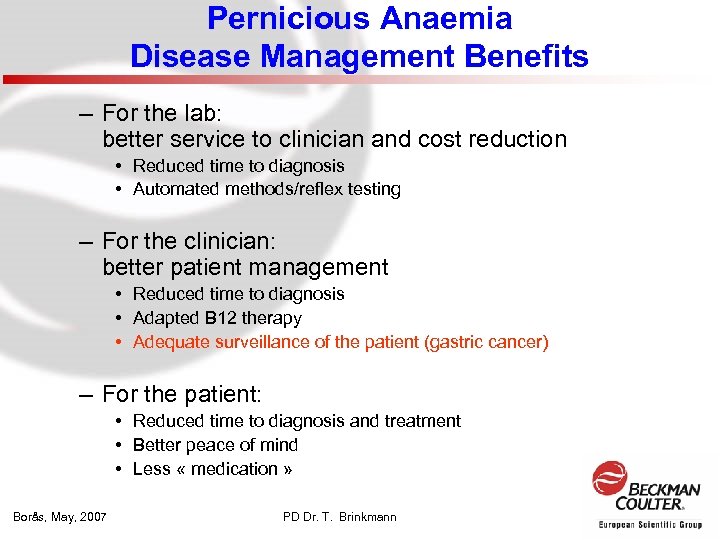
Pernicious Anaemia Disease Management Benefits – For the lab: better service to clinician and cost reduction • Reduced time to diagnosis • Automated methods/reflex testing – For the clinician: better patient management • Reduced time to diagnosis • Adapted B 12 therapy • Adequate surveillance of the patient (gastric cancer) – For the patient: • Reduced time to diagnosis and treatment • Better peace of mind • Less « medication » Borås, May, 2007 PD Dr. T. Brinkmann
Productivity Input Lab processes Efficiency Output Result Patient sample Borås, May, 2007 PD Dr. T. Brinkmann Clin. Chem Physician Patient
Differentiate Anaemia of Chronic Disease (ACD) from Iron Deficiency Anaemia (IDA) Borås, May, 2007 PD Dr. T. Brinkmann
Differentiate ACD from ACD with IDA • Prevalence ACD 27% of anaemias 17% of the elderly (outpatient) and 35% (acute ward) ? ACD with IDA (not easy to separate) • Clinical signs Asthenia, fatigue or depression, fever and the symptoms of the underline disease Borås, May, 2007 PD Dr. T. Brinkmann
Common practice • Anaemia of Chronic Disease Treat the inflammation In case of anaemia with low Iron and Tf Sat%, normal or high Ferritin, with history of chronic infection of inflammation, confirmed with positive CRP, we suspect an ANAEMIA OF CHRONIC DISEASE • ACD + IDA (mixed form) Treat the underlined disease (inflammation) and wait for the outcome Insufficient Iron therapy (too low, too short) IDA often misdiagnosed and mistreated Impact for the patient: Individual remains anaemic for a long time Qo. L remains low Borås, May, 2007 PD Dr. T. Brinkmann
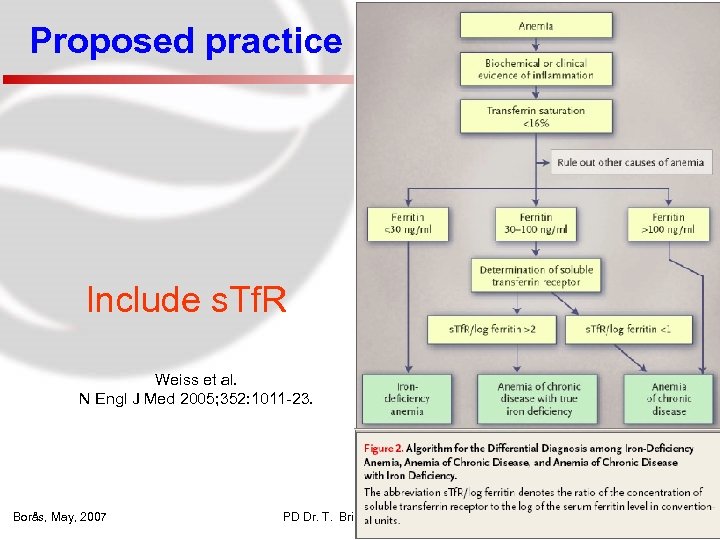
Proposed practice Include s. Tf. R Weiss et al. N Engl J Med 2005; 352: 1011 -23. Borås, May, 2007 PD Dr. T. Brinkmann
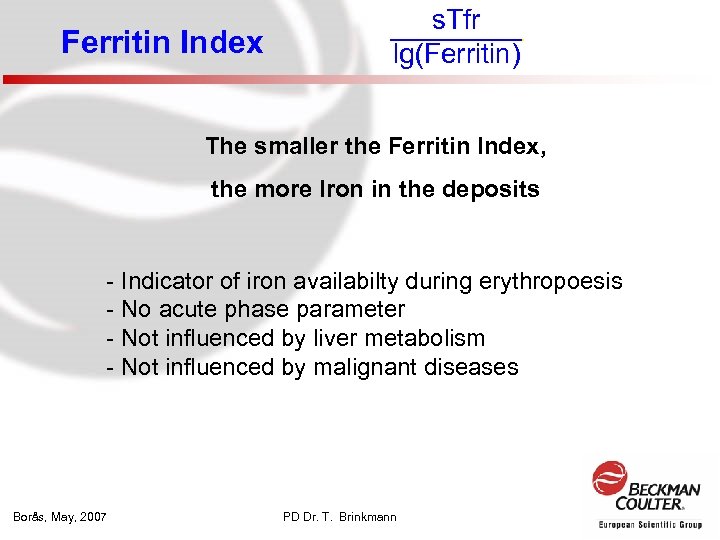
Ferritin Index s. Tfr lg(Ferritin) The smaller the Ferritin Index, the more Iron in the deposits - Indicator of iron availabilty during erythropoesis - No acute phase parameter - Not influenced by liver metabolism - Not influenced by malignant diseases Borås, May, 2007 PD Dr. T. Brinkmann
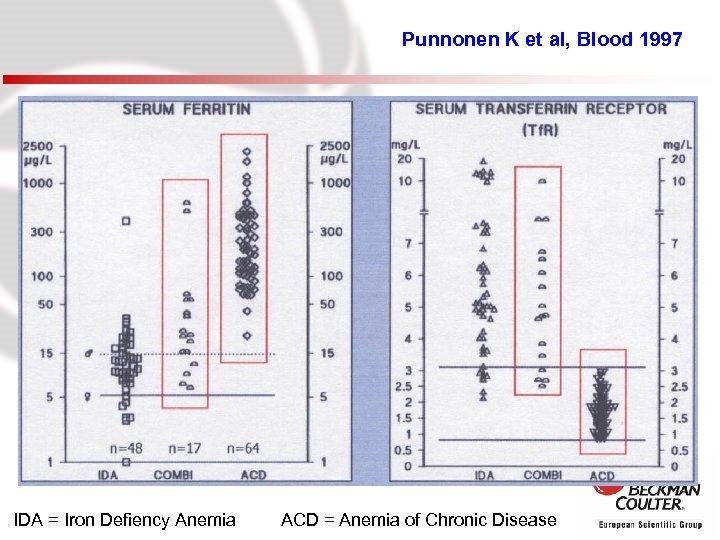
Punnonen K et al, Blood 1997 Borås, May, 2007 PD Dr. T. Brinkmann IDA = Iron Defiency Anemia ACD = Anemia of Chronic Disease
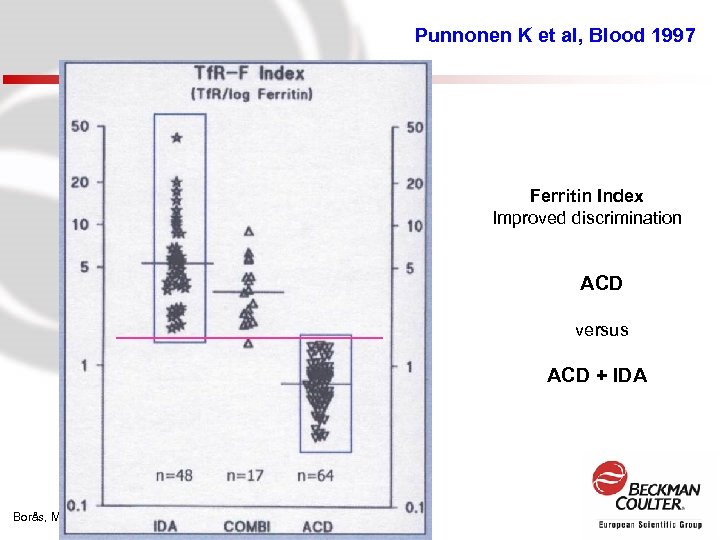
Punnonen K et al, Blood 1997 Ferritin Index Improved discrimination ACD versus ACD + IDA Borås, May, 2007 PD Dr. T. Brinkmann
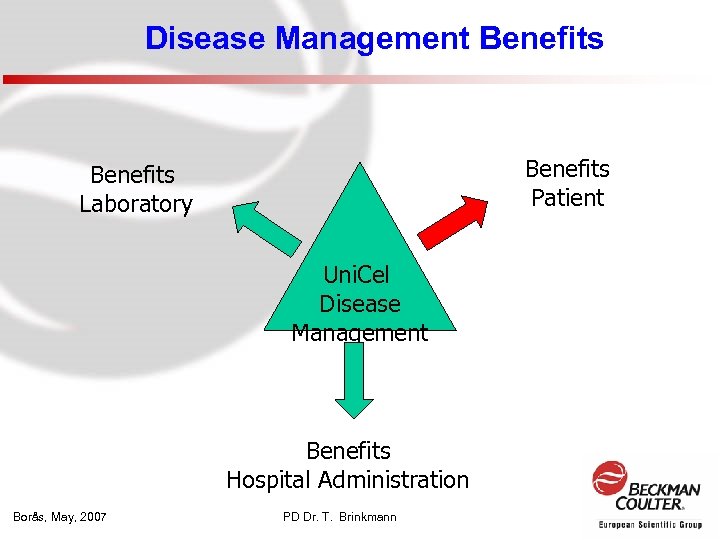
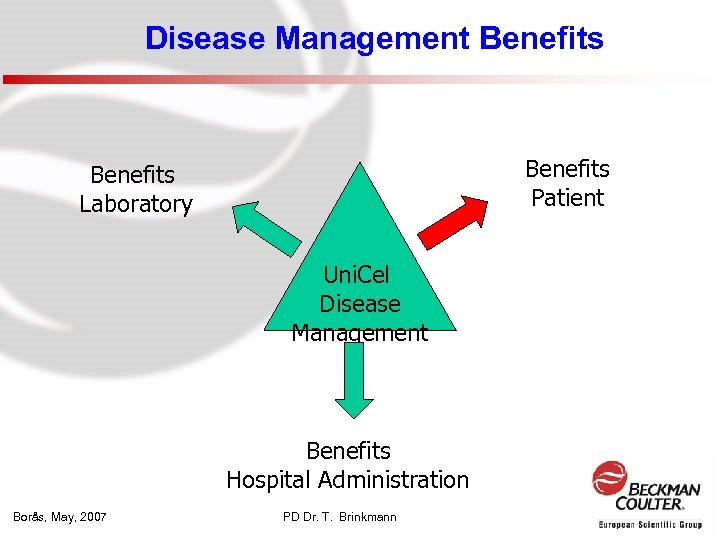
Disease Management Benefits Patient Benefits Laboratory Uni. Cel Disease Management Benefits Hospital Administration Borås, May, 2007 PD Dr. T. Brinkmann
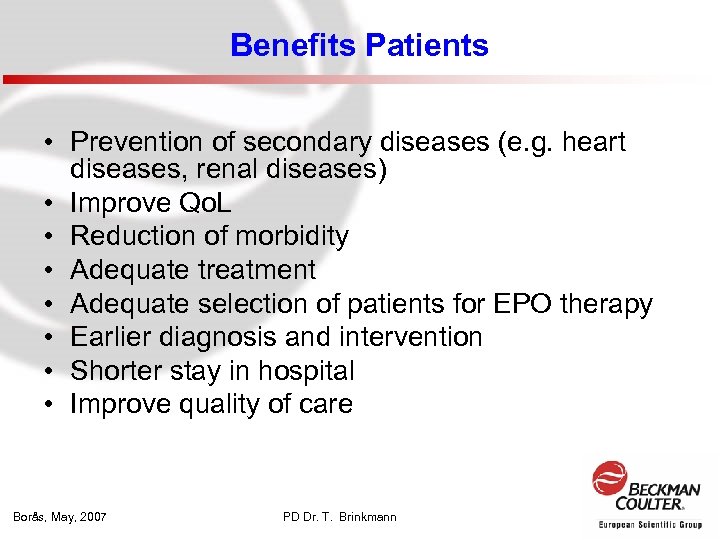
Benefits Patients • Prevention of secondary diseases (e. g. heart diseases, renal diseases) • Improve Qo. L • Reduction of morbidity • Adequate treatment • Adequate selection of patients for EPO therapy • Earlier diagnosis and intervention • Shorter stay in hospital • Improve quality of care Borås, May, 2007 PD Dr. T. Brinkmann
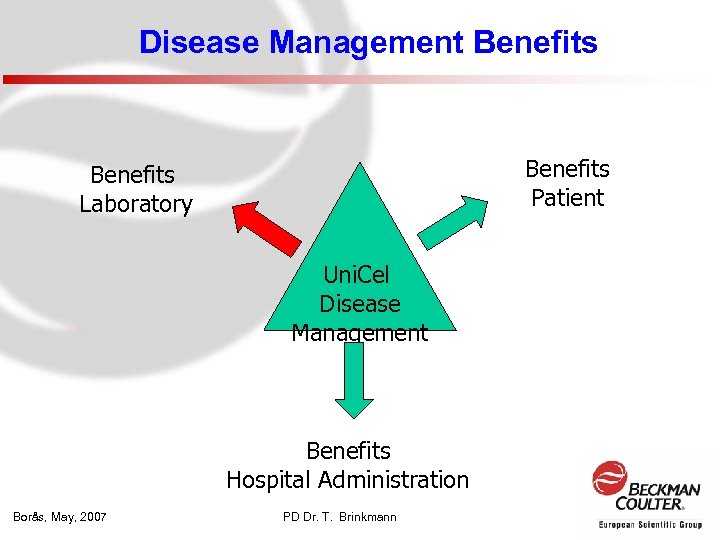
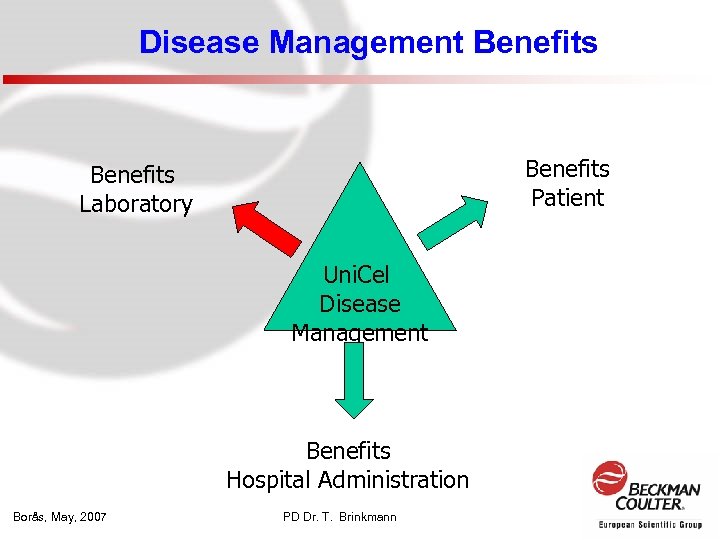
Disease Management Benefits Patient Benefits Laboratory Uni. Cel Disease Management Benefits Hospital Administration Borås, May, 2007 PD Dr. T. Brinkmann
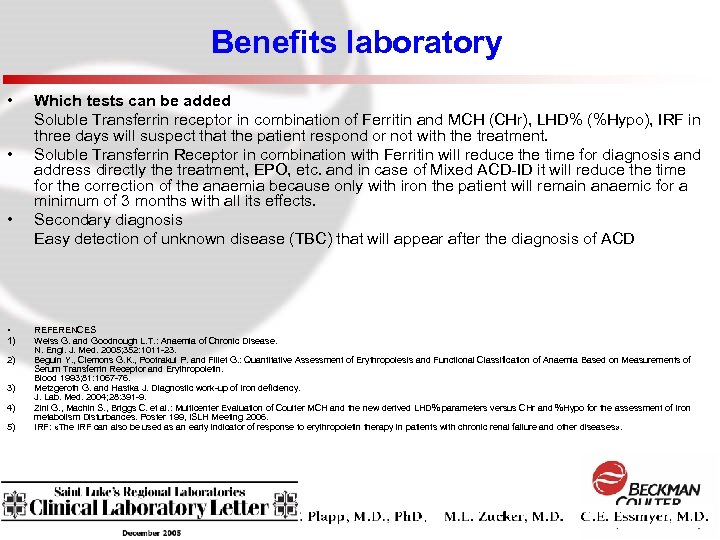
Benefits laboratory • Which tests can be added Soluble Transferrin receptor in combination of Ferritin and MCH (CHr), LHD% (%Hypo), IRF in three days will suspect that the patient respond or not with the treatment. Soluble Transferrin Receptor in combination with Ferritin will reduce the time for diagnosis and address directly the treatment, EPO, etc. and in case of Mixed ACD-ID it will reduce the time for the correction of the anaemia because only with iron the patient will remain anaemic for a minimum of 3 months with all its effects. Secondary diagnosis Easy detection of unknown disease (TBC) that will appear after the diagnosis of ACD • • • 1) 2) 3) 4) 5) REFERENCES Weiss G. and Goodnough L. T. : Anaemia of Chronic Disease. N. Engl. J. Med. 2005; 352: 1011 -23. Beguin Y. , Clemons G. K. , Pootrakul P. and Fillet G. : Quantitative Assessment of Erythropoiesis and Functional Classification of Anaemia Based on Measurements of Serum Transferrin Receptor and Erythropoietin. Blood 1993; 81: 1067 -76. Metzgeroth G. and Hastka J. Diagnostic work-up of Iron deficiency. J. Lab. Med. 2004; 28: 391 -9. Zini G. , Machin S. , Briggs C. et al. : Multicenter Evaluation of Coulter MCH and the new derived LHD% parameters versus CHr and %Hypo for the assessment of Iron metabolism Disturbances. Poster 199, ISLH Meeting 2006. IRF: «The IRF can also be used as an early indicator of response to erythropoietin therapy in patients with chronic renal failure and other diseases» . Borås, May, 2007 PD Dr. T. Brinkmann
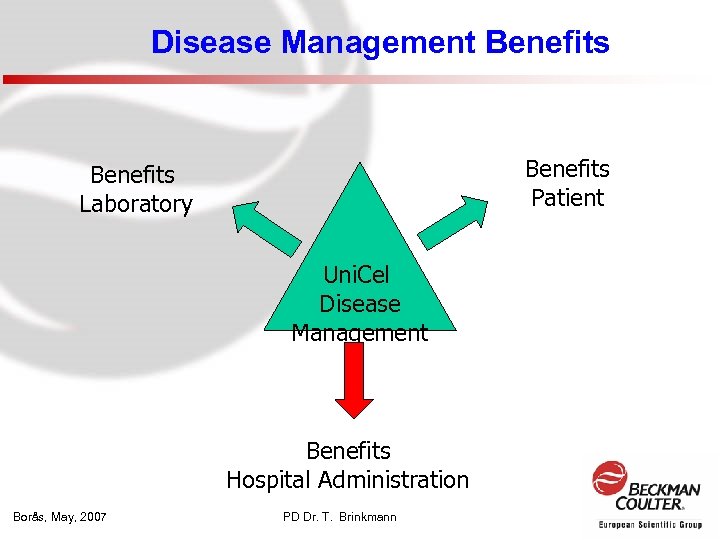
Disease Management Benefits Patient Benefits Laboratory Uni. Cel Disease Management Benefits Hospital Administration Borås, May, 2007 PD Dr. T. Brinkmann
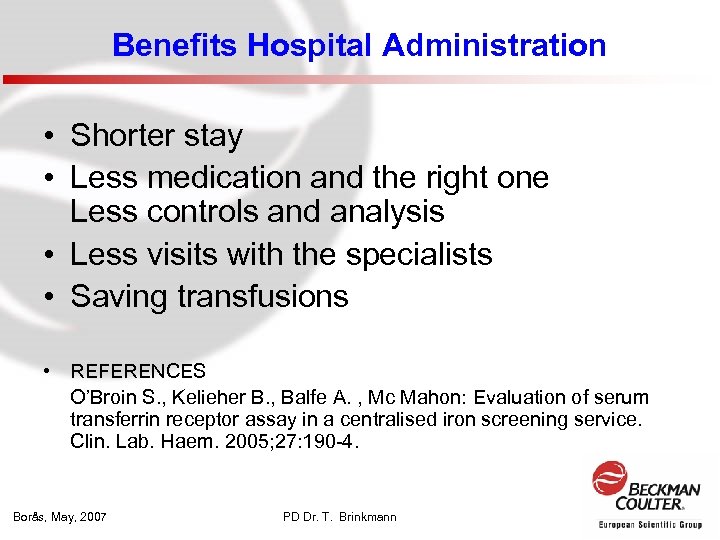
Benefits Hospital Administration • Shorter stay • Less medication and the right one Less controls and analysis • Less visits with the specialists • Saving transfusions • REFERENCES O’Broin S. , Kelieher B. , Balfe A. , Mc Mahon: Evaluation of serum transferrin receptor assay in a centralised iron screening service. Clin. Lab. Haem. 2005; 27: 190 -4. Borås, May, 2007 PD Dr. T. Brinkmann
Anaemia in Haematological Malignancies EPO Therapy Borås, May, 2007 PD Dr. T. Brinkmann
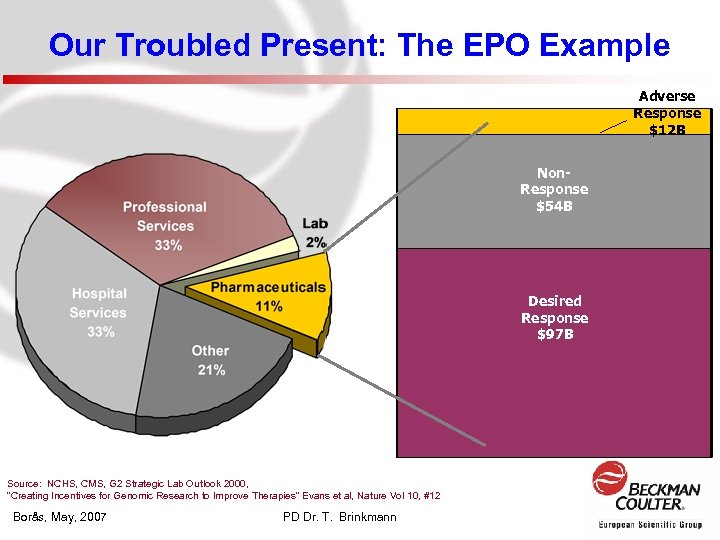
Our Troubled Present: The EPO Example Adverse Response $12 B Non. Response $54 B Desired Response $97 B Source: NCHS, CMS, G 2 Strategic Lab Outlook 2000, “Creating Incentives for Genomic Research to Improve Therapies” Evans et al, Nature Vol 10, #12 Borås, May, 2007 PD Dr. T. Brinkmann Source: Kronberg Conference Adva. Med
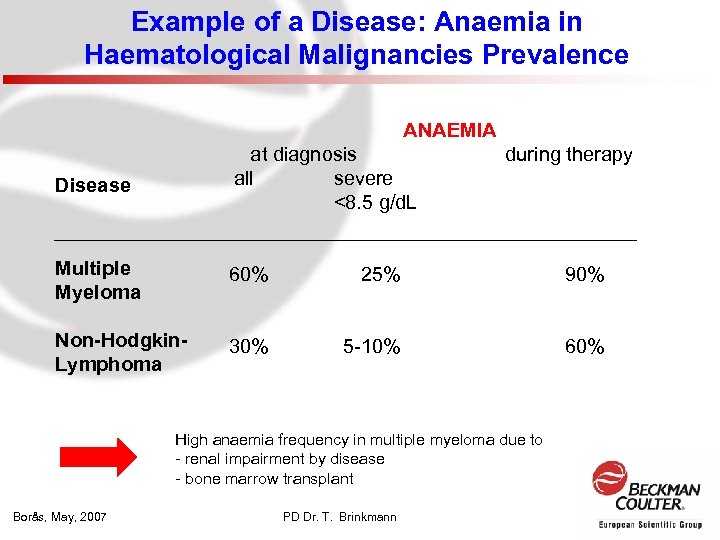
Example of a Disease: Anaemia in Haematological Malignancies Prevalence ANAEMIA at diagnosis all severe <8. 5 g/d. L Disease during therapy Multiple Myeloma 60% 25% 90% Non-Hodgkin. Lymphoma 30% 5 -10% 60% High anaemia frequency in multiple myeloma due to - renal impairment by disease - bone marrow transplant Borås, May, 2007 PD Dr. T. Brinkmann
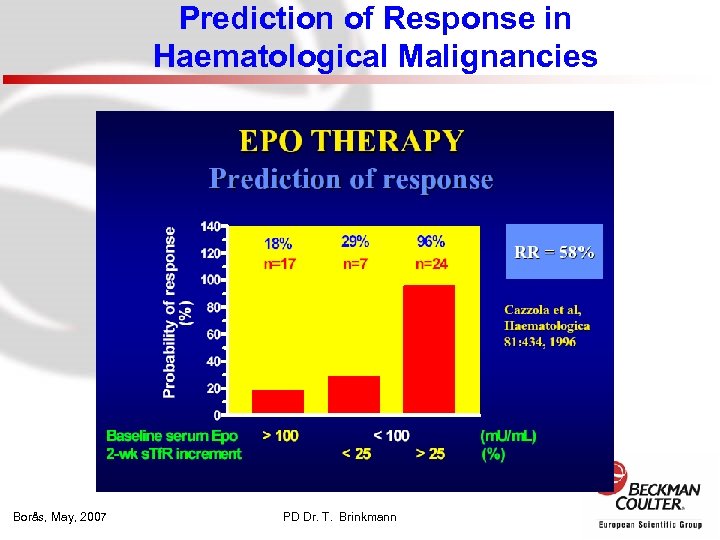
Prediction of Response in Haematological Malignancies Borås, May, 2007 PD Dr. T. Brinkmann
![Prediction of Response in Haematological Malignancies n EPO before therapy [m. U/ml] s. Tf.](https://present5.com/presentation/4a3b22e653e5293c839a4b6201243e1e/image-73.jpg "Prediction of Response in Haematological Malignancies n EPO before therapy [m. U/ml] s. Tf.")
Prediction of Response in Haematological Malignancies n EPO before therapy [m. U/ml] s. Tf. R increase 2 weeks after therapy Response 17 100 - 18 % 7 < 100 < 25 % 29 % 24 < 100 25 % 96 % Borås, May, 2007 PD Dr. T. Brinkmann Y. Beguin, 1998
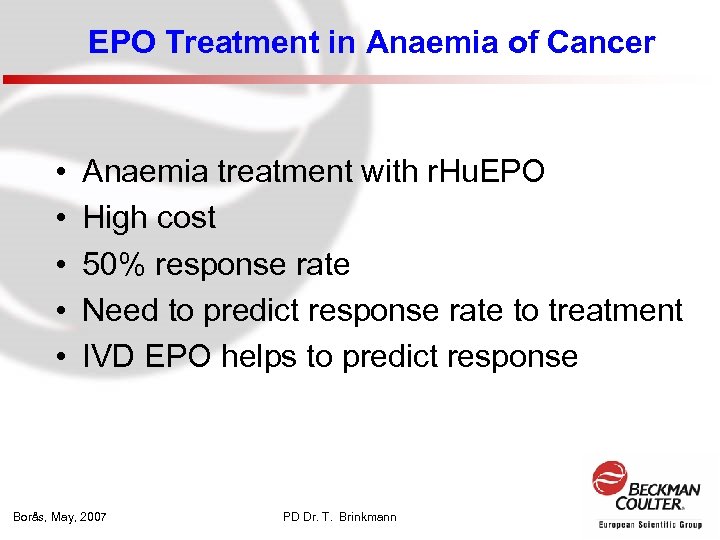
EPO Treatment in Anaemia of Cancer • • • Anaemia treatment with r. Hu. EPO High cost 50% response rate Need to predict response rate to treatment IVD EPO helps to predict response Borås, May, 2007 PD Dr. T. Brinkmann
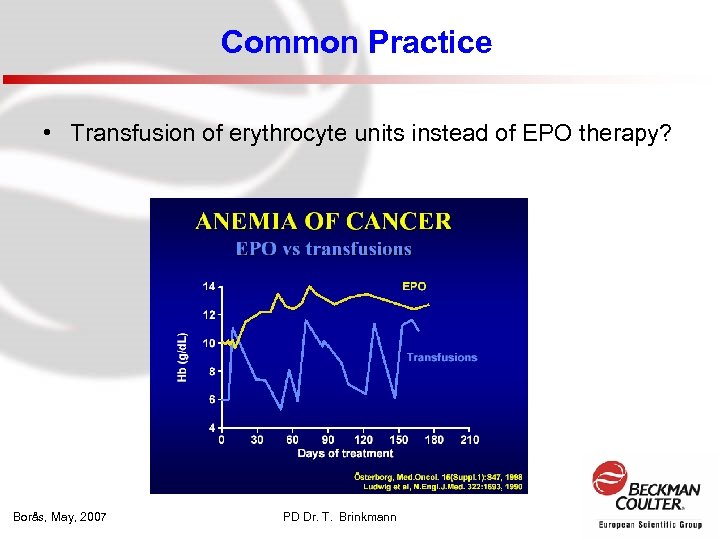
Common Practice • Transfusion of erythrocyte units instead of EPO therapy? Borås, May, 2007 PD Dr. T. Brinkmann
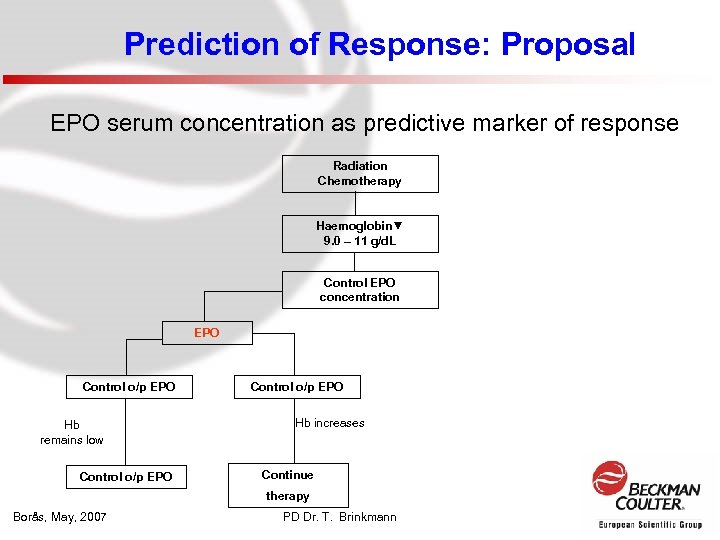
Prediction of Response: Proposal EPO serum concentration as predictive marker of response Radiation Chemotherapy Haemoglobin▼ 9. 0 – 11 g/d. L Control EPO concentration EPO Control o/p EPO Hb remains low Control o/p EPO Hb increases Continue therapy Borås, May, 2007 PD Dr. T. Brinkmann
Disease Management Benefits Patient Benefits Laboratory Uni. Cel Disease Management Benefits Hospital Administration Borås, May, 2007 PD Dr. T. Brinkmann
Benefits • Benefits to the Patient – Improve quality of life – Prevent transfusions Borås, May, 2007 PD Dr. T. Brinkmann
Disease Management Benefits Patient Benefits Laboratory Uni. Cel Disease Management Benefits Hospital Administration Borås, May, 2007 PD Dr. T. Brinkmann
Benefits • Benefits to the Laboratory – EPO testing – Increase value of information output Borås, May, 2007 PD Dr. T. Brinkmann
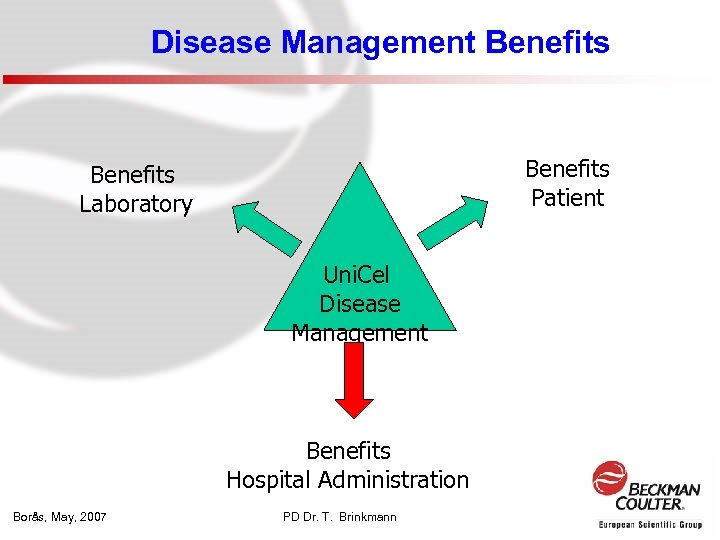
Disease Management Benefits Patient Benefits Laboratory Uni. Cel Disease Management Benefits Hospital Administration Borås, May, 2007 PD Dr. T. Brinkmann
Benefits • Benefits to Hospital Administration – Hugh cost savings by selecting patients receiving EPO therapy Borås, May, 2007 PD Dr. T. Brinkmann
Summary Borås, May, 2007 PD Dr. T. Brinkmann
• • • Beckman Coulter is fully engaged in implementing its strategy - Simplify, automate, innovate laboratory processes – Simplify, automate, innovate disease management processes The focus is on fulfilling unmet needs – Family of compatible immunoassay and workstation systems • Closed tube sampling, broad menu, optimal CC/IA balance – Anaemia – Prostate disease – Reproductive endocrinology and high risk pregnancy – Cardiovascular The strategy will contribute to – Streamline processes from blood draw to results reports – Enhance value of information delivered by the Laboratory – Help physicians through decision-making processes Borås, May, 2007 PD Dr. T. Brinkmann

Tack för uppmärksamheten Borås, May, 2007 PD Dr. T. Brinkmann
Скачать презентацию Borås May 2007 PD Dr T Brinkmann
4a3b22e653e5293c839a4b6201243e1e.ppt