 Скачать презентацию BMJ Resources Training BMJ Best Practice Dju-Lyn
0e1e1e7a4b6af7419657811de6bc03d8.ppt
- Количество слайдов: 63




BMJ Resources Training – BMJ Best Practice Dju-Lyn Chng Account Development Manager bestpractice. bmj. com
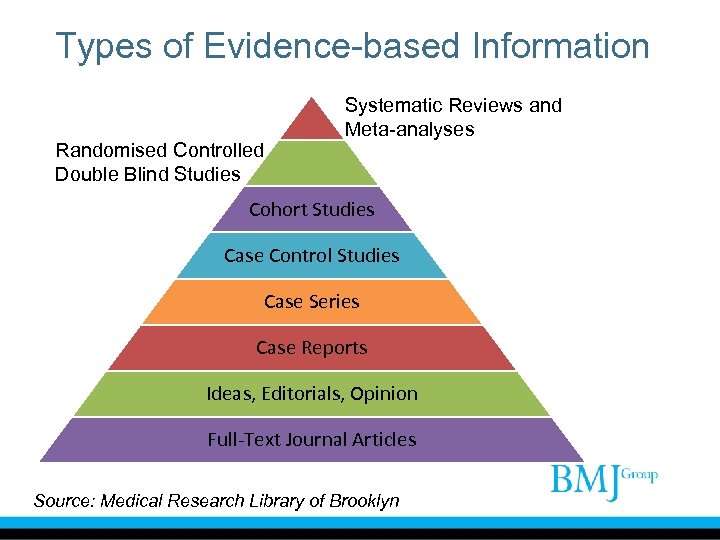
Types of Evidence-based Information Randomised Controlled Double Blind Studies Systematic Reviews and Meta-analyses Cohort Studies Case Control Studies Case Series Case Reports Ideas, Editorials, Opinion Full-Text Journal Articles Source: Medical Research Library of Brooklyn
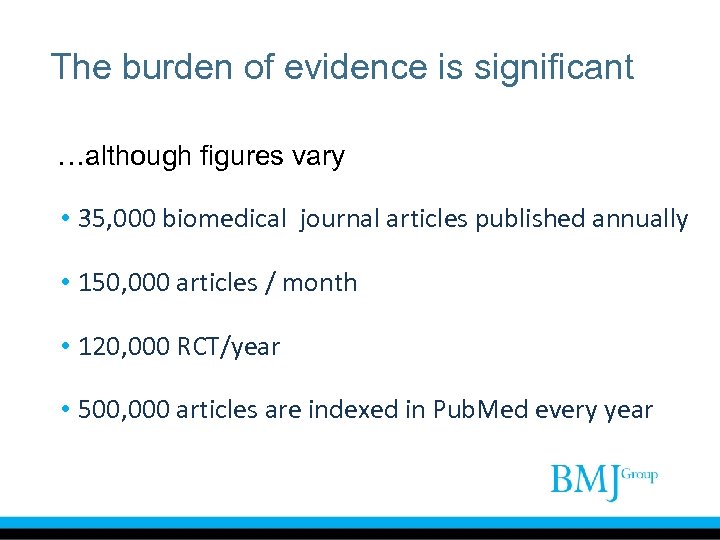
The burden of evidence is significant …although figures vary • 35, 000 biomedical journal articles published annually • 150, 000 articles / month • 120, 000 RCT/year • 500, 000 articles are indexed in Pub. Med every year
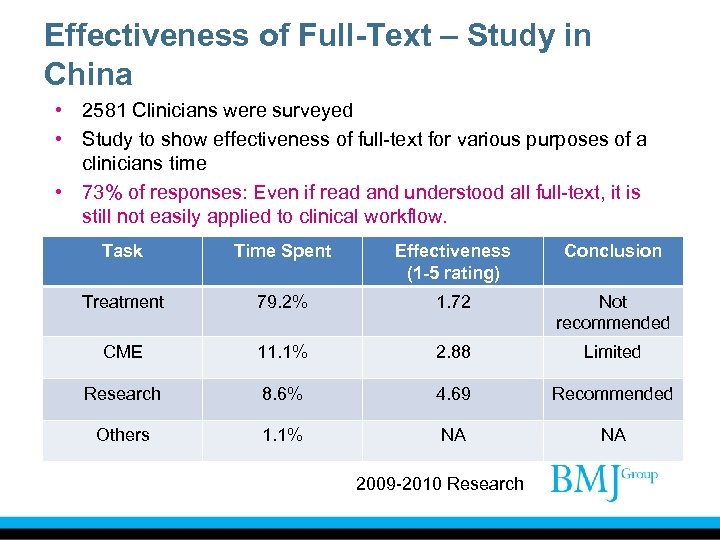
Effectiveness of Full-Text – Study in China • 2581 Clinicians were surveyed • Study to show effectiveness of full-text for various purposes of a clinicians time • 73% of responses: Even if read and understood all full-text, it is still not easily applied to clinical workflow. Task Time Spent Effectiveness (1 -5 rating) Conclusion Treatment 79. 2% 1. 72 Not recommended CME 11. 1% 2. 88 Limited Research 8. 6% 4. 69 Recommended Others 1. 1% NA NA 2009 -2010 Research
Some Theory
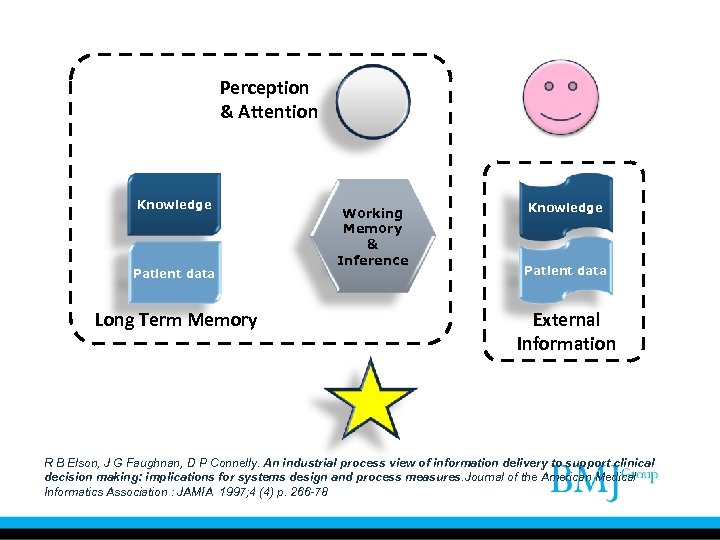
Perception & Attention Knowledge Patient data Long Term Memory Working Memory & Inference Knowledge Patient data External Information R B Elson, J G Faughnan, D P Connelly. An industrial process view of information delivery to support clinical decision making: implications for systems design and process measures. Journal of the American Medical Informatics Association : JAMIA 1997; 4 (4) p. 266 -78
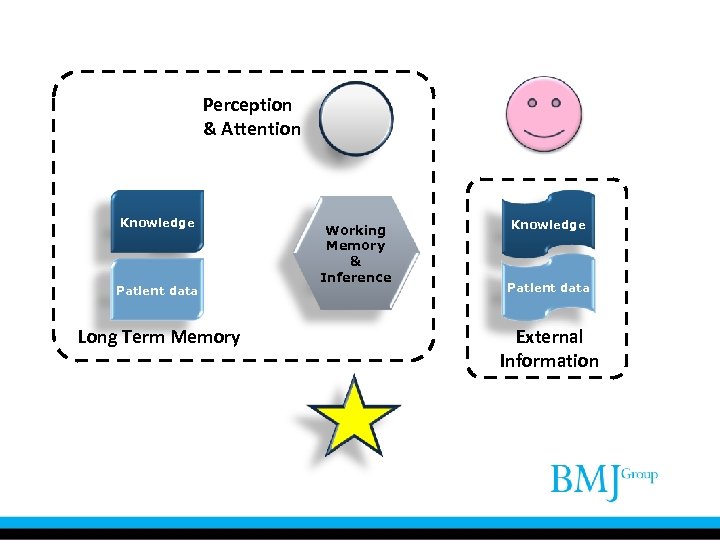
Perception & Attention Knowledge Patient data Long Term Memory Working Memory & Inference Knowledge Patient data External Information
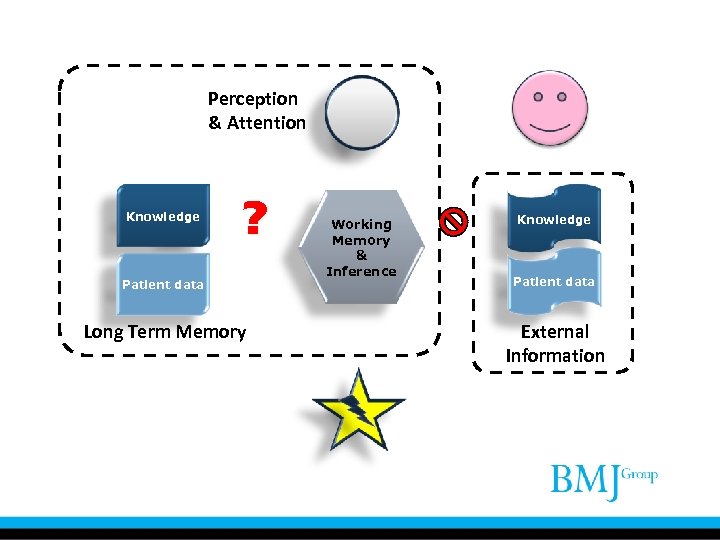
Perception & Attention Knowledge ? Patient data Long Term Memory Working Memory & Inference Knowledge Patient data External Information
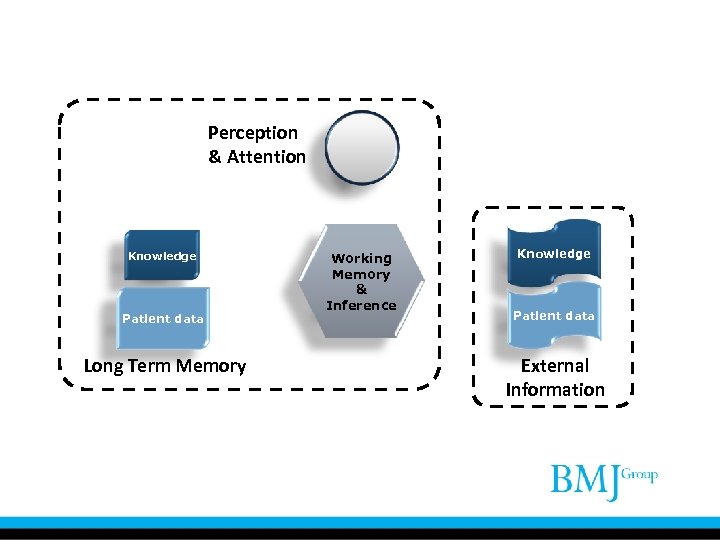
Perception & Attention Knowledge Patient data Long Term Memory Working Memory & Inference Knowledge Patient data External Information
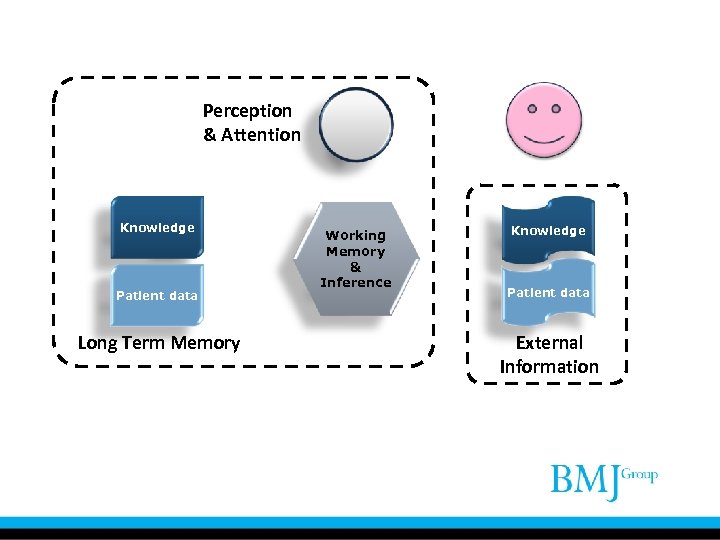
Perception & Attention Knowledge Patient data Long Term Memory Working Memory & Inference Knowledge Patient data External Information
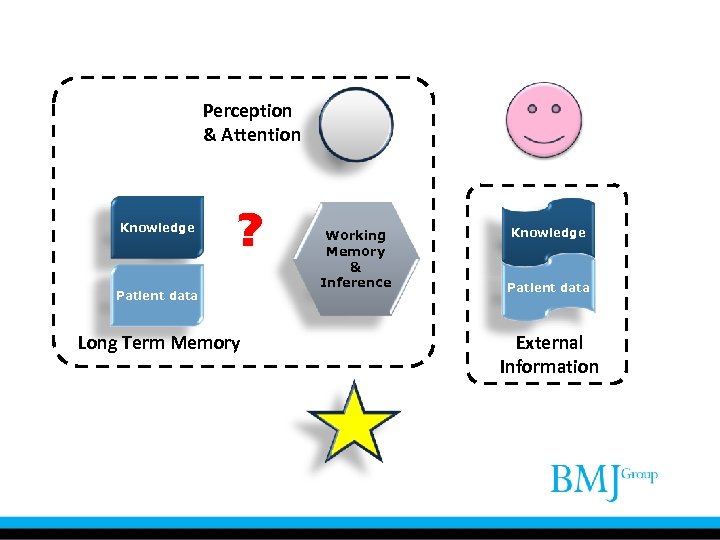
Perception & Attention Knowledge ? Patient data Long Term Memory Working Memory & Inference Knowledge Patient data External Information

Some solutions
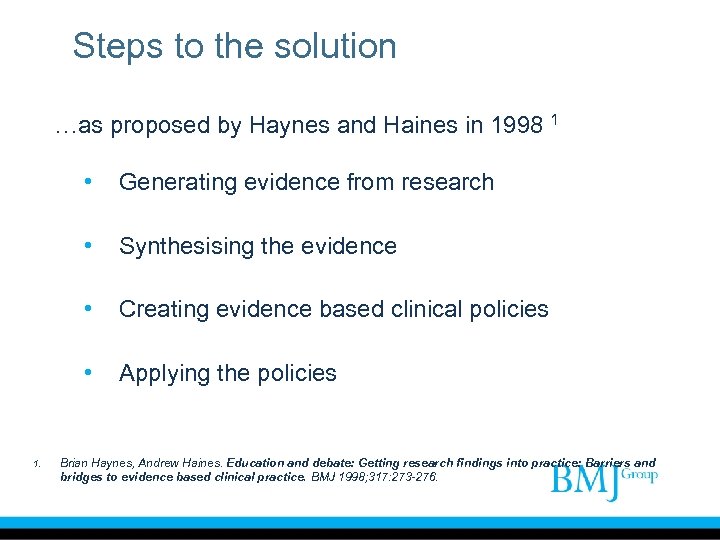
Steps to the solution …as proposed by Haynes and Haines in 1998 1 • • Synthesising the evidence • Creating evidence based clinical policies • 1. Generating evidence from research Applying the policies Brian Haynes, Andrew Haines. Education and debate: Getting research findings into practice: Barriers and bridges to evidence based clinical practice. BMJ 1998; 317: 273 -276.
EBM Tools

http: //bestpractice. bmj. com
What is Best Practice? • Clinical decision support Tool • Structured around the patient consultation with advice on symptom evaluation, test ordering and treatment approach • Includes over 10, 000 diagnoses in Assessments and Differential Diagnosis to help clinicians answer questions quickly • Provides NICE Guidelines and allows for adding of institutional guidelines locally • Integrated evidence from Clinical Evidence • Critical prescribing information with links to Martindale • Patient support leaflets • Remote Access and Mobile Phone Access
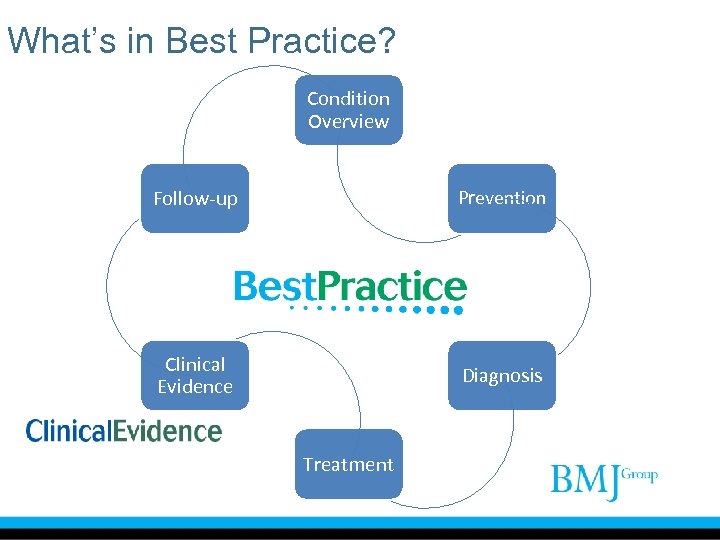
What’s in Best Practice? Condition Overview Follow-up Prevention Clinical Evidence Diagnosis Treatment
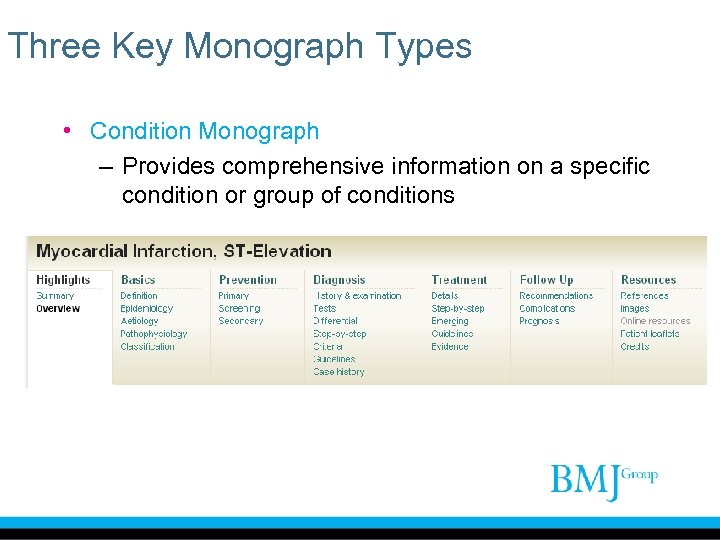
Three Key Monograph Types • Condition Monograph – Provides comprehensive information on a specific condition or group of conditions
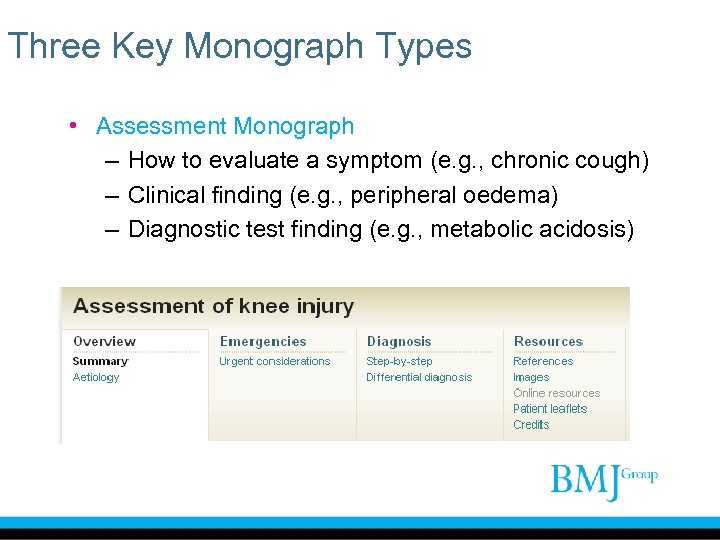
Three Key Monograph Types • Assessment Monograph – How to evaluate a symptom (e. g. , chronic cough) – Clinical finding (e. g. , peripheral oedema) – Diagnostic test finding (e. g. , metabolic acidosis)
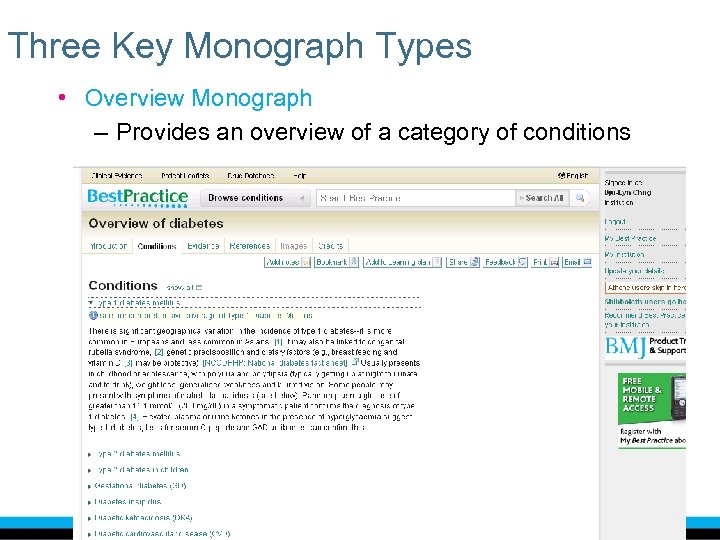
Three Key Monograph Types • Overview Monograph – Provides an overview of a category of conditions
Clinical Question: A 70 -year-old man is discovered by a family member to have difficulty speaking and extreme balance difficulty. The family member brings him to you in the Emergency Ward. He was last known to be fully functional 1 hour ago when the family member spoke to him by phone. There is a history of treated hypertension and diabetes. How should you proceed with assessing and managing this patient?
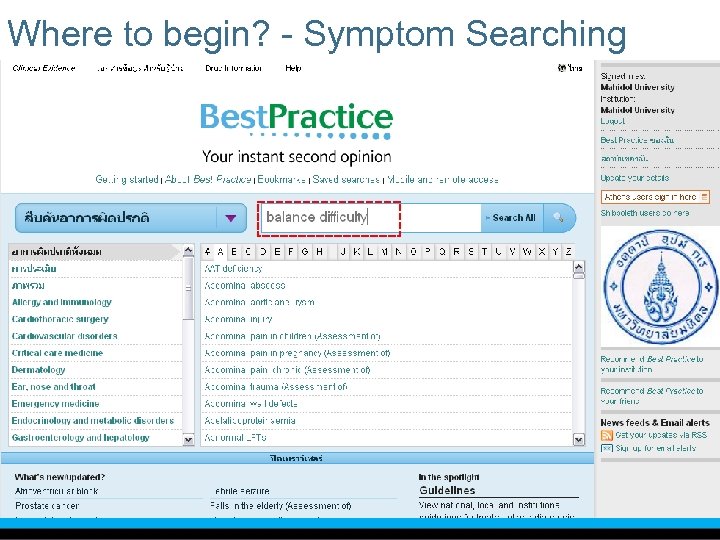
Where to begin? - Symptom Searching
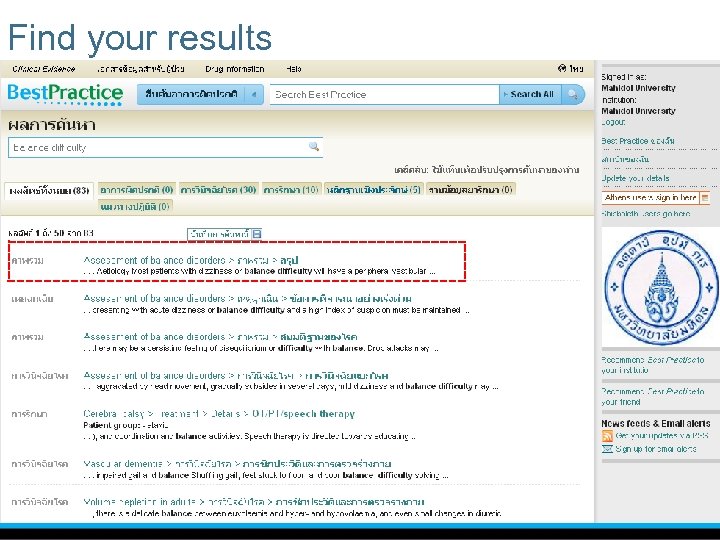
Find your results
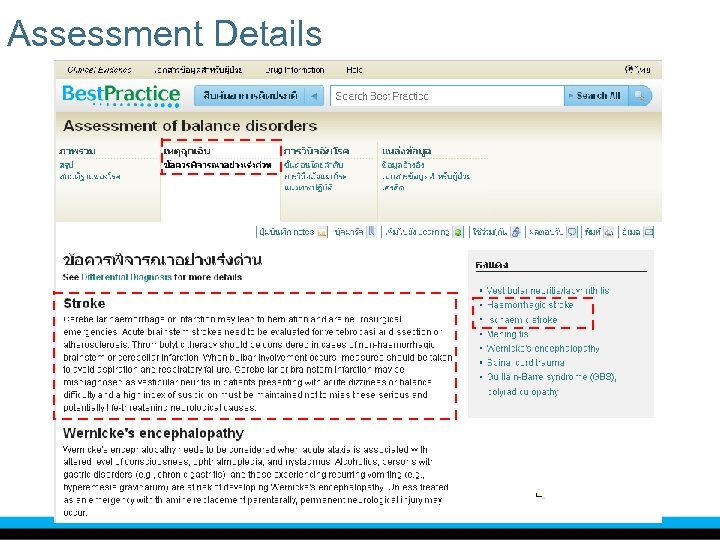
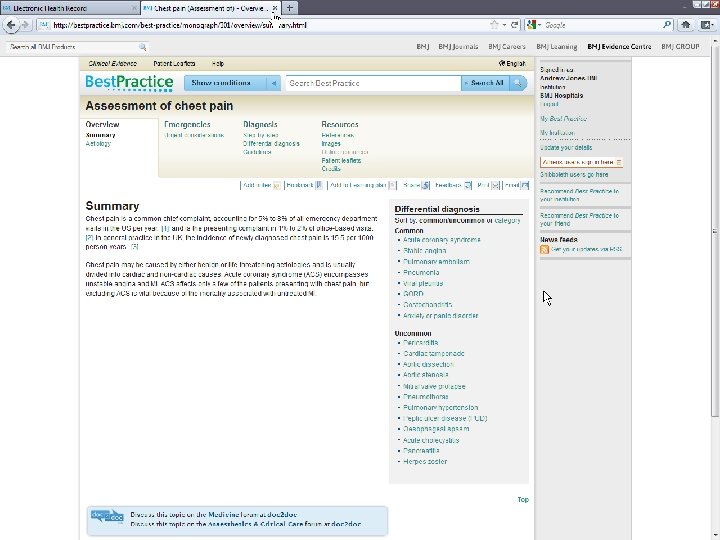
Assessment Details
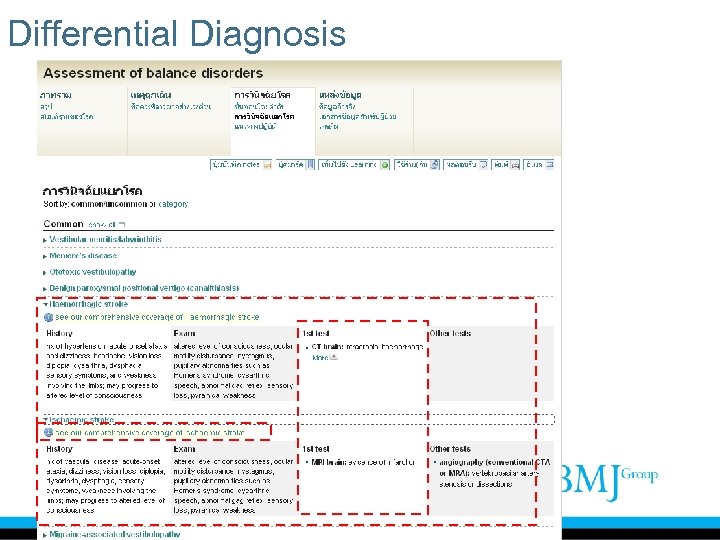
Differential Diagnosis
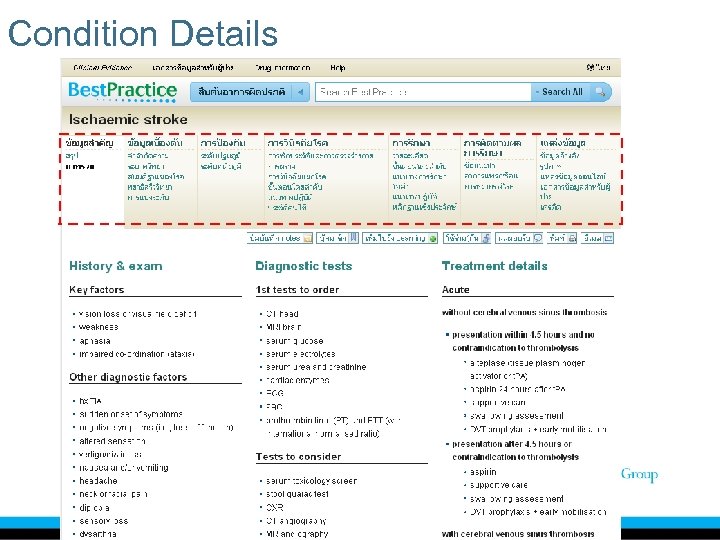
Condition Details
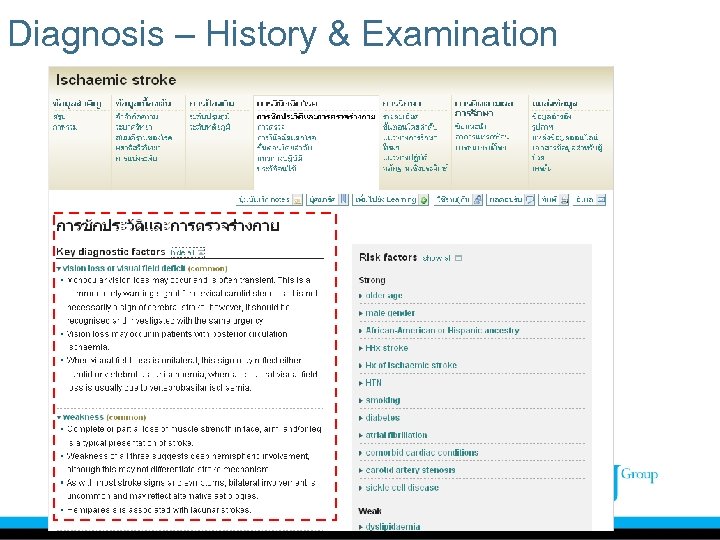
Diagnosis – History & Examination
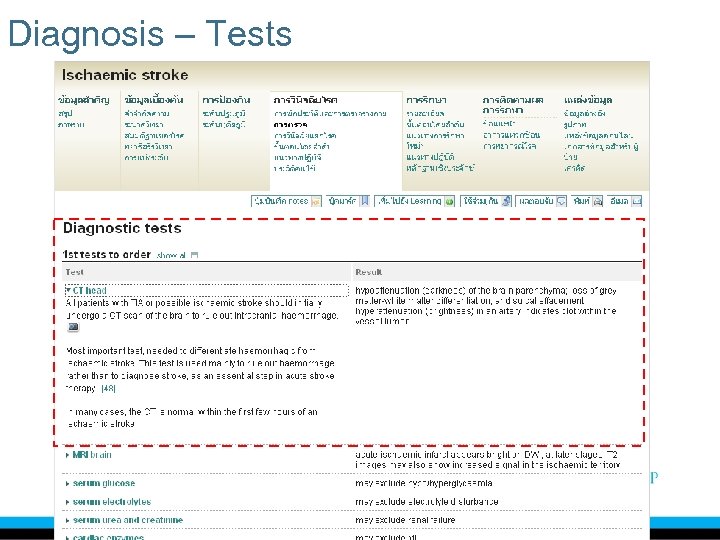
Diagnosis – Tests
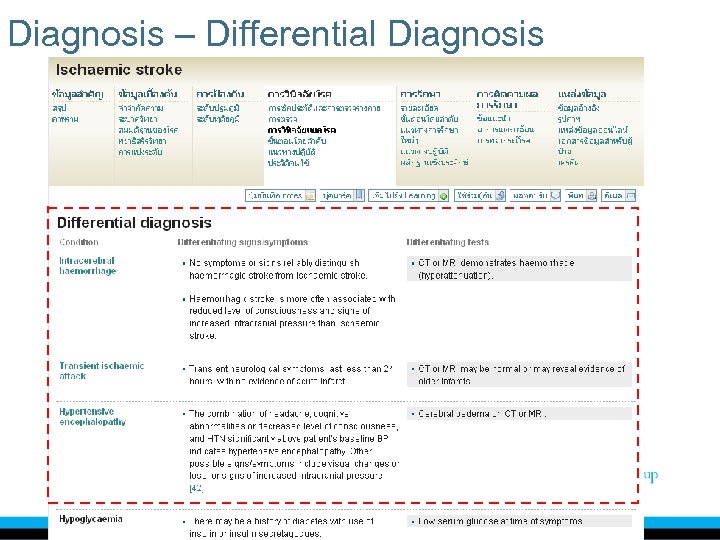
Diagnosis – Differential Diagnosis
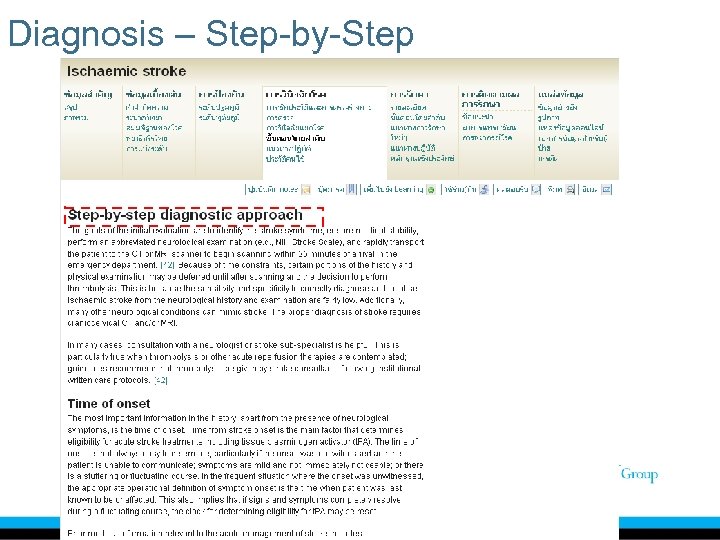
Diagnosis – Step-by-Step
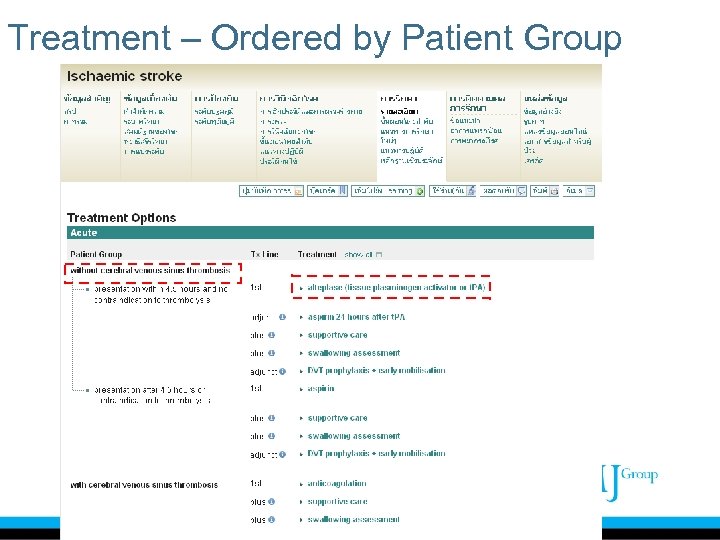
Treatment – Ordered by Patient Group
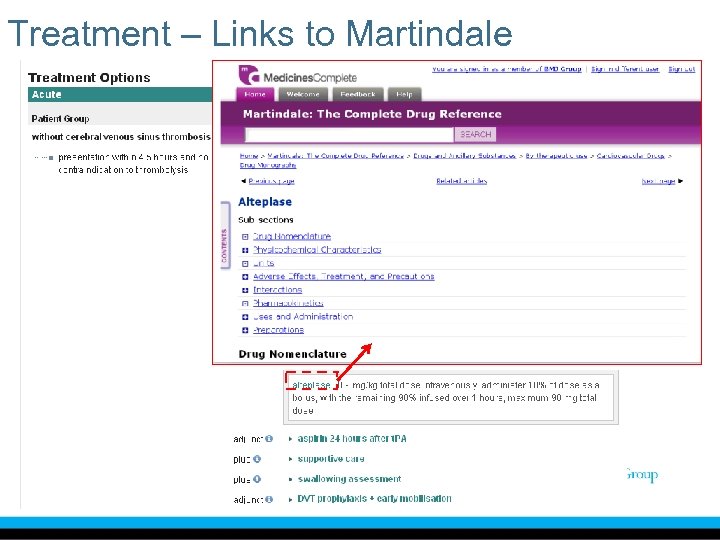
Treatment – Links to Martindale
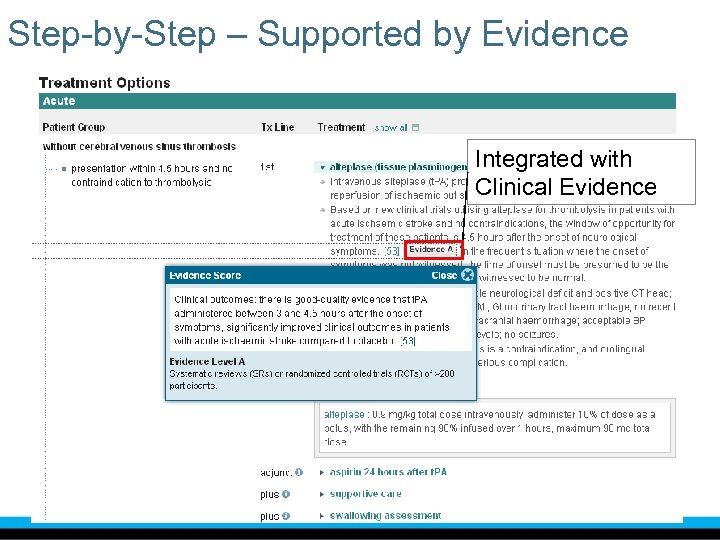
Step-by-Step – Supported by Evidence Integrated with Clinical Evidence
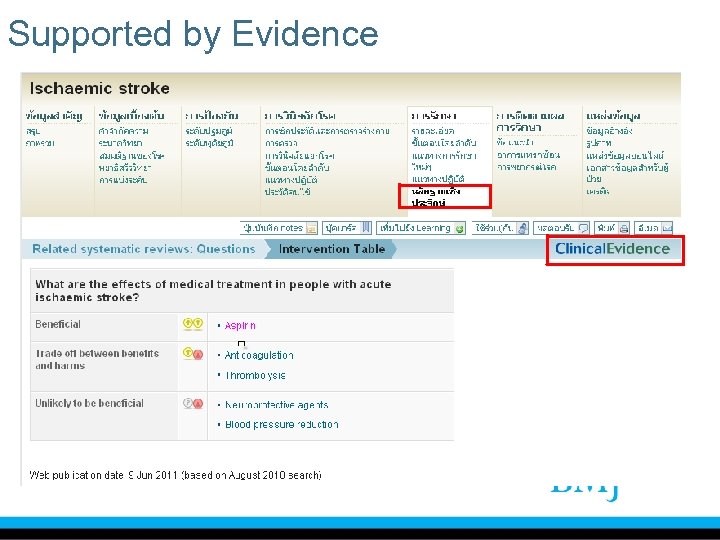
Supported by Evidence
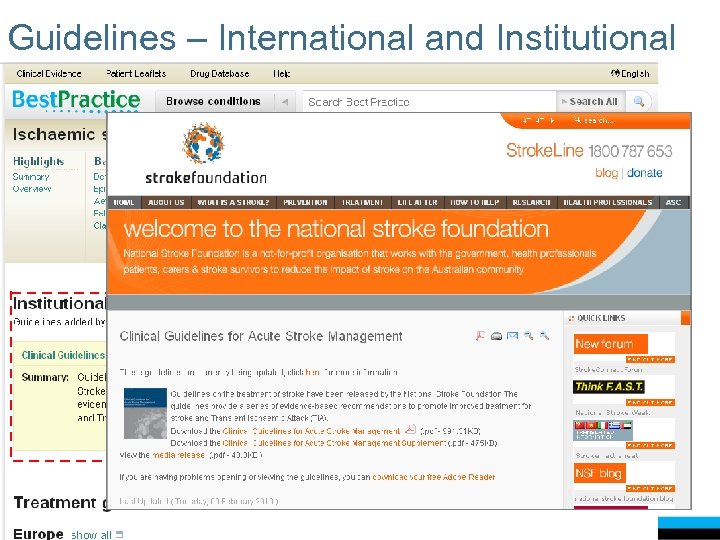
Guidelines – International and Institutional

What are the other features of Best Practice?
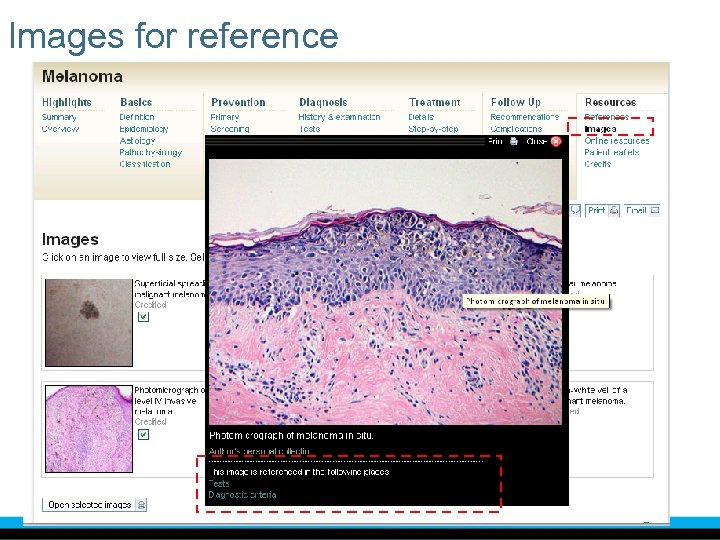
Images for reference
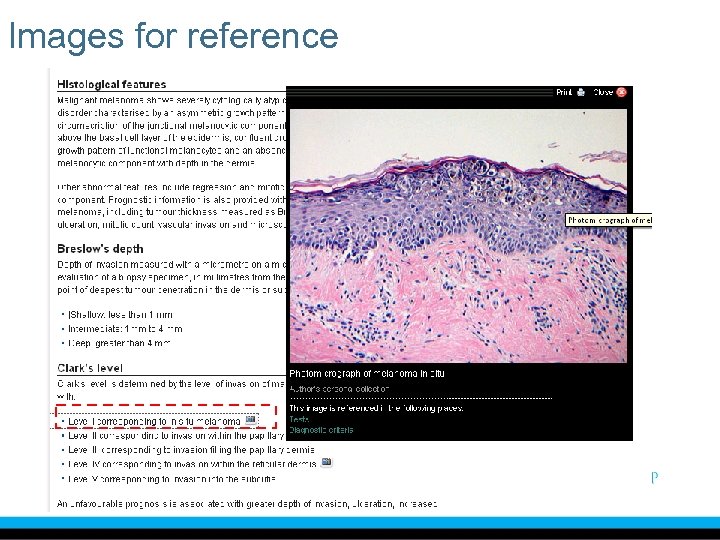
Images for reference
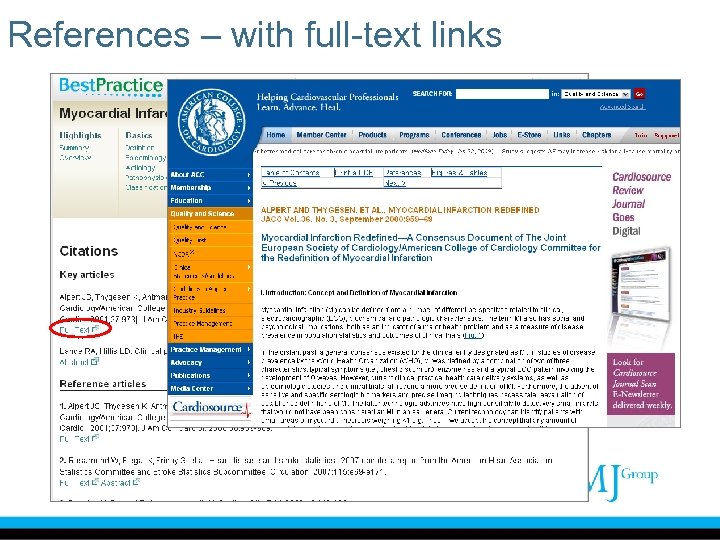
References – with full-text links
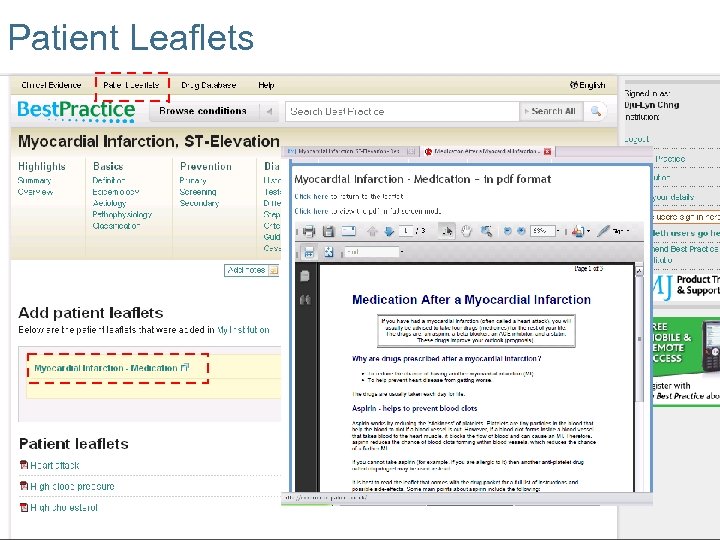
Patient Leaflets
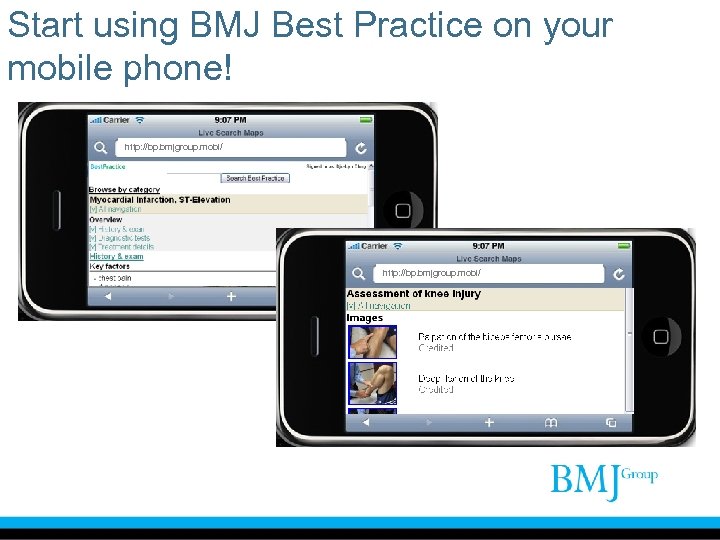
Start using BMJ Best Practice on your mobile phone! http: //bp. bmjgroup. mobi/
BMJ Best Practice Mobile Phone Access • Use BMJ Best Practice on your mobile phone • Register for a “My Best Practice” account from within your hospital computer or through your Athens Log-in • Use your “My Best Practice” username and password to access • Mobile phone URL: bp. bmjgroup. mobi
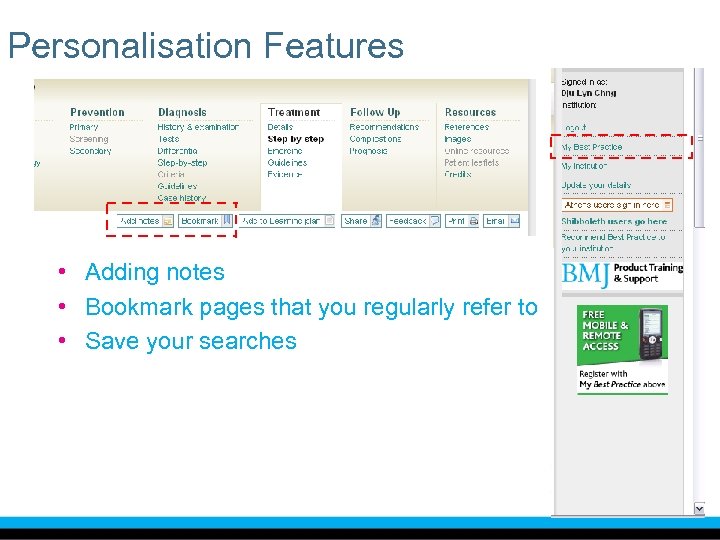
Personalisation Features • Adding notes • Bookmark pages that you regularly refer to • Save your searches
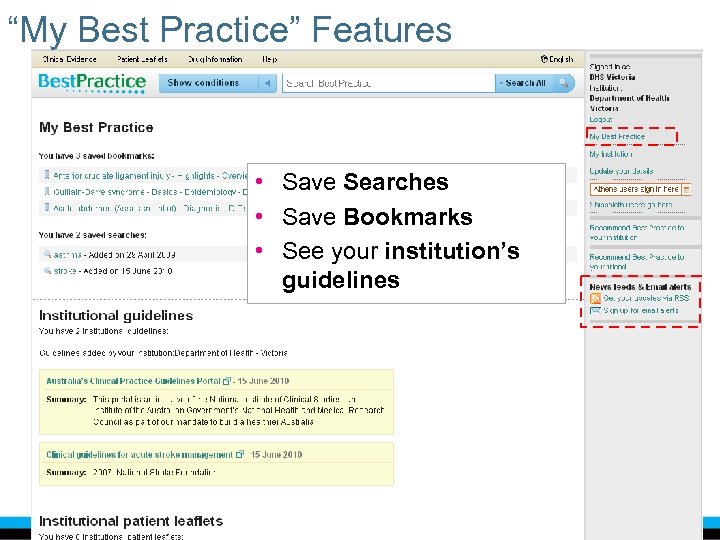
“My Best Practice” Features • Save Searches • Save Bookmarks • See your institution’s guidelines
Identifying Learning Needs • Frequently occurs at the point of care • The problem is recalling what the learning needs are • Sackett et al 1 found that if a need was identified only 12% then sought the information later • EBM tools at the point of care and ability to record learning 1. Sackett, D. L. (1998). Finding and Applying Evidence During Clinical Rounds: The "Evidence Cart". JAMA: The Journal of the American Medical Association, 280(15), 1336 -1338. doi: 10. 1001/jama. 280. 15. 1336.
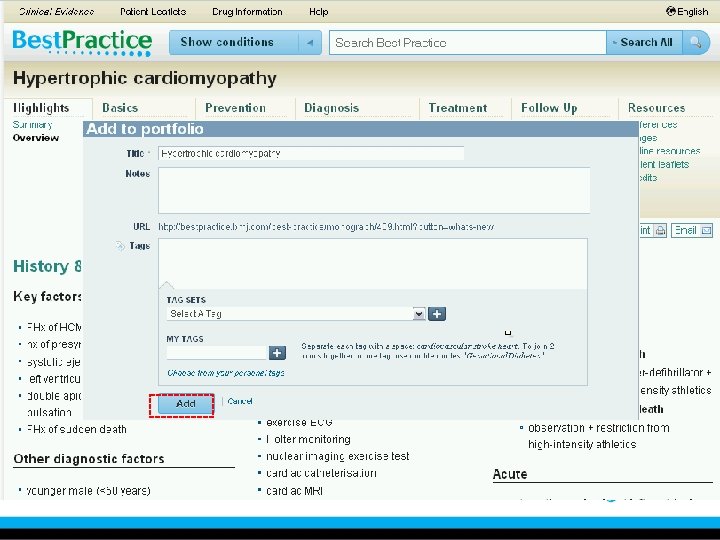
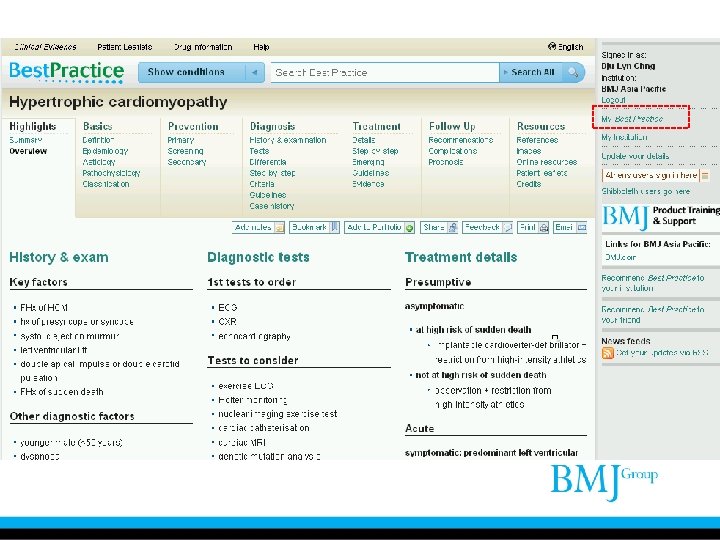
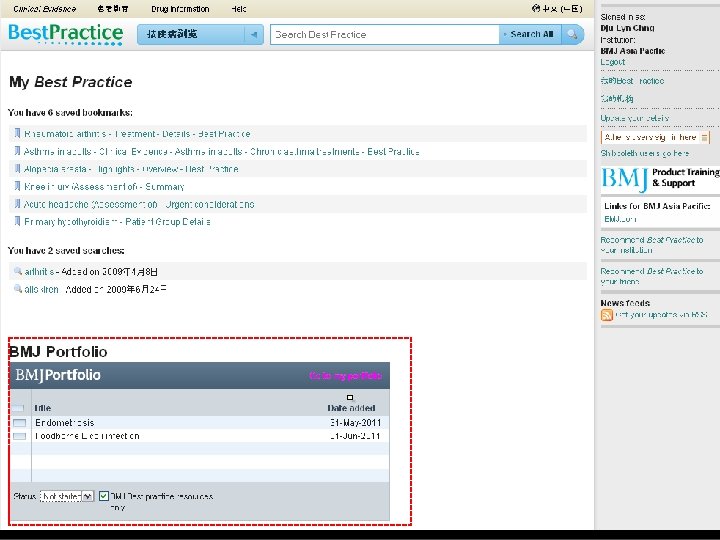
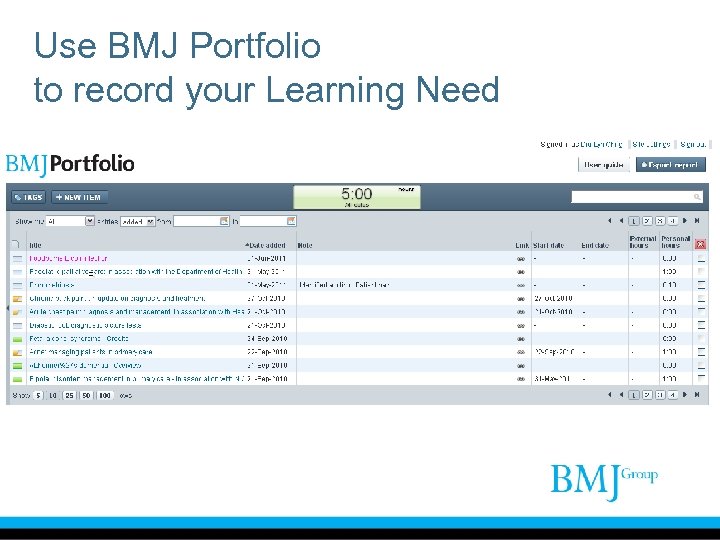
Use BMJ Portfolio to record your Learning Need
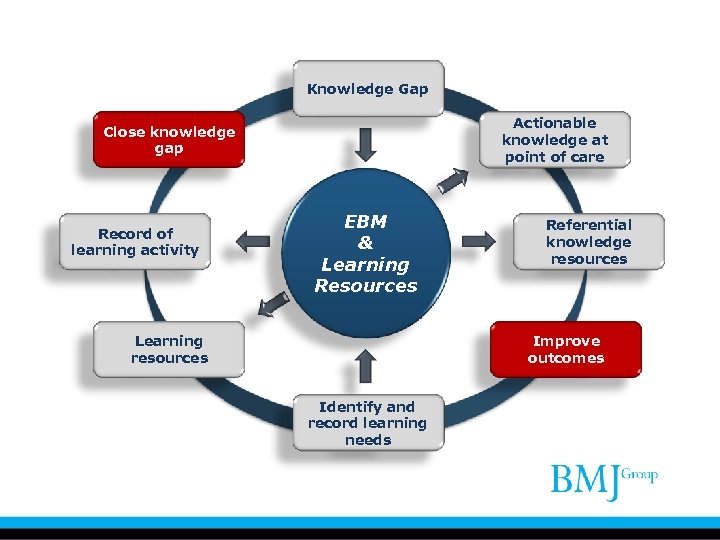
Knowledge Gap Actionable knowledge at point of care Close knowledge gap Record of learning activity EBM & Learning Resources Learning resources Referential knowledge resources Improve outcomes Identify and record learning needs
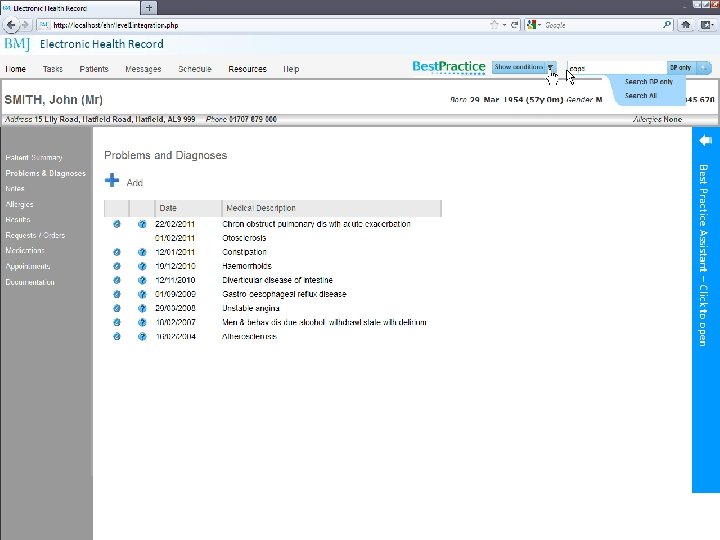
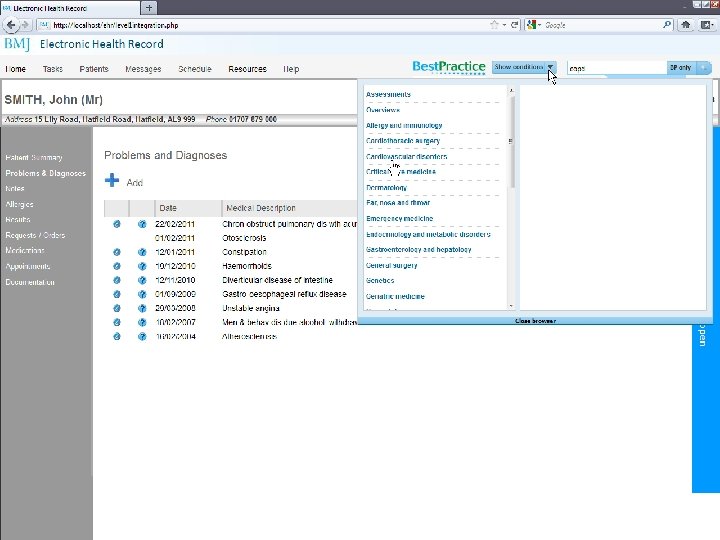
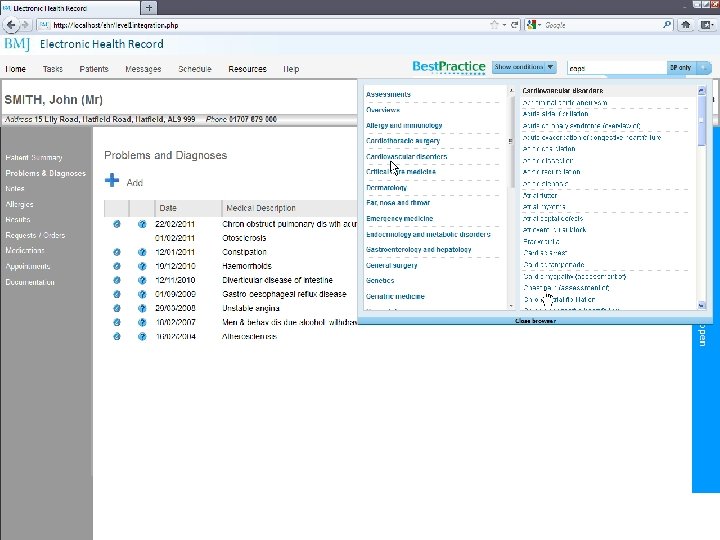
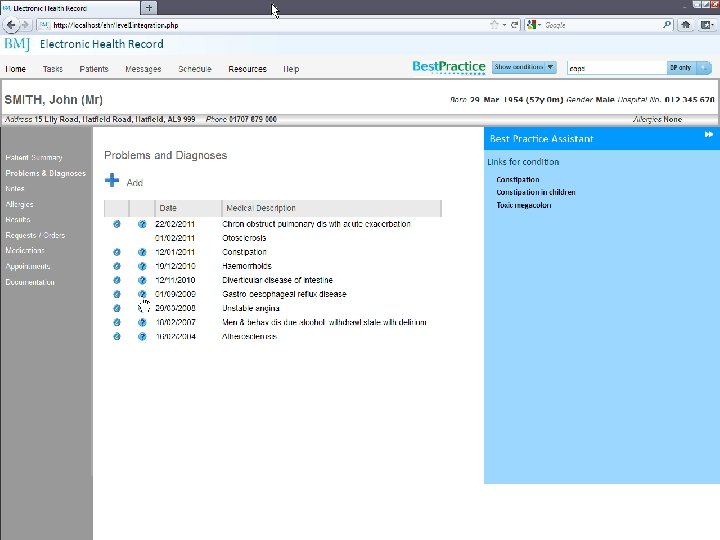
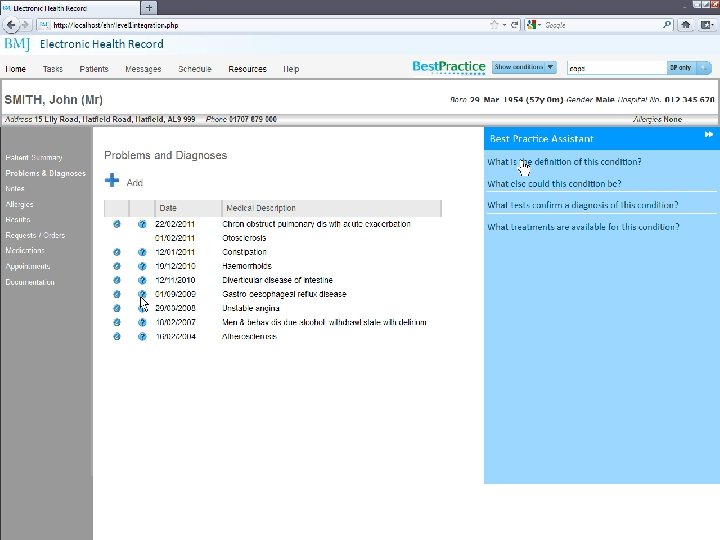
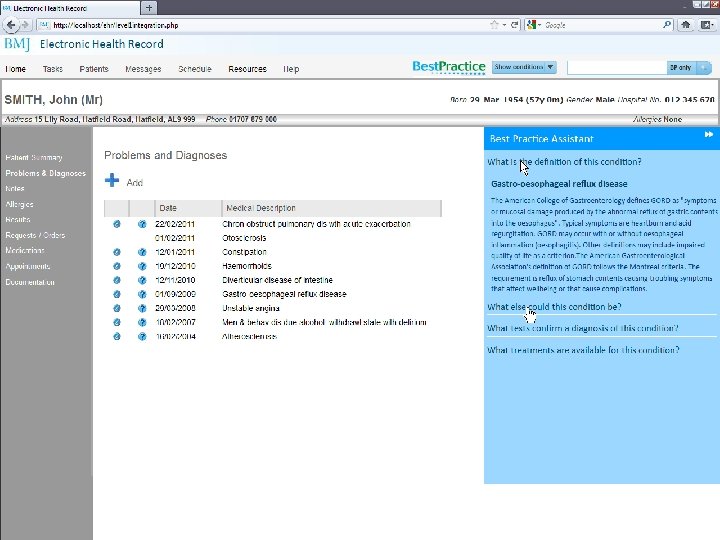
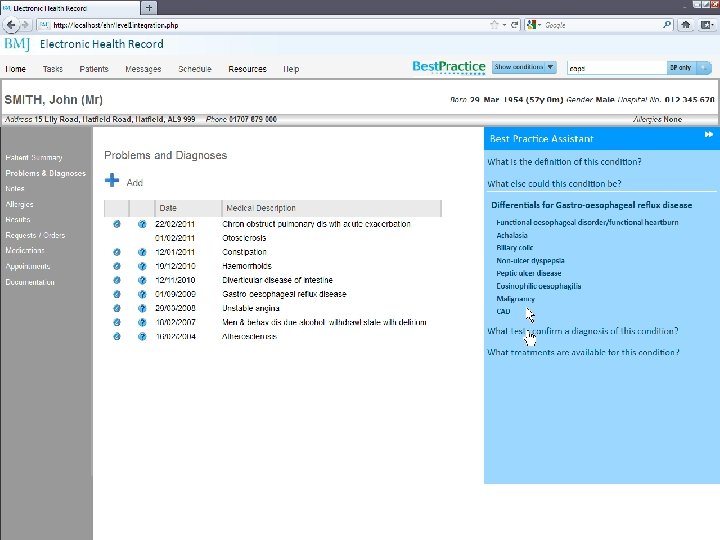
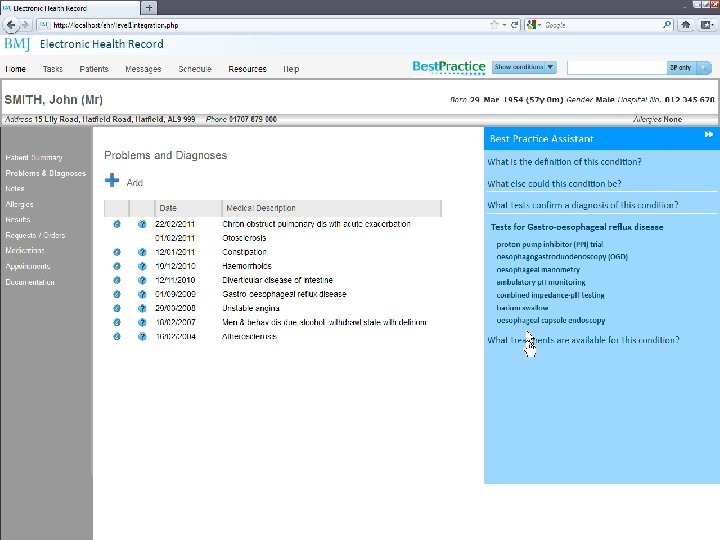
Integrated Support
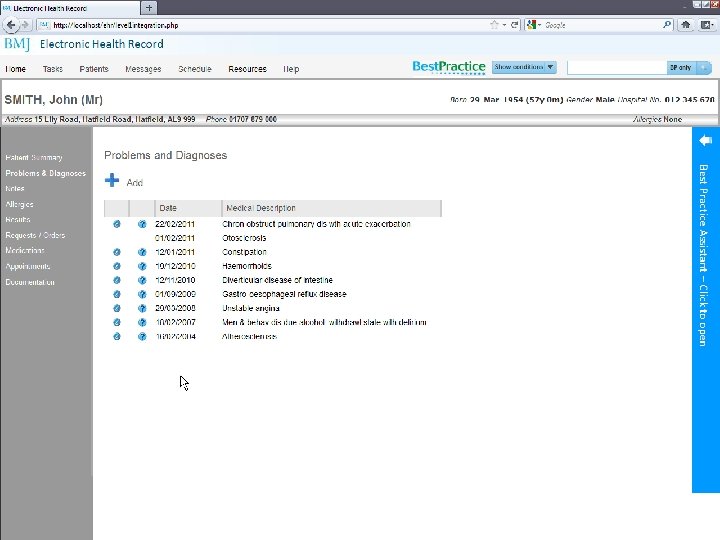
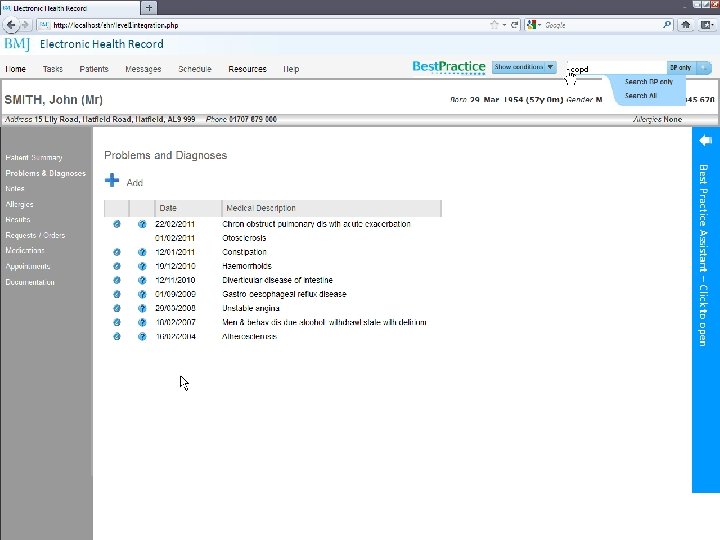
copd

Thank you Dju-Lyn Chng dlchng@bmjgroup. com © BMJ Publishing Group Ltd ("BMJ Group") 2009. All rights reserved. No part of this document may be reproduced, translated or adapted in any form or by any means without the express written permission of the BMJ Group. To the fullest extent permitted by law, this content is supplied "as is" without any warranty as to accuracy. April 2008
Скачать презентацию BMJ Resources Training BMJ Best Practice Dju-Lyn
0e1e1e7a4b6af7419657811de6bc03d8.ppt