 Скачать презентацию BLUElink Update Andreas Schiller CSIRO Marine and Atmospheric
45044d2caa7df60ffee8eb7198540947.ppt
- Количество слайдов: 28



BLUElink Update Andreas Schiller CSIRO Marine and Atmospheric Research Hobart, Australia N. R. Smith BMRC Melbourne, Australia
Project “BLUElink” • A partnership between: • CSIRO • Australian Bureau of Meteorology (Bo. M) • Royal Australian Navy (RAN)
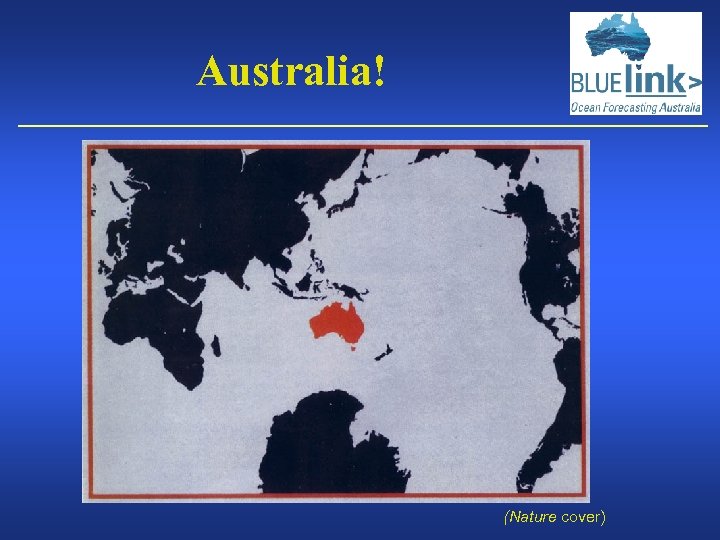
Australia! (Nature cover)
High-level objectives of BLUElink • To develop an ocean forecasting capability in the Bureau of Meteorology • To enable the RAN to forecast local ocean and atmospheric conditions
Key elements • “Real-time” data availability (“nowcasts”) • Archived ocean hindcasts, based on global modelling • Ocean forecasts, based on global model • Automated model nesting
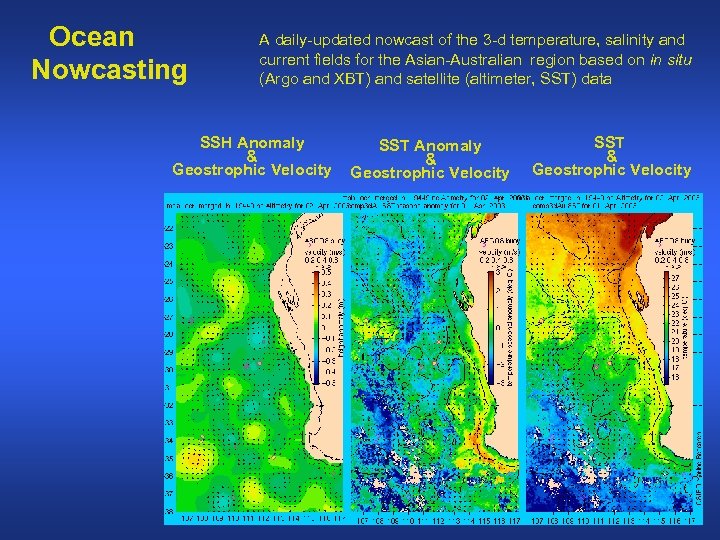
Ocean Nowcasting A daily-updated nowcast of the 3 -d temperature, salinity and current fields for the Asian-Australian region based on in situ (Argo and XBT) and satellite (altimeter, SST) data SSH Anomaly & Geostrophic Velocity SST & Geostrophic Velocity
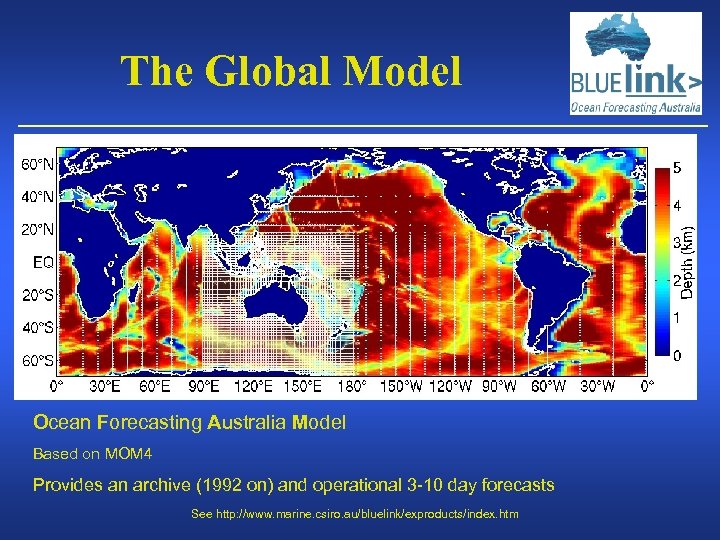
The Global Model Ocean Forecasting Australia Model Based on MOM 4 Provides an archive (1992 on) and operational 3 -10 day forecasts See http: //www. marine. csiro. au/bluelink/exproducts/index. htm
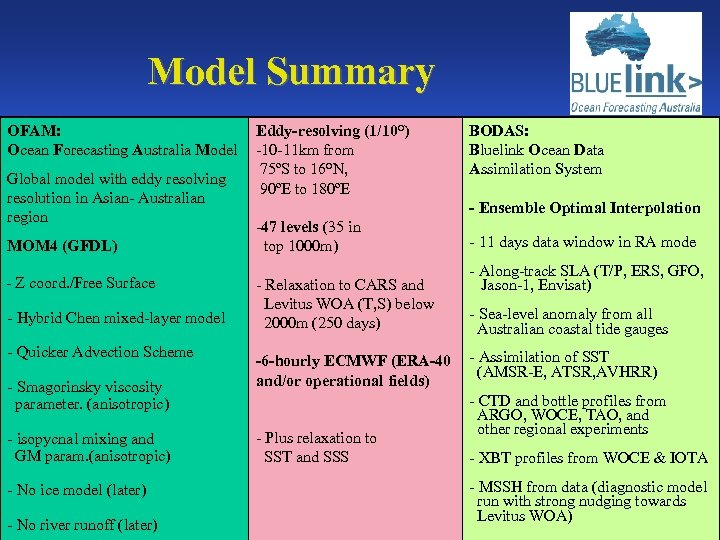
Model Summary OFAM: Ocean Forecasting Australia Model Global model with eddy resolving resolution in Asian- Australian region MOM 4 (GFDL) - Z coord. /Free Surface - Hybrid Chen mixed-layer model - Quicker Advection Scheme - Smagorinsky viscosity parameter. (anisotropic) - isopycnal mixing and GM param. (anisotropic) - No ice model (later) - No river runoff (later) Eddy-resolving (1/10°) -10 -11 km from 75ºS to 16°N, 90ºE to 180ºE BODAS: Bluelink Ocean Data Assimilation System - Ensemble Optimal Interpolation -47 levels (35 in top 1000 m) - Relaxation to CARS and Levitus WOA (T, S) below 2000 m (250 days) -6 -hourly ECMWF (ERA-40 and/or operational fields) - Plus relaxation to SST and SSS - 11 days data window in RA mode - Along-track SLA (T/P, ERS, GFO, Jason-1, Envisat) - Sea-level anomaly from all Australian coastal tide gauges - Assimilation of SST (AMSR-E, ATSR, AVHRR) - CTD and bottle profiles from ARGO, WOCE, TAO, and other regional experiments - XBT profiles from WOCE & IOTA - MSSH from data (diagnostic model run with strong nudging towards Levitus WOA)
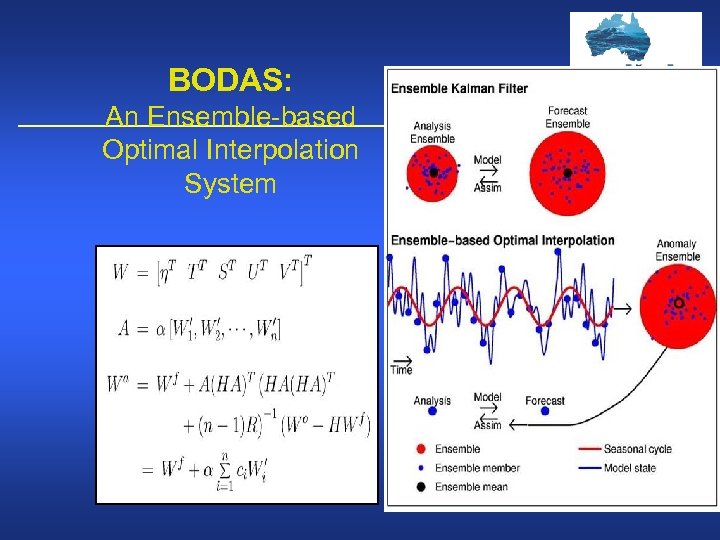
BODAS: An Ensemble-based Optimal Interpolation System
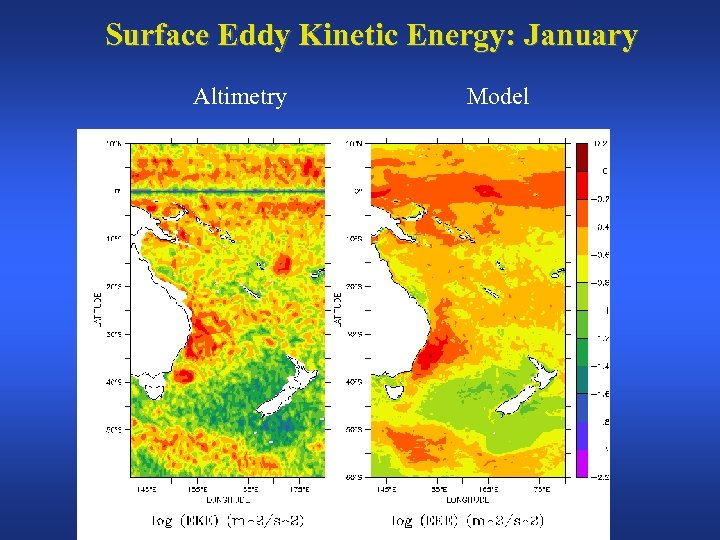
Surface Eddy Kinetic Energy: January Altimetry Model
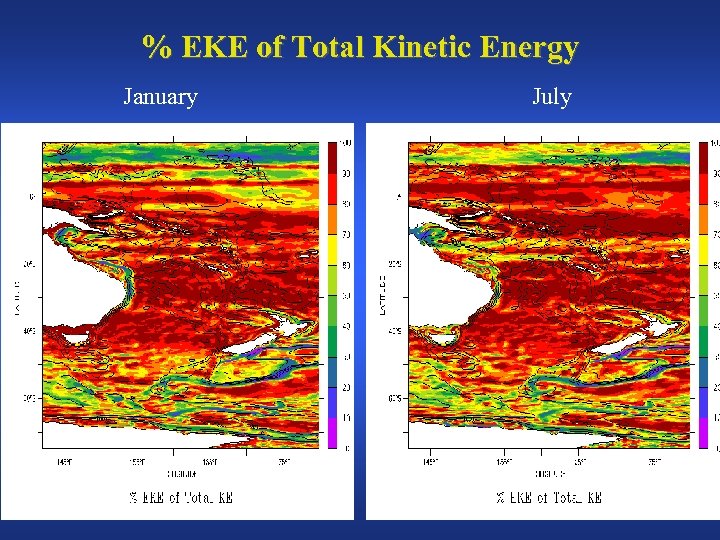
% EKE of Total Kinetic Energy January July
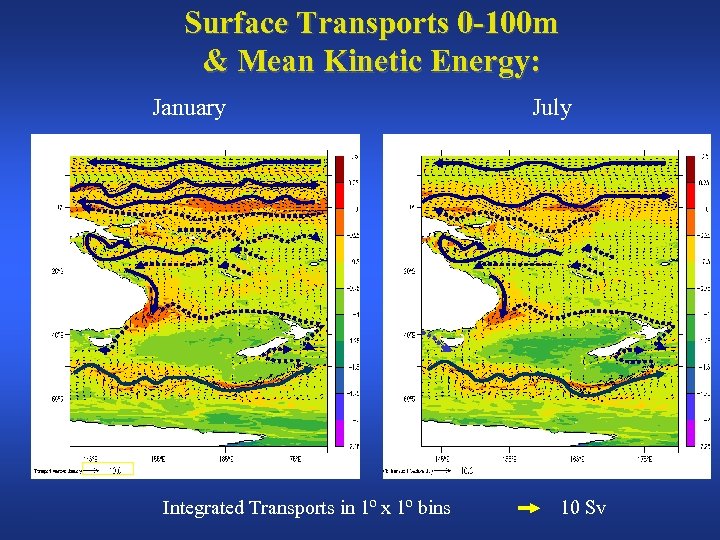
Surface Transports 0 -100 m & Mean Kinetic Energy: January Integrated Transports in 1º x 1º bins July 10 Sv
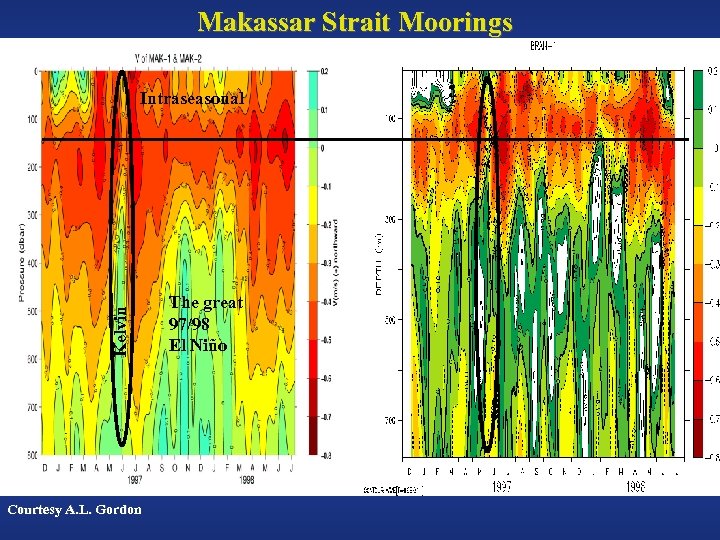
Makassar Strait Moorings Kelvin Intraseasonal Courtesy A. L. Gordon The great 97/98 El Niño Courtesy A. L. Gordon
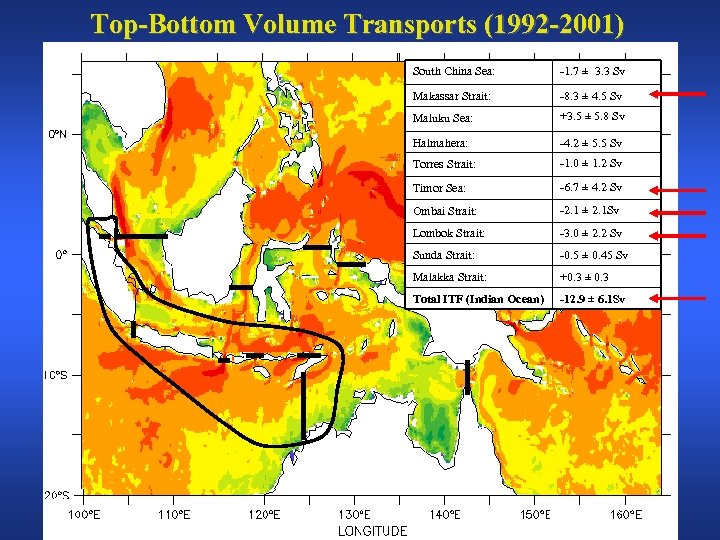
Top-Bottom Volume Transports (1992 -2001) South China Sea: -1. 7 ± 3. 3 Sv Makassar Strait: -8. 3 ± 4. 5 Sv Maluku Sea: +3. 5 ± 5. 8 Sv Halmahera: -4. 2 ± 5. 5 Sv Torres Strait: -1. 0 ± 1. 2 Sv Timor Sea: -6. 7 ± 4. 2 Sv Ombai Strait: -2. 1 ± 2. 1 Sv Lombok Strait: -3. 0 ± 2. 2 Sv Sunda Strait: -0. 5 ± 0. 45 Sv Malakka Strait: +0. 3 ± 0. 3 Total ITF (Indian Ocean) -12. 9 ± 6. 1 Sv
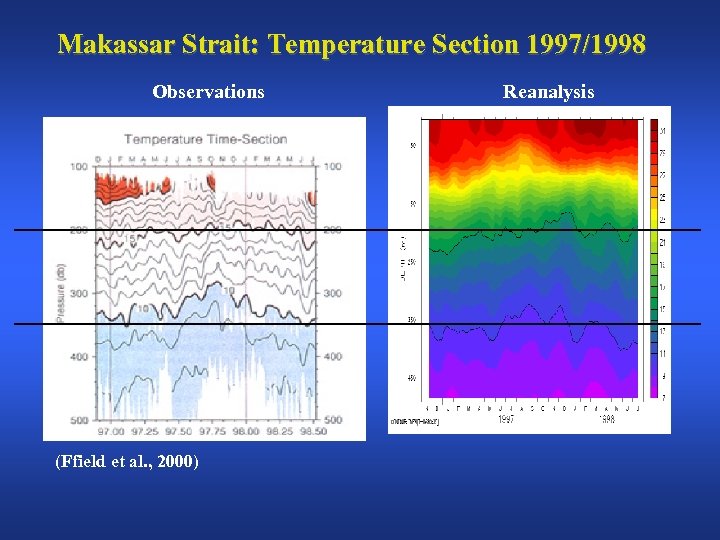
Makassar Strait: Temperature Section 1997/1998 Observations (Ffield et al. , 2000) Reanalysis
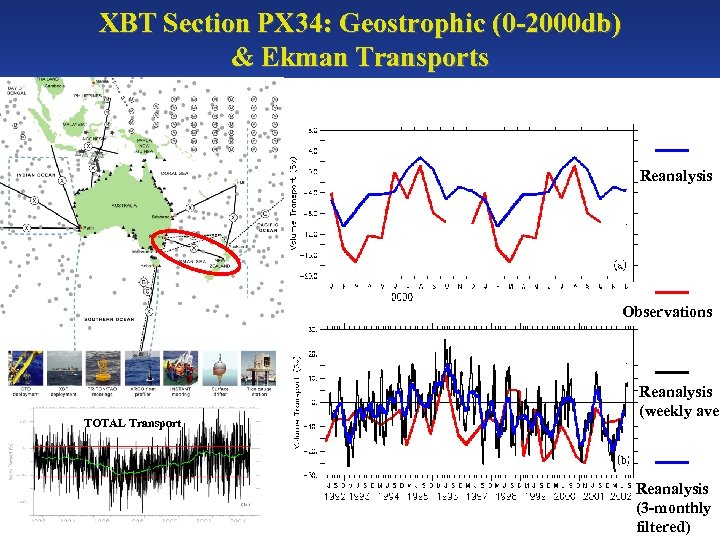
XBT Section PX 34: Geostrophic (0 -2000 db) & Ekman Transports Reanalysis Observations TOTAL Transport Reanalysis (weekly ave. Reanalysis (3 -monthly filtered)
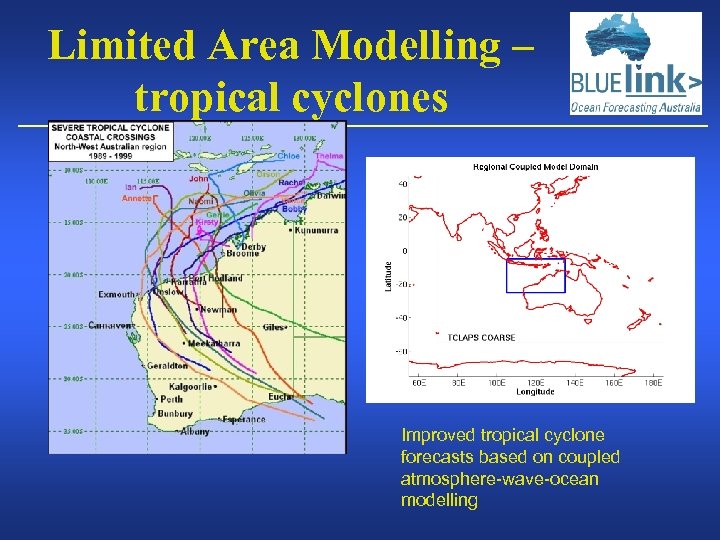
Limited Area Modelling – tropical cyclones Improved tropical cyclone forecasts based on coupled atmosphere-wave-ocean modelling
ROAM Relocatable Ocean. Atmosphere Model • 3 -10 day model prediction of ocean and atmospheric structure • High resolution (~2 km), limited area (~100 x 100 km 2) • Robust - to be run by non-experts in the Navy • Controlled from a graphical interface • Automatically nested inside operational global forecasts • Output fed to sonar and radar models
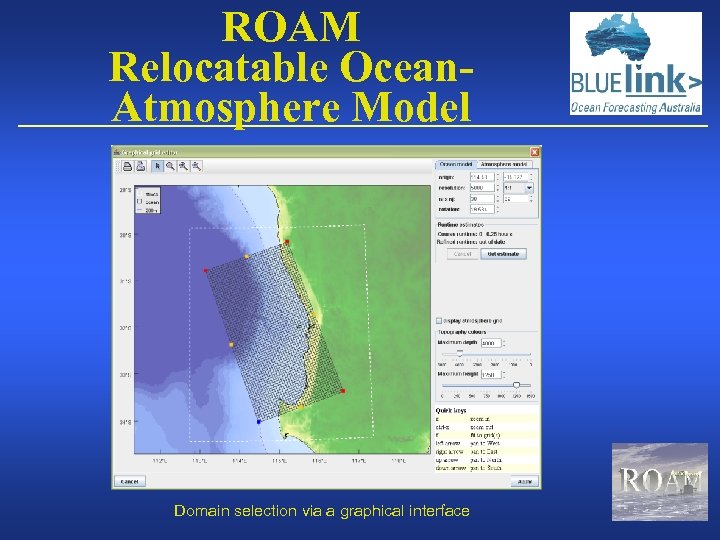
ROAM Relocatable Ocean. Atmosphere Model Domain selection via a graphical interface
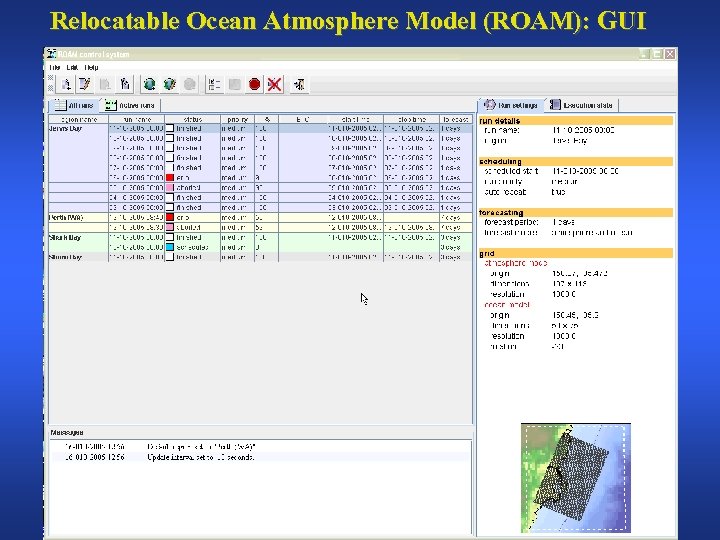
Relocatable Ocean Atmosphere Model (ROAM): GUI
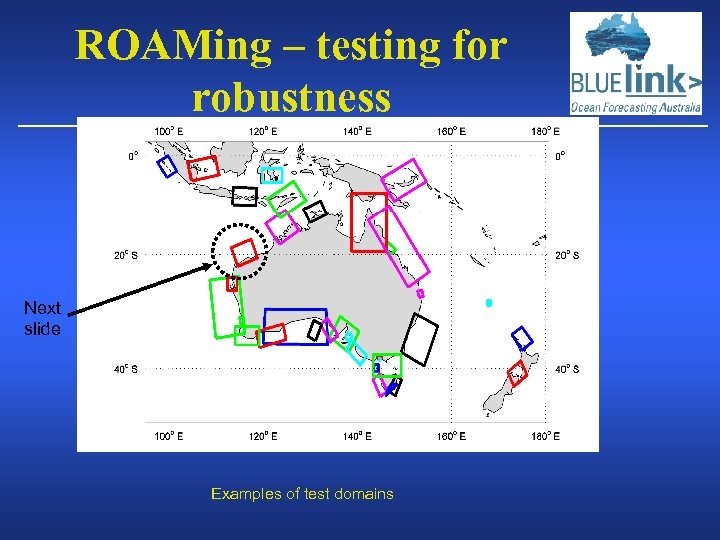
ROAMing – testing for robustness Next slide Examples of test domains
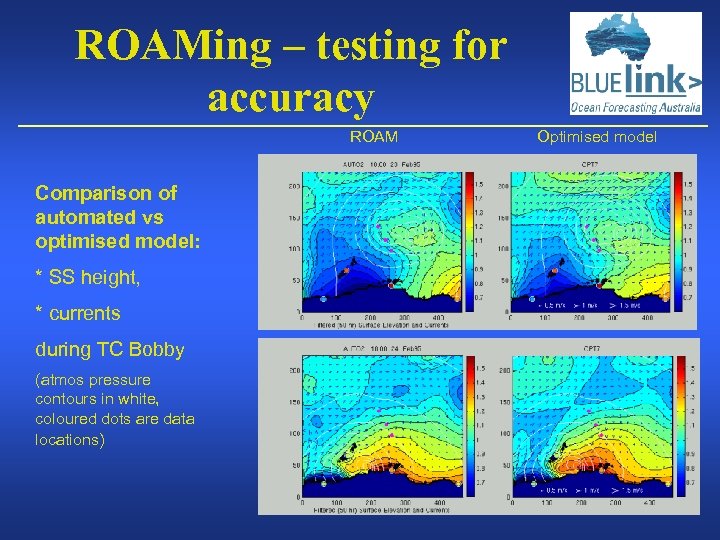
ROAMing – testing for accuracy ROAM Comparison of automated vs optimised model: * SS height, * currents during TC Bobby (atmos pressure contours in white, coloured dots are data locations) Optimised model
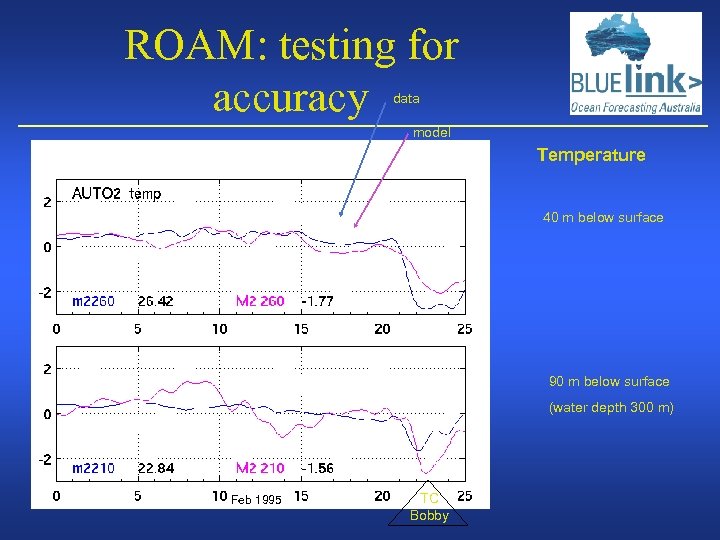
ROAM: testing for accuracy data model Temperature 40 m below surface 90 m below surface (water depth 300 m) Feb 1995 TC Bobby
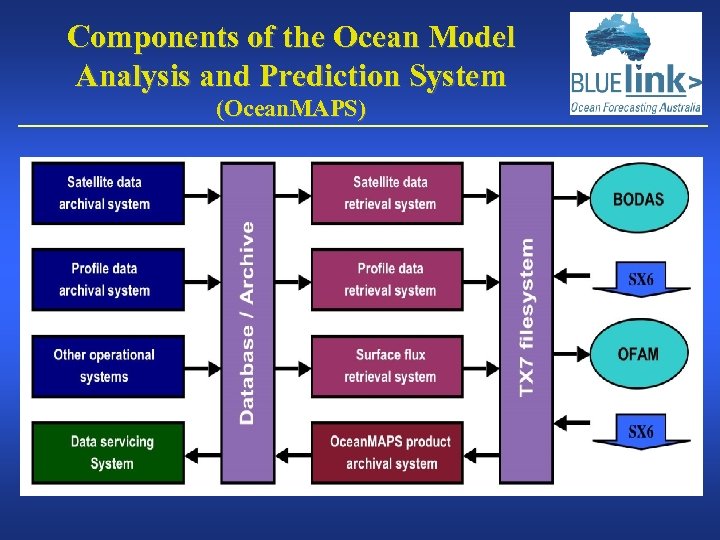
Components of the Ocean Model Analysis and Prediction System (Ocean. MAPS)
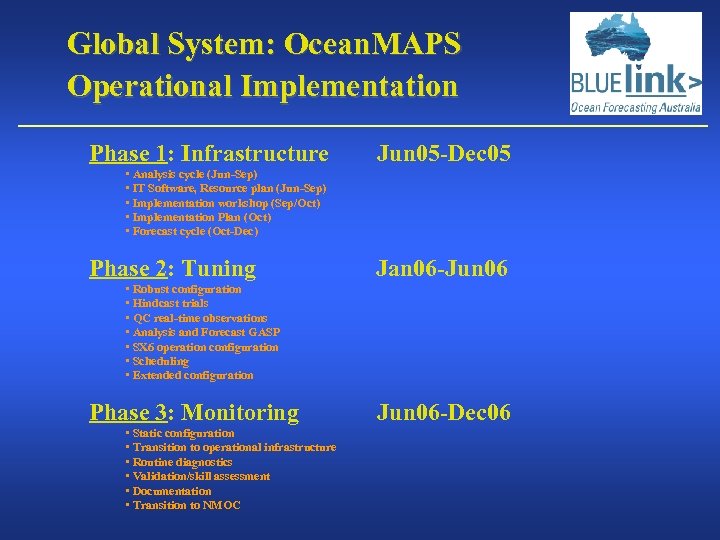
Global System: Ocean. MAPS Operational Implementation Phase 1: Infrastructure Jun 05 -Dec 05 • Analysis cycle (Jun-Sep) • IT Software, Resource plan (Jun-Sep) • Implementation workshop (Sep/Oct) • Implementation Plan (Oct) • Forecast cycle (Oct-Dec) Phase 2: Tuning Jan 06 -Jun 06 • Robust configuration • Hindcast trials • QC real-time observations • Analysis and Forecast GASP • SX 6 operation configuration • Scheduling • Extended configuration Phase 3: Monitoring • Static configuration • Transition to operational infrastructure • Routine diagnostics • Validation/skill assessment • Documentation • Transition to NMOC Jun 06 -Dec 06
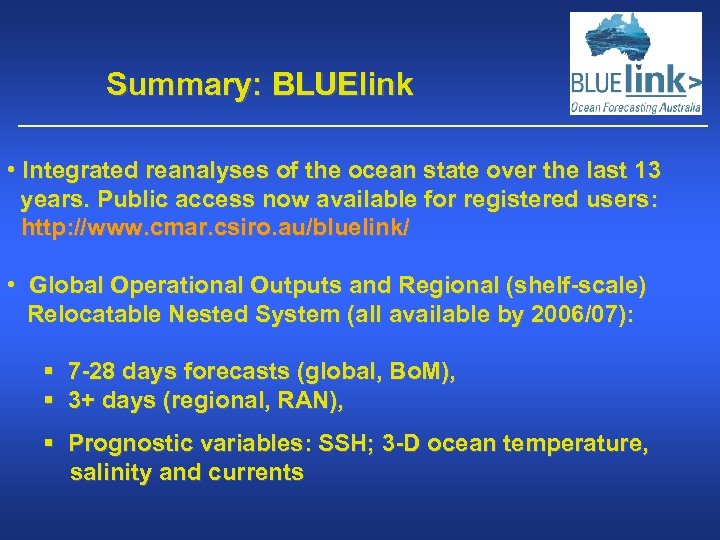
Summary: BLUElink • Integrated reanalyses of the ocean state over the last 13 years. Public access now available for registered users: http: //www. cmar. csiro. au/bluelink/ • Global Operational Outputs and Regional (shelf-scale) Relocatable Nested System (all available by 2006/07): § 7 -28 days forecasts (global, Bo. M), § 3+ days (regional, RAN), § Prognostic variables: SSH; 3 -D ocean temperature, salinity and currents
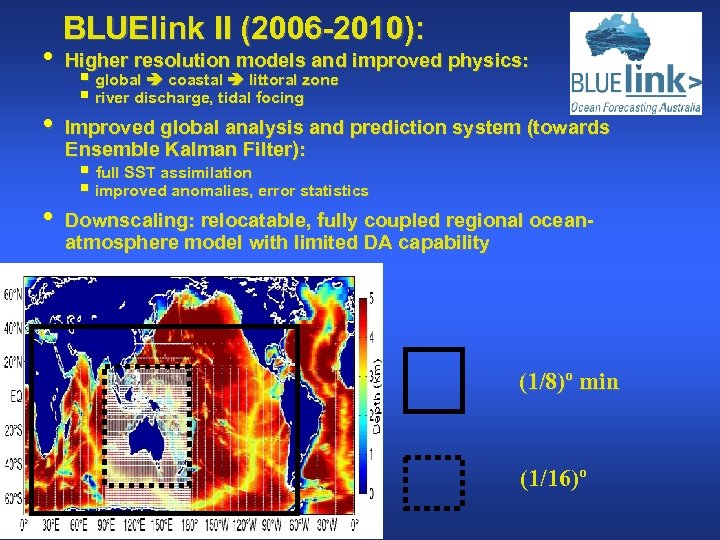
• • • BLUElink II (2006 -2010): Higher resolution models and improved physics: § global coastal littoral zone § river discharge, tidal focing Improved global analysis and prediction system (towards Ensemble Kalman Filter): § full SST assimilation § improved anomalies, error statistics Downscaling: relocatable, fully coupled regional oceanatmosphere model with limited DA capability (1/8)º min (1/16)º
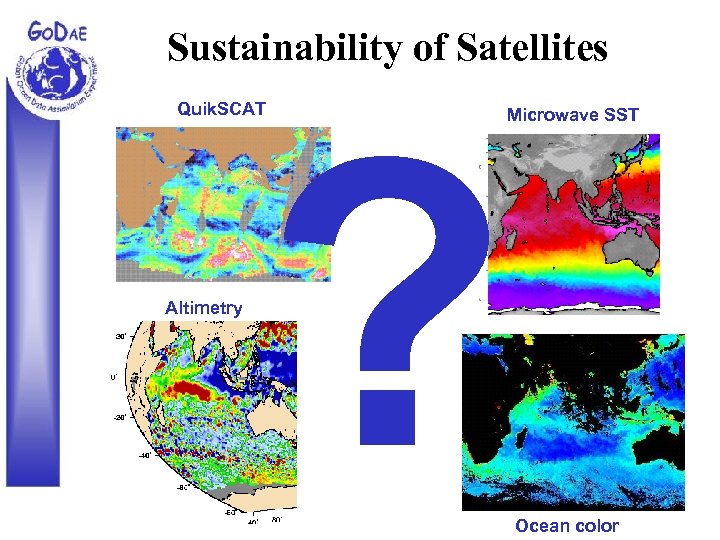
Sustainability of Satellites ? Quik. SCAT Altimetry Microwave SST Ocean color
Скачать презентацию BLUElink Update Andreas Schiller CSIRO Marine and Atmospheric
45044d2caa7df60ffee8eb7198540947.ppt