



Blue By: Dargerkhan Damysbek
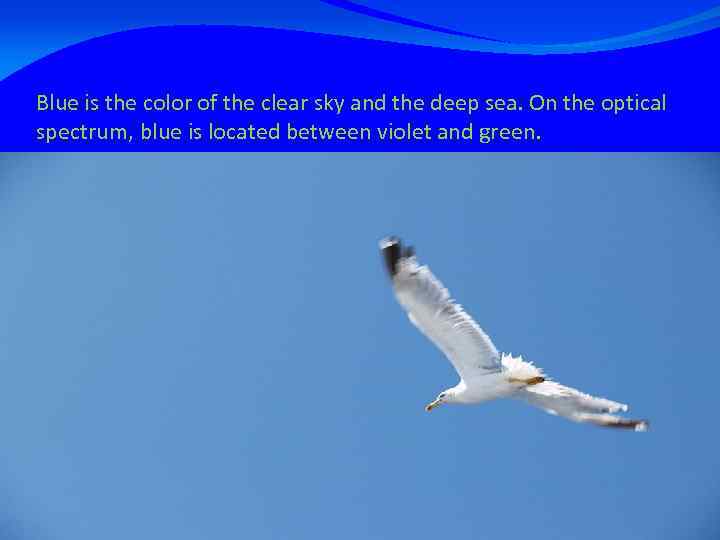
Blue is the color of the clear sky and the deep sea. On the optical spectrum, blue is located between violet and green.


Etymology and linguistic differences The modern English word blue comes from Middle English bleu or blewe, from the Old French bleu, a word of Germanic origin, related to the Old High German word blao. In heraldry, the wordazure is used for blue. In Russian and some other languages, there is no single word for blue, but rather different words for light blue (голубой, goluboy) and dark blue (синий, siniy). Several languages, including Japanese, Thai, Korean, and Lakota Sioux, use the same word to describe blue and green. For example, in Vietnamese the colour of both tree leaves and the sky isxanh. In Japanese, the word for blue (青 ao) is often used for colours that English speakers would refer to as green, such as the colour of a traffic signal meaning "go".
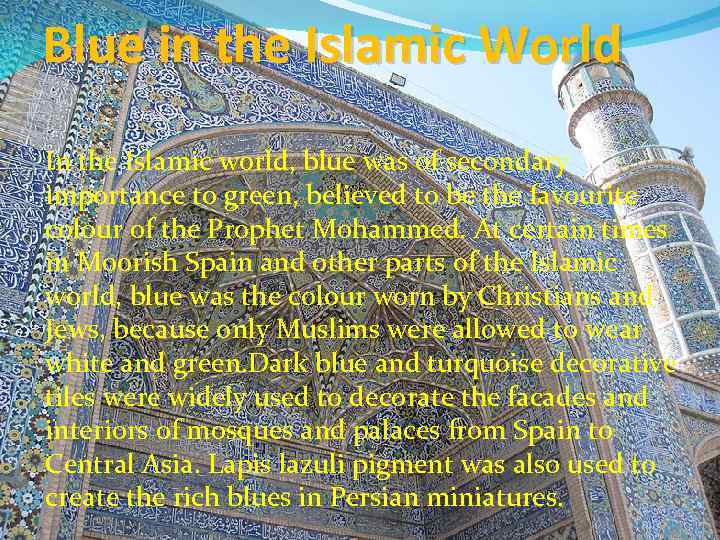
Blue in the Islamic World In the Islamic world, blue was of secondary importance to green, believed to be the favourite colour of the Prophet Mohammed. At certain times in Moorish Spain and other parts of the Islamic world, blue was the colour worn by Christians and Jews, because only Muslims were allowed to wear white and green. Dark blue and turquoise decorative tiles were widely used to decorate the facades and interiors of mosques and palaces from Spain to Central Asia. Lapis lazuli pigment was also used to create the rich blues in Persian miniatures.
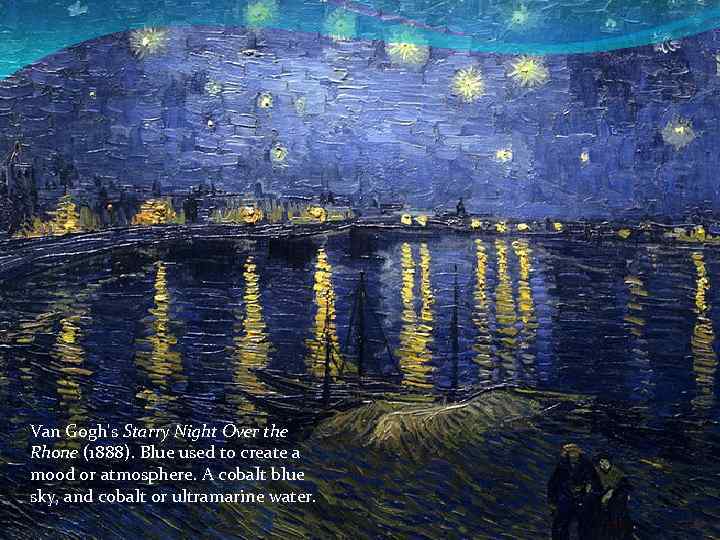
Van Gogh's Starry Night Over the Rhone (1888). Blue used to create a mood or atmosphere. A cobalt blue sky, and cobalt or ultramarine water.
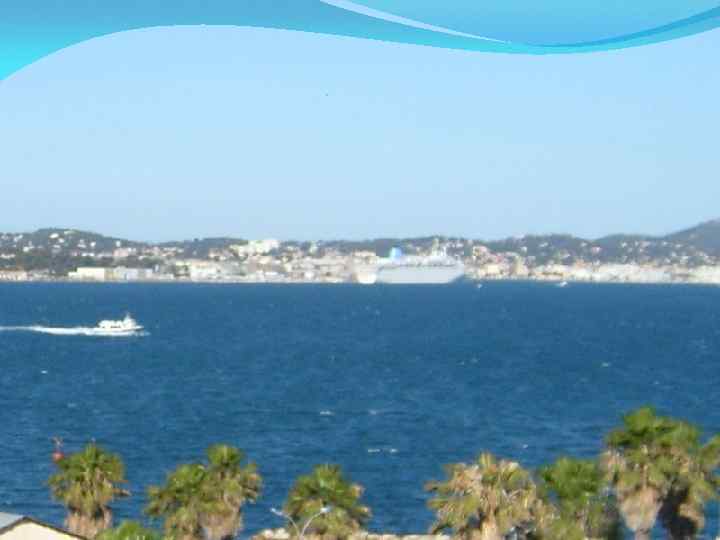
Why the clear sky and the deep sea are seen as blue? Of the colours in the visible spectrum of light, blue has a very short wavelength, while red has the longest wavelength. When sunlight passes through the atmosphere, the blue wavelengths are scattered more widely by the oxygen and nitrogen molecules, and more blue comes to our eyes. This effect is called Rayleigh scattering, after Lord Rayleigh, the British physicist who discovered it. It was confirmed by Albert Einstein in 1911. Near sunrise and sunset, most of the light we see comes in nearly tangent to the Earth's surface, so that the light's path through the atmosphere is so long that much of the blue and even green light is scattered out, leaving the sun rays and the clouds it illuminates red. Therefore, when looking at the sunset and sunrise, you will see the colour red more than any of the other colours. The sea is seen as blue for largely the same reason: the water absorbs the longer wavelengths of red and reflects and scatters the blue, which comes to the eye of the viewer. The colour of the sea is also affected by the colour of the sky, reflected by particles in the water; and by algae and plant life in the water, which can make it look green; or by sediment, which can make it look brown.
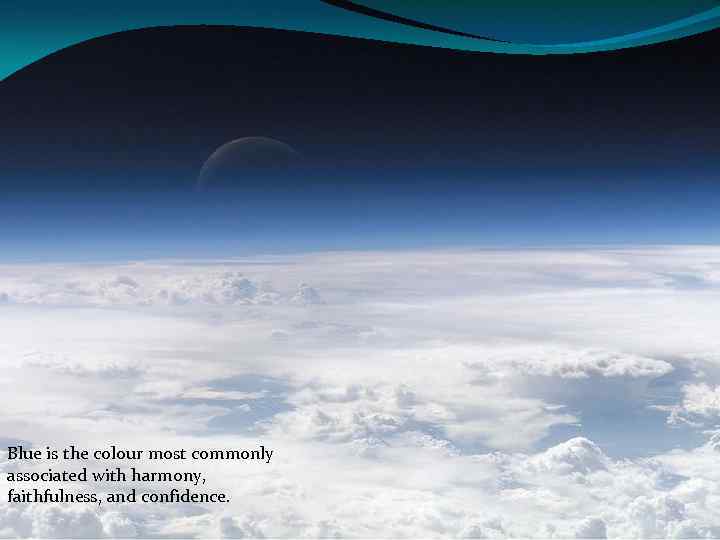
Blue is the colour most commonly associated with harmony, faithfulness, and confidence.

Blue in our life
