 Скачать презентацию BLOO D leukocytes erythrocytes Blood Figure
c5ef087ad52f7b3ab7059cbe484d76a6.ppt
- Количество слайдов: 17



BLOO D
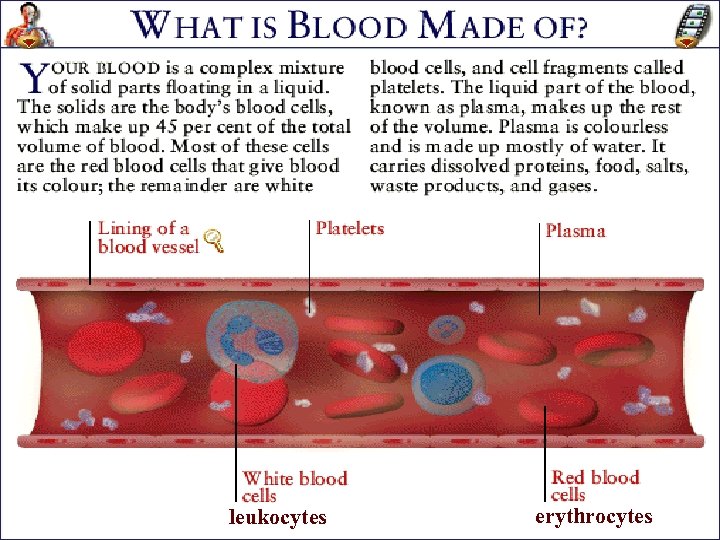
leukocytes erythrocytes
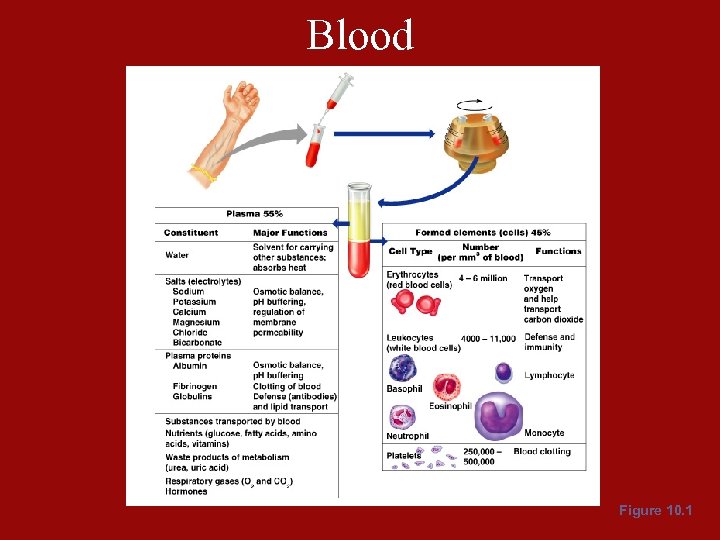
Blood Figure 10. 1
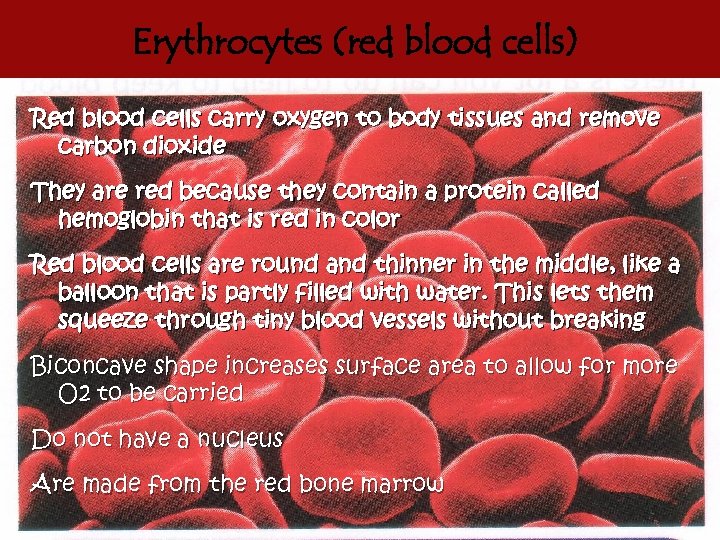
Erythrocytes (red blood cells) Red blood cells carry oxygen to body tissues and remove carbon dioxide They are red because they contain a protein called hemoglobin that is red in color Red blood cells are round and thinner in the middle, like a balloon that is partly filled with water. This lets them squeeze through tiny blood vessels without breaking Biconcave shape increases surface area to allow for more O 2 to be carried Do not have a nucleus Are made from the red bone marrow
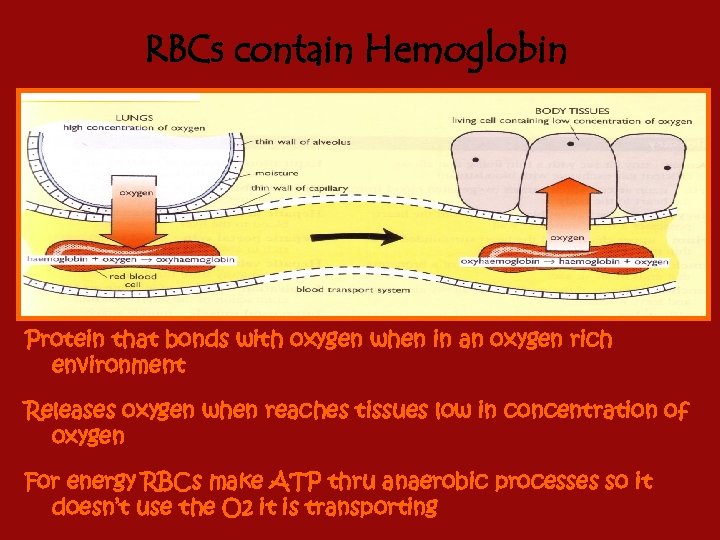
RBCs contain Hemoglobin Protein that bonds with oxygen when in an oxygen rich environment Releases oxygen when reaches tissues low in concentration of oxygen For energy RBCs make ATP thru anaerobic processes so it doesn’t use the O 2 it is transporting
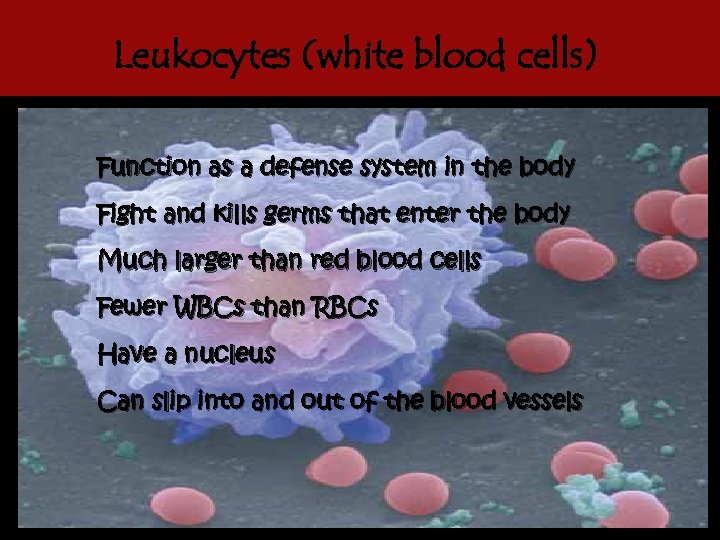
Leukocytes (white blood cells) Function as a defense system in the body Fight and kills germs that enter the body Much larger than red blood cells Fewer WBCs than RBCs Have a nucleus Can slip into and out of the blood vessels
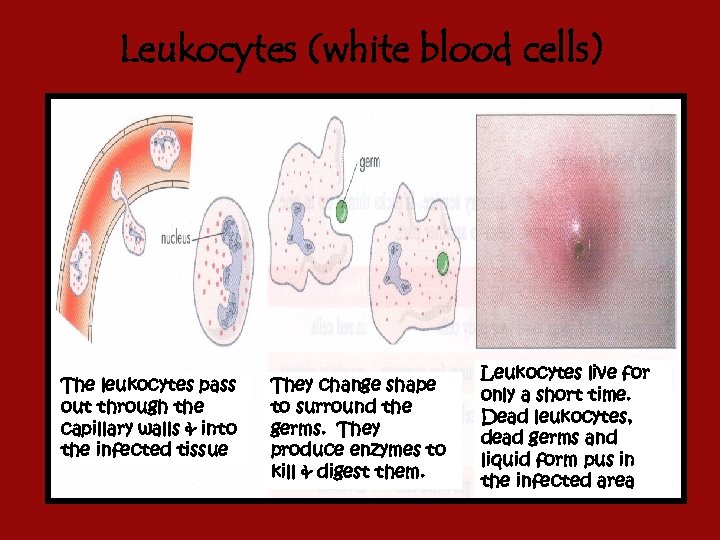
Leukocytes (white blood cells) The leukocytes pass leukocyte out through the capillary walls & into the infected tissue They change shape to surround the germs. They produce enzymes to kill & digest them. Leukocytes live for only a short time. Dead leukocytes, dead germs and liquid form pus in the infected area
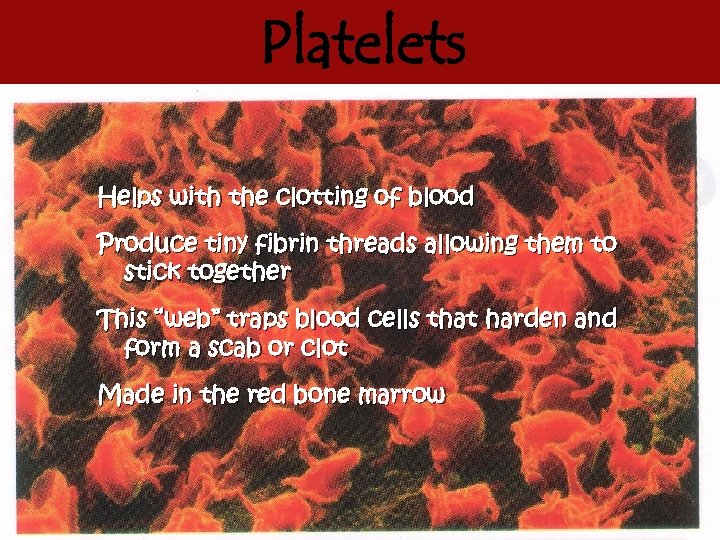
Platelets Helps with the clotting of blood Produce tiny fibrin threads allowing them to stick together This “web” traps blood cells that harden and form a scab or clot Made in the red bone marrow
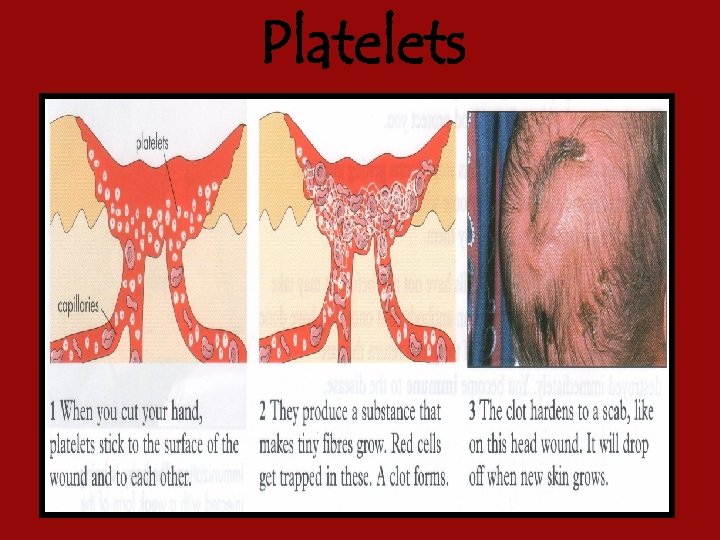
Platelets
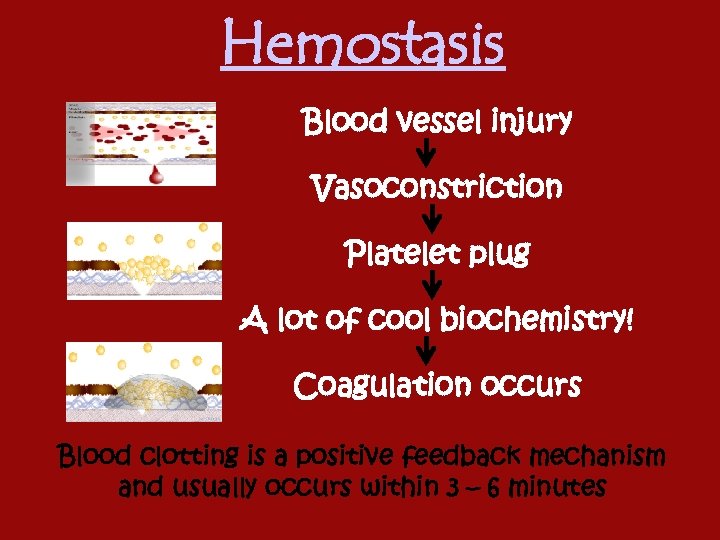
Hemostasis Blood vessel injury Vasoconstriction Platelet plug A lot of cool biochemistry! Coagulation occurs Blood clotting is a positive feedback mechanism and usually occurs within 3 – 6 minutes
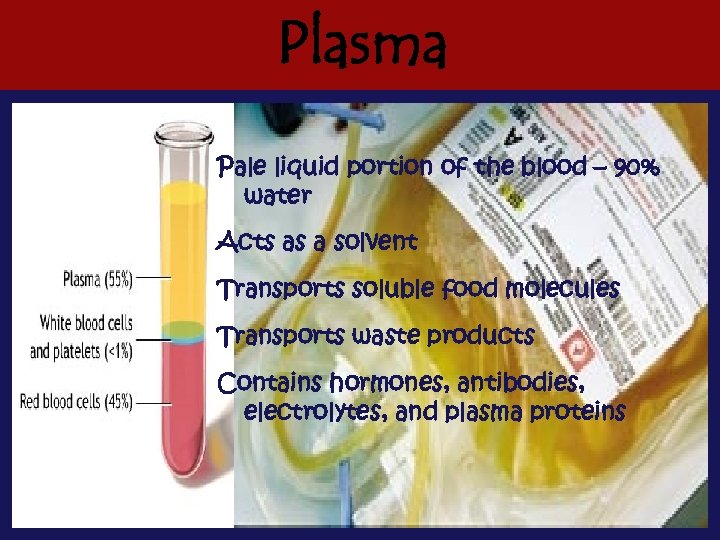
Plasma Pale liquid portion of the blood – 90% water Acts as a solvent Transports soluble food molecules Transports waste products Contains hormones, antibodies, electrolytes, and plasma proteins
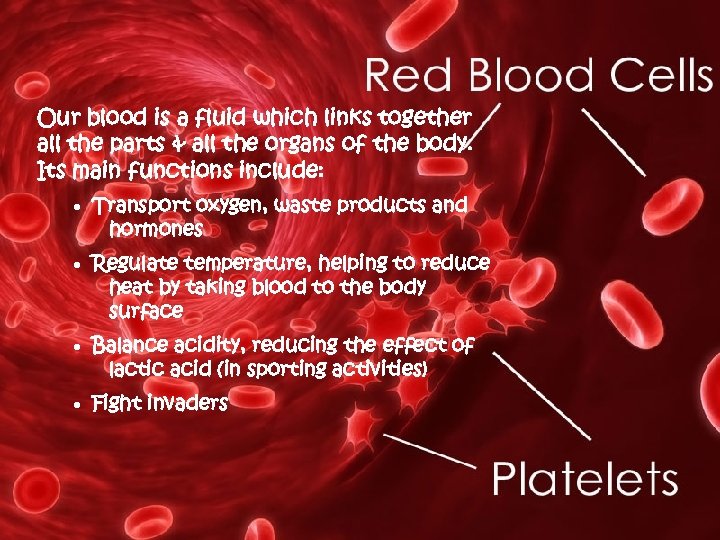
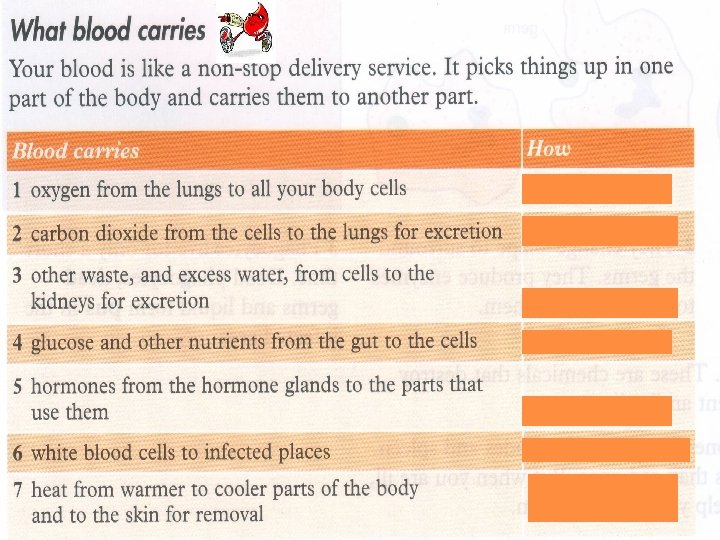
Our blood is a fluid which links together all the parts & all the organs of the body. Its main functions include: • Transport oxygen, waste products and hormones • Regulate temperature, helping to reduce heat by taking blood to the body surface • Balance acidity, reducing the effect of lactic acid (in sporting activities) • Fight invaders
Blood Fun Facts The average human has 5 litres of blood It takes about 20 seconds for a red blood cell to circle the body The only part of the body with no blood supply is the cornea, it takes in O 2 directly from the air One cubic millimeter of healthy blood contains about 5 million red blood cells – this is the “blood count” People who live in high altitudes will have a higher blood count because of the lower O 2 levels Athletes often train at high altitudes to improve distance race performance BLOOD DOPING, done by some athletes, mimics this effect
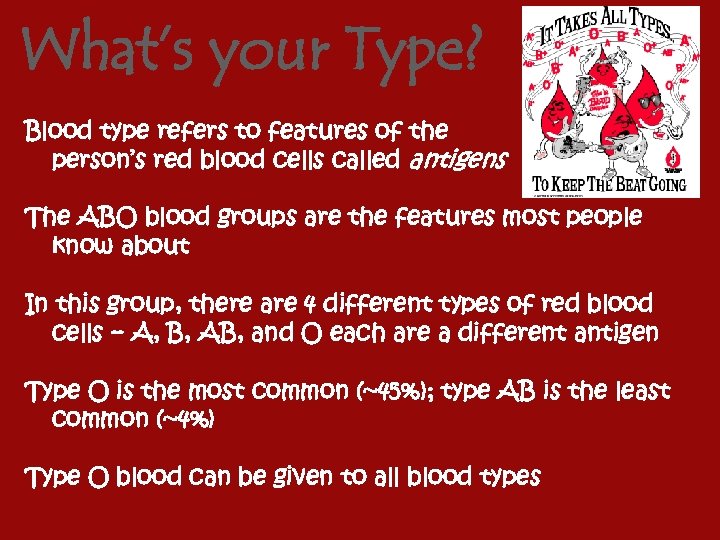
What’s your Type? Blood type refers to features of the person’s red blood cells called antigens The ABO blood groups are the features most people know about In this group, there are 4 different types of red blood cells -- A, B, AB, and O each are a different antigen Type O is the most common (~45%); type AB is the least common (~4%) Type O blood can be given to all blood types
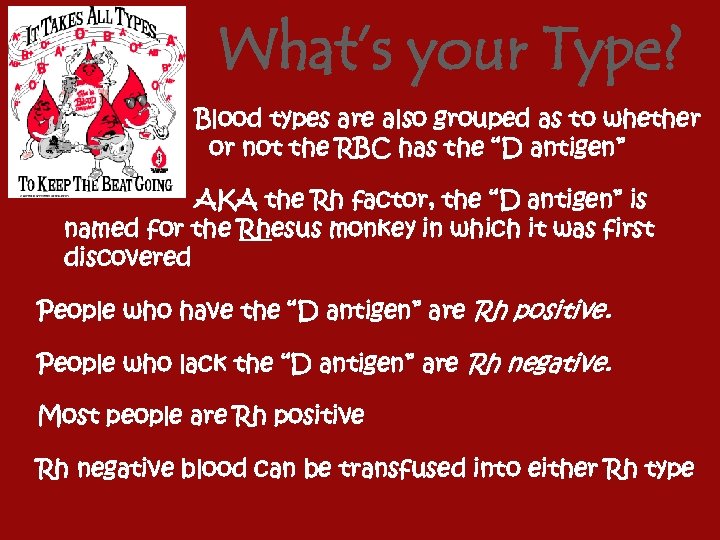
What’s your Type? Blood types are also grouped as to whether or not the RBC has the “D antigen” AKA the Rh factor, the “D antigen” is named for the Rhesus monkey in which it was first discovered People who have the “D antigen” are Rh positive. People who lack the “D antigen” are Rh negative. Most people are Rh positive Rh negative blood can be transfused into either Rh type
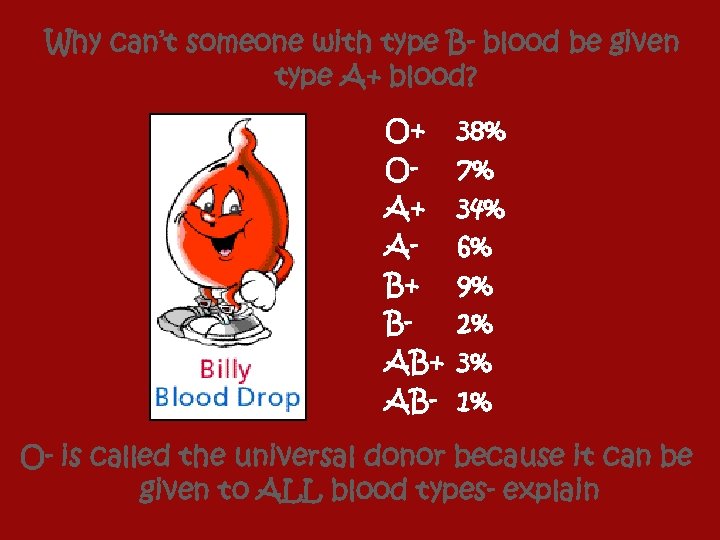
Why can’t someone with type B- blood be given type A+ blood? O+ OA+ AB+ BAB+ AB- 38% 7% 34% 6% 9% 2% 3% 1% O- is called the universal donor because it can be given to ALL blood types- explain
Скачать презентацию BLOO D leukocytes erythrocytes Blood Figure
c5ef087ad52f7b3ab7059cbe484d76a6.ppt