 Скачать презентацию Block building Deborah M Neill
118d648ad1ade837d7ae72b353f68937.ppt
- Количество слайдов: 8



Block building Deborah M. Neill
• Stages of Blockbuilding • Blocks are important learning tools for young children. They are the most popular materials in child care centers. • • • Children play with blocks in different ways as they grow older. • Stages of Blockbuilding Stage One: At 2 years the child carries blocks and enjoys filling and dumping. Stage Two: 2 -3 years building begins. Child stacks blocks vertically or lay them in horizontal rows. Stage Three: Bridging occurs. Bridging is a process of placing two blocks vertically a space apart. Then a third block is added. Stage Four: Child begins to construct enclosures. Example is a house or barn. Stage Five: 3 -4 years child begins to build more intricate buildings. Stage Six: The children begin naming their structures and include dramatic play. Stage Seven: 5 years of age child decides what they want to build prior to construction. Structures are more symbolic and are used in dramatic play.
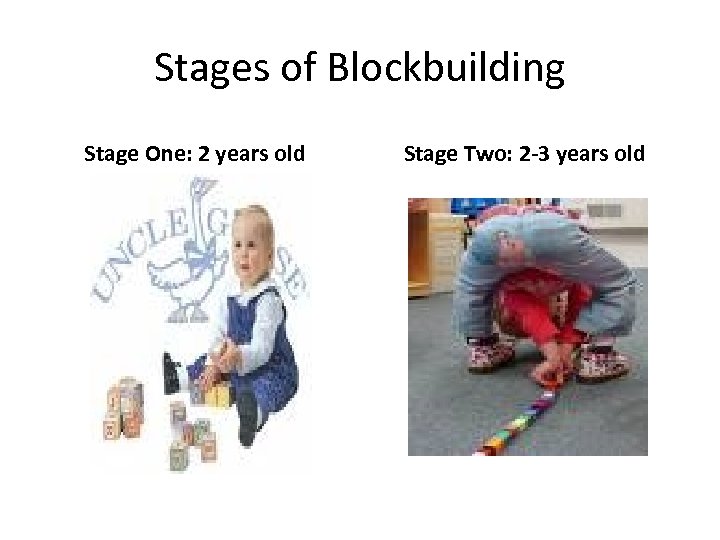
Stages of Blockbuilding Stage One: 2 years old Stage Two: 2 -3 years old
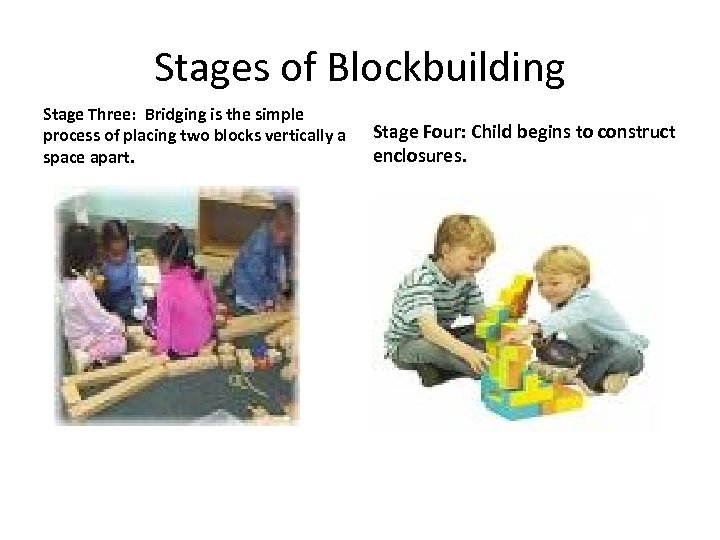
Stages of Blockbuilding Stage Three: Bridging is the simple process of placing two blocks vertically a space apart. Stage Four: Child begins to construct enclosures.
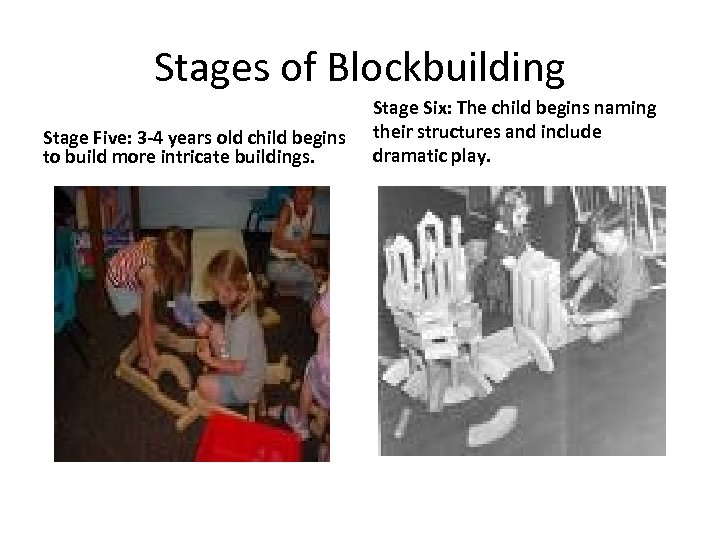
Stages of Blockbuilding Stage Five: 3 -4 years old child begins to build more intricate buildings. Stage Six: The child begins naming their structures and include dramatic play.
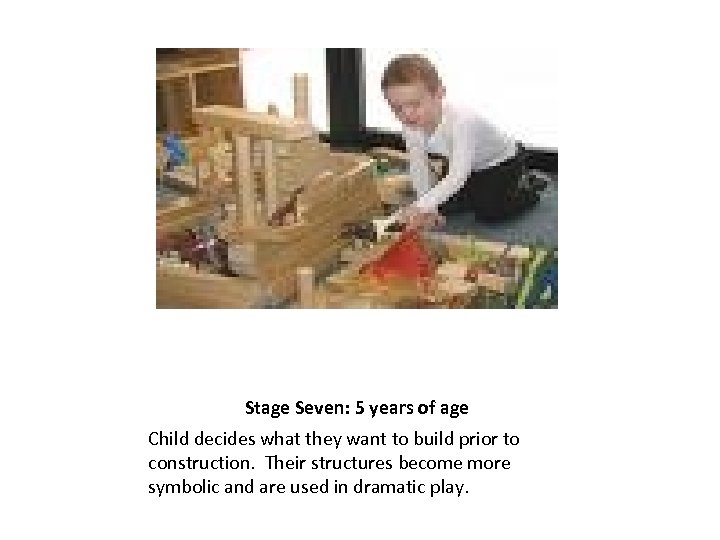
Stage Seven: 5 years of age Child decides what they want to build prior to construction. Their structures become more symbolic and are used in dramatic play.
Types of blocks and Accessories • Blocks come in a variety of materials including wood, cardboard, plastic, rubber, and foam. Square and rectangular blocks made from lightweight materials are best for younger children. • Children from 3 -6 years of age prefer wooden blocks in a variety of shapes and sizes. • Children enjoy having accessories to use with block play. Simple figures such as animals and multicultural people are well received. • Remember to rotate materials occasionally to maintain the children’s interests.
Resources • Working with Young Children; Judy Herr The Goodheart-Willcox Company, Inc. 2004 • www. google. com images: www. monroecc. com , www. dbdtoys. com , www. unclegoose. com , www. leapschool. com , www. uihealthcare. com , www. webs. wichita. edu
Скачать презентацию Block building Deborah M Neill
118d648ad1ade837d7ae72b353f68937.ppt