 Скачать презентацию BLAST and FASTA 1 Pairwise Alignment Global
277595b2cfac32b372e1dd5755940409.ppt
- Количество слайдов: 72



BLAST and FASTA 1
Pairwise Alignment Global Local • Best score from among alignments of full-length alignments of partial sequences • Needelman-Wunch • Smith-Waterman algorithm 2
Why do we need local alignments? • To compare a short sequence to a large one. • To compare a single sequence to an entire database • To compare a partial sequence to the whole. 3
Why do we need local alignments? • Identify newly determined sequences • Compare new genes to known ones • Guess functions for entire genomes full of ORFs of unknown function 4
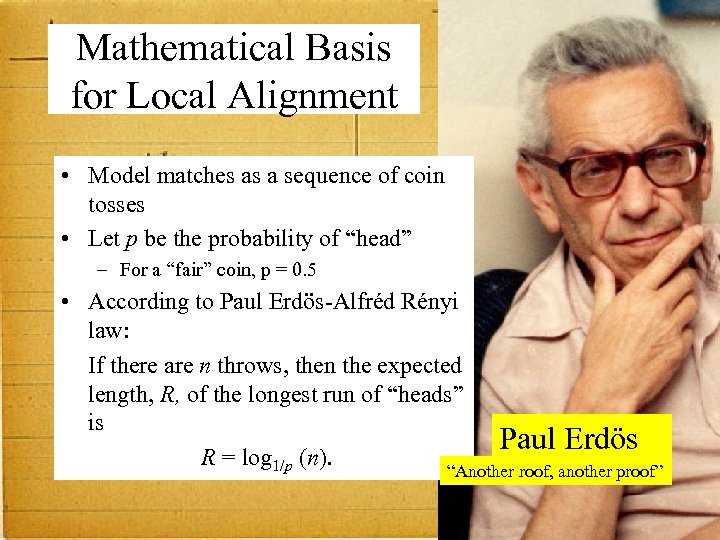
Mathematical Basis for Local Alignment • Model matches as a sequence of coin tosses • Let p be the probability of “head” – For a “fair” coin, p = 0. 5 • According to Paul Erdös-Alfréd Rényi law: If there are n throws, then the expected length, R, of the longest run of “heads” is Paul Erdös R = log 1/p (n). “Another roof, another proof” 5
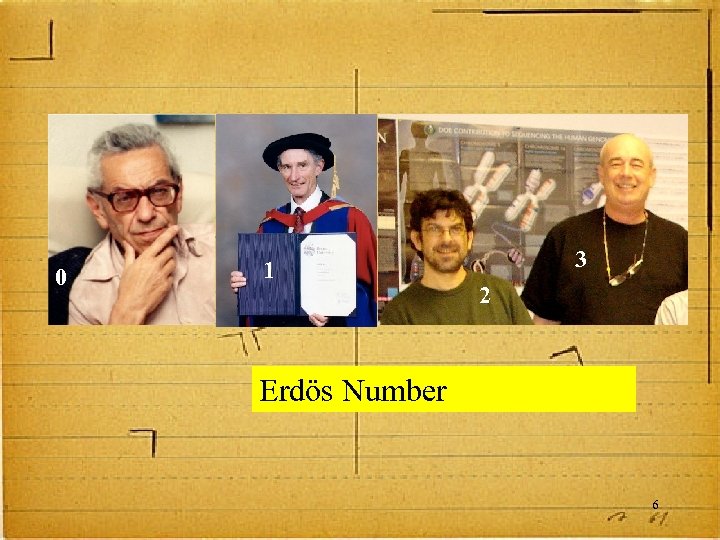
0 1 3 2 Erdös Number 6
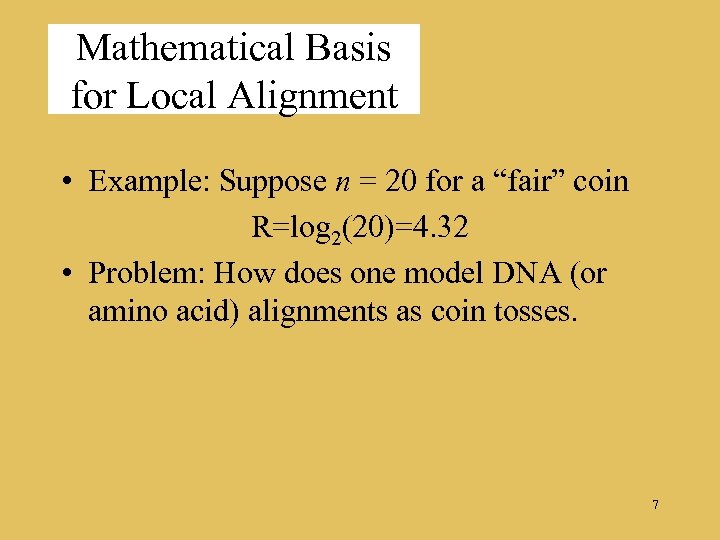
Mathematical Basis for Local Alignment • Example: Suppose n = 20 for a “fair” coin R=log 2(20)=4. 32 • Problem: How does one model DNA (or amino acid) alignments as coin tosses. 7
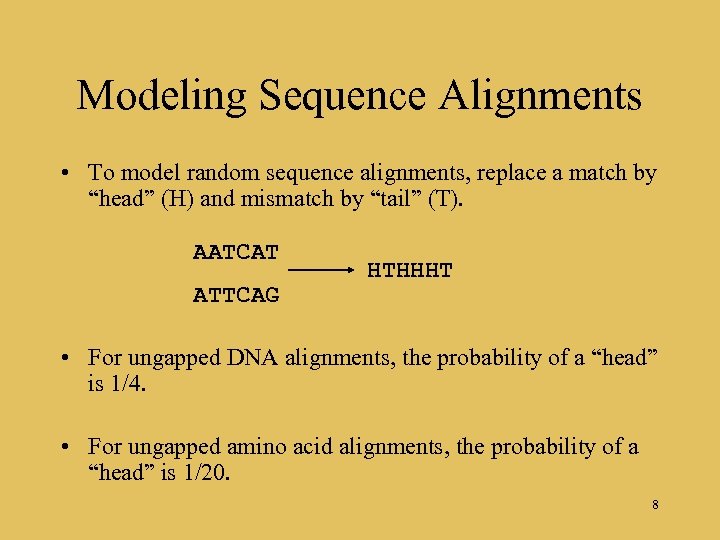
Modeling Sequence Alignments • To model random sequence alignments, replace a match by “head” (H) and mismatch by “tail” (T). AATCAT ATTCAG HTHHHT • For ungapped DNA alignments, the probability of a “head” is 1/4. • For ungapped amino acid alignments, the probability of a “head” is 1/20. 8
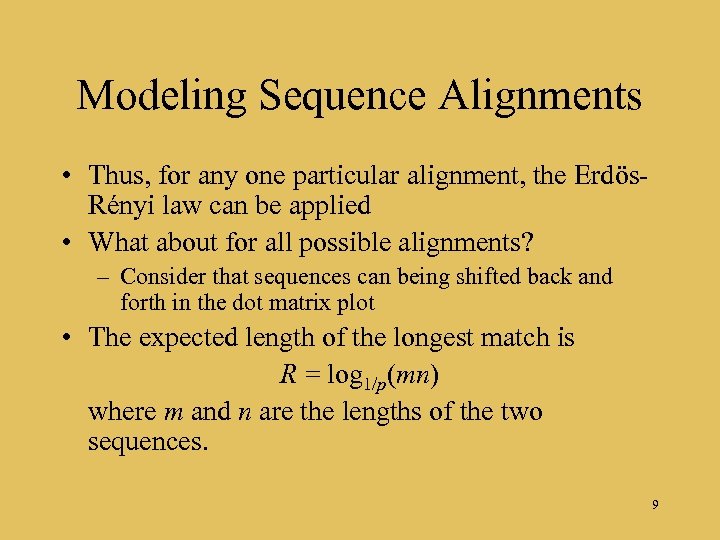
Modeling Sequence Alignments • Thus, for any one particular alignment, the Erdös. Rényi law can be applied • What about for all possible alignments? – Consider that sequences can being shifted back and forth in the dot matrix plot • The expected length of the longest match is R = log 1/p(mn) where m and n are the lengths of the two sequences. 9
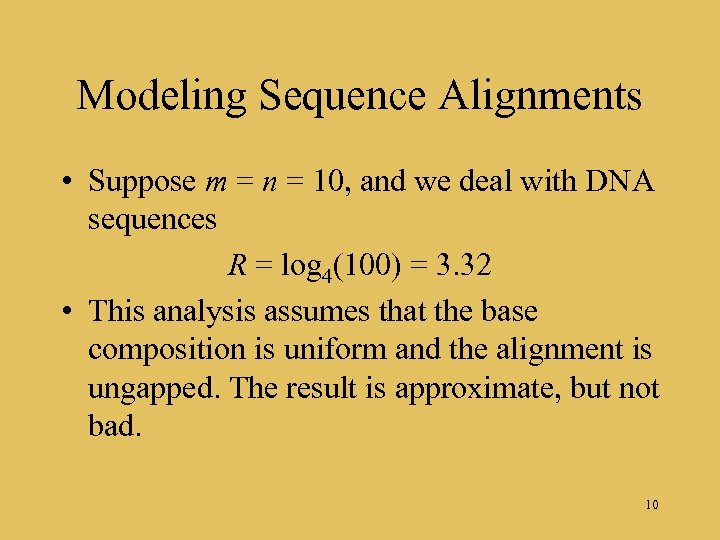
Modeling Sequence Alignments • Suppose m = n = 10, and we deal with DNA sequences R = log 4(100) = 3. 32 • This analysis assumes that the base composition is uniform and the alignment is ungapped. The result is approximate, but not bad. 10
11
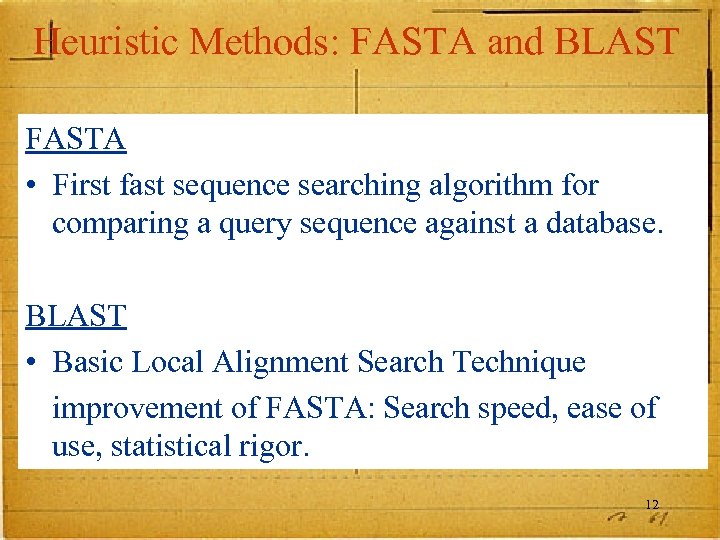
Heuristic Methods: FASTA and BLAST FASTA • First fast sequence searching algorithm for comparing a query sequence against a database. BLAST • Basic Local Alignment Search Technique improvement of FASTA: Search speed, ease of use, statistical rigor. 12
FASTA and BLAST • Basic idea: a good alignment contains subsequences of absolute identity (short lengths of exact matches): – First, identify very short exact matches. – Next, the best short hits from the first step are extended to longer regions of similarity. – Finally, the best hits are optimized. 13
FASTA Derived from logic of the dot plot – compute best diagonals from all frames of alignment The method looks for exact matches between words in query and test sequence – DNA words are usually 6 nucleotides long – protein words are 2 amino acids long 14
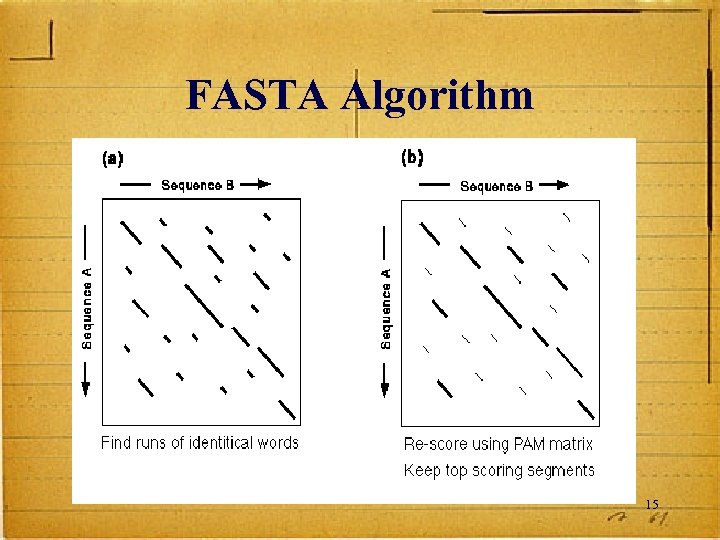
FASTA Algorithm 15
Makes Longest Diagonal After all diagonals are found, tries to join diagonals by adding gaps Computes alignments in regions of best diagonals 16
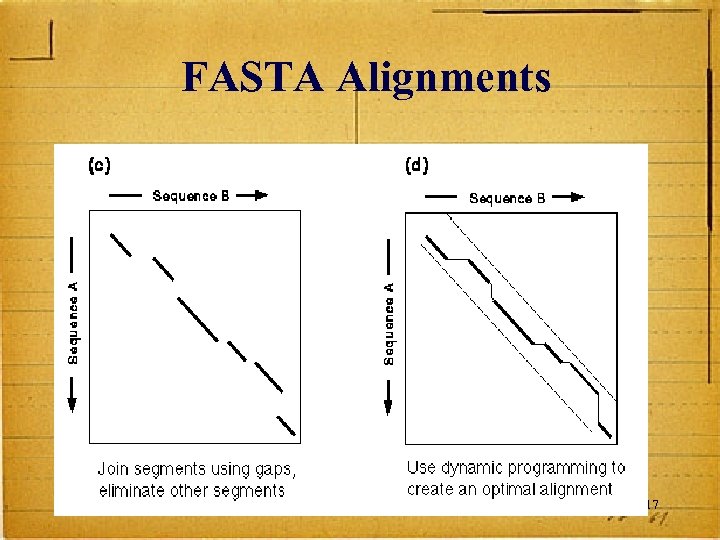
FASTA Alignments 17
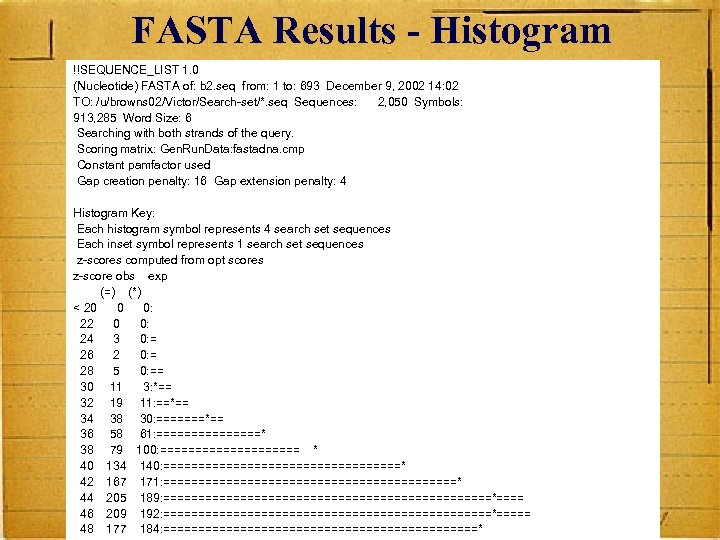
FASTA Results - Histogram !!SEQUENCE_LIST 1. 0 (Nucleotide) FASTA of: b 2. seq from: 1 to: 693 December 9, 2002 14: 02 TO: /u/browns 02/Victor/Search-set/*. seq Sequences: 2, 050 Symbols: 913, 285 Word Size: 6 Searching with both strands of the query. Scoring matrix: Gen. Run. Data: fastadna. cmp Constant pamfactor used Gap creation penalty: 16 Gap extension penalty: 4 Histogram Key: Each histogram symbol represents 4 search set sequences Each inset symbol represents 1 search set sequences z-scores computed from opt scores z-score obs exp (=) (*) < 20 0 0: 22 0 0: 24 3 0: = 26 2 0: = 28 5 0: == 30 11 3: *== 32 19 11: ==*== 34 38 30: =======*== 36 58 61: ========* 38 79 100: ========== * 40 134 140: =================* 42 167 171: =====================* 44 205 189: ========================*==== 46 209 192: ========================*===== 48 177 184: =======================* 18
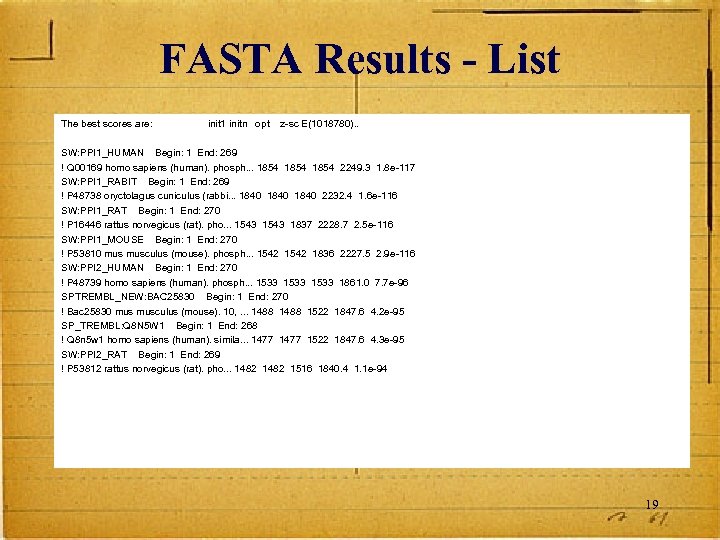
FASTA Results - List The best scores are: init 1 initn opt z-sc E(1018780). . SW: PPI 1_HUMAN Begin: 1 End: 269 ! Q 00169 homo sapiens (human). phosph. . . 1854 2249. 3 1. 8 e-117 SW: PPI 1_RABIT Begin: 1 End: 269 ! P 48738 oryctolagus cuniculus (rabbi. . . 1840 2232. 4 1. 6 e-116 SW: PPI 1_RAT Begin: 1 End: 270 ! P 16446 rattus norvegicus (rat). pho. . . 1543 1837 2228. 7 2. 5 e-116 SW: PPI 1_MOUSE Begin: 1 End: 270 ! P 53810 musculus (mouse). phosph. . . 1542 1836 2227. 5 2. 9 e-116 SW: PPI 2_HUMAN Begin: 1 End: 270 ! P 48739 homo sapiens (human). phosph. . . 1533 1861. 0 7. 7 e-96 SPTREMBL_NEW: BAC 25830 Begin: 1 End: 270 ! Bac 25830 musculus (mouse). 10, . . . 1488 1522 1847. 6 4. 2 e-95 SP_TREMBL: Q 8 N 5 W 1 Begin: 1 End: 268 ! Q 8 n 5 w 1 homo sapiens (human). simila. . . 1477 1522 1847. 6 4. 3 e-95 SW: PPI 2_RAT Begin: 1 End: 269 ! P 53812 rattus norvegicus (rat). pho. . . 1482 1516 1840. 4 1. 1 e-94 19
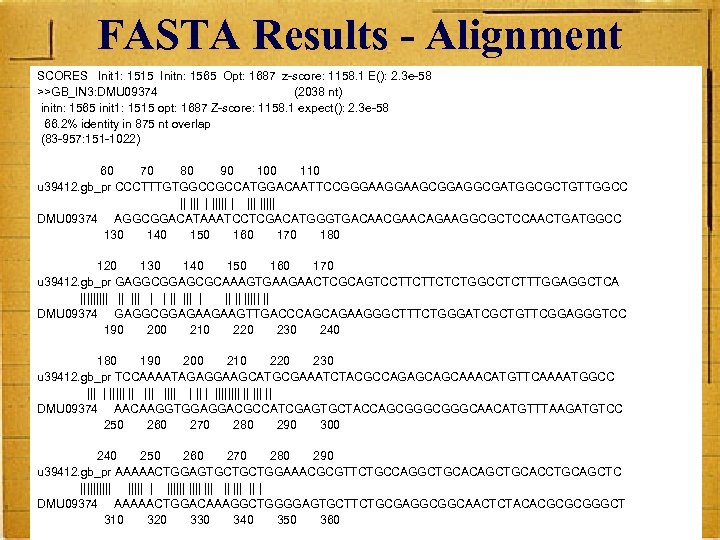
FASTA Results - Alignment SCORES Init 1: 1515 Initn: 1565 Opt: 1687 z-score: 1158. 1 E(): 2. 3 e-58 >>GB_IN 3: DMU 09374 (2038 nt) initn: 1565 init 1: 1515 opt: 1687 Z-score: 1158. 1 expect(): 2. 3 e-58 66. 2% identity in 875 nt overlap (83 -957: 151 -1022) 60 70 80 90 100 110 u 39412. gb_pr CCCTTTGTGGCCGCCATGGACAATTCCGGGAAGCGGAGGCGATGGCGCTGTTGGCC || | ||||| DMU 09374 AGGCGGACATAAATCCTCGACATGGGTGACAACGAACAGAAGGCGCTCCAACTGATGGCC 130 140 150 160 170 180 120 130 140 150 160 170 u 39412. gb_pr GAGGCGGAGCGCAAAGTGAAGAACTCGCAGTCCTTCTTCTCTGGCCTCTTTGGAGGCTCA ||||| || ||| || ||||| || DMU 09374 GAGGCGGAGAAGAAGTTGACCCAGCAGAAGGGCTTTCTGGGATCGCTGTTCGGAGGGTCC 190 200 210 220 230 240 180 190 200 210 220 230 u 39412. gb_pr TCCAAAATAGAGGAAGCATGCGAAATCTACGCCAGAGCAGCAAACATGTTCAAAATGGCC ||| | ||||| || |||| || || DMU 09374 AACAAGGTGGAGGACGCCATCGAGTGCTACCAGCGGGCAACATGTTTAAGATGTCC 250 260 270 280 290 300 240 250 260 270 280 290 u 39412. gb_pr AAAAACTGGAGTGCTGCTGGAAACGCGTTCTGCCAGGCTGCACAGCTGCACCTGCAGCTC ||||| | |||||| ||| || | DMU 09374 AAAAACTGGACAAAGGCTGGGGAGTGCTTCTGCGAGGCGGCAACTCTACACGCGCGGGCT 310 320 330 340 350 360 20

FASTA on the Web • Many websites offer FASTA searches • Each server has its limits • Beware! You depend “on the kindness of strangers. ” 21

European Bioinformatics Institute, Cambridge, UK http: //www. ebi. ac. uk/Tools/sss/fasta/ 22
![FASTA Format • simple format used by almost all programs • [>] header line](https://present5.com/presentation/277595b2cfac32b372e1dd5755940409/image-23.jpg "FASTA Format • simple format used by almost all programs • [>] header line")
FASTA Format • simple format used by almost all programs • [>] header line with a [hard return] at end • Sequence (no specific requirements for line length, characters, etc) >URO 1 uro 1. seq Length: 2018 November 9, 2000 11: 50 Type: N Check: 3854. . CGCAGAAAGAGGAGGCGCTTGCCTTCAGCTTGTGGGAAATCCCGAAGATGGCCAAAGACA ACTCAACTGTTCGTTGCTTCCAGGGCCTGCTGATTTTTGGAAATGTGATTATTGGTTGTT GCGGCATTGCCCTGACTGCGGAGTGCATCTTCTTTGTATCTGACCAACACAGCCTCTACC CACTGCTTGAAGCCACCGACAACGATGACATCTATGGGGCTGCCTGGATCGGCATATTTG TGGGCATCTGCCTCTTCTGCCTGTTCTAGGCATTGTAGGCATCATGAAGTCCAGCA GGAAAATTCTTCTGGCGTATTTCATTCTGATGTTTATAGTATATGCCTTTGAAGTGGCAT CTTGTATCACAGCAGCAACAAGACTTTTTCACACCCAACCTCTTCCTGAAGCAGA TGCTAGAGAGGTACCAAAACAACAGCCCTCCAAACAATGATGACCAGTGGAAAAACAATG GAGTCACCAAAACCTGGGACAGGCTCATGCTCCAGGACAATTGCTGTGGCGTAAATGGTC CATCAGACTGGCAAAAATACACATCTGCCTTCCGGACTGAGAATAATGATGCTGACTATC 23 CCTGGCCTCGTCAATGCTGTGTTATGAACAATCTTAAAGAACCTCTCAACCTGGAGGCTT
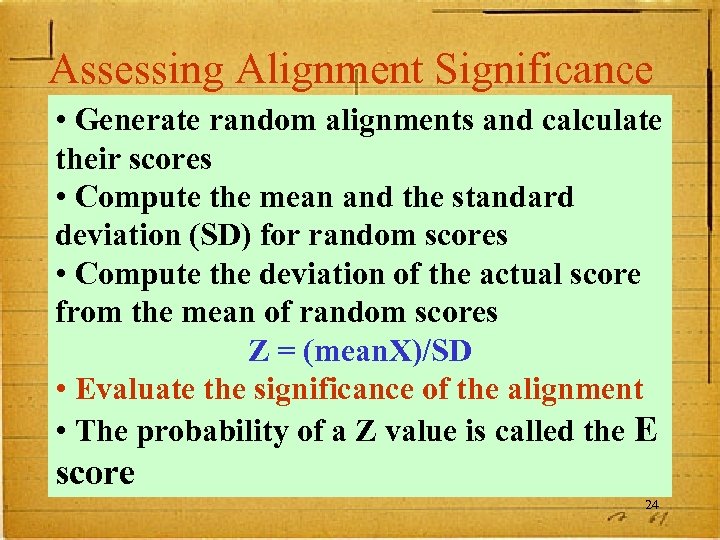
Assessing Alignment Significance • Generate random alignments and calculate their scores • Compute the mean and the standard deviation (SD) for random scores • Compute the deviation of the actual score from the mean of random scores Z = (mean. X)/SD • Evaluate the significance of the alignment • The probability of a Z value is called the E score 24
E scores or E values E scores are not equivalent to p values where p < 0. 05 are generally considered statistically significant. 25
E values (rules of thumb) E values below 10 -6 are most probably statistically significant. E values above 10 -6 but below 10 -3 deserve a second look. E values above 10 -3 should not be tossed aside lightly; they should be thrown out with great force. 26
BLAST • Basic Local Alignment Search Tool – Altschul et al. 1990, 1994, 1997 • Heuristic method for local alignment • Designed specifically for database searches • Based on the same assumption as FASTA that good alignments contain short lengths of exact matches 27
BLAST • Both BLAST and FASTA search for local sequence similarity - indeed they have exactly the same goals, though they use somewhat different algorithms and statistical approaches. • BLAST benefits – Speed – User friendly – Statistical rigor – More sensitive 28
Input/Output • Input: – Query sequence Q – Database of sequences DB – Minimal score S • Output: – Sequences from DB (Seq), such that Q and Seq have scores > S 29
![BLAST Searches Gen. Bank [BLAST= Basic Local Alignment Search Tool] The NCBI BLAST web](https://present5.com/presentation/277595b2cfac32b372e1dd5755940409/image-30.jpg "BLAST Searches Gen. Bank [BLAST= Basic Local Alignment Search Tool] The NCBI BLAST web")
BLAST Searches Gen. Bank [BLAST= Basic Local Alignment Search Tool] The NCBI BLAST web server lets you compare your query sequence to various sections of Gen. Bank: – – – – – nr = non-redundant (main sections) month = new sequences from the past few weeks refseq_rna RNA entries from NCBI's Reference Sequence project refseq_genomic Genomic entries from NCBI's Reference Sequence project ESTs Taxon = e. g. , human, Drososphila, yeast, E. coli proteins (by automatic translation) pdb = Sequences derived from the 3 -dimensional structure from Brookhaven Protein Data Bank 30
BLAST • Uses word matching like FASTA • Similarity matching of words (3 amino acids, 11 bases) – does not require identical words. • If no words are similar, then no alignment – Will not find matches for very short sequences • Does not handle gaps well • “gapped BLAST” is somewhat better 31
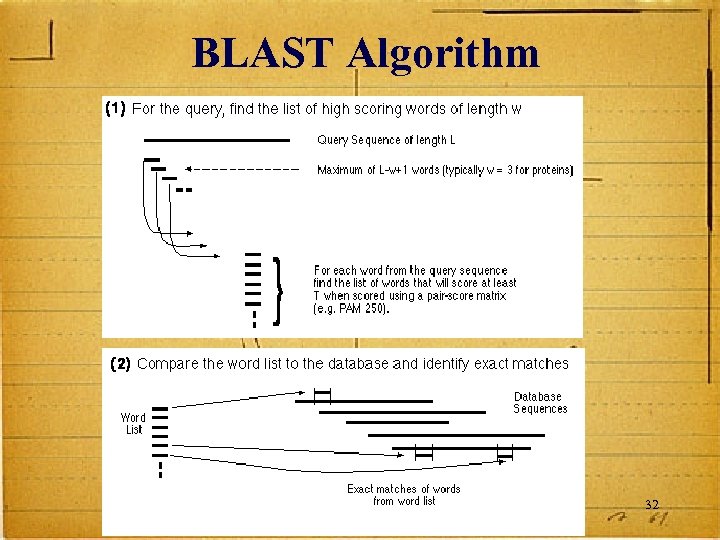
BLAST Algorithm 32
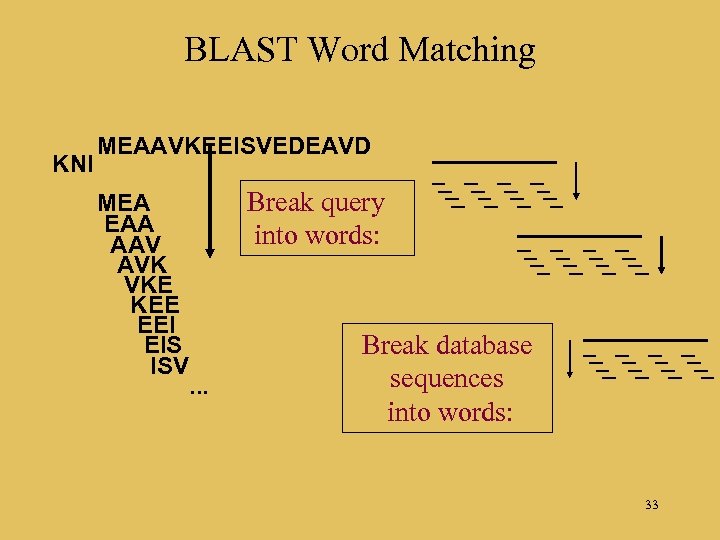
BLAST Word Matching KNI MEAAVKEEISVEDEAVD MEA EAA AAV AVK VKE KEE EEI EIS ISV Break query into words: . . . Break database sequences into words: 33
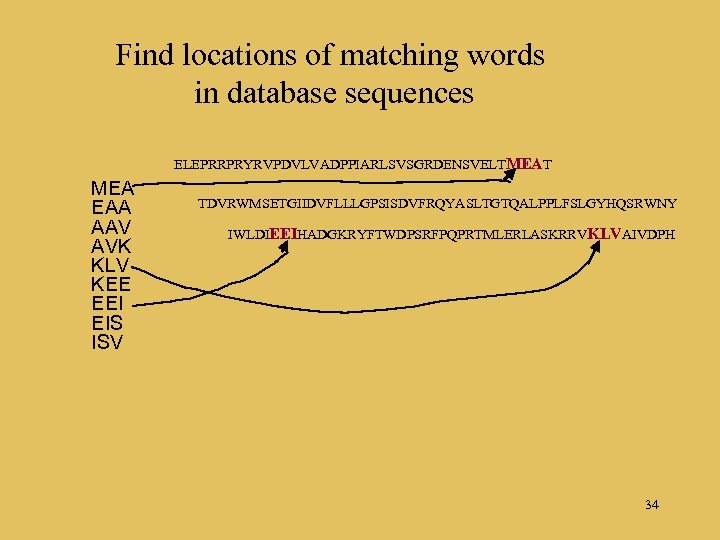
Find locations of matching words in database sequences ELEPRRPRYRVPDVLVADPPIARLSVSGRDENSVELTMEAT MEA EAA AAV AVK KLV KEE EEI EIS ISV TDVRWMSETGIIDVFLLLGPSISDVFRQYASLTGTQALPPLFSLGYHQSRWNY IWLDIEEIHADGKRYFTWDPSRFPQPRTMLERLASKRRVKLVAIVDPH 34
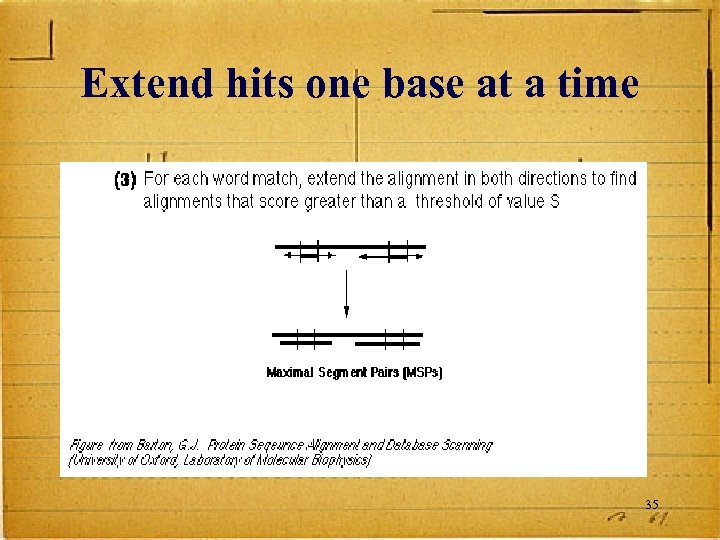
Extend hits one base at a time 35
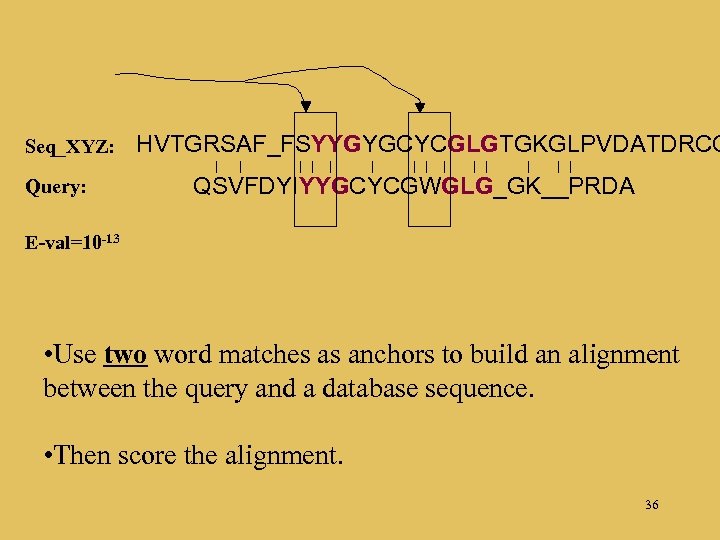
Seq_XYZ: Query: HVTGRSAF_FSYYGYGCYCGLGTGKGLPVDATDRCC QSVFDYIYYGCYCGWGLG_GK__PRDA E-val=10 -13 • Use two word matches as anchors to build an alignment between the query and a database sequence. • Then score the alignment. 36
HSPs are Aligned Regions • The results of the word matching and attempts to extend the alignment are segments - called HSPs (High-Scoring Segment Pairs) • BLAST often produces several short HSPs rather than a single aligned region 37
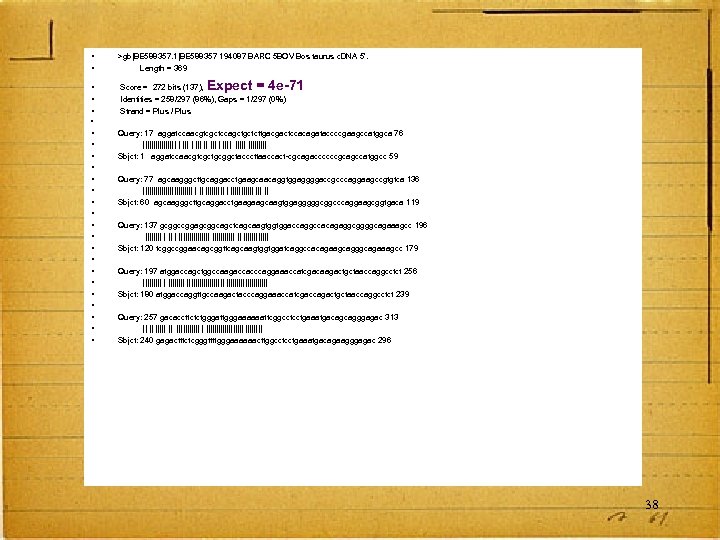
• • >gb|BE 588357. 1|BE 588357 194087 BARC 5 BOV Bos taurus c. DNA 5'. Length = 369 • Score = 272 bits (137), • • Identities = 258/297 (86%), Gaps = 1/297 (0%) Strand = Plus / Plus Expect = 4 e-71 • • • • • Query: 17 aggatccaacgtcgctccagctgctcttgacgactccacagataccccgaagccatggca 76 |||||||| || | ||||| Sbjct: 1 aggatccaacgtcgctgcggctacccttaaccact-cgcagaccccccgcagccatggcc 59 Query: 77 agcaagggcttgcaggacctgaagcaacaggtggaggggaccgcccaggaagccgtgtca 136 |||||||||||| | |||||| || Sbjct: 60 agcaagggcttgcaggacctgaagaagcaagtggagggggcggcccaggaagcggtgaca 119 Query: 137 gcggccggagcggcagctcagcaagtggtggaccaggccacagaggcggggcagaaagcc 196 |||| | ||||||||| || |||||| Sbjct: 120 tcggccggaacagcggttcagcaagtggtggatcaggccacagaagcagggcagaaagcc 179 Query: 197 atggaccagctggccaagaccacccaggaaaccatcgacaagactgctaaccaggcctct 256 ||||| | ||||||||||||| Sbjct: 180 atggaccaggttgccaagactacccaggaaaccatcgaccagactgctaaccaggcctct 239 Query: 257 gacaccttctctgggattgggaaaaaattcggcctcctgaaatgacagcagggagac 313 || || ||||||||| |||| Sbjct: 240 gagactttctcgggttttgggaaaaaacttggcctcctgaaatgacagaagggagac 296 38
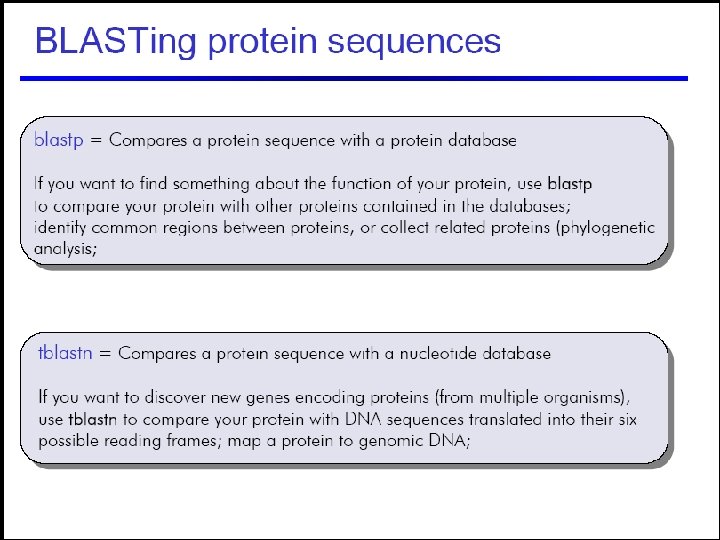
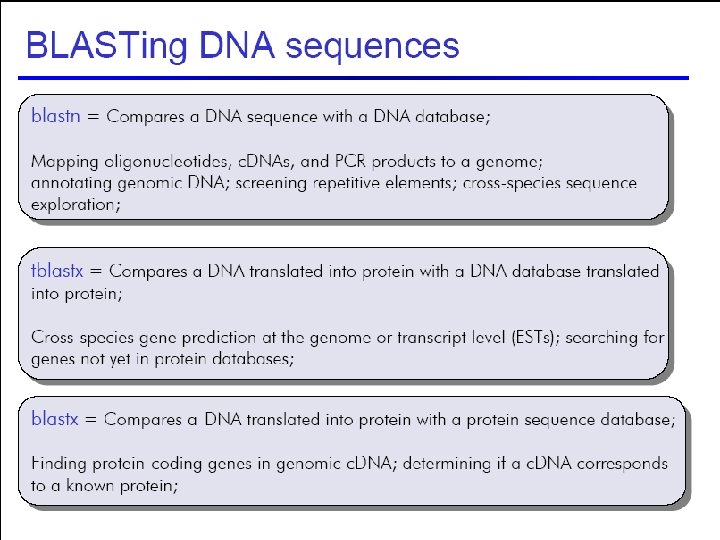
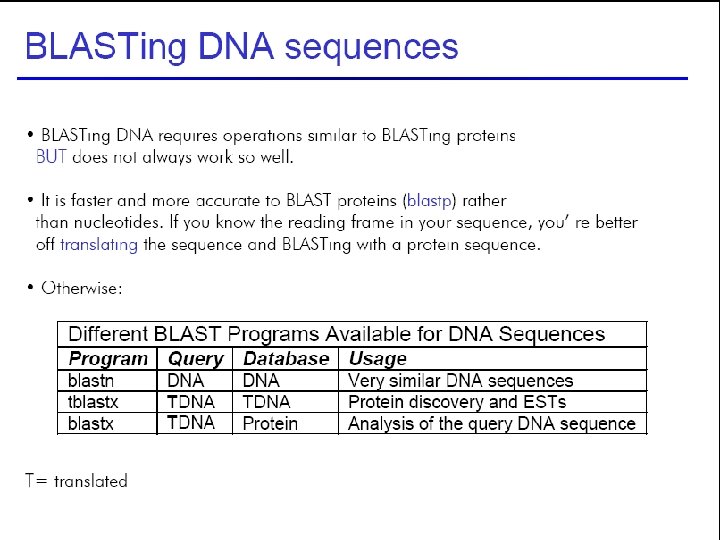
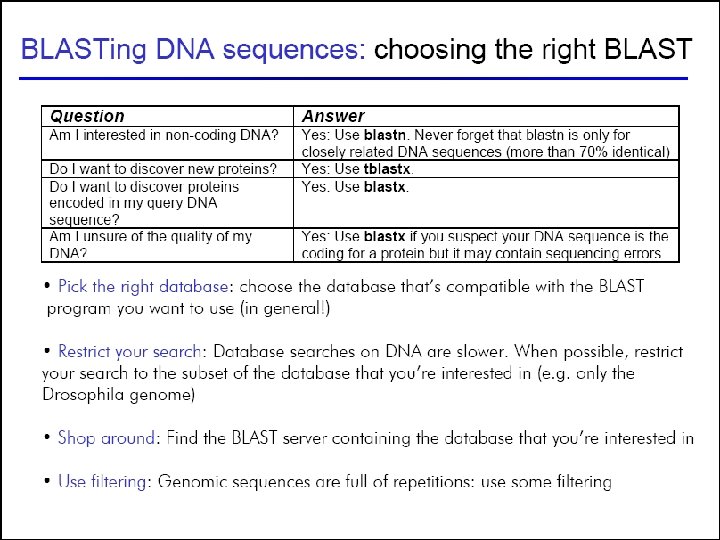
BLAST variants 39
40
41
42
43
44
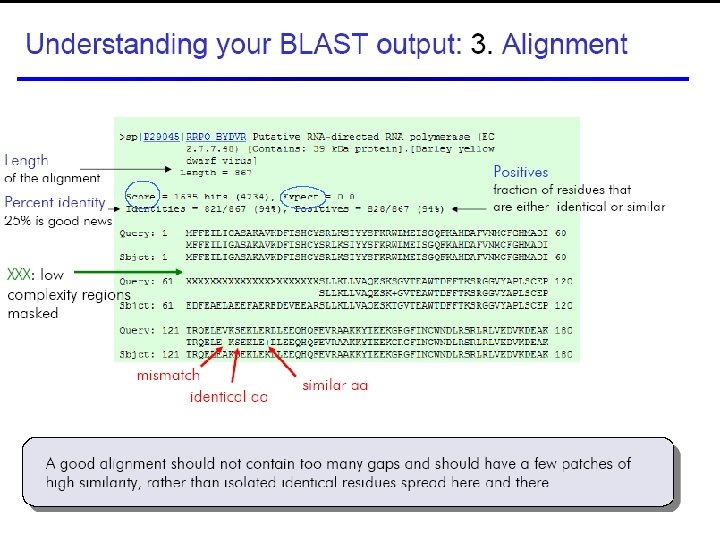
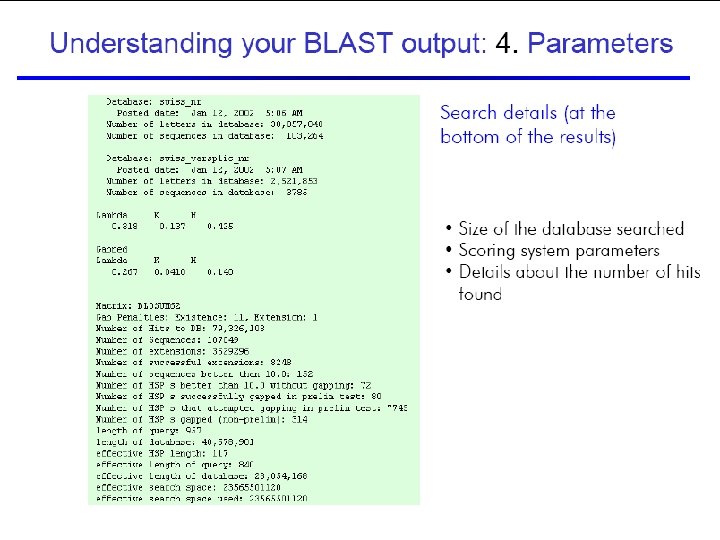
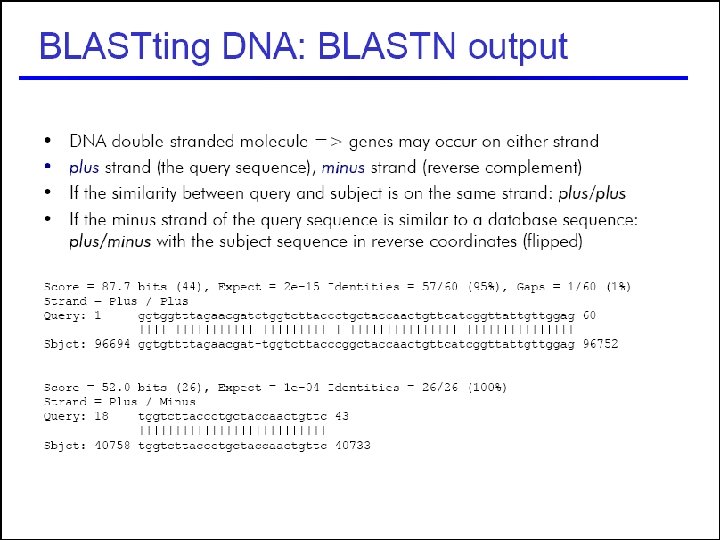
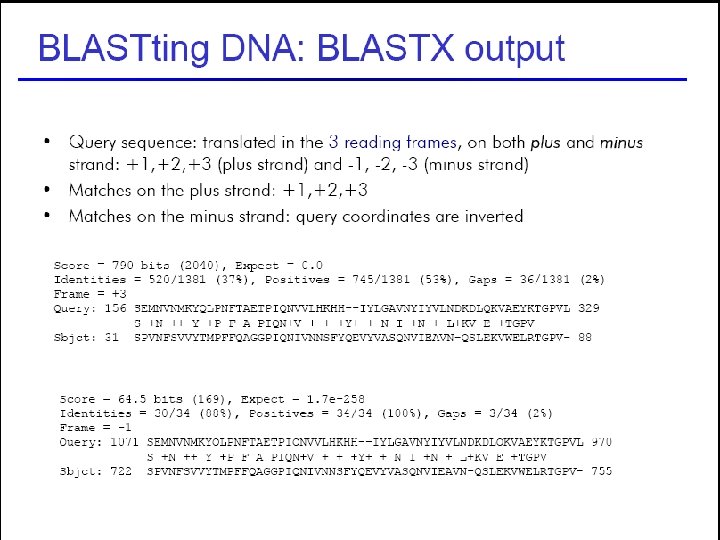
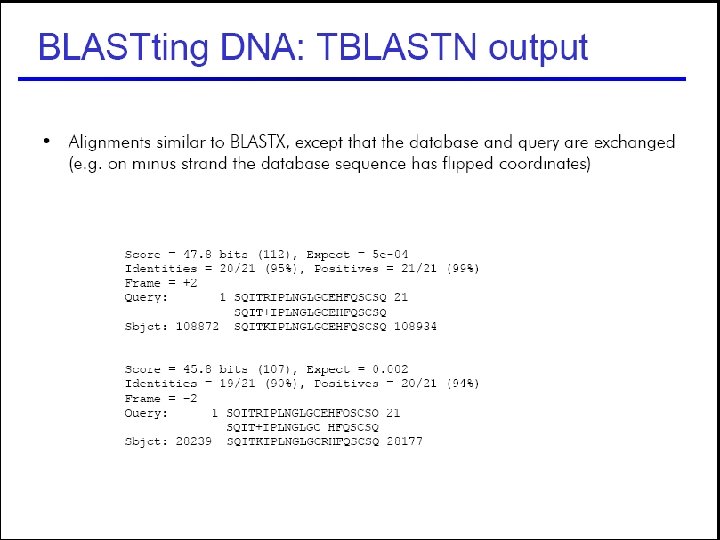
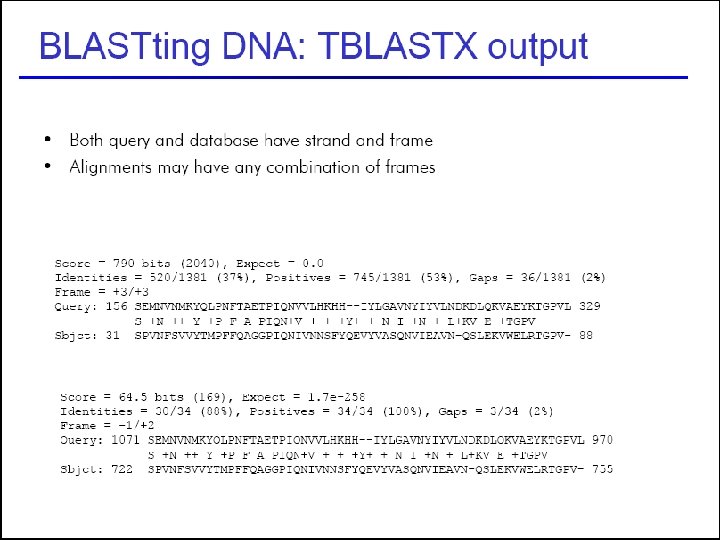
Understanding BLAST output 45
46
47
48
49
50
51
52
53
54
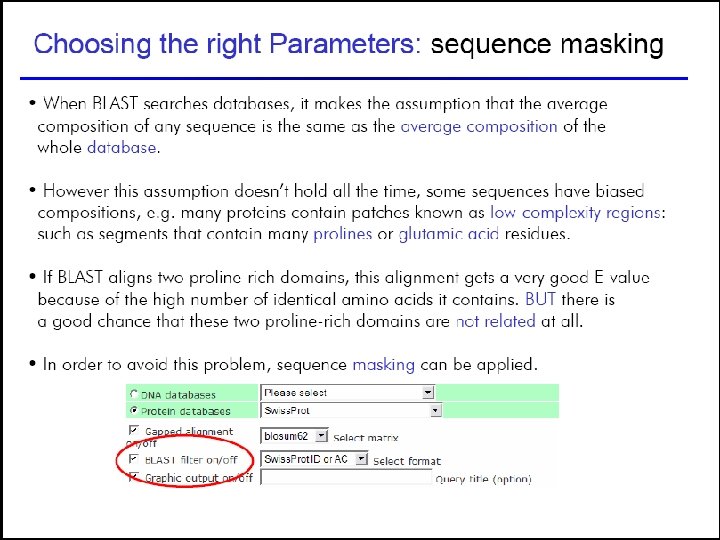
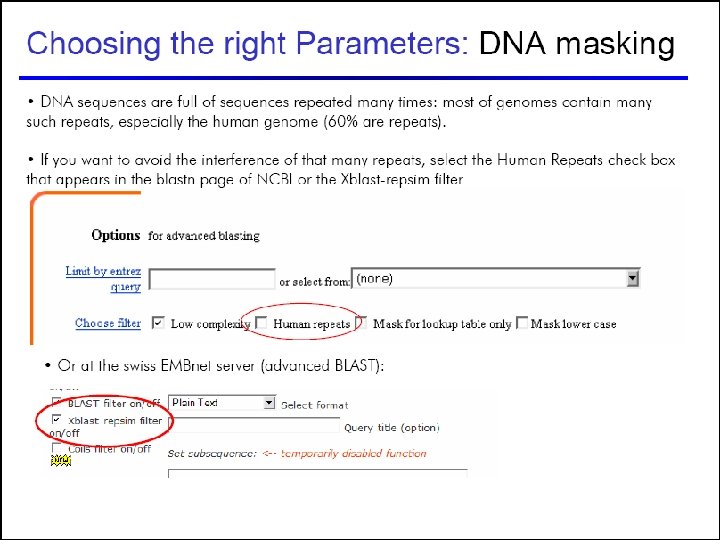
Choosing the right parameters 55
56
57
58
Controlling the output 59
60
61
62
63

More on BLAST NCBI Blast Information and Glossary http: //blast. ncbi. nlm. nih. gov/Blast. cgi? CMD=Web&PAGE_TYPE=Blast. Docs Steve Altschul's Blast Course http: //www. ncbi. nlm. nih. gov/BLAST/tutorial/Altschul-1. html 64

BLASTing the literature
Shusaku Arakawa. 1961. Study for Moral Volumes from the Mechanism of Meaning, pencil on paper. Sold at a Sotheby's auction in New York in 2001 for $207, 500.
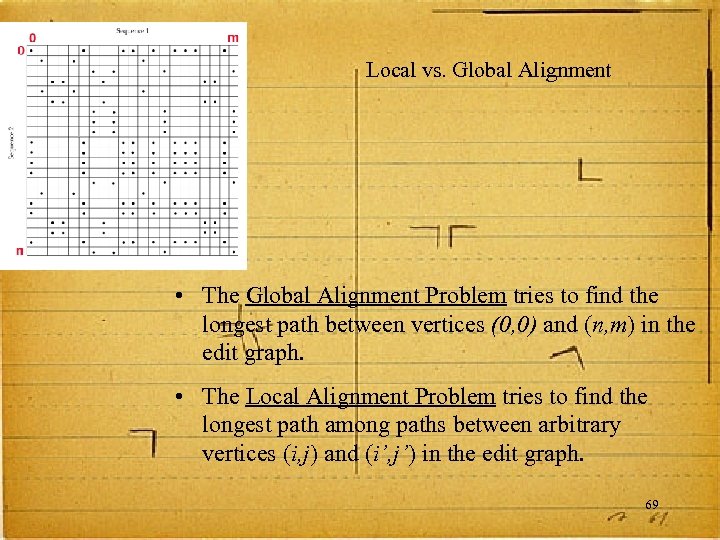
Local vs. Global Alignment • The Global Alignment Problem tries to find the longest path between vertices (0, 0) and (n, m) in the edit graph. • The Local Alignment Problem tries to find the longest path among paths between arbitrary vertices (i, j) and (i’, j’) in the edit graph. 69
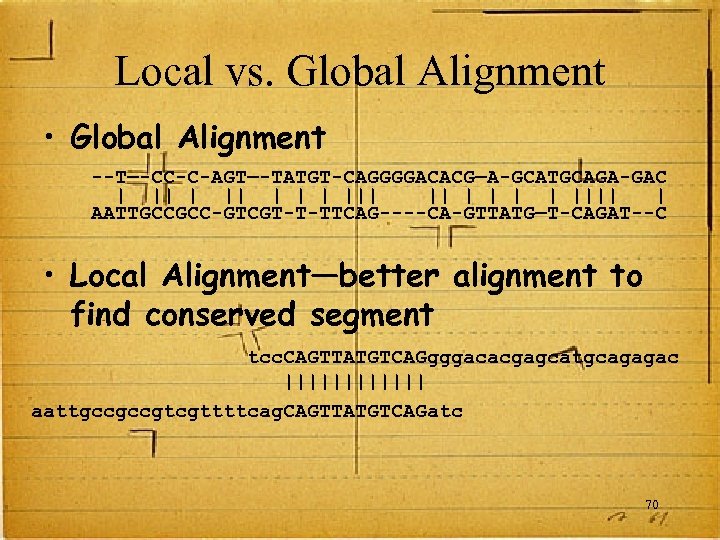
Local vs. Global Alignment • Global Alignment --T—-CC-C-AGT—-TATGT-CAGGGGACACG—A-GCATGCAGA-GAC | ||| || | | |||| | AATTGCCGCC-GTCGT-T-TTCAG----CA-GTTATG—T-CAGAT--C • Local Alignment—better alignment to find conserved segment tcc. CAGTTATGTCAGgggacacgagcatgcagagac |||||| aattgccgccgtcgttttcag. CAGTTATGTCAGatc 70
Local Alignments: Why? • Two genes in different species may be similar over short conserved regions and dissimilar over remaining regions. • Example: – Homeobox genes have a short region called the homeodomain that is highly conserved between species. – A global alignment would not find the homeodomain because it would try to align the ENTIRE sequence 71
Link for Dynamic Programming tutorial: • http: //www. sbc. su. se/~pjk/molbioinfo 2001/ dynprog/dynamic. html 72
Скачать презентацию BLAST and FASTA 1 Pairwise Alignment Global
277595b2cfac32b372e1dd5755940409.ppt