 Скачать презентацию Black Women in Rural Communities Unraveling Health Disparities
8411300e37626c68423fa757ef7a41cc.ppt
- Количество слайдов: 67



Black Women in Rural Communities: Unraveling Health Disparities Faye A. Gary Case Western Reserve University Gloria B. Callwood University of the Virgin Islands Hossein N. Yarandi Doris W. Campbell University of South Florida (Ret) University of the Virgin Islands Suzette Lettsome University of the Virgin Islands Edith Ramsey Johnson University of the Virgin Islands

Purpose • Discuss factors influencing women’s health issues in local communities---including conceptual frameworks • Present findings from an Empirical Study about African American Women in a Rural Community • Share qualitative data from Focus Groups of African American Women • Provoke discussions about the health status of women and its relationship to the social determinants of health
WHO • Gender is used to describe those characteristics of women and men which are socially constructed • Sex is biologically determined • People are born female or male but learn to be girls and boys ----who grow into women and men. This learned behavior makes up gender identity and determines gender roles.
BURDEN OF BLINDNESS IN MEN AND WOMEN Source: Abou-Gareeb, Lewallen, Bassett and Coutright. Gender and blindness: a meta-analysis of population based prevalence surveys. Opthalmic Epidemiology 2001; 8: 39 -56 Source: Abou-Gareeb, Lewallen, Bassett and Coutright. Gender and blindness: a meta-analysis of population based prevalence surveys. Ophthalmic Epidemiology 2001; 8: 39 -56; Barry, M. (2004) Yale University
Frameworks • Numerous Frameworks Developed to Examine Health Disparities – Comprehensive framework of the determinants of health. George Kaplan, 1999. – Framework for human development and the social determinants of health. Hertzman, 1999. – Model for the pathways by which SES may affect health. Baum et al. , 1999. – Mac. Arthur Foundation Research Network in Socioeconomic Status and Health model of pathways from SES to health, 2000 – Social Determinants of Health. Marmot & Wilkerson, 1999; 2006.
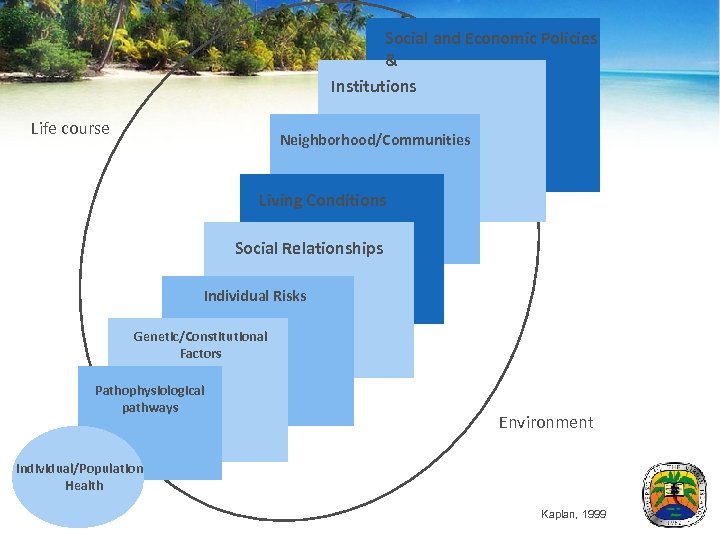
Social and Economic Policies & Institutions Life course Neighborhood/Communities Living Conditions Social Relationships Individual Risks Genetic/Constitutional Factors Pathophysiological pathways Environment Individual/Population Health Kaplan, 1999
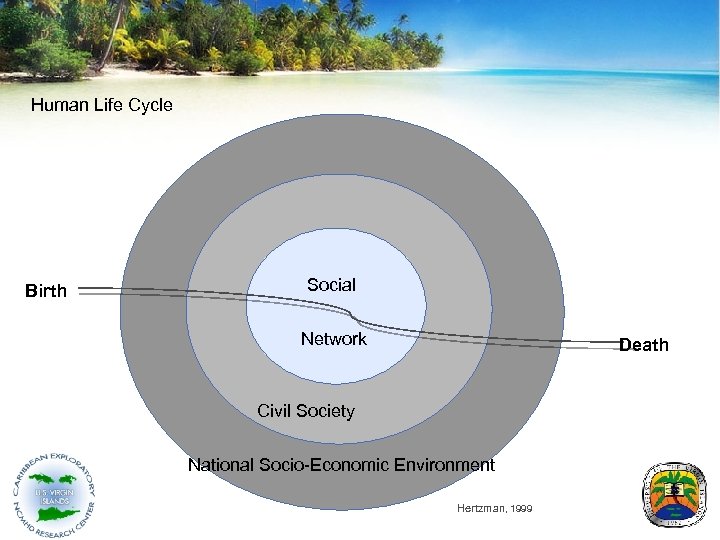
Human Life Cycle Birth Social Network Death Civil Society National Socio-Economic Environment Hertzman, 1999
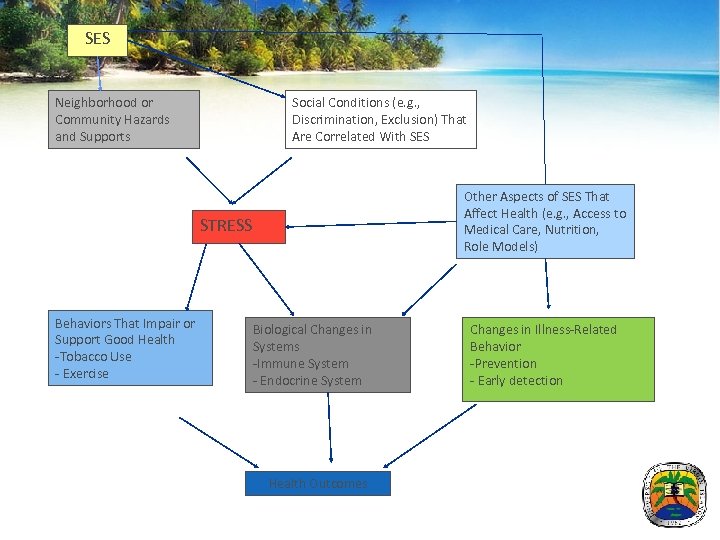
SES Neighborhood or Community Hazards and Supports Social Conditions (e. g. , Discrimination, Exclusion) That Are Correlated With SES Other Aspects of SES That Affect Health (e. g. , Access to Medical Care, Nutrition, Role Models) STRESS Behaviors That Impair or Support Good Health -Tobacco Use - Exercise Biological Changes in Systems -Immune System - Endocrine System Health Outcomes Changes in Illness-Related Behavior -Prevention - Early detection
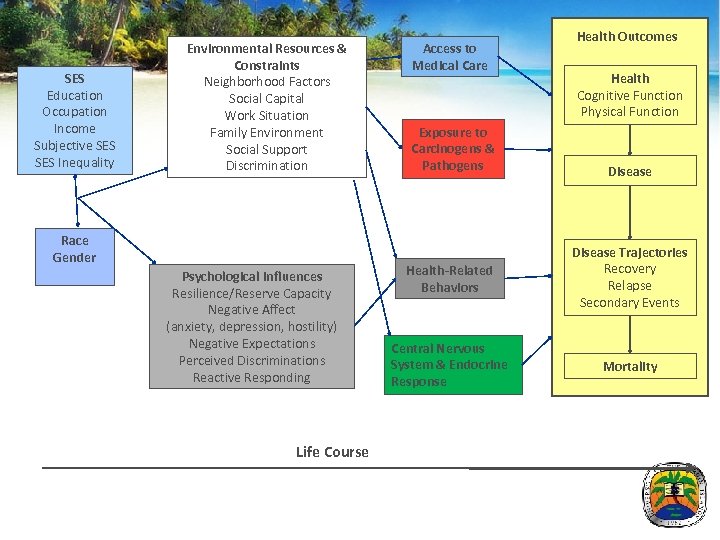
SES Education Occupation Income Subjective SES Inequality Environmental Resources & Constraints Neighborhood Factors Social Capital Work Situation Family Environment Social Support Discrimination Race Gender Psychological Influences Resilience/Reserve Capacity Negative Affect (anxiety, depression, hostility) Negative Expectations Perceived Discriminations Reactive Responding Life Course Access to Medical Care Exposure to Carcinogens & Pathogens Health Outcomes Health Cognitive Function Physical Function Disease Health-Related Behaviors Disease Trajectories Recovery Relapse Secondary Events Central Nervous System & Endocrine Response Mortality
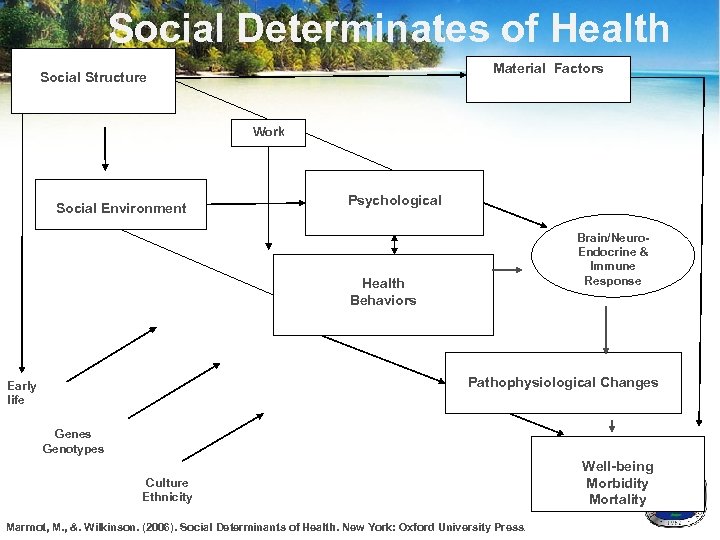
Social Determinates of Health Material Factors Social Structure Work Social Environment Psychological Brain/Neuro. Endocrine & Immune Response Health Behaviors Pathophysiological Changes Early life Genes Genotypes Culture Ethnicity Marmot, M. , &. Wilkinson. (2006). Social Determinants of Health. New York: Oxford University Press. Well-being Morbidity Mortality
Women’s Health An Empirical Study
Relationship between Personal Knowledge, Social Support Systems, Menopausal Symptoms, Self-care, Depressive Symptoms, Stress, and Health Status among Southern Rural African American Menopausal Women
Introduction • The social determinants of health and its relationship to the well-being of Black women is seldom researched and often overlooked in practice and health policy • Stress manifests itself as a disturbance in mood with common symptoms such as persistent sadness or despair, insomnia, decreased appetite, hopelessness, irritability, low selfesteem and suicide
Background • Black women are on the top 10 list of diseases and disorders – They typically are undiagnosed or under diagnosed with depression, anxiety, sleep disorders, and other mental health related disorders – Blacks are more likely to receive care in the primary care sector, but disparities exist in both the recognition of psychological stress disorders, and subsequent treatment
Stress • Irritating, conflicting, frustrating, and distressing demands that occur in everyday transactions • Examples include – Arguments with family members or friends – Deadline pressures – Financial difficulties – Sleep disturbance – Multiple responsibilities that need attention
Health • Differences in Health Status Among Black Women Related to: – Lower Socioeconomic Status – Daily Hassles – Unfair Treatment in Society – Acute Life Events – Cumulative Stress
Participants • The sample consisted of 206 Black women at various rural sites within a 50 -mile radius of a large university. • The participants were between 40 and 60 years of age, and all of them resided in rural communities.
Methods • Survey data from 206 black women were used in this study • Face-to-face interviews that lasted about one hour in duration • Items were read aloud to the women to avoid the need to query them about their reading levels
Measures • Demographic Data Form • Menopausal Health Survey • Life Stress Questionnaire • Beck Depression Inventory • People in Your Life Inventory
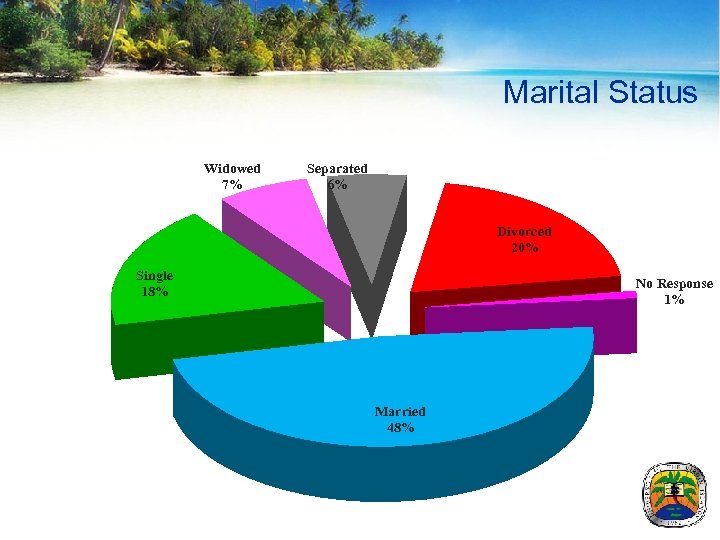
Marital Status Widowed 7% Separated 6% Divorced 20% Single 18% No Response 1% Married 48%
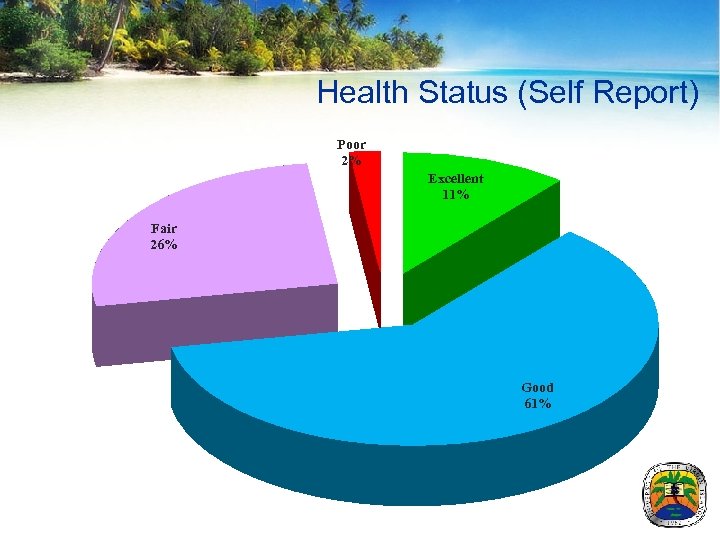
Health Status (Self Report) Poor 2% Excellent 11% Fair 26% Good 61%
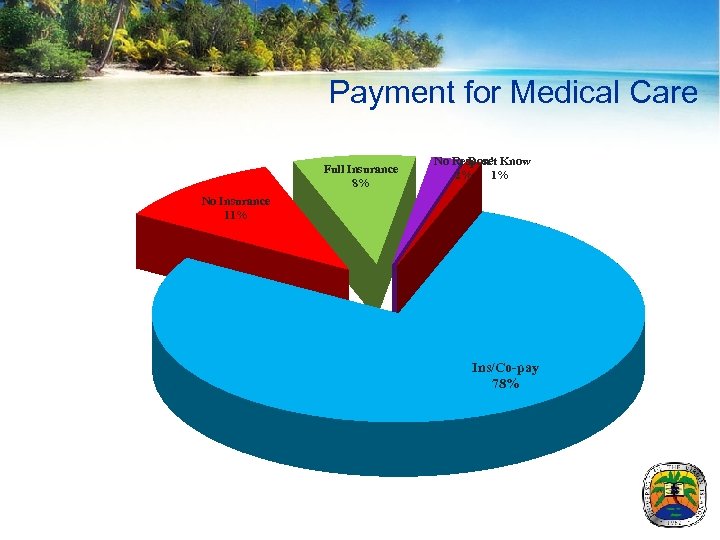
Payment for Medical Care Full Insurance 8% No Respose Know Don't 2% 1% No Insurance 11% Ins/Co-pay 78%
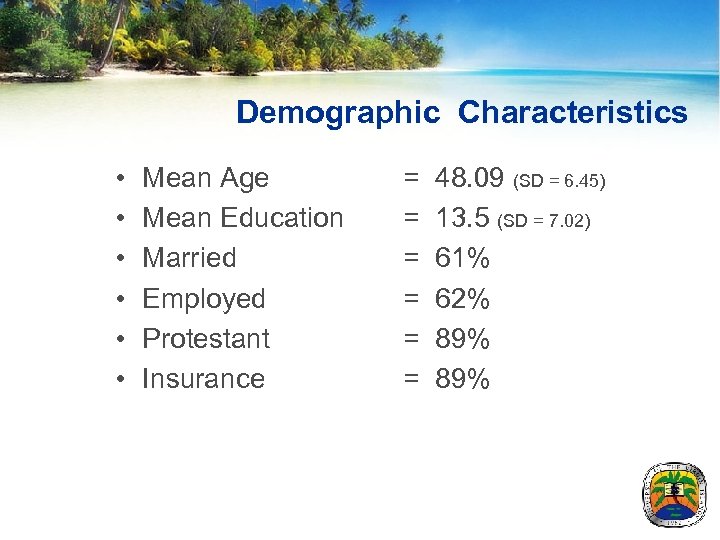
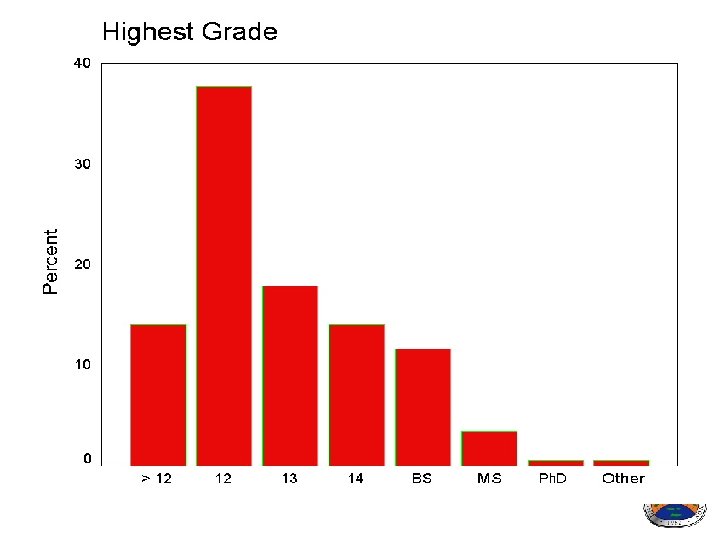
Demographic Characteristics • • • Mean Age Mean Education Married Employed Protestant Insurance = = = 48. 09 (SD = 6. 45) 13. 5 (SD = 7. 02) 61% 62% 89%
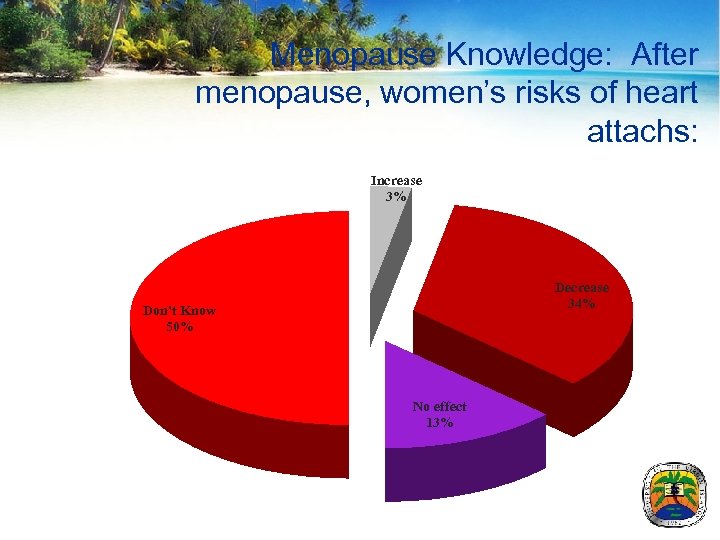
Menopause Knowledge: After menopause, women’s risks of heart attachs: Increase 3% Decrease 34% Don't Know 50% No effect 13%
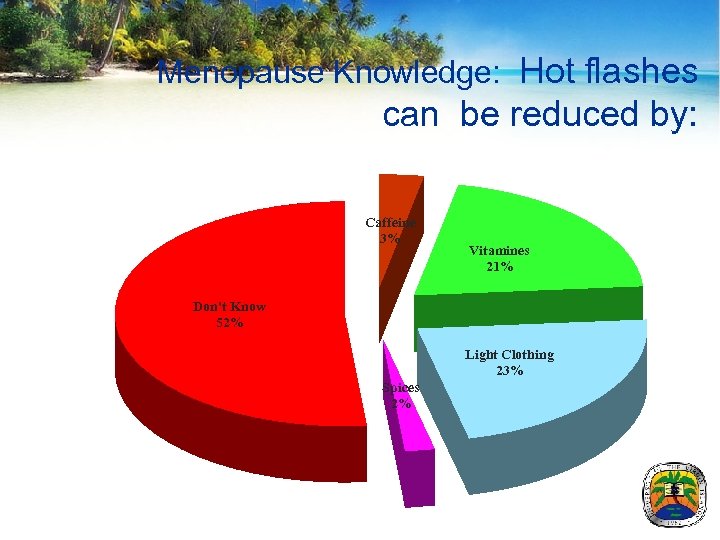
Menopause Knowledge: Hot flashes can be reduced by: Caffeine 3% Vitamines 21% Don't Know 52% Light Clothing 23% Spices 2%
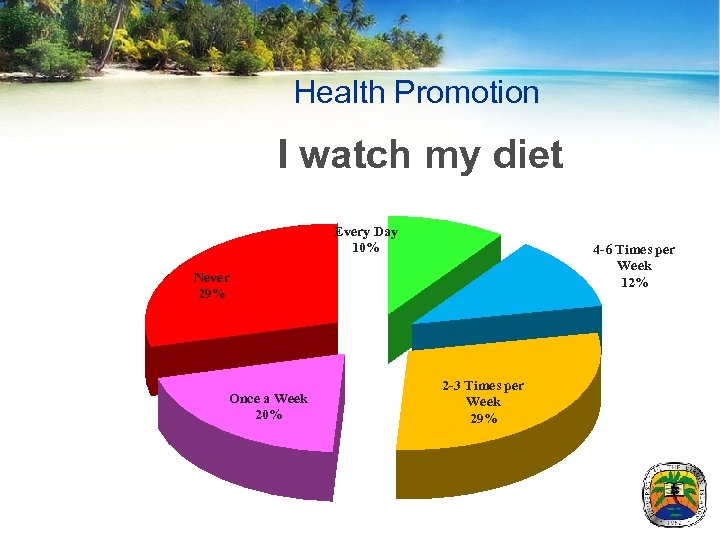
Health Promotion I watch my diet Every Day 10% 4 -6 Times per Week 12% Never 29% Once a Week 20% 2 -3 Times per Week 29%
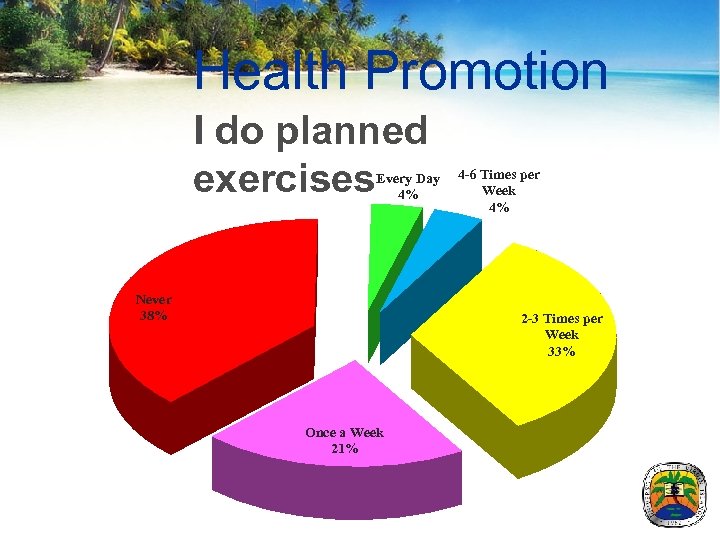
Health Promotion I do planned exercises Every Day 4% Never 38% 4 -6 Times per Week 4% 2 -3 Times per Week 33% Once a Week 21%
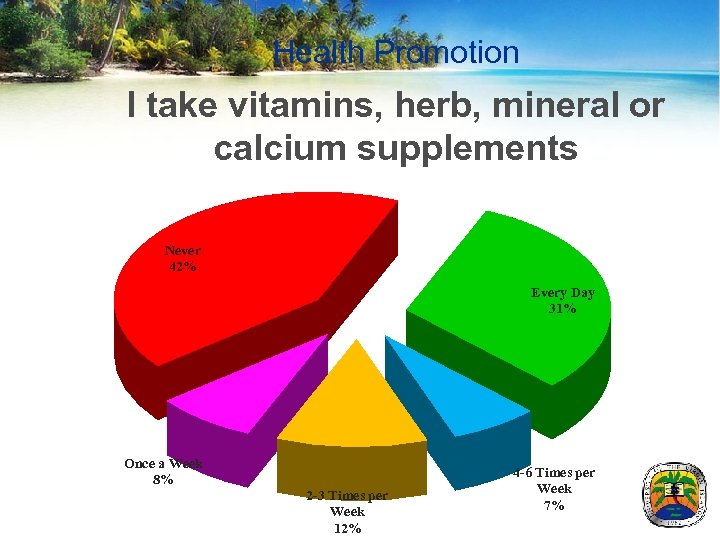
Health Promotion I take vitamins, herb, mineral or calcium supplements Never 42% Every Day 31% Once a Week 8% 2 -3 Times per Week 12% 4 -6 Times per Week 7%
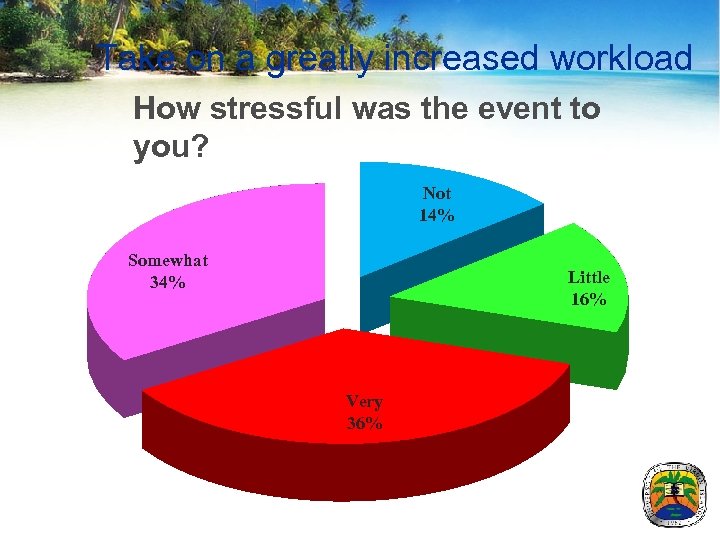
Take on a greatly increased workload How stressful was the event to you? Not 14% Somewhat 34% Little 16% Very 36%
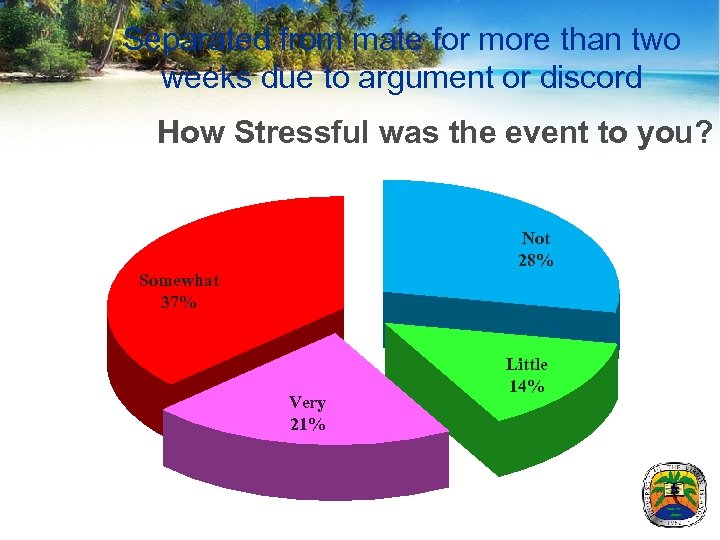
Separated from mate for more than two weeks due to argument or discord How Stressful was the event to you? Not 28% Somewhat 37% Very 21% Little 14%
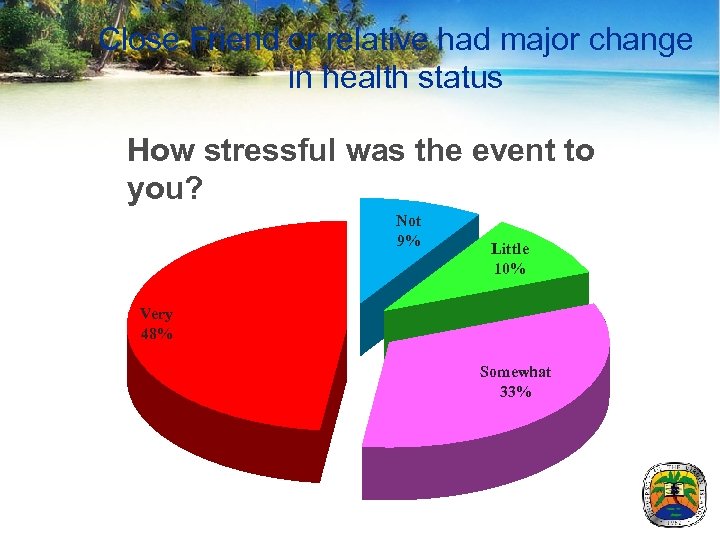
Close Friend or relative had major change in health status How stressful was the event to you? Not 9% Little 10% Very 48% Somewhat 33%
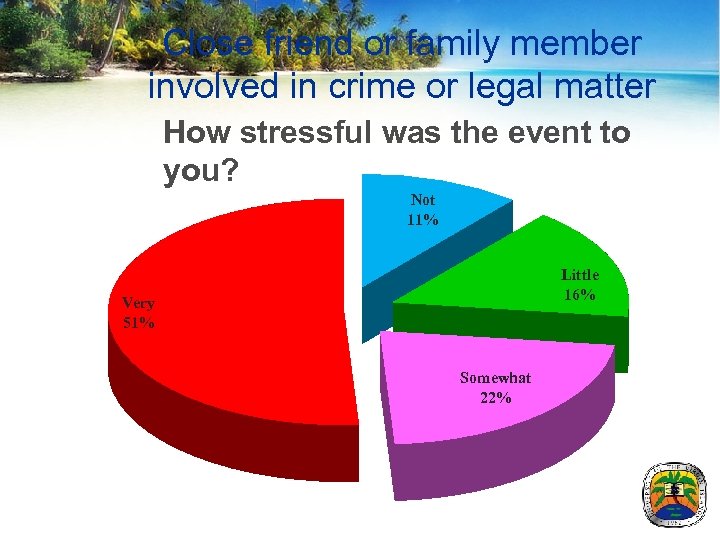
Close friend or family member involved in crime or legal matter How stressful was the event to you? Not 11% Little 16% Very 51% Somewhat 22%
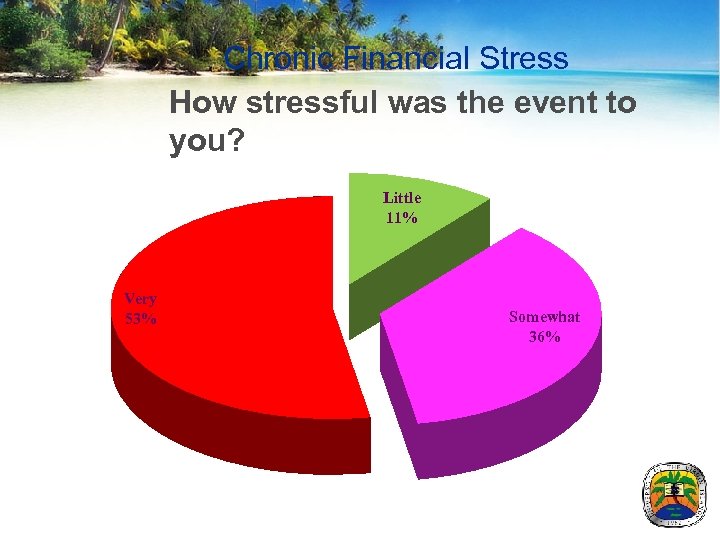
Chronic Financial Stress How stressful was the event to you? Little 11% Very 53% Somewhat 36%
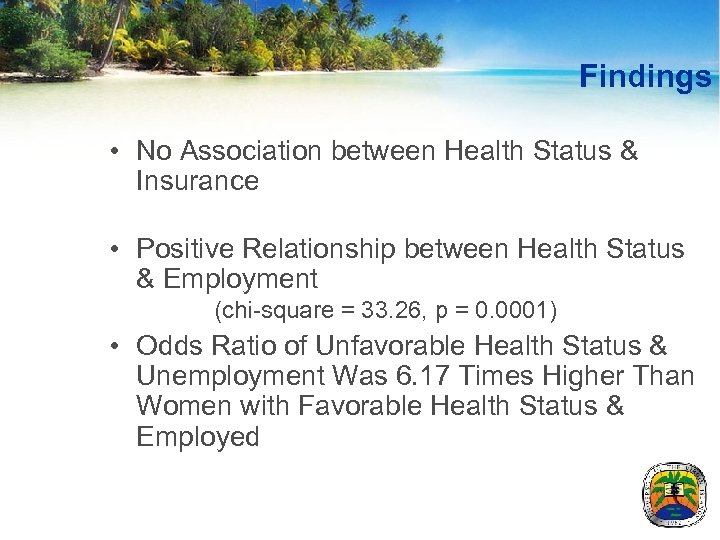
Findings • No Association between Health Status & Insurance • Positive Relationship between Health Status & Employment (chi-square = 33. 26, p = 0. 0001) • Odds Ratio of Unfavorable Health Status & Unemployment Was 6. 17 Times Higher Than Women with Favorable Health Status & Employed
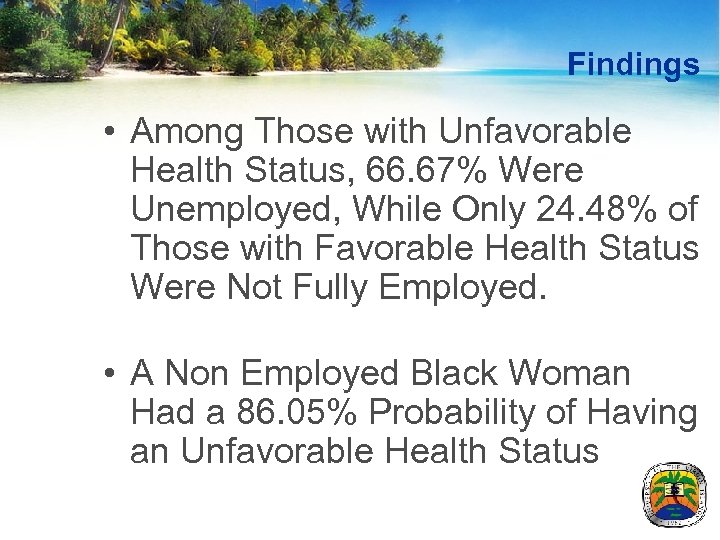
Findings • Among Those with Unfavorable Health Status, 66. 67% Were Unemployed, While Only 24. 48% of Those with Favorable Health Status Were Not Fully Employed. • A Non Employed Black Woman Had a 86. 05% Probability of Having an Unfavorable Health Status
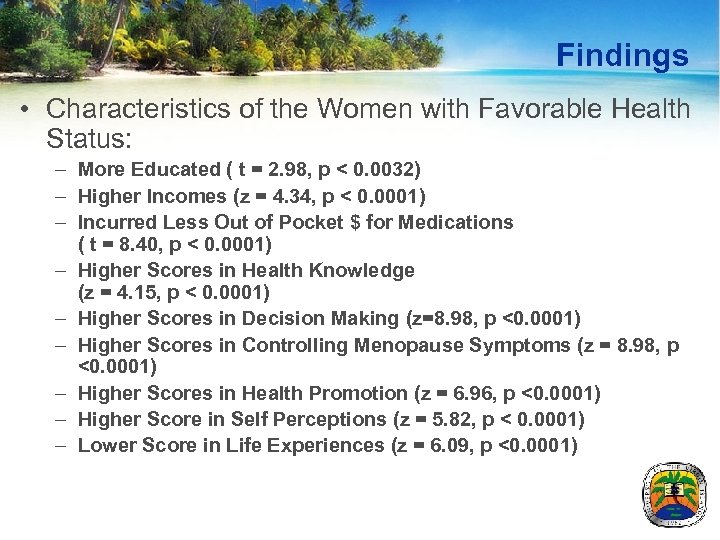
Findings • Characteristics of the Women with Favorable Health Status: – More Educated ( t = 2. 98, p < 0. 0032) – Higher Incomes (z = 4. 34, p < 0. 0001) – Incurred Less Out of Pocket $ for Medications ( t = 8. 40, p < 0. 0001) – Higher Scores in Health Knowledge (z = 4. 15, p < 0. 0001) – Higher Scores in Decision Making (z=8. 98, p <0. 0001) – Higher Scores in Controlling Menopause Symptoms (z = 8. 98, p <0. 0001) – Higher Scores in Health Promotion (z = 6. 96, p <0. 0001) – Higher Score in Self Perceptions (z = 5. 82, p < 0. 0001) – Lower Score in Life Experiences (z = 6. 09, p <0. 0001)
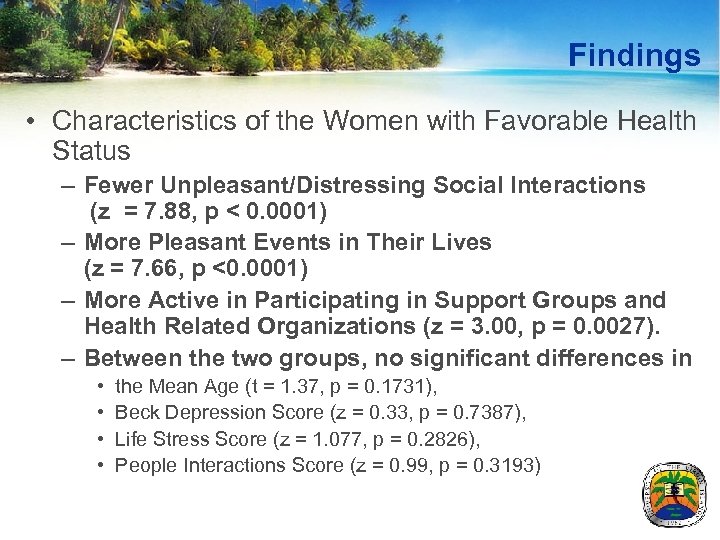
Findings • Characteristics of the Women with Favorable Health Status – Fewer Unpleasant/Distressing Social Interactions (z = 7. 88, p < 0. 0001) – More Pleasant Events in Their Lives (z = 7. 66, p <0. 0001) – More Active in Participating in Support Groups and Health Related Organizations (z = 3. 00, p = 0. 0027). – Between the two groups, no significant differences in • • the Mean Age (t = 1. 37, p = 0. 1731), Beck Depression Score (z = 0. 33, p = 0. 7387), Life Stress Score (z = 1. 077, p = 0. 2826), People Interactions Score (z = 0. 99, p = 0. 3193)
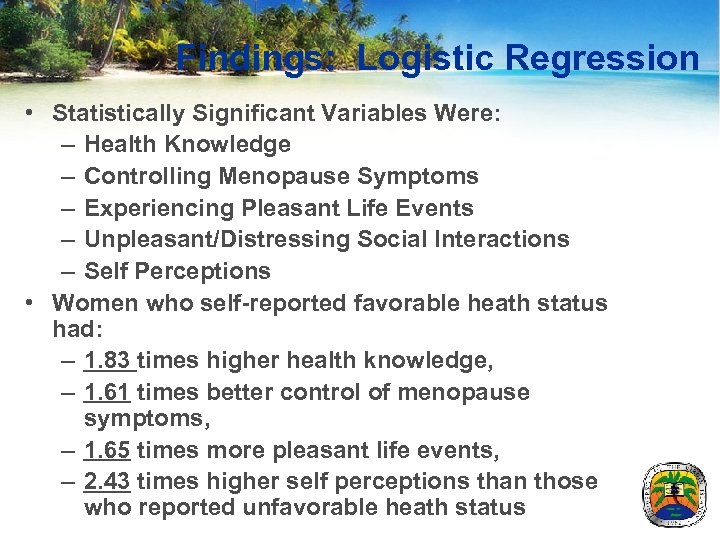
Findings: Logistic Regression • Statistically Significant Variables Were: – Health Knowledge – Controlling Menopause Symptoms – Experiencing Pleasant Life Events – Unpleasant/Distressing Social Interactions – Self Perceptions • Women who self-reported favorable heath status had: – 1. 83 times higher health knowledge, – 1. 61 times better control of menopause symptoms, – 1. 65 times more pleasant life events, – 2. 43 times higher self perceptions than those who reported unfavorable heath status
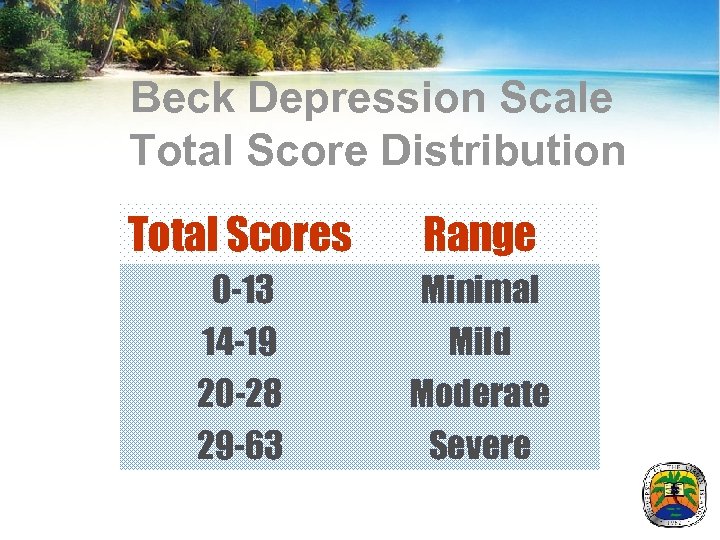
Beck Depression Scale Total Score Distribution Total Scores Range 0 -13 14 -19 20 -28 29 -63 Minimal Mild Moderate Severe
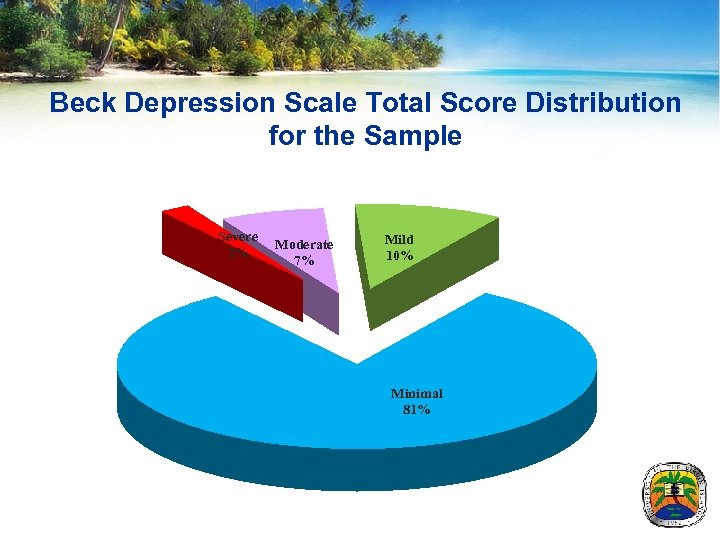
Beck Depression Scale Total Score Distribution for the Sample Severe 2% Moderate 7% Mild 10% Minimal 81%
Factor Analysis of DBI-II • Evidence of the BDI factorial validity is provided by the intercorrelations among the 21 BDI items, which were first calculated from the responses of the sample of 206 Black Women. • Kaiser's measure of sampling adequacy for this matrix was 0. 92, a value that Kaiser considered to be “marvelous. ” • An iterated principal-factor analysis was performed in which squared multiple correlations were employed for the initial communality estimates, and a Promax (oblique) rotation was used to identify the self-reported dimensions of depression.
Factor Analysis of DBI-II • Two factors were extracted, they explained 83% of the common variance. • Two comparably sized eigenvalues of 5. 34 and 5. 53 were found for the reduced correlation matrix and the correlation between the two oblique factors was 0. 57 (p < 0. 001).
Pattern Matrix for the Factor Analysis of Beck Depression Scale-II
Factor Interpretation • Symptoms such as Pessimism, Worthlessness, Punishment Feelings, Sadness, Self-Dislike, Loss of Interest, Indecisiveness, and Past Failure tended to load high on the first factor. All of these symptoms were psychological and cognitive in nature. Therefore, this factor was considered to reflect a Cognitive dimension of self-reported depression.
Factor Interpretation • The second factors explained somatic symptoms, such as Tiredness or Fatigue, Loss of Energy, Concentration Difficulty, Irritability, Changes in Appetite, Changes in Sleeping Pattern, Loss of Interest in Sex, and Loss of Pleasure. The factor was considered to represent a Somatic- Affective dimension of self-reported depression.
Naming the Factors • Factor I can be named as “critical self appraisal. ” The variables included in Factor 1 are cognitive in nature and indicate that the women are critical of themselves, devalue their significance, and internalize thoughts that constitute a negative self-view. • Factor II can be named “deregulation of arousal. ” It is related to physiological changes that occur among individuals.
Focus Group • Two focus groups were conducted. • Each focus group consisted of 10 participants. • The participants were chosen randomly from the sample of 206 African American Women.
Responses to One Query • What Do You Think are the Barriers or the Stumbling Blocks to Black Women Receiving Good/High Standard Healthcare?
Focus Group Data • Mary: ( A lovely experience) “ The doctor I am on, I love him to death. He retired and I hate that. ” “He was honest to you—he told you the truth. He explains everything. ” “ Some doctors give you free samples—and some of these doctors won’t give you no free samples. They ask, “Do you have insurance? Can you pay a co-pay? They leave me out in the cold. “ …. . And he’ll say……. We will give you a month’s free supply—if you run out and don’t have no money for it, come back to the office…. . we will see what we got. ”
Focus Group Data • Miriam: …. ”Some of them will get you in and out of that office as quick as they can…. . . ” • “Ya, Okay, Ya, Breath In, Okay ; Breath out, Ya— Okay. . . Now open your mouth, Ya—Okay. And then you out!” • I say, “Wait a minute—come back and have a seat cause we need to talk—cause I had a lump one time in my breast and Lord know I was afraid-----I walked around with the lump for six months, cause you …don’t want to hear no bad news. ”
Focus Group • Miriam: …. . ”I can’t have no surgery. “ • “ He said…. . Well, you don’t tell me what to do. I am the doctor, so I am going to make all these decisions for you. ” ……. Do you have insurance? ” “Insurance ain’t the problem. ”
Focus Group Data • Gladys: “He was young. He passed away. I have a bulge on my back…. . out of work for three-four months…. . I would go to him and I don’t know whether…because I was Black or what…or the xxxxx type of Insurance…this doctor didn’t do nothing—and when he would come in …. he would cross his leg and sit in the corner and say … • “How you do? You doing fine. ” • “ Well, my back is bothering me. ” • “ Well, it’ll get better. Sign the paper…. . Well, take this (write a prescription and place it on the table). That doctor do not put his hands on me, period!”
Focus Group Data • Cheryl: “Doctors don’t sit down and talk---face-toface----we have a lot of them (family and friends) that don’t have insurance and their scared to come to the hospital---cause they don’t have no insurance. It ain’t right. ” • Barbara: “ …He (doctor) just didn’t have time for me. . and I hated to come here…. when you call back and ask a question, they tell you… Make a appointment …and then you have to come back and pay again. “ You just forget it. ”

Focus Group Data • Ann: …. with Medicaid and Medicare, we got a lot of them saying…. Well, we don’t take Medicaid and Medicare. I forgot if it is in the house or the senate, wherever…. . they going to use experimental drugs on these people who are on Medicaid and Medicare and that’s wrong! Give them the good kind of medicine---I tell my doctor---Don’t write me no generic prescription, I want the PRESCRIPTION! When you are sixty-five and not working no more…. . you go on Medicare and Medicaid…they not concerned about you. There is a special place where they put you if you on Medicaid or Medicare. You know that West Wing back there at xxxx Hospital? That just where they put you. ”
Focus Group Data Jewel: “What you are saying is not surprising-My dad had to be intubated. They assume that because you may be older and got grey hair, and you are along at admission, you have no family and friends. He was intubated; had not been shaved; half his cloths was hanging off of him; the canister was full; the urinal was full; his pressure was high (monitor); the monitor was going off. “ “I was upset!” “ I am going downstairs, you need to get yourself together cause when I come back, I’m going to be ready. He is on a ventilator, he should be monitored! You thought he was thrown away…he is not indigent, and its definitely not that he doesn’t have family---if you don’t get him together before midnight tonight, he as five other children that will be here. Things changed! “
Focus Group Data Jewel (Cont. ): “Dad was moved to another room--brother had to tell the nurse that she needed to clean up the man next to Dad because they had left him in a bad way; we negotiated for other people. If you don’t have nobody to speak up for you, you’re in trouble. “ Gloria: “ Black people…Cause they don’t trust people…and you see why! …Because you are Black. . Okay—they don’t understand, they don’t listen to you…you can’t trust them …if you hear somebody talking about you, don’t say nothing…they are afraid they’ll be mistreated or somebody will do something vengeful against them. . . Just don’t say nothing. ”
Focus Group Data Ollie: “To be frank…a lot of Black people …. when you go in these offices and they (Whites) are more in power than you are…. . (they think) “You are stupid…. Instead of saying “Well, come on in…. I can help you if you’ve got a problem. ” Joscelyn: Yeah…. they turn up their noses at you, like maybe they don’t want to touch you cause you go to some of these clinics and everything. Some of them sit and look at you like you’re crazy…. like you might have AIDS or something…. you got to tell them all, and say “Hey, I don’t have no AIDS, you can touch me!. ” And listen to my pain, when I tell you where it is, you know…. you want to go to one that will come in and say, “Where you hurting? ”
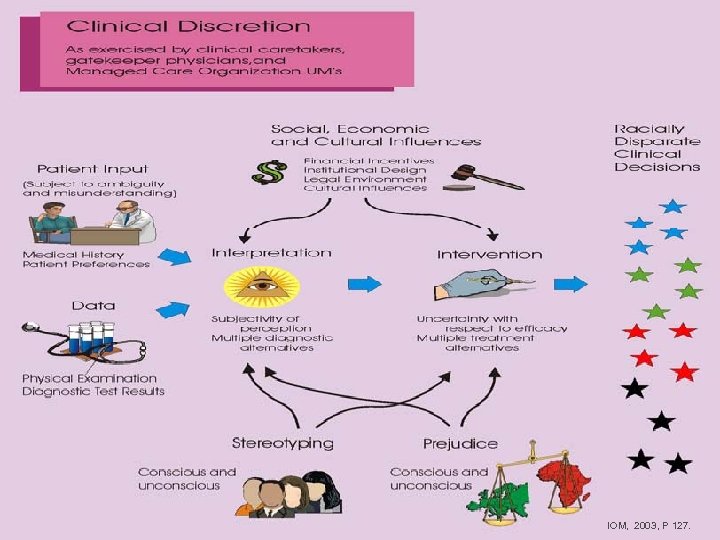
IOM, 2003, P 127.
Recommendations • We Recommend that: – Concerted community-based efforts be implemented to increase Black women’s knowledge levels about : • Stress and aggravation and its potential influence on their physical and mental health status • Expecting that culture -specific health teaching programs be developed to address stress, aggravation & their relationships to early morbidity/mortality
Recommendations • Programs in Health Promotion and Disease Prevention should be Implemented in Communities • Health Providers must become more culturally competent about and sensitive to the barriers and stumbling blocks that Black women perceive as interference to better healthcare and a higher quality of life
Recommendations • Advocate for system changes that are perceived as stalemates to the effective and equitable delivery of health care • Advance transformational science and practice research that relate the social determinants of health to high morbidity and mortality among vulnerable populations, including rural southern African American women • Develop population-specific interventions to eliminate health inequities
Recommendations • Advocate for political and social change and emphasize that “Place Matters” in morbidity, mortality, and well-being. • Develop personalized and culturalized medicine that is patient-family focused • Educate a diverse group of health providers • Expand heath education/literacy for all people through the use of technology
Kleinman’s Explanatory Model What do you call this problem? What do you think is the cause of the problem? What course do you think the illness will take? How serious is this problem? What do you think the problem does inside your body? How does it affect your mind and your body? What do you fear most about this condition? What do you fear most about the treatment?
Recommendations • What are your thoughts about improving health for marginalized, excluded, and underserved persons?

THANK YOU QUESTIONS AND DISCUSSION
Скачать презентацию Black Women in Rural Communities Unraveling Health Disparities
8411300e37626c68423fa757ef7a41cc.ppt