 Скачать презентацию Biological sagacity of pathogens the biggest challenge to
add5c178b1e7c21e115bc9c89d46a9ea.ppt
- Количество слайдов: 33



“Biological sagacity of pathogens: the biggest challenge to human intelligence” "The single biggest threat to man's dominance on the planet is the virus”. Joshua Lederberg, Nobel Prize 1958 Esther Orozco University of Mexico City
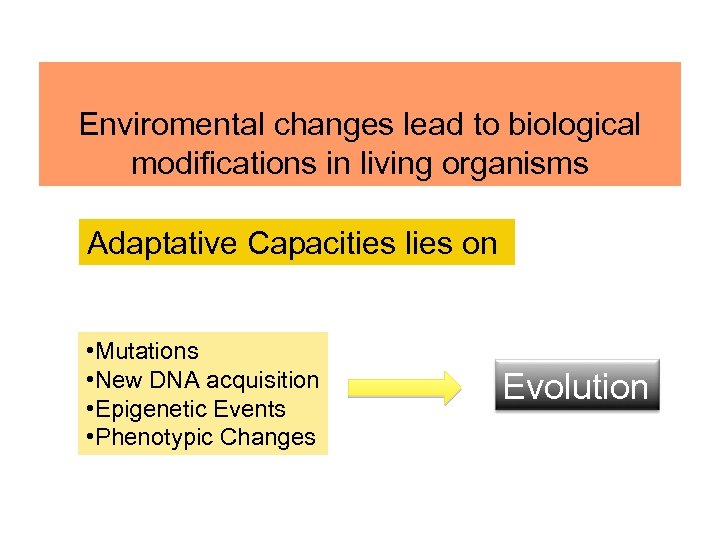
Enviromental changes lead to biological modifications in living organisms Adaptative Capacities lies on • Mutations • New DNA acquisition • Epigenetic Events • Phenotypic Changes Evolution
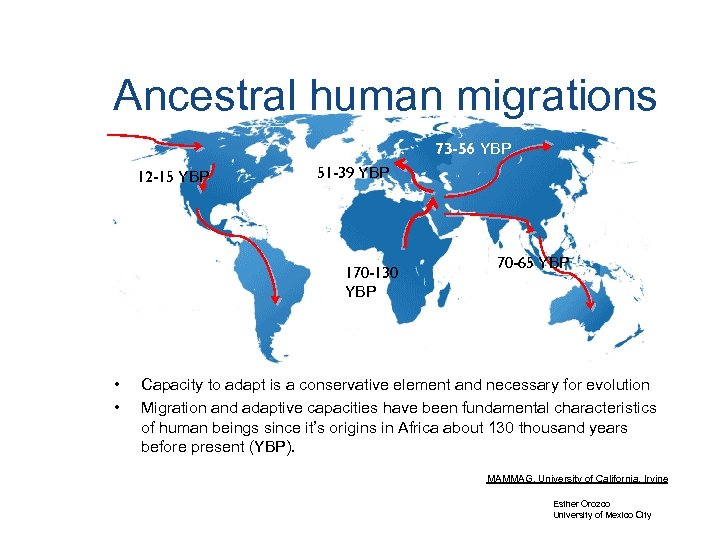
Ancestral human migrations 73 -56 YBP 12 -15 YBP 51 -39 YBP 170 -130 YBP • • 70 -65 YBP Capacity to adapt is a conservative element and necessary for evolution Migration and adaptive capacities have been fundamental characteristics of human beings since it’s origins in Africa about 130 thousand years before present (YBP). MAMMAG, University of California, Irvine Esther Orozco University of Mexico City
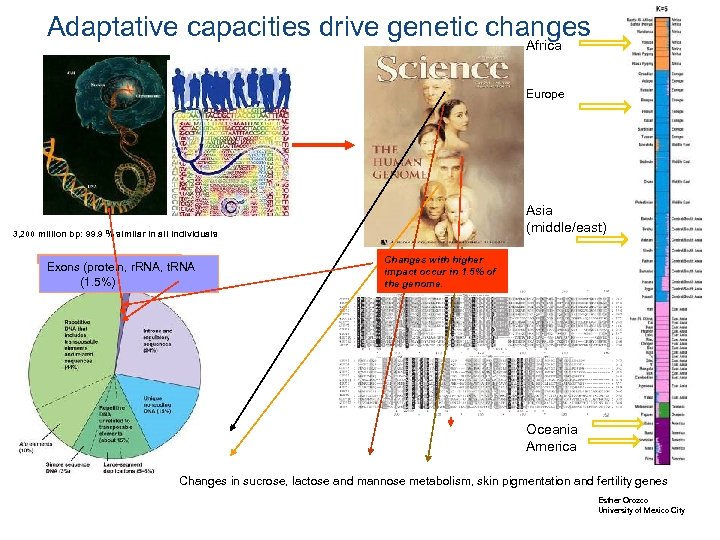
Adaptative capacities drive genetic changes Africa Europe Asia (middle/east) 3, 200 million bp: 99. 9 % similar in all individuals Exons (protein, r. RNA, t. RNA (1. 5%) Changes with higher impact occur in 1. 5% of the genome. Oceania America Changes in sucrose, lactose and mannose metabolism, skin pigmentation and fertility genes Esther Orozco University of Mexico City
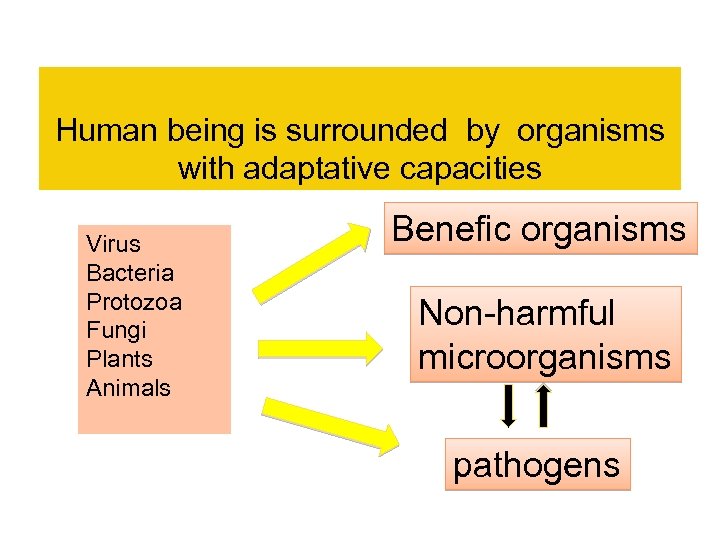
Human being is surrounded by organisms with adaptative capacities Virus Bacteria Protozoa Fungi Plants Animals Benefic organisms Non-harmful microorganisms pathogens
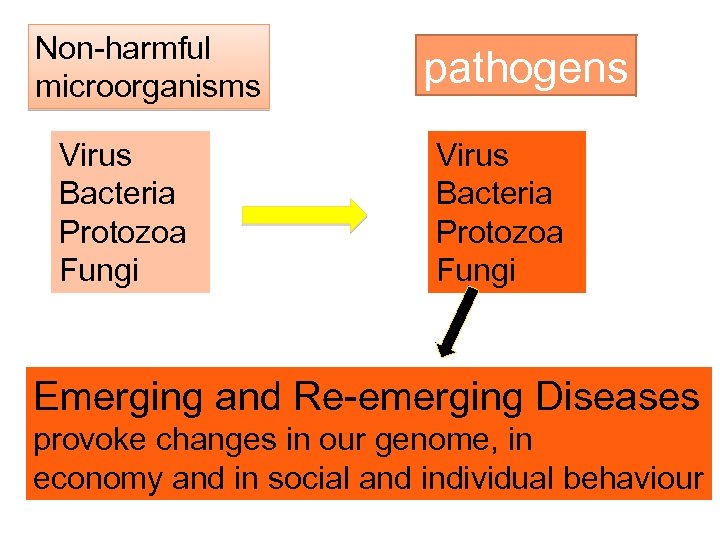
Non-harmful microorganisms Virus Bacteria Protozoa Fungi pathogens Virus Bacteria Protozoa Fungi Emerging and Re-emerging Diseases provoke changes in our genome, in economy and in social and individual behaviour
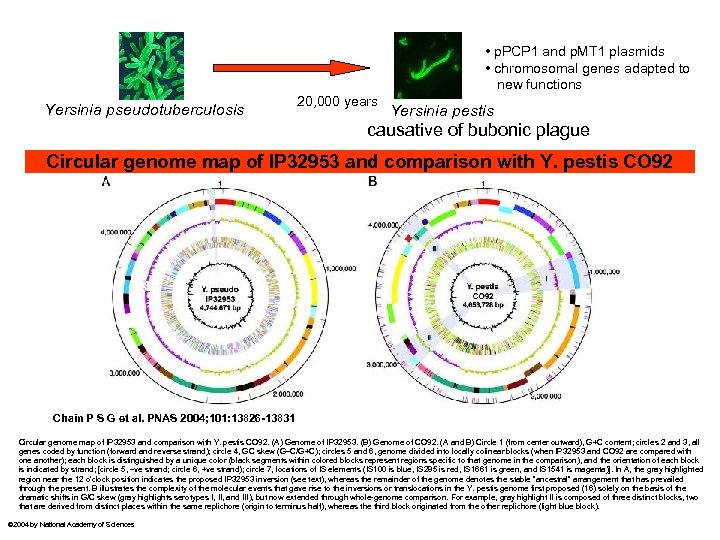
• p. PCP 1 and p. MT 1 plasmids • chromosomal genes adapted to new functions Yersinia pseudotuberculosis 20, 000 years Yersinia pestis causative of bubonic plague Circular genome map of IP 32953 and comparison with Y. pestis CO 92 Chain P S G et al. PNAS 2004; 101: 13826 -13831 Circular genome map of IP 32953 and comparison with Y. pestis CO 92. (A) Genome of IP 32953. (B) Genome of CO 92. (A and B) Circle 1 (from center outward), G+C content; circles 2 and 3, all genes coded by function (forward and reverse strand); circle 4, GC skew (G–C/G+C); circles 5 and 6, genome divided into locally colinear blocks (when IP 32953 and CO 92 are compared with one another); each block is distinguished by a unique color (black segments within colored blocks represent regions specific to that genome in the comparison), and the orientation of each block is indicated by strand; [circle 5, –ve strand; circle 6, +ve strand); circle 7, locations of IS elements (IS 100 is blue, IS 285 is red, IS 1661 is green, and IS 1541 is magenta)]. In A, the gray highlighted region near the 12 o'clock position indicates the proposed IP 32953 inversion (see text), whereas the remainder of the genome denotes the stable “ancestral” arrangement that has prevailed through the present. B illustrates the complexity of the molecular events that gave rise to the inversions or translocations in the Y. pestis genome first proposed (16) solely on the basis of the dramatic shifts in G/C skew (gray highlights serotypes I, II, and III), but now extended through whole-genome comparison. For example, gray highlight II is composed of three distinct blocks, two that are derived from distinct places within the same replichore (origin to terminus half), whereas the third block originated from the other replichore (light blue block). © 2004 by National Academy of Sciences
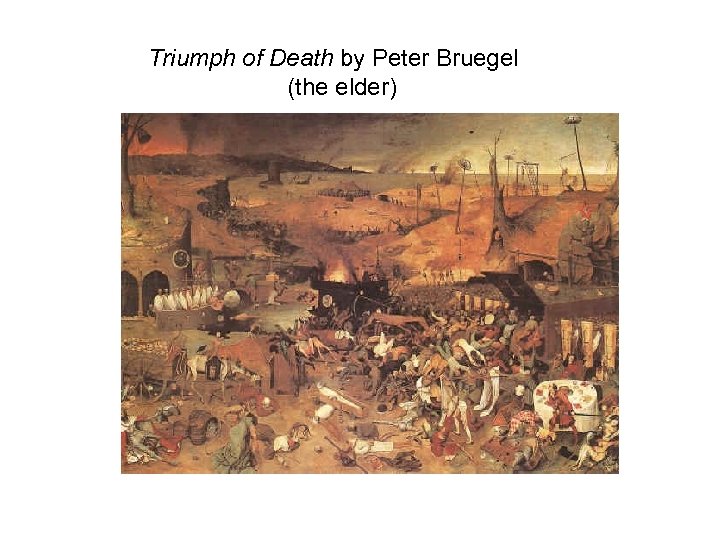
Triumph of Death by Peter Bruegel (the elder)
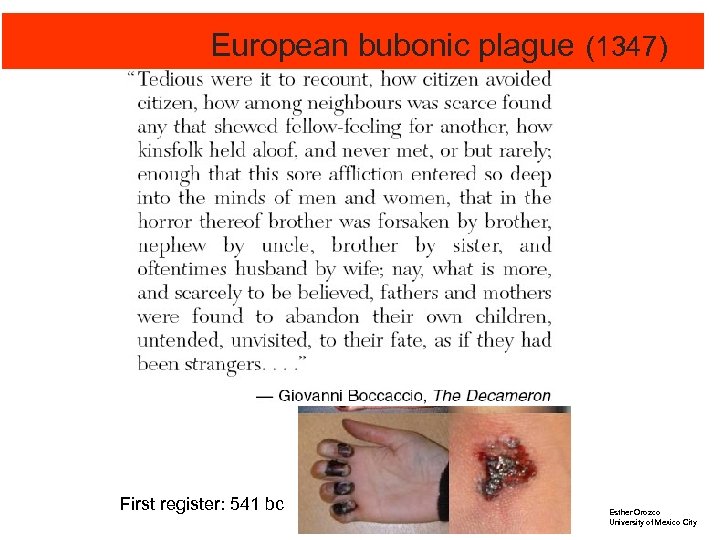
European bubonic plague (1347) First register: 541 bc Esther Orozco University of Mexico City
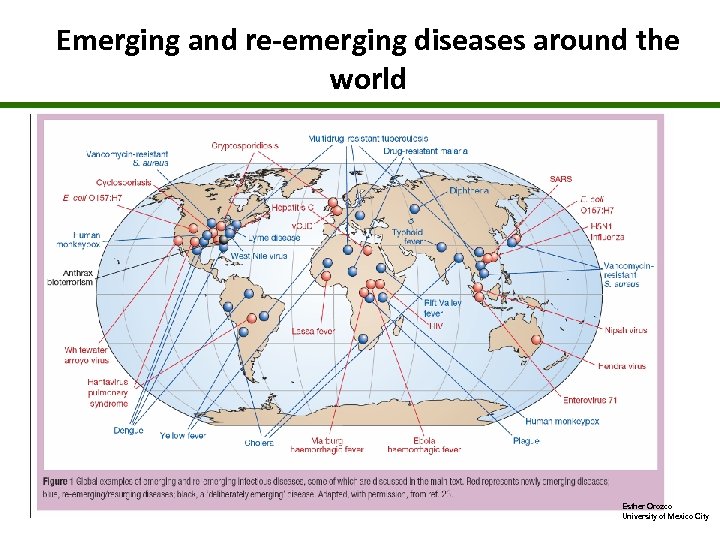
Emerging and re-emerging diseases around the world Esther Orozco University of Mexico City
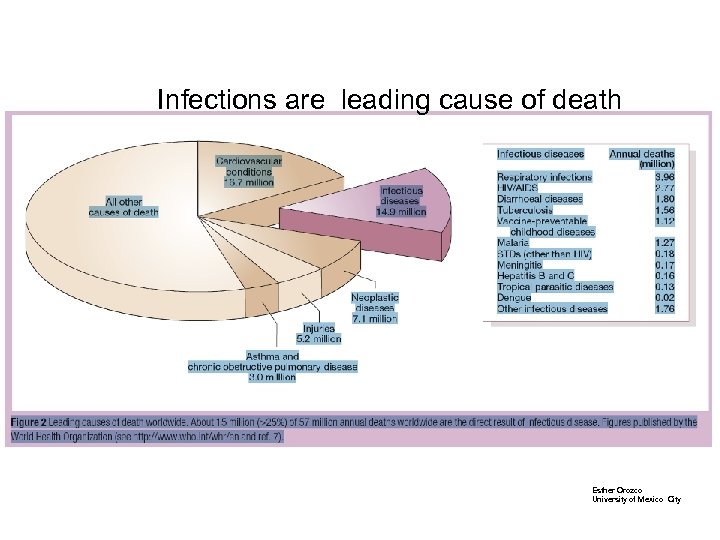
Infections are leading cause of death Esther Orozco University of Mexico City
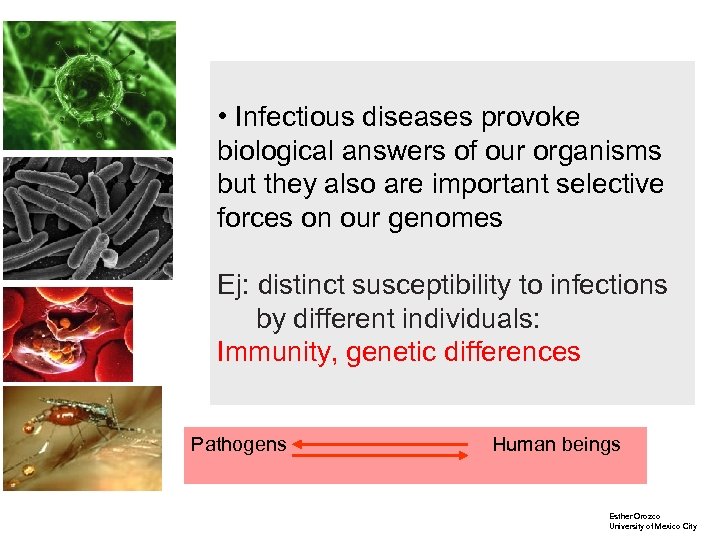
• Infectious diseases provoke biological answers of our organisms but they also are important selective forces on our genomes Ej: distinct susceptibility to infections by different individuals: Immunity, genetic differences Pathogens Human beings Esther Orozco University of Mexico City
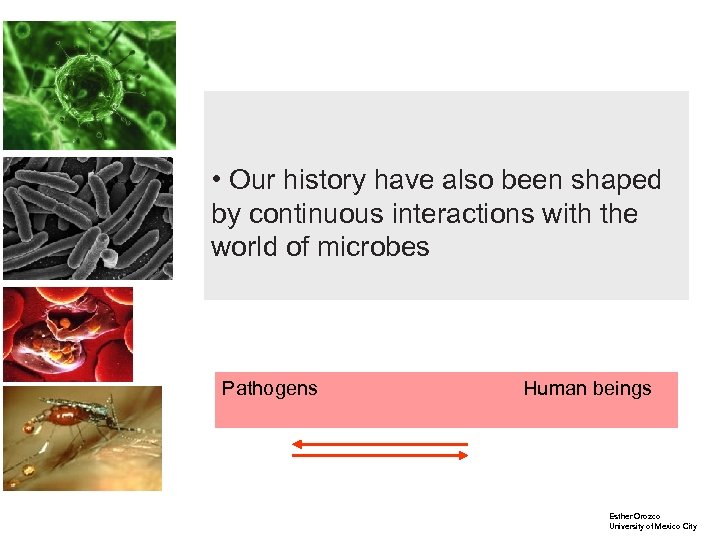
• Our history have also been shaped by continuous interactions with the world of microbes Pathogens Human beings Esther Orozco University of Mexico City
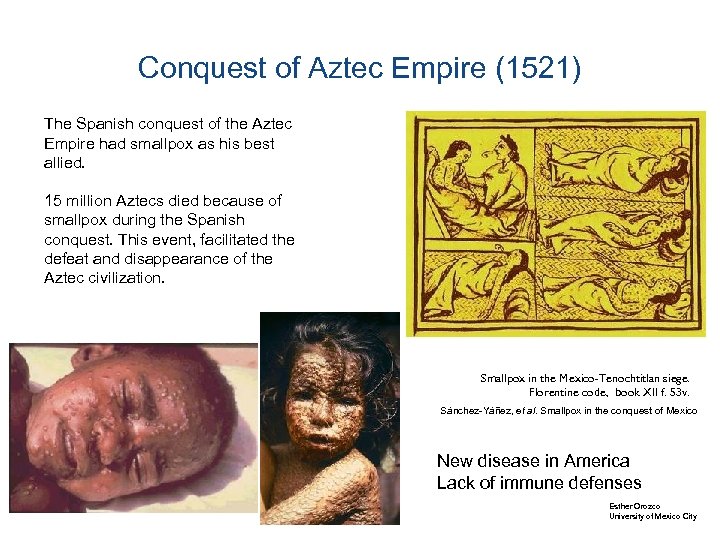
Conquest of Aztec Empire (1521) The Spanish conquest of the Aztec Empire had smallpox as his best allied. 15 million Aztecs died because of smallpox during the Spanish conquest. This event, facilitated the defeat and disappearance of the Aztec civilization. Smallpox in the Mexico-Tenochtitlan siege. Florentine code, book XII f. 53 v. Sánchez-Yáñez, et al. Smallpox in the conquest of Mexico New disease in America Lack of immune defenses Esther Orozco University of Mexico City
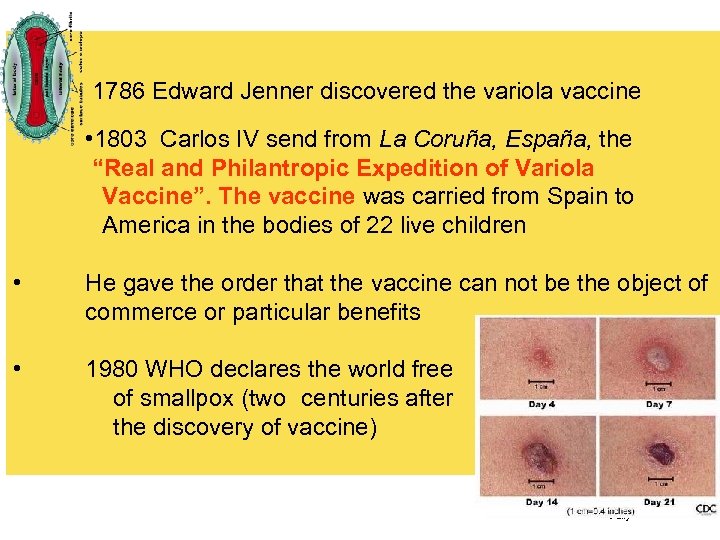
• 1786 Edward Jenner discovered the variola vaccine • 1803 Carlos IV send from La Coruña, España, the “Real and Philantropic Expedition of Variola Vaccine”. The vaccine was carried from Spain to America in the bodies of 22 live children • He gave the order that the vaccine can not be the object of commerce or particular benefits • 1980 WHO declares the world free of smallpox (two centuries after the discovery of vaccine) o City
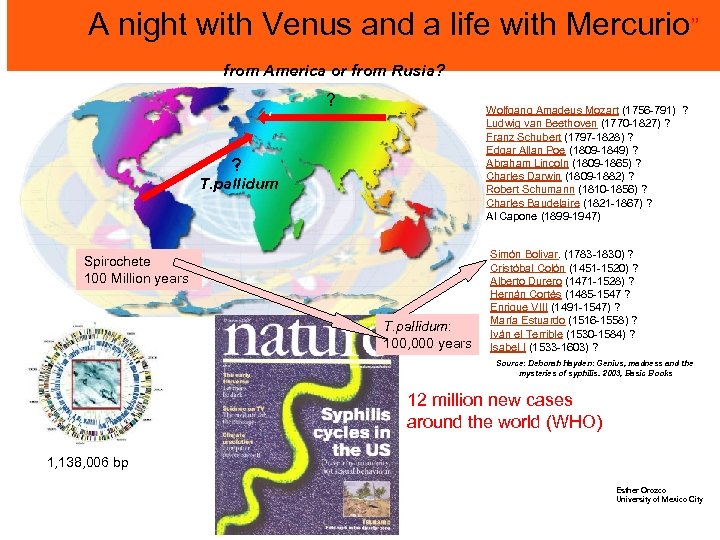
A night with Venus and a life with Mercurio” from America or from Rusia? ‘ ? Wolfgang Amadeus Mozart (1756 -791) ? Ludwig van Beethoven (1770 -1827) ? Franz Schubert (1797 -1828) ? Edgar Allan Poe (1809 -1849) ? Abraham Lincoln (1809 -1865) ? Charles Darwin (1809 -1882) ? Robert Schumann (1810 -1856) ? Charles Baudelaire (1821 -1867) ? Al Capone (1899 -1947) ? T. pallidum Spirochete 100 Million years T. pallidum: 100, 000 years Simón Bolivar. (1783 -1830) ? Cristóbal Colón (1451 -1520) ? Alberto Durero (1471 -1528) ? Hernán Cortés (1485 -1547 ? Enrique VIII (1491 -1547) ? María Estuardo (1516 -1558) ? Iván el Terrible (1530 -1584) ? Isabel I (1533 -1603) ? Source: Deborah Hayden: Genius, madness and the mysteries of syphilis. 2003, Basic Books 12 million new cases around the world (WHO) 1, 138, 006 bp Esther Orozco University of Mexico City
Where the microorganisms causative of infection diseases come from?
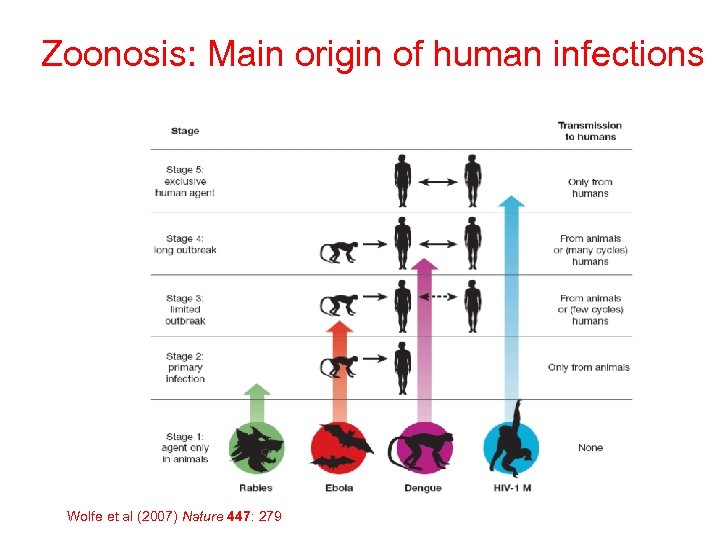
Zoonosis: Main origin of human infections Wolfe et al (2007) Nature 447: 279
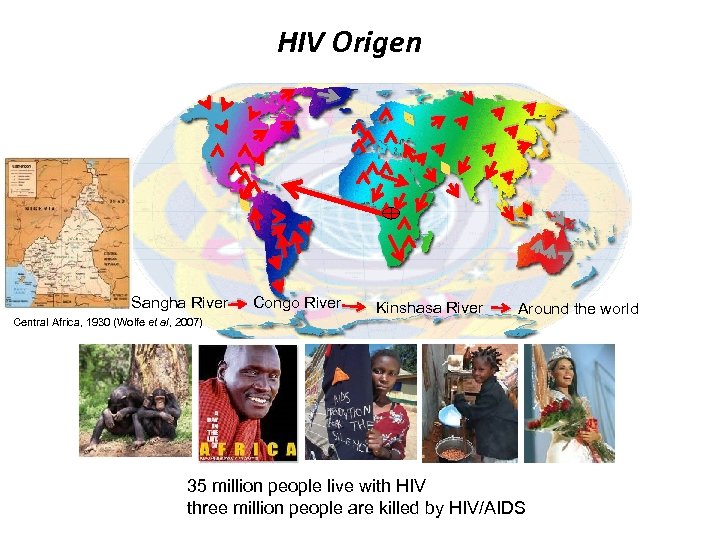
HIV Origen Sangha River Congo River Central Africa, 1930 (Wolfe et al, 2007) Kinshasa River Around the world 35 million people live with HIV three million people are killed by HIV/AIDS
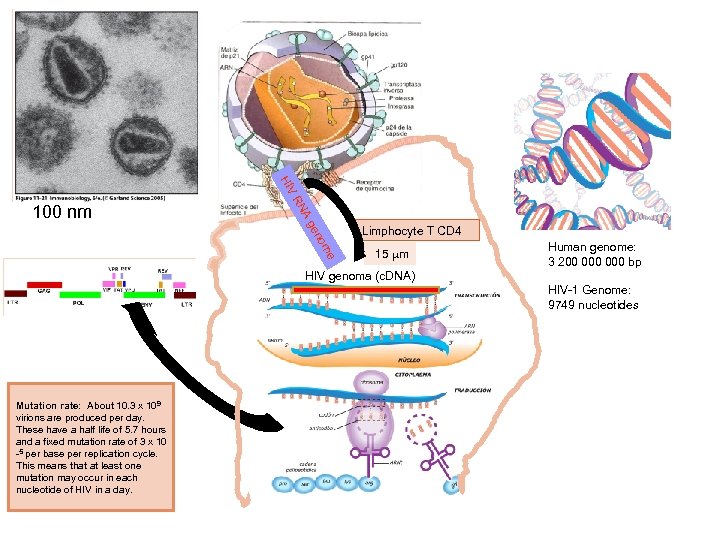
en g NA V R HI 100 nm Limphocyte T CD 4 e om 15 mm Human genome: 3 200 000 bp HIV genoma (c. DNA) HIV-1 Genome: 9749 nucleotides Mutation rate: About 10. 3 x 10⁹ virions are produced per day. These have a half life of 5. 7 hours and a fixed mutation rate of 3 x 10 -5 per base per replication cycle. This means that at least one mutation may occur in each nucleotide of HIV in a day.
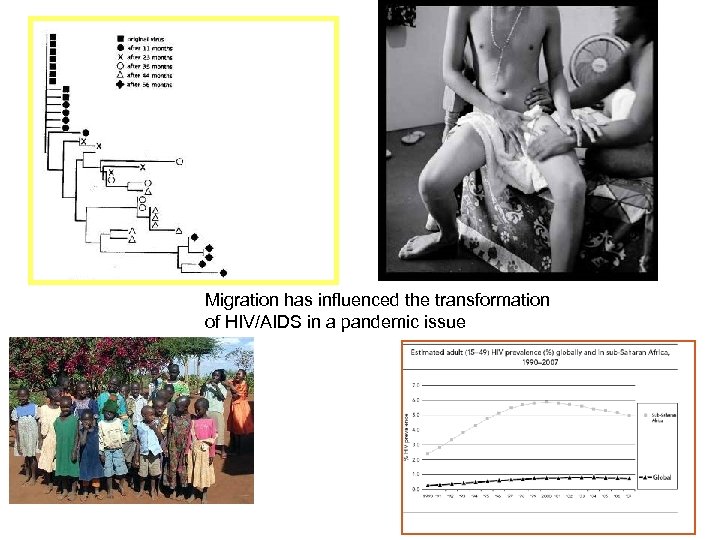
Migration has influenced the transformation of HIV/AIDS in a pandemic issue
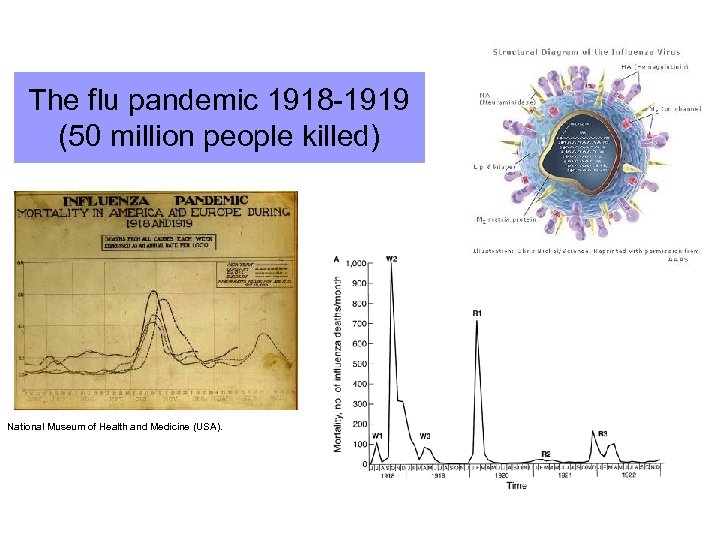
The flu pandemic 1918 -1919 (50 million people killed) National Museum of Health and Medicine (USA).
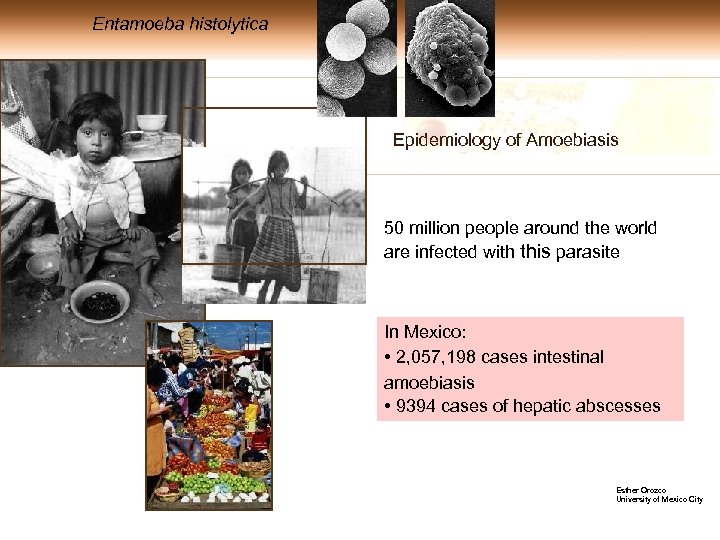
Entamoeba histolytica Epidemiology of Amoebiasis 50 million people around the world are infected with this parasite In Mexico: • 2, 057, 198 cases intestinal amoebiasis • 9394 cases of hepatic abscesses Esther Orozco University of Mexico City
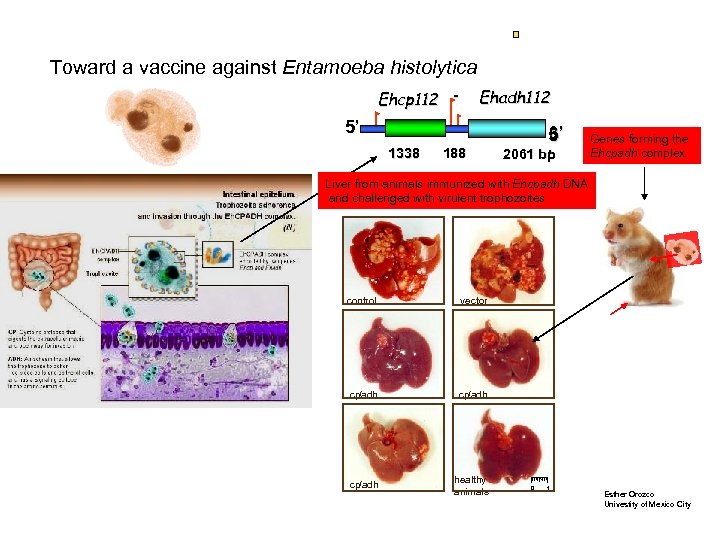
Toward a vaccine against Entamoeba histolytica Ehadh 112 Ehcp 112 - 5’ 1338 188 3’ 5 2061 bp ’ Genes forming the Ehcpadh complex Liver from animals immunized with Ehcpadh DNA and challenged with virulent trophozoites control vector cp/adh healthy animals 0 1 Esther Orozco Univestity of Mexico City
Strategies to defeat microorganisms causing emerging and re-emerging diseases
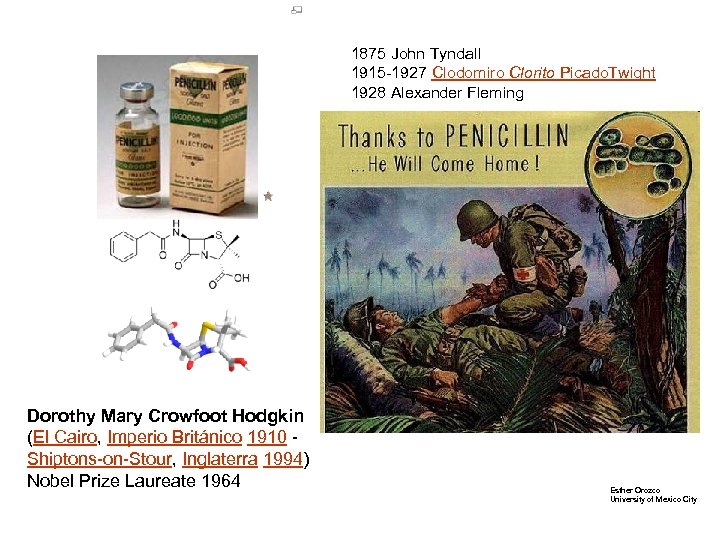
1875 John Tyndall 1915 -1927 Clodomiro Clorito Picado. Twight 1928 Alexander Fleming Dorothy Mary Crowfoot Hodgkin (El Cairo, Imperio Británico 1910 - Shiptons-on-Stour, Inglaterra 1994) Nobel Prize Laureate 1964 Esther Orozco University of Mexico City
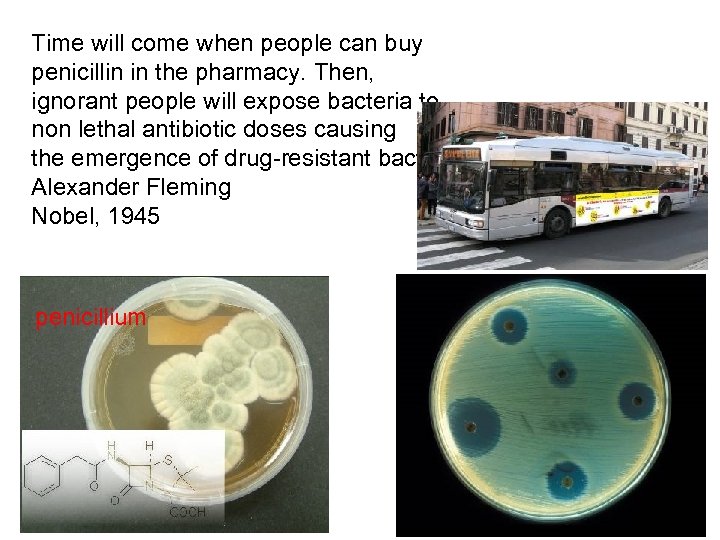
Time will come when people can buy penicillin in the pharmacy. Then, ignorant people will expose bacteria to non lethal antibiotic doses causing the emergence of drug-resistant bacteria Alexander Fleming Nobel, 1945 penicillium
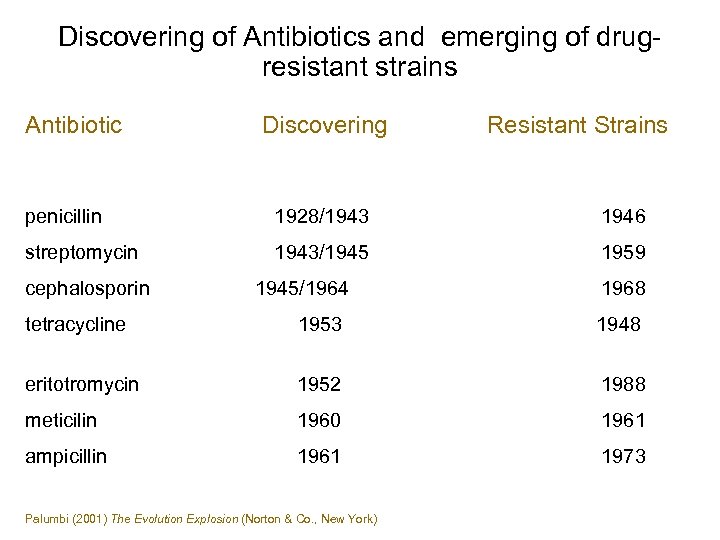
Discovering of Antibiotics and emerging of drugresistant strains Antibiotic Discovering Resistant Strains penicillin 1928/1943 1946 streptomycin 1943/1945 1959 cephalosporin 1945/1964 tetracycline 1953 1968 1948 eritotromycin 1952 meticilin 1960 1961 ampicillin 1961 1973 Palumbi (2001) The Evolution Explosion (Norton & Co. , New York) 1988
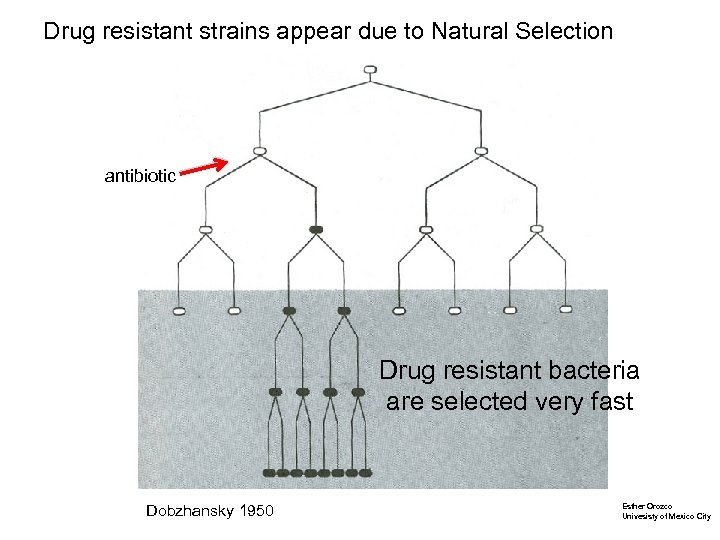
Drug resistant strains appear due to Natural Selection antibiotic Drug resistant bacteria are selected very fast Dobzhansky 1950 Esther Orozco Univesisty of Mexico City
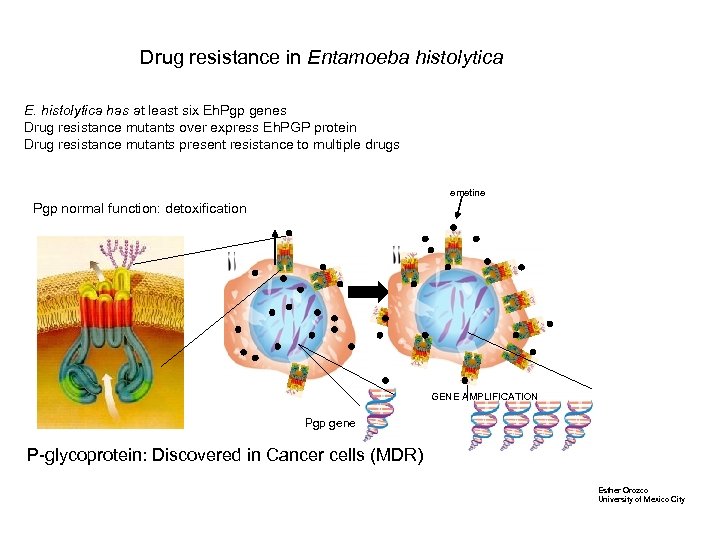
Drug resistance in Entamoeba histolytica E. histolytica has at least six Eh. Pgp genes Drug resistance mutants over express Eh. PGP protein Drug resistance mutants present resistance to multiple drugs emetine Pgp normal function: detoxification GENE AMPLIFICATION Pgp gene P-glycoprotein: Discovered in Cancer cells (MDR) Esther Orozco University of Mexico City
Conclusions: • Genetics and genomics of pathogens allow them to survive human body defenses and defeat human intelligence üThey evade immune response and drug action ü To win the battle we need: i) advanced knowledge on their biological mechanisms to develop better diagnostic methods, vaccines and new drugs Challenges are opportunities for social and economic development • Through biotechnology, genomics, proteomics, molecular biology, etc. Education, education and education
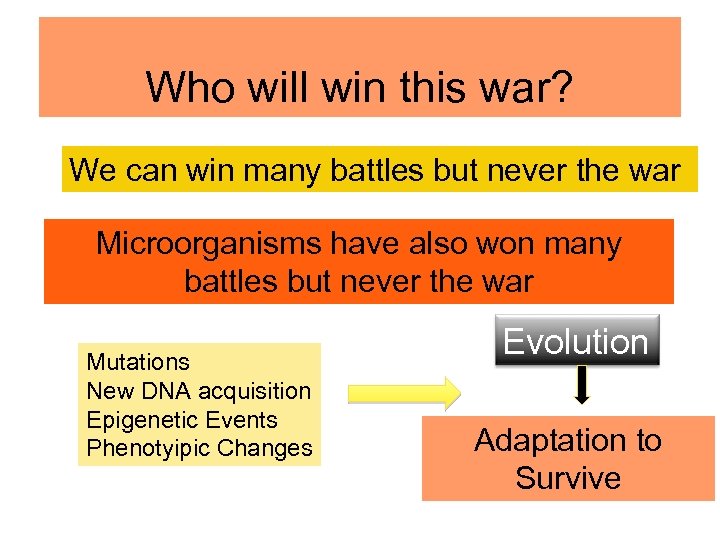
Who will win this war? We can win many battles but never the war Microorganisms have also won many battles but never the war Mutations New DNA acquisition Epigenetic Events Phenotyipic Changes Evolution Adaptation to Survive
Скачать презентацию Biological sagacity of pathogens the biggest challenge to
add5c178b1e7c21e115bc9c89d46a9ea.ppt