 Скачать презентацию Biological Nitrogen Fixation Conversion of dinitrogen gas N
41a7f5711a4dc287b7f060b899d31856.ppt
- Количество слайдов: 99



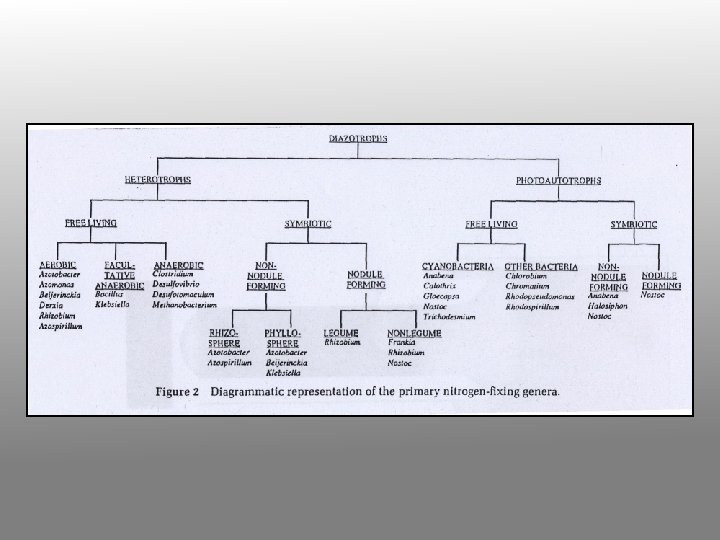
Biological Nitrogen Fixation Conversion of dinitrogen gas (N 2) to ammonia (NH 3) Availability of fixed N often factor most limiting to plant growth N-fixation ability limited to few bacteria, either as free-living organisms or in symbiosis with higher plants First attempt to increase forest growth through N -fixation in Lithuania, 1894 (lupines in Scots pine)
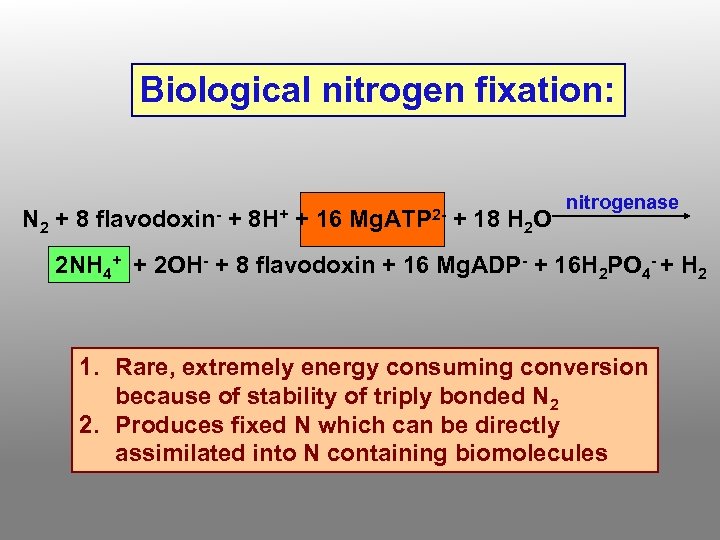
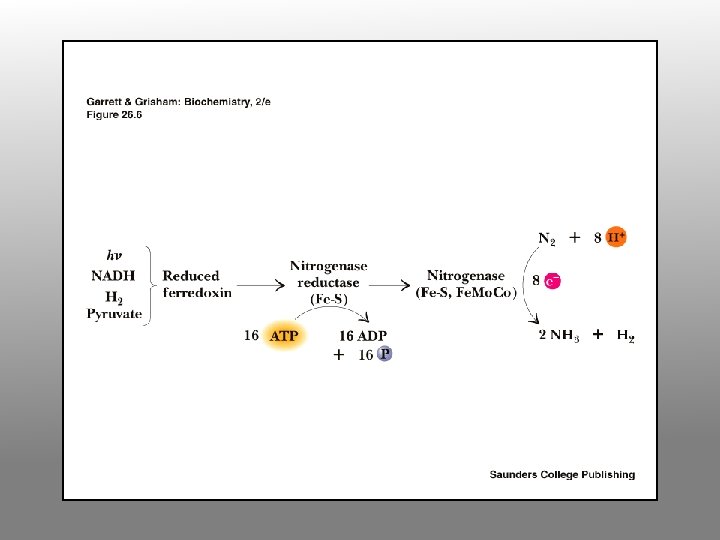
Biological nitrogen fixation: N 2 + 8 flavodoxin- + 8 H+ + 16 Mg. ATP 2 - + 18 H 2 O nitrogenase 2 NH 4+ + 2 OH- + 8 flavodoxin + 16 Mg. ADP- + 16 H 2 PO 4 - + H 2 1. Rare, extremely energy consuming conversion because of stability of triply bonded N 2 2. Produces fixed N which can be directly assimilated into N containing biomolecules
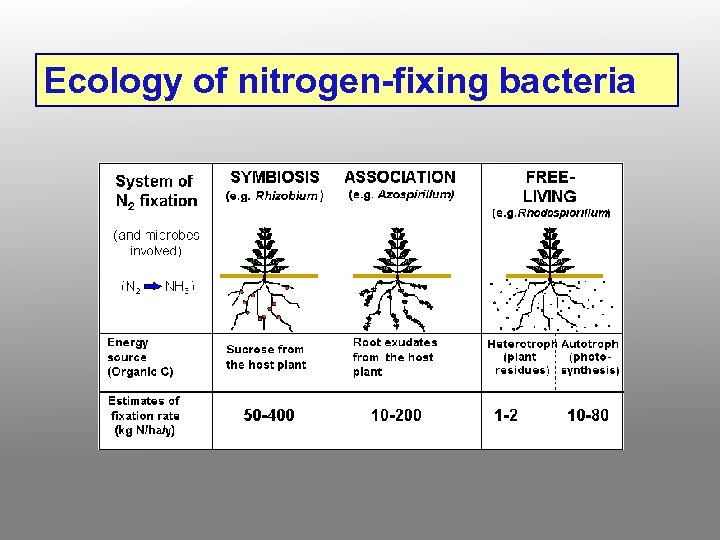
Ecology of nitrogen-fixing bacteria
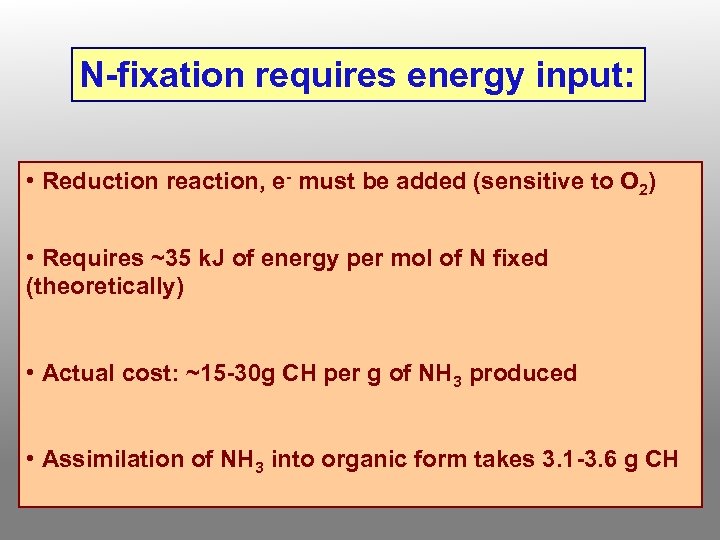
N-fixation requires energy input: • Reduction reaction, e- must be added (sensitive to O 2) • Requires ~35 k. J of energy per mol of N fixed (theoretically) • Actual cost: ~15 -30 g CH per g of NH 3 produced • Assimilation of NH 3 into organic form takes 3. 1 -3. 6 g CH
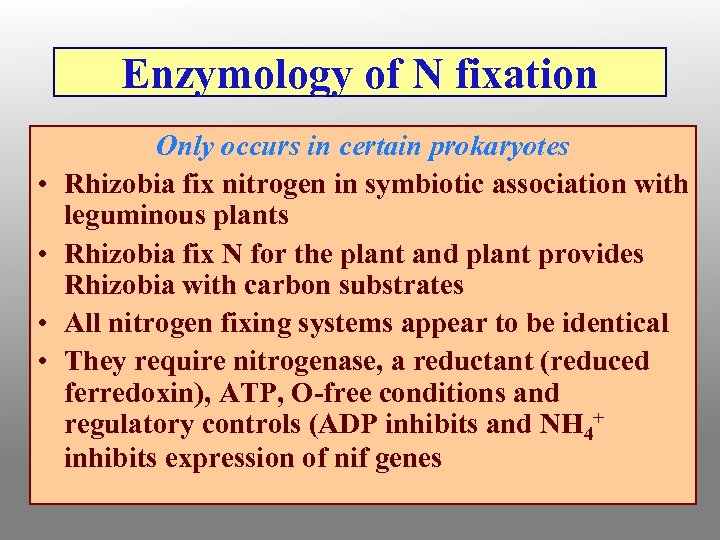
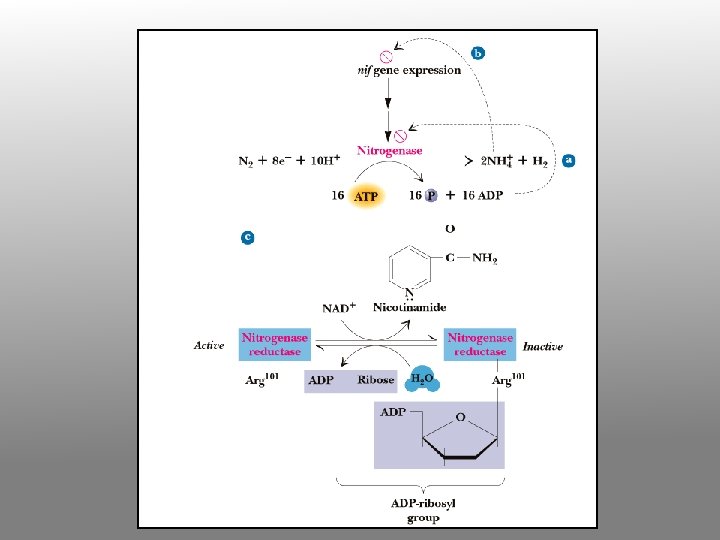
Enzymology of N fixation • • Only occurs in certain prokaryotes Rhizobia fix nitrogen in symbiotic association with leguminous plants Rhizobia fix N for the plant and plant provides Rhizobia with carbon substrates All nitrogen fixing systems appear to be identical They require nitrogenase, a reductant (reduced ferredoxin), ATP, O-free conditions and regulatory controls (ADP inhibits and NH 4+ inhibits expression of nif genes
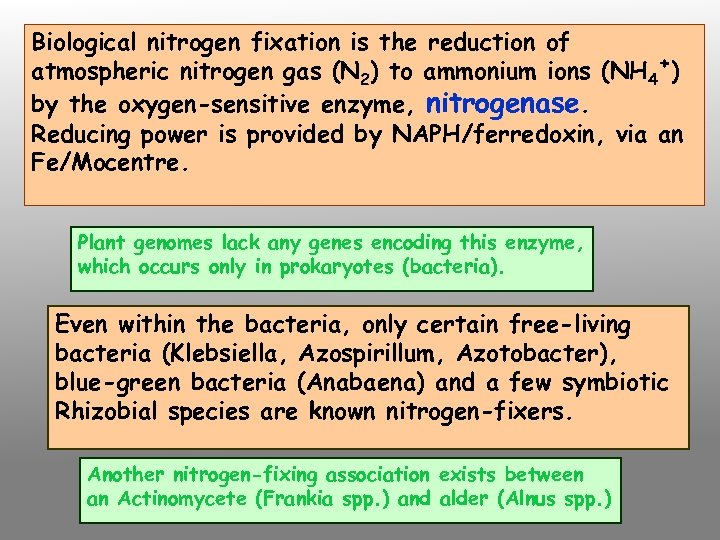
Biological nitrogen fixation is the reduction of atmospheric nitrogen gas (N 2) to ammonium ions (NH 4+) by the oxygen-sensitive enzyme, nitrogenase. Reducing power is provided by NAPH/ferredoxin, via an Fe/Mocentre. Plant genomes lack any genes encoding this enzyme, which occurs only in prokaryotes (bacteria). Even within the bacteria, only certain free-living bacteria (Klebsiella, Azospirillum, Azotobacter), blue-green bacteria (Anabaena) and a few symbiotic Rhizobial species are known nitrogen-fixers. Another nitrogen-fixing association exists between an Actinomycete (Frankia spp. ) and alder (Alnus spp. )
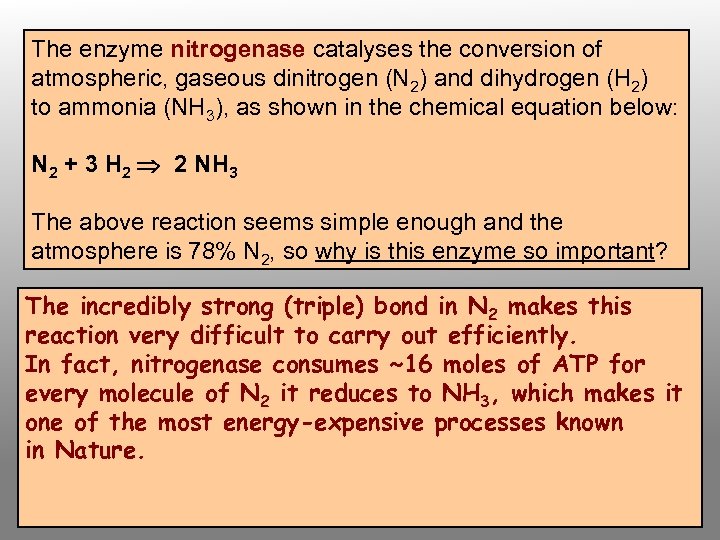
The enzyme nitrogenase catalyses the conversion of atmospheric, gaseous dinitrogen (N 2) and dihydrogen (H 2) to ammonia (NH 3), as shown in the chemical equation below: N 2 + 3 H 2 2 NH 3 The above reaction seems simple enough and the atmosphere is 78% N 2, so why is this enzyme so important? The incredibly strong (triple) bond in N 2 makes this reaction very difficult to carry out efficiently. In fact, nitrogenase consumes ~16 moles of ATP for every molecule of N 2 it reduces to NH 3, which makes it one of the most energy-expensive processes known in Nature.
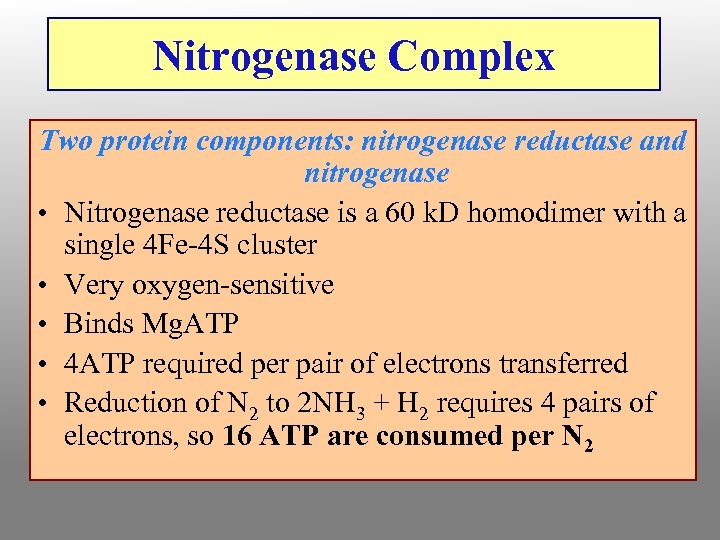
Nitrogenase Complex Two protein components: nitrogenase reductase and nitrogenase • Nitrogenase reductase is a 60 k. D homodimer with a single 4 Fe-4 S cluster • Very oxygen-sensitive • Binds Mg. ATP • 4 ATP required per pair of electrons transferred • Reduction of N 2 to 2 NH 3 + H 2 requires 4 pairs of electrons, so 16 ATP are consumed per N 2
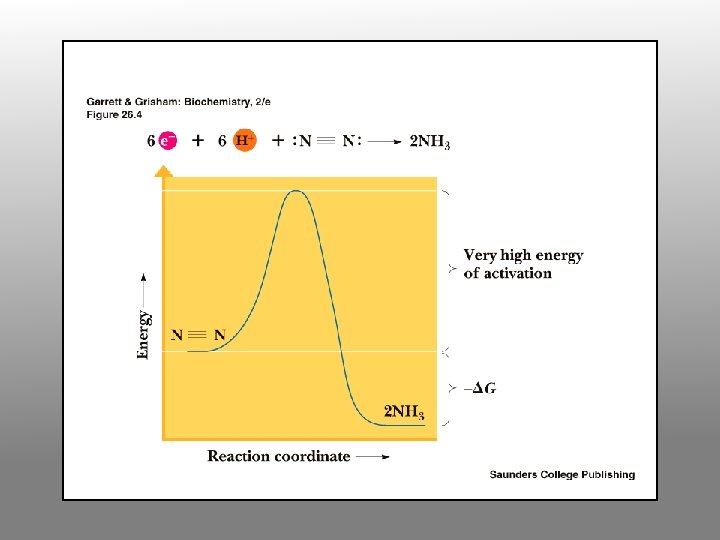
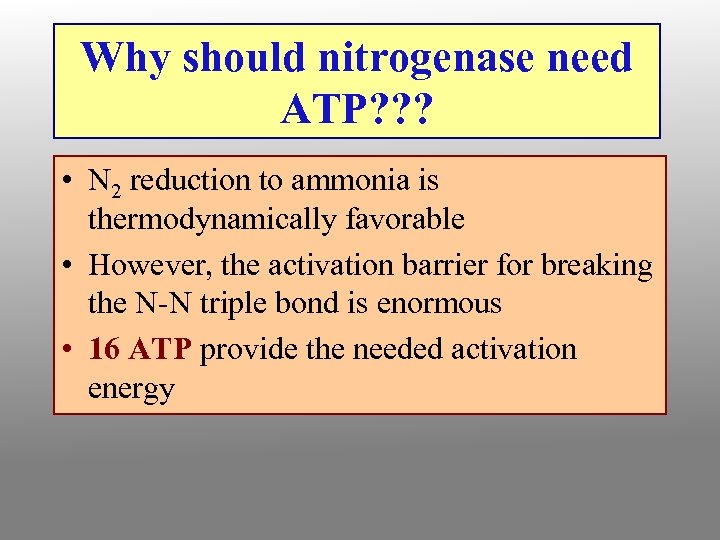
Why should nitrogenase need ATP? ? ? • N 2 reduction to ammonia is thermodynamically favorable • However, the activation barrier for breaking the N-N triple bond is enormous • 16 ATP provide the needed activation energy
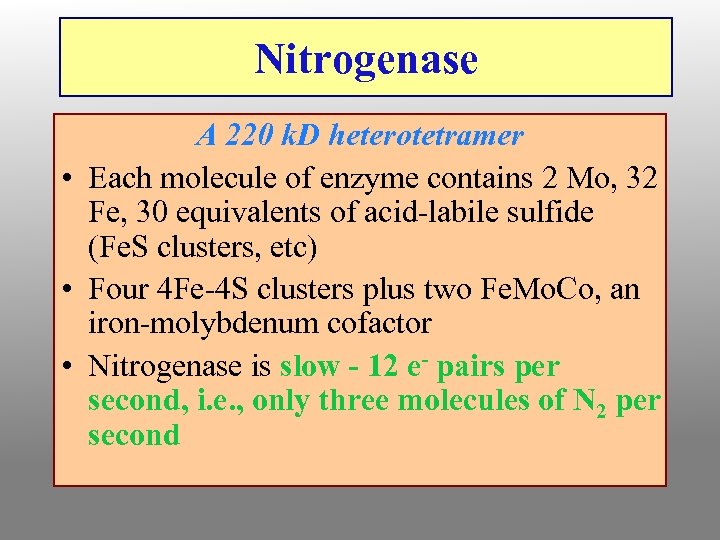
Nitrogenase A 220 k. D heterotetramer • Each molecule of enzyme contains 2 Mo, 32 Fe, 30 equivalents of acid-labile sulfide (Fe. S clusters, etc) • Four 4 Fe-4 S clusters plus two Fe. Mo. Co, an iron-molybdenum cofactor • Nitrogenase is slow - 12 e- pairs per second, i. e. , only three molecules of N 2 per second
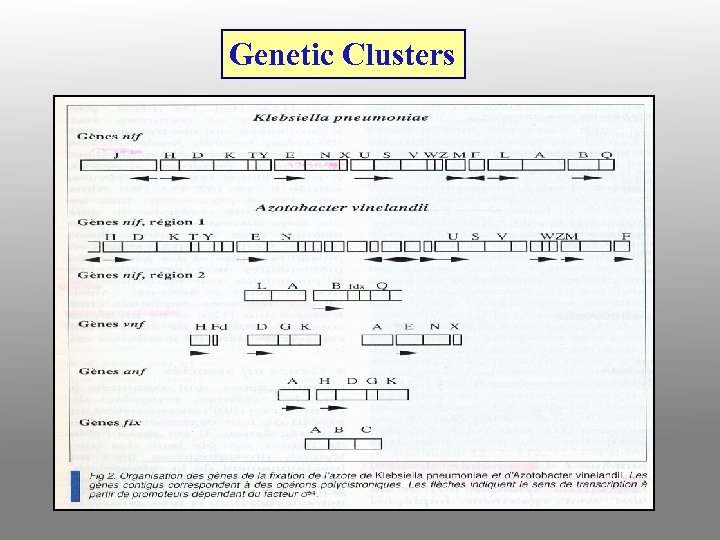
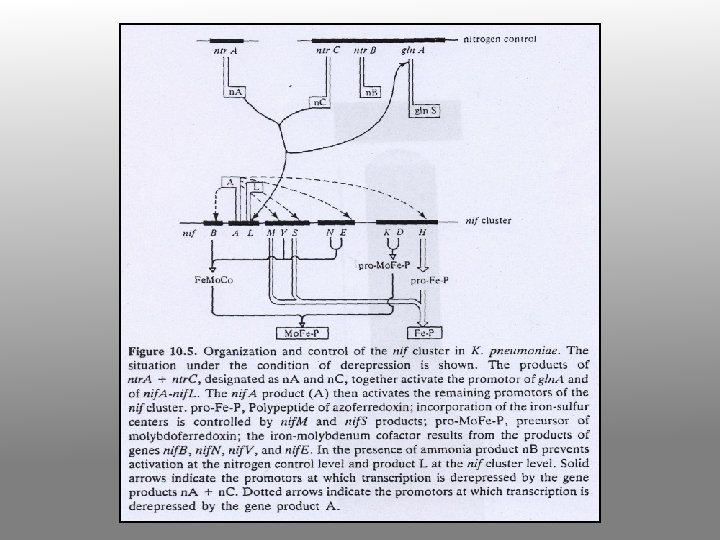
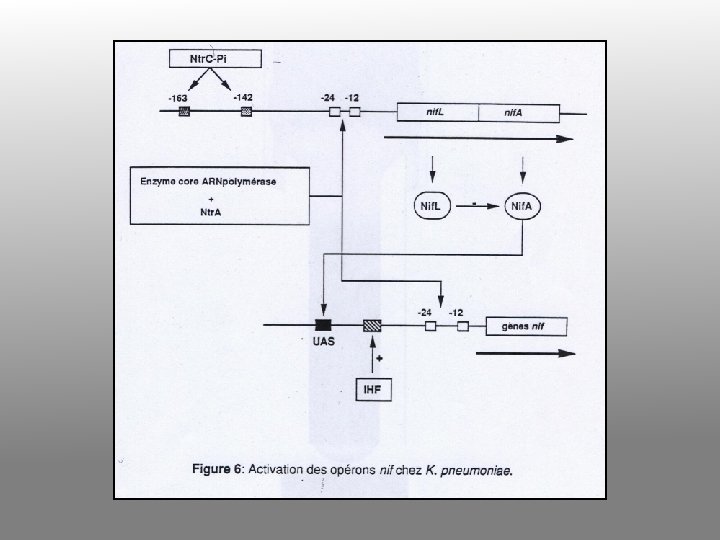
Genetic Clusters
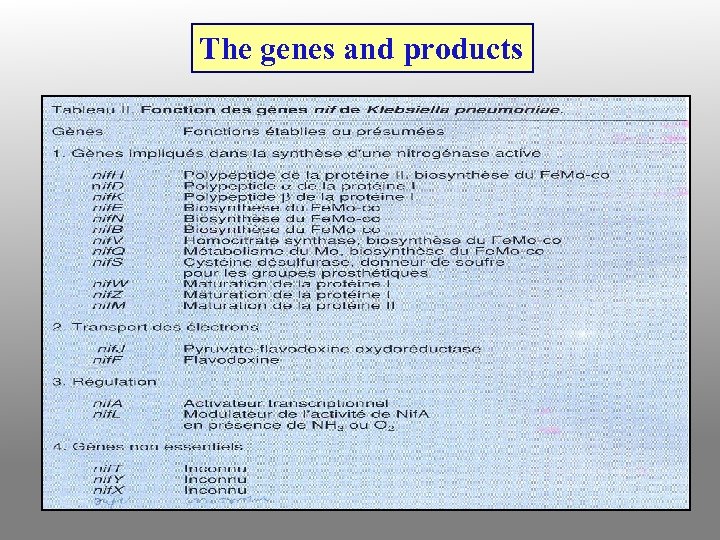
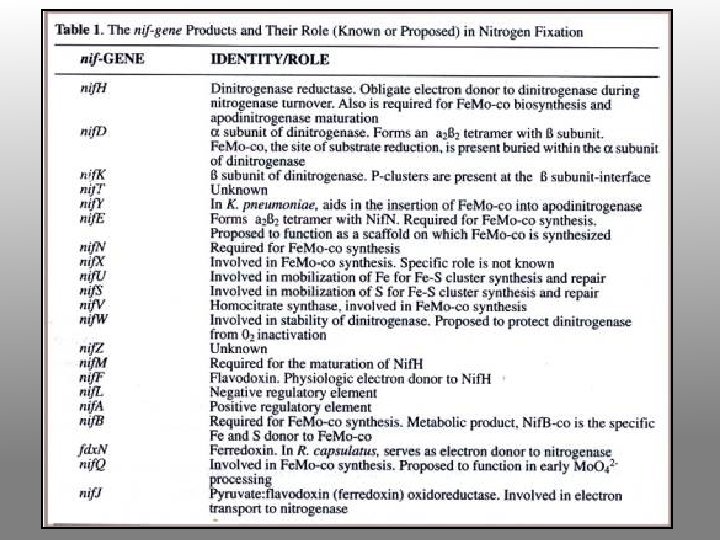
The genes and products
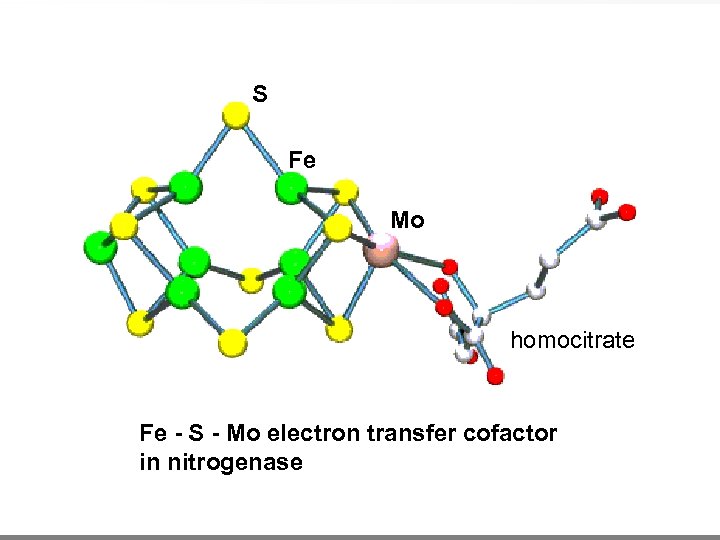
S Fe Mo homocitrate Fe - S - Mo electron transfer cofactor in nitrogenase
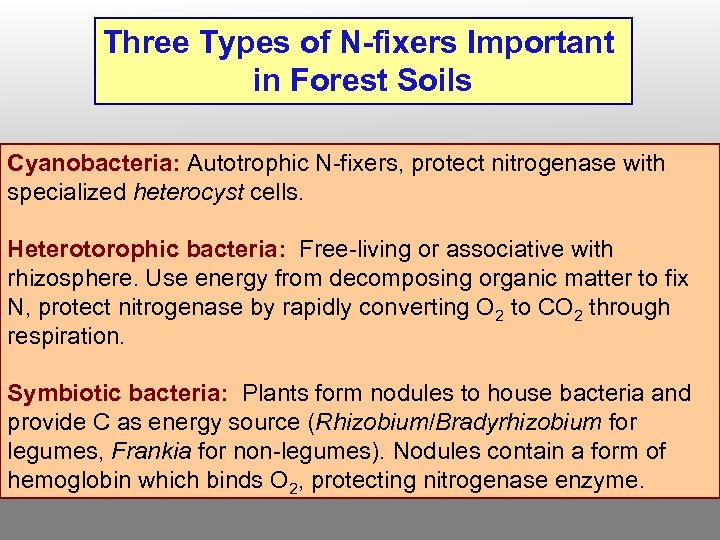
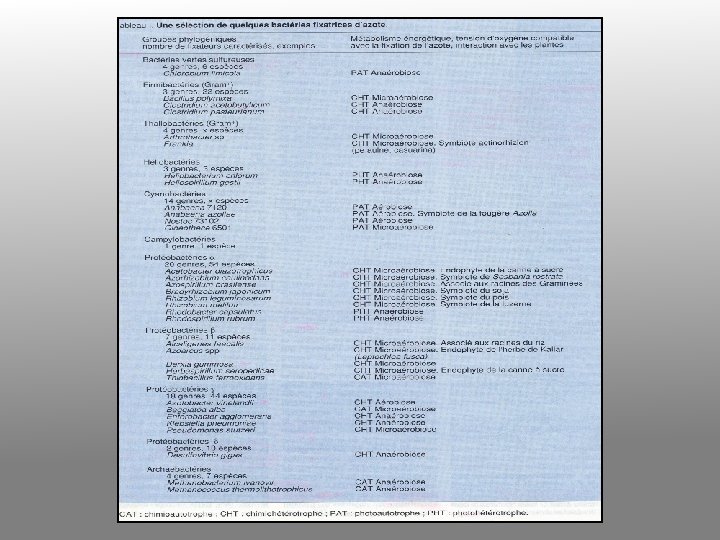
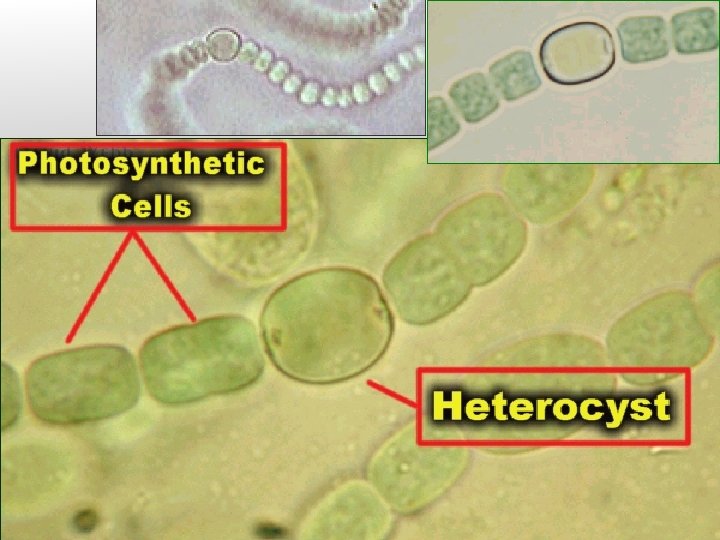
Three Types of N-fixers Important in Forest Soils Cyanobacteria: Autotrophic N-fixers, protect nitrogenase with specialized heterocyst cells. Heterotorophic bacteria: Free-living or associative with rhizosphere. Use energy from decomposing organic matter to fix N, protect nitrogenase by rapidly converting O 2 to CO 2 through respiration. Symbiotic bacteria: Plants form nodules to house bacteria and provide C as energy source (Rhizobium/Bradyrhizobium for legumes, Frankia for non-legumes). Nodules contain a form of hemoglobin which binds O 2, protecting nitrogenase enzyme.
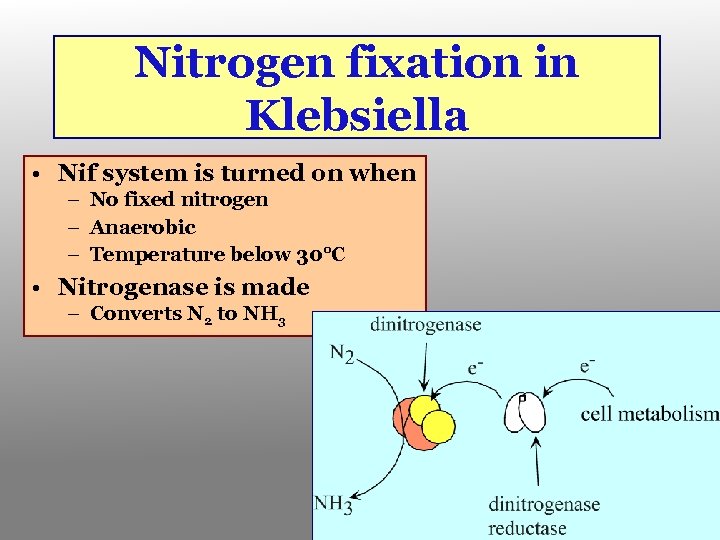
Nitrogen fixation in Klebsiella • Nif system is turned on when – No fixed nitrogen – Anaerobic – Temperature below 30°C • Nitrogenase is made – Converts N 2 to NH 3
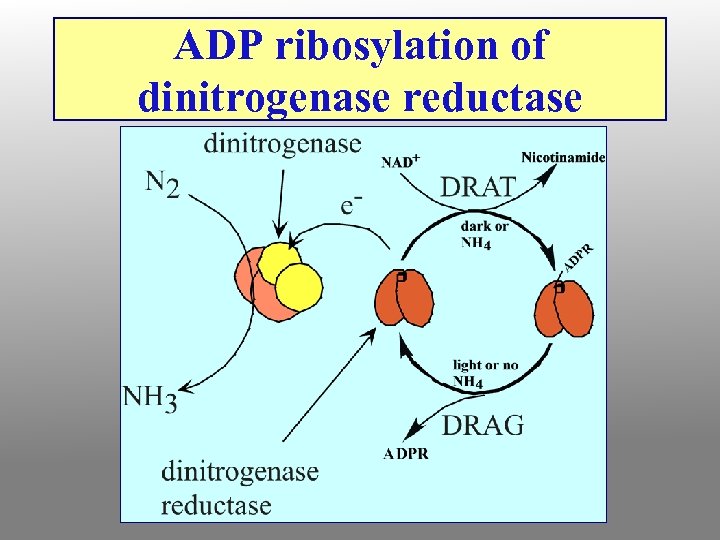
ADP ribosylation of dinitrogenase reductase
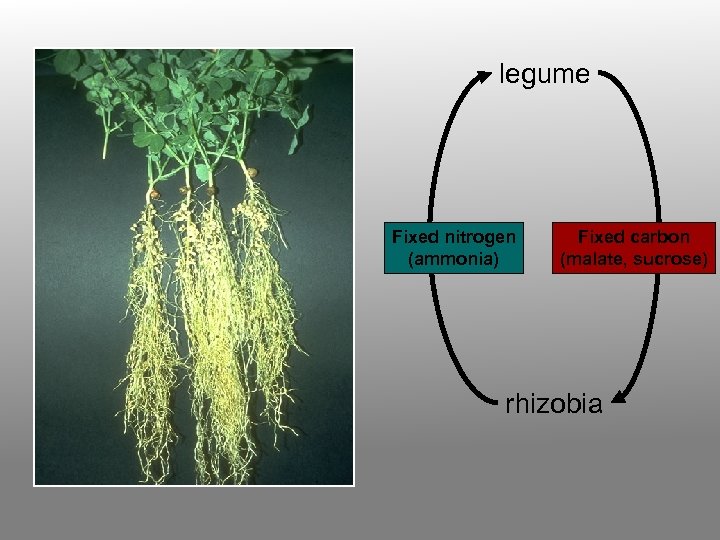
legume Fixed nitrogen (ammonia) Fixed carbon (malate, sucrose) rhizobia
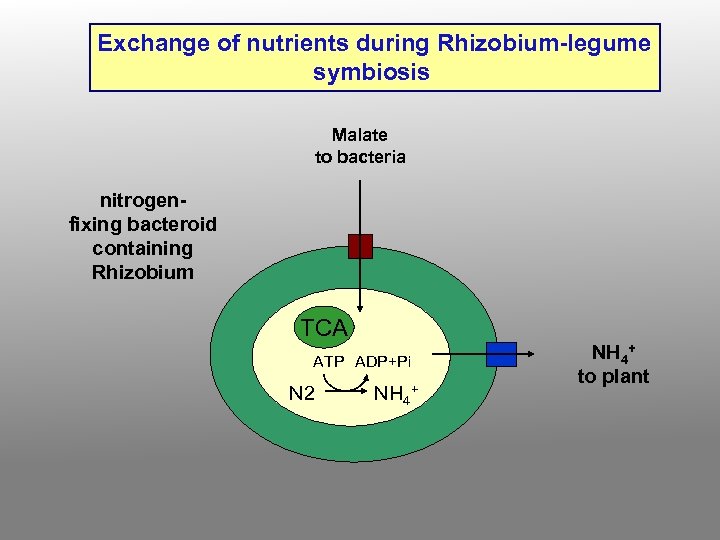
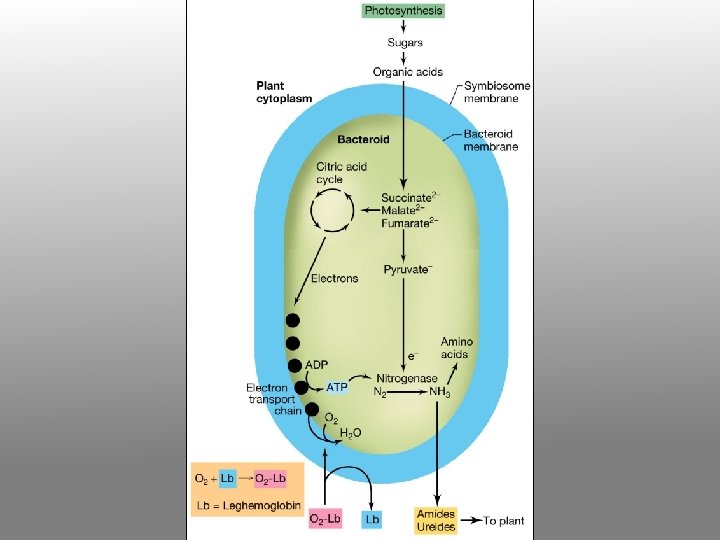
Exchange of nutrients during Rhizobium-legume symbiosis Malate to bacteria nitrogenfixing bacteroid containing Rhizobium TCA ATP ADP+Pi N 2 NH 4+ to plant
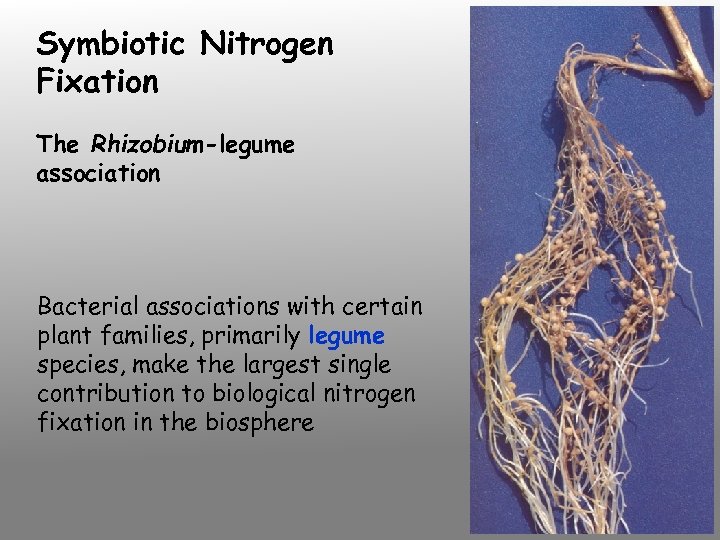
Symbiotic Nitrogen Fixation The Rhizobium-legume association Bacterial associations with certain plant families, primarily legume species, make the largest single contribution to biological nitrogen fixation in the biosphere
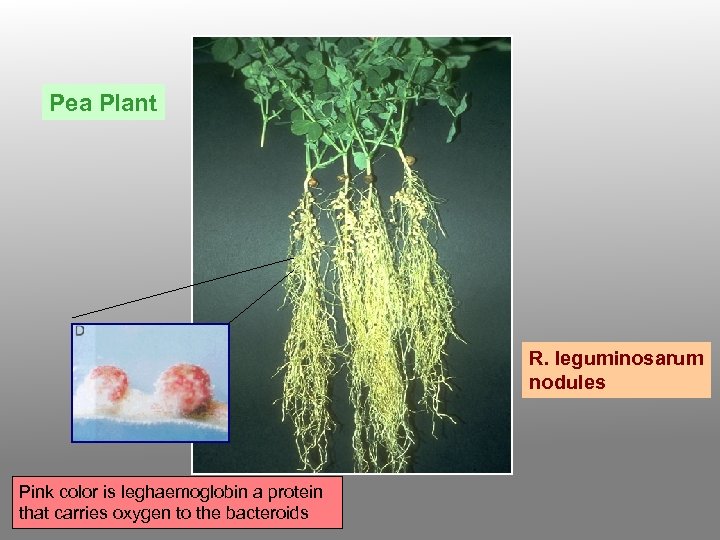
Pea Plant R. leguminosarum nodules Pink color is leghaemoglobin a protein that carries oxygen to the bacteroids
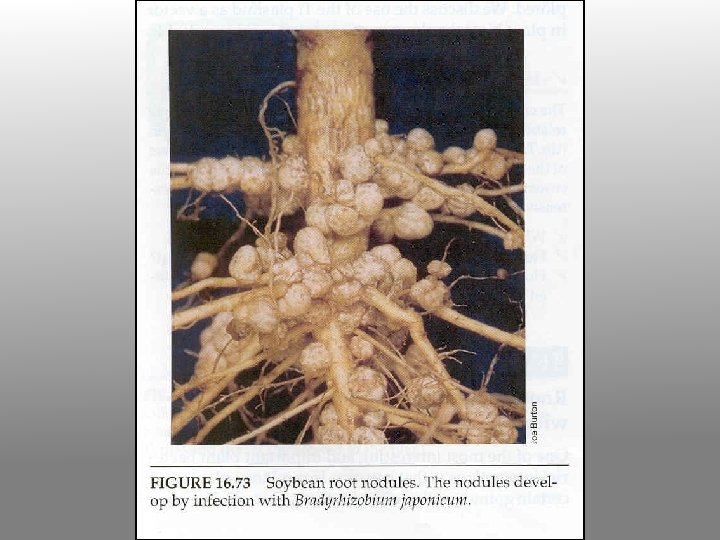
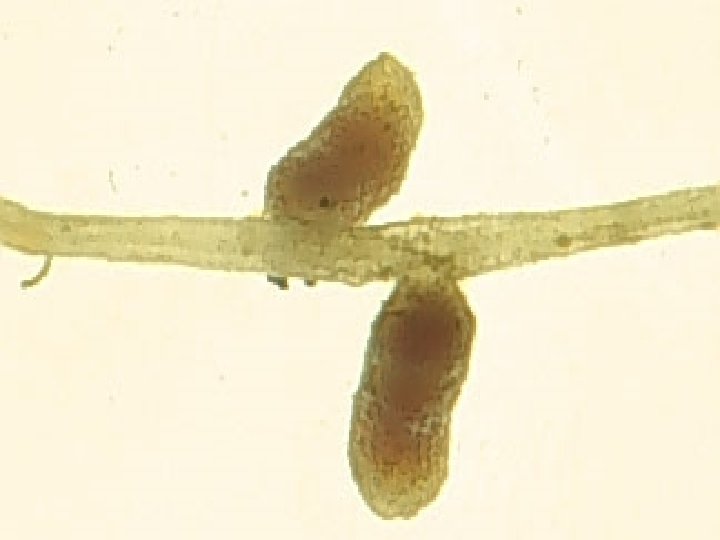
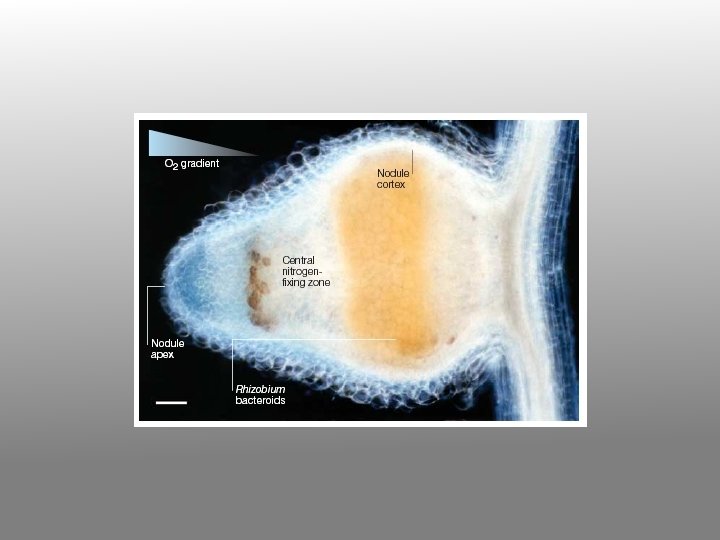
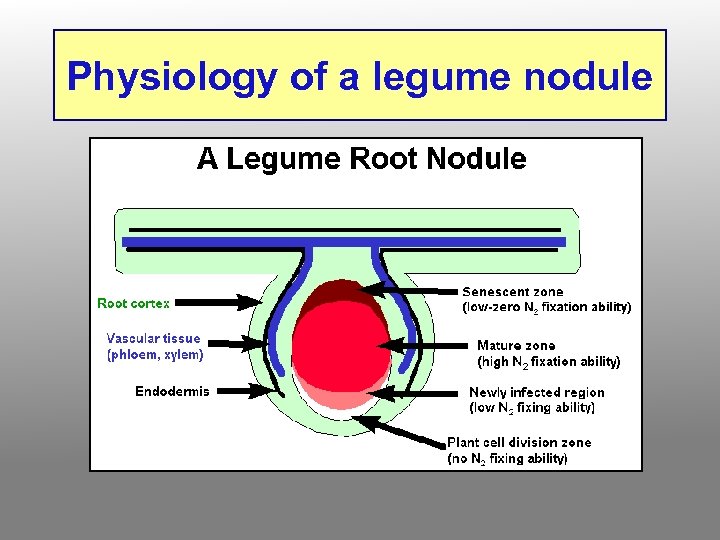
Physiology of a legume nodule
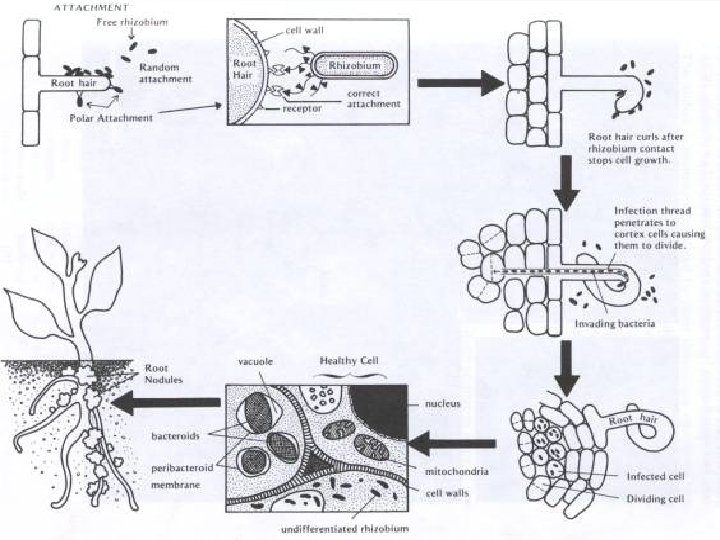
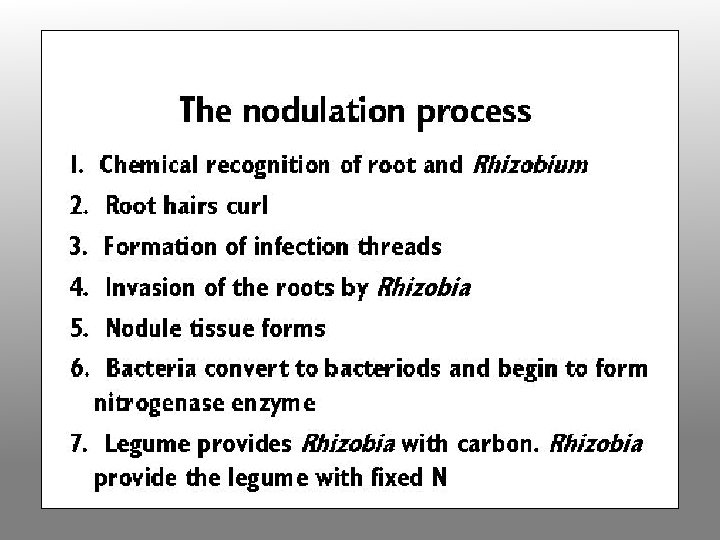
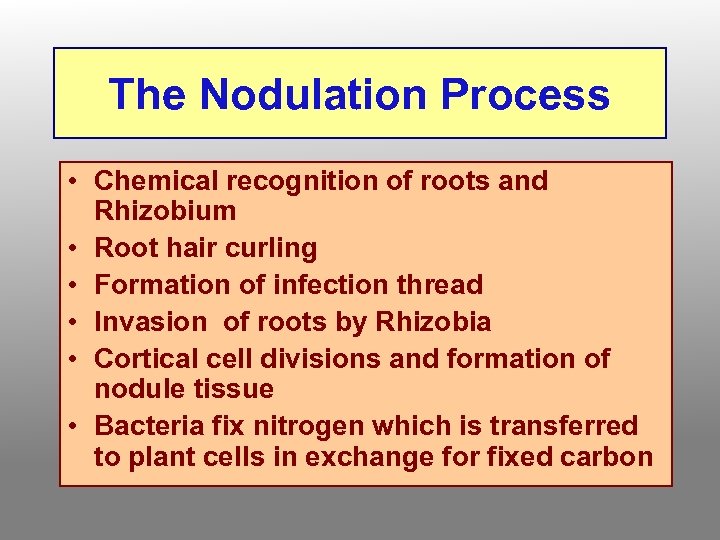
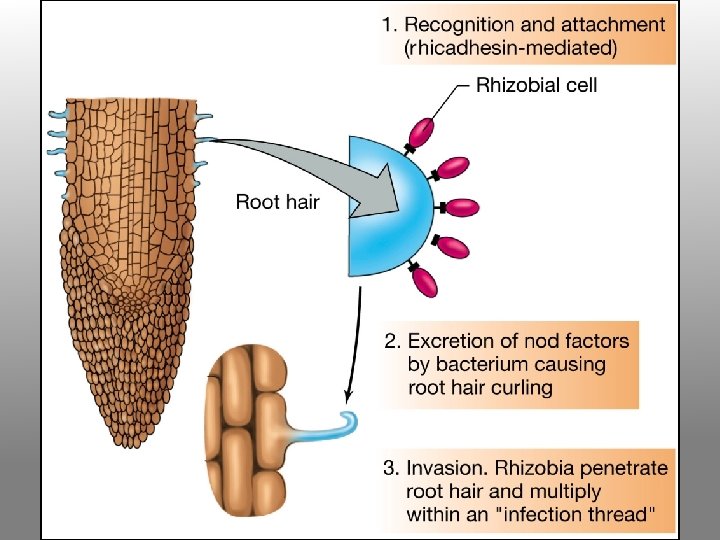
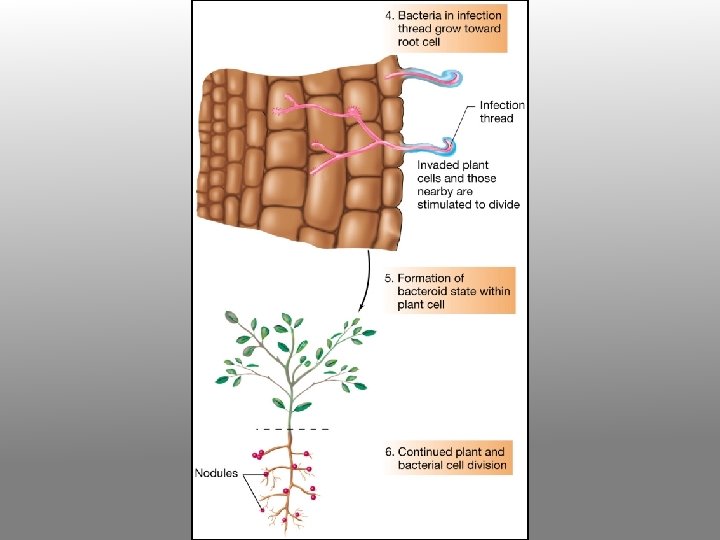
The Nodulation Process • Chemical recognition of roots and Rhizobium • Root hair curling • Formation of infection thread • Invasion of roots by Rhizobia • Cortical cell divisions and formation of nodule tissue • Bacteria fix nitrogen which is transferred to plant cells in exchange for fixed carbon
Biological NH 3 creation (nitrogen fixation) accounts for an estimated 170 x 109 kg of ammonia every year. Human industrial production amounts to some 80 x 109 kg of ammonia yearly. The industrial process (Haber-Bosh process) uses an Fe catalyst to dissociate molecules of N 2 to atomic nitrogen on the catalyst surface, followed by reaction with H 2 to form ammonia. This reaction typically runs at ~450º C and 500 atmospheres pressure. These extreme reaction conditions consume a huge amount of energy each year, considering the scale at which NH 3 is produced industrially.
The Dreams…. . If a way could be found to mimic nitrogenase catalysis (a reaction conducted at 0. 78 atmospheres N 2 pressure and ambient temperatures), huge amounts of energy (and money) could be saved in industrial ammonia production. If a way could be found to transfer the capacity to form N-fixing symbioses from a typical legume host to an important non-host crop species such as corn or wheat, far less fertilizer would be needed to be produced and applied in order to sustain crop yields
Because of its current and potential economic importance, the interaction between Rhizobia and leguminous plants has been intensively studied. Our understanding of the process by which these two symbionts establish a functional association is still not complete, but it has provided a paradigm for many aspects of cell-to-cell communication between microbes and plants (e. g. during pathogen attack), and even between cells within plants (e. g. developmental signals; fertilization by pollen).
Symbiotic Rhizobia are classified in two groups: Fast-growing Rhizobium spp. whose nodulation functions (nif, fix) are encoded on their symbiotic megaplasmids (p. Sym) Slow-growing Bradyrhizobium spp. whose N-fixation and nodulation functions are encoded on their chromosome. There also two types of nodule that can be formed: determinate and indeterminate This outcome is controlled by the plant host
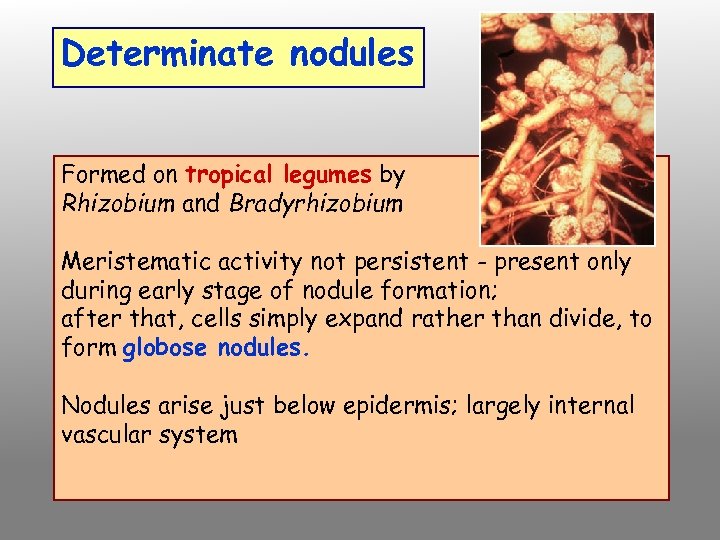
Determinate nodules Formed on tropical legumes by Rhizobium and Bradyrhizobium Meristematic activity not persistent - present only during early stage of nodule formation; after that, cells simply expand rather than divide, to form globose nodules. Nodules arise just below epidermis; largely internal vascular system
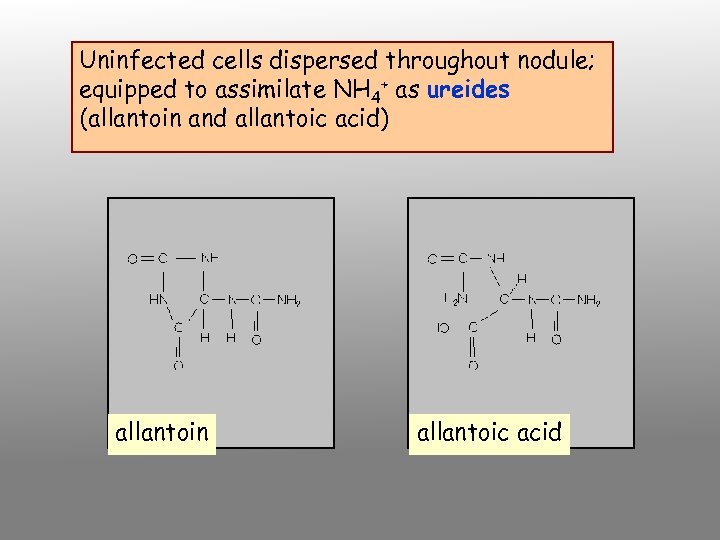
Uninfected cells dispersed throughout nodule; equipped to assimilate NH 4+ as ureides (allantoin and allantoic acid) allantoin allantoic acid
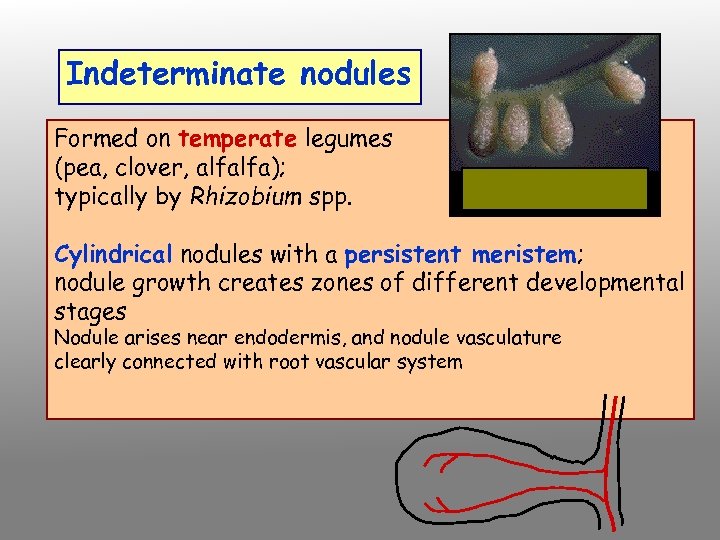
Indeterminate nodules Formed on temperate legumes (pea, clover, alfalfa); typically by Rhizobium spp. Cylindrical nodules with a persistent meristem; nodule growth creates zones of different developmental stages Nodule arises near endodermis, and nodule vasculature clearly connected with root vascular system
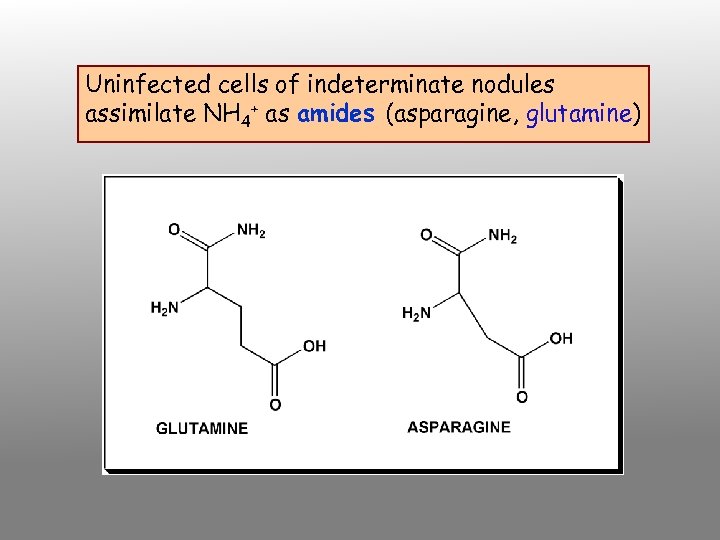
Uninfected cells of indeterminate nodules assimilate NH 4+ as amides (asparagine, glutamine)
Rhizobium • establish highly specific symbiotic associations with legumes – form root nodules – fix nitrogen within root nodules – nodulation genes are present on large plasmid
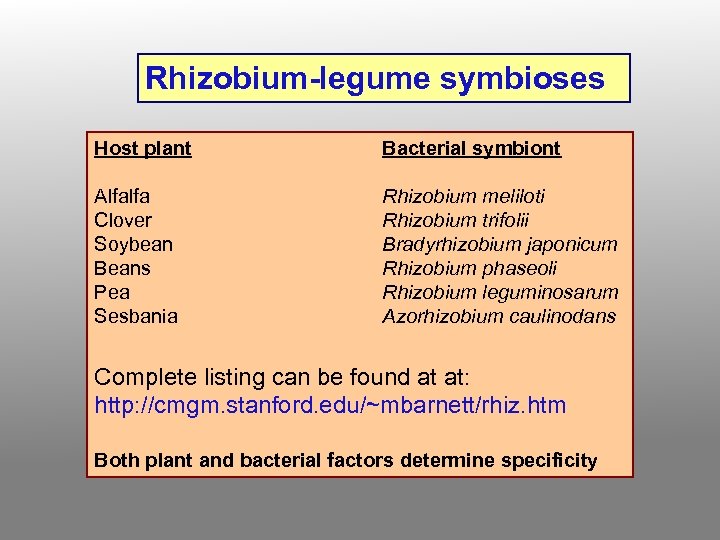
Rhizobium-legume symbioses Host plant Bacterial symbiont Alfalfa Clover Soybean Beans Pea Sesbania Rhizobium meliloti Rhizobium trifolii Bradyrhizobium japonicum Rhizobium phaseoli Rhizobium leguminosarum Azorhizobium caulinodans Complete listing can be found at at: http: //cmgm. stanford. edu/~mbarnett/rhiz. htm Both plant and bacterial factors determine specificity
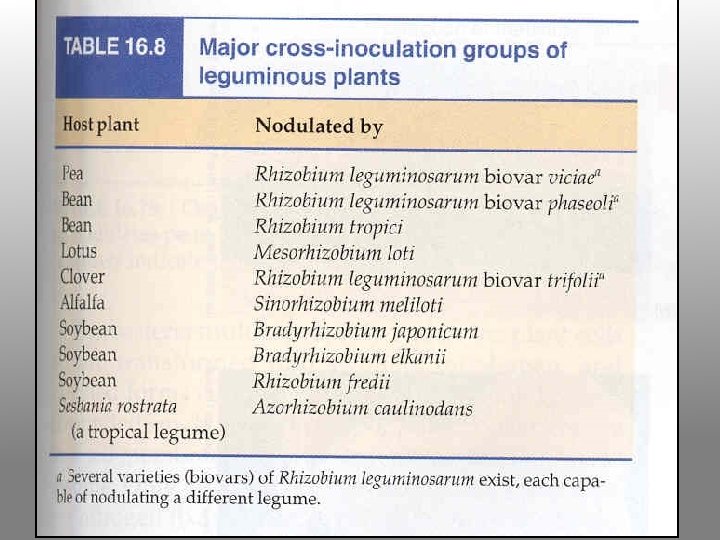
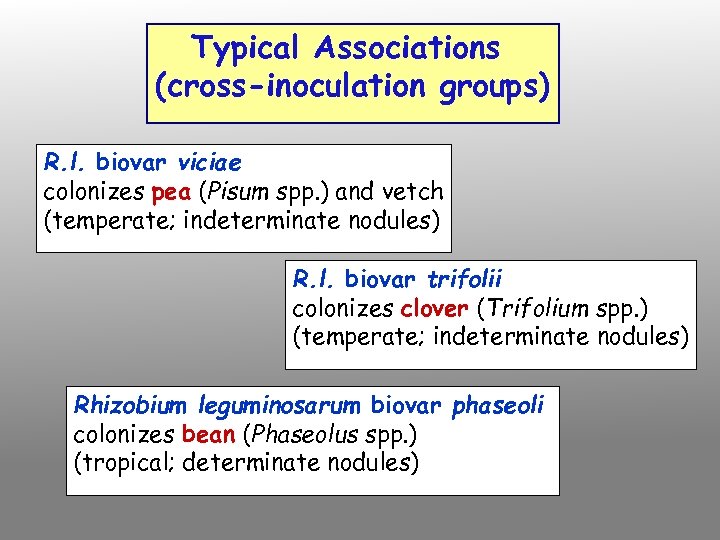
Typical Associations (cross-inoculation groups) R. l. biovar viciae colonizes pea (Pisum spp. ) and vetch (temperate; indeterminate nodules) R. l. biovar trifolii colonizes clover (Trifolium spp. ) (temperate; indeterminate nodules) Rhizobium leguminosarum biovar phaseoli colonizes bean (Phaseolus spp. ) (tropical; determinate nodules)
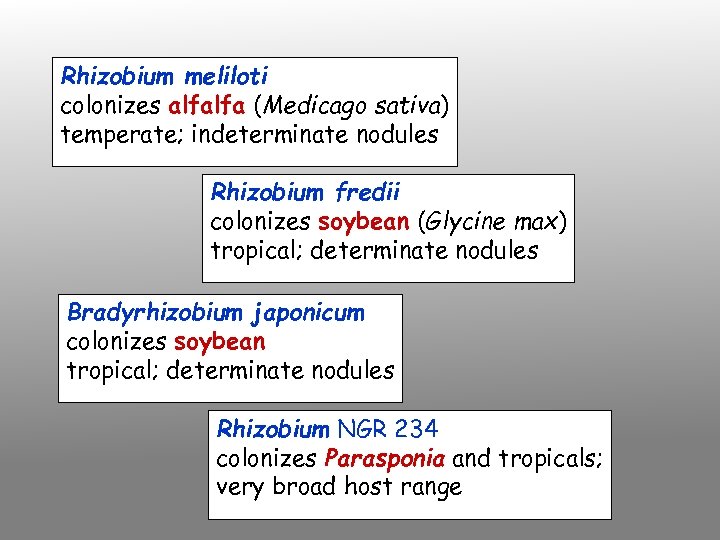
Rhizobium meliloti colonizes alfalfa (Medicago sativa) temperate; indeterminate nodules Rhizobium fredii colonizes soybean (Glycine max) tropical; determinate nodules Bradyrhizobium japonicum colonizes soybean tropical; determinate nodules Rhizobium NGR 234 colonizes Parasponia and tropicals; very broad host range
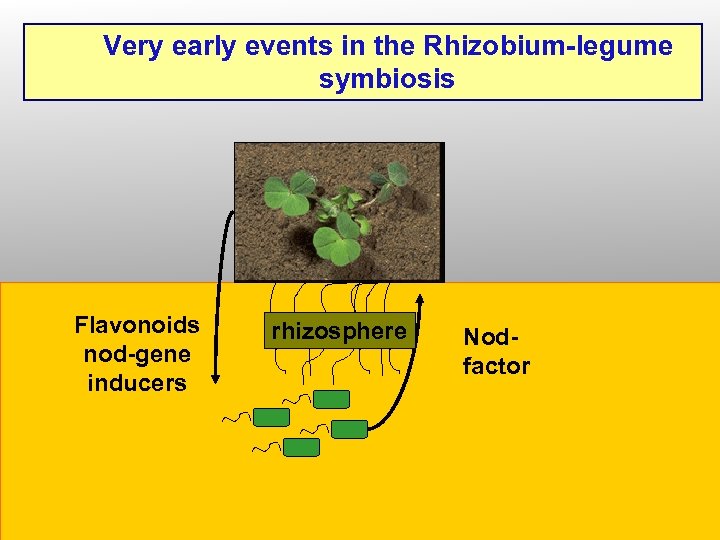
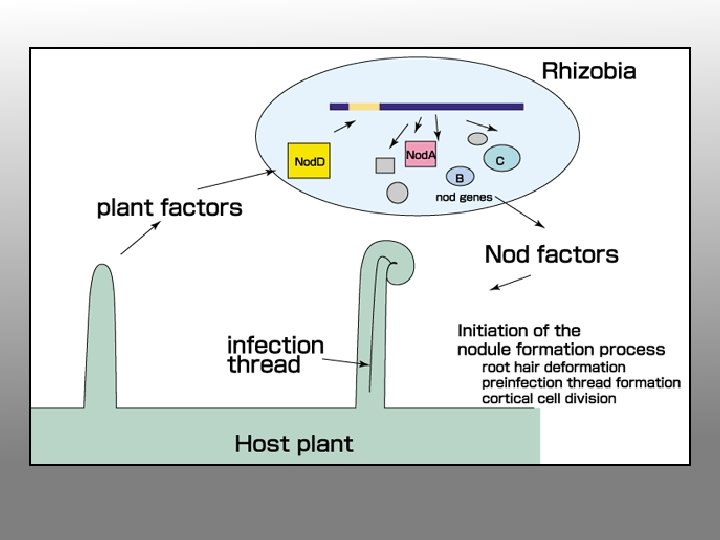
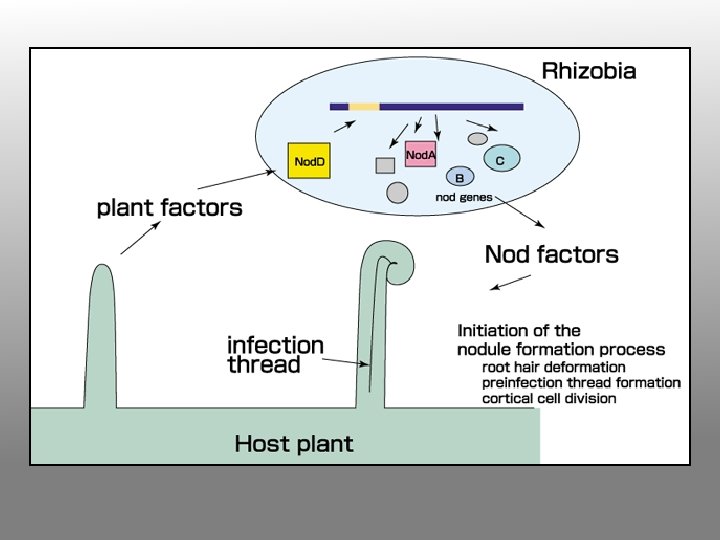
Very early events in the Rhizobium-legume symbiosis Flavonoids nod-gene inducers rhizosphere Nodfactor
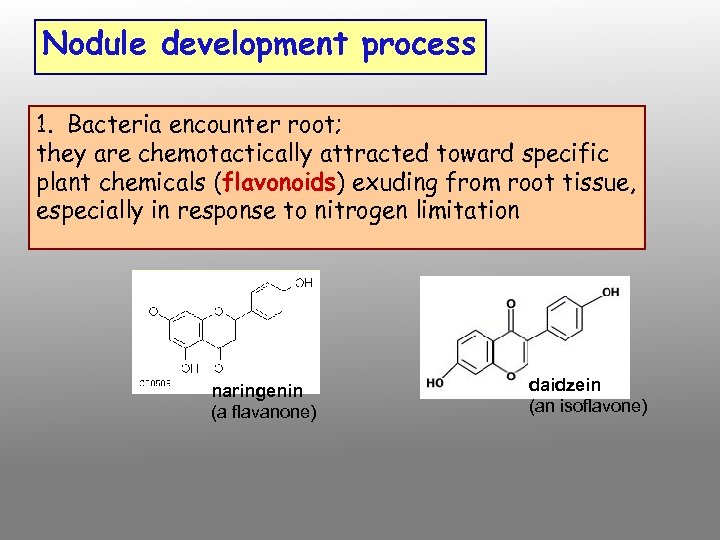
Nodule development process 1. Bacteria encounter root; they are chemotactically attracted toward specific plant chemicals (flavonoids) exuding from root tissue, especially in response to nitrogen limitation naringenin (a flavanone) daidzein (an isoflavone)
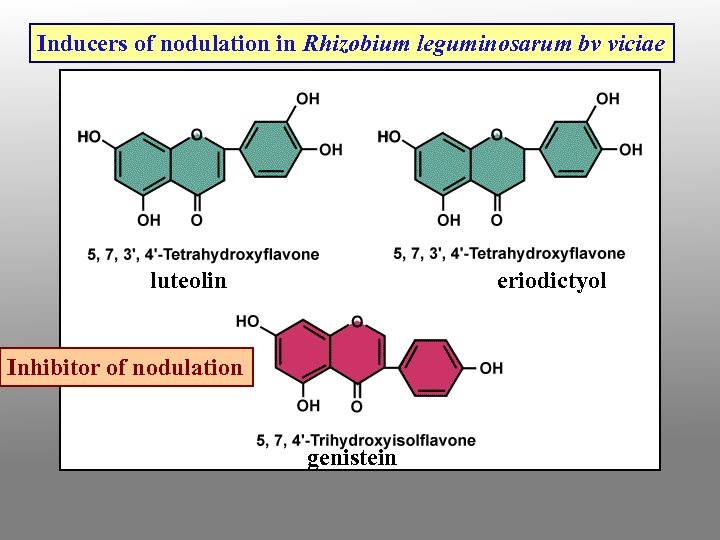
Inducers of nodulation in Rhizobium leguminosarum bv viciae luteolin eriodictyol Inhibitor of nodulation genistein
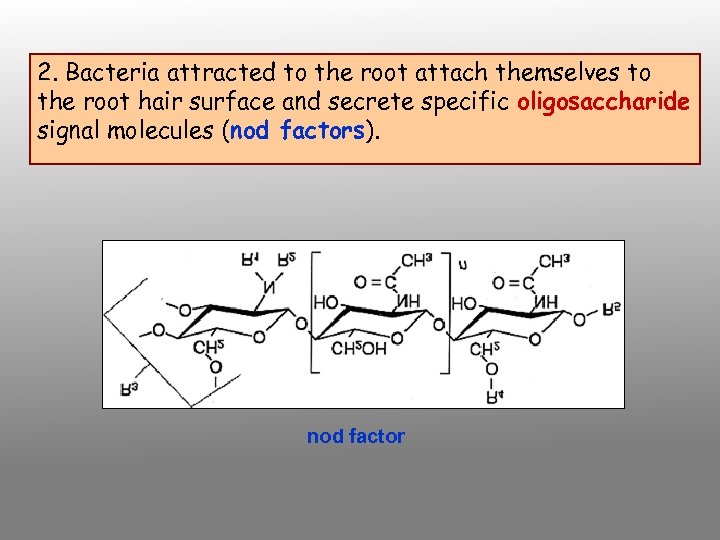
2. Bacteria attracted to the root attach themselves to the root hair surface and secrete specific oligosaccharide signal molecules (nod factors). nod factor
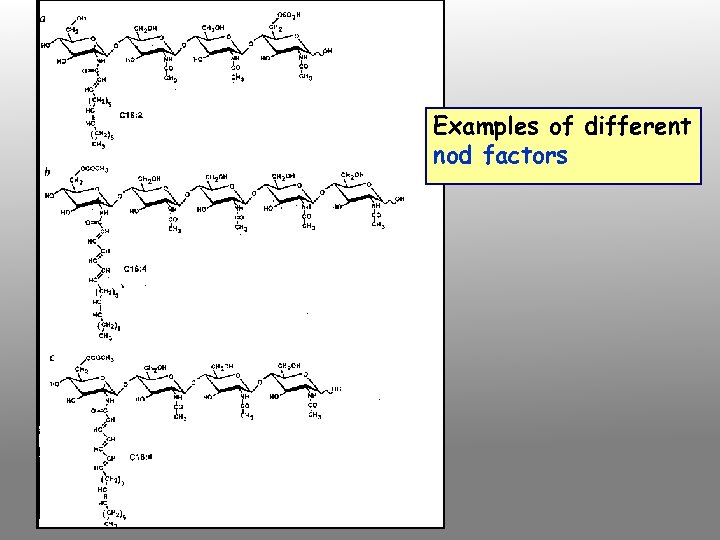
Examples of different nod factors
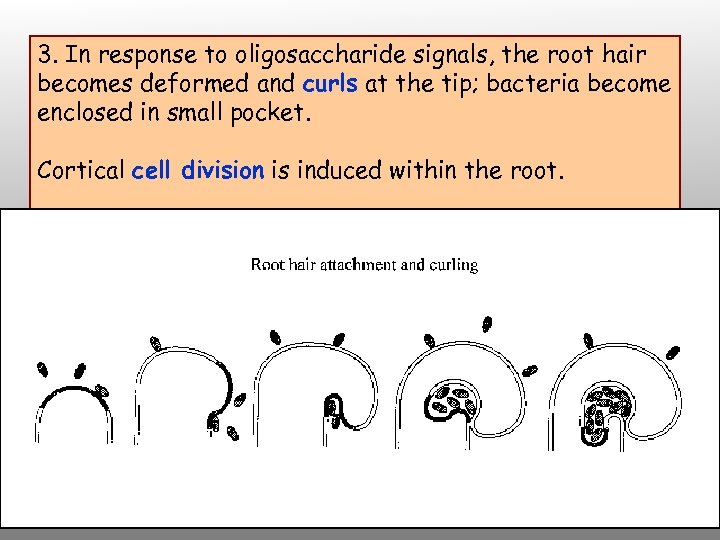
3. In response to oligosaccharide signals, the root hair becomes deformed and curls at the tip; bacteria become enclosed in small pocket. Cortical cell division is induced within the root.
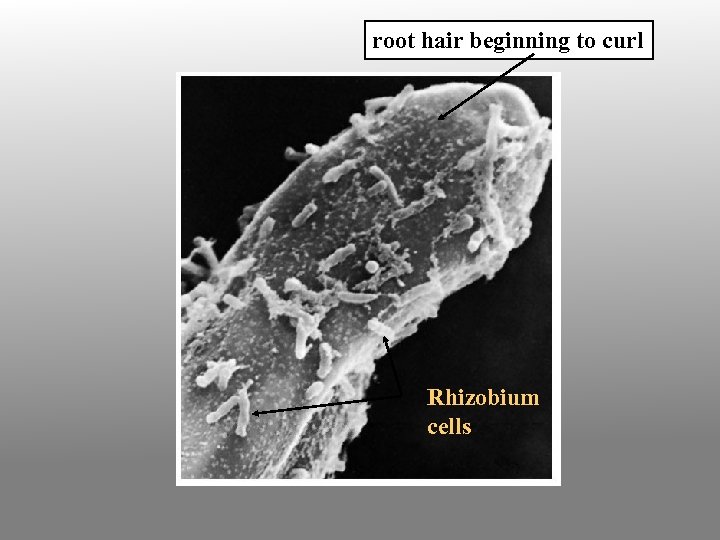
root hair beginning to curl Rhizobium cells
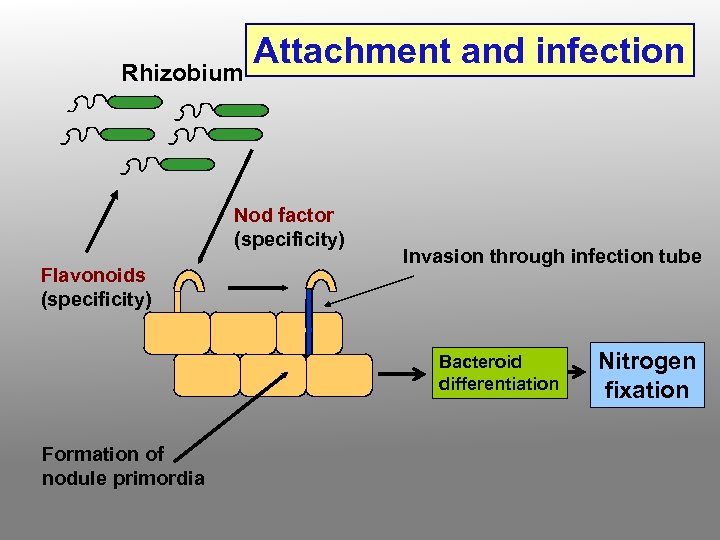
Rhizobium Attachment and infection Nod factor (specificity) Flavonoids (specificity) Invasion through infection tube Bacteroid differentiation Formation of nodule primordia Nitrogen fixation
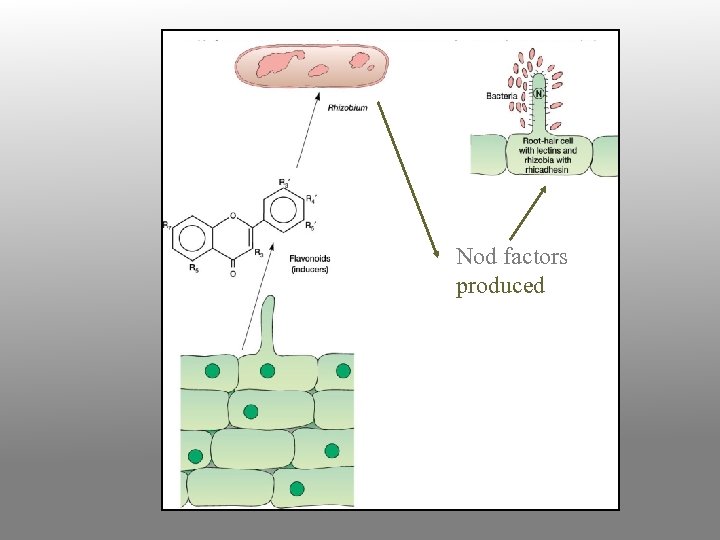
Nod factors produced
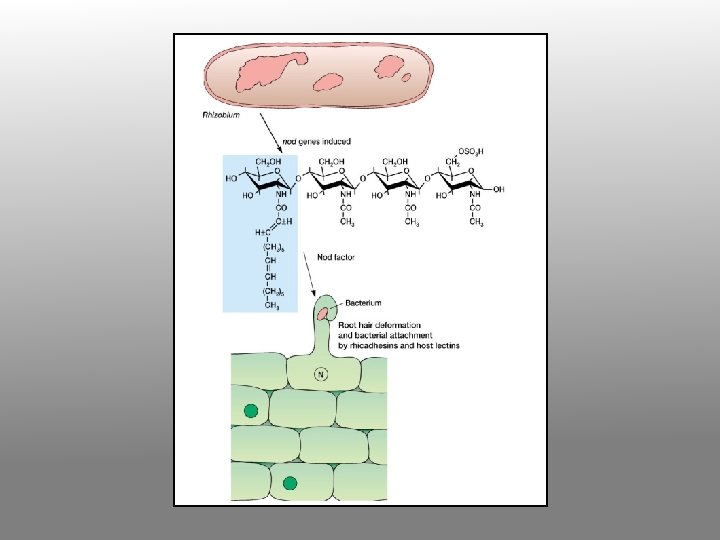
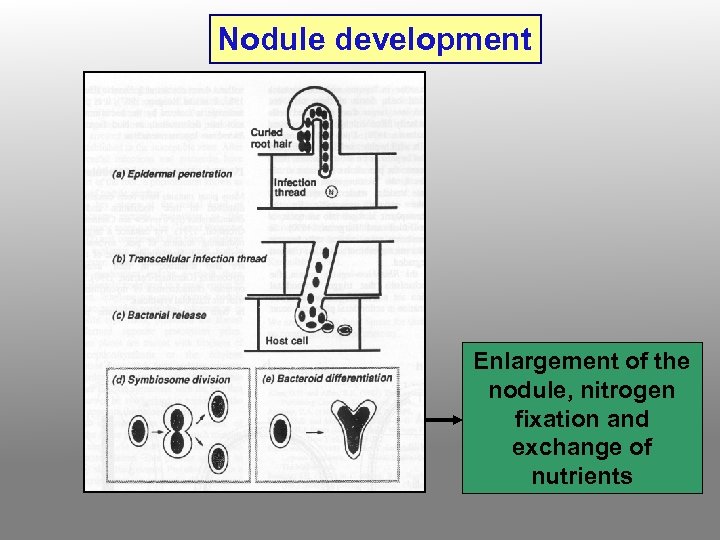
Nodule development Enlargement of the nodule, nitrogen fixation and exchange of nutrients
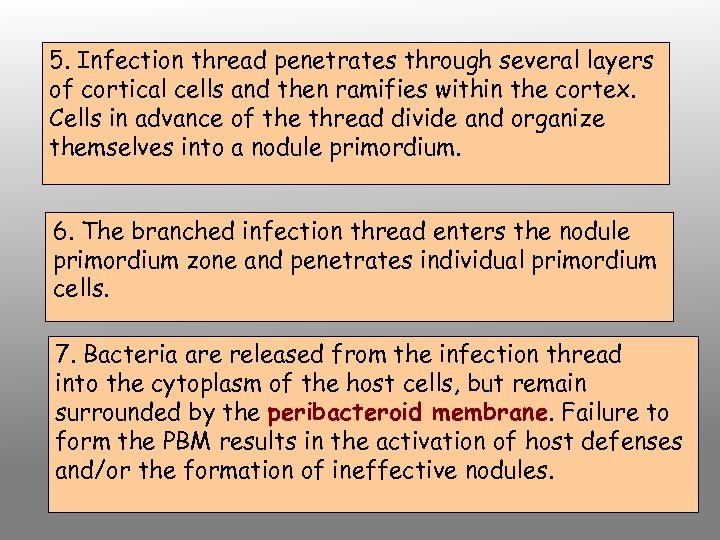
5. Infection thread penetrates through several layers of cortical cells and then ramifies within the cortex. Cells in advance of the thread divide and organize themselves into a nodule primordium. 6. The branched infection thread enters the nodule primordium zone and penetrates individual primordium cells. 7. Bacteria are released from the infection thread into the cytoplasm of the host cells, but remain surrounded by the peribacteroid membrane. Failure to form the PBM results in the activation of host defenses and/or the formation of ineffective nodules.
8. Infected root cells swell and cease dividing. Bacteria within the swollen cells change form to become endosymbiotic bacteroids, which begin to fix nitrogen. The nodule provides an oxygen-controlled environment (leghemoglobin = pink nodule interior) structured to facilitate transport of reduced nitrogen metabolites from the bacteroids to the plant vascular system, and of photosynthate from the host plant to the bacteroids.
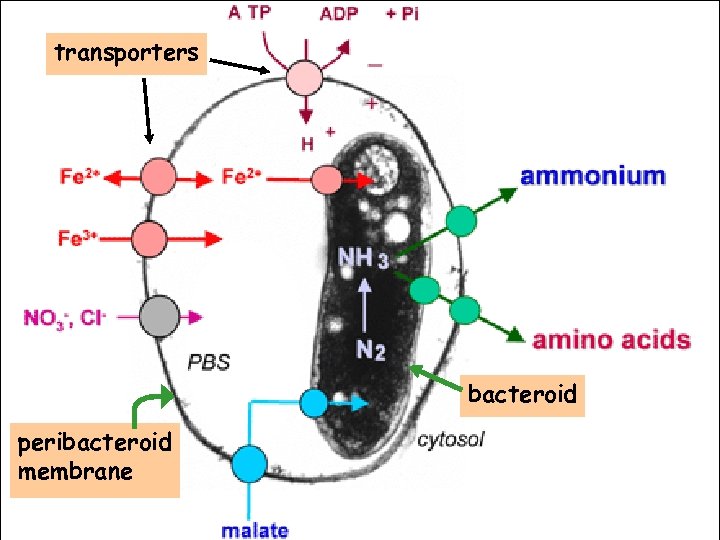
transporters bacteroid peribacteroid membrane
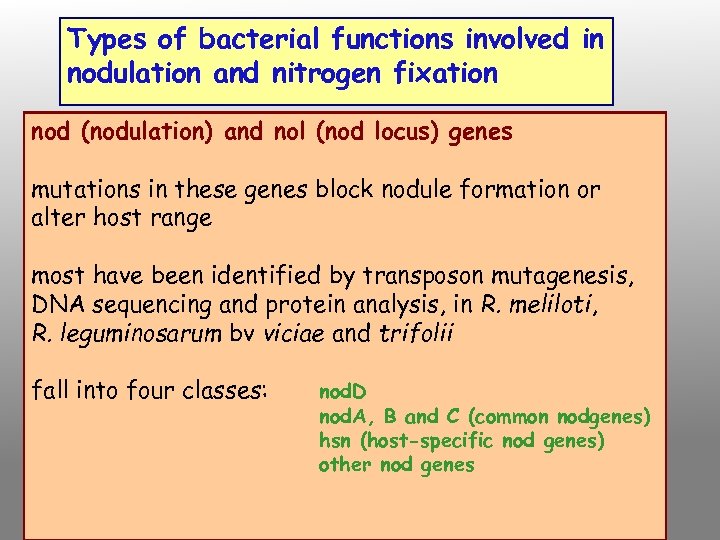
Types of bacterial functions involved in nodulation and nitrogen fixation nod (nodulation) and nol (nod locus) genes mutations in these genes block nodule formation or alter host range most have been identified by transposon mutagenesis, DNA sequencing and protein analysis, in R. meliloti, R. leguminosarum bv viciae and trifolii fall into four classes: nod. D nod. A, B and C (common nodgenes) hsn (host-specific nod genes) other nod genes
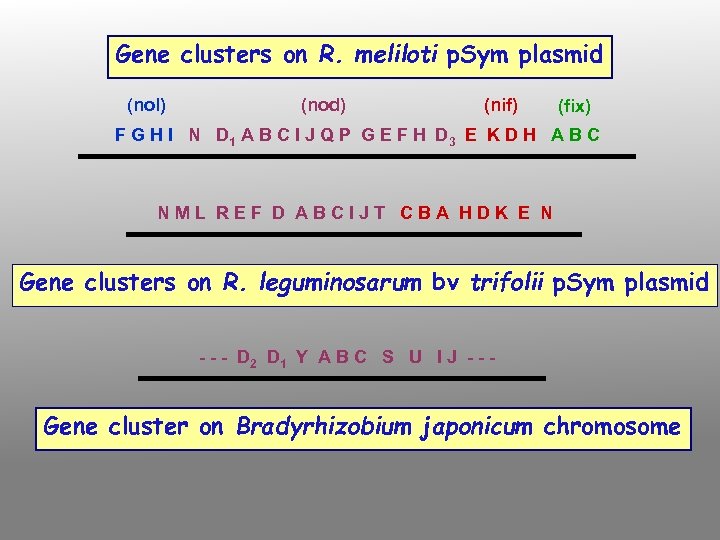
Gene clusters on R. meliloti p. Sym plasmid (nol) (nod) (nif) (fix) F G H I N D 1 A B C I J Q P G E F H D 3 E K D H A B C NML REF D ABCIJT CBA HDK E N Gene clusters on R. leguminosarum bv trifolii p. Sym plasmid - - - D 2 D 1 Y A B C S U I J - - - Gene cluster on Bradyrhizobium japonicum chromosome
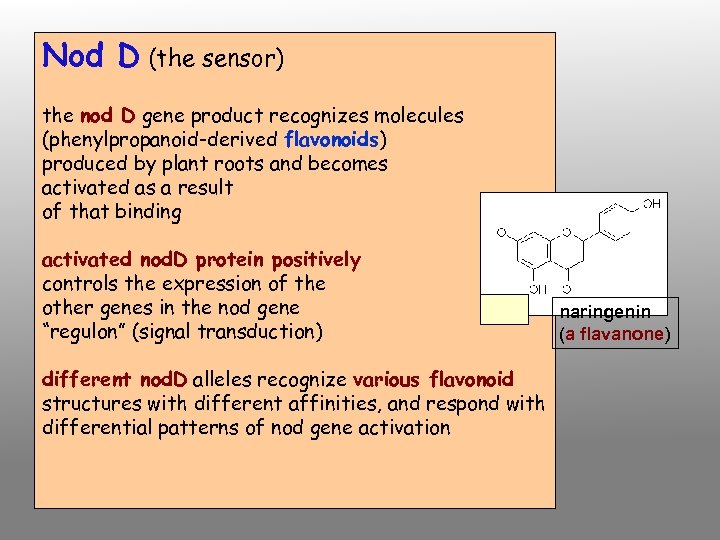
Nod D (the sensor) the nod D gene product recognizes molecules (phenylpropanoid-derived flavonoids) produced by plant roots and becomes activated as a result of that binding activated nod. D protein positively controls the expression of the other genes in the nod gene “regulon” (signal transduction) different nod. D alleles recognize various flavonoid structures with different affinities, and respond with differential patterns of nod gene activation naringenin (a flavanone)
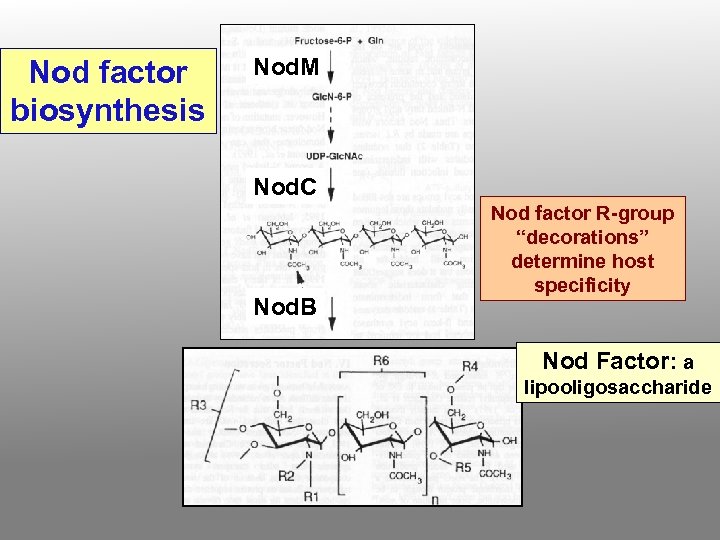
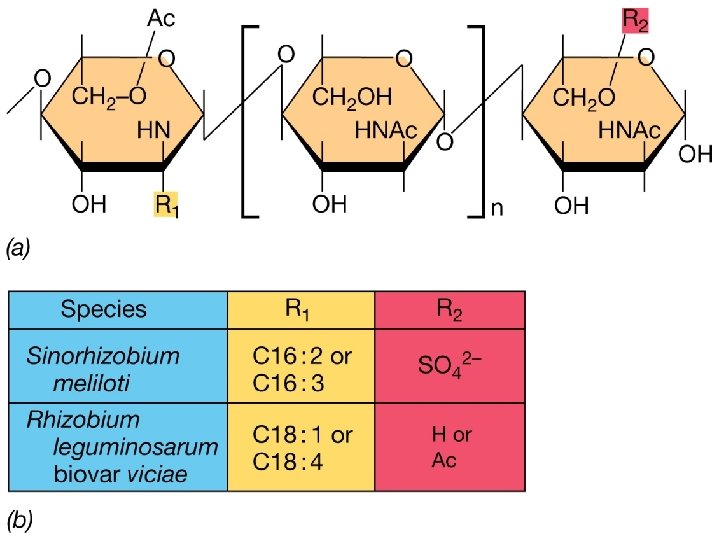
Nod factor biosynthesis Nod. M Nod. C Nod. B Nod factor R-group “decorations” determine host specificity Nod Factor: a lipooligosaccharide
Common nod genes - nod ABC mutations in nod. A, B or C completely abolish the ability of the bacteria to nodulate the host plant; they are found as part of the nod gene “regulon” in all Rhizobia ( common) products of these genes are required for bacterial induction of root cell hair deformation and root cortical cell division
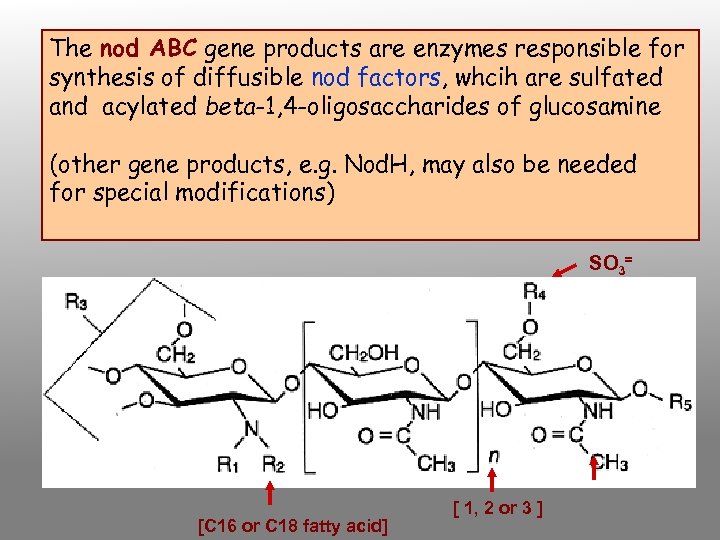
The nod ABC gene products are enzymes responsible for synthesis of diffusible nod factors, whcih are sulfated and acylated beta-1, 4 -oligosaccharides of glucosamine (other gene products, e. g. Nod. H, may also be needed for special modifications) SO 3= [C 16 or C 18 fatty acid] [ 1, 2 or 3 ]
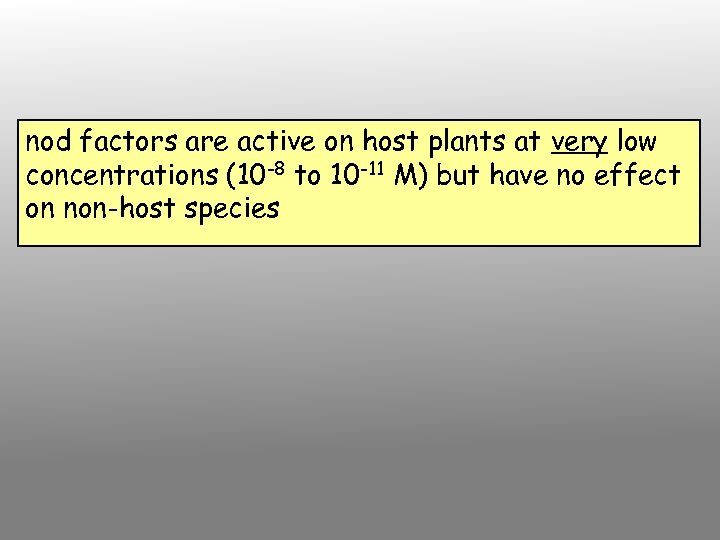
nod factors are active on host plants at very low concentrations (10 -8 to 10 -11 M) but have no effect on non-host species
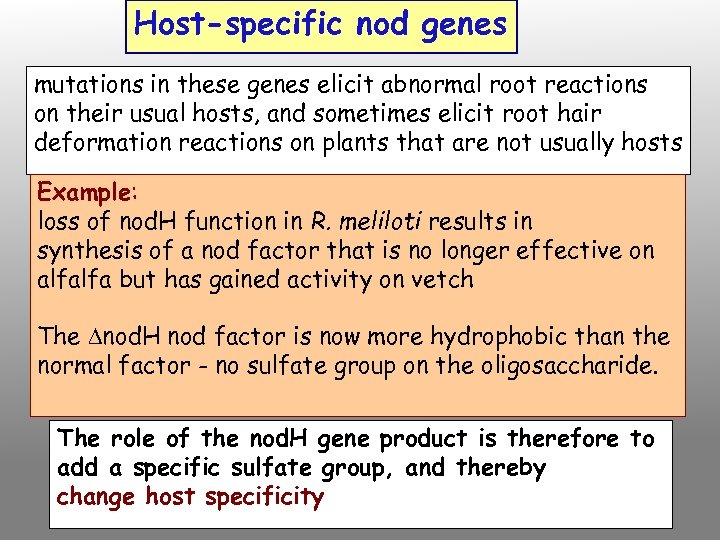
Host-specific nod genes mutations in these genes elicit abnormal root reactions on their usual hosts, and sometimes elicit root hair deformation reactions on plants that are not usually hosts Example: loss of nod. H function in R. meliloti results in synthesis of a nod factor that is no longer effective on alfalfa but has gained activity on vetch The nod. H nod factor is now more hydrophobic than the normal factor - no sulfate group on the oligosaccharide. The role of the nod. H gene product is therefore to add a specific sulfate group, and thereby change host specificity
Other nod genes May be involved in the attachment of the bacteria to the plant surface, or in export of signal molecules, or proteins needed for a successful symbiotic relationship
exo (exopolysaccharide) genes Encode proteins needed for exopolysaccharide synthesis and secretion In Rhizobium-legume interactions that lead to indeterminate nodules, exo mutants cannot invade the plant properly. However, they do provoke the typical plant cell division pattern and root deformation, and can even lead to nodule formation, although these are often empty (no bacteroids). In interactions that usually produce determinate nodules, exo mutations tend to have no effect on the process. Exopolysaccharides may provide substrate for signal production, osmotic matrix needed during invasion, and/or a recognition or masking function during invasion
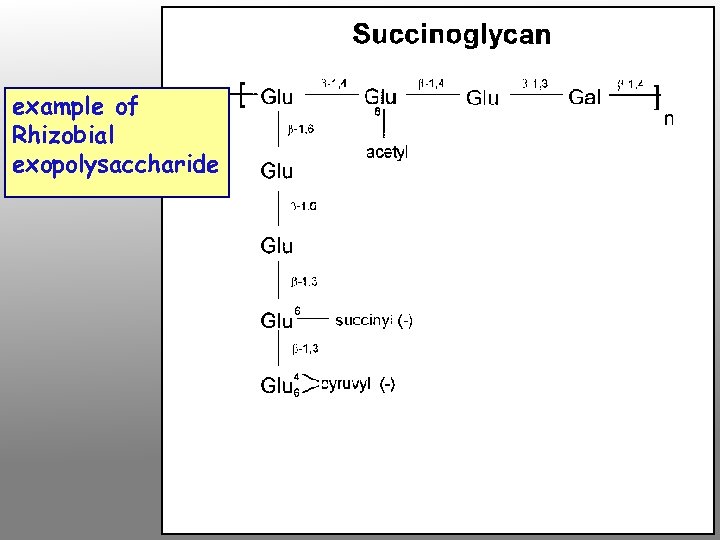
example of Rhizobial exopolysaccharide
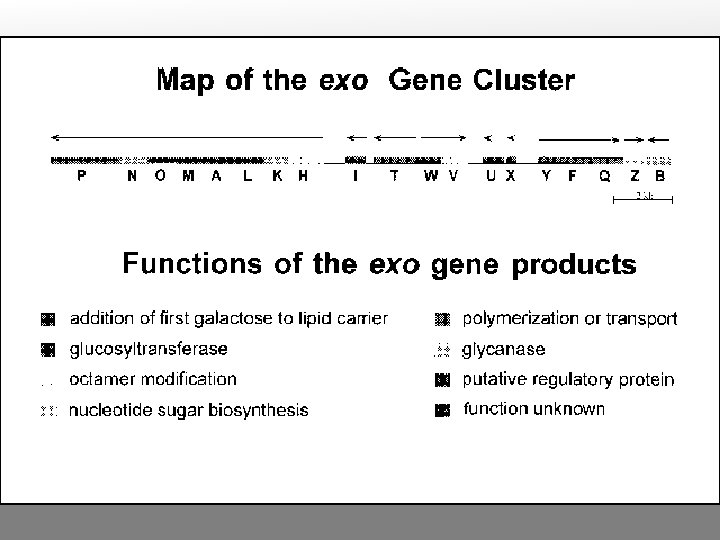
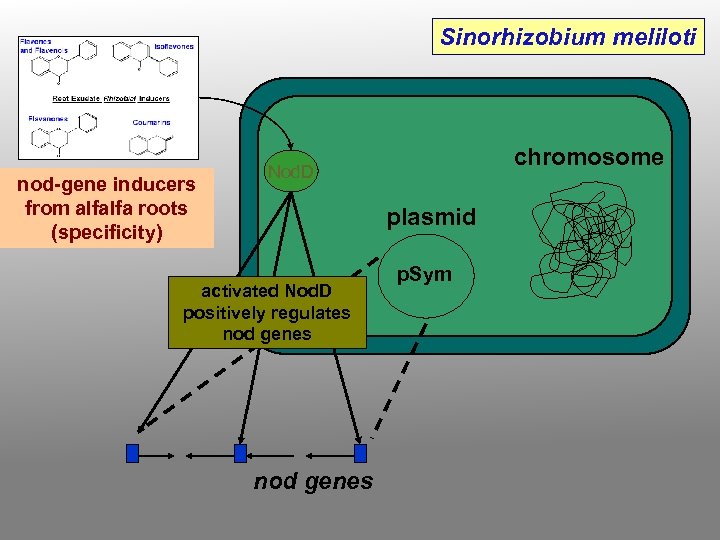
Sinorhizobium meliloti nod-gene inducers from alfalfa roots (specificity) chromosome Nod. D plasmid activated Nod. D positively regulates nod genes p. Sym
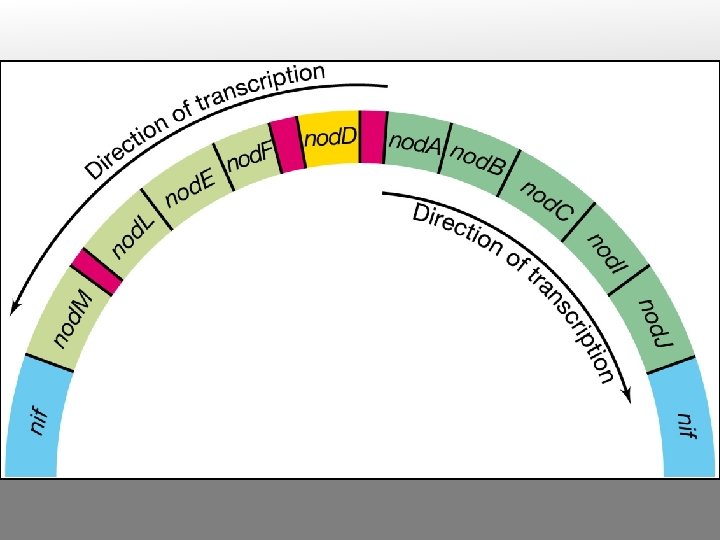
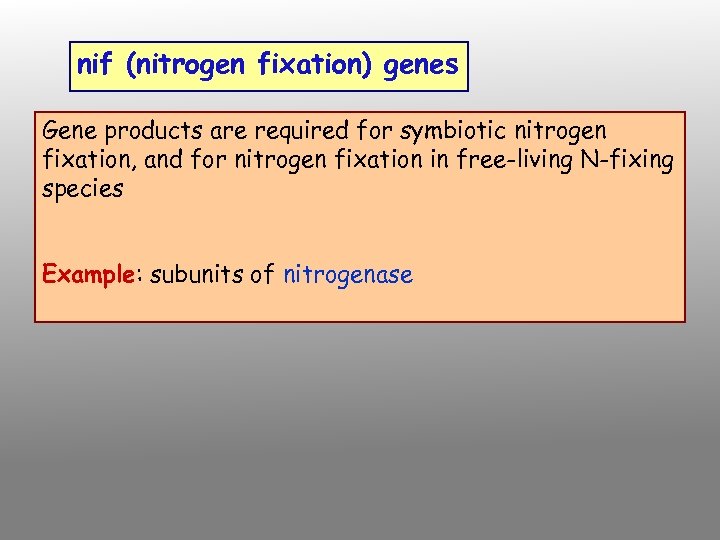
nif (nitrogen fixation) genes Gene products are required for symbiotic nitrogen fixation, and for nitrogen fixation in free-living N-fixing species Example: subunits of nitrogenase
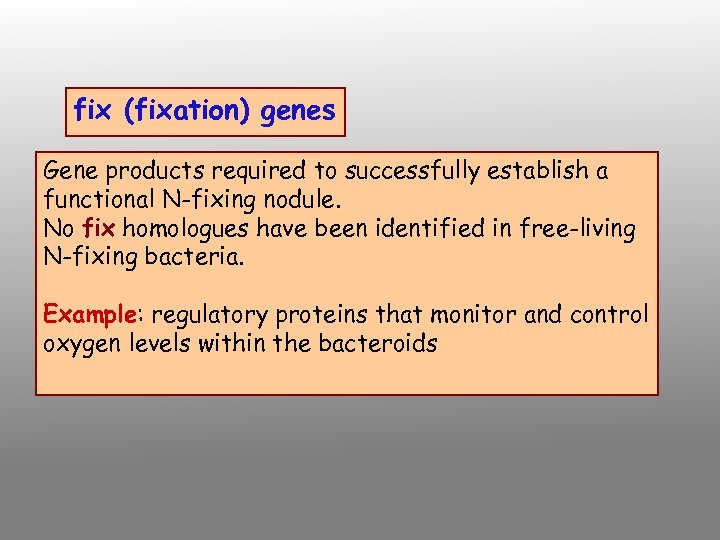
fix (fixation) genes Gene products required to successfully establish a functional N-fixing nodule. No fix homologues have been identified in free-living N-fixing bacteria. Example: regulatory proteins that monitor and control oxygen levels within the bacteroids
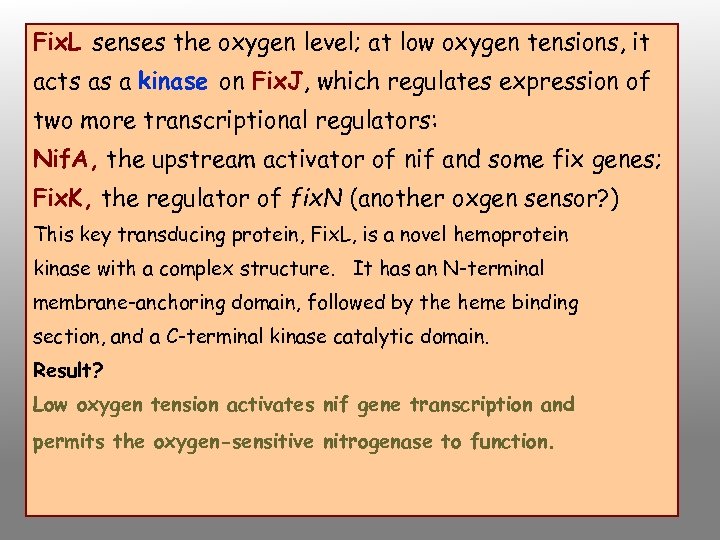
Fix. L senses the oxygen level; at low oxygen tensions, it acts as a kinase on Fix. J, which regulates expression of two more transcriptional regulators: Nif. A, the upstream activator of nif and some fix genes; Fix. K, the regulator of fix. N (another oxgen sensor? ) This key transducing protein, Fix. L, is a novel hemoprotein kinase with a complex structure. It has an N-terminal membrane-anchoring domain, followed by the heme binding section, and a C-terminal kinase catalytic domain. Result? Low oxygen tension activates nif gene transcription and permits the oxygen-sensitive nitrogenase to function.
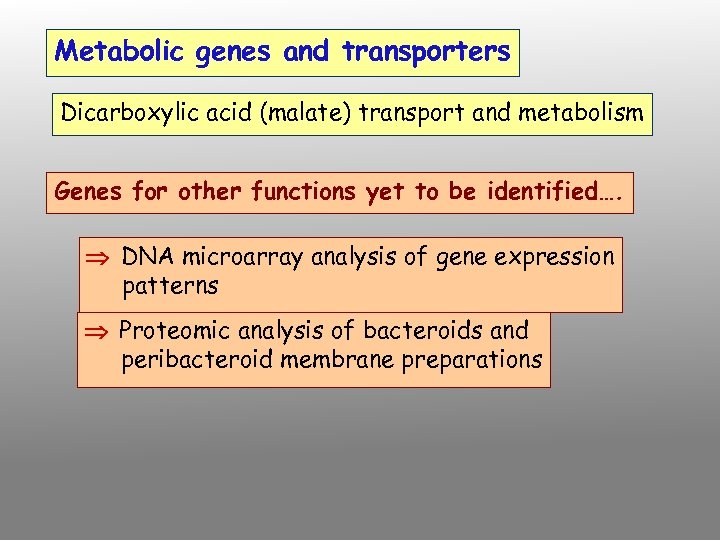
Metabolic genes and transporters Dicarboxylic acid (malate) transport and metabolism Genes for other functions yet to be identified…. DNA microarray analysis of gene expression patterns Proteomic analysis of bacteroids and peribacteroid membrane preparations
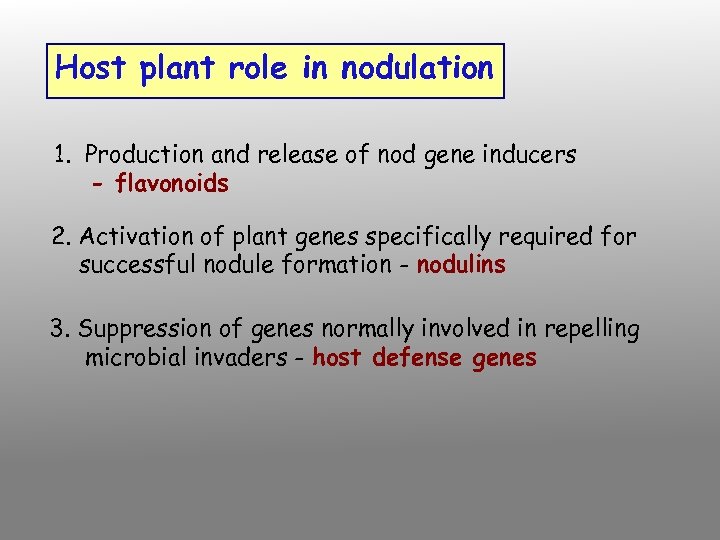
Host plant role in nodulation 1. Production and release of nod gene inducers - flavonoids 2. Activation of plant genes specifically required for successful nodule formation - nodulins 3. Suppression of genes normally involved in repelling microbial invaders - host defense genes
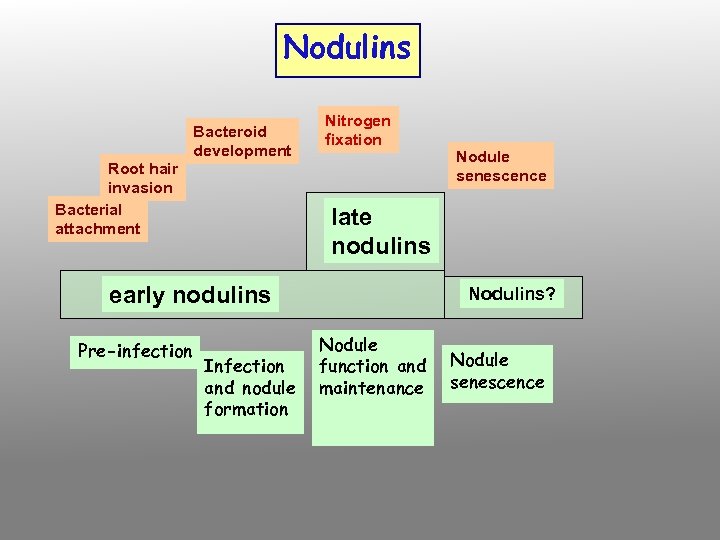
Nodulins Root hair invasion Bacterial attachment Bacteroid development Nitrogen fixation late nodulins early nodulins Pre-infection Nodule senescence Infection and nodule formation Nodulins? Nodule function and maintenance Nodule senescence
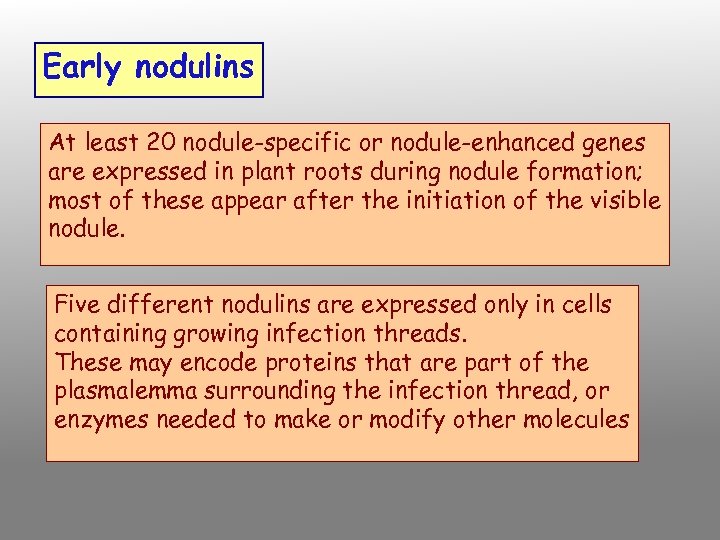
Early nodulins At least 20 nodule-specific or nodule-enhanced genes are expressed in plant roots during nodule formation; most of these appear after the initiation of the visible nodule. Five different nodulins are expressed only in cells containing growing infection threads. These may encode proteins that are part of the plasmalemma surrounding the infection thread, or enzymes needed to make or modify other molecules
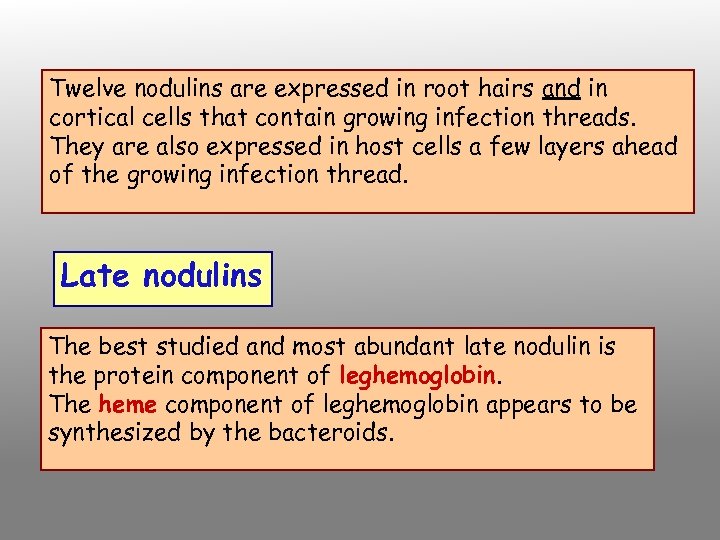
Twelve nodulins are expressed in root hairs and in cortical cells that contain growing infection threads. They are also expressed in host cells a few layers ahead of the growing infection thread. Late nodulins The best studied and most abundant late nodulin is the protein component of leghemoglobin. The heme component of leghemoglobin appears to be synthesized by the bacteroids.
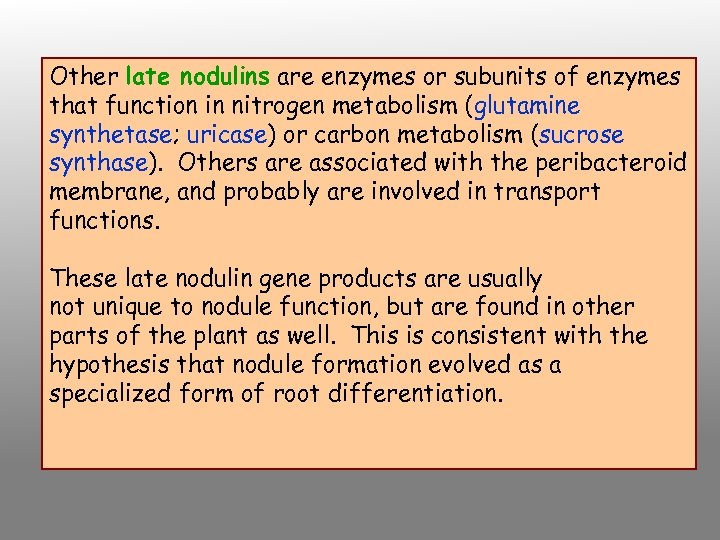
Other late nodulins are enzymes or subunits of enzymes that function in nitrogen metabolism (glutamine synthetase; uricase) or carbon metabolism (sucrose synthase). Others are associated with the peribacteroid membrane, and probably are involved in transport functions. These late nodulin gene products are usually not unique to nodule function, but are found in other parts of the plant as well. This is consistent with the hypothesis that nodule formation evolved as a specialized form of root differentiation.
There must be many other host gene functions that are needed for successful nodule formation. Example: what is the receptor for the nod factor? These are being sought through genomic and proteomic analyses, and through generation of plant mutants that fail to nodulate properly The full genome sequencing of Medicago truncatula and Lotus japonicus , both currently underway, will greatly speed up this discovery process.
A plant receptor-like kinase required for both bacterial and fungal symbiosis S. Stracke et al Nature 417: 959 (2002) Screened mutagenized populations of the legume Lotus japonicus for mutants that showed an inability to be colonized by VAM Mutants found to also be affected in their ability to be colonized by nitrogen-fixing bacteria (“symbiotic mutants”)
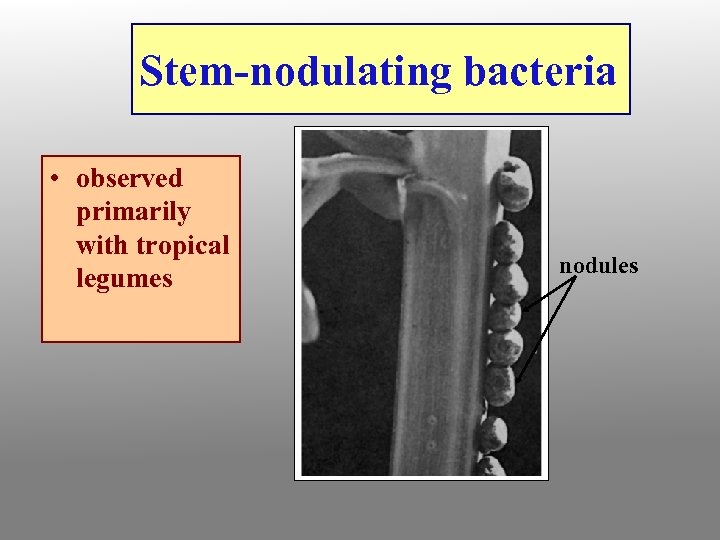
Stem-nodulating bacteria • observed primarily with tropical legumes nodules
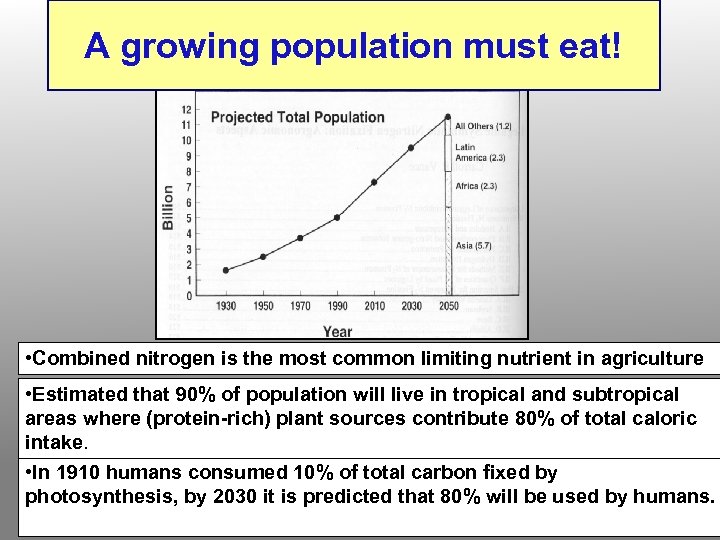
A growing population must eat! • Combined nitrogen is the most common limiting nutrient in agriculture • Estimated that 90% of population will live in tropical and subtropical areas where (protein-rich) plant sources contribute 80% of total caloric intake. • In 1910 humans consumed 10% of total carbon fixed by photosynthesis, by 2030 it is predicted that 80% will be used by humans.
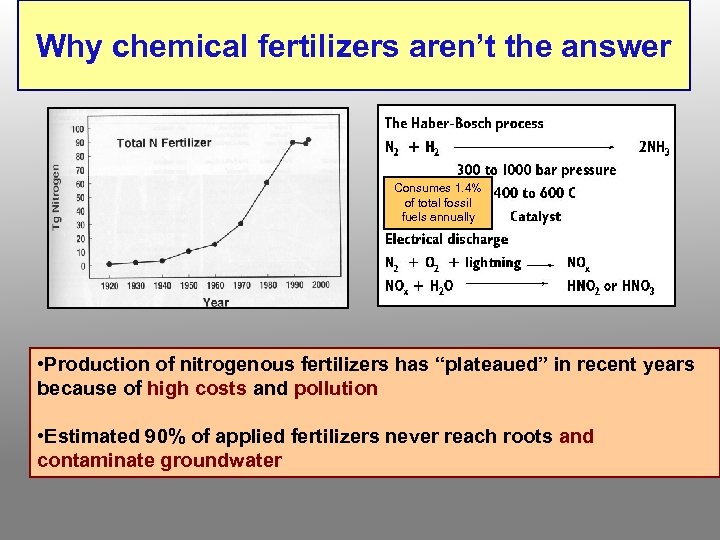
Why chemical fertilizers aren’t the answer Consumes 1. 4% of total fossil fuels annually • Production of nitrogenous fertilizers has “plateaued” in recent years because of high costs and pollution • Estimated 90% of applied fertilizers never reach roots and contaminate groundwater
Current approaches to improving biological nitrogen fixation 1 Enhancing survival of nodule forming bacterium by improving competitiveness of inoculant strains 2 Extend host range of crops, which can benefit from biological nitrogen fixation 3 Engineer microbes with high nitrogen fixing capacity What experiments would you propose if you were to follow each of these approaches?
Скачать презентацию Biological Nitrogen Fixation Conversion of dinitrogen gas N
41a7f5711a4dc287b7f060b899d31856.ppt