 Скачать презентацию Biofortification of Cereals for Enhanced Nutrition Strategies Status
45eb9a978c57e735927504d02f7a99aa.ppt
- Количество слайдов: 20



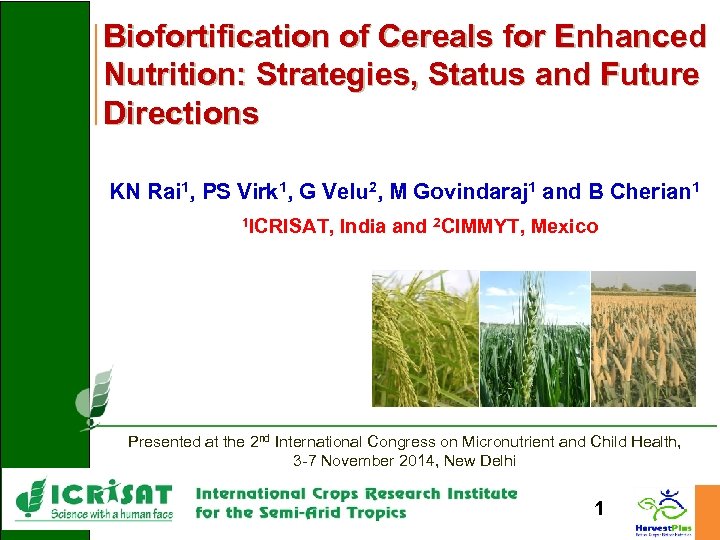
Biofortification of Cereals for Enhanced Nutrition: Strategies, Status and Future Directions KN Rai 1, PS Virk 1, G Velu 2, M Govindaraj 1 and B Cherian 1 1 ICRISAT, India and 2 CIMMYT, Mexico Presented at the 2 nd International Congress on Micronutrient and Child Health, 3 -7 November 2014, New Delhi 1
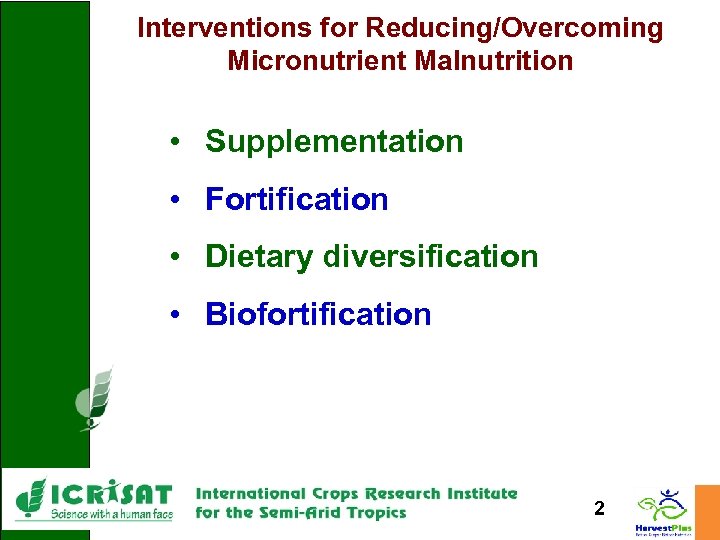
Interventions for Reducing/Overcoming Micronutrient Malnutrition • Supplementation • Fortification • Dietary diversification • Biofortification 2
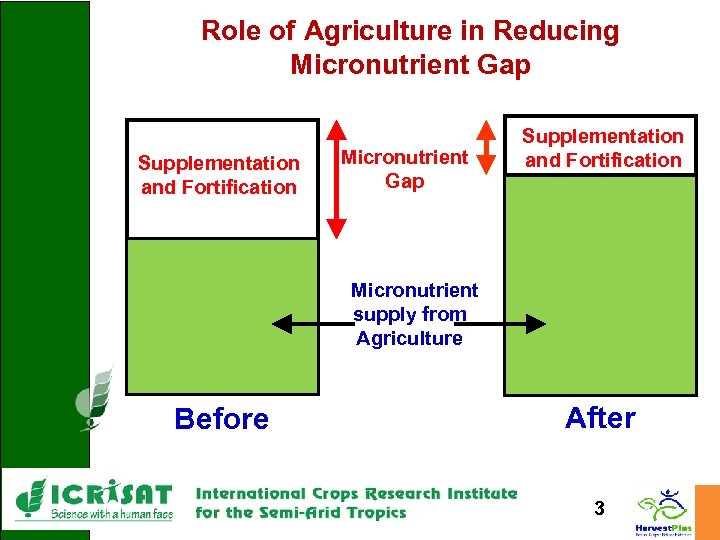
Role of Agriculture in Reducing Micronutrient Gap Supplementation and Fortification Micronutrient supply from Agriculture Before After 3
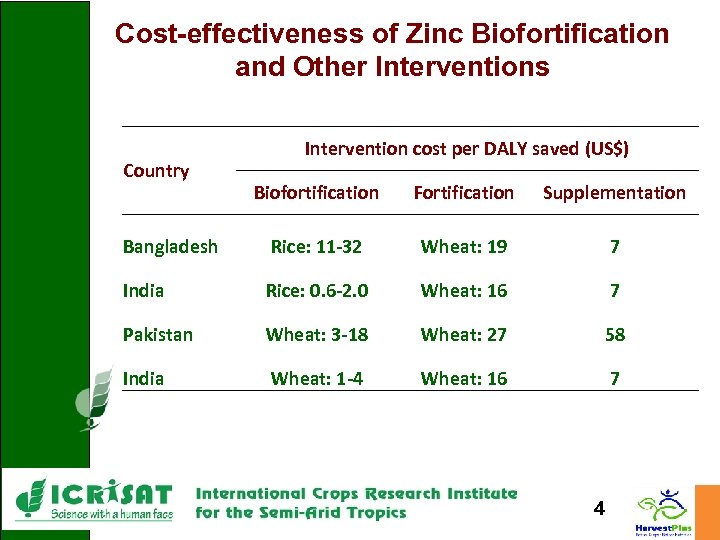
Cost-effectiveness of Zinc Biofortification and Other Interventions Country Intervention cost per DALY saved (US$) Biofortification Fortification Supplementation Bangladesh Rice: 11 -32 Wheat: 19 7 India Rice: 0. 6 -2. 0 Wheat: 16 7 Pakistan Wheat: 3 -18 Wheat: 27 58 India Wheat: 1 -4 Wheat: 16 7 4
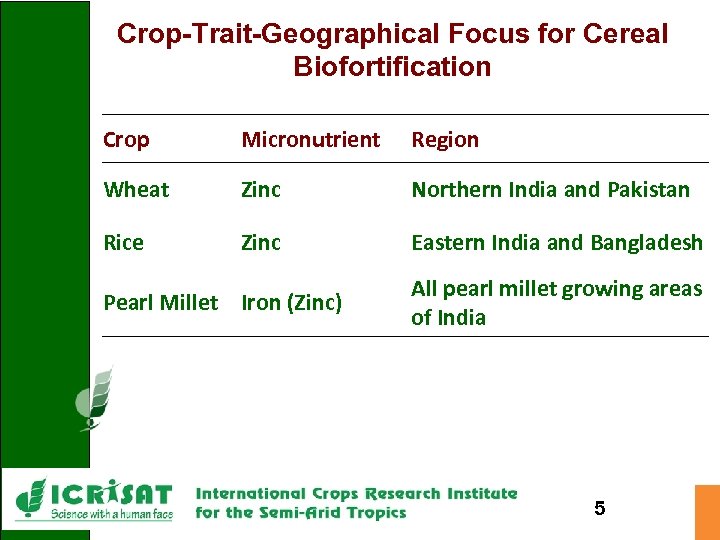
Crop-Trait-Geographical Focus for Cereal Biofortification Crop Micronutrient Region Wheat Zinc Northern India and Pakistan Rice Zinc Eastern India and Bangladesh Pearl Millet Iron (Zinc) All pearl millet growing areas of India 5
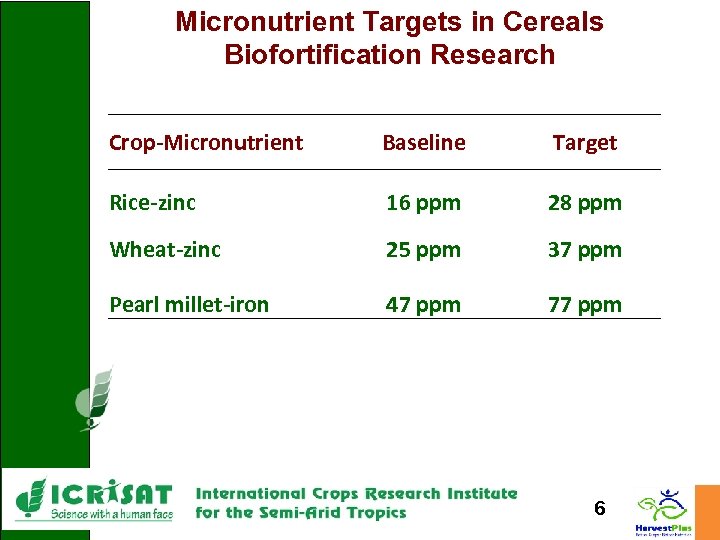
Micronutrient Targets in Cereals Biofortification Research Crop-Micronutrient Baseline Target Rice-zinc 16 ppm 28 ppm Wheat-zinc 25 ppm 37 ppm Pearl millet-iron 47 ppm 77 ppm 6
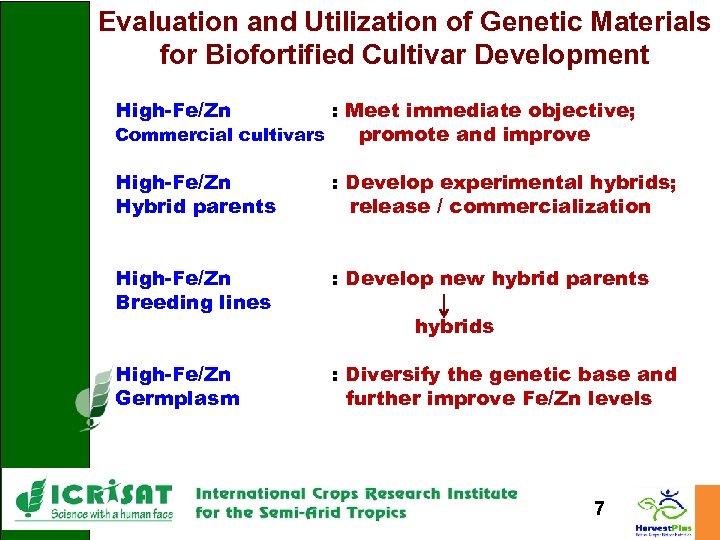
Evaluation and Utilization of Genetic Materials for Biofortified Cultivar Development High-Fe/Zn : Meet immediate objective; Commercial cultivars promote and improve High-Fe/Zn Hybrid parents : Develop experimental hybrids; release / commercialization High-Fe/Zn Breeding lines : Develop new hybrid parents High-Fe/Zn Germplasm : Diversify the genetic base and further improve Fe/Zn levels hybrids 7
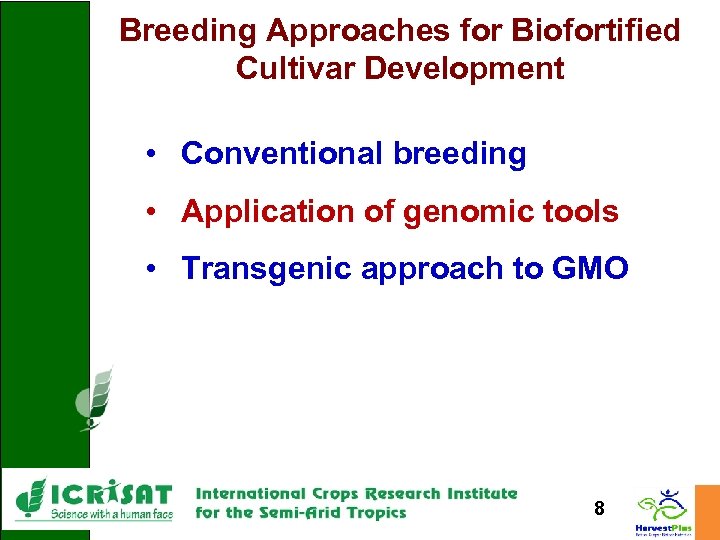
Breeding Approaches for Biofortified Cultivar Development • Conventional breeding • Application of genomic tools • Transgenic approach to GMO 8
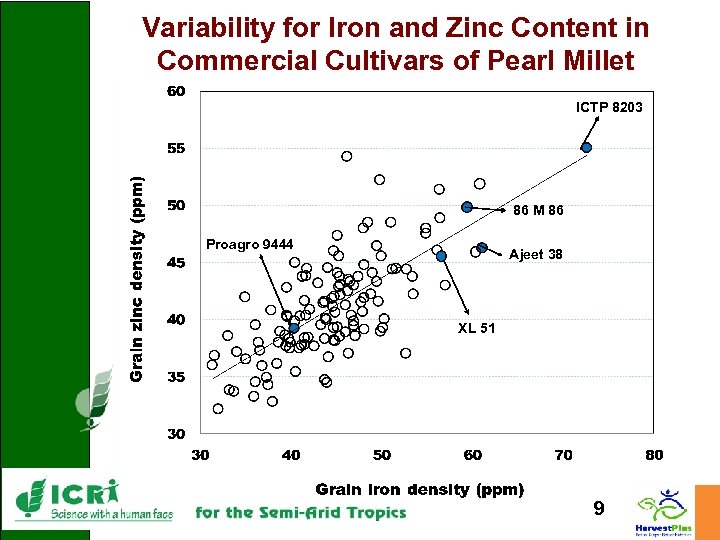
Variability for Iron and Zinc Content in Commercial Cultivars of Pearl Millet ICTP 8203 86 M 86 Proagro 9444 Ajeet 38 XL 51 9
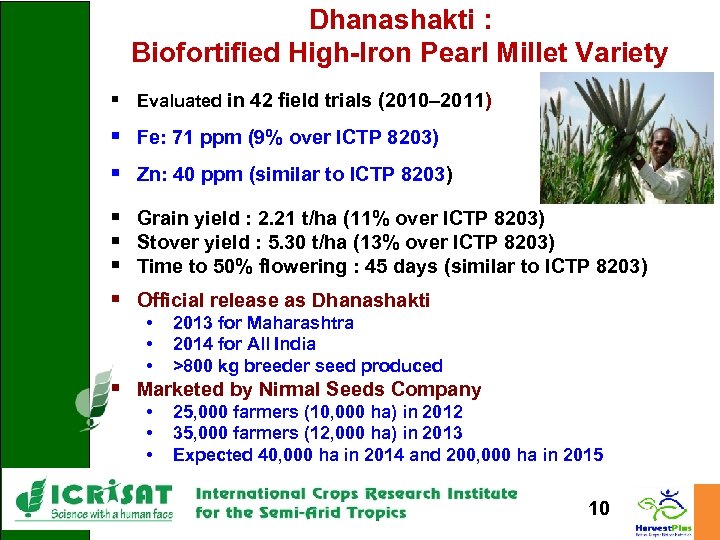
Dhanashakti : Biofortified High-Iron Pearl Millet Variety § Evaluated in 42 field trials (2010– 2011) § Fe: 71 ppm (9% over ICTP 8203) § Zn: 40 ppm (similar to ICTP 8203) § § Grain yield : 2. 21 t/ha (11% over ICTP 8203) Stover yield : 5. 30 t/ha (13% over ICTP 8203) Time to 50% flowering : 45 days (similar to ICTP 8203) Official release as Dhanashakti • • • 2013 for Maharashtra 2014 for All India >800 kg breeder seed produced • • • 25, 000 farmers (10, 000 ha) in 2012 35, 000 farmers (12, 000 ha) in 2013 Expected 40, 000 ha in 2014 and 200, 000 ha in 2015 § Marketed by Nirmal Seeds Company 10
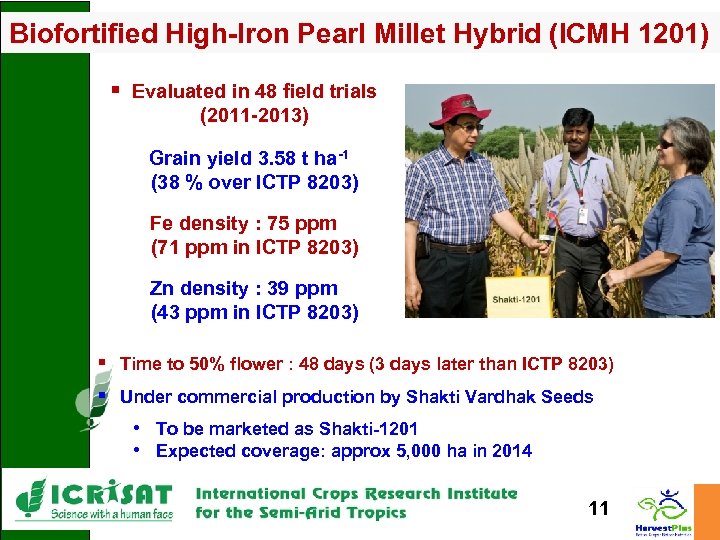
Biofortified High-Iron Pearl Millet Hybrid (ICMH 1201) § Evaluated in 48 field trials (2011 -2013) Grain yield 3. 58 t ha-1 (38 % over ICTP 8203) Fe density : 75 ppm (71 ppm in ICTP 8203) Zn density : 39 ppm (43 ppm in ICTP 8203) § Time to 50% flower : 48 days (3 days later than ICTP 8203) § Under commercial production by Shakti Vardhak Seeds • To be marketed as Shakti-1201 • Expected coverage: approx 5, 000 ha in 2014 11
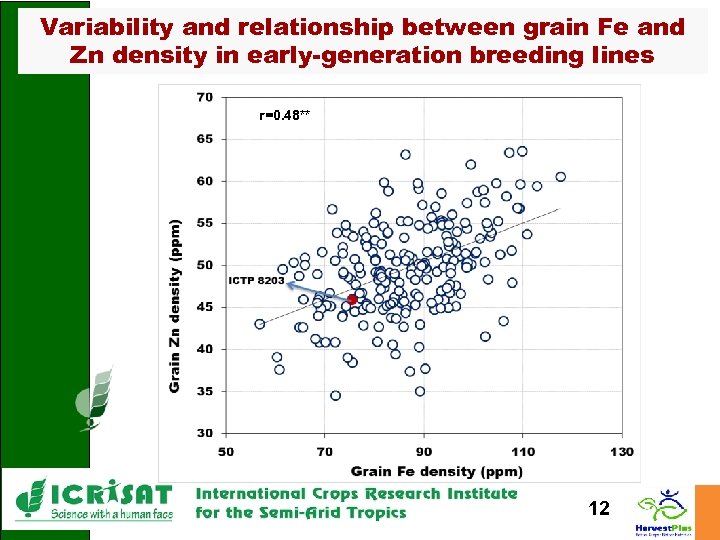
Variability and relationship between grain Fe and Zn density in early-generation breeding lines r=0. 48** 12
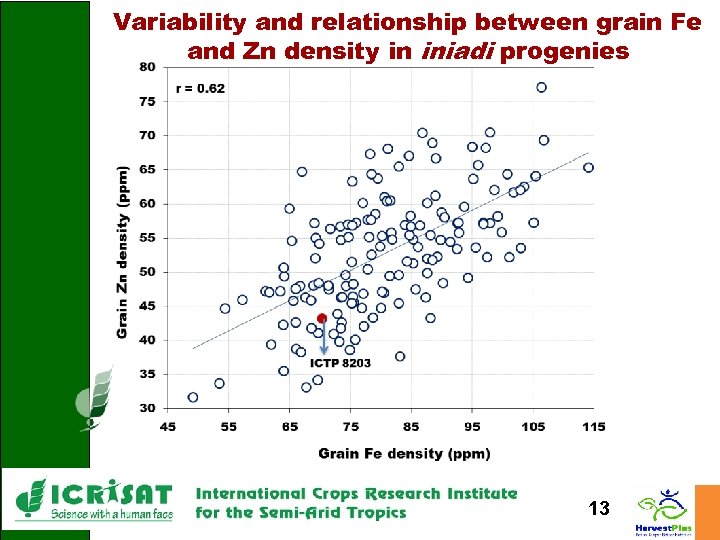
Variability and relationship between grain Fe and Zn density in iniadi progenies 13
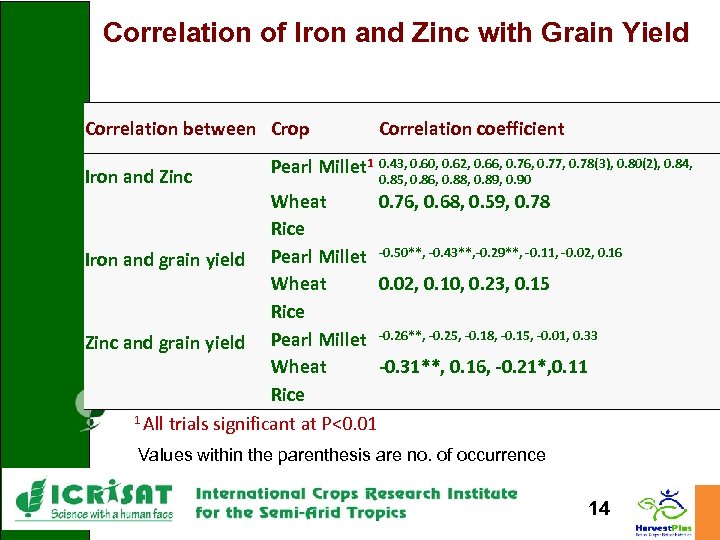
Correlation of Iron and Zinc with Grain Yield Correlation between Crop Iron and Zinc Correlation coefficient Pearl Millet 1 0. 43, 0. 60, 0. 62, 0. 66, 0. 77, 0. 78(3), 0. 80(2), 0. 84, 0. 85, 0. 86, 0. 88, 0. 89, 0. 90 Wheat 0. 76, 0. 68, 0. 59, 0. 78 Rice Iron and grain yield Pearl Millet -0. 50**, -0. 43**, -0. 29**, -0. 11, -0. 02, 0. 16 Wheat 0. 02, 0. 10, 0. 23, 0. 15 Rice Zinc and grain yield Pearl Millet -0. 26**, -0. 25, -0. 18, -0. 15, -0. 01, 0. 33 Wheat -0. 31**, 0. 16, -0. 21*, 0. 11 Rice 1 All trials significant at P<0. 01 Values within the parenthesis are no. of occurrence 14
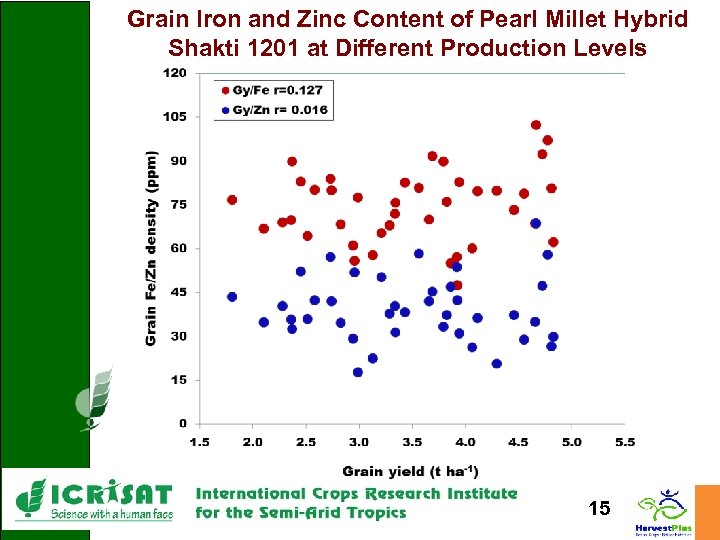
Grain Iron and Zinc Content of Pearl Millet Hybrid Shakti 1201 at Different Production Levels 15
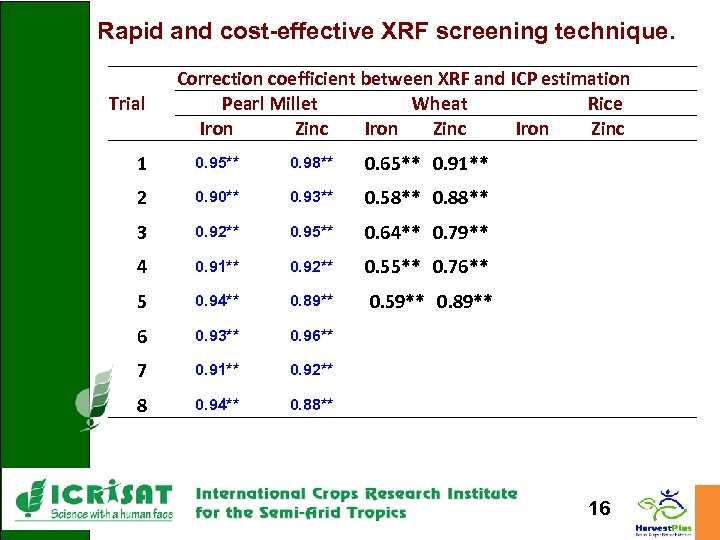
Rapid and cost-effective XRF screening technique. Trial Correction coefficient between XRF and ICP estimation Pearl Millet Wheat Rice Iron Zinc 1 0. 95** 0. 98** 0. 65** 0. 91** 2 0. 90** 0. 93** 0. 58** 0. 88** 3 0. 92** 0. 95** 0. 64** 0. 79** 4 0. 91** 0. 92** 0. 55** 0. 76** 5 0. 94** 0. 89** 0. 59** 0. 89** 6 0. 93** 0. 96** 7 0. 91** 0. 92** 8 0. 94** 0. 88** 16
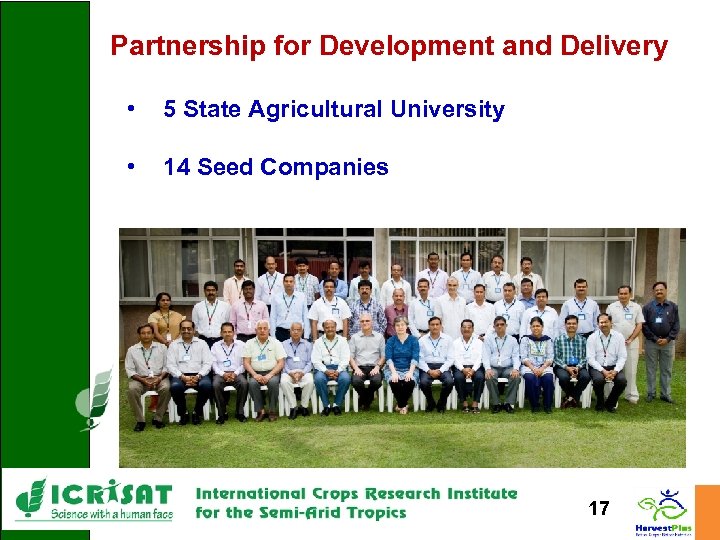
Partnership for Development and Delivery • 5 State Agricultural University • 14 Seed Companies 17

Biofortified cultivars branding and delivery 18
Roles of Other Key Stakeholders To take biofortified crops to scale, Harvest. Plus will grow only modestly. The key is mainstreaming the strategy in policies and practices, such as: § § § National governments and regional frameworks Seed companies Food processing companies International NGOs UN agencies International financial institutions 19
This work has been undertaken as part of the Supported by 20
Скачать презентацию Biofortification of Cereals for Enhanced Nutrition Strategies Status
45eb9a978c57e735927504d02f7a99aa.ppt