


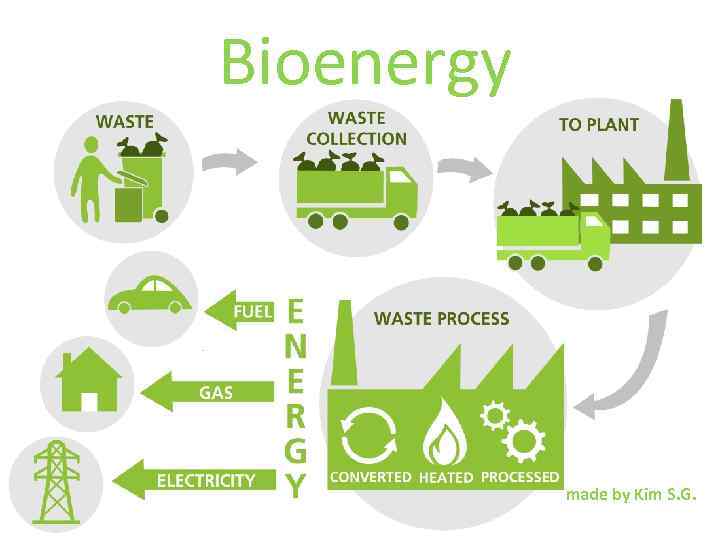
Bioenergy made by Kim S. G.
General information • • Bioenergy is renewable energy made available from materials derived from biological sources. Biomass is any organic material which has stored sunlight in the form of chemical energy. As a fuel it may include wood, wood waste, straw, manure, sugarcane, and many other byproducts from a variety of agricultural processes. In its most narrow sense it is a synonym to biofuel, which is fuel derived from biological sources. In its broader sense it includes biomass, the biological material used as a biofuel, as well as the social, economic, scientific and technical fields associated with using biological sources for energy. This is a common misconception, as bioenergy is the energy extracted from the biomass, as the biomass is the fuel and the bioenergy is the energy contained in the fuel
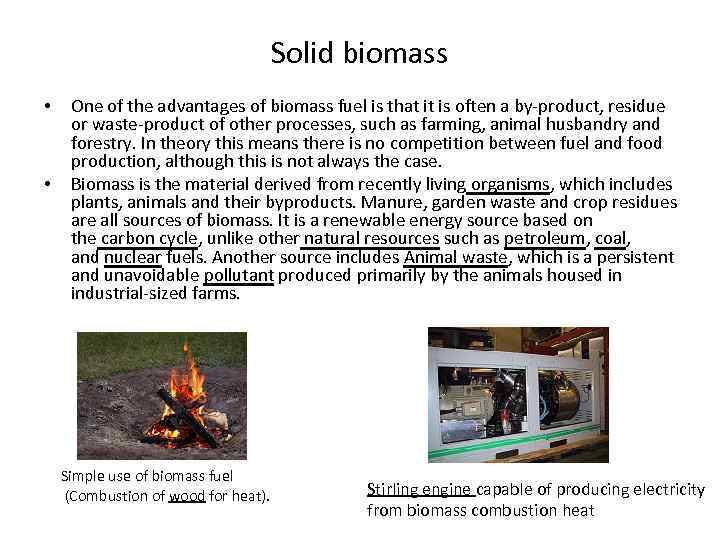
Solid biomass • • One of the advantages of biomass fuel is that it is often a by-product, residue or waste-product of other processes, such as farming, animal husbandry and forestry. In theory this means there is no competition between fuel and food production, although this is not always the case. Biomass is the material derived from recently living organisms, which includes plants, animals and their byproducts. Manure, garden waste and crop residues are all sources of biomass. It is a renewable energy source based on the carbon cycle, unlike other natural resources such as petroleum, coal, and nuclear fuels. Another source includes Animal waste, which is a persistent and unavoidable pollutant produced primarily by the animals housed in industrial-sized farms. Simple use of biomass fuel (Combustion of wood for heat). Stirling engine capable of producing electricity from biomass combustion heat
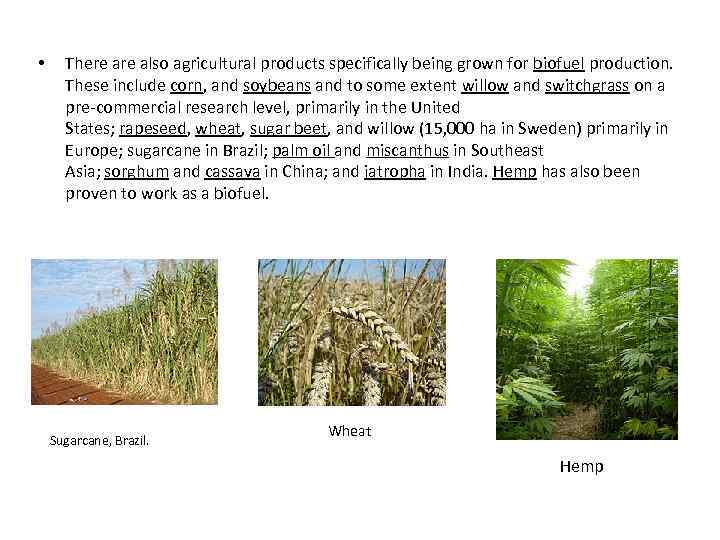
• There also agricultural products specifically being grown for biofuel production. These include corn, and soybeans and to some extent willow and switchgrass on a pre-commercial research level, primarily in the United States; rapeseed, wheat, sugar beet, and willow (15, 000 ha in Sweden) primarily in Europe; sugarcane in Brazil; palm oil and miscanthus in Southeast Asia; sorghum and cassava in China; and jatropha in India. Hemp has also been proven to work as a biofuel. Sugarcane, Brazil. Wheat Hemp
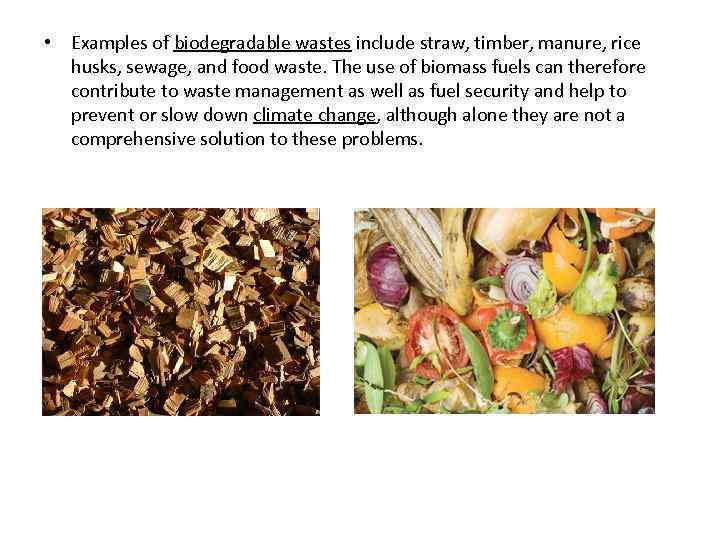
• Examples of biodegradable wastes include straw, timber, manure, rice husks, sewage, and food waste. The use of biomass fuels can therefore contribute to waste management as well as fuel security and help to prevent or slow down climate change, although alone they are not a comprehensive solution to these problems.
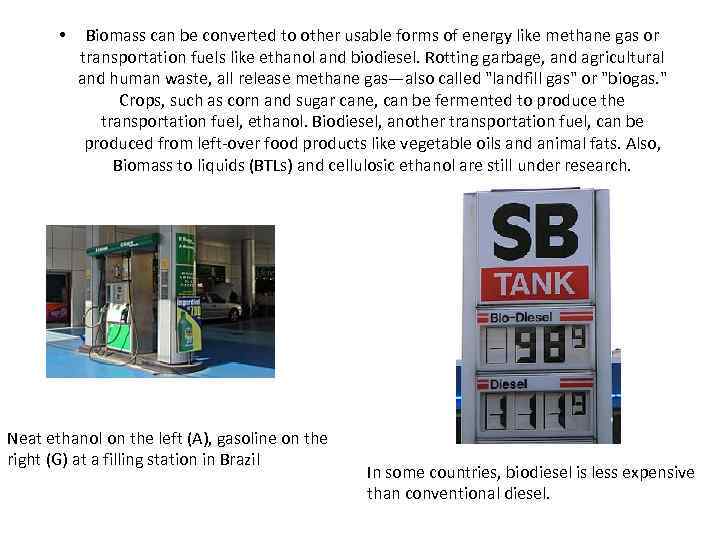
• Biomass can be converted to other usable forms of energy like methane gas or transportation fuels like ethanol and biodiesel. Rotting garbage, and agricultural and human waste, all release methane gas—also called "landfill gas" or "biogas. " Crops, such as corn and sugar cane, can be fermented to produce the transportation fuel, ethanol. Biodiesel, another transportation fuel, can be produced from left-over food products like vegetable oils and animal fats. Also, Biomass to liquids (BTLs) and cellulosic ethanol are still under research. Neat ethanol on the left (A), gasoline on the right (G) at a filling station in Brazil In some countries, biodiesel is less expensive than conventional diesel.
Directions of Growth of Bioenergetics in Russia In Russia bioenergy technologies are being developed in the following areas : • • • Identification and development of large-scale and highly productive biomass sources (photosynthesis, production of woody biomass, hydrocarbon-producing plant farming, production of hydrocarbon-containing non-food biomass, production of aquatic biomass and use of solid municipal waste); The second way is Biotechnological conversion (production of ethyl and other alcohols, organic acids and solvents from various types of biomass and production of biogas and hydrogen) The Third way is thermochemical conversion (direct combustion, gasification, pyrolysis, liquefaction, fast pyrolysis and synthesis) for production of liquid, solid and gaseous fuels. The biomass comprises flora and fauna and their technically and physiologically processed products, including various organic wastes. The biomass or bioresources is a powerful potential global source of the fuel and raw materials for the chemical sector.
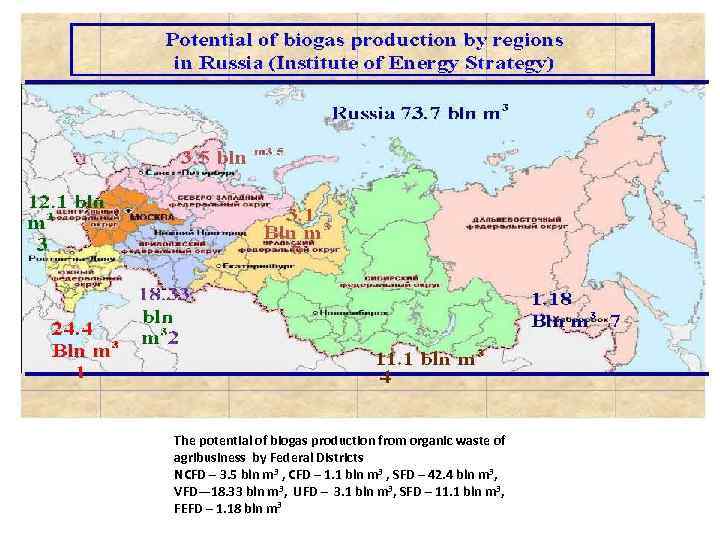
The potential of biogas production from organic waste of agribusiness by Federal Districts NCFD – 3. 5 bln m 3 , CFD – 1. 1 bln m 3 , SFD – 42. 4 bln m 3, VFD— 18. 33 bln m 3, UFD – 3. 1 bln m 3, SFD – 11. 1 bln m 3, FEFD – 1. 18 bln m 3
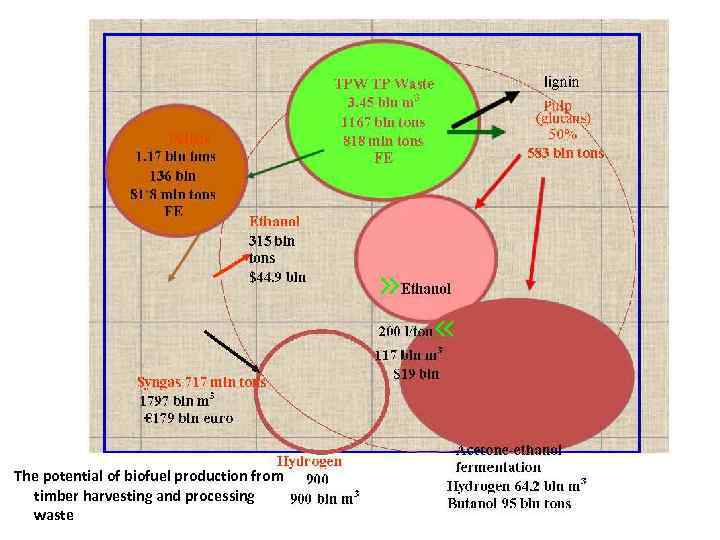
The potential of biofuel production from timber harvesting and processing waste
