 Скачать презентацию Bioenergy — biofuels Magnús Guðmundsson Innovation Center of
Bioenergy - biofuels MG.ppt
- Количество слайдов: 33




Bioenergy - biofuels Magnús Guðmundsson Innovation Center of Iceland 1
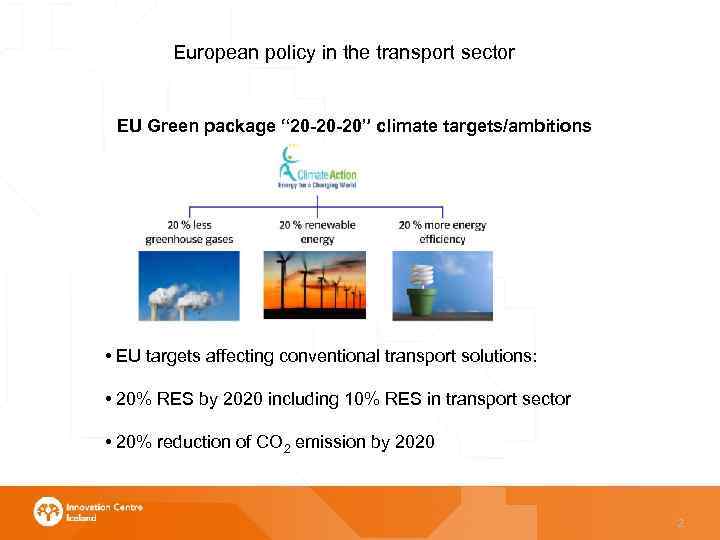
European policy in the transport sector EU Green package “ 20 -20 -20” climate targets/ambitions • EU targets affecting conventional transport solutions: • 20% RES by 2020 including 10% RES in transport sector • 20% reduction of CO 2 emission by 2020 2
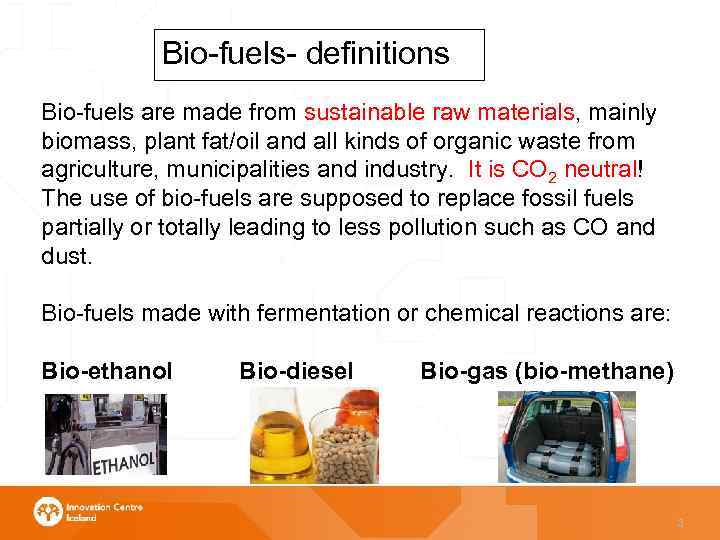
Bio-fuels- definitions Bio-fuels are made from sustainable raw materials, mainly • biomass, plant fat/oil and all kinds of organic waste from agriculture, municipalities and industry. It is CO 2 neutral! The use of bio-fuels are supposed to replace fossil fuels partially or totally leading to less pollution such as CO and dust. Bio-fuels made with fermentation or chemical reactions are: Bio-ethanol Bio-diesel Bio-gas (bio-methane) 3
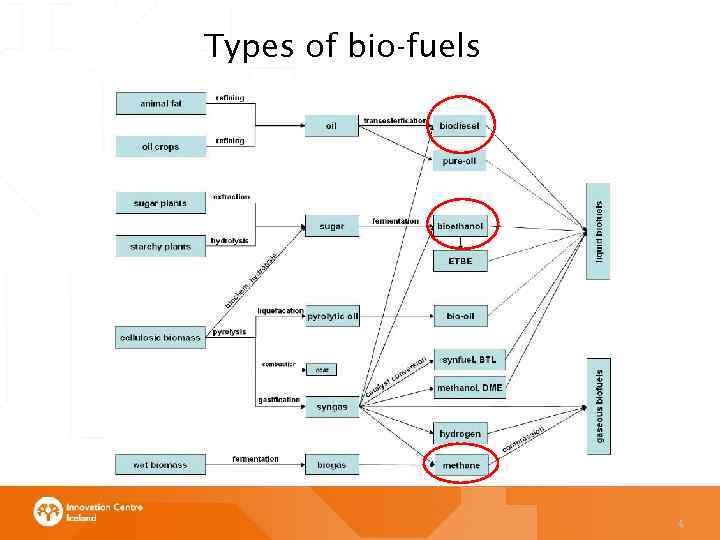
Types of bio-fuels 4
Ethanol fermentation • Yeasts are mostly used today to ferment sugars to ethanol: most common and can use many substrates • Also bacterias like Zymomonas mobilis: higher ethanol tolerance but limited substrates (glucose, fructose) • In some cases thermophilic bacteria is used -Thermophilic at 55°C are in use -Higher than 70°C is in development Faster reactions but less tolerance 5
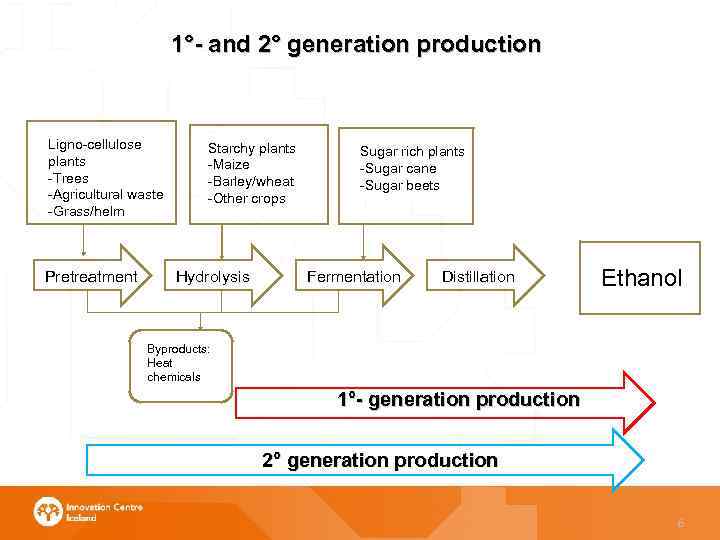
1°- and 2° generation production Ligno-cellulose plants -Trees -Agricultural waste -Grass/helm Pretreatment Starchy plants -Maize -Barley/wheat -Other crops Hydrolysis Sugar rich plants -Sugar cane -Sugar beets Fermentation Distillation Ethanol Byproducts: Heat chemicals 1°- generation production 2° generation production 6
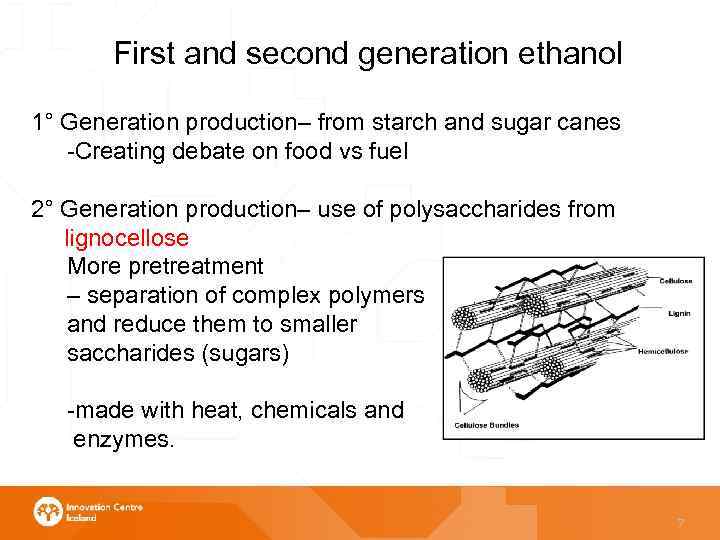
First and second generation ethanol 1° Generation production– from starch and sugar canes -Creating debate on food vs fuel 2° Generation production– use of polysaccharides from lignocellose More pretreatment – separation of complex polymers and reduce them to smaller saccharides (sugars) -made with heat, chemicals and enzymes. (from Toefl TU Berlin) 7
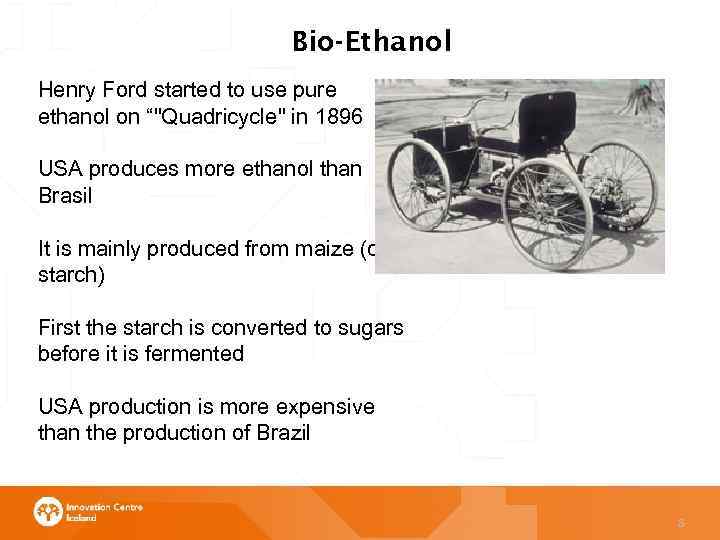
Bio-Ethanol Henry Ford started to use pure ethanol on “"Quadricycle" in 1896 USA produces more ethanol than Brasil It is mainly produced from maize (corn starch) First the starch is converted to sugars before it is fermented USA production is more expensive than the production of Brazil 8
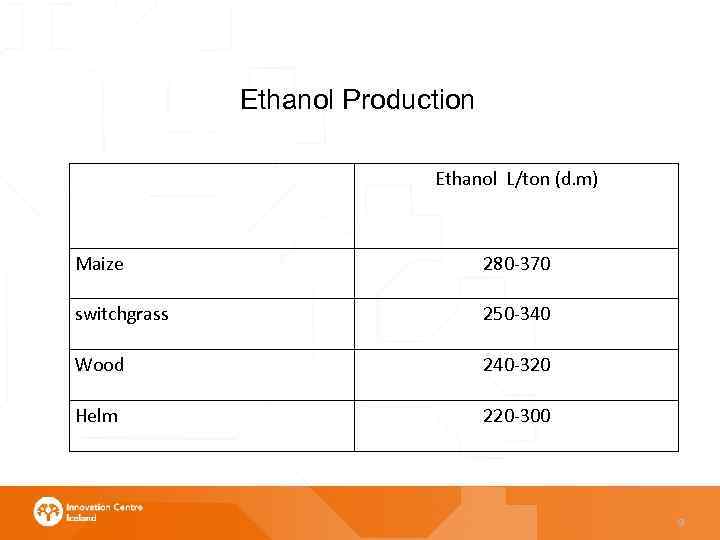
Ethanol Production Ethanol L/ton (d. m) Maize 280 -370 switchgrass 250 -340 Wood 240 -320 Helm 220 -300 9
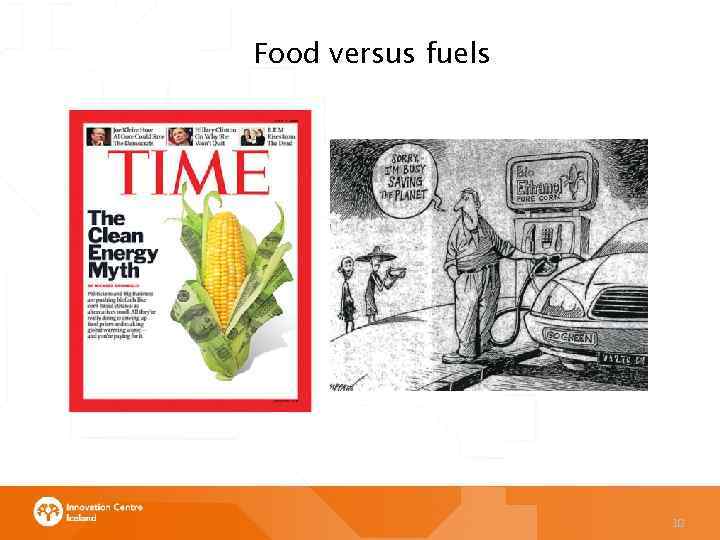
Food versus fuels 10
Methane • Anaerobic digestion with many types of bacteria • Produced from landfill gas (buried waste) under uncontrolled situations. Digestion time can be many years • Produced with anaerobic reactors under controlled situation. Digestion time is 2 -4 weeks 11
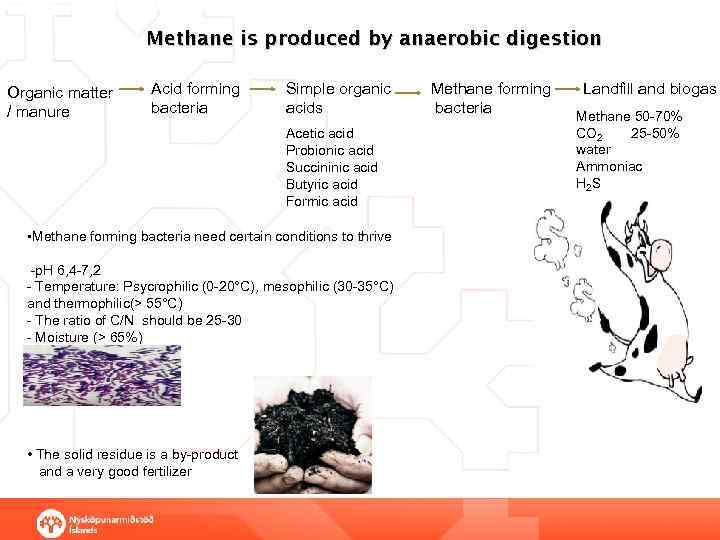
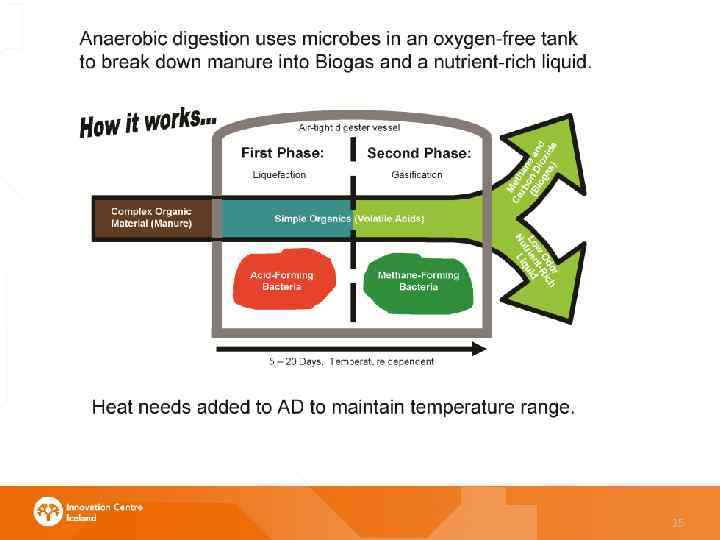
Methane is produced by anaerobic digestion Organic matter / manure Acid forming bacteria Kolvetni Prótein fita Simple organic acids Acetic acid Probionic acid Succininic acid Butyric acid Formic acid Methane forming bacteria Landfill and biogas Methane 50 -70% CO 2 25 -50% water Ammoniac H 2 S • Methane forming bacteria need certain conditions to thrive -p. H 6, 4 -7, 2 - Temperature: Psycrophilic (0 -20°C), mesophilic (30 -35°C) and thermophilic(> 55°C) - The ratio of C/N should be 25 -30 - Moisture (> 65%) • The solid residue is a by-product and a very good fertilizer 12
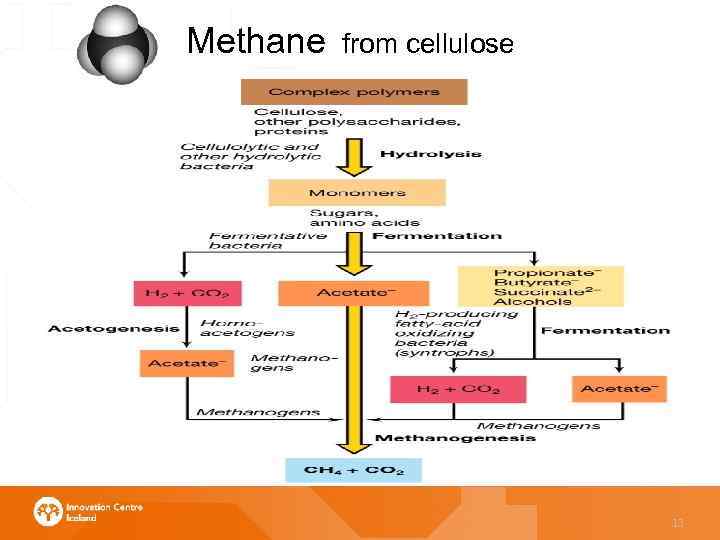
Methane from cellulose Thank you for your attention 13
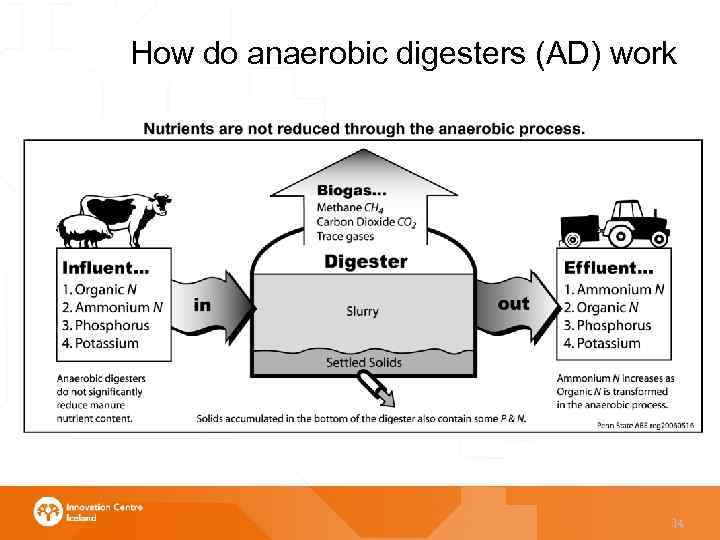
How do anaerobic digesters (AD) work 14
15
16
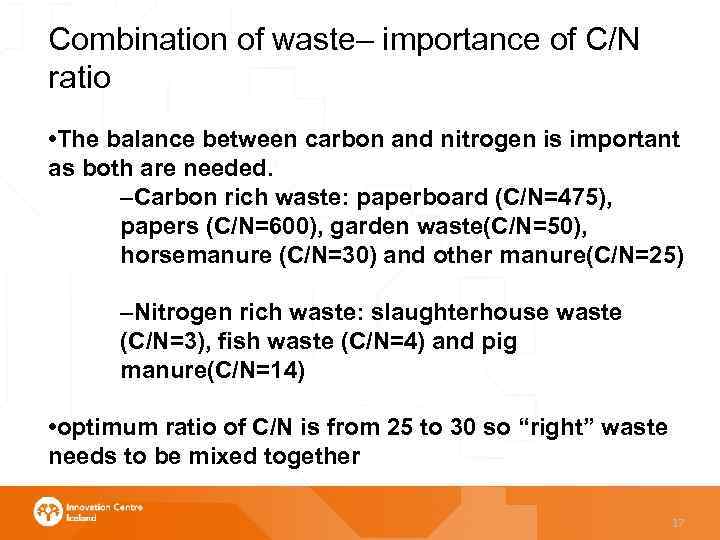
Combination of waste– importance of C/N ratio • The balance between carbon and nitrogen is important as both are needed. –Carbon rich waste: paperboard (C/N=475), papers (C/N=600), garden waste(C/N=50), horsemanure (C/N=30) and other manure(C/N=25) –Nitrogen rich waste: slaughterhouse waste (C/N=3), fish waste (C/N=4) and pig manure(C/N=14) • optimum ratio of C/N is from 25 to 30 so “right” waste needs to be mixed together 17
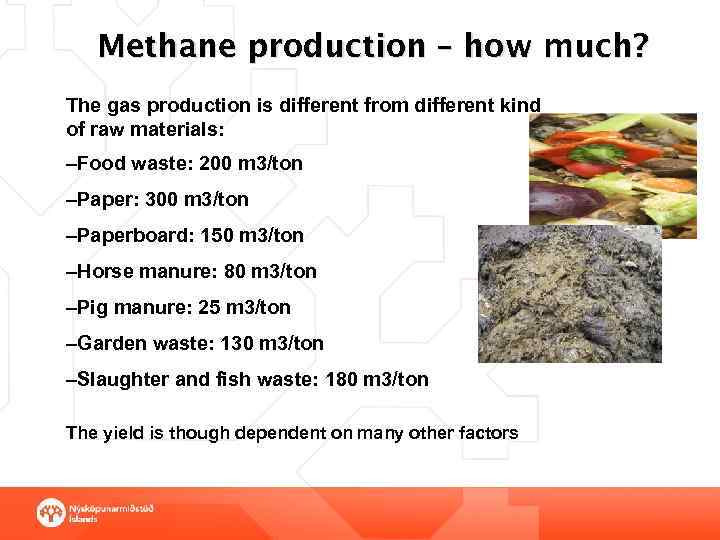
Methane production – how much? The gas production is different from different kind of raw materials: –Food waste: 200 m 3/ton –Paper: 300 m 3/ton –Paperboard: 150 m 3/ton –Horse manure: 80 m 3/ton –Pig manure: 25 m 3/ton –Garden waste: 130 m 3/ton –Slaughter and fish waste: 180 m 3/ton The yield is though dependent on many other factors
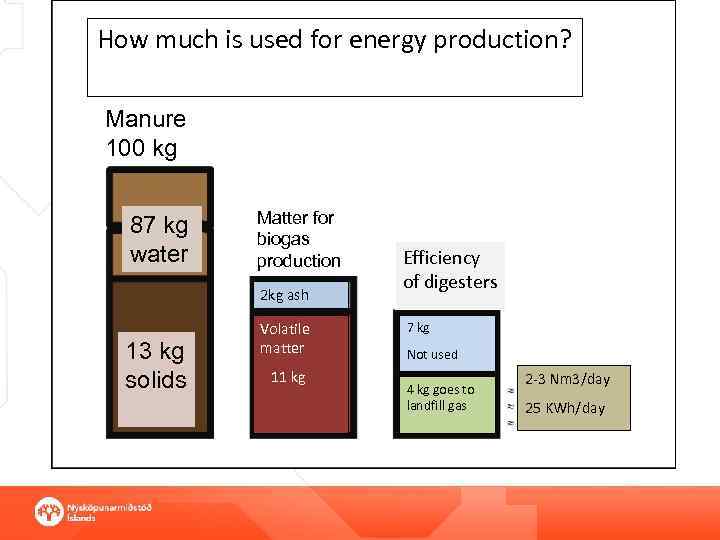
How much is used for energy production? Manure 100 kg 87 kg water Matter for biogas production 2 kg ash 13 kg solids Volatile matter 11 kg Efficiency of digesters 7 kg Not used 4 kg goes to landfill gas 2 -3 Nm 3/day 25 KWh/day
Methane – fuel for transport • The aim of the EU is to have 10% of the fuel as biofuel in (biodiesel, bio-gas, bio-ethanol) in 2020 • Biogas needs to be upgraded to bio-methane to be used for transport • If the same aim was set for Iceland it would mean that the production would be 30. 000 t/year of methane 20
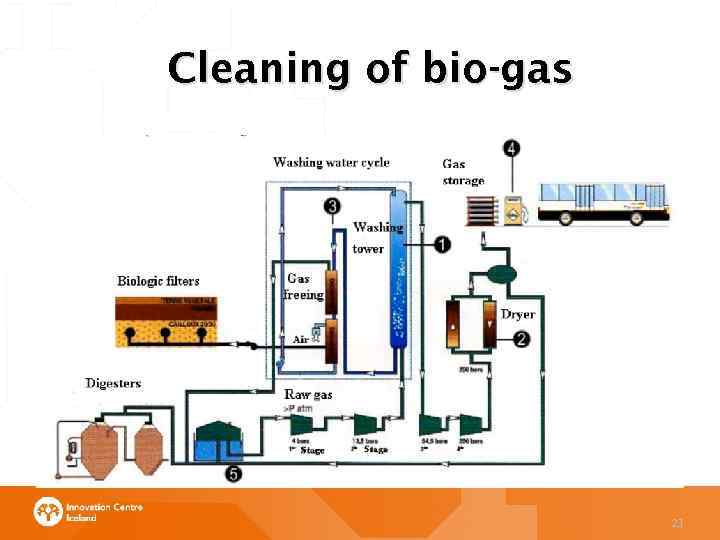
Cleaning of bio-gas 21
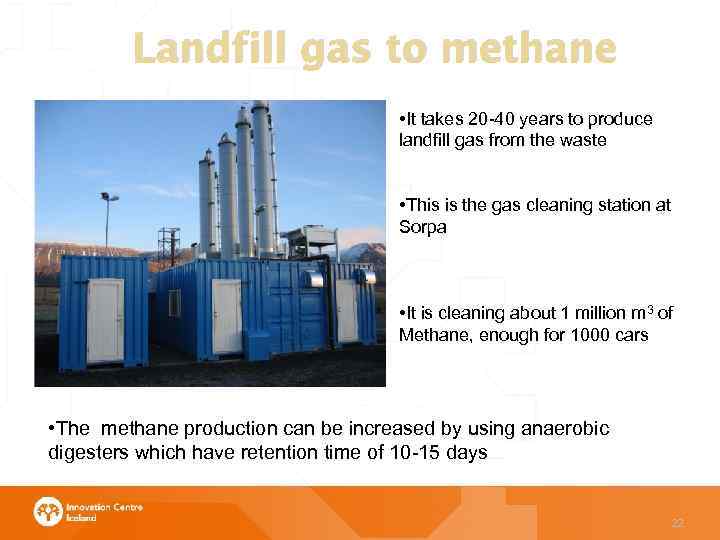
Landfill gas to methane • It takes 20 -40 years to produce landfill gas from the waste • This is the gas cleaning station at Sorpa • It is cleaning about 1 million m 3 of Methane, enough for 1000 cars • The methane production can be increased by using anaerobic digesters which have retention time of 10 -15 days 22
23
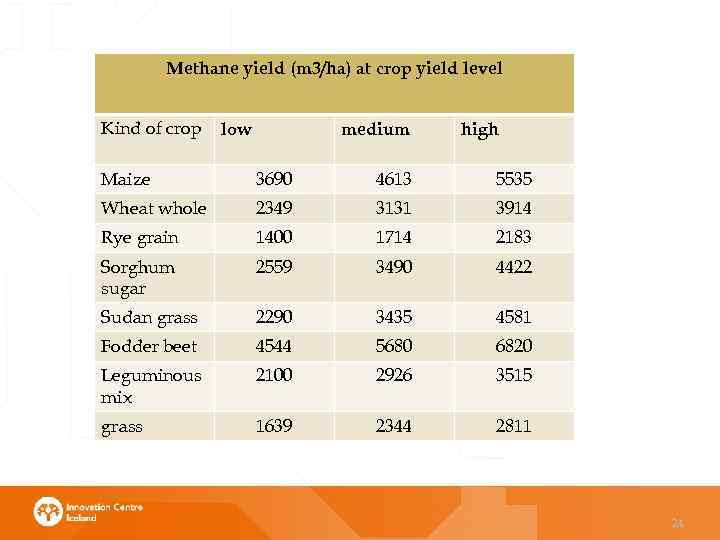
Methane yield (m 3/ha) at crop yield level Kind of crop low medium high Maize 3690 4613 5535 Wheat whole 2349 3131 3914 Rye grain 1400 1714 2183 Sorghum sugar 2559 3490 4422 Sudan grass 2290 3435 4581 Fodder beet 4544 5680 6820 Leguminous mix 2100 2926 3515 grass 1639 2344 2811 24
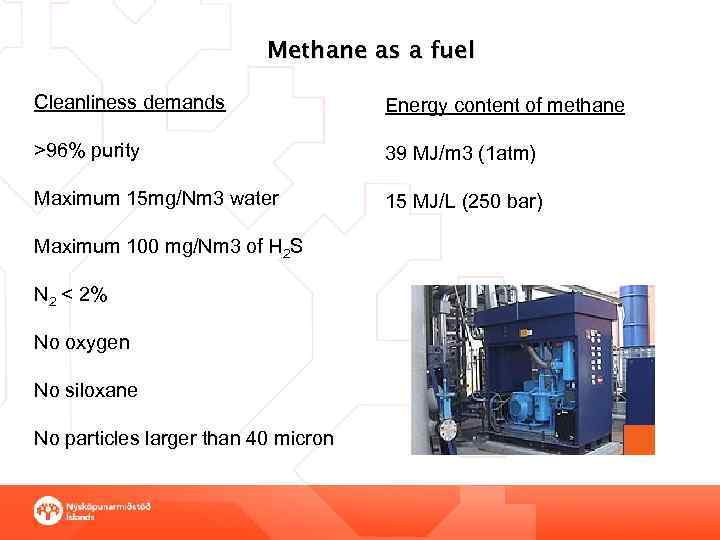
Methane as a fuel Cleanliness demands Energy content of methane >96% purity 39 MJ/m 3 (1 atm) Maximum 15 mg/Nm 3 water 15 MJ/L (250 bar) Maximum 100 mg/Nm 3 of H 2 S N 2 < 2% No oxygen No siloxane No particles larger than 40 micron 25
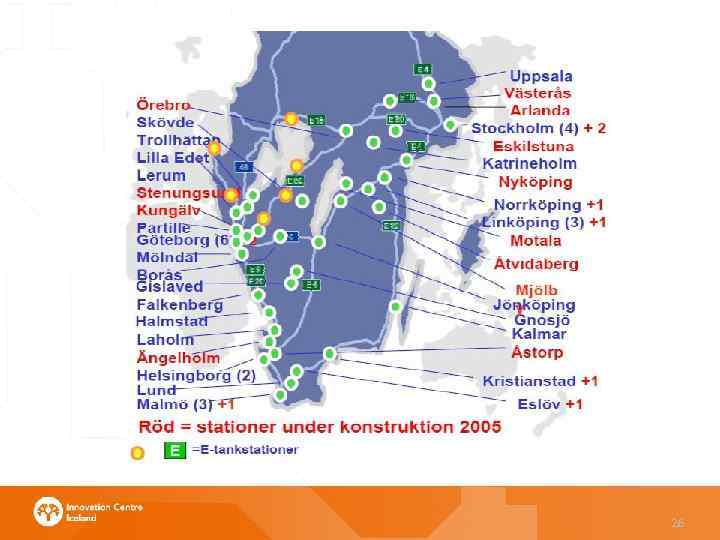
26
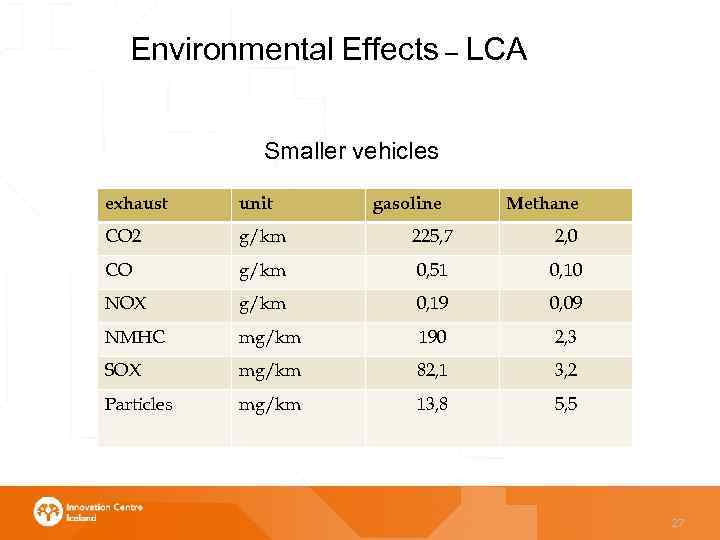
Environmental Effects – LCA Smaller vehicles exhaust unit gasoline Methane CO 2 g/km 225, 7 2, 0 CO g/km 0, 51 0, 10 NOX g/km 0, 19 0, 09 NMHC mg/km 190 2, 3 SOX mg/km 82, 1 3, 2 Particles mg/km 13, 8 5, 5 27
Pretreatments of bio-waste for anaerobic digestion • Mechanical – ultrasound and pressure • Chemical – use of alkali, acids and enzymes • Thermal – use of thermal hydrolysis and microwave • Electrical – methods like PEF (Pulsed Electric Field) 28
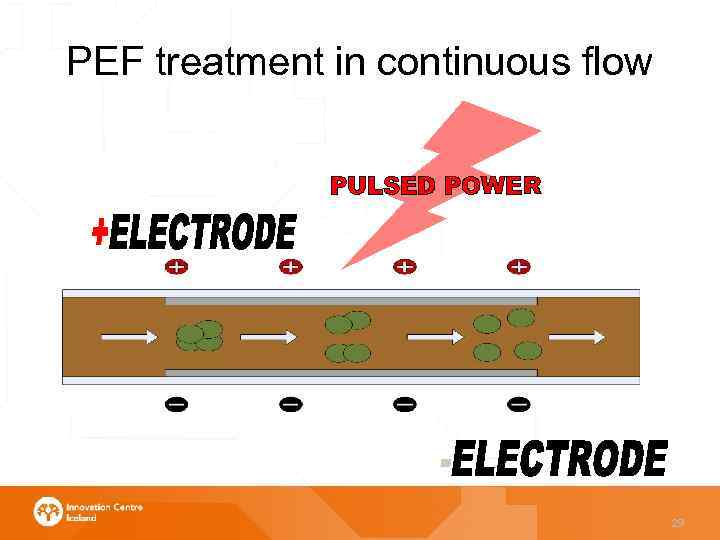
PEF treatment in continuous flow PULSED POWER 29
Effect of PEF-pretreatment • Destroys or damages cellular membranes, breaks down large aggregates and reduces organic molecules to simpler forms • After PEF treatment the organic solids are more bio-available and hydrolyzed i. e. there is an increase in soluble organic material • As a consequence there is more material available for methane forming bacteria to produce methane which can increase the biogas yield • The quantity of bio-solids decreases • PEF treatment pasteurizes the raw material without destroying the methane forming bacteria • Increased digester capacity 30
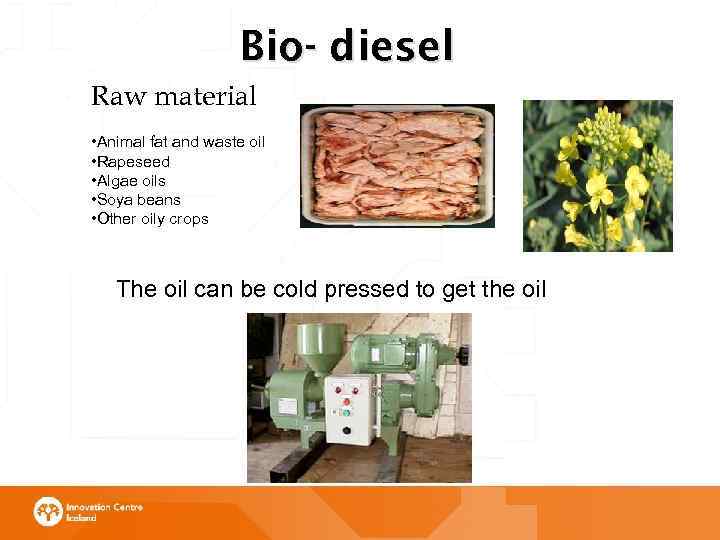
Bio- diesel Raw material • Animal fat and waste oil • Rapeseed • Algae oils • Soya beans • Other oily crops The oil can be cold pressed to get the oil
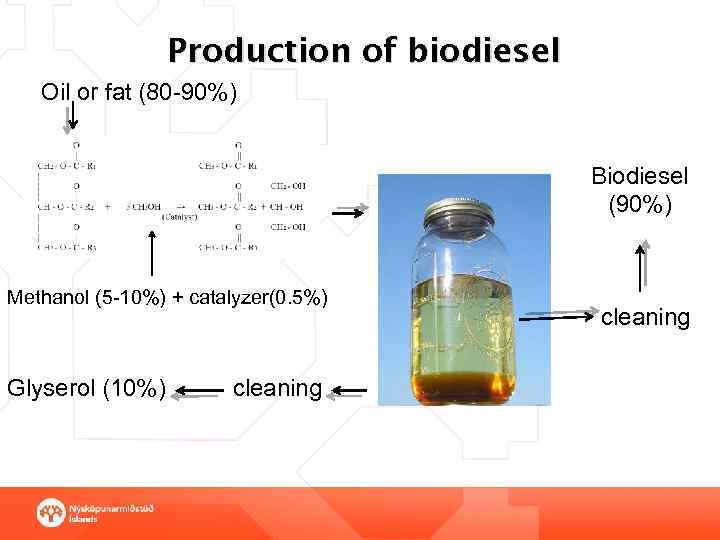
Production of biodiesel Oil or fat (80 -90%) Biodiesel (90%) Methanol (5 -10%) + catalyzer(0. 5%) Glyserol (10%) cleaning 32
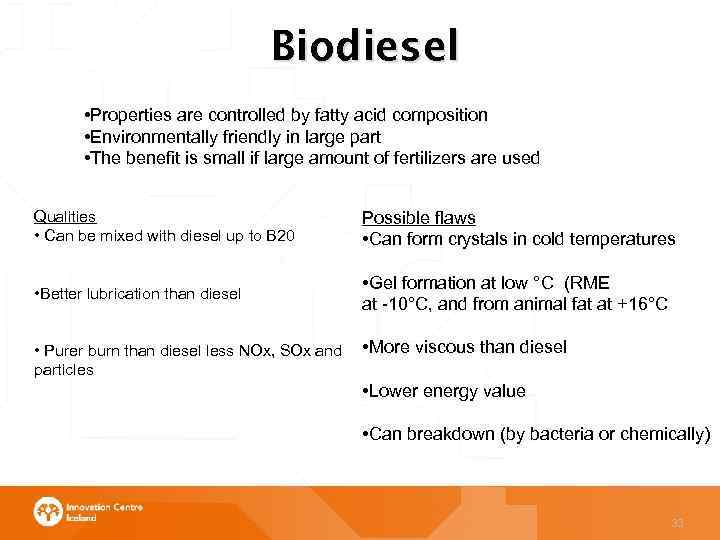
Biodiesel • Properties are controlled by fatty acid composition • Environmentally friendly in large part • The benefit is small if large amount of fertilizers are used Qualities • Can be mixed with diesel up to B 20 Possible flaws • Can form crystals in cold temperatures • Better lubrication than diesel • Gel formation at low °C (RME at -10°C, and from animal fat at +16°C • Purer burn than diesel less NOx, SOx and particles • More viscous than diesel • Lower energy value • Can breakdown (by bacteria or chemically) 33
Скачать презентацию Bioenergy — biofuels Magnús Guðmundsson Innovation Center of
Bioenergy - biofuels MG.ppt