 Скачать презентацию BIOE 301 Lecture Five Review of Lecture
bb6a30c0b56fc67aaf01b577cb88fc06.ppt
- Количество слайдов: 55




BIOE 301 Lecture Five
Review of Lecture Four n Developing World 1. 2. 3. 4. n Cardiovascular diseases, Cancer (malignant neoplasms), Unintentional injuries, and HIV/AIDS Developed World 1. 2. 3. 4. Cardiovascular diseases, Cancer (malignant neoplasms), Unintentional injuries, and Digestive Diseases
1. Heart Disease n n n What is one of the most common first signs that a patient has ischemic heart disease? What are four treatments of ischemic heart disease? Drug eluting stents have been in the news lately. Why? n http: //www. npr. org/templates/story. php? story. Id=112264556
2. Cancer n n Name three common cancer screening tests. Why don’t we screen everyone with these tests?
Overview of Lecture 5 n n Eight Americas Health Systems n n n n What is a health system? Goals of a health system Functions of a health system Types of health systems Performance of Health Systems Examples of health systems How have health care costs changed over time? Health Care Reform in the US
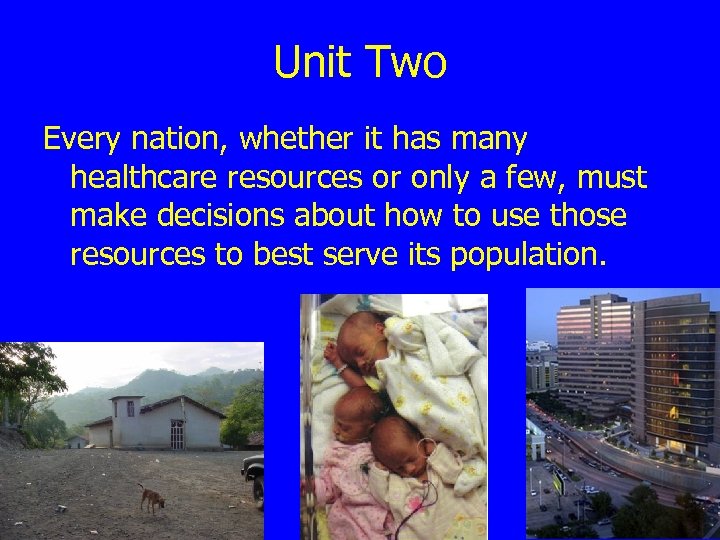
Unit Two Every nation, whether it has many healthcare resources or only a few, must make decisions about how to use those resources to best serve its population.
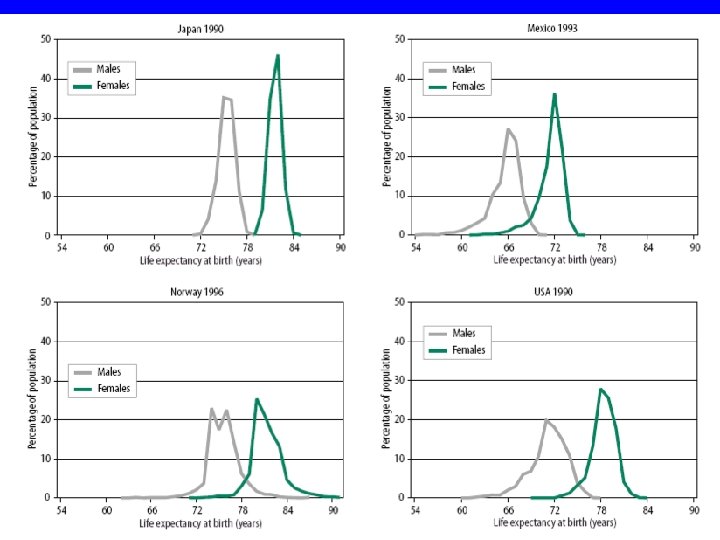
What is the difference in life expectancy between the America with the longest life expectancy and the America with the shortest life expectancy?
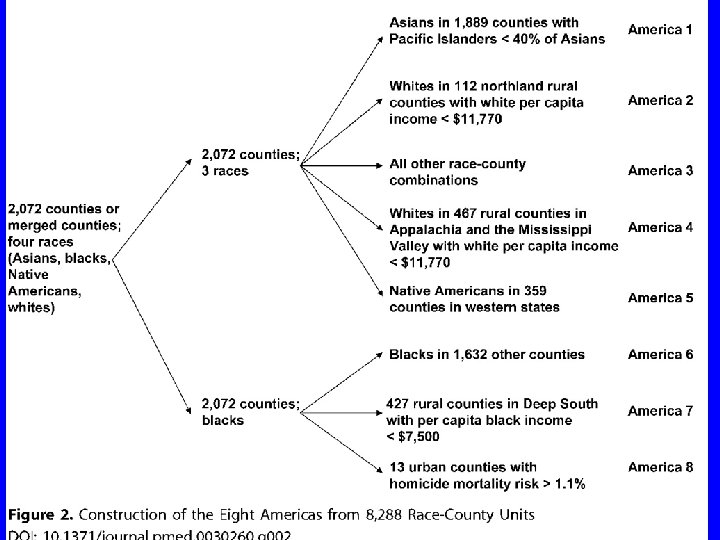
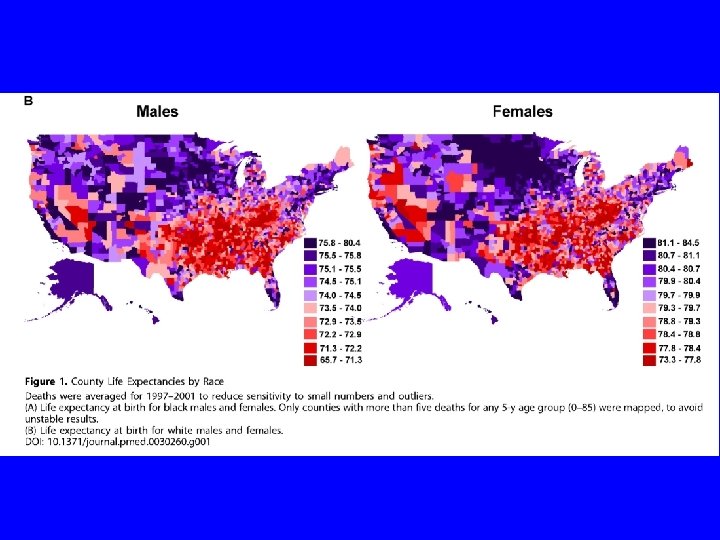
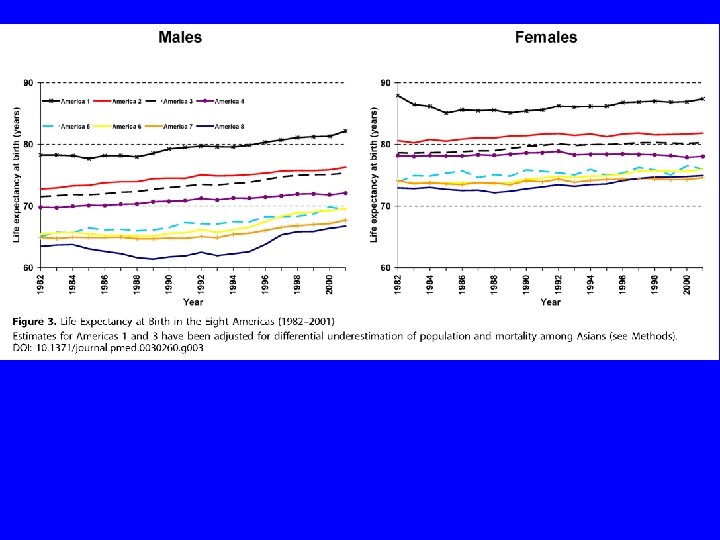
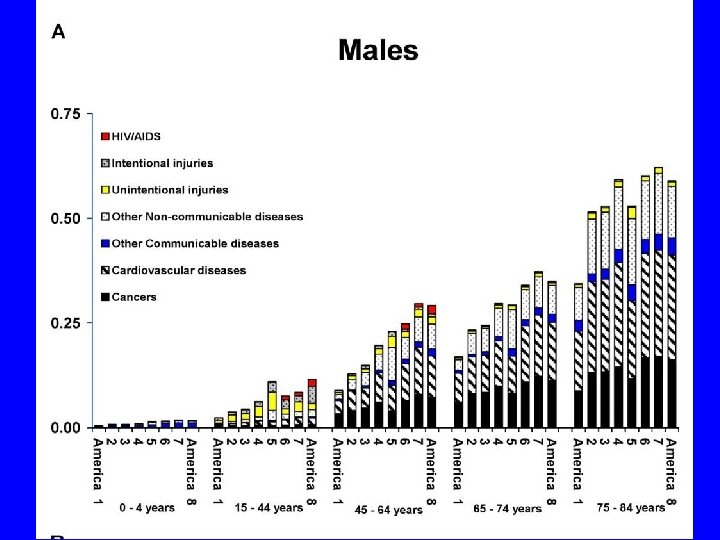
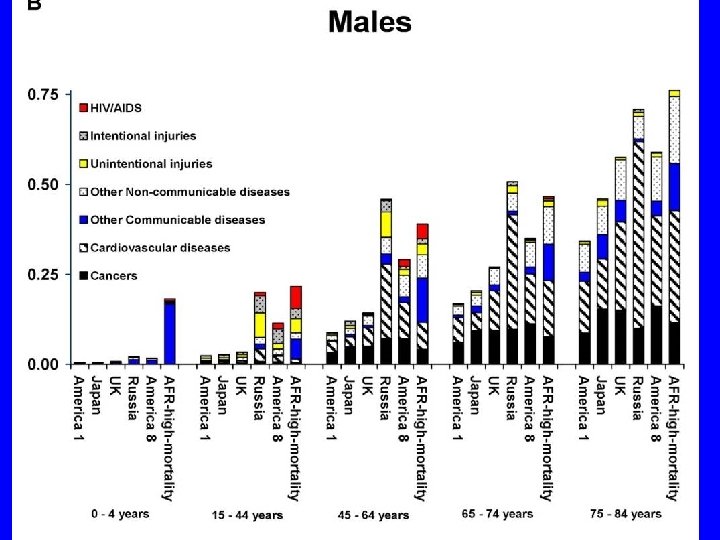
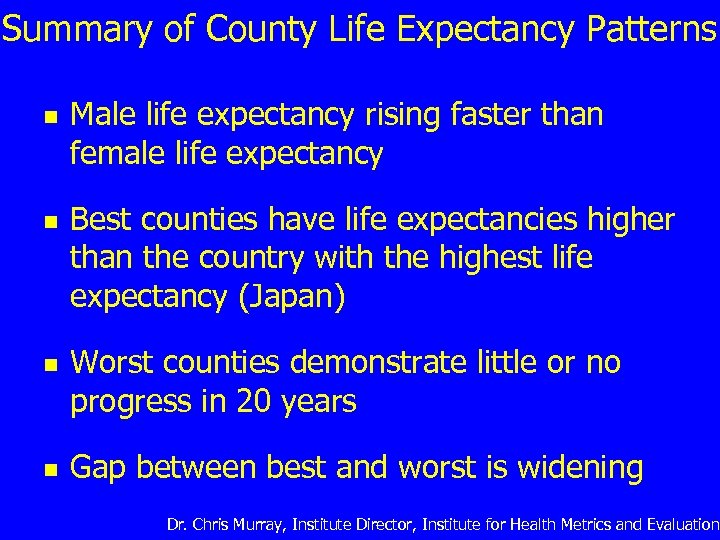
Summary of County Life Expectancy Patterns n n Male life expectancy rising faster than female life expectancy Best counties have life expectancies higher than the country with the highest life expectancy (Japan) Worst counties demonstrate little or no progress in 20 years Gap between best and worst is widening Dr. Chris Murray, Institute Director, Institute for Health Metrics and Evaluation
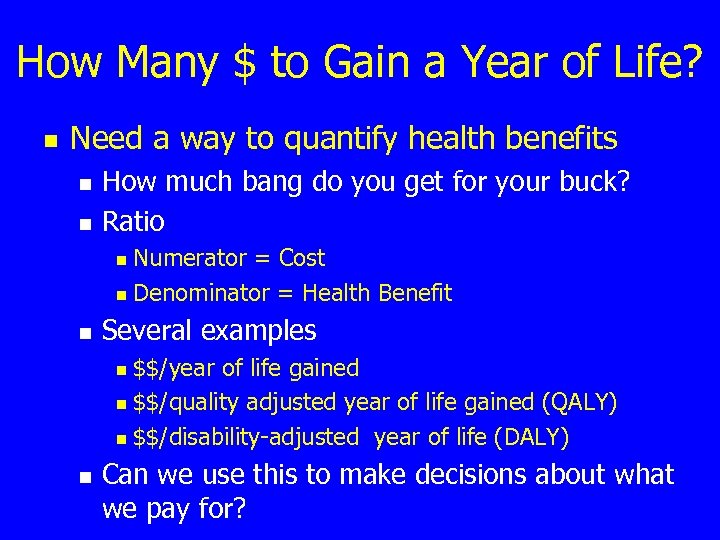
How Many $ to Gain a Year of Life? n Need a way to quantify health benefits n n How much bang do you get for your buck? Ratio Numerator = Cost n Denominator = Health Benefit n n Several examples $$/year of life gained n $$/quality adjusted year of life gained (QALY) n $$/disability-adjusted year of life (DALY) n n Can we use this to make decisions about what we pay for?
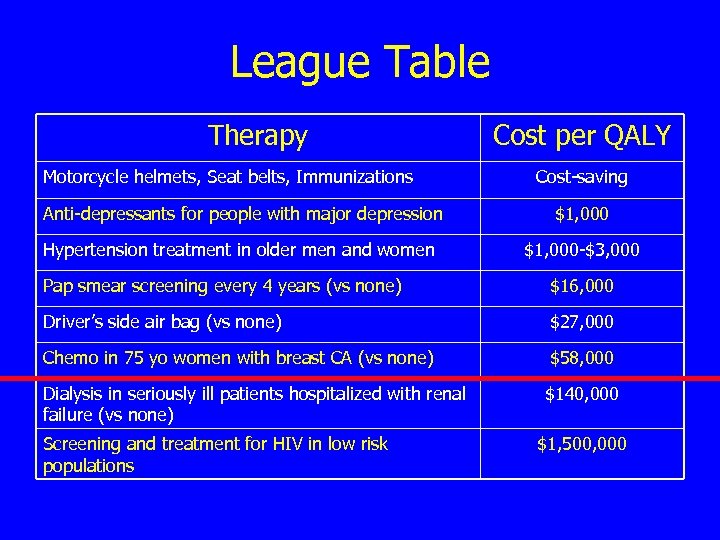
League Table Therapy Motorcycle helmets, Seat belts, Immunizations Cost per QALY Cost-saving Anti-depressants for people with major depression $1, 000 Hypertension treatment in older men and women $1, 000 -$3, 000 Pap smear screening every 4 years (vs none) $16, 000 Driver’s side air bag (vs none) $27, 000 Chemo in 75 yo women with breast CA (vs none) $58, 000 Dialysis in seriously ill patients hospitalized with renal failure (vs none) $140, 000 Screening and treatment for HIV in low risk populations $1, 500, 000
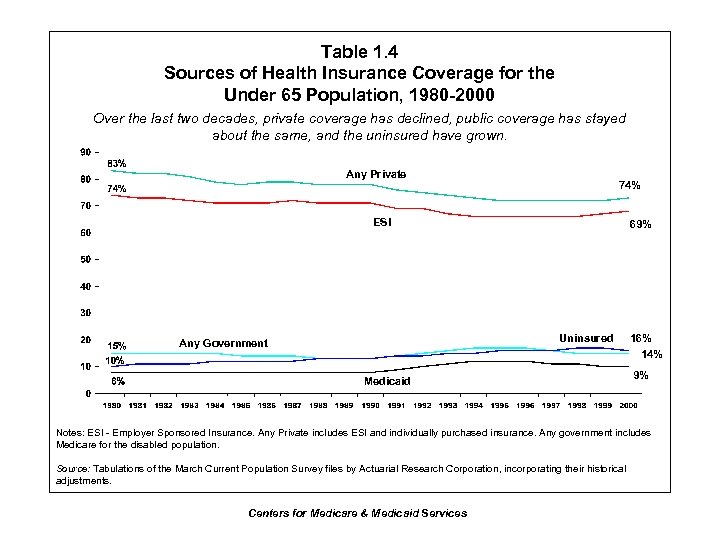
Table 1. 4 Sources of Health Insurance Coverage for the Under 65 Population, 1980 -2000 Over the last two decades, private coverage has declined, public coverage has stayed about the same, and the uninsured have grown. Any Private 74% ESI 69% Uninsured Any Government Medicaid 16% 14% 9% Notes: ESI - Employer Sponsored Insurance. Any Private includes ESI and individually purchased insurance. Any government includes Medicare for the disabled population. Source: Tabulations of the March Current Population Survey files by Actuarial Research Corporation, incorporating their historical adjustments. Centers for Medicare & Medicaid Services
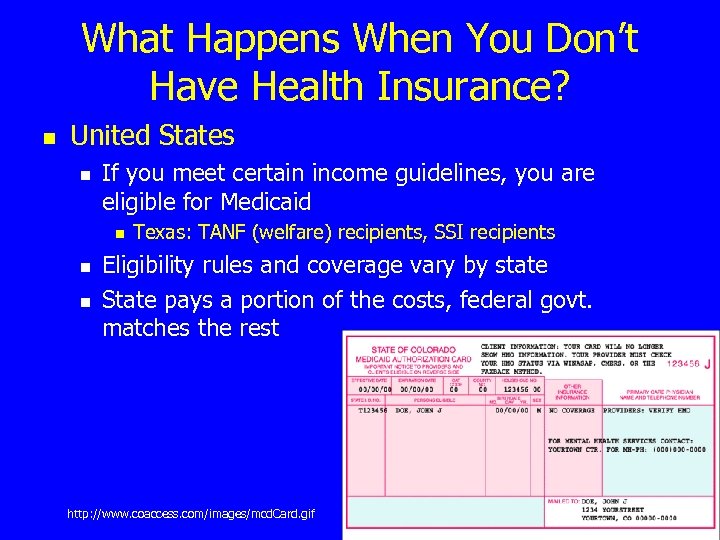
What Happens When You Don’t Have Health Insurance? n United States n If you meet certain income guidelines, you are eligible for Medicaid n n n Texas: TANF (welfare) recipients, SSI recipients Eligibility rules and coverage vary by state State pays a portion of the costs, federal govt. matches the rest http: //www. coaccess. com/images/mcd. Card. gif
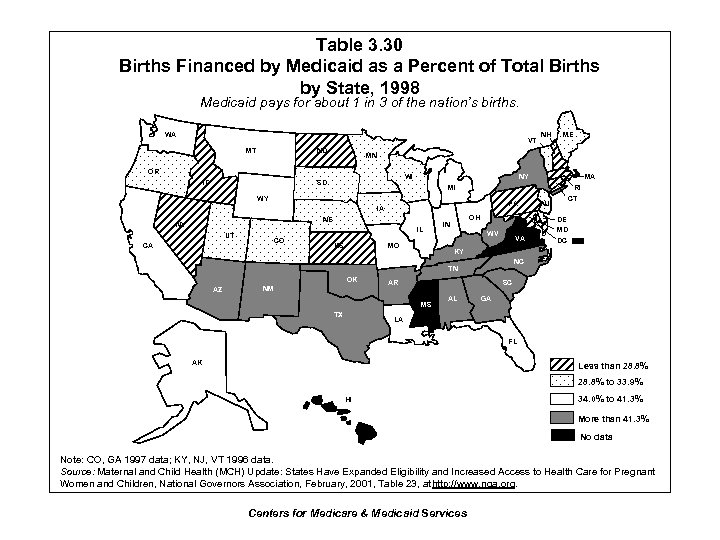
Table 3. 30 Births Financed by Medicaid as a Percent of Total Births by State, 1998 Medicaid pays for about 1 in 3 of the nation’s births. WA VT MT ND WI SD NY RI PA IA NE UT CA IL CO KS MO OH IN OK NM MD WV VA DC KY NC AR SC MS TX CT NJ DE TN AZ MA MI WY NV ME MN OR ID NH AL GA LA FL AK Less than 28. 8% to 33. 9% HI 34. 0% to 41. 3% More than 41. 3% No data Note: CO, GA 1997 data; KY, NJ, VT 1996 data. Source: Maternal and Child Health (MCH) Update: States Have Expanded Eligibility and Increased Access to Health Care for Pregnant Women and Children, National Governors Association, February, 2001, Table 23, at http: //www. nga. org. Centers for Medicare & Medicaid Services
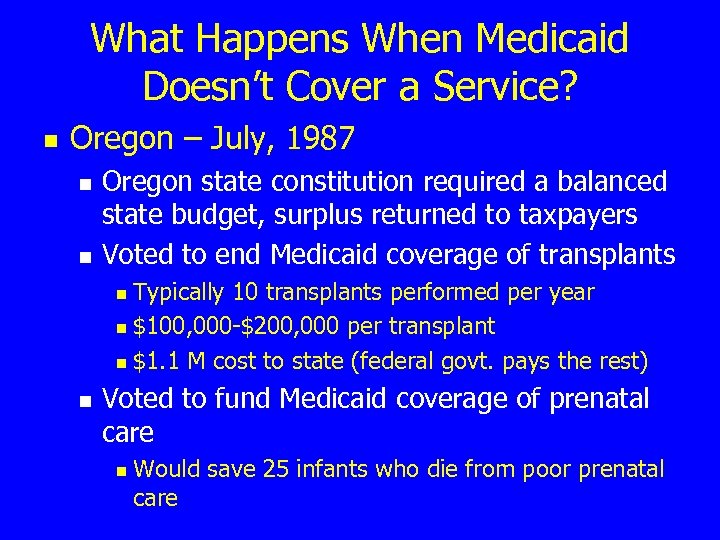
What Happens When Medicaid Doesn’t Cover a Service? n Oregon – July, 1987 n n Oregon state constitution required a balanced state budget, surplus returned to taxpayers Voted to end Medicaid coverage of transplants Typically 10 transplants performed per year n $100, 000 -$200, 000 per transplant n $1. 1 M cost to state (federal govt. pays the rest) n n Voted to fund Medicaid coverage of prenatal care n Would save 25 infants who die from poor prenatal care
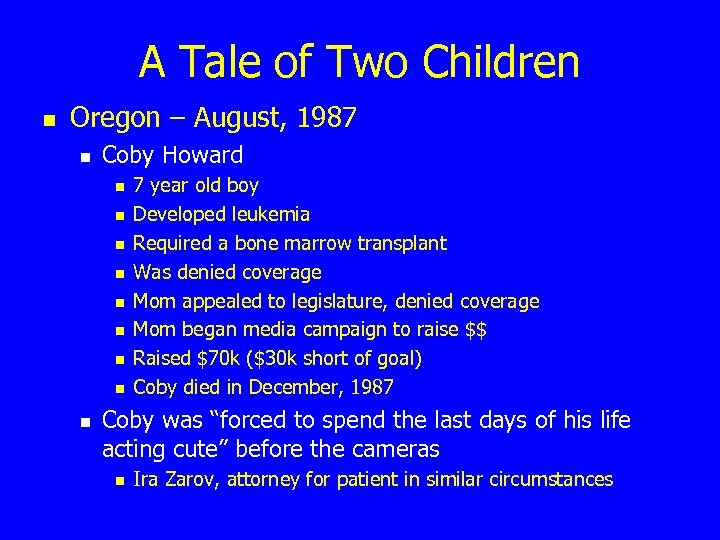
A Tale of Two Children n Oregon – August, 1987 n Coby Howard n n n n n 7 year old boy Developed leukemia Required a bone marrow transplant Was denied coverage Mom appealed to legislature, denied coverage Mom began media campaign to raise $$ Raised $70 k ($30 k short of goal) Coby died in December, 1987 Coby was “forced to spend the last days of his life acting cute” before the cameras n Ira Zarov, attorney for patient in similar circumstances
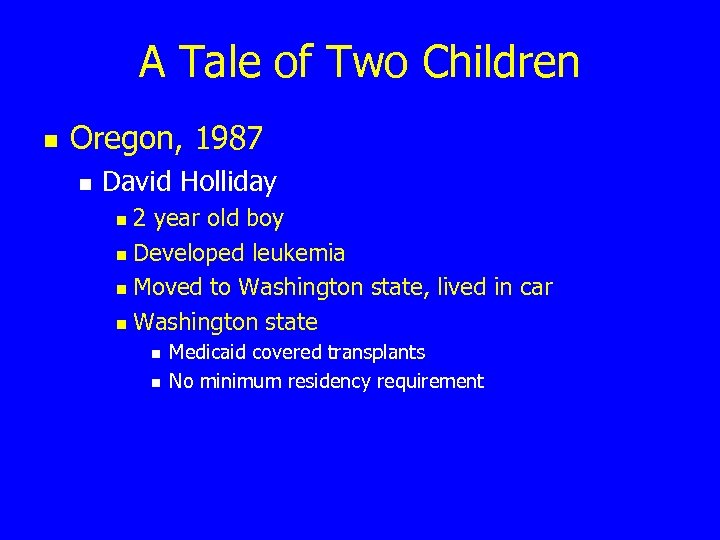
A Tale of Two Children n Oregon, 1987 n David Holliday 2 year old boy n Developed leukemia n Moved to Washington state, lived in car n Washington state n n n Medicaid covered transplants No minimum residency requirement
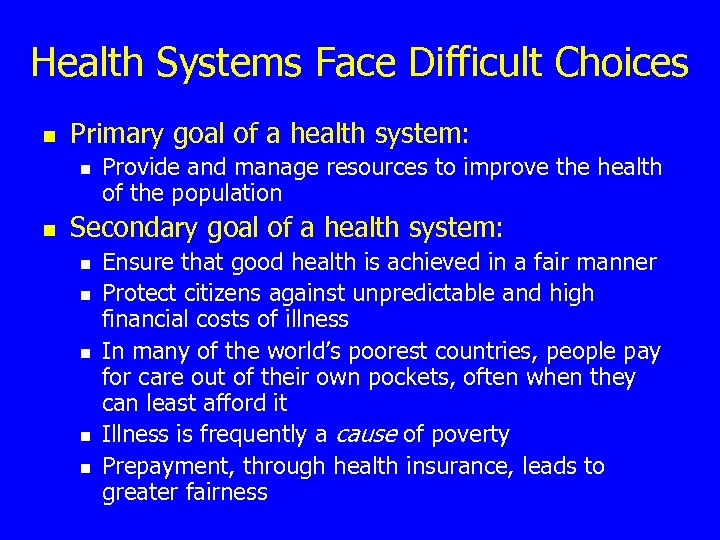
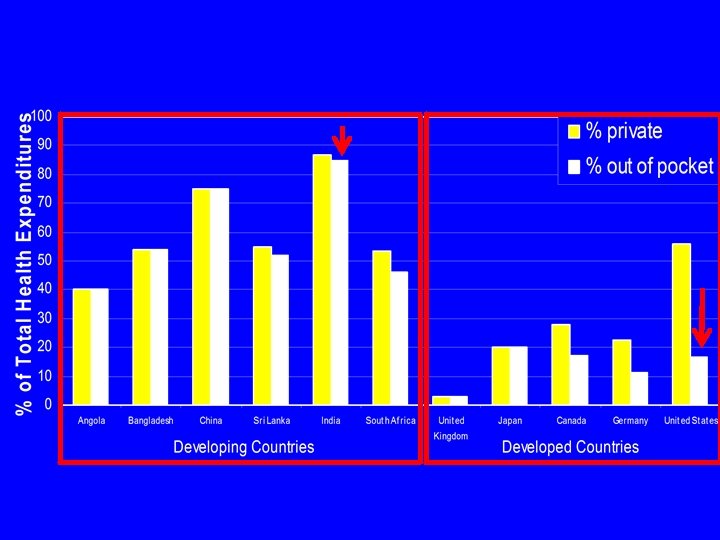
Health Systems Face Difficult Choices n Primary goal of a health system: n n Provide and manage resources to improve the health of the population Secondary goal of a health system: n n n Ensure that good health is achieved in a fair manner Protect citizens against unpredictable and high financial costs of illness In many of the world’s poorest countries, people pay for care out of their own pockets, often when they can least afford it Illness is frequently a cause of poverty Prepayment, through health insurance, leads to greater fairness
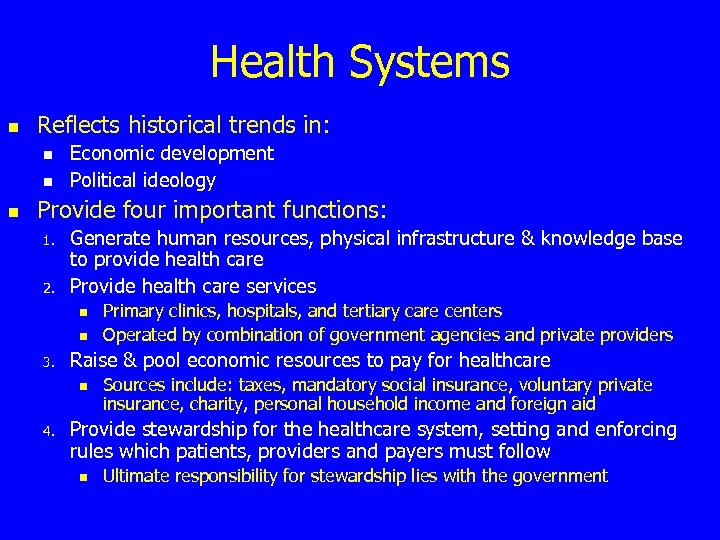
Health Systems n Reflects historical trends in: n n n Economic development Political ideology Provide four important functions: 1. 2. Generate human resources, physical infrastructure & knowledge base to provide health care Provide health care services n n 3. Raise & pool economic resources to pay for healthcare n 4. Primary clinics, hospitals, and tertiary care centers Operated by combination of government agencies and private providers Sources include: taxes, mandatory social insurance, voluntary private insurance, charity, personal household income and foreign aid Provide stewardship for the healthcare system, setting and enforcing rules which patients, providers and payers must follow n Ultimate responsibility for stewardship lies with the government
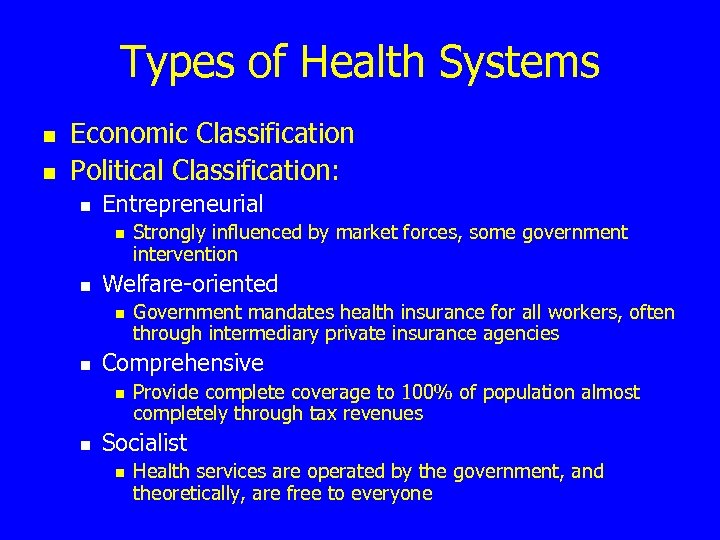
Types of Health Systems n n Economic Classification Political Classification: n Entrepreneurial n n Welfare-oriented n n Government mandates health insurance for all workers, often through intermediary private insurance agencies Comprehensive n n Strongly influenced by market forces, some government intervention Provide complete coverage to 100% of population almost completely through tax revenues Socialist n Health services are operated by the government, and theoretically, are free to everyone
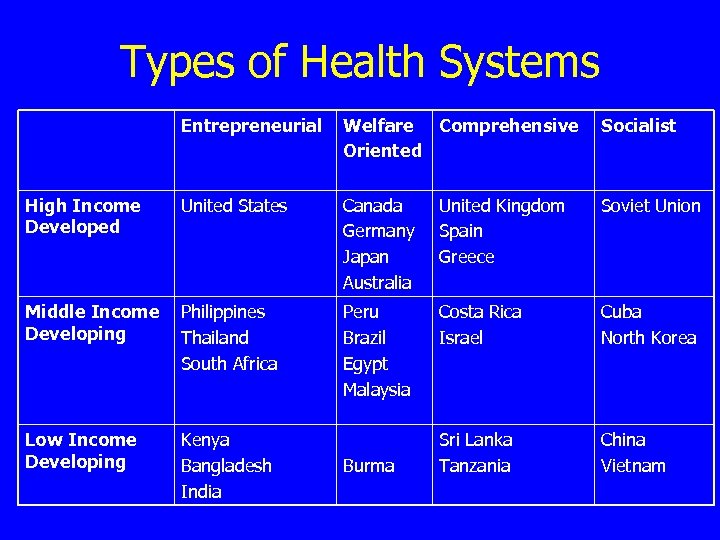
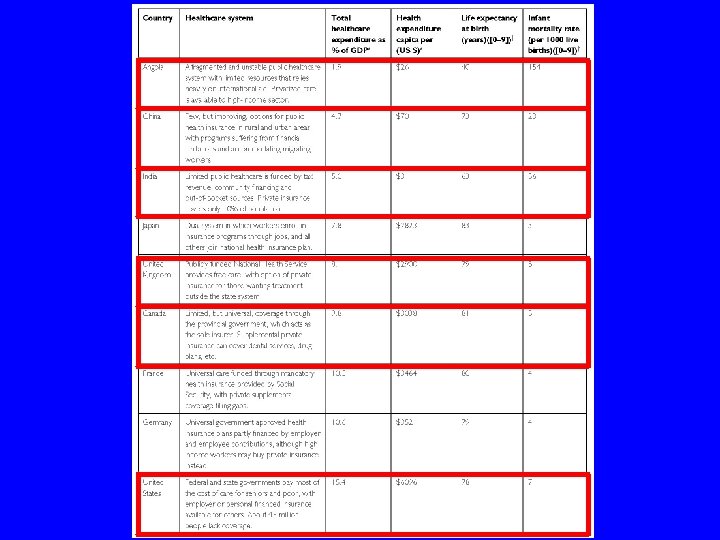
Types of Health Systems Entrepreneurial Welfare Comprehensive Oriented Socialist High Income Developed United States Canada Germany Japan Australia United Kingdom Spain Greece Soviet Union Middle Income Developing Philippines Thailand South Africa Peru Brazil Egypt Malaysia Costa Rica Israel Cuba North Korea Low Income Developing Kenya Bangladesh India Sri Lanka Tanzania China Vietnam Burma
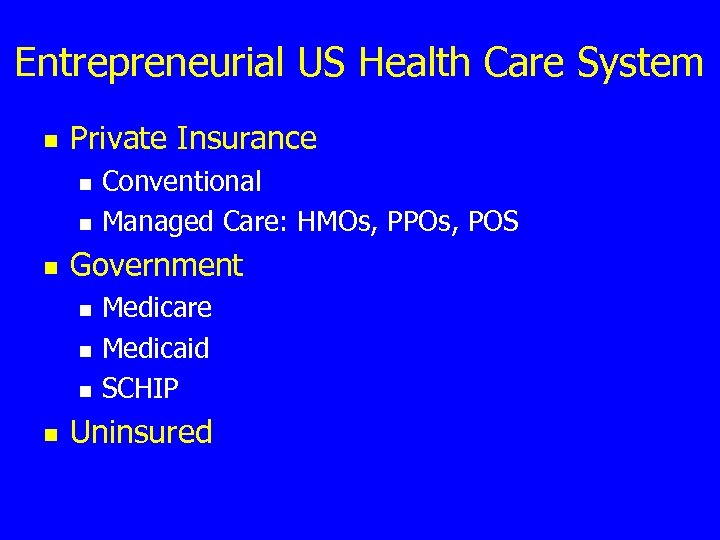
Entrepreneurial US Health Care System n Private Insurance n n n Government n n Conventional Managed Care: HMOs, PPOs, POS Medicare Medicaid SCHIP Uninsured
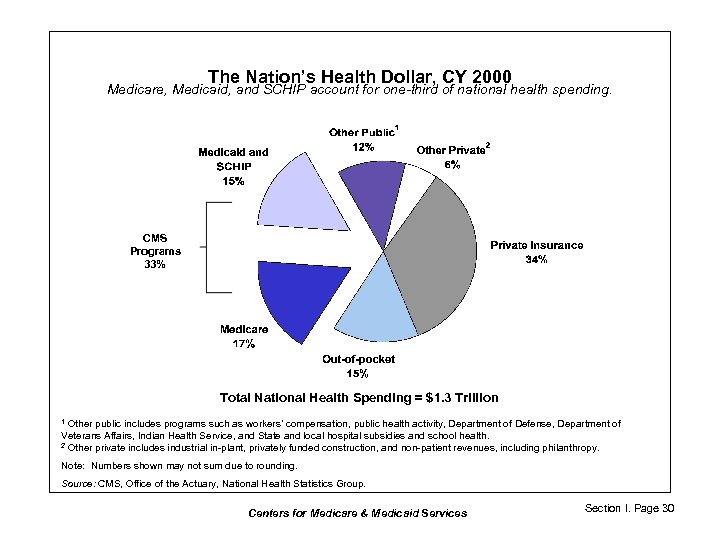
The Nation’s Health Dollar, CY 2000 Medicare, Medicaid, and SCHIP account for one-third of national health spending. CMS Programs 33% Total National Health Spending = $1. 3 Trillion Other public includes programs such as workers’ compensation, public health activity, Department of Defense, Department of Veterans Affairs, Indian Health Service, and State and local hospital subsidies and school health. 2 Other private includes industrial in-plant, privately funded construction, and non-patient revenues, including philanthropy. 1 Note: Numbers shown may not sum due to rounding. Source: CMS, Office of the Actuary, National Health Statistics Group. Centers for Medicare & Medicaid Services Section I. Page 30
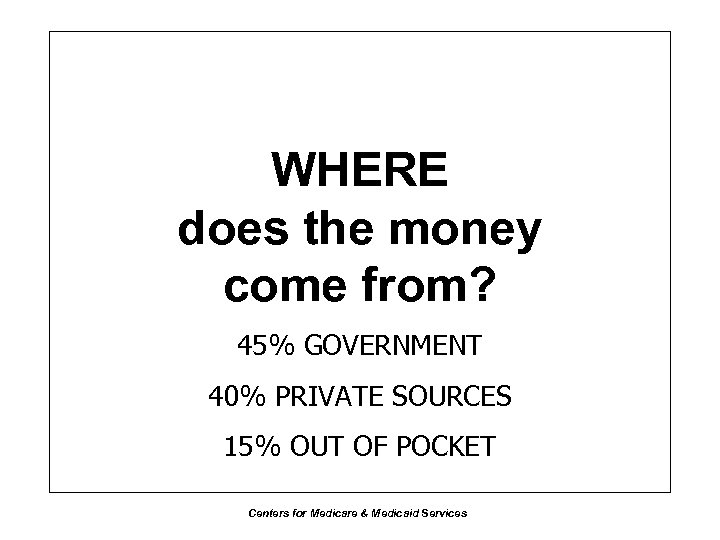
WHERE does the money come from? 45% GOVERNMENT 40% PRIVATE SOURCES 15% OUT OF POCKET Centers for Medicare & Medicaid Services
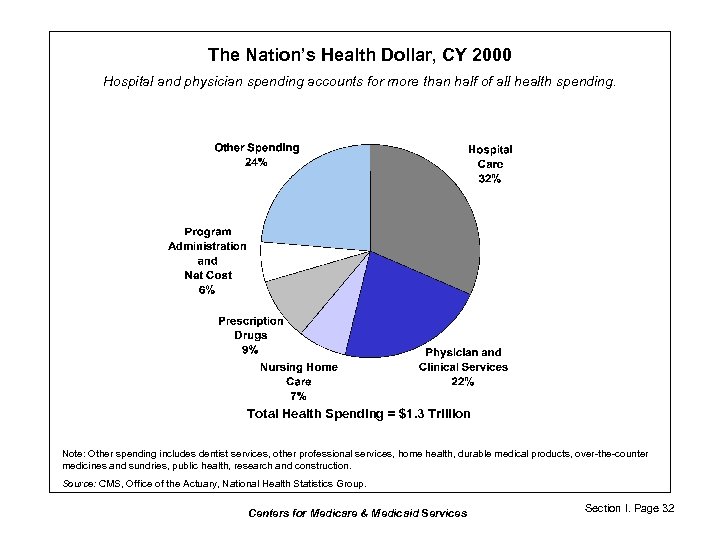
The Nation’s Health Dollar, CY 2000 Hospital and physician spending accounts for more than half of all health spending. Total Health Spending = $1. 3 Trillion Note: Other spending includes dentist services, other professional services, home health, durable medical products, over-the-counter medicines and sundries, public health, research and construction. Source: CMS, Office of the Actuary, National Health Statistics Group. Centers for Medicare & Medicaid Services Section I. Page 32
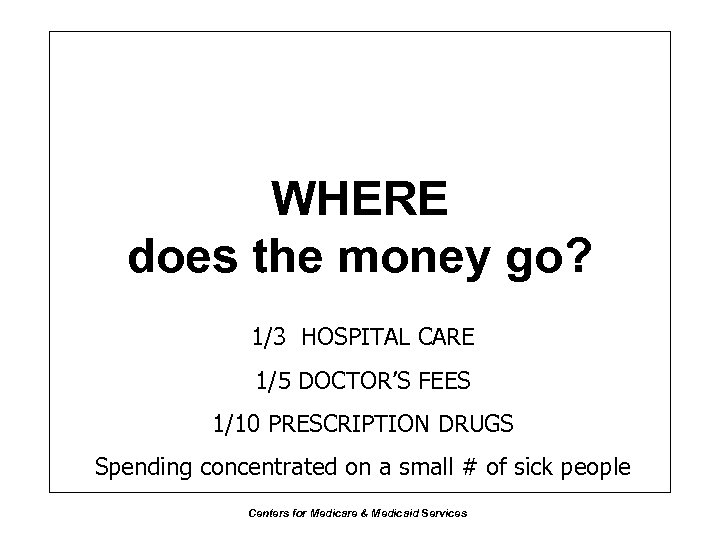
WHERE does the money go? 1/3 HOSPITAL CARE 1/5 DOCTOR’S FEES 1/10 PRESCRIPTION DRUGS Spending concentrated on a small # of sick people Centers for Medicare & Medicaid Services
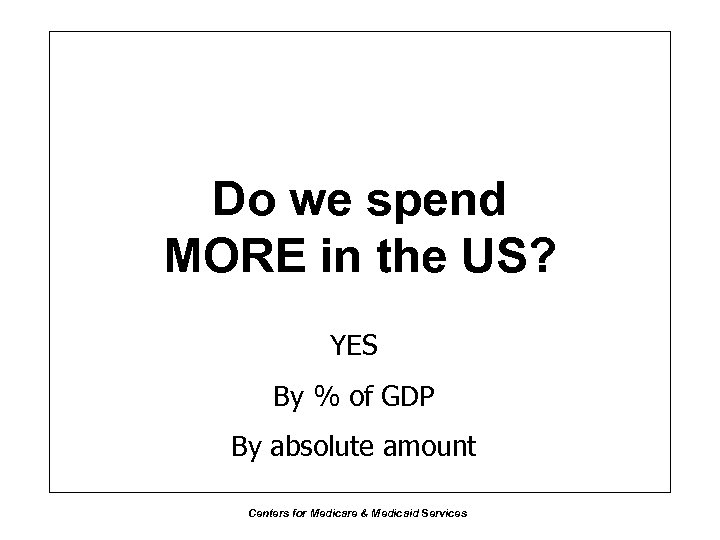
Do we spend MORE in the US? YES By % of GDP By absolute amount Centers for Medicare & Medicaid Services
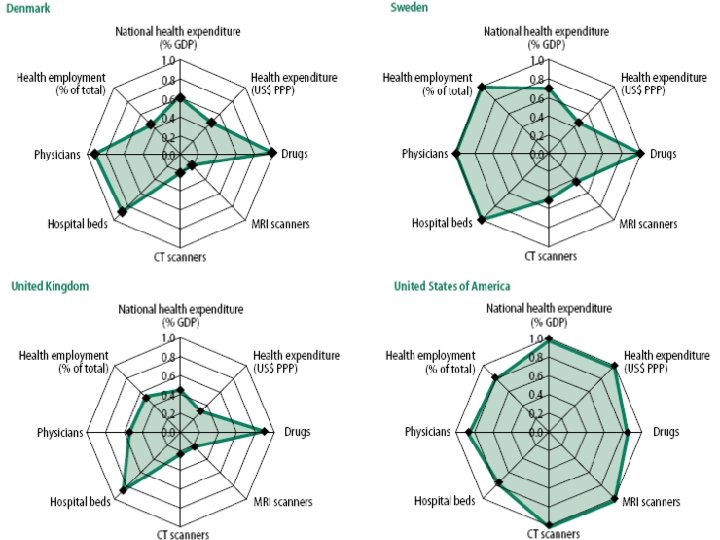
Centers for Medicare & Medicaid Services
Welfare-Oriented Canadian Health Care System n Five Principles n n Comprehensiveness, Universality, Portability, Accessibility, Public administration Features n n All 10 provinces have different systems (local control) One insurer - the Provincial government n n n costs shared by federal & provincial govts Patients can choose their own doctors Doctors work on a fee for service basis, fees are capped http: //www. globalsecurity. org/intell/worl d/canada/images/canada-flag. gif
Canadian Health Care - History n Before 1946 n n BC and Alberta followed 1957 n n n Tommy Douglass, premier of Saskatchewan, crafted North America’s first universal hospital insurance plan 1949 n n Canadian system much like current US system Federal govt adopted Hospital Insurance and Diagnostic Services Act Once a majority of provinces adopted universal hospital insurance plan, feds would pay half costs 1961 n All provinces had hospital insurance plans
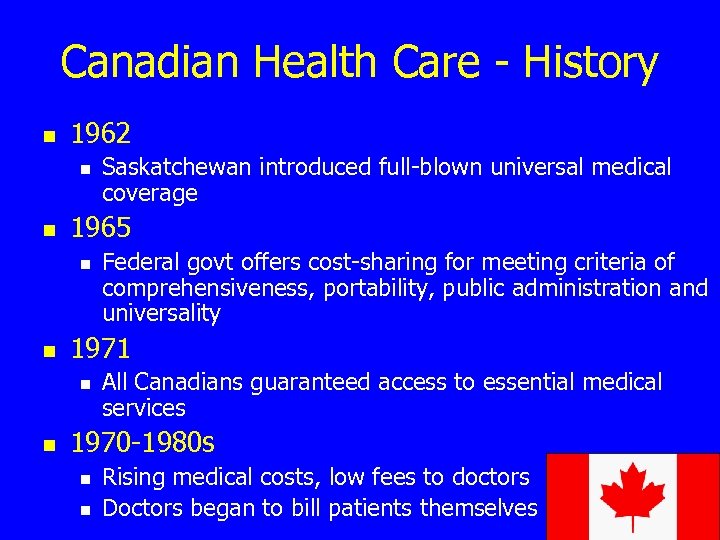
Canadian Health Care - History n 1962 n n 1965 n n Federal govt offers cost-sharing for meeting criteria of comprehensiveness, portability, public administration and universality 1971 n n Saskatchewan introduced full-blown universal medical coverage All Canadians guaranteed access to essential medical services 1970 -1980 s n n Rising medical costs, low fees to doctors Doctors began to bill patients themselves
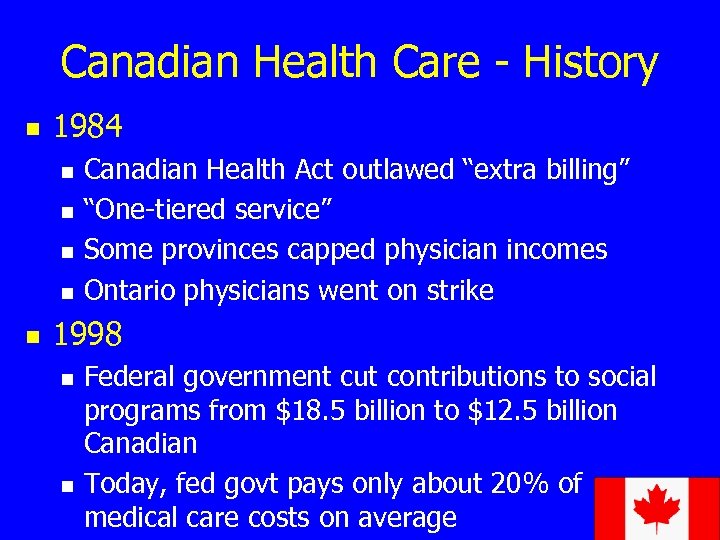
Canadian Health Care - History n 1984 n n n Canadian Health Act outlawed “extra billing” “One-tiered service” Some provinces capped physician incomes Ontario physicians went on strike 1998 n n Federal government cut contributions to social programs from $18. 5 billion to $12. 5 billion Canadian Today, fed govt pays only about 20% of medical care costs on average
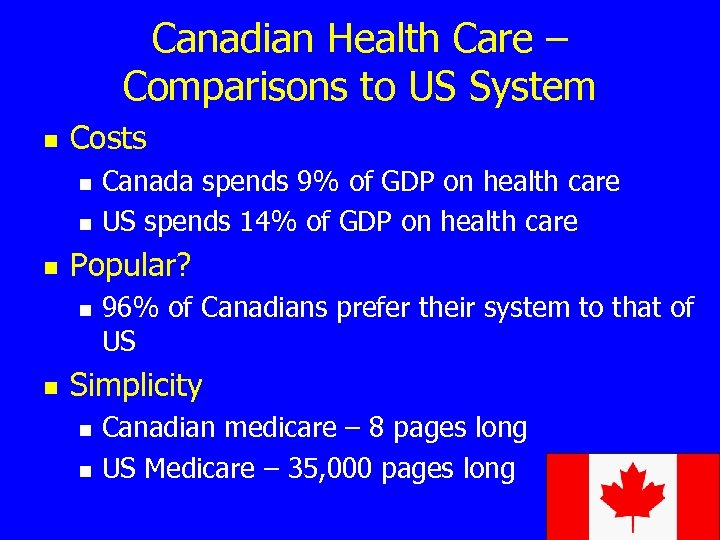
Canadian Health Care – Comparisons to US System n Costs n n n Popular? n n Canada spends 9% of GDP on health care US spends 14% of GDP on health care 96% of Canadians prefer their system to that of US Simplicity n n Canadian medicare – 8 pages long US Medicare – 35, 000 pages long
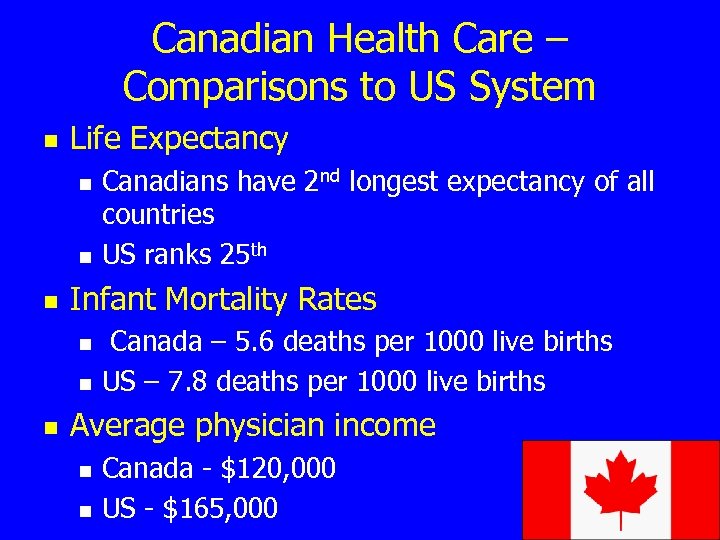
Canadian Health Care – Comparisons to US System n Life Expectancy n n n Infant Mortality Rates n n n Canadians have 2 nd longest expectancy of all countries US ranks 25 th Canada – 5. 6 deaths per 1000 live births US – 7. 8 deaths per 1000 live births Average physician income n n Canada - $120, 000 US - $165, 000
Canadian Health Care - Problems n Portability n n n Quebec and a few others will only pay doctors in other provinces up to its set fees Many clinics post signs “Quebec medicare not accepted” Coverage of services n n n Some provinces charge health insurance premiums (many employers pay, subsidized for low income) Few provinces offer drug plans (97% of Canadians are covered, private insurance) Routine dentistry and optical care not covered by any province
Canadian Health Care - Problems n Waiting times n n n 12% of Canadians waited >4 months for nonemergency surgery Canadians wait average of 5 months for a cranial MRI Americans wait an average of 3 days
Canadian Health Care - Problems n Emergence of for-profit care n n n In exchange for an extra fee, facilities offer quicker access to medicare-insured services Movement toward a two-tiered system like US Poor Availability of Advanced Technology n n No way to fund new medical equipment Waiting times high for ultrasound, MRI
Indian Health Care System n Health system is at a crossroads n n Fewer people are dying Fertility is decreasing Communicable diseases of childhood being replaced by degenerative diseases in older age Reliance on private spending on health in India is among the highest in the world n More than 40% of Indians need to borrow money or sell assets when hospitalized http: //mospi. nic. in/flag. jpg
Indian Health Care System n Geographic disparities in health spending and health outcomes n Southern and western states have better health outcomes, higher spending on health, greater use of health services, more equitable distribution of services
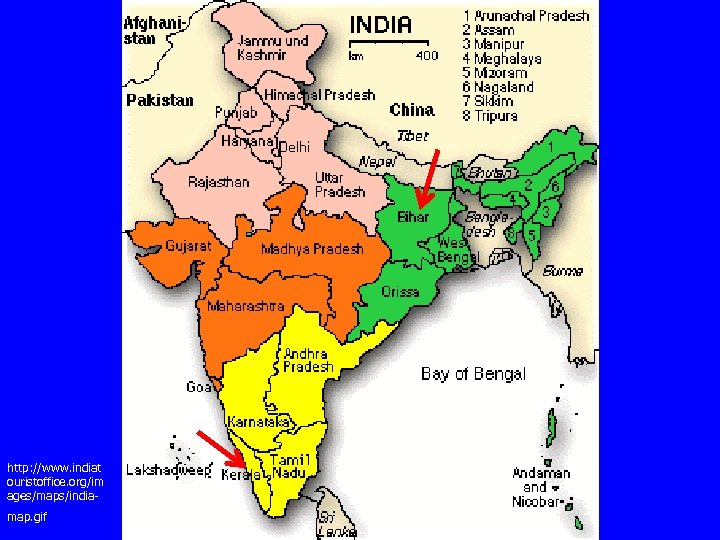
http: //www. indiat ouristoffice. org/im ages/maps/indiamap. gif
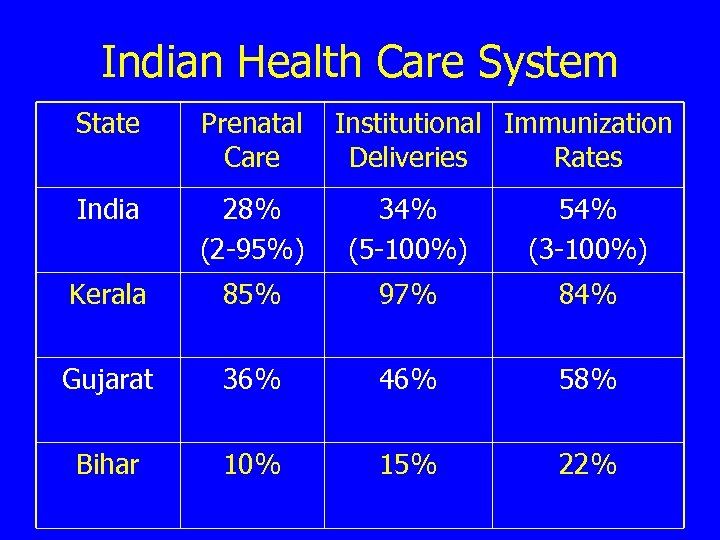
Indian Health Care System State Prenatal Care Institutional Immunization Deliveries Rates India 28% (2 -95%) 34% (5 -100%) 54% (3 -100%) Kerala 85% 97% 84% Gujarat 36% 46% 58% Bihar 10% 15% 22%
Indian Health Care System: Goals n n n How to work with private health providers Test new health financing systems Analyze pharmaceutical policies n n n New international trade regimes Emergence of new infectious diseases How to make HIV drugs affordable in India Develop strategies to increase number of trained health care workers Maximize benefits from health research and technology development
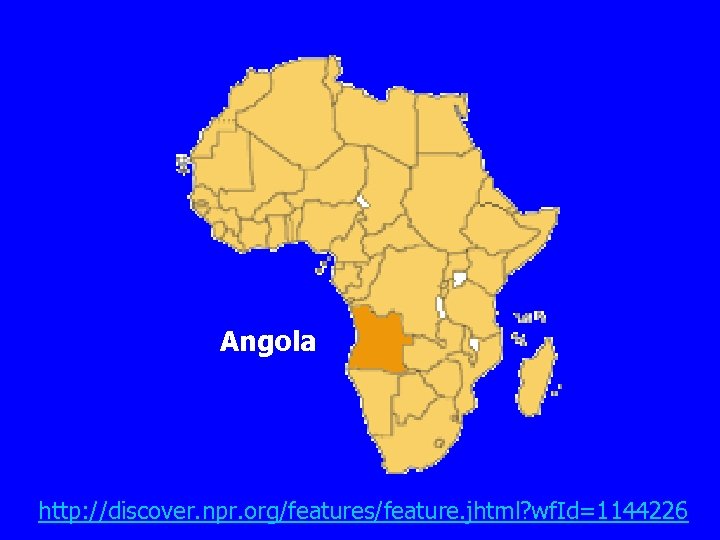
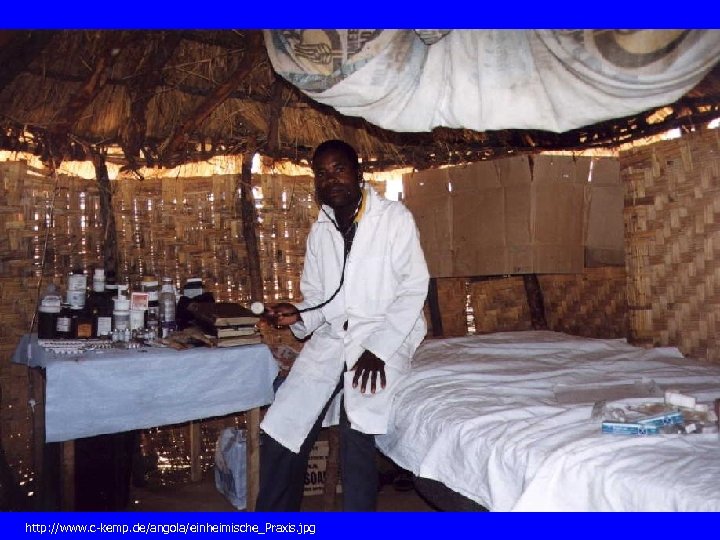
Angola http: //discover. npr. org/features/feature. jhtml? wf. Id=1144226
Angolan Health Care System n UN World Food Programme n n n Infrastructure Needs n n Provides food to an average of 1. 7 million people per month 740, 000 people receive rations through food-for-work program 500 roads need reconstruction Many key bridges are unstable Millions of landmines scatter the countryside Corruption n n Angola produces 900, 000 barrels of oil per day Massive corruption has undermined donor confidence
Angolan Health Care System n Overall public health situation is critical n n n One in four children dies before age 5 Measles – claims 10, 000 children per year UN Agencies conducted vaccination campaigns – National Immunization Days n n n 7 million children vaccinated for measles 5 million children vaccinated against polio Working to implement routine immunization programs
Overview of Lecture 5 n Health Systems n n n n n What is a health system? Goals of a health system Functions of a health system Types of health systems Performance of Health Systems Examples of health systems How have health care costs changed over time? What drives increases in health care costs? Health care reform n http: //www. npr. org/templates/story. php? story. Id=126909902
http: //www. c-kemp. de/angola/einheimische_Praxis. jpg
The Role of Technology? n http: //www. npr. org/templates/story. php? story. Id=112522353&ft=1&f=944270 42
Скачать презентацию BIOE 301 Lecture Five Review of Lecture
bb6a30c0b56fc67aaf01b577cb88fc06.ppt