 Скачать презентацию Biodiesel Research at The University of Georgia Daniel
06f91d98aa701d06367f8c79cf3481e1.ppt
- Количество слайдов: 23




Biodiesel Research at The University of Georgia Daniel Geller – UGA Engineering Outreach http: //www. engr. uga. edu/service/outreach
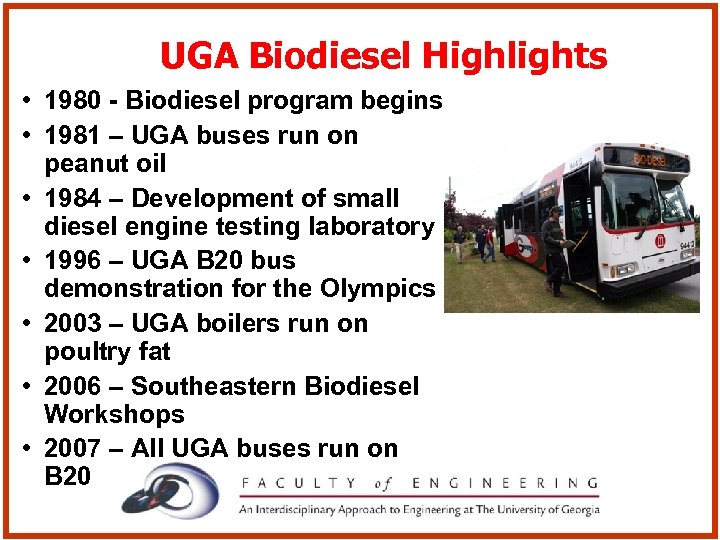
UGA Biodiesel Highlights • 1980 - Biodiesel program begins • 1981 – UGA buses run on peanut oil • 1984 – Development of small diesel engine testing laboratory • 1996 – UGA B 20 bus demonstration for the Olympics • 2003 – UGA boilers run on poultry fat • 2006 – Southeastern Biodiesel Workshops • 2007 – All UGA buses run on B 20
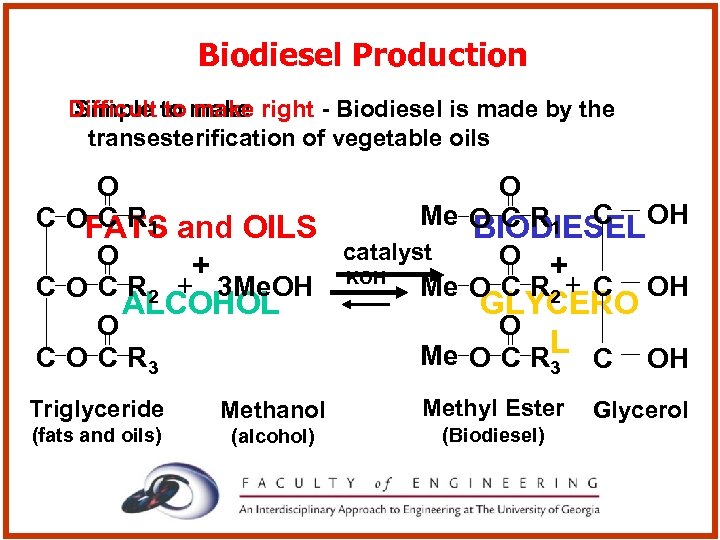
Biodiesel Production Difficult to make right - Biodiesel is made by the Simple to make transesterification of vegetable oils O Me C R 1 C OFATS and OILS catalyst O + + 3 Me. OH KOH Me C O C R 2 ALCOHOL O Me C O C R 3 O O C R 1 C OH BIODIESEL O + O C R 2 + C OH GLYCERO O L O C R 3 C OH Triglyceride Methanol Methyl Ester (fats and oils) (alcohol) (Biodiesel) Glycerol
Poultry Fat • Georgia is Nation’s largest producer of poultry • Historically, value of poultry fat was quite low ~$. 12/lb • 2003: UGA researchers examine fuel properties of poultry fat • Poultry fat developed as boiler fuel at UGA • US Biofuels in Rome, GA successfully utilizes poultry fat as Biodiesel feedstock
Poultry Fat - Issues • Limited supply of high quality material for Biodiesel production • Value of material increases due to increased demand from fuel markets • Waste treatment at poultry processing facilities not optimized for oil recovery • RESEARCH OPPORTUNITY
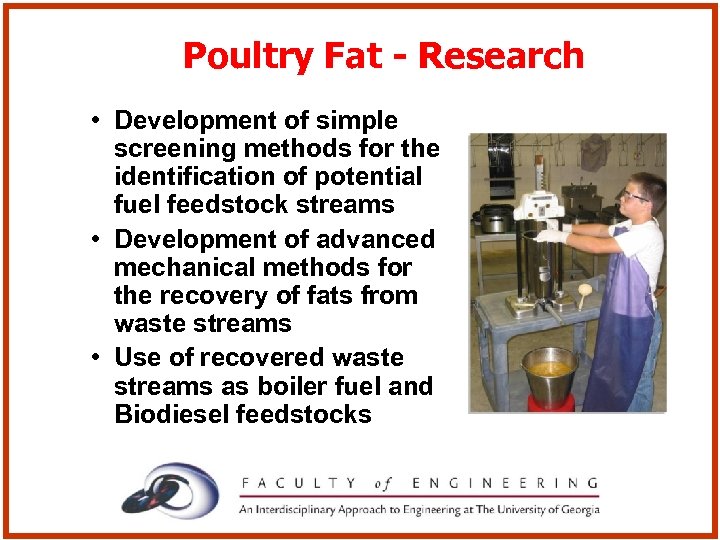
Poultry Fat - Research • Development of simple screening methods for the identification of potential fuel feedstock streams • Development of advanced mechanical methods for the recovery of fats from waste streams • Use of recovered waste streams as boiler fuel and Biodiesel feedstocks
Poultry Fat - Research • Development of multiphase processing techniques to treat high FFA materials (in conjunction with GA Tech) • Development of solid state acidic and basic catalyst systems to develop semicontinuous conversion system
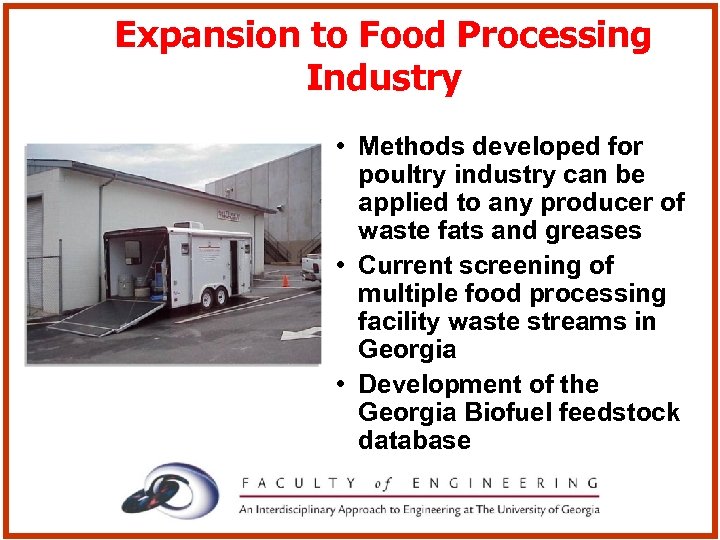
Expansion to Food Processing Industry • Methods developed for poultry industry can be applied to any producer of waste fats and greases • Current screening of multiple food processing facility waste streams in Georgia • Development of the Georgia Biofuel feedstock database
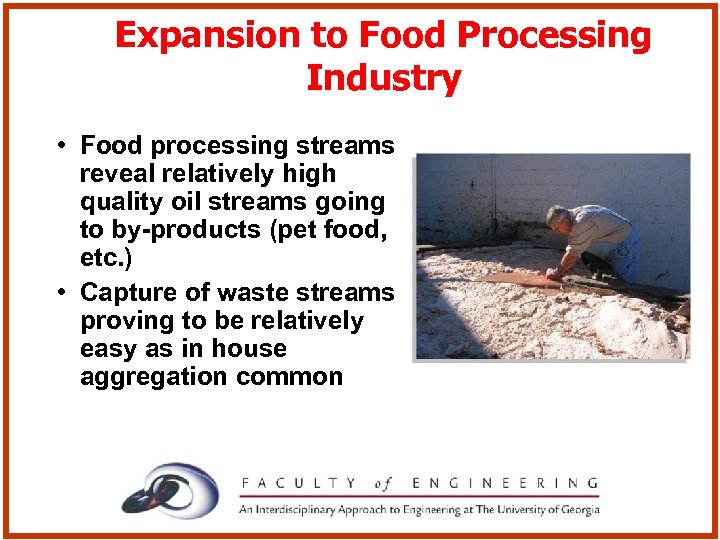
Expansion to Food Processing Industry • Food processing streams reveal relatively high quality oil streams going to by-products (pet food, etc. ) • Capture of waste streams proving to be relatively easy as in house aggregation common
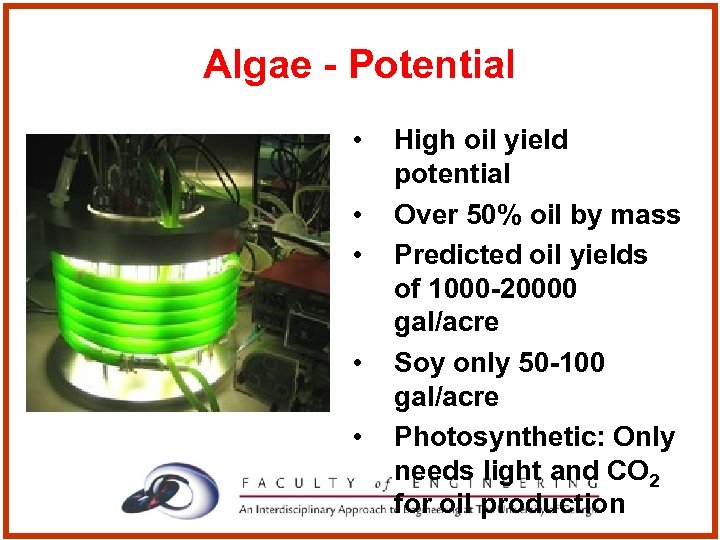
Algae - Potential • • • High oil yield potential Over 50% oil by mass Predicted oil yields of 1000 -20000 gal/acre Soy only 50 -100 gal/acre Photosynthetic: Only needs light and CO 2 for oil production
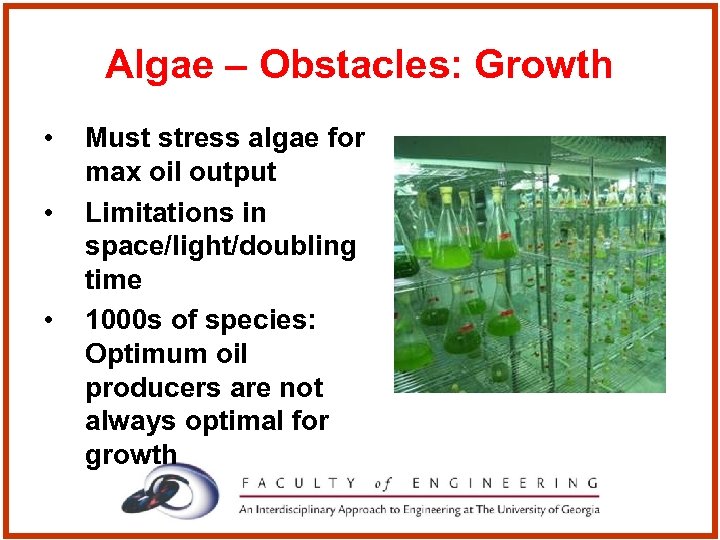
Algae – Obstacles: Growth • • • Must stress algae for max oil output Limitations in space/light/doubling time 1000 s of species: Optimum oil producers are not always optimal for growth
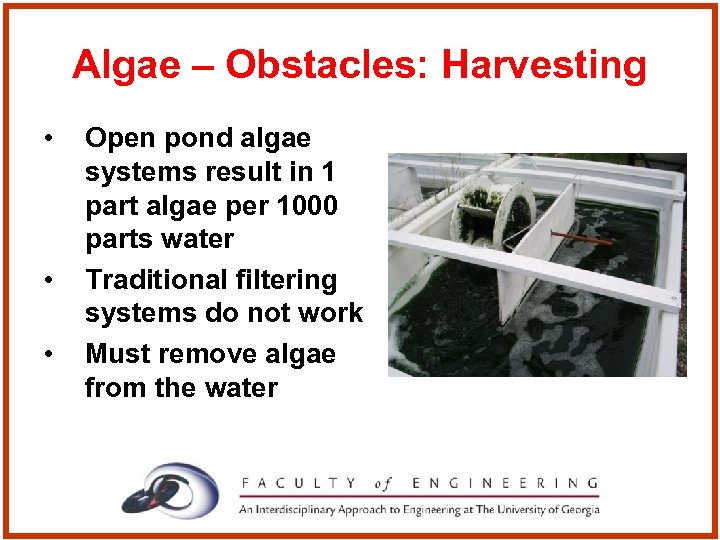
Algae – Obstacles: Harvesting • • • Open pond algae systems result in 1 part algae per 1000 parts water Traditional filtering systems do not work Must remove algae from the water
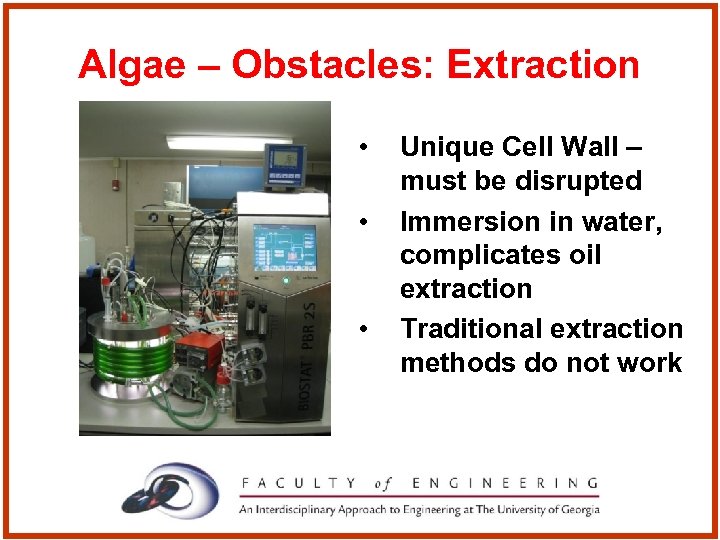
Algae – Obstacles: Extraction • • • Unique Cell Wall – must be disrupted Immersion in water, complicates oil extraction Traditional extraction methods do not work
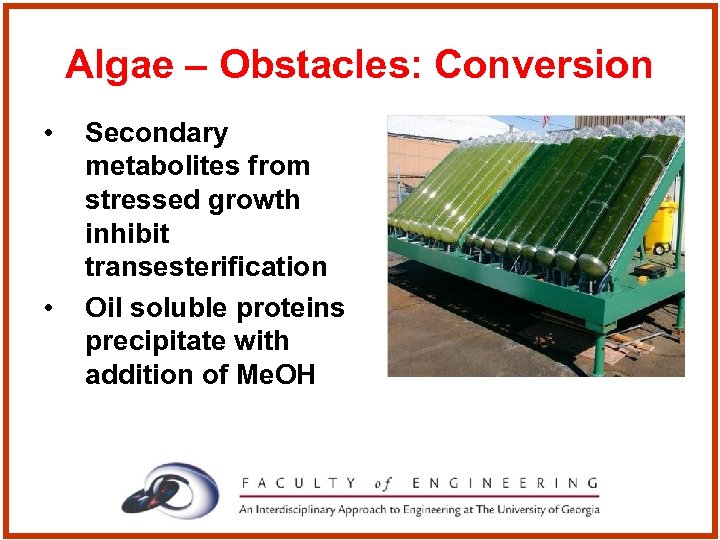
Algae – Obstacles: Conversion • • Secondary metabolites from stressed growth inhibit transesterification Oil soluble proteins precipitate with addition of Me. OH
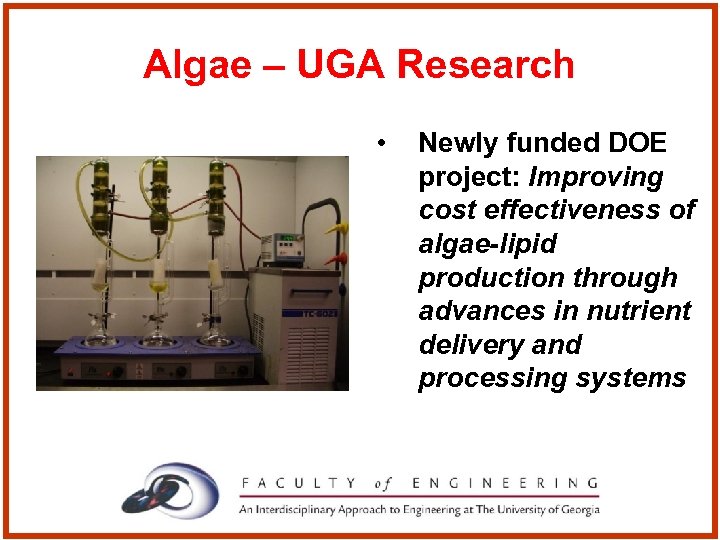
Algae – UGA Research • Newly funded DOE project: Improving cost effectiveness of algae-lipid production through advances in nutrient delivery and processing systems
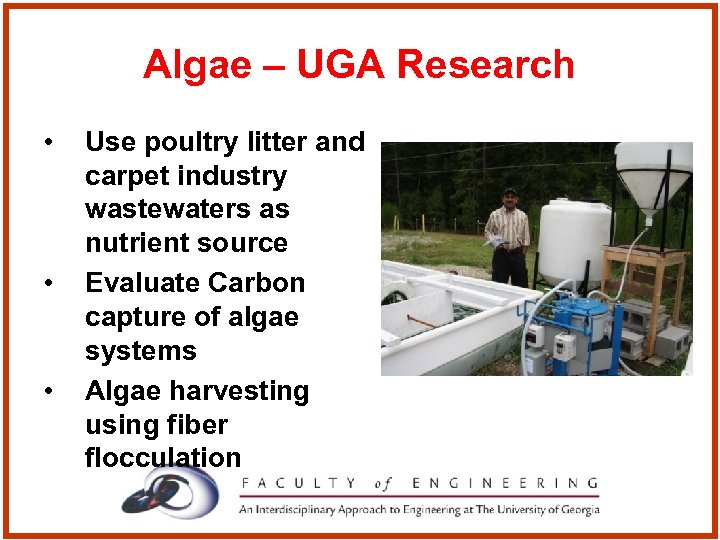
Algae – UGA Research • • • Use poultry litter and carpet industry wastewaters as nutrient source Evaluate Carbon capture of algae systems Algae harvesting using fiber flocculation
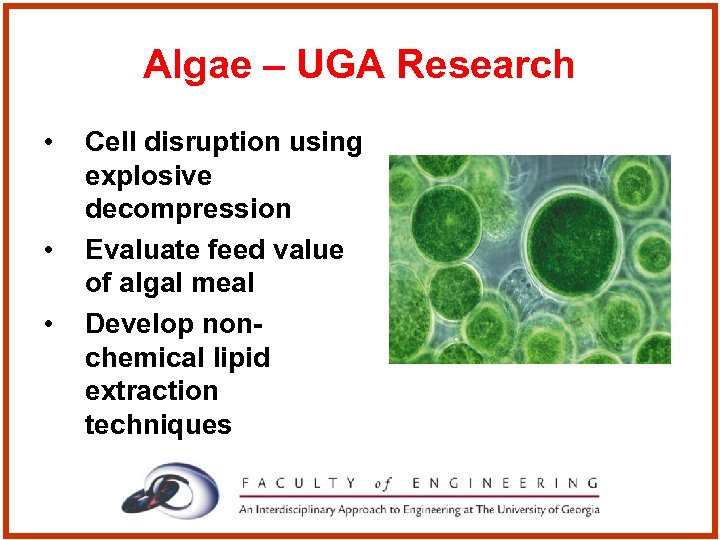
Algae – UGA Research • • • Cell disruption using explosive decompression Evaluate feed value of algal meal Develop nonchemical lipid extraction techniques
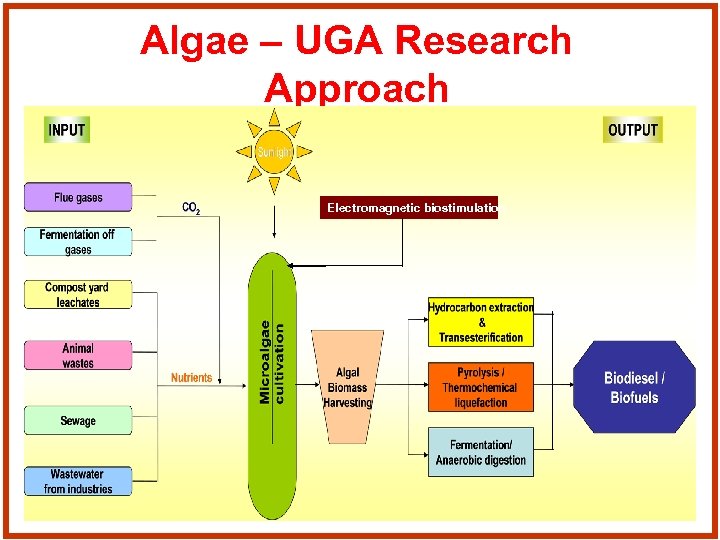
Algae – UGA Research Approach Electromagnetic biostimulation
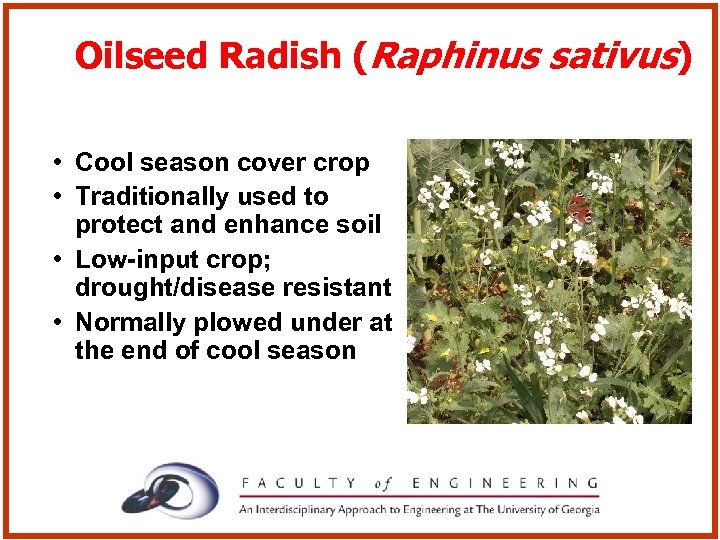
Oilseed Radish (Raphinus sativus) • Cool season cover crop • Traditionally used to protect and enhance soil • Low-input crop; drought/disease resistant • Normally plowed under at the end of cool season
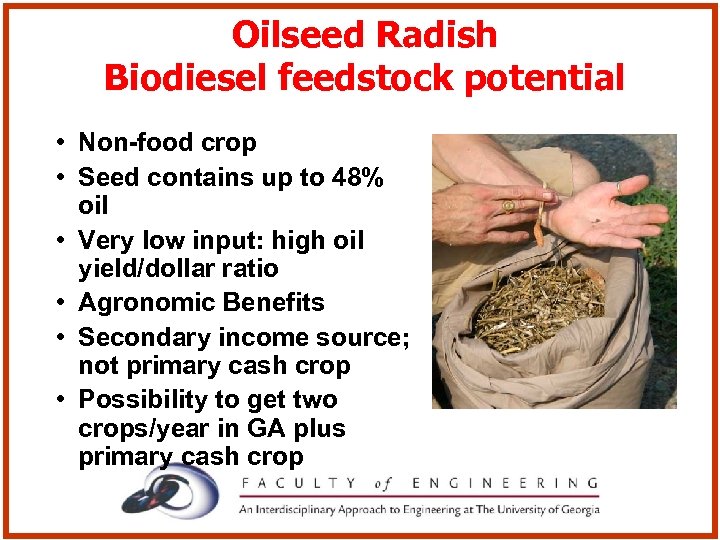
Oilseed Radish Biodiesel feedstock potential • Non-food crop • Seed contains up to 48% oil • Very low input: high oil yield/dollar ratio • Agronomic Benefits • Secondary income source; not primary cash crop • Possibility to get two crops/year in GA plus primary cash crop
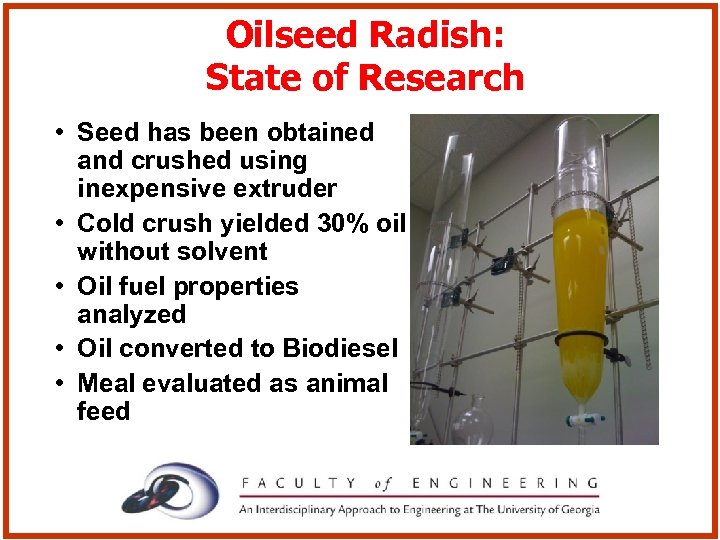
Oilseed Radish: State of Research • Seed has been obtained and crushed using inexpensive extruder • Cold crush yielded 30% oil without solvent • Oil fuel properties analyzed • Oil converted to Biodiesel • Meal evaluated as animal feed
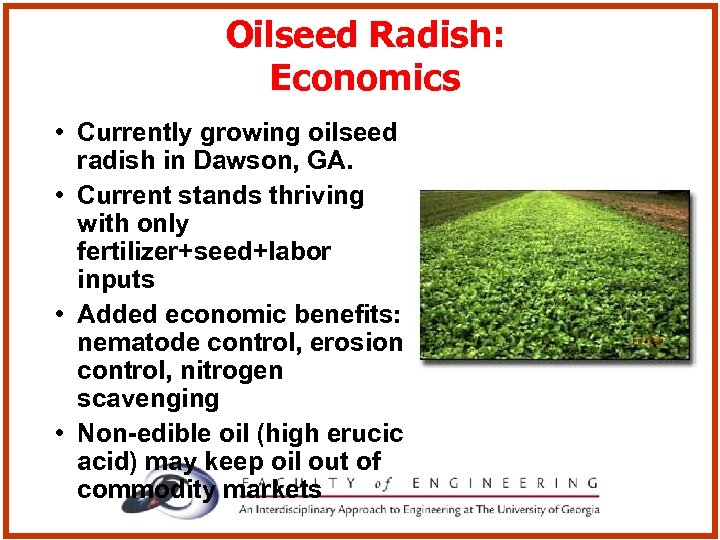
Oilseed Radish: Economics • Currently growing oilseed radish in Dawson, GA. • Current stands thriving with only fertilizer+seed+labor inputs • Added economic benefits: nematode control, erosion control, nitrogen scavenging • Non-edible oil (high erucic acid) may keep oil out of commodity markets

Daniel Geller dgeller@engr. uga. edu 706 -248 -1513 http: //www. engr. uga. edu/service/outreach
Скачать презентацию Biodiesel Research at The University of Georgia Daniel
06f91d98aa701d06367f8c79cf3481e1.ppt