 Скачать презентацию Biodiesel Fuel Prof Mohamed El-Kassaby BIODIESEL FUEL
ebba3f22ed8e5c2521ab09566789953a.ppt
- Количество слайдов: 56




Biodiesel Fuel – Prof. Mohamed El-Kassaby BIODIESEL FUEL Prepared by Professor Dr/ Mohamed M. El-Kassaby Prof. Dr. Mohamed M. El-Kassaby
What is it? § Biodiesel is a liquid fuel that can replace regular diesel fuel. It’s made from vegetable oil. § Biodiesel is produced from any fat or oil such as soybean oil. The production processes for biodiesel are well known. § Biodiesel can run diesel engines that are commonly found in big vehicles such as trucks, buses, or boats. On the island of Maui, Biodiesel fuel is already available to county and private fleets. Prof. Dr. Mohamed M. El-Kassaby
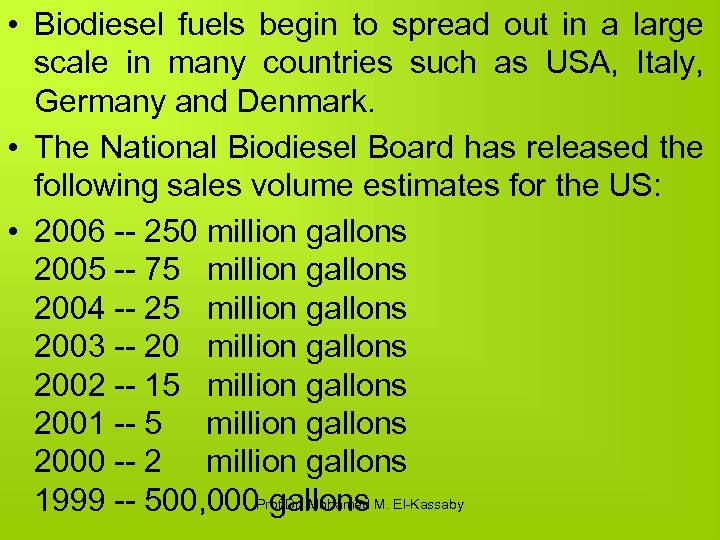
• Biodiesel fuels begin to spread out in a large scale in many countries such as USA, Italy, Germany and Denmark. • The National Biodiesel Board has released the following sales volume estimates for the US: • 2006 -- 250 million gallons 2005 -- 75 million gallons 2004 -- 25 million gallons 2003 -- 20 million gallons 2002 -- 15 million gallons 2001 -- 5 million gallons 2000 -- 2 million gallons Prof. Dr. Mohamed M. El-Kassaby 1999 -- 500, 000 gallons

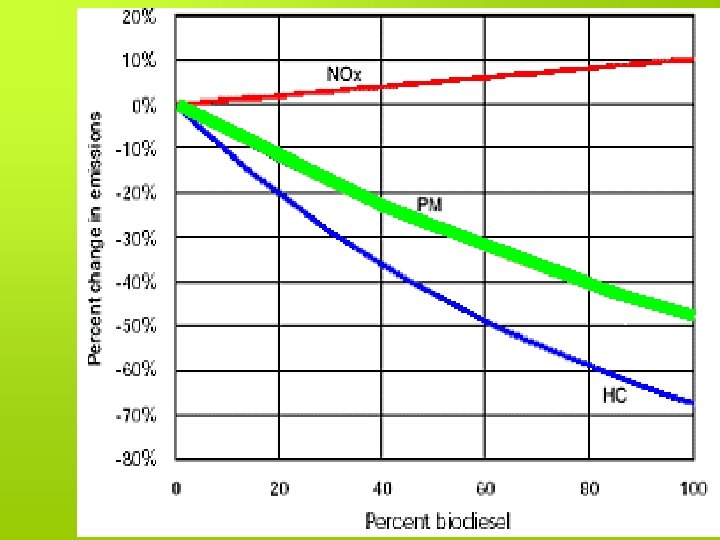
Why Biodiesel? § Regular diesel fuel particulates are carcinogenic (can cause cancer). Using biodiesel fuel, or blending it with regular diesel fuel, can reduce the production of these cancer-causing emissions. In other words, it’s healthier! Prof. Dr. Mohamed M. El-Kassaby
§Biodiesel can be made from waste vegetable oil (such as used oil from deep fryers at restaurants). This waste oil can be difficult to dispose of. Making fuel out of it can put it to a good use, and at the same time, reduce disposal problems. Prof. Dr. Mohamed M. El-Kassaby
§ Biodiesel is a renewable fuel. § Biodiesel can help create new jobs; also, keeping our air clean helps everybody enjoy life more. § Biodiesel may be used in existing diesel engines without necessitating engine modifications, and its use does not result in a shortening of engine life or the need for more frequent servicing. Prof. Dr. Mohamed M. El-Kassaby
• What are the benefits of Biodiesel? • Biodiesel has many environmentally beneficial properties. The main benefit of biodiesel is that it can be described as ‘carbon neutral’. This means that the fuel produces no net output of carbon in the form of carbon dioxide (CO 2). This effect occurs because when the oil crop grows it absorbs the same amount of CO 2 as is released when the fuel is combusted. In fact this is not completely accurate as CO 2 is released during the production of the fertilizer required to fertilize the fields in which the oil crops are grown. Prof. Dr. Mohamed M. El-Kassaby

• Biodiesel is rapidly biodegradable and completely non-toxic, meaning spillages represent far less of a risk than fossil diesel spillages. • Biodiesel has a higher flash point than fossil diesel and so is safer in the event of a crash. Prof. Dr. Mohamed M. El-Kassaby
Prof. Dr. Mohamed M. El-Kassaby
• What are the main issues when switching from conventional diesel to biodiesel? • The main operating issues are cold weather operability, engine and fuel system compatibility, and the solvency properties of biodiesel. B 100 does not flow as well as petroleum diesel in cold temperatures, and requires special additives or fuel heating systems to operate in colder climates. B 100 may cause rubber seals and gaskets from engines older than 1994 to wear faster or fail. Biodiesel also acts as a solvent, which can dissolve sediments in diesel fuel tanks and clog fuel filters during an initial transition from Prof. Dr. Mohamed M. El-Kassaby petroleum diesel.
• Despite these issues, some fleets are successfully using B 100. Berkeley, California is successfully running 100% biodiesel in 90% of their public diesel fleet vehicles including fire trucks. Using B 20 minimizes or eliminates most of the concerns with B 100 and is therefore more widely used. Prof. Dr. Mohamed M. El-Kassaby
Did you know? § Biodiesel can be used in pure form or blended with regular diesel in any proportion. § Biodiesel can even make engines smell better. An engine powered by biodiesel actually smells like French fries! § Biodiesel fuel is a good lubricant, which helps engines to last longer. § It also has a high Cetane rating, which improves engine operation. Prof. Dr. Mohamed M. El-Kassaby
§ Adding just 20% biodiesel to regular diesel improves the diesel’s Cetane rating by 3 points, which makes it a "premium" fuel. § Biodiesel buses are in use in Europe and in the Midwestern United States. Prof. Dr. Mohamed M. El-Kassaby
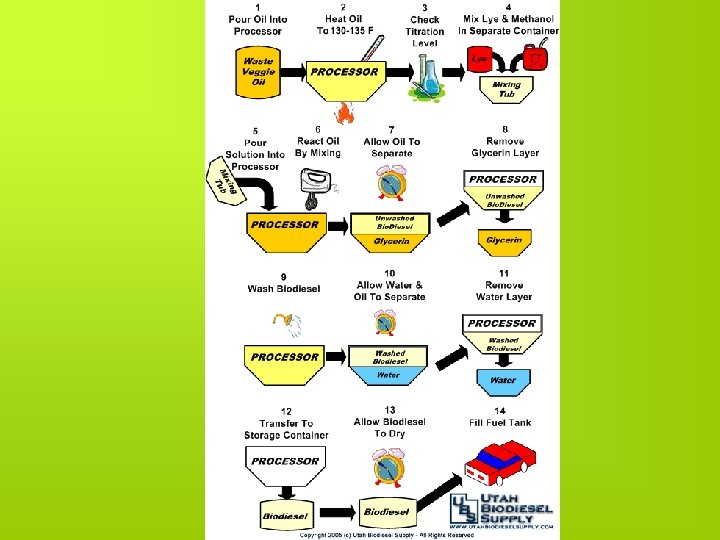
The process § Vegetable oils and animal fats are triglycerides, containing glycerin. The biodiesel process turns the oils and fats into esters (group C=O), separating out the glycerin. The glycerin sinks to the bottom and the biodiesel floats on top and can be syphoned off. The process is called transesterification, which substitutes alcohol for the glycerin in a chemical reaction, using sodium hydroxide as a catalyst. Quantities: 5 (Oil): 1 (alcohol) by volume with almost twice the weight of alcohol used from sodium Prof. Dr. Mohamed M. El-Kassaby hydroxide Na. OH
• There are some steps to use this method in producing biodiesel fuels such as: • Mixing of alcohol and catalyst: The catalyst is typically sodium hydroxide (caustic soda) or potassium hydroxide (potash). It is dissolved in the alcohol using a standard agitator or mixer. • Reaction: The alcohol/catalyst mix is then charged into a closed reaction vessel and the oil or fat is added. • The system from here on is totally closed to the atmosphere to prevent the loss of alcohol. The reaction mix is kept just above the boiling point of the alcohol (around 160 °F) to speed up the reaction and the reaction takes place. Recommended reaction time varies from 1 to 8 hours, and some systems recommend the reaction take place at room temperature. Excess alcohol is normally used to ensure total conversion of the fat or oil to its esters. Prof. Dr. Mohamed M. El-Kassaby
• Care must be taken to monitor the amount of water and free fatty acids in the incoming oil or fat. If the free fatty acid level or water level is too high it may cause problems with soap formation and the separation of the glycerin by-product downstream. • Separation: Once the reaction is complete, two major products exist: glycerin and biodiesel. Each has a substantial amount of the excess methanol that was used in the reaction. The reacted mixture is sometimes neutralized at this step if needed. The glycerin phase is much more dense than biodiesel phase and the two can be gravity separated with glycerin simply drawn off the bottom of the settling vessel. In some cases, a centrifuge is used to separate the two materials faster. Prof. Dr. Mohamed M. El-Kassaby
• Alcohol Removal: Once the glycerin and biodiesel phases have been separated, the excess alcohol in each phase is removed with a flash evaporation process or by distillation. In others systems, the alcohol is removed and the mixture neutralized before the glycerin and esters have been separated. • In either case, the alcohol is recovered using distillation equipment and is re-used. Care must be taken to ensure no water accumulates in the recovered alcohol stream. Prof. Dr. Mohamed M. El-Kassaby
• Glycerin Neutralization: The glycerin byproduct contains unused catalyst and soaps that are neutralized with an acid and sent to storage as crude glycerin. In some cases the salt formed during this phase is recovered for use as fertilizer. In most cases the salt is left in the glycerin. Water and alcohol are removed to produce 80 -88% pure glycerin that is ready to be sold as crude glycerin. In more sophisticated operations, the glycerin is distilled to 99% or higher purity and sold into the cosmetic and pharmaceutical markets. Prof. Dr. Mohamed M. El-Kassaby
• Methyl Ester Wash: Once separated from the glycerin, the biodiesel is sometimes purified by washing gently with warm water to remove residual catalyst or soaps, dried, and sent to storage. In some processes this step is unnecessary. This is normally the end of the production process resulting in a clear amberyellow liquid with a viscosity similar to petrodiesel. In some systems the biodiesel is distilled in an additional step to remove small amounts of color bodies to produce a colorless biodiesel. Prof. Dr. Mohamed M. El-Kassaby
Prof. Dr. Mohamed M. El-Kassaby
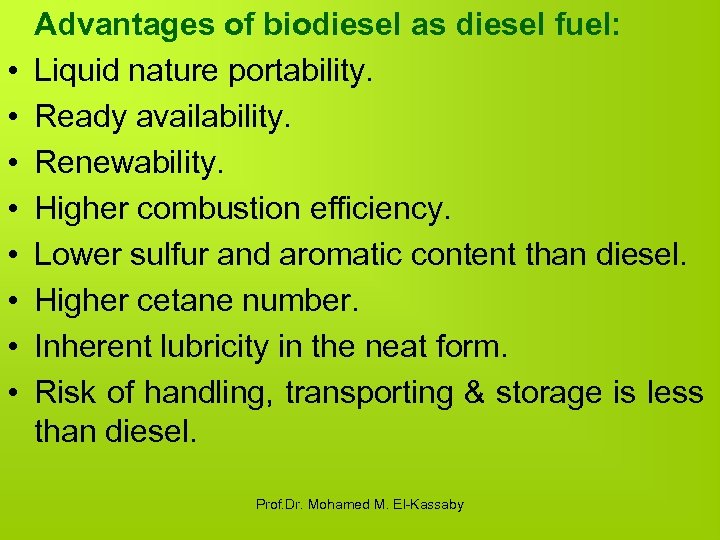
• • Advantages of biodiesel as diesel fuel: Liquid nature portability. Ready availability. Renewability. Higher combustion efficiency. Lower sulfur and aromatic content than diesel. Higher cetane number. Inherent lubricity in the neat form. Risk of handling, transporting & storage is less than diesel. Prof. Dr. Mohamed M. El-Kassaby
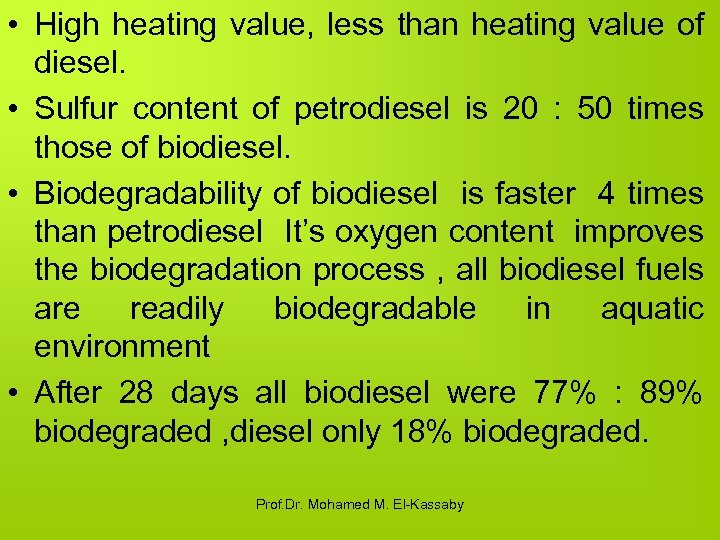
• High heating value, less than heating value of diesel. • Sulfur content of petrodiesel is 20 : 50 times those of biodiesel. • Biodegradability of biodiesel is faster 4 times than petrodiesel It’s oxygen content improves the biodegradation process , all biodiesel fuels are readily biodegradable in aquatic environment • After 28 days all biodiesel were 77% : 89% biodegraded , diesel only 18% biodegraded. Prof. Dr. Mohamed M. El-Kassaby
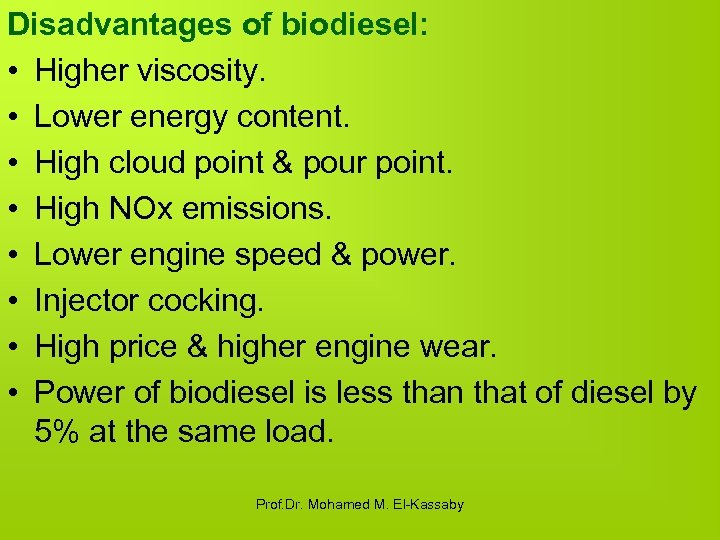
Disadvantages of biodiesel: • Higher viscosity. • Lower energy content. • High cloud point & pour point. • High NOx emissions. • Lower engine speed & power. • Injector cocking. • High price & higher engine wear. • Power of biodiesel is less than that of diesel by 5% at the same load. Prof. Dr. Mohamed M. El-Kassaby
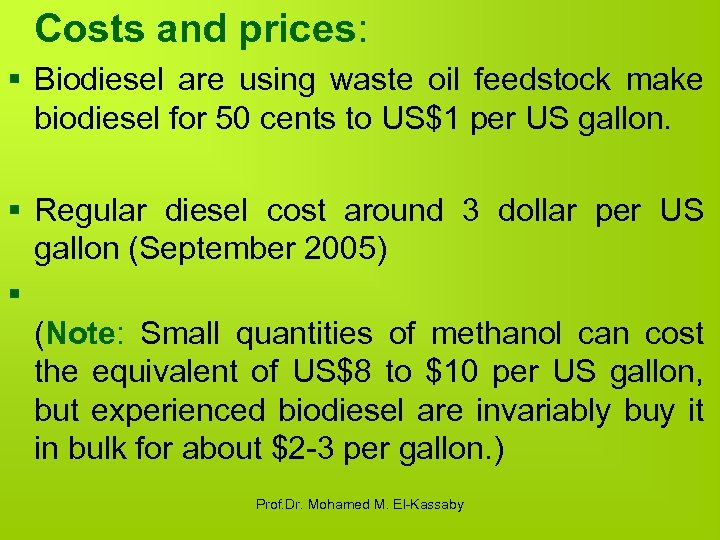
Costs and prices: § Biodiesel are using waste oil feedstock make biodiesel for 50 cents to US$1 per US gallon. § Regular diesel cost around 3 dollar per US gallon (September 2005) § (Note: Small quantities of methanol can cost the equivalent of US$8 to $10 per US gallon, but experienced biodiesel are invariably buy it in bulk for about $2 -3 per gallon. ) Prof. Dr. Mohamed M. El-Kassaby
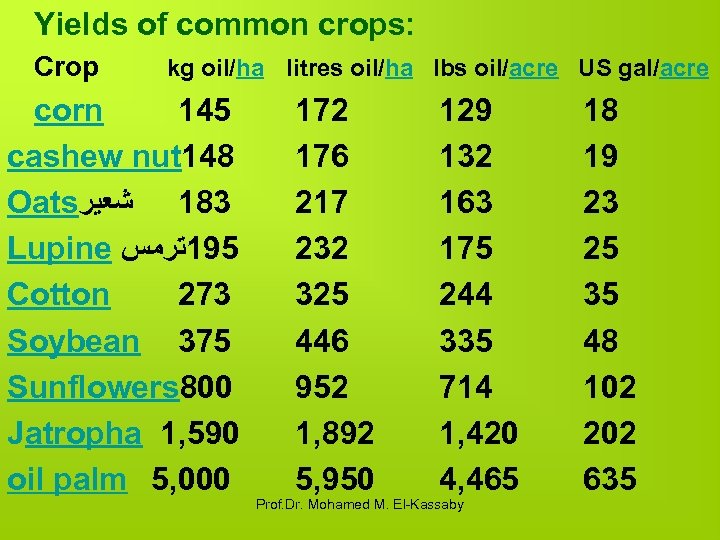
Yields of common crops: Crop kg oil/ha litres oil/ha lbs oil/acre US gal/acre corn 145 cashew nut 148 Oats 381 ﺷﻌﻴﺮ Lupine 591ﺗﺮﻣﺲ Cotton 273 Soybean 375 Sunflowers 800 Jatropha 1, 590 oil palm 5, 000 172 176 217 232 325 446 952 1, 892 5, 950 129 132 163 175 244 335 714 1, 420 4, 465 Prof. Dr. Mohamed M. El-Kassaby 18 19 23 25 35 48 102 202 635
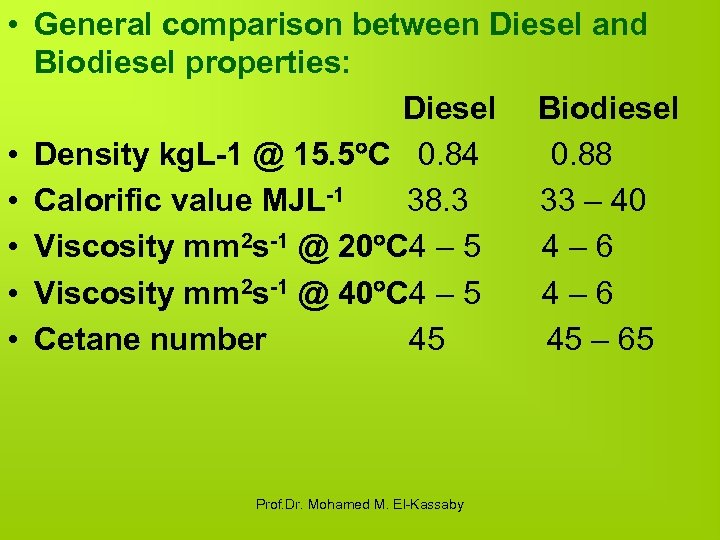
• General comparison between Diesel and Biodiesel properties: Diesel Biodiesel • Density kg. L-1 @ 15. 5 C 0. 84 0. 88 • Calorific value MJL-1 38. 3 33 – 40 • Viscosity mm 2 s-1 @ 20 C 4 – 5 4 – 6 • Viscosity mm 2 s-1 @ 40 C 4 – 5 4 – 6 • Cetane number 45 45 – 65 Prof. Dr. Mohamed M. El-Kassaby

Prof. Dr. Mohamed M. El-Kassaby
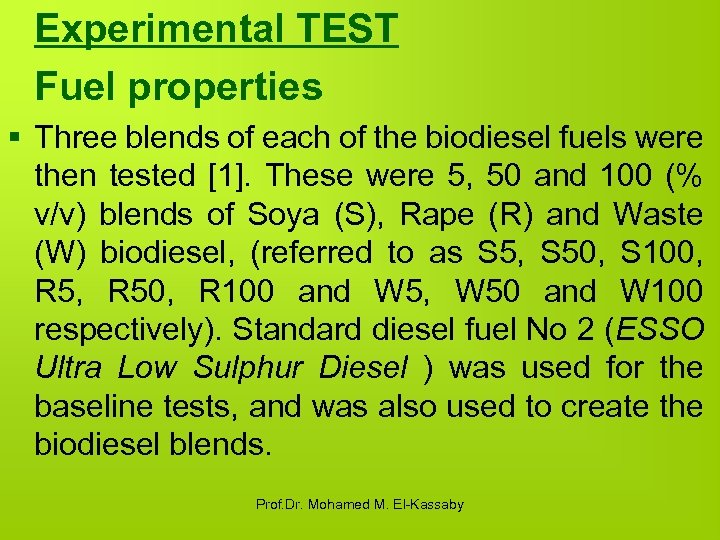
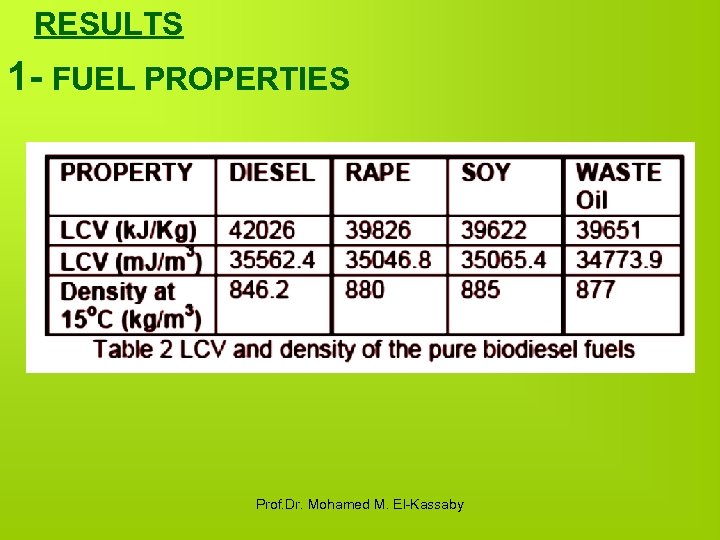
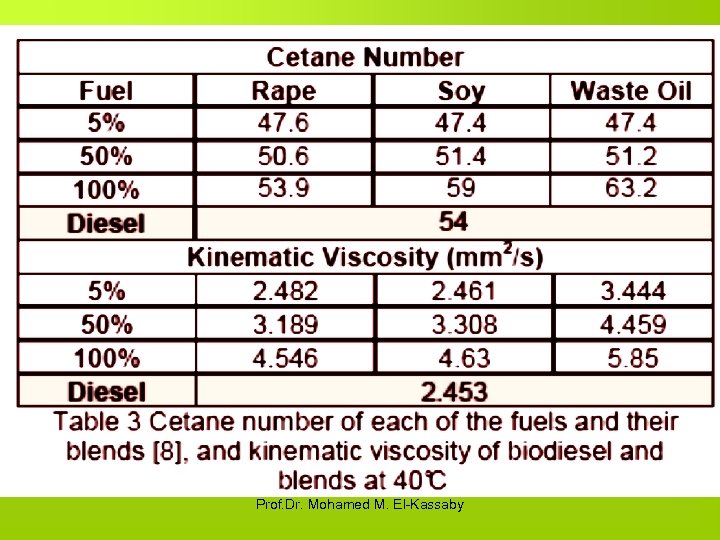
Experimental TEST Fuel properties § Three blends of each of the biodiesel fuels were then tested [1]. These were 5, 50 and 100 (% v/v) blends of Soya (S), Rape (R) and Waste (W) biodiesel, (referred to as S 5, S 50, S 100, R 50, R 100 and W 5, W 50 and W 100 respectively). Standard diesel fuel No 2 (ESSO Ultra Low Sulphur Diesel ) was used for the baseline tests, and was also used to create the biodiesel blends. Prof. Dr. Mohamed M. El-Kassaby
RESULTS 1 - FUEL PROPERTIES Prof. Dr. Mohamed M. El-Kassaby
Prof. Dr. Mohamed M. El-Kassaby
Prof. Dr. Mohamed M. El-Kassaby
Prof. Dr. Mohamed M. El-Kassaby
Prof. Dr. Mohamed M. El-Kassaby

• THE END Prof. Dr. Mohamed M. El-Kassaby

Prof. Dr. Mohamed M. El-Kassaby
2 - ENGINE POWER Prof. Dr. Mohamed M. El-Kassaby
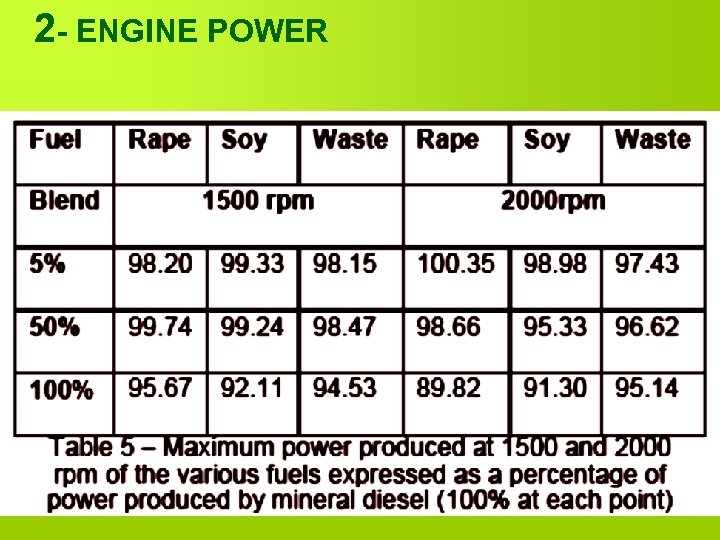
§ The power output of the engine will be reduced with biodiesel (biodiesel has less LHV). § W 100 has the highest CN and the highest power output. This would suggest that for unblended oils CN is a better indicator of performance than LCV. Prof. Dr. Mohamed M. El-Kassaby
3 - SPECIFIC ENERGY CONSUMPTION Prof. Dr. Mohamed M. El-Kassaby
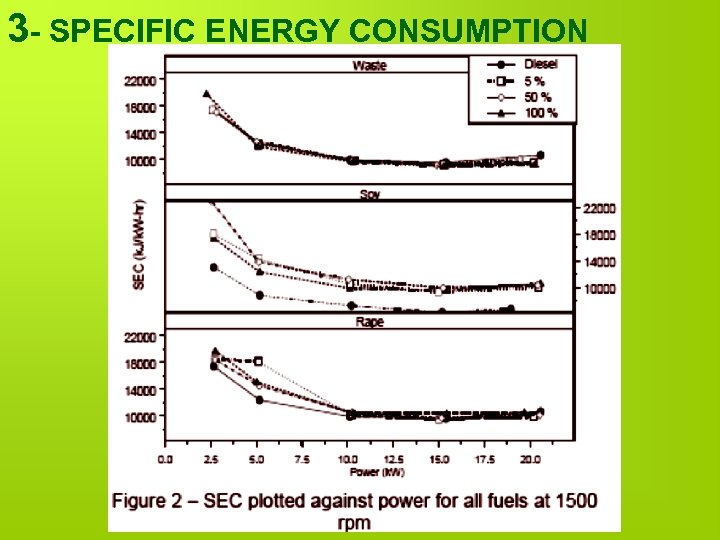
§ The data shows that there is little variation for 5% blends, and the 50% blends tend to show slightly higher SES than for mineral diesel. As expected, the reduced as load is increased); and the values tend to converge to similar values near 100% load. Prof. Dr. Mohamed M. El-Kassaby

§ It is unsurprising that SEC is higher for the biodiesel fuels, given their lower LCV. At low loads, the operating temperature is lower, which results in poor spray characteristics as the biodiesel fuels have higher viscosity. The net effect is that more fuel is required to produce the same power output. Prof. Dr. Mohamed M. El-Kassaby
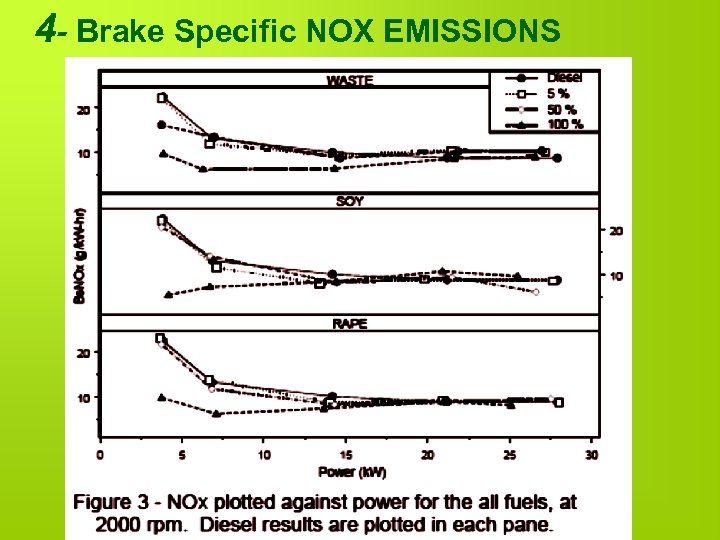
4 - Brake Specific NOX EMISSIONS Prof. Dr. Mohamed M. El-Kassaby
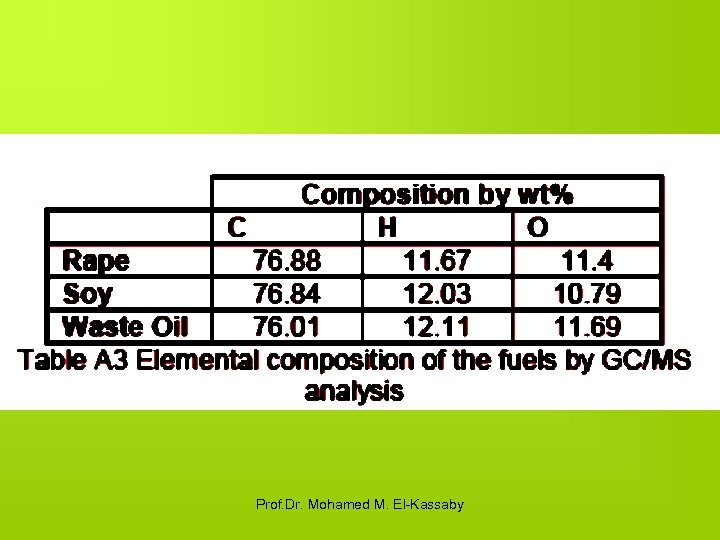
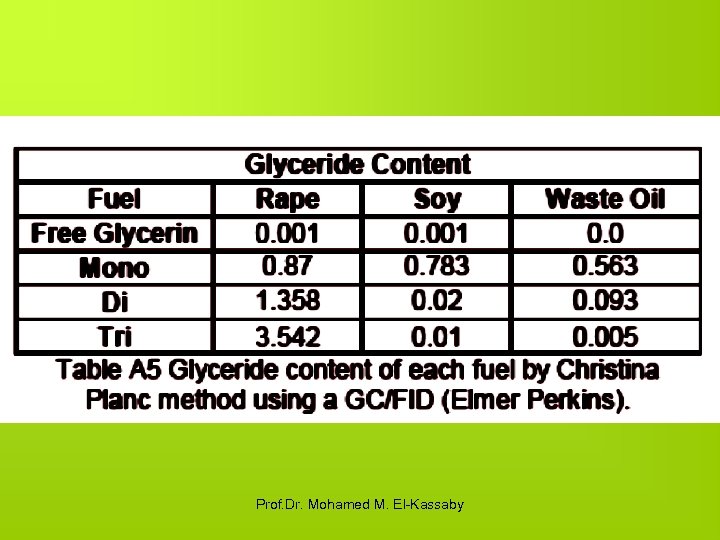
§ The difference in emissions of Bs NOx for all 5% blends compared with diesel are so small as to be negligible. § The most marked differences are observed at low loads where significant reductions in Bs. NOx are observed with biodiesel. For R 100 and S 100, Bs. NOx was reduced to approximately half of the diesel value. § Bs. NOx emissions were the lowest for soy biodiesel, which also has the lowest fuel borne Prof. Dr. Mohamed M. El-Kassaby oxygen content (table A 3).
§ A second reason for the lower Bs. NOx recorded in this study is thought to be due to the higher viscosity of the fuels leading to poor spray characteristics that reduced combustion efficiency and hence maximum combustion temperature [2]. § It is interesting to note that Salvatore and Maddaleena [3] found that NOx in a biodiesel fuelled engine can be significantly reduced by an EGR system that includes an oxidizing catalyst. Prof. Dr. Mohamed M. El-Kassaby
§ The convergence of Bs. NOx emission levels beyond 50% load is probably due to the increased in cylinder operating temperatures that reduce the effect of the increased viscosity of the biodiesel fuels compared with No 2 diesel. Prof. Dr. Mohamed M. El-Kassaby
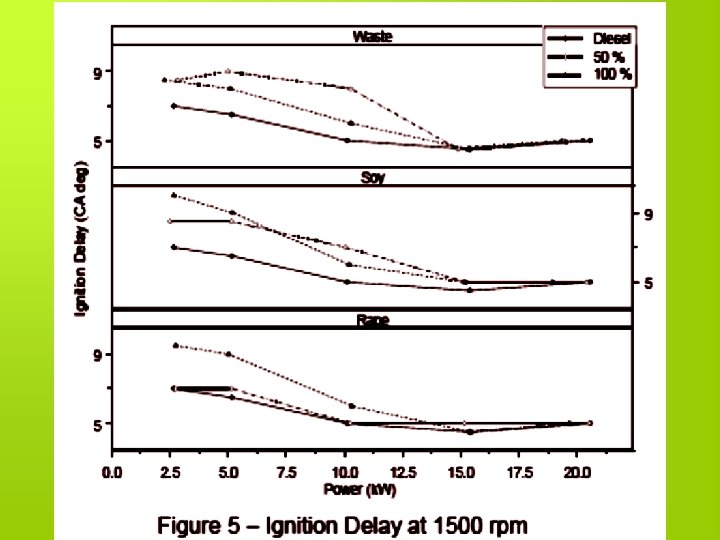
§ Higher viscosity in biodiesel fuels is known to result in poorer atomization, reduced spray penetration, decreased cone angle [4], and a greater droplet size, resulting in a lower amount of air entrainment leading to poorer combustion efficiency and hence lowers combustion temperatures which are confirmed by the extended ignition delays in figure 5. Prof. Dr. Mohamed M. El-Kassaby
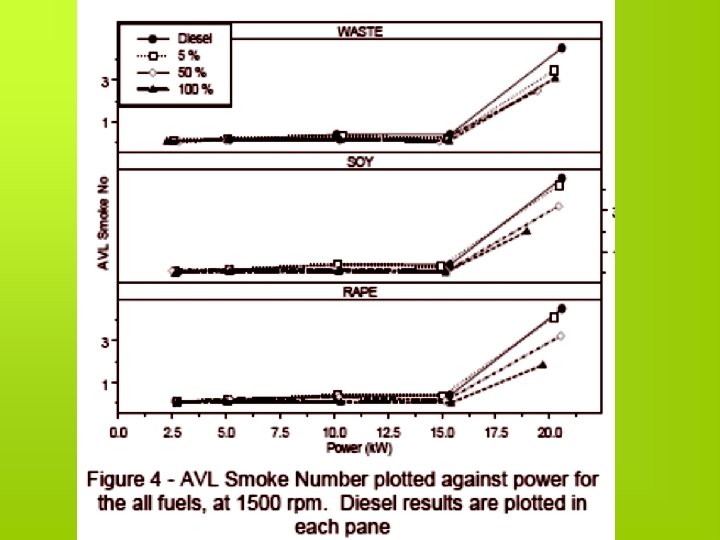
SMOKE EMISSIONS § At low load (up to approximately 5 k. W) there is negligible difference between the smoke emissions of any biodiesel as compared to mineral diesel. § Beyond 25% load, the emissions of smoke are always lower than for corresponding mineral diesel operation, except for the 5% blends where there is negligible difference, as shown in figure 4. Prof. Dr. Mohamed M. El-Kassaby
§ As the proportion of biodiesel is increased in the blend, the emissions of visible smoke decrease, except for the waste oil where the results from 50% blend and pure waste oil were virtually the same. Overall, the lowest smoke emissions were always recorded with rape blends. Prof. Dr. Mohamed M. El-Kassaby
Prof. Dr. Mohamed M. El-Kassaby
IGNITION DELAY § The ignition delay was calculated as the crank angle interval between start of injection and start of combustion, (found from experimental data). § Start of injection was defined as the crank angle where fuel line pressure first exceeded the nozzle opening pressure of 235 bar, and start of combustion was found from the heat release rate analysis. Prof. Dr. Mohamed M. El-Kassaby
Prof. Dr. Mohamed M. El-Kassaby
Conclusion A blend of 5% by volume of a biodiesel fuel in mineral diesel does not affect any of the measured performance or emissions characteristics. § This would imply that the addition of small quantities of biodiesel to mineral diesel is a suitable strategy for increasing alternative fuel consumption, at least in agricultural engines. Prof. Dr. Mohamed M. El-Kassaby
§ The initial findings presented in this paper suggest that for 50: 50 mixtures of biodiesel and mineral diesel, there is evidence of a two stage ignition process, with the diesel fuel igniting first, and hence controlling the combustion pattern of biodiesel. Whether this is only a result of blending procedure remains a subject for further research. Prof. Dr. Mohamed M. El-Kassaby
§ Ignition delay is longer with biodiesel than for mineral diesel, and shows complicated trends where biodiesel is blended with mineral diesel. This leads to delayed combustion and lower peak cylinder pressures than for mineral diesel, which contradicts the effects of the higher CN of the biodiesel fuels. Prof. Dr. Mohamed M. El-Kassaby
• -NOx emissions were reduced at low load with negligible effect on soot; at high load soot emissions were reduced with negligible effect on NOx. Thus the use of biodiesel fuels would appear to present a beneficial means of manipulating the traditional NOx/smoke tradeoff. Overall, in an unmodified engine, rape derivative fuel gave the best combustion and emissions performance. Prof. Dr. Mohamed M. El-Kassaby

Thank you Prof. Dr. Mohamed M. El-Kassaby

Prof. Dr. Mohamed M. El-Kassaby
Скачать презентацию Biodiesel Fuel Prof Mohamed El-Kassaby BIODIESEL FUEL
ebba3f22ed8e5c2521ab09566789953a.ppt