 Скачать презентацию Bio-control II HORT 378 Integrated Insect Disease Management
Bio-control II.pptx
- Количество слайдов: 30



Bio-control II HORT 378 Integrated Insect/Disease Management
Biopesticides • We have already talked about conventional pesticides. • The safety and environmental concerns in using these chemicals for the control of pests.
Biopesticides • To promote the use and development of alternative pesticides with greater safety and environmental compatibility the US Environmental Protection Agency – EPA – created a new category of pesticides for use in agriculture, the green industry and for the home owner.
Biopesticides • These new pesticides are called biopesticides. • Biopesticides are pesticides that generally come from natural material, such as: • Animals • Plants, • Microorganisms • Minerals • and even soil
Biopesticides • Biopesticides have some or all the following characteristics: • 1) unique mode of action • 2) narrow pest range • 3) low use volume • 4) natural occurrence
Biopesticides • Biopesticides and the way they are designed and used from the natural materials are safer to use, and have less overall environmental affect than “conventional” pesticides. • The process of going through the EPA registration process to have these material approved is generally a lot shorter: 1 -2 years vs. 5 -7 years for conventional pesticides.
Biopesticides • Biopesticides are effective in small doses, decompose or breakdown quickly. • Thus avoiding the potential problems of environmental pollution problems of conventional pesticides. • Usually biopesticides target specific pests while not affecting beneficial, or biocontrol insects.
Biopesticides • There are three major classes of biopesticides: • 1) Microbial pesticides • 2) Biochemical pesticides • 3) Plant-incorporated protectants. • This last class has fallen out of favor in recent years. More about this later.
Microbial pesticides • This types of pesticide usually uses the same equipment as conventional insecticides in their applications. • Most of these pesticides in this class are aimed at or used in the control of insects.
Microbial pesticides • Microbial pesticides are in affect delivering disease organisms to pest hosts. • These microorganisms include: • Bacteria • Viruses • Fungi
Microbial pesticides • Bacteria • Spore-forming bacteria, particularly Bacillus species, have been successful • These bacteria are quite specific in the target pests they go after. • For example: Bacillus papilliae targets the grubs of Japanese beetle.
Microbial pesticides • Bacillus thuringiensis, also called Bt. , is the most commonly used biocontrol agent used in North America. • Bt. has a number of verities or subspecies that are used to fight a number of insect pest. See Table 12: 1 on page 436 of your textbook.
Microbial pesticides • Because Bacillus is a bacteria the timing of its application is important. • Bacteria are affected by the ultra-violet light from the sun, so they need to be applied in the late afternoon or early evening to have its maximum affect in controlling the targeted pests.
Microbial pesticides • There are couple more bacteria that are showing good promise in controlling pest. • Streptomyces avermitilis & Saccharopolyspora spinosa, which are neurotoxins, are very effective in vegetable, fruit production, ornamental and trufgrass pest control.
Microbial pesticides • Fungi organisms have the ability to penetrate the cuticle (exoskeleton) of a pest insect. • Once inside the body cavity they multiple and spread. • Depending on the fungi, toxins are produced and death is rapid, or • The body nutrients are used up or the internal organs are destroyed and the pest dies.
Biochemical • Biochemical pesticides • Some of these chemicals are not naturally produced, but they are allowed to be used because they function like the real thing or has no, or very little safety or environmental impact problems.
Biochemical • Insect growth regulators (IGR’s) • Compounds that are used to disrupt the normal growth and development of immature insects. • Usually they disrupt the molting process or cause infertility in the newly emerging adults.
Biochemical • Suffocating agents • Oils, either mineral or soybean formulations, that block the airway of adult or pores of eggs to prevent the exchange of oxygen and the pest suffocates.
Biochemical • Pheromones • These are chemical attractants that are involved in finding an insect mate. • Usually it is the female that gives off this pheromone scent so males come to her for mating purposes.
Biochemical • Synthetic insect pheromones are produced for several reasons: • 1) to use in traps for surveillance • 2) confuse males – they cannot find a mate even though they think one is around, so it cuts down on breeding opportunities. • 3) attract and kill males.
Biochemical • The great percentage of these pheromones are aimed at pest moth insects. • Each insect pest species gives off its own unique pheromone chemical signature. • So synthetic pheromones need to be tailor made for each insect pest.
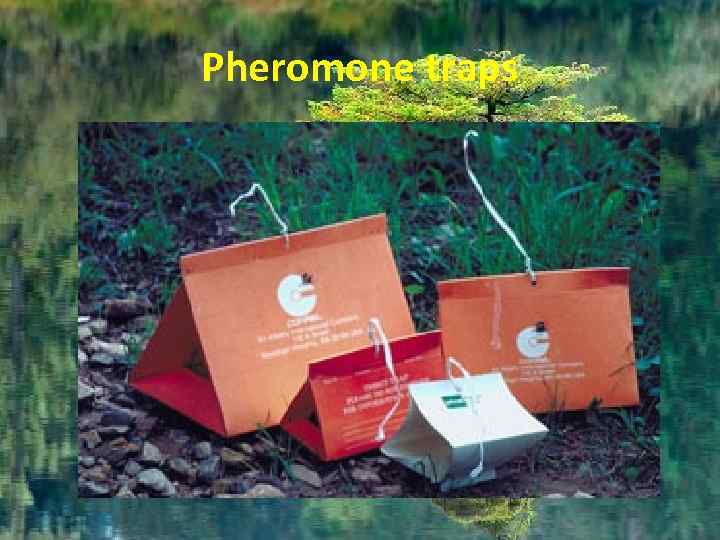
Pheromone traps
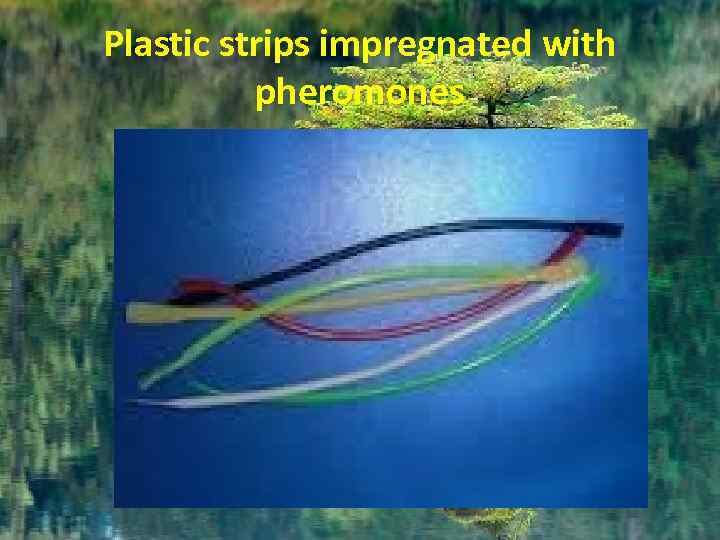
Plastic strips impregnated with pheromones
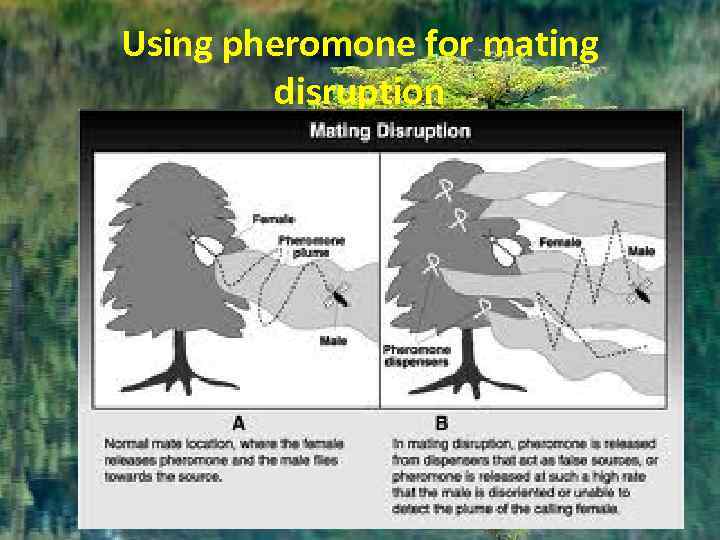
Using pheromone for mating disruption
Plant-incorporated protectants • Several years ago plant genetic researchers incorporated the genes of a different organism into plants that the plant would not normally have. • This was called transgenic plants. • The genetic material was put in the plants so that the plants could have built-in pesticide capability to ward off insect pest. • The organism of choice was Bt.
Plant-incorporated protectants • Several years ago plant genetic researchers incorporated the genes of a different organism into plants that the plant would not normally have. • This was called transgenic transfer. • The genetic material was put in the plants so that the plants could have built-in pesticide capability to ward off insect pest. • The organism of choice was Bt.
Plant-incorporated protectants • The scientist thought this was a win-win solution. • For the grower it meant less use of pesticides – less overall dollars being spent. • For the environmentalist less pesticides in the environment.
Plant-incorporated protectants • The USDA said “No problem”, because the genetic material introduced onto the plant made up less than one-tenth of one percent of the total makeup of the plant’s genetic material without impacting the quality of the plant. • Thus was created the genetically modified organism (GMO) plants. • These GMO’s where released for normal agricultural production to growers.
Plant-incorporated protectants • Some very powerful environmental groups went bonkers and started a very aggressive public relations campaign against the use of GMO’s in the production of food. • So these plants were pulled off the food supply chain. • So some of the food manufacturers had there own public relations/marketing campaign and labeled there food products as non-GMO’s, even though some of them never had the GMO’s in their product.
Plant-incorporated protectants • Now the use of plant-incorporated protectants is not a very viable way in the use of biopesticides, not because they did not work but because politics.
Скачать презентацию Bio-control II HORT 378 Integrated Insect Disease Management
Bio-control II.pptx