 Скачать презентацию Bio-control I HORT 378 Integrated Pest Disease Management
Bio-control I.pptx
- Количество слайдов: 26



Bio-control I HORT 378 Integrated Pest/Disease Management
Biocontrol • In the natural world there are many insects that attack crop, plants and animals • Most of these insects occur in very low numbers – so subsequently they are not considered pest • Or are sub-economic pests because their activity does not cause real economic loss.
Biocontrol • The reason for this is because of natural enemies. • Natural enemies: are living organisms found in nature that kill insects or weakens them which helps in their premature death. • A natural enemy reduces the potential pest population.
Biocontrol • Almost all insect populations are affected in one way or another by natural enemies. • This includes pest and non-pest insect alike. • A basic tenet or truth of IPM is to consider natural enemies as the first line of defense or alternative in pest control.
Biocontrol • The pest management tactic involving purposeful use of natural enemies to reduce pest populations is called biological control or biocontrol.
Biocontrol • Biocontrol is one of the oldest, most effective means of achieving insect pest control. • Earliest known historical record in the use of biocontrol goes back to the 4 th centaury in China where ants were used to control pest in citrus.
Biocontrol • Here in the USA one of the earliest and most successful uses of biocontrol happened in the late 1800’s. • The pest was: cottony cushion scale. • This pest sucks the juices out of plant. • It affected many trees, but it hit the citrus crop very heavily in California to the point that the citrus industry was about to go under.
Biocontrol • The body of the female cottony cushion scale is orange brown in color, but it has a white cottony egg sac attached to its body that could contain 600 -800 eggs. • The eggs would hatch and the nymph crawlers would begin feeding on the plant.
Biocontrol • A natural enemy of this pest was discovered in Australia and introduced to the US in 1888. • The natural enemy was a Lady beetle called the vedalia beetle (Rodolia cardinalis). • This beetle would lay its eggs either under the scale or on the egg sac. • The hatched beetle larvae would eat their way into the egg sac and eat the scale eggs or the nymph crawlers of the scale.
Biocontrol • Within 18 months of the introduction of the vedalia beetle the cottony cushion scale was successfully controlled to the point that today it is considered an occasional pest in the citrus orchards.
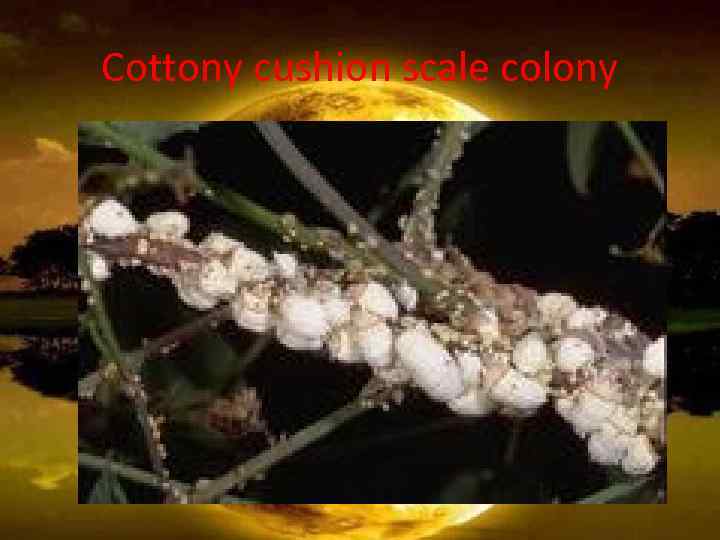
Cottony cushion scale colony
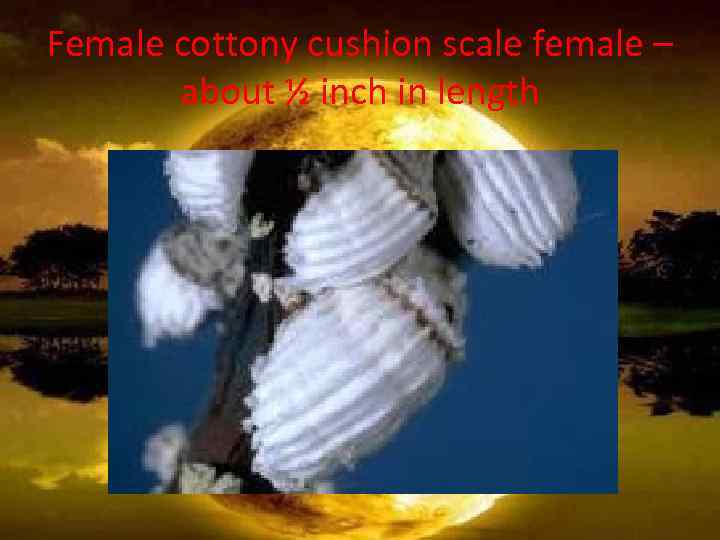
Female cottony cushion scale female – about ½ inch in length
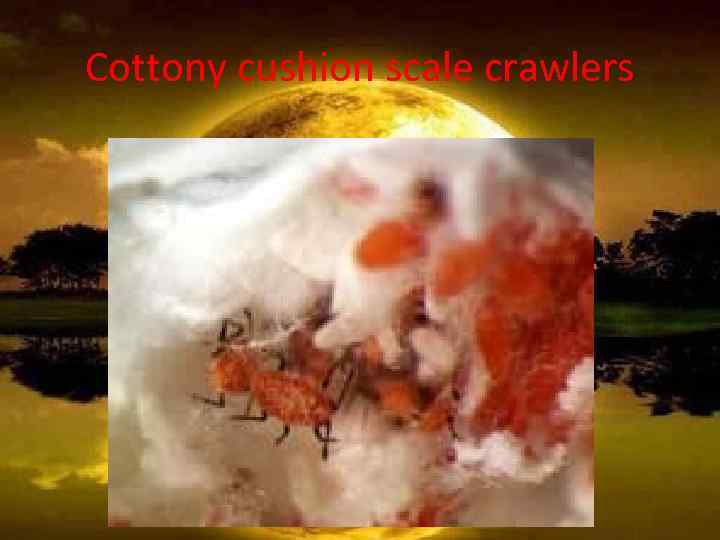
Cottony cushion scale crawlers
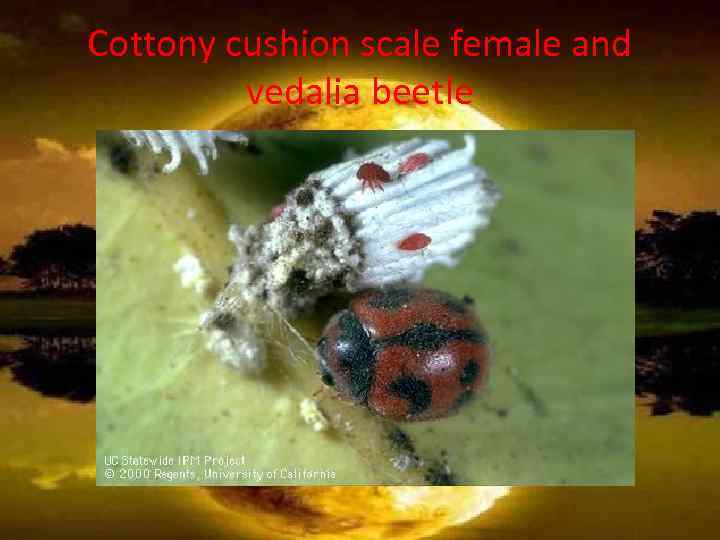
Cottony cushion scale female and vedalia beetle
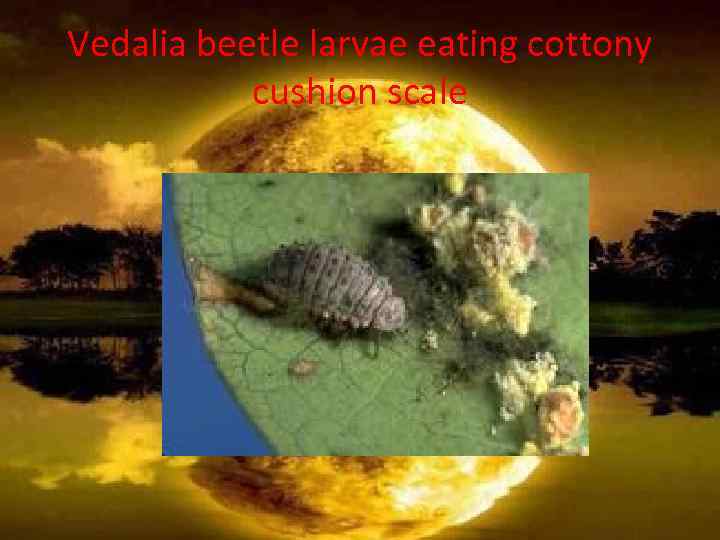
Vedalia beetle larvae eating cottony cushion scale
Biocontrol • There are three different kinds of biocontrol agents used in insect pest control: • Parasites • Parasitoids • Predators
Parasites • Parasites are organisms that spend their whole life on or inside another organisms. • They generally weaken the infected animal host. • In some case the host will be killed. • An example of a parasitic organism is a nematode that will infect the grubs (larvae) of beetle while in the soil.
Parasitoids • Insects that parasitize other insects and arthropods. • Parasitoids is parasitic in its immature stages, but is a free-living adult. • Parasitoids kill their hosts. • Parasitoids have been used more frequently in biocontrol that any other agent.
Parasitoids • For parasitoids to be effective in their control the life-cycles of the of both the pest and the parasitoid insect must be pretty close. • Also to be really effective the parasitoids must be present and active before the insect pest becomes an economic problem. • Once a pest population has reached to where economic damage is occurring other measures may have to be taken.
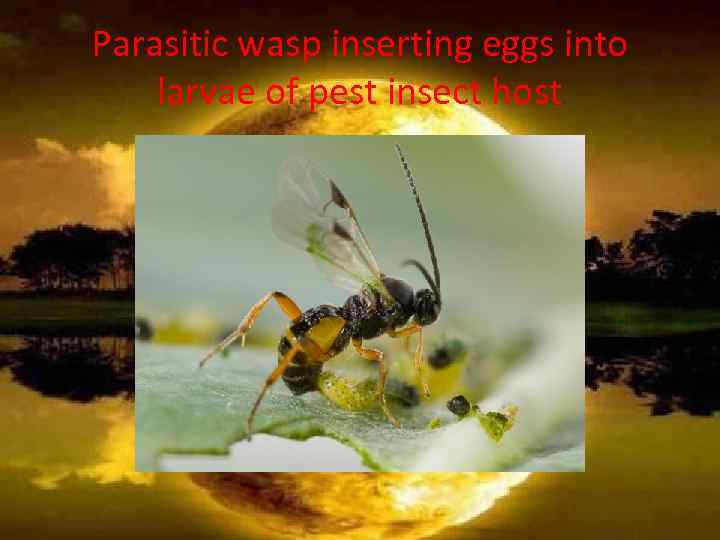
Parasitic wasp inserting eggs into larvae of pest insect host
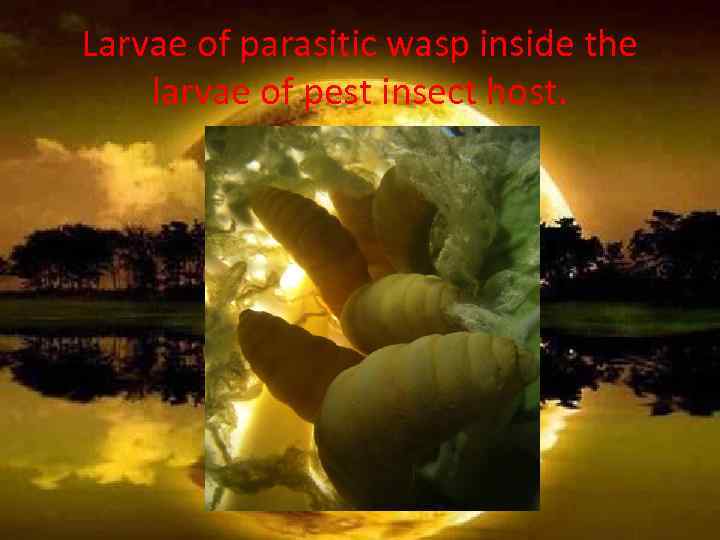
Larvae of parasitic wasp inside the larvae of pest insect host.
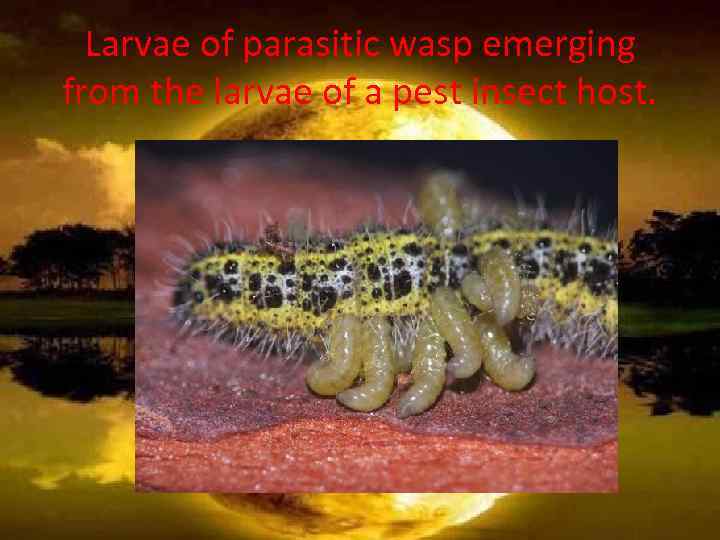
Larvae of parasitic wasp emerging from the larvae of a pest insect host.
Predators • Predators are free living animals that feed upon other animals. • Usually devouring them completely and in a relatively quick manner. • See the color plates 7 & 8 in your textbook on some of the biocontrol predators that are used to control pest insects.
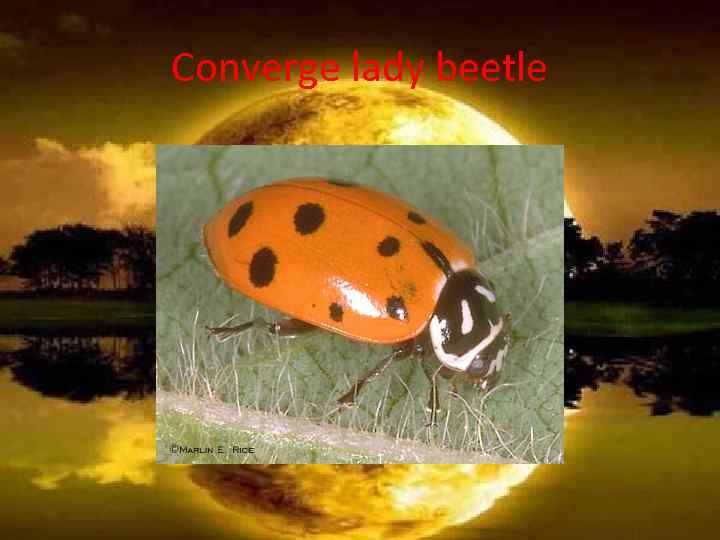
Converge lady beetle
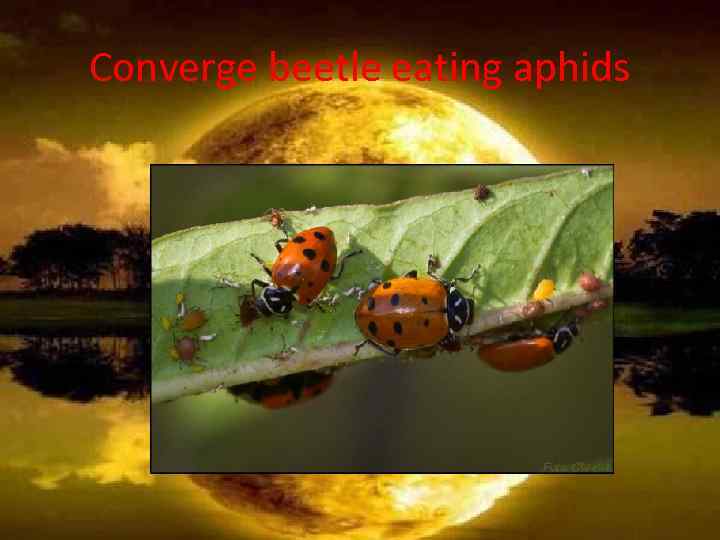
Converge beetle eating aphids
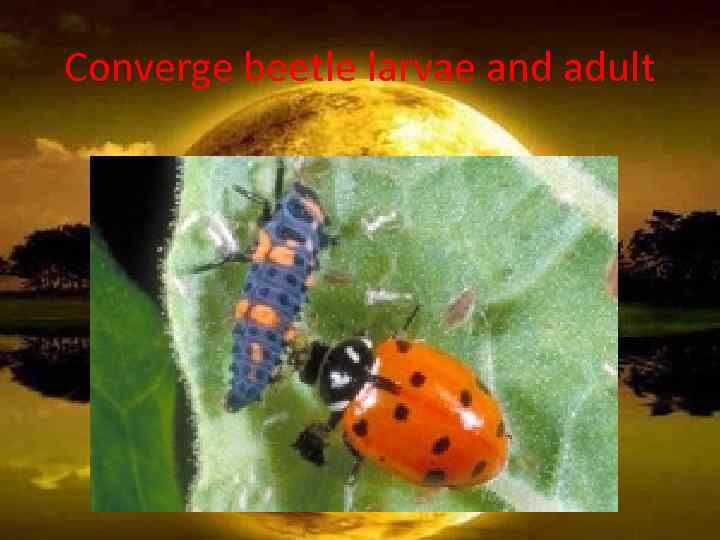
Converge beetle larvae and adult
Скачать презентацию Bio-control I HORT 378 Integrated Pest Disease Management
Bio-control I.pptx