 Скачать презентацию Big Questions in Science and Religion Samford University
bf72e180d49a35d6f1ab50f91e41cb36.ppt
- Количество слайдов: 79



Big Questions in Science and Religion Samford University Center for Science and Religion
What is the Relationship Between Mind, Brain, Consciousness, and Soul? Big Questions in Science and Religion Samford University Center for Science and Religion
Outline n n n n n Overview Who are you? What do we know about the brain? What is consciousness? How does meaning arise from mindless mechanisms? What is the soul? Do we have freewill? What does brain damage mean for conceptions of the soul, freewill, and God? Alternative perspectives on freewill Big Questions in Science and Religion Samford University Center for Science and Religion
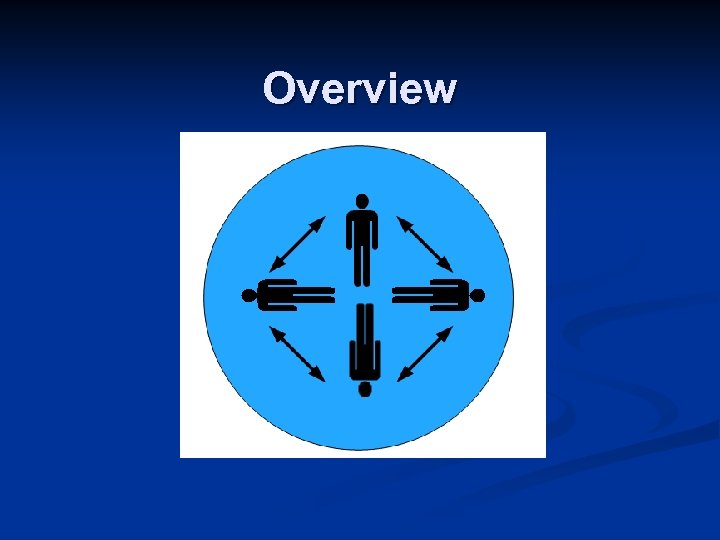
Overview Image Courtesy of Samford University Center for Science and Religion
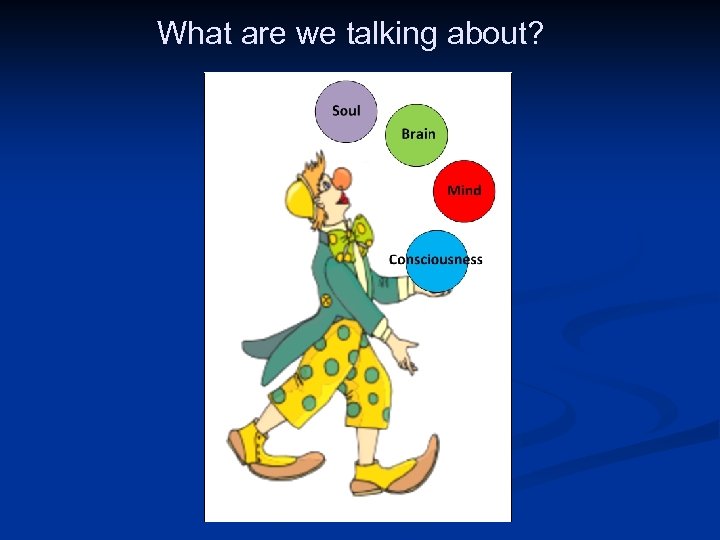
What are we talking about? Image adapted from http: //openclipart. org/detail/172164/juggler-clownby-sammo 241 -172164
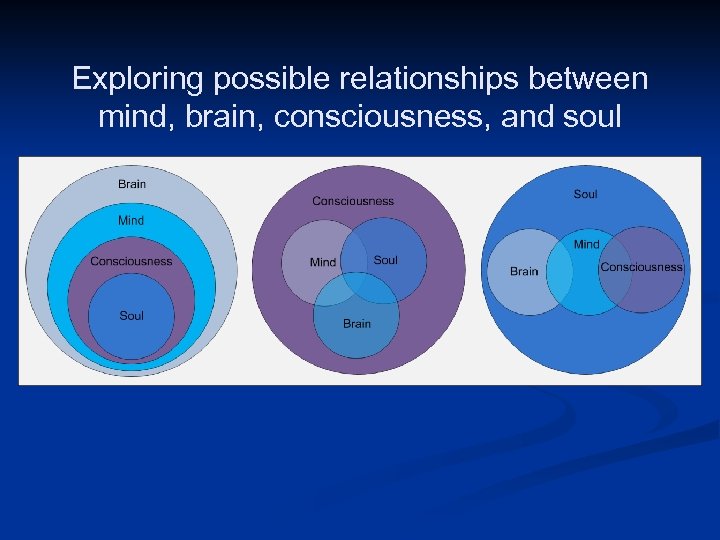
Exploring possible relationships between mind, brain, consciousness, and soul Image Courtesy of Samford University Center for Science and Religion
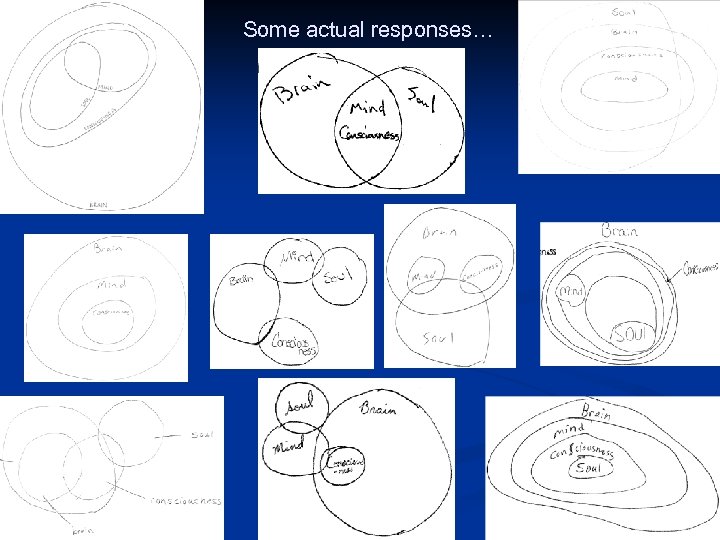
Some actual responses… Images Courtesy of Samford University Center for Science and Religion
Who Are You? Image Courtesy of Samford University Center for Science and Religion
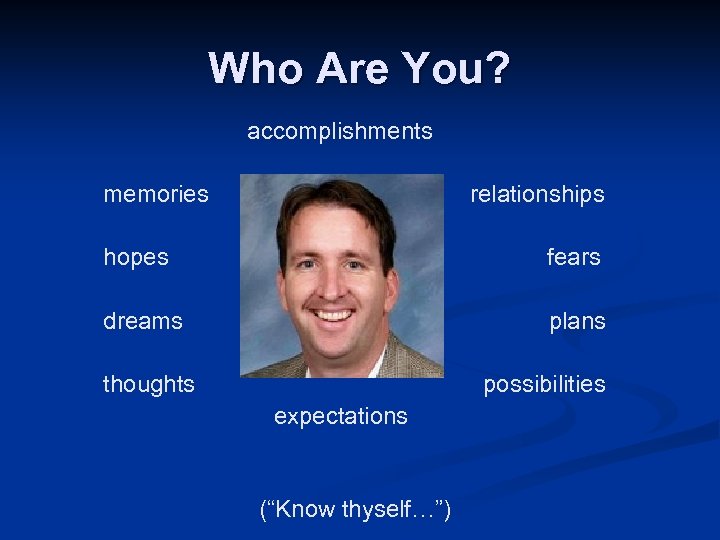
Who Are You? accomplishments memories relationships hopes fears Image Courtesy of Samford University Center for Science and Religion dreams plans thoughts possibilities expectations (“Know thyself…”)
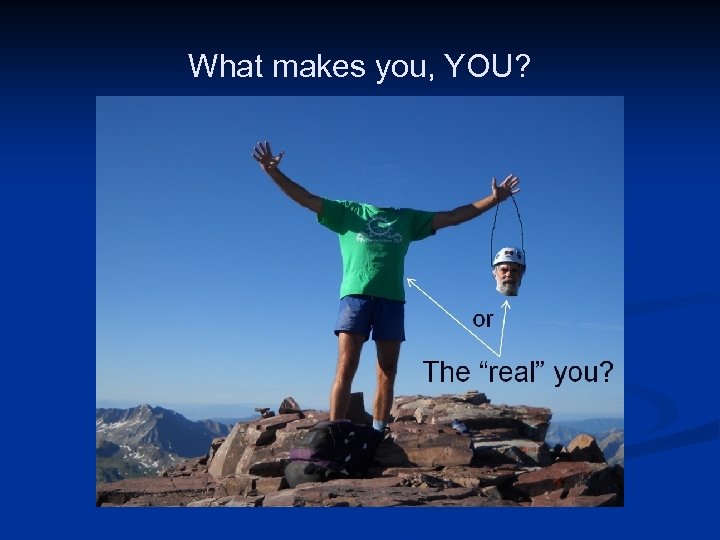
What makes you, YOU? Image Courtesy of Samford University Center for Science and Religion
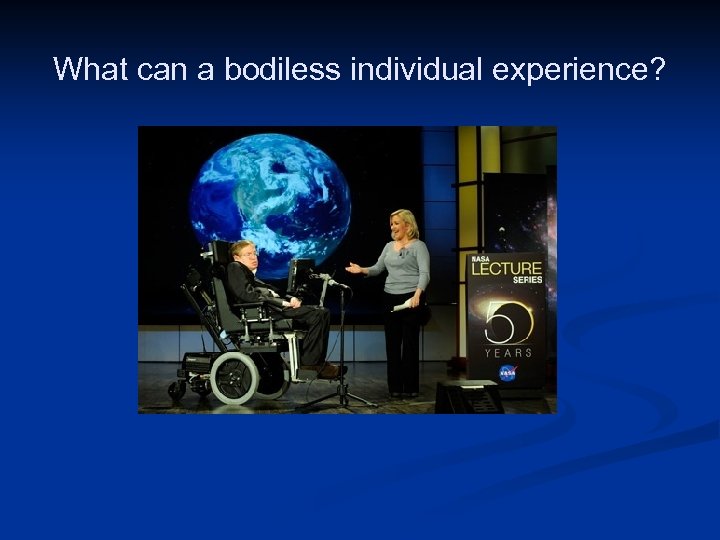
What can a bodiless individual experience? Public Domain Image http: //en. wikipedia. org/wiki/File: Stephen_hawking_and_lucy_hawking_nasa_2008. jpg
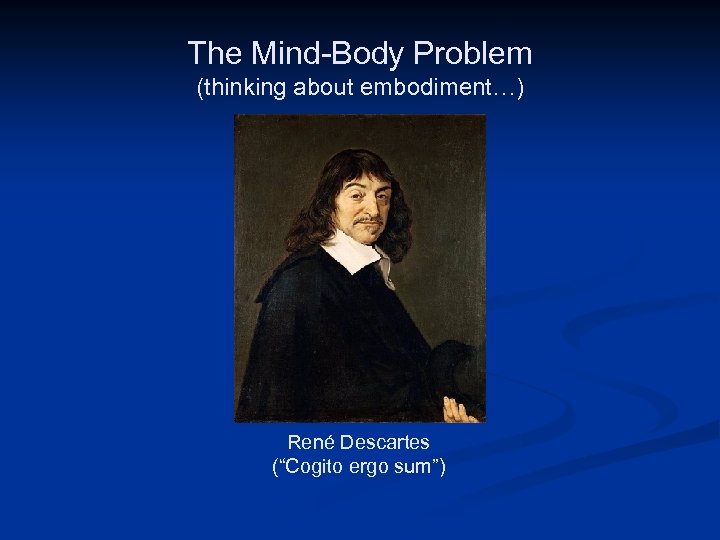
The Mind-Body Problem (thinking about embodiment…) Public Domain Image http: //en. wikipedia. org/wiki/File: Frans_Hals__Portret_van_Ren%C 3%A 9_Descartes. jpg René Descartes (“Cogito ergo sum”)
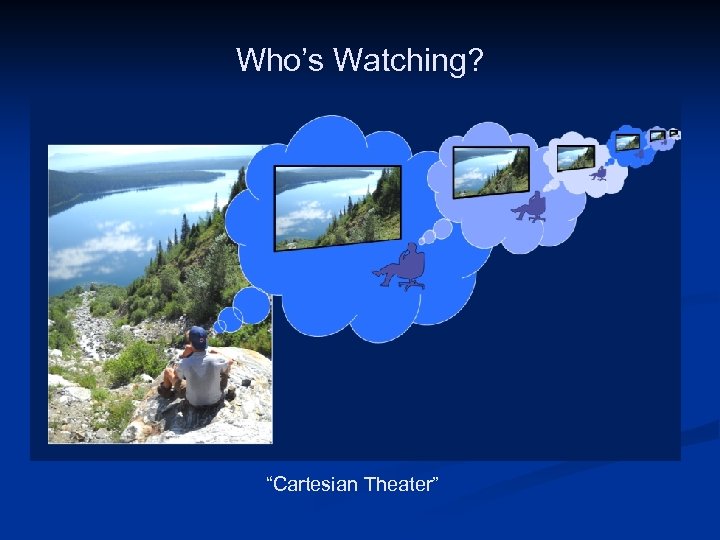
Who’s Watching? Image Courtesy of Samford University Center for Science and Religion “Cartesian Theater”
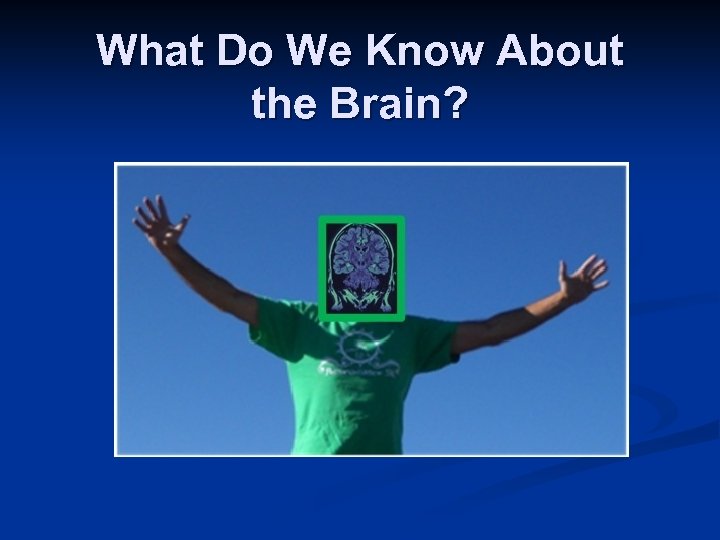
What Do We Know About the Brain? Image Courtesy of Samford University Center for Science and Religion; brain image adapted from: http: //www. morguefile. com/archive/display/24363
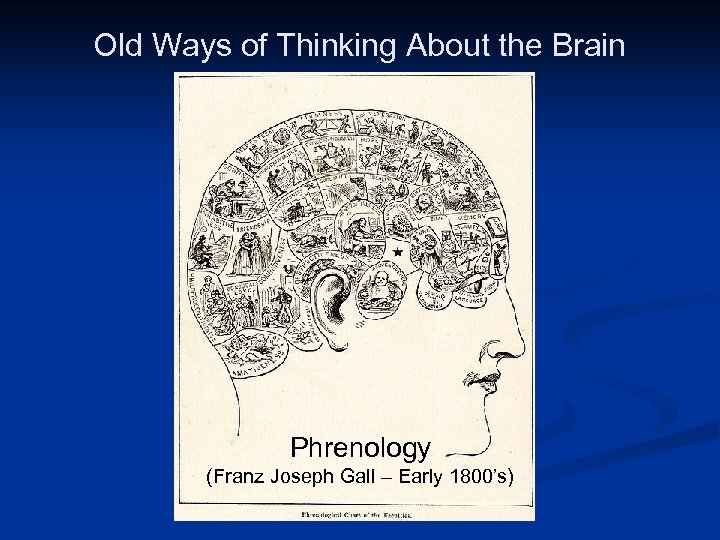
Old Ways of Thinking About the Brain Public Domain image: http: //en. wikipedia. org/wiki/File: Phrenology. Pix. jpg Phrenology (Franz Joseph Gall – Early 1800’s)
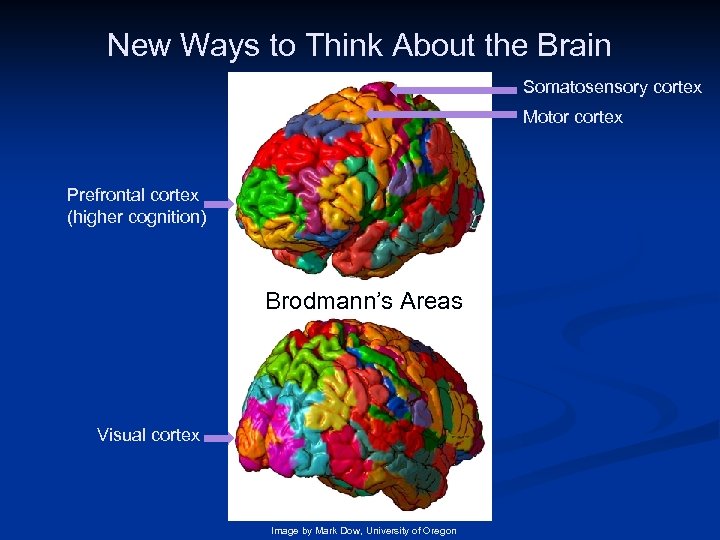
New Ways to Think About the Brain Somatosensory cortex Motor cortex Prefrontal cortex (higher cognition) Brodmann’s Areas Public Domain Image http: //en. wikipedia. org/wiki/File: Brodmann_areas_3 D. png Visual cortex Image by Mark Dow, University of Oregon
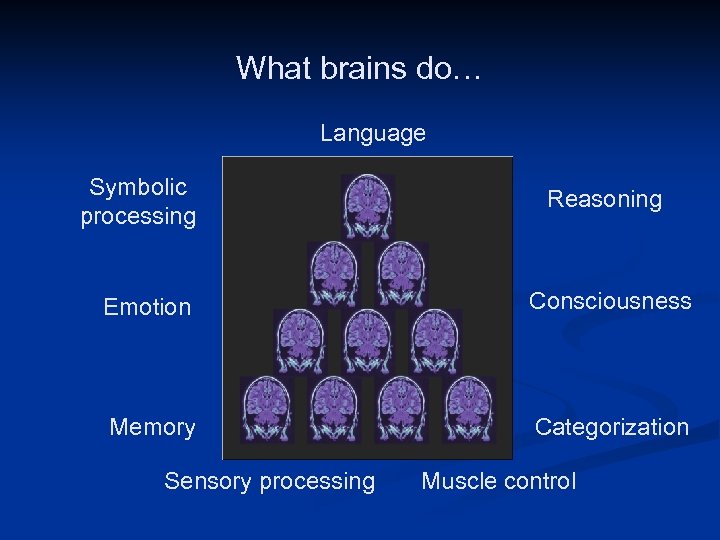
What brains do… Language Symbolic processing Reasoning Consciousness Emotion Image adapted from: http: //www. morguefile. com/archive/display/24363 Memory Sensory processing Categorization Muscle control
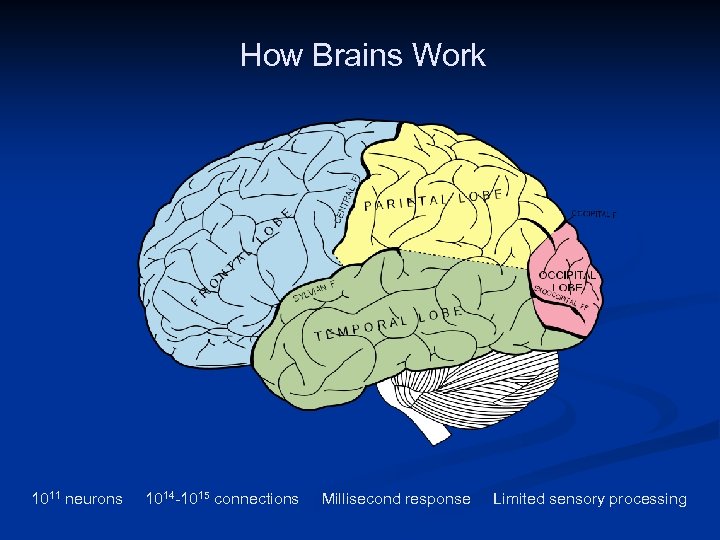
How Brains Work Public Domain Image http: //en. wikipedia. org/wiki/File: Gray 728. svg 1011 neurons 1014 -1015 connections Millisecond response Limited sensory processing
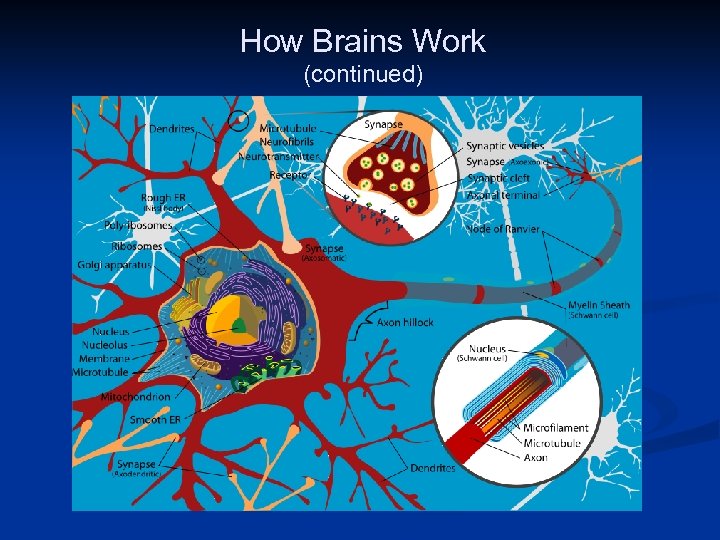
How Brains Work (continued) Public Domain Image: http: //en. wikipedia. org/wiki/File: Complete_neuron_cell_diagram_en. svg
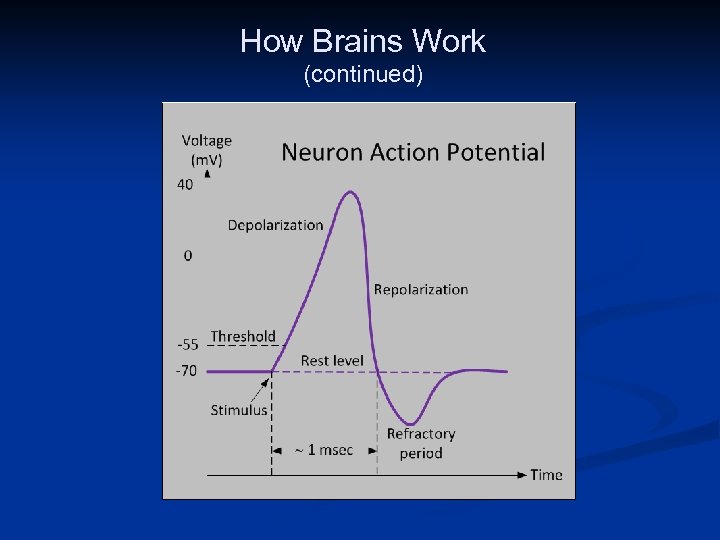
How Brains Work (continued) Image Courtesy of Samford University Center for Science and Religion
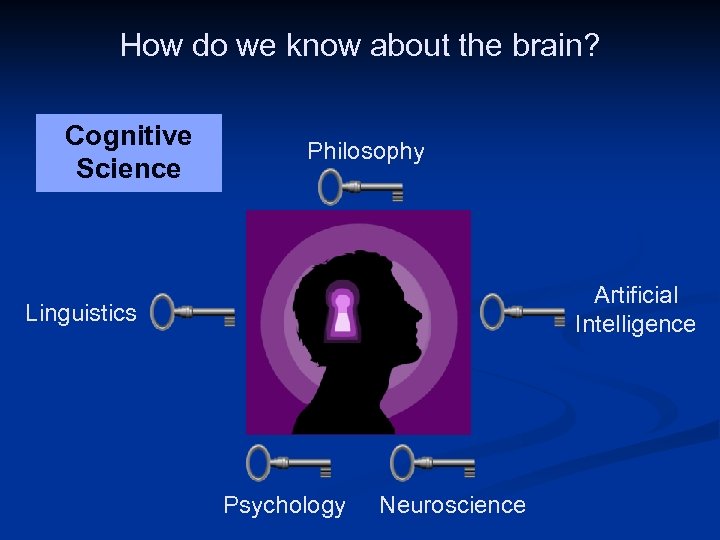
How do we know about the brain? Cognitive Science Philosophy Head: Public Domain Image http: //www. clker. com/cliparts/3/v/2/P/C/V/ mente-y-sistematizacion-las-clavesmd. png Artificial Intelligence Linguistics Key: Public Domain Image http: //www. clker. com/cliparts/f/9/1/1/11954 24539819627187 llave_aitor_avila_01. svg. med. png Psychology Neuroscience
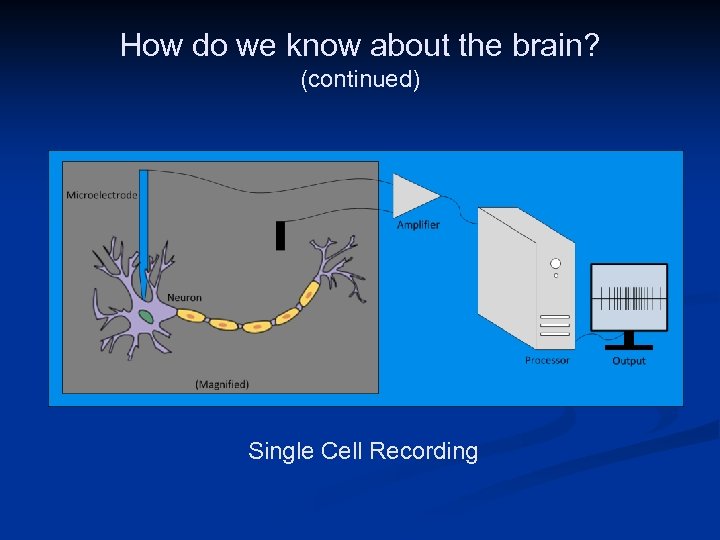
How do we know about the brain? (continued) Image Courtesy of Samford University Center for Science and Religion Neuron only: Public Domain Image http: //www. clker. com/cliparts/1/5/b/3/12067397712024942328 neuron. svg. med. png Single Cell Recording
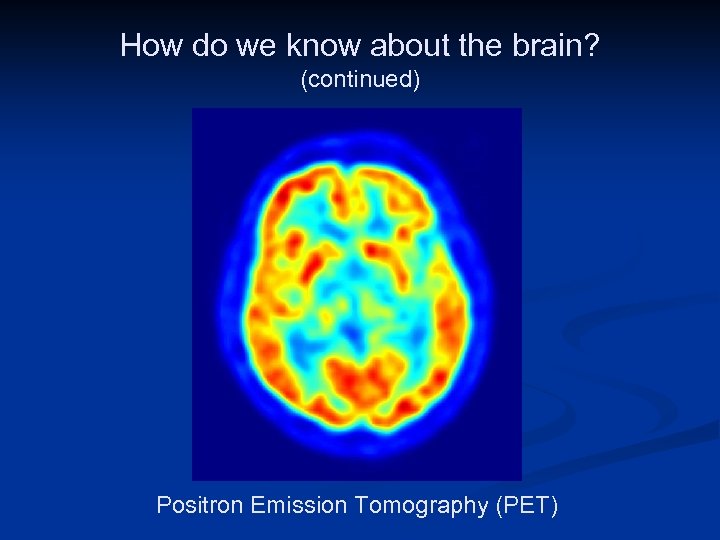
How do we know about the brain? (continued) Public Domain Image: http: //en. wikipedia. org/wiki/File: PET-image. jpg Positron Emission Tomography (PET)
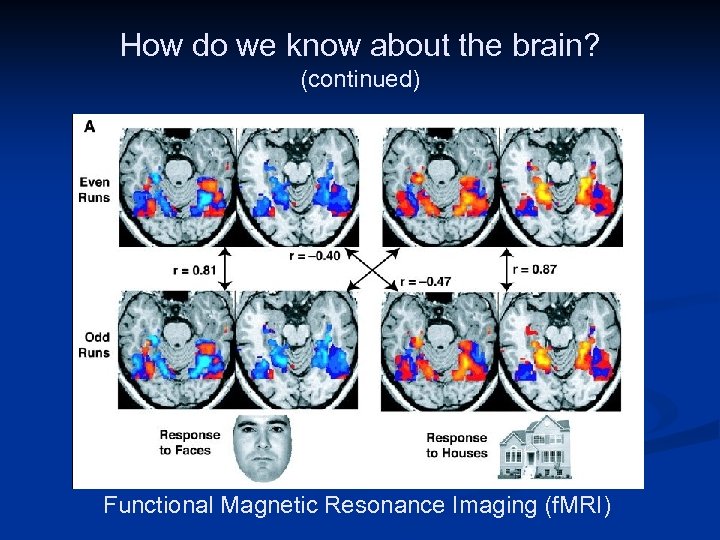
How do we know about the brain? (continued) Public Domain Image: http: //en. wikipedia. org/wiki/File: Haxby 2001. jpg Functional Magnetic Resonance Imaging (f. MRI)
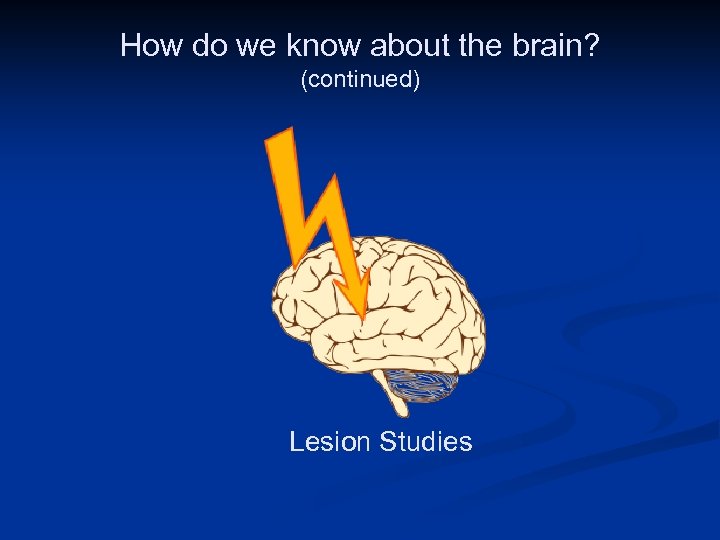
How do we know about the brain? (continued) Public Domain Image: http: //openclipart. org/detail/15478 3/stroke-by-moini Lesion Studies
? Big Questions: Mind, Brain, Consciousness, and Soul
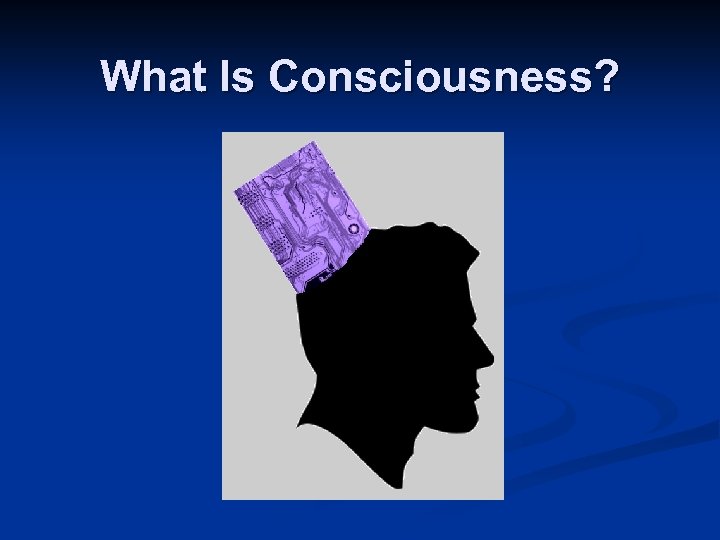
What Is Consciousness? Image Courtesy of Samford University Center for Science and Religion Circuit only modified from http: //www. morguefile. com/archive/display/4731 Head only modified from http: //openclipart. org/detail/157891/maleprofile-silhouette-by-studio_hades
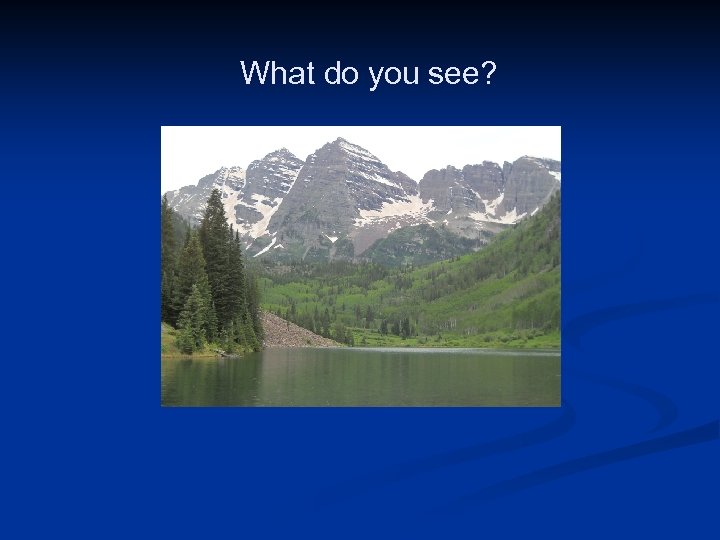
What do you see? Image Courtesy of Samford University Center for Science and Religion
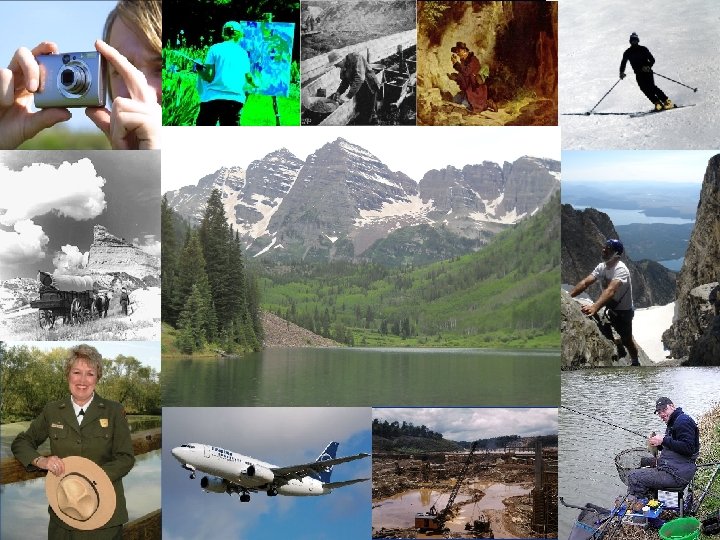
Public domain image: http: //en. wikipedia. org/wiki/File: P hotography_using_Canon_Digita l_IXUS_850_IS. jpg Modified from: http: //www. morguefile. com/arc hive/display/814620 Public Domain Image: http: //en. wikipedia. org/wiki/ File: Taking_gold_out_of_a_ sluice_box. jpg Public Domain Image: http: //en. wikipedia. org/wiki/File: Ca rl_Spitzweg_025. jpg Public domain Image: http: //en. wikipedia. org/wiki/File: Co nestoga_wagon_on_Oregon_Trail _reenactment_1961. gif Image Courtesy of Samford University Center for Science and Religion Public Domain Image: http: //en. wikipedia. org/w iki/File: Mary_Bomar. jpg Public domain image: http: //en. wikipedia. org/wiki/File: Tarom. b 737 -700. yr-bgg. arp. jpg Public domain image: http: //en. wikipedia. org/wiki/File: Douglas_Da m_Construction. jpg Public domain image: http: //en. wikipedia. org/wiki/File: Angl er_at_devizes_england_arp. jpg
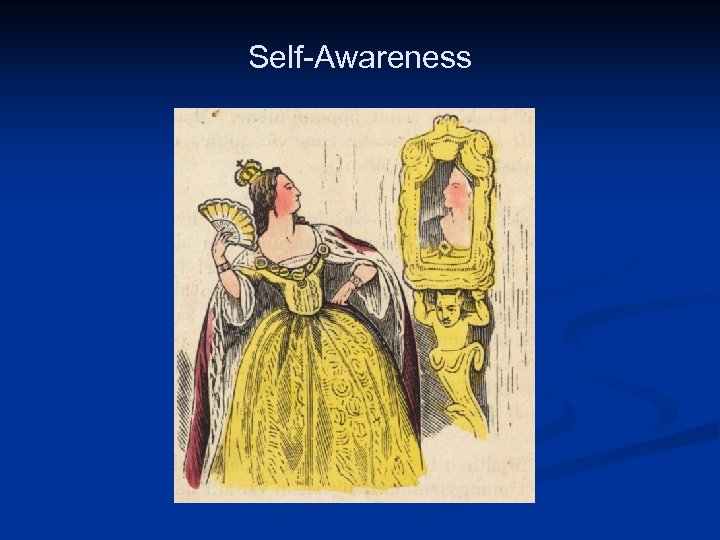
Self-Awareness Public domain image in the U. S. : http: //en. wikipedia. org/wiki/File: Snow_White_Mirror_4. png
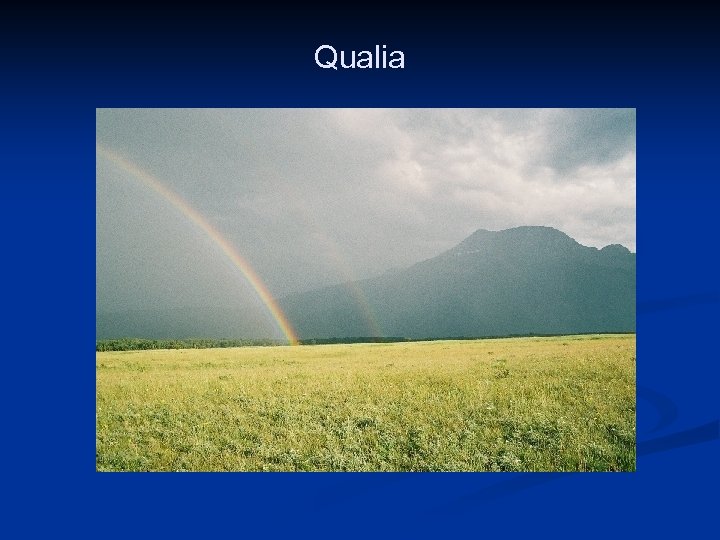
Qualia Image Courtesy of Samford University Center for Science and Religion
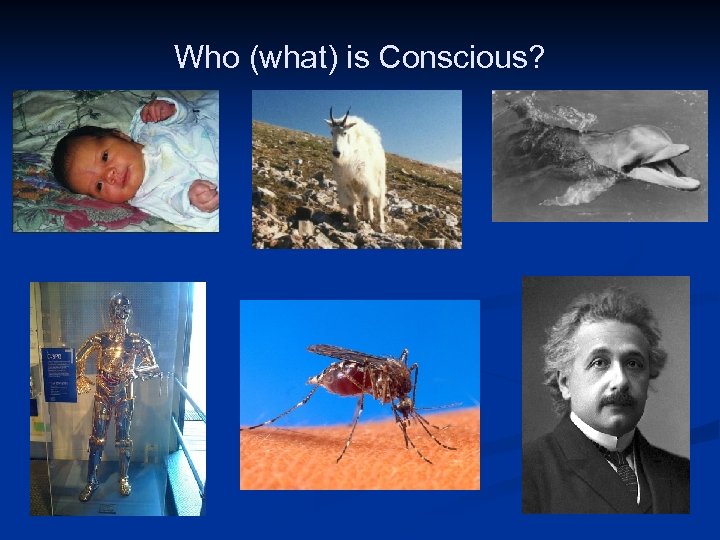
Who (what) is Conscious? Image Courtesy of Samford University Center for Science and Religion Public domain image: http: //en. wikipedia. org/wiki/File: C-3 PO. jpg Image Courtesy of Samford University Center for Science and Religion Public domain image: http: //en. wikipedia. org/wiki/File: A edes_aegypti_biting_human. jpg Public domain image: http: //en. wikipedia. org/wiki/File: Fl ipper_1964_2. jpg Public Domain Image: http: //en. wikipedia. org/wiki/File: Albert_Einstein_(Nobel). png
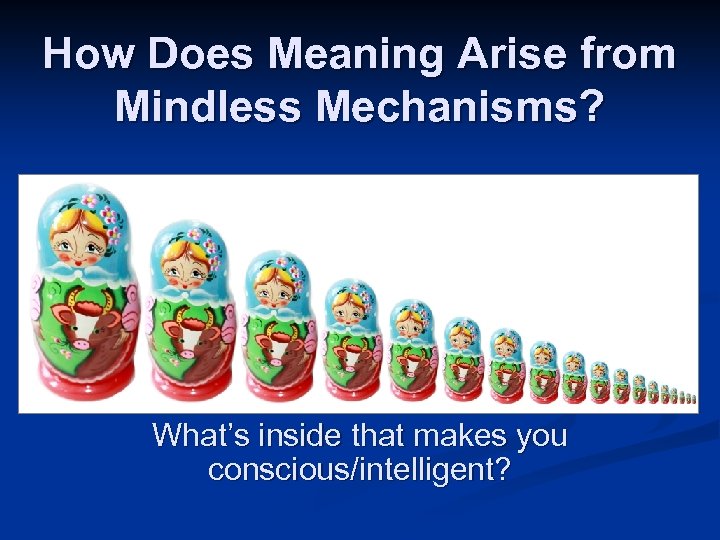
How Does Meaning Arise from Mindless Mechanisms? Based on image from: http: //www. morguefile. com/archive/display/679105 What’s inside that makes you conscious/intelligent?
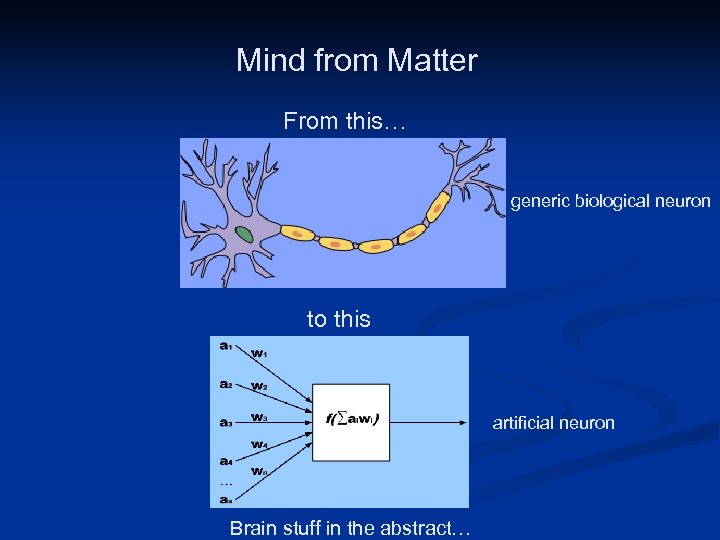
Mind from Matter From this… Public Domain Image http: //www. clker. com/cliparts/1/5/b/3/120673 97712024942328 neuron. svg. med. png generic biological neuron to this Image Courtesy of Samford University Center for Science and Religion Brain stuff in the abstract… artificial neuron
What is the Soul? Modified from: http: //www. morguefile. co m/archive/display/655560
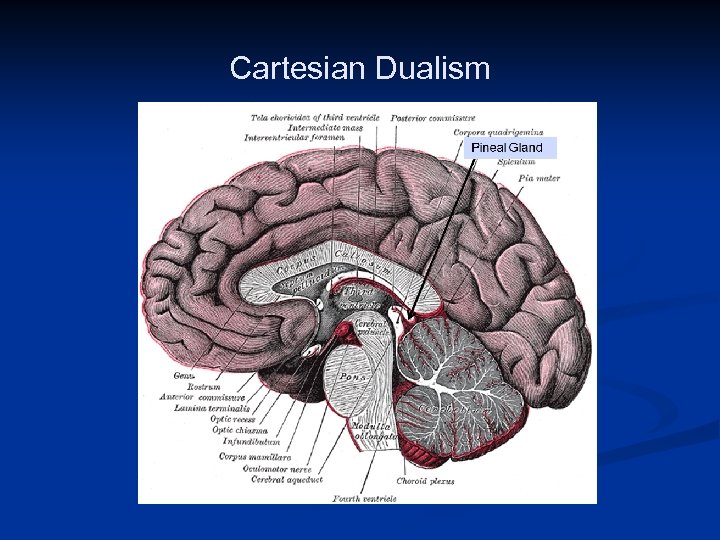
Cartesian Dualism Based on Public Domain Image http: //en. wikipedia. org/wiki/File: Gray 720. png
Public domain image: http: //en. wikipedia. org/wiki/File: Dizzygillespie 88. jpg Got Soul? Love the Lord your God with all your heart and with all your soul and with all your mind and with all your strength. (Mark 12: 30) The Most Important Commandment Public domain image: http: //en. wikipedia. org/wiki/File: Dizzygillespie 88. jpg
Public domain image: http: //en. wikipedia. org/wiki/File: Dizzygillespie 88. jpg Got Soul? Love the Lord your God with all your heart and with all your soul and with all your mind and with all your strength. (Mark 12: 30) The Most Important Commandment Public domain image: http: //en. wikipedia. org/wiki/File: Dizzygillespie 88. jpg
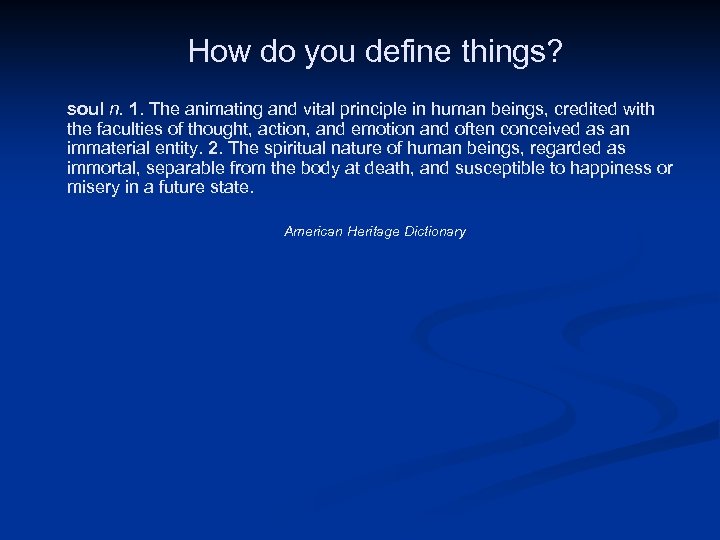
How do you define things? soul n. 1. The animating and vital principle in human beings, credited with the faculties of thought, action, and emotion and often conceived as an immaterial entity. 2. The spiritual nature of human beings, regarded as immortal, separable from the body at death, and susceptible to happiness or misery in a future state. American Heritage Dictionary
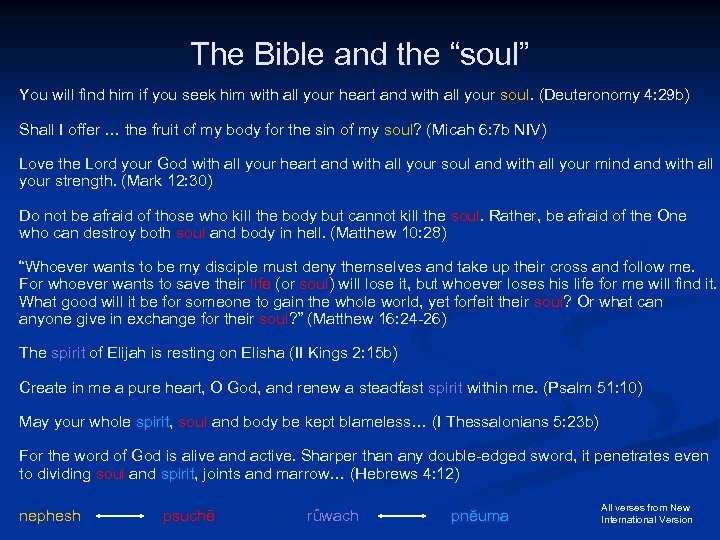
The Bible and the “soul” You will find him if you seek him with all your heart and with all your soul. (Deuteronomy 4: 29 b) Shall I offer … the fruit of my body for the sin of my soul? (Micah 6: 7 b NIV) Love the Lord your God with all your heart and with all your soul and with all your mind and with all your strength. (Mark 12: 30) Do not be afraid of those who kill the body but cannot kill the soul. Rather, be afraid of the One who can destroy both soul and body in hell. (Matthew 10: 28) “Whoever wants to be my disciple must deny themselves and take up their cross and follow me. For whoever wants to save their life (or soul) will lose it, but whoever loses his life for me will find it. What good will it be for someone to gain the whole world, yet forfeit their soul? Or what can anyone give in exchange for their soul? ” (Matthew 16: 24 -26) The spirit of Elijah is resting on Elisha (II Kings 2: 15 b) Create in me a pure heart, O God, and renew a steadfast spirit within me. (Psalm 51: 10) May your whole spirit, soul and body be kept blameless… (I Thessalonians 5: 23 b) For the word of God is alive and active. Sharper than any double-edged sword, it penetrates even to dividing soul and spirit, joints and marrow… (Hebrews 4: 12) nephesh psuchē rûwach pnӗuma All verses from New International Version
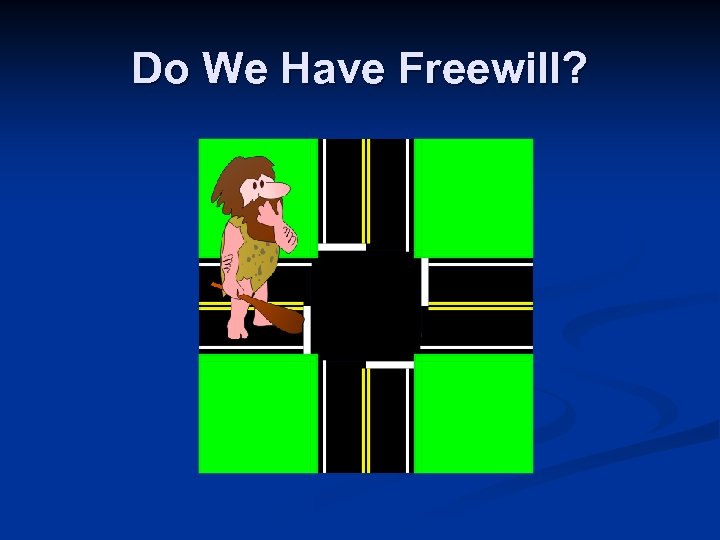
Do We Have Freewill? Cave man: http: //openclipart. org/d etail/171697/thinkingcaveman-by-fabuio 171697 Intersection: http: //openclipart. org/detail/9 4579/four-way-intersection-by -mazeo
The problem of volition Author: Open. Cage Source: http: //opencage. info/pics. e/large_6650. asp License: Creative Commons Attribution-Share Alike 2. 5 Generic
Don’t complete the following:
Don’t complete the following: 1. George W. ______.
Don’t complete the following: 1. George W. ______. 2. Abraham _______.
Don’t complete the following: 1. George W. ______. 2. Abraham _______. 3. y = mx + __
Don’t complete the following: 1. George W. ______. 2. Abraham _______. 3. y = mx + __ 4. We hold these truths to be self-evident that all men are ______.
Don’t complete the following: 1. George W. ______. 2. Abraham _______. 3. y = mx + __ 4. We hold these truths to be self-evident that all men are ______. 5. Two all-beef patties, special sauce, lettuce, cheese, pickles, onions on a _____.
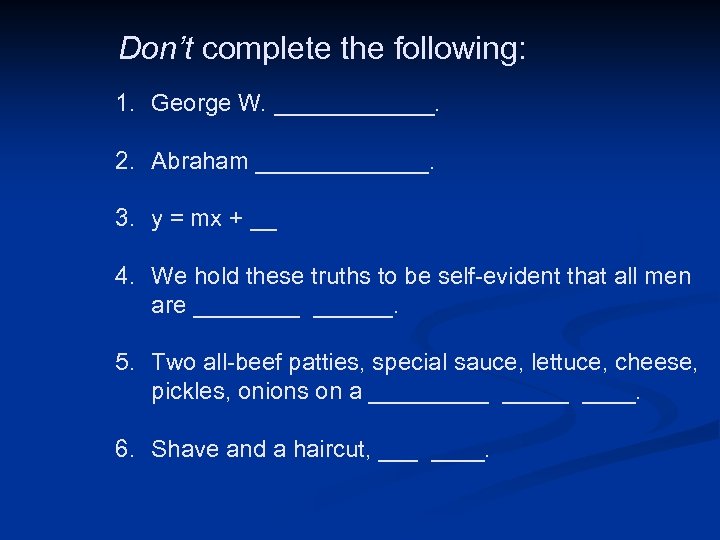
Don’t complete the following: 1. George W. ______. 2. Abraham _______. 3. y = mx + __ 4. We hold these truths to be self-evident that all men are ______. 5. Two all-beef patties, special sauce, lettuce, cheese, pickles, onions on a _____. 6. Shave and a haircut, ____.
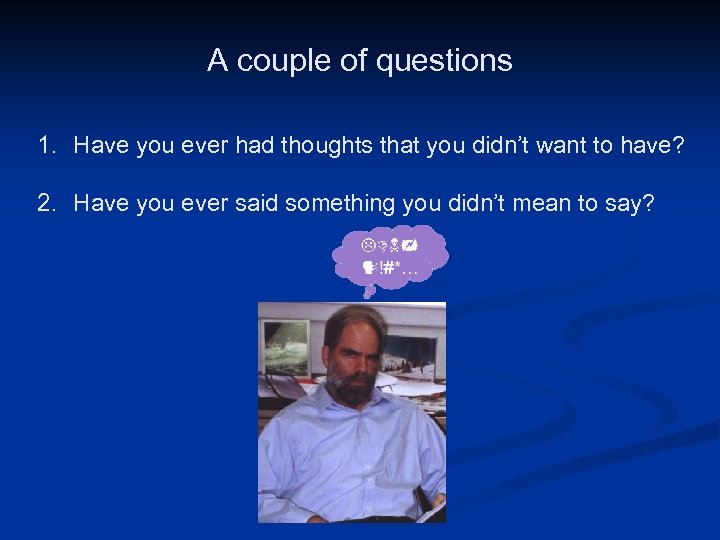
A couple of questions 1. Have you ever had thoughts that you didn’t want to have? 2. Have you ever said something you didn’t mean to say? Image Courtesy of Samford University Center for Science and Religion
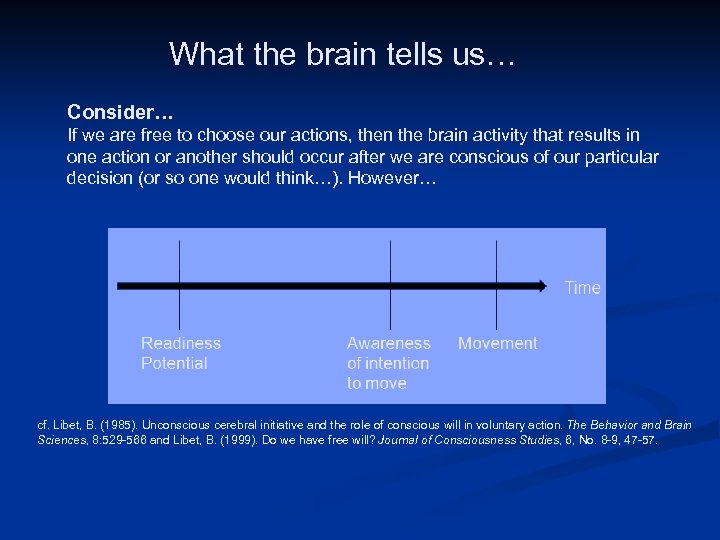
What the brain tells us… Consider… If we are free to choose our actions, then the brain activity that results in one action or another should occur after we are conscious of our particular decision (or so one would think…). However… Image based on Libet’s work and provided courtesy of the Samford University Center for Science and Religion (cf. Libet, B. (1985). Unconscious cerebral initiative and the role of conscious will in voluntary action. The Behavior and Brain Sciences, 8: 529 -566 and Libet, B. (1999). Do we have free will? Journal of Consciousness Studies , 6, No. 8 -9, 47 -57. ) cf. Libet, B. (1985). Unconscious cerebral initiative and the role of conscious will in voluntary action. The Behavior and Brain Sciences, 8: 529 -566 and Libet, B. (1999). Do we have free will? Journal of Consciousness Studies, 6, No. 8 -9, 47 -57.
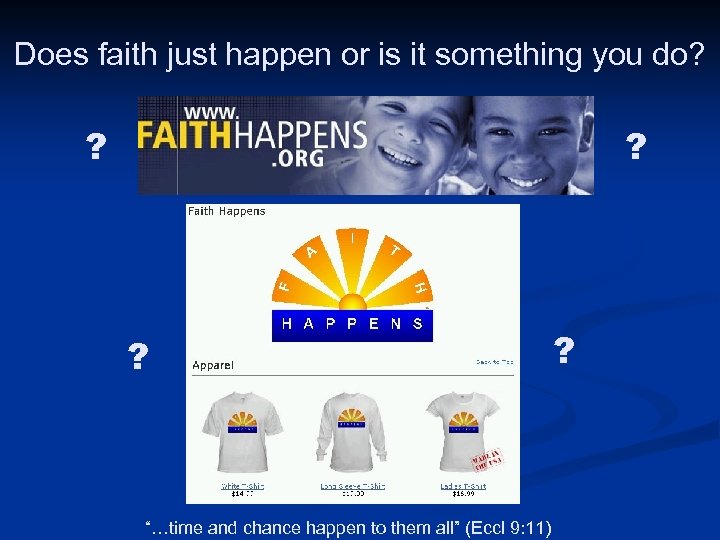
Does faith just happen or is it something you do? ? ? Image from defunct website “…time and chance happen to them all” (Eccl 9: 11) ?
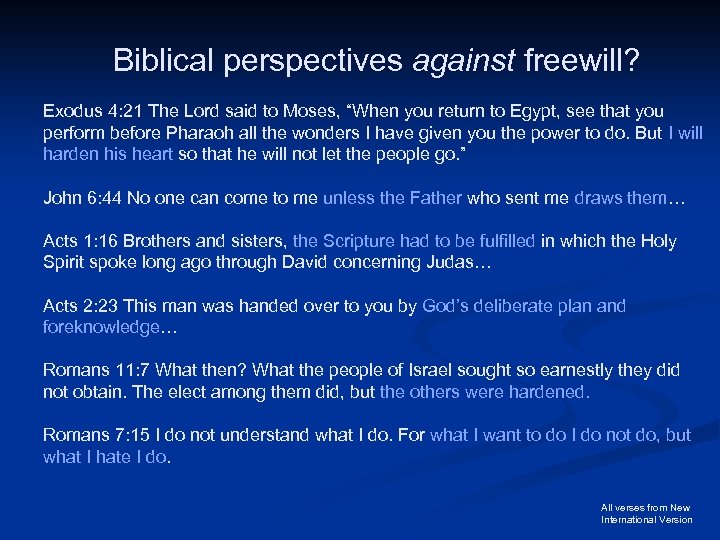
Biblical perspectives against freewill? Exodus 4: 21 The Lord said to Moses, “When you return to Egypt, see that you perform before Pharaoh all the wonders I have given you the power to do. But I will harden his heart so that he will not let the people go. ” John 6: 44 No one can come to me unless the Father who sent me draws them… Acts 1: 16 Brothers and sisters, the Scripture had to be fulfilled in which the Holy Spirit spoke long ago through David concerning Judas… Acts 2: 23 This man was handed over to you by God’s deliberate plan and foreknowledge… Romans 11: 7 What then? What the people of Israel sought so earnestly they did not obtain. The elect among them did, but the others were hardened. Romans 7: 15 I do not understand what I do. For what I want to do I do not do, but what I hate I do. All verses from New International Version
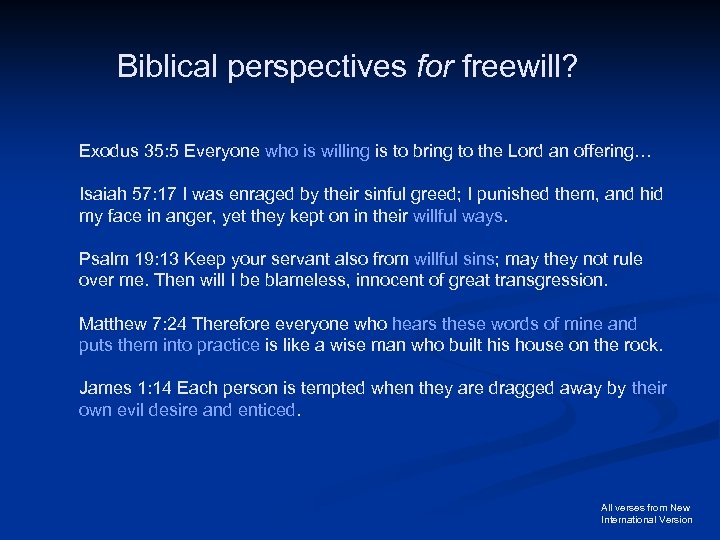
Biblical perspectives for freewill? Exodus 35: 5 Everyone who is willing is to bring to the Lord an offering… Isaiah 57: 17 I was enraged by their sinful greed; I punished them, and hid my face in anger, yet they kept on in their willful ways. Psalm 19: 13 Keep your servant also from willful sins; may they not rule over me. Then will I be blameless, innocent of great transgression. Matthew 7: 24 Therefore everyone who hears these words of mine and puts them into practice is like a wise man who built his house on the rock. James 1: 14 Each person is tempted when they are dragged away by their own evil desire and enticed. All verses from New International Version
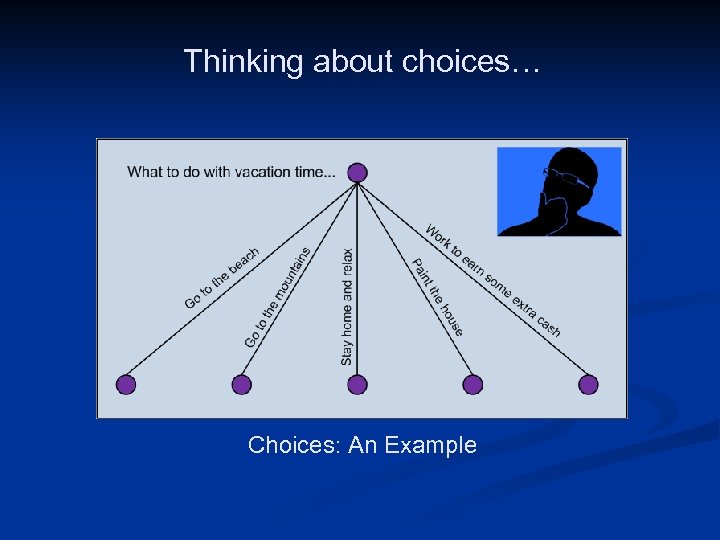
Thinking about choices… Image courtesy of Samford University Center for Science and Religion; Head from: http: //openclipart. org/detail/ 171299/indecisivesilhouette. svg-by-tulvur 171299 Choices: An Example
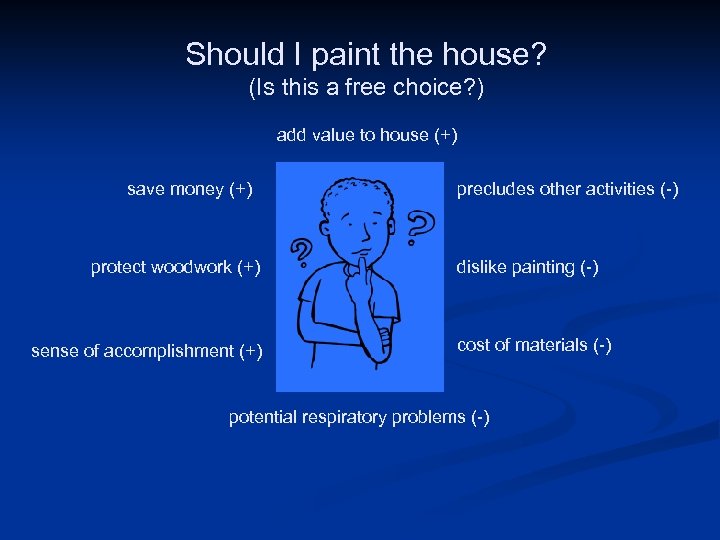
Should I paint the house? (Is this a free choice? ) add value to house (+) save money (+) precludes other activities (-) protect woodwork (+) dislike painting (-) Image: http: //openclipart. org/detail/630/thi nkingboy-outline-by-ryanlerch sense of accomplishment (+) cost of materials (-) potential respiratory problems (-)
Some Approaches to Free Will Public domain image: http: //en. wikipedia. org/wiki/File: I-270_at_SR-161_cloverleaf_1995. jpg
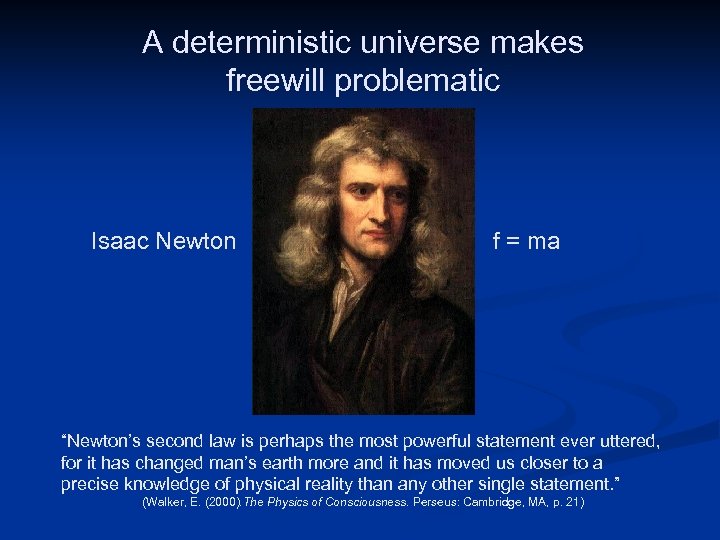
A deterministic universe makes freewill problematic Isaac Newton f = ma Public Domain Image http: //en. wikipedia. org/wiki/File: Godfrey. K neller-Isaac. Newton-1689. jpg “Newton’s second law is perhaps the most powerful statement ever uttered, for it has changed man’s earth more and it has moved us closer to a precise knowledge of physical reality than any other single statement. ” (Walker, E. (2000). The Physics of Consciousness. Perseus: Cambridge, MA, p. 21)
Might freewill not exist? Public domain image: http: //en. wikipedia. org/wiki/File: Swana ge_Punch_%26_Judy. JPG “There’s no such thing as free will… I don’t know what it would feel like if my will were free. What on earth would that mean? That I don’t follow my will sometimes? Well, why on earth would I do that? ” Hofstadter, D. (2007). I Am a Strange Loop. Basic: New York, pp. 339, 340 “I don’t think ‘free will’ is a very sensible concept, and you don’t need neuroscience to reject it — any mechanistic view of the world is good enough…” Martha Farah, email conversation with B. Keim published online 4/14/2008 in his article “Is Free Will an Illusion? ” at http: //www. wired. com/wiredscience/2008/04/is-free-will-an/
Is freewill an illusion? (based on complexity) Public Domain Image: http: //en. wikipedia. org/wiki/File: My_Wi fe_and_My_Mother-in-Law. jpg “…one could say that free will is an illusion anyway. If there really is a complete unified theory that governs everything, it presumably also determines your actions. But it does so in a way that is impossible to calculate for an organism that is as complicated as a human being. The reason we say that humans have free will is because we can’t predict what they will do. ” Hawking, S. (1998). A Brief History of Time. Bantam: New York, p. 167
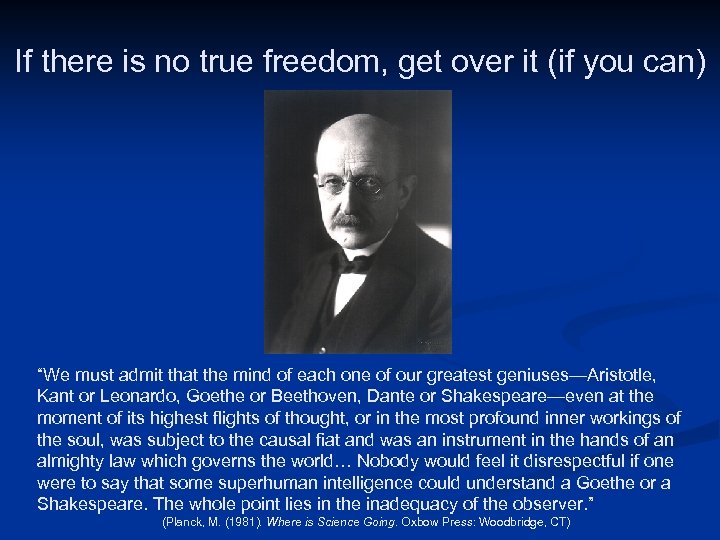
If there is no true freedom, get over it (if you can) Public Domain Image http: //en. wikipedia. org/wiki/File: Max _Planck_(1858 -1947). jpg “We must admit that the mind of each one of our greatest geniuses—Aristotle, Kant or Leonardo, Goethe or Beethoven, Dante or Shakespeare—even at the moment of its highest flights of thought, or in the most profound inner workings of the soul, was subject to the causal fiat and was an instrument in the hands of an almighty law which governs the world… Nobody would feel it disrespectful if one were to say that some superhuman intelligence could understand a Goethe or a Shakespeare. The whole point lies in the inadequacy of the observer. ” (Planck, M. (1981). Where is Science Going. Oxbow Press: Woodbridge, CT)
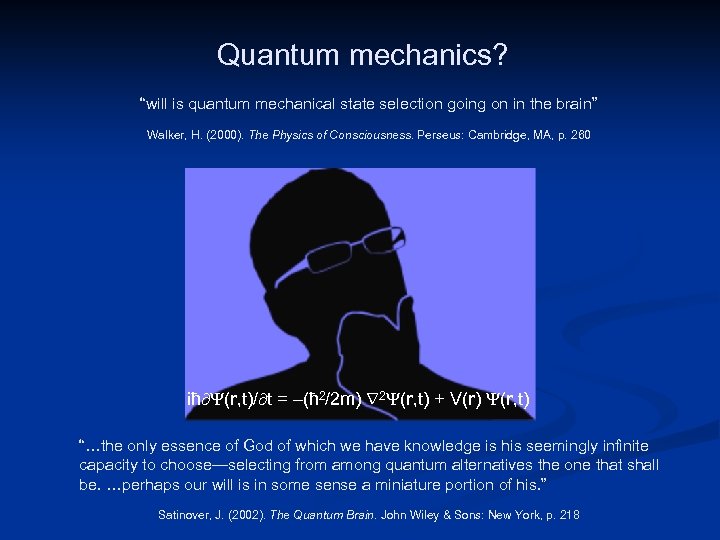
Quantum mechanics? “will is quantum mechanical state selection going on in the brain” Walker, H. (2000). The Physics of Consciousness. Perseus: Cambridge, MA, p. 260 Head image: http: //openclipart. org/detai l/171299/indecisivesilhouette. svg-by-tulvur 171299 iħ (r, t)/ t = –(ħ 2/2 m) 2 (r, t) + V(r) (r, t) “…the only essence of God of which we have knowledge is his seemingly infinite capacity to choose—selecting from among quantum alternatives the one that shall be. …perhaps our will is in some sense a miniature portion of his. ” Satinover, J. (2002). The Quantum Brain. John Wiley & Sons: New York, p. 218
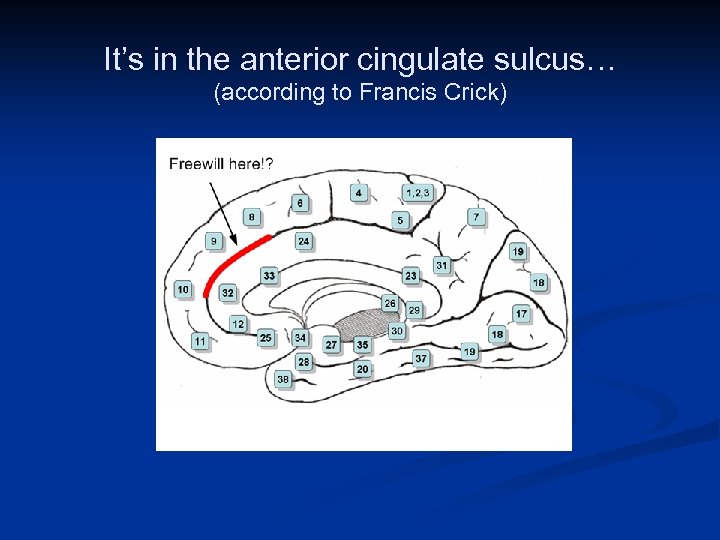
It’s in the anterior cingulate sulcus… (according to Francis Crick) Based on Public Domain Image: http: //en. wikipedia. org/wiki/File: Gray 727 -Brodman. png
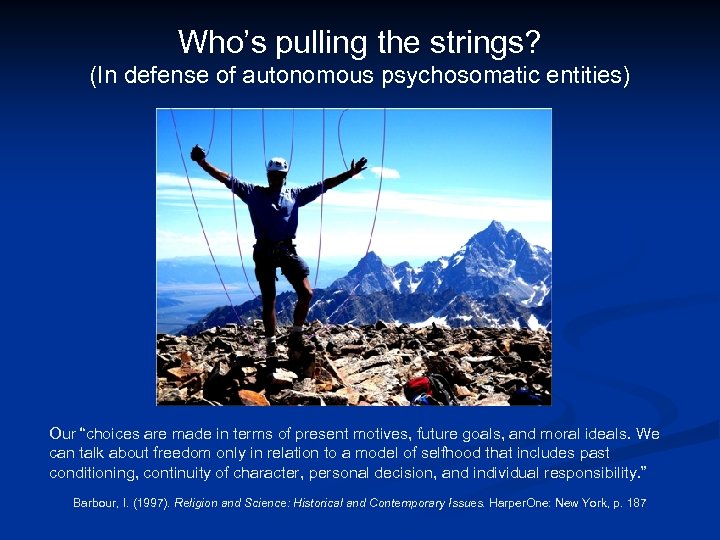
Who’s pulling the strings? (In defense of autonomous psychosomatic entities) Image Courtesy of Samford University Center for Science and Religion Our “choices are made in terms of present motives, future goals, and moral ideals. We can talk about freedom only in relation to a model of selfhood that includes past conditioning, continuity of character, personal decision, and individual responsibility. ” Barbour, I. (1997). Religion and Science: Historical and Contemporary Issues. Harper. One: New York, p. 187
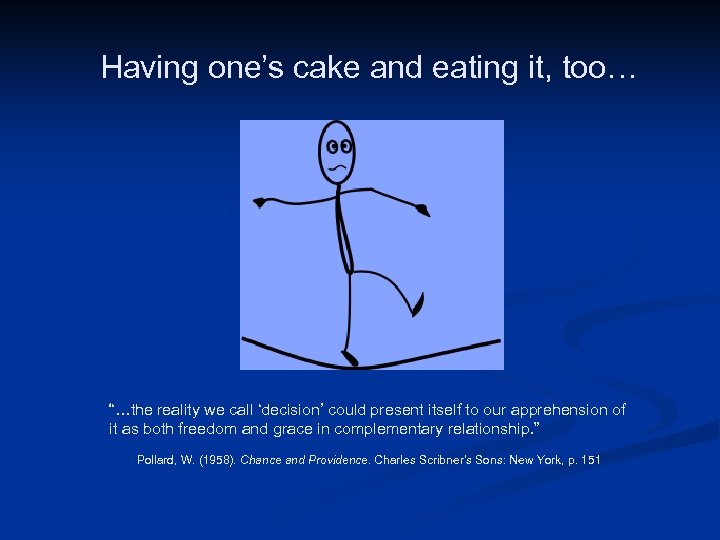
Having one’s cake and eating it, too… Image: http: //openclipart. org/detail/91309/altightrope-walker-by-cybergedeon “…the reality we call ‘decision’ could present itself to our apprehension of it as both freedom and grace in complementary relationship. ” Pollard, W. (1958). Chance and Providence. Charles Scribner’s Sons: New York, p. 151
What Does Brain Damage Mean for Conceptions of the Soul, Freewill, and God? Box image: http: //openclip art. org/detail/1 5872/closedbox-by-mcol Feet image: http: //openclipar t. org/detail/3685 9/feet-insandals-byanonymous 36859
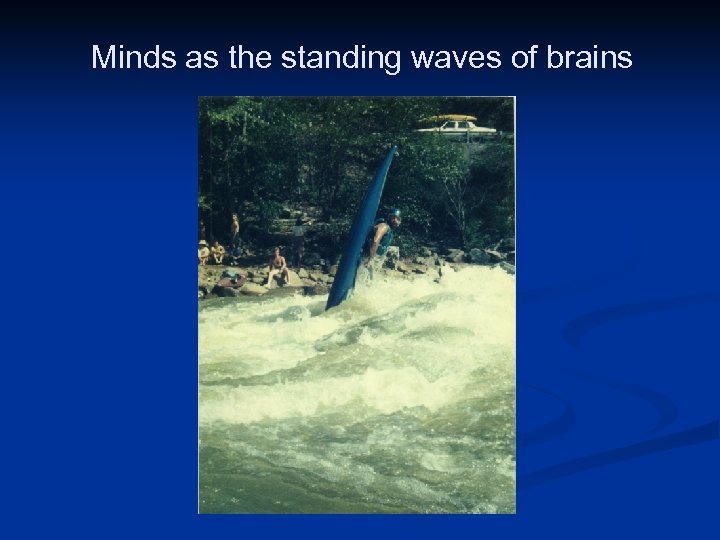
Minds as the standing waves of brains Image Courtesy of Samford University Center for Science and Religion
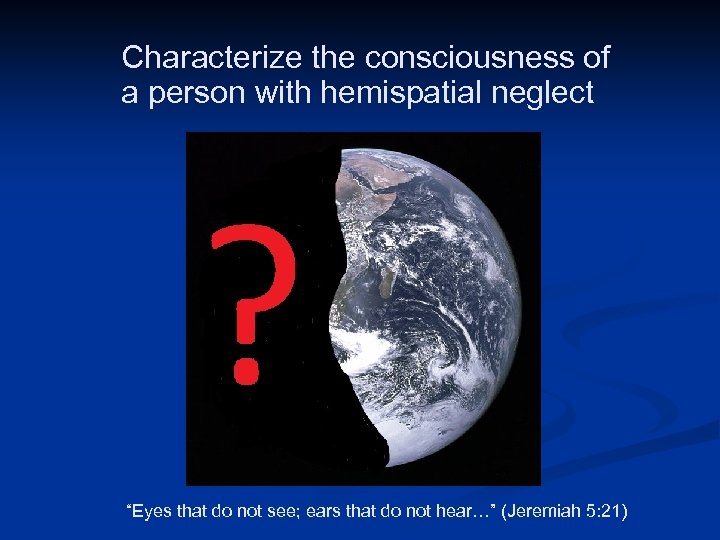
Characterize the consciousness of a person with hemispatial neglect Adapted from public domain image: http: //en. wikipedia. org/wiki/File: The_ Earth_seen_from_Apollo_17. jpg “Eyes that do not see; ears that do not hear…” (Jeremiah 5: 21)
Some consciousness-changing events Modified from: http: //www. morguefile. co m/archive/display/23486 Agnosia Agnosognosia Split-brain Phantom limb Korsakoff’s Alzheimer’s Schizophrenia Autism Hypnosis Drug induced Modified from: http: //www. morguefile. co m/archive/display/23486 “These are the times that try men’s souls…” Thomas Paine, 12/23/1776, The Crisis
“Where… is free will? ” Image Courtesy of Samford University Center for Science and Religion
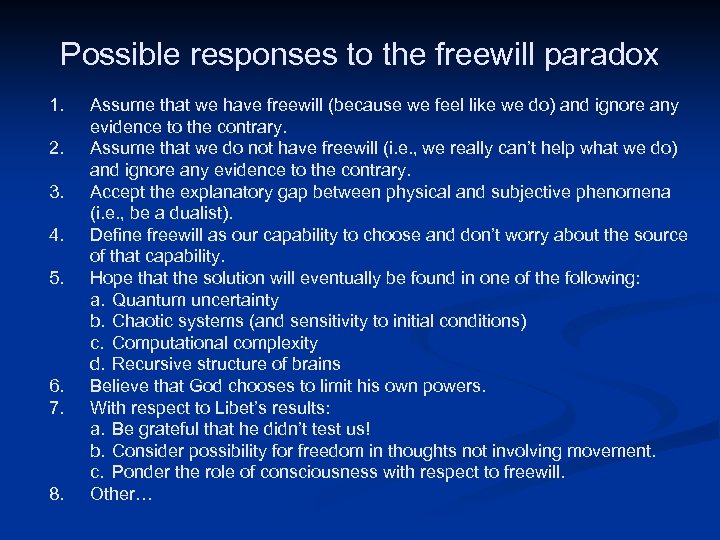
Possible responses to the freewill paradox 1. 2. 3. 4. 5. 6. 7. 8. Assume that we have freewill (because we feel like we do) and ignore any evidence to the contrary. Assume that we do not have freewill (i. e. , we really can’t help what we do) and ignore any evidence to the contrary. Accept the explanatory gap between physical and subjective phenomena (i. e. , be a dualist). Define freewill as our capability to choose and don’t worry about the source of that capability. Hope that the solution will eventually be found in one of the following: a. Quantum uncertainty b. Chaotic systems (and sensitivity to initial conditions) c. Computational complexity d. Recursive structure of brains Believe that God chooses to limit his own powers. With respect to Libet’s results: a. Be grateful that he didn’t test us! b. Consider possibility for freedom in thoughts not involving movement. c. Ponder the role of consciousness with respect to freewill. Other…
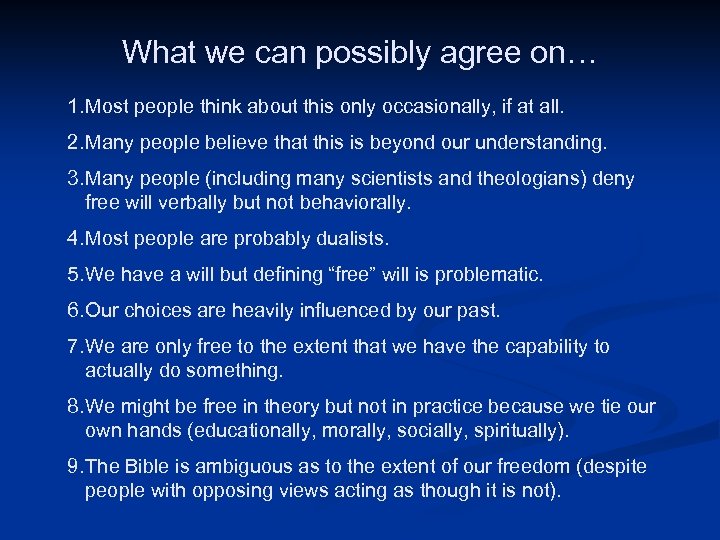
What we can possibly agree on… 1. Most people think about this only occasionally, if at all. 2. Many people believe that this is beyond our understanding. 3. Many people (including many scientists and theologians) deny free will verbally but not behaviorally. 4. Most people are probably dualists. 5. We have a will but defining “free” will is problematic. 6. Our choices are heavily influenced by our past. 7. We are only free to the extent that we have the capability to actually do something. 8. We might be free in theory but not in practice because we tie our own hands (educationally, morally, socially, spiritually). 9. The Bible is ambiguous as to the extent of our freedom (despite people with opposing views acting as though it is not).
Alternative Perspectives on Freewill Image: modified from http: //openclipart. org/detail/26612/man-usingbinoculars-2 -by-johnny_automatic
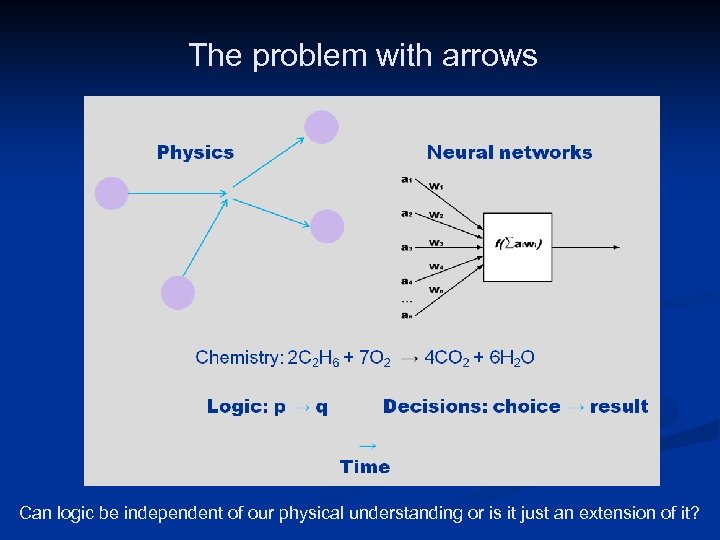
The problem with arrows Image Courtesy of Samford University Center for Science and Religion Can logic be independent of our physical understanding or is it just an extension of it?
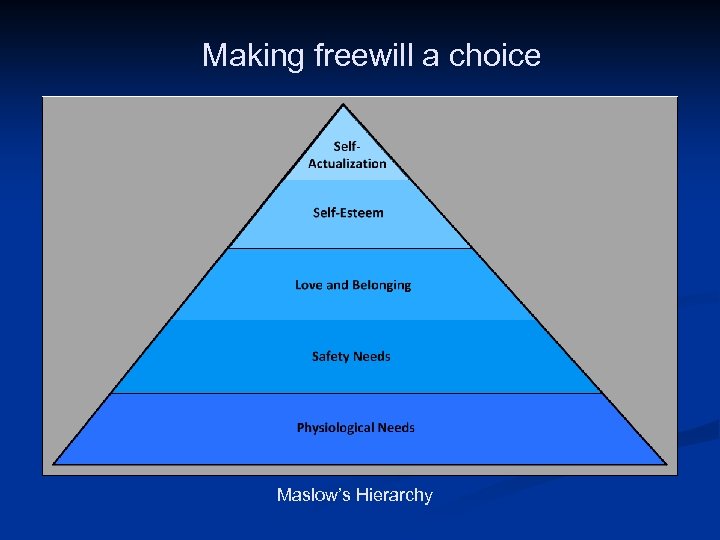
Making freewill a choice Image Courtesy of Samford University Center for Science and Religion Maslow’s Hierarchy
The paradox of freedom 1. Do you ever pray, “Not my will but thine? ” 2. What does that mean? 3. Can one willingly sacrifice his/her will? *quoted in Kelso, S. , Dynamic Patterns p. 83 who indicates he is quoting H. H. Pattee (1976, Physical theories of biological coordination)
The paradox of freedom (continued) “Mental flexibility confines children; innate constraints set them free. ” Pinker, S. (2000). The Language Instinct: How the Mind Creates Language. Harper Perennial Classics: New York, p. 292 “In many ways it is the very determinate structure of our brain and biology that enables the kind of freedom we have. ” Peterson, G. (2003). Minding God: Theology and the Cognitive Sciences. Fortress Press, Minneapolis, MN, p. 97 “The more constraints one imposes, the more one frees one’s self of the chains that shackle the spirit. ” Stravinsky, I. (1993). Poetics of Music in the Form of Six Lessons. Harvard University Press: Cambridge, MA, p. 65 “Though I am free and belong to no man, I make myself a slave to everyone, to win as many as possible” I Corinthians 9: 19
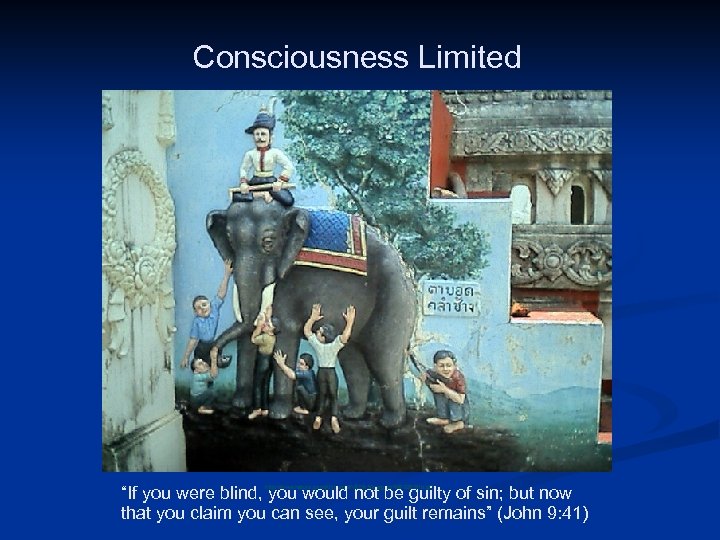
Consciousness Limited Public Domain Image http: //en. wikipedia. org/wiki/File: Blind. JPG “If you were blind, you would not be guilty of sin; but now that you claim you can see, your guilt remains” (John 9: 41) http: //www. nature. com/ki/journal/v 62/n 5/images/4493262 f 1 b. gif
What is the Relationship Between Mind, Brain, Consciousness, and Soul? Steve Donaldson, Ph. D. Samford University Conditions of Use The slides contained in this presentation and the accompanying notes are freely available for use and/or modification by individuals and groups to promote understanding and dialogue in science and religion with the stipulation that they may not be sold or traded individually, collectively, or otherwise for any form of financial or material gain. The source of all images in this collection of slides is either noted directly (if required by the author) or may be viewed by clicking an image (in edit mode) and then clicking “Send to Back. ” These forms of crediting images must be included in any use or derivation of these materials. The contents of these slides and the accompanying notes reflect the views of the author and should not be assumed to represent the position of Samford University or its employees.
Скачать презентацию Big Questions in Science and Religion Samford University
bf72e180d49a35d6f1ab50f91e41cb36.ppt