 Скачать презентацию Big Business Industry The Industrial Age
51de58eb33744ea4a3184dffe8eb944c.ppt
- Количество слайдов: 38



Big Business & Industry
The Industrial Age Following the Civil War the United States was still a rural society, but by the 1920 s it became an industrial power. n This boom was due to three things: – Natural Resources – Inventions, and – a growing urban population that provided new markets and workers for new products
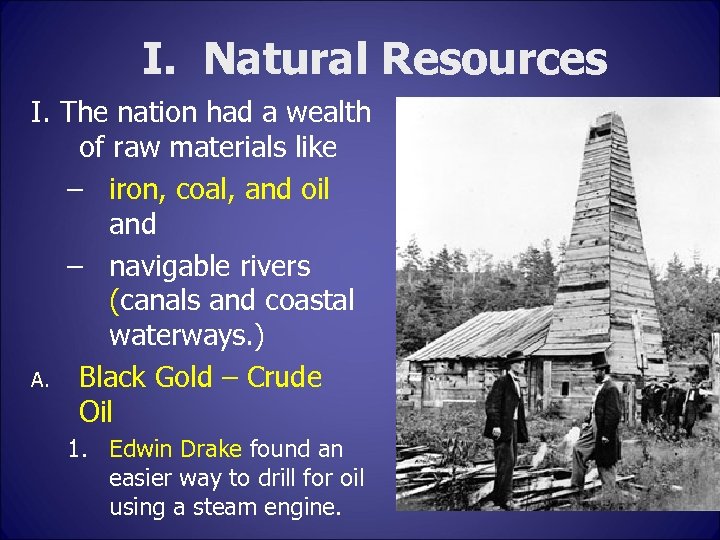
I. Natural Resources I. The nation had a wealth of raw materials like – iron, coal, and oil and – navigable rivers (canals and coastal waterways. ) A. Black Gold – Crude Oil 1. Edwin Drake found an easier way to drill for oil using a steam engine.
I. Natural Resources 2. 3. 4. Originally used to produce kerosene, gasoline was discarded Kerosene was used in lamps causing an oil boom With the invention of the automobile in the 1890 s gasoline became highly prized
B. The Bessemer Steel Process Henry Bessemer (Bessemer Process). 1. Iron was plentiful in America and also strong 2. Problem: rust and broke when compressed 3. To make it lighter and flexible the carbon had to be removed 4. Bessemer Process – blasting hot iron into steel a. Transformed the product into much stronger steel b. Cheap and efficient
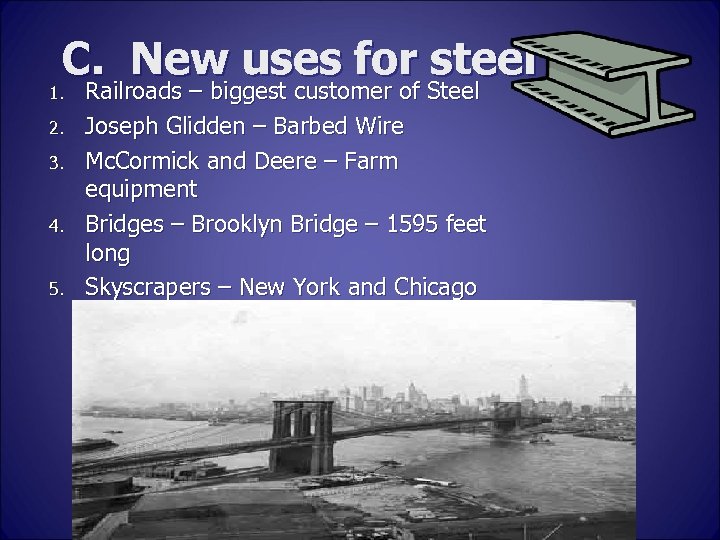
C. New uses for steel 1. 2. 3. 4. 5. Railroads – biggest customer of Steel Joseph Glidden – Barbed Wire Mc. Cormick and Deere – Farm equipment Bridges – Brooklyn Bridge – 1595 feet long Skyscrapers – New York and Chicago

? ? 1. 2. What are some inventions you use on a daily basis that you think you could not live without? Who are some major inventors that you can think of off the top of your head?
II. Inventions - will improve business and manufacturing
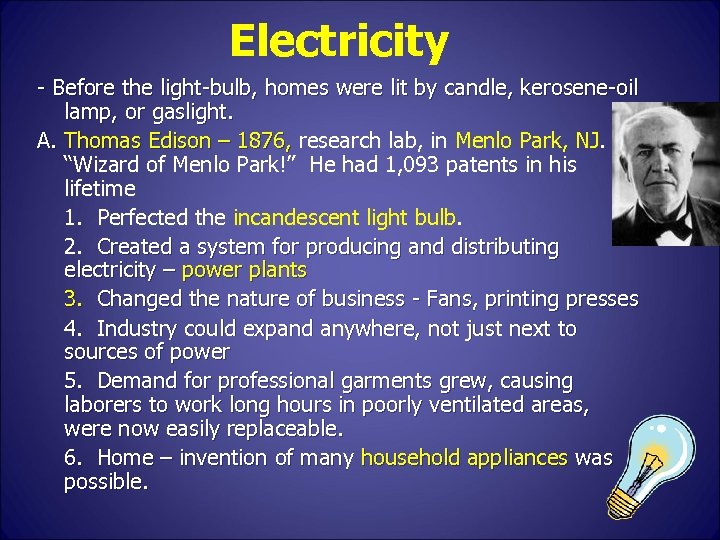
Electricity - Before the light-bulb, homes were lit by candle, kerosene-oil lamp, or gaslight. A. Thomas Edison – 1876, research lab, in Menlo Park, NJ. – “Wizard of Menlo Park!” He had 1, 093 patents in his lifetime 1. Perfected the incandescent light bulb. 2. Created a system for producing and distributing electricity – power plants 3. Changed the nature of business - Fans, printing presses 4. Industry could expand anywhere, not just next to sources of power 5. Demand for professional garments grew, causing laborers to work long hours in poorly ventilated areas, were now easily replaceable. 6. Home – invention of many household appliances was possible.
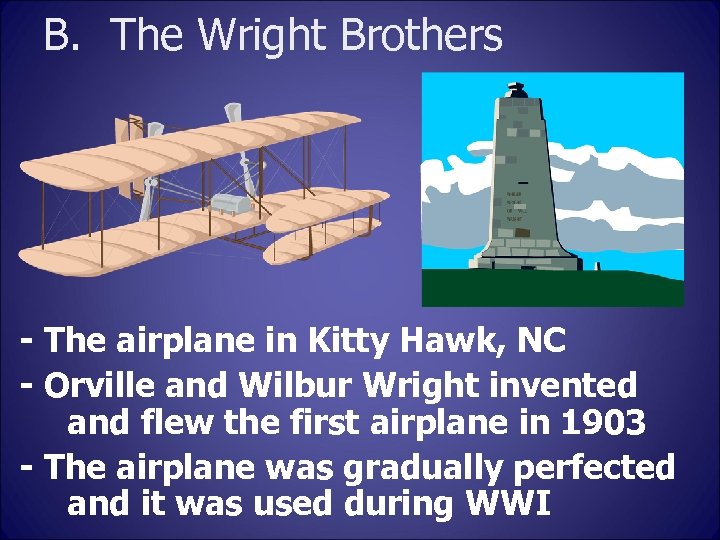
B. The Wright Brothers - The airplane in Kitty Hawk, NC - Orville and Wilbur Wright invented and flew the first airplane in 1903 - The airplane was gradually perfected and it was used during WWI
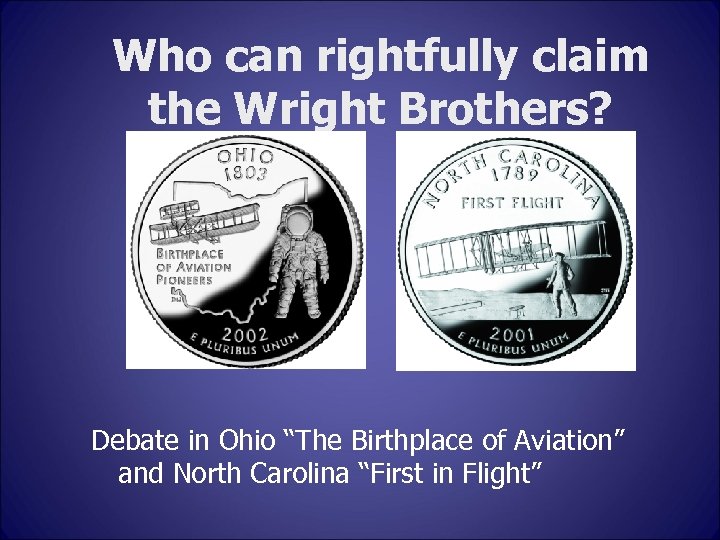
Who can rightfully claim the Wright Brothers? Debate in Ohio “The Birthplace of Aviation” and North Carolina “First in Flight”
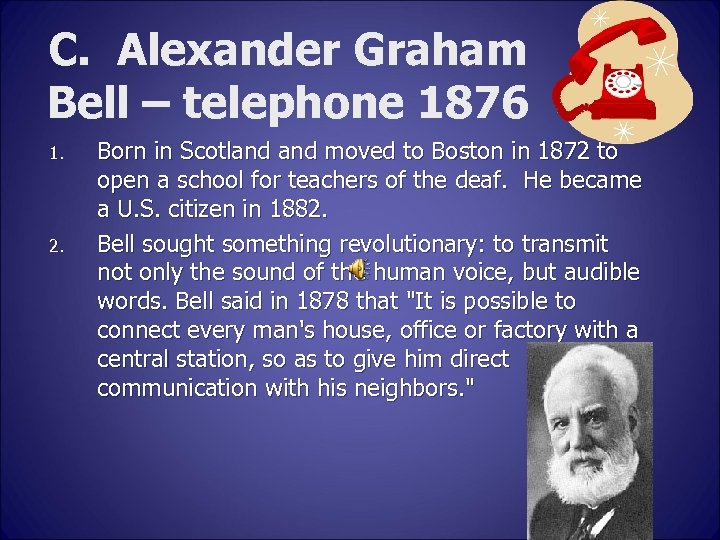
C. Alexander Graham Bell – telephone 1876 1. 2. Born in Scotland moved to Boston in 1872 to open a school for teachers of the deaf. He became a U. S. citizen in 1882. Bell sought something revolutionary: to transmit not only the sound of the human voice, but audible words. Bell said in 1878 that "It is possible to connect every man's house, office or factory with a central station, so as to give him direct communication with his neighbors. "
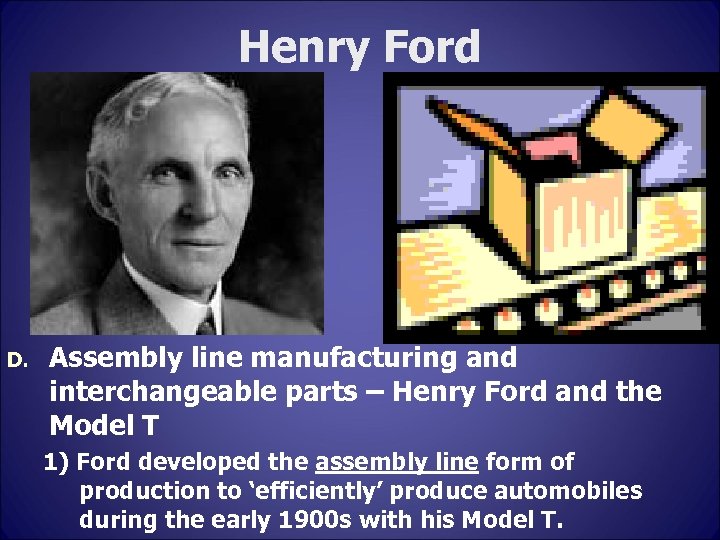
Henry Ford D. Assembly line manufacturing and interchangeable parts – Henry Ford and the Model T 1) Ford developed the assembly line form of production to ‘efficiently’ produce automobiles during the early 1900 s with his Model T.
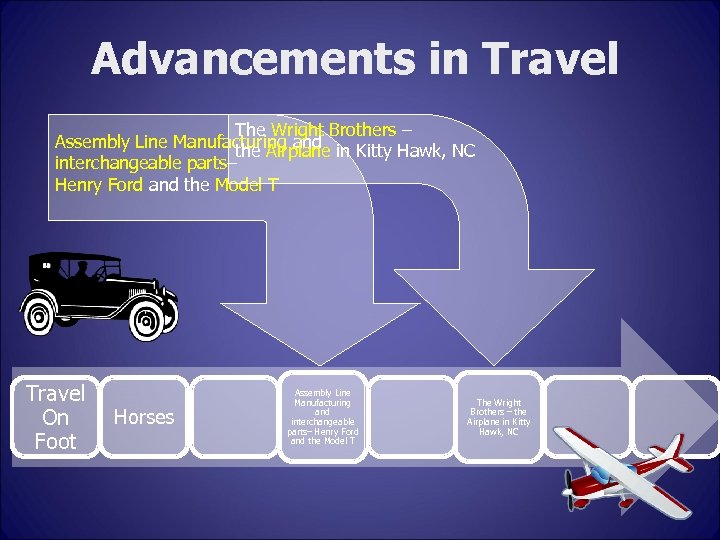
Advancements in Travel The Wright Brothers – Assembly Line Manufacturing and the Airplane in Kitty Hawk, NC interchangeable parts– Henry Ford and the Model T Travel On Foot Horses Assembly Line Manufacturing and interchangeable parts– Henry Ford and the Model T The Wright Brothers – the Airplane in Kitty Hawk, NC
Henry Ford By using this Ford was able to ‘mass produce’ automobiles and lower the cost of production
III. “Laissez-Faire” Capitalism A. Laissez Faire is French for “to let do” or “hands off” B. Government would let Industries develop free of regulations, laws, restraints C. To encourage the growth of Industries, the government would sell public lands that were rich with mineral resources very cheaply to Industrialists D. The government also gave land grants and money to railroad builders E. Corporations and limited liability
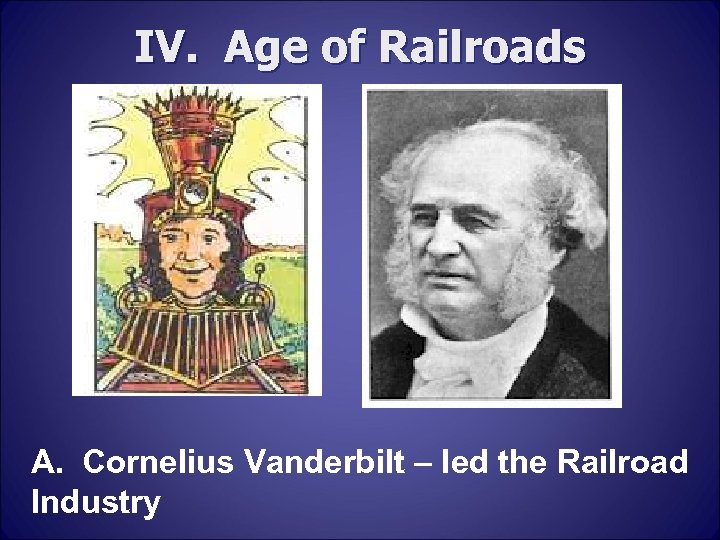
IV. Age of Railroads A. Cornelius Vanderbilt – led the Railroad Industry
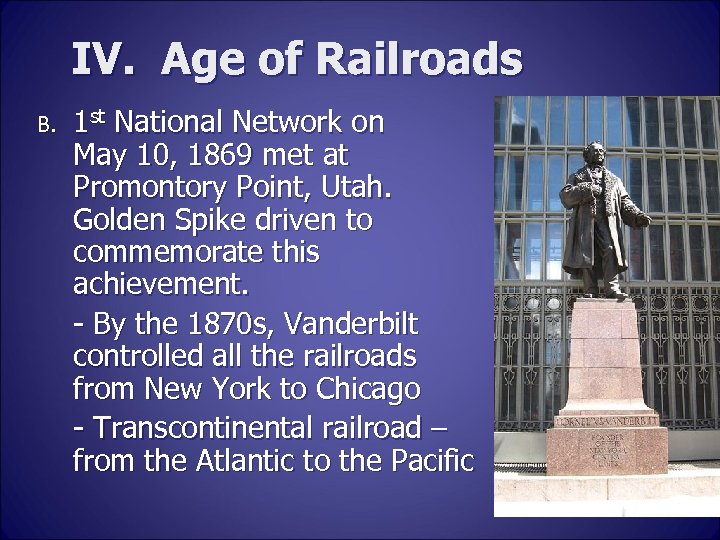
IV. Age of Railroads B. 1 st National Network on May 10, 1869 met at Promontory Point, Utah. Golden Spike driven to commemorate this achievement. - By the 1870 s, Vanderbilt controlled all the railroads from New York to Chicago - Transcontinental railroad – from the Atlantic to the Pacific
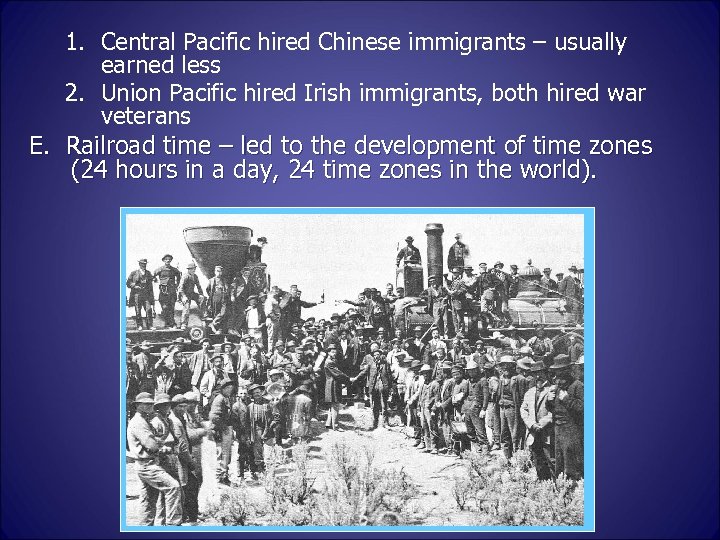
1. Central Pacific hired Chinese immigrants – usually earned less 2. Union Pacific hired Irish immigrants, both hired war veterans E. Railroad time – led to the development of time zones (24 hours in a day, 24 time zones in the world).
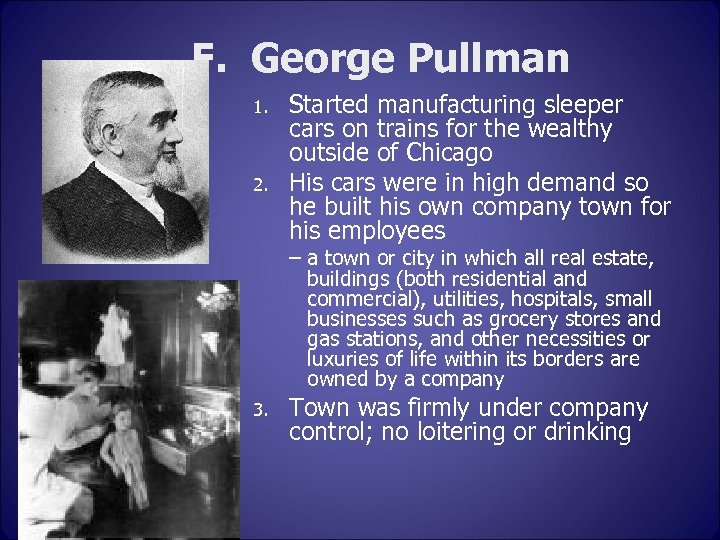
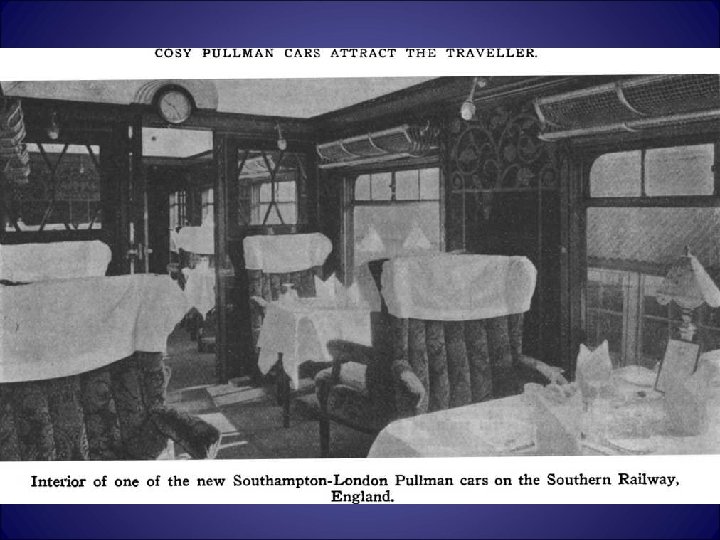
F. George Pullman 1. 2. Started manufacturing sleeper cars on trains for the wealthy outside of Chicago His cars were in high demand so he built his own company town for his employees – a town or city in which all real estate, buildings (both residential and commercial), utilities, hospitals, small businesses such as grocery stores and gas stations, and other necessities or luxuries of life within its borders are owned by a company 3. Town was firmly under company control; no loitering or drinking
E. Panic of 1893 1. 2. Railroads were crucial to the US economy, thus when corporate abuse led to bankruptcies it led to a nationwide economic collapse Worst depression up to that time; 500 banks and 15, 000 businesses failed.
Big Business Emerge n The Gilded Age – substantial growth in population in the United States and extravagant displays of wealth and excess of America's upper class coined by Mark Twain and Charles D. Warner (1873)
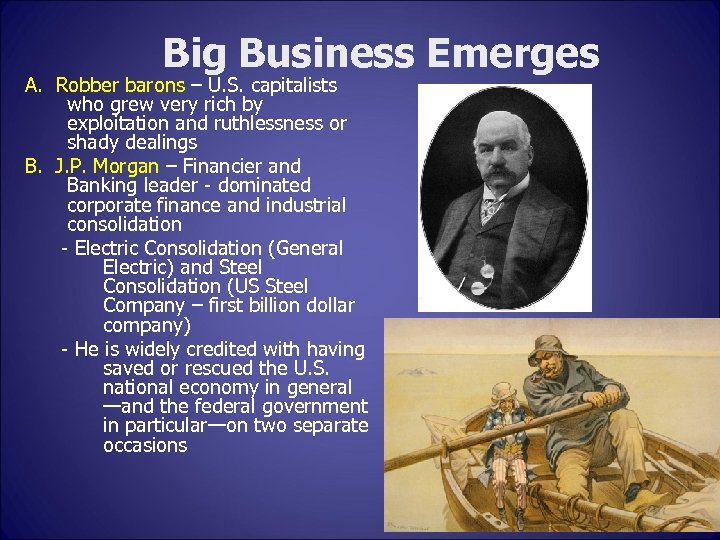
Big Business Emerges A. Robber barons – U. S. capitalists who grew very rich by exploitation and ruthlessness or shady dealings B. J. P. Morgan – Financier and Banking leader - dominated corporate finance and industrial consolidation - Electric Consolidation (General Electric) and Steel Consolidation (US Steel Company – first billion dollar company) - He is widely credited with having saved or rescued the U. S. national economy in general —and the federal government in particular—on two separate occasions
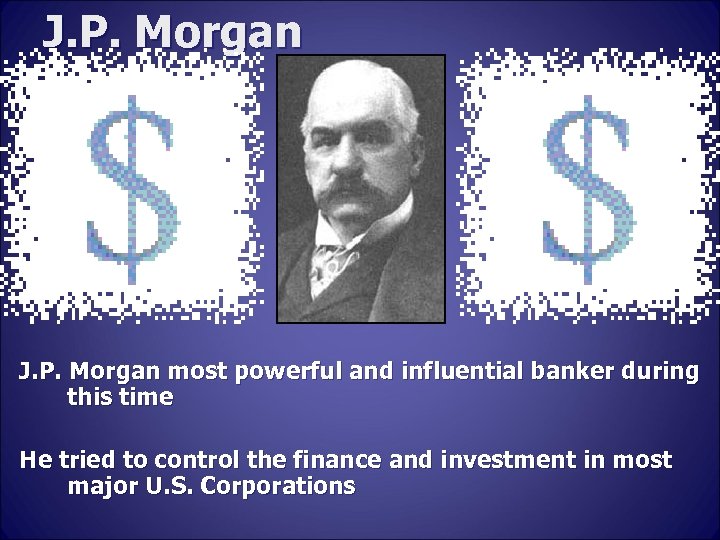
J. P. Morgan most powerful and influential banker during this time He tried to control the finance and investment in most major U. S. Corporations
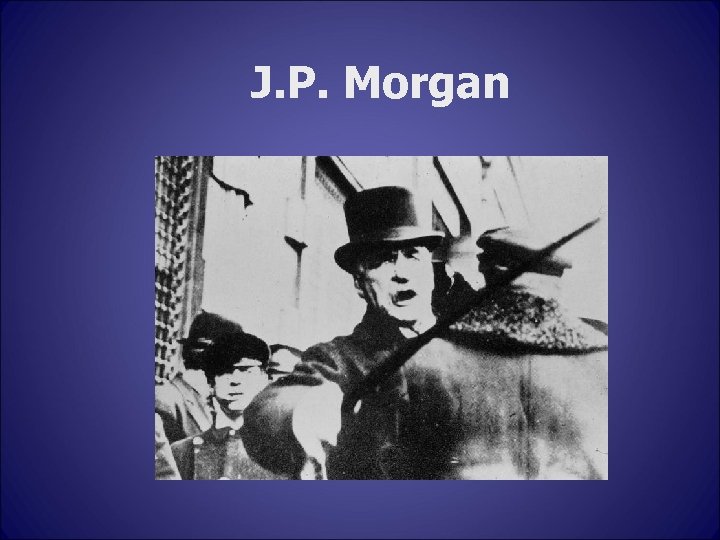
J. P. Morgan

Andrew Carnegie C. Andrew Carnegie (Scottish immigrant) – owner of Carnegie Steel Company – large manufacturer of steel - Entrepreneur (set up new business and takes risks with money) - Built a steel mill in Pittsburgh, Pennsylvania – Worked to make the process better and cheaper – Hired chemist and metallurgist to improve the quality of his steel – I HEART HISTORY – Attempted to control the entire steel industry – I HEART HISTORY – By 1900, he was producing 1/4 th of the world’s steel using the Bessemer process – Owned 80% of the steel industry when he sold the company in 1901 to Morgan for $480 million – This is what we call a monopoly
VI. Fewer Control More - “If you can’t beat them, join them!” A. Monopoly – firm that managed to buy out all of its competitors B. Holding company – corporations that did nothing but buy out the stock of other companies, ex. JP Morgan and US Steel, bought out Carnegie C. Trust – turning your stock over to a group of trustees, people who ran several different companies as one large company, ex. John Rockefeller and Standard Oil
Rockefeller and Other Robber Barons C. 1870 Standard Oil began as a small company that produced 2 -3% of the nations oil by 1880 it controlled 90% of the refining in America D. Rather than sharing the wealth with employees or consumers he reaped in large profits E. Employees were paid extremely low wages and he drove his competitors out of business by lower the cost of his product to levels they could not match. F. He then bought the company and raised prices G. Defended their wealth with charities they sponsored and their philanthropy H. Carnegie Hall, 3, 000 libraries across the nation
VII. Rockefeller and Other Robber barons - John D. Rockefeller became the king of the U. S. Oil industry during the 1880 s Rockefeller’s Standard Oil Company had the greatest monopoly over a single industry in American history - http: //www. nytimes. com/ref/busines s/20070715_GILDED_GRAPHIC. html #
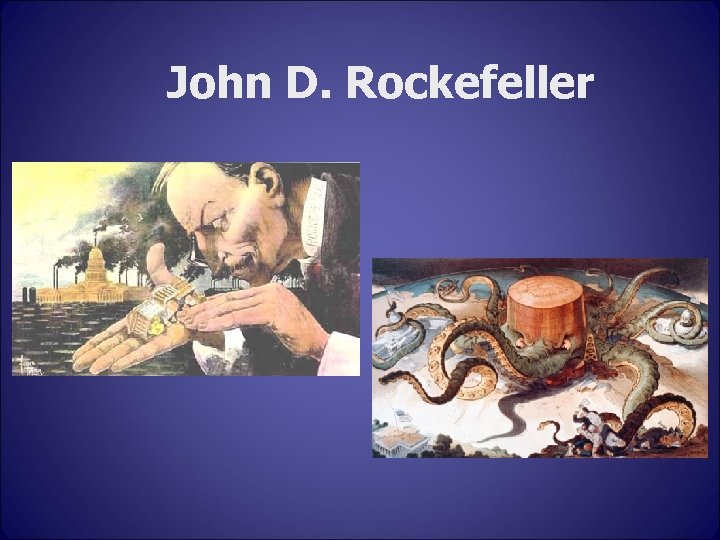
John D. Rockefeller
VIII. Sherman Antitrust Act A. B. C. D. E. Sherman Antitrust Act – stated that any attempt to interfere with free trade among the states or internationally by forming a trust was illegal Enforcement was extremely difficult Act did not clearly define what a trust was – very vague Supreme Court refused to support the act and threw out cases Government eventually gave up on the act – later we will see the passage of another Anti-Trust Act
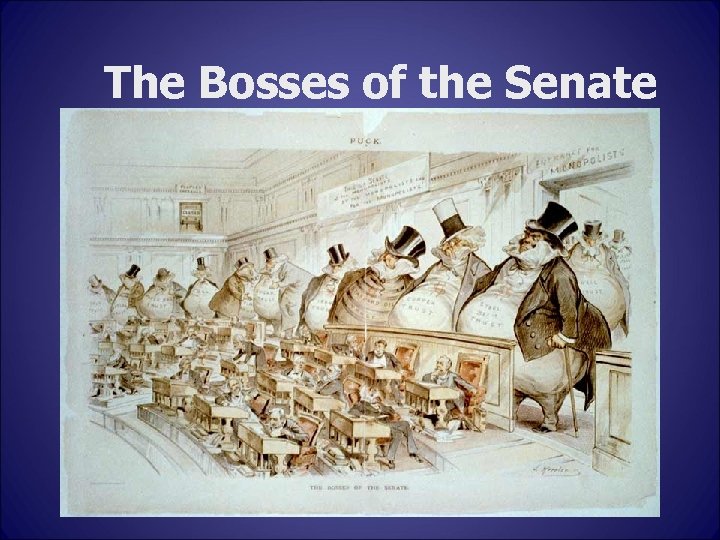
The Bosses of the Senate
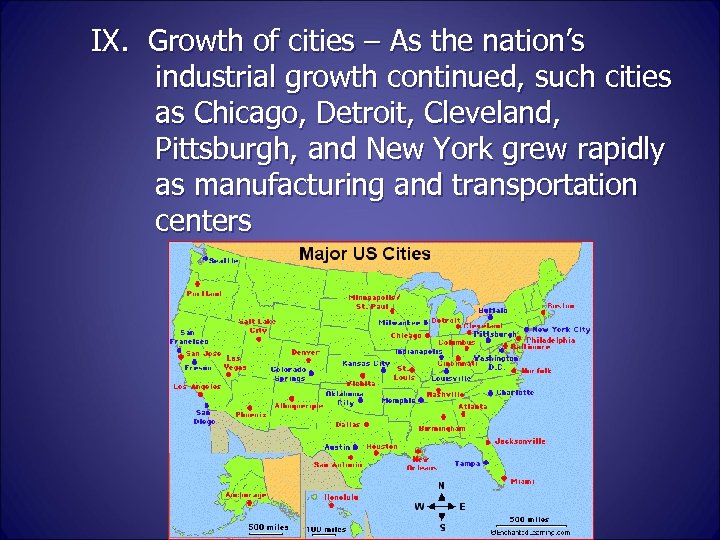
IX. Growth of cities – As the nation’s industrial growth continued, such cities as Chicago, Detroit, Cleveland, Pittsburgh, and New York grew rapidly as manufacturing and transportation centers
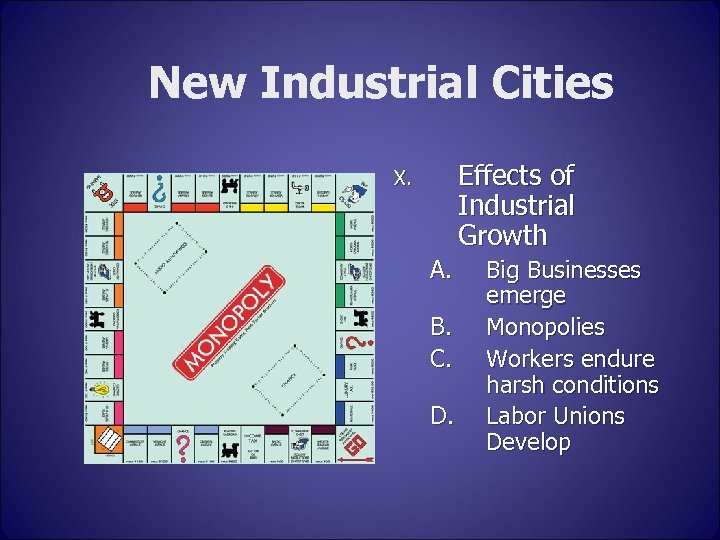
New Industrial Cities Effects of Industrial Growth X. A. B. C. D. Big Businesses emerge Monopolies Workers endure harsh conditions Labor Unions Develop
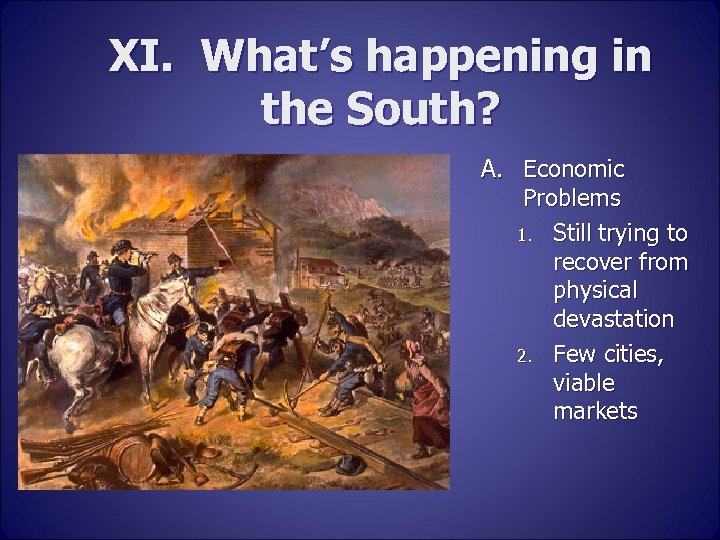
XI. What’s happening in the South? A. Economic Problems 1. Still trying to recover from physical devastation 2. Few cities, viable markets
XI. What’s happening in the South? A. Economic Causes 1. Unwilling to invest in the South because they thought it was a poor risk 2. Northern businesses owned 90% of the stock in the profitable Southern businesses 3. South remained basically agricultural and farmers at the mercy of railroad rates 4. Suffered not only from high rail rates, but also from high tariffs on raw materials they needed to import 5. Post reconstruction South was stuck in economic stalemate
Go History!
Скачать презентацию Big Business Industry The Industrial Age
51de58eb33744ea4a3184dffe8eb944c.ppt