 Скачать презентацию BIG BUSINESS AND ORGANIZED LABOR THE EMERGENCE
a81baeb1bdb1837ad45d3e7d8388bd51.ppt
- Количество слайдов: 50



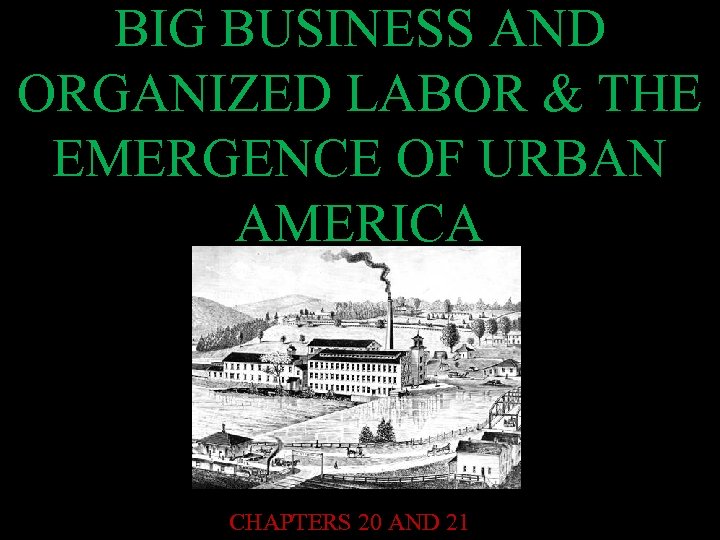
BIG BUSINESS AND ORGANIZED LABOR & THE EMERGENCE OF URBAN AMERICA CHAPTERS 20 AND 21
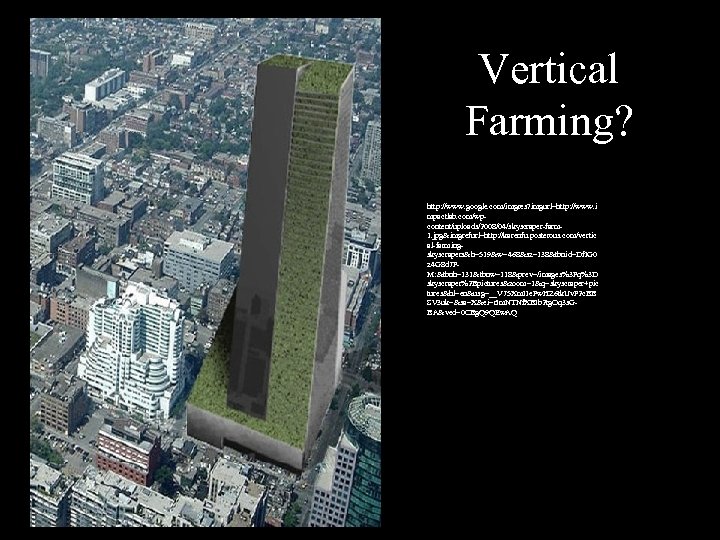
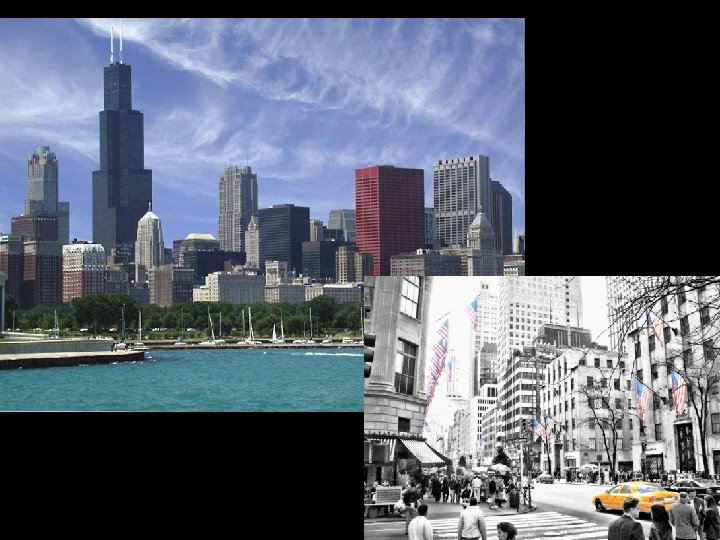
Vertical Farming? http: //www. google. com/imgres? imgurl=http: //www. i mpactlab. com/wpcontent/uploads/2008/04/skyscraper-farm 1. jpg&imgrefurl=http: //karenfu. posterous. com/vertic al-farmingskyscrapers&h=519&w=468&sz=138&tbnid=Df. IG 0 z 4 G 8 d 7 FM: &tbnh=131&tbnw=118&prev=/images%3 Fq%3 D skyscraper%2 Bpictures&zoom=1&q=skyscraper+pic tures&hl=en&usg=__V 75 Xm. I 1 e. Pw. HZ 6 tk. Uv. P 2 c. BB SV 3 uk=&sa=X&ei=r. Im. NTNf. XBIb 2 tg. Oq 3 s. GBA&ved=0 CBg. Q 9 QEw. AQ
CAUSES OF BUSINESS GROWTH -TECHNOLOGICAL INNOVATION -LABOR SHORTAGE -AGRICULTURAL PRODUCTION -RAILROAD NETWORK -INEXPENSIVE POWER -SUPPORTIVE GOVERNMENT
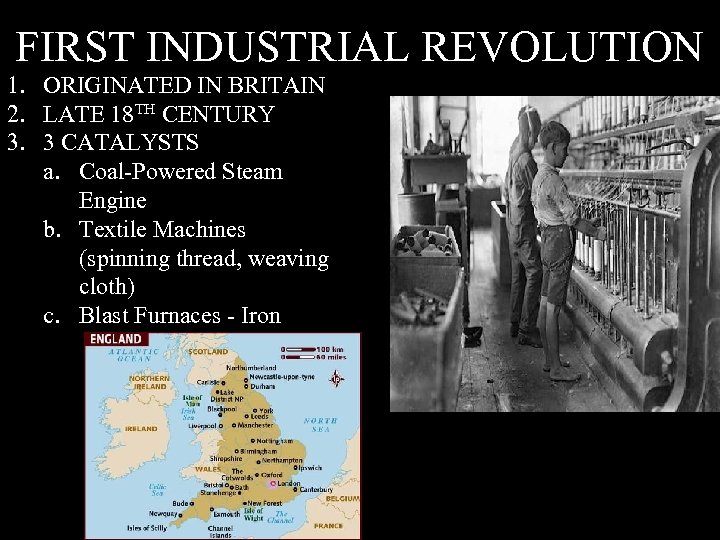
FIRST INDUSTRIAL REVOLUTION 1. ORIGINATED IN BRITAIN 2. LATE 18 TH CENTURY 3. 3 CATALYSTS a. Coal-Powered Steam Engine b. Textile Machines (spinning thread, weaving cloth) c. Blast Furnaces - Iron
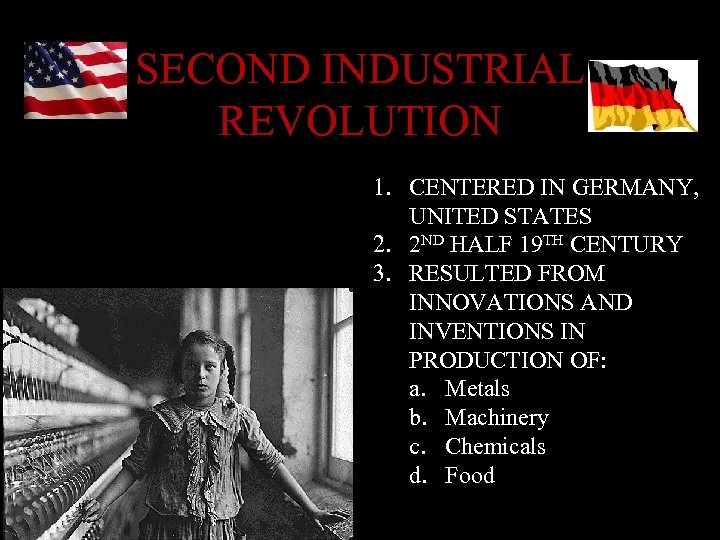
SECOND INDUSTRIAL REVOLUTION 1. CENTERED IN GERMANY, UNITED STATES 2. 2 ND HALF 19 TH CENTURY 3. RESULTED FROM INNOVATIONS AND INVENTIONS IN PRODUCTION OF: a. Metals b. Machinery c. Chemicals d. Food
THREE RELATED DEVELOPMENTS 1. INTERCONNECTED TRANSPORTATION AND COMMUNICATION NETWORK --TELEGRAPHS, RAILRAOD, STEAMSHIPS, UNDERSEA TELEGRAPH CABLE 2. ELECTRIC POWER USE --ELECTRIC TROLLEYS, SUBWAYS, ELECTRICITY TO CITIES & FARMS 3. SYSTEMATIC APPLICATION OF SCIENCE TO INDUSTRY --”TAYLORISM” OR “SCIENTIFIC MANAGEMENT”
BESSEMER PROCESS (1855) 1. SIR HENRY BESSEMER 2. INFUSED CARBON INTO IRON 3. CHEAP STEEL 1. STRONG 2. LIGHTWEIGHT 3. DURABLE/PLIABLE
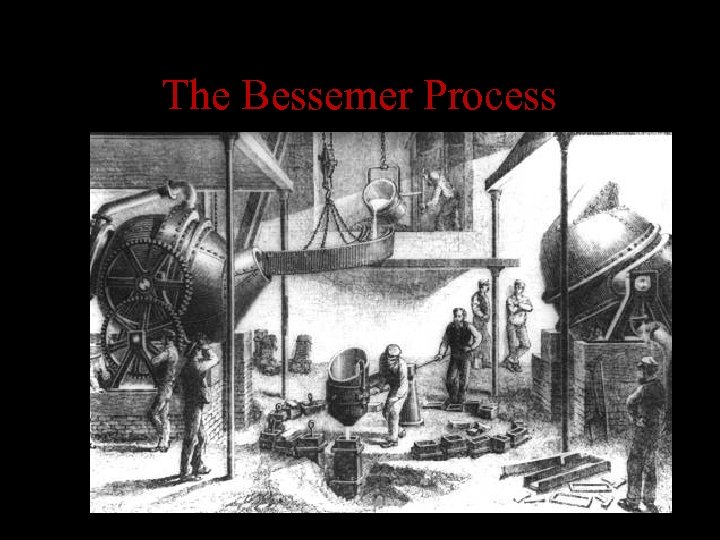
The Bessemer Process
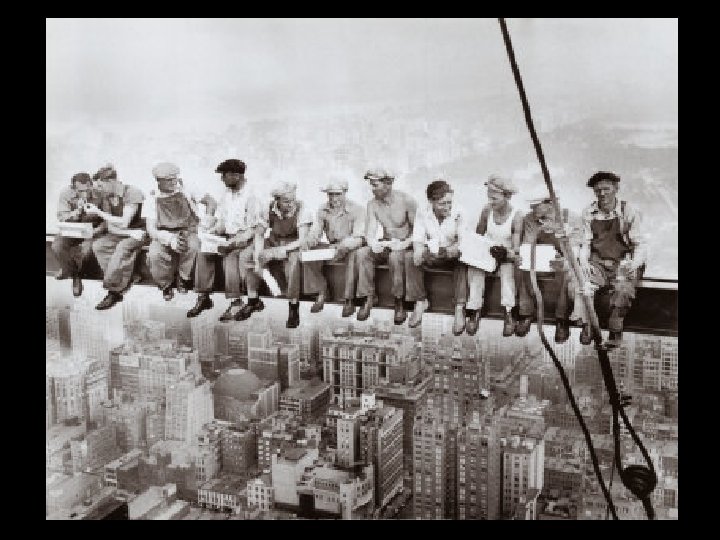
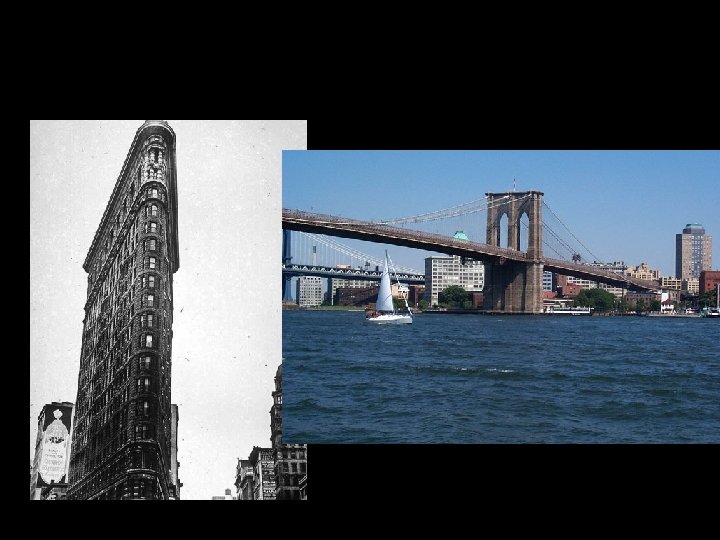
SKYSCRAPERS AND STREETCARS 1. Elevators 2. Limited Space 2. Internal Steel Skeletons (instead of wood or stone) RESULT: Good use of limited space STREETCARS 1. When electricity began to be used the idea of electric powered streetcars became popular. RESULT: Urban sprawl, easy transit, rapid city growth
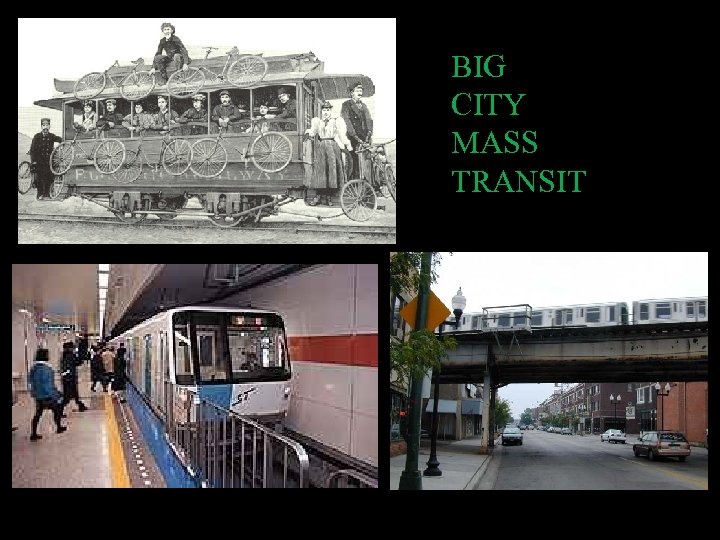
BIG CITY MASS TRANSIT
Other important inventions/innovations: • Urban planning: Frederick Law Olmstead originated the idea for urban parks and created Central Park as well as the park systems of DC, Bos (Fenway) • Photography for all! George Eastman invents paper based film and the Kodak camera. For $25 (in 1888, $471. 84 today) you could get a camera and 100 -picture roll. When done you sent it to Eastman w/ $10 ($188. 74) and he would send your pics and refill your camera. • Thomas Edison – phonograph, telegraph, motion picture camera, light bulb
UNITED STATES PATENT OFFICE • EST. ~1790 • 1 ST 10 YEARS IN EXISTENCE – 276 INVENTIONS • 1890 s – 235, 000 INVENTIONS • Farm equipment, barbed wire, typewriter, vacuum cleaner, motion picture, telephone, phonograph, light bulb • Alternating Current Motor – Factories Anywhere
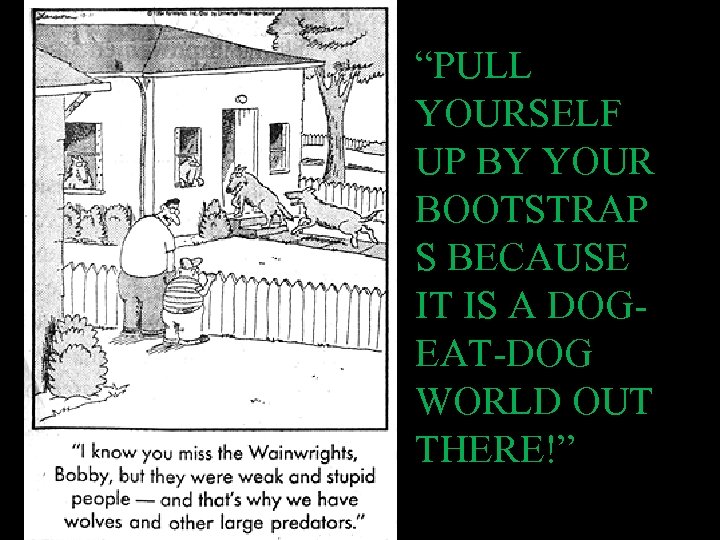
“PULL YOURSELF UP BY YOUR BOOTSTRAP S BECAUSE IT IS A DOGEAT-DOG WORLD OUT THERE!”
BUSINESS-RELATED CONCEPTS • Social Darwinism: (Origin of Species) Belief that unrestrained competition will produce the most fit individuals in society. • Laissez faire: (Fr: “allow to do” or “government hands off”) purposefully keeping markets unregulated. Free competition would ensure survival of the fittest. • Horizontal Consolidation: the merging of competing producers in order to eliminate competition. • Vertical Consolidation: Owning all means of production • Horatio Alger: Successful writer of the Gilded Age. Wrote 135 novels about street urchins and orphans who became wealthy through hard work (and luck. ) “Pull yourself up by your own bootstraps. ”
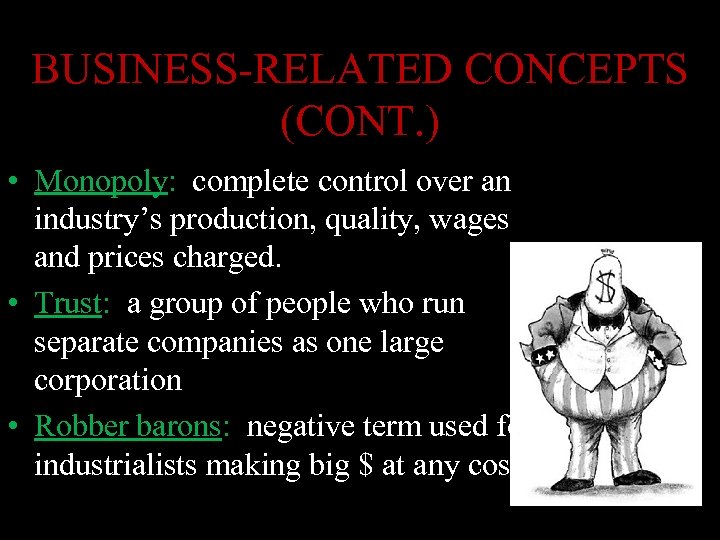
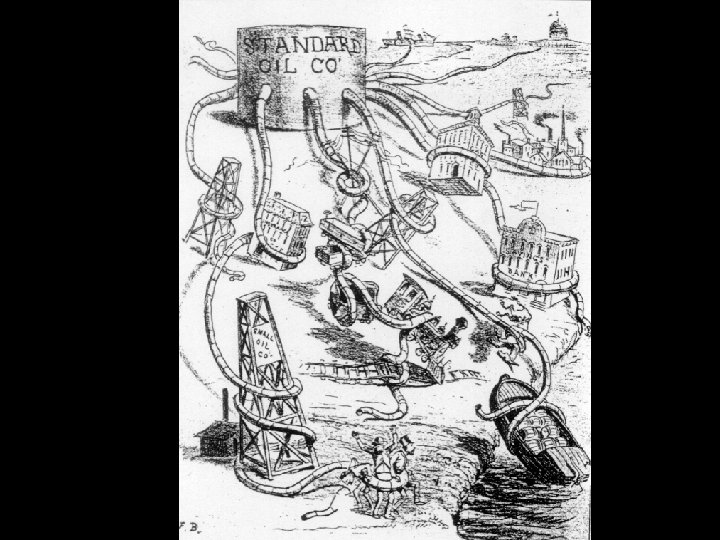
BUSINESS-RELATED CONCEPTS (CONT. ) • Monopoly: complete control over an industry’s production, quality, wages and prices charged. • Trust: a group of people who run separate companies as one large corporation • Robber barons: negative term used for industrialists making big $ at any cost
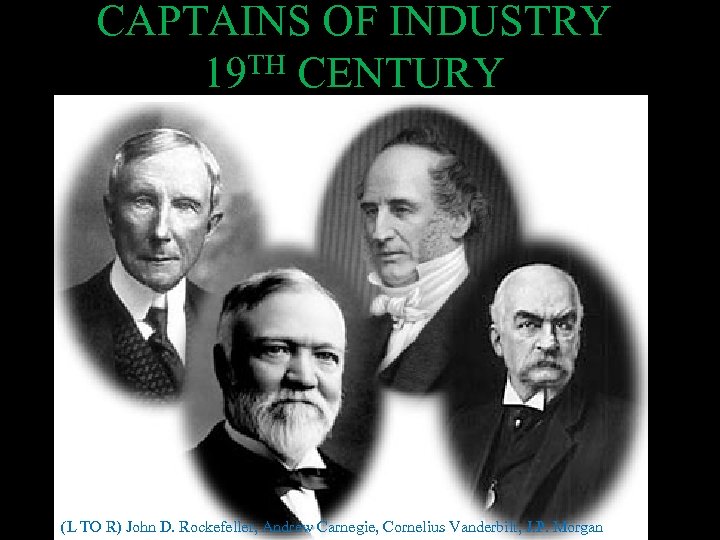
CAPTAINS OF INDUSTRY 19 TH CENTURY (L TO R) John D. Rockefeller, Andrew Carnegie, Cornelius Vanderbilt, J. P. Morgan
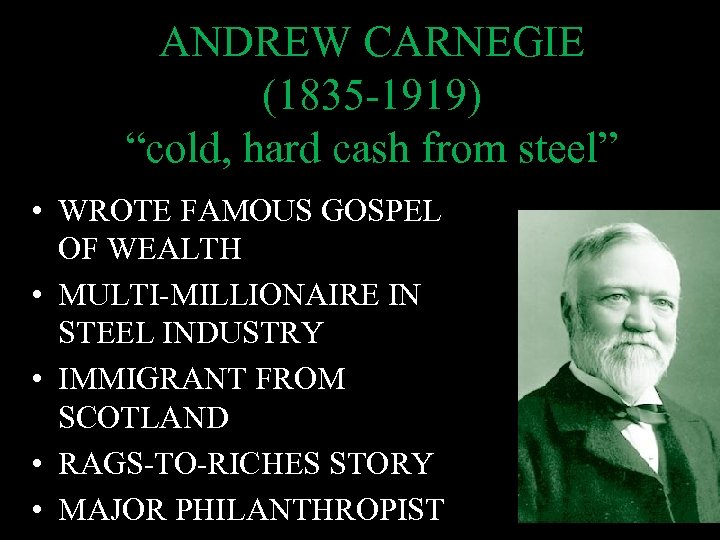
ANDREW CARNEGIE (1835 -1919) “cold, hard cash from steel” • WROTE FAMOUS GOSPEL OF WEALTH • MULTI-MILLIONAIRE IN STEEL INDUSTRY • IMMIGRANT FROM SCOTLAND • RAGS-TO-RICHES STORY • MAJOR PHILANTHROPIST
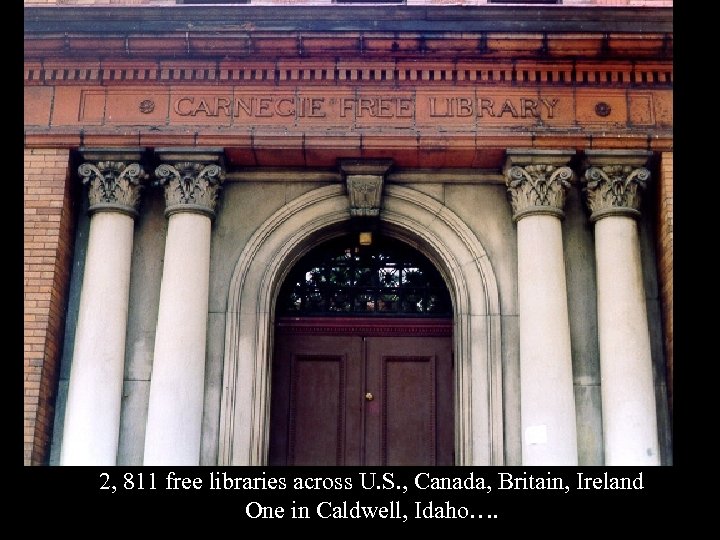
2, 811 free libraries across U. S. , Canada, Britain, Ireland One in Caldwell, Idaho….
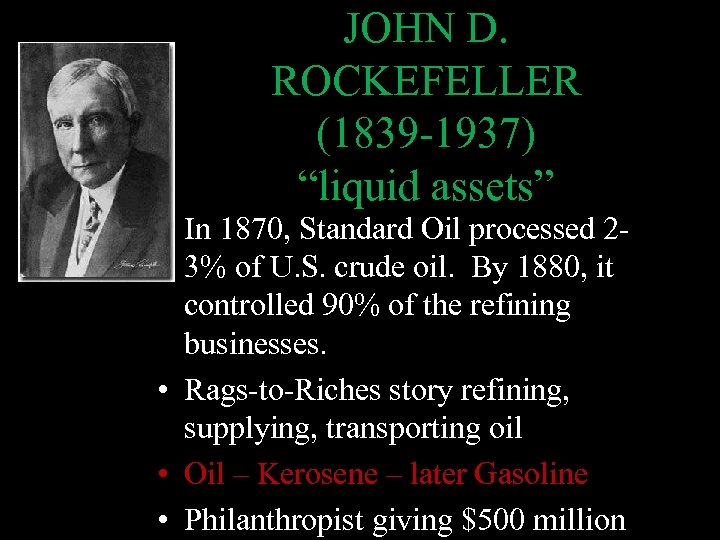
JOHN D. ROCKEFELLER (1839 -1937) “liquid assets” • In 1870, Standard Oil processed 23% of U. S. crude oil. By 1880, it controlled 90% of the refining businesses. • Rags-to-Riches story refining, supplying, transporting oil • Oil – Kerosene – later Gasoline • Philanthropist giving $500 million
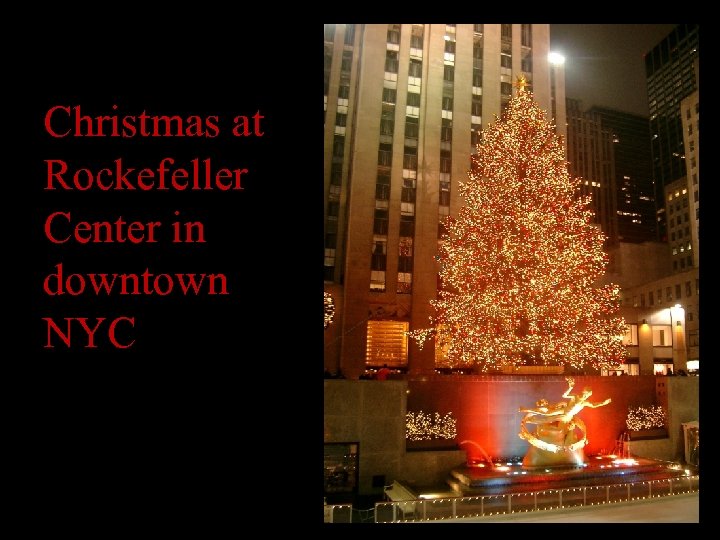
Christmas at Rockefeller Center in downtown NYC
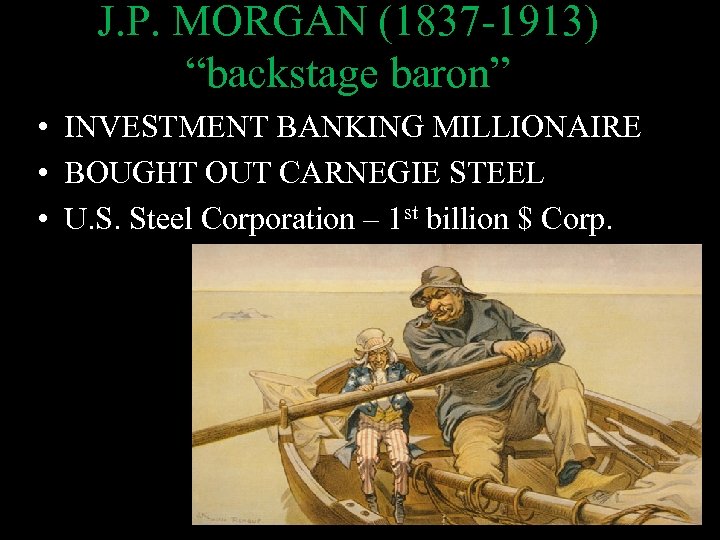
J. P. MORGAN (1837 -1913) “backstage baron” • INVESTMENT BANKING MILLIONAIRE • BOUGHT OUT CARNEGIE STEEL • U. S. Steel Corporation – 1 st billion $ Corp.
CORNELIUS VANDERBILT (1794 -1877) “railroading” • Started in steamboats, ended in railroads • 1 st to successfully utilize “bleacher economics” – Cheap seats, $5. 00 hot dogs • Lowered fares so much, competition paid him to go away • RRs during Civil War • 1865 - 35, 000 m. track • 1897 – 200, 000 m. track • Little Philanthropy except University in his name
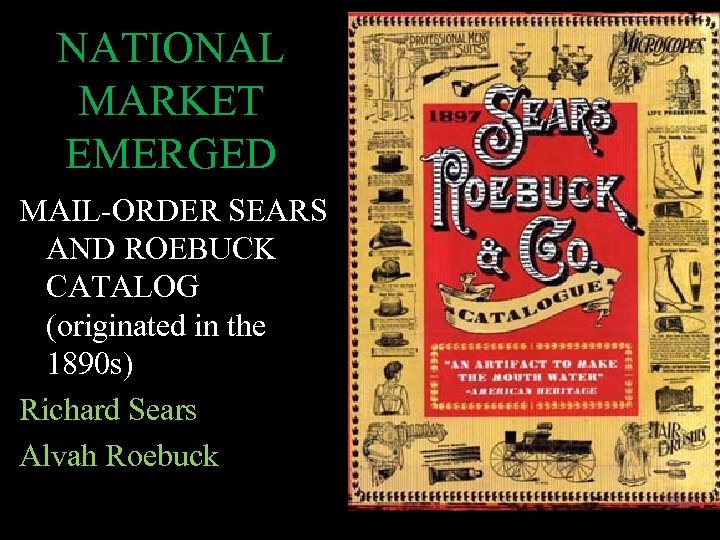
NATIONAL MARKET EMERGED MAIL-ORDER SEARS AND ROEBUCK CATALOG (originated in the 1890 s) Richard Sears Alvah Roebuck
BUSINESSES ORGANIZE • VERTICAL ORGANIZATION – OWN ALL MEANS OF PRODUCTION • HORIZONTAL ORGAINZATION – ELIMINATE COMPETITION • Merge production/distribution • Industrial combination/concentration • High tariffs = buy U. S. A.
Problems faced by workers • Long Hours (Average workday was 12 hours x 6) • Dangerous – fatigue caused accidents (1882 - 675 workers were killed per week, 1 in 300 railroad workers were killed on the job) • Low wages, no regulations meant that employers could pay what they wanted (JDR, rents) • Child Labor: lack of money forced the whole family to work (27 cents for 14 hr day)
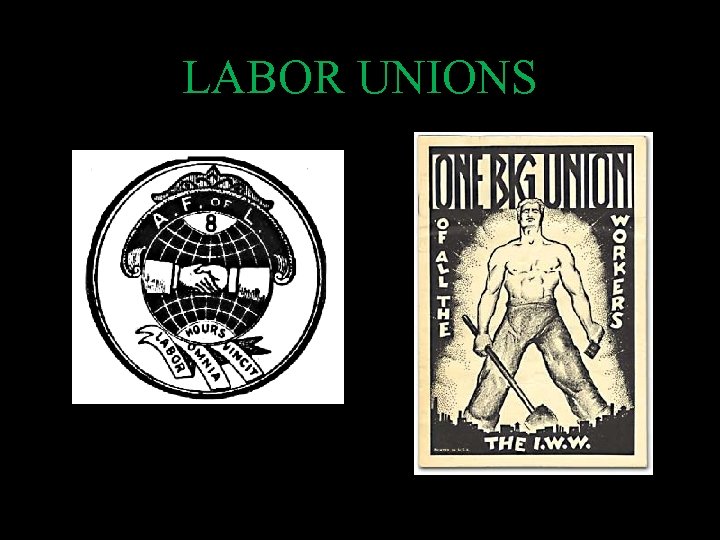
LABOR UNIONS - formed to correct problems; Businesses were constantly consolidating, labor felt that it should too 2 types of unions emerged w/ 2 dynamic leaders 1. Craft Unions: skilled workers from a variety of industries banded together. The large numbers allowed them to use striking much more effectively. The AFL is the first major craft union. It was led by a British immigrant named Samuel Gompers.
2. Industrial unions: both skilled and unskilled workers from a specific industry. Allowing unskilled workers boosted numbers of the unions. The ARU (Am. Railway Union) was the 1 st industrial union. It was led by Eugene V. Debs. • Many people from both types would soon support socialism (gov’t controlled econ = dist. of wealth) and form the IWW, Industrial Workers of the World or “Wobblies” a radical union that combined both (violent. ) They were led by William “Big Bill” Haywood.
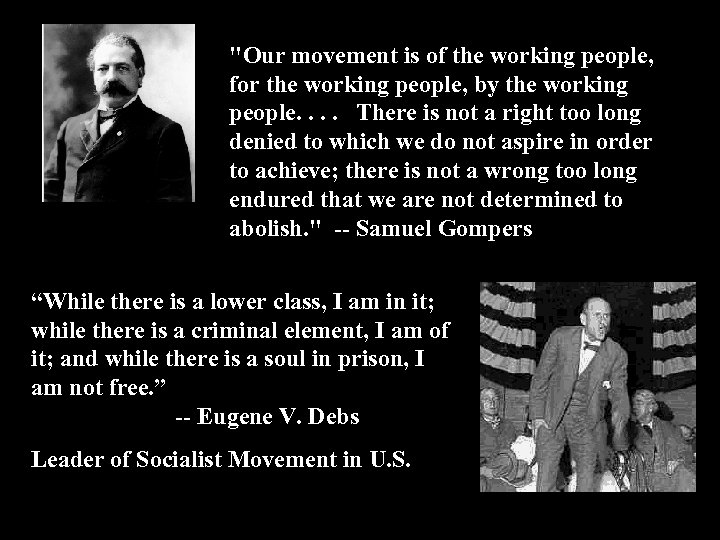
"Our movement is of the working people, for the working people, by the working people. . There is not a right too long denied to which we do not aspire in order to achieve; there is not a wrong too long endured that we are not determined to abolish. " -- Samuel Gompers “While there is a lower class, I am in it; while there is a criminal element, I am of it; and while there is a soul in prison, I am not free. ” -- Eugene V. Debs Leader of Socialist Movement in U. S.
LABOR UNIONS
HOMESTEAD STRIKE & PULLMAN STRIKE 2 VIOLENT INCIDENTS BETWEEN INDUSTRY AND UNION IN THE 1890 s -Homestead Strike (1892) in Pittsburgh, Pennsylvania; Union workers vs. Pinkertons (replacement workers); actual battle on Monongahela River with dynamite, fire, guns; six workers, three Pinkertons killed; six days later militia showed up to restore order -Pullman Stike (1894) – Walkout by Union workers of the American Railway Union (Eugene V. Debs); railroads at a standstill in Pullman, Illinois and all around Midwest; mail was being “held up”; replacement workers brought in, strike put out by President Grover Cleveland federal troops
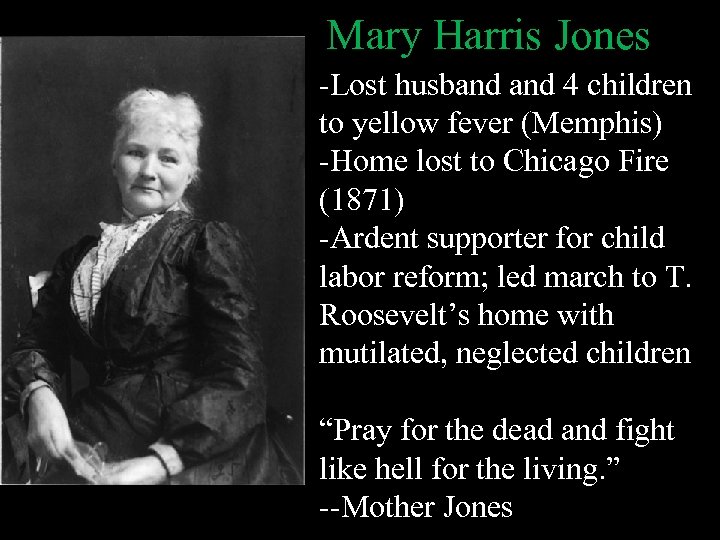
Mary Harris Jones -Lost husband 4 children to yellow fever (Memphis) -Home lost to Chicago Fire (1871) -Ardent supporter for child labor reform; led march to T. Roosevelt’s home with mutilated, neglected children “Pray for the dead and fight like hell for the living. ” --Mother Jones
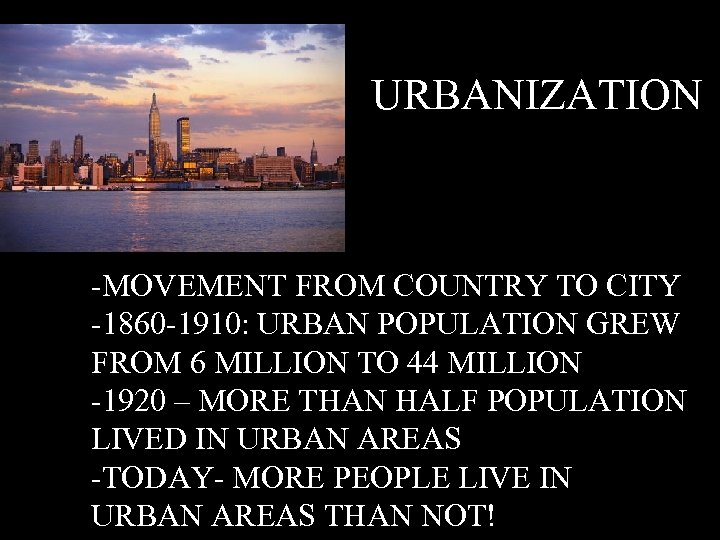
URBANIZATION -MOVEMENT FROM COUNTRY TO CITY -1860 -1910: URBAN POPULATION GREW FROM 6 MILLION TO 44 MILLION -1920 – MORE THAN HALF POPULATION LIVED IN URBAN AREAS -TODAY- MORE PEOPLE LIVE IN URBAN AREAS THAN NOT!
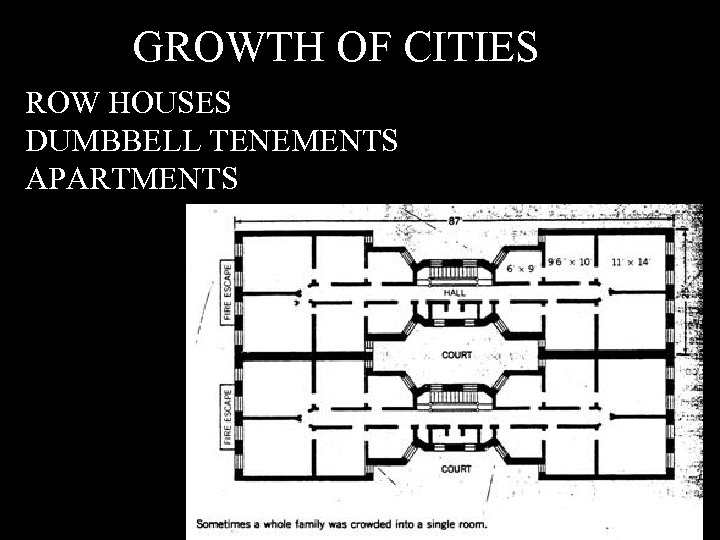
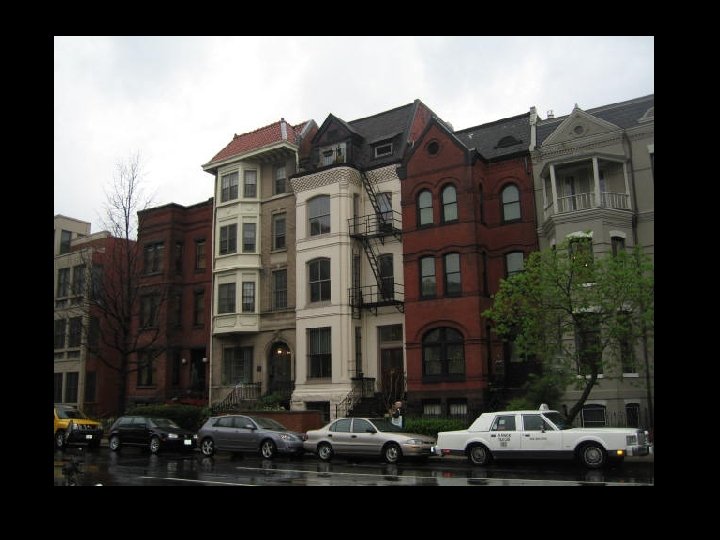
GROWTH OF CITIES ROW HOUSES DUMBBELL TENEMENTS APARTMENTS
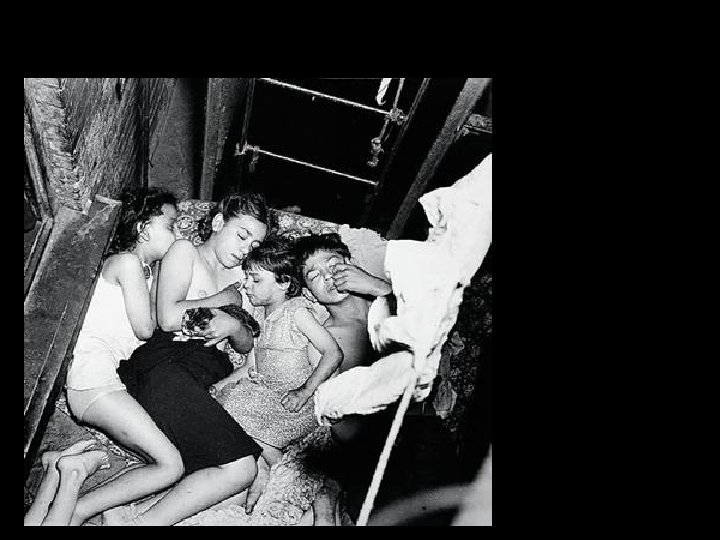
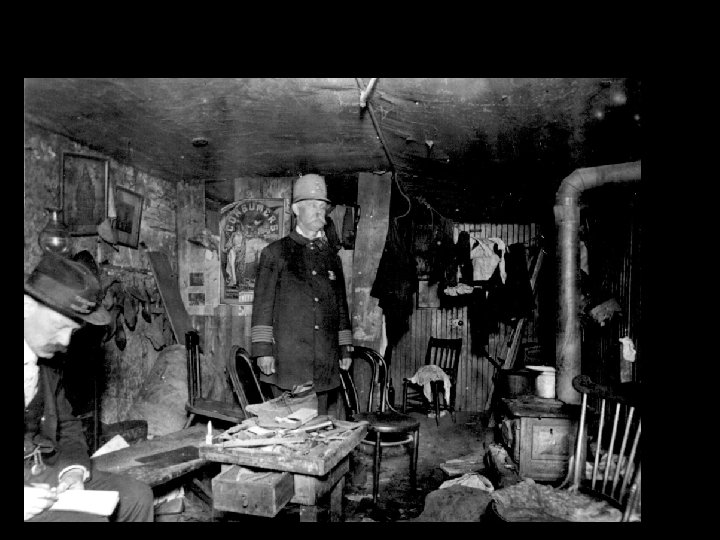
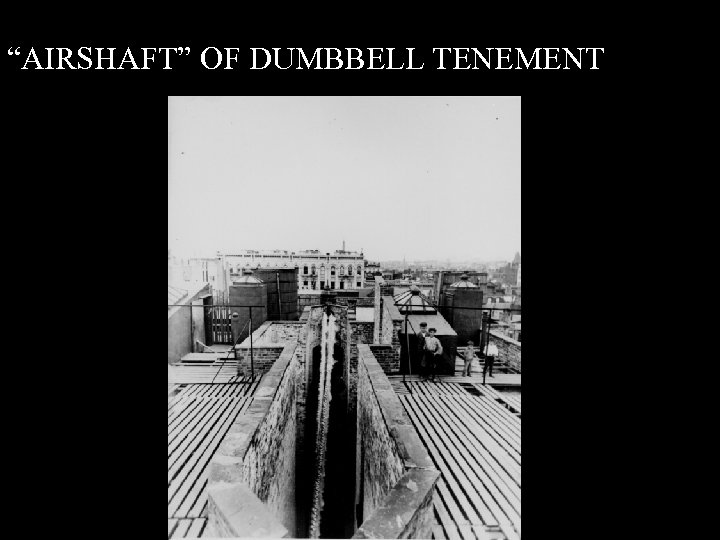
“AIRSHAFT” OF DUMBBELL TENEMENT
Political machine: organized group that controlled political party activity in a city. (Bal, NYC, Phi, Bos, SF) • They were organized like pyramids: base = precinct captains ward boss city boss • In exchange for votes, the poor would get jobs (police, fire, sanitation) and help (licenses, inspections, courts) when needed. • Once being poor, they helped them. They gave $ to schools, parks, hospitals and orphanages. They got more influence and votes for their work.
The downside to POLITICAL MACHINES… • As their power and influence grew, greed and corruption rampant. • Voter fraud: dogs, kids, and dead people became eligible voters. • Graft: Unscrupulous use of one's position to derive profit or advantages. • Kickbacks: illegal payments (a form of graft) • Bribes: illegal gambling, cash for favors to businessmen.
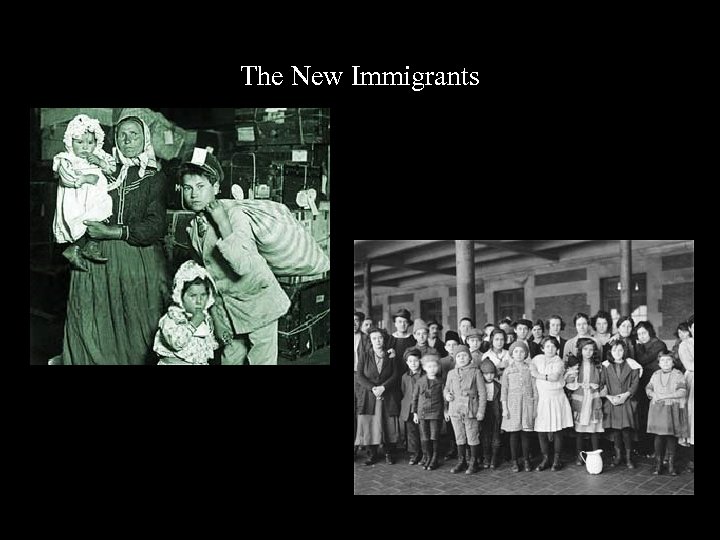
The New Immigrants
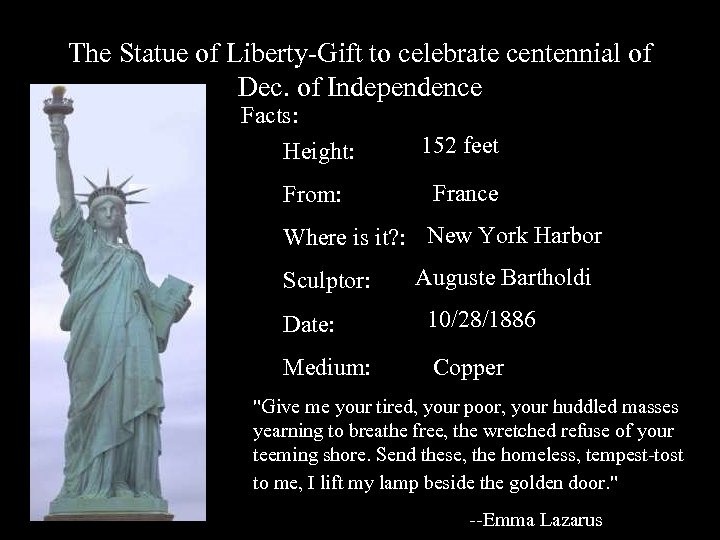
The Statue of Liberty-Gift to celebrate centennial of Dec. of Independence Facts: Height: 152 feet From: France Where is it? : New York Harbor Sculptor: Auguste Bartholdi Date: 10/28/1886 Medium: Copper "Give me your tired, your poor, your huddled masses yearning to breathe free, the wretched refuse of your teeming shore. Send these, the homeless, tempest-tost to me, I lift my lamp beside the golden door. " --Emma Lazarus
OLD ITALIAN SAYING “I CAME TO AMERICA BECAUSE I HEARD THE STREETS WERE PAVED WITH GOLD. WHEN I GOT HERE, I FOUND OUT THREE THINGS: FIRST, THE STREETS WEREN’T PAVED WITH GOLD; SECOND, THEY WEREN’T PAVED AT ALL; AND THIRD, I WAS EXPECTED TO PAVE THEM. ”
Between 1870 and 1920 over 21 million immigrants came to the U. S. • REASONS – Poverty – Famine – Land Shortages – Religious/political persecution – To make money (“birds of passage”: temporary immigrants to America. They were usually single young men who came to America in order to earn enough money to buy land back home. They worked hard, but they had no reason to develop an attachment to American ways. ) – Pogroms: Organized, anti-Semitic campaigns that led to the massacre of Jews in Russia and Poland.
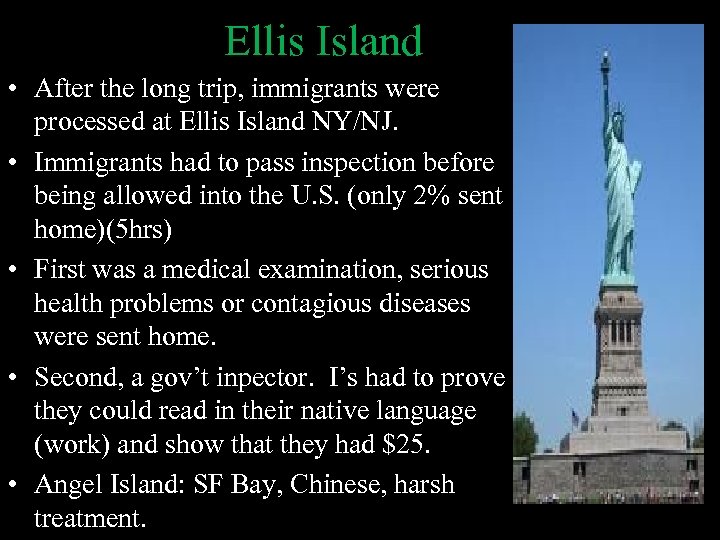
Ellis Island • After the long trip, immigrants were processed at Ellis Island NY/NJ. • Immigrants had to pass inspection before being allowed into the U. S. (only 2% sent home)(5 hrs) • First was a medical examination, serious health problems or contagious diseases were sent home. • Second, a gov’t inpector. I’s had to prove they could read in their native language (work) and show that they had $25. • Angel Island: SF Bay, Chinese, harsh treatment.
• Culture shock: confusion and anxiety from being placed in a culture that you don’t understand. • Communities cooperated together for survival, setting up churches/synagogues, aid societies, orphanages, newspapers and cemeteries. • Restrictions – anti-immigrant positions emerged b/c of the high immigration rate. 1. Nativism: many groups believed that some groups were okay and some were not. 2. Chinese Exclusion Act: banned all Chinese immigrants. Not repealed until 1943. 3. West coast segregation of Asian immigrants (Gentleman’s Agreement 07 -08 – U. S. wouldn’t segregate but Japan could only send educated immigrants. )
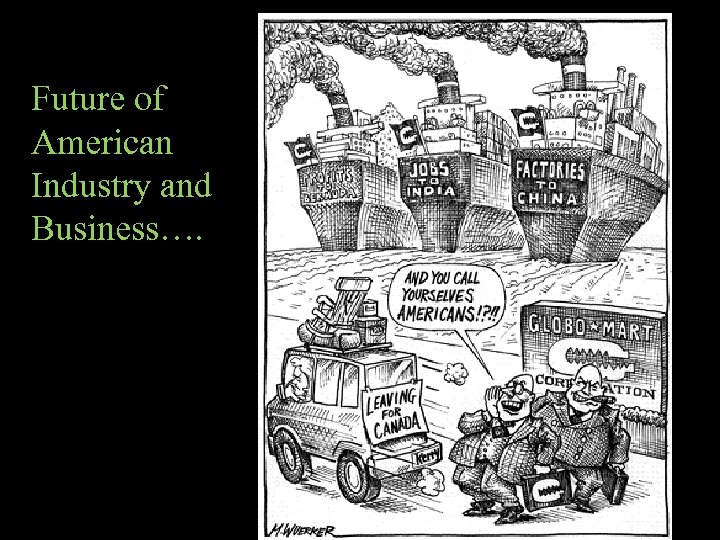
Future of American Industry and Business….
Скачать презентацию BIG BUSINESS AND ORGANIZED LABOR THE EMERGENCE
a81baeb1bdb1837ad45d3e7d8388bd51.ppt