 Скачать презентацию BI Norwegian School of Management Norwegian Centre of
8a82f8daf824b0cf17ae6a7c9745f7e4.ppt
- Количество слайдов: 32



BI Norwegian School of Management Norwegian Centre of Project Management Seminar Oslo, 6 th December 2006 Rethinking Project Management Main Findings of a UK Government-Funded Research Network Centre for Research in the Management of Projects University of Manchester & University College London Rethinking PM Engineering and Physical Sciences Research Council
University of Southampton
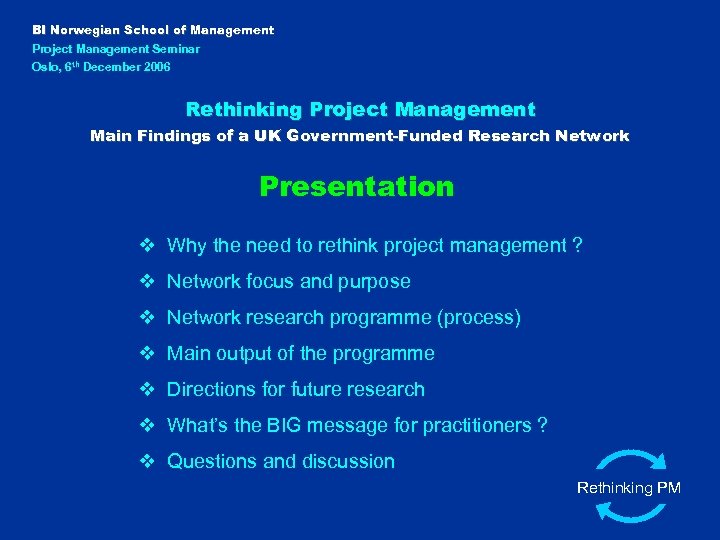
BI Norwegian School of Management Project Management Seminar Oslo, 6 th December 2006 Rethinking Project Management Main Findings of a UK Government-Funded Research Network Presentation v Why the need to rethink project management ? v Network focus and purpose v Network research programme (process) v Main output of the programme v Directions for future research v What’s the BIG message for practitioners ? v Questions and discussion Rethinking PM
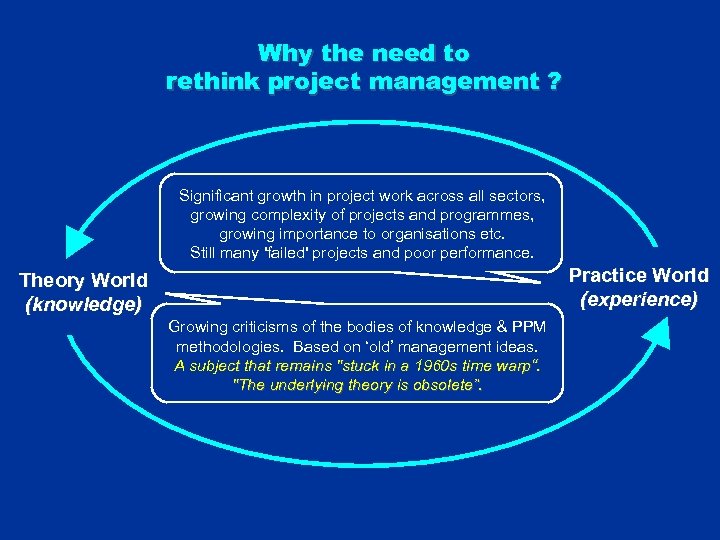
Why the need to rethink project management ? Significant growth in project work across all sectors, growing complexity of projects and programmes, growing importance to organisations etc. Still many 'failed' projects and poor performance. Practice World (experience) Theory World (knowledge) Growing criticisms of the bodies of knowledge & PPM methodologies. Based on ‘old’ management ideas. A subject that remains "stuck in a 1960 s time warp“. "The underlying theory is obsolete”.
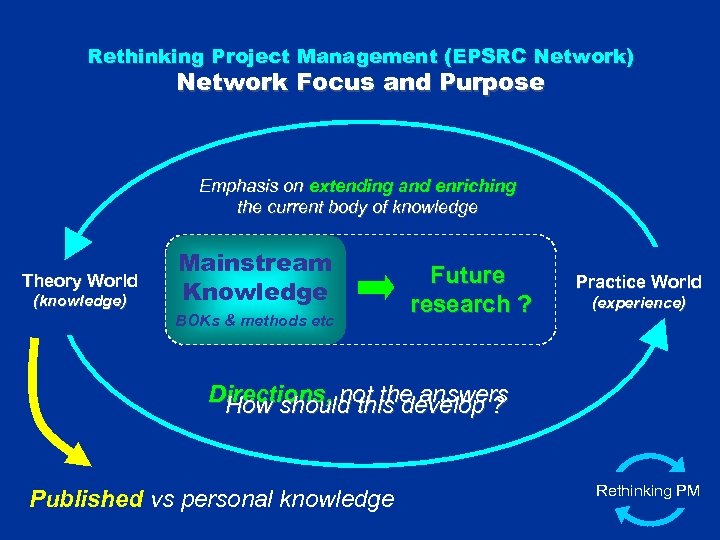
Rethinking Project Management (EPSRC Network) Network Focus and Purpose Emphasis on extending and enriching the current body of knowledge Theory World (knowledge) Mainstream Knowledge BOKs & methods etc Future research ? Practice World (experience) Directions, not the answers How should this develop ? Published vs personal knowledge Rethinking PM
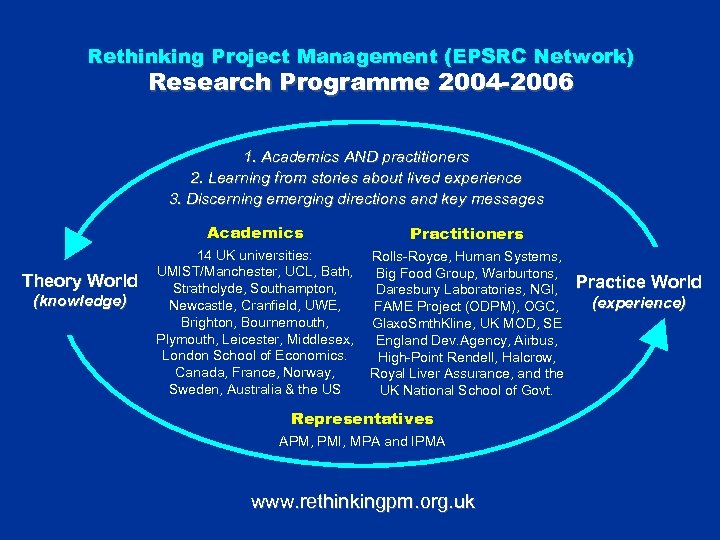
Rethinking Project Management (EPSRC Network) Research Programme 2004 -2006 1. Academics AND practitioners 2. Learning from stories about lived experience 3. Discerning emerging directions and key messages Academics Theory World (knowledge) Practitioners 14 UK universities: Rolls-Royce, Human Systems, UMIST/Manchester, UCL, Bath, Big Food Group, Warburtons, Strathclyde, Southampton, Daresbury Laboratories, NGI, Newcastle, Cranfield, UWE, FAME Project (ODPM), OGC, Brighton, Bournemouth, Glaxo. Smth. Kline, UK MOD, SE Plymouth, Leicester, Middlesex, England Dev. Agency, Airbus, London School of Economics. High-Point Rendell, Halcrow, Canada, France, Norway, Royal Liver Assurance, and the Sweden, Australia & the US UK National School of Govt. Representatives APM, PMI, MPA and IPMA www. rethinkingpm. org. uk Practice World (experience)
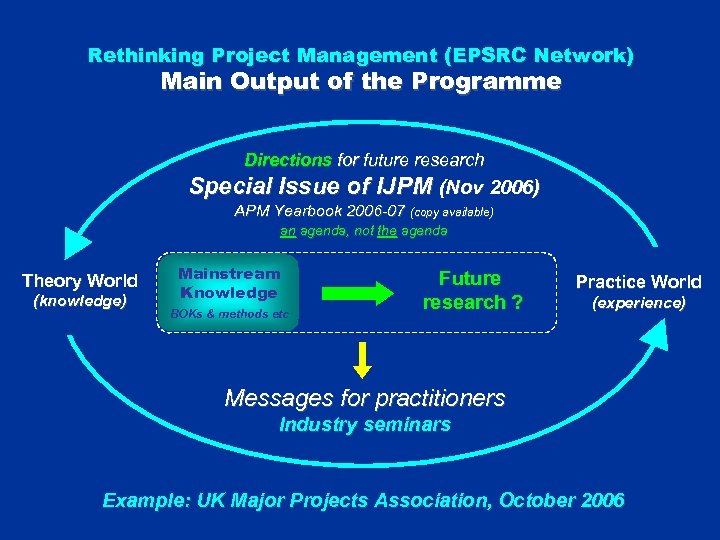
Rethinking Project Management (EPSRC Network) Main Output of the Programme Directions for future research Special Issue of IJPM (Nov 2006) APM Yearbook 2006 -07 (copy available) an agenda, not the agenda Theory World (knowledge) Mainstream Knowledge BOKs & methods etc Future research ? Practice World (experience) Messages for practitioners Industry seminars Example: UK Major Projects Association, October 2006
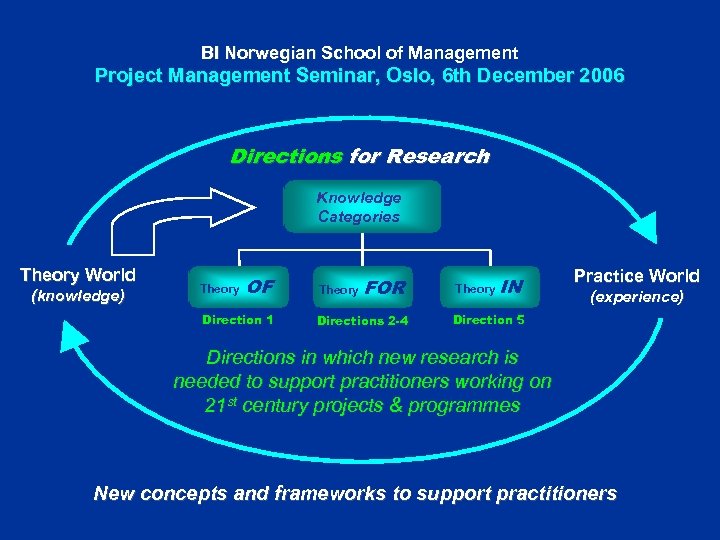
BI Norwegian School of Management Project Management Seminar, Oslo, 6 th December 2006 Directions for Research Knowledge Categories Theory World (knowledge) Theory OF Direction 1 Theory FOR Directions 2 -4 Theory IN Practice World (experience) Direction 5 Directions in which new research is needed to support practitioners working on 21 st century projects & programmes New concepts and frameworks to support practitioners
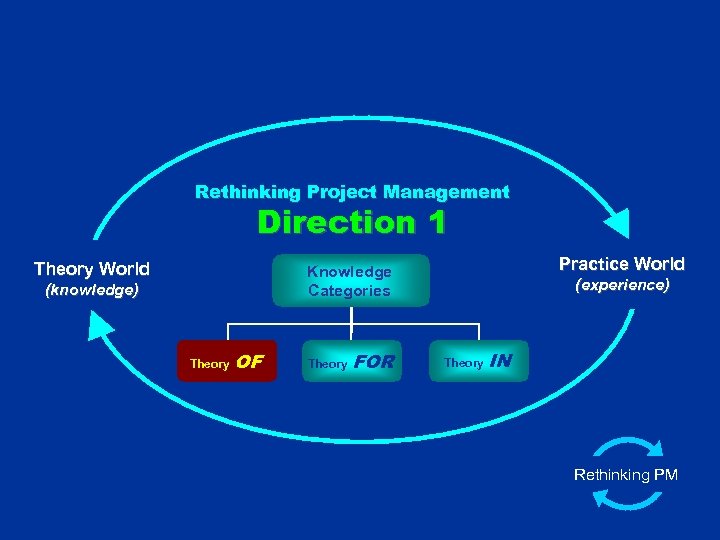
Rethinking Project Management Direction 1 Theory World Practice World Knowledge Categories (knowledge) Theory OF Theory FOR (experience) Theory IN Rethinking PM
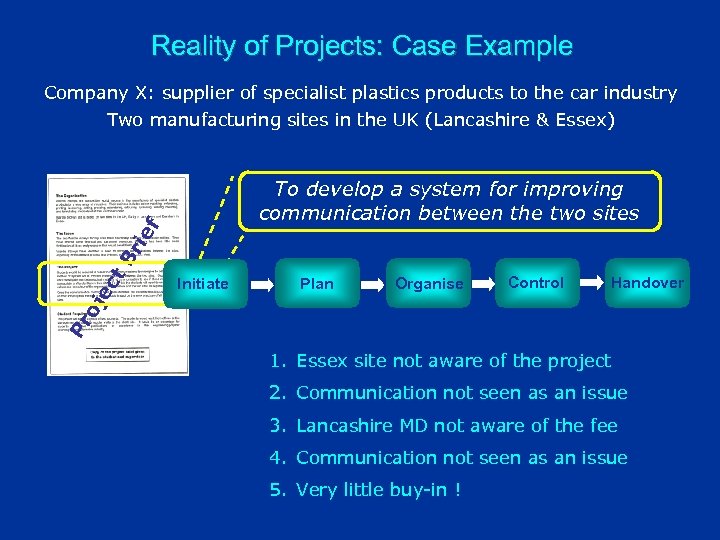
Reality of Projects: Case Example To develop a system for improving communication between the two sites Initiate Plan Organise Control Handover Pr oj ec t. B rie f Company X: supplier of specialist plastics products to the car industry Two manufacturing sites in the UK (Lancashire & Essex) 1. Essex site not aware of the project 2. Communication not seen as an issue 3. Lancashire MD not aware of the fee 4. Communication not seen as an issue 5. Very little buy-in !
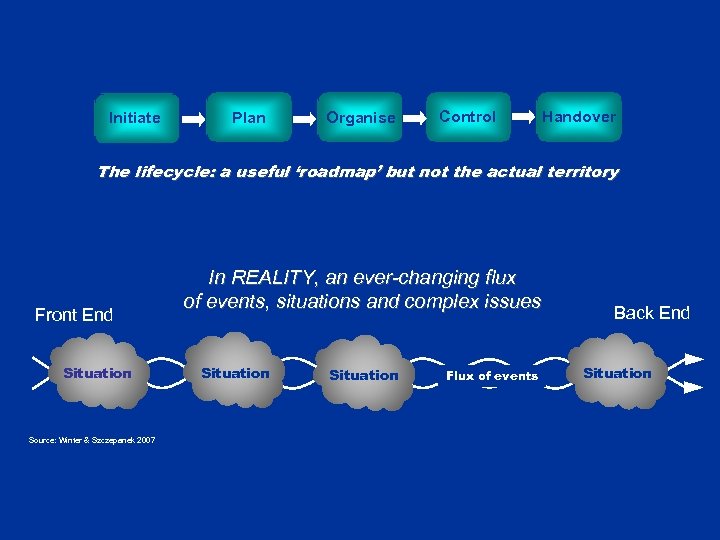
Initiate Plan Organise Control Handover The lifecycle: a useful ‘roadmap’ but not the actual territory Front End Situation Source: Winter & Szczepanek 2007 In REALITY, an ever-changing flux of events, situations and complex issues Situation Flux of events Situation Back End Situation
Rethinking Project Management Direction 1 Beyond the lifecycle theory OF projects towards: frameworks and models that illuminate COMPLEXITY
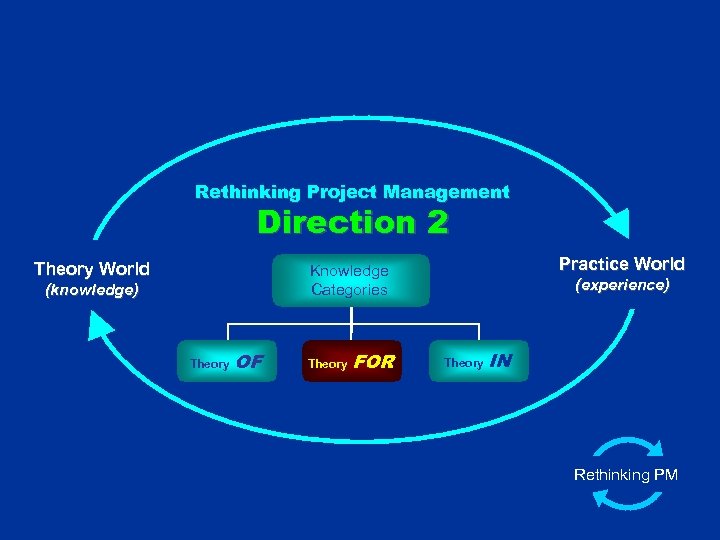
Rethinking Project Management Direction 2 Theory World Practice World Knowledge Categories (knowledge) Theory OF Theory FOR (experience) Theory IN Rethinking PM
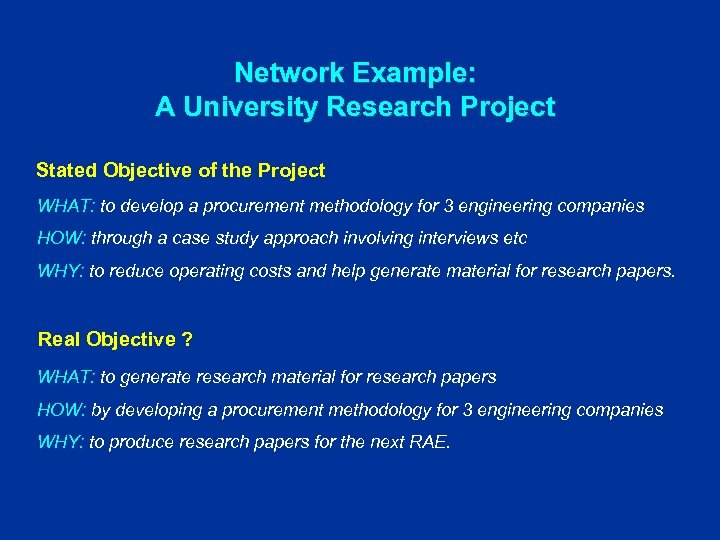
Network Example: A University Research Project Stated Objective of the Project WHAT: to develop a procurement methodology for 3 engineering companies HOW: through a case study approach involving interviews etc WHY: to reduce operating costs and help generate material for research papers. Real Objective ? WHAT: to generate research material for research papers HOW: by developing a procurement methodology for 3 engineering companies WHY: to produce research papers for the next RAE.
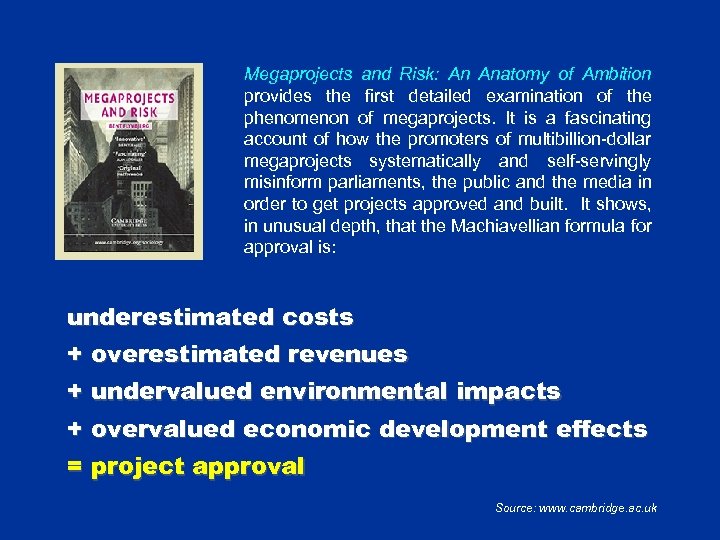
Megaprojects and Risk: An Anatomy of Ambition provides the first detailed examination of the phenomenon of megaprojects. It is a fascinating account of how the promoters of multibillion-dollar megaprojects systematically and self-servingly misinform parliaments, the public and the media in order to get projects approved and built. It shows, in unusual depth, that the Machiavellian formula for approval is: underestimated costs + overestimated revenues + undervalued environmental impacts + overvalued economic development effects = project approval Source: www. cambridge. ac. uk
Rethinking Project Management Direction 2 Beyond mechanistic process models towards: frameworks for understanding social and political processes
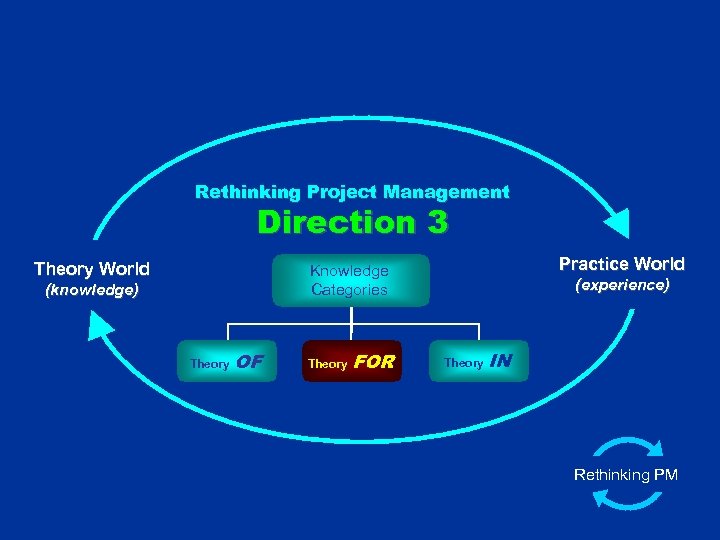
Rethinking Project Management Direction 3 Theory World Practice World Knowledge Categories (knowledge) Theory OF Theory FOR (experience) Theory IN Rethinking PM
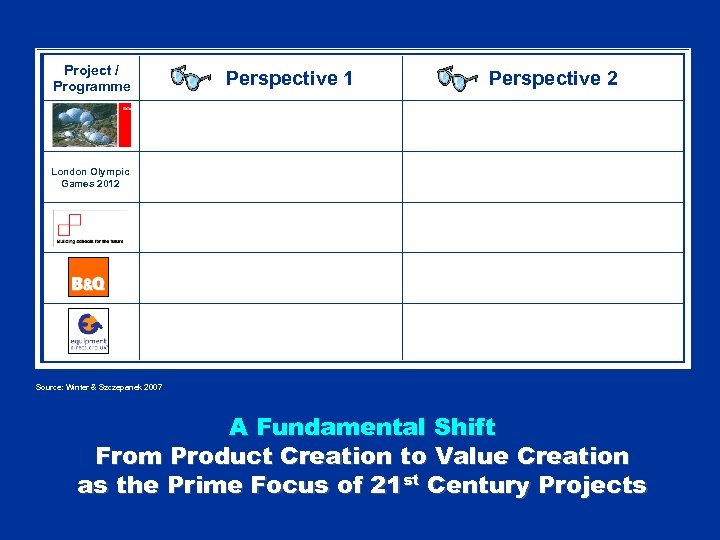
Project / Programme Perspective 1 Perspective 2 Development and operation of two gigantic ‘Biome’ conservatories Education and communication of major environmental issues London Olympic Games 2012 Development of physical infrastructure and new sports and leisure facilities Sustainable legacy of benefits in culture, sport, business and tourism Development of new or improved school buildings and other facilities Improvements to the organisation of schooling, teaching and learning Development of new stores and development of DFY services Increased sales and market share, increased profit and shareholder value Development of a new internet-based system for disabled people Improved access to and greater choice in equipment services Source: Winter & Szczepanek 2007 A Fundamental Shift From Product Creation to Value Creation as the Prime Focus of 21 st Century Projects
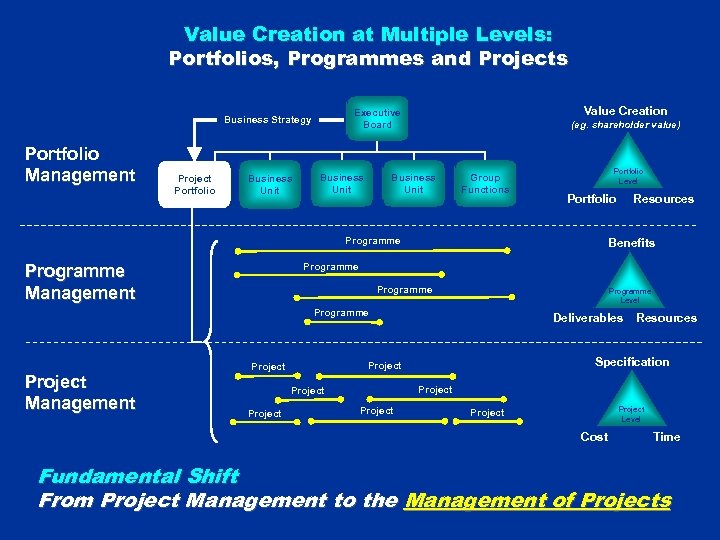
Value Creation at Multiple Levels: Portfolios, Programmes and Projects Portfolio Management Project Portfolio Business Unit Value Creation Executive Board Business Strategy Business Unit (eg. shareholder value) Business Unit Group Functions Portfolio Level Programme Management Benefits Programme Level Programme Project Management Resources Portfolio Resources Specification Project Project Deliverables Project Level Project Cost Time Fundamental Shift From Project Management to the Management of Projects
Rethinking Project Management Direction 3 From product creation as the prime focus of projects: towards value creation as the prime focus
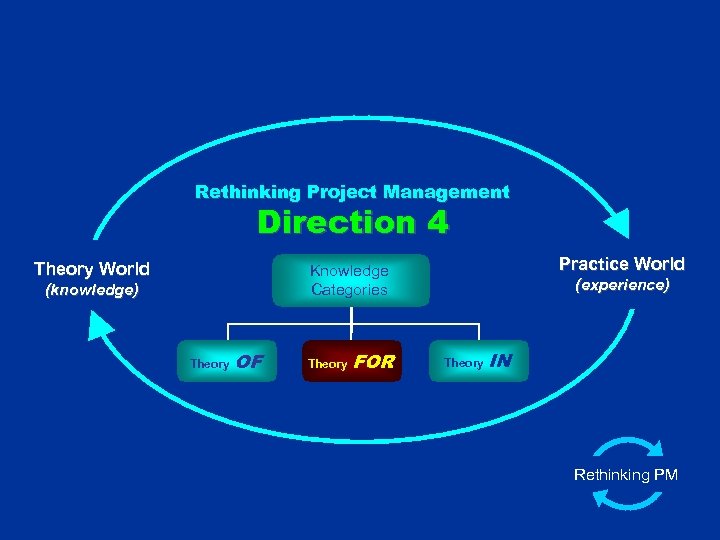
Rethinking Project Management Direction 4 Theory World Practice World Knowledge Categories (knowledge) Theory OF Theory FOR (experience) Theory IN Rethinking PM
![Broader Conceptualisation [Warburtons’ implementation of SAP] – “managed as a business project involving IT](https://present5.com/presentation/8a82f8daf824b0cf17ae6a7c9745f7e4/image-22.jpg "Broader Conceptualisation [Warburtons’ implementation of SAP] – “managed as a business project involving IT")
Broader Conceptualisation [Warburtons’ implementation of SAP] – “managed as a business project involving IT rather than an IT project. ” Meeting 3, October 2004 Thinking in terms of 'IT projects' is itself don’t have IT projects, we have “We a primary source of problems. Delivering IT is only ever part of the implementation of new, more effective, ways of working. business transformation projects. ” Review of Major Government IT projects (2000)2005 Best Practice Showcase, June Examples across other sectors Total care programmes (eg. Rolls-Royce) Urban regeneration programmes Community development projects Social enterprise projects International development projects
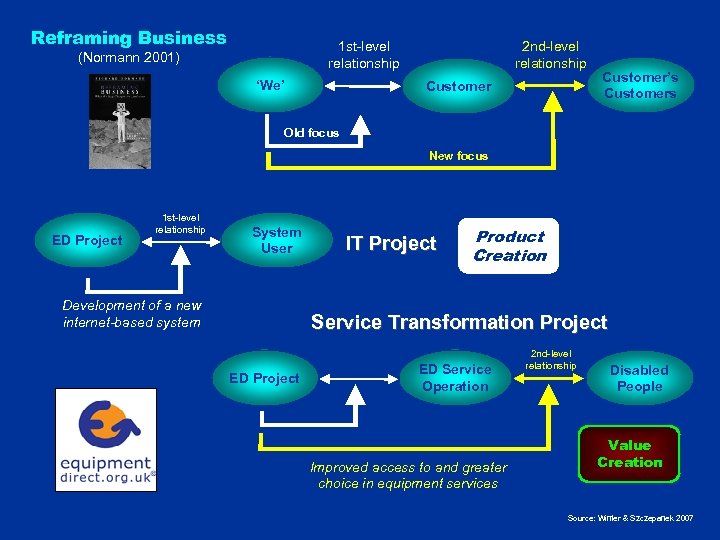
Reframing Business 2 nd-level relationship 1 st-level relationship (Normann 2001) ‘We’ Customer’s Customers Old focus New focus ED Project 1 st-level relationship System User Development of a new internet-based system IT Project Product Creation Service Transformation Project ED Service Operation Improved access to and greater choice in equipment services 2 nd-level relationship Disabled People Value Creation Source: Winter & Szczepanek 2007
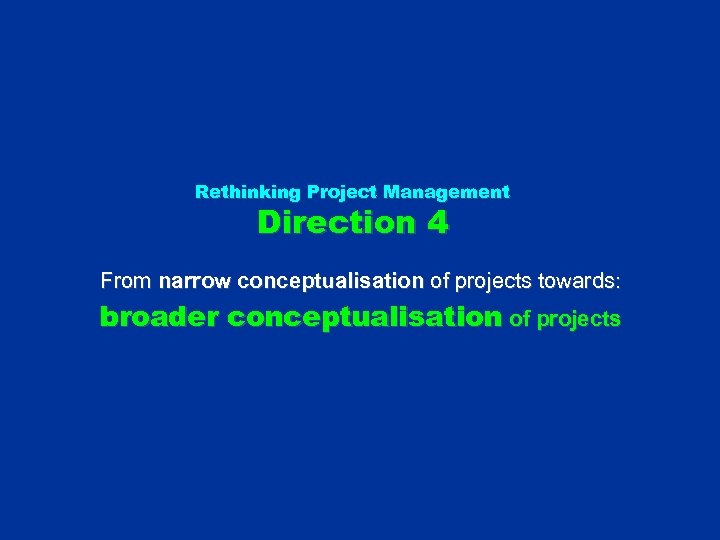
Rethinking Project Management Direction 4 From narrow conceptualisation of projects towards: broader conceptualisation of projects
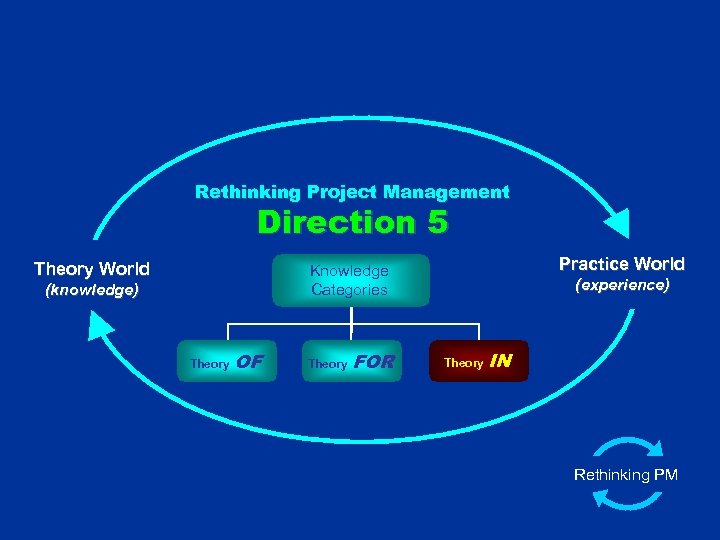
Rethinking Project Management Direction 5 Theory World Practice World Knowledge Categories (knowledge) Theory OF Theory FOR (experience) Theory IN Rethinking PM
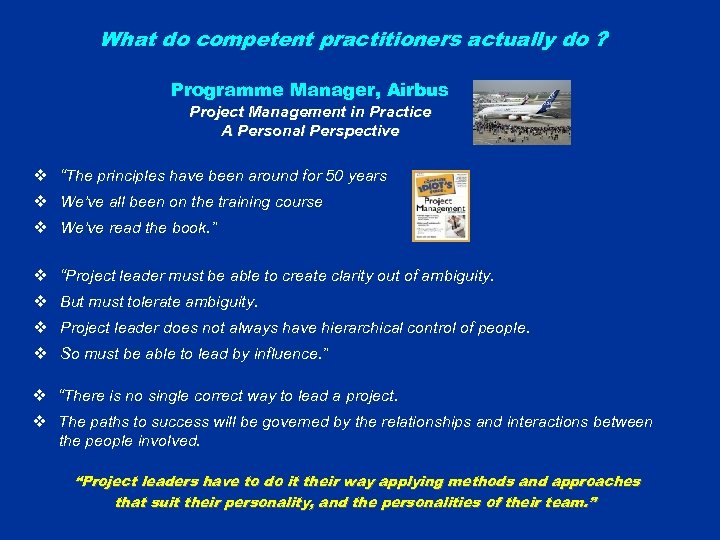
What do competent practitioners actually do ? Programme Manager, Airbus Project Management in Practice A Personal Perspective v “The principles have been around for 50 years v We’ve all been on the training course v We’ve read the book. ” v “Project leader must be able to create clarity out of ambiguity. v But must tolerate ambiguity. v Project leader does not always have hierarchical control of people. v So must be able to lead by influence. ” v “There is no single correct way to lead a project. v The paths to success will be governed by the relationships and interactions between the people involved. “Project leaders have to do it their way applying methods and approaches that suit their personality, and the personalities of their team. ”
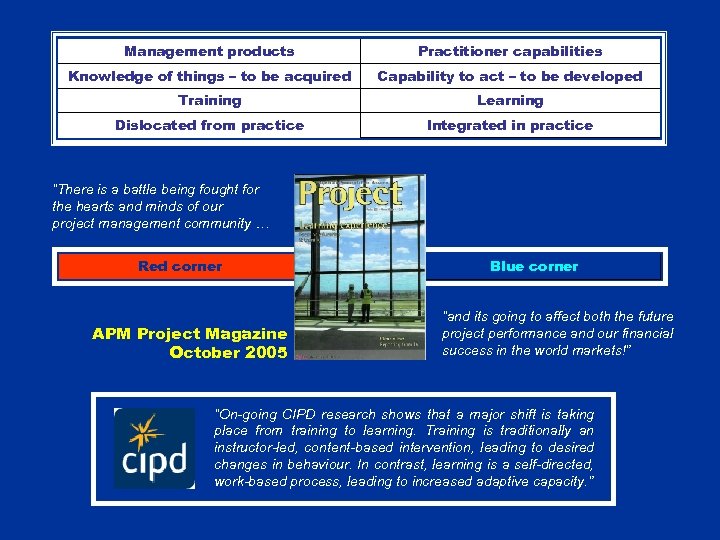
Management products Practitioner capabilities Knowledge of things – to be acquired Capability to act – to be developed Training Learning Dislocated from practice Integrated in practice “There is a battle being fought for the hearts and minds of our project management community … Red corner mmmm APM Project Magazine October 2005 Blue corner “and its going to affect both the future project performance and our financial success in the world markets!” “On-going CIPD research shows that a major shift is taking place from training to learning. Training is traditionally an instructor-led, content-based intervention, leading to desired changes in behaviour. In contrast, learning is a self-directed, work-based process, leading to increased adaptive capacity. ”
Rethinking Project Management Direction 5 From trained technicians towards: reflective practitioners
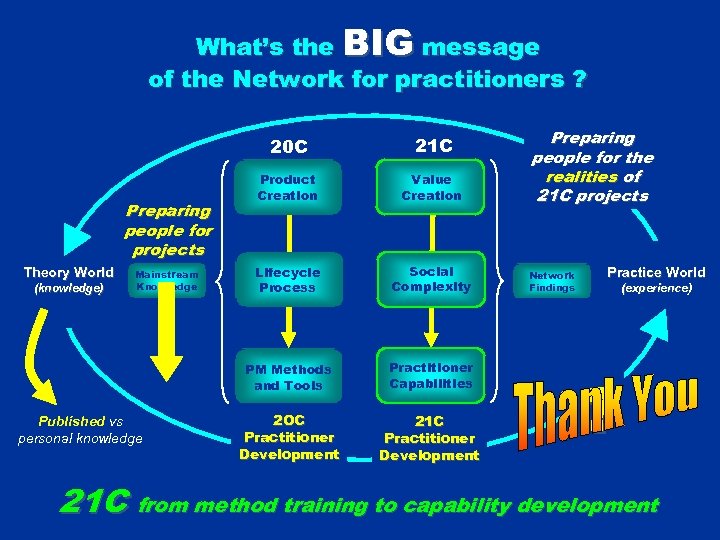
What’s the BIG message of the Network for practitioners ? 20 C Theory World (knowledge) Mainstream Knowledge Published vs personal knowledge Product Creation Value Creation Lifecycle Process Social Complexity PM Methods and Tools Preparing people for projects 21 C Practitioner Capabilities 2 OC Practitioner Development 21 C Practitioner Development Preparing people for the realities of 21 C projects Network Findings Practice World (experience) ? 21 C from method training to capability development
BI Norwegian School of Management Project Management Seminar Oslo, 6 th December 2006 Rethinking Project Management Main Findings of a UK Government-Funded Research Network Questions and Discussion Rethinking PM
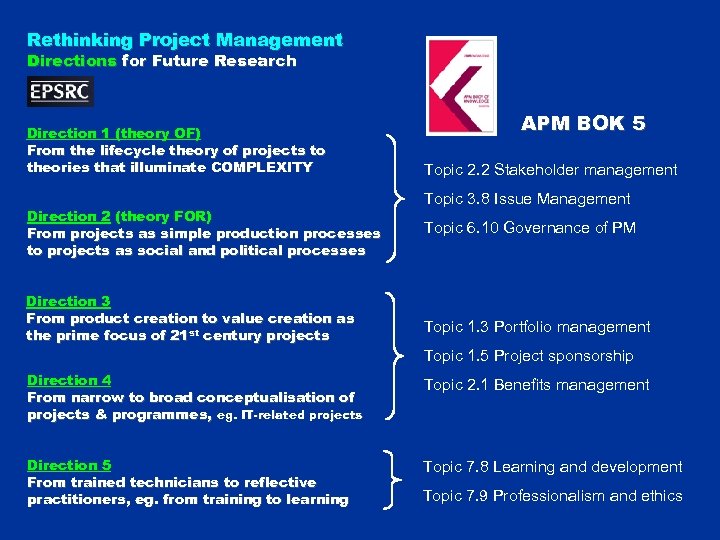
Rethinking Project Management Directions for Future Research Direction 1 (theory OF) From the lifecycle theory of projects to theories that illuminate COMPLEXITY Direction 2 (theory FOR) From projects as simple production processes to projects as social and political processes Direction 3 From product creation to value creation as the prime focus of 21 st century projects APM BOK 5 Topic 2. 2 Stakeholder management Topic 3. 8 Issue Management Topic 6. 10 Governance of PM Topic 1. 3 Portfolio management Topic 1. 5 Project sponsorship Direction 4 From narrow to broad conceptualisation of projects & programmes, eg. IT-related projects Topic 2. 1 Benefits management Direction 5 From trained technicians to reflective practitioners, eg. from training to learning Topic 7. 8 Learning and development Topic 7. 9 Professionalism and ethics
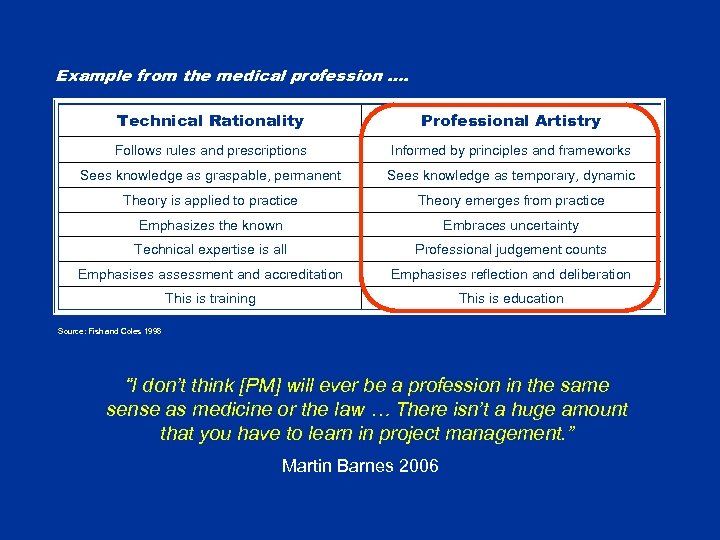
Example from the medical profession …. Technical Rationality Professional Artistry Follows rules and prescriptions Informed by principles and frameworks Sees knowledge as graspable, permanent Sees knowledge as temporary, dynamic Theory is applied to practice Theory emerges from practice Emphasizes the known Embraces uncertainty Technical expertise is all Professional judgement counts Emphasises assessment and accreditation Emphasises reflection and deliberation This is training This is education Source: Fish and Coles 1998 “I don’t think [PM] will ever be a profession in the same sense as medicine or the law … There isn’t a huge amount that you have to learn in project management. ” Martin Barnes 2006
Скачать презентацию BI Norwegian School of Management Norwegian Centre of
8a82f8daf824b0cf17ae6a7c9745f7e4.ppt