 Скачать презентацию Beyond Patch and Pray Security by Design Adam
c26c144bdb80f58018f13244ee63f2fd.ppt
- Количество слайдов: 36



Beyond Patch and Pray: Security by Design Adam Shostack Presented to the Security Leadership Conference Series Arlington, TX Oct 19 2004
Goal Much of today’s security seems to cycle through: Penetrate or otherwise find vulnerabilities in deployed systems Fix the issues Pray that you do it before the bad guys or the worms
So? This is very expensive Fixing deployed systems risks downtime Could deploy “patch management” sw Or we could look to fix problem from root causes
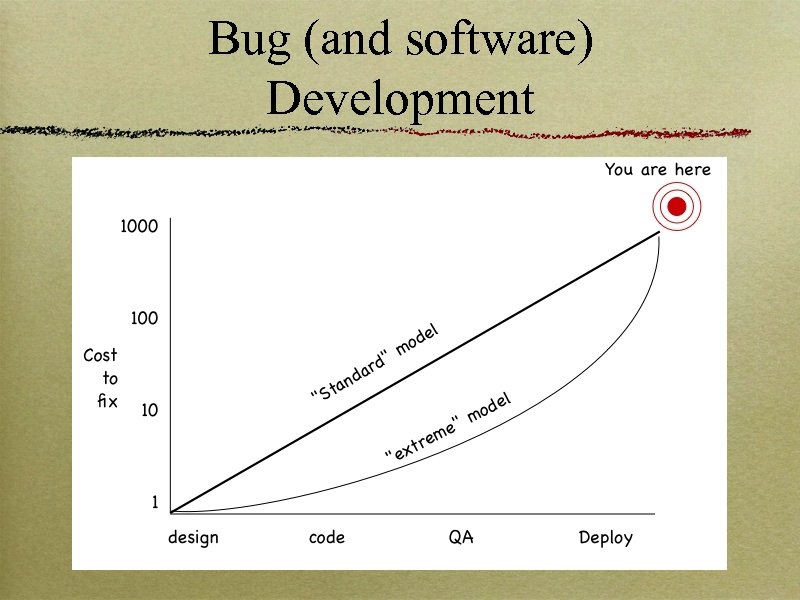
Bug (and software) Development
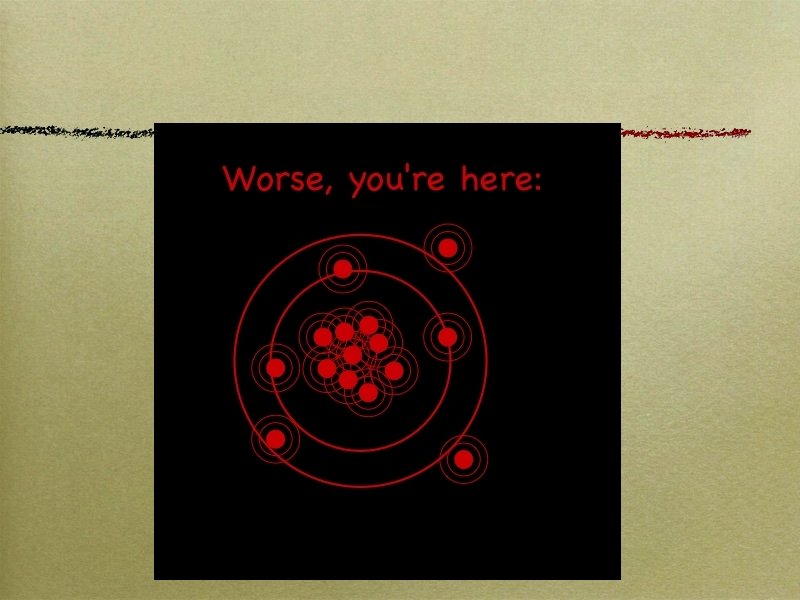
How To Move? It’s actually worse than that That’s a graph for a single program You deploy lots of programs
How To Get There Better software tools Internal, external Better Deployment tools Security Operations
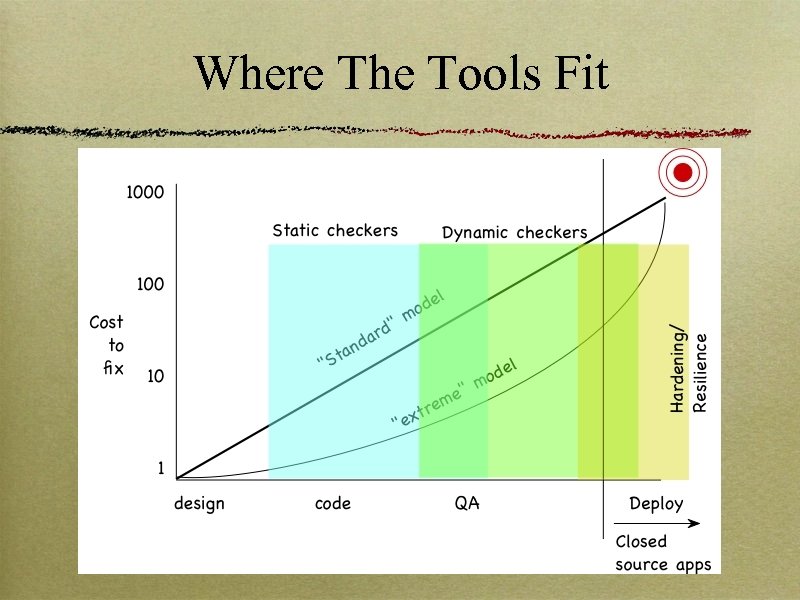
Where The Tools Fit
Software Improvement Static checkers Dynamic Checkers Languages Limits of software improvement
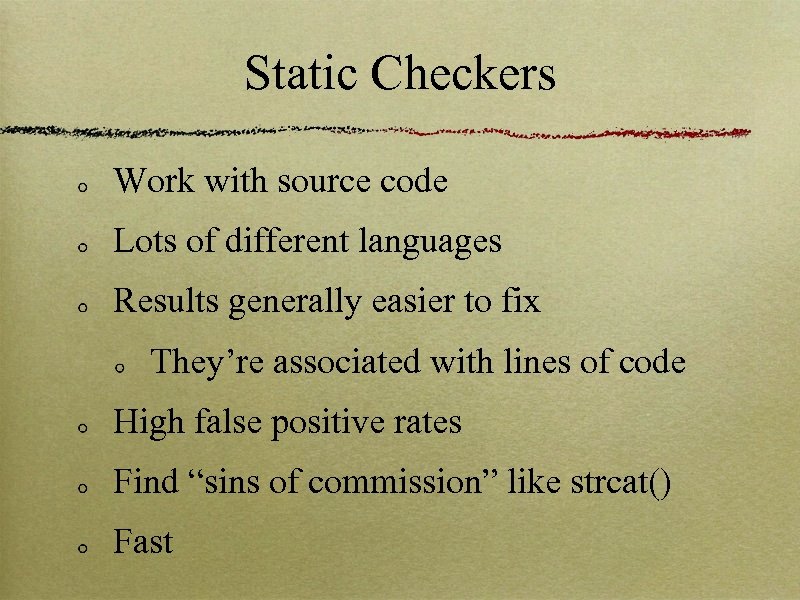
Static Checkers Work with source code Lots of different languages Results generally easier to fix They’re associated with lines of code High false positive rates Find “sins of commission” like strcat() Fast
Free Static checkers RATS ITS 4 Flawfinder
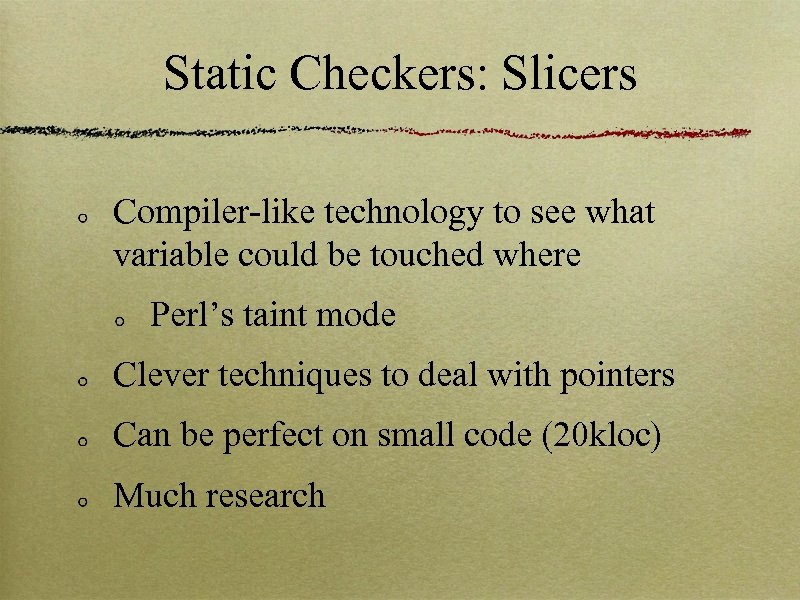
Static Checkers: Slicers Compiler-like technology to see what variable could be touched where Perl’s taint mode Clever techniques to deal with pointers Can be perfect on small code (20 kloc) Much research
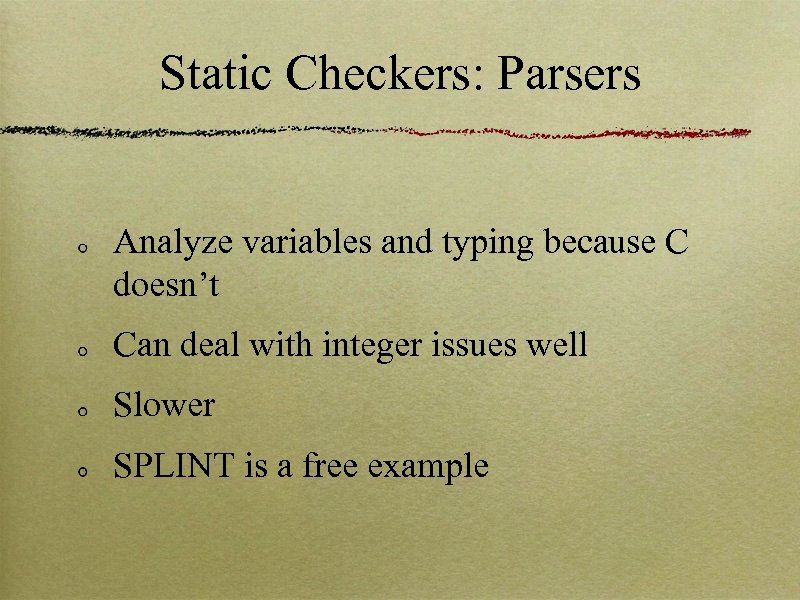
Static Checkers: Parsers Analyze variables and typing because C doesn’t Can deal with integer issues well Slower SPLINT is a free example
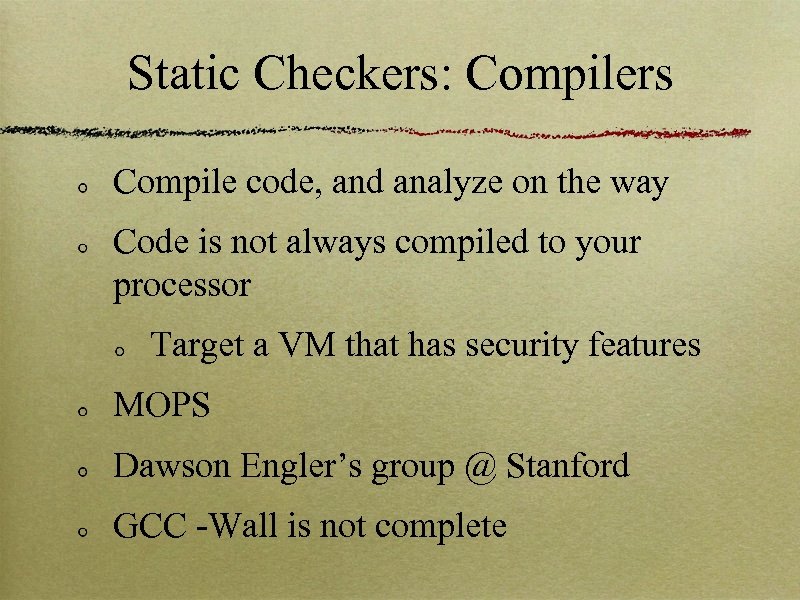
Static Checkers: Compilers Compile code, and analyze on the way Code is not always compiled to your processor Target a VM that has security features MOPS Dawson Engler’s group @ Stanford GCC -Wall is not complete
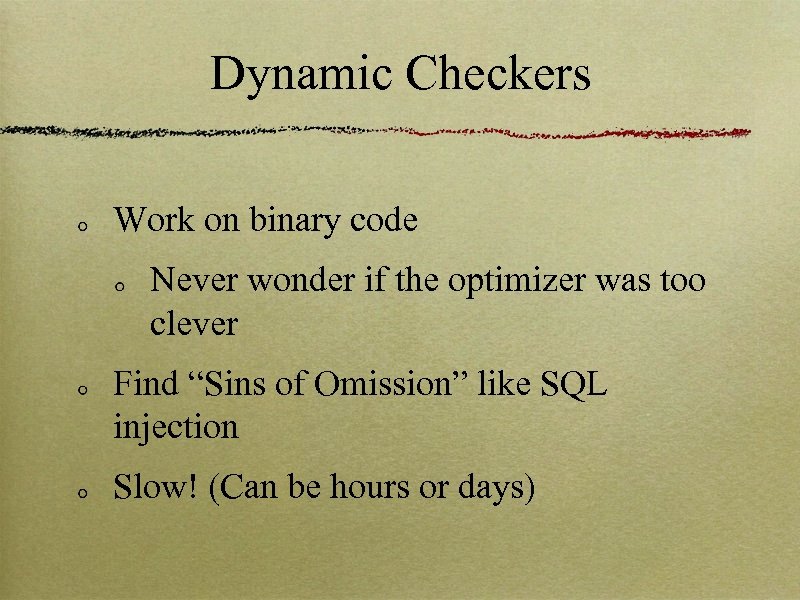
Dynamic Checkers Work on binary code Never wonder if the optimizer was too clever Find “Sins of Omission” like SQL injection Slow! (Can be hours or days)
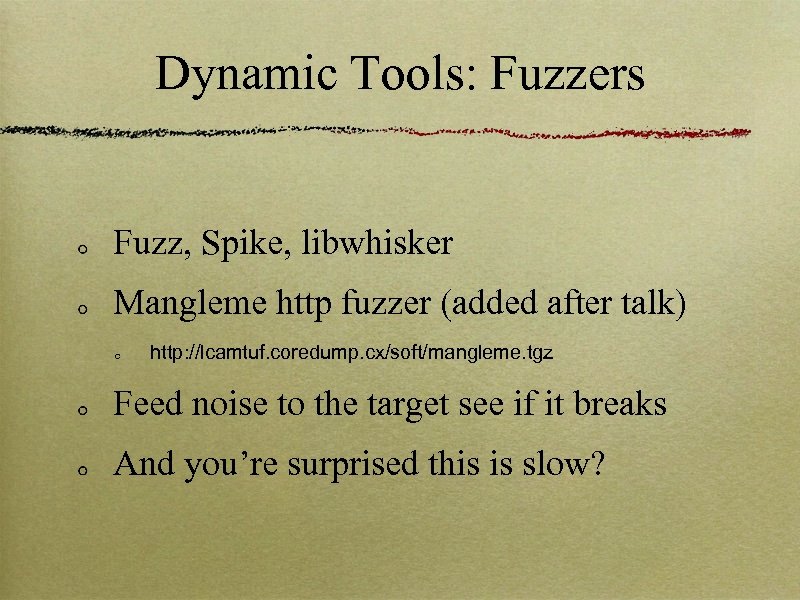
Dynamic Tools: Fuzzers Fuzz, Spike, libwhisker Mangleme http fuzzer (added after talk) http: //lcamtuf. coredump. cx/soft/mangleme. tgz Feed noise to the target see if it breaks And you’re surprised this is slow?
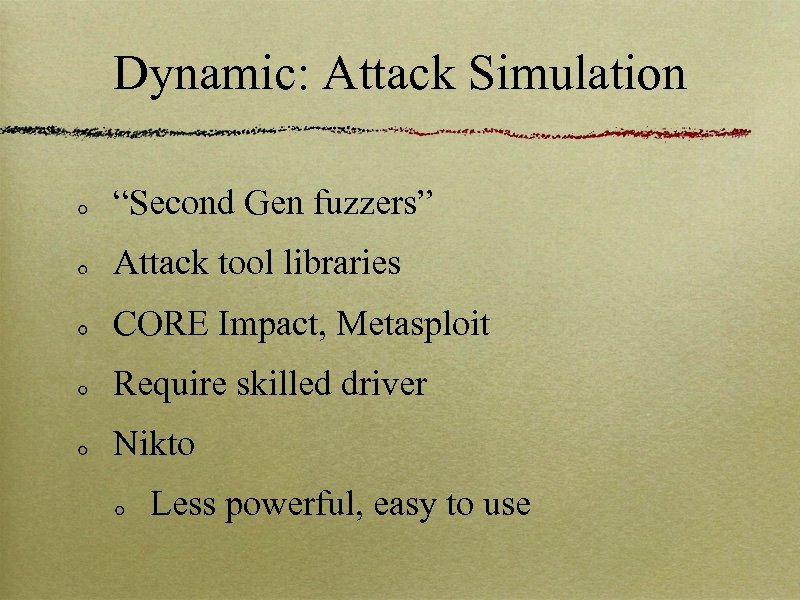
Dynamic: Attack Simulation “Second Gen fuzzers” Attack tool libraries CORE Impact, Metasploit Require skilled driver Nikto Less powerful, easy to use
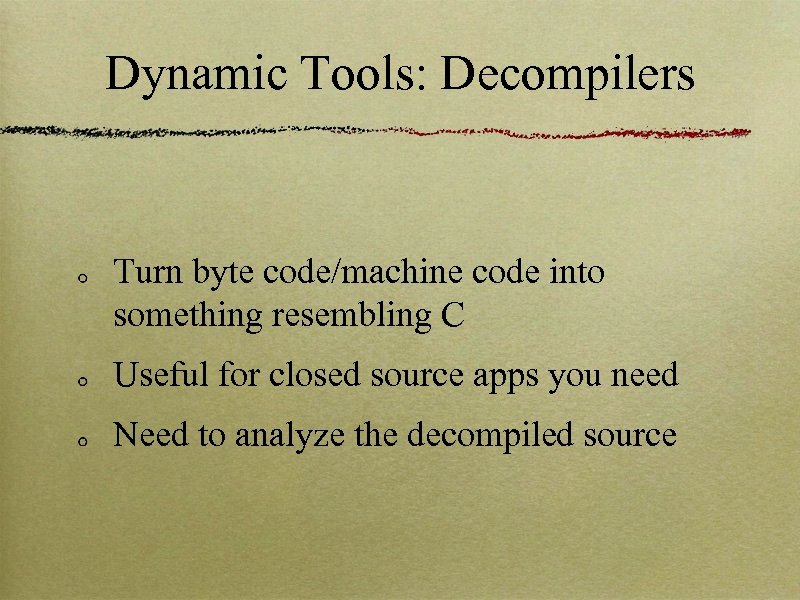
Dynamic Tools: Decompilers Turn byte code/machine code into something resembling C Useful for closed source apps you need Need to analyze the decompiled source
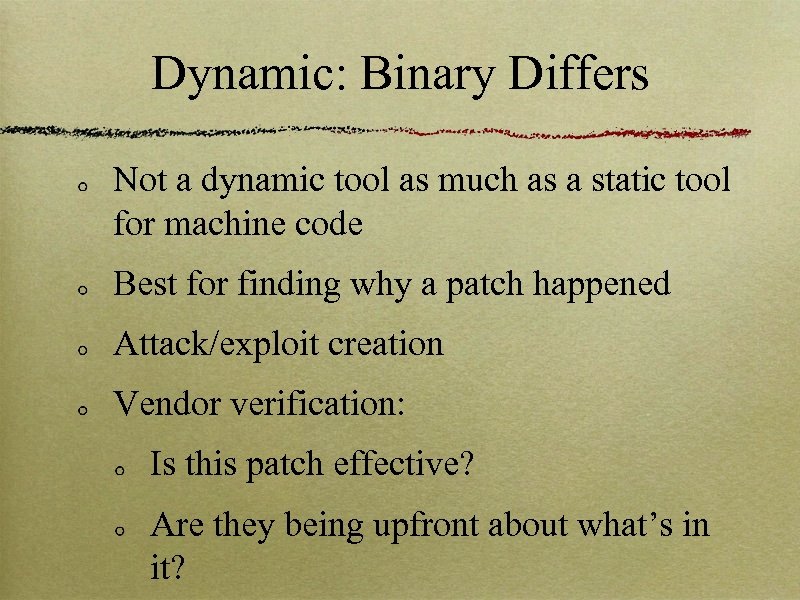
Dynamic: Binary Differs Not a dynamic tool as much as a static tool for machine code Best for finding why a patch happened Attack/exploit creation Vendor verification: Is this patch effective? Are they being upfront about what’s in it?
Language Selection Some languages seem to be more prone to security flaws C, PHP We may not have found the classes of flaws in Java, C# New classes keep showing up (integer underflows, etc)
Things Hard to Measure Security design goodness Attack surface nmap not enough port 25 seems to have a large surface port 137 does too.
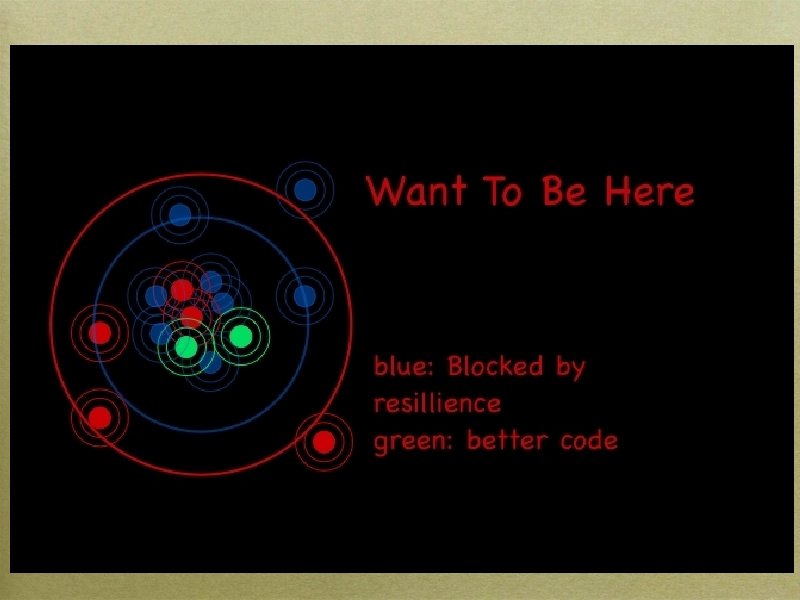
Adding Resilience to Code How to deploy operate Buggy code more securely
Free UNIX techniques chroot/jail Unprivileged daemon accounts Painful if you need fast code on port 80 Free security enhanced OSes: Open. BSD, SELinux
Techniques Harden the system: Control Attack surface Limit effect of an attack Can entail high operational cost for questionable benefit Need to evaluate what happens
More advanced tools OS hardening tools Immunix subdomain Sana kernel enhancements Application hardening Stackguard & company (Recompile vs kernel modules)
Issues with Hardening Tools How to measure their effectiveness Configuration effort Costs (percieved and real) Cash up front Speed Supportability + Vendor finger pointing
Network Intrusion Prevention Throwing Ducks at Baloons Paper by Ptacek and Newsham, 1998 Showed how to evade IDSs, IPSs The Covert Channel problem
Firewalls Move (back) Up Application Firewalls vs packet filters Inspection Snort Inline
Process Resilience Tools How to fail gracefully detect, respond, improve Measuring your process Architecture and Forensics An ounce of prevention
Selling Your Boss Or, Security folks are from Mars, businesspeople are from Wheaton
How You Buy Software Functionality, supportability, price Can you get security in there? Probably requires being able to get lots of complexity into a 1 -5 score (or somesuch) The above can be used for that
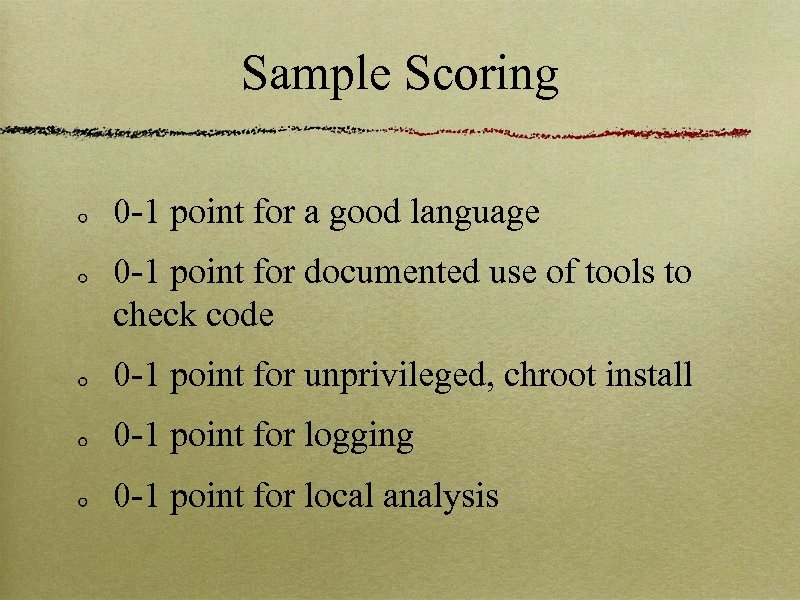
Sample Scoring 0 -1 point for a good language 0 -1 point for documented use of tools to check code 0 -1 point for unprivileged, chroot install 0 -1 point for logging 0 -1 point for local analysis
Deployment Budgets Cash for wires, hubs, power, air Where does security fit? What’s the real cost of a failure? (Hint, its not $1 m, unless you’re a large bank)
Deployment Business Cases Cost of operations with and without tool X Cost of special events: Patching Breakins Worms Frequency of special events
Conclusions Way back to patching Learned how to cut # of patches Better SW Better operations Better sales to management
Скачать презентацию Beyond Patch and Pray Security by Design Adam
c26c144bdb80f58018f13244ee63f2fd.ppt