 Скачать презентацию Beyond Linguistic and Cultural Differences When ELF English
9078f60a82fd609dd59c3a27eb6cf44b.ppt
- Количество слайдов: 34



Beyond Linguistic and Cultural Differences: When ELF (English as a Lingua Franca) Meets Telecollaboration Meei-Ling Liaw English Department National Taichung University
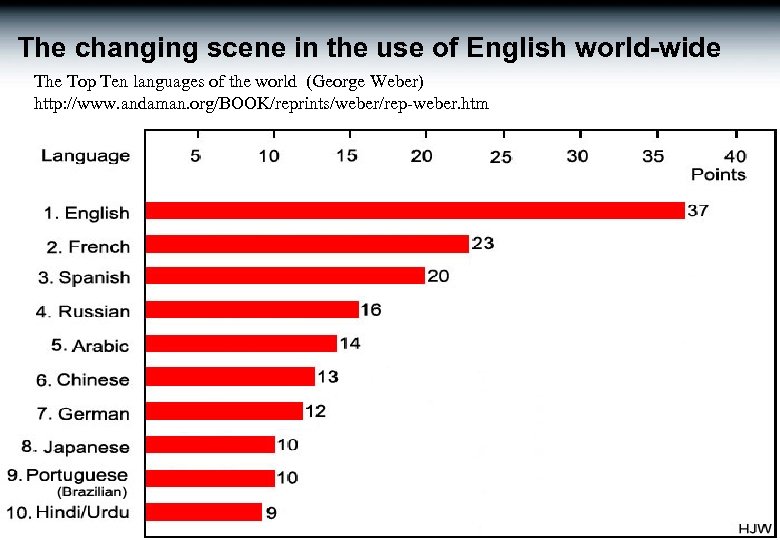
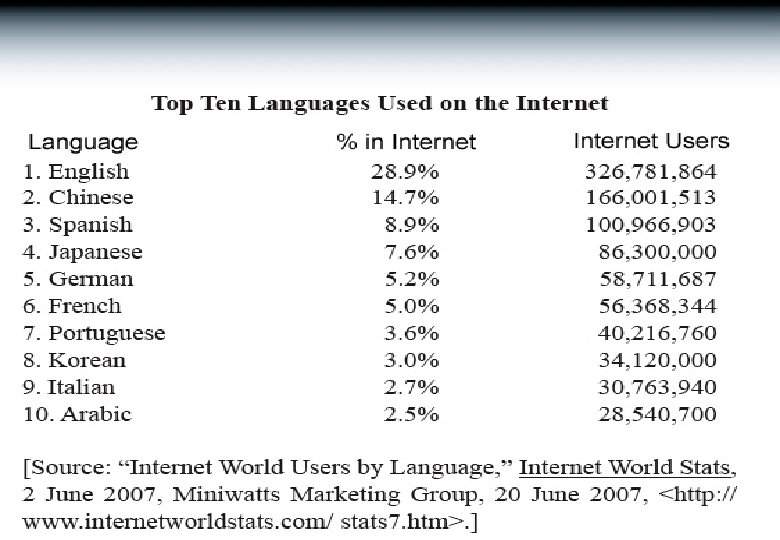
The changing scene in the use of English world-wide The Top Ten languages of the world (George Weber) http: //www. andaman. org/BOOK/reprints/weber/rep-weber. htm The Top Ten languages of the world
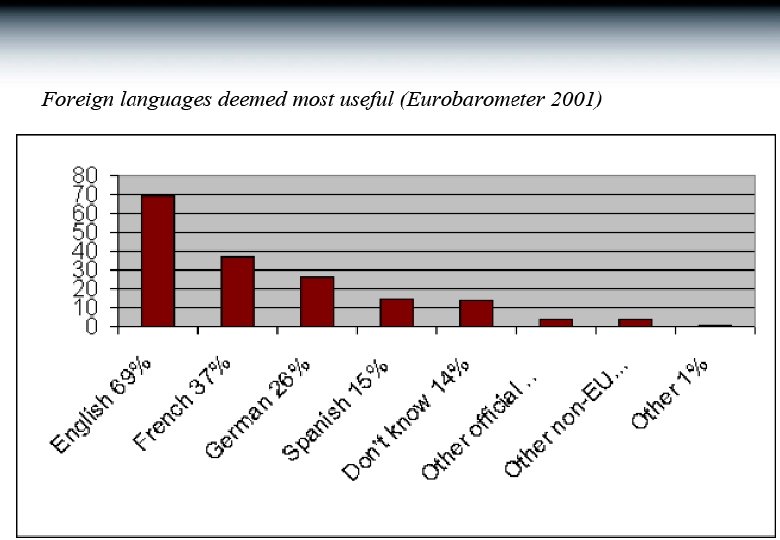
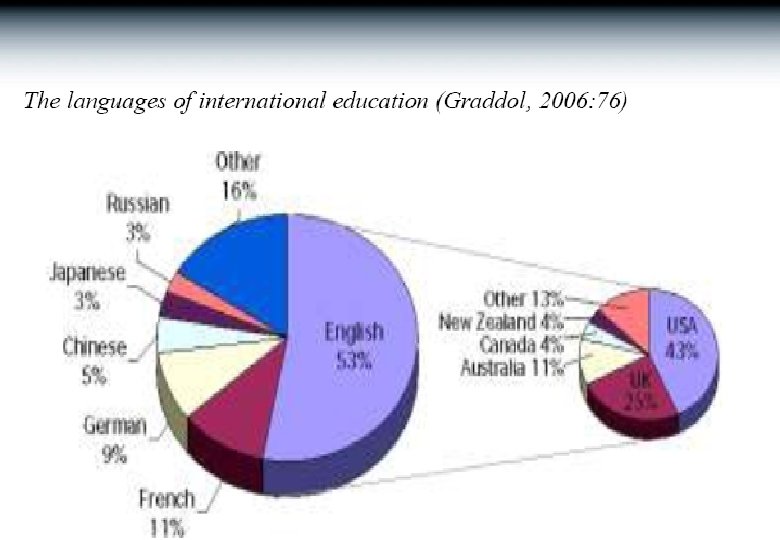
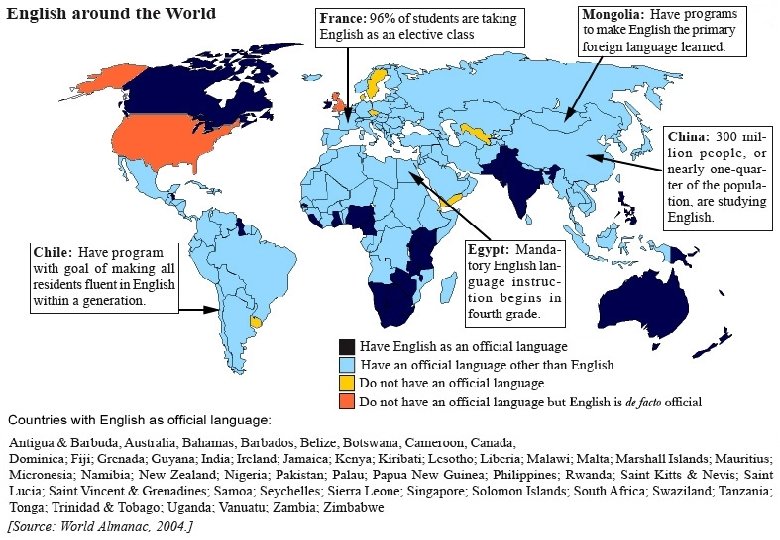
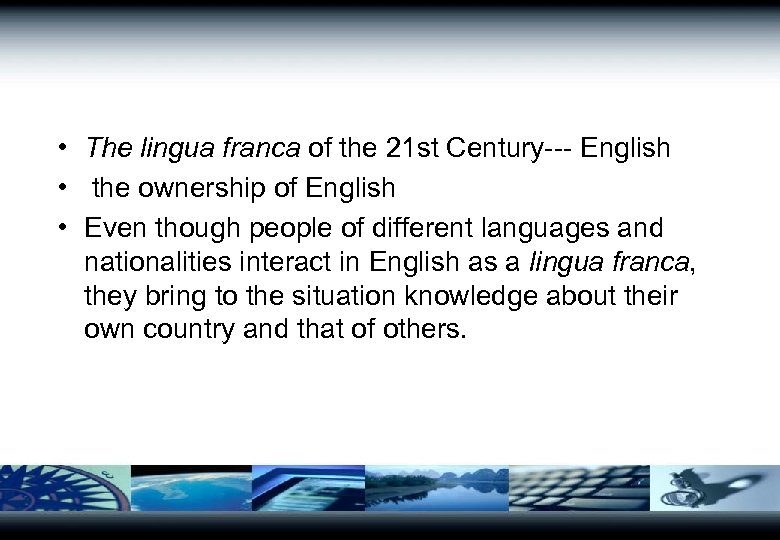
• The lingua franca of the 21 st Century--- English • the ownership of English • Even though people of different languages and nationalities interact in English as a lingua franca, they bring to the situation knowledge about their own country and that of others.
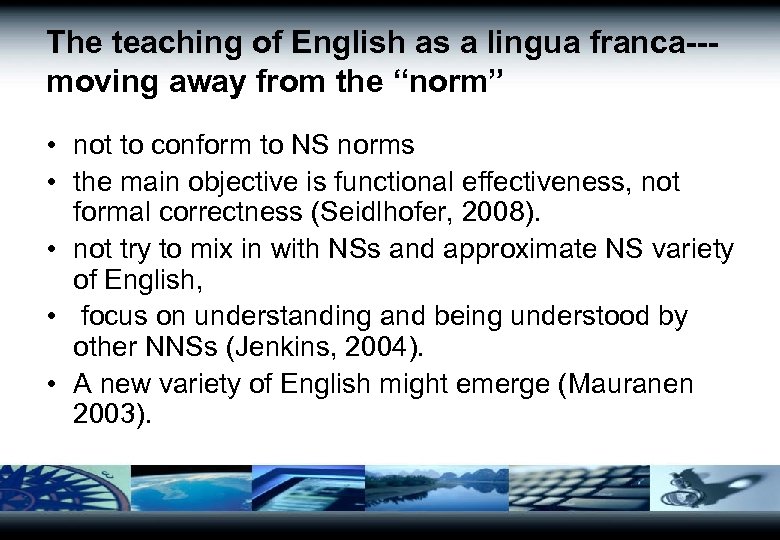
The teaching of English as a lingua franca--moving away from the “norm” • not to conform to NS norms • the main objective is functional effectiveness, not formal correctness (Seidlhofer, 2008). • not try to mix in with NSs and approximate NS variety of English, • focus on understanding and being understood by other NNSs (Jenkins, 2004). • A new variety of English might emerge (Mauranen 2003).
• don’t have to strive for standard pronunciation, nor for the values and behaviors of NSs of English (Alcón Soler, 2007; Mauranen, 2003; Seidlhofer, 2001). • aim at becoming successful intercultural speakers (Cook, 2001; House, 2007). • paradigm shift from “correctness to appropriateness, from parochial domesticity and exclusive nativespeaker normal to global inclusiveness and egalitarian license to speak in ways that meet diverse local needs (Seidlhofer, 2001, p. 135). ”
The affordance of telecollaboration for ELF and intercultural learning • Internet-mediated intercultural communication • Telecollaborative projects • A majority of the projects has been collaboration between an NS country and an NNS country
Some findings • Advantages of linking ELF speakers for intercultural CMS (Fedderholdt, 2001; Keranen and Bayyurt’s (2006) • Identity formation and literacy development (Lam, 2000) • Developed hybrid language variety (Lam, 2004; Bloch, 2004) • Formed “Culture Three” (Louhiala-Salminen, Charles, & Kankaanranta, 2005) • Flaming and ranting vs. position shifts (de Nooy, 2006)
Motivation of the study and research questions • Would such linguistic–cultural heterogeneity and geographical distance interact with encounters as a communication resource and affect the nature of the internet discourse? If yes, in what ways? • Would the ELF participants adjust their positions during encounters to form a “culture three” or, on the contrary, offer an intercultural battle field? • What are the general responses of the participants to the experience of online intercultural communicating?
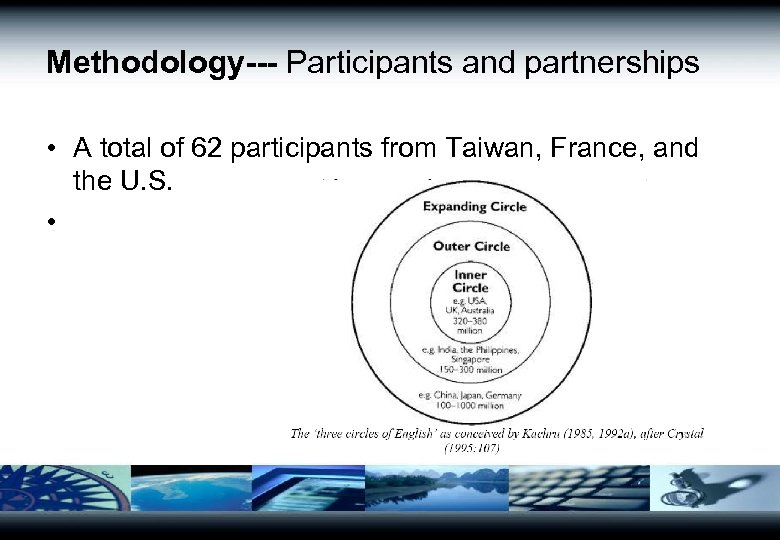
Methodology--- Participants and partnerships • A total of 62 participants from Taiwan, France, and the U. S. •
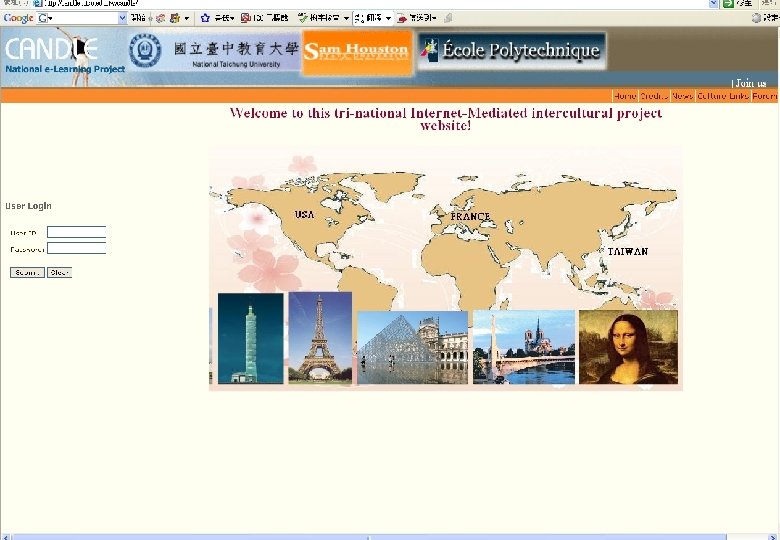
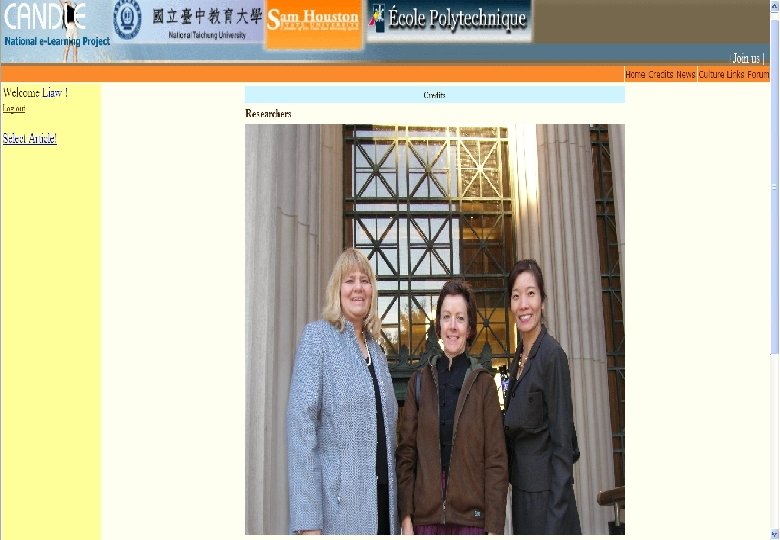
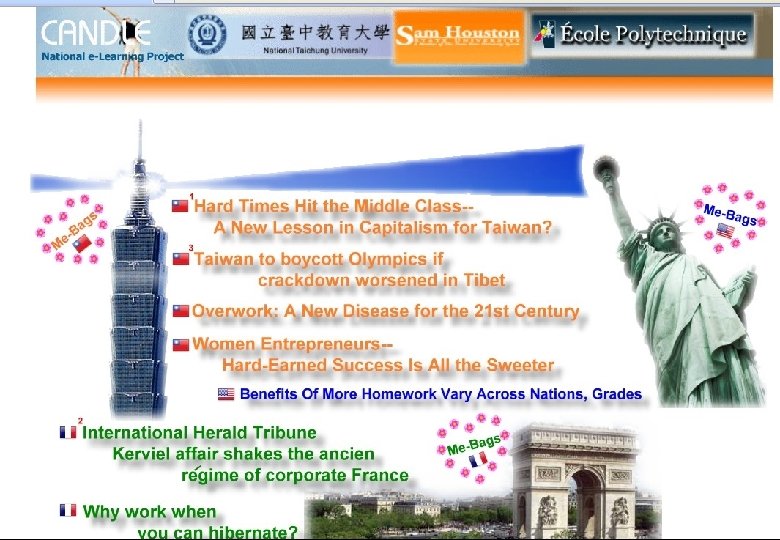
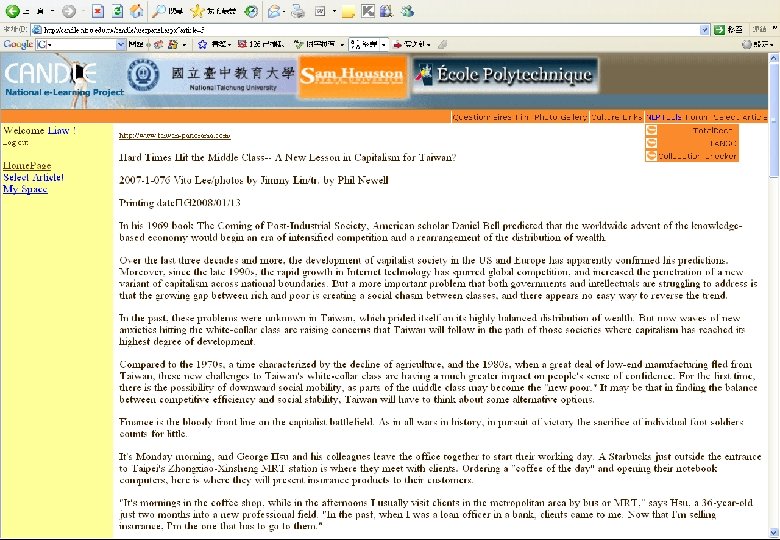
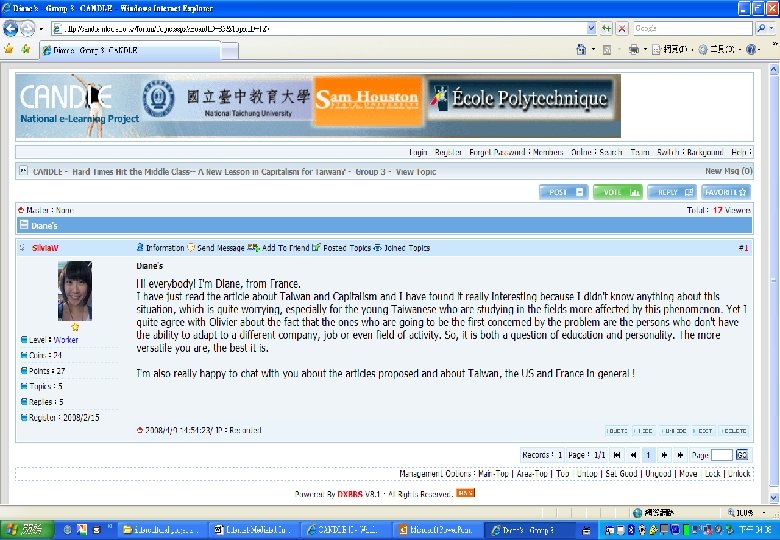
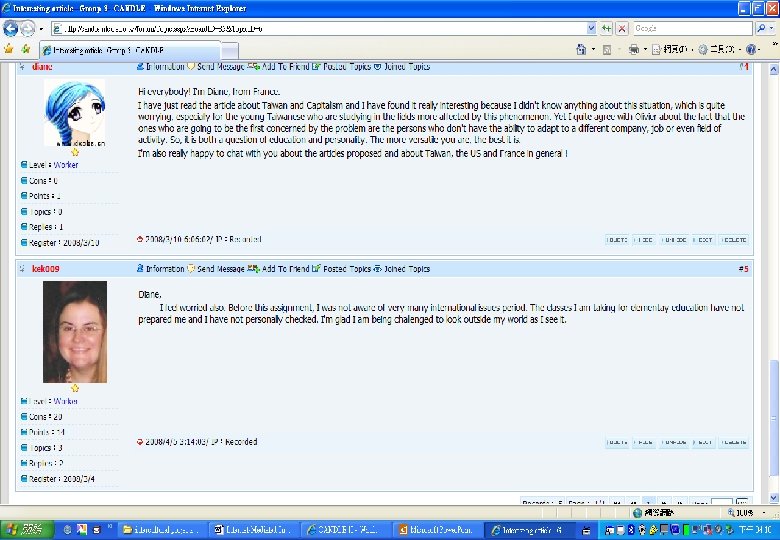
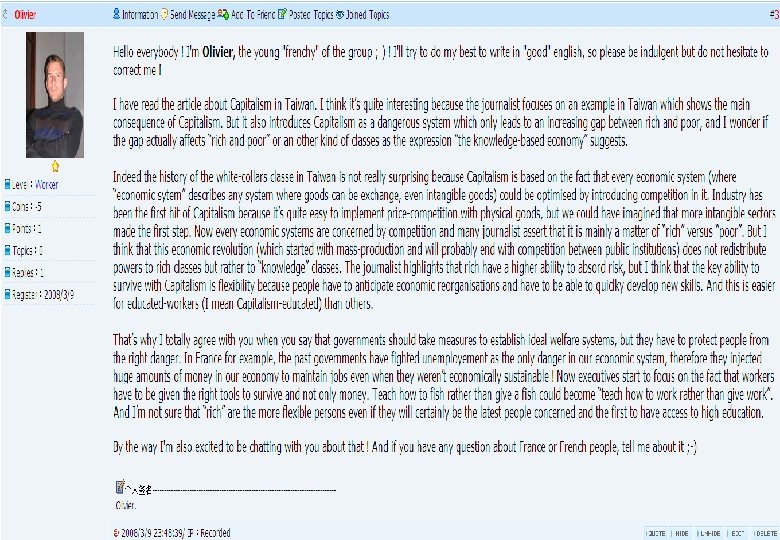
Implementation of the project
Data collection and analysis • forum entries – Linguistic Inquiry and Word Count (LIWC 2007) • survey conducted at the end of the project
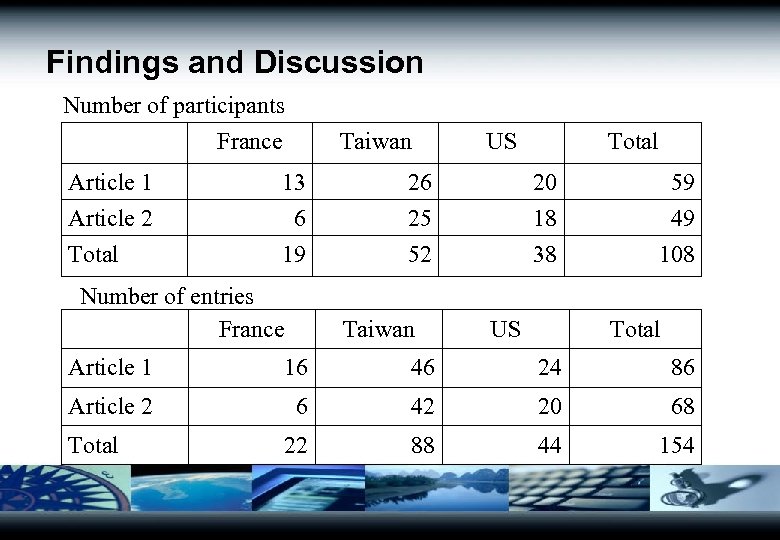
Findings and Discussion Number of participants France Article 1 Article 2 Total Taiwan 13 6 19 Number of entries France US 26 25 52 Taiwan Total 20 18 38 US 59 49 108 Total Article 1 16 46 24 86 Article 2 6 42 20 68 22 88 44 154 Total
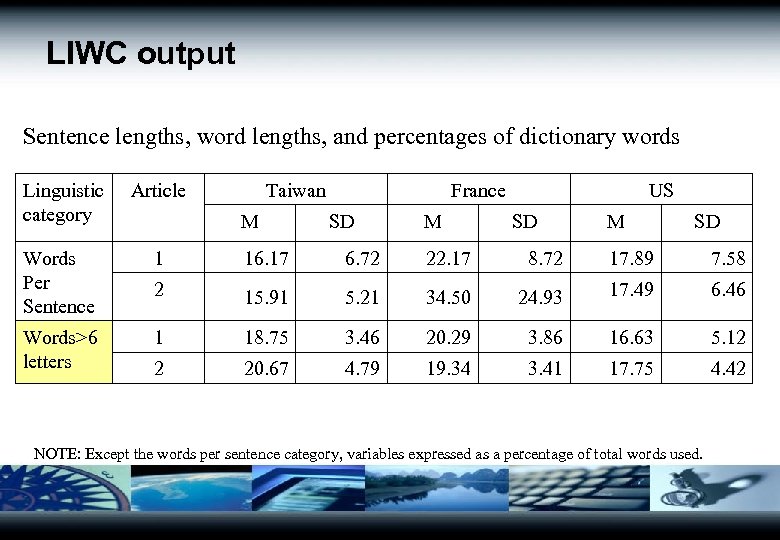
LIWC output Sentence lengths, word lengths, and percentages of dictionary words Linguistic category Article Taiwan M France SD M US SD M SD Words Per Sentence 1 16. 17 6. 72 22. 17 8. 72 17. 89 7. 58 2 15. 91 5. 21 34. 50 24. 93 17. 49 6. 46 Words>6 letters 1 18. 75 3. 46 20. 29 3. 86 16. 63 5. 12 2 20. 67 4. 79 19. 34 3. 41 17. 75 4. 42 NOTE: Except the words per sentence category, variables expressed as a percentage of total words used.
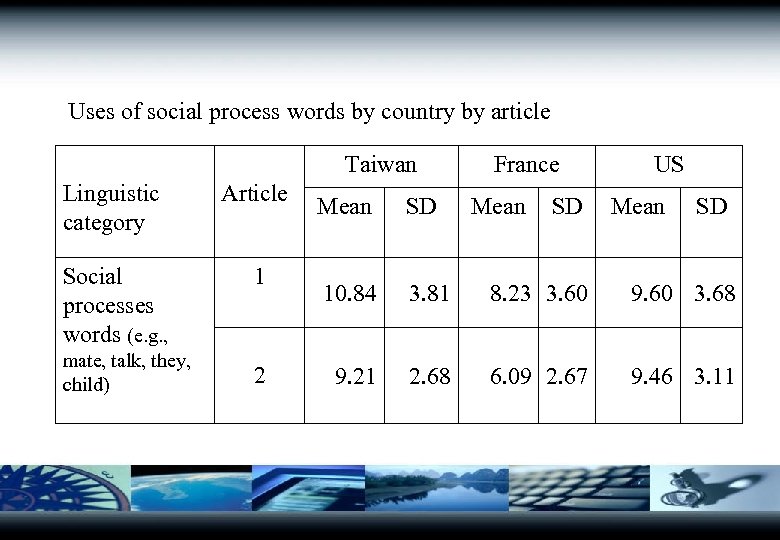
Uses of social process words by country by article Taiwan Linguistic category Article Social processes words (e. g. , 1 mate, talk, they, child) 2 France Mean SD US Mean SD 10. 84 3. 81 8. 23 3. 60 9. 60 3. 68 9. 21 2. 68 6. 09 2. 67 9. 46 3. 11
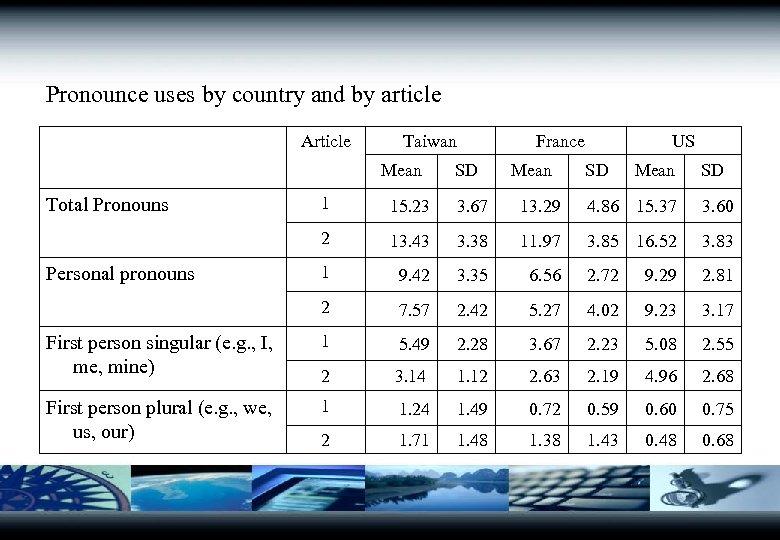
Pronounce uses by country and by article Article Taiwan Mean SD France Mean US SD Mean SD 1 15. 23 3. 67 13. 29 4. 86 15. 37 3. 60 2 13. 43 3. 38 11. 97 3. 85 16. 52 3. 83 1 9. 42 3. 35 6. 56 2. 72 9. 29 2. 81 2 7. 57 2. 42 5. 27 4. 02 9. 23 3. 17 First person singular (e. g. , I, me, mine) 1 5. 49 2. 28 3. 67 2. 23 5. 08 2. 55 1. 12 2. 63 2. 19 4. 96 2. 68 First person plural (e. g. , we, us, our) 1 1. 24 1. 49 0. 72 0. 59 0. 60 0. 75 2 1. 71 1. 48 1. 38 1. 43 0. 48 0. 68 Total Pronouns Personal pronouns 2 3. 14
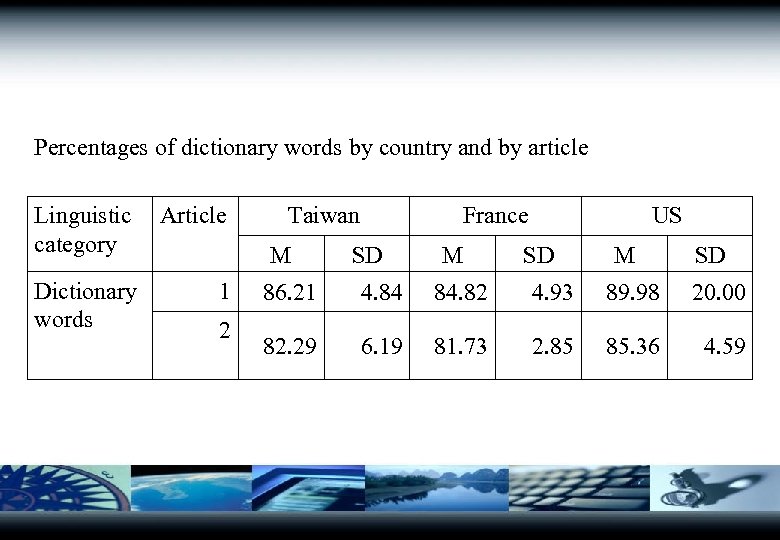
Percentages of dictionary words by country and by article Linguistic Article category Dictionary words 1 2 Taiwan M France SD M US SD M SD 86. 21 4. 84 84. 82 4. 93 89. 98 20. 00 82. 29 6. 19 81. 73 2. 85 85. 36 4. 59
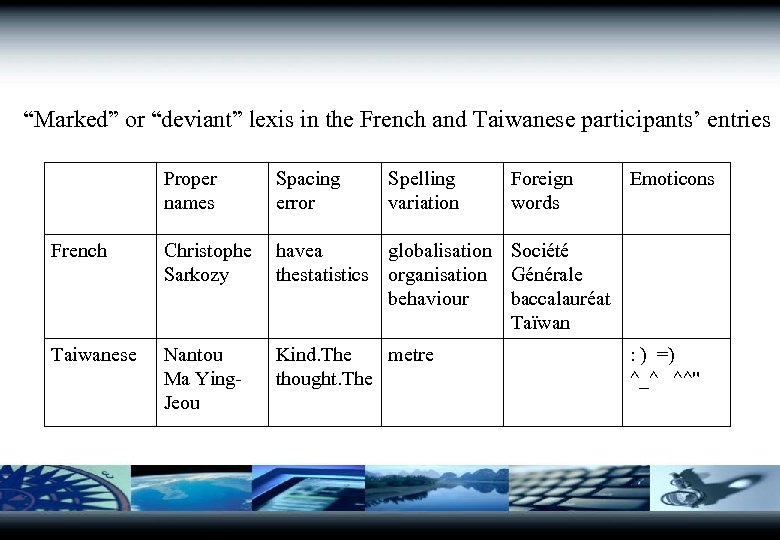
“Marked” or “deviant” lexis in the French and Taiwanese participants’ entries Proper names Spacing error Spelling variation Foreign words French Christophe Sarkozy havea globalisation Société thestatistics organisation Générale behaviour baccalauréat Taïwan Taiwanese Nantou Ma Ying. Jeou Kind. The metre thought. The Emoticons : ) =) ^_^ ^^"
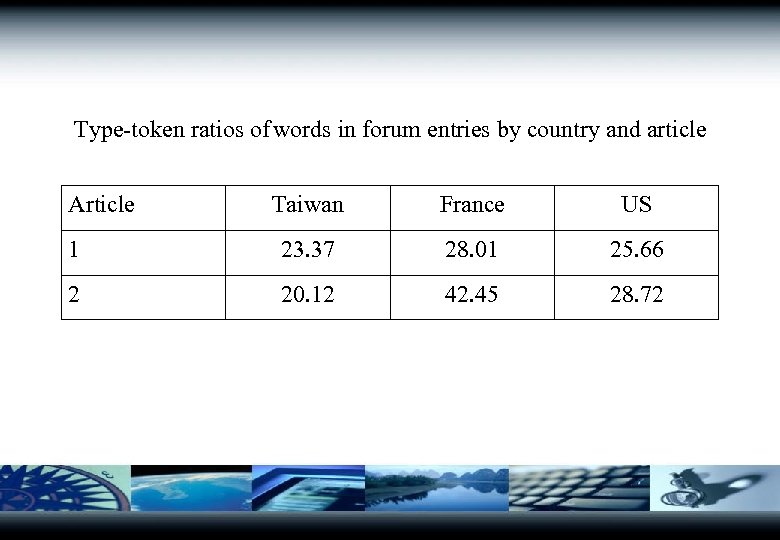
Type-token ratios of words in forum entries by country and article Article Taiwan France US 1 23. 37 28. 01 25. 66 2 20. 12 42. 45 28. 72
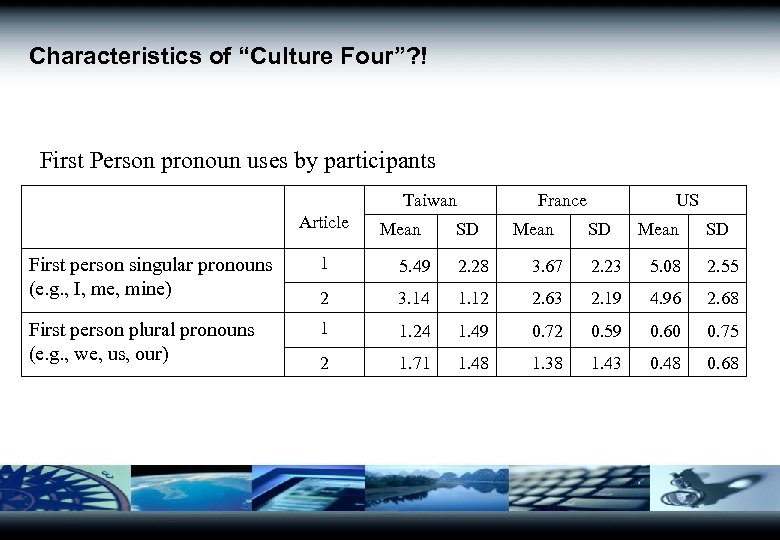
Characteristics of “Culture Four”? ! First Person pronoun uses by participants Taiwan Article Mean France SD Mean US SD Mean SD First person singular pronouns (e. g. , I, me, mine) 1 5. 49 2. 28 3. 67 2. 23 5. 08 2. 55 2 3. 14 1. 12 2. 63 2. 19 4. 96 2. 68 First person plural pronouns (e. g. , we, us, our) 1 1. 24 1. 49 0. 72 0. 59 0. 60 0. 75 2 1. 71 1. 48 1. 38 1. 43 0. 48 0. 68
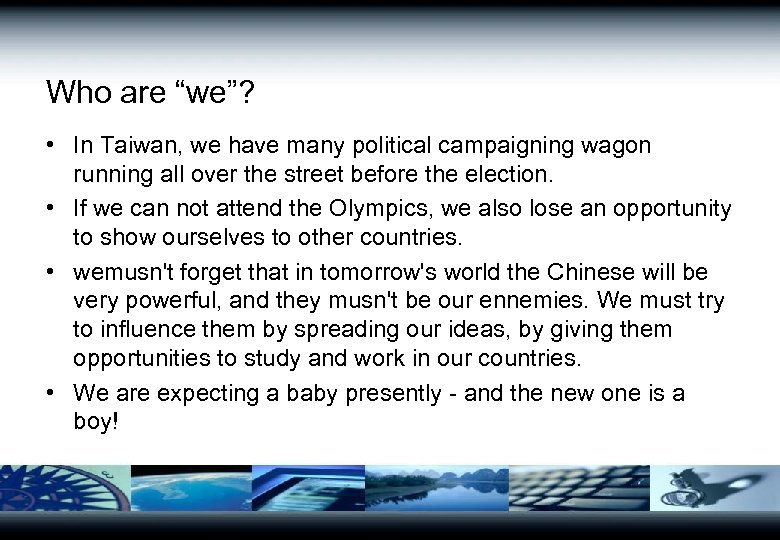
Who are “we”? • In Taiwan, we have many political campaigning wagon running all over the street before the election. • If we can not attend the Olympics, we also lose an opportunity to show ourselves to other countries. • wemusn't forget that in tomorrow's world the Chinese will be very powerful, and they musn't be our ennemies. We must try to influence them by spreading our ideas, by giving them opportunities to study and work in our countries. • We are expecting a baby presently - and the new one is a boy!
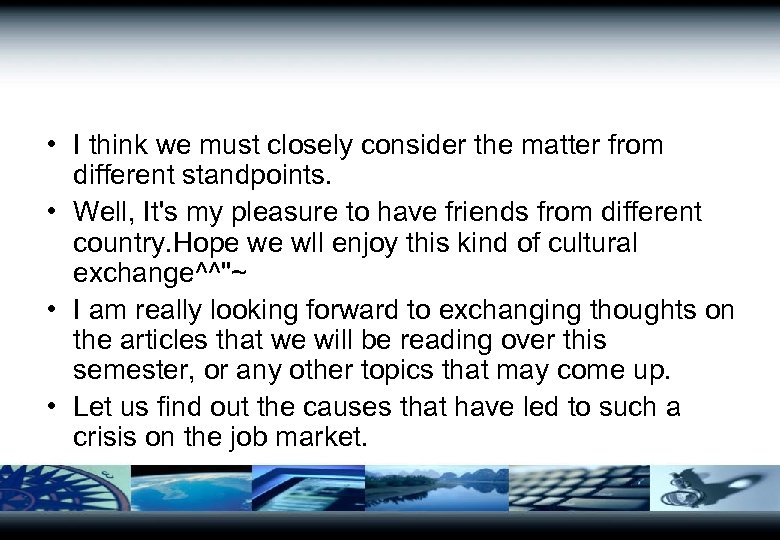
• I think we must closely consider the matter from different standpoints. • Well, It's my pleasure to have friends from different country. Hope we wll enjoy this kind of cultural exchange^^"~ • I am really looking forward to exchanging thoughts on the articles that we will be reading over this semester, or any other topics that may come up. • Let us find out the causes that have led to such a crisis on the job market.
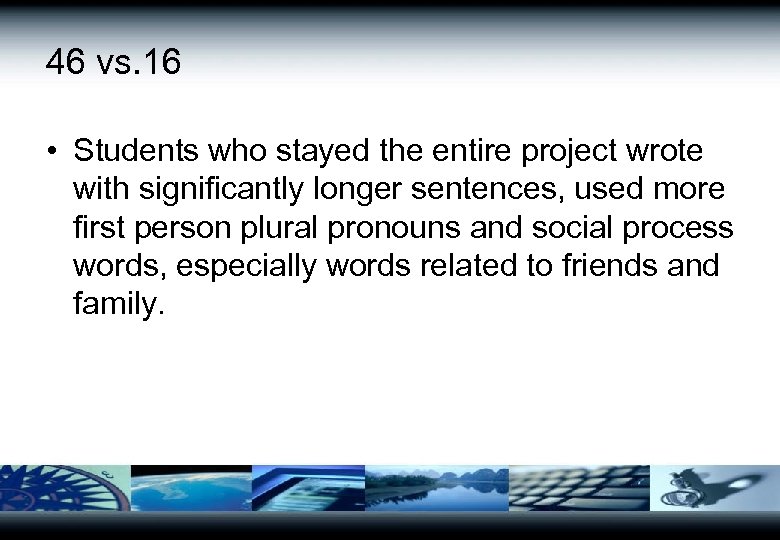
46 vs. 16 • Students who stayed the entire project wrote with significantly longer sentences, used more first person plural pronouns and social process words, especially words related to friends and family.
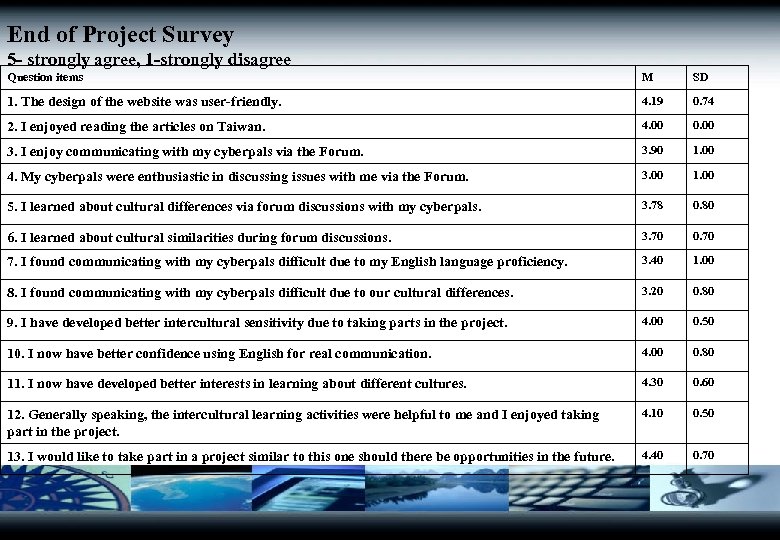
End of Project Survey 5 - strongly agree, 1 -strongly disagree Question items M SD 1. The design of the website was user-friendly. 4. 19 0. 74 2. I enjoyed reading the articles on Taiwan. 4. 00 0. 00 3. I enjoy communicating with my cyberpals via the Forum. 3. 90 1. 00 4. My cyberpals were enthusiastic in discussing issues with me via the Forum. 3. 00 1. 00 5. I learned about cultural differences via forum discussions with my cyberpals. 3. 78 0. 80 6. I learned about cultural similarities during forum discussions. 3. 70 0. 70 7. I found communicating with my cyberpals difficult due to my English language proficiency. 3. 40 1. 00 8. I found communicating with my cyberpals difficult due to our cultural differences. 3. 20 0. 80 9. I have developed better intercultural sensitivity due to taking parts in the project. 4. 00 0. 50 10. I now have better confidence using English for real communication. 4. 00 0. 80 11. I now have developed better interests in learning about different cultures. 4. 30 0. 60 12. Generally speaking, the intercultural learning activities were helpful to me and I enjoyed taking part in the project. 4. 10 0. 50 13. I would like to take part in a project similar to this one should there be opportunities in the future. 4. 40 0. 70
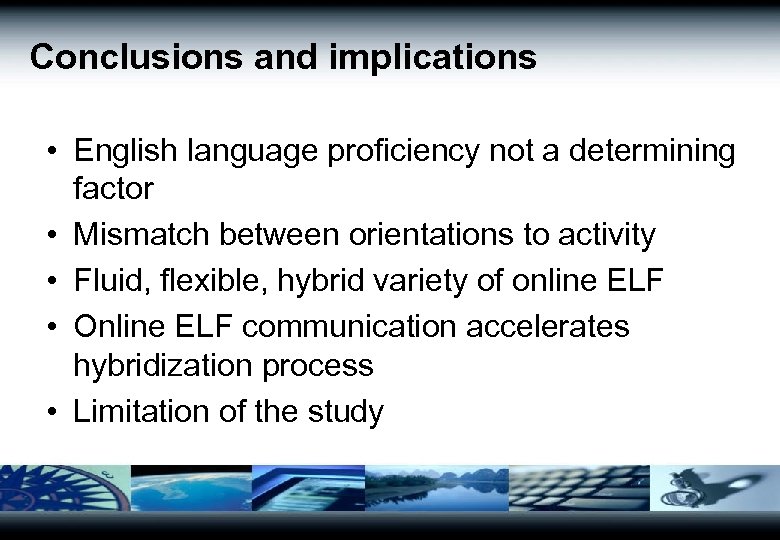
Conclusions and implications • English language proficiency not a determining factor • Mismatch between orientations to activity • Fluid, flexible, hybrid variety of online ELF • Online ELF communication accelerates hybridization process • Limitation of the study
Скачать презентацию Beyond Linguistic and Cultural Differences When ELF English
9078f60a82fd609dd59c3a27eb6cf44b.ppt