 Скачать презентацию Berkeley-Helsinki Summer Course Lecture 1 Course Overview Randy
a794f341503a9e9dee286546145878b2.ppt
- Количество слайдов: 56



Berkeley-Helsinki Summer Course Lecture #1: Course Overview Randy H. Katz Computer Science Division Electrical Engineering and Computer Science Department University of California Berkeley, CA 94720 -1776 1
Outline • • • Course Content Technology Trends Evolution of the Internet Business Trends Implications and Issues Summary and Conclusions 2
Outline • • • Course Content Technology Trends Evolution of the Internet Business Trends Implications and Issues Summary and Conclusions 3
What is this Course About? • Emerging, yet still developing, view of a new kind of communications-oriented middleware – Rapid development/deployment of new services & apps – Delivered to radically different end devices (phone, computer, info appliance) over diverse access networks (PSTN, LAN, Wireless, Cellular, DSL, Cable, Satellite) – Exploiting Internet-based technology core: clients/server, applications level routers, TCP/IP protocols, Web/XML formats – Beyond traditional “call processing” model: client-proxyserver plus application-level partitioning – Built upon a new business model being driven by the evolution of the Internet: traditional “managed” networks and services versus emerging “overlay” networks and services structured on top of and outside of the above 4
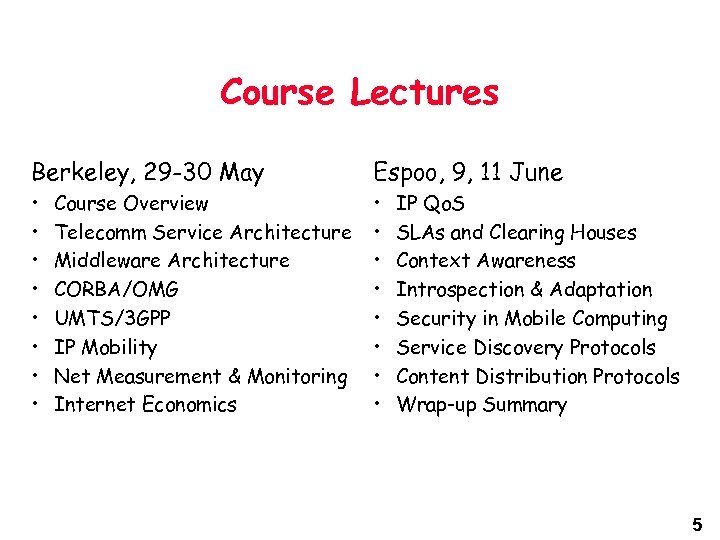
Course Lectures Berkeley, 29 -30 May Espoo, 9, 11 June • • • • Course Overview Telecomm Service Architecture Middleware Architecture CORBA/OMG UMTS/3 GPP IP Mobility Net Measurement & Monitoring Internet Economics IP Qo. S SLAs and Clearing Houses Context Awareness Introspection & Adaptation Security in Mobile Computing Service Discovery Protocols Content Distribution Protocols Wrap-up Summary 5
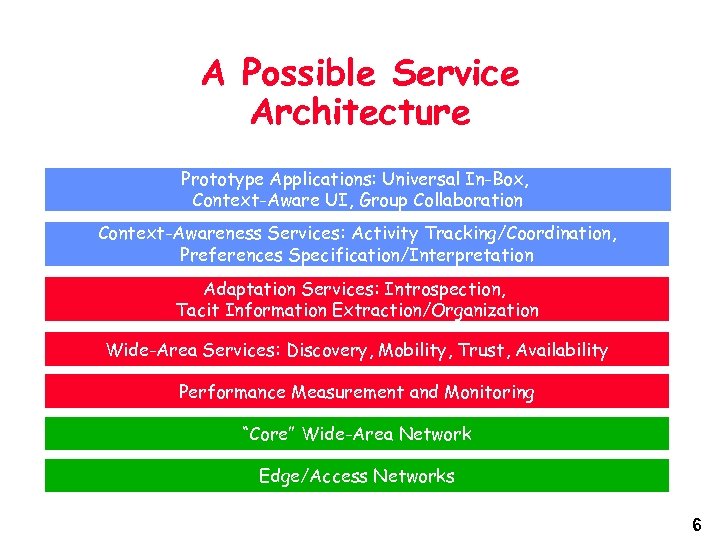
A Possible Service Architecture Prototype Applications: Universal In-Box, Context-Aware UI, Group Collaboration Context-Awareness Services: Activity Tracking/Coordination, Preferences Specification/Interpretation Adaptation Services: Introspection, Tacit Information Extraction/Organization Wide-Area Services: Discovery, Mobility, Trust, Availability Performance Measurement and Monitoring “Core” Wide-Area Network Edge/Access Networks 6
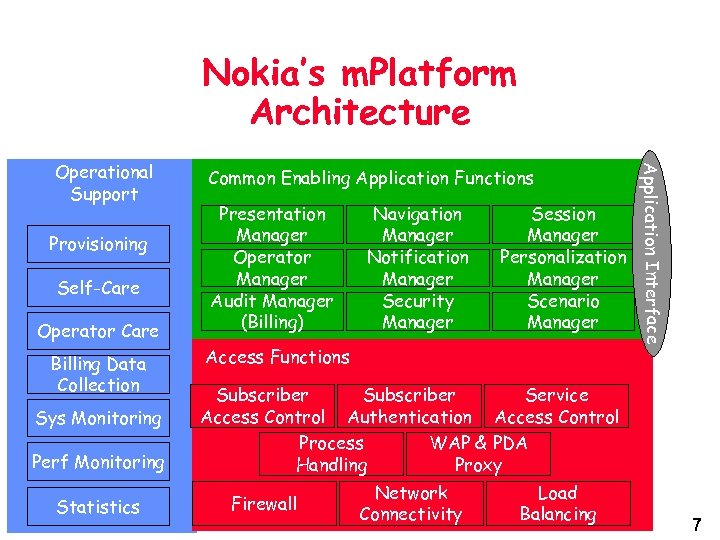
Nokia’s m. Platform Architecture Provisioning Self-Care Operator Care Billing Data Collection Sys Monitoring Perf Monitoring Statistics Common Enabling Application Functions Presentation Manager Operator Manager Audit Manager (Billing) Navigation Manager Notification Manager Security Manager Session Manager Personalization Manager Scenario Manager Access Functions Application Interface Operational Support Subscriber Service Access Control Authentication Access Control Process WAP & PDA Handling Proxy Firewall Network Connectivity Load Balancing 7
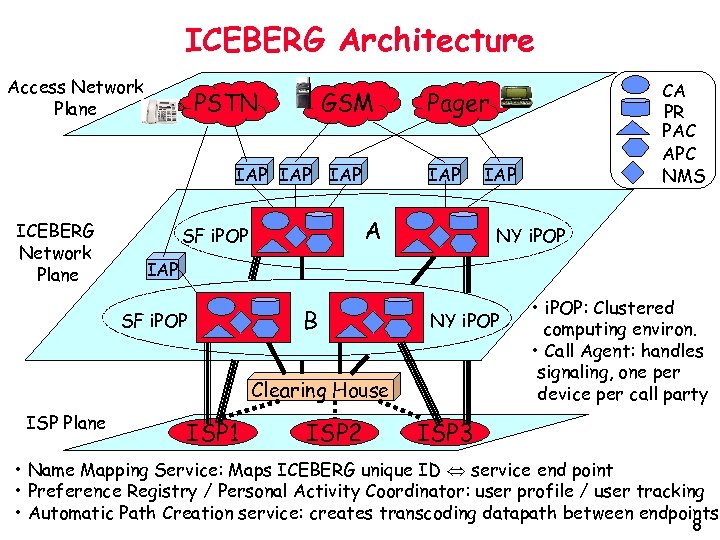
ICEBERG Architecture Access Network Plane PSTN GSM IAP IAP ICEBERG Network Plane IAP A SF i. POP IAP NY i. POP IAP SF i. POP B NY i. POP Clearing House ISP Plane CA PR PAC APC NMS Pager ISP 1 ISP 2 • i. POP: Clustered computing environ. • Call Agent: handles signaling, one per device per call party ISP 3 • Name Mapping Service: Maps ICEBERG unique ID service end point • Preference Registry / Personal Activity Coordinator: user profile / user tracking • Automatic Path Creation service: creates transcoding datapath between endpoints 8
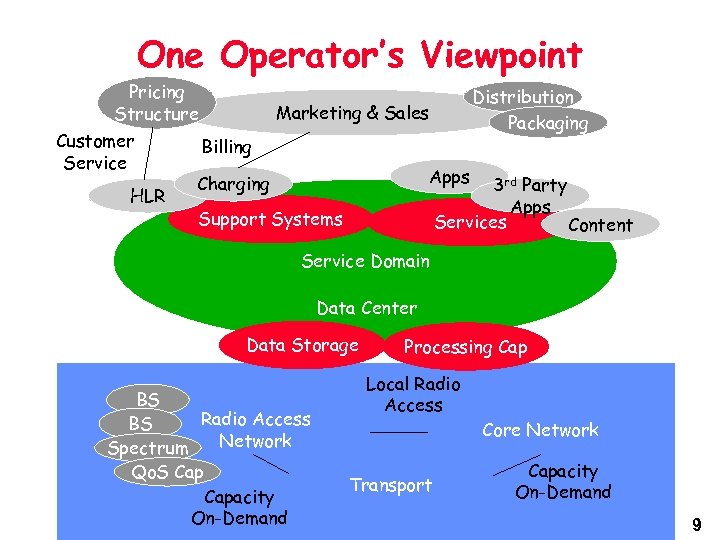
One Operator’s Viewpoint Pricing Structure Customer Service HLR Distribution Packaging Marketing & Sales Billing Apps Charging 3 rd Party Apps Services Content Support Systems Service Domain Data Center Data Storage BS Radio Access BS Network Spectrum Qo. S Capacity On-Demand Processing Cap Local Radio Access Transport Core Network Capacity On-Demand 9
Outline • • • Course Content Technology Trends Evolution of the Internet Business Trends Implications and Issues Summary and Conclusions 10
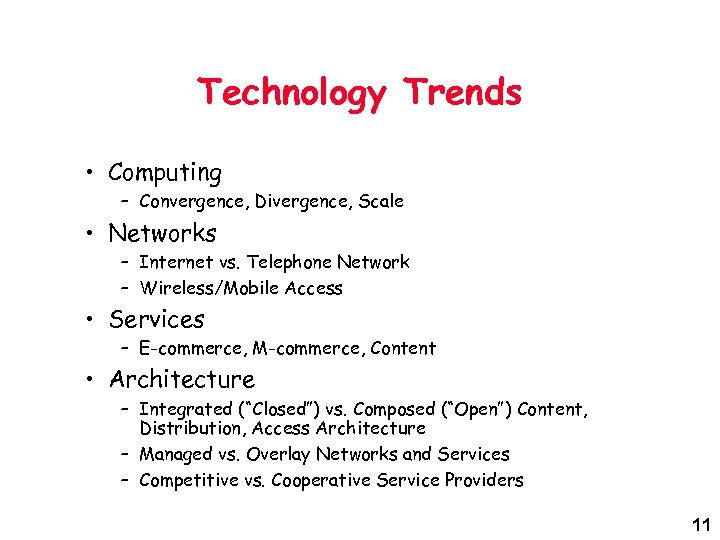
Technology Trends • Computing – Convergence, Divergence, Scale • Networks – Internet vs. Telephone Network – Wireless/Mobile Access • Services – E-commerce, M-commerce, Content • Architecture – Integrated (“Closed”) vs. Composed (“Open”) Content, Distribution, Access Architecture – Managed vs. Overlay Networks and Services – Competitive vs. Cooperative Service Providers 11
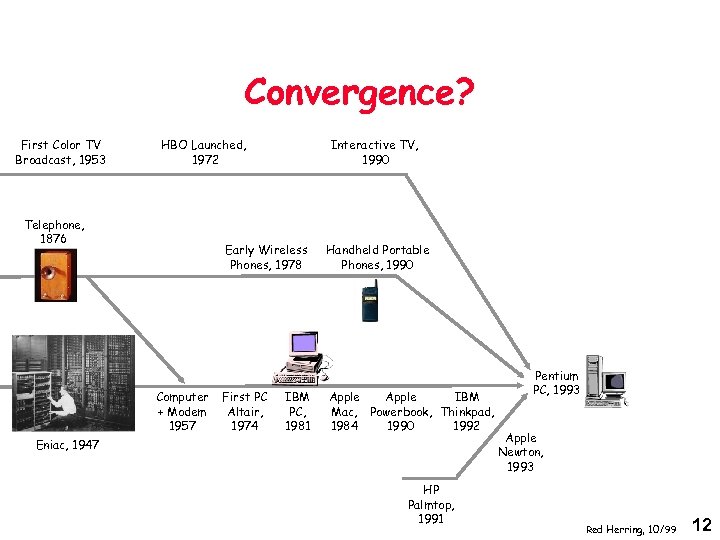
Convergence? First Color TV Broadcast, 1953 HBO Launched, 1972 Telephone, 1876 Interactive TV, 1990 Early Wireless Phones, 1978 Computer + Modem 1957 First PC Altair, 1974 IBM PC, 1981 Handheld Portable Phones, 1990 Apple IBM Mac, Powerbook, Thinkpad, 1984 1990 1992 Eniac, 1947 HP Palmtop, 1991 Pentium PC, 1993 Apple Newton, 1993 Red Herring, 10/99 12
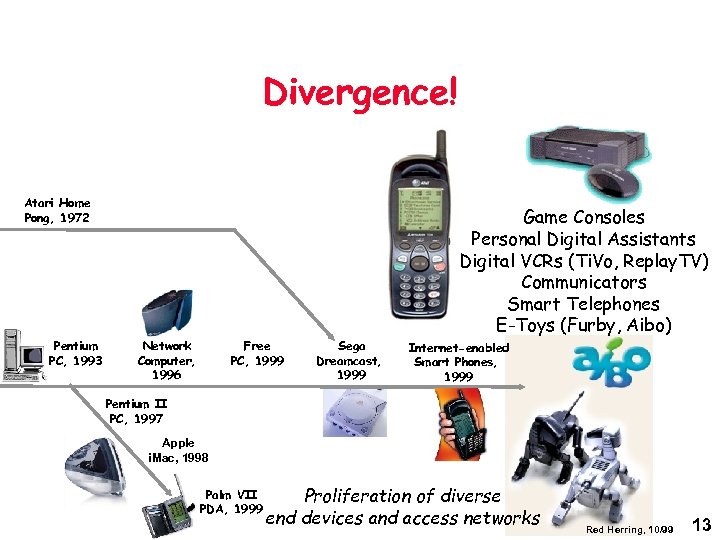
Divergence! Atari Home Pong, 1972 Pentium PC, 1993 Game Consoles Personal Digital Assistants Digital VCRs (Ti. Vo, Replay. TV) Communicators Smart Telephones E-Toys (Furby, Aibo) Network Computer, 1996 Free PC, 1999 Sega Dreamcast, 1999 Internet-enabled Smart Phones, 1999 Pentium II PC, 1997 Apple i. Mac, 1998 Palm VII PDA, 1999 Proliferation of diverse end devices and access networks Red Herring, 10/99 13
Convergence: Post-PC • • Not about gadgets or access technologies About services and applications Increasing, not decreasing, diversity Enabled by computing embedded in communications fabric 14
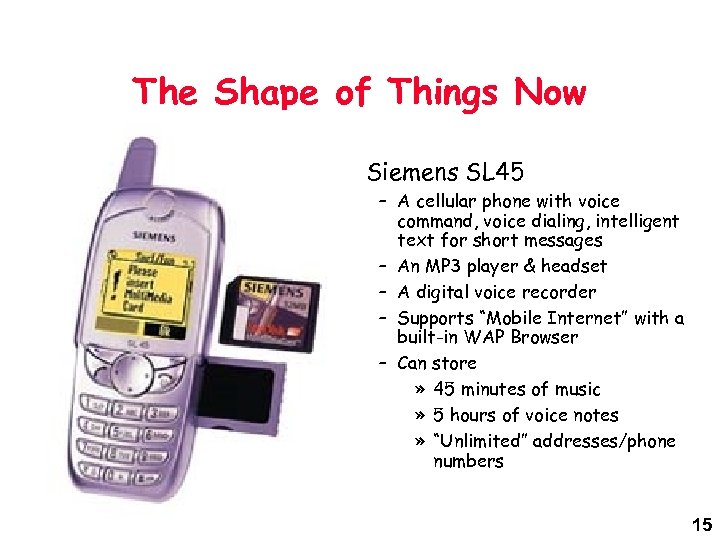
The Shape of Things Now • Siemens SL 45 – A cellular phone with voice command, voice dialing, intelligent text for short messages – An MP 3 player & headset – A digital voice recorder – Supports “Mobile Internet” with a built-in WAP Browser – Can store » 45 minutes of music » 5 hours of voice notes » “Unlimited” addresses/phone numbers 15
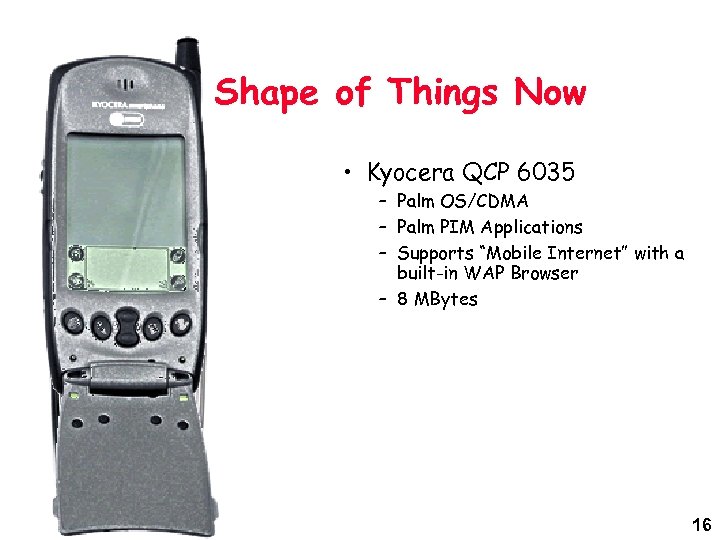
The Shape of Things Now • Kyocera QCP 6035 – Palm OS/CDMA – Palm PIM Applications – Supports “Mobile Internet” with a built-in WAP Browser – 8 MBytes 16
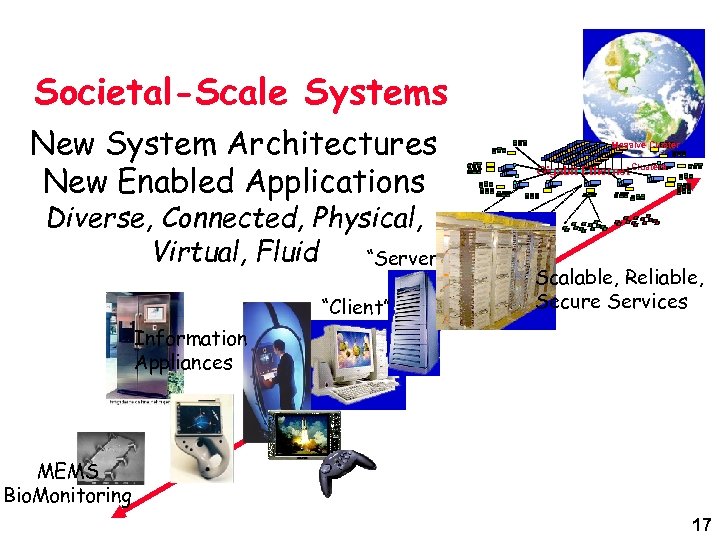
Societal-Scale Systems New System Architectures New Enabled Applications Diverse, Connected, Physical, Virtual, Fluid “Server” “Client” Massive Cluster Gigabit Ethernet Clusters Scalable, Reliable, Secure Services Information Appliances MEMS Bio. Monitoring 17
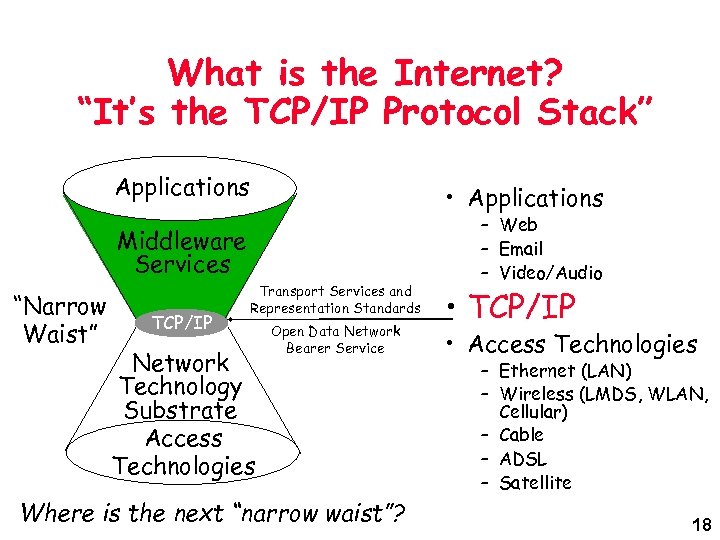
What is the Internet? “It’s the TCP/IP Protocol Stack” Applications • Applications Middleware Services “Narrow Waist” TCP/IP Transport Services and Representation Standards Network Technology Substrate Access Technologies Open Data Network Bearer Service Where is the next “narrow waist”? – Web – Email – Video/Audio • TCP/IP • Access Technologies – Ethernet (LAN) – Wireless (LMDS, WLAN, Cellular) – Cable – ADSL – Satellite 18
Telephony Evolution • Mobility/Wireless driving end-to-end digitization of the telephony system – Shift towards IP-based infrastructure (e. g. , Motorola + CISCO) • Converged Services – AT&T » Cell Phone, Telephone, ISP, Video on Demand (Cable) » Universal Billing Systems – Sprint: $0. 05/min local/long distance, wired/wireless • Computer-Telephony Integration – Call Centers, Software-based PBXs, PSTN By-Pass – Consumer-to-Business E-commerce (e. g. , Lands End) – Speech-Enabled Services (e. g. , “Concierge”) 19
Internet vs. Telephone Net • Strengths – Intelligence at ends – Decentralized control – Operates over heterogeneous access technologies • Weaknesses – No differential service – Variable performance delay – New functions difficult to add since end nodes must be upgraded – No trusted infrastructure • Strengths – No end-point intelligence – Heterogeneous devices – Excellent voice performance • Weaknesses – Achieves performance by overallocating resources – Difficult to add new services to “Intelligent Network” due to complex call model – Expensive approach for reliability 20
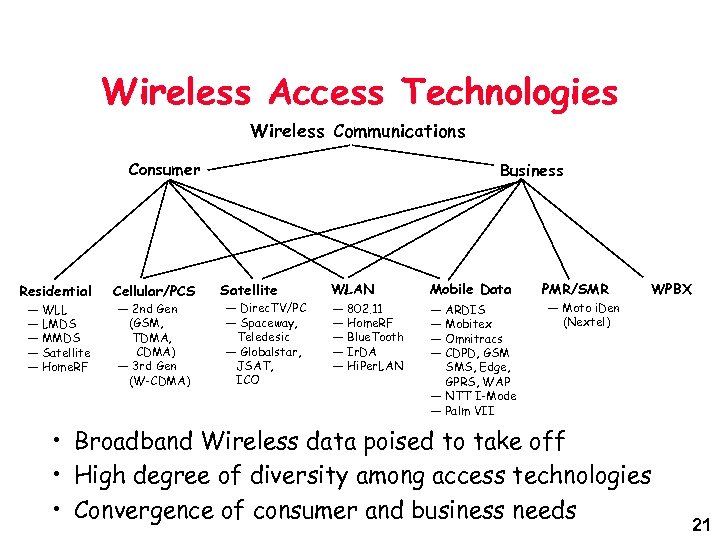
Wireless Access Technologies Wireless Communications Consumer Residential — WLL — LMDS — MMDS — Satellite — Home. RF Cellular/PCS — 2 nd Gen (GSM, TDMA, CDMA) — 3 rd Gen (W-CDMA) Business Satellite — Direc. TV/PC — Spaceway, Teledesic — Globalstar, JSAT, ICO WLAN Mobile Data — 802. 11 — Home. RF — Blue. Tooth — Ir. DA — Hi. Per. LAN — ARDIS — Mobitex — Omnitracs — CDPD, GSM SMS, Edge, GPRS, WAP — NTT I-Mode — Palm VII PMR/SMR WPBX — Moto i. Den (Nextel) • Broadband Wireless data poised to take off • High degree of diversity among access technologies • Convergence of consumer and business needs 21
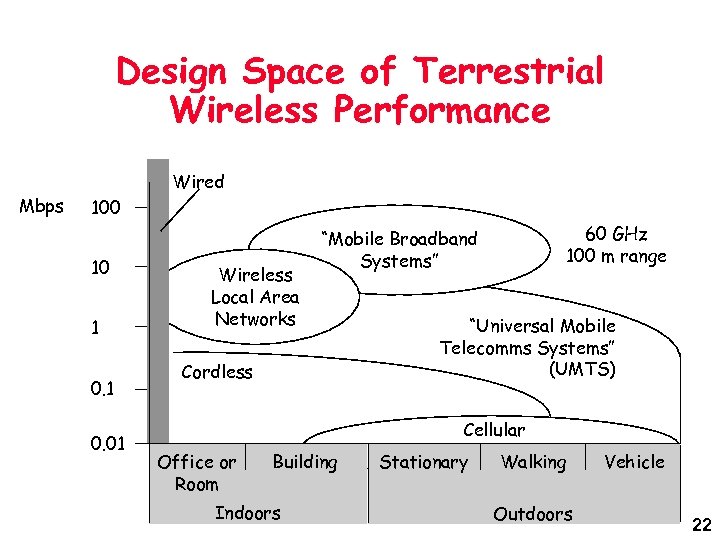
Design Space of Terrestrial Wireless Performance Mbps Wired 100 10 1 0. 01 Wireless Local Area Networks 60 GHz 100 m range “Mobile Broadband Systems” Cordless “Universal Mobile Telecomms Systems” (UMTS) Cellular Office or Room Building Indoors Stationary Walking Outdoors Vehicle 22
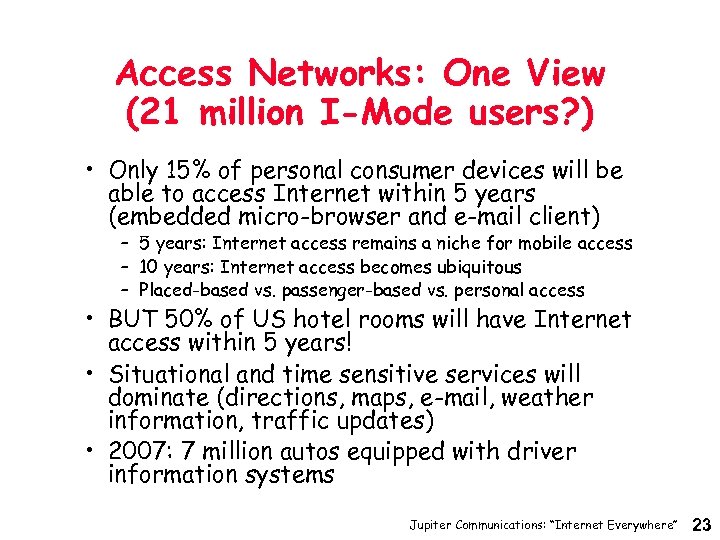
Access Networks: One View (21 million I-Mode users? ) • Only 15% of personal consumer devices will be able to access Internet within 5 years (embedded micro-browser and e-mail client) – 5 years: Internet access remains a niche for mobile access – 10 years: Internet access becomes ubiquitous – Placed-based vs. passenger-based vs. personal access • BUT 50% of US hotel rooms will have Internet access within 5 years! • Situational and time sensitive services will dominate (directions, maps, e-mail, weather information, traffic updates) • 2007: 7 million autos equipped with driver information systems Jupiter Communications: “Internet Everywhere” 23
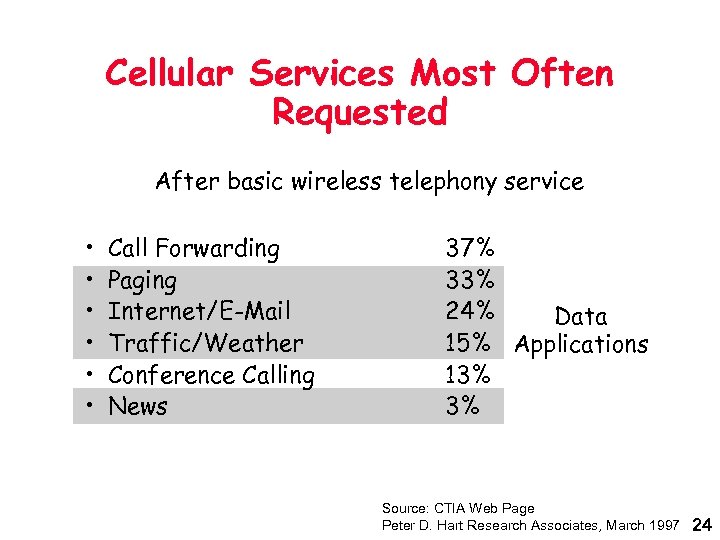
Cellular Services Most Often Requested After basic wireless telephony service • • • Call Forwarding Paging Internet/E-Mail Traffic/Weather Conference Calling News 37% 33% 24% Data 15% Applications 13% 3% Source: CTIA Web Page Peter D. Hart Research Associates, March 1997 24
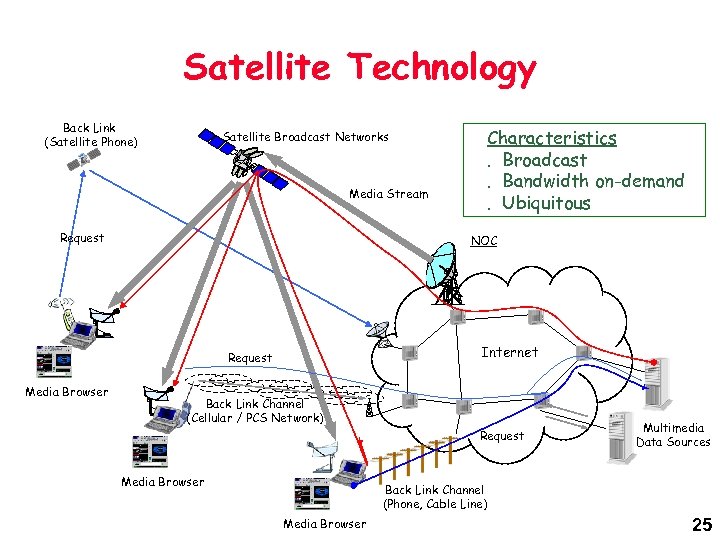
Satellite Technology Back Link (Satellite Phone) Characteristics. Broadcast. Bandwidth on-demand. Ubiquitous Satellite Broadcast Networks Media Stream Request NOC Internet Request Media Browser Back Link Channel (Cellular / PCS Network) Request Media Browser Multimedia Data Sources Back Link Channel (Phone, Cable Line) Media Browser 25
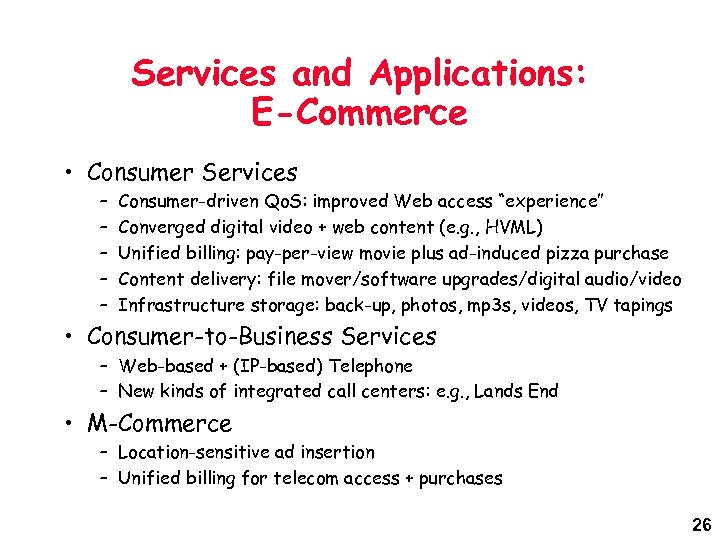
Services and Applications: E-Commerce • Consumer Services – – – Consumer-driven Qo. S: improved Web access “experience” Converged digital video + web content (e. g. , HVML) Unified billing: pay-per-view movie plus ad-induced pizza purchase Content delivery: file mover/software upgrades/digital audio/video Infrastructure storage: back-up, photos, mp 3 s, videos, TV tapings • Consumer-to-Business Services – Web-based + (IP-based) Telephone – New kinds of integrated call centers: e. g. , Lands End • M-Commerce – Location-sensitive ad insertion – Unified billing for telecom access + purchases 26
Outline • • • Course Content Technology Trends Evolution of the Internet Business Trends Implications and Issues Summary and Conclusions 27
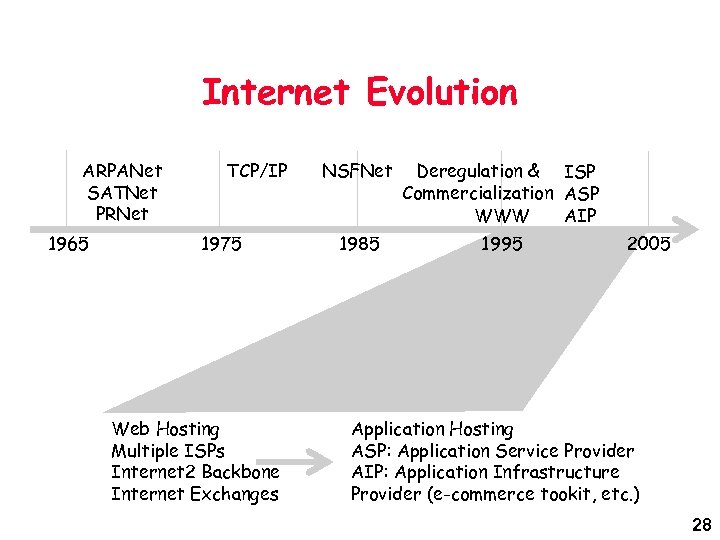
Internet Evolution ARPANet SATNet PRNet 1965 TCP/IP 1975 Web Hosting Multiple ISPs Internet 2 Backbone Internet Exchanges NSFNet Deregulation & ISP Commercialization ASP AIP WWW 1985 1995 2005 Application Hosting ASP: Application Service Provider AIP: Application Infrastructure Provider (e-commerce tookit, etc. ) 28
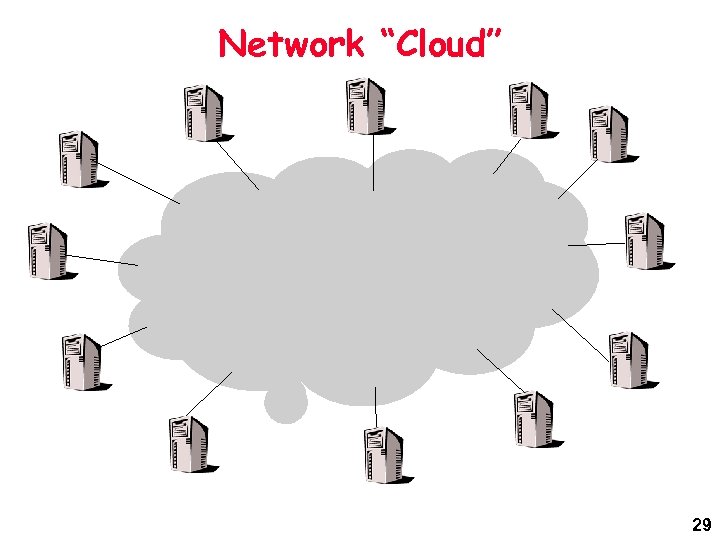
Network “Cloud” 29
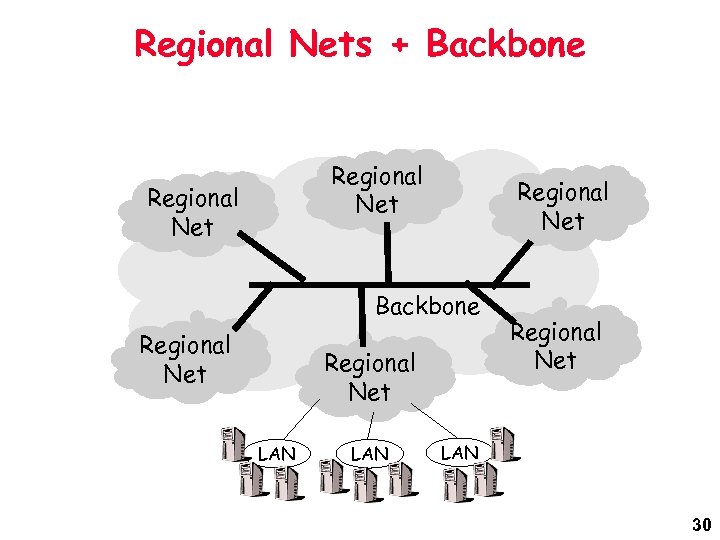
Regional Nets + Backbone Regional Net Backbone Regional Net LAN 30
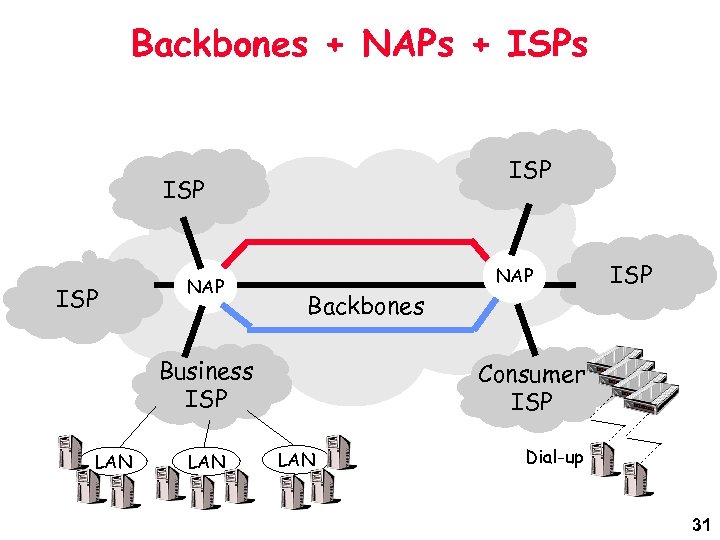
Backbones + NAPs + ISPs ISP ISP NAP Backbones Business ISP LAN NAP ISP Consumer ISP LAN Dial-up 31
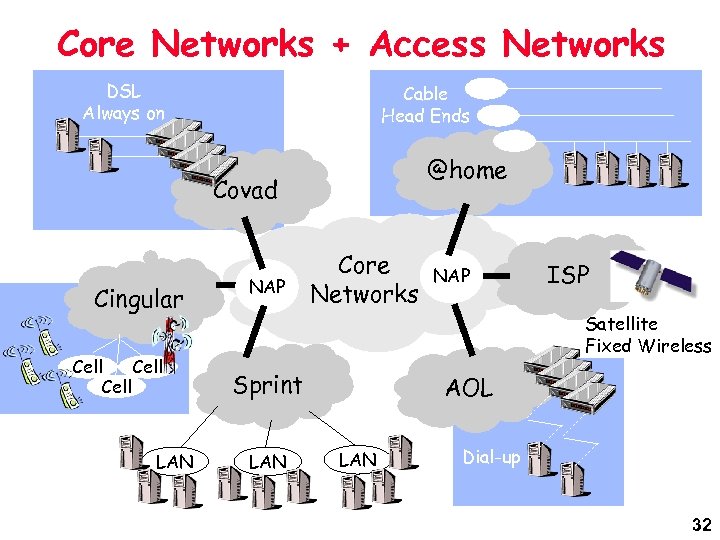
Core Networks + Access Networks DSL Always on Cable Head Ends @home Covad Cingular Cell LAN NAP Core Networks NAP ISP Satellite Fixed Wireless Sprint LAN AOL LAN Dial-up 32
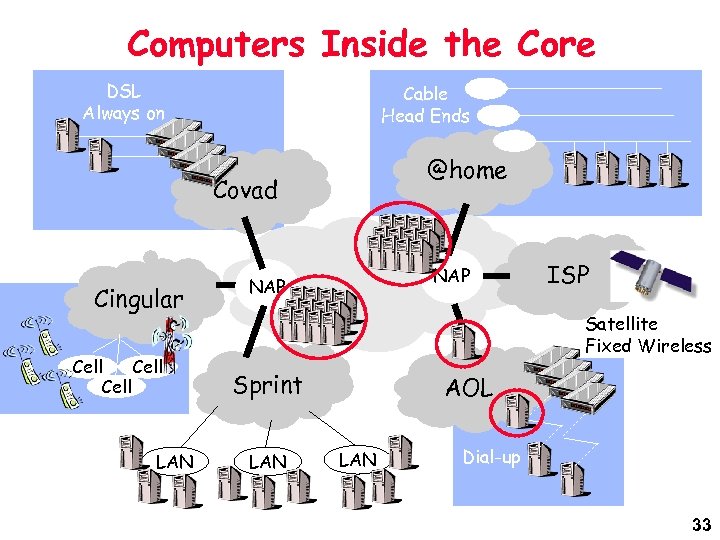
Computers Inside the Core DSL Always on Cable Head Ends @home Covad Cingular Cell LAN NAP ISP Satellite Fixed Wireless Sprint LAN AOL LAN Dial-up 33
Outline • • • Course Content Technology Trends Evolution of the Internet Business Trends Implications and Issues Summary and Conclusions 34
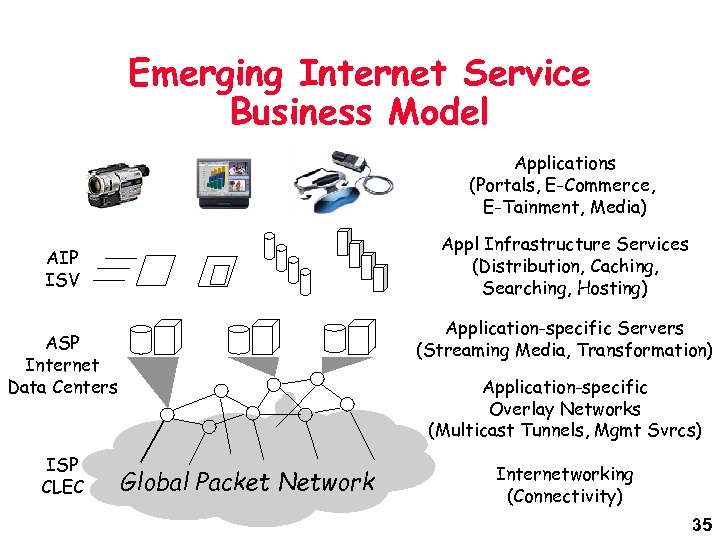
Emerging Internet Service Business Model Applications (Portals, E-Commerce, E-Tainment, Media) Appl Infrastructure Services (Distribution, Caching, Searching, Hosting) AIP ISV Application-specific Servers (Streaming Media, Transformation) ASP Internet Data Centers ISP CLEC Application-specific Overlay Networks (Multicast Tunnels, Mgmt Svrcs) Global Packet Network Internetworking (Connectivity) 35
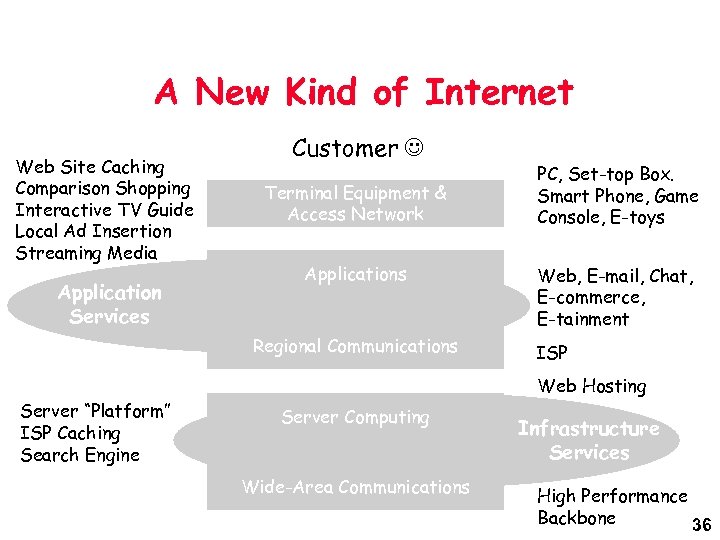
A New Kind of Internet Web Site Caching Comparison Shopping Interactive TV Guide Local Ad Insertion Streaming Media Application Services Customer J Terminal Equipment & Access Network Applications Regional Communications PC, Set-top Box. Smart Phone, Game Console, E-toys Web, E-mail, Chat, E-commerce, E-tainment ISP Web Hosting Server “Platform” ISP Caching Search Engine Server Computing Wide-Area Communications Infrastructure Services High Performance Backbone 36
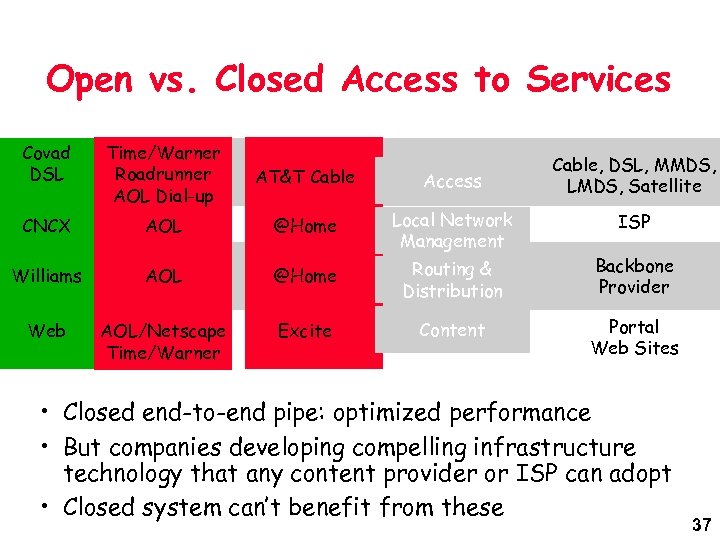
Open vs. Closed Access to Services Covad DSL Time/Warner Roadrunner AOL Dial-up AT&T Cable Access Cable, DSL, MMDS, LMDS, Satellite CNCX AOL @Home Local Network Management ISP Williams AOL @Home Routing & Distribution Backbone Provider Web AOL/Netscape Time/Warner Excite Content Portal Web Sites • Closed end-to-end pipe: optimized performance • But companies developing compelling infrastructure technology that any content provider or ISP can adopt • Closed system can’t benefit from these 37
Context for Cooperation Among Service Providers • Huge Expense of 3 G Mobile Telecomms Infrastructures – European spectrum auctions: 50 billion ECU and counting – Capital outlays likely to match spectrum expenses, all before the first ECU of revenue! – Wireless operators in complex web of business relationships and partial ownerships of networks around the world • Compelling motivation for collaborative deployment of wireless infrastructure – Happening already several places in Europe & Asia • Same for cooperative service infrastructure? – Mobile Virtual Network Operator (MVNO) – Internet transport providers vigorously complete – But some cooperation also emerging: Content Dissemination Alliances 38
Any Way to Build a Network? • Partitioning of frequencies independent of actual subscriber density – Successful operator oversubscribe resources, while less popular providers retain excess capacity – Different flavor of roaming: among collocated/competing service providing • Duplicate antenna sites – Serious problem given community resistance • Redundant backhaul networks – Limited economies of scale 39
The Case for Horizontal Architectures “The new rules for success will be to provide one part of the puzzle and to cooperate with other suppliers to create the complete solutions that customers require. . [V]ertical integration breaks down when innovation speeds up. The big telecoms firms that will win back investor confidence soonest will be those with the courage to rip apart their monolithic structure along functional layers, to swap size for speed and to embrace rather than fear disruptive technologies. ” The Economist Magazine, 16 December 2000 40
Feasible Alternative: Horizontal Competition vs. Vertical Integration • Service Operators “own” the customer, provide “brand”, issue/collect the bills • Independent Backhaul Operators • Independent Antenna Site Operators • Independent Owners of the Spectrum • Microscale auctions/leases of network resources • Emerging concept of Virtual Operators 41
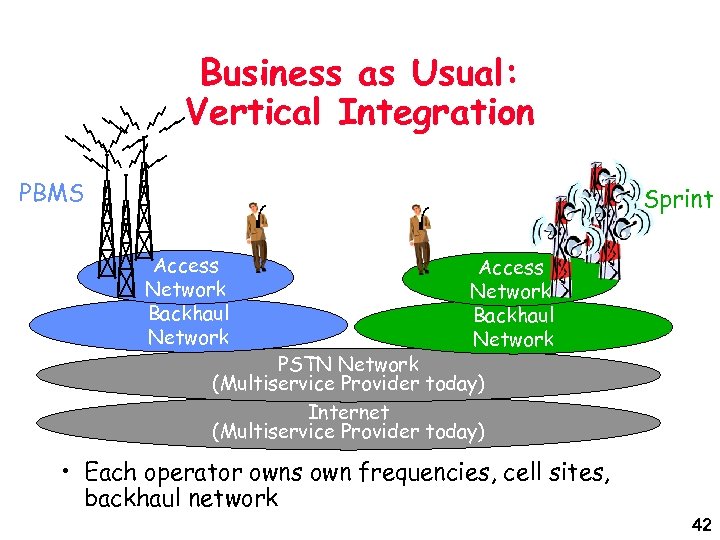
Business as Usual: Vertical Integration PBMS Sprint Access Network Backhaul Network PSTN Network (Multiservice Provider today) Internet (Multiservice Provider today) • Each operator owns own frequencies, cell sites, backhaul network 42
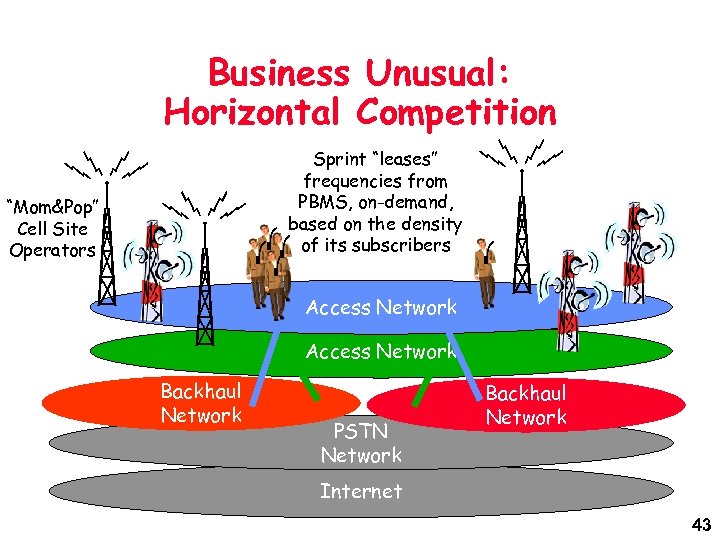
Business Unusual: Horizontal Competition Sprint “leases” frequencies from PBMS, on-demand, based on the density of its subscribers “Mom&Pop” Cell Site Operators Access Network Backhaul Network PSTN Network Backhaul Network Internet 43
Virtual Operator • MVNO: Virgin Mobile and One 2 One in UK – Distinguish based on marketing and billing plan innovations – VM competes for subscribers but uses One 2 One’s network • “Operators without subscribers”: local premises deploy own access infrastructure – Better coverage/more rapid build out of network – Deployments in airports, hotels, conference centers, office buildings, campuses, … • Overlay service provider (e. g. , PBMS) vs. organizational service provider (e. g. , UCB IS&T) – Single bill/settle with service participants • Support for confederated/virtual devices – Mini-BS for cellular/data + WLAN for high rate data 44
Outline • • • Course Content Technology Trends Evolution of the Internet Business Trends Implications and Issues Summary and Conclusions 45
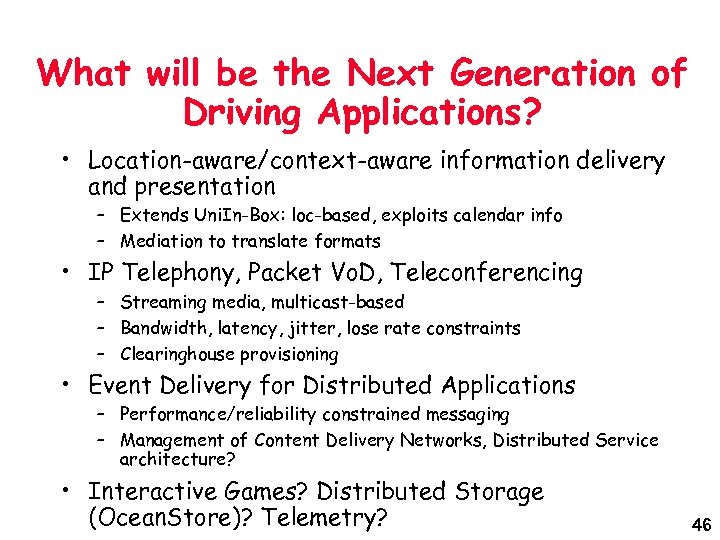
What will be the Next Generation of Driving Applications? • Location-aware/context-aware information delivery and presentation – Extends Uni. In-Box: loc-based, exploits calendar info – Mediation to translate formats • IP Telephony, Packet Vo. D, Teleconferencing – Streaming media, multicast-based – Bandwidth, latency, jitter, lose rate constraints – Clearinghouse provisioning • Event Delivery for Distributed Applications – Performance/reliability constrained messaging – Management of Content Delivery Networks, Distributed Service architecture? • Interactive Games? Distributed Storage (Ocean. Store)? Telemetry? 46
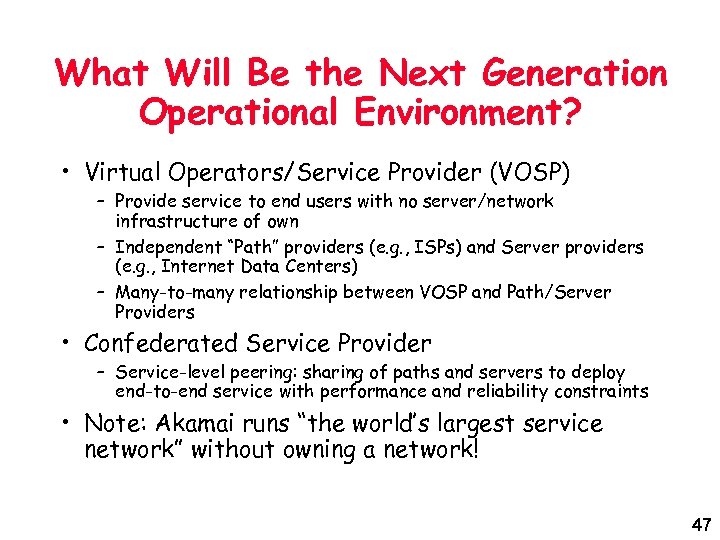
What Will Be the Next Generation Operational Environment? • Virtual Operators/Service Provider (VOSP) – Provide service to end users with no server/network infrastructure of own – Independent “Path” providers (e. g. , ISPs) and Server providers (e. g. , Internet Data Centers) – Many-to-many relationship between VOSP and Path/Server Providers • Confederated Service Provider – Service-level peering: sharing of paths and servers to deploy end-to-end service with performance and reliability constraints • Note: Akamai runs “the world’s largest service network” without owning a network! 47
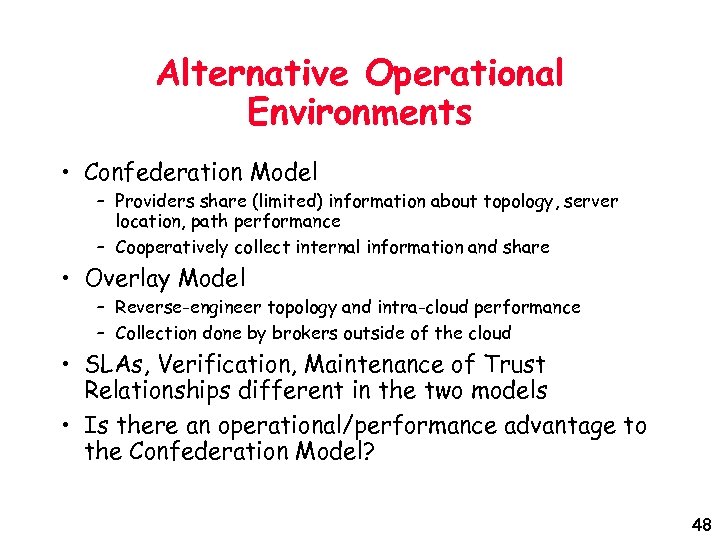
Alternative Operational Environments • Confederation Model – Providers share (limited) information about topology, server location, path performance – Cooperatively collect internal information and share • Overlay Model – Reverse-engineer topology and intra-cloud performance – Collection done by brokers outside of the cloud • SLAs, Verification, Maintenance of Trust Relationships different in the two models • Is there an operational/performance advantage to the Confederation Model? 48
Open Issues/Questions • Traditional Overlay Networks – Server (“Application Level Router”) Placement » For scaling, reliability, load balancing, latency » Where? Network topology discovery: WAN Core, Metro/Regional, Access Networks – Choice of Inter-Server “Paths” » For server-to-server latency/bandwidth/loss rate » Predictable/verifiable network performance (intra-ISP SLA) – Redirection Mechanisms » Random, round-robin, load-informed redirection » Net vs. server as bottleneck 49
Open Issues/Questions • Performance-constrained Service Placement – Separation of Service, Server, Service Path » Assume “Server Centers” known, can be “discovered” (how does Ocean. Store deal with this? ), or register with a Service Placement Service (SPS) » How is Service named, described, performance constraints expressed, and registered? » How is app/service-specific performance measured and made known to Service Placement Service? – Brokering between Server Centers and Service Creator, Path Provider and Service Creator • If core network bandwidth becomes infinite and “free”, does it matter where services are placed? – Latency reduction vs. economies of centralized management 50
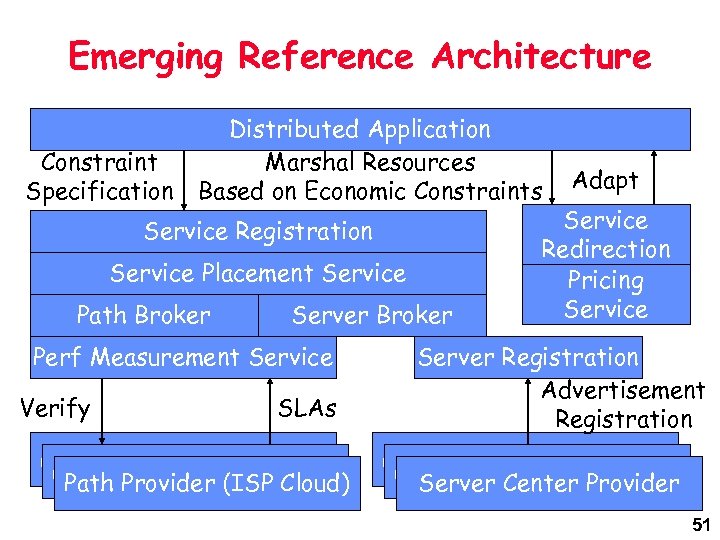
Emerging Reference Architecture Constraint Specification Distributed Application Marshal Resources Based on Economic Constraints Service Registration Service Placement Service Path Broker Server Broker Perf Measurement Service Verify SLAs Path Provider (ISP Cloud) Adapt Service Redirection Pricing Service Server Registration Advertisement Registration Path Provider (ISP Cloud) Server Center Provider 51
Methodological Framework • Problem: performing scaled, wide-area networking studies in the current Internet environment • Possible Solution: Wide-area Network Emulation – Virtual WAN (VWAN) on Large-scale Multicomputer Testbeds – Build operational model on top of VWAN » Traffic generation and measurement infrastructure » Build Confederation and Overlay operational models » What part of mechanisms for measurement, negotiation, registration, redirection, etc. the same and which are different? 52
Outline • • • Course Content Technology Trends Evolution of the Internet Business Trends Implications and Issues Summary and Conclusions 53
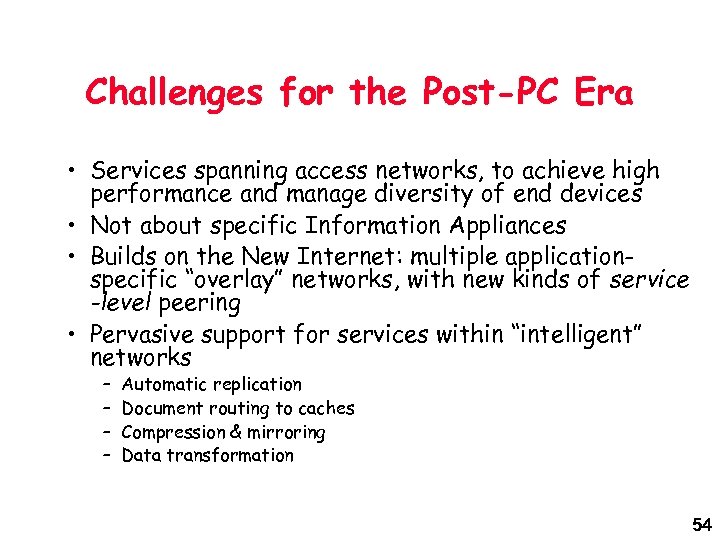
Challenges for the Post-PC Era • Services spanning access networks, to achieve high performance and manage diversity of end devices • Not about specific Information Appliances • Builds on the New Internet: multiple applicationspecific “overlay” networks, with new kinds of service -level peering • Pervasive support for services within “intelligent” networks – – Automatic replication Document routing to caches Compression & mirroring Data transformation 54
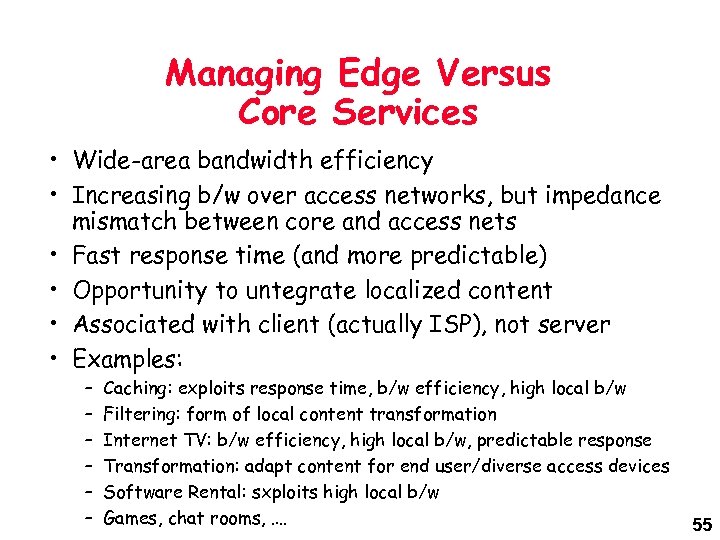
Managing Edge Versus Core Services • Wide-area bandwidth efficiency • Increasing b/w over access networks, but impedance mismatch between core and access nets • Fast response time (and more predictable) • Opportunity to untegrate localized content • Associated with client (actually ISP), not server • Examples: – – – Caching: exploits response time, b/w efficiency, high local b/w Filtering: form of local content transformation Internet TV: b/w efficiency, high local b/w, predictable response Transformation: adapt content for end user/diverse access devices Software Rental: sxploits high local b/w Games, chat rooms, …. 55
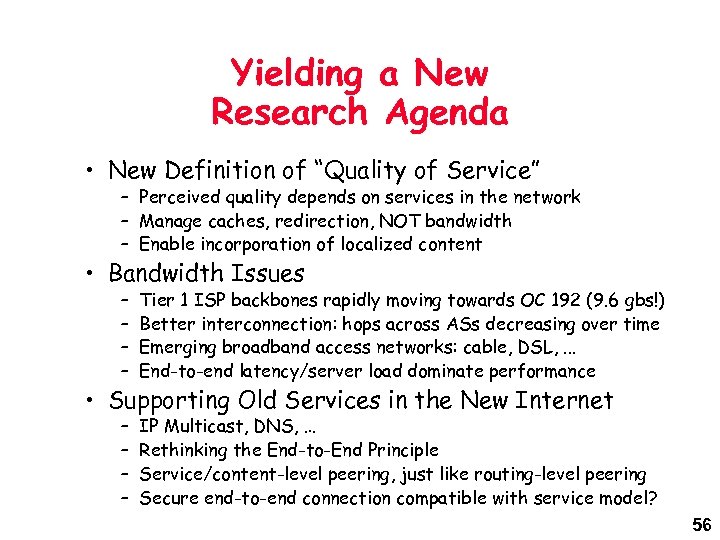
Yielding a New Research Agenda • New Definition of “Quality of Service” – Perceived quality depends on services in the network – Manage caches, redirection, NOT bandwidth – Enable incorporation of localized content • Bandwidth Issues – – Tier 1 ISP backbones rapidly moving towards OC 192 (9. 6 gbs!) Better interconnection: hops across ASs decreasing over time Emerging broadband access networks: cable, DSL, . . . End-to-end latency/server load dominate performance – – IP Multicast, DNS, … Rethinking the End-to-End Principle Service/content-level peering, just like routing-level peering Secure end-to-end connection compatible with service model? • Supporting Old Services in the New Internet 56
Скачать презентацию Berkeley-Helsinki Summer Course Lecture 1 Course Overview Randy
a794f341503a9e9dee286546145878b2.ppt