


«Beowulf» as one of the most important works of Anglo-Saxon literature Evgeny Nelepin, April 2013
Presentation Plan and Structure Introduction. The title of the epic poem. Several words about an author of the literary work. First part. Description of the story. Time in history. Central idea of the poem. Plot and structure. Who is the narrator? Second part. Stylistic analysis. Composition: simple or complex? Characteristic features of composition. The effect of history “fall”. Type of composition. Outset of the plot. The purpose of description of the Culmination of the poem. Forth part. Protagonists. Main heroes, secondary and heroes of the story. Who are they? What heroes are a part of history?
An epic poem • «Beowulf» was written in England, in Old English language, between the 8 th and the early 11 th centuries (sources argue). The events described in this epic poem are set geographically in Scandinavia and temporally take place in the late 5 th century. «Beowulf» was earlier supposed to be a translation of an original Scandinavian text. But this supposition was discarded. “Beowulf” is the only heritage of “barbarian” literature that survived until our days in manuscript, was translated into English and then into many other languages and became a part of world cultural heritage. • «Beowulf» consists of consisting of 3182 alliterative long lines. It is a lengthy narrative poem and its text makes up for 10% of Anglo. Saxon literature. “Beowulf” concerns a serious subject and contains details of heroic deeds and events significant to a culture and a nation. «Beowulf» is told in historical perspective. It is a story of epic events and of great people of a heroic past. That gives us a right to call it an epic poem.
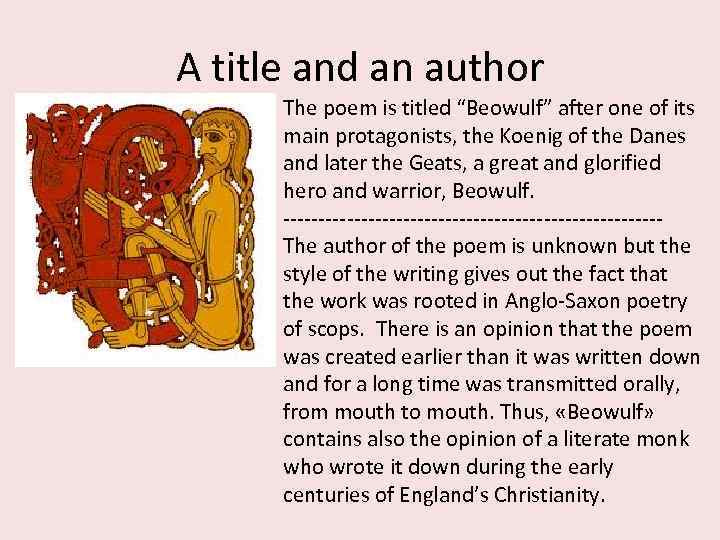
A title and an author The poem is titled “Beowulf” after one of its main protagonists, the Koenig of the Danes and later the Geats, a great and glorified hero and warrior, Beowulf. ---------------------------The author of the poem is unknown but the style of the writing gives out the fact that the work was rooted in Anglo-Saxon poetry of scops. There is an opinion that the poem was created earlier than it was written down and for a long time was transmitted orally, from mouth to mouth. Thus, «Beowulf» contains also the opinion of a literate monk who wrote it down during the early centuries of England’s Christianity.
Time in history. Composition features I think the topic of time in history was very important for people in 8 th to 11 th century. This “time in history topic”, I believe determines the major characteristics of composition. The story is organized in a moderate tempo; the division of the lines makes the story sound like recitative when you read it. In culmination points narration speeds up to express the importance of the moment. In decisive moments of battles narration is also very tense and strong. I would compare the narration in this epic poem with a river. It flows calmly and freely and balks and boils up over stones (at the milestones or cataclysms).
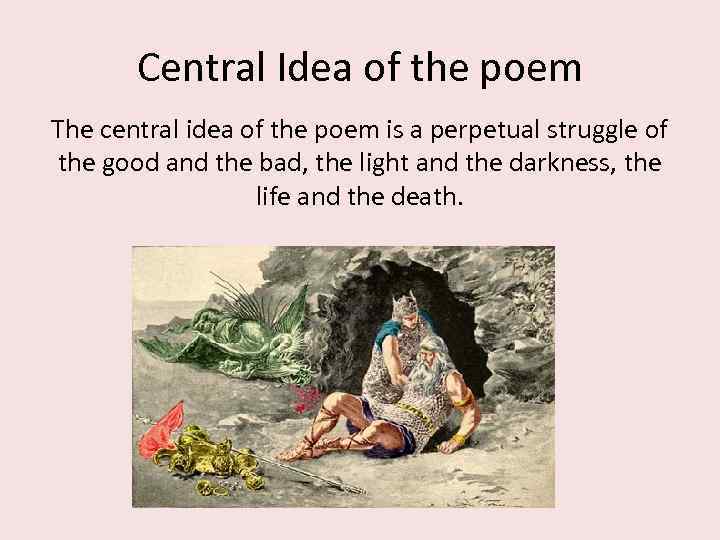
Central Idea of the poem The central idea of the poem is a perpetual struggle of the good and the bad, the light and the darkness, the life and the death.
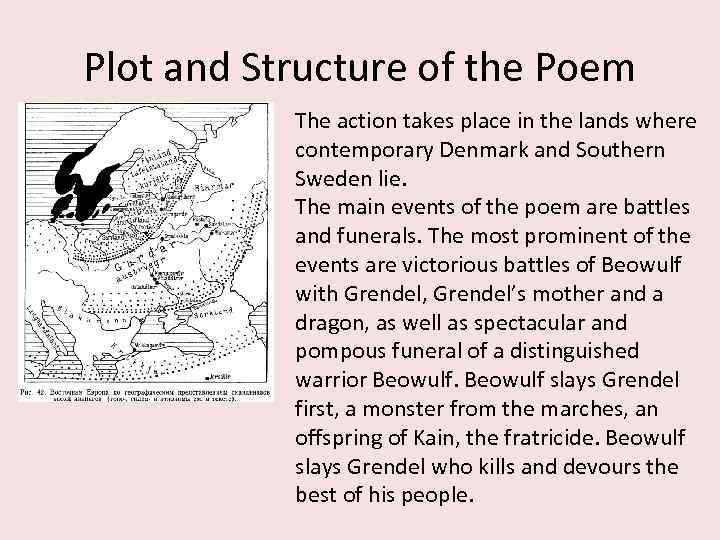
Plot and Structure of the Poem The action takes place in the lands where contemporary Denmark and Southern Sweden lie. The main events of the poem are battles and funerals. The most prominent of the events are victorious battles of Beowulf with Grendel, Grendel’s mother and a dragon, as well as spectacular and pompous funeral of a distinguished warrior Beowulf slays Grendel first, a monster from the marches, an offspring of Kain, the fratricide. Beowulf slays Grendel who kills and devours the best of his people.
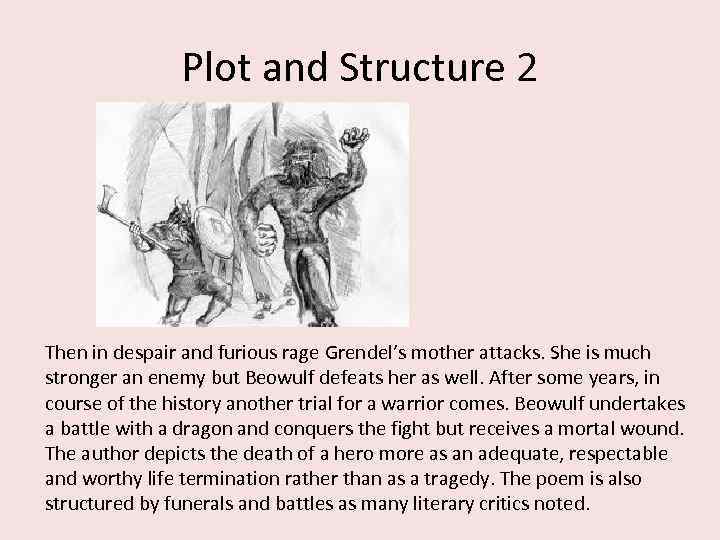
Plot and Structure 2 Then in despair and furious rage Grendel’s mother attacks. She is much stronger an enemy but Beowulf defeats her as well. After some years, in course of the history another trial for a warrior comes. Beowulf undertakes a battle with a dragon and conquers the fight but receives a mortal wound. The author depicts the death of a hero more as an adequate, respectable and worthy life termination rather than as a tragedy. The poem is also structured by funerals and battles as many literary critics noted.
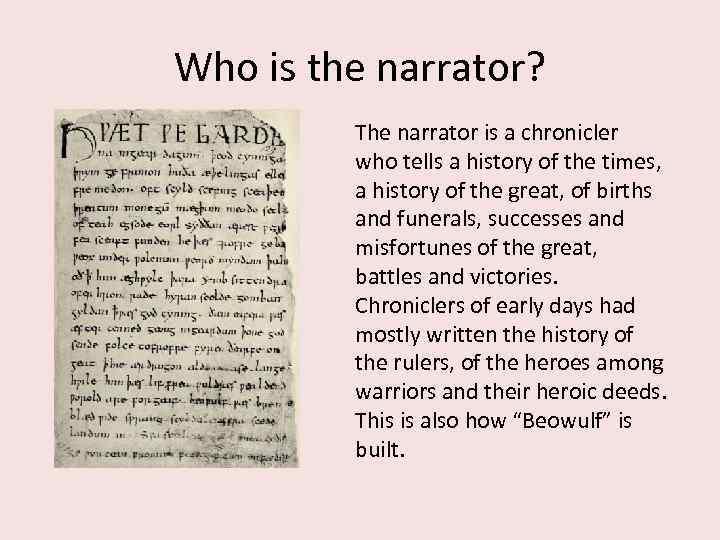
Who is the narrator? The narrator is a chronicler who tells a history of the times, a history of the great, of births and funerals, successes and misfortunes of the great, battles and victories. Chroniclers of early days had mostly written the history of the rulers, of the heroes among warriors and their heroic deeds. This is also how “Beowulf” is built.
Composition Type. Simple or complex. I think, the composition is rather simple. The order of events is chronological and it is only one line of narration. The narration is based on the onward march of history and circles of life of its heroes, both central and insignificant, cycles that start with birth and end at death. The composition type is chronicles or annals. The chronicler, a person who keeps a chronicle, is present as a narrator as was described earlier. The narration has a thoughtful and reflective mood.
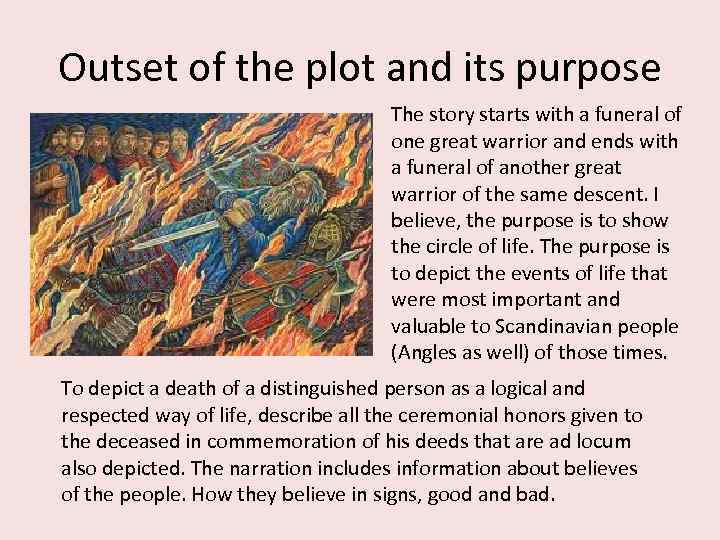
Outset of the plot and its purpose The story starts with a funeral of one great warrior and ends with a funeral of another great warrior of the same descent. I believe, the purpose is to show the circle of life. The purpose is to depict the events of life that were most important and valuable to Scandinavian people (Angles as well) of those times. To depict a death of a distinguished person as a logical and respected way of life, describe all the ceremonial honors given to the deceased in commemoration of his deeds that are ad locum also depicted. The narration includes information about believes of the people. How they believe in signs, good and bad.
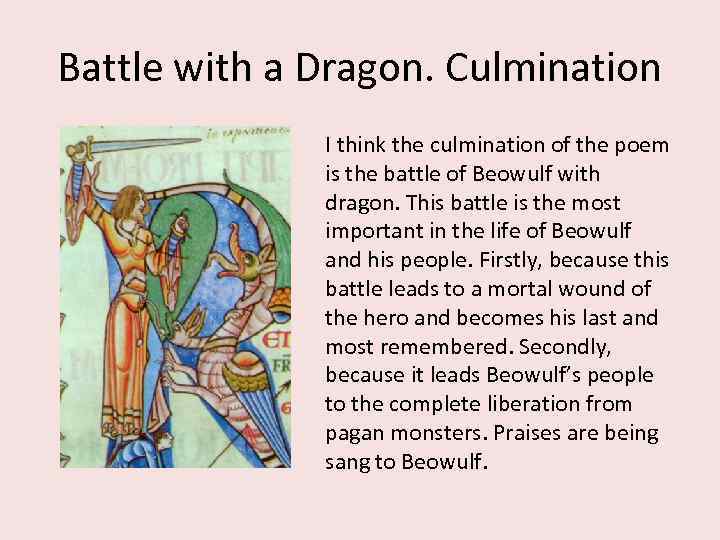
Battle with a Dragon. Culmination I think the culmination of the poem is the battle of Beowulf with dragon. This battle is the most important in the life of Beowulf and his people. Firstly, because this battle leads to a mortal wound of the hero and becomes his last and most remembered. Secondly, because it leads Beowulf’s people to the complete liberation from pagan monsters. Praises are being sang to Beowulf.
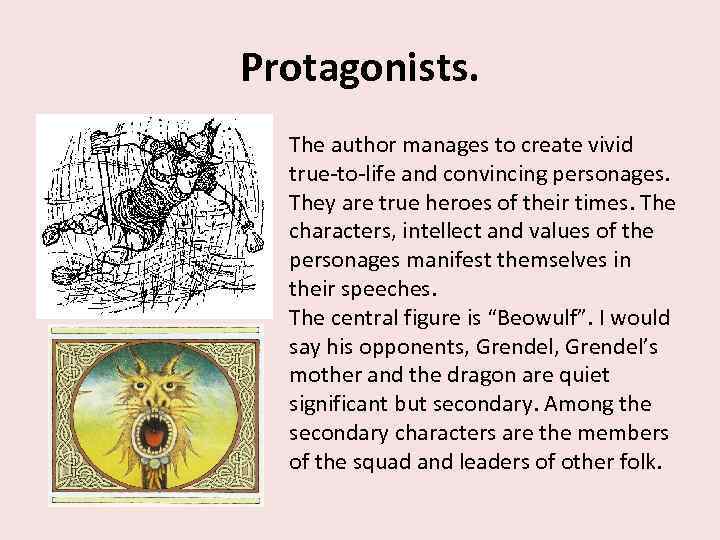
Protagonists. The author manages to create vivid true-to-life and convincing personages. They are true heroes of their times. The characters, intellect and values of the personages manifest themselves in their speeches. The central figure is “Beowulf”. I would say his opponents, Grendel’s mother and the dragon are quiet significant but secondary. Among the secondary characters are the members of the squad and leaders of other folk.
Summary “Beowulf” is a part of world’s cultural heritage. It had a great impact on culture, literature art of the next generations. Its influence is noticeable nowadays as well. This story is painted, filmed, studied, translated and talked about. It’s a source of inspiration for various artists.
