 Скачать презентацию Beowulf 10 th Century Author Unknown The
6d3273ba2b4101b9dc20bad3fe6b05bb.ppt
- Количество слайдов: 5



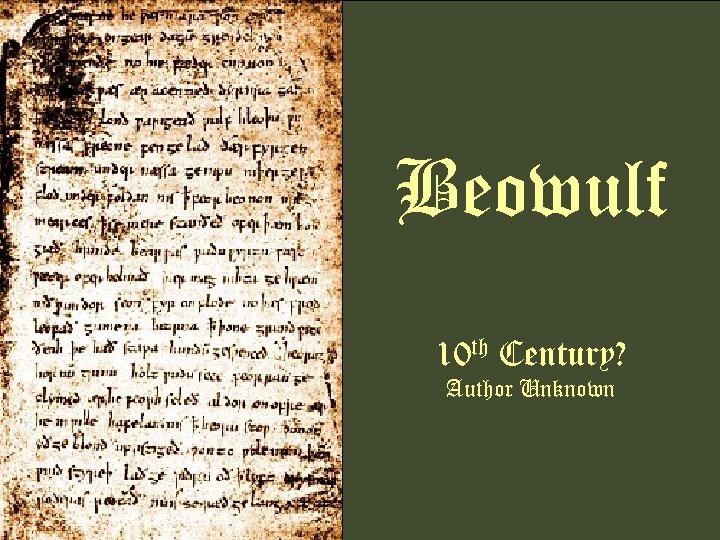
Beowulf 10 th Century? Author Unknown
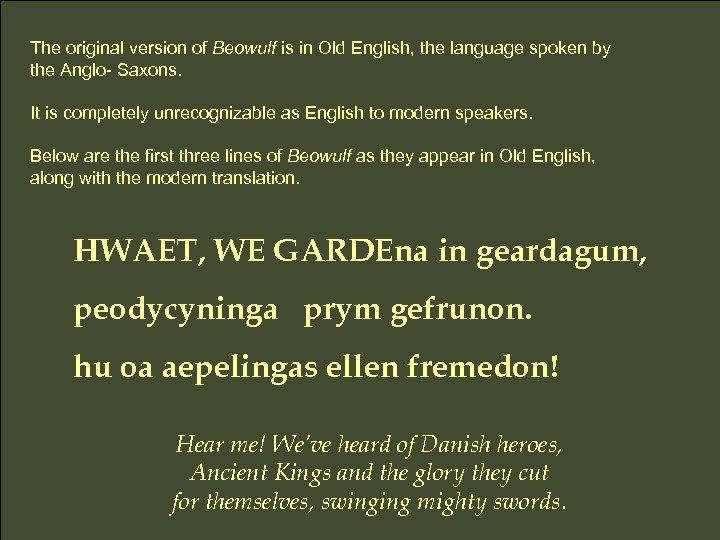
The original version of Beowulf is in Old English, the language spoken by the Anglo- Saxons. It is completely unrecognizable as English to modern speakers. Below are the first three lines of Beowulf as they appear in Old English, along with the modern translation. HWAET, WE GARDEna in geardagum, peodycyninga prym gefrunon. hu oa aepelingas ellen fremedon! Hear me! We’ve heard of Danish heroes, Ancient Kings and the glory they cut for themselves, swinging mighty swords.
Important literary concepts found in Beowulf. • Caesura: Because the telling of Beowulf required memorization of over 3100 lines, ancient SCOPS (storytellers) used pauses in the middle of every line. • Alliteration: In addition to pleasing the ear, repeated consonant sounds make poetry easier to remember and recite. • Epithets: In order to fill out a line, poets often replaced names with identifying expressions. For example, Beowulf may be called Edgetho’s Son.
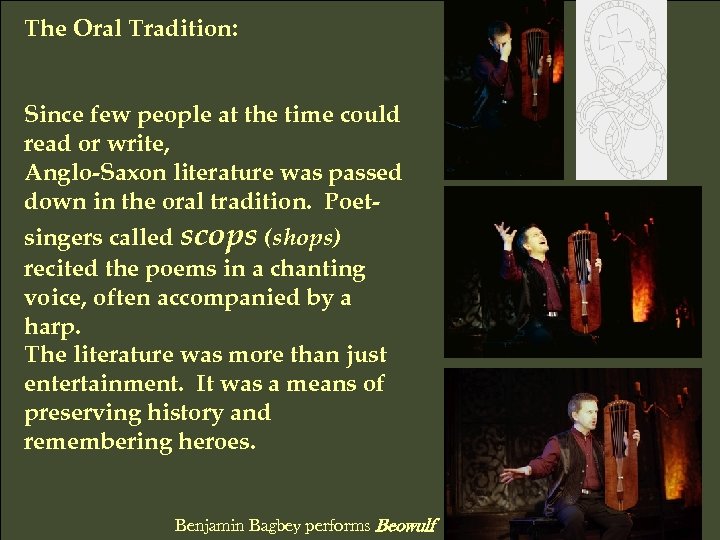
The Oral Tradition: Since few people at the time could read or write, Anglo-Saxon literature was passed down in the oral tradition. Poetsingers called scops (shops) recited the poems in a chanting voice, often accompanied by a harp. The literature was more than just entertainment. It was a means of preserving history and remembering heroes. Benjamin Bagbey performs Beowulf
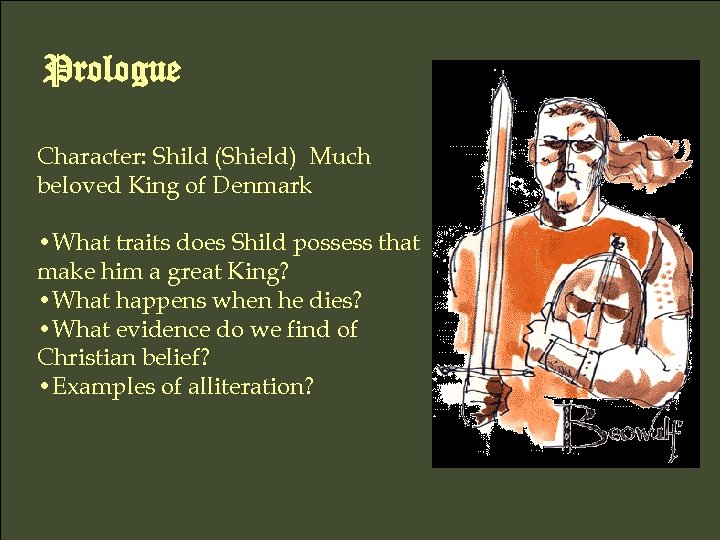
Prologue Character: Shild (Shield) Much beloved King of Denmark • What traits does Shild possess that make him a great King? • What happens when he dies? • What evidence do we find of Christian belief? • Examples of alliteration?
Скачать презентацию Beowulf 10 th Century Author Unknown The
6d3273ba2b4101b9dc20bad3fe6b05bb.ppt