 Скачать презентацию Benu Abbas https www google com search q images pictures banu umayyah rlz 1 C
48fe26cdad4c496c337d1809c38508f8.ppt
- Количество слайдов: 39



Benu Abbas https: //www. google. com/search? q=images+pictures+banu+umayyah&rlz=1 C 1 RNRC_en. US 506 US 537&tbm=isch&tbo=u&source=univ&sa=X&ved=0 ah. UKEw j. Eaqlzfr. UAh. UCVj 4 KHc 0 XBIUQ 7 Ak. IMg&biw=1600&bih=785#tbm=isch&q=image s+pictures+of+rulers+of+banu+abbas&imgdii=Qz. Zz. Rrrd. P 3 G 03 M: &imgrc=5 Hrv Ohx. NYnh 0 d. M: Slide Show by Dr. A. S. Hashim
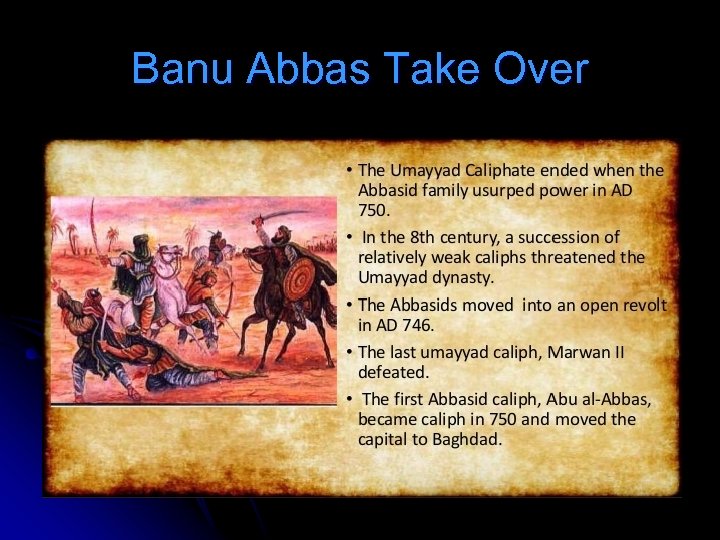
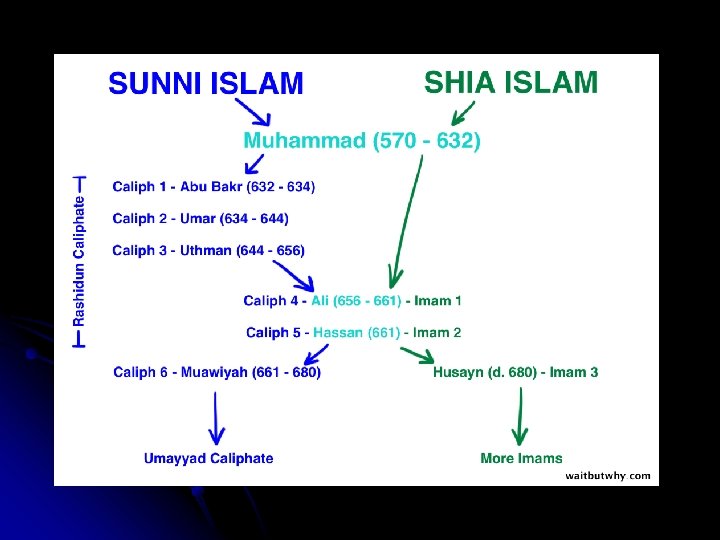
Banu Abbas Take Over
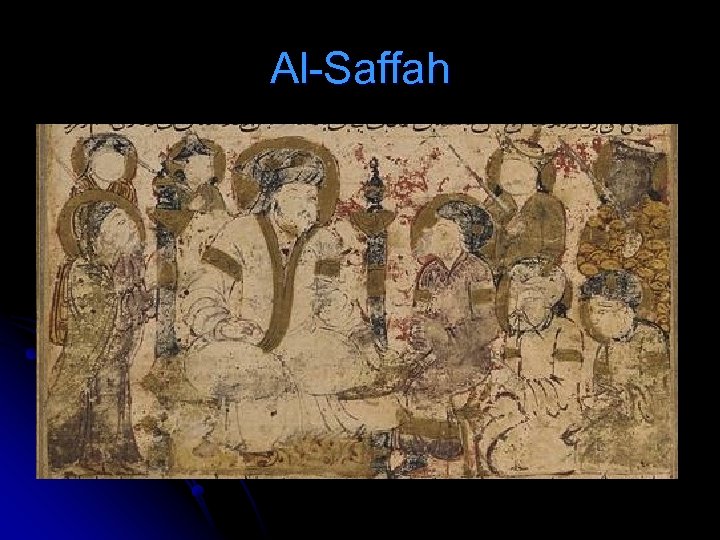
Al-Saffah
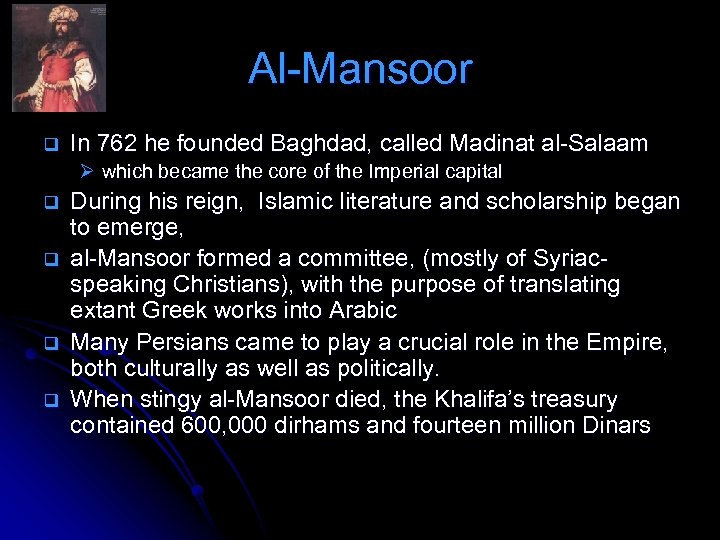
Al-Mansoor q In 762 he founded Baghdad, called Madinat al-Salaam Ø which became the core of the Imperial capital q q During his reign, Islamic literature and scholarship began to emerge, al-Mansoor formed a committee, (mostly of Syriacspeaking Christians), with the purpose of translating extant Greek works into Arabic Many Persians came to play a crucial role in the Empire, both culturally as well as politically. When stingy al-Mansoor died, the Khalifa’s treasury contained 600, 000 dirhams and fourteen million Dinars
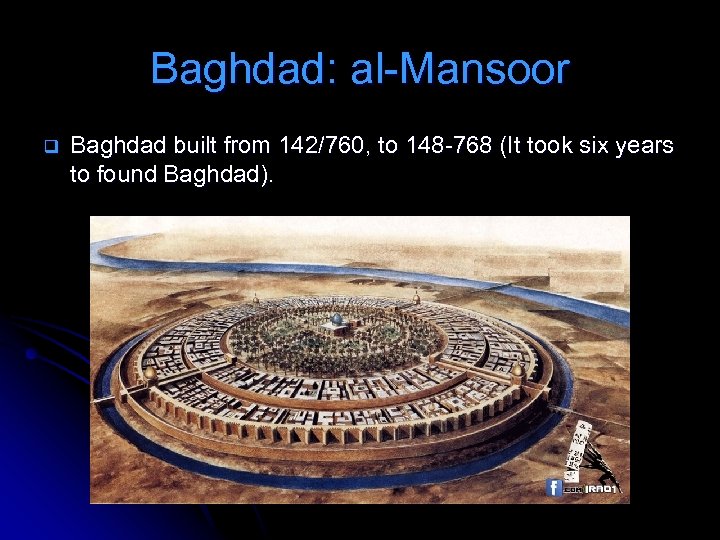
Baghdad: al-Mansoor q Baghdad built from 142/760, to 148 -768 (It took six years to found Baghdad).
Haroon Al-Rashid q Al-Rashid ruled from 786 to 809, during the peak of the Islamic Golden Age. Ø Ø Ø His time was marked by scientific, cultural, and religious prosperity. Islamic art and music also flourished significantly during his reign. The legendary Bayt al-Hikma ("House of Wisdom") was founded during his rule (as a private library). Ø Baghdad began to flourish as a center of knowledge, culture and trade. q q Since Haroon was intellectually, politically, and militarily resourceful, his life and his court have been the subject of many tales, some factual, but most believed to be fictitious. One factual tale is the story of the clock that was among various presents that Haroon sent to Charlemagne. Ø The presents were carried by the returning Frankish mission that came to offer Haroon friendship in 799. Ø Charlemagne and his retinue deemed the clock to be a magic for the sounds it emanated and the tricks it displayed every time an hour ticked.
Al-Ma’Moon q q q In A. H. 201 (817 AD) al-Ma'Moon forced Imam Ridha to move from Medina to Maru. Imam Reza, the Eighth descendant of Muhammad, was named his heir. This was not easily accepted by the Abbasi leaders but was widely seen as a political move by al-Ma'Moon Ø since he was fearful of the widespread sympathy towards the Ahlul Bayt. Ø Al-Ma’Moon’s plan was to keep watch over Imam Ridha. Ø However, his plans did not succeed due to the growing popularity of Ali Al-Ridha in Merv. Ø People from all over the Muslim world traveled to meet the prophet's grandson and listen to his teachings and guidance.
Al-Ma’Moon and the Byzantines q q Al-Ma'Moon's relations with Byzantines are marked by his efforts in the translation of Greek philosophy and science. Al-Ma'Moon gathered scholars of many religions at Baghdad, Ø whom he treated magnificently and with tolerance. Ø He sent an emissary to the Byzantine Empire to collect the most famous manuscripts there, Ø and had them translated into Arabic. Ø As part of his peace treaty with the Byzantine Emperor, Al. Ma'Moon was to receive a number of Greek manuscripts annually, Ø one of these being Ptolemy's astronomical work, the Almagest.
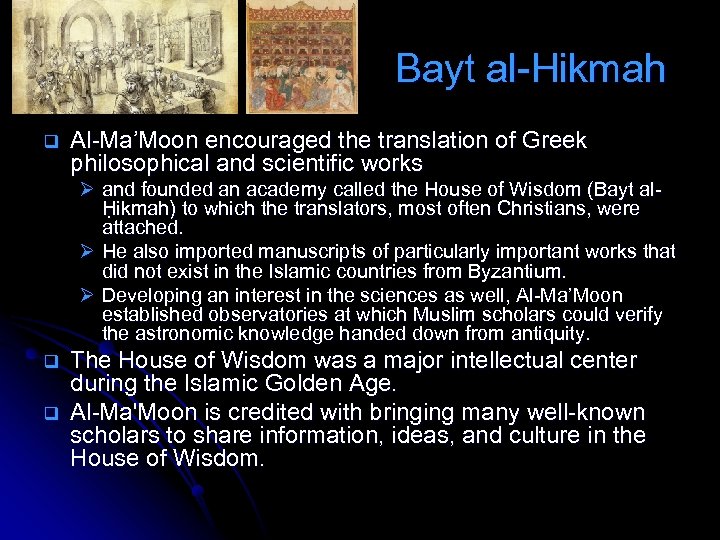
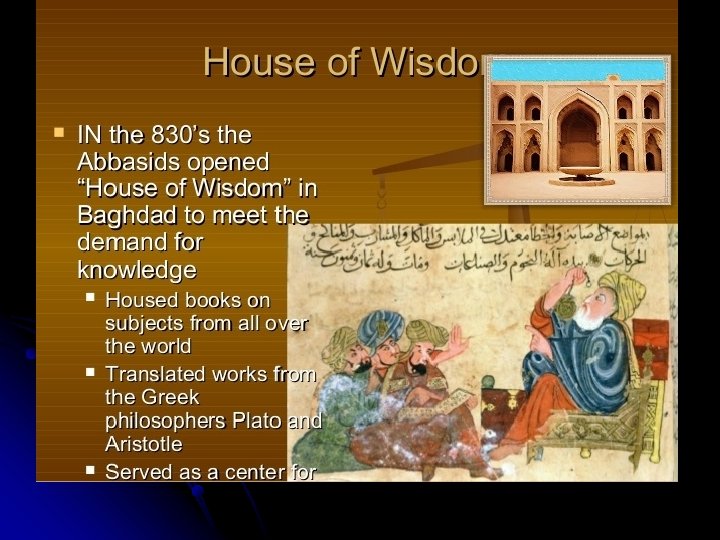
Bayt al-Hikmah q Al-Ma’Moon encouraged the translation of Greek philosophical and scientific works Ø and founded an academy called the House of Wisdom (Bayt alḤikmah) to which the translators, most often Christians, were attached. Ø He also imported manuscripts of particularly important works that did not exist in the Islamic countries from Byzantium. Ø Developing an interest in the sciences as well, Al-Ma’Moon established observatories at which Muslim scholars could verify the astronomic knowledge handed down from antiquity. q q The House of Wisdom was a major intellectual center during the Islamic Golden Age. Al-Ma'Moon is credited with bringing many well-known scholars to share information, ideas, and culture in the House of Wisdom.
Bayt al-Hikmah q q q Based in Baghdad from the 9 th to 13 th centuries, beside Muslim scholars, people of Jewish or Christian background were allowed to study here. scholars associated with the House of Wisdom also made many remarkable original contributions to diverse fields. The House was an unrivalled center for the study of humanities and for science in medieval Islam, including mathematics, astronomy, medicine, alchemy and chemistry, zoology, and geography and cartography. Drawing primarily on Greek, but also Syriac, Indian and Persian texts, the scholars accumulated a great collection of world knowledge, and built on it through their own discoveries. By the middle of the ninth century, the House of Wisdom had the largest selection of books in the world. It was destroyed in the sack of the city following the Mongol Siege of Baghdad (1258).
Golden Age for Islam
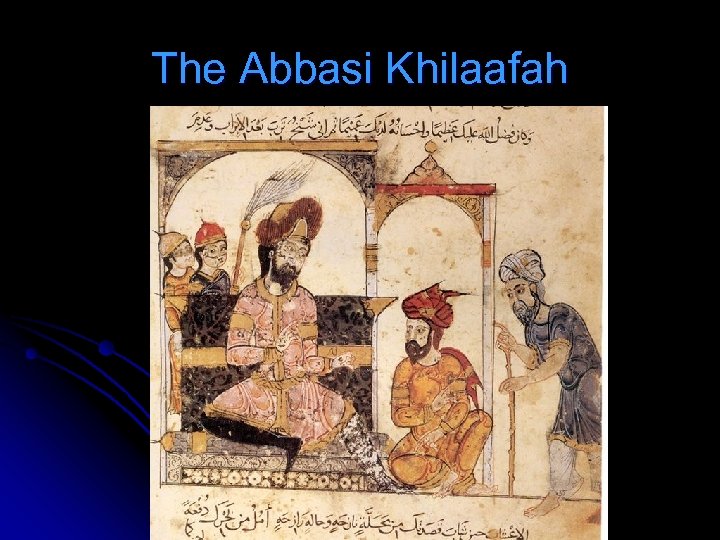
The Abbasi Khilaafah
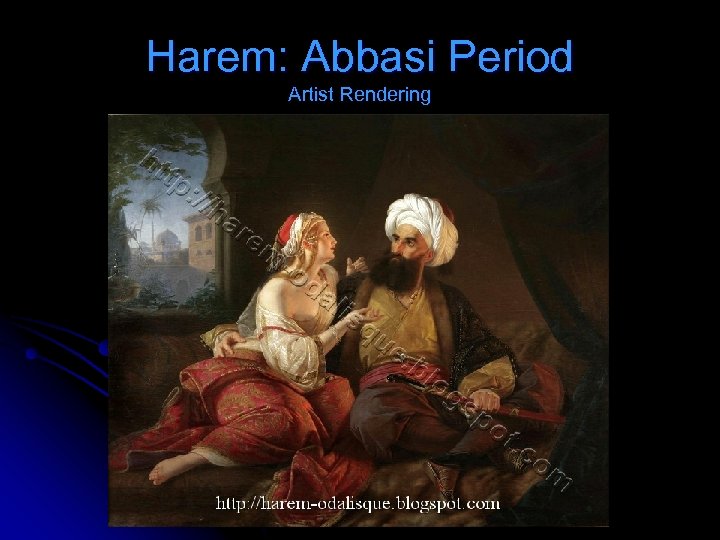
Harem: Abbasi Period Artist Rendering
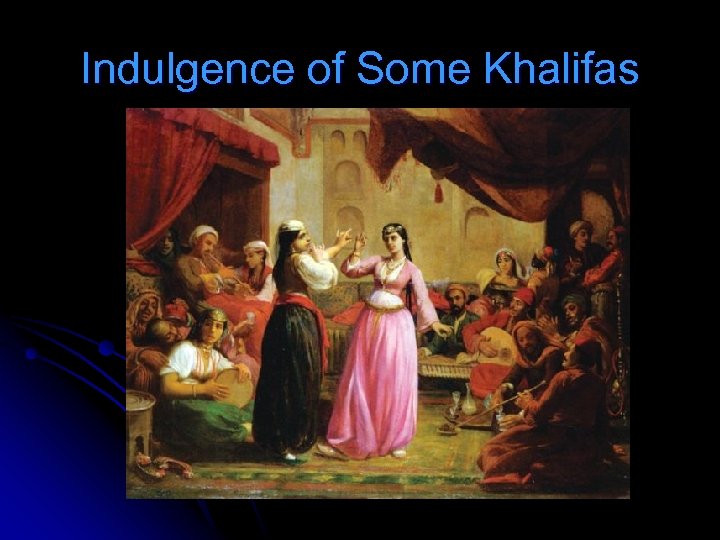
Indulgence of Some Khalifas
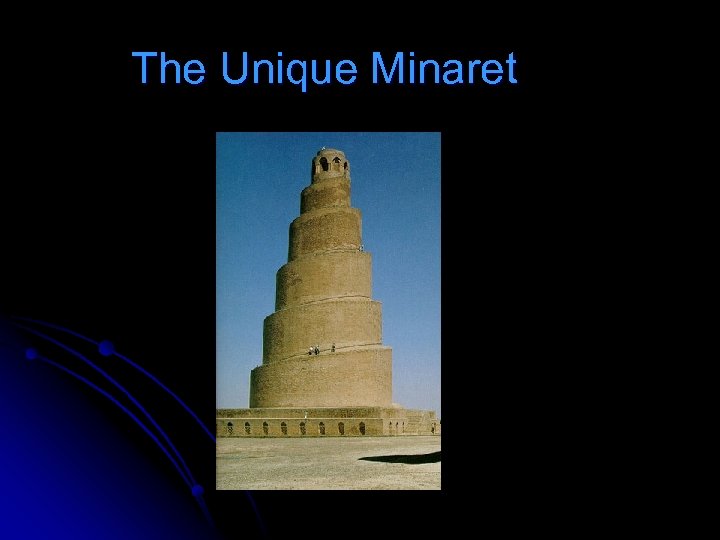
The Unique Minaret
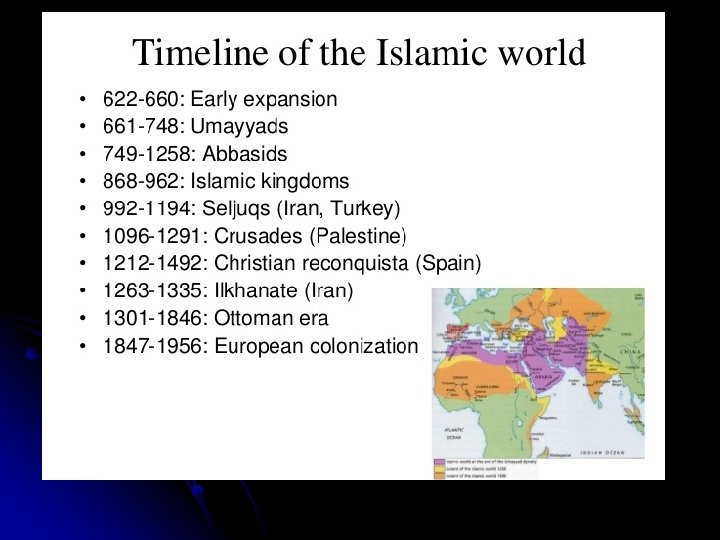
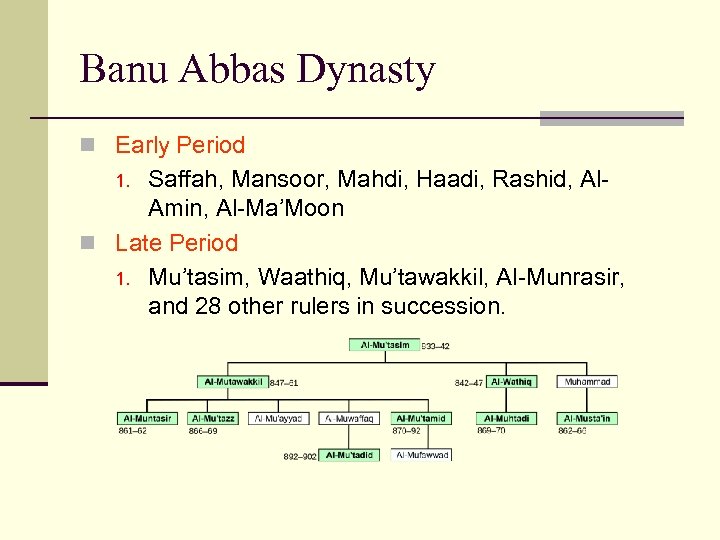
Banu Abbas Dynasty n Early Period Saffah, Mansoor, Mahdi, Haadi, Rashid, Al. Amin, Al-Ma’Moon n Late Period 1. Mu’tasim, Waathiq, Mu’tawakkil, Al-Munrasir, and 28 other rulers in succession. 1.
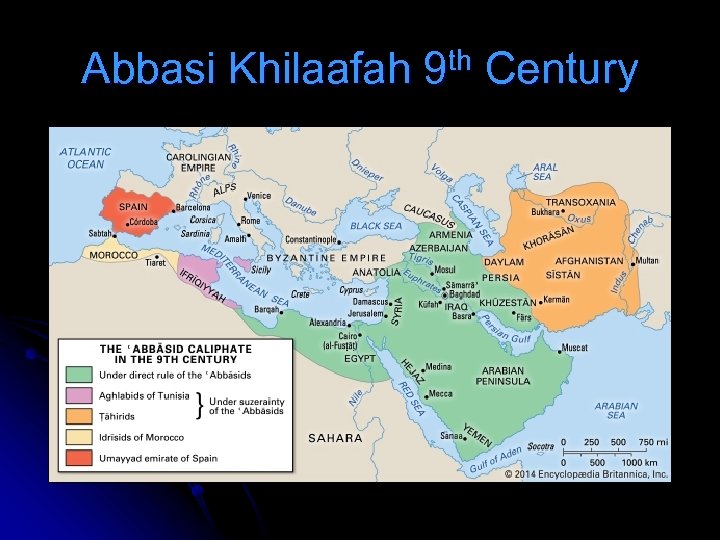
Abbasi Khilaafah 9 th Century
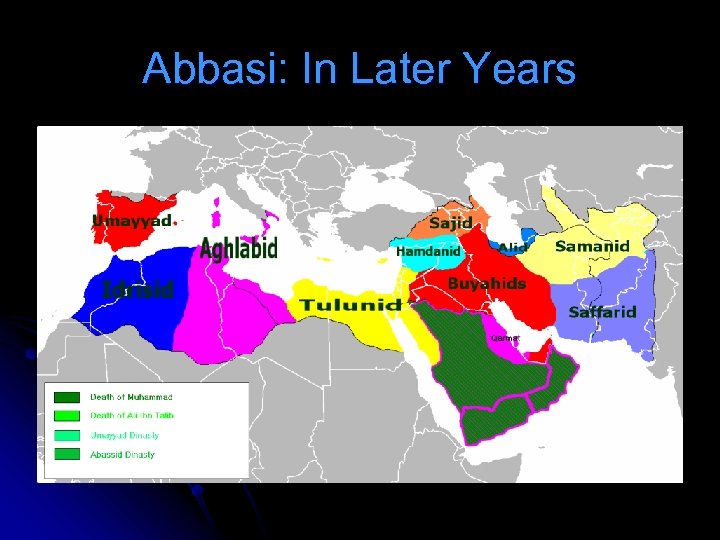
Abbasi: In Later Years
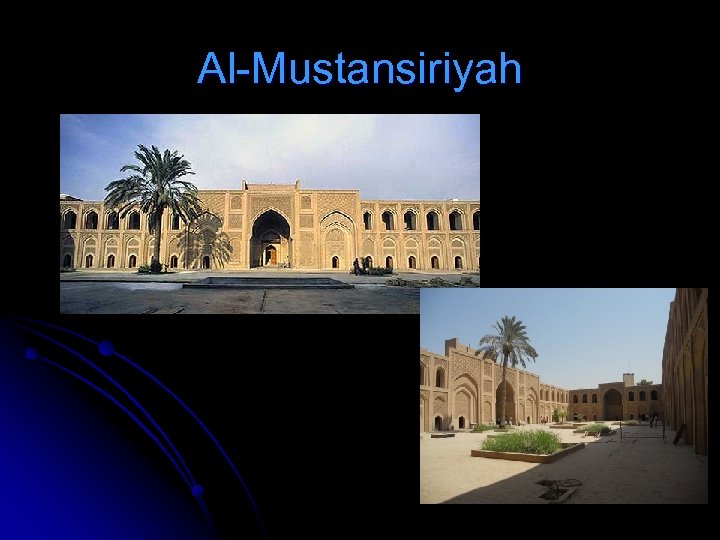
Al-Mustansiriyah
ADVANCES IN LEARNING: l The synthesis of Eastern and Western ideas and of new thought with old, brought about great advances in: 1. 2. 3. 4. 5. 6. 7. 8. 9. medicine, mathematics, physics, astronomy, geography, architecture, art, literature, and history.
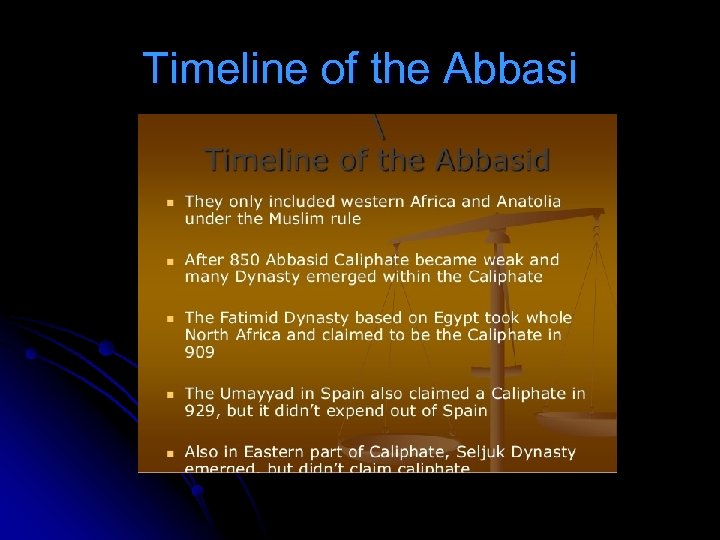
Timeline of the Abbasi
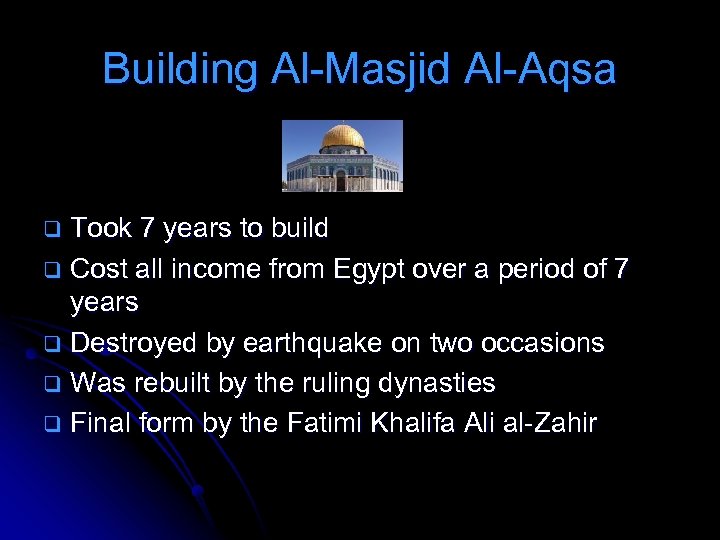
Building Al-Masjid Al-Aqsa Took 7 years to build q Cost all income from Egypt over a period of 7 years q Destroyed by earthquake on two occasions q Was rebuilt by the ruling dynasties q Final form by the Fatimi Khalifa Ali al-Zahir q
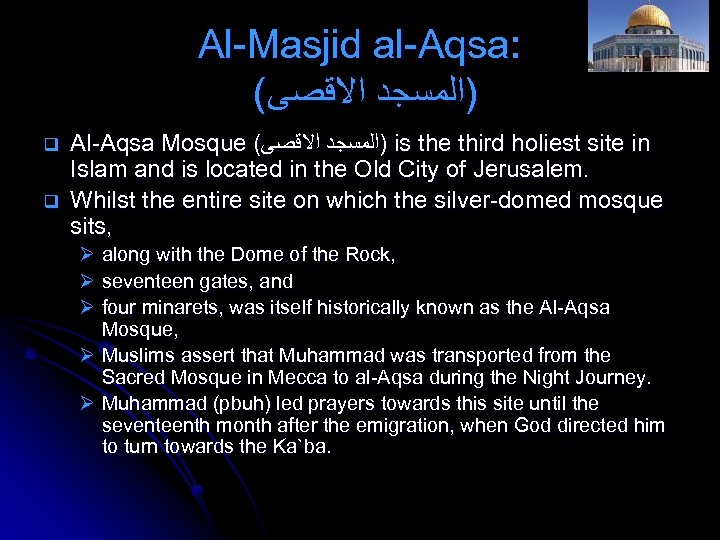
Al-Masjid al-Aqsa: ( )ﺍﻟﻤﺴﺠﺪ ﺍﻻﻗﺼﻰ q q Al-Aqsa Mosque ( )ﺍﻟﻤﺴﺠﺪ ﺍﻻﻗﺼﻰ is the third holiest site in Islam and is located in the Old City of Jerusalem. Whilst the entire site on which the silver-domed mosque sits, Ø along with the Dome of the Rock, Ø seventeen gates, and Ø four minarets, was itself historically known as the Al-Aqsa Mosque, Ø Muslims assert that Muhammad was transported from the Sacred Mosque in Mecca to al-Aqsa during the Night Journey. Ø Muhammad (pbuh) led prayers towards this site until the seventeenth month after the emigration, when God directed him to turn towards the Ka`ba.
Al-Aqsa Mosque: ( )ﺍﻟﻤﺴﺠﺪ ﺍﻻﻗﺼﻰ q q q The mosque was originally a small prayer house built by Omar the second Khalifa, but was rebuilt and expanded by the Umayya Khalifa Abdul Malik and finished by his son al-Walid in 705 CE. The mosque was completely destroyed by an earthquake in 746 and rebuilt by the Abbasi Khalifa al-Mansoor in 754. His successor al-Mahdi rebuilt it again in 780. Another earthquake destroyed most of al-Aqsa in 1033, but two years later the Fatimi Khalifa Ali al-Zahir built another mosque which has stood to the present day.
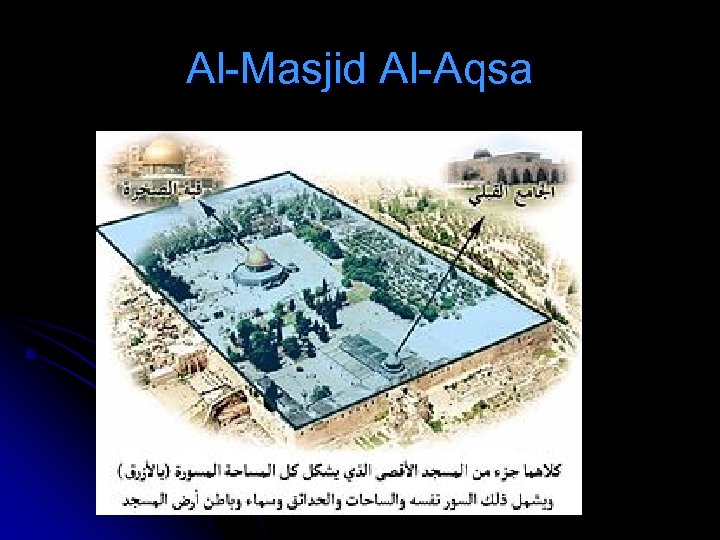
Al-Masjid Al-Aqsa
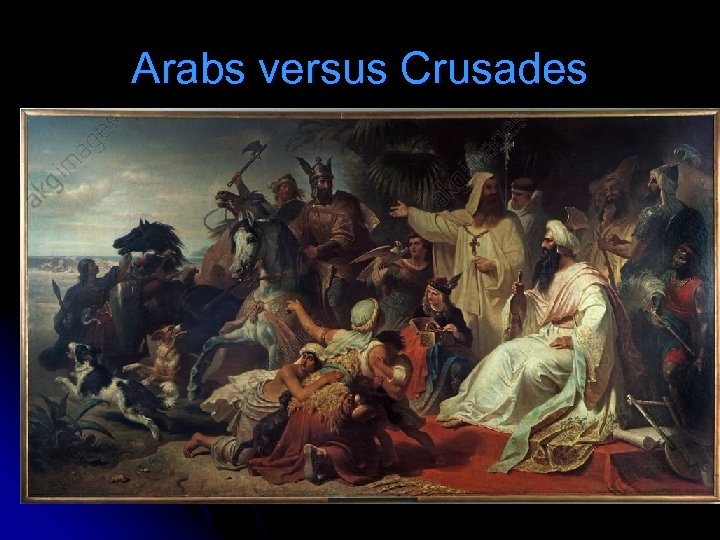
Arabs versus Crusades
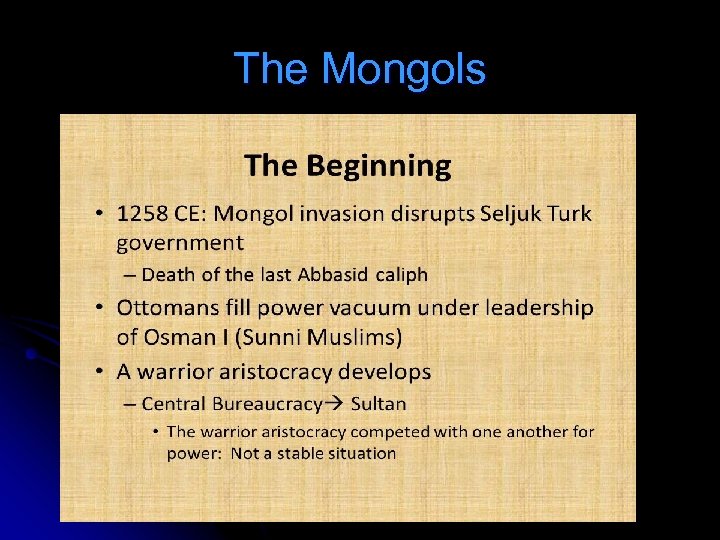
The Mongols
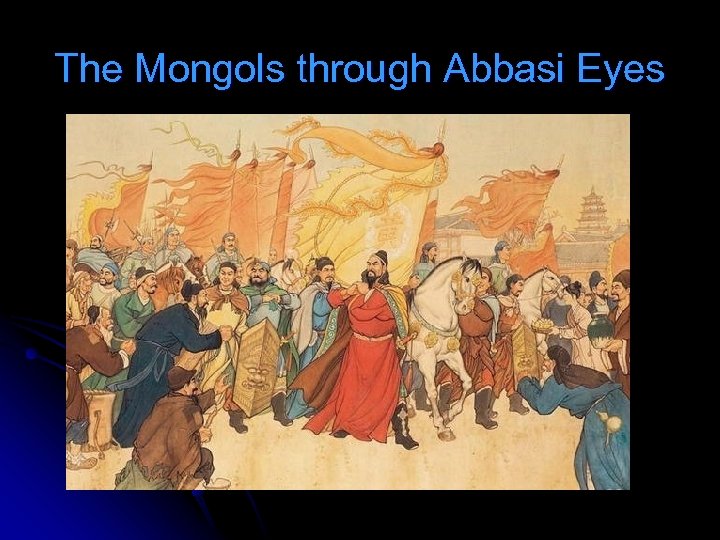
The Mongols through Abbasi Eyes
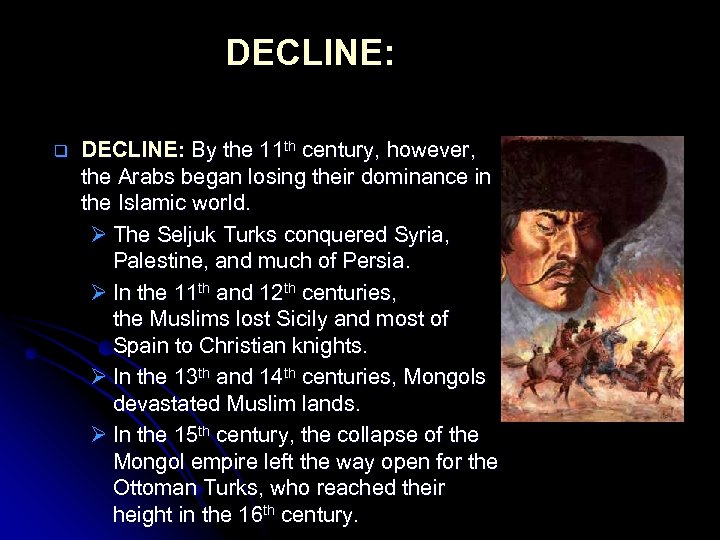
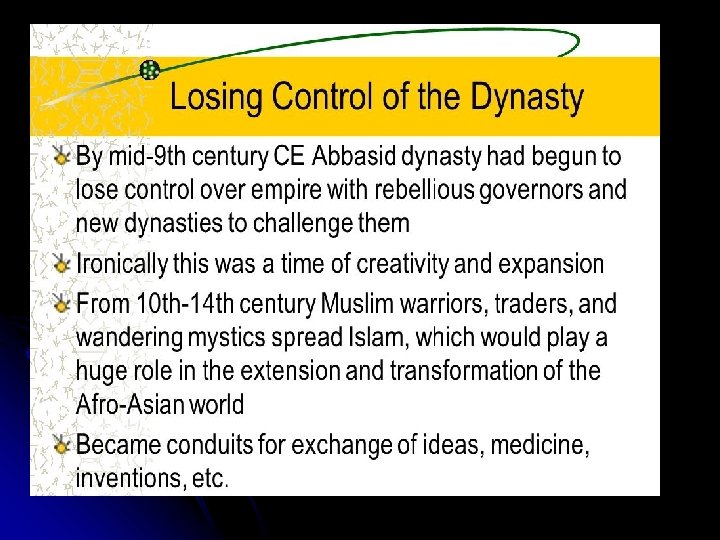
DECLINE: q DECLINE: By the 11 th century, however, the Arabs began losing their dominance in the Islamic world. Ø The Seljuk Turks conquered Syria, Palestine, and much of Persia. Ø In the 11 th and 12 th centuries, the Muslims lost Sicily and most of Spain to Christian knights. Ø In the 13 th and 14 th centuries, Mongols devastated Muslim lands. Ø In the 15 th century, the collapse of the Mongol empire left the way open for the Ottoman Turks, who reached their height in the 16 th century.
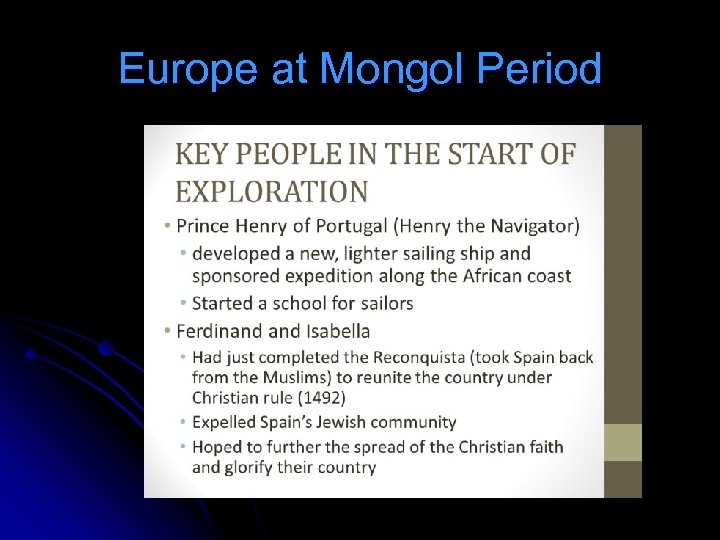
Europe at Mongol Period
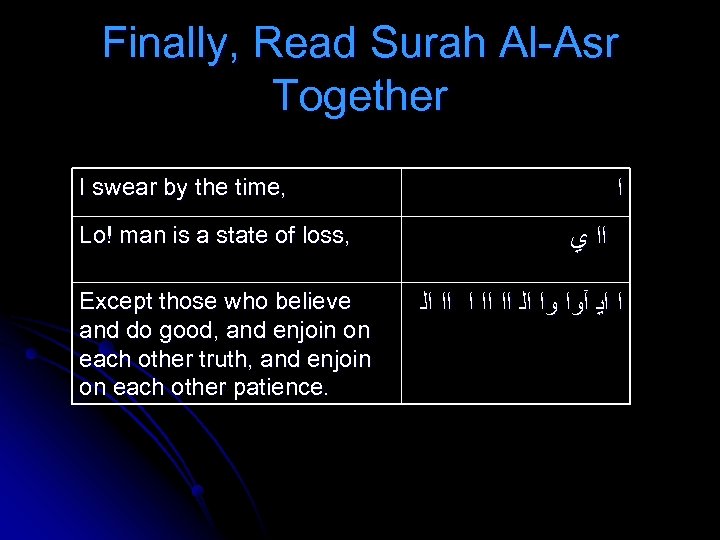
Finally, Read Surah Al-Asr Together I swear by the time, Lo! man is a state of loss, Except those who believe and do good, and enjoin on each other truth, and enjoin on each other patience. ﺍ ﺍﺍ ﻱ ﺍ ﺍﻳ آﻭﺍ ﻭﺍ ﺍﻟ ﺍﺍ ﺍﺍ ﺍﻟ
Be in Allah’s Care Thank you and may Allah Bless you. Dr. A. S. Hashim
Скачать презентацию Benu Abbas https www google com search q images pictures banu umayyah rlz 1 C
48fe26cdad4c496c337d1809c38508f8.ppt