 Скачать презентацию Benefits of Composite Breeding AGA Southern Balancer Informational
66b681b8bc886e2633213d5a7b103261.ppt
- Количество слайдов: 33




Benefits of Composite Breeding AGA Southern Balancer Informational Meeting Joe C. Paschal Livestock Specialist Texas Agri. Life Extension
Definition of Composite • Composites are formed by crossing two or more existing breeds in specific percentages then inter se mating those crosses to maintain those percentages. • The purpose is to maintain a high level of heterosis without future crossing.
Benefits of Composites • A composite allows breeders to use the breeds in specific percentages to optimize environmental and marketing flexibility and still benefit from heterosis and breed effects • Breeds should be complimentary in all traits, extremes should cancel out (size, maturity, milk, growth, etc)
Why Use Composites? • To maintain high levels of heterosis and productivity • Using Bos indicus, percent increase in weaning weight per cow exposed could range: – 2 Breed composite 18 -24% – 4 Breed composite 27 -36% • To combine beneficial breed effects
Heat Tolerant Breeds • Bos indicus – – – Brahman Boran Gyr (Gir) Nelore Indu Brazil • Bos indicus influence – – – – Beefmaster Braford Brangus Red Brangus Santa Gertrudis Santa Cruz Simbrah Southern Balancer • Non Bos indicus (Bos taurus) – Senepol – Tuli • Still more – – – – American Breed Charbray Barzona Brahmousin Braler Braunbray Gelbray

Advantages and Disadvantages of Bos indicus Cattle • Advantages – Longevity (teeth) – Hot climate adaptability – Internal/external parasite tolerance – Resistance to some disease – Maternal ability – Ability to digest coarse forages – Mineral conservation – Highest hybrid vigor (heterosis) in crosses with non Bos indicus – Maternal calving ease • Disadvantages – – – Muscling Marbling Gain Conversion Temperament Tenderness
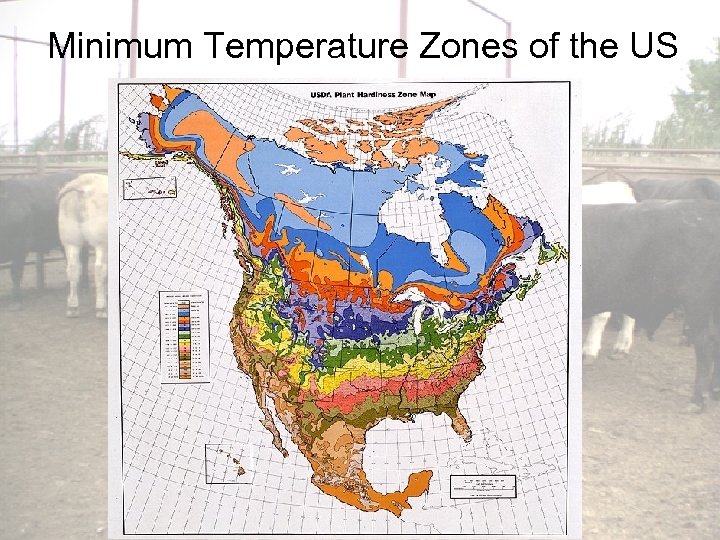
Minimum Temperature Zones of the US
Bos indicus cattle are well known for their high level of hybrid vigor in crosses with non-Bos indicus breeds • Hybrid vigor is caused by the interaction effects of individual genes • Highest for traits with low breeding value (early in life) and lowest for those with high breeding value (late in life) • Hybrid vigor in Bos indicus X Bos indicus is probably lowered by 50% or more than Bos indicus X non-Bos indicus crosses
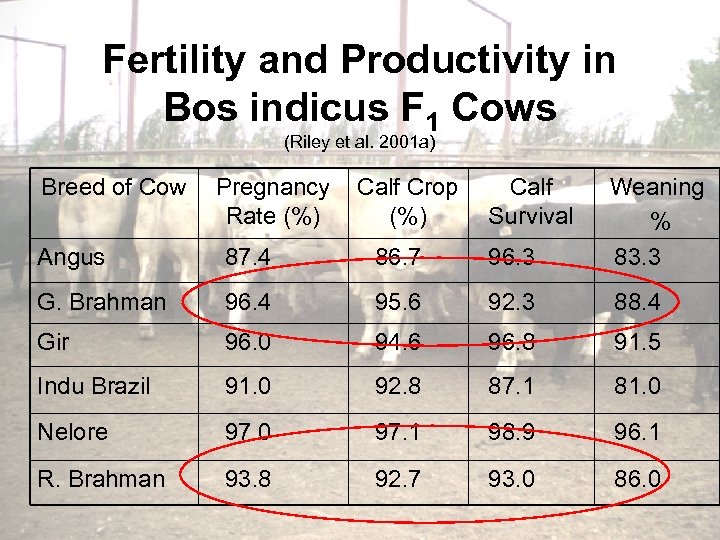
Fertility and Productivity in Bos indicus F 1 Cows (Riley et al. 2001 a) Breed of Cow Pregnancy Rate (%) Calf Crop (%) Calf Survival Angus 87. 4 86. 7 96. 3 Weaning % 83. 3 G. Brahman 96. 4 95. 6 92. 3 88. 4 Gir 96. 0 94. 6 96. 8 91. 5 Indu Brazil 91. 0 92. 8 87. 1 81. 0 Nelore 97. 0 97. 1 98. 9 96. 1 R. Brahman 93. 8 92. 7 93. 0 86. 0
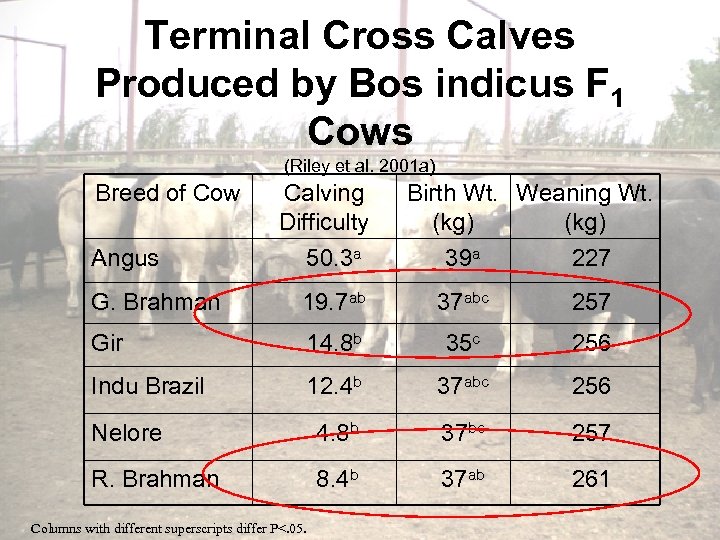
Terminal Cross Calves Produced by Bos indicus F 1 Cows (Riley et al. 2001 a) Breed of Cow Calving Difficulty Birth Wt. Weaning Wt. (kg) Angus 50. 3 a 39 a 227 G. Brahman 19. 7 ab 37 abc 257 Gir 14. 8 b 35 c 256 Indu Brazil 12. 4 b 37 abc 256 Nelore 4. 8 b 37 bc 257 R. Brahman 8. 4 b 37 ab 261 Columns with different superscripts differ P<. 05.
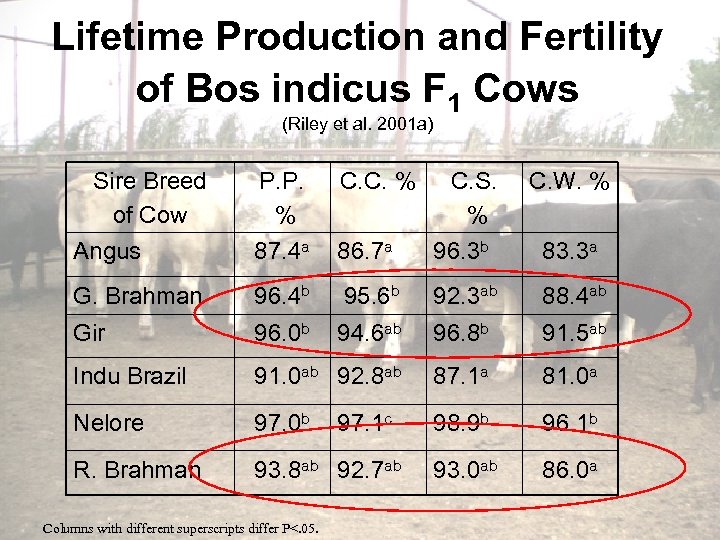
Lifetime Production and Fertility of Bos indicus F 1 Cows (Riley et al. 2001 a) Sire Breed of Cow Angus P. P. % 87. 4 a G. Brahman C. W. % 86. 7 a C. S. % 96. 3 b 96. 4 b 95. 6 b 92. 3 ab 88. 4 ab Gir 96. 0 b 94. 6 ab 96. 8 b 91. 5 ab Indu Brazil 91. 0 ab 92. 8 ab 87. 1 a 81. 0 a Nelore 97. 0 b 98. 9 b 96. 1 b R. Brahman 93. 8 ab 92. 7 ab 93. 0 ab 86. 0 a Columns with different superscripts differ P<. 05. C. C. % 97. 1 c 83. 3 a
And So What? We know they make good cows in hot and humid climates and the hybrid vigor is important in some not so hot and humid climates but what about their Brahman cross carcasses?
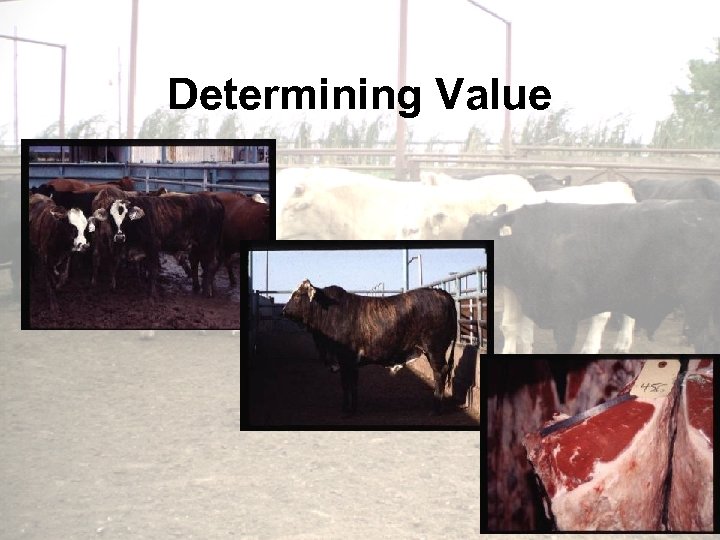
Determining Value
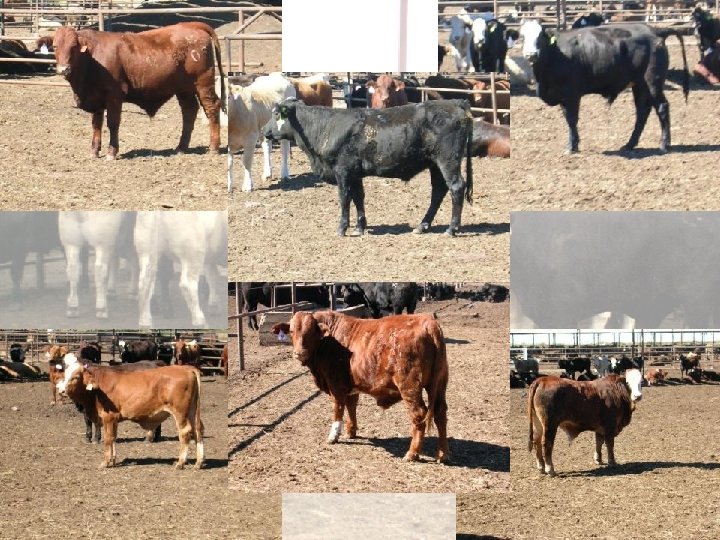
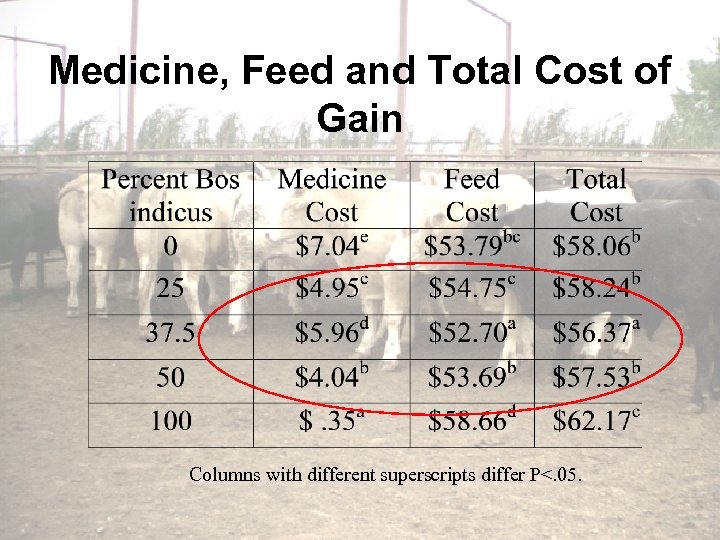
Medicine, Feed and Total Cost of Gain Columns with different superscripts differ P<. 05.
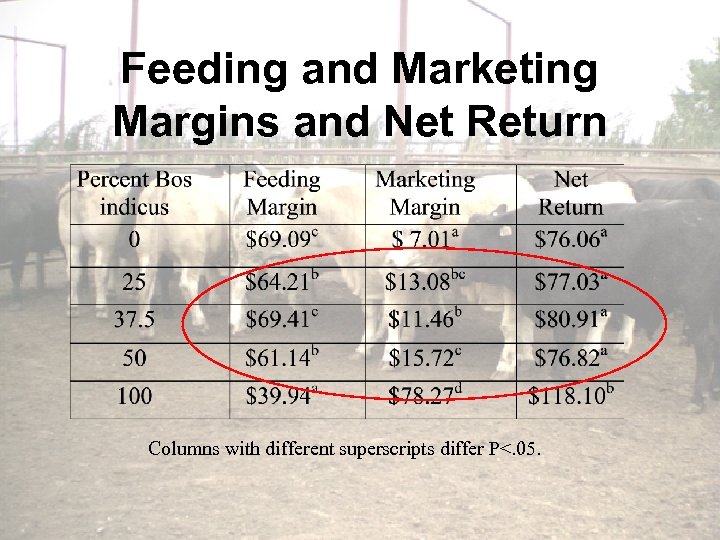
Feeding and Marketing Margins and Net Return Columns with different superscripts differ P<. 05.
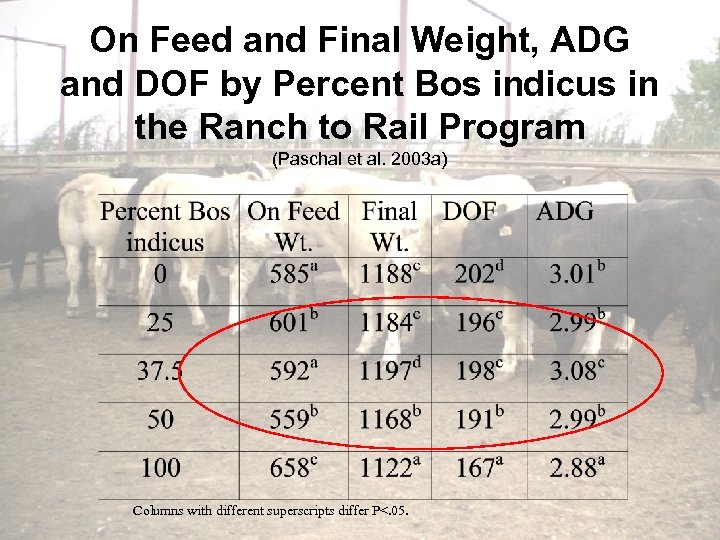
On Feed and Final Weight, ADG and DOF by Percent Bos indicus in the Ranch to Rail Program (Paschal et al. 2003 a) Columns with different superscripts differ P<. 05.
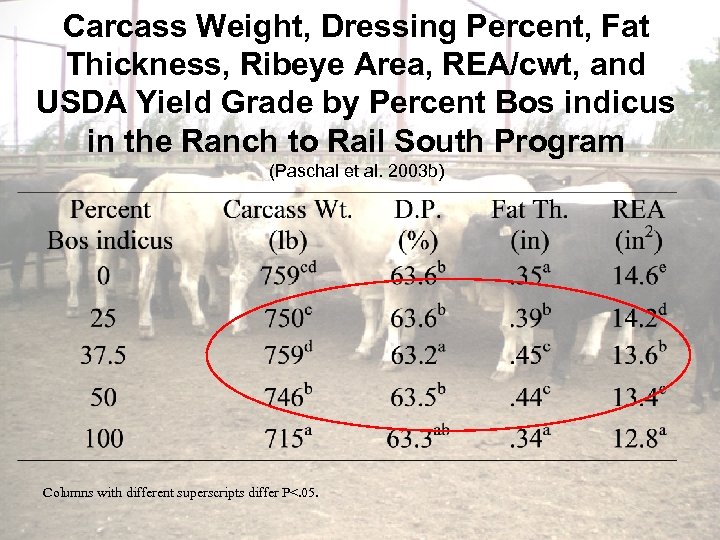
Carcass Weight, Dressing Percent, Fat Thickness, Ribeye Area, REA/cwt, and USDA Yield Grade by Percent Bos indicus in the Ranch to Rail South Program (Paschal et al. 2003 b) Columns with different superscripts differ P<. 05.
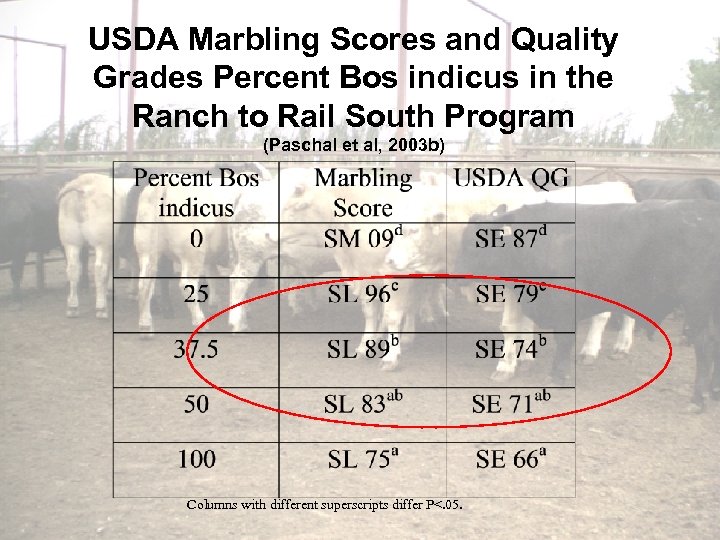
USDA Marbling Scores and Quality Grades Percent Bos indicus in the Ranch to Rail South Program (Paschal et al, 2003 b) Columns with different superscripts differ P<. 05.
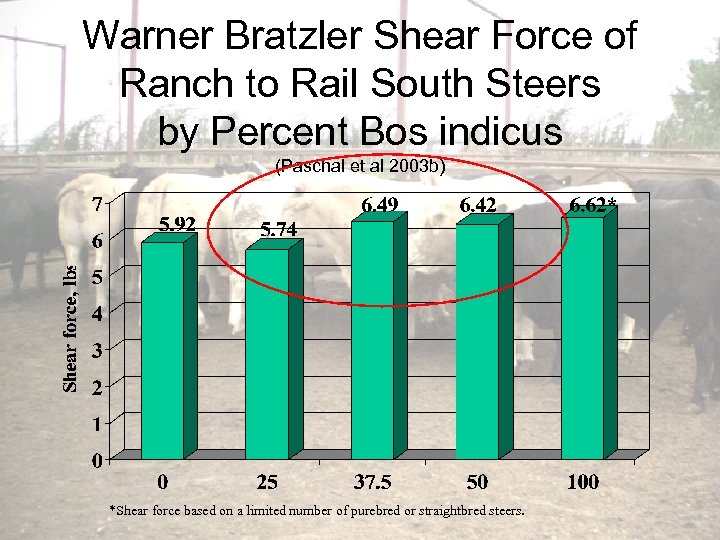
Warner Bratzler Shear Force of Ranch to Rail South Steers by Percent Bos indicus (Paschal et al 2003 b) *Shear force based on a limited number of purebred or straightbred steers.
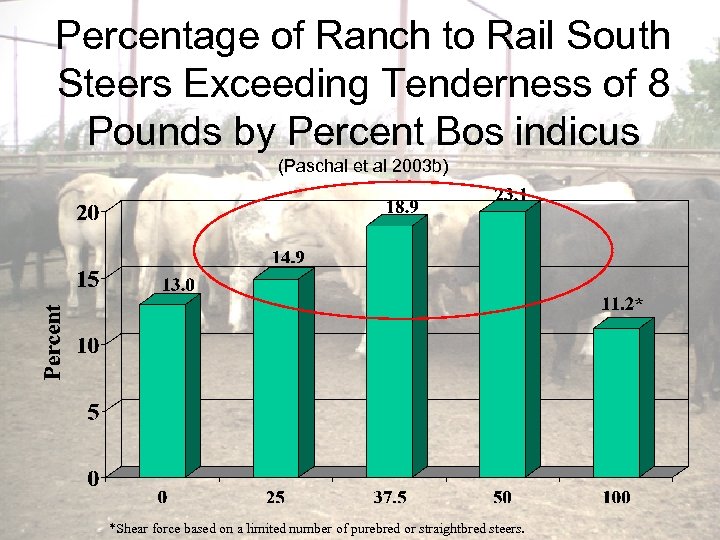
Percentage of Ranch to Rail South Steers Exceeding Tenderness of 8 Pounds by Percent Bos indicus (Paschal et al 2003 b) *Shear force based on a limited number of purebred or straightbred steers.
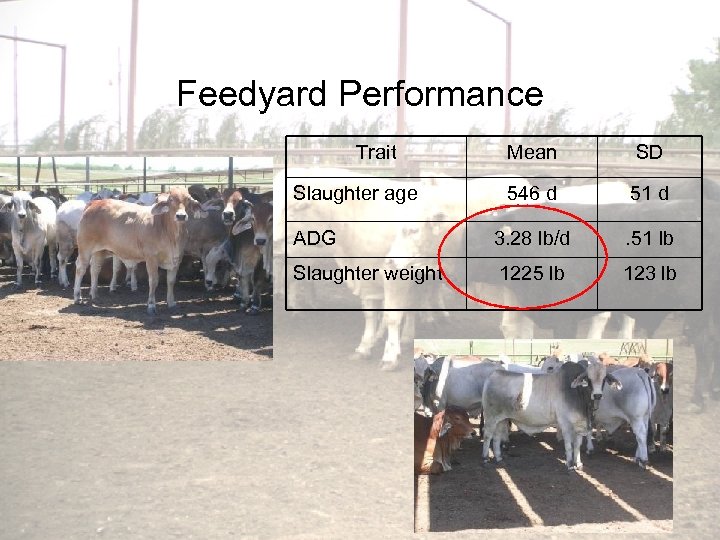
Feedyard Performance Trait Mean SD 546 d 51 d ADG 3. 28 lb/d . 51 lb Slaughter weight 1225 lb 123 lb Slaughter age
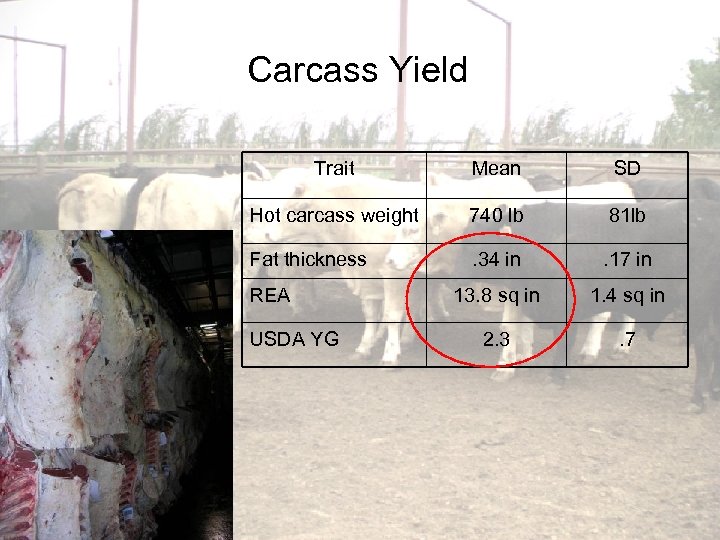
Carcass Yield Trait Mean SD Hot carcass weight 740 lb 81 lb Fat thickness . 34 in . 17 in 13. 8 sq in 1. 4 sq in 2. 3 . 7 REA USDA YG
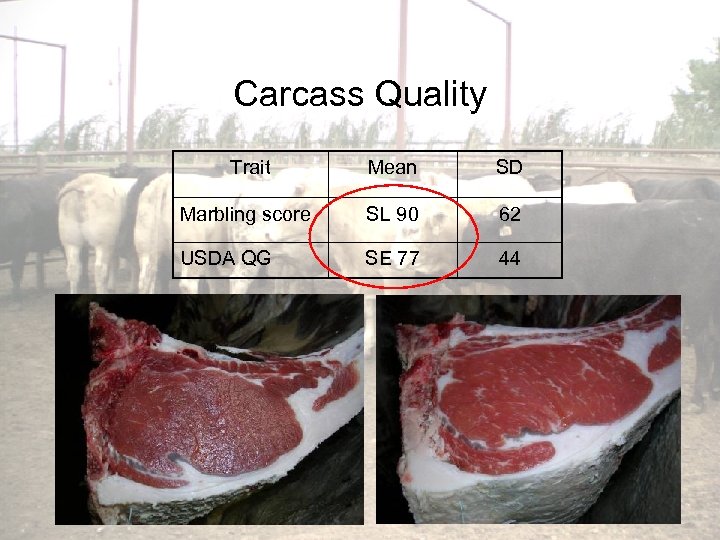
Carcass Quality Trait Mean SD Marbling score SL 90 62 USDA QG SE 77 44
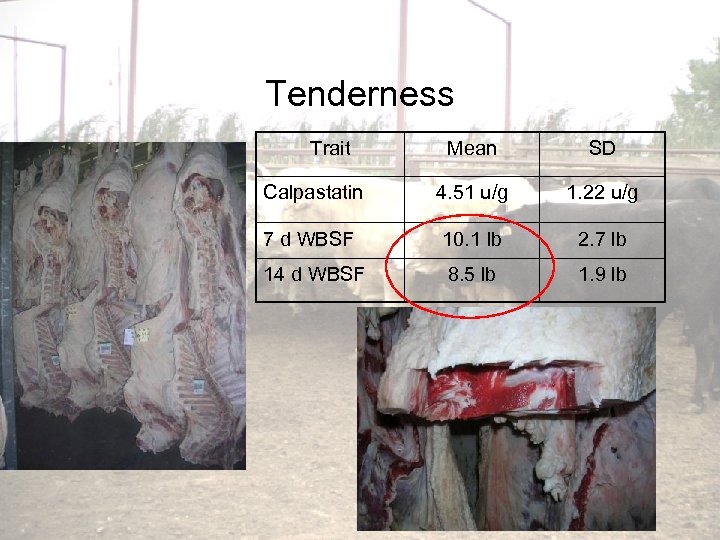
Tenderness Trait Mean SD Calpastatin 4. 51 u/g 1. 22 u/g 7 d WBSF 10. 1 lb 2. 7 lb 14 d WBSF 8. 5 lb 1. 9 lb
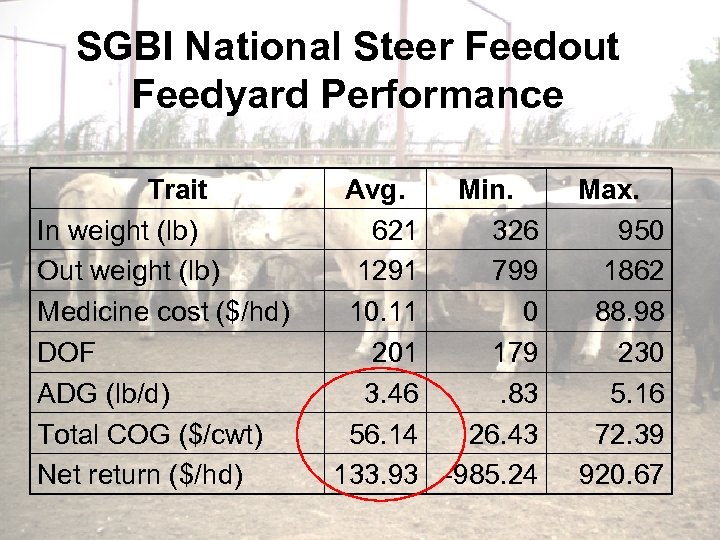
SGBI National Steer Feedout Feedyard Performance Trait In weight (lb) Out weight (lb) Medicine cost ($/hd) DOF ADG (lb/d) Total COG ($/cwt) Net return ($/hd) Avg. Min. 621 326 1291 799 10. 11 0 201 179 3. 46. 83 56. 14 26. 43 133. 93 -985. 24 Max. 950 1862 88. 98 230 5. 16 72. 39 920. 67
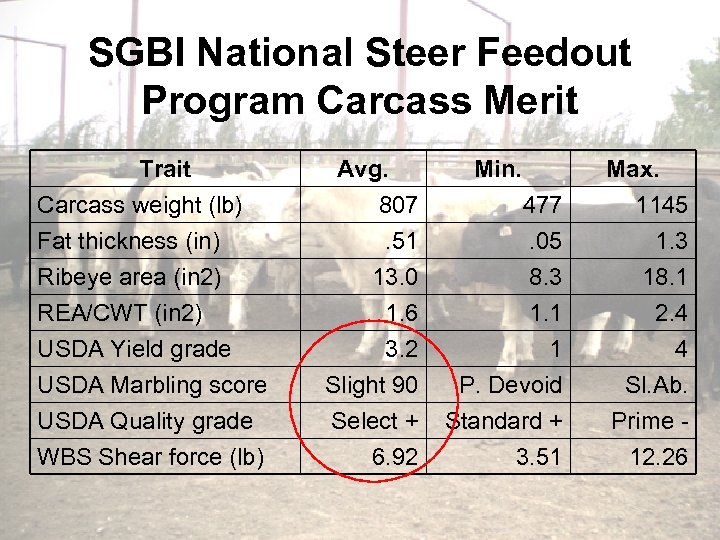
SGBI National Steer Feedout Program Carcass Merit Trait Carcass weight (lb) Fat thickness (in) Ribeye area (in 2) REA/CWT (in 2) USDA Yield grade USDA Marbling score USDA Quality grade WBS Shear force (lb) Avg. 807. 51 13. 0 Min. 477. 05 8. 3 Max. 1145 1. 3 18. 1 1. 6 3. 2 Slight 90 Select + 6. 92 1. 1 1 P. Devoid Standard + 3. 51 2. 4 4 Sl. Ab. Prime 12. 26
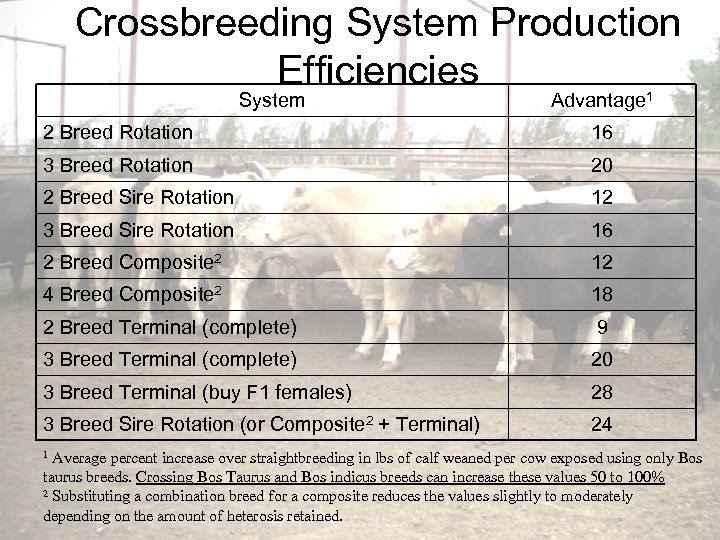
Crossbreeding System Production Efficiencies System Advantage 1 2 Breed Rotation 16 3 Breed Rotation 20 2 Breed Sire Rotation 12 3 Breed Sire Rotation 16 2 Breed Composite 2 12 4 Breed Composite 2 18 2 Breed Terminal (complete) 9 3 Breed Terminal (complete) 20 3 Breed Terminal (buy F 1 females) 28 3 Breed Sire Rotation (or Composite 2 + Terminal) 24 Average percent increase over straightbreeding in lbs of calf weaned per cow exposed using only Bos taurus breeds. Crossing Bos Taurus and Bos indicus breeds can increase these values 50 to 100% 2 Substituting a combination breed for a composite reduces the values slightly to moderately depending on the amount of heterosis retained. 1
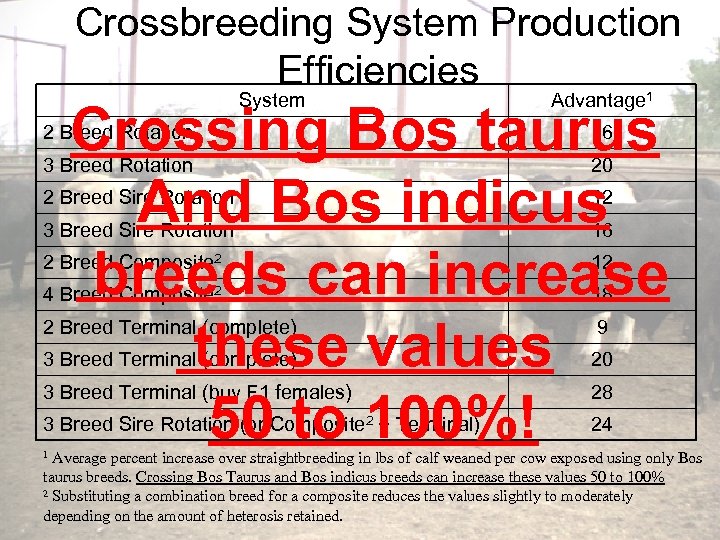
Crossbreeding System Production Efficiencies System Advantage 1 Crossing Bos taurus And Bos indicus breeds can increase these values 50 to 100%! 2 Breed Rotation 16 3 Breed Rotation 20 2 Breed Sire Rotation 12 3 Breed Sire Rotation 16 2 Breed Composite 2 12 4 Breed Composite 2 18 2 Breed Terminal (complete) 9 3 Breed Terminal (complete) 20 3 Breed Terminal (buy F 1 females) 28 3 Breed Sire Rotation (or Composite 2 + Terminal) 24 Average percent increase over straightbreeding in lbs of calf weaned per cow exposed using only Bos taurus breeds. Crossing Bos Taurus and Bos indicus breeds can increase these values 50 to 100% 2 Substituting a combination breed for a composite reduces the values slightly to moderately depending on the amount of heterosis retained. 1
 Скачать презентацию Benefits of Composite Breeding AGA Southern Balancer Informational
66b681b8bc886e2633213d5a7b103261.ppt