 Скачать презентацию BELL RINGER Which of the following statements
ee0881d50153b7d64bae3e974c1b0f43.ppt
- Количество слайдов: 73



BELL RINGER • Which of the following statements is not true of a t. RNA molecule? – A. the job of t. RNA is to carry amino acids to the ribosomes – B. at the attachment site of each t. RNA, there is a region called the anticodon – C. each t. RNA molecule has a short lifespan and is used only once during translation – D. the enzyme responsible for ensuring that a t. RNA molecule is carrying the appropriate amino acid is aminoacyl t. RNA synthase – E. t. RNA is transcribed from DNA templates within nucleus of eukaryotic cells Copyright © 2008 Pearson Education Inc. , publishing as Pearson Benjamin Cummings
CHAPTER 18 REGULATION OF GENE EXPRESSION Copyright © 2008 Pearson Education Inc. , publishing as Pearson Benjamin Cummings
Overview: Conducting the Genetic Orchestra • Prok. and euk. alter gene expression in response to their changing environment • In multicellular eukaryotes, gene expression regulates development and is responsible for differences in cell types • RNA molecules play many roles in regulating gene expression in eukaryotes Copyright © 2008 Pearson Education Inc. , publishing as Pearson Benjamin Cummings
Concept 18. 1: Bacteria often respond to environmental change by regulating transcription • Natural selection has favored bacteria that produce only the products needed by that cell • A cell can regulate the production of enzymes by feedback inhibition or by gene regulation • Gene expression in bacteria is controlled by the operon model Copyright © 2008 Pearson Education Inc. , publishing as Pearson Benjamin Cummings
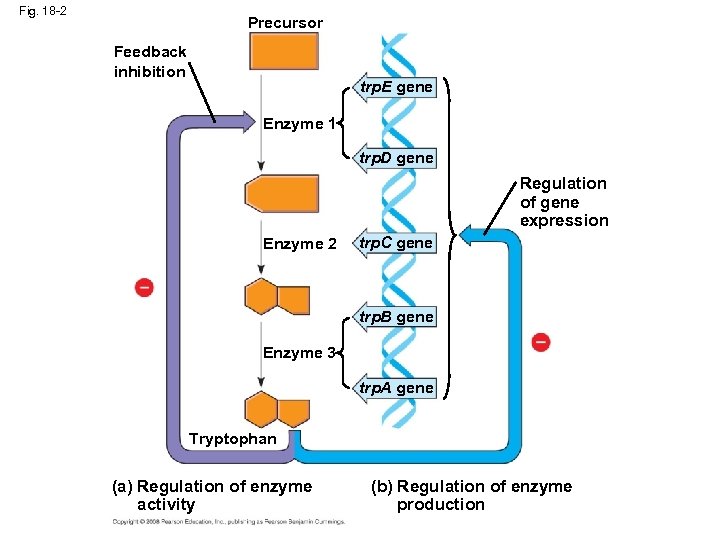
Fig. 18 -2 Precursor Feedback inhibition trp. E gene Enzyme 1 trp. D gene Regulation of gene expression Enzyme 2 trp. C gene trp. B gene Enzyme 3 trp. A gene Tryptophan (a) Regulation of enzyme activity (b) Regulation of enzyme production
Operons: The Basic Concept • A cluster of functionally related genes can be under coordinated control by a single on-off “switch” • The regulatory “switch” is a segment of DNA called an operator usually positioned within the promoter • operon: entire stretch of DNA that includes the operator, the promoter, & genes that they control Copyright © 2008 Pearson Education Inc. , publishing as Pearson Benjamin Cummings
• The operon can be switched off by a protein repressor – repressor prevents gene transcription by binding to operator & blocking RNA polymerase • The repressor is the product of a separate regulatory gene Copyright © 2008 Pearson Education Inc. , publishing as Pearson Benjamin Cummings
• repressor can be active or inactive • Corepressor: molecule that cooperates with a repressor protein to switch an operon off • EX: E. coli can synthesize the AA, tryptophan Copyright © 2008 Pearson Education Inc. , publishing as Pearson Benjamin Cummings
Trp Operon • By default… the trp operon is ON and the genes for tryptophan synthesis are transcribed • When tryptophan is PRESENT, it binds to the trp repressor protein, which turns OFF • The repressor is active only in the presence of its corepressor tryptophan; thus the trp operon is turned OFF (repressed) if tryptophan levels are HIGH Copyright © 2008 Pearson Education Inc. , publishing as Pearson Benjamin Cummings
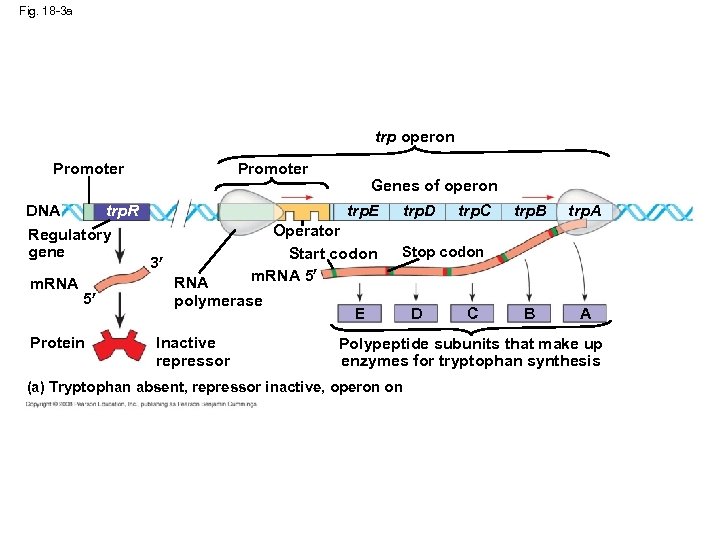
Fig. 18 -3 a trp operon Promoter DNA trp. R Regulatory gene m. RNA 5 Protein Genes of operon trp. E 3 Operator Start codon m. RNA 5 RNA polymerase Inactive repressor trp. D trp. C trp. B trp. A B A Stop codon E D C Polypeptide subunits that make up enzymes for tryptophan synthesis (a) Tryptophan absent, repressor inactive, operon on
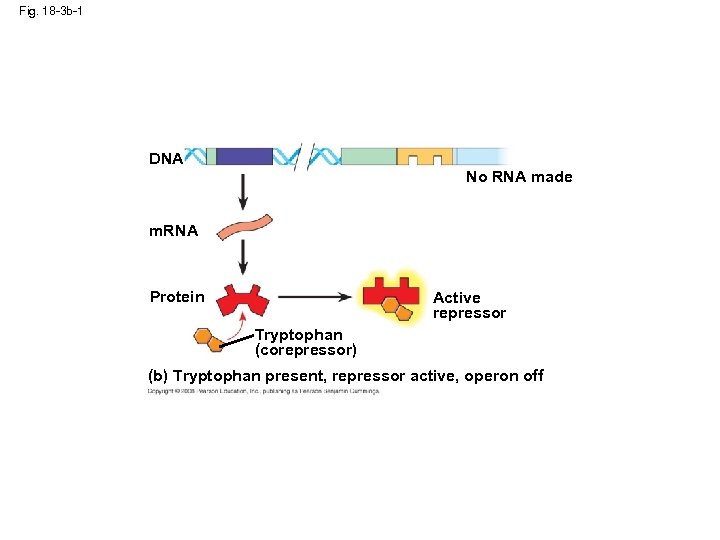
Fig. 18 -3 b-1 DNA No RNA made m. RNA Protein Active repressor Tryptophan (corepressor) (b) Tryptophan present, repressor active, operon off
Repressible and Inducible Operons: Two Types of Negative Gene Regulation • A repressible operon is usually ON; binding of a repressor to the operator shuts transcription off – Ex. trp operon • An inducible operon is one that is usually OFF; an inducer inactivates the repressor and turns on transcription – Ex. Lac operon Copyright © 2008 Pearson Education Inc. , publishing as Pearson Benjamin Cummings
Lac Operon • Lac operon contains genes that code for enzymes used in the hydrolysis and metabolism of lactose • By itself, the lac repressor is active and switches the lac operon off • an inducer inactivates the repressor to turn the lac operon on Copyright © 2008 Pearson Education Inc. , publishing as Pearson Benjamin Cummings
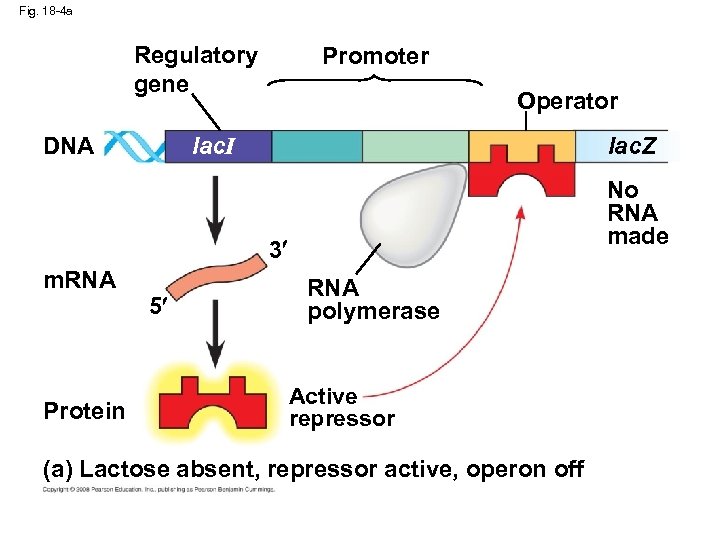
Fig. 18 -4 a Regulatory gene Promoter Operator lac. I DNA lac. Z No RNA made 3 m. RNA Protein 5 RNA polymerase Active repressor (a) Lactose absent, repressor active, operon off
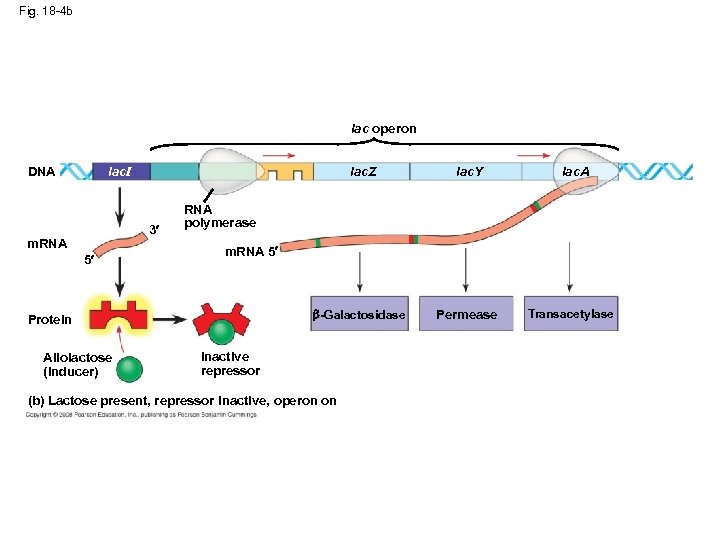
Fig. 18 -4 b lac operon lac. Z lac. Y -Galactosidase Permease lac. I DNA 3 m. RNA 5 RNA polymerase m. RNA 5 Protein Allolactose (inducer) lac. A Inactive repressor (b) Lactose present, repressor inactive, operon on Transacetylase
• Inducible enzymes usually function in catabolic pathways • Repressible enzymes usually function in anabolic pathways • Regulation of the trp and lac operons involves negative control of genes BC operons are switched off by the active form of the repressor Copyright © 2008 Pearson Education Inc. , publishing as Pearson Benjamin Cummings
Positive Gene Regulation • Some operons are also subject to positive control through a stimulatory protein, such as catabolite activator protein (CAP), an activator of transcription • When glucose (a preferred food source of E. coli) is scarce, CAP is activated by binding with cyclic AMP • Activated CAP attaches to the promoter of the lac operon and increases the affinity of RNA polymerase, thus accelerating transcription Copyright © 2008 Pearson Education Inc. , publishing as Pearson Benjamin Cummings
• When glucose levels increase, CAP detaches from the lac operon, and transcription returns to a normal rate • CAP helps regulate other operons that encode enzymes used in catabolic pathways Copyright © 2008 Pearson Education Inc. , publishing as Pearson Benjamin Cummings
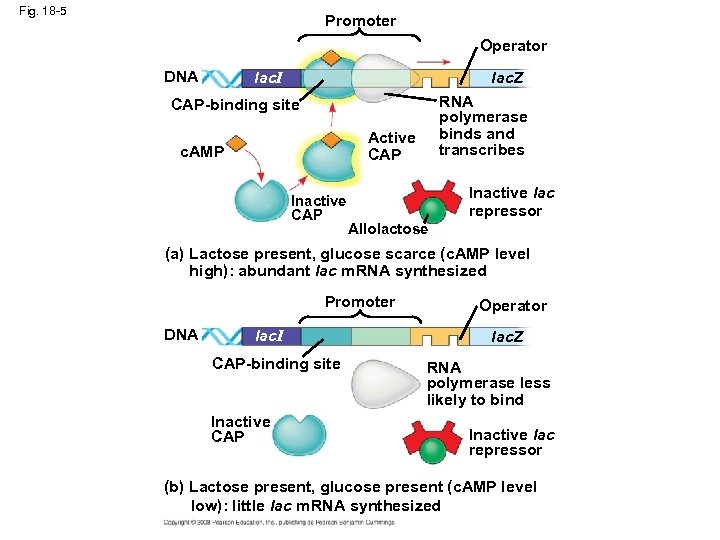
Fig. 18 -5 Promoter Operator DNA lac. I lac. Z RNA polymerase binds and transcribes CAP-binding site Active CAP c. AMP Inactive CAP Inactive lac repressor Allolactose (a) Lactose present, glucose scarce (c. AMP level high): abundant lac m. RNA synthesized Promoter DNA lac. I CAP-binding site Inactive CAP Operator lac. Z RNA polymerase less likely to bind Inactive lac repressor (b) Lactose present, glucose present (c. AMP level low): little lac m. RNA synthesized
Concept 18. 2: Eukaryotic gene expression can be regulated at any stage • All organisms must regulate which genes are expressed at any given time • In multicellular organisms gene expression is essential for cell specialization Copyright © 2008 Pearson Education Inc. , publishing as Pearson Benjamin Cummings
Differential Gene Expression • Almost all the cells in an organism are genetically identical • Differences between cell types result from differential gene expression, the expression of different genes by cells with the same genome • Errors in gene expression can lead to diseases including cancer • Gene expression is regulated at many stages Copyright © 2008 Pearson Education Inc. , publishing as Pearson Benjamin Cummings
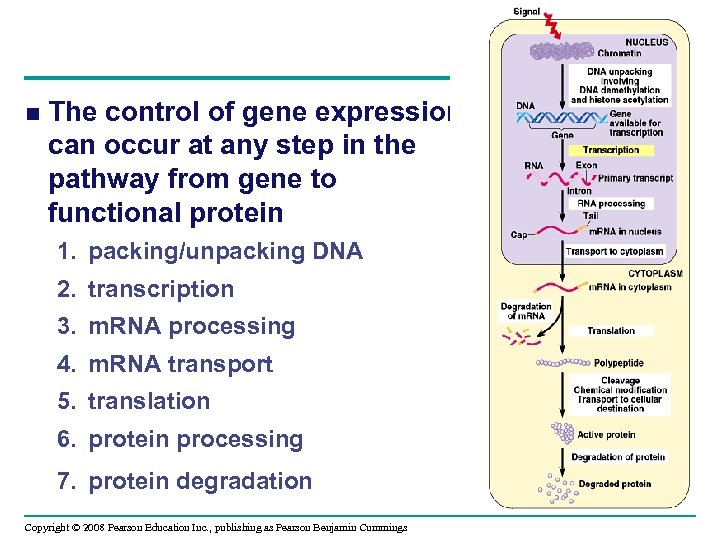
The control of gene expression can occur at any step in the pathway from gene to functional protein 1. packing/unpacking DNA 2. transcription 3. m. RNA processing 4. m. RNA transport 5. translation 6. protein processing 7. protein degradation Copyright © 2008 Pearson Education Inc. , publishing as Pearson Benjamin Cummings
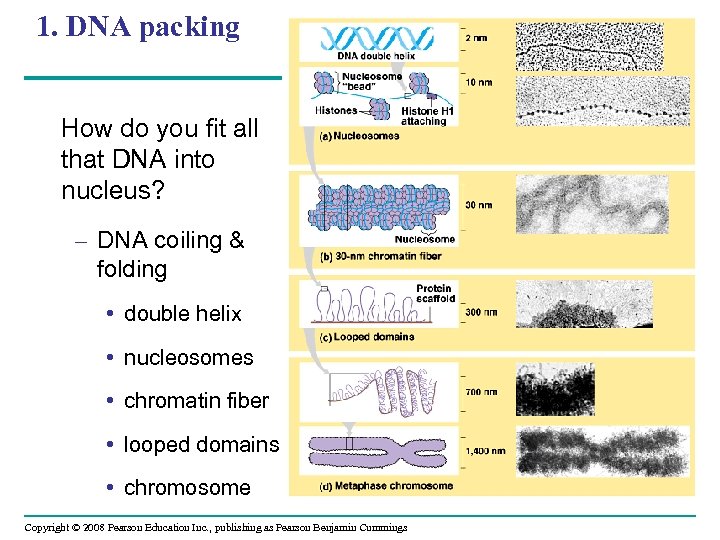
1. DNA packing How do you fit all that DNA into nucleus? – DNA coiling & folding • double helix • nucleosomes • chromatin fiber • looped domains • chromosome Copyright © 2008 Pearson Education Inc. , publishing as Pearson Benjamin Cummings
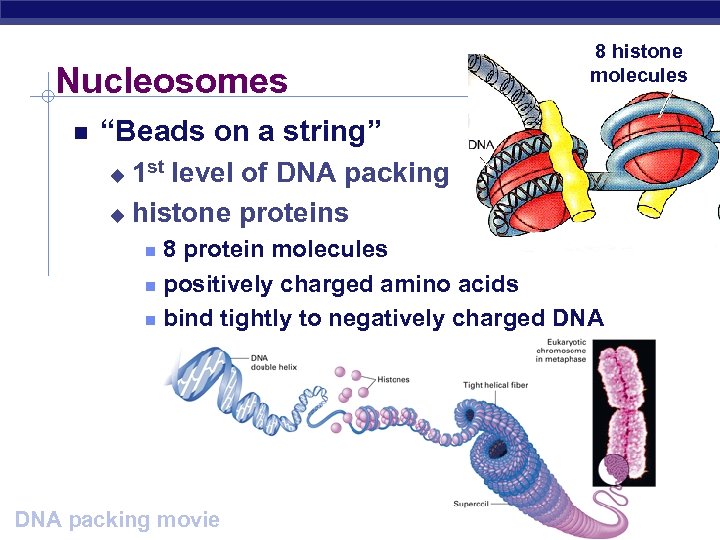
Nucleosomes 8 histone molecules “Beads on a string” 1 st level of DNA packing u histone proteins u 8 protein molecules positively charged amino acids bind tightly to negatively charged DNA AP Biology DNA packing movie
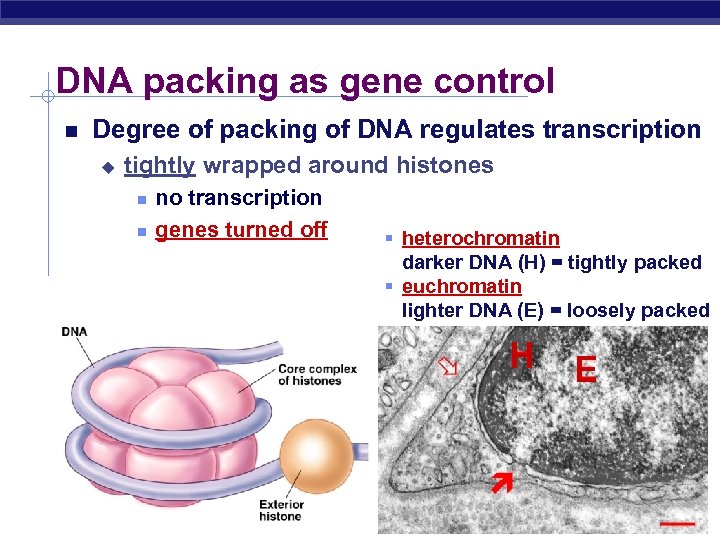
DNA packing as gene control Degree of packing of DNA regulates transcription u tightly wrapped around histones no transcription genes turned off § heterochromatin darker DNA (H) = tightly packed § euchromatin lighter DNA (E) = loosely packed H AP Biology E
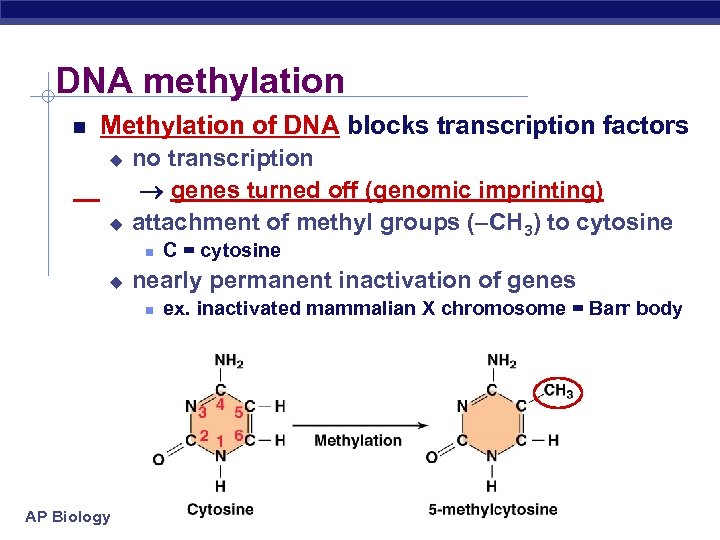
DNA methylation Methylation of DNA blocks transcription factors u u no transcription genes turned off (genomic imprinting) attachment of methyl groups (–CH 3) to cytosine u nearly permanent inactivation of genes AP Biology C = cytosine ex. inactivated mammalian X chromosome = Barr body
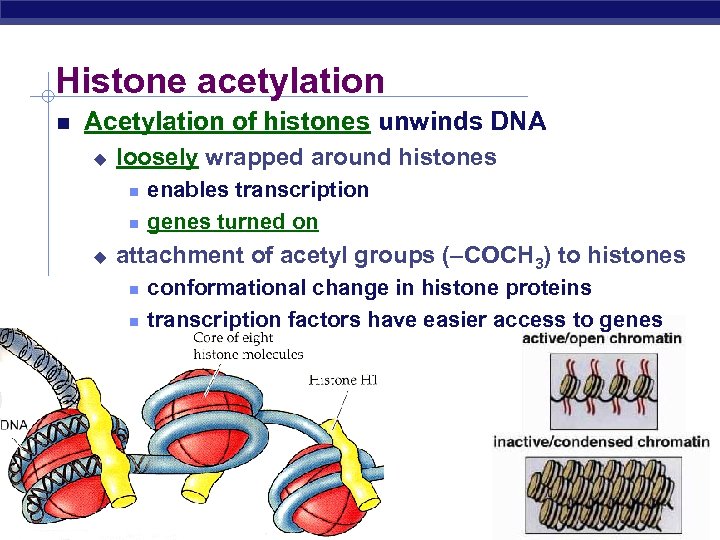
Histone acetylation Acetylation of histones unwinds DNA u loosely wrapped around histones u attachment of acetyl groups (–COCH 3) to histones AP Biology enables transcription genes turned on conformational change in histone proteins transcription factors have easier access to genes
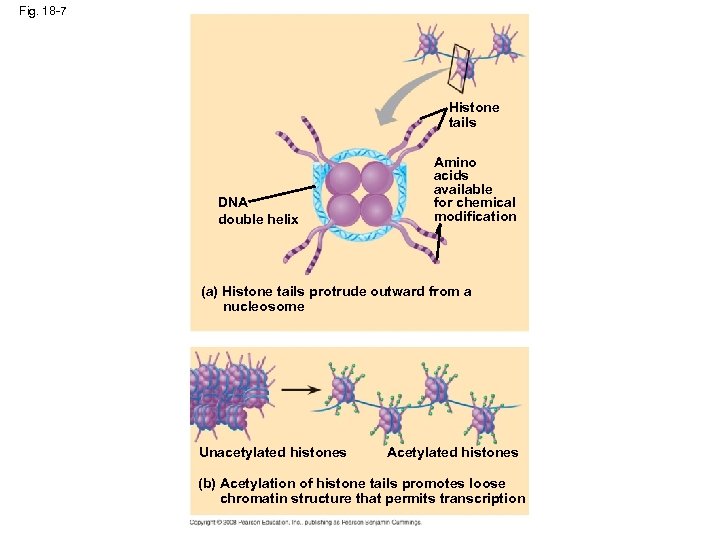
Fig. 18 -7 Histone tails DNA double helix Amino acids available for chemical modification (a) Histone tails protrude outward from a nucleosome Unacetylated histones Acetylated histones (b) Acetylation of histone tails promotes loose chromatin structure that permits transcription
Epigenetic Inheritance • Although the chromatin modifications just discussed do not alter DNA sequence, they may be passed to future generations of cells • The inheritance of traits transmitted by mechanisms not directly involving the nucleotide sequence is called epigenetic inheritance Copyright © 2008 Pearson Education Inc. , publishing as Pearson Benjamin Cummings
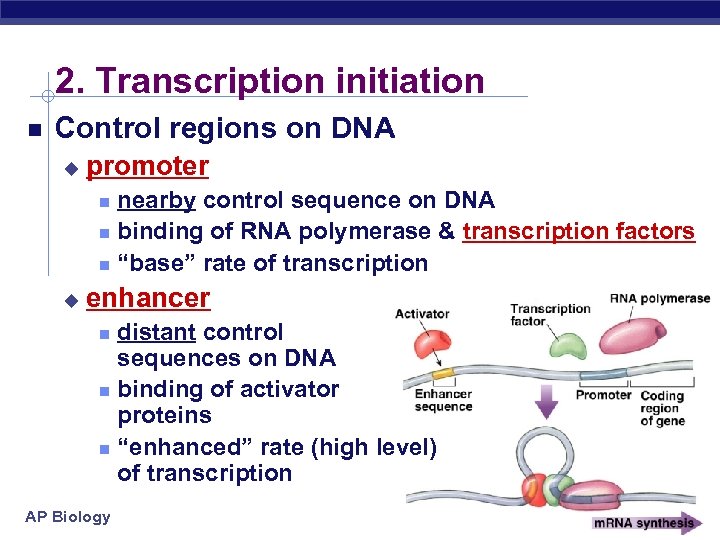
2. Transcription initiation Control regions on DNA u promoter nearby control sequence on DNA binding of RNA polymerase & transcription factors “base” rate of transcription u enhancer distant control sequences on DNA binding of activator proteins “enhanced” rate (high level) of transcription AP Biology
Organization of a Typical Eukaryotic Gene • Associated with most eukaryotic genes are control elements, segments of noncoding DNA that help regulate transcription by binding certain proteins • Control elements and the proteins they bind are critical to the precise regulation of gene expression in different cell types Copyright © 2008 Pearson Education Inc. , publishing as Pearson Benjamin Cummings
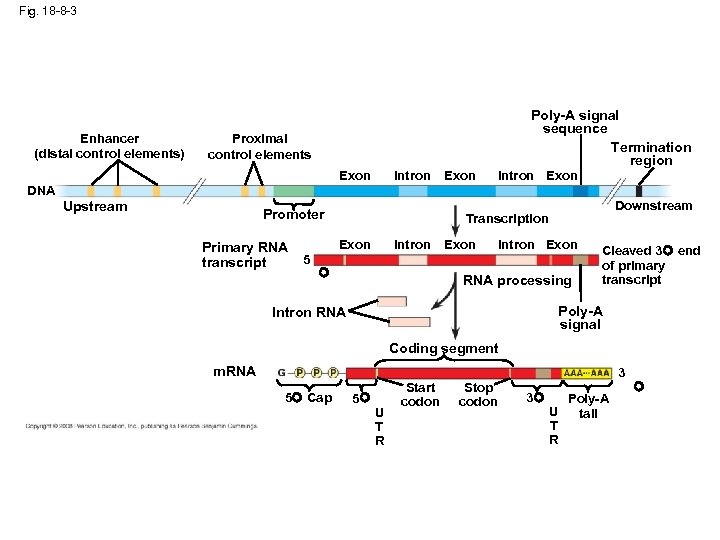
Fig. 18 -8 -3 Enhancer (distal control elements) Poly-A signal sequence Termination region Proximal control elements Exon DNA Upstream Intron Promoter Primary RNA transcript Intron Exon Downstream Transcription Exon 5 Exon Intron Exon RNA processing Cleaved 3 end of primary transcript Poly-A signal Intron RNA Coding segment m. RNA 3 5 Cap 5 U T R Start codon Stop codon 3 Poly-A U tail T R
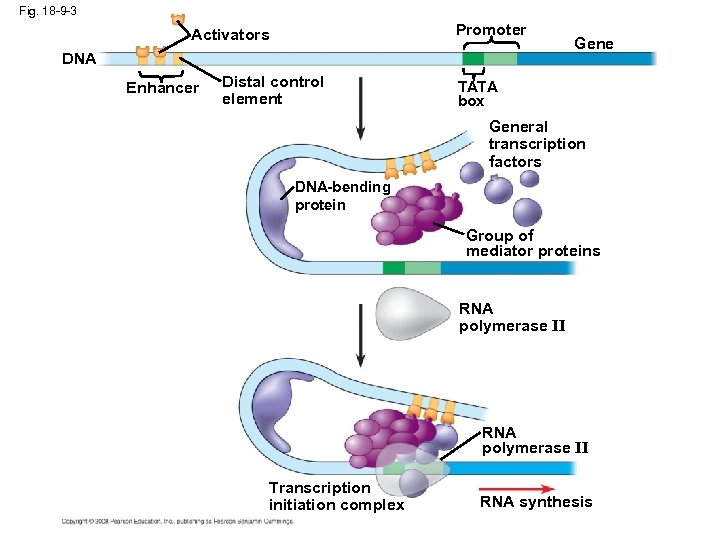
Fig. 18 -9 -3 Promoter Activators DNA Enhancer Distal control element Gene TATA box General transcription factors DNA-bending protein Group of mediator proteins RNA polymerase II Transcription initiation complex RNA synthesis
Mechanisms of Post-Transcriptional Regulation • Transcription alone does not account for gene expression • Regulatory mechanisms can operate at various stages after transcription • Such mechanisms allow a cell to fine-tune gene expression rapidly in response to environmental changes Copyright © 2008 Pearson Education Inc. , publishing as Pearson Benjamin Cummings
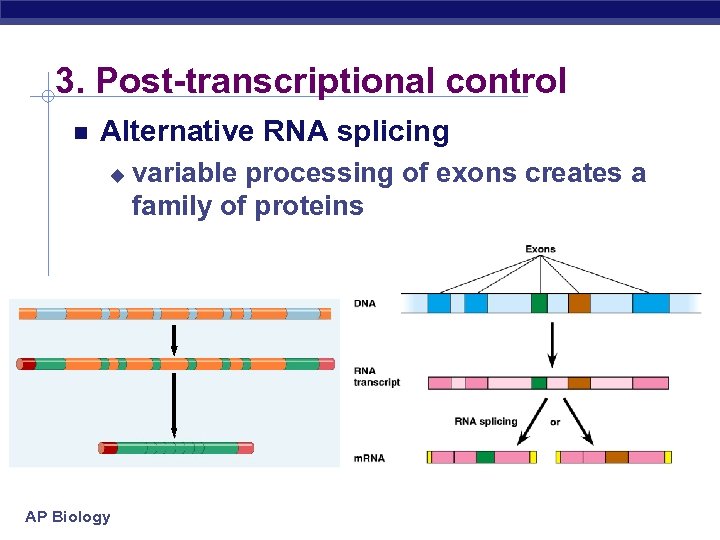
3. Post-transcriptional control Alternative RNA splicing u AP Biology variable processing of exons creates a family of proteins
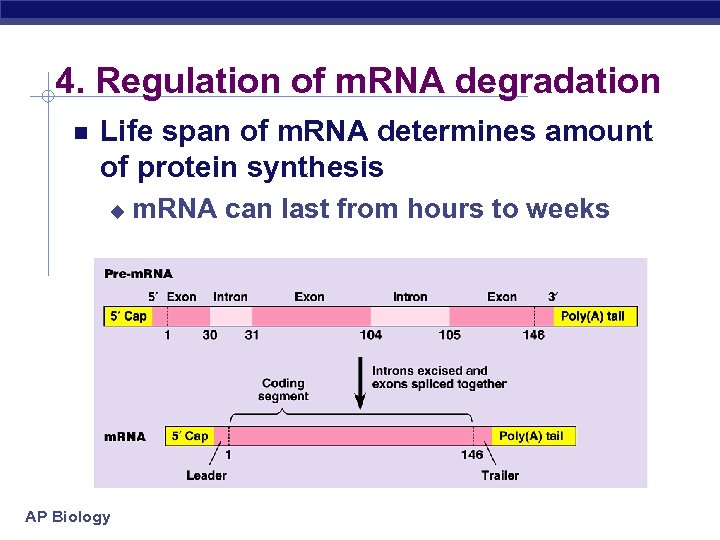
4. Regulation of m. RNA degradation Life span of m. RNA determines amount of protein synthesis u AP Biology m. RNA can last from hours to weeks
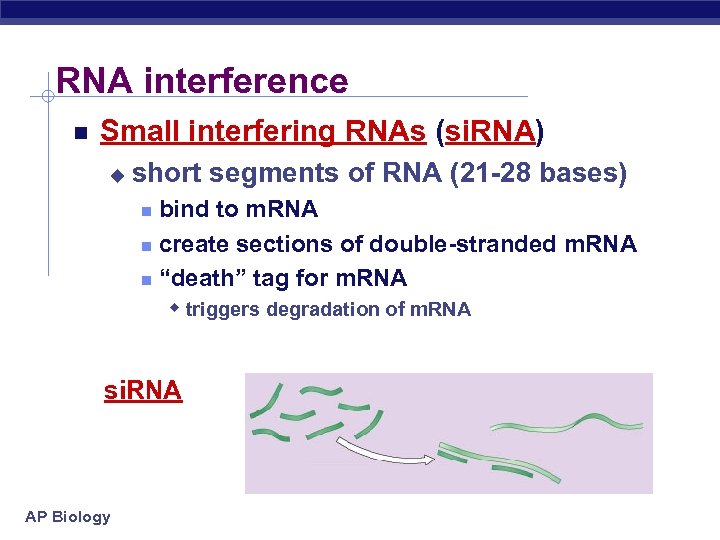
RNA interference Small interfering RNAs (si. RNA) u short segments of RNA (21 -28 bases) bind to m. RNA create sections of double-stranded m. RNA “death” tag for m. RNA w triggers degradation of m. RNA si. RNA AP Biology
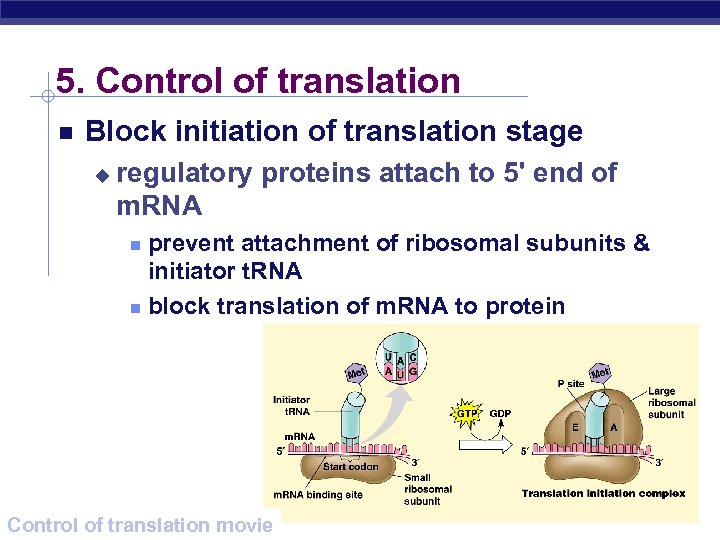
5. Control of translation Block initiation of translation stage u regulatory proteins attach to 5' end of m. RNA prevent attachment of ribosomal subunits & initiator t. RNA block translation of m. RNA to protein AP Biology Control of translation movie
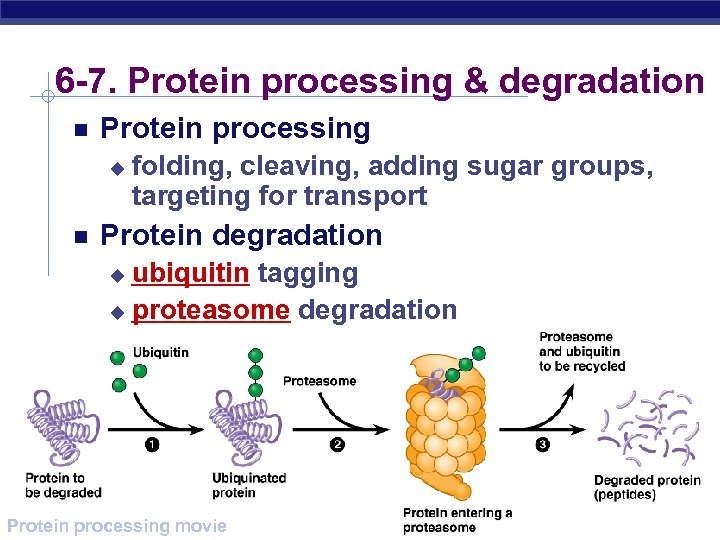
6 -7. Protein processing & degradation Protein processing u folding, cleaving, adding sugar groups, targeting for transport Protein degradation ubiquitin tagging u proteasome degradation u AP Biology Protein processing movie
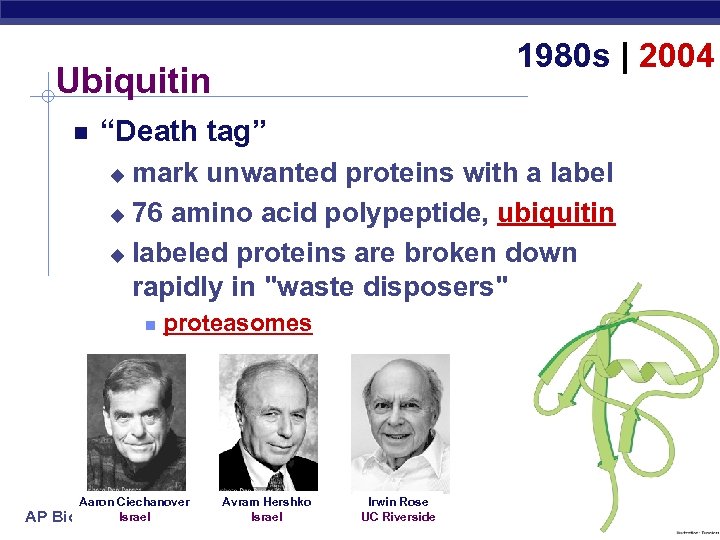
1980 s | 2004 Ubiquitin “Death tag” mark unwanted proteins with a label u 76 amino acid polypeptide, ubiquitin u labeled proteins are broken down rapidly in "waste disposers" u AP proteasomes Aaron Ciechanover Biology Israel Avram Hershko Israel Irwin Rose UC Riverside
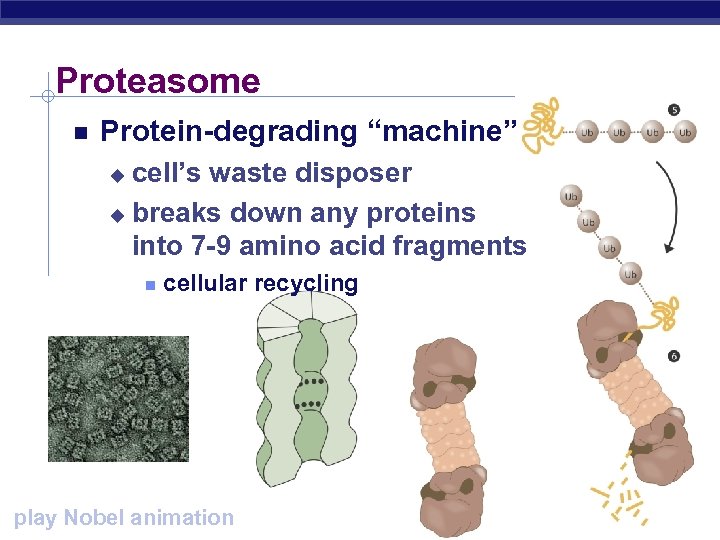
Proteasome Protein-degrading “machine” cell’s waste disposer u breaks down any proteins into 7 -9 amino acid fragments u cellular recycling AP Biology play Nobel animation
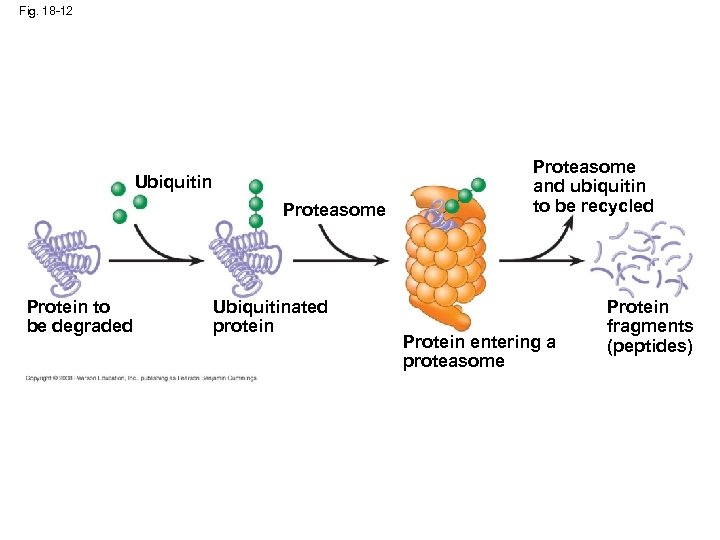
Fig. 18 -12 Ubiquitin Proteasome Protein to be degraded Ubiquitinated protein Proteasome and ubiquitin to be recycled Protein entering a proteasome Protein fragments (peptides)
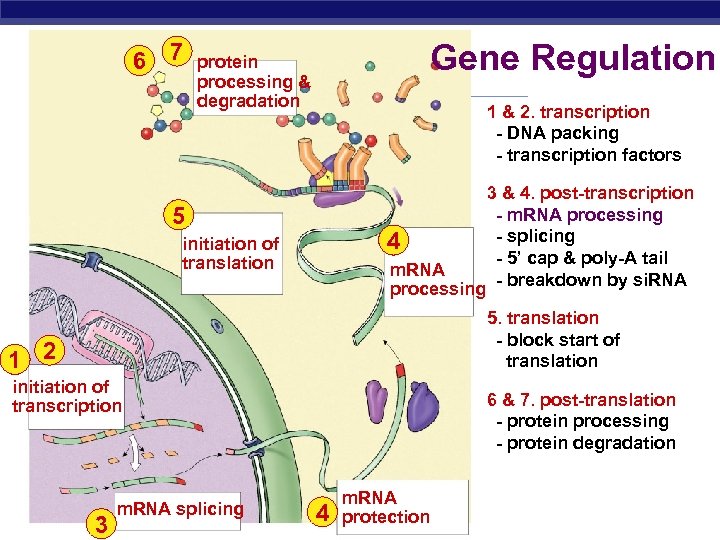
6 7 Gene Regulation protein processing & degradation 1 & 2. transcription - DNA packing - transcription factors 5 4 initiation of translation m. RNA processing 3 & 4. post-transcription - m. RNA processing - splicing - 5’ cap & poly-A tail - breakdown by si. RNA 5. translation - block start of translation 1 2 initiation of transcription AP Biology m. RNA splicing 3 6 & 7. post-translation - protein processing - protein degradation 4 m. RNA protection
Concept 18. 4: A program of differential gene expression leads to the different cell types in a multicellular organism • During embryonic development, a fertilized egg gives rise to many different cell types • Cell types are organized successively into tissues, organ systems, and the whole organism • Gene expression orchestrates the developmental programs of animals Copyright © 2008 Pearson Education Inc. , publishing as Pearson Benjamin Cummings
A Genetic Program for Embryonic Development • The transformation from zygote to adult results from cell division, cell differentiation, and morphogenesis Copyright © 2008 Pearson Education Inc. , publishing as Pearson Benjamin Cummings
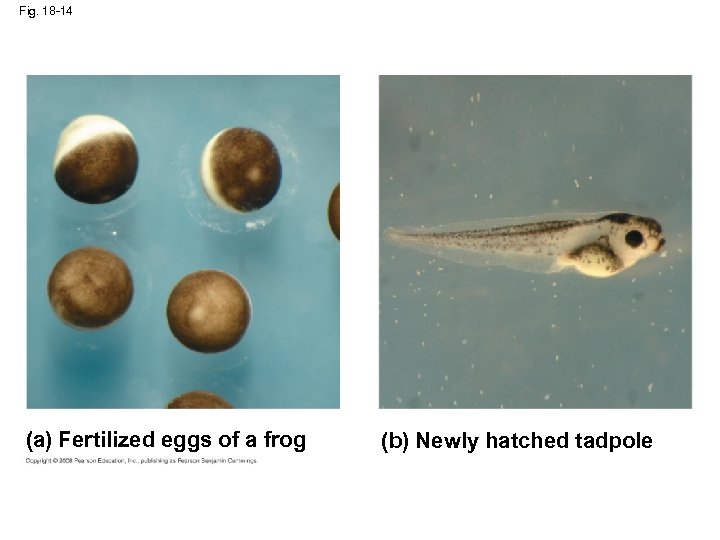
Fig. 18 -14 (a) Fertilized eggs of a frog (b) Newly hatched tadpole
• Cell differentiation is the process by which cells become specialized in structure and function • The physical processes that give an organism its shape constitute morphogenesis • Differential gene expression results from genes being regulated differently in each cell type • Materials in the egg can set up gene regulation that is carried out as cells divide Copyright © 2008 Pearson Education Inc. , publishing as Pearson Benjamin Cummings
Cytoplasmic Determinants and Inductive Signals • An egg’s cytoplasm contains RNA, proteins, and other substances that are distributed unevenly in the unfertilized egg • Cytoplasmic determinants are maternal substances in the egg that influence early development • As the zygote divides by mitosis, cells contain different cytoplasmic determinants, which lead to different gene expression Copyright © 2008 Pearson Education Inc. , publishing as Pearson Benjamin Cummings
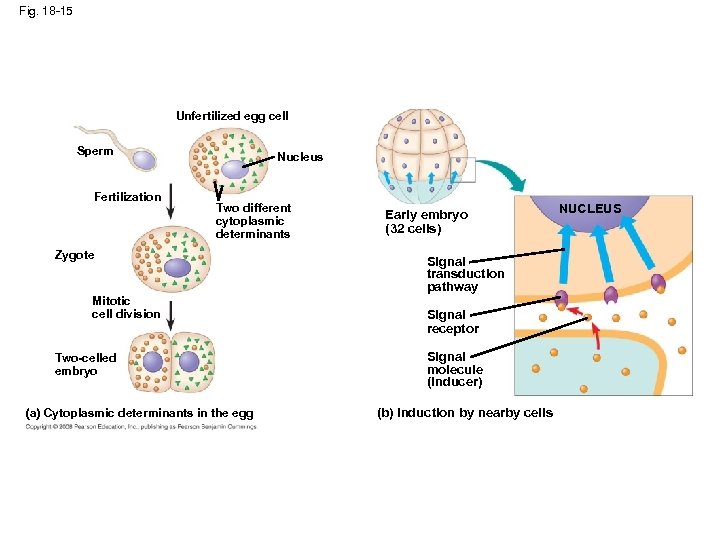
Fig. 18 -15 Unfertilized egg cell Sperm Fertilization Nucleus Two different cytoplasmic determinants Zygote Mitotic cell division Two-celled embryo (a) Cytoplasmic determinants in the egg Early embryo (32 cells) Signal transduction pathway Signal receptor Signal molecule (inducer) (b) Induction by nearby cells NUCLEUS
• In the process called induction, signal molecules from embryonic cells cause transcriptional changes in nearby target cells • Thus, interactions between cells induce differentiation of specialized cell types Animation: Cell Signaling Copyright © 2008 Pearson Education Inc. , publishing as Pearson Benjamin Cummings
Sequential Regulation of Gene Expression During Cellular Differentiation • Determination commits a cell to its final fate • Determination precedes differentiation • Cell differentiation is marked by the production of tissue-specific proteins Copyright © 2008 Pearson Education Inc. , publishing as Pearson Benjamin Cummings
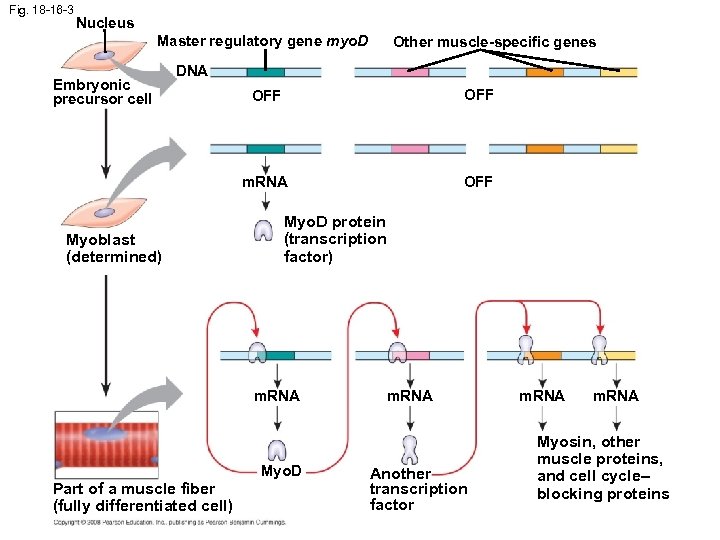
Fig. 18 -16 -3 Nucleus Master regulatory gene myo. D Embryonic precursor cell Other muscle-specific genes DNA OFF m. RNA Myoblast (determined) OFF Myo. D protein (transcription factor) m. RNA Myo. D Part of a muscle fiber (fully differentiated cell) m. RNA Another transcription factor m. RNA Myosin, other muscle proteins, and cell cycle– blocking proteins
Pattern Formation: Setting Up the Body Plan • Pattern formation is the development of a spatial organization of tissues and organs • In animals, pattern formation begins with the establishment of the major axes • Positional information, the molecular cues that control pattern formation, tells a cell its location relative to the body axes and to neighboring cells Copyright © 2008 Pearson Education Inc. , publishing as Pearson Benjamin Cummings
Concept 18. 5: Cancer results from genetic changes that affect cell cycle control • The gene regulation systems that go wrong during cancer are the very same systems involved in embryonic development Copyright © 2008 Pearson Education Inc. , publishing as Pearson Benjamin Cummings
Types of Genes Associated with Cancer • Cancer can be caused by mutations to genes that regulate cell growth and division • Tumor viruses can cause cancer in animals including humans Copyright © 2008 Pearson Education Inc. , publishing as Pearson Benjamin Cummings
Oncogenes and Proto-Oncogenes • Oncogenes are cancer-causing genes • Proto-oncogenes are the corresponding normal cellular genes that are responsible for normal cell growth and division • Conversion of a proto-oncogene to an oncogene can lead to abnormal stimulation of the cell cycle Copyright © 2008 Pearson Education Inc. , publishing as Pearson Benjamin Cummings
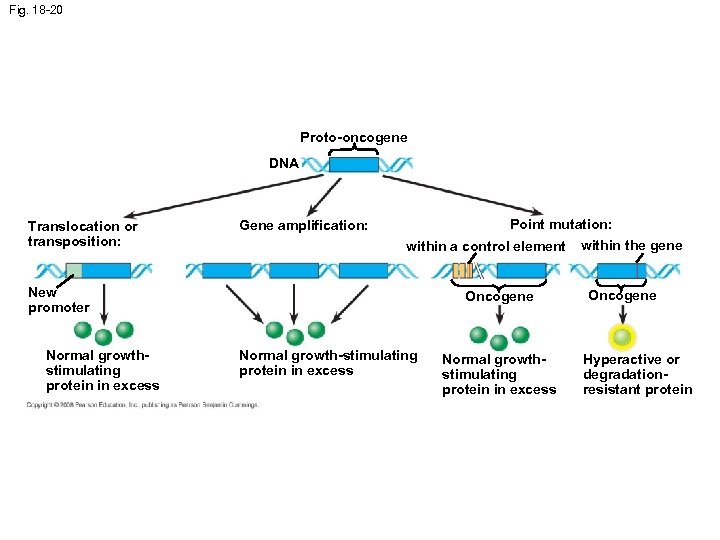
Fig. 18 -20 Proto-oncogene DNA Translocation or transposition: Point mutation: Gene amplification: within a control element New promoter Normal growthstimulating protein in excess Oncogene Normal growth-stimulating protein in excess Normal growthstimulating protein in excess within the gene Oncogene Hyperactive or degradationresistant protein
• Proto-oncogenes can be converted to oncogenes by – Movement of DNA within the genome: if it ends up near an active promoter, transcription may increase – Amplification of a proto-oncogene: increases the number of copies of the gene – Point mutations in the proto-oncogene or its control elements: causes an increase in gene expression Copyright © 2008 Pearson Education Inc. , publishing as Pearson Benjamin Cummings
Tumor-Suppressor Genes • Tumor-suppressor genes help prevent uncontrolled cell growth • Mutations that decrease protein products of tumor-suppressor genes may contribute to cancer onset • Tumor-suppressor proteins – Repair damaged DNA – Control cell adhesion – Inhibit the cell cycle in the cell-signaling pathway Copyright © 2008 Pearson Education Inc. , publishing as Pearson Benjamin Cummings
Interference with Normal Cell-Signaling Pathways • Mutations in the ras proto-oncogene and p 53 tumor-suppressor gene are common in human cancers • Mutations in the ras gene can lead to production of a hyperactive Ras protein and increased cell division Copyright © 2008 Pearson Education Inc. , publishing as Pearson Benjamin Cummings
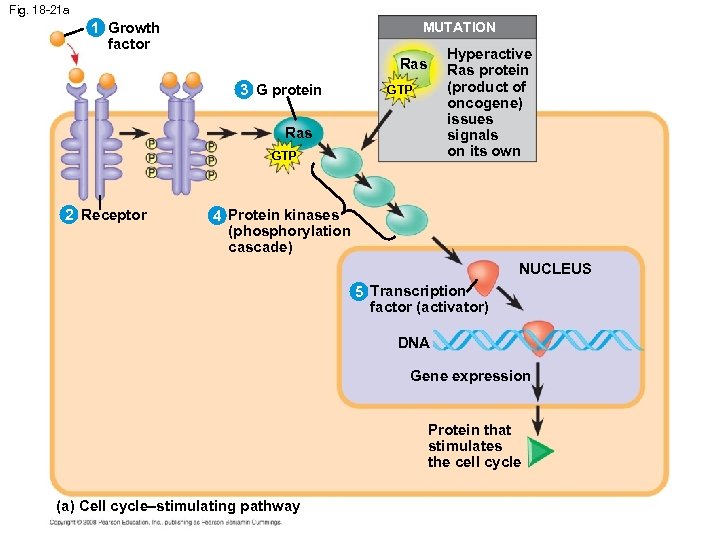
Fig. 18 -21 a 1 Growth factor 1 MUTATION Hyperactive Ras protein (product of oncogene) issues signals on its own Ras 3 G protein GTP Ras GTP 2 Receptor 4 Protein kinases (phosphorylation cascade) NUCLEUS 5 Transcription factor (activator) DNA Gene expression Protein that stimulates the cell cycle (a) Cell cycle–stimulating pathway
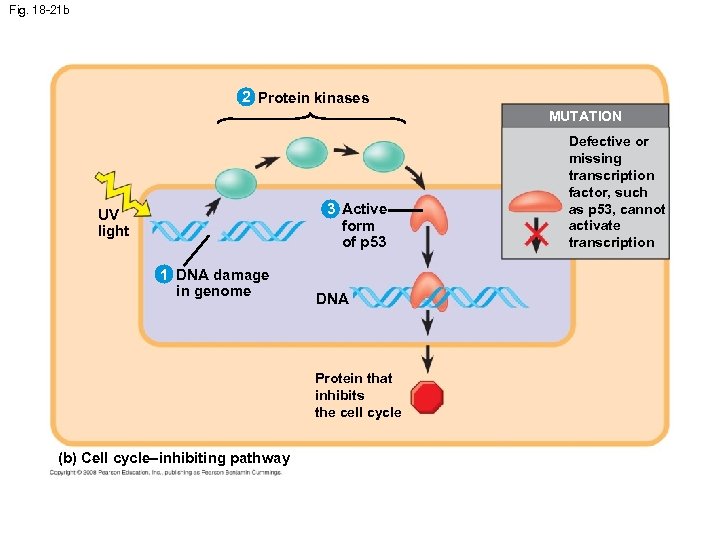
Fig. 18 -21 b 2 Protein kinases MUTATION 3 Active form of p 53 UV light 1 DNA damage in genome DNA Protein that inhibits the cell cycle (b) Cell cycle–inhibiting pathway Defective or missing transcription factor, such as p 53, cannot activate transcription
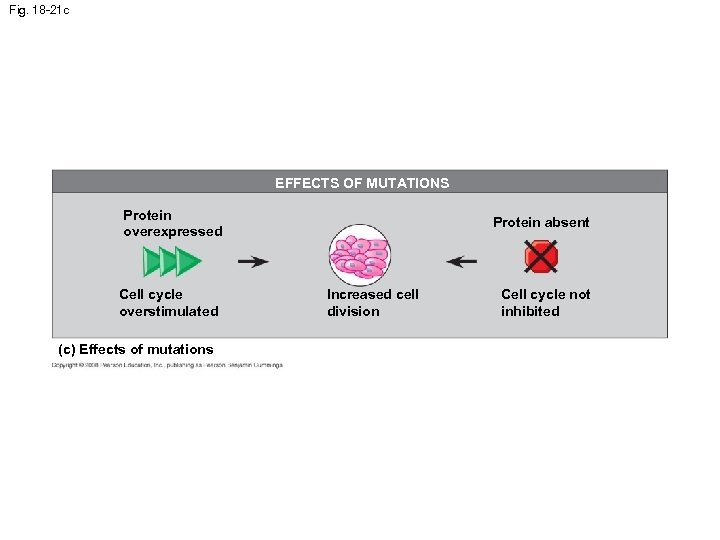
Fig. 18 -21 c EFFECTS OF MUTATIONS Protein overexpressed Cell cycle overstimulated (c) Effects of mutations Protein absent Increased cell division Cell cycle not inhibited
• Suppression of the cell cycle can be important in the case of damage to a cell’s DNA; p 53 prevents a cell from passing on mutations due to DNA damage • Mutations in the p 53 gene prevent suppression of the cell cycle Copyright © 2008 Pearson Education Inc. , publishing as Pearson Benjamin Cummings
The Multistep Model of Cancer Development • Multiple mutations are generally needed for fullfledged cancer; thus the incidence increases with age • At the DNA level, a cancerous cell is usually characterized by at least one active oncogene and the mutation of several tumor-suppressor genes Copyright © 2008 Pearson Education Inc. , publishing as Pearson Benjamin Cummings
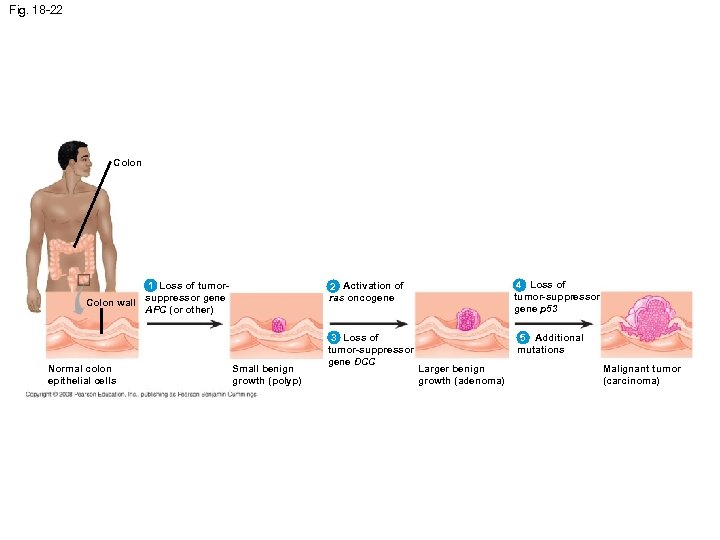
Fig. 18 -22 Colon EFFECTS OF MUTATIONS 2 Activation of ras oncogene 1 Loss of tumorsuppressor gene Colon wall APC (or other) Normal colon epithelial cells Small benign growth (polyp) 4 Loss of tumor-suppressor gene p 53 3 Loss of tumor-suppressor gene DCC 5 Additional mutations Larger benign growth (adenoma) Malignant tumor (carcinoma)
Inherited Predisposition and Other Factors Contributing to Cancer • Individuals can inherit oncogenes or mutant alleles of tumor-suppressor genes • Inherited mutations in the tumor-suppressor gene adenomatous polyposis coli are common in individuals with colorectal cancer • Mutations in the BRCA 1 or BRCA 2 gene are found in at least half of inherited breast cancers Copyright © 2008 Pearson Education Inc. , publishing as Pearson Benjamin Cummings
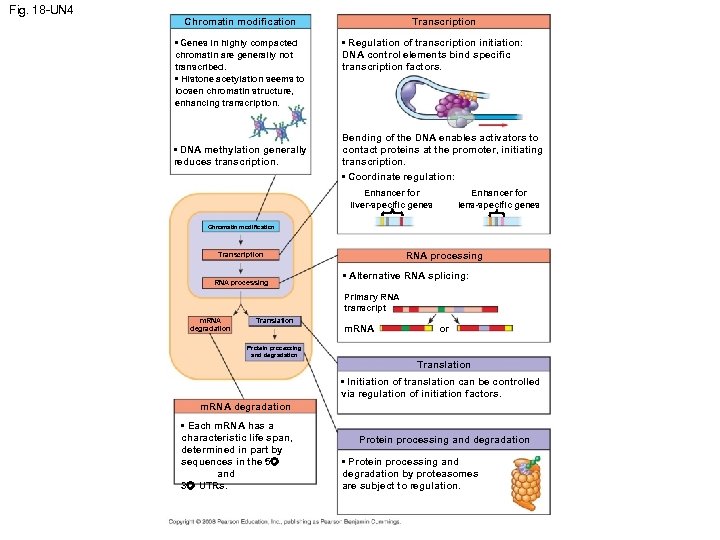
Fig. 18 -UN 4 Chromatin modification • Genes in highly compacted chromatin are generally not transcribed. • Histone acetylation seems to loosen chromatin structure, enhancing transcription. • DNA methylation generally reduces transcription. Transcription • Regulation of transcription initiation: DNA control elements bind specific transcription factors. Bending of the DNA enables activators to contact proteins at the promoter, initiating transcription. • Coordinate regulation: Enhancer for liver-specific genes Enhancer for lens-specific genes Chromatin modification RNA processing Transcription RNA processing • Alternative RNA splicing: Primary RNA transcript m. RNA degradation Translation m. RNA or Protein processing and degradation Translation • Initiation of translation can be controlled via regulation of initiation factors. m. RNA degradation • Each m. RNA has a characteristic life span, determined in part by sequences in the 5 and 3 UTRs. Protein processing and degradation • Protein processing and degradation by proteasomes are subject to regulation.
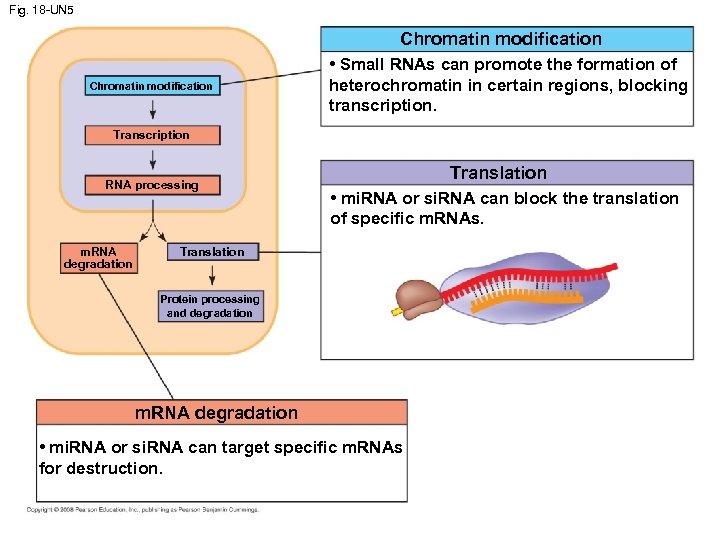
Fig. 18 -UN 5 Chromatin modification • Small RNAs can promote the formation of heterochromatin in certain regions, blocking transcription. Transcription RNA processing m. RNA degradation Translation • mi. RNA or si. RNA can block the translation of specific m. RNAs. Translation Protein processing and degradation m. RNA degradation • mi. RNA or si. RNA can target specific m. RNAs for destruction.
You should now be able to: 1. Explain the concept of an operon and the function of the operator, repressor, and corepressor 2. Explain the adaptive advantage of grouping bacterial genes into an operon 3. Explain how repressible and inducible operons differ and how those differences reflect differences in the pathways they control Copyright © 2008 Pearson Education Inc. , publishing as Pearson Benjamin Cummings
4. Explain how DNA methylation and histone acetylation affect chromatin structure and the regulation of transcription 5. Define control elements and explain how they influence transcription 6. Explain the role of promoters, enhancers, activators, and repressors in transcription control Copyright © 2008 Pearson Education Inc. , publishing as Pearson Benjamin Cummings
7. Explain how eukaryotic genes can be coordinately expressed 8. Describe the roles played by small RNAs on gene expression 9. Explain why determination precedes differentiation 10. Describe two sources of information that instruct a cell to express genes at the appropriate time Copyright © 2008 Pearson Education Inc. , publishing as Pearson Benjamin Cummings
11. Explain how maternal effect genes affect polarity and development in Drosophila embryos 12. Explain how mutations in tumor-suppressor genes can contribute to cancer 13. Describe the effects of mutations to the p 53 and ras genes Copyright © 2008 Pearson Education Inc. , publishing as Pearson Benjamin Cummings
Скачать презентацию BELL RINGER Which of the following statements
ee0881d50153b7d64bae3e974c1b0f43.ppt