 Скачать презентацию Bell Ringer n Based on what you already
58c87e36d43cc4ddd8d63a58bff3fb9d.ppt
- Количество слайдов: 184



Bell Ringer: n Based on what you already know about the influences of Geography on people and the development of civilizations, be prepared to discuss how the following geographic features influence civilizations: n n n Rivers Fertile Land Mountains
Classical Greece Chapter 5
Cultures of the Mountains and the Sea Section 1 p. 111 -114
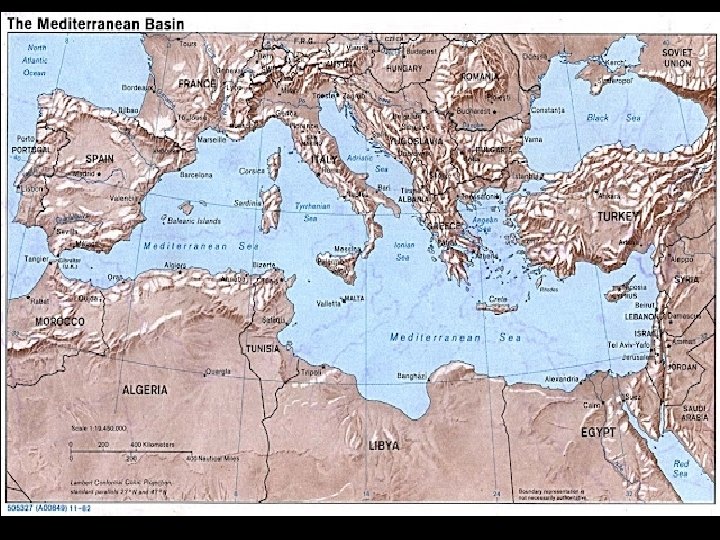
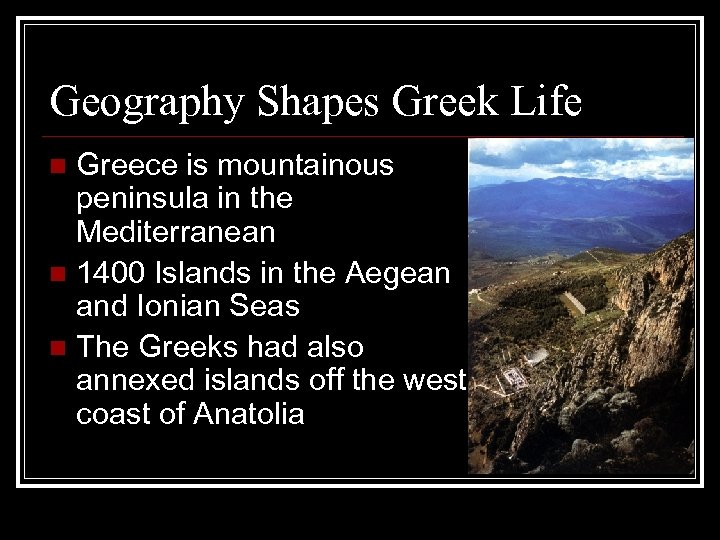
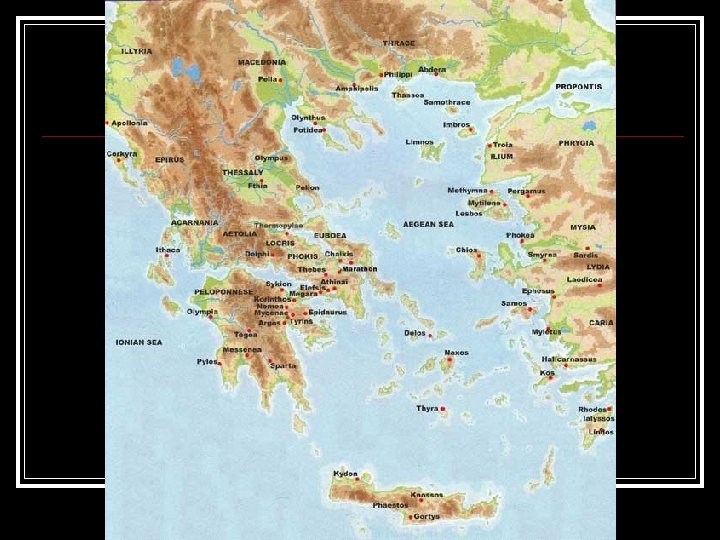
Geography Shapes Greek Life Greece is mountainous peninsula in the Mediterranean n 1400 Islands in the Aegean and Ionian Seas n The Greeks had also annexed islands off the west coast of Anatolia n
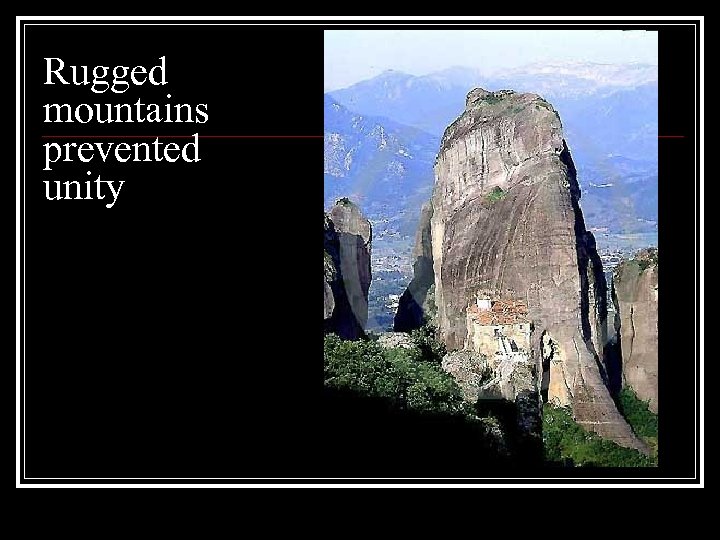
Rugged mountains prevented unity
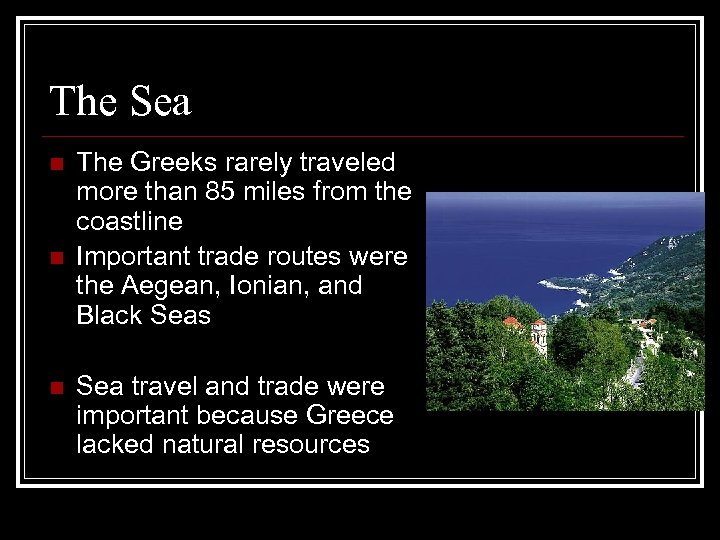
The Sea n n n The Greeks rarely traveled more than 85 miles from the coastline Important trade routes were the Aegean, Ionian, and Black Seas Sea travel and trade were important because Greece lacked natural resources
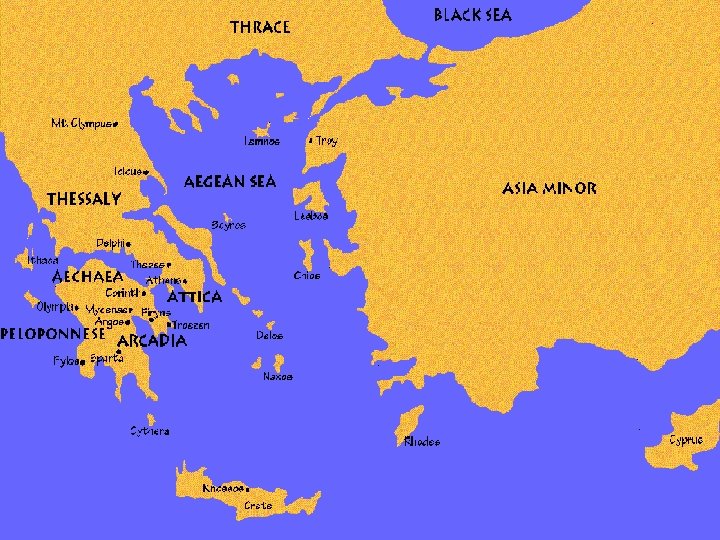
The Greek World
The Land n 3/4 th of Greece is covered with mountains n This made unification of Greece difficult n Greece developed small, independent communities (city-states)
The Land n Uneven terrain made land travel difficult n Sparta was only 60 miles from Olympia, but travel there took seven days.
The Land Only 20 % of the land was arable – suitable for farming n Without large-scale agriculture, Greece was never able to support a large population. n
The Land The Greek diet was based on staple crops like grains, grapes, and olives n The desire for more living space and land for grazing animals led the Greeks to seek sites for colonies n
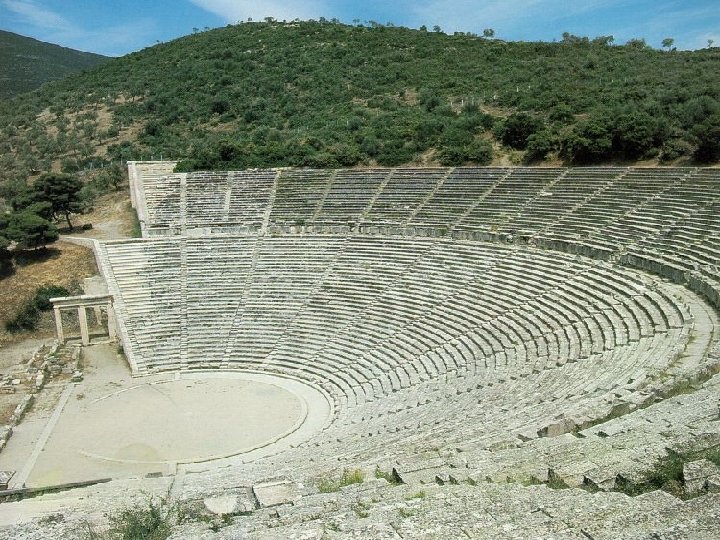
The Climate Temperatures ranges from 48º in the winter to 80º in the summer n The climate supported an outdoor life for the Greeks n Men spent time at outdoor public events and met to discuss politics, news and civic life n
Exit Ticket n Write a paragraph (at least 5 Sentences) answering the following question: n How did the geographic characteristics of Greece influence that civilization?
Mycenaean Civilization Develops They were a group of Indo-European migrants n They settled on the Greek mainland around 2000 BC n Their name came from their leading city, Mycenae n
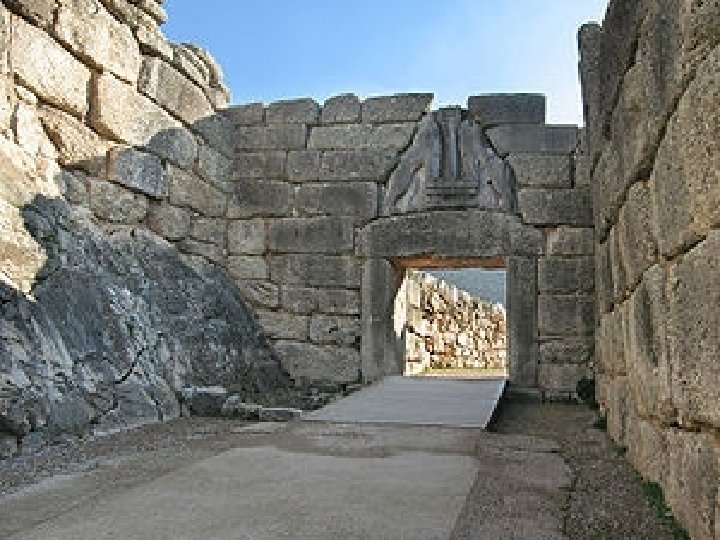
Mycenae Built on a steep rocky ridge n 20 ft thick fortified walls n Mycenaean warrior-kings controlled the area from towns like Tiryns and Athens n 1600 -1200 BC n
Culture and Trade n While their nobles led a life of splendor, most people worked as farmers. Others were weavers, goat herders, or stonemasons
Invasion of Crete Mycenaean warrior-kings invaded Crete n Minoan culture had thrived there for over 600 years n Mycenaeans preserved some elements of Minoan culture n They adapted the Minoan writing system to the Greek language n
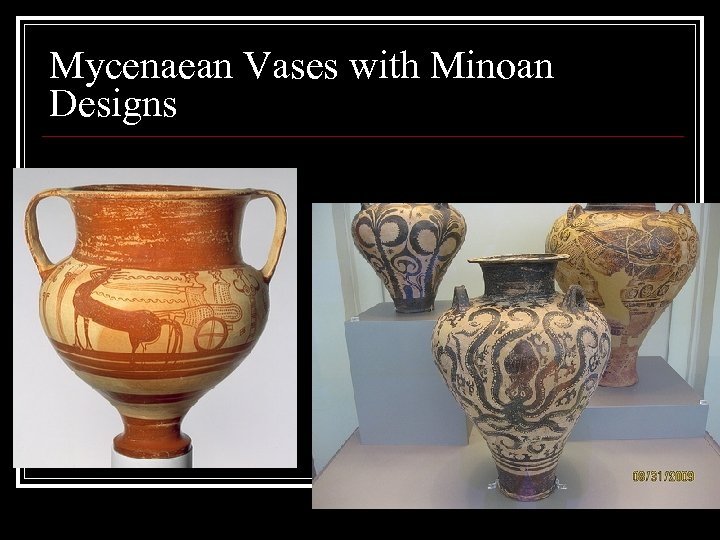
Mycenaean Vases with Minoan Designs
Greek Culture Minoan legends formed the core of Greek religious practice, art, politics, and literature n Western civilization has roots in early Greek civilizations n
The Trojan War Fought between Mycenaeans (Greeks) and Trojans n Lasted ten years n n Legend says the war started because a Trojan name Paris had kidnapped Helen, the beautiful wife of a Greek king
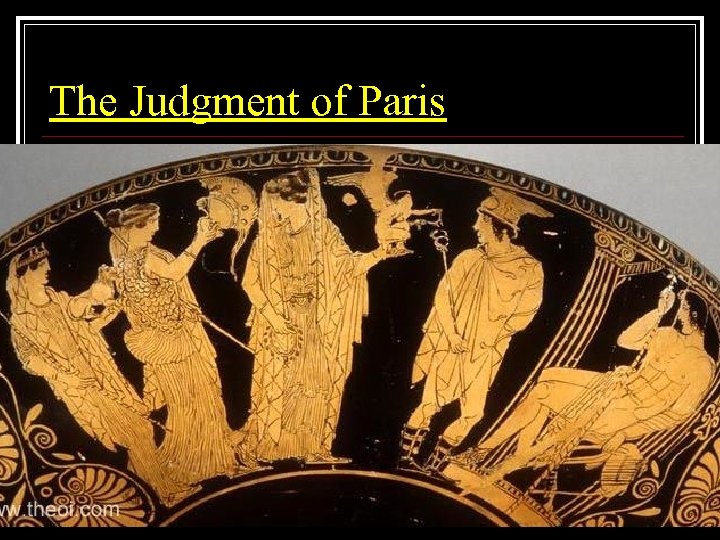
The Judgment of Paris
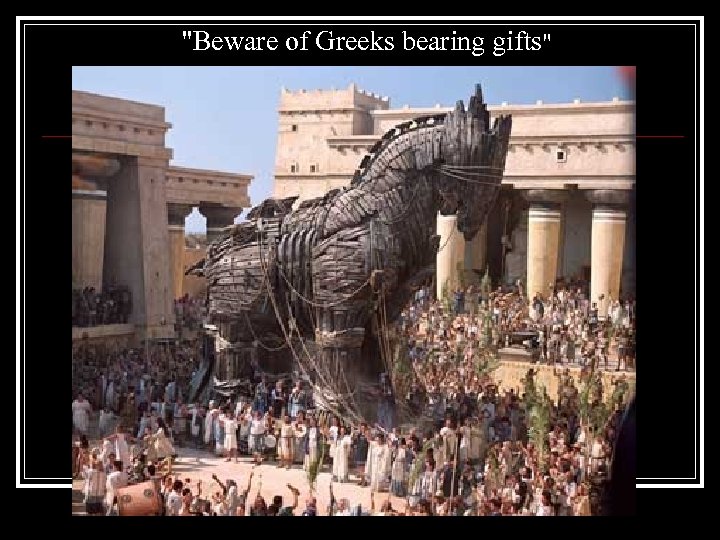
"Beware of Greeks bearing gifts"
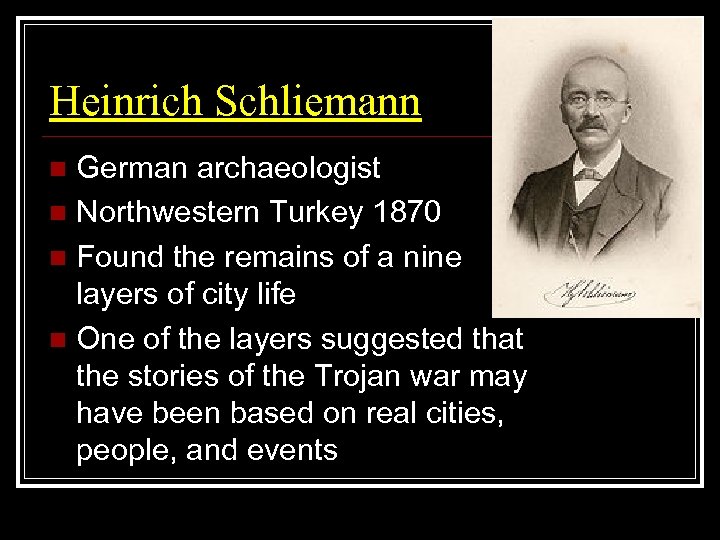
Heinrich Schliemann German archaeologist n Northwestern Turkey 1870 n Found the remains of a nine layers of city life n One of the layers suggested that the stories of the Trojan war may have been based on real cities, people, and events n
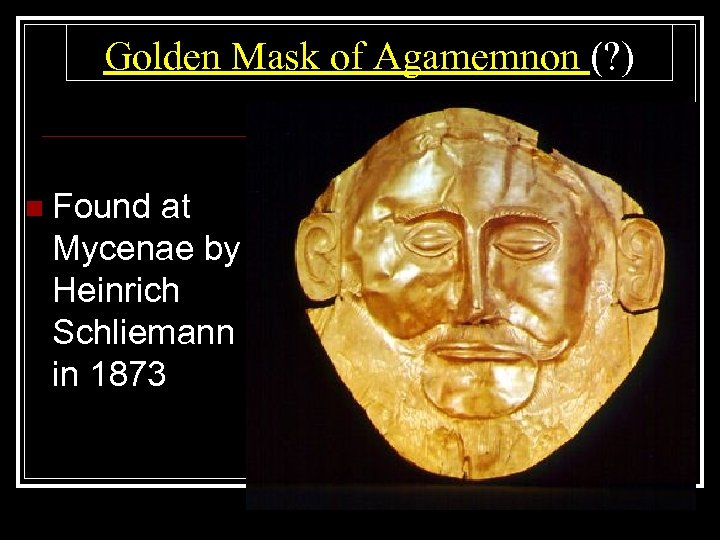
Golden Mask of Agamemnon (? ) n Found at Mycenae by Heinrich Schliemann in 1873
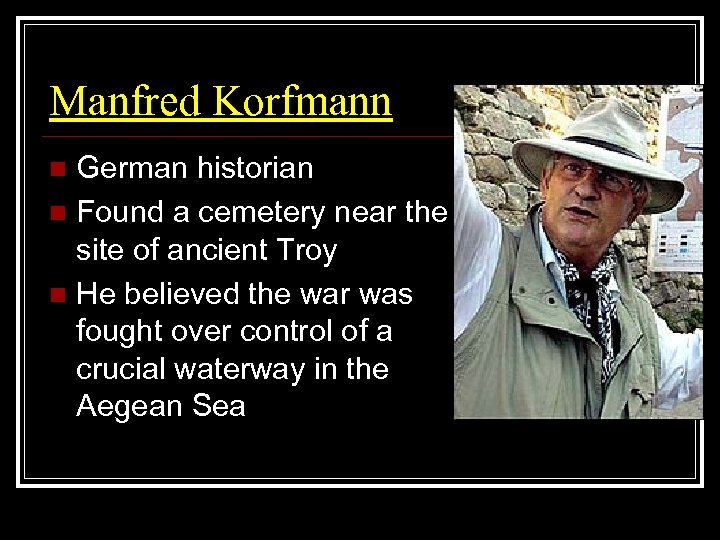
Manfred Korfmann German historian n Found a cemetery near the site of ancient Troy n He believed the war was fought over control of a crucial waterway in the Aegean Sea n
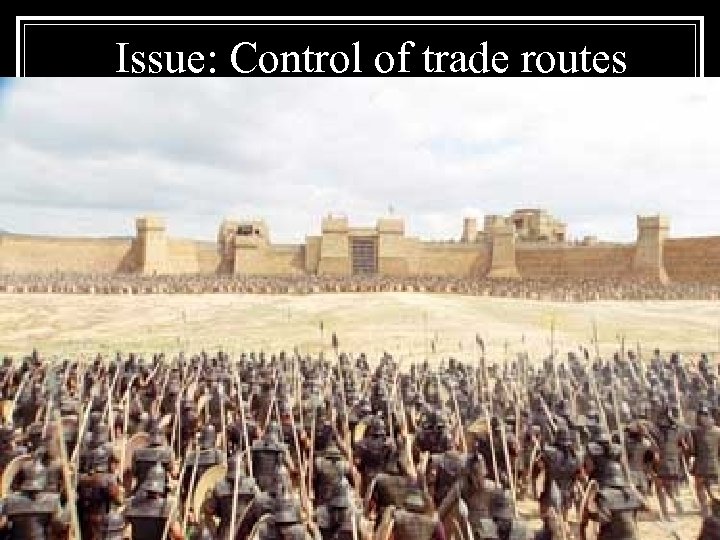
Issue: Control of trade routes
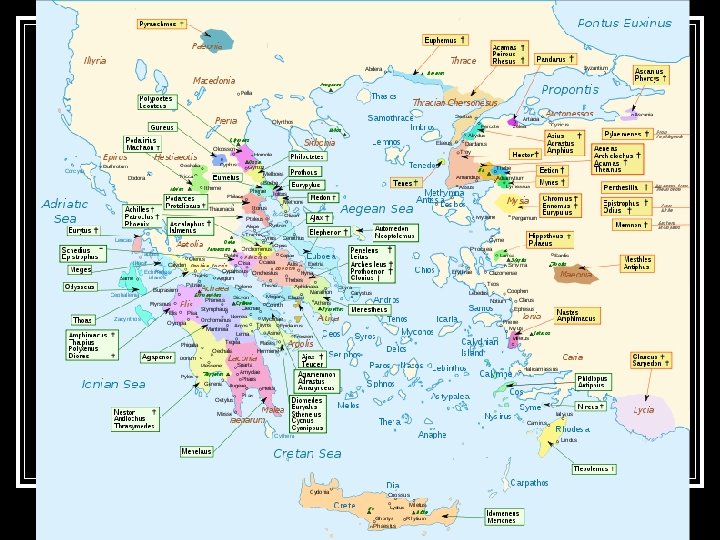
Greek Culture Declines Under the Dorians Mycenae collapsed after the Trojan War n Sea raiders attacked and burned Mycenae around 1200 BC n n The Dorians moved into the war-torn countryside
The Dorians Less advanced than the Mycenaean Greeks n The economy collapsed n Trade came to a standstill n
The “Dark Age” of Ancient Greece Greeks appear to have lost the art of writing during the Dorian Age n 400 year period with no written records n 1150 BC to 750 BC n n Without written records, little is known about this period of decline
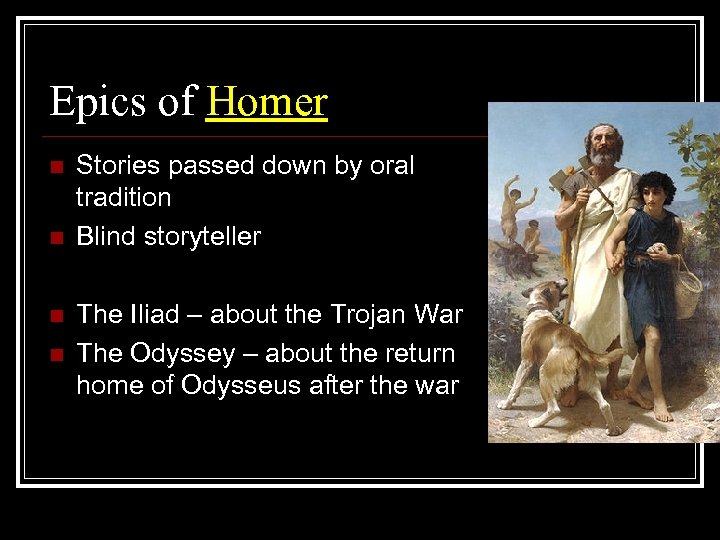
Epics of Homer n n Stories passed down by oral tradition Blind storyteller The Iliad – about the Trojan War The Odyssey – about the return home of Odysseus after the war
The Iliad Greek hero - Achilles n Trojan hero – Hector n
Aretē The Greek ideal of virtue and excellence n Could be displayed on the battlefield or in athletic events n
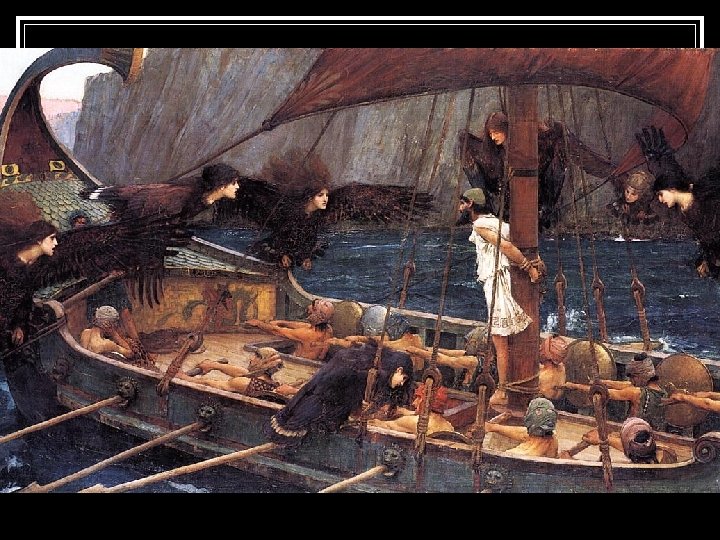
The Odyssey n Odysseus uses his wits and trickery to defeat the Trojans
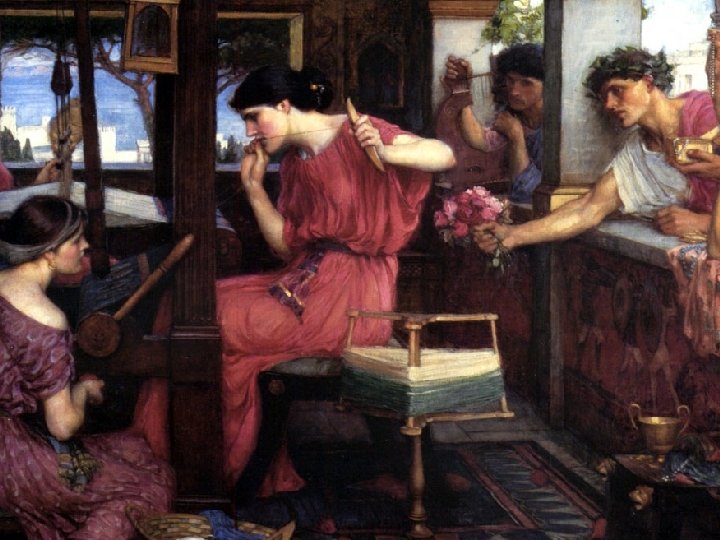
Penelope Weaves a Tapestry
Greeks Create Myths Traditional stories about their gods n Used to explain the mysteries of nature and the power of human passions n n Greek gods display human qualities
Greek Gods They are jealous, they love and hate n They are immortal n Chief god = Zeus n Hera, his wife is often jealous of his relationships with other women n Athena (goddess of wisdom) = daughter and favorite child of Zeus n
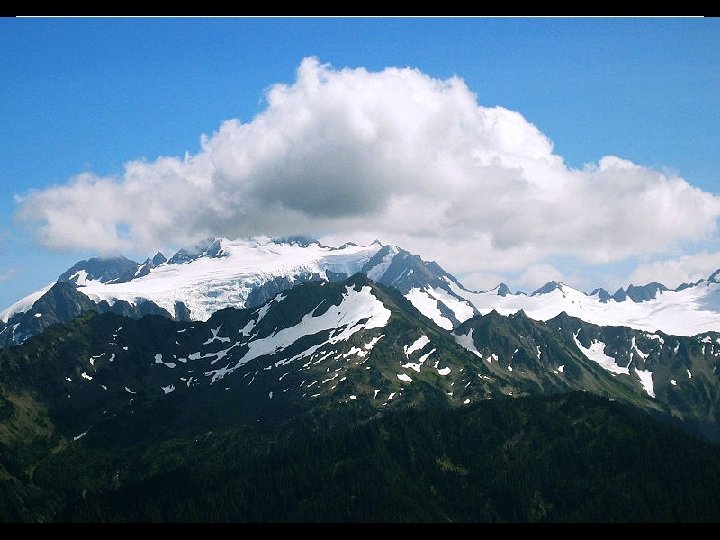
Olympus in winter
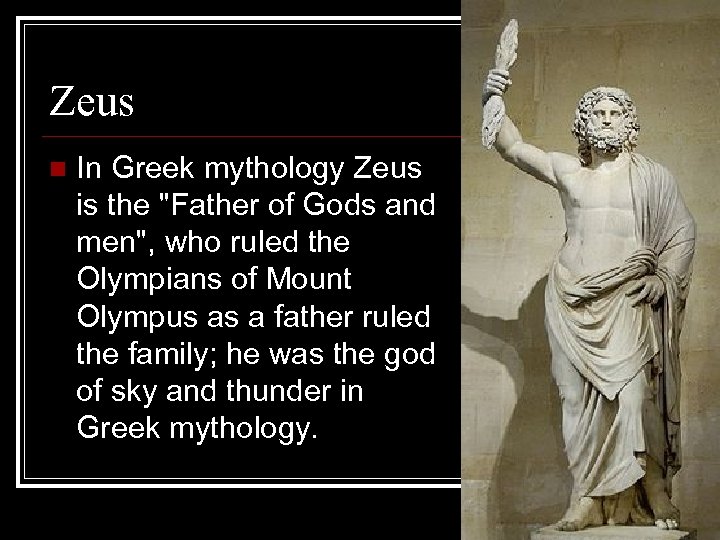
Zeus n In Greek mythology Zeus is the "Father of Gods and men", who ruled the Olympians of Mount Olympus as a father ruled the family; he was the god of sky and thunder in Greek mythology.
Athens Athena was thought to be the guardian of cities n Athens was built in her honor n
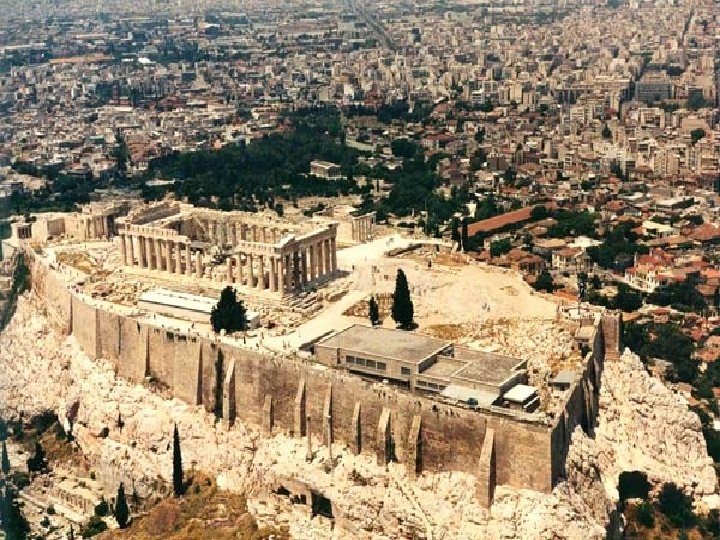
Photo of Athens
Warring City-States Section 2 p. 115 -119
Rule and Order in Greek City-States The polis was the fundamental political unit in ancient Greece n Most city-states controlled between 50 and 500 square miles of land n Often fewer than 20, 000 residents n
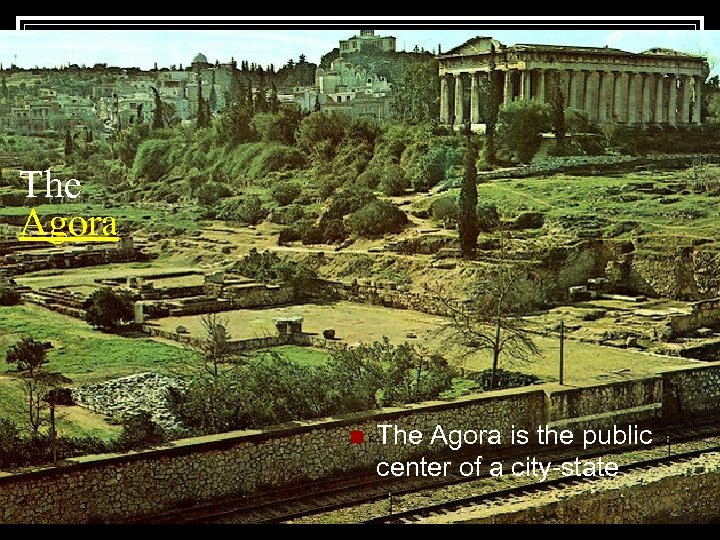
The Agora n The Agora is the public center of a city-state
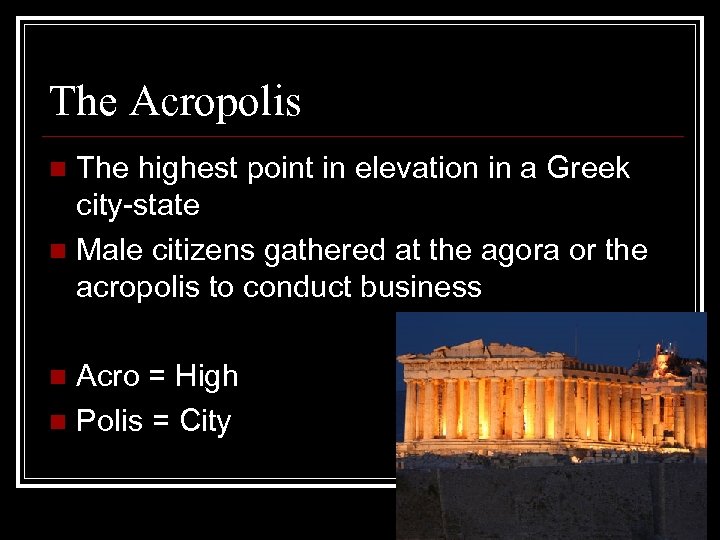
The Acropolis The highest point in elevation in a Greek city-state n Male citizens gathered at the agora or the acropolis to conduct business n Acro = High n Polis = City n
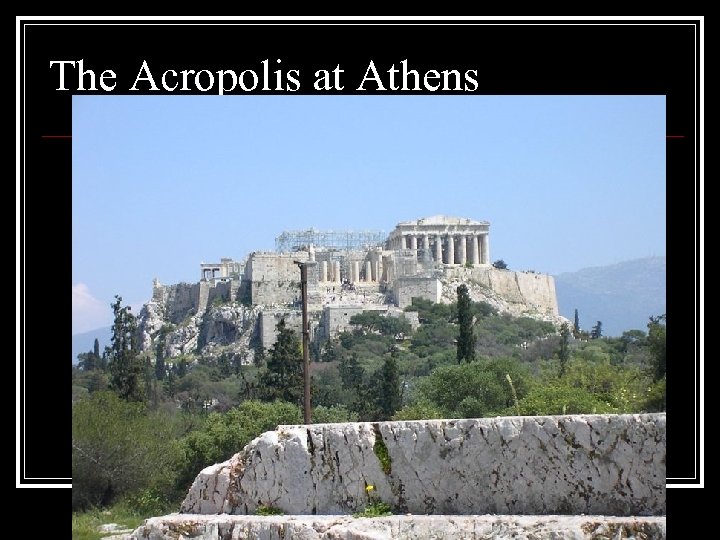
The Acropolis at Athens
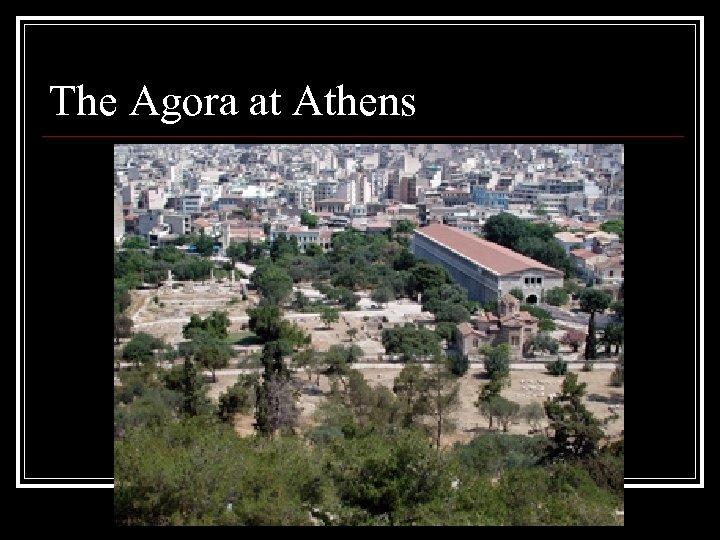
The Agora at Athens
Greek Political Structures n Some city states had a monarchy, rule by a king, queen, or royal family
Greek Political Structures n Some had an aristocracy, rule by a a small group of land-owning wealthy families
Greek Political Structures n Later, newly wealthy merchants who were dissatisfied with aristocracy formed a new type of government – oligarchy, rule by a few powerful people The idea of representative government began to take shape n The Greeks looked down on foreigners, who they considered barbarians n
A New Kind of Army Emerges During the Dorian Age only the rich could afford expensive bronze weapons and shields n Iron is harder and more common than bronze n Iron weapons are cheaper n
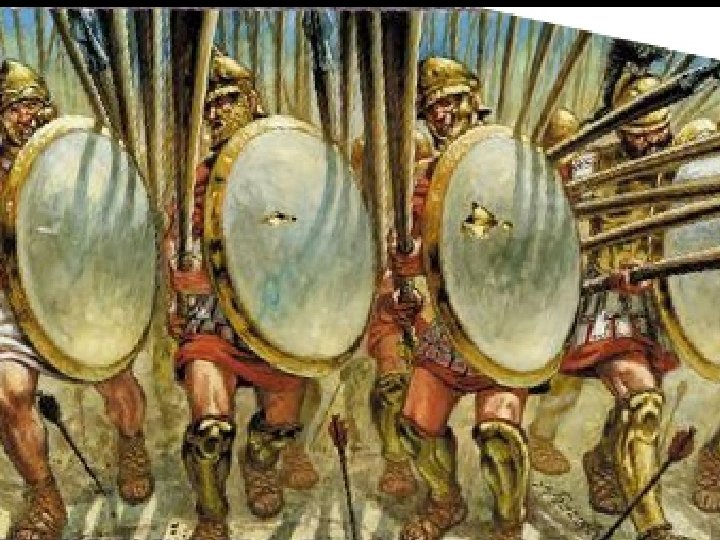
A New Kind of Army Emerges Iron weapons make a new kind of army possible n Regular citizens were expected to defend the polis n Foot soldiers were called hoplites n Their fighting formation was called the phalanx n
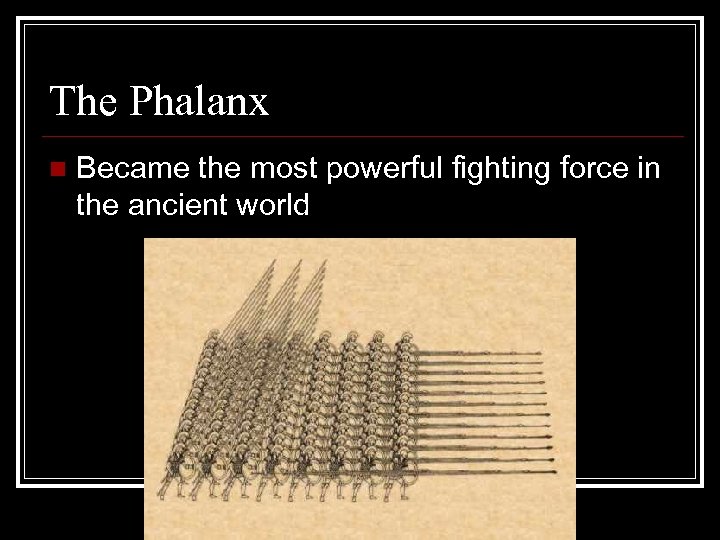
The Phalanx n Became the most powerful fighting force in the ancient world
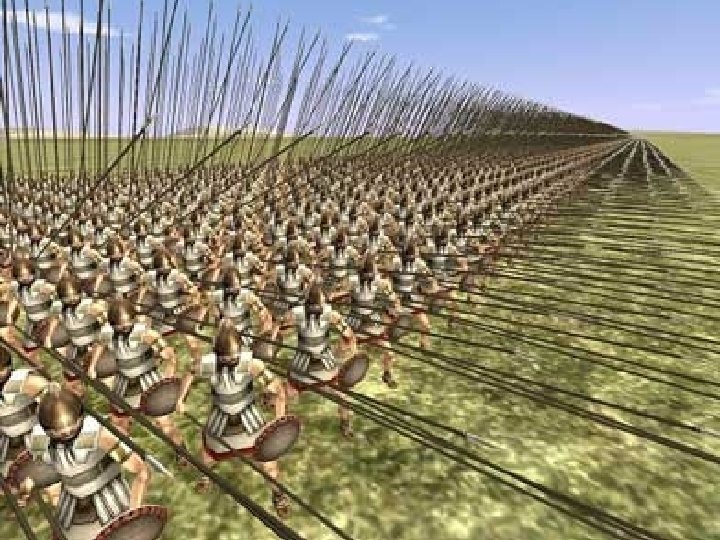
Phalanx photo
Tyrants Seize Powerful individuals called tyrants gained control of the government by appealing to the poor and discontented n Different competing groups led to many turnovers in control of the government in many city-states n
Sparta Builds a Military State Sparta is isolated in the southern part of Greece n Unlike other Greek city-states, Sparta built a military government n
Sparta Dominates Messenians Sparta conquered Messenia around 725 BC n The Messenians became helots, peasants forced to stay on the land they worked n Each year the Spartans demanded half of the helots yearly crop n
Helots Revolt Around 600 BC the Messenians revolted n Messenians outnumbered the Spartans eight to one n The Spartans were barely able to put down the revolt n Spartans then dedicated themselves to creating a stronger city-state n
Sparta’s Government and Society n Two groups governed Sparta n An Assembly – all free adult males n n A Council of Elders n n They elected officials and voted on major issues Proposed laws on which the assembly voted Five elected Ephors carried out the laws passes by the Assembly
Sparta’s Military Leaders n Two kings ruled over Sparta’s military
Sparta’s Diverse Population The ruling families who owned land were descended from the original inhabitants of the region n Free noncitizens worked in commerce and industry n Helots were considered higher than slaves n
Spartan Education Military training for men began at age seven n Boys left home and moved into barracks n Wearing no shoes, they trained and marched during the day n They slept on hard benches at night n Coarse black porridge at mealtime n

Spartan photo
Spartan Education for Girls n n n No military training They ran, wrestled, and played sports Trained to put love for Sparta over that of family They managed family estates while men served in the polis They could not vote, but had more rights than women in other Greek city-states n (Athenian women were expected to stay out of sight and raise children)
Athens Builds a Democracy Athens was north of Sparta n In outlook and values, Athens contrasted sharply with Sparta n
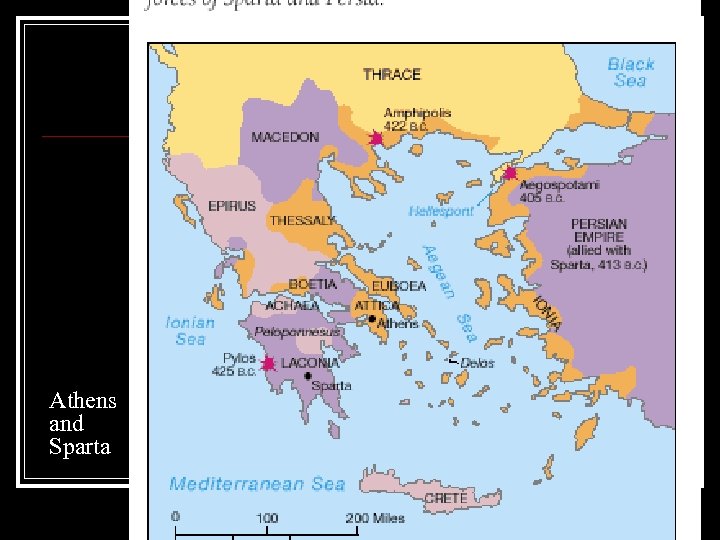
Athens and Sparta
Political Developments in Athens Athenians avoided the power struggles between rich and poor by starting a democracy n Democracy = Rule by the people n Citizens participated in decision making n
Democracy in Athens Only free adult males counted as citizens and were allowed to vote n Women, slaves, foreigners living in Athens were not considered citizens and had few rights n Slaves made up 1/3 rd of the population of Athens n
Chart comparing Athenian democracy to American
Political Changes Clashes between aristocrats and common people led to changes in Athens n A failed attempt to establish a tyranny led to the formation of a law code n In 621 BC Draco wrote the first Greek legal code n It addressed debt slavery, in which poor farmers worked as slaves to pay debts n

Draco
![Draconian n n n [drey-koh-nee-uh n, druh-] –adjective 1. of, pertaining to, or characteristic](https://present5.com/presentation/58c87e36d43cc4ddd8d63a58bff3fb9d/image-78.jpg "Draconian n n n [drey-koh-nee-uh n, druh-] –adjective 1. of, pertaining to, or characteristic")
Draconian n n n [drey-koh-nee-uh n, druh-] –adjective 1. of, pertaining to, or characteristic of Draco or his code of laws. 2. ( often lowercase ) rigorous; unusually severe or cruel: Draconian forms of punishment.
Solon’s Political and Economic Reforms Solon was chosen by aristocrats to lead the government n Solon outlawed debt slavery n Allowed all citizens to participate and debate in the Assembly n Any citizen could bring charges against wrongdoers n
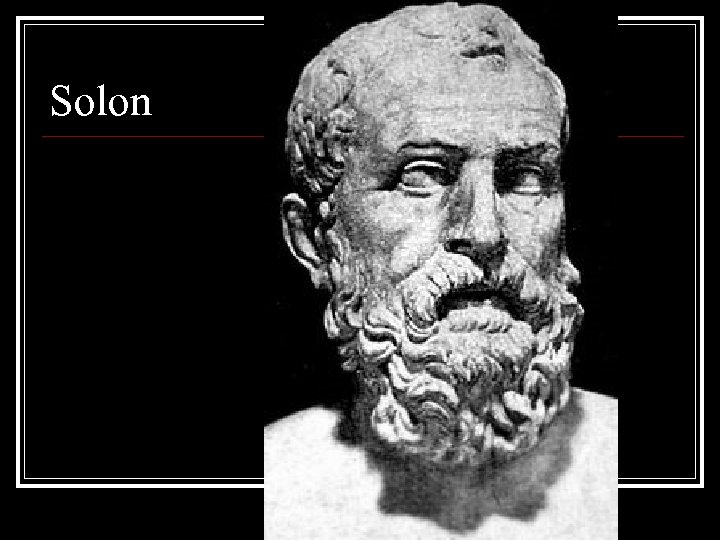
Solon
Solon’s Political and Economic Reforms Trade was encouraged n Olives and grapes were exported in a profitable trade n Solon neglected land reforms n By the end of his reign, fighting erupted between landowners and the poor n
Pisistratus Seized power in 546 BC after the death of Solon n He became one of Athens first tyrants n He appealed to the poor by giving them funds for farm equipment n He gave jobs to the poor and earned their support n
Reforms of Cleisthenes Reorganized the Assembly to break up the power of the nobility n Allowed all citizens to submit laws for debate n Created the Council of Five Hundred n n n They were chosen by lot and proposed laws Only 1/5 th of Athenians were actual citizens who could vote
The Persian Wars Danger of revolt led to creation of a military state in Sparta n Danger of a revolution led to democracy in Athens n Danger of invasion by Persians led to cooperation between Athens and Sparta n
The Persian Wars Began in Ionia on the coast of Anatolia where Greeks had established colonies n Persians conquered the area in 520 BC n Athens sent ships to aid the Ionian Greeks n
Darius King of Persia n Vowed to destroy Athens in revenge for supporting Ionia n
Battle of Marathon 490 BC n Persian fleet carried 25, 000 men across the Aegean and landed at Marathon n 10, 000 Athenians waited in phalanx formation n The Greeks charged and defeated the Persians n 6400 Persians and 192 Athenians were killed n
Pheidippides Although the Greeks won the battle, Athens was standing defenseless n A runner was sent from the battle sight to take message back to Athens to not give up the city without a fight n Pheidippides ran the distance, delivered the message, then collapsed and died n
Modern Marathons n The distance of modern marathons is based on the distance between Athens and Marathon
Thermopylae and Salamis 480 BC n Xerxes – son of Darius tried to crush Greece n Greeks were divided about what to do n Some want to unite, others want to abandon the Athenians n
Thermopylae n n n A narrow mountain pass 7000 Greeks including 300 Spartans blocked the Persian army The outnumbered Greeks fought for three days before a traitor told the Persians about a secret path around the cliffs The Spartans held the pass while other Greeks retreated All 300 Spartan soldiers were killed
Meanwhile, Back in Athens… Citizens debate on how to best defend the city n Themistocles convinces then to evacuate the city and fight at sea n The Greek fleet is positioned in a narrow channel at Salamis n Xerxes sets fire to Athens but cannot block the channel at Salamis n
Greek Victory at Salamis Greek ships use battering rams into the hulls of Persian ships n Xerxes watches as 1/3 rd of his fleet is sunk n n The remainder of the Persian army is defeated by Spartans at the Battle of Plataea in 479 BC

Consequences of the Persian Wars Threat of Persian takeover ended n Greeks form an alliance of 140 city-states called the Delian League n The Delian League drove Persians from areas around Greece n n Athens used its powerful navy to control the other members of the Delian League
Consequences of the Persian Wars n Set the stage for the “Golden Age” of Athens
Democracy and Greece’s Golden Age Section 3 p. 120 -125
Pericles Three Goals for Athens Pericles dominated political life in Athens for 32 years (461 BC to 429 BC) n This time is often called the “Age of Pericles” n n His three goals were…. .
Goal 1. - Stronger Democracy Increased the number of paid public officials n Now, even poor people could afford to serve in the government n
Direct Democracy n A form of government in which citizens rule directly and not through representatives.
Athenian and United States Democracy
Goal 2 – Strengthen the Athenian Empire Used money from the Delian League to build Athens’ navy n A navy was important because it kept the empire safe and protected trade n n Overseas trade made Athens prosperous
Goal 3 - Glorifying Athens Used money from the Delian League to buy gold, ivory, and marble. n More money was used to hire artisans who worked for 15 years to build the Parthenon n
The Parthenon
Three Styles of Greek Columns
Greek Styles in Art n The Parthenon is considered the ideal classical Greek building
The “Golden Mean”
Greek Sculpture A statue of Athena was inside the Parthenon n The statue was 38 feet tall and covered with gold and precious gems n Sculpted by Phidias, Greece’s most famous sculptor n
Greek Sculpture Classical Greek statues were graceful, strong, and perfectly formed n Their faces showed neither laughter nor anger, only serenity n n Order, balance, and proportion were most important. They set the standard for what would be called classical art.
Greek Drama The Greeks invented drama n Plays were an expression of civic pride and a tribute to the gods n Actors wore masks n Wealthy citizens paid the costs of producing the plays n
Catharsis
Tragedy A drama with a tragic hero who faces a dilemma, a choice between two negative outcomes n The hero has a tragic flaw, often hubris, or excessive pride. n
Aeschylus Wrote more than 80 plays n The Oresteia is based on the family of Agamemnon, commander of the Greeks during the Trojan War n
Sophocles Wrote about 100 plays n Oedipus the King n Antigone n
Euripides n Medea

Comedy n Often poked fun at subjects like politics, customs, or respected people
Aristophanes First great comedies for the stage n The Birds n Lysistrata n n About the women of Athens forcing their husbands to end the Peloponnesian War
Spartans and Athenians Go to War n The two city-states became rivals and leaders in both pressed for war
Peloponnesian War Sparta declared war on Athens in 431 BC n Athens has a powerful navy, but Sparta could not be attacked easily from sea n
Peloponnesian War – Pericles’ Strategy Avoid land battles with the superior Spartan army n Wait for opportunity to attack Sparta from the sea n
The Spartan’s Advance Spartans march into Athenian territory and burn their food supply n Pericles brings those who live in the area around Athens inside the city walls n Athens was safe as long as ships could bring supplies into the port of Athens n
Sparta Gains the Edge A plague hits Athens in the second year of the war n 1/3 rd to 2/3 rd of the population (including Pericles) were killed by the plague n
A Second Disaster for Athens 415 BC n Athens sends 27, 000 soldiers to destroy the polis of Syracuse, an ally of Sparta n The expedition suffered a loss in 413 BC n They were totally destroyed n Athens surrendered nine years later. n Sparta had won the Peloponnesian War n
War Brings Political Changes After 27 years of war, Athens had lost its empire n The democracy of Athens was weakened n
Philosophers Search for Truth The term philosopher means “lover of wisdom” n Greek philosophy is based on two assumptions: n n n 1. The world is put together in an orderly way and subject to unchanging laws 2. people can understand these laws through logic and reason
Sophists n Questioned people’s unexamined beliefs and ideas about justice and traditional values
Protagoras Famous Sophist n Questioned the existence of the traditional Greek gods n Argued that their was no universal truth n “Man is the measure of all things” n His ideas were considered radical and dangerous n
Socrates Criticized the Sophists n Argued that there are universal standards for truth and justice n He encouraged Greeks to question themselves and their moral character n n “The unexamined life is not worth living”.
The Trial of Socrates In 399 BC when Socrates was 70 years old he was charged with “corrupting the youth of Athens” and “neglecting the city’s gods” n He was convicted by a jury and sentenced to death n He was forced to drink hemlock poison n
Plato A student of Socrates n Wrote down conversations with Socrates n Around 385 BC, he wrote is most famous work “The Republic” n
Plato’s Republic n n n Plato’s vision of a perfectly governed society Not a democracy Citizens fall into three groups Farmers and Artisans Warriors The Ruling Class n The person with the greatest insight and intellect from the ruling class would be chosen philosopher-king
Aristotle Questioned the nature of the world and human belief, thought, and knowledge n Tried to summarize all of the knowledge of the world up to his time n Invented rules of logic n Applied logic to psychology, physics, and biology n
Aristotle’s Famous Student Aristotle worked as a tutor for Alexander, the 13 year-old son of King Philip of Macedonia n In 343 BC, Philip was assassinated and Alexander became ruler of Macedonia n
Alexander the Great Empire Builder Section 4 p. 128 -131
Philip II of Macedon The Peloponnesian War had weakened both Athens and Sparta n Philip II dreamed of taking over Greece first, then Persia n
Macedonia n Map of Macedonia
Philip Builds Macedonia’s Power n n Macedonia lies just north of Greece Macedonians lived in mountain villages instead of city-states They considered themselves Greek, but were looked upon as uncivilized by the Greeks Their shrewd and fearless kings were their greatest asset
Philip’s Army Philip became king in 359 BC at 23 years old n He organized his army into phalanxes 16 men across and 16 deep n They used 18 -foot pikes to pave the way for cavalry strikes through enemy lines n His army proved to be unbeatable n
Demosthenes Athenian orator n Tried to warn the Greeks of the threat posed by Philip n He urged the Greeks to unite against the Macedonians but they would not agree on policy n
Battle of Chaeronea 338 BC n Athens and Thebes agree to an alliance against Macedon, but it was too late n Macedonians win the battle n Philip’s 18 year-old son Alexander led a cavalry charge that helped to win the battle n
Conquest of Greece The Macedonian victory puts an end to Greek freedom and independence n Philip planned to invade Persia next but never got the chance n He was assassinated at his daughter’s wedding in 336 BC by a former bodyguard n
Alexander the Great Philip’s son Alexander had the support of the army and proclaimed himself king at 20 years old n He will become called Alexander the Great n
Alexander Defeats Persia He had learned science, geography, and literature from Aristotle. n He carried a copy of Homer’s Iliad with him n He learned to use weapons, ride a horse, and command troops as a young man n
Thebes City in central Greece n Rebelled against Alexander n He destroyed the city and sold the survivors into slavery n Other Greek city-states gave up the idea of rebellion n
Invasion of Persia 334 BC n Alexander leads 35, 000 soldiers across the Hellespont into Anatolia n A Persian army of 40, 000 came to defend their empire n
Granicus River The two forces meet at the Granicus River n Alexander led his forces in a offensive attack and smashed the Persian defenses n
Darius’ Response Persians raise an army of between 50, 000 and 75, 000 men n They were determined to crush the Macedonians n
Battle of Issus Alexander realized he was outnumbered at the battle n He surprised the Persians by ordering his troops to break through a weak point in the Persian lines n They charged straight at Darius n Darius fled to avoid capture n Alexander took control of Anatolia n
Alexander’s Ambitions Grow In an attempt to make peace, Darius III offered Alexander control of the western part of his empire n Alexander rejected the offer and marched into Egypt, a Persian territory n The Egyptians welcomed Alexander as a liberator n
Pharaoh Alexander While in Egypt, Alexander visited the temple of Zeus-Ammon n He was crowned pharaoh n He founded the city of Alexandria on the mouth of the Nile n
Conquering the Persian Empire Alexander then moved west to Mesopotamia n Darius assembled 250, 000 men n Persians rode chariots with scythes on the wheels n
Scythes n Razor sharp knives or blades
Battle of Gaugamela Small village on the ruins of ancient Nineveh n Alexander launched a phalanx attack followed by a cavalry charge n Darius again panicked and fled n The battle ended Persia’s power n
Alexander Takes Persia Alexander plundered the cities of Babylon, Susa, and Persepolis n Treasure is divided among Alexander’s army n Persepolis is burned to signal destruction of the Persian Empire n
Alexander’s Other Conquests Alexander wanted to expand his empire n He pursued Darius and found him already dead near the Caspian Sea n Darius had been murdered by one of his provincial governors n n Over the next three years, Alexander pushed east into Asia
Alexander in India In 327 BC Alexander enters the Indus Valley n He defeats an Indian army that included 200 elephants at the Hydaspes River n After the victory Alexander’s soldiers request to return home n A disappointed Alexander agrees n
Alexander and His Troops On the return trip the army crossed a desert n Some of the men collected water and brought it to Alexander n He poured it out in front of his troops to show that he was willing to suffer the same hardships they did n
The Death of Alexander 323 BC n Alexander is back in Babylon n He announces plans to organize his empire n One year after his return Alexander becomes ill with a fever and dies n He is one month short of his 33 rd birthday n
Alexander’s Legacy n The empire was divided among Alexander’s three strongest generals n n n Antigonus – became king of Macedonia Ptolemy – became a pharaoh in Egypt Seleucus – took most of the old Persian Empire. (The Seleucid Empire)
Alexander’s Legacy Ended independent Greek city-states n Alexander adopted Persian dress and married a Persian wife n He included conquered people in his army n A blend of Macedonian, Greek, Persian, Egyptian, and Indian cultures resulted n This would come to be known as Hellenistic culture n
The Spread of Hellenistic Culture Section 5 p. 132 -135
Hellenistic Culture in Alexandria After Alexander’s death a new culture emerged n It combined Egyptian, Persian, and Indian influences n This was Hellenistic culture n The language was Koine n
Koine The popular language spoken in Hellenistic cities n Koine means common n It was a dialect of Greek n It enabled traders all over the Hellenistic world to communicate n
Trade and Cultural Diversity Alexandria in Africa was the center of the Hellenistic world n Located in a strategic location on the western edge of the Nile n It grew and prospered from trade n It became an international community n
Alexandria’s Greatest Attractions Broad avenues n Greek statues n Royal palaces overlooking the harbor n The Tomb of Alexander n 400 ft tall lighthouse known as the Pharos n
Tomb of Alexander
The Museum at Alexandria A temple dedicated to the Muses – Greek goddesses of arts and sciences n The word museum comes from muse n Art galleries n A zoo n Botanical gardens n Dining hall n
The Library at Alexandria Half a million papyrus scrolls n First research library in the world n
Science and Technology Hellenistic scholars preserved Greek and Egyptian learning in the sciences n They provided most of the scientific knowledge available in the West until the 16 th and 17 th centuries n
Astronomy The museum contained an observatory n Astronomers could study the planets and stars n
Aristarcus of Samos Estimated that the sun was 300 times larger than the earth n Proposed that the earth and other planets revolved around the sun n n Other astronomers of the day did not agree
Ptolemy Alexandria’s last renowned astronomer n Incorrectly placed the earth at the center of the solar system n n This view was held by astronomers for the next 14 centuries.
Eratosthenes Closely calculated the earth’s true size n Director of the library at Alexandria n Used geometry to calculate the earth’s circumference at 24, 662 miles n n Today we calculate it to 24, 860 miles n (Within 1% of modern calculations)
Mathematics and Physics Aristarchus and Eratosthenes used a geometry text written by Euclid n Euclid wrote “The Elements” n 465 geometric propositions and proofs n Still the basis for modern geometry textbooks n
Pythagorean Theorem n The square of a right triangle’s hypotenuse is equal to the sum of the squares of the other two sides
Archimedes Estimated the value of pi (π) n The lever n The compound pulley n The Archimedes screw n Catapult n Buoyancy n
Philosophy and Art Hellenistic scholars believed that the universe followed rational principles n Two schools of thought developed during the Hellenistic period n n n Stoicism Epicureanism
Stoicism Founded by Zeno n A divine power controlled the universe n People should live in harmony with natural law n Vices like human desire, power, and wealth should be controlled n Followers focused on things they could control n
Epicureanism n n n Founded by Epicurus Universe is composed of atoms and controlled by gods who had no interest in humans Only objects that the 5 senses could perceive were real The greatest good and highest pleasure come from virtuous conduct and the absence of pain Achieve harmony between body and mind
Epicurean n Today the term has come to mean a person devoted to pursuing human pleasures n During his lifetime Epicurus advocated moderation in all things
Realism in Sculpture Rulers, wealthy merchants, and cities all purchased statues to honor the gods, commemorate heroes, and portray ordinary people n The largest known Hellenistic statue was the Colossus of Rhodes n
Colossus of Rhodes Stood over 100 feet tall n Toppled by an earthquake n
Winged Victory of Samothrace
Hellenistic Sculpture More realistic n More emotional n Real people in real situations were carved n
Hellenistic World in Decline By 150 BC the Hellenistic world was in decline n Rome was growing and gaining in strength n Greek drama, architecture, sculpture, religion, and philosophy were preserved and eventually became the core of Western civilization n
Скачать презентацию Bell Ringer n Based on what you already
58c87e36d43cc4ddd8d63a58bff3fb9d.ppt