 Скачать презентацию Belarusian State Medical University Department of Pathologic Anatomy
Prezentatsia_Leshi2013-2007 version-final ура.pptx
- Количество слайдов: 21



Belarusian State Medical University Department of Pathologic Anatomy Morphological Diagnostics of Breast Cancer Reported by: Student of the 4 th year of Pediatrics Faculty Alexei Lazovski Scientific advisor: Ph. D in Medicine, Ass. Prof. Z. N. Bragina
Actuality • Annually 1, 2 mln primary cases of cancer disease are being registered • Steady increase up to 1, 7 mln cases is being forecasted by 2015 ( WHO, 2012) • One of the leading oncologic diseases is breast cancer • Frequency of breast cancer among oncologic diseases worldwide and in Belarus is 18, 5% 2
Goal of Research 1. To study clinical and morphological features of breast cancer 2. The goal is to develop criteria for diagnosis breast cancer, determine the forecast and methods of treatment of breast cancer based on the results of morphologic research and use of immunohistochemistry method. 3
Objectives 1. Define frequency of different histological variants of breast cancer. 2. Evaluate metastatic potential of breast cancer based on immunohistochemistry. 3. Make immunohistochemical analysis of determining tumor receptors to progesterone, estrogen, Ki-67 and Her 2 neu 4
Materials and Method of Research • Clinical and morphological research of 200 operation material cases was made. The material was received during surgeries on breast cancer held in Minsk City Clinical Oncologic Dispensary during the period from September till December 2012. • Ablated mammary glands were examined macroscopically, histological research of tumors, lymph nodes of 1 st , 2 nd , 3 rd levels, resection edges as well as immunohistochemistry research was made. • The data was processed with the statistical program Microsoft Excel 2010. 5
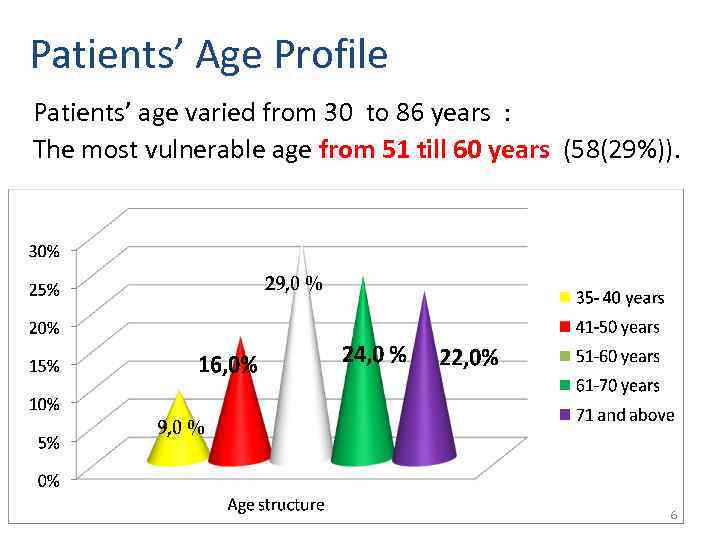
Patients’ Age Profile Patients’ age varied from 30 to 86 years : The most vulnerable age from 51 till 60 years (58(29%)). 29, 0 % 6
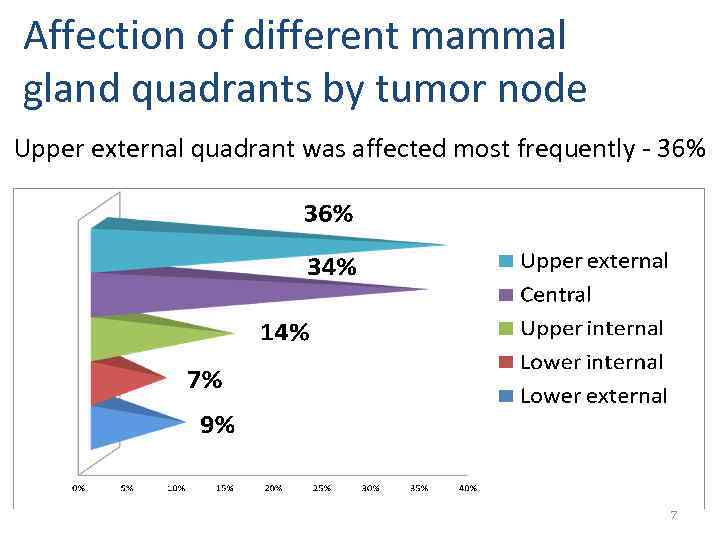
Affection of different mammal gland quadrants by tumor node Upper external quadrant was affected most frequently - 36% 7
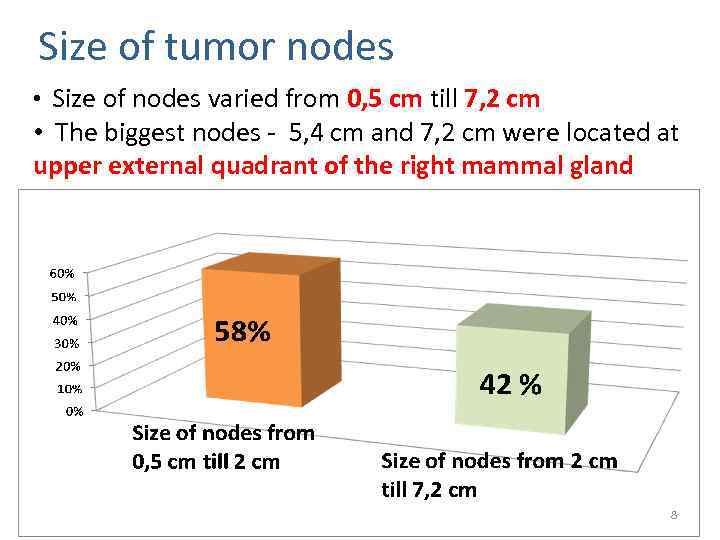
Size of tumor nodes • Size of nodes varied from 0, 5 cm till 7, 2 cm • The biggest nodes - 5, 4 cm and 7, 2 cm were located at upper external quadrant of the right mammal gland 8
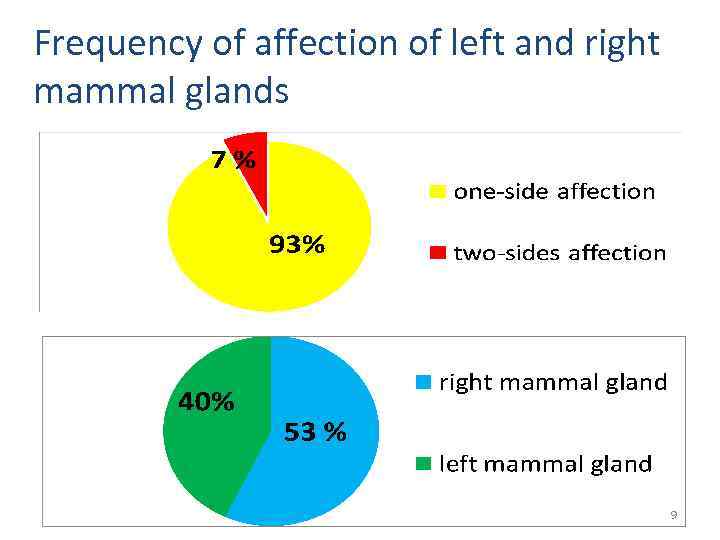
Frequency of affection of left and right mammal glands 9
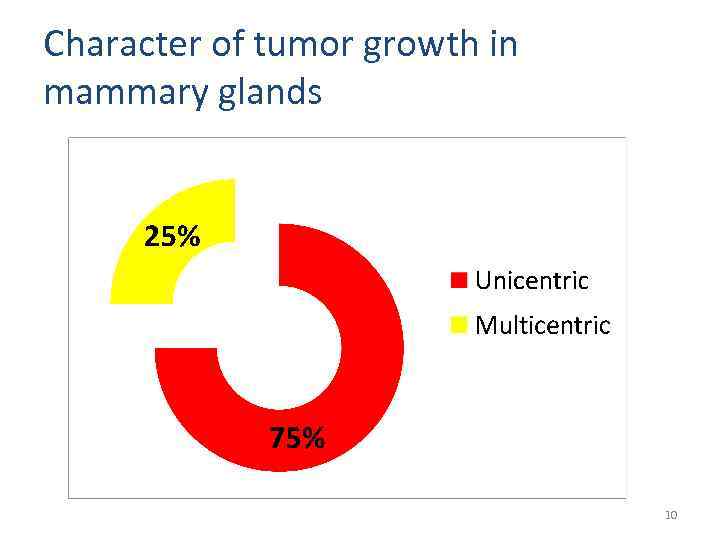
Character of tumor growth in mammary glands 10
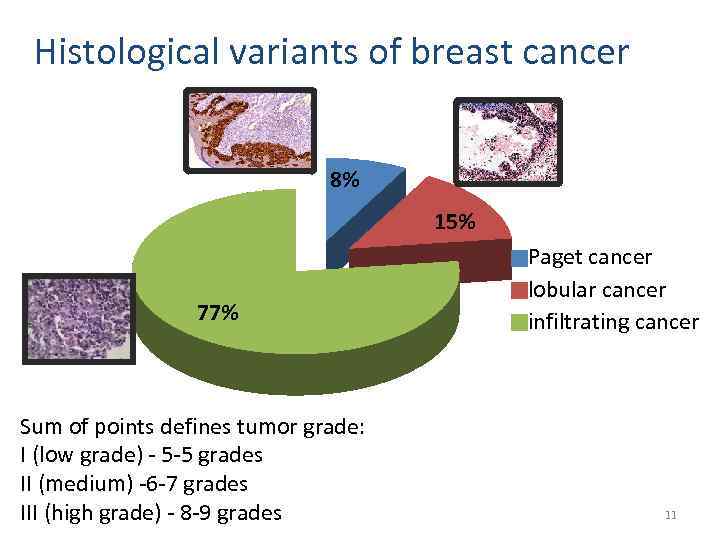
Histological variants of breast cancer 8% 15% 85% 77% Sum of points defines tumor grade: I (low grade) - 5 -5 grades II (medium) -6 -7 grades III (high grade) - 8 -9 grades Paget cancer lobular cancer infiltrating cancer 11
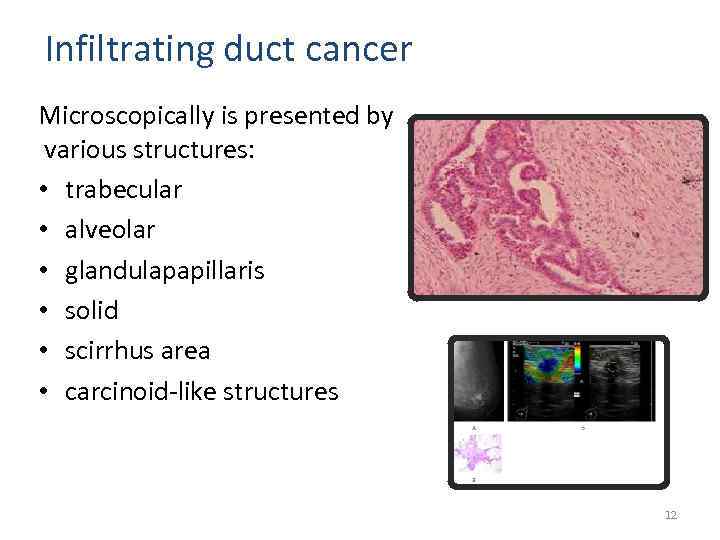
Infiltrating duct cancer Microscopically is presented by various structures: • trabecular • alveolar • glandulapapillaris • solid • scirrhus area • carcinoid-like structures 12
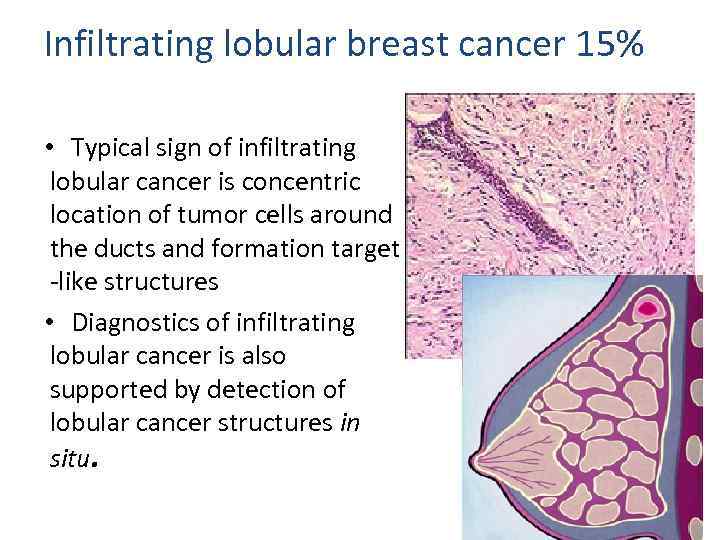
Infiltrating lobular breast cancer 15% • Typical sign of infiltrating lobular cancer is concentric location of tumor cells around the ducts and formation target -like structures • Diagnostics of infiltrating lobular cancer is also supported by detection of lobular cancer structures in situ. 13
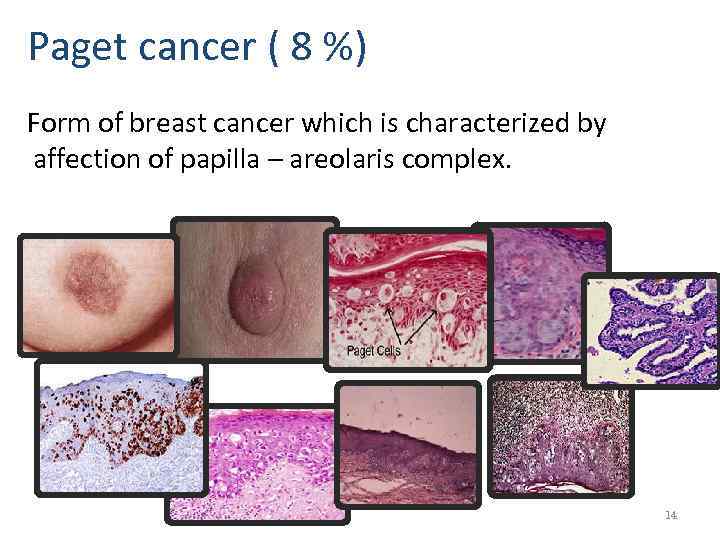
Paget cancer ( 8 %) Form of breast cancer which is characterized by affection of papilla – areolaris complex. 14
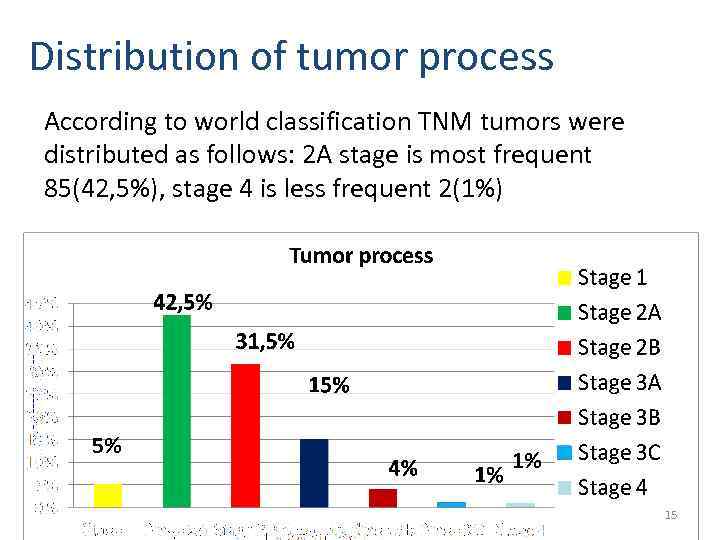
Distribution of tumor process According to world classification TNM tumors were distributed as follows: 2 А stage is most frequent 85(42, 5%), stage 4 is less frequent 2(1%) 5% 1% 15
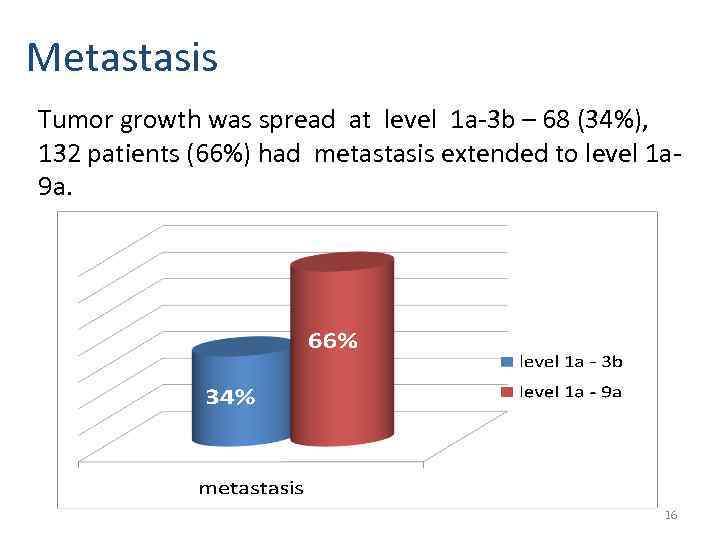
Metastasis Tumor growth was spread at level 1 а-3 b – 68 (34%), 132 patients (66%) had metastasis extended to level 1 а 9 а. 16
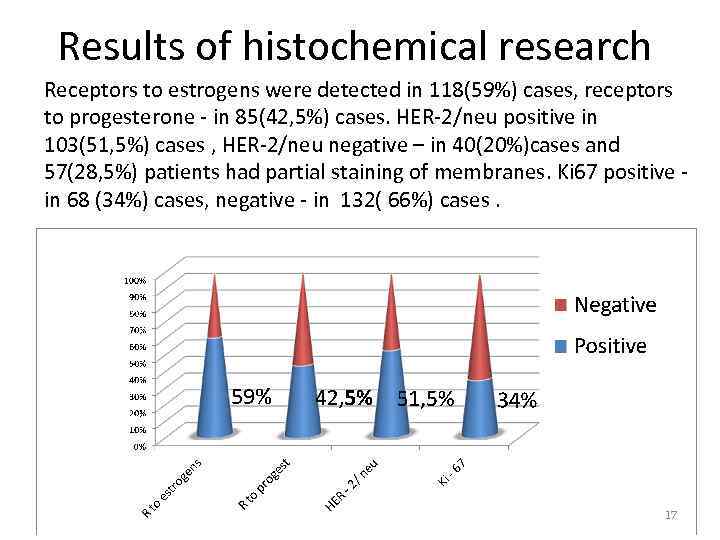
Results of histochemical research Receptors to estrogens were detected in 118(59%) cases, receptors to progesterone - in 85(42, 5%) cases. HER-2/neu positive in 103(51, 5%) cases , HER-2/neu negative – in 40(20%)cases and 57(28, 5%) patients had partial staining of membranes. Ki 67 positive in 68 (34%) cases, negative - in 132( 66%) cases. 59% 17
Conclusion: 1 1. The amount of women suffering from breast cancer at the age under 50 comprised 25% , 50 and above - 75% 2. 36% of patients had tumor process located in upper external quadrant of the right mammal gland. 3. In most cases ( 58%) the size of nodes were less then 2 cm, which indicates early diagnostics of breast cancer. 4. In 93% tumor growth was one-sided, mostly located in the right mammal gland(53 %). 18
Conclusion: 2 5. Unicentric growth was registered in 75% of cases, multicentric growth in 25%. 6. Infiltrating breast cancer comprised 77% , other forms were: lobular - 15%, Paget cancer - 8%. 7. According to international classification the following tumor stages were most frequent in the sample group: - 2 А stage in 42, 5% - 2 В stage in 31, 5%. 19
Conclusion: 3 8. Receptors to estrogens were detected in 59% cases, receptors to progesterone – in 42, 5% cases. HER-2/neu positive in 51, 5% cases , HER-2/neu negative – in 20% cases and 28, 5% of patients had partial staining of membranes. Ki 67 positive – in 34% cases, negative – in 66% cases, which should be taken into account for making targeted postoperative therapy. 20

Thank for your attention, stay healthy and wealthy! 21
Скачать презентацию Belarusian State Medical University Department of Pathologic Anatomy
Prezentatsia_Leshi2013-2007 version-final ура.pptx