 Скачать презентацию Behavioral Health DATA BOOK A quarterly reference to
58231809d9504f6f61ee95537333b4c0.ppt
- Количество слайдов: 78



Behavioral Health DATA BOOK A quarterly reference to community mental health and substance abuse services Fiscal Year 2012 Quarter 2 April 10, 2012
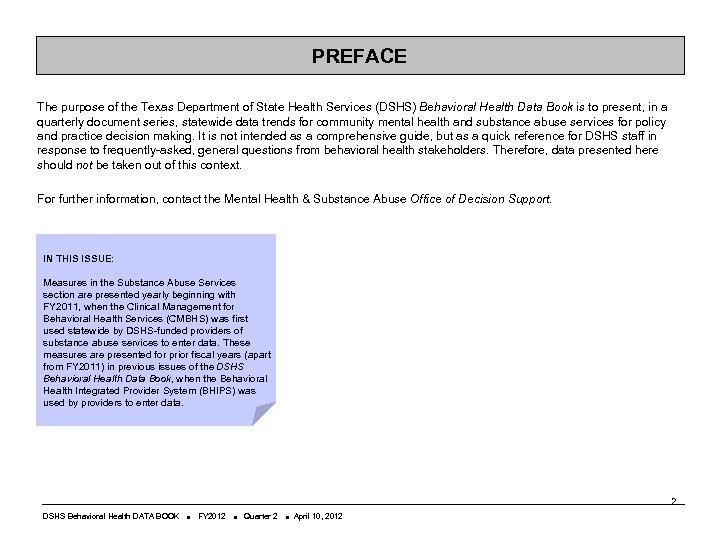
PREFACE The purpose of the Texas Department of State Health Services (DSHS) Behavioral Health Data Book is to present, in a quarterly document series, statewide data trends for community mental health and substance abuse services for policy and practice decision making. It is not intended as a comprehensive guide, but as a quick reference for DSHS staff in response to frequently-asked, general questions from behavioral health stakeholders. Therefore, data presented here should not be taken out of this context. For further information, contact the Mental Health & Substance Abuse Office of Decision Support. IN THIS ISSUE: Measures in the Substance Abuse Services section are presented yearly beginning with FY 2011, when the Clinical Management for Behavioral Health Services (CMBHS) was first used statewide by DSHS-funded providers of substance abuse services to enter data. These measures are presented for prior fiscal years (apart from FY 2011) in previous issues of the DSHS Behavioral Health Data Book, when the Behavioral Health Integrated Provider System (BHIPS) was used by providers to enter data. 2 DSHS Behavioral Health DATA BOOK FY 2012 Quarter 2 April 10, 2012
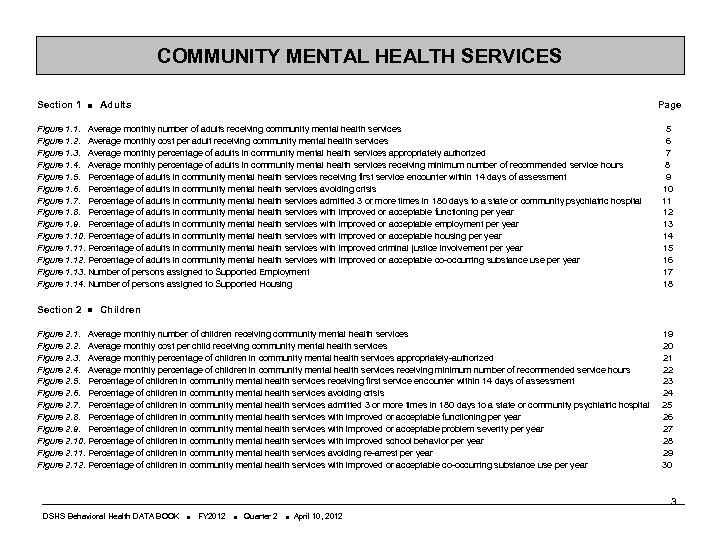
COMMUNITY MENTAL HEALTH SERVICES Section 1 Adults Page Figure 1. 1. Average monthly number of adults receiving community mental health services Figure 1. 2. Average monthly cost per adult receiving community mental health services Figure 1. 3. Average monthly percentage of adults in community mental health services appropriately authorized Figure 1. 4. Average monthly percentage of adults in community mental health services receiving minimum number of recommended service hours Figure 1. 5. Percentage of adults in community mental health services receiving first service encounter within 14 days of assessment Figure 1. 6. Percentage of adults in community mental health services avoiding crisis Figure 1. 7. Percentage of adults in community mental health services admitted 3 or more times in 180 days to a state or community psychiatric hospital Figure 1. 8. Percentage of adults in community mental health services with improved or acceptable functioning per year Figure 1. 9. Percentage of adults in community mental health services with improved or acceptable employment per year Figure 1. 10. Percentage of adults in community mental health services with improved or acceptable housing per year Figure 1. 11. Percentage of adults in community mental health services with improved criminal justice involvement per year Figure 1. 12. Percentage of adults in community mental health services with improved or acceptable co-occurring substance use per year Figure 1. 13. Number of persons assigned to Supported Employment Figure 1. 14. Number of persons assigned to Supported Housing Section 2 5 6 7 8 9 10 11 12 13 14 15 16 17 18 Children Figure 2. 1. Average monthly number of children receiving community mental health services Figure 2. 2. Average monthly cost per child receiving community mental health services Figure 2. 3. Average monthly percentage of children in community mental health services appropriately-authorized Figure 2. 4. Average monthly percentage of children in community mental health services receiving minimum number of recommended service hours Figure 2. 5. Percentage of children in community mental health services receiving first service encounter within 14 days of assessment Figure 2. 6. Percentage of children in community mental health services avoiding crisis Figure 2. 7. Percentage of children in community mental health services admitted 3 or more times in 180 days to a state or community psychiatric hospital Figure 2. 8. Percentage of children in community mental health services with improved or acceptable functioning per year Figure 2. 9. Percentage of children in community mental health services with improved or acceptable problem severity per year Figure 2. 10. Percentage of children in community mental health services with improved school behavior per year Figure 2. 11. Percentage of children in community mental health services avoiding re-arrest per year Figure 2. 12. Percentage of children in community mental health services with improved or acceptable co-occurring substance use per year 19 20 21 22 23 24 25 26 27 28 29 30 3 DSHS Behavioral Health DATA BOOK FY 2012 Quarter 2 April 10, 2012
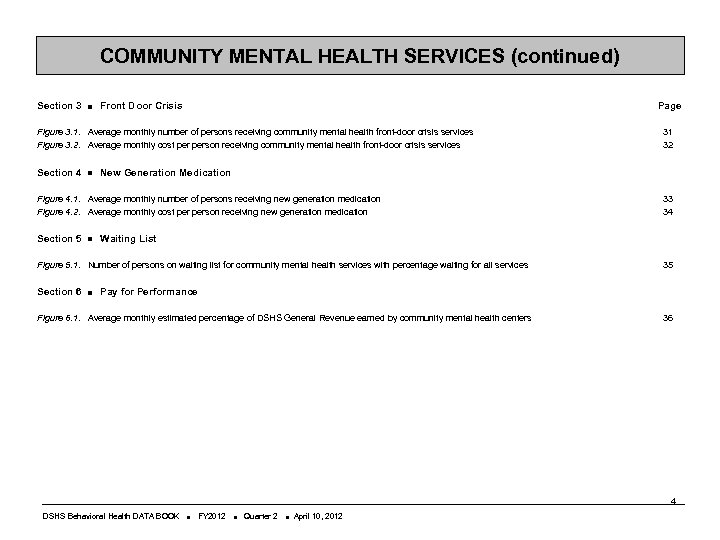
COMMUNITY MENTAL HEALTH SERVICES (continued) Section 3 Front Door Crisis Page Figure 3. 1. Average monthly number of persons receiving community mental health front-door crisis services Figure 3. 2. Average monthly cost person receiving community mental health front-door crisis services Section 4 New Generation Medication Figure 4. 1. Average monthly number of persons receiving new generation medication Figure 4. 2. Average monthly cost person receiving new generation medication Section 5 33 34 Waiting List Figure 5. 1. Number of persons on waiting list for community mental health services with percentage waiting for all services Section 6 31 32 35 Pay for Performance Figure 6. 1. Average monthly estimated percentage of DSHS General Revenue earned by community mental health centers 36 4 DSHS Behavioral Health DATA BOOK FY 2012 Quarter 2 April 10, 2012
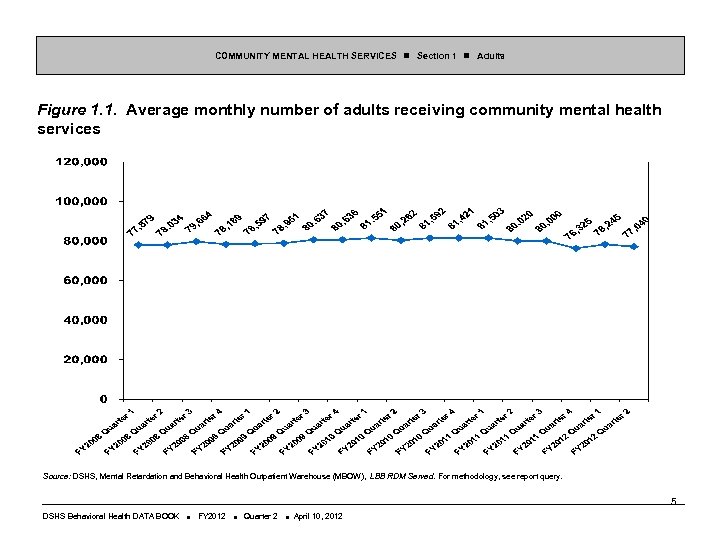
COMMUNITY MENTAL HEALTH SERVICES Section 1 Adults Figure 1. 1. Average monthly number of adults receiving community mental health services Source: DSHS, Mental Retardation and Behavioral Health Outpatient Warehouse (MBOW), LBB RDM Served. For methodology, see report query. 5 DSHS Behavioral Health DATA BOOK FY 2012 Quarter 2 April 10, 2012
COMMUNITY MENTAL HEALTH SERVICES Section 1 Adults Figure 1. 2. Average monthly cost per adult receiving community mental health services Source: DSHS, Budget & Forecasting. For methodology, see Strategy-Related Measures Definitions Report, 79 th Regular Session, Performance Reporting, Automated Budget and Evaluation System of Texas (ABEST). 6 DSHS Behavioral Health DATA BOOK FY 2012 Quarter 2 April 10, 2012
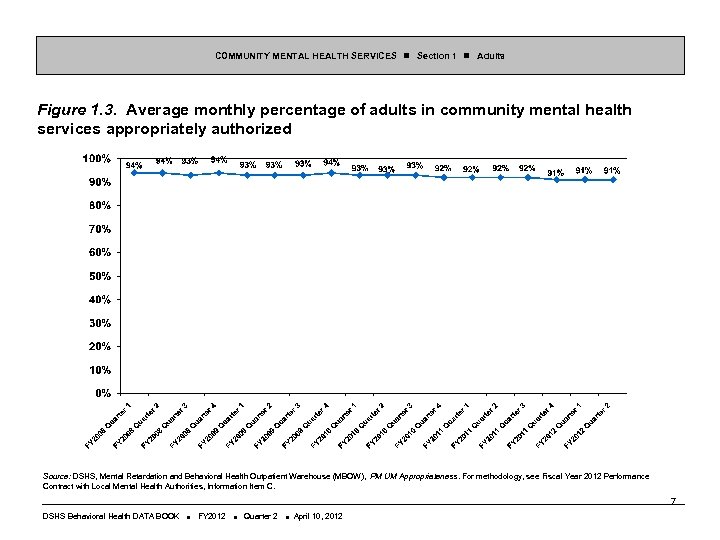
COMMUNITY MENTAL HEALTH SERVICES Section 1 Adults Figure 1. 3. Average monthly percentage of adults in community mental health services appropriately authorized Source: DSHS, Mental Retardation and Behavioral Health Outpatient Warehouse (MBOW), PM UM Appropriateness. For methodology, see Fiscal Year 2012 Performance Contract with Local Mental Health Authorities, Information Item C. 7 DSHS Behavioral Health DATA BOOK FY 2012 Quarter 2 April 10, 2012
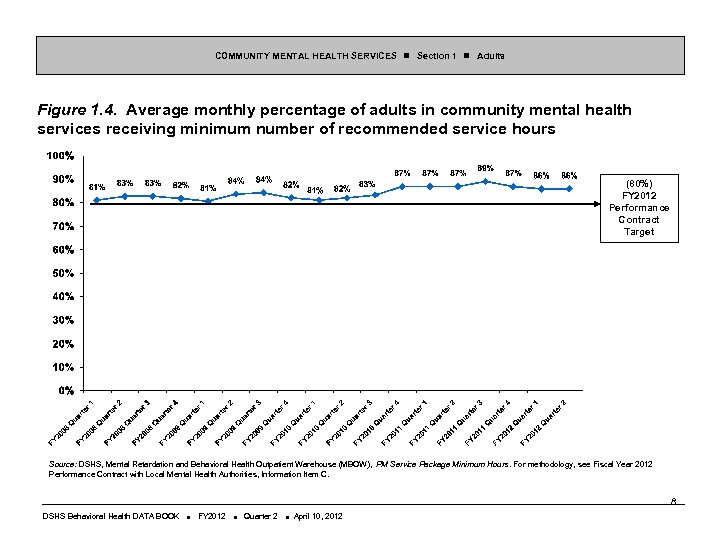
COMMUNITY MENTAL HEALTH SERVICES Section 1 Adults Figure 1. 4. Average monthly percentage of adults in community mental health services receiving minimum number of recommended service hours (80%) FY 2012 Performance Contract Target Source: DSHS, Mental Retardation and Behavioral Health Outpatient Warehouse (MBOW), PM Service Package Minimum Hours. For methodology, see Fiscal Year 2012 Performance Contract with Local Mental Health Authorities, Information Item C. 8 DSHS Behavioral Health DATA BOOK FY 2012 Quarter 2 April 10, 2012
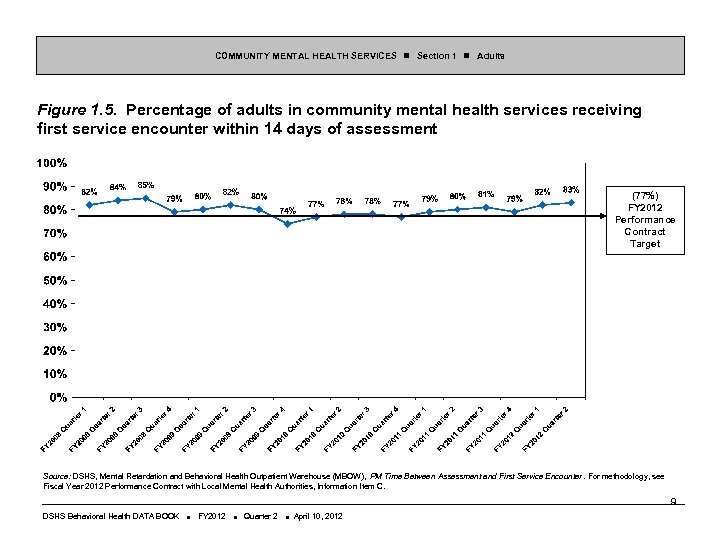
COMMUNITY MENTAL HEALTH SERVICES Section 1 Adults Figure 1. 5. Percentage of adults in community mental health services receiving first service encounter within 14 days of assessment (77%) FY 2012 Performance Contract Target Source: DSHS, Mental Retardation and Behavioral Health Outpatient Warehouse (MBOW), PM Time Between Assessment and First Service Encounter. For methodology, see Fiscal Year 2012 Performance Contract with Local Mental Health Authorities, Information Item C. 9 DSHS Behavioral Health DATA BOOK FY 2012 Quarter 2 April 10, 2012
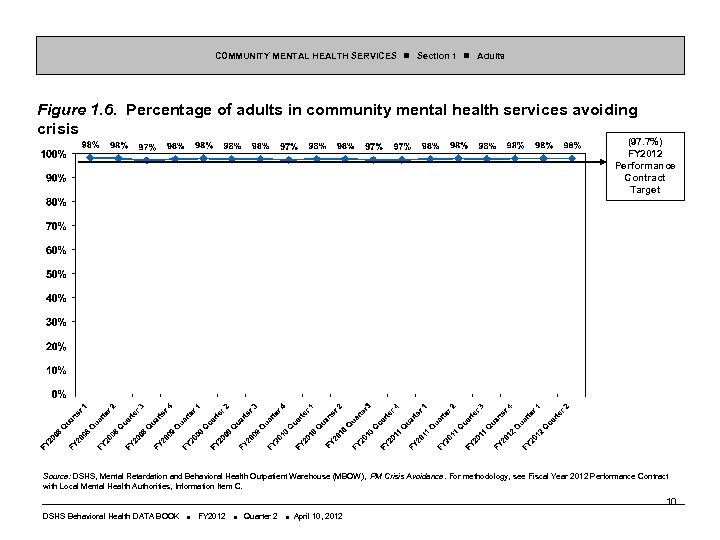
COMMUNITY MENTAL HEALTH SERVICES Section 1 Adults Figure 1. 6. Percentage of adults in community mental health services avoiding crisis (97. 7%) FY 2012 Performance Contract Target Source: DSHS, Mental Retardation and Behavioral Health Outpatient Warehouse (MBOW), PM Crisis Avoidance. For methodology, see Fiscal Year 2012 Performance Contract with Local Mental Health Authorities, Information Item C. 10 DSHS Behavioral Health DATA BOOK FY 2012 Quarter 2 April 10, 2012
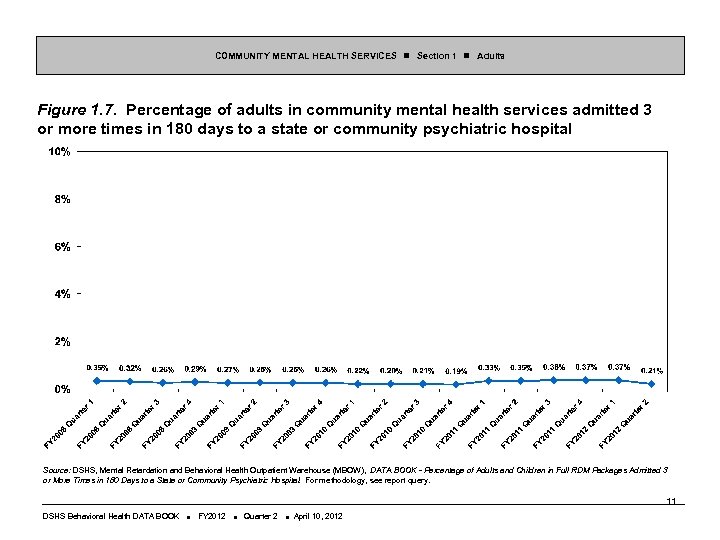
COMMUNITY MENTAL HEALTH SERVICES Section 1 Adults Figure 1. 7. Percentage of adults in community mental health services admitted 3 or more times in 180 days to a state or community psychiatric hospital Source: DSHS, Mental Retardation and Behavioral Health Outpatient Warehouse (MBOW), DATA BOOK - Percentage of Adults and Children in Full RDM Packages Admitted 3 or More Times in 180 Days to a State or Community Psychiatric Hospital. For methodology, see report query. 11 DSHS Behavioral Health DATA BOOK FY 2012 Quarter 2 April 10, 2012
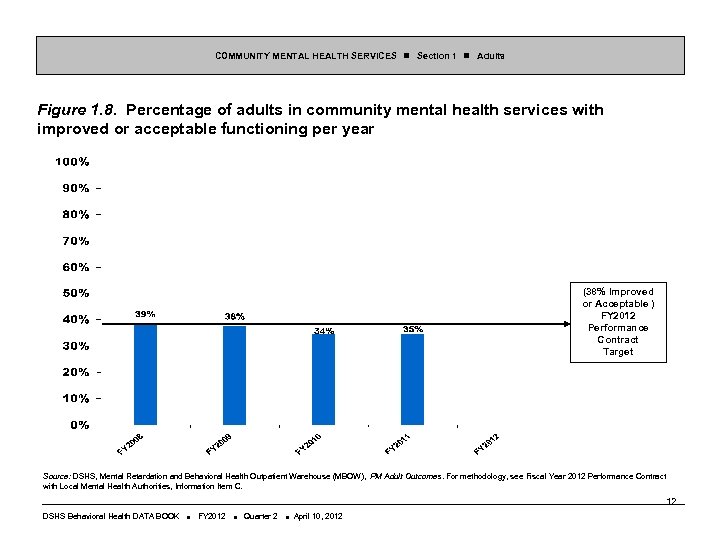
COMMUNITY MENTAL HEALTH SERVICES Section 1 Adults Figure 1. 8. Percentage of adults in community mental health services with improved or acceptable functioning per year (38% Improved or Acceptable ) FY 2012 Performance Contract Target Source: DSHS, Mental Retardation and Behavioral Health Outpatient Warehouse (MBOW), PM Adult Outcomes. For methodology, see Fiscal Year 2012 Performance Contract with Local Mental Health Authorities, Information Item C. 12 DSHS Behavioral Health DATA BOOK FY 2012 Quarter 2 April 10, 2012
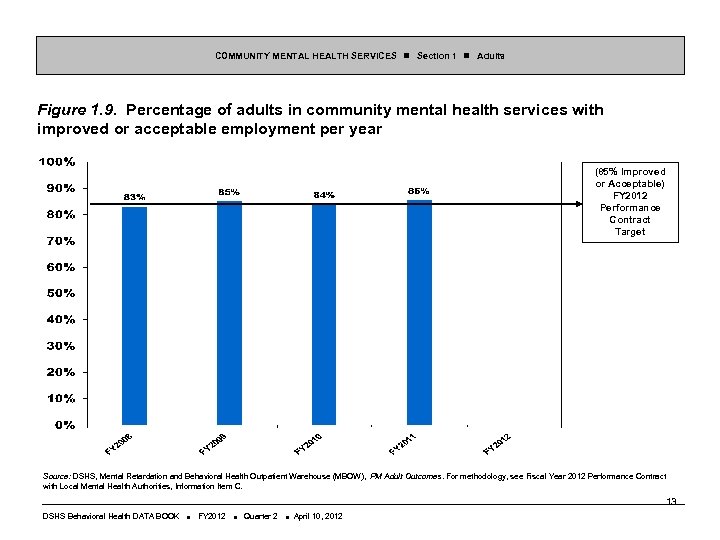
COMMUNITY MENTAL HEALTH SERVICES Section 1 Adults Figure 1. 9. Percentage of adults in community mental health services with improved or acceptable employment per year (85% Improved or Acceptable) FY 2012 Performance Contract Target Source: DSHS, Mental Retardation and Behavioral Health Outpatient Warehouse (MBOW), PM Adult Outcomes. For methodology, see Fiscal Year 2012 Performance Contract with Local Mental Health Authorities, Information Item C. 13 DSHS Behavioral Health DATA BOOK FY 2012 Quarter 2 April 10, 2012
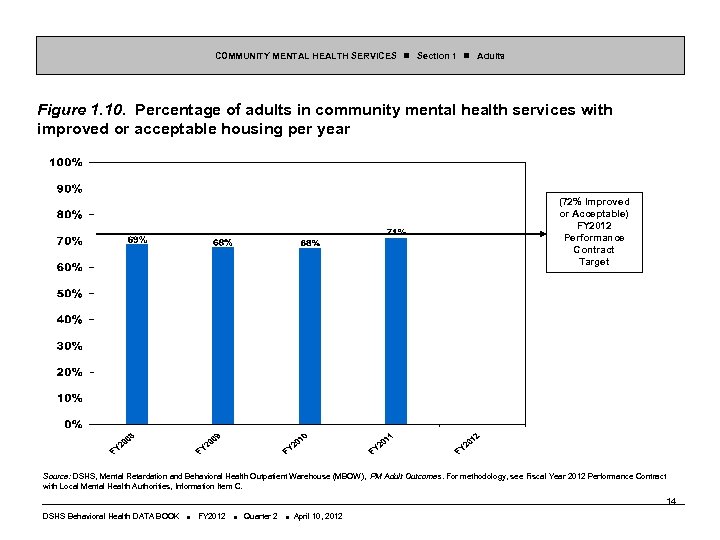
COMMUNITY MENTAL HEALTH SERVICES Section 1 Adults Figure 1. 10. Percentage of adults in community mental health services with improved or acceptable housing per year (72% Improved or Acceptable) FY 2012 Performance Contract Target Source: DSHS, Mental Retardation and Behavioral Health Outpatient Warehouse (MBOW), PM Adult Outcomes. For methodology, see Fiscal Year 2012 Performance Contract with Local Mental Health Authorities, Information Item C. 14 DSHS Behavioral Health DATA BOOK FY 2012 Quarter 2 April 10, 2012
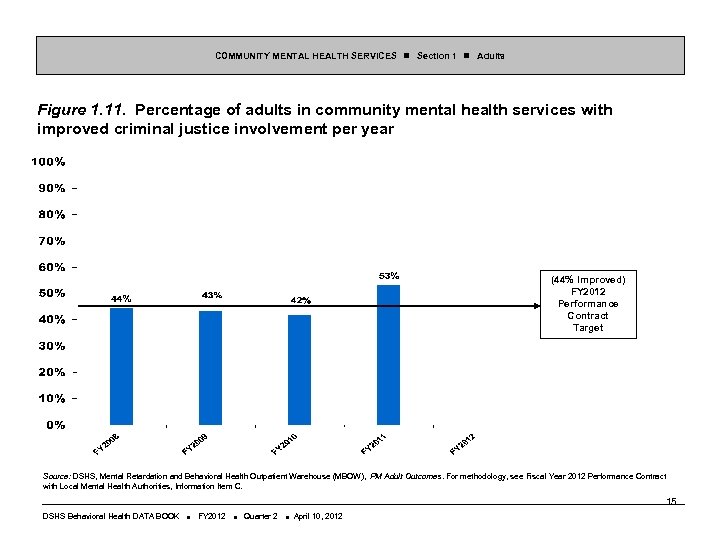
COMMUNITY MENTAL HEALTH SERVICES Section 1 Adults Figure 1. 11. Percentage of adults in community mental health services with improved criminal justice involvement per year (44% Improved) FY 2012 Performance Contract Target Source: DSHS, Mental Retardation and Behavioral Health Outpatient Warehouse (MBOW), PM Adult Outcomes. For methodology, see Fiscal Year 2012 Performance Contract with Local Mental Health Authorities, Information Item C. 15 DSHS Behavioral Health DATA BOOK FY 2012 Quarter 2 April 10, 2012
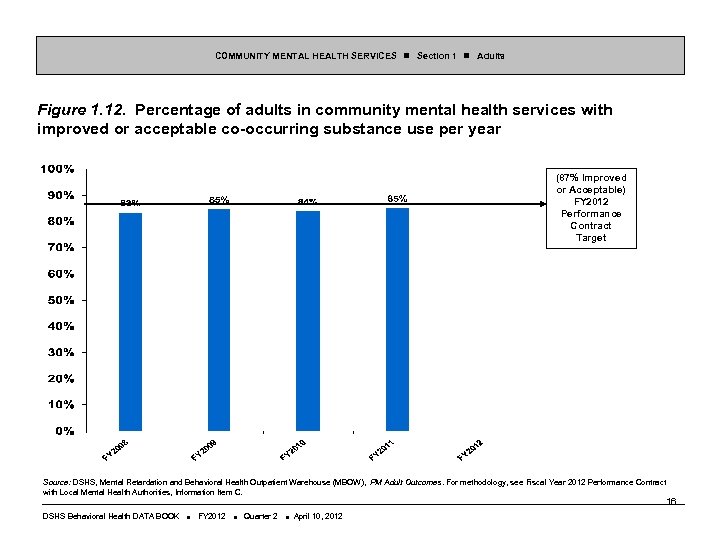
COMMUNITY MENTAL HEALTH SERVICES Section 1 Adults Figure 1. 12. Percentage of adults in community mental health services with improved or acceptable co-occurring substance use per year (87% Improved or Acceptable) FY 2012 Performance Contract Target Source: DSHS, Mental Retardation and Behavioral Health Outpatient Warehouse (MBOW), PM Adult Outcomes. For methodology, see Fiscal Year 2012 Performance Contract with Local Mental Health Authorities, Information Item C. 16 DSHS Behavioral Health DATA BOOK FY 2012 Quarter 2 April 10, 2012
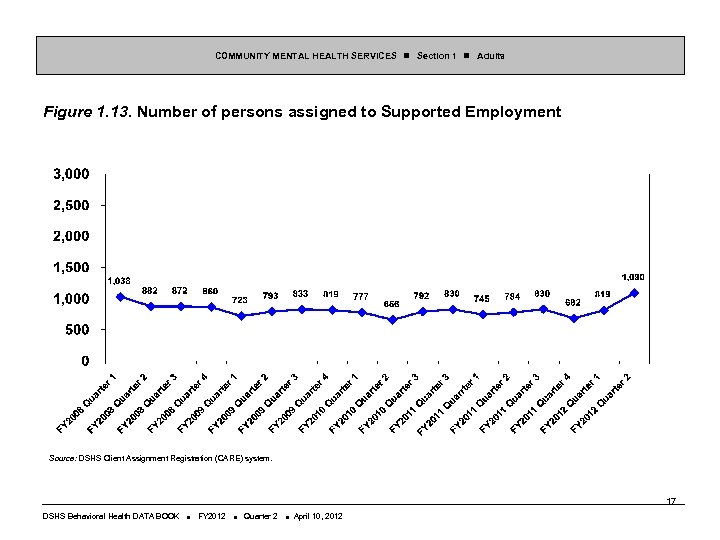
COMMUNITY MENTAL HEALTH SERVICES Section 1 Adults Figure 1. 13. Number of persons assigned to Supported Employment Source: DSHS Client Assignment Registration (CARE) system. 17 DSHS Behavioral Health DATA BOOK FY 2012 Quarter 2 April 10, 2012
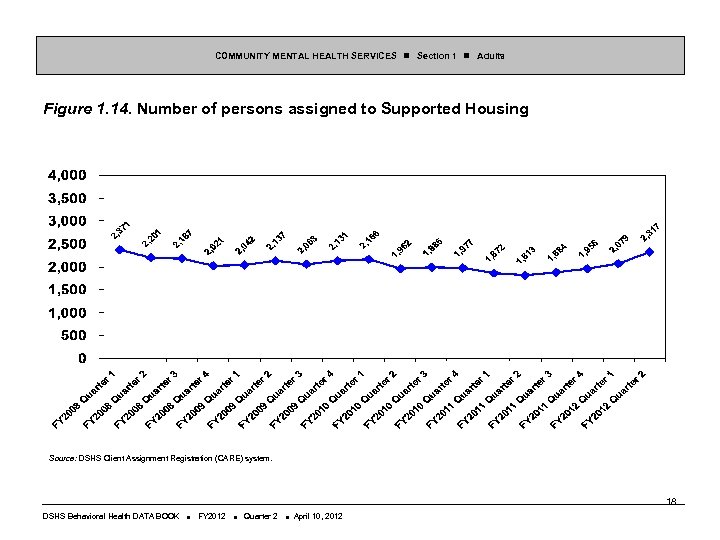
COMMUNITY MENTAL HEALTH SERVICES Section 1 Adults Figure 1. 14. Number of persons assigned to Supported Housing Source: DSHS Client Assignment Registration (CARE) system. 18 DSHS Behavioral Health DATA BOOK FY 2012 Quarter 2 April 10, 2012
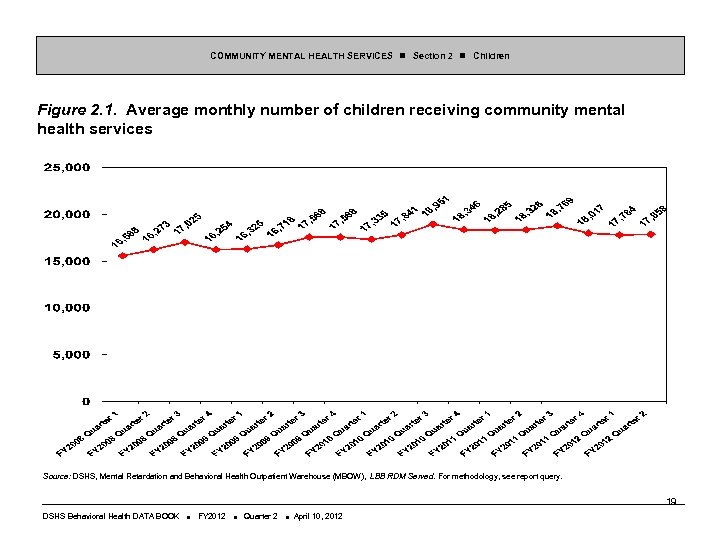
COMMUNITY MENTAL HEALTH SERVICES Section 2 Children Figure 2. 1. Average monthly number of children receiving community mental health services Source: DSHS, Mental Retardation and Behavioral Health Outpatient Warehouse (MBOW), LBB RDM Served. For methodology, see report query. 19 DSHS Behavioral Health DATA BOOK FY 2012 Quarter 2 April 10, 2012
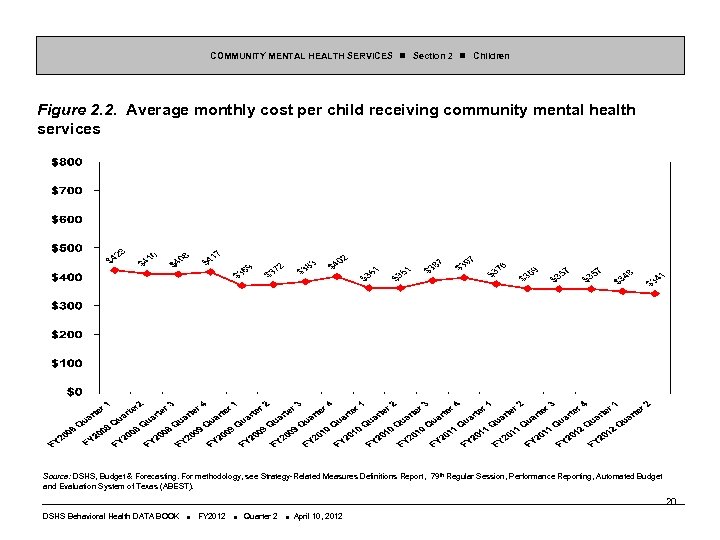
COMMUNITY MENTAL HEALTH SERVICES Section 2 Children Figure 2. 2. Average monthly cost per child receiving community mental health services Source: DSHS, Budget & Forecasting. For methodology, see Strategy-Related Measures Definitions Report, 79 th Regular Session, Performance Reporting, Automated Budget and Evaluation System of Texas (ABEST). 20 DSHS Behavioral Health DATA BOOK FY 2012 Quarter 2 April 10, 2012
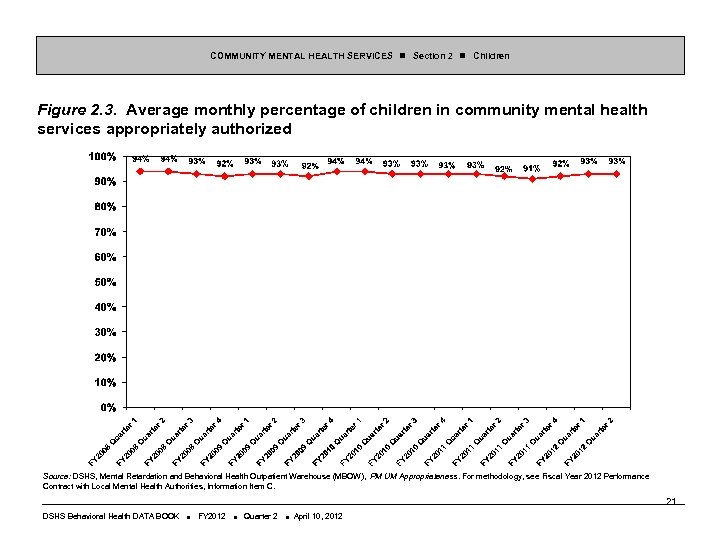
COMMUNITY MENTAL HEALTH SERVICES Section 2 Children Figure 2. 3. Average monthly percentage of children in community mental health services appropriately authorized Source: DSHS, Mental Retardation and Behavioral Health Outpatient Warehouse (MBOW), PM UM Appropriateness. For methodology, see Fiscal Year 2012 Performance Contract with Local Mental Health Authorities, Information Item C. 21 DSHS Behavioral Health DATA BOOK FY 2012 Quarter 2 April 10, 2012
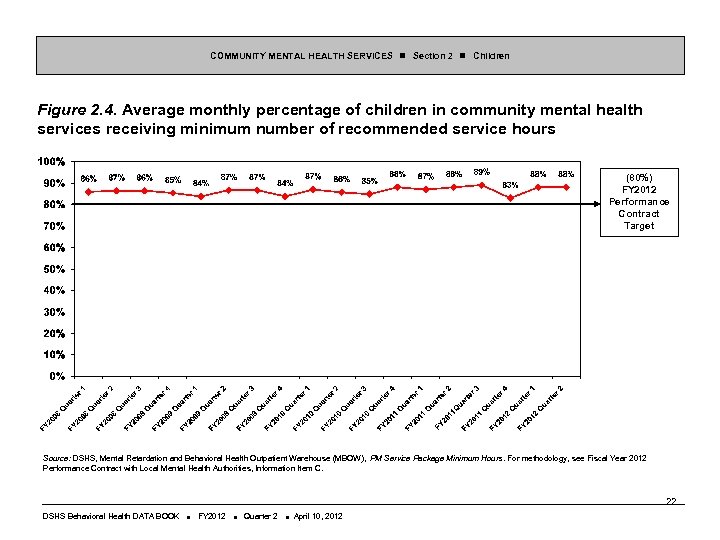
COMMUNITY MENTAL HEALTH SERVICES Section 2 Children Figure 2. 4. Average monthly percentage of children in community mental health services receiving minimum number of recommended service hours (80%) FY 2012 Performance Contract Target Source: DSHS, Mental Retardation and Behavioral Health Outpatient Warehouse (MBOW), PM Service Package Minimum Hours. For methodology, see Fiscal Year 2012 Performance Contract with Local Mental Health Authorities, Information Item C. 22 DSHS Behavioral Health DATA BOOK FY 2012 Quarter 2 April 10, 2012
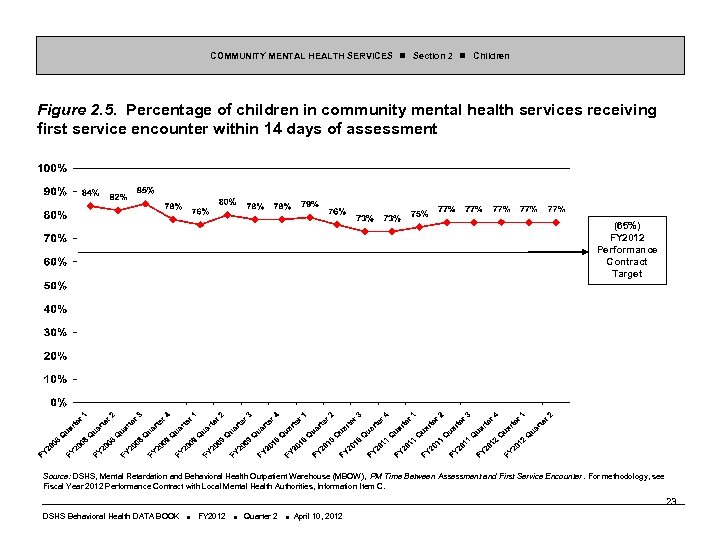
COMMUNITY MENTAL HEALTH SERVICES Section 2 Children Figure 2. 5. Percentage of children in community mental health services receiving first service encounter within 14 days of assessment (65%) FY 2012 Performance Contract Target Source: DSHS, Mental Retardation and Behavioral Health Outpatient Warehouse (MBOW), PM Time Between Assessment and First Service Encounter. For methodology, see Fiscal Year 2012 Performance Contract with Local Mental Health Authorities, Information Item C. 23 DSHS Behavioral Health DATA BOOK FY 2012 Quarter 2 April 10, 2012
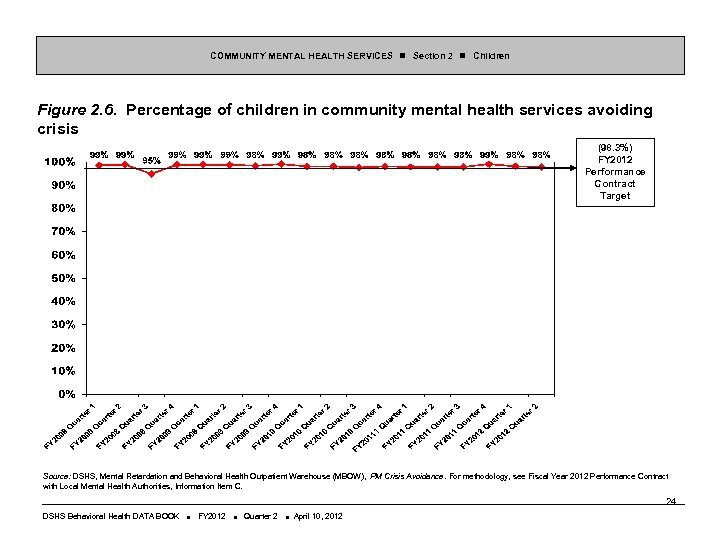
COMMUNITY MENTAL HEALTH SERVICES Section 2 Children Figure 2. 6. Percentage of children in community mental health services avoiding crisis (98. 3%) FY 2012 Performance Contract Target Source: DSHS, Mental Retardation and Behavioral Health Outpatient Warehouse (MBOW), PM Crisis Avoidance. For methodology, see Fiscal Year 2012 Performance Contract with Local Mental Health Authorities, Information Item C. 24 DSHS Behavioral Health DATA BOOK FY 2012 Quarter 2 April 10, 2012
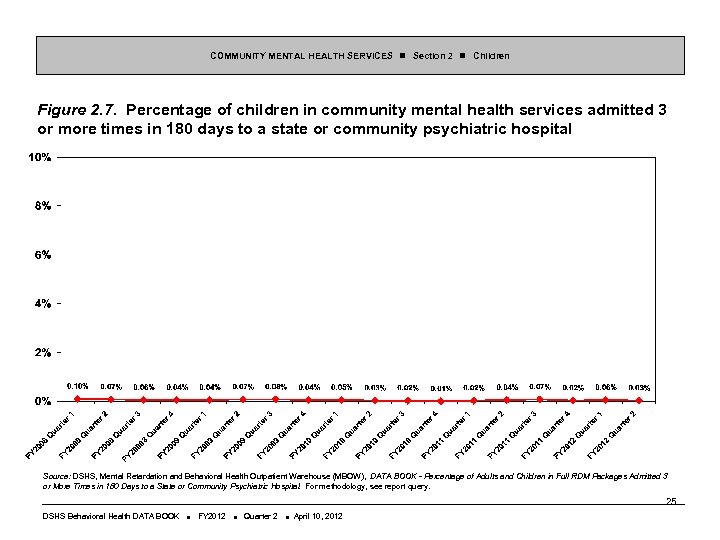
COMMUNITY MENTAL HEALTH SERVICES Section 2 Children Figure 2. 7. Percentage of children in community mental health services admitted 3 or more times in 180 days to a state or community psychiatric hospital Source: DSHS, Mental Retardation and Behavioral Health Outpatient Warehouse (MBOW), DATA BOOK - Percentage of Adults and Children in Full RDM Packages Admitted 3 or More Times in 180 Days to a State or Community Psychiatric Hospital. For methodology, see report query. 25 DSHS Behavioral Health DATA BOOK FY 2012 Quarter 2 April 10, 2012
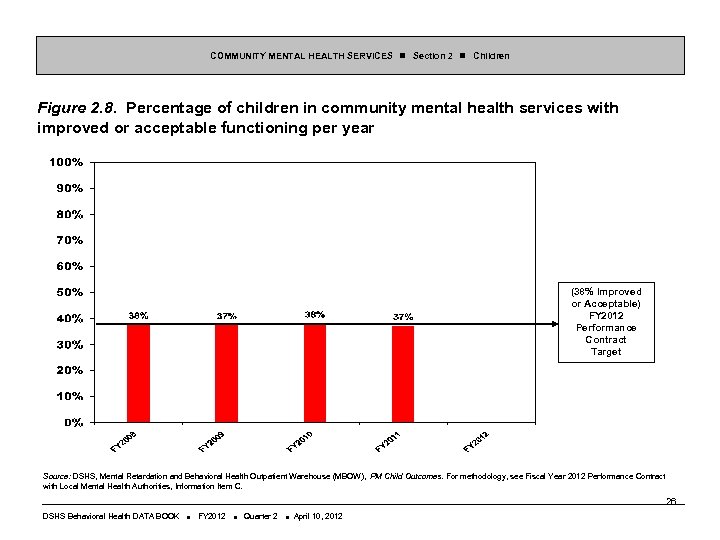
COMMUNITY MENTAL HEALTH SERVICES Section 2 Children Figure 2. 8. Percentage of children in community mental health services with improved or acceptable functioning per year (38% Improved or Acceptable) FY 2012 Performance Contract Target Source: DSHS, Mental Retardation and Behavioral Health Outpatient Warehouse (MBOW), PM Child Outcomes. For methodology, see Fiscal Year 2012 Performance Contract with Local Mental Health Authorities, Information Item C. 26 DSHS Behavioral Health DATA BOOK FY 2012 Quarter 2 April 10, 2012
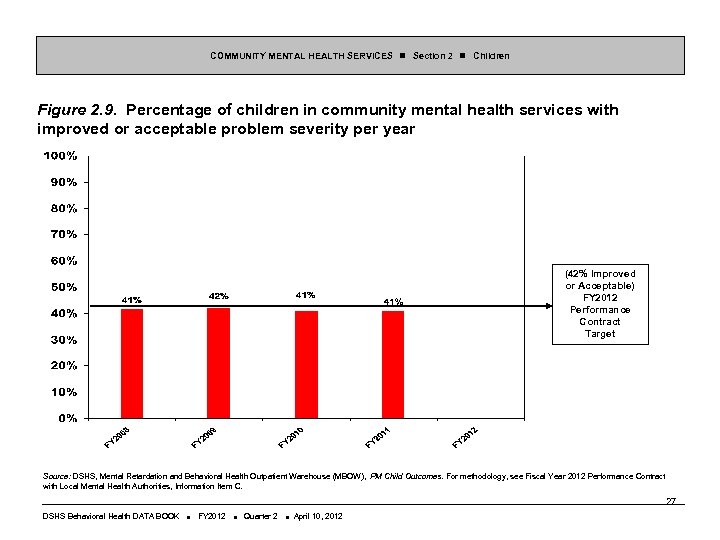
COMMUNITY MENTAL HEALTH SERVICES Section 2 Children Figure 2. 9. Percentage of children in community mental health services with improved or acceptable problem severity per year (42% Improved or Acceptable) FY 2012 Performance Contract Target Source: DSHS, Mental Retardation and Behavioral Health Outpatient Warehouse (MBOW), PM Child Outcomes. For methodology, see Fiscal Year 2012 Performance Contract with Local Mental Health Authorities, Information Item C. 27 DSHS Behavioral Health DATA BOOK FY 2012 Quarter 2 April 10, 2012
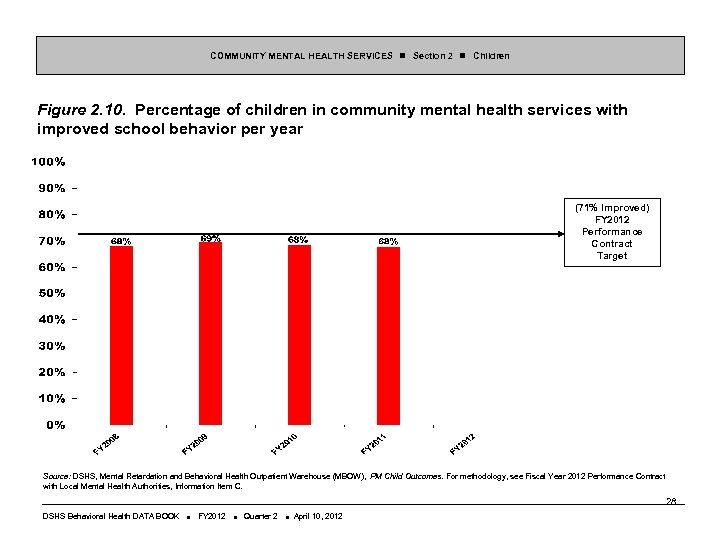
COMMUNITY MENTAL HEALTH SERVICES Section 2 Children Figure 2. 10. Percentage of children in community mental health services with improved school behavior per year (71% Improved) FY 2012 Performance Contract Target Source: DSHS, Mental Retardation and Behavioral Health Outpatient Warehouse (MBOW), PM Child Outcomes. For methodology, see Fiscal Year 2012 Performance Contract with Local Mental Health Authorities, Information Item C. 28 DSHS Behavioral Health DATA BOOK FY 2012 Quarter 2 April 10, 2012
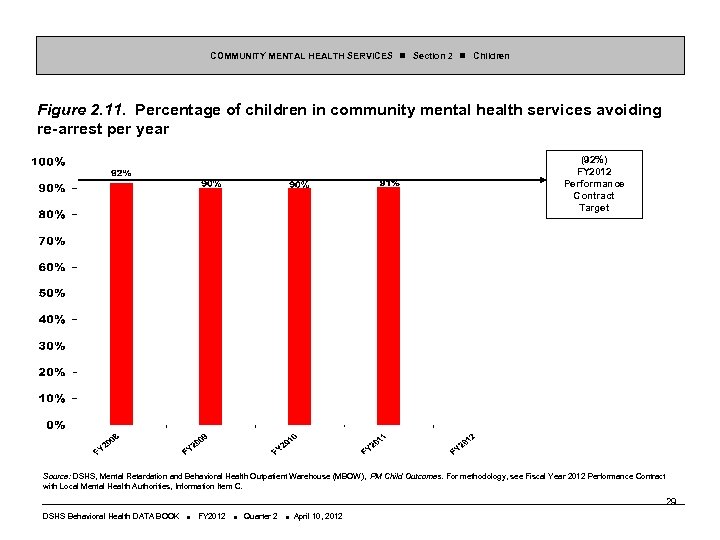
COMMUNITY MENTAL HEALTH SERVICES Section 2 Children Figure 2. 11. Percentage of children in community mental health services avoiding re-arrest per year (92%) FY 2012 Performance Contract Target Source: DSHS, Mental Retardation and Behavioral Health Outpatient Warehouse (MBOW), PM Child Outcomes. For methodology, see Fiscal Year 2012 Performance Contract with Local Mental Health Authorities, Information Item C. 29 DSHS Behavioral Health DATA BOOK FY 2012 Quarter 2 April 10, 2012
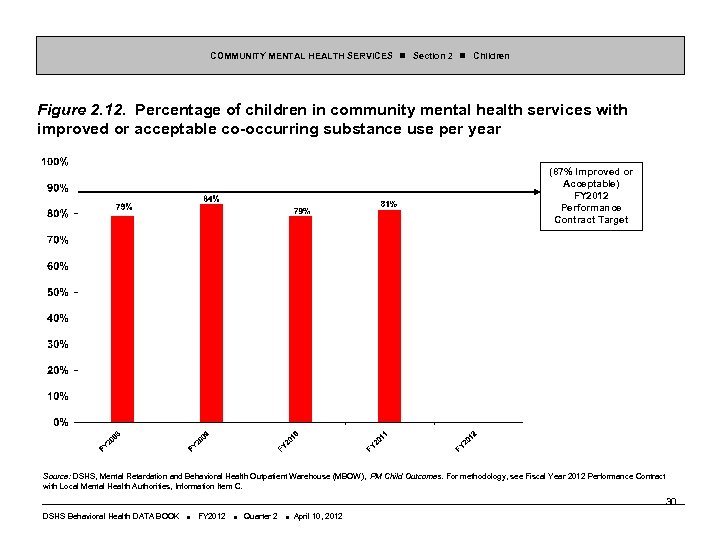
COMMUNITY MENTAL HEALTH SERVICES Section 2 Children Figure 2. 12. Percentage of children in community mental health services with improved or acceptable co-occurring substance use per year (87% Improved or Acceptable) FY 2012 Performance Contract Target Source: DSHS, Mental Retardation and Behavioral Health Outpatient Warehouse (MBOW), PM Child Outcomes. For methodology, see Fiscal Year 2012 Performance Contract with Local Mental Health Authorities, Information Item C. 30 DSHS Behavioral Health DATA BOOK FY 2012 Quarter 2 April 10, 2012
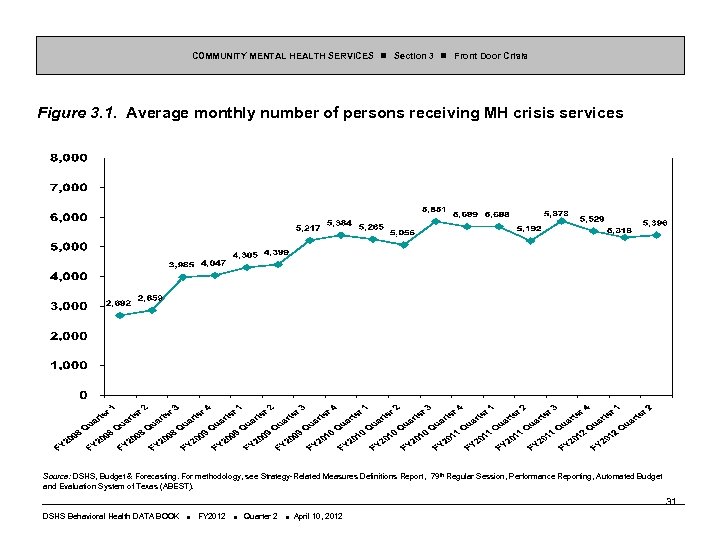
COMMUNITY MENTAL HEALTH SERVICES Section 3 Front Door Crisis Figure 3. 1. Average monthly number of persons receiving MH crisis services Source: DSHS, Budget & Forecasting. For methodology, see Strategy-Related Measures Definitions Report, 79 th Regular Session, Performance Reporting, Automated Budget and Evaluation System of Texas (ABEST). 31 DSHS Behavioral Health DATA BOOK FY 2012 Quarter 2 April 10, 2012
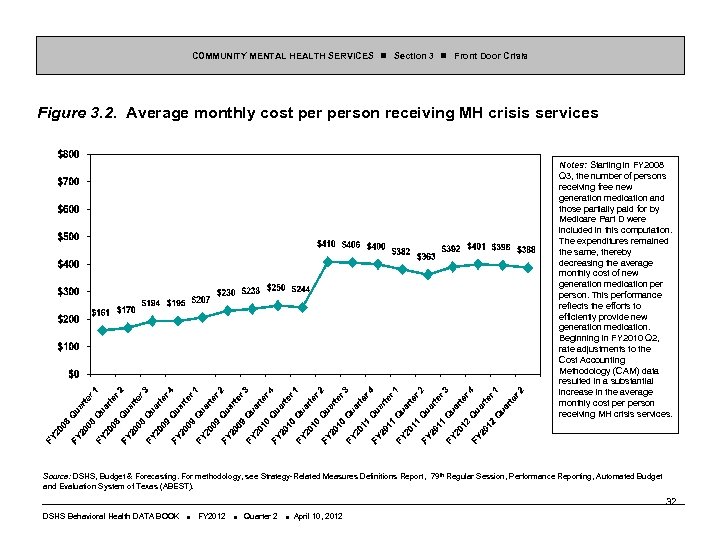
COMMUNITY MENTAL HEALTH SERVICES Section 3 Front Door Crisis Figure 3. 2. Average monthly cost person receiving MH crisis services Notes: Starting in FY 2008 Q 3, the number of persons receiving free new generation medication and those partially paid for by Medicare Part D were included in this computation. The expenditures remained the same, thereby decreasing the average monthly cost of new generation medication person. This performance reflects the efforts to efficiently provide new generation medication. Beginning in FY 2010 Q 2, rate adjustments to the Cost Accounting Methodology (CAM) data resulted in a substantial increase in the average monthly cost person receiving MH crisis services. Source: DSHS, Budget & Forecasting. For methodology, see Strategy-Related Measures Definitions Report, 79 th Regular Session, Performance Reporting, Automated Budget and Evaluation System of Texas (ABEST). 32 DSHS Behavioral Health DATA BOOK FY 2012 Quarter 2 April 10, 2012
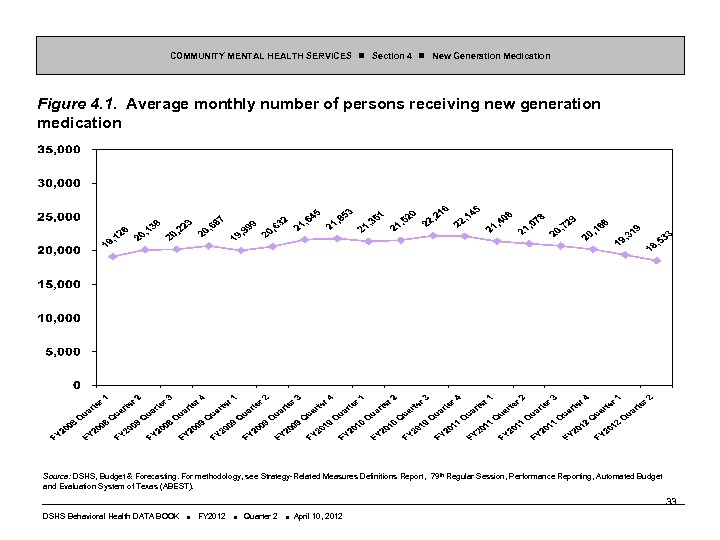
COMMUNITY MENTAL HEALTH SERVICES Section 4 New Generation Medication Figure 4. 1. Average monthly number of persons receiving new generation medication Source: DSHS, Budget & Forecasting. For methodology, see Strategy-Related Measures Definitions Report, 79 th Regular Session, Performance Reporting, Automated Budget and Evaluation System of Texas (ABEST). 33 DSHS Behavioral Health DATA BOOK FY 2012 Quarter 2 April 10, 2012
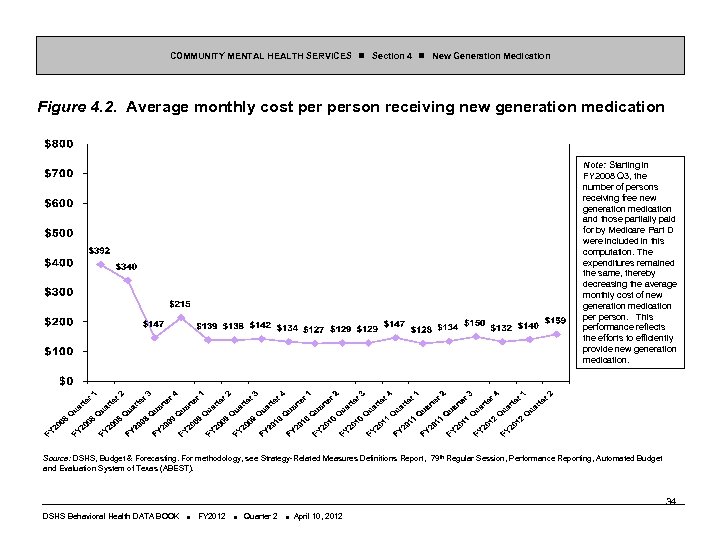
COMMUNITY MENTAL HEALTH SERVICES Section 4 New Generation Medication Figure 4. 2. Average monthly cost person receiving new generation medication Note: Starting in FY 2008 Q 3, the number of persons receiving free new generation medication and those partially paid for by Medicare Part D were included in this computation. The expenditures remained the same, thereby decreasing the average monthly cost of new generation medication person. This performance reflects the efforts to efficiently provide new generation medication. Source: DSHS, Budget & Forecasting. For methodology, see Strategy-Related Measures Definitions Report, 79 th Regular Session, Performance Reporting, Automated Budget and Evaluation System of Texas (ABEST). 34 DSHS Behavioral Health DATA BOOK FY 2012 Quarter 2 April 10, 2012
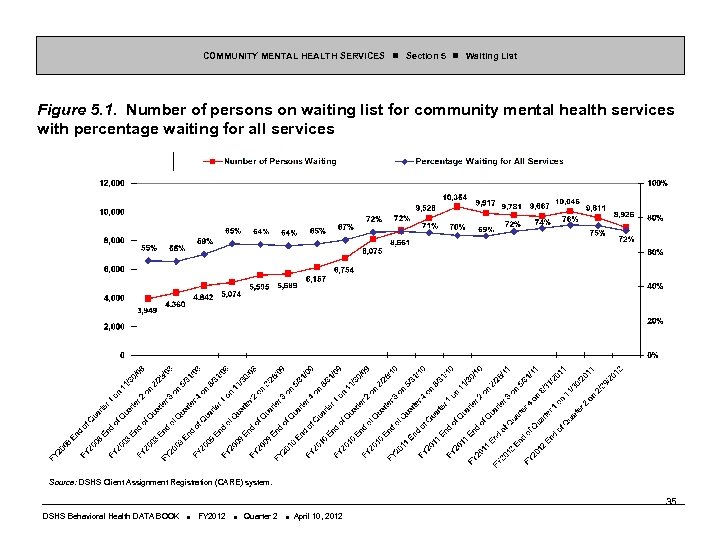
COMMUNITY MENTAL HEALTH SERVICES Section 5 Waiting List Figure 5. 1. Number of persons on waiting list for community mental health services with percentage waiting for all services Source: DSHS Client Assignment Registration (CARE) system. 35 DSHS Behavioral Health DATA BOOK FY 2012 Quarter 2 April 10, 2012
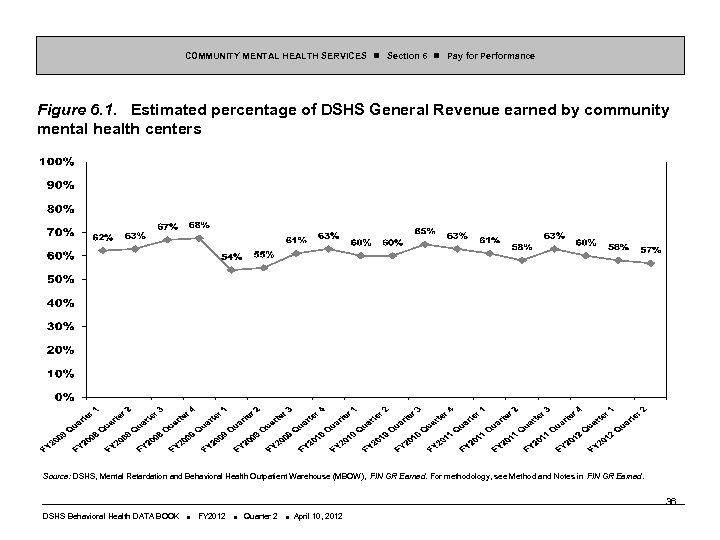
COMMUNITY MENTAL HEALTH SERVICES Section 6 Pay for Performance Figure 6. 1. Estimated percentage of DSHS General Revenue earned by community mental health centers Source: DSHS, Mental Retardation and Behavioral Health Outpatient Warehouse (MBOW), FIN GR Earned. For methodology, see Method and Notes in FIN GR Earned. 36 DSHS Behavioral Health DATA BOOK FY 2012 Quarter 2 April 10, 2012
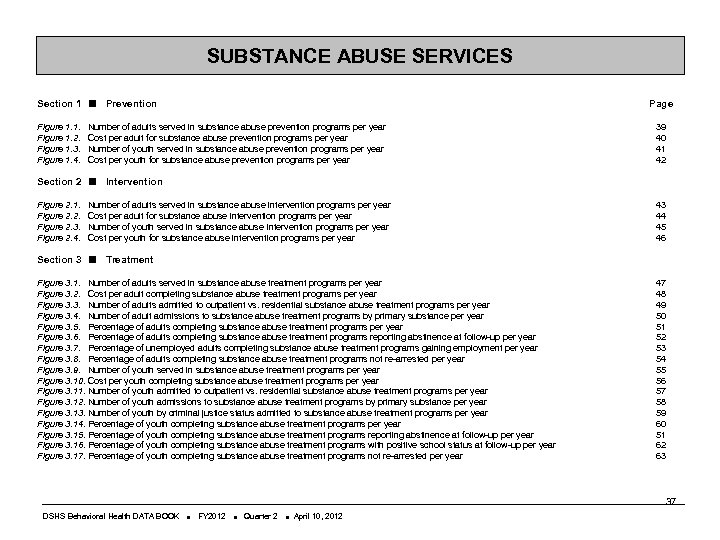
SUBSTANCE ABUSE SERVICES Section 1 Prevention Figure 1. 1. Figure 1. 2. Figure 1. 3. Figure 1. 4. Page Number of adults served in substance abuse prevention programs per year Cost per adult for substance abuse prevention programs per year Number of youth served in substance abuse prevention programs per year Cost per youth for substance abuse prevention programs per year 39 40 41 42 Section 2 Intervention Figure 2. 1. Figure 2. 2. Figure 2. 3. Figure 2. 4. Number of adults served in substance abuse intervention programs per year Cost per adult for substance abuse intervention programs per year Number of youth served in substance abuse Intervention programs per year Cost per youth for substance abuse intervention programs per year 43 44 45 46 Section 3 Treatment Figure 3. 1. Number of adults served in substance abuse treatment programs per year Figure 3. 2. Cost per adult completing substance abuse treatment programs per year Figure 3. 3. Number of adults admitted to outpatient vs. residential substance abuse treatment programs per year Figure 3. 4. Number of adult admissions to substance abuse treatment programs by primary substance per year Figure 3. 5. Percentage of adults completing substance abuse treatment programs per year Figure 3. 6. Percentage of adults completing substance abuse treatment programs reporting abstinence at follow-up per year Figure 3. 7. Percentage of unemployed adults completing substance abuse treatment programs gaining employment per year Figure 3. 8. Percentage of adults completing substance abuse treatment programs not re-arrested per year Figure 3. 9. Number of youth served in substance abuse treatment programs per year Figure 3. 10. Cost per youth completing substance abuse treatment programs per year Figure 3. 11. Number of youth admitted to outpatient vs. residential substance abuse treatment programs per year Figure 3. 12. Number of youth admissions to substance abuse treatment programs by primary substance per year Figure 3. 13. Number of youth by criminal justice status admitted to substance abuse treatment programs per year Figure 3. 14. Percentage of youth completing substance abuse treatment programs per year Figure 3. 15. Percentage of youth completing substance abuse treatment programs reporting abstinence at follow-up per year Figure 3. 16. Percentage of youth completing substance abuse treatment programs with positive school status at follow-up per year Figure 3. 17. Percentage of youth completing substance abuse treatment programs not re-arrested per year 47 48 49 50 51 52 53 54 55 56 57 58 59 60 51 62 63 37 DSHS Behavioral Health DATA BOOK FY 2012 Quarter 2 April 10, 2012
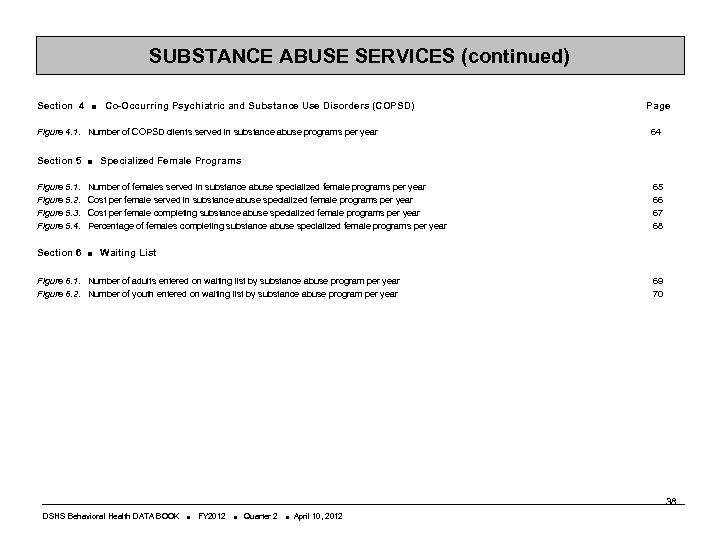
SUBSTANCE ABUSE SERVICES (continued) Section 4 Co-Occurring Psychiatric and Substance Use Disorders (COPSD) Figure 4. 1. Number of COPSD clients served in substance abuse programs per year Section 5 Figure 5. 1. Figure 5. 2. Figure 5. 3. Figure 5. 4. Number of females served in substance abuse specialized female programs per year Cost per female completing substance abuse specialized female programs per year Percentage of females completing substance abuse specialized female programs per year Section 6 Page 64 Specialized Female Programs 65 66 67 68 Waiting List Figure 6. 1. Number of adults entered on waiting list by substance abuse program per year Figure 6. 2. Number of youth entered on waiting list by substance abuse program per year 69 70 38 DSHS Behavioral Health DATA BOOK FY 2012 Quarter 2 April 10, 2012
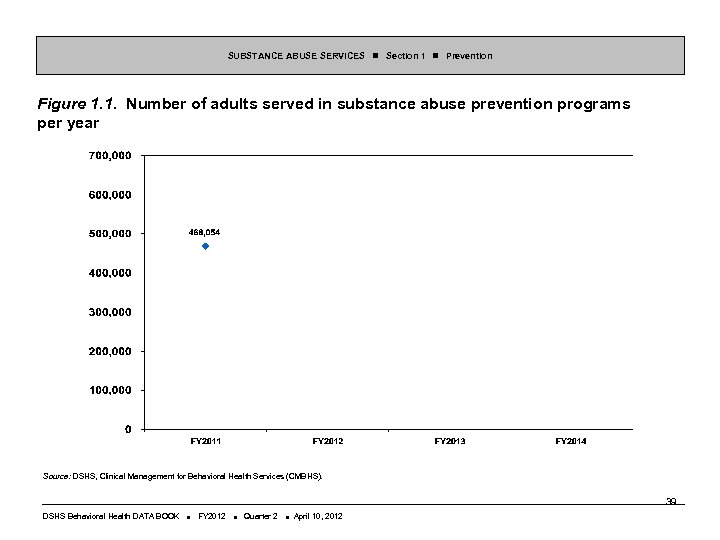
SUBSTANCE ABUSE SERVICES Section 1 Prevention Figure 1. 1. Number of adults served in substance abuse prevention programs per year Source: DSHS, Clinical Management for Behavioral Health Services (CMBHS). 39 DSHS Behavioral Health DATA BOOK FY 2012 Quarter 2 April 10, 2012
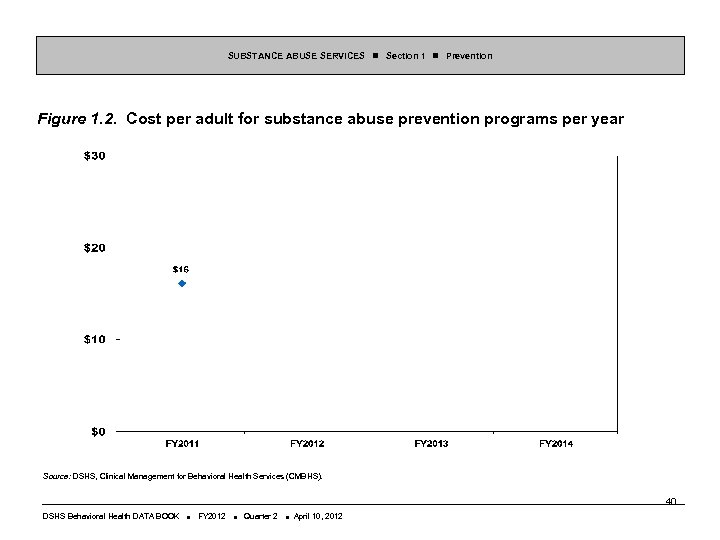
SUBSTANCE ABUSE SERVICES Section 1 Prevention Figure 1. 2. Cost per adult for substance abuse prevention programs per year Source: DSHS, Clinical Management for Behavioral Health Services (CMBHS). 40 DSHS Behavioral Health DATA BOOK FY 2012 Quarter 2 April 10, 2012
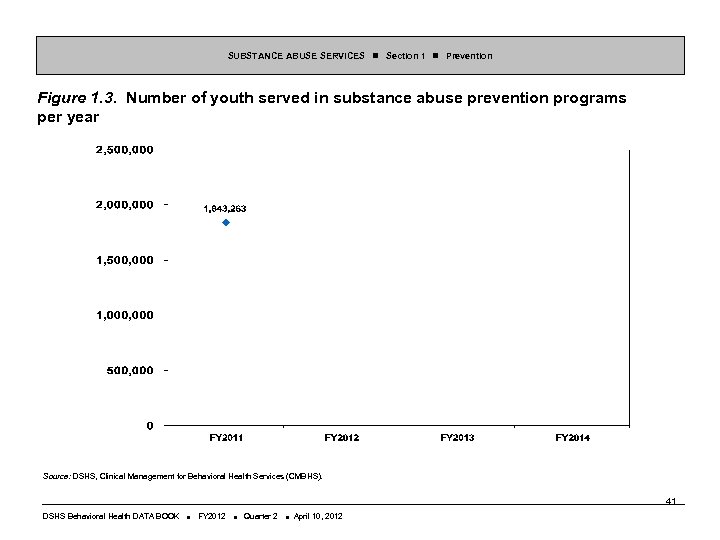
SUBSTANCE ABUSE SERVICES Section 1 Prevention Figure 1. 3. Number of youth served in substance abuse prevention programs per year Source: DSHS, Clinical Management for Behavioral Health Services (CMBHS). 41 DSHS Behavioral Health DATA BOOK FY 2012 Quarter 2 April 10, 2012
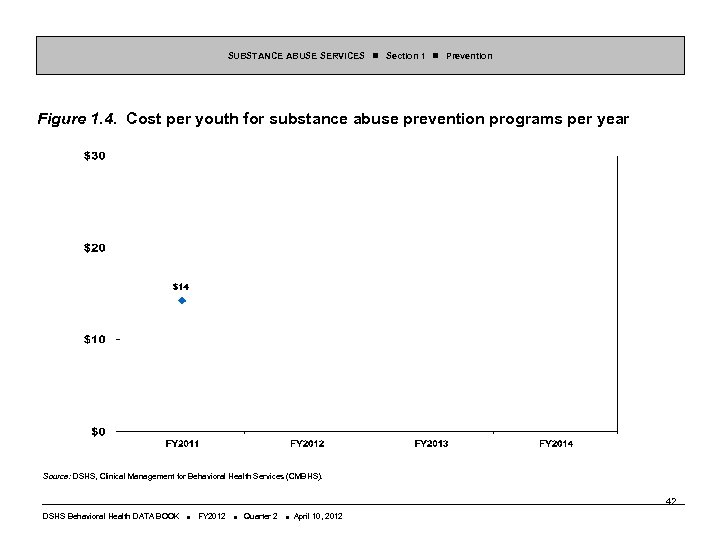
SUBSTANCE ABUSE SERVICES Section 1 Prevention Figure 1. 4. Cost per youth for substance abuse prevention programs per year Source: DSHS, Clinical Management for Behavioral Health Services (CMBHS). 42 DSHS Behavioral Health DATA BOOK FY 2012 Quarter 2 April 10, 2012
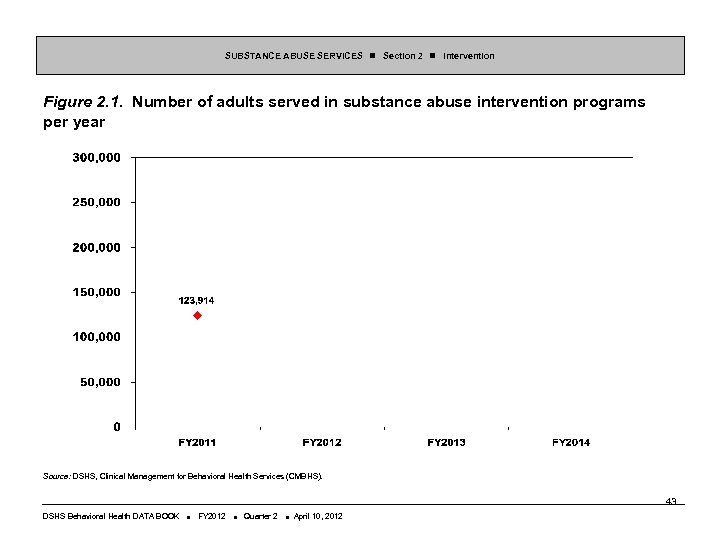
SUBSTANCE ABUSE SERVICES Section 2 Intervention Figure 2. 1. Number of adults served in substance abuse intervention programs per year Source: DSHS, Clinical Management for Behavioral Health Services (CMBHS). 43 DSHS Behavioral Health DATA BOOK FY 2012 Quarter 2 April 10, 2012
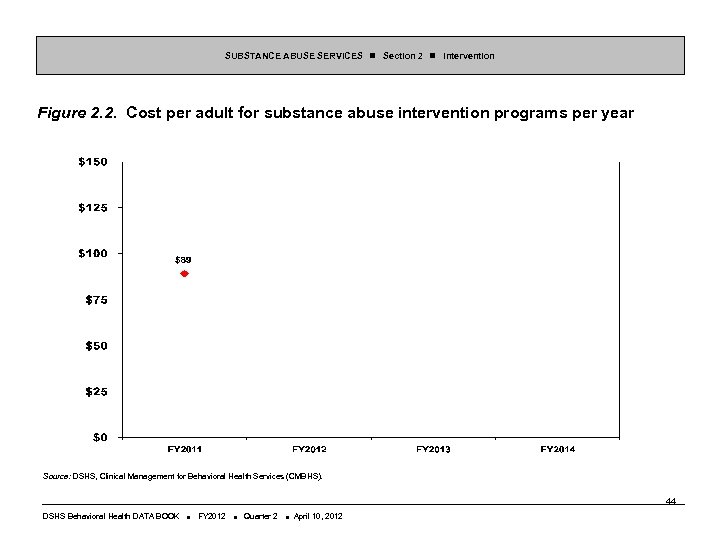
SUBSTANCE ABUSE SERVICES Section 2 Intervention Figure 2. 2. Cost per adult for substance abuse intervention programs per year Source: DSHS, Clinical Management for Behavioral Health Services (CMBHS). 44 DSHS Behavioral Health DATA BOOK FY 2012 Quarter 2 April 10, 2012
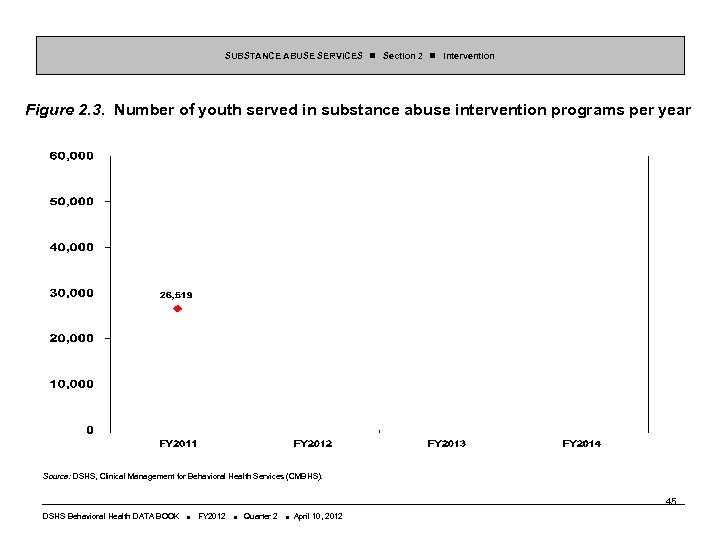
SUBSTANCE ABUSE SERVICES Section 2 Intervention Figure 2. 3. Number of youth served in substance abuse intervention programs per year Source: DSHS, Clinical Management for Behavioral Health Services (CMBHS). 45 DSHS Behavioral Health DATA BOOK FY 2012 Quarter 2 April 10, 2012
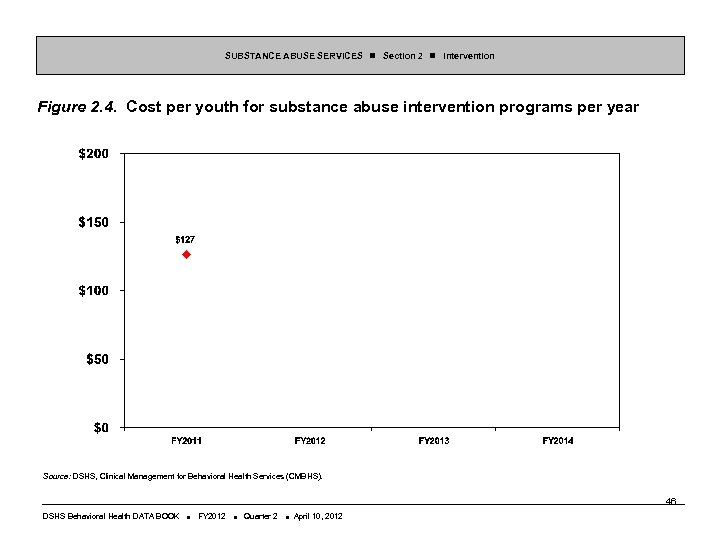
SUBSTANCE ABUSE SERVICES Section 2 Intervention Figure 2. 4. Cost per youth for substance abuse intervention programs per year Source: DSHS, Clinical Management for Behavioral Health Services (CMBHS). 46 DSHS Behavioral Health DATA BOOK FY 2012 Quarter 2 April 10, 2012
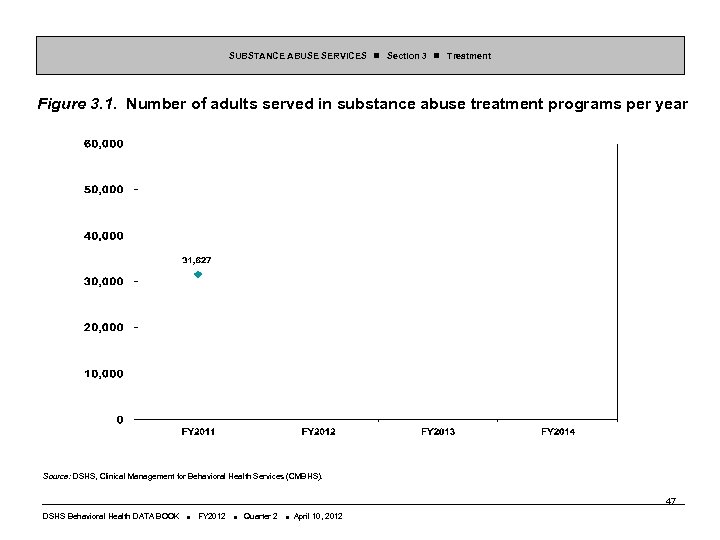
SUBSTANCE ABUSE SERVICES Section 3 Treatment Figure 3. 1. Number of adults served in substance abuse treatment programs per year Source: DSHS, Clinical Management for Behavioral Health Services (CMBHS). 47 DSHS Behavioral Health DATA BOOK FY 2012 Quarter 2 April 10, 2012
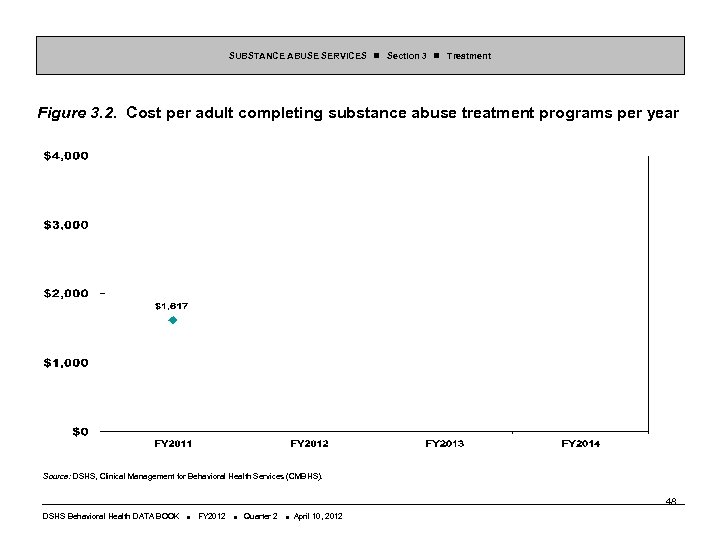
SUBSTANCE ABUSE SERVICES Section 3 Treatment Figure 3. 2. Cost per adult completing substance abuse treatment programs per year Source: DSHS, Clinical Management for Behavioral Health Services (CMBHS). 48 DSHS Behavioral Health DATA BOOK FY 2012 Quarter 2 April 10, 2012
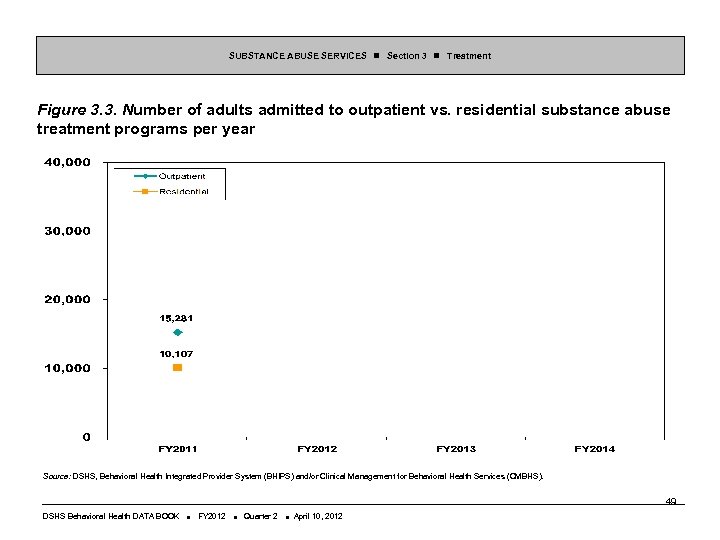
SUBSTANCE ABUSE SERVICES Section 3 Treatment Figure 3. 3. Number of adults admitted to outpatient vs. residential substance abuse treatment programs per year Source: DSHS, Behavioral Health Integrated Provider System (BHIPS) and/or Clinical Management for Behavioral Health Services (CMBHS). 49 DSHS Behavioral Health DATA BOOK FY 2012 Quarter 2 April 10, 2012
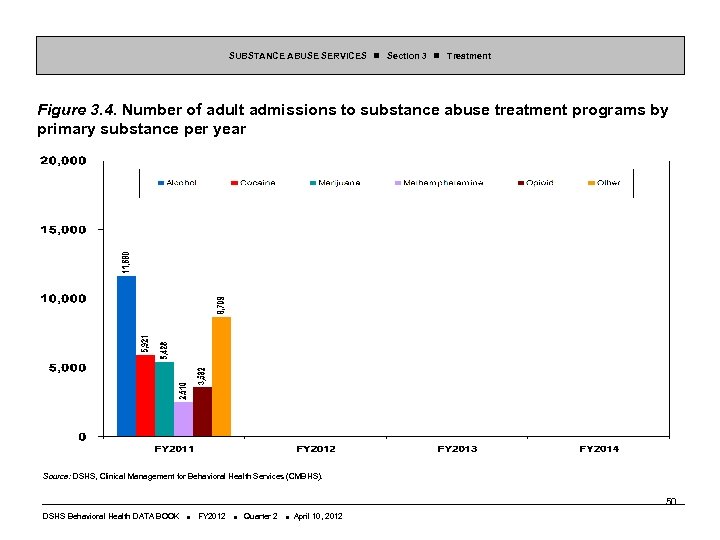
SUBSTANCE ABUSE SERVICES Section 3 Treatment Figure 3. 4. Number of adult admissions to substance abuse treatment programs by primary substance per year Source: DSHS, Clinical Management for Behavioral Health Services (CMBHS). 50 DSHS Behavioral Health DATA BOOK FY 2012 Quarter 2 April 10, 2012
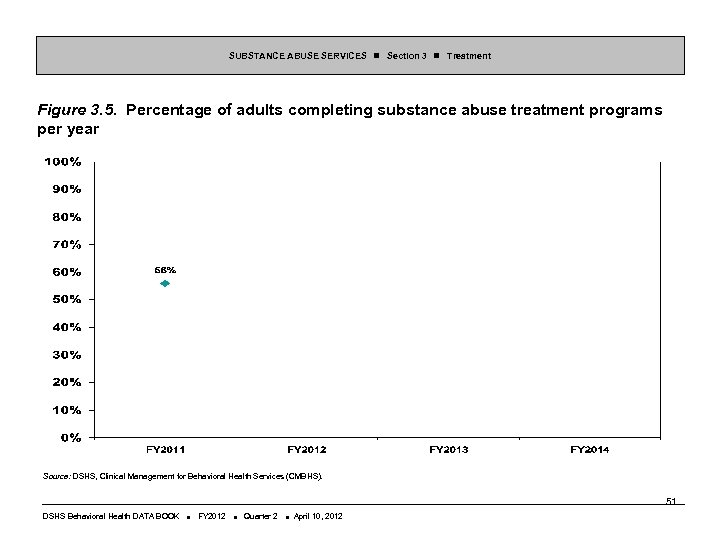
SUBSTANCE ABUSE SERVICES Section 3 Treatment Figure 3. 5. Percentage of adults completing substance abuse treatment programs per year Source: DSHS, Clinical Management for Behavioral Health Services (CMBHS). 51 DSHS Behavioral Health DATA BOOK FY 2012 Quarter 2 April 10, 2012
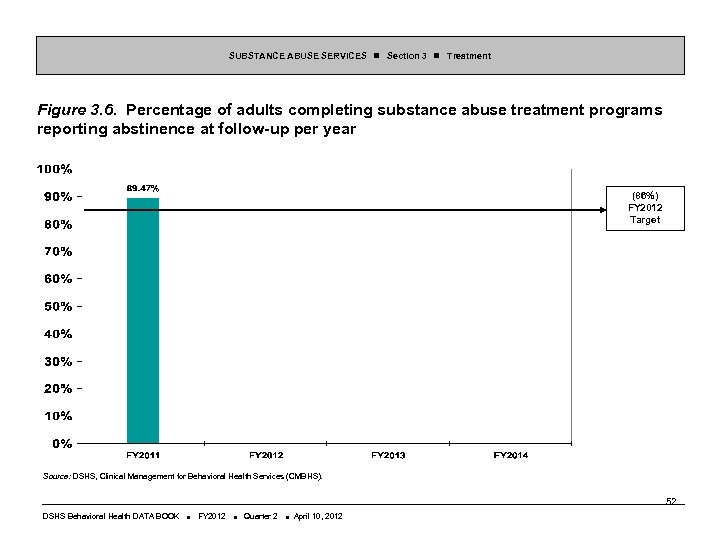
SUBSTANCE ABUSE SERVICES Section 3 Treatment Figure 3. 6. Percentage of adults completing substance abuse treatment programs reporting abstinence at follow-up per year (86%) FY 2012 Target Source: DSHS, Clinical Management for Behavioral Health Services (CMBHS). 52 DSHS Behavioral Health DATA BOOK FY 2012 Quarter 2 April 10, 2012
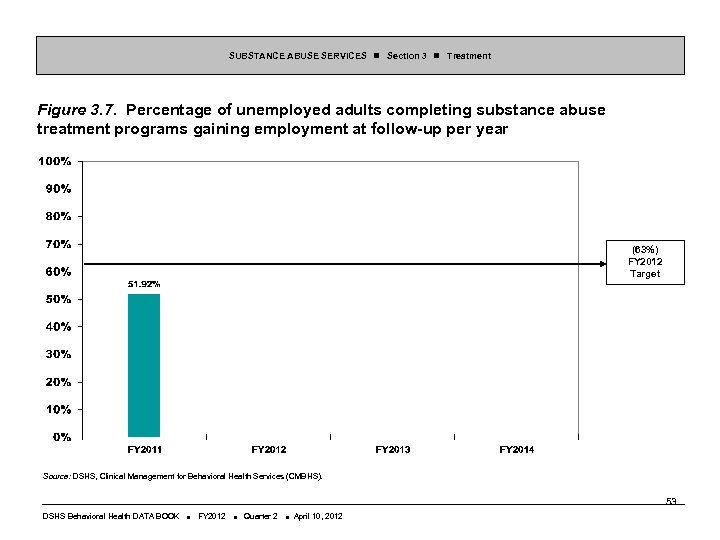
SUBSTANCE ABUSE SERVICES Section 3 Treatment Figure 3. 7. Percentage of unemployed adults completing substance abuse treatment programs gaining employment at follow-up per year (63%) FY 2012 Target Source: DSHS, Clinical Management for Behavioral Health Services (CMBHS). 53 DSHS Behavioral Health DATA BOOK FY 2012 Quarter 2 April 10, 2012
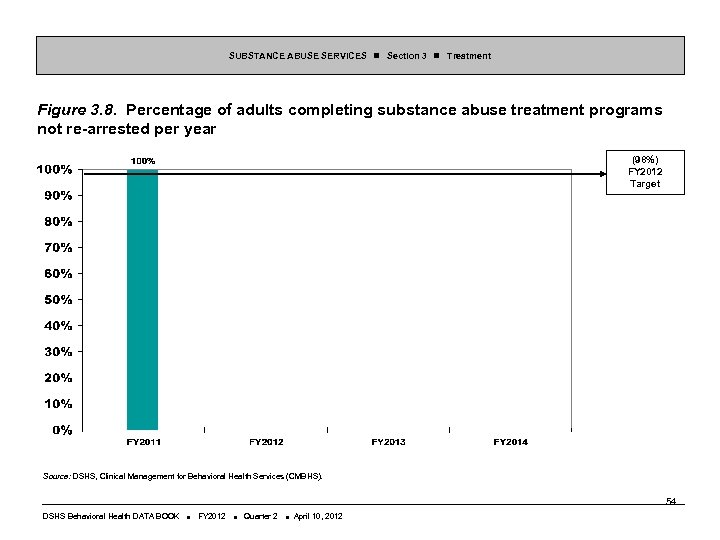
SUBSTANCE ABUSE SERVICES Section 3 Treatment Figure 3. 8. Percentage of adults completing substance abuse treatment programs not re-arrested per year (98%) FY 2012 Target Source: DSHS, Clinical Management for Behavioral Health Services (CMBHS). 54 DSHS Behavioral Health DATA BOOK FY 2012 Quarter 2 April 10, 2012
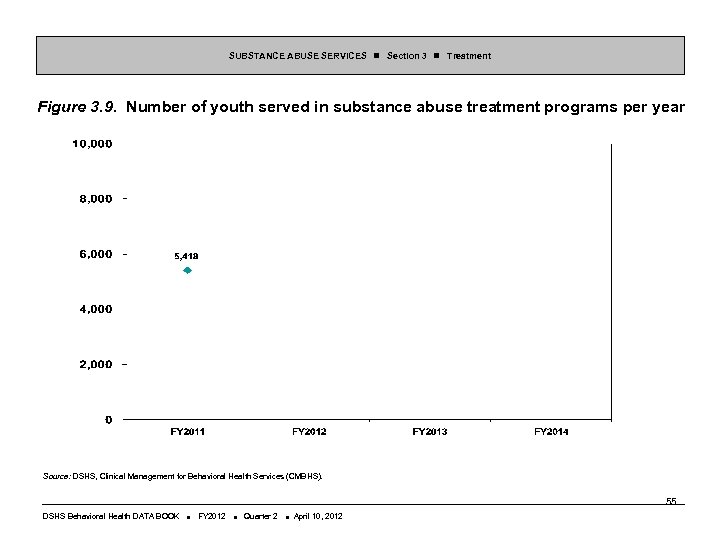
SUBSTANCE ABUSE SERVICES Section 3 Treatment Figure 3. 9. Number of youth served in substance abuse treatment programs per year Source: DSHS, Clinical Management for Behavioral Health Services (CMBHS). 55 DSHS Behavioral Health DATA BOOK FY 2012 Quarter 2 April 10, 2012
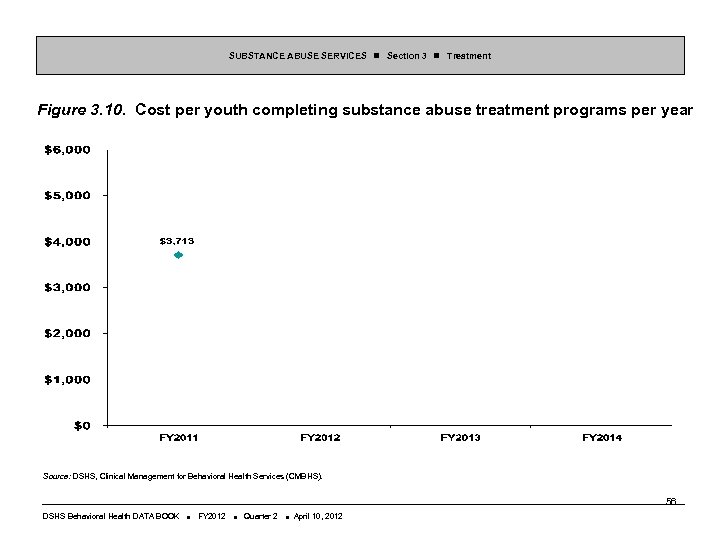
SUBSTANCE ABUSE SERVICES Section 3 Treatment Figure 3. 10. Cost per youth completing substance abuse treatment programs per year Source: DSHS, Clinical Management for Behavioral Health Services (CMBHS). 56 DSHS Behavioral Health DATA BOOK FY 2012 Quarter 2 April 10, 2012
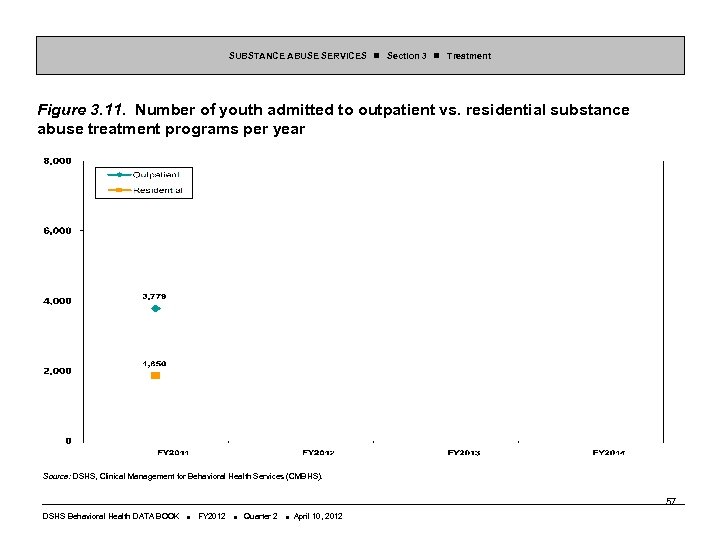
SUBSTANCE ABUSE SERVICES Section 3 Treatment Figure 3. 11. Number of youth admitted to outpatient vs. residential substance abuse treatment programs per year Source: DSHS, Clinical Management for Behavioral Health Services (CMBHS). 57 DSHS Behavioral Health DATA BOOK FY 2012 Quarter 2 April 10, 2012
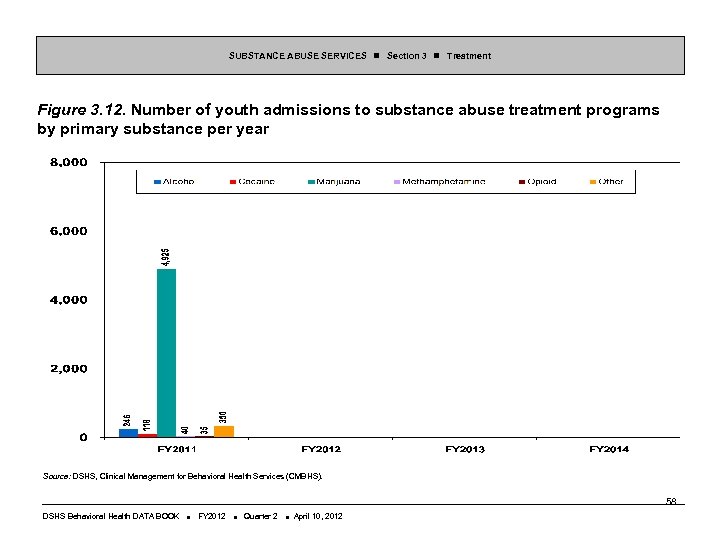
SUBSTANCE ABUSE SERVICES Section 3 Treatment Figure 3. 12. Number of youth admissions to substance abuse treatment programs by primary substance per year Source: DSHS, Clinical Management for Behavioral Health Services (CMBHS). 58 DSHS Behavioral Health DATA BOOK FY 2012 Quarter 2 April 10, 2012
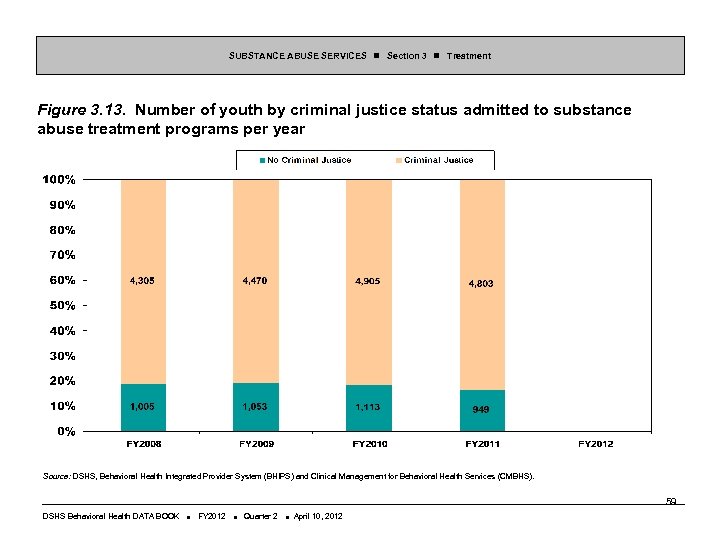
SUBSTANCE ABUSE SERVICES Section 3 Treatment Figure 3. 13. Number of youth by criminal justice status admitted to substance abuse treatment programs per year Source: DSHS, Behavioral Health Integrated Provider System (BHIPS) and Clinical Management for Behavioral Health Services (CMBHS). 59 DSHS Behavioral Health DATA BOOK FY 2012 Quarter 2 April 10, 2012
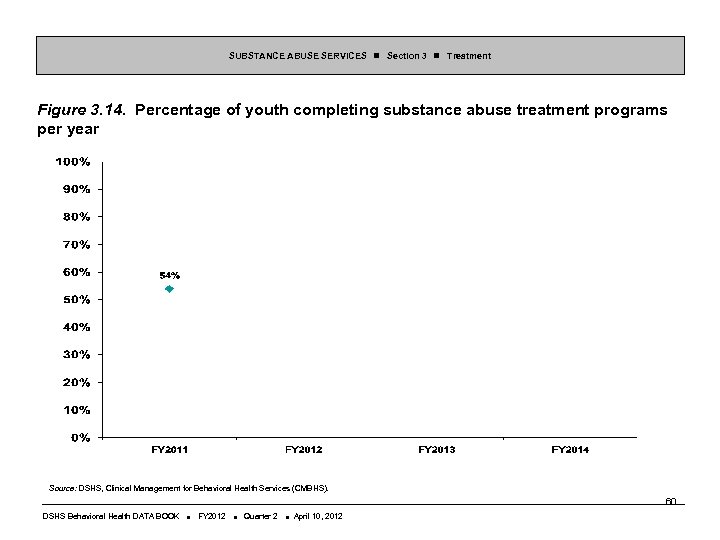
SUBSTANCE ABUSE SERVICES Section 3 Treatment Figure 3. 14. Percentage of youth completing substance abuse treatment programs per year Source: DSHS, Clinical Management for Behavioral Health Services (CMBHS). 60 DSHS Behavioral Health DATA BOOK FY 2012 Quarter 2 April 10, 2012
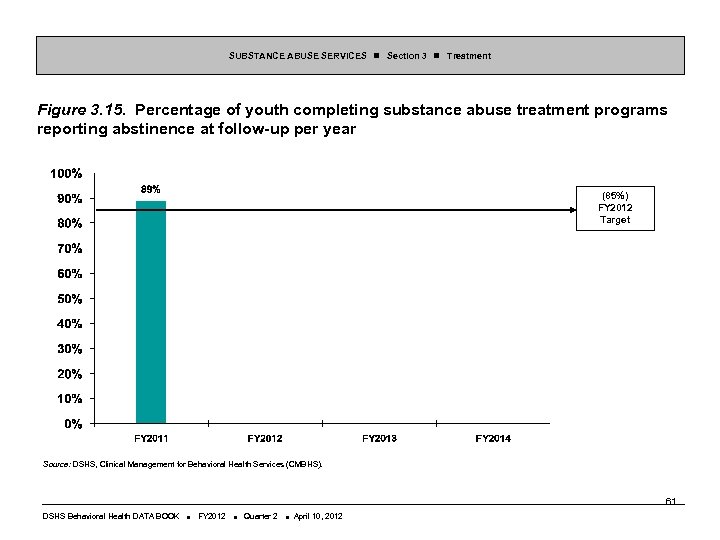
SUBSTANCE ABUSE SERVICES Section 3 Treatment Figure 3. 15. Percentage of youth completing substance abuse treatment programs reporting abstinence at follow-up per year (85%) FY 2012 Target Source: DSHS, Clinical Management for Behavioral Health Services (CMBHS). 61 DSHS Behavioral Health DATA BOOK FY 2012 Quarter 2 April 10, 2012
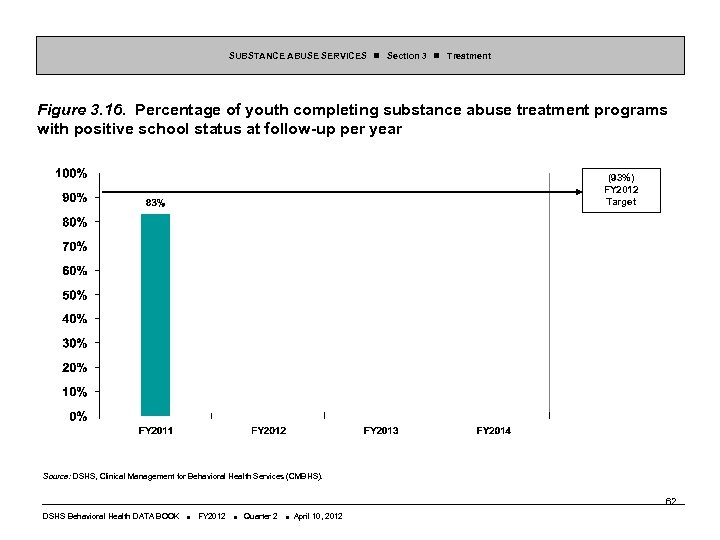
SUBSTANCE ABUSE SERVICES Section 3 Treatment Figure 3. 16. Percentage of youth completing substance abuse treatment programs with positive school status at follow-up per year (93%) FY 2012 Target Source: DSHS, Clinical Management for Behavioral Health Services (CMBHS). 62 DSHS Behavioral Health DATA BOOK FY 2012 Quarter 2 April 10, 2012
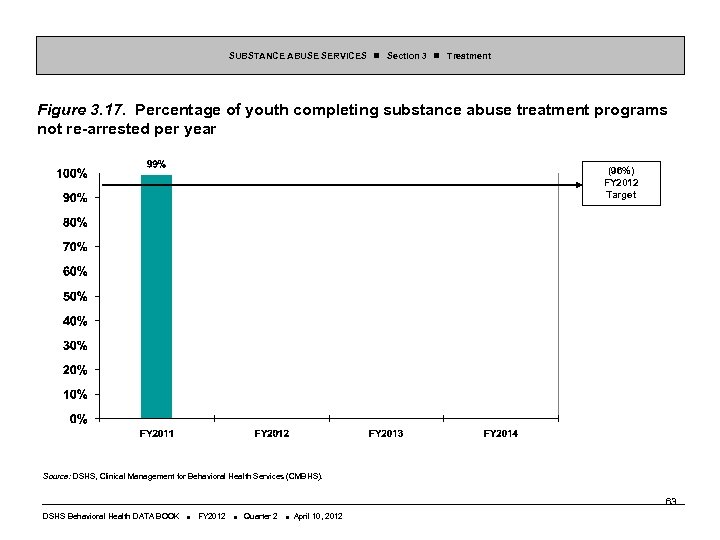
SUBSTANCE ABUSE SERVICES Section 3 Treatment Figure 3. 17. Percentage of youth completing substance abuse treatment programs not re-arrested per year (96%) FY 2012 Target Source: DSHS, Clinical Management for Behavioral Health Services (CMBHS). 63 DSHS Behavioral Health DATA BOOK FY 2012 Quarter 2 April 10, 2012
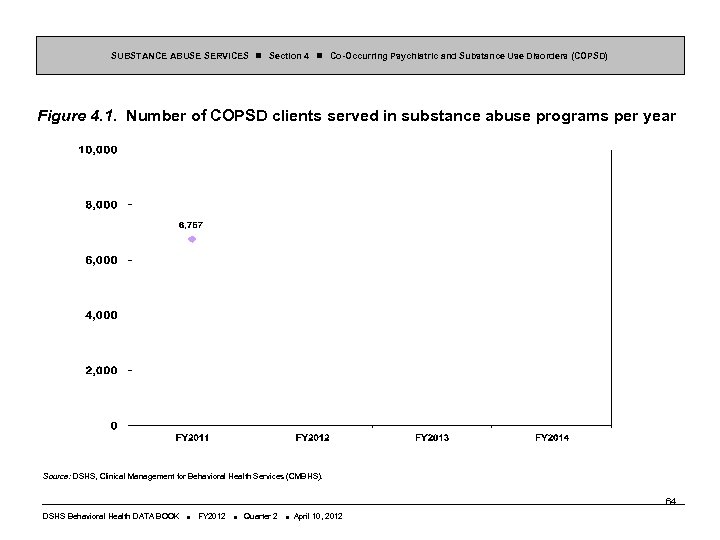
SUBSTANCE ABUSE SERVICES Section 4 Co-Occurring Psychiatric and Substance Use Disorders (COPSD) Figure 4. 1. Number of COPSD clients served in substance abuse programs per year Source: DSHS, Clinical Management for Behavioral Health Services (CMBHS). 64 DSHS Behavioral Health DATA BOOK FY 2012 Quarter 2 April 10, 2012
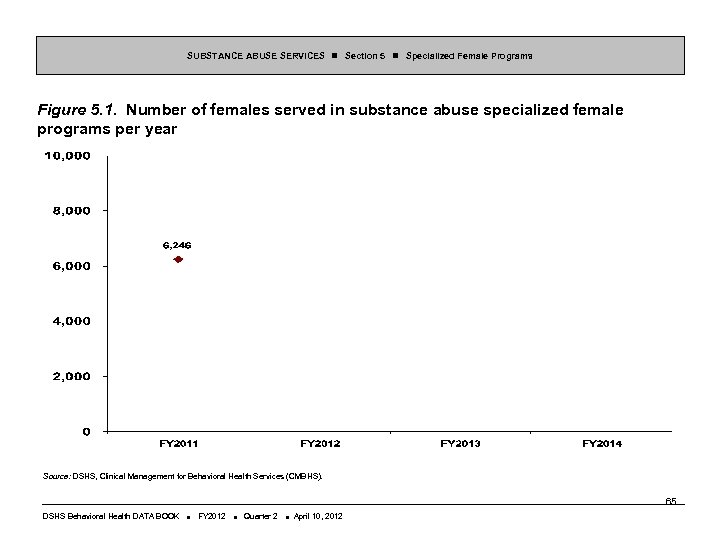
SUBSTANCE ABUSE SERVICES Section 5 Specialized Female Programs Figure 5. 1. Number of females served in substance abuse specialized female programs per year Source: DSHS, Clinical Management for Behavioral Health Services (CMBHS). 65 DSHS Behavioral Health DATA BOOK FY 2012 Quarter 2 April 10, 2012
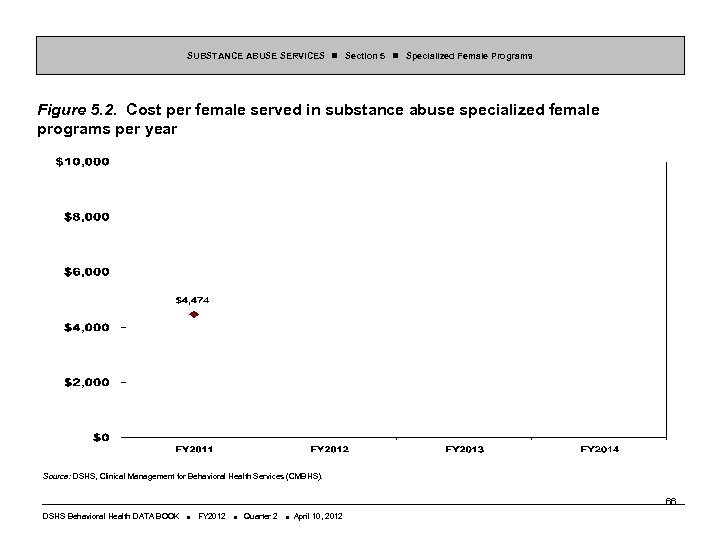
SUBSTANCE ABUSE SERVICES Section 5 Specialized Female Programs Figure 5. 2. Cost per female served in substance abuse specialized female programs per year Source: DSHS, Clinical Management for Behavioral Health Services (CMBHS). 66 DSHS Behavioral Health DATA BOOK FY 2012 Quarter 2 April 10, 2012
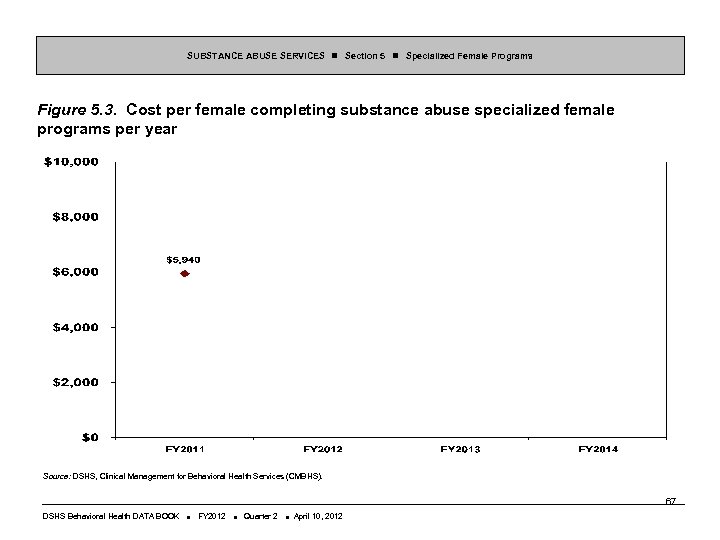
SUBSTANCE ABUSE SERVICES Section 5 Specialized Female Programs Figure 5. 3. Cost per female completing substance abuse specialized female programs per year Source: DSHS, Clinical Management for Behavioral Health Services (CMBHS). 67 DSHS Behavioral Health DATA BOOK FY 2012 Quarter 2 April 10, 2012
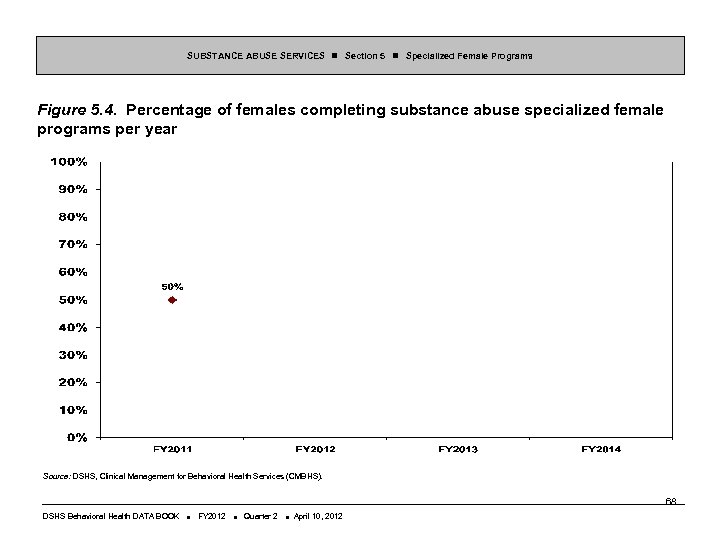
SUBSTANCE ABUSE SERVICES Section 5 Specialized Female Programs Figure 5. 4. Percentage of females completing substance abuse specialized female programs per year Source: DSHS, Clinical Management for Behavioral Health Services (CMBHS). 68 DSHS Behavioral Health DATA BOOK FY 2012 Quarter 2 April 10, 2012
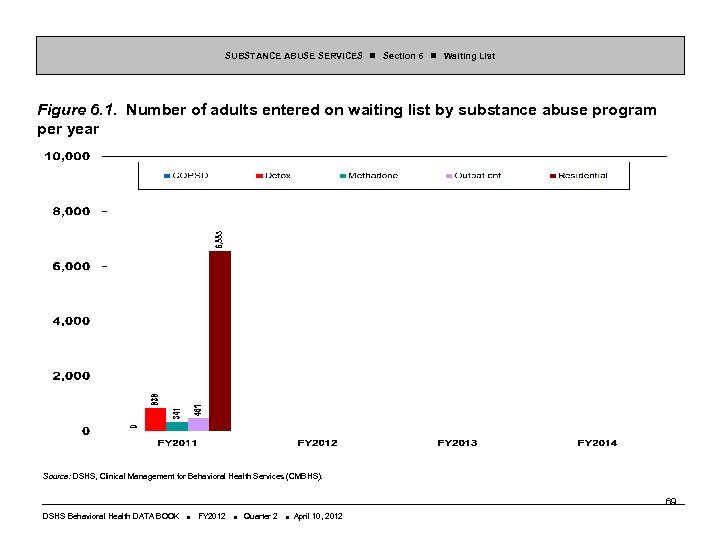
SUBSTANCE ABUSE SERVICES Section 6 Waiting List Figure 6. 1. Number of adults entered on waiting list by substance abuse program per year Source: DSHS, Clinical Management for Behavioral Health Services (CMBHS). 69 DSHS Behavioral Health DATA BOOK FY 2012 Quarter 2 April 10, 2012
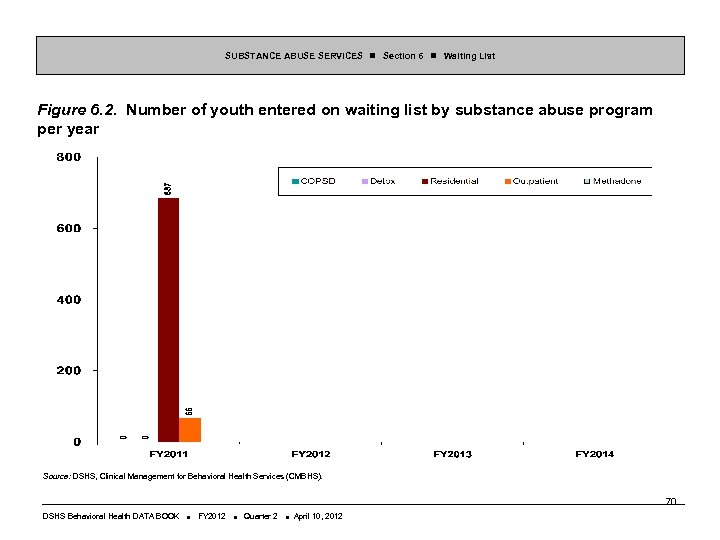
SUBSTANCE ABUSE SERVICES Section 6 Waiting List Figure 6. 2. Number of youth entered on waiting list by substance abuse program per year Source: DSHS, Clinical Management for Behavioral Health Services (CMBHS). 70 DSHS Behavioral Health DATA BOOK FY 2012 Quarter 2 April 10, 2012
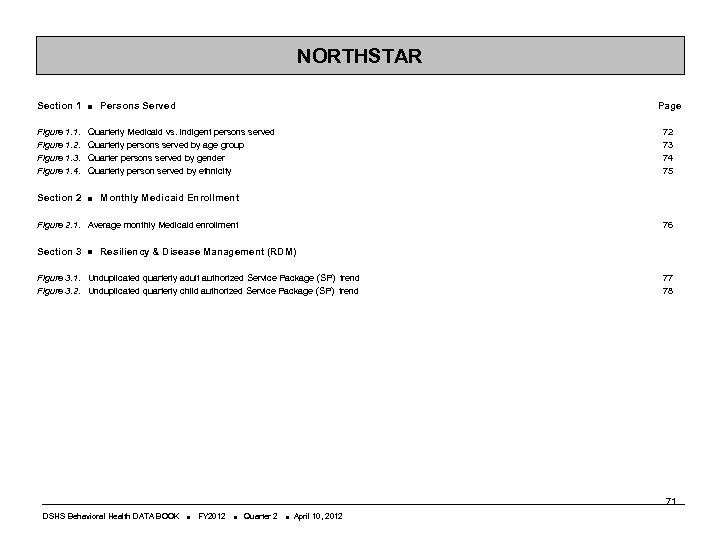
NORTHSTAR Section 1 Persons Served Page Figure 1. 1. Figure 1. 2. Figure 1. 3. Figure 1. 4. Quarterly Medicaid vs. indigent persons served Quarterly persons served by age group Quarter persons served by gender Quarterly person served by ethnicity Section 2 72 73 74 75 Monthly Medicaid Enrollment Figure 2. 1. Average monthly Medicaid enrollment Section 3 76 Resiliency & Disease Management (RDM) Figure 3. 1. Unduplicated quarterly adult authorized Service Package (SP) trend Figure 3. 2. Unduplicated quarterly child authorized Service Package (SP) trend 77 78 71 DSHS Behavioral Health DATA BOOK FY 2012 Quarter 2 April 10, 2012
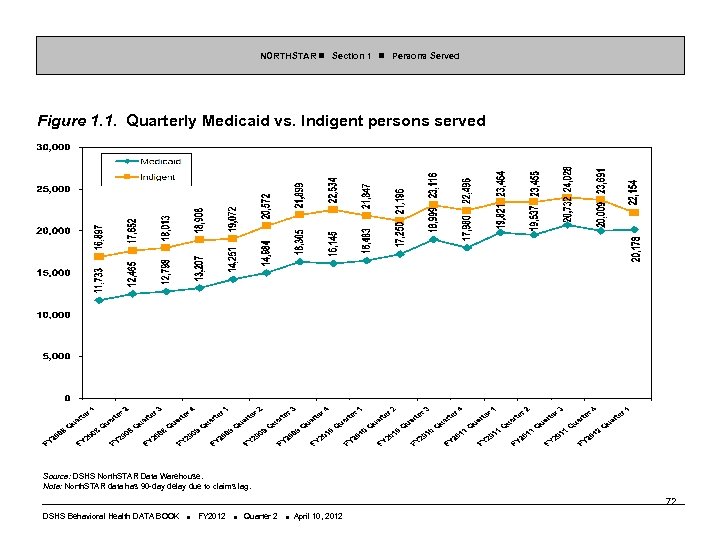
NORTHSTAR Section 1 Persons Served Figure 1. 1. Quarterly Medicaid vs. Indigent persons served Source: DSHS North. STAR Data Warehouse. Note: North. STAR data has 90 -day delay due to claims lag. 72 DSHS Behavioral Health DATA BOOK FY 2012 Quarter 2 April 10, 2012
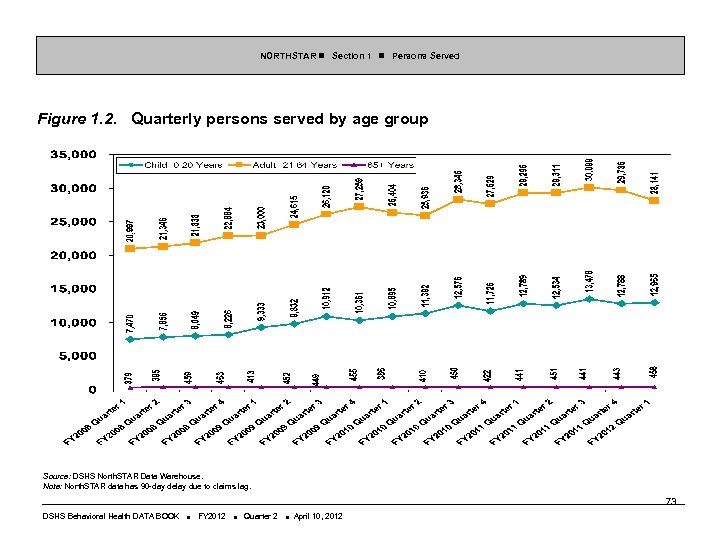
NORTHSTAR Section 1 Persons Served Figure 1. 2. Quarterly persons served by age group Source: DSHS North. STAR Data Warehouse. Note: North. STAR data has 90 -day delay due to claims lag. 73 DSHS Behavioral Health DATA BOOK FY 2012 Quarter 2 April 10, 2012
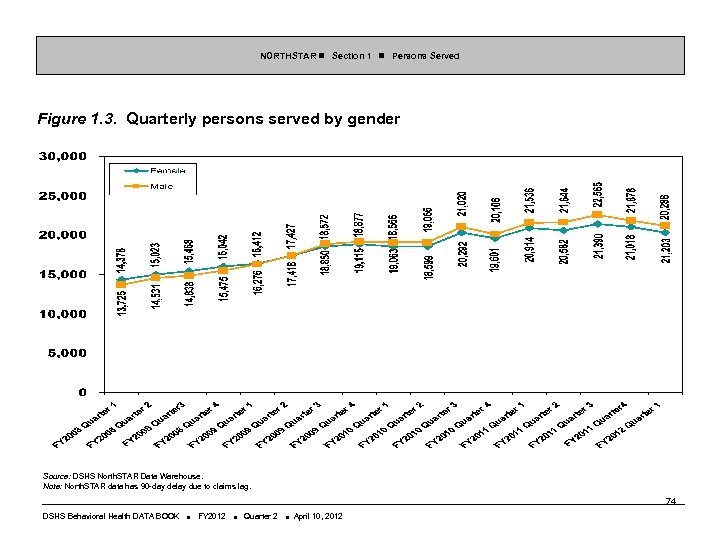
NORTHSTAR Section 1 Persons Served Figure 1. 3. Quarterly persons served by gender Source: DSHS North. STAR Data Warehouse. Note: North. STAR data has 90 -day delay due to claims lag. 74 DSHS Behavioral Health DATA BOOK FY 2012 Quarter 2 April 10, 2012
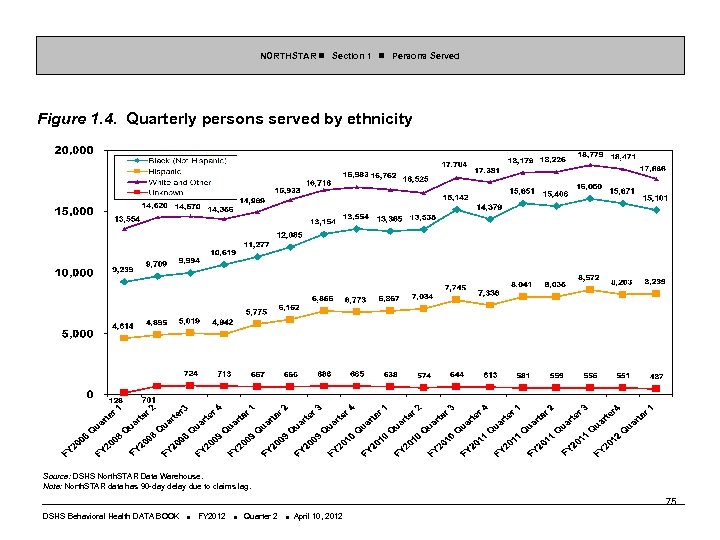
NORTHSTAR Section 1 Persons Served Figure 1. 4. Quarterly persons served by ethnicity Source: DSHS North. STAR Data Warehouse. Note: North. STAR data has 90 -day delay due to claims lag. 75 DSHS Behavioral Health DATA BOOK FY 2012 Quarter 2 April 10, 2012
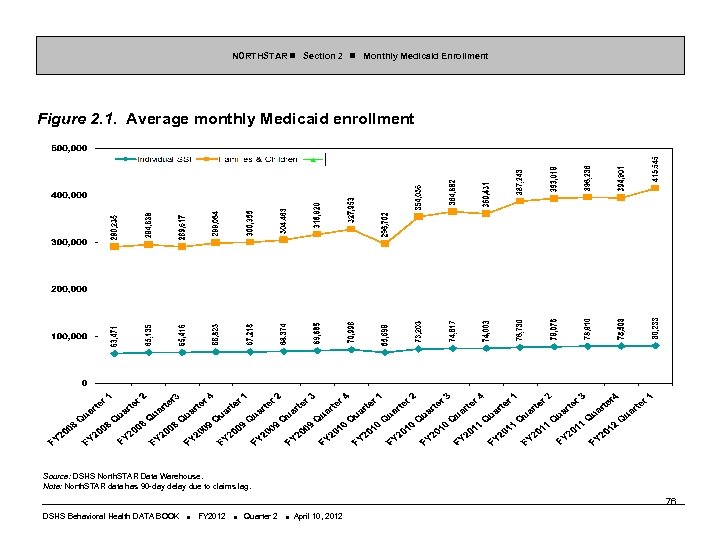
NORTHSTAR Section 2 Monthly Medicaid Enrollment Figure 2. 1. Average monthly Medicaid enrollment Source: DSHS North. STAR Data Warehouse. Note: North. STAR data has 90 -day delay due to claims lag. 76 DSHS Behavioral Health DATA BOOK FY 2012 Quarter 2 April 10, 2012
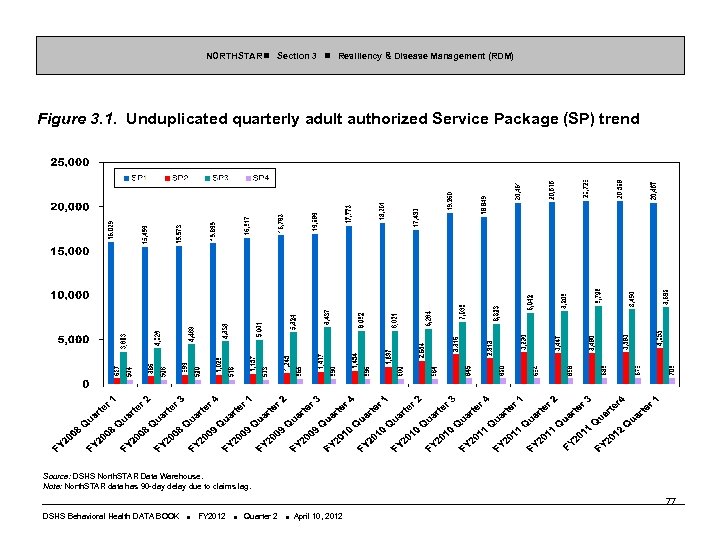
NORTHSTAR Section 3 Resiliency & Disease Management (RDM) Figure 3. 1. Unduplicated quarterly adult authorized Service Package (SP) trend Source: DSHS North. STAR Data Warehouse. Note: North. STAR data has 90 -day delay due to claims lag. 77 DSHS Behavioral Health DATA BOOK FY 2012 Quarter 2 April 10, 2012
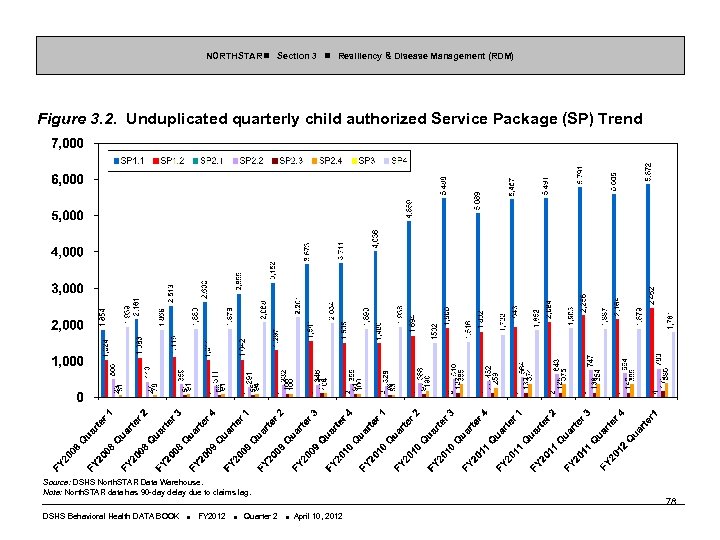
NORTHSTAR Section 3 Resiliency & Disease Management (RDM) Figure 3. 2. Unduplicated quarterly child authorized Service Package (SP) Trend Source: DSHS North. STAR Data Warehouse. Note: North. STAR data has 90 -day delay due to claims lag. DSHS Behavioral Health DATA BOOK FY 2012 Quarter 2 78 April 10, 2012
Скачать презентацию Behavioral Health DATA BOOK A quarterly reference to
58231809d9504f6f61ee95537333b4c0.ppt