 Скачать презентацию Before We Begin Think about the past
bf68c9dc262f0c2a181608851882812c.ppt
- Количество слайдов: 55



Before We Begin • Think about the past 24 hours • Briefly review your activities (work, home, leisure, hobbies, chores, families, friends, etc. ) • List three activities that made you feel most satisfied (things that went well) and why you think they did 3 GOOD THINGS PRACTICE
THE PURSUIT OF HAPPY-NESS The Positive Psychology Movement Elvera E. Mc. Lees, Ph. D. BLUE RIDGE JOB CORPS
Happiness is a human right. It’s neither a luxury nor a triviality. It’s given to you at birth, but you must recognize its existence. It’s as important as the breath of air in your lungs. If people aren’t happy, the world is not right. -Pharrell Williams This webinar will describe the strategies and techniques that we know can increase one's level of satisfaction or happiness with life. After this presentation, participants will be able to: Describe the history and research of the Positive Psychology movement Explain techniques which participants can utilize to increase their level of life satisfaction
With Thanks To… LYNN JOHNSON, PH. D. MARTIN SELIGMAN, PH. D. ED DEINER, PH. D. RICK HANSON, PH. D. SONJA LYUBOMIRSKY, PH. D. BARBARA FREDERICKSON, PH. D. RICHARD DAVIDSON, PH. D. HIS HOLINESS THE 14 TH DALAI LAMA TAL BEN-SHAHAR, PH. D. JONATHAN HAIDT, PH. D. BILL O’HANLON, PH. D. MARSHA LINEHAN, PH. D. MICHAEL LARA, MD AMY CUDDY, PH. D. RON GUTMAN JON KABAT-ZINN, PH. D. CHARLES SCHAEFER, PH. D. AND ALL THE STUDENTS AND STAFF AT BLUE RIDGE JOB CORPS
Happiness is the meaning and the purpose of life, The whole aim and end of human existence. Aristotle
Positive Psychology is the study of the conditions, processes and characteristics that contribute to optimal functioning.
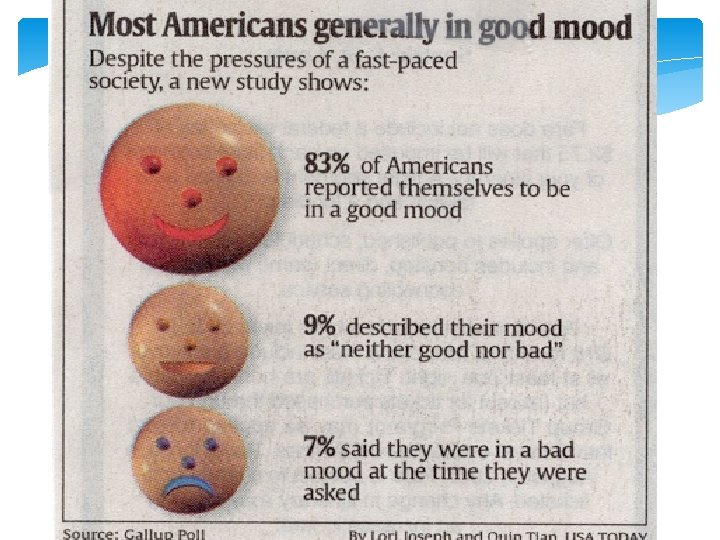
Why study this? Improve well-being of everyone Understand optimal/best functioning Positive affect/feeling is more common than negative affect Positive emotions protect against mental and physical health problems Optimistic people perform better
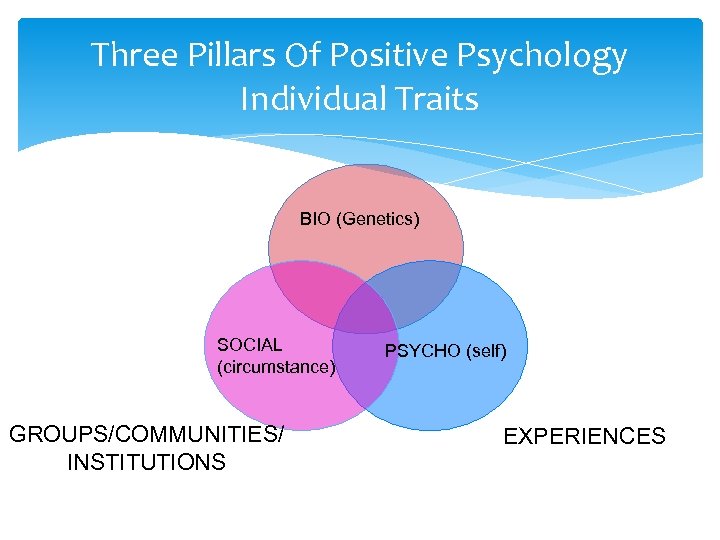
Three Pillars Of Positive Psychology Individual Traits BIO (Genetics) SOCIAL (circumstance) GROUPS/COMMUNITIES/ INSTITUTIONS PSYCHO (self) EXPERIENCES
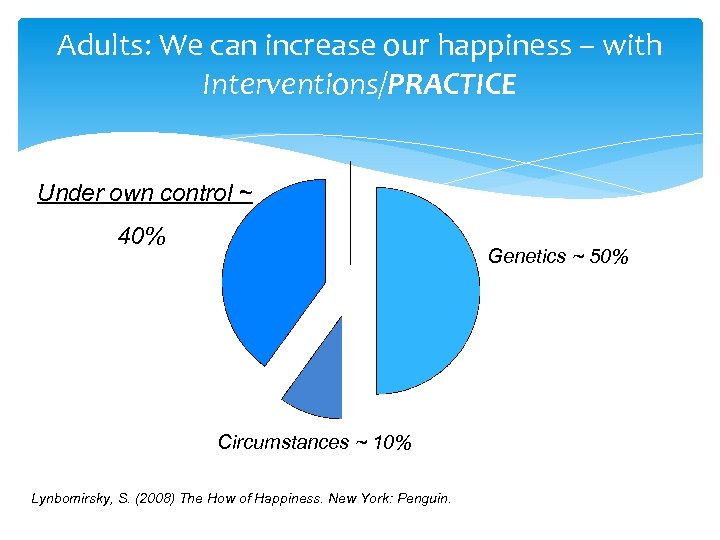
Adults: We can increase our happiness – with Interventions/PRACTICE Under own control ~ 40% Genetics ~ 50% Circumstances ~ 10% Lynbomirsky, S. (2008) The How of Happiness. New York: Penguin.
Genetics-Hot Off the Press Recent neuroscience researchers have demonstrated that a genetic variation in the brain makes some people inherently less anxious, and more able to forget fearful and unpleasant experiences. This lucky genetic mutation produces higher levels of anandamide — the so-called bliss molecule and our own natural marijuana in our brains. (NY TIMES March 6, 2015)
Optimism Subjective Well-being Happiness
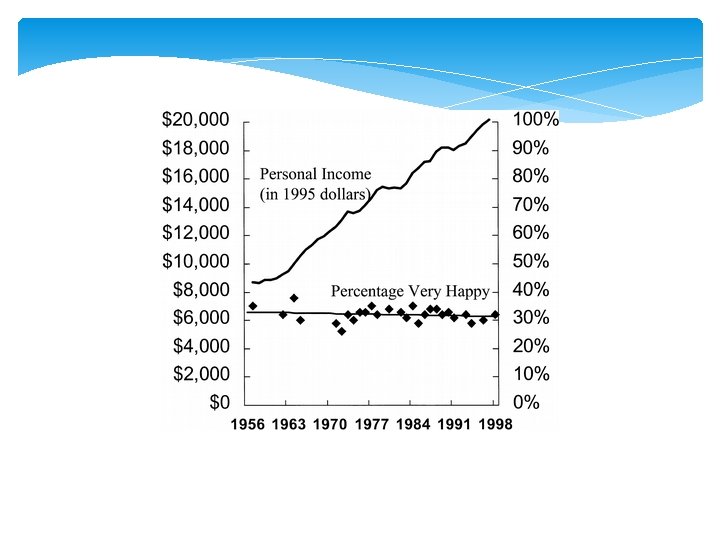
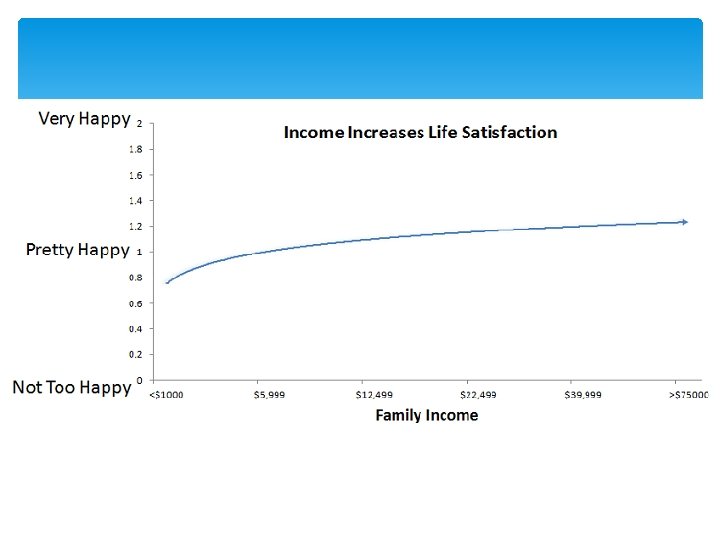
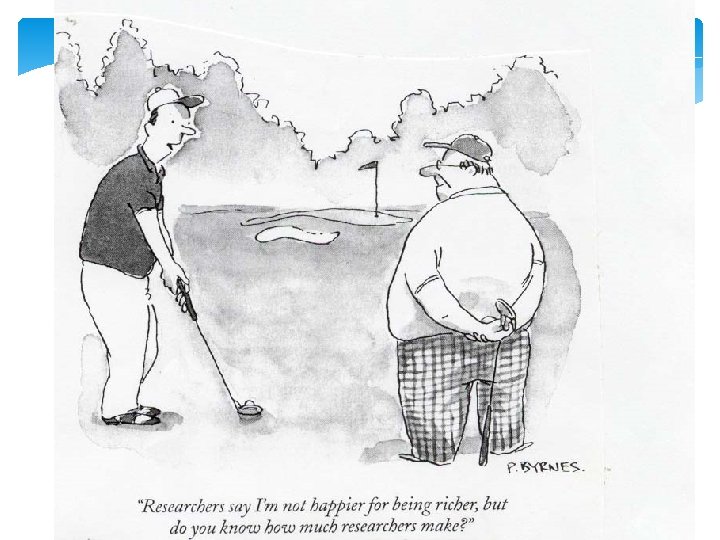
Does money buy happiness or does happiness buy money?
Does happiness make us smarter/more creative?
Study: Do happy doctors make better doctors? 44 doctors asked to diagnose a difficult case One group first got a bag of candy One group first read positive statements about medicine One group was the control group Isen, Rosenweig, Young (1991)
Answer The doctors who received the candy were the quickest and the most accurate
Study: Does positive emotion boost leadership skills? At West Point Military Academy, the best predictor of leadership is the ability to Give and Receive Love Based on a strengths based questionnaire – The Values In Action questionnaire – the VIA See Seligman-Authentic Happiness website for questionnaire
Does happiness make us healthier?
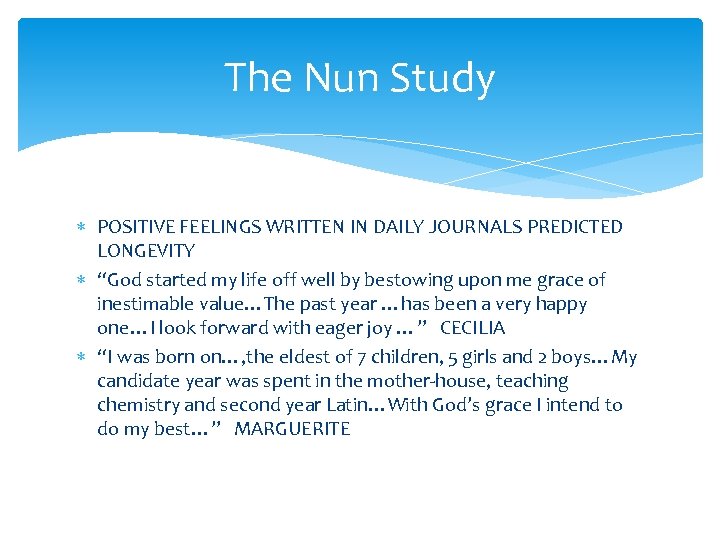
The Nun Study POSITIVE FEELINGS WRITTEN IN DAILY JOURNALS PREDICTED LONGEVITY “God started my life off well by bestowing upon me grace of inestimable value…The past year …has been a very happy one…I look forward with eager joy …” CECILIA “I was born on…, the eldest of 7 children, 5 girls and 2 boys…My candidate year was spent in the mother-house, teaching chemistry and second year Latin…With God’s grace I intend to do my best…” MARGUERITE
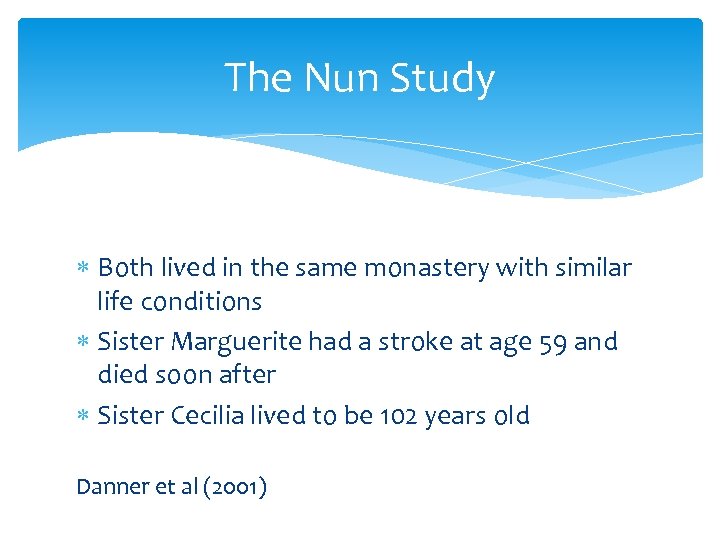
The Nun Study Both lived in the same monastery with similar life conditions Sister Marguerite had a stroke at age 59 and died soon after Sister Cecilia lived to be 102 years old Danner et al (2001)
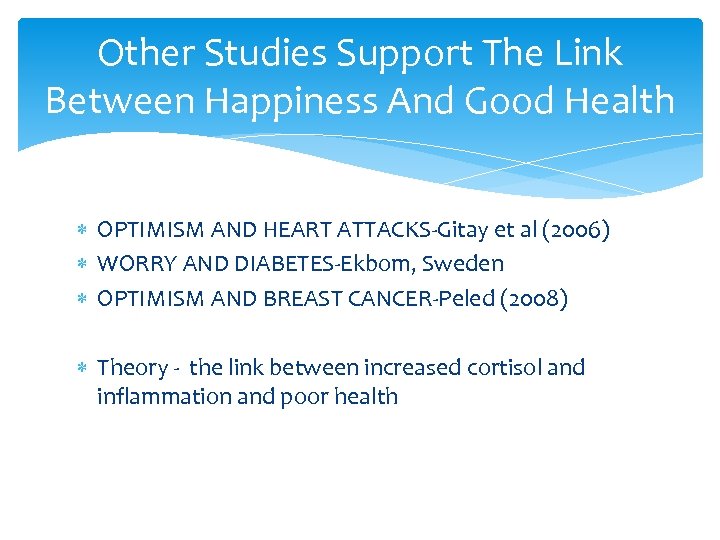
Other Studies Support The Link Between Happiness And Good Health OPTIMISM AND HEART ATTACKS-Gitay et al (2006) WORRY AND DIABETES-Ekbom, Sweden OPTIMISM AND BREAST CANCER-Peled (2008) Theory - the link between increased cortisol and inflammation and poor health
Practice Try These Out Yourself BELLY BREATHING – DIAPHRAGMATIC BREATHING (see Whitney Zweeres, PTA-Learn the Diaphragmatic Breathing Technique-on you tube) RELAXATION/Progressive/Autogenic/Visualization OPEN HANDS – Marsha Linehan POWER POSE- (see Amy Cuddy-TED talk-Your Body Language Shapes Who You Are) MEDITATION/MINDFULNESS-(see Richard Hanson/Jon Kabat-Zinn/Richard Davidson/Dalai Lama)
A Few Words About… MINDFULNESS MEDITATION “Whatever lessens destructive emotions is spiritual practice” Dalai Lama CHANGE YOUR MIND TO CHANGE YOUR BRAIN TO CHANGE YOUR MIND
A Little History Martin Seligman Learned Helplessness/Depression Attributional Style Internal/External Pervasive/Specific Permanent/Temporary (the study about baseball players) LEARNED OPTIMISM
Qualities of Happy People Include: Self-esteem Personal Control Optimism Extraversion Hope
“Use your signature strengths and virtues in the service of something much larger than you are. ” ~ Martin Seligman • The pleasant life: a life that successfully pursues the positive emotions about the present, past, and future. • The good life: using your signature strengths to obtain abundant gratification (through activities we like doing) in the main realms of your life. • The meaningful life: using your signature strengths and virtues in the service of something much larger than you are. (Seligman 2002, p. 249).
5 Elements to Well-Being • Positive emotion • Engagement • Relationships • Meaning • Achievement PERMA
If you want happiness for an hour-take a nap If you want happiness for a day-go fishing If you want happiness for a month-get married If you want happiness for a year-inherit a fortune If you want happiness for a lifetimehelp others Chinese proverb
Practice Gratitude Visit Pick one person (not a relative) who lives nearby, who you should thank Write a letter of appreciation to that person (ex. How they helped you, affected you, Take it to that person, read the letter and leave it.
Gratitude Visit Within 1 week people with moderate depression reported a decrease in depressive symptoms almost into the average range The effect lasted about 6 weeks
Practice Gratitude Diary/Journal 3 GOOD THINGS THAT HAPPENED TO YOU and/or 1 GOOD THING YOU DID FOR SOMEONE ELSE After completing this activity every day for a week, participants began to report more happiness and less depression after one month, an effect that remained at three- and six-month follow-ups. However, the long-term benefits of weekly versus daily gratitude journaling remains unclear.
Practice Smile “SMILING IS YOGA FOR THE MOUTH”-THICH NHAT HAHN Paul Ekman’s research on facial expression-a smile produces a change in brain activity and creates a happier mood. Kraft and Pressman study-a smile can alter stress response. It can slow heart rate and decrease perceived level of stress.
Smile WATCH RON GUTMAN – TED TALK – “THE HIDDEN POWER OF SMILING” Just for fun – check this on you tube--Laughing or Laughter Yoga
Practice Savoring We are biologically predisposed to think there is a tiger in the bushes when there isn’t. Therefore we have to make a conscious effort to attend to the good. TAKE IN THE GOOD – RICK HANSON
Change Your Mind To Change Your Brain Let a good fact become a good experience Savor the positive experience – feel it in your body – intensify it Sense and intend that the positive experience is soaking into your brain and body-registering it into emotional memory Change your brain to change your mind
Practice Discover and Use Your Signature Strengths VALUES IN ACTION VIA questionnaire 240 ITEMS – 24 STRENGTHS See Seligman – Authentic Happiness website
So far, the research is Positive 5 interventions + placebo Placebo-write about early experiences Gratitude visit 3 good things-write what went well You at your best-write about it Identify your signature strength-VIA (Values In Action questionnaire) Use signature strength in a new way
Outcomes On measures of happiness: Gratitude visit had strongest immediate response Using signature strength in a new way and writing three good things had longer sustained effect
New Study With Persons With Severe, Persistent Mental Illness Positive living group treatment: practice strengths, write one good thing, one episode of savoring, mindfulness, set positive goals, gratitude visit, write positive life summary Results: increased hope, well-being, savoring, self esteem; decreased depression, psychotic symptoms Meyer, Johnson, Parks, Iwanski, Penn (2012)
Practice Developing Optimism How we attribute meaning to good or bad events OPTIMISTIC TRIAD Permanent: bad doesn’t last, good does Pervasive: good affects everything; bad is localized and doesn’t affect other parts of life Personal: Good=my doing; Bad=random
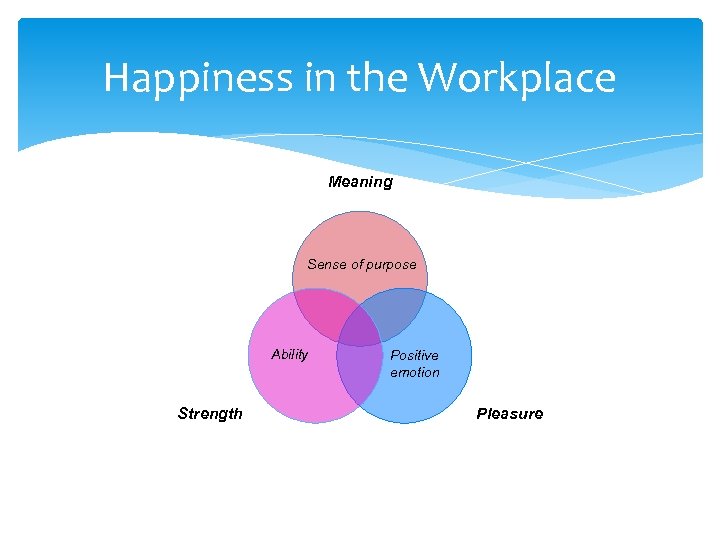
Happiness in the Workplace Meaning Sense of purpose Ability Strength Positive emotion Pleasure
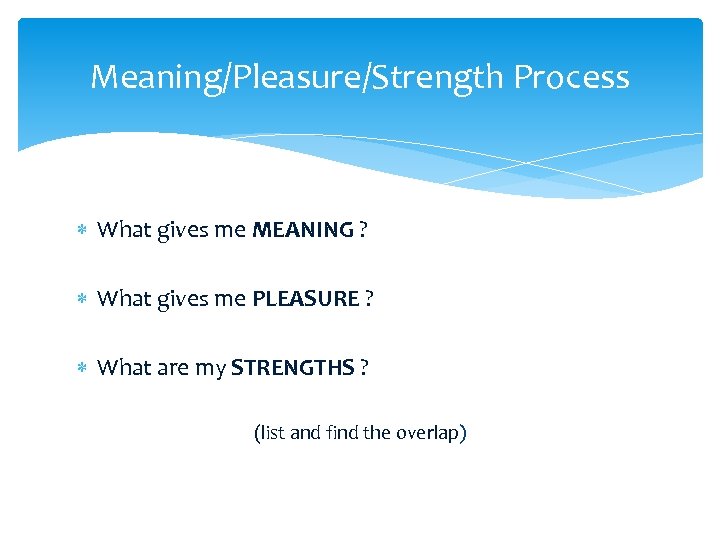
Meaning/Pleasure/Strength Process What gives me MEANING ? What gives me PLEASURE ? What are my STRENGTHS ? (list and find the overlap)
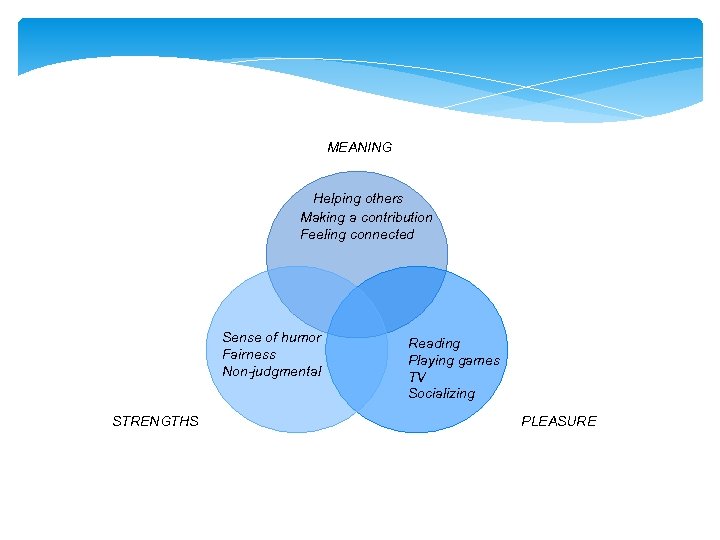
MEANING Helping others Making a contribution Feeling connected Sense of humor Fairness Non-judgmental STRENGTHS Reading Playing games TV Socializing PLEASURE
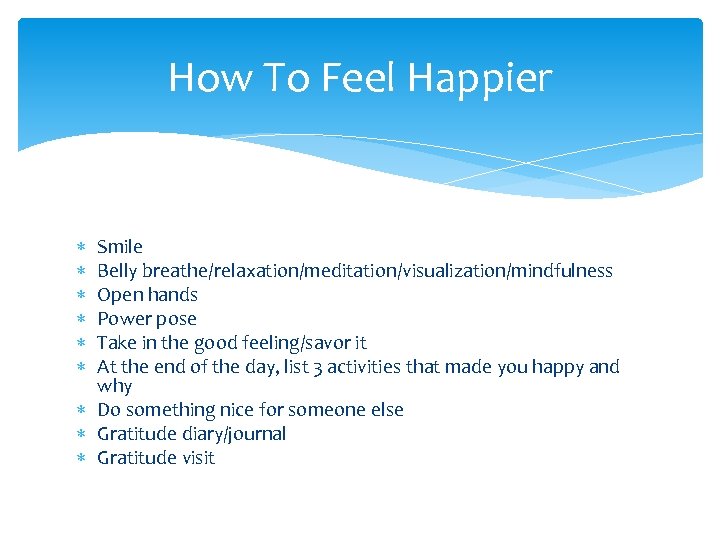
How To Feel Happier Smile Belly breathe/relaxation/meditation/visualization/mindfulness Open hands Power pose Take in the good feeling/savor it At the end of the day, list 3 activities that made you happy and why Do something nice for someone else Gratitude diary/journal Gratitude visit
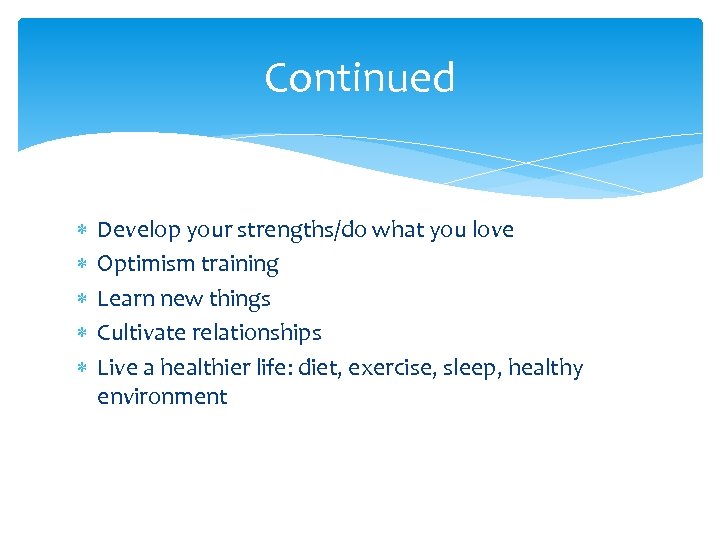
Continued Develop your strengths/do what you love Optimism training Learn new things Cultivate relationships Live a healthier life: diet, exercise, sleep, healthy environment
Work like you don’t need the money Love like you’ve never been hurt Dance as if no one were watching Sing as if no one were listening Live every day as if it were your last
BONUS SLIDE Positive Approaches to Behavior Change Attribution Buttering-up Foot In The Door/Priming Door In The Face Freedom Of Choice
THANK YOU to the most dedicated, passionate, caring, hardworking people on the planet Everything is awesome Everything is cool when you're part of a team Everything is awesome when we're living our dream by Shawn Patterson, Joshua Bartholomew, Lisa Harriton, The Lonely Island
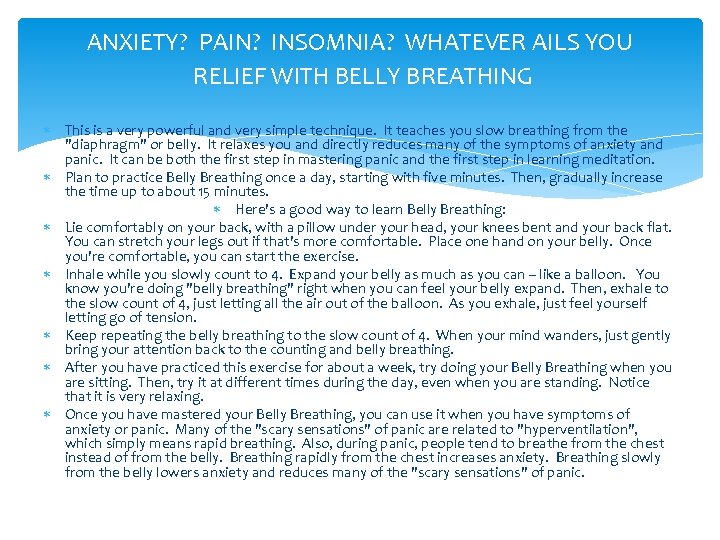
ANXIETY? PAIN? INSOMNIA? WHATEVER AILS YOU RELIEF WITH BELLY BREATHING This is a very powerful and very simple technique. It teaches you slow breathing from the "diaphragm" or belly. It relaxes you and directly reduces many of the symptoms of anxiety and panic. It can be both the first step in mastering panic and the first step in learning meditation. Plan to practice Belly Breathing once a day, starting with five minutes. Then, gradually increase the time up to about 15 minutes. Here's a good way to learn Belly Breathing: Lie comfortably on your back, with a pillow under your head, your knees bent and your back flat. You can stretch your legs out if that's more comfortable. Place one hand on your belly. Once you're comfortable, you can start the exercise. Inhale while you slowly count to 4. Expand your belly as much as you can – like a balloon. You know you're doing "belly breathing" right when you can feel your belly expand. Then, exhale to the slow count of 4, just letting all the air out of the balloon. As you exhale, just feel yourself letting go of tension. Keep repeating the belly breathing to the slow count of 4. When your mind wanders, just gently bring your attention back to the counting and belly breathing. After you have practiced this exercise for about a week, try doing your Belly Breathing when you are sitting. Then, try it at different times during the day, even when you are standing. Notice that it is very relaxing. Once you have mastered your Belly Breathing, you can use it when you have symptoms of anxiety or panic. Many of the "scary sensations" of panic are related to "hyperventilation", which simply means rapid breathing. Also, during panic, people tend to breathe from the chest instead of from the belly. Breathing rapidly from the chest increases anxiety. Breathing slowly from the belly lowers anxiety and reduces many of the "scary sensations" of panic.
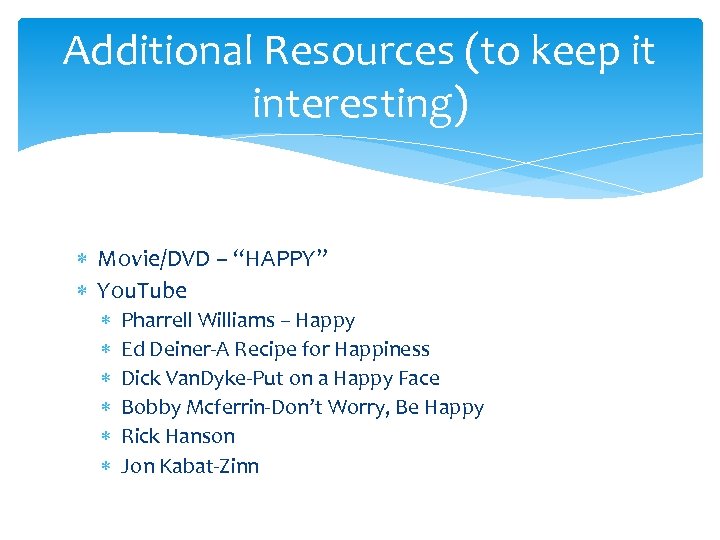
Additional Resources (to keep it interesting) Movie/DVD – “HAPPY” You. Tube Pharrell Williams – Happy Ed Deiner-A Recipe for Happiness Dick Van. Dyke-Put on a Happy Face Bobby Mcferrin-Don’t Worry, Be Happy Rick Hanson Jon Kabat-Zinn

 Скачать презентацию Before We Begin Think about the past
bf68c9dc262f0c2a181608851882812c.ppt