 Скачать презентацию Be happy A safety valve in maturity
1bd1858cba1c6d958bbca95598542383.ppt
- Количество слайдов: 1



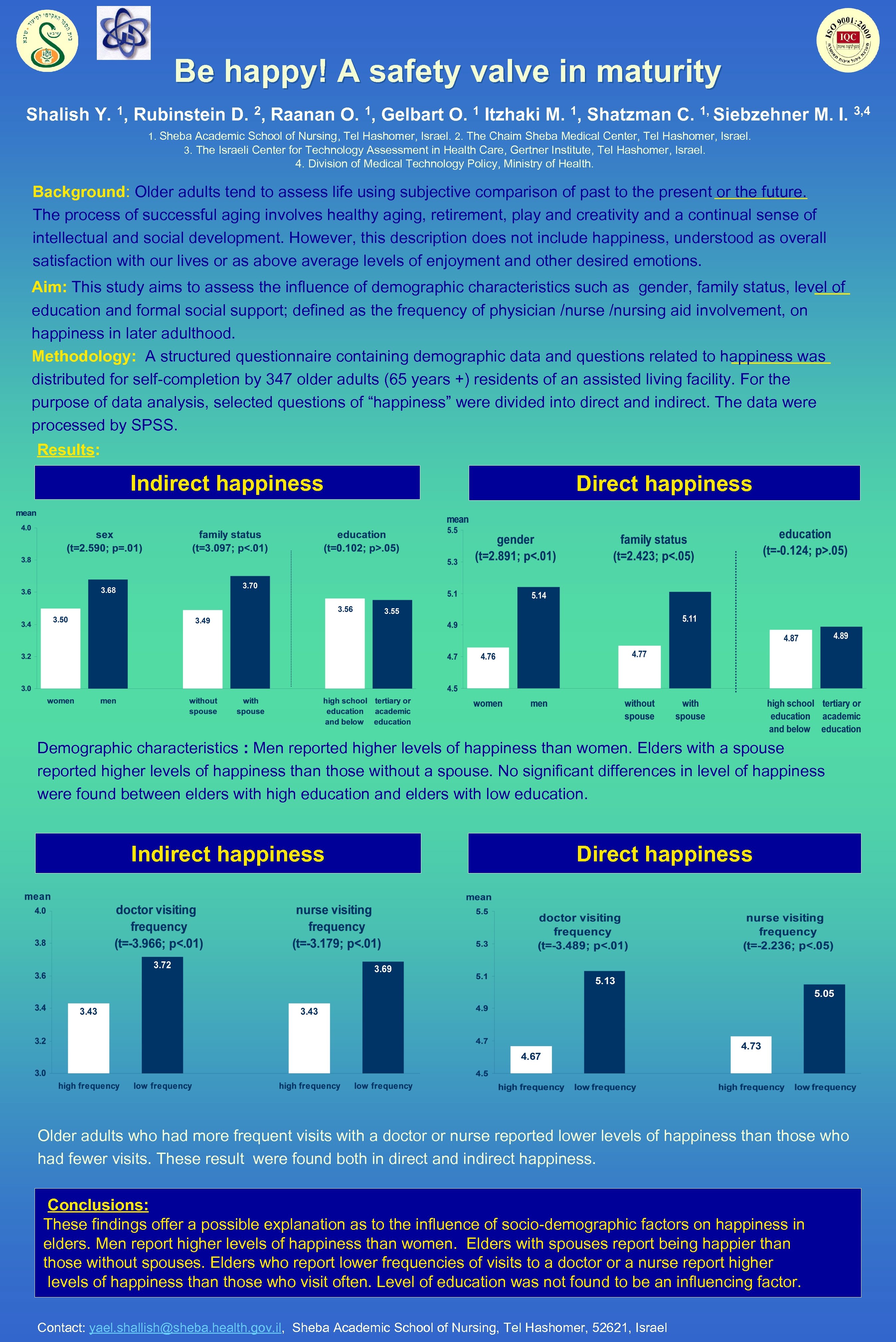
Be happy! A safety valve in maturity 1, Rubinstein D. 2, Raanan O. 1, Gelbart O. 1 Itzhaki M. 1, Shatzman C. 1, Siebzehner M. I. 3, 4 Shalish Y. 1. Sheba Academic School of Nursing, Tel Hashomer, Israel. 2. The Chaim Sheba Medical Center, Tel Hashomer, Israel. 3. The Israeli Center for Technology Assessment in Health Care, Gertner Institute, Tel Hashomer, Israel. 4. Division of Medical Technology Policy, Ministry of Health. Background: Older adults tend to assess life using subjective comparison of past to the present or the future. The process of successful aging involves healthy aging, retirement, play and creativity and a continual sense of intellectual and social development. However, this description does not include happiness, understood as overall satisfaction with our lives or as above average levels of enjoyment and other desired emotions. Aim: This study aims to assess the influence of demographic characteristics such as gender, family status, level of education and formal social support; defined as the frequency of physician /nurse /nursing aid involvement, on happiness in later adulthood. Methodology: A structured questionnaire containing demographic data and questions related to happiness was distributed for self-completion by 347 older adults (65 years +) residents of an assisted living facility. For the purpose of data analysis, selected questions of “happiness” were divided into direct and indirect. The data were processed by SPSS. Results: Indirect happiness Demographic characteristics : Men reported higher levels of happiness than women. Elders with a spouse reported higher levels of happiness than those without a spouse. No significant differences in level of happiness were found between elders with high education and elders with low education. Indirect happiness Direct happiness Older adults who had more frequent visits with a doctor or nurse reported lower levels of happiness than those who had fewer visits. These result were found both in direct and indirect happiness. Conclusions: These findings offer a possible explanation as to the influence of socio-demographic factors on happiness in elders. Men report higher levels of happiness than women. Elders with spouses report being happier than those without spouses. Elders who report lower frequencies of visits to a doctor or a nurse report higher levels of happiness than those who visit often. Level of education was not found to be an influencing factor. Contact: yael. shallish@sheba. health. gov. il, Sheba Academic School of Nursing, Tel Hashomer, 52621, Israel
Скачать презентацию Be happy A safety valve in maturity
1bd1858cba1c6d958bbca95598542383.ppt