 Скачать презентацию BCCPG Integration of Variable Generation into the Grid
6afab08acbed50629c8fd9018ab21c9c.ppt
- Количество слайдов: 23



BCCPG Integration of Variable Generation into the Grid: Need for TVLs (Transfer Variability Limits) Gordon Dobson-Mack (Chair) Dynamic Transfer Capability Task Force Wind Integration Forum – Steering Committee November 17 2011 1
Purpose of Presentation • Discuss the need for TVLs and what can be done to increase them 2
Outline 1. Variability & its impacts: – – Increased variability is a reality for operations; Dynamic Transfers contribute to variability; Transfer Variability impacts the grid; Need Transfers Variability Limits for some systems. 2. DTC Task Force – – Mandate & Membership; Deliverables; 3. What Next? – Questions & Options; 3
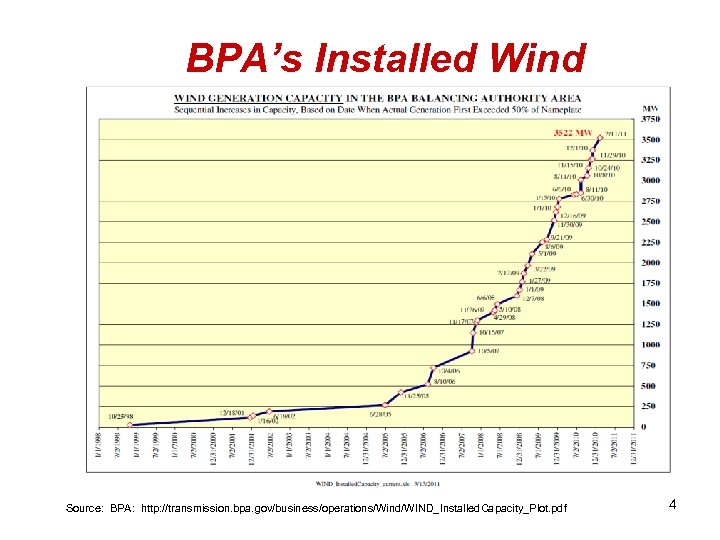
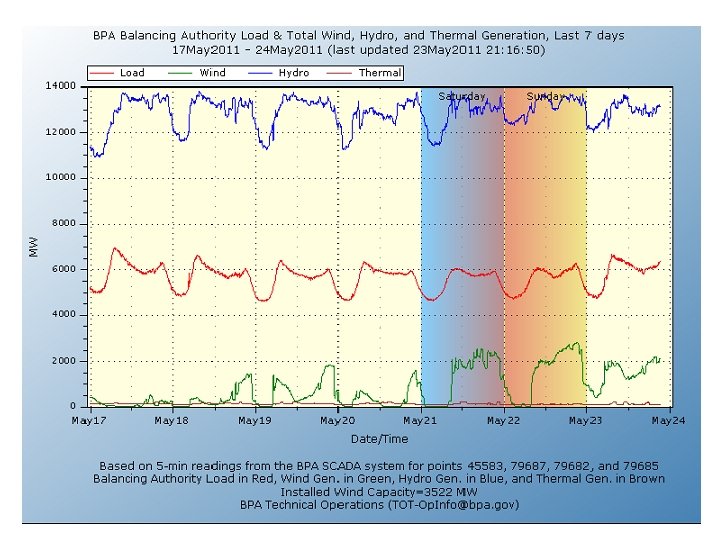
BPA’s Installed Wind Source: BPA: http: //transmission. bpa. gov/business/operations/Wind/WIND_Installed. Capacity_Plot. pdf 4
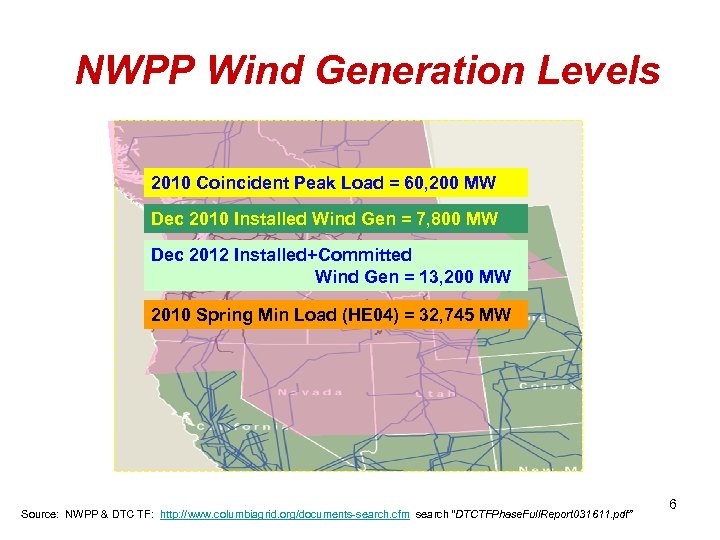
NWPP Wind Generation Levels 2010 Coincident Peak Load = 60, 200 MW Dec 2010 Installed Wind Gen = 7, 800 MW Dec 2012 Installed+Committed Wind Gen = 13, 200 MW 2010 Spring Min Load (HE 04) = 32, 745 MW Source: NWPP & DTC TF: http: //www. columbiagrid. org/documents-search. cfm search “DTCTFPhase. Full. Report 031611. pdf” 6
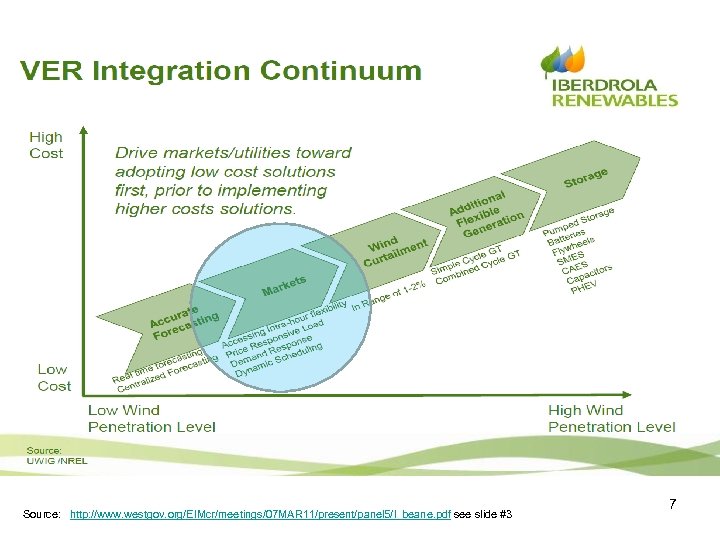
Source: http: //www. westgov. org/EIMcr/meetings/07 MAR 11/present/panel 5/l_beane. pdf see slide #3 7
Generation or Transmission Problem? • Generation Problem: – Need to maintain Generation Balance; – Want access to least cost & most flexible Ancillary Services • Transmission Problem…As well: – Transmission system designed historically for routine predictable changes; – Must be ready to withstand the next worst contingency; – Voltage control and RAS arming are local measures that must be factored into the solution.
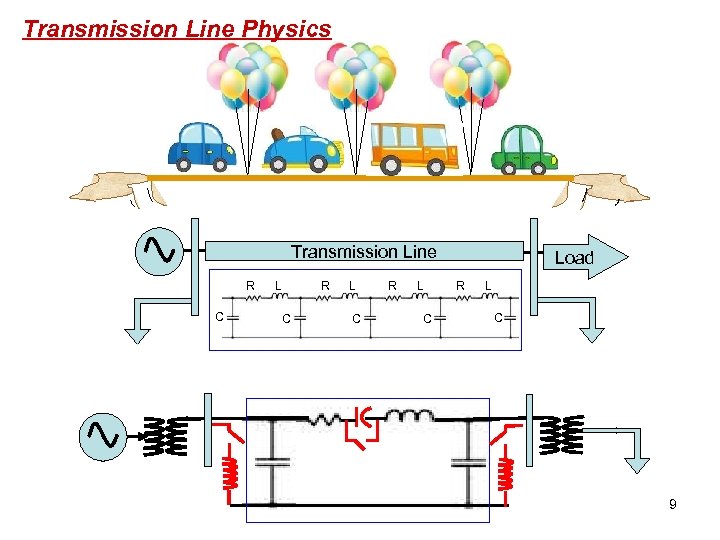
Transmission Line Physics Transmission Line R L C C C R L C Load R L C 9
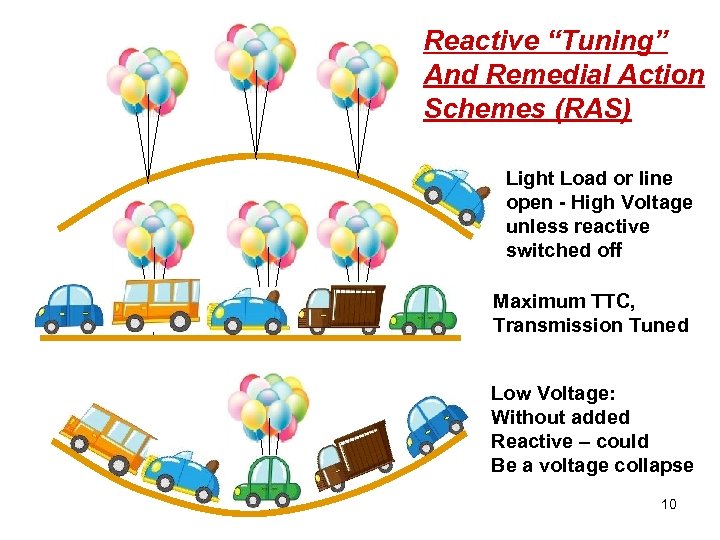
Reactive “Tuning” And Remedial Action Schemes (RAS) Light Load or line open - High Voltage unless reactive switched off Maximum TTC, Transmission Tuned Low Voltage: Without added Reactive – could Be a voltage collapse 10
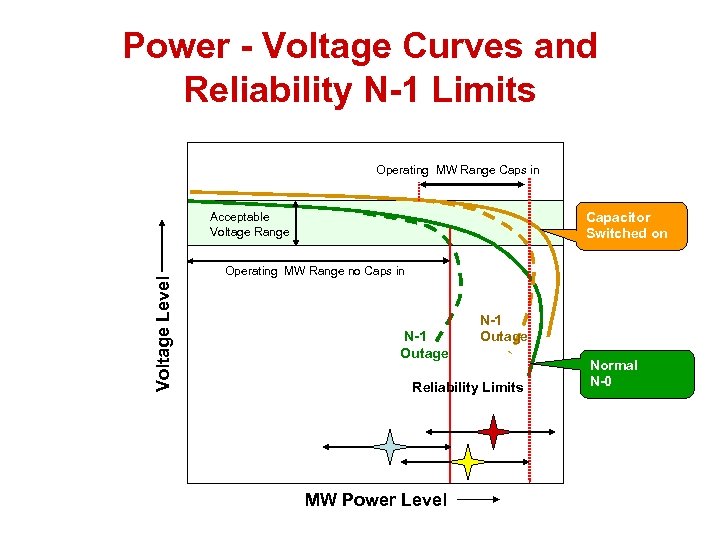
Power - Voltage Curves and Reliability N-1 Limits Operating MW Range Caps in Capacitor Switched on Voltage Level Acceptable Voltage Range Operating MW Range no Caps in N-1 Outage Reliability Limits MW Power Level Normal N-0
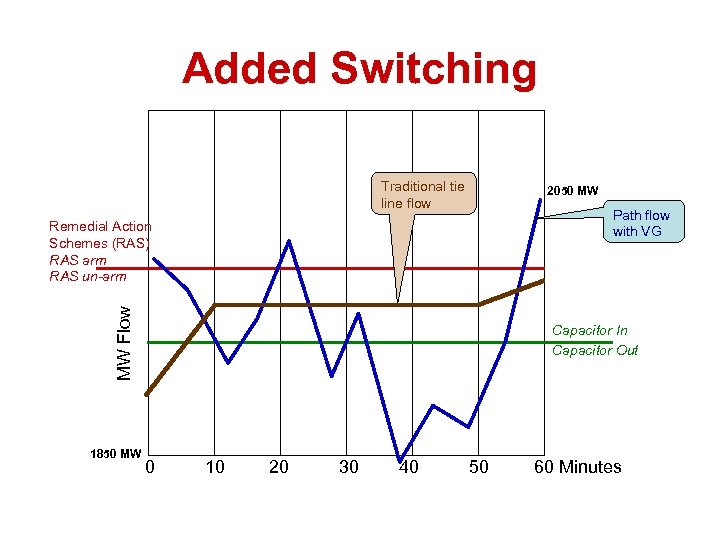
Added Switching Traditional tie line flow MW Flow Remedial Action Schemes (RAS) RAS arm RAS un-arm 1850 MW 2050 MW Path flow with VG Capacitor In Capacitor Out 0 10 20 30 40 50 60 Minutes
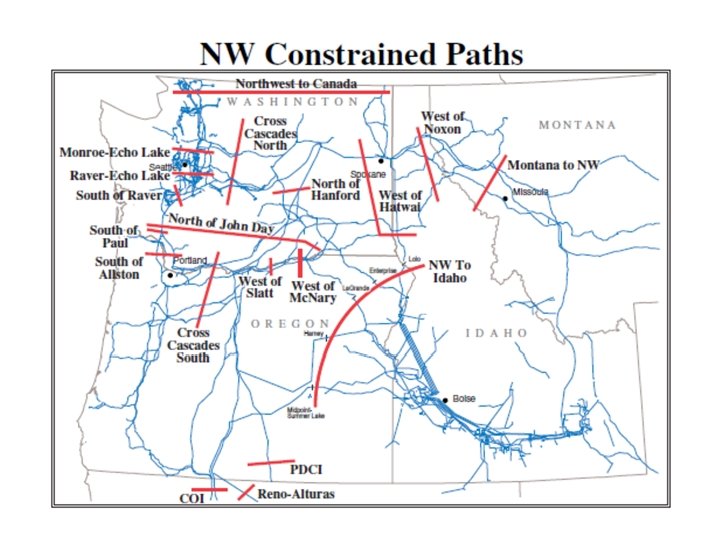
13
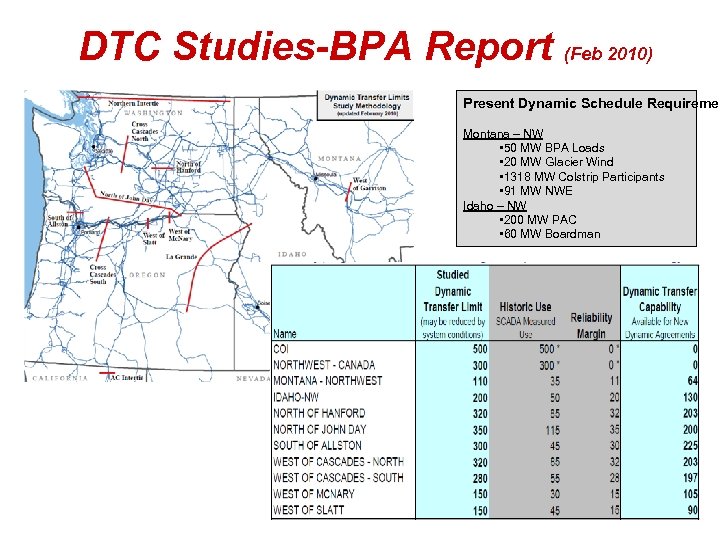
DTC Studies-BPA Report (Feb 2010) Present Dynamic Schedule Requiremen Montana – NW • 50 MW BPA Loads • 20 MW Glacier Wind • 1318 MW Colstrip Participants • 91 MW NWE Idaho – NW • 200 MW PAC • 60 MW Boardman 14
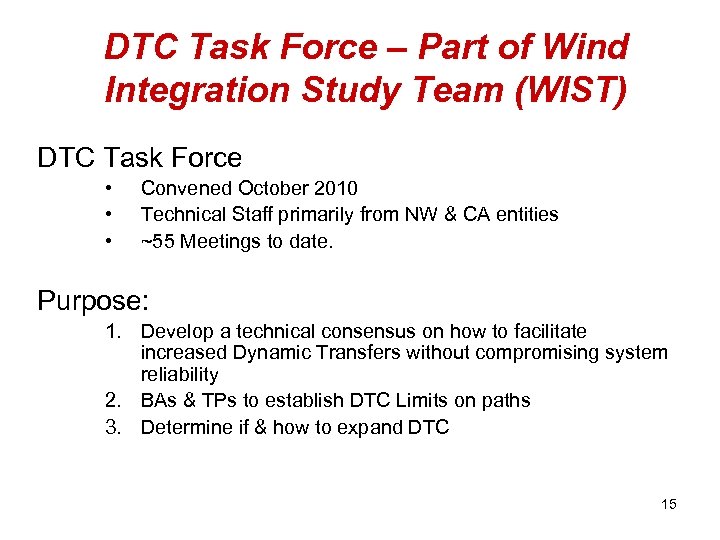
DTC Task Force – Part of Wind Integration Study Team (WIST) DTC Task Force • • • Convened October 2010 Technical Staff primarily from NW & CA entities ~55 Meetings to date. Purpose: 1. Develop a technical consensus on how to facilitate increased Dynamic Transfers without compromising system reliability 2. BAs & TPs to establish DTC Limits on paths 3. Determine if & how to expand DTC 15
DTC TF (Phase 3 )Membership Powerex: Gordon Dobson-Mack DTC TF Chair Tel: 604 -891 -6004 Gordon. Dobson-Mack@powerex. com Columbia Grid: Marv Landauer Northern Tier: Rich Bayless NWPP: Don Badley Avista: Rich Hydzik BPA: Brian Tuck, Ramu Ramanathan BCH: Steven Pai, Sanjeet Sanghera, CAISO: Jim Price Gaelectric: Dan Wheeler IPCO: Orlando Ciniglio MSR: Dave Arthur, Ann Fisher NWE: Rikin Shah, Ray Brush PAC: Sanman Rokade PGE: Philip Augustin, Don Johnson PSE: Alex Berres, Joe Seabrook TANC: Abbas Abed, Shawn Matchim SMUD: Richard Buckingham WAPA (Folsum): Kirk Sornborger 316
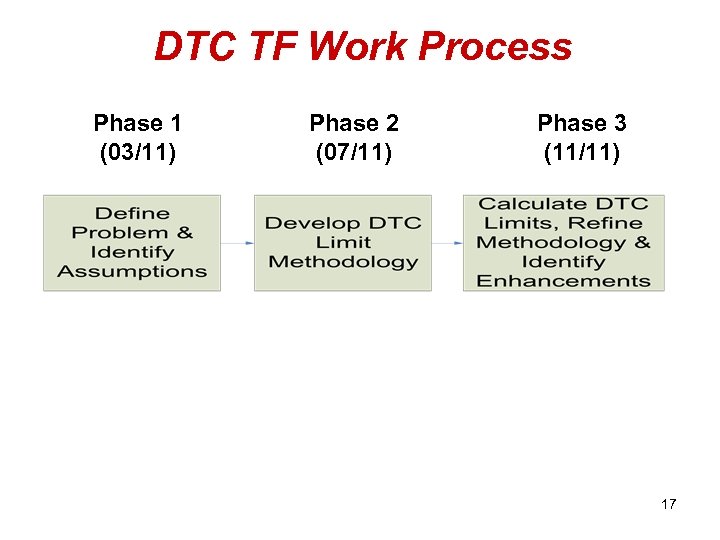
DTC TF Work Process Phase 1 (03/11) Phase 2 (07/11) Phase 3 (11/11) 17
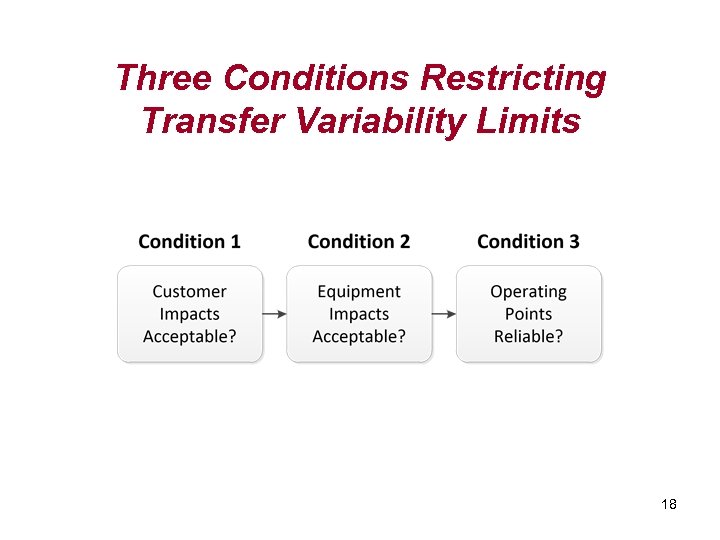
Three Conditions Restricting Transfer Variability Limits 18
Caveats for Phase 3 Report • Does not calculate TVLs for particular Paths; – Recommends a methodology; – Leaves limit calculations to Transmission Providers • Does not recommend specific projects – Describes generic projects to enhance TVLs – Leaves specific project recommendations to TPs 19
Bottom Line – so far • TVL is a real issue; – Impediment to transfer imbalance energy and regulation between BAs; – Will limit where & how the region can integrate wind; – Limits can be raised, but not overnight. • Need for TVLs will vary by system; • Should plan for increased transmission flexibility to manage the increasingly variable flows on grid 20
Questions for Companies • How automated is your RAS arming? • How much automatic voltage control do you have across your system? • What are the TVLs for your major flowgates? • How will your company manage TVLs? • What capital projects are planned to increase Transmission Flexibility? 21
Options for increasing TVLs • Modifying some SOL assumptions (e. g. overshedding); • Automating RAS • Automating voltage control • Ensure voltage control equipment is designed for frequent switching (**Detailed TVL studies needed to identify most effective solutions) 22

Questions?
Скачать презентацию BCCPG Integration of Variable Generation into the Grid
6afab08acbed50629c8fd9018ab21c9c.ppt