 Скачать презентацию Basics in paediatric allergology Ig E-mediated allergy in
616082f109d71cafa0ba249d4da0f3e2.ppt
- Количество слайдов: 78



Basics in paediatric allergology: Ig. E-mediated allergy in respiratory illness Prof. Dieter Koller, M. D. University Children´s Hospital of Vienna, Austria
Themes • • • - Definition of allergy Overview on Ig. E-mediated allergies Methods in diagnosis Skin Prick testing, intradermal testing, atopy patch test, provocation testing Allergy prevention Primary, sekundary, tertiary prevention Overview on studies dealing with prevention Treatment Symptomatic causale (specific immuntherapy SCIT und SLIT) Studies dealing with SCIT und SLIT
Allergic reaction • Manifestation of symptoms after repeated exposure to an allergen after (latent) period of sensitization • Ig. E-mediated release of mediators and zytokines from effector cells like mast cells, eosinophils and T-lymphocytes • Symptoms may occur in single organ but also systemically (allergic • Symptome zwar abhängig vom Zielorgan -systemisch allergische Reaktion jedoch immer möglich (z. B. allergische Rhinitis u. zeitgleiche Asthmasymptome)
Pseudoallergy and/or anaphylaktoid reactions • Symptoms similiar to allergic reaction –but not immunological mediated (Allergy tests negative)- and partially dependent on dosis v. Histamine intolerance v. Reaction auf radiocontrast agents, i. v. anaesthetics, antibiotics v. Food adverse reactions to additives
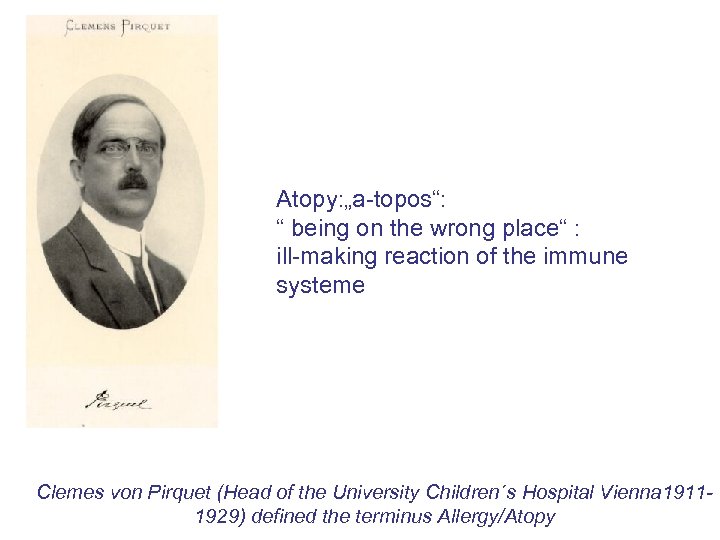
Atopy: „a-topos“: “ being on the wrong place“ : ill-making reaction of the immune systeme Clemes von Pirquet (Head of the University Children´s Hospital Vienna 19111929) defined the terminus Allergy/Atopy
Definition • Atopy: enhanced production of Ig. E in asymptomatic subjects • Allergy: Presence of symptoms corresponding to specific Ig. E antibodies
Manifestations of allergic diseases • • • Eyes - allergic conjunctivitis Nose - allergic rhinitis larynx- angioedema Lung - allergic bronchial asthma Skin – urticaria, rash Gastrointestinal - diarrhea, abdominal cramps • Systemic - Anaphylaxis
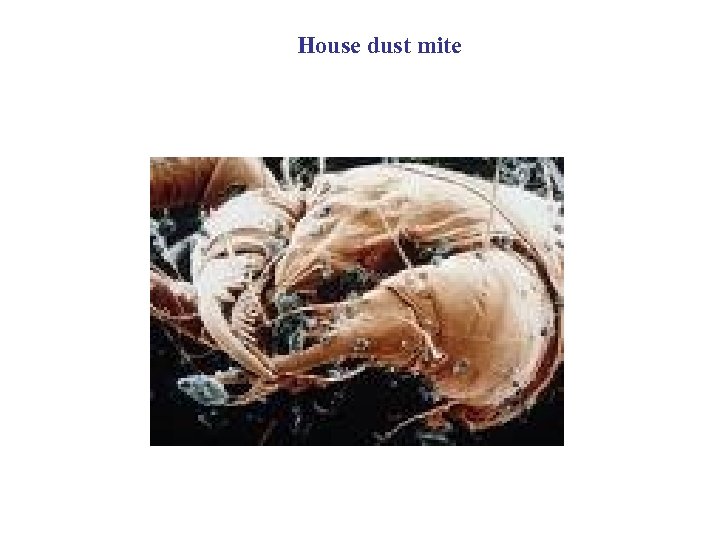
House dust mite

Flow of systemic allergic reactions • Seconds to minutes after exposure of minimal amounts of allergen, sometimes after up to two hours • Biphasic reactions: rapide – improvement after treatment – further reaction • Prolonged reaction: Perstistence of symptoms under treatment
Allergic diseases • • • Bronchial asthma (extrinsic) Allergic rhinoconjunctivitis (hay fever) Atopic dermatitis Food allergy Insect sting allergy Oral Allergy Syndrome (cross reactivity between pollens and certain fruits, like tree pollens and nuts, latex and banana, mango, house dust mite and snails, mussels, shrimps)
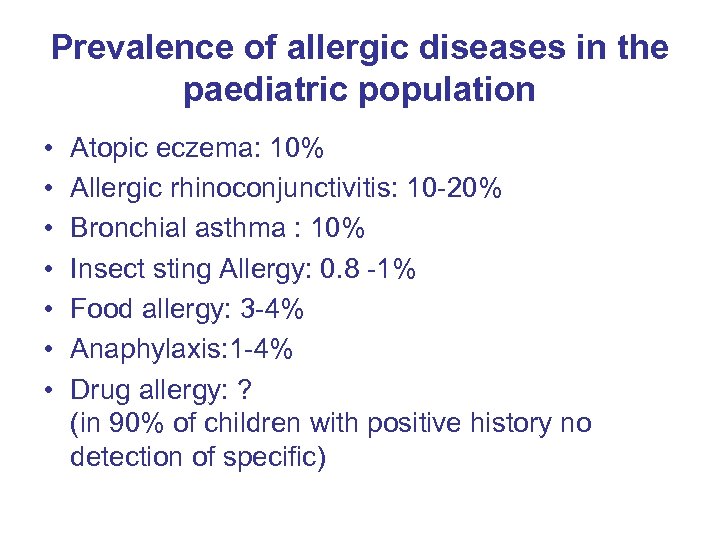
Prevalence of allergic diseases in the paediatric population • • Atopic eczema: 10% Allergic rhinoconjunctivitis: 10 -20% Bronchial asthma : 10% Insect sting Allergy: 0. 8 -1% Food allergy: 3 -4% Anaphylaxis: 1 -4% Drug allergy: ? (in 90% of children with positive history no detection of specific)
Genetics of allergic diseases • Until now, 79 genes have been identified to associated with the asthma and/or atopy phenotype in different populations. • Two major genes with association to the same phenotype independent of the population: v Arg 110 Gln = variation of IL-13 (Th 2 -cytokine) encoded Gene is associated with increaseed Ig. E production v R 510 X = Gene variation causing lost of function of filagrin – atopic eczema
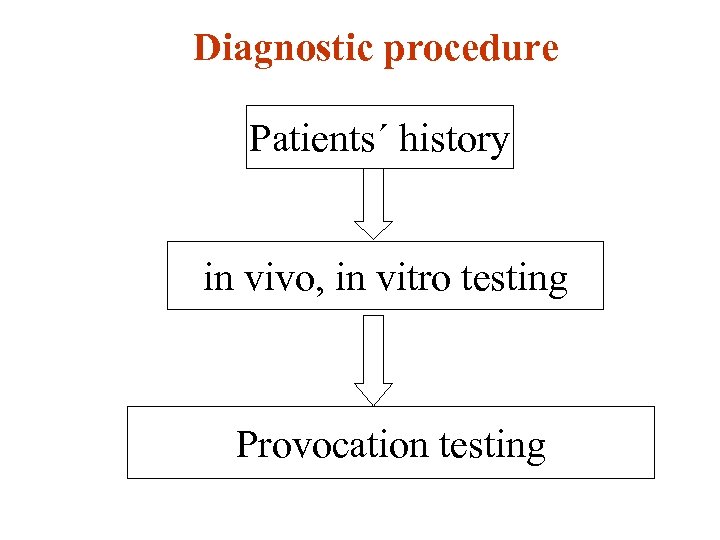
Diagnostic procedure Patients´ history in vivo, in vitro testing Provocation testing
Anamnesis • • Which symptoms Since when When How long How frequent Where Which medication so far (improvement? )
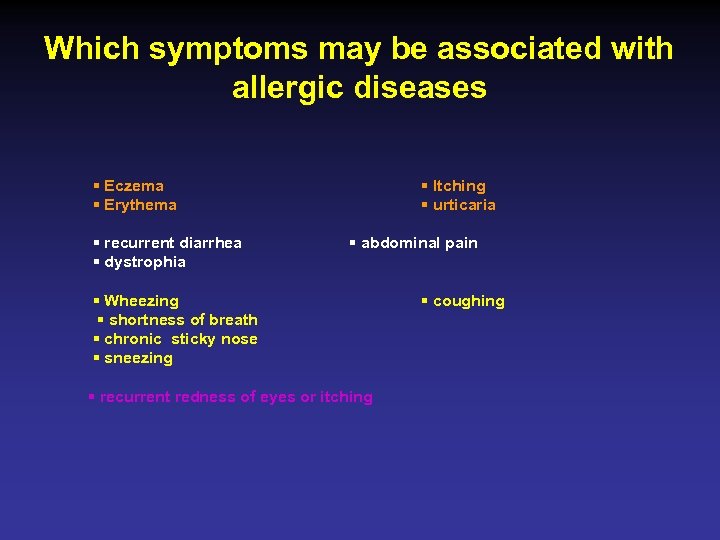
Which symptoms may be associated with allergic diseases Eczema Erythema recurrent diarrhea dystrophia Itching urticaria abdominal pain Wheezing shortness of breath chronic sticky nose sneezing recurrent redness of eyes or itching coughing
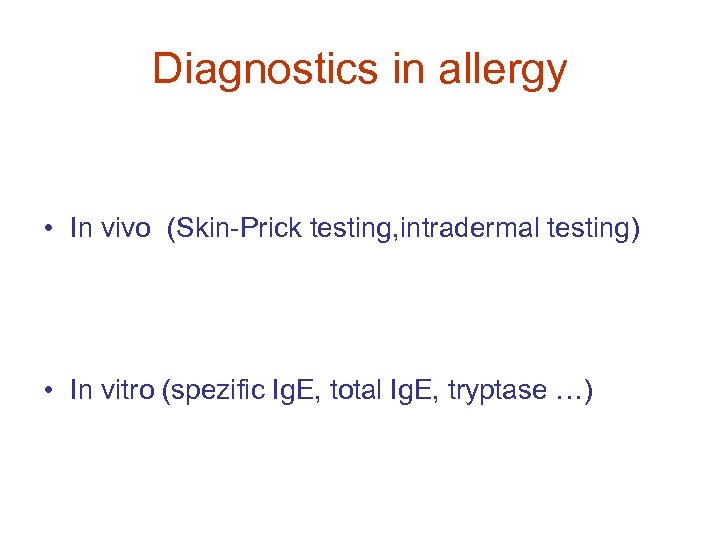
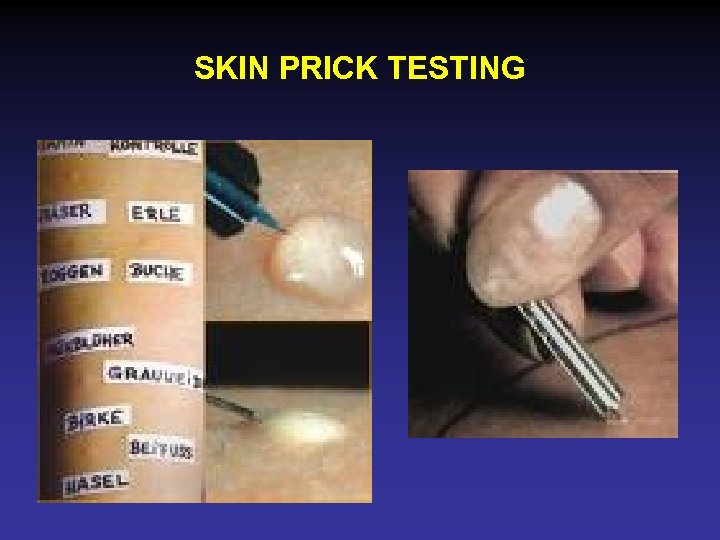
Diagnostics in allergy • In vivo (Skin-Prick testing, intradermal testing) • In vitro (spezific Ig. E, total Ig. E, tryptase …)
Skin Prick Testing (SPT)
SKIN PRICK TESTING
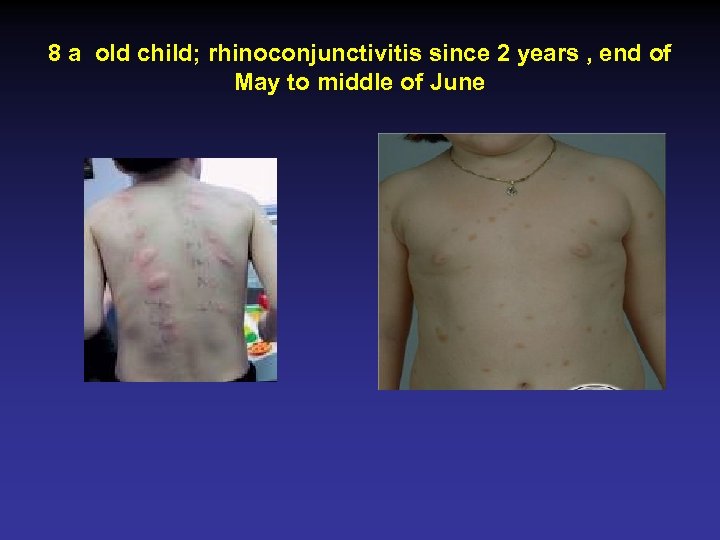
8 a old child; rhinoconjunctivitis since 2 years , end of May to middle of June
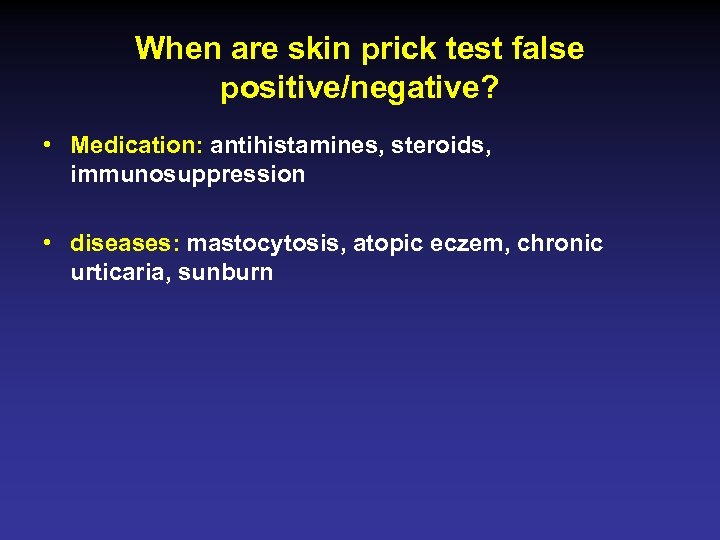
When are skin prick test false positive/negative? • Medication: antihistamines, steroids, immunosuppression • diseases: mastocytosis, atopic eczem, chronic urticaria, sunburn
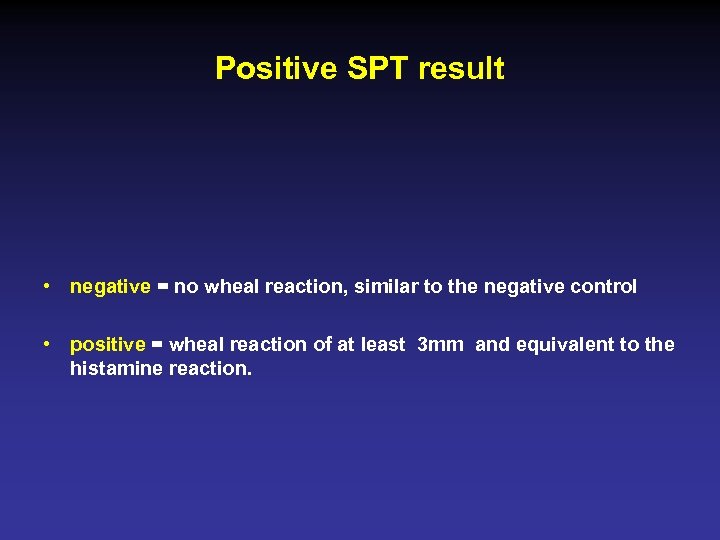
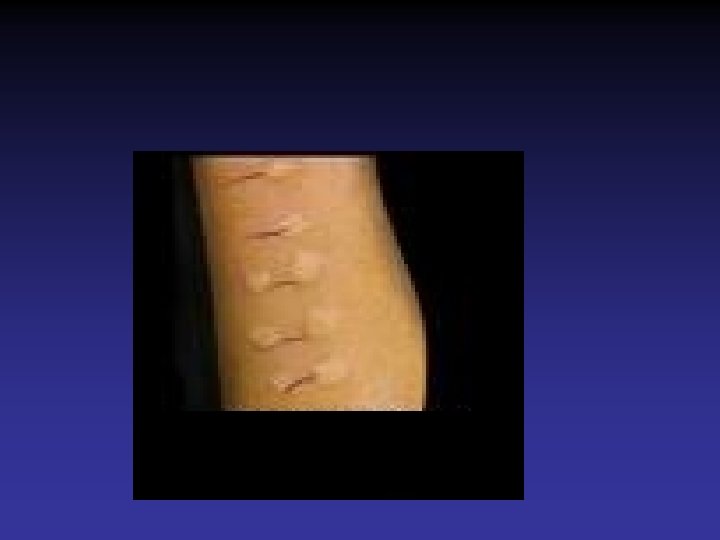
Positive SPT result • negative = no wheal reaction, similar to the negative control • positive = wheal reaction of at least 3 mm and equivalent to the histamine reaction.
Intradermal testing • Suspicion of hymenoptera allergy (drug allergy) • More sensitive than SPT but also more painful
In-vitro- testing • total Ig. E • specific Ig. E • ECP (eosinophil cationic protein) • tryptase
Total Ig. E: Indications • Indirect-diagnostic parameter if aspergillosis, parasitic infections, Jobsyndrome • Detection of atopy(„nice to know but no need to know“) • Total Ig. E is no screening test (sensitivity <60%)
Primary indications for Ig. E measurement • Contraindications for skin prick testing • Diagnostics in infants and toddlers
Indication for using recombinant allergens (component) • ? ? (no therapeutic consequences) • Exception: hymenoptera allergy (Api m 1, Ves v 5) peanut allergy (Ara h 2 – high risk for severe reactions)
In-Vitro-diagnostics - advantages • Accurate and reproducable results • WHO controlled standards • Simple quantification (classes, Kilounits/l)
In-Vitro-diagnostics - disadvantages • Measurement of circulating Ig. E-Ab, only • The level of antibodies does not correlate with clinical severity.
Provocation testing • • • Nasal Conjunktivale Bronchial Oral S. c. i. v.
Nasal provocation testing • Especially with perennial allergens (mould, house dust mite) • Information about clinical relevance • Discrepancy between symptoms and SPT/Ig. E
conjunctival provocation testing • No screening test • Detection of allergic reactions of the eyes • Very sensitive, prove of allergy also when SPT or Ig. E negative • Einfach und meist risikolos
Bronchial provocation testing • Can a suspected allergen induce an asthma attack and in which dosage?
Why early diagnosis?

Conclusion! • In children with a positive family history for atopy an early sensitization against allergens is a significant risk factor for the development of brochial asthma.




TREATMENT
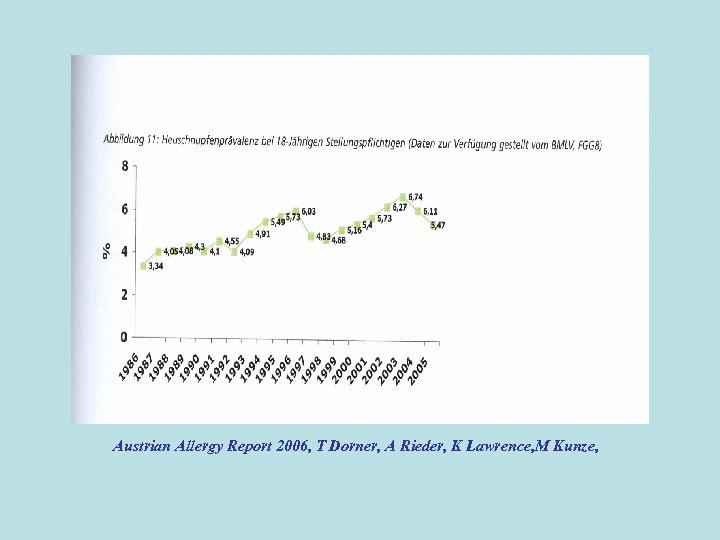
Austrian Allergy Report 2006, T Dorner, A Rieder, K Lawrence, M Kunze,
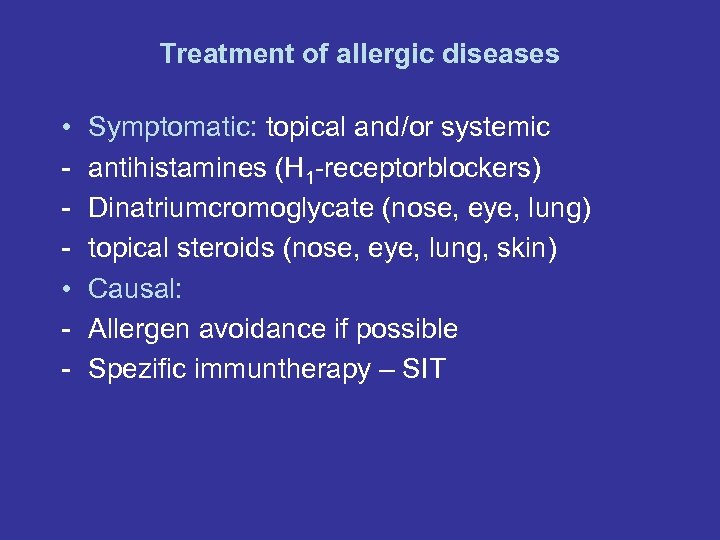
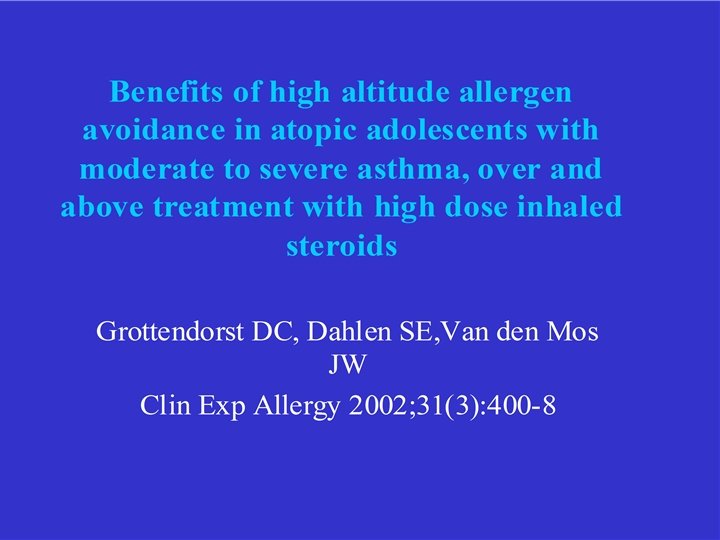
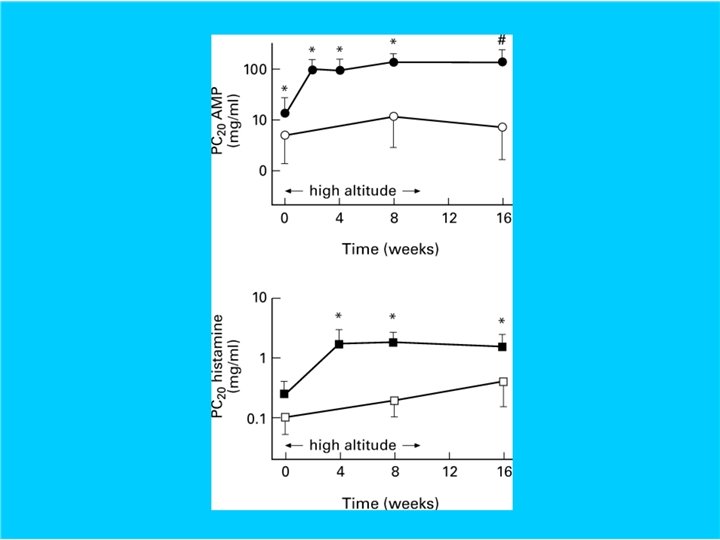
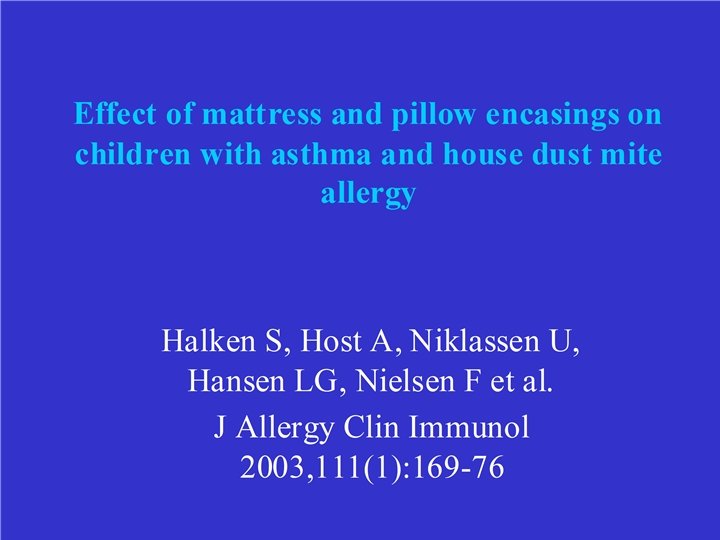
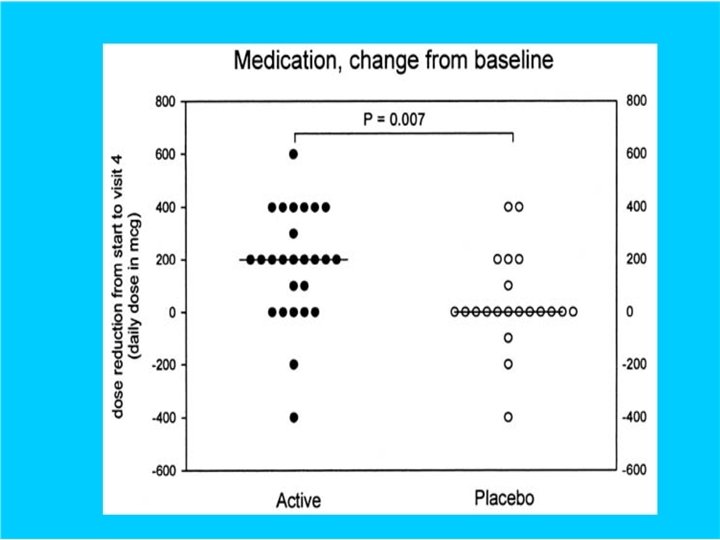
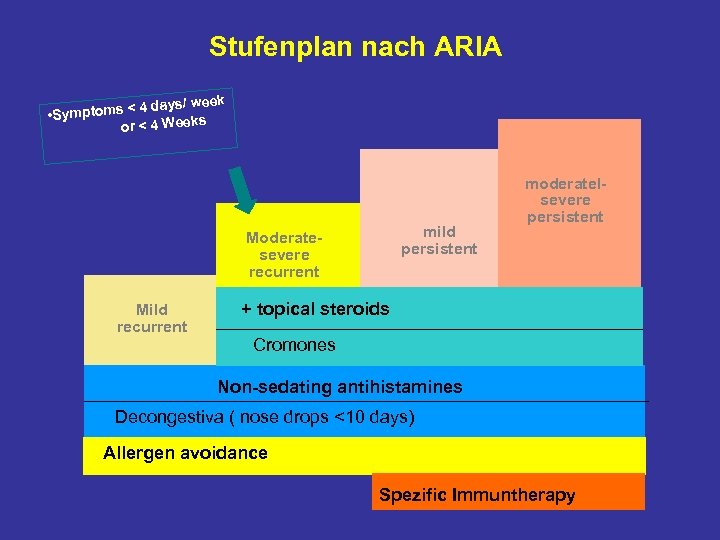
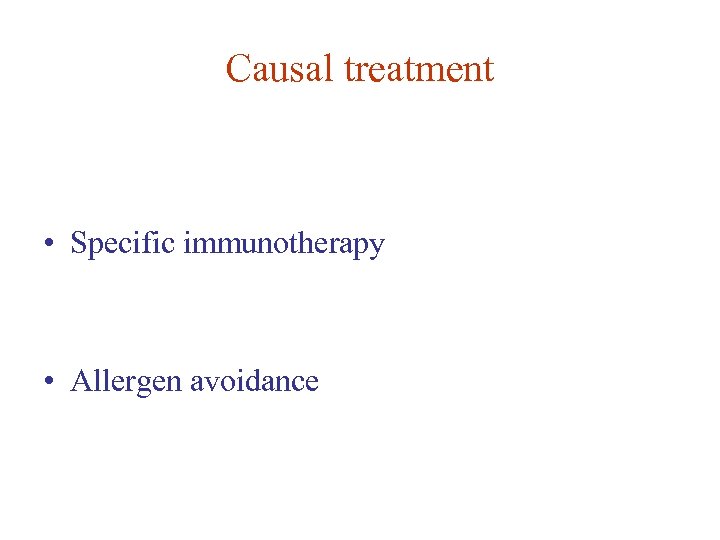
Treatment of allergic diseases • • - Symptomatic: topical and/or systemic antihistamines (H 1 -receptorblockers) Dinatriumcromoglycate (nose, eye, lung) topical steroids (nose, eye, lung, skin) Causal: Allergen avoidance if possible Spezific immuntherapy – SIT
Allergic rhinitis and its impact on asthma ARIA Bousquet J et al. J Allergy Clin Immunol 2001 108 (5 Suppl): S 147 -334
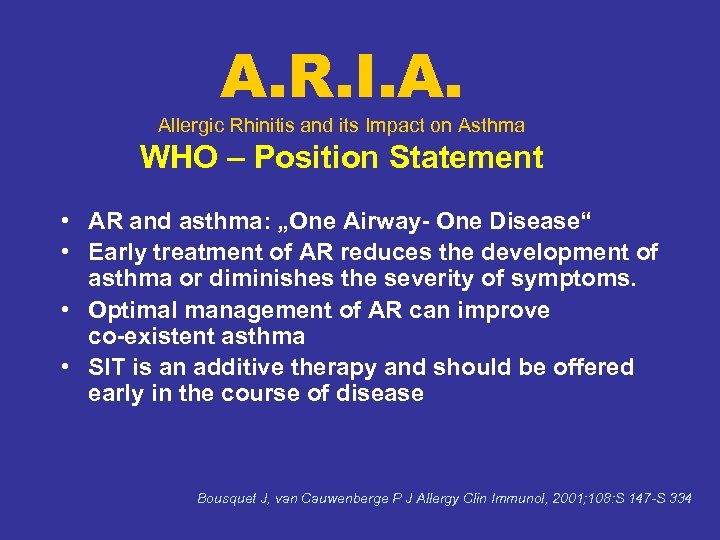
A. R. I. A. Allergic Rhinitis and its Impact on Asthma WHO – Position Statement • AR and asthma: „One Airway- One Disease“ • Early treatment of AR reduces the development of asthma or diminishes the severity of symptoms. • Optimal management of AR can improve co-existent asthma • SIT is an additive therapy and should be offered early in the course of disease Bousquet J, van Cauwenberge P J Allergy Clin Immunol, 2001; 108: S 147 -S 334
Stufenplan nach ARIA 4 days/ week • Symptoms < or < 4 Weeks mild persistent Moderatesevere recurrent Mild recurrent moderatelsevere persistent + topical steroids Cromones Non-sedating antihistamines Decongestiva ( nose drops <10 days) Allergen avoidance Spezific Immuntherapy
Causal treatment • Specific immunotherapy • Allergen avoidance
Specific immunotherapy (SIT) Vaczinationsimmunotherapy(VIT) Hyposensitization
Indications • Ig. E-mediated disease (Rhinoconjunctivitis, allergic bronchial asthma) • At least 2 years seasonal or perennial symptoms when allergen avoidance can not b achieved or symptoms persist • Older then 5 years of age • Atopic family history – early initiation to prevent the developement of asthma and polysensitization ftallergie
Contraindications • Immunodeficieny • Severe, uncontrolled bronchial asthma • severe cardiovascular diseases
Applications • Subcutaneous • Sublingual (drops) • Soluble tablets

SCIT • Clinical efficacy
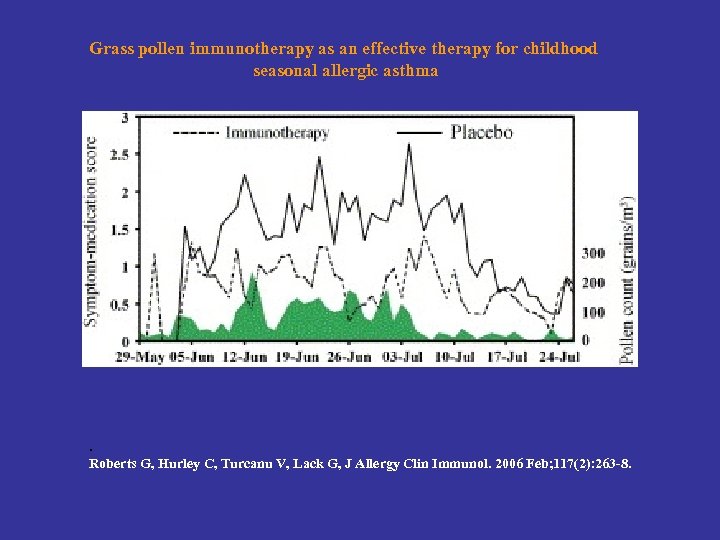
Grass pollen immunotherapy as an effective therapy for childhood seasonal allergic asthma . Roberts G, Hurley C, Turcanu V, Lack G, J Allergy Clin Immunol. 2006 Feb; 117(2): 263 -8.
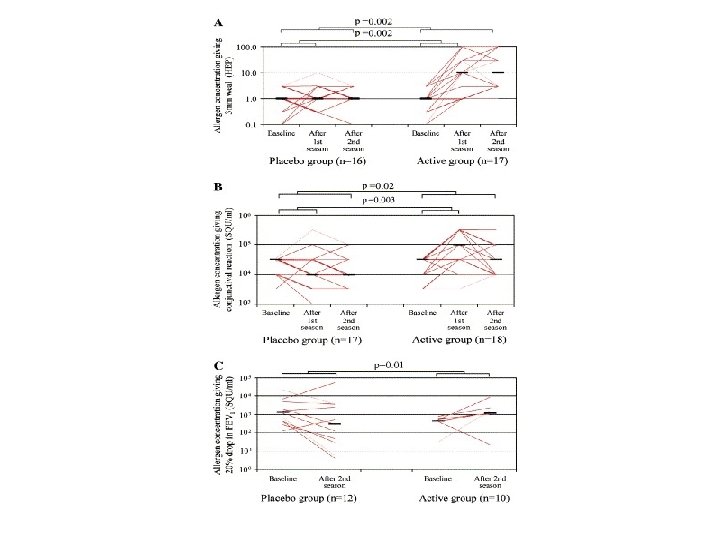
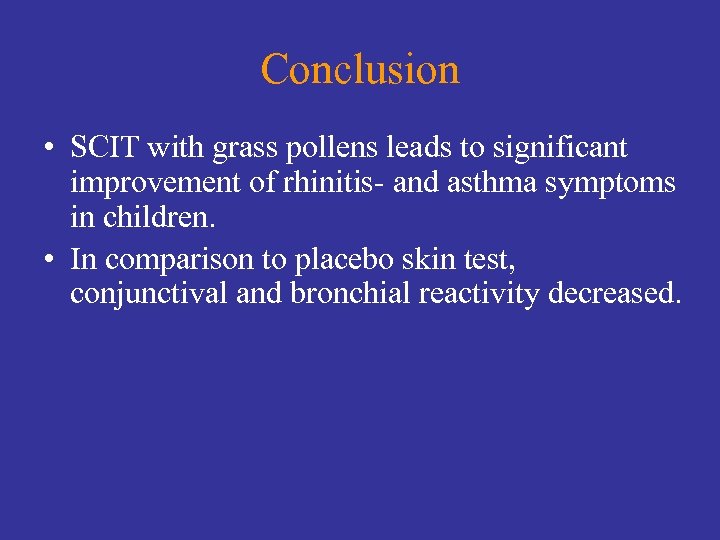
Conclusion • SCIT with grass pollens leads to significant improvement of rhinitis- and asthma symptoms in children. • In comparison to placebo skin test, conjunctival and bronchial reactivity decreased.
SCIT • Prevention of new sensitizations
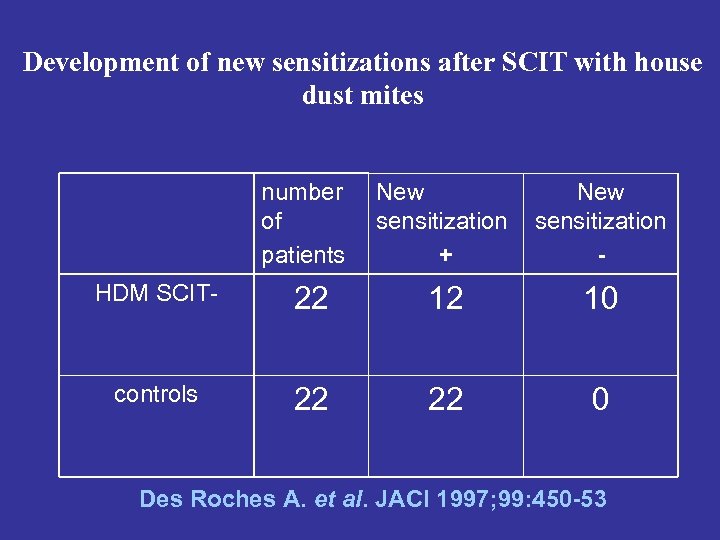
Development of new sensitizations after SCIT with house dust mites number of patients New sensitization + New sensitization - HDM SCIT- 22 12 10 controls 22 22 0 Des Roches A. et al. JACI 1997; 99: 450 -53
SCIT • Prevention of bronchial asthma


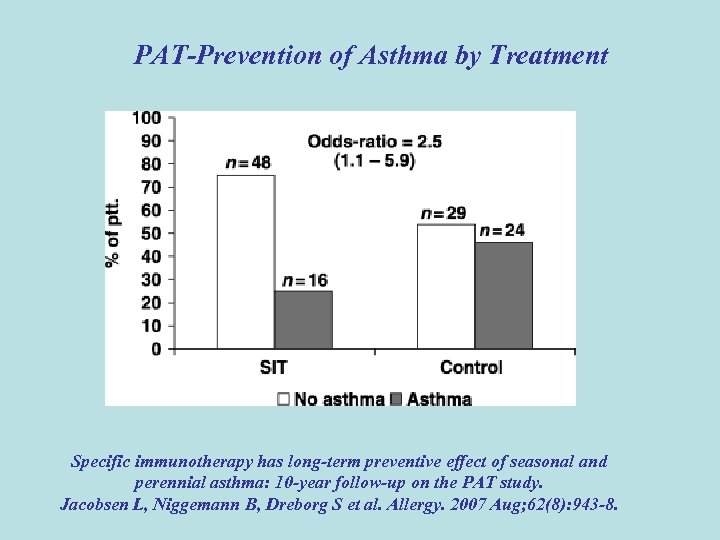
PAT-Prevention of Asthma by Treatment Specific immunotherapy has long-term preventive effect of seasonal and perennial asthma: 10 -year follow-up on the PAT study. Jacobsen L, Niggemann B, Dreborg S et al. Allergy. 2007 Aug; 62(8): 943 -8.
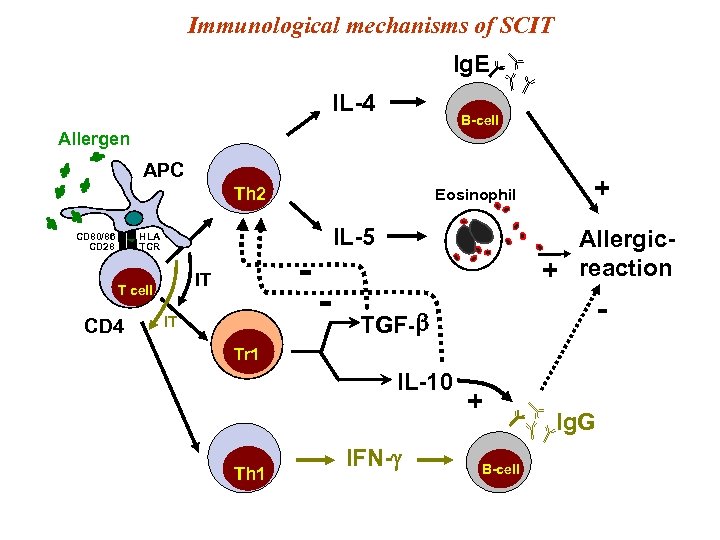
Immunological mechanisms of SCIT Ig. E IL-4 B-cell Allergen APC Th 2 CD 80/86 CD 28 HLA TCR CD 4 - IT T cell Eosinophil IT IL-5 - + Allergic+ reaction - TGF- b Tr 1 IL-10 Th 1 IFN-g + B-cell Ig. G
Sublingual Immunotherapy (SLIT) • Drops for sublingual application • Allergen dosage much higher than used in SCIT • Mechanism not totally solved
SLIT: indications • Repeated systemic reactions during SCIT? ? • Incompliant patients, trypanophobia? ? ? Allergic Rhinitis and its Impact on Asthma ARIA Bousquet J, Cauwenberge P editors, J Allergy Clin Imunol 2001; 108: S 147 -336
Demands when prescribing SLIT • cumulative allergen-dosage at least 100 -fold higher than using SCIT • Accurate information of the patient about potential side-effects (treatment will be performed at home) Allergic Rhinitis and its Impact on Asthma ARIA Bousquet J, Cauwenberge P editors, J Allergy Clin Imunol 2001; 108: S 147 -336
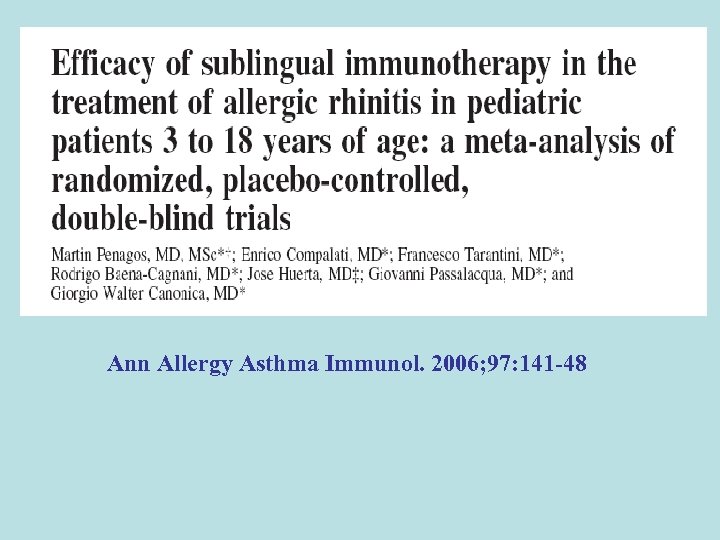
Ann Allergy Asthma Immunol. 2006; 97: 141 -48
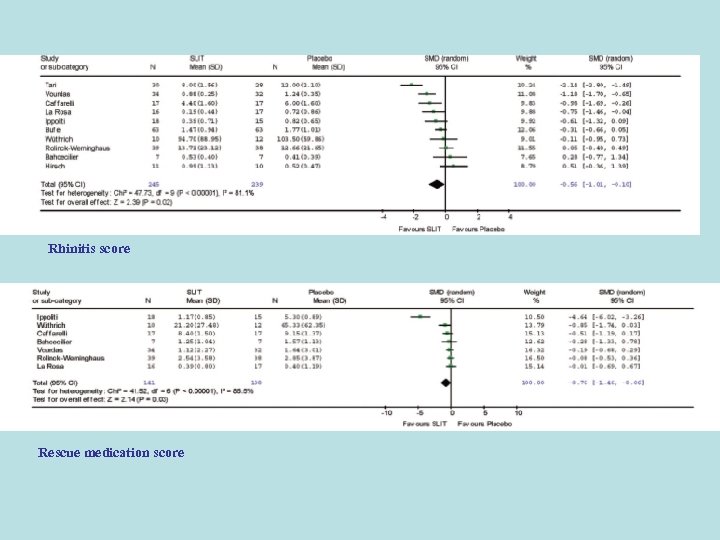
Rhinitis score Rescue medication score
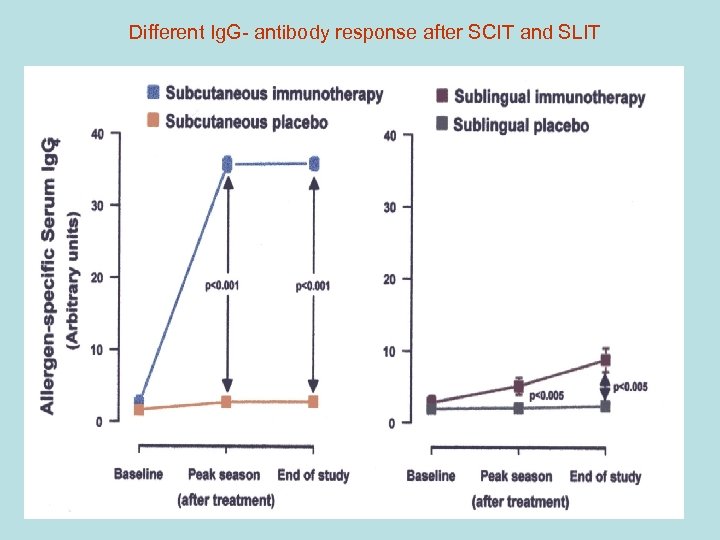
Different Ig. G- antibody response after SCIT and SLIT
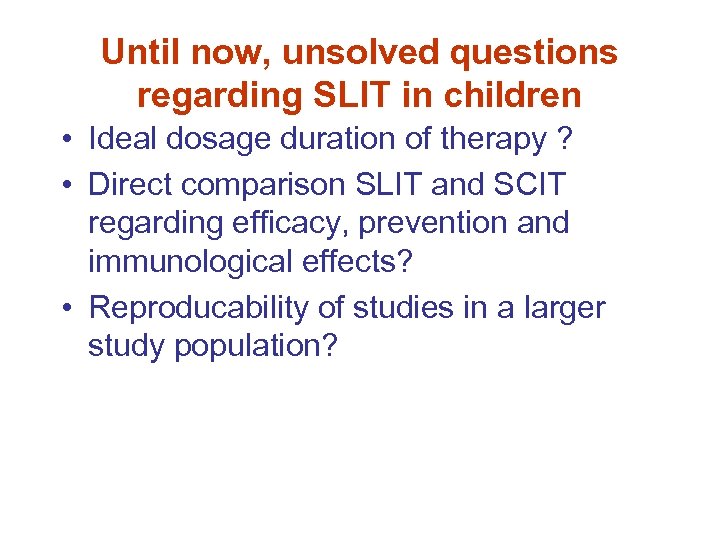
Until now, unsolved questions regarding SLIT in children • Ideal dosage duration of therapy ? • Direct comparison SLIT and SCIT regarding efficacy, prevention and immunological effects? • Reproducability of studies in a larger study population?

 Скачать презентацию Basics in paediatric allergology Ig E-mediated allergy in
616082f109d71cafa0ba249d4da0f3e2.ppt