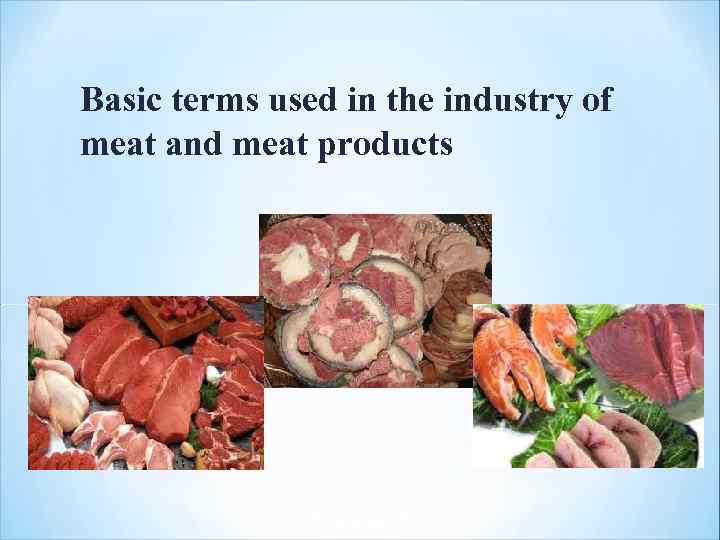
Basic terms used in the industry of meat and meat products
* * Sheep – мелкий скот * Brains, kidneys, breast – мозги, почки, грудинка * culinary destination – кулинарное назначение * mutton – баранья лопатка * grouse, partridges – рябчики, куропатки * char-grilled – на углях * cinnamon, cloves – корица, гвоздика * features – особенности * veal dairy - телятина молочная * without deep cuts - без глубоких надрезов * forequarter - для передней четвертины * dirt – загрязнения * blood clots – сгустки крови * boning – обвалка
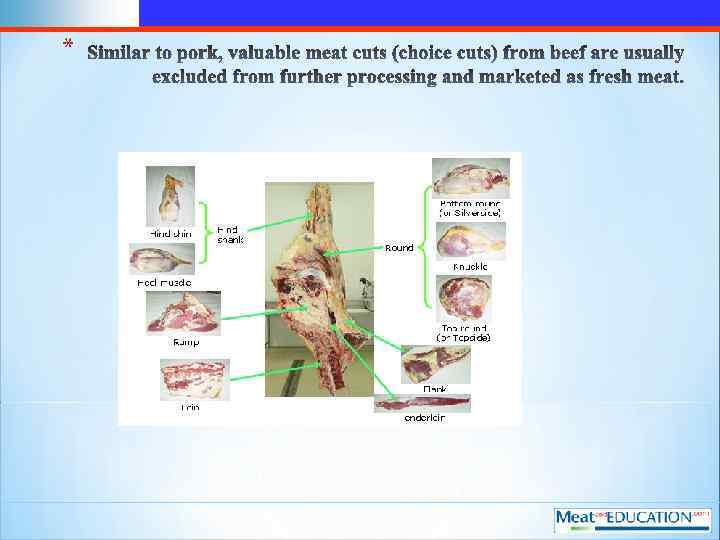
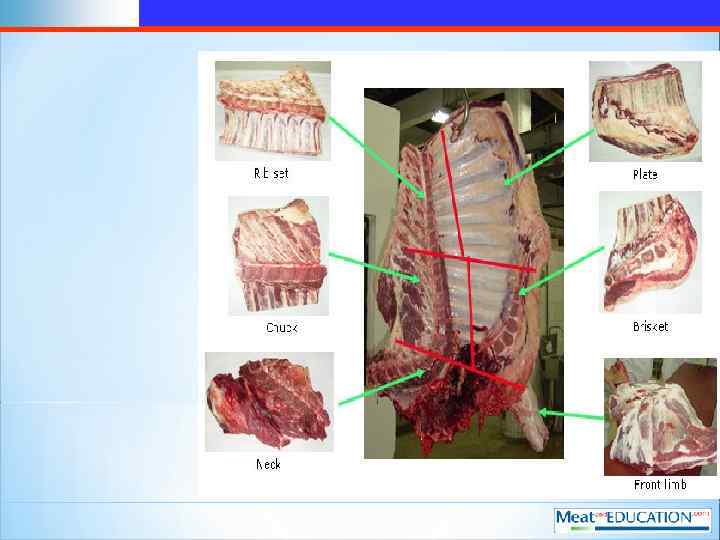
* trimming – жиловка * chuck – лопаточная часть * neck – шейная часть * spinal ribs – спинно-реберная часть * lumbar – поясничная часть * posterior pelvic – заднетазовая часть * shoulder and shoulder of – плечевая и заплечевая часть * breast area (ribs) – грудная часть (грудинка) * the undercut portion - подлопаточная часть * tenderloin – вырезка * loin-корейка * bacon-бекон * bacon and eggs-яичница с беконом * chop-отбивная * ham-ветчина * baked ham-буженина
* roast beef-ростбиф * roast chicken-жареный цыплёнок * Boiled-варёный * Fried-жареный * Stewed-тушёный * chicken breast-куриная грудка * chicken wings-куриные крылышки * chicken legs-куриные ноги * tenderloin (steak) — филе (постное) * veal — телятина * rib eye (steak) — стейк без костей (нежное) * sirloin (steak) — стейк без костей (большой кусок) * spare ribs — ребрышки * baked / fried — жареный * broiled / roast — приготовленный на гриле
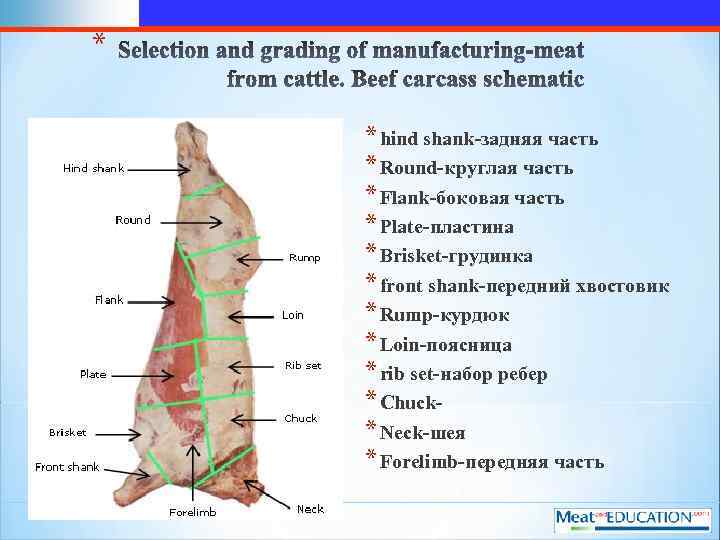
* * hind shank-задняя часть * Round-круглая часть * Flank-боковая часть * Plate-пластина * Brisket-грудинка * front shank-передний хвостовик * Rump-курдюк * Loin-поясница * rib set-набор ребер * Chuck* Neck-шея * Forelimb-передняя часть
*
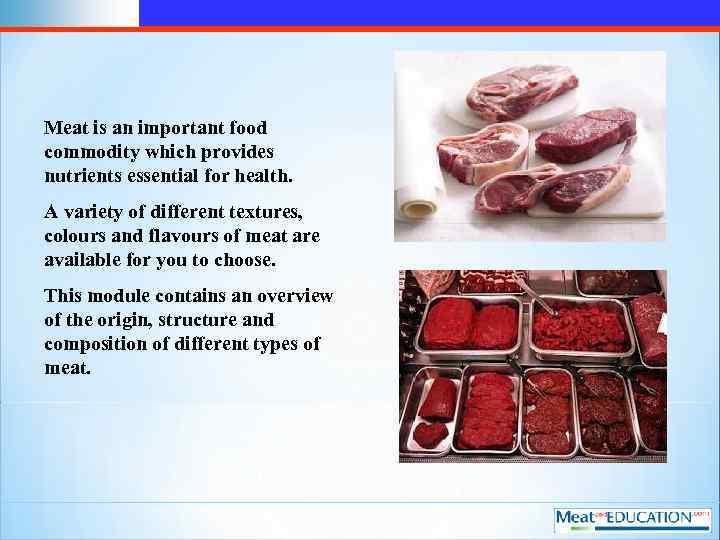
Meat is an important food commodity which provides nutrients essential for health. A variety of different textures, colours and flavours of meat are available for you to choose. This module contains an overview of the origin, structure and composition of different types of meat.
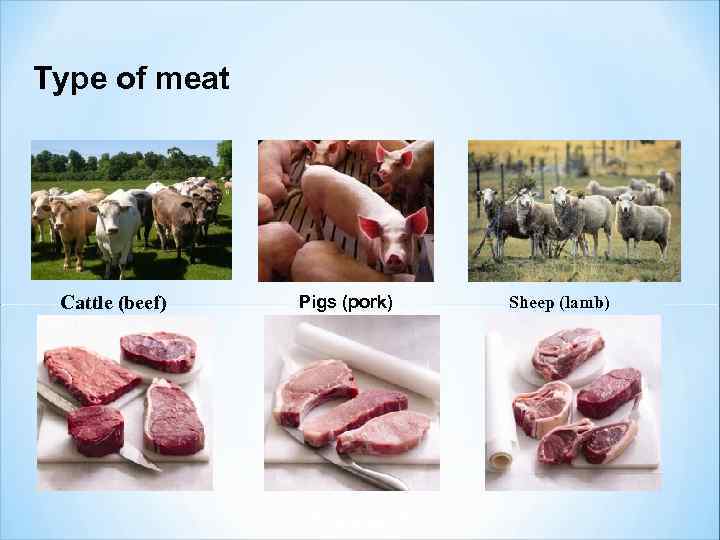
Type of meat Cattle (beef) Pigs (pork) Sheep (lamb)
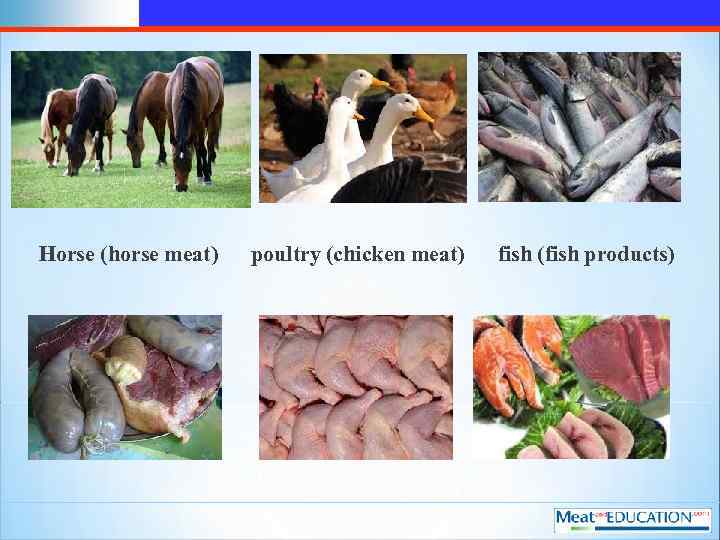
Horse (horse meat) poultry (chicken meat) fish (fish products)
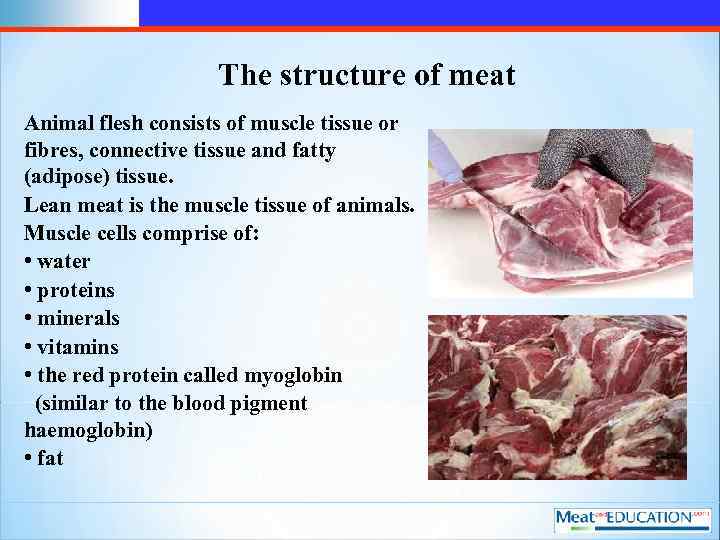
The structure of meat Animal flesh consists of muscle tissue or fibres, connective tissue and fatty (adipose) tissue. Lean meat is the muscle tissue of animals. Muscle cells comprise of: • water • proteins • minerals • vitamins • the red protein called myoglobin (similar to the blood pigment haemoglobin) • fat
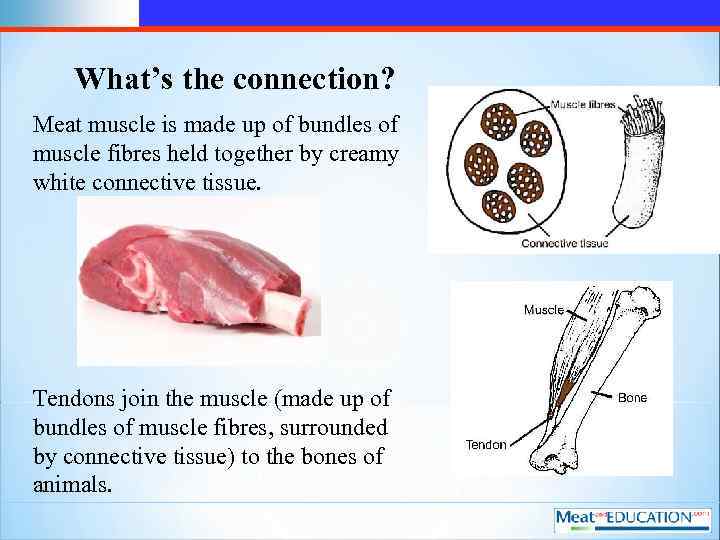
What’s the connection? Meat muscle is made up of bundles of muscle fibres held together by creamy white connective tissue. Tendons join the muscle (made up of bundles of muscle fibres, surrounded by connective tissue) to the bones of animals.
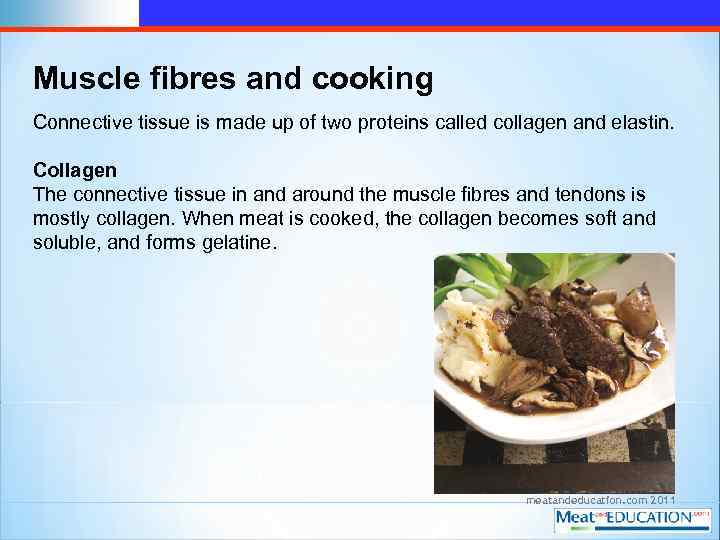
Muscle fibres and cooking Connective tissue is made up of two proteins called collagen and elastin. Collagen The connective tissue in and around the muscle fibres and tendons is mostly collagen. When meat is cooked, the collagen becomes soft and soluble, and forms gelatine. meatandeducation. com 2011
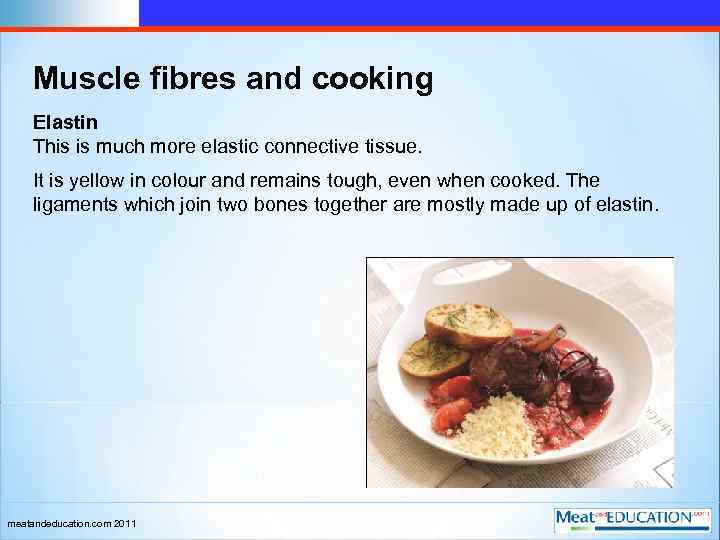
Muscle fibres and cooking Elastin This is much more elastic connective tissue. It is yellow in colour and remains tough, even when cooked. The ligaments which join two bones together are mostly made up of elastin. meatandeducation. com 2011
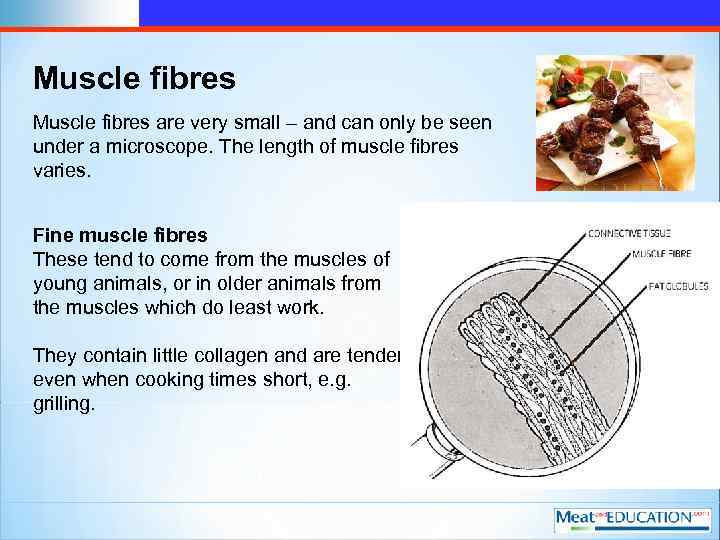
Muscle fibres are very small – and can only be seen under a microscope. The length of muscle fibres varies. Fine muscle fibres These tend to come from the muscles of young animals, or in older animals from the muscles which do least work. They contain little collagen and are tender even when cooking times short, e. g. grilling.
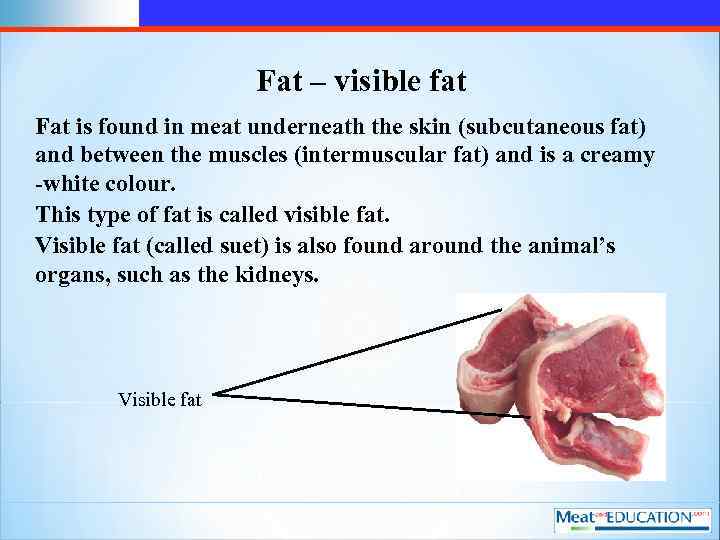
Fat – visible fat Fat is found in meat underneath the skin (subcutaneous fat) and between the muscles (intermuscular fat) and is a creamy -white colour. This type of fat is called visible fat. Visible fat (called suet) is also found around the animal’s organs, such as the kidneys. Visible fat
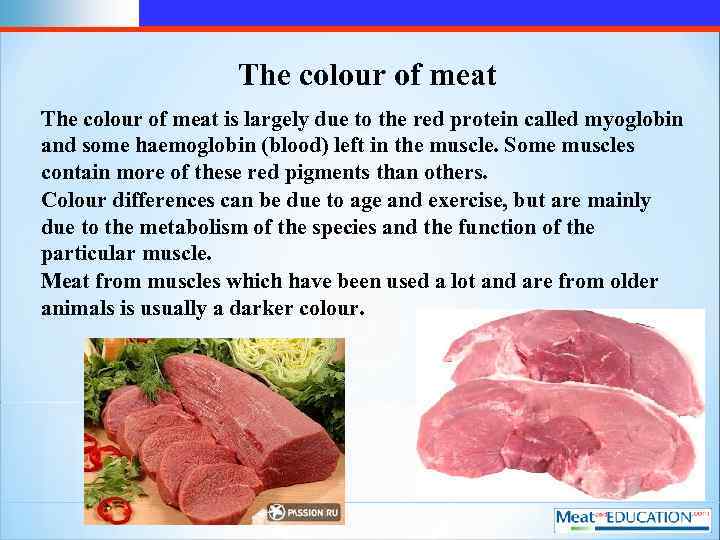
The colour of meat is largely due to the red protein called myoglobin and some haemoglobin (blood) left in the muscle. Some muscles contain more of these red pigments than others. Colour differences can be due to age and exercise, but are mainly due to the metabolism of the species and the function of the particular muscle. Meat from muscles which have been used a lot and are from older animals is usually a darker colour.
Summary • Which animal meat are used for food? • What is in the muscle tissue of animals? • From which is connective tissue? • What determines the color of the meat? • From what is lean?