 Скачать презентацию Basic questions LQ what is the concentration of
33b0c97daa53493507e62bfcb3f8c4af.ppt
- Количество слайдов: 27



Basic questions: LQ: what is the concentration of a sector (measured by employment, revenues, etc. ) in a city or region relative to a larger economic area (e. g. , a nation)? Multiplier: what is the relationship between exporting sectors and locally-serving sectors? Link: use LQs to estimate what part of employment is exportbased (rather than local serving) Feb 5: Economic Base, Multipliers, Location Quotients Tiebout, Charles M. "Exports and Regional Economic Growth. " Journal of Political Economy, Vol. 64, No. 2, April 1956, pp. 160 -164. [Library reserves] North, Douglass C. "Location Theory and Regional Economic Growth. " Journal of Political Economy, Vol. 63, No. 3, June 1955, pp. 243 -258. [Library reserves] Davis, H. Craig “Economic Base Analysis” Regional Impact Analysis and Project Evaluation, Chapter 2 [Library reserves] Isserman, Andrew M. 2000. Economic base studies for urban and regional planning. Pp. 174 -193 In Rodwin and Sanyal, eds. The Profession of City Planning: Changes, Images, and Challenges, 1950 -2000. New Brunswick, NJ: Center for Urban Policy Research. [Library reserves] Stevens, Benjamin and Lahr, Michael. 1988. “Regional Economic Multipliers: Definition, Measurement, and Application. ” EDQ 2, 1: 88 -96. [c-tools "Resource" section]
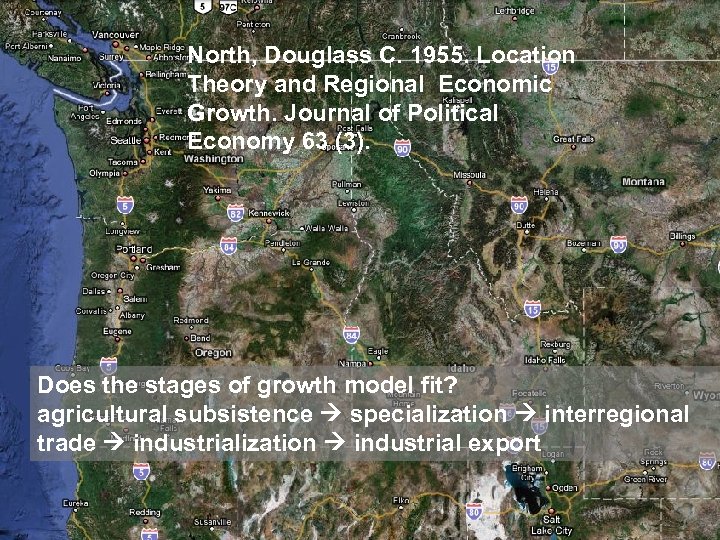
North, Douglass C. 1955. Location Theory and Regional Economic Growth. Journal of Political Economy 63 (3). Does the stages of growth model fit? agricultural subsistence specialization interregional trade industrialization industrial export
North, Douglass C. 1955. Location Theory and Regional Economic Growth. Journal of Political Economy 63 (3). The key relationship: Growth and exports
North, Douglass C. 1955. Location Theory and Regional Economic Growth. Journal of Political Economy 63 (3). For economists' purposes the concept of a region should be redefined to point out that the unifying cohesion to a region, over and beyond geographic similarities, is its development around a common export base. It is that makes it economically unified and ties the fortunes of the area together. This tends to result in the interdependent development within the region of external economies and unified political efforts for government assistance or political reform
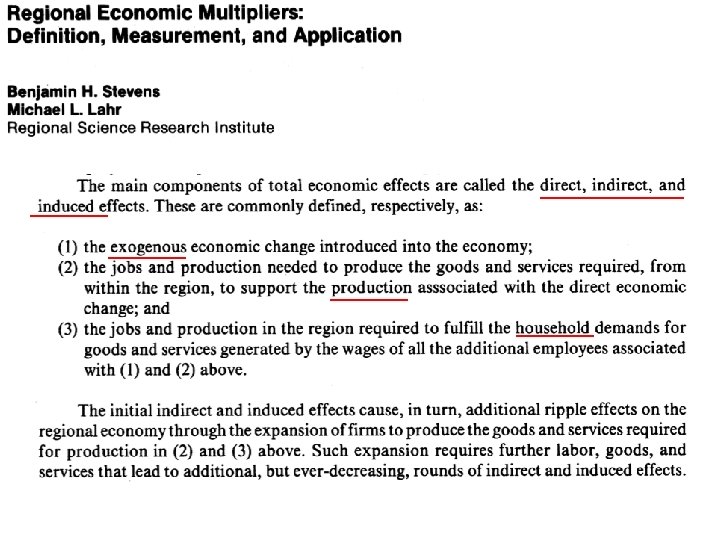
So… • Economic base theory (multipliers) -- to help distinguish between local and export jobs, and to determine direct vs. indirect benefits (or costs) • Location quotients (to help determine what the economic base is)
Useful Concepts in Local Economic Development cumulative causation vs. equilibrium models cyclical versus structural change deindustrialization equity vs. efficiency externalities (both positive and negative) Gravity model Globalization growth vs. development human capital industry vs. occupation* innovation (process versus product) "leaky bucket" theory of money flows in local economies (related to multiplier) * - * indicate topics related to today’s topic and/or covered next week. linkages (forward and backward) * location quotient location theory* market failure multiplier (and basic vs. non-basic employment) opportunity costs public-private partnerships scale economies (spatial variant: agglomeration economy = localization economies + urbanization economies) Shift-share analysis* spatial division of labor supply-side vs. demand-side approaches value added* zero-sum game
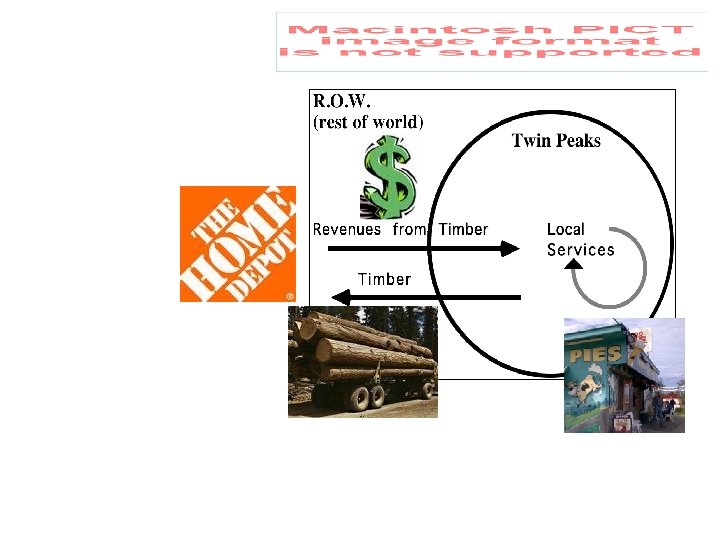
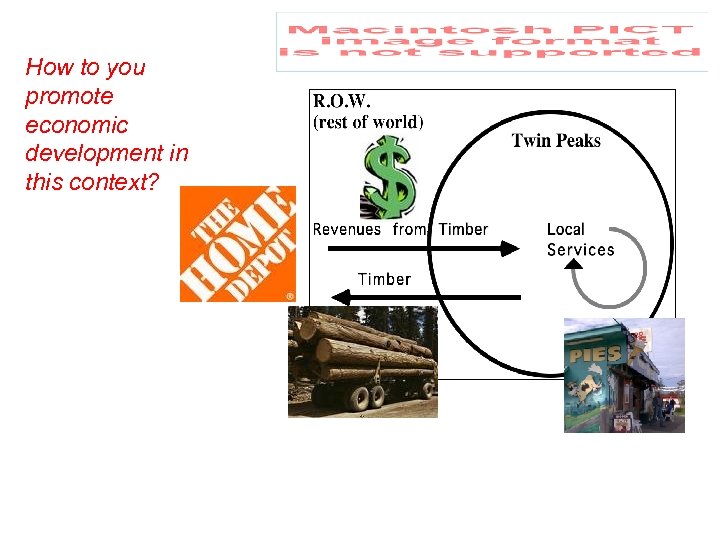
How to you promote economic development in this context?
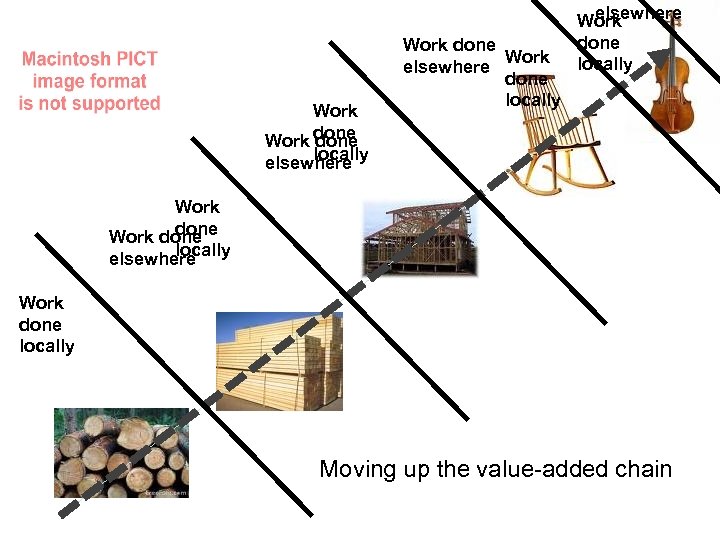
Work done locally elsewhere Work done Work elsewhere done locally elsewhere Work done locally elsewhere Work done locally Moving up the value-added chain
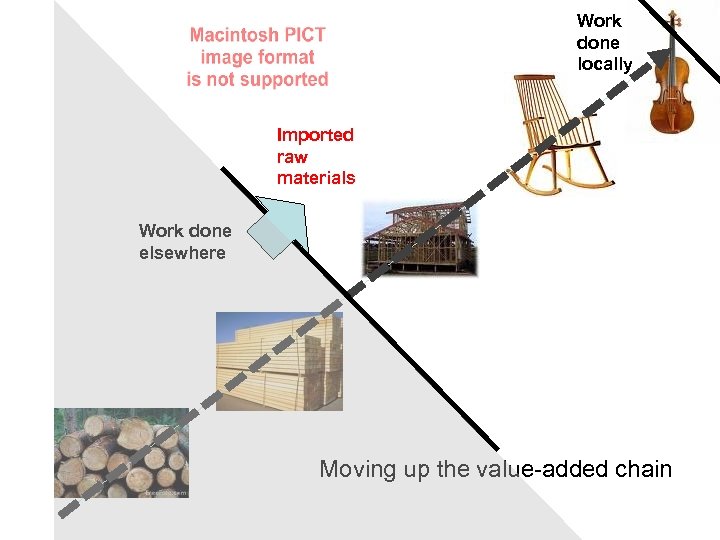
Work done locally Imported raw materials Work done elsewhere Moving up the value-added chain
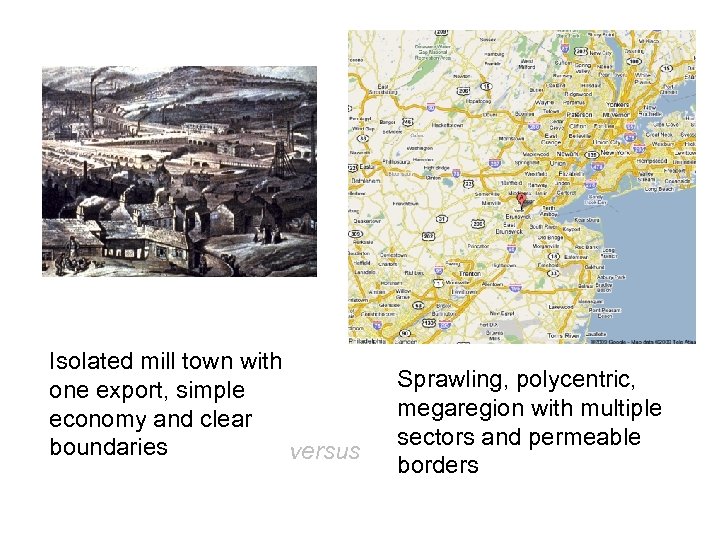
Isolated mill town with one export, simple economy and clear boundaries versus Sprawling, polycentric, megaregion with multiple sectors and permeable borders
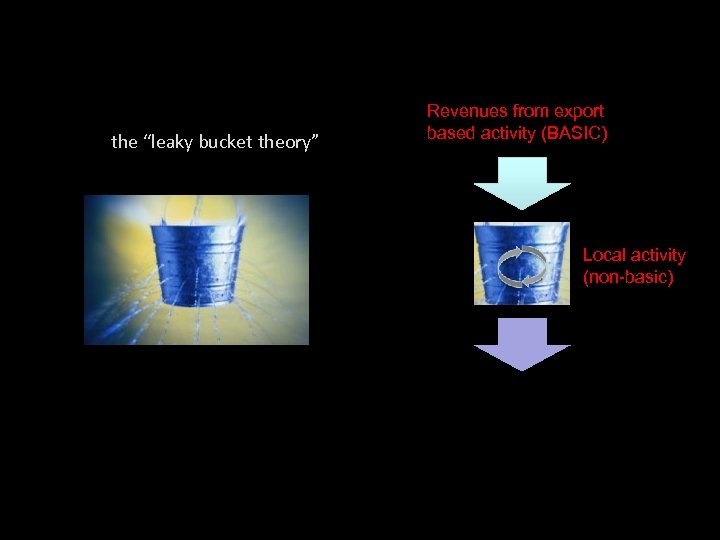
the “leaky bucket theory” Revenues from export based activity (BASIC) Local activity (non-basic)
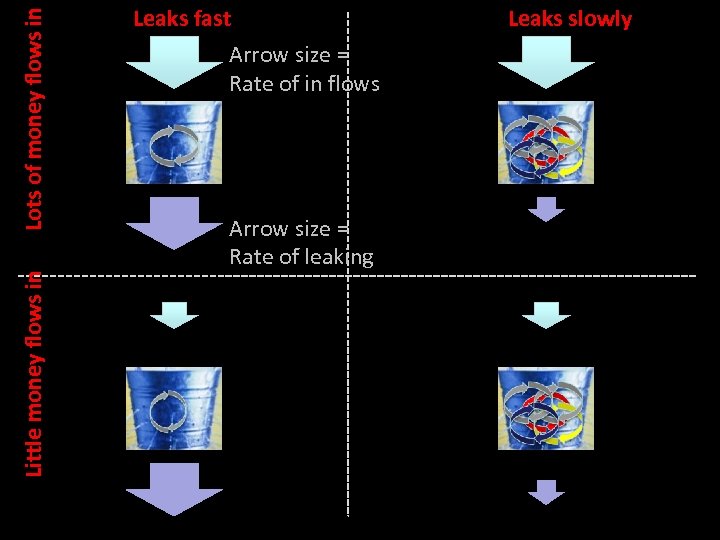
Lots of money flows in Little money flows in Leaks fast Arrow size = Rate of in flows Arrow size = Rate of leaking Leaks slowly
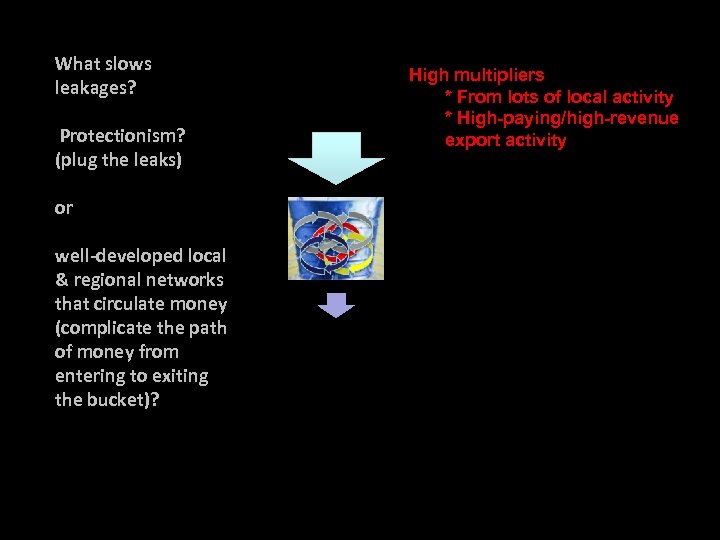
What slows leakages? Protectionism? (plug the leaks) or well-developed local & regional networks that circulate money (complicate the path of money from entering to exiting the bucket)? High multipliers * From lots of local activity * High-paying/high-revenue export activity
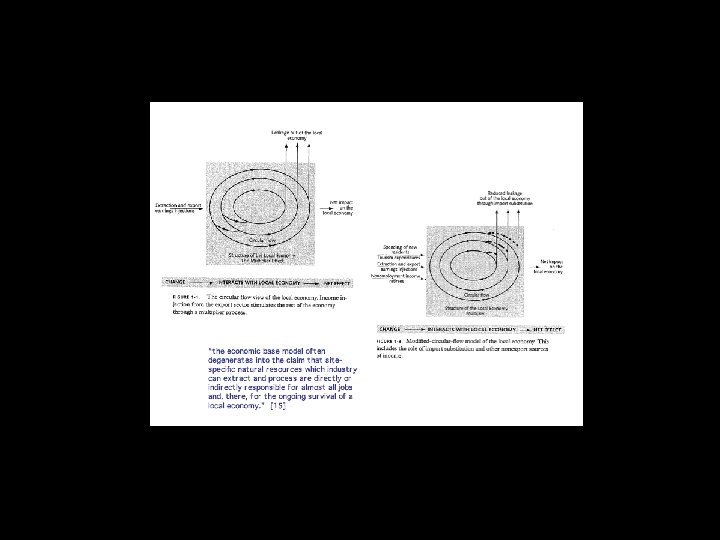
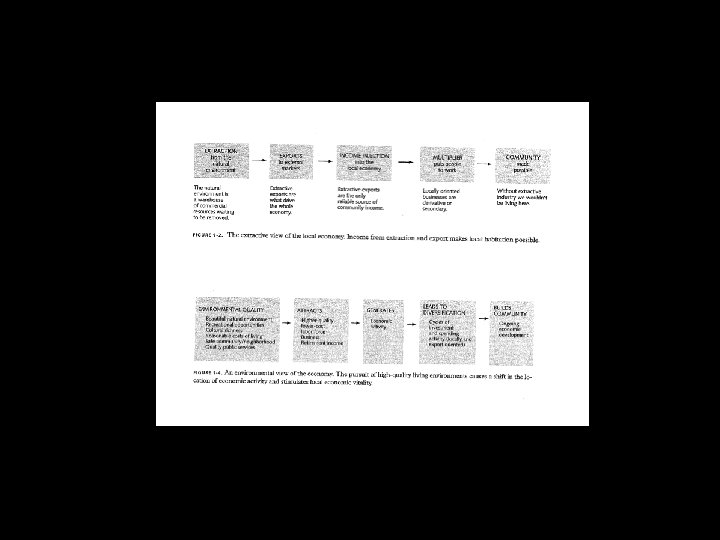
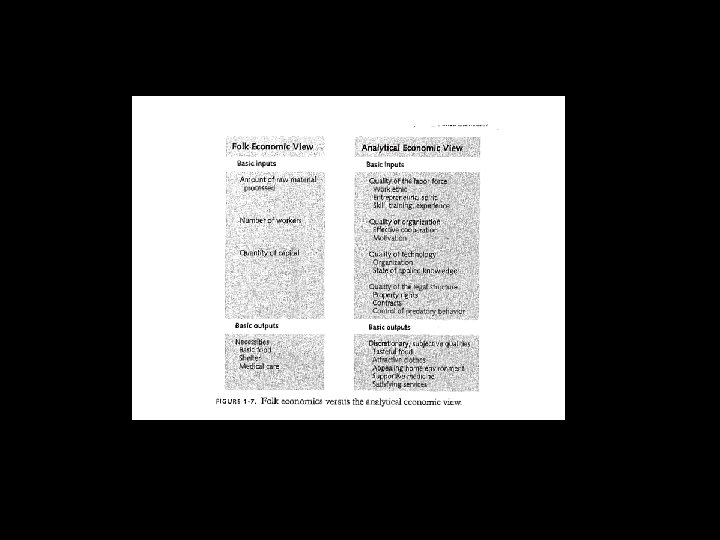
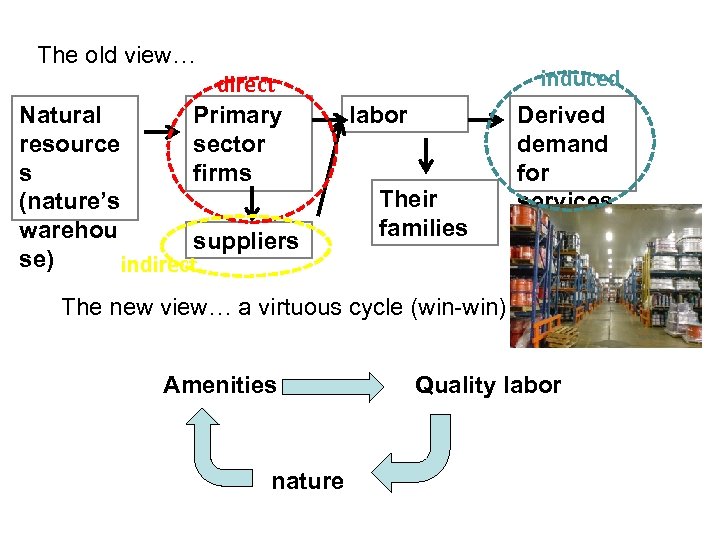
The old view… direct Primary sector firms Natural resource s (nature’s warehou suppliers se) indirect induced labor Their families Derived demand for services The new view… a virtuous cycle (win-win) Amenities nature Quality labor
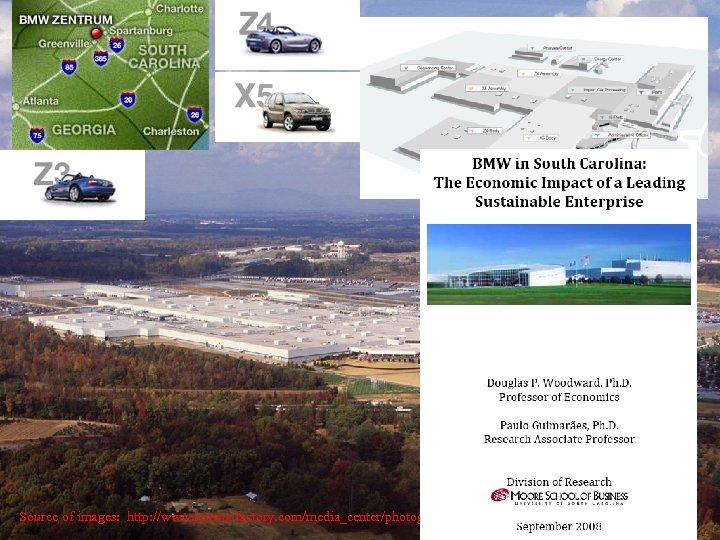
Source of images: http: //www. bmwusfactory. com/media_center/photography
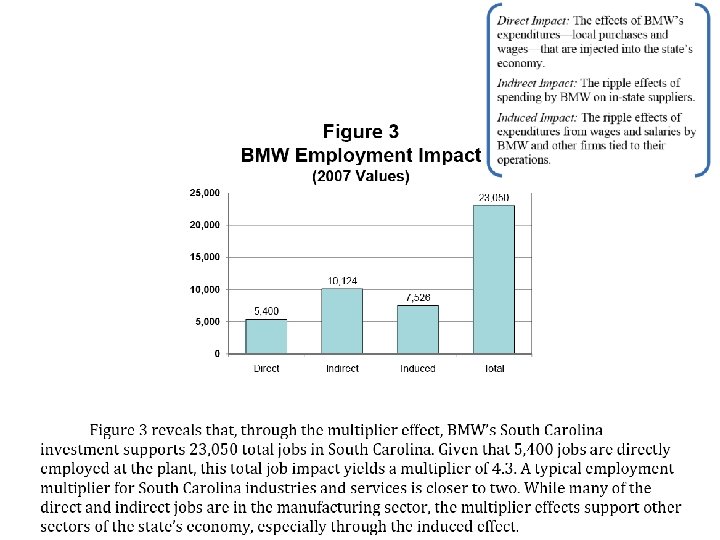
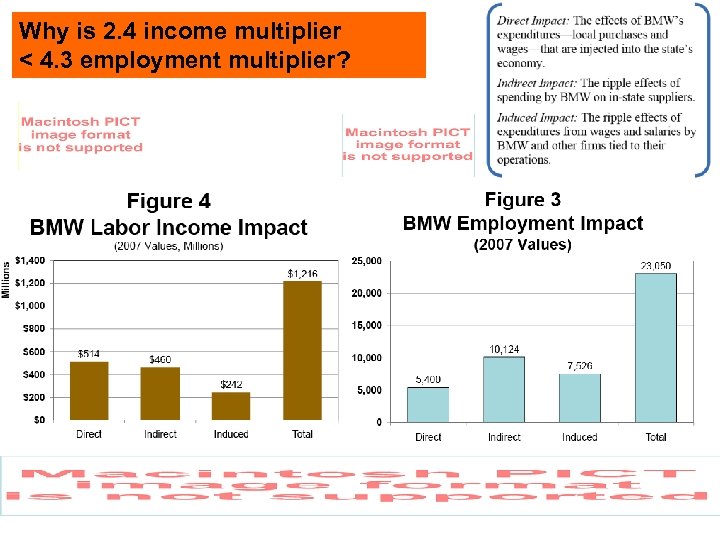
Why is 2. 4 income multiplier < 4. 3 employment multiplier?
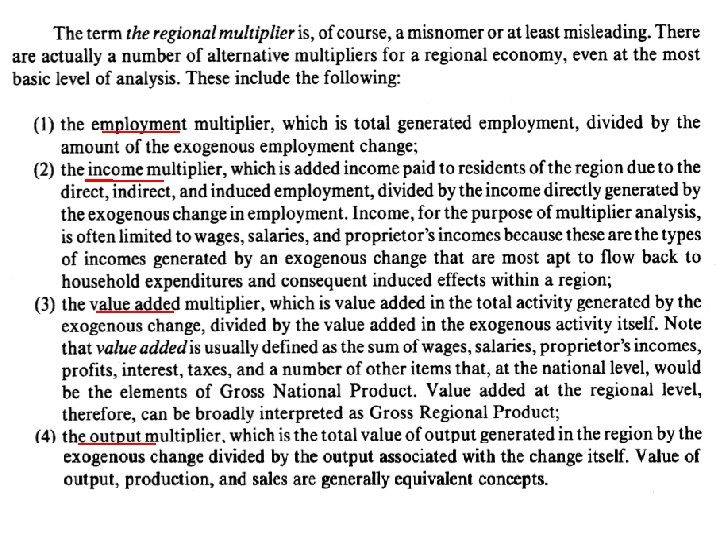
How do we determine multipliers? Several ways… 1. Survey research of firms: what they buy and sell and from whom/where. 2. Input/output analysis 3. Indirect estimates / observations (if we hold all else constant, measure the change in total economic activity (e. g. , employment) due to a change in basic activity. ) * but: employers adjust in many ways: hours worked (e. g. , overtime or part-time; wages paid; hire/fire employees; outsourcing/temp-workers, etc. )
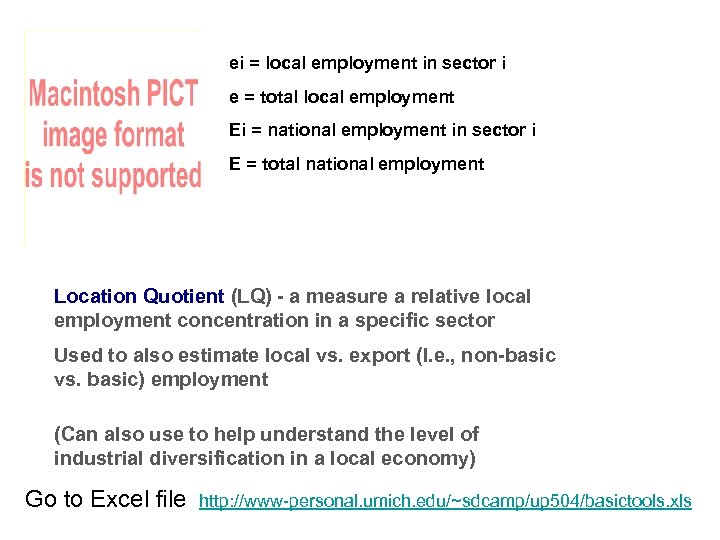
ei = local employment in sector i e = total local employment Ei = national employment in sector i E = total national employment Location Quotient (LQ) - a measure a relative local employment concentration in a specific sector Used to also estimate local vs. export (I. e. , non-basic vs. basic) employment (Can also use to help understand the level of industrial diversification in a local economy) Go to Excel file http: //www-personal. umich. edu/~sdcamp/up 504/basictools. xls
Скачать презентацию Basic questions LQ what is the concentration of
33b0c97daa53493507e62bfcb3f8c4af.ppt