 Скачать презентацию Basic principles of economics Economics schools of thoughts
7c4a61349ae9c35f53ad312ddaaca514.ppt
- Количество слайдов: 80



Basic principles of economics, Economics 'schools of thoughts ' Construction Management and Economics Course 2016 -2017 Fall Ph. D. Tuğçe Ercan
What is Economics – Quiz Choose the correct answer Economics is the political science that deals with unemployment, inflation, taxes, business cycles, money, supply, and trade. Economics is the social science that studies money and banking Economics is the social science that examines the interaction of demand supply Economics is the social science concerned with the problem of scarcity
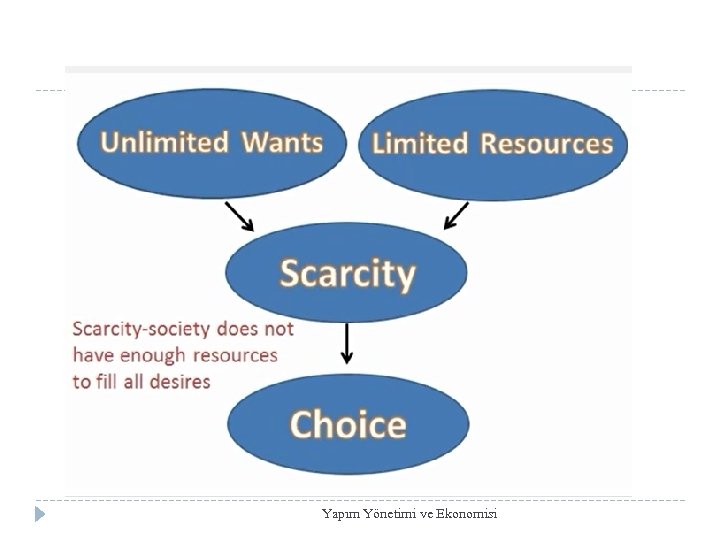
And the answer is… Economics is the social science concerned with the problem of scarcity What is Scarcity? Not enough resources to meet demand Why do you think scarcity is a problem? What else is Economics? Economics is common sense made confusing. Economics is the science of decision making.
Yapım Yönetimi ve Ekonomisi
Yapım Yönetimi ve Ekonomisi
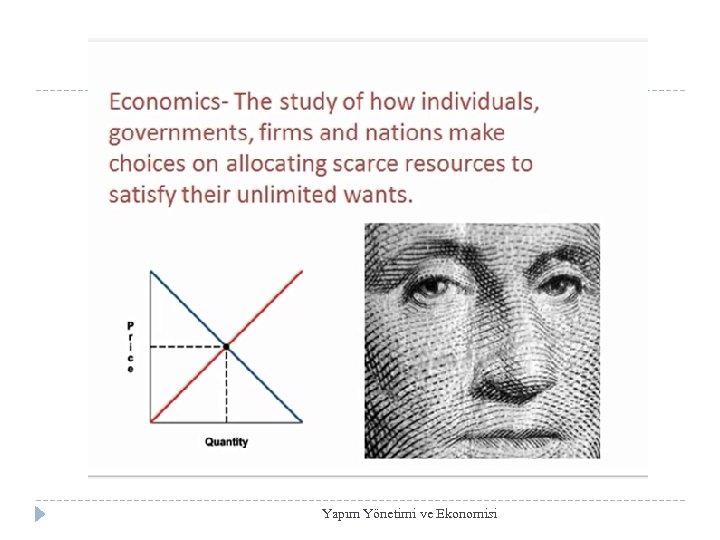
Economics? The social science concerned with how individuals and societies decide how to satisfy there unlimited wants given our limited resources. I can’t buy a car if I don’t have an income! The science of decision making How to make decisions
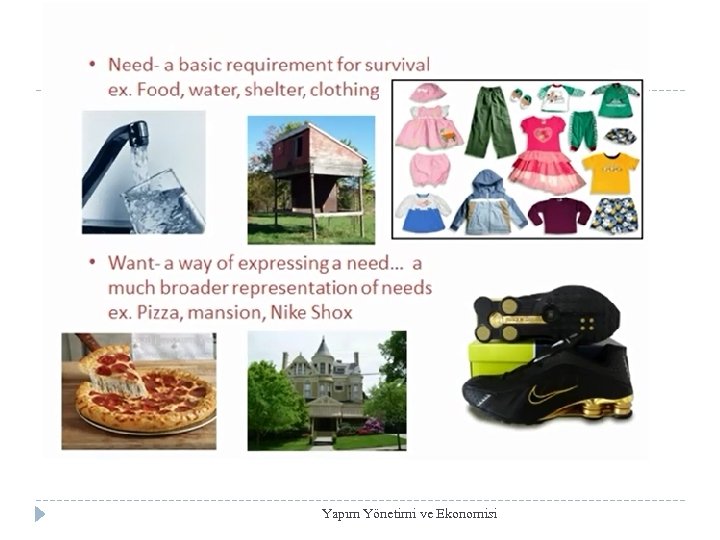
“The Economic Problem” Scarcity… What is it? Limited resources but unlimited wants Unlimited wants VS Limited Resources You can’t buy 10 candy bars if the store only has 5 candy bars to sell. Can’t buy 3 burgers if you only have enough money for 1. What are some things that you “want” to have? Do you have the resources to purchase them? Needs VS Wants What are some of your needs…wants.
Scarcity means… We must use things efficiently in order to maximize the number of goods and services we can produce. Don’t waste… The Economic Problem (Scarcity)– We can’t have everything we want!! Because of this… we need to make choices. What we want (need) VS what we can give up (live without)
How does scarcity impact you? Have you ever wanted something you couldn’t afford to buy? Did a store ever run out of the item that you wanted? Has anyone ever wanted you to do something that you didn’t have time to do?
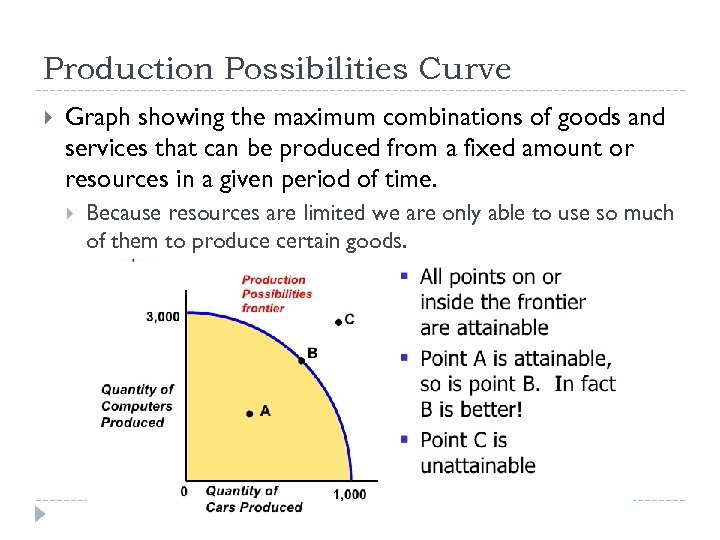
Production Possibilities Curve Graph showing the maximum combinations of goods and services that can be produced from a fixed amount or resources in a given period of time. Because resources are limited we are only able to use so much of them to produce certain goods.
Resources – Factors of Production Natural resources (Land)– “free gifts of nature” Capital Resources – “manufactured aids to production” Tools, machines, equipment, factories Things used in producing goods and services and getting them to consumers. Human Resources (Labor)– “mankind’s physical and mental talent” Land, minerals, oil, forests, air, and timber These are the skills people have that are used to produce goods and services. Entrepreneur – the individual who combines the factors of production in order to produce a good or service. Risk taker, policy maker, and innovator
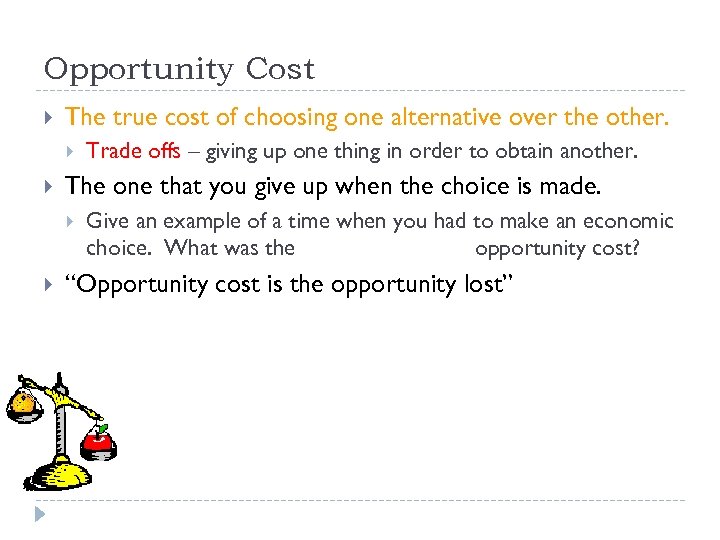
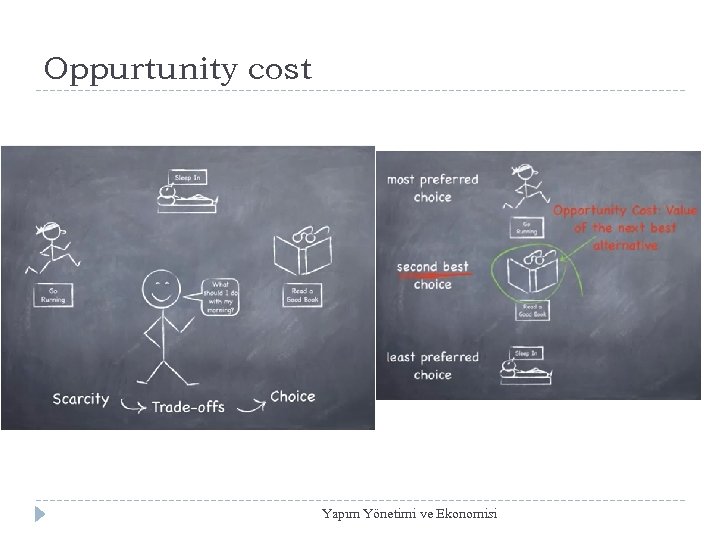
Opportunity Cost The true cost of choosing one alternative over the other. The one that you give up when the choice is made. Trade offs – giving up one thing in order to obtain another. Give an example of a time when you had to make an economic choice. What was the opportunity cost? “Opportunity cost is the opportunity lost”
Oppurtunity cost Yapım Yönetimi ve Ekonomisi
Recap What is the basic economic problem? As consumers what do we need to weigh when making economic choices? What are the four factors of production? What is economics? How do trade offs lead to opportunity costs?
Circular flow of income and output
Yapım Yönetimi ve Ekonomisi
Yapım Yönetimi ve Ekonomisi
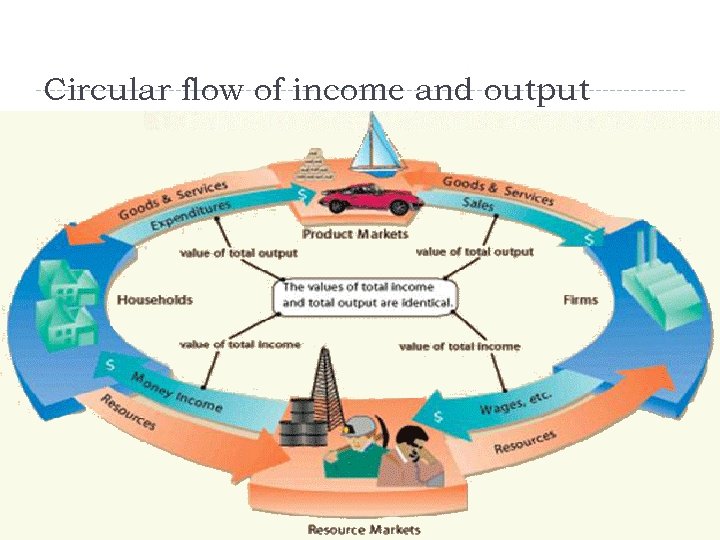
What does the circular flow model show us? Why is a relationship between the factor market and the product market necessary for the economy to stay strong?
Business Cycle
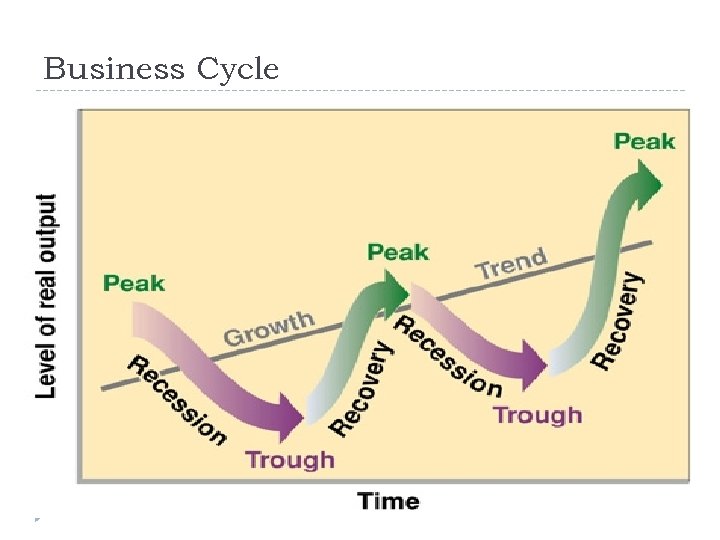
Parts of the Business Cycle Peak (boom)– Highest point in the economic cycle. Economy is at its best and will likely begin to contract. Recession (contraction)– decline in the economies performance that could lead to depression. Not long term and does not always impact other economies
Trough (depression)– A sustained economic downturn that impacts our economy and that of other countries. Lowest economic point Recovery (expansion)- Economic activity begins to pick up and depression begins to end. Economic growth occurs
Yapım Yönetimi ve Ekonomisi
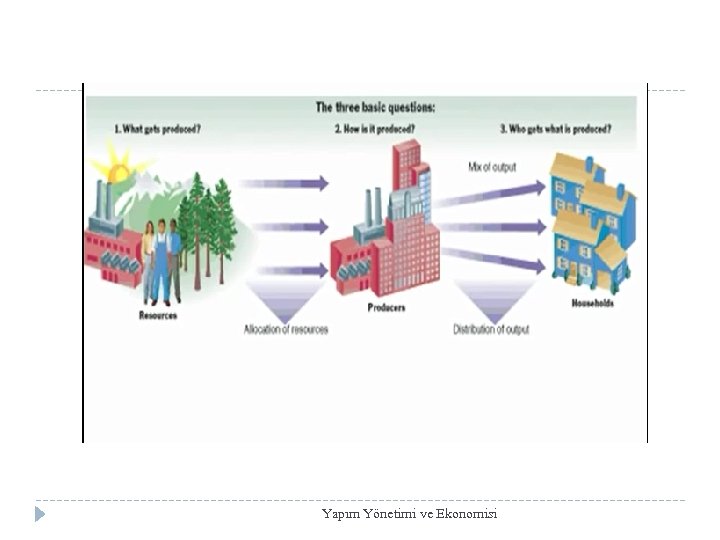
3 Basic Economic Questions What to produce? With limited resources, deciding what is needed the most is often a factor in determining what will be produced. What is the need or want of this product? What is the point of making a product that no one is going to buy. Businesses need to make money…so they choose products that people want.
3 Basic Questions Cont… How should it be produced? Technology, labor, capital, ect. getting the lowest cost to make the product. Are we going to make the product from scratch or will a machine be making the product. What will each option cost? Will having new technology allow us to lower our expenses?
3 Basic Questions Cont… Whom should it be produced for? Who is going to use this product? Most goods and services are distributed to individuals through a price system. Did Apple market the ipod to the large population of elderly people in the U. S. or the youth? Why? If you want it and can afford to buy it…you will. Products can also be distributed through other means; force, first come, lottery, majority, ect.
Recap What are three basic economic questions? Compare and contrast micro and macro economics. Explain the circular flow of income and output as it relates to the economy. Describe the business cycle.
Inflation The rate at which the general level of prices for goods and services is rising, and, subsequently, purchasing power is falling. As inflation rises, every dollar will buy a smaller percentage of a good. For example, if the inflation rate is 2%, then a $1 pack of gum will cost $1. 02 in a year.
Recession A significant decline in activity across the economy, lasting longer than a few months. It is visible in industrial production, employment, real income and wholesale-retail trade. The technical indicator of a recession is two consecutive quarters of negative economic growth as measured by a country's gross domestic product (GDP). A recession generally lasts from six to 18 months, and interest rates usually fall in during these months to stimulate the economy by offering cheap rates at which to borrow money.
Recession is a normal (albeit unpleasant) part of the business cycle; however, one-time crisis events can often trigger the onset of a recession. The global recession of 2008 -2009 brought a great amount of attention to the risky investment strategies used by many large financial institutions, along with the truly global nature of the financial system. As a result of such a wide-spread global recession, the economies of virtually all the world's developed and developing nations suffered extreme set-backs and numerous government policies were implemented to help prevent a similar future financial crisis.
What is the connection between Inflation and Recession? Which came first the chicken or the recession? In many cases the causes of recession can be confusing. Can inflation cause/worsen a recession? Or does a recession cause/worsen inflation? Both…a recession does not always have a single cause, but can be caused by many factors. Once a recession begins, it’s impact is usually felt all over the economy, including inflation. Inflation occurs without a recession, but a dramatic change in the value of money can push an unstable economy into a recession.
Look at the causes or influences of our most recent recession Poor business practices – started the recession It was likely on its way already Inflation Decline in the stock market Increased foreclosures/ drop in housing prices
In Short… Economics is common sense made confusing We can’t have everything that we want, so we have to make choices with our money. Businesses have to make choices with their products. Society has to make choices about how it should or will function. The Government makes choices about laws and expenses.
Economics 'schools of thoughts Mainstream modern economics can be broken down into four schools of economic thought: Fours Schools of Economic Thought: Classical Marxian Keynesian Chicago School Yapım Yönetimi ve Ekonomisi
Terms Mainstream economics is a term used to refer to widelyaccepted economics as it is taught across prominent universities, and in contrast to heterodox economics. School of thought A school of thought is a collection or group of people who share common characteristics of opinion or outlook regarding a philosophy, discipline, belief, social movement, cultural movement, or art movement. Yapım Yönetimi ve Ekonomisi
Introduction to Macroeconomics Microeconomics examines the behavior of individual decision-making units—business firms and households. Macroeconomics deals with the economy as a whole; it examines the behavior of economic aggregates such as aggregate income, consumption, investment, and the overall level of prices. 35 of 31 Aggregate behavior refers to the behavior of all households and firms together.
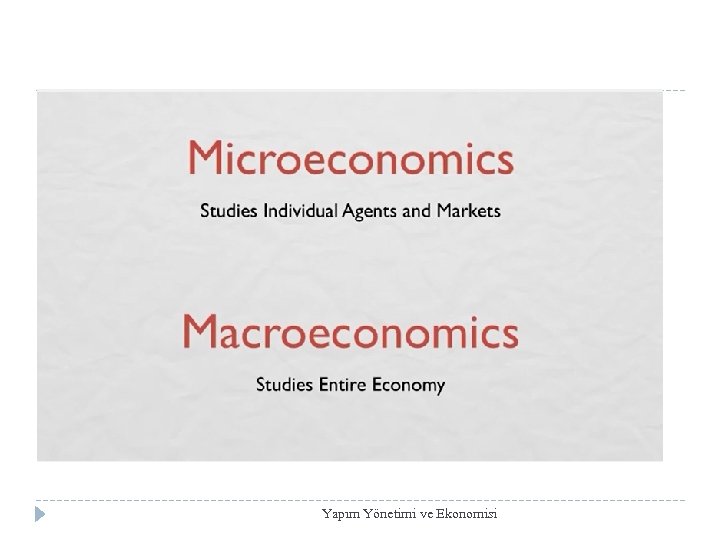
Macroeconomics vs. Microeconomics Decisions of individual units No matter how large Example: GE’s pricing policy Macroeconomics Behavior of entire economies No matter how small Example: inflation in Monaco Economic aggregates: aggregate output, inflation, unemployment, … 36
Macroeconomics & Aggregation Combine many individual markets into one overall market Why can we aggregate? Composition of demand & supply In various markets Important for microeconomics issues Not important for macroeconomics issues During economic fluctuations, markets move up or down together 37
Types of Economics Macroeconomics – branch of economics that deals with economic theory and the economic decisions of large bodies like the government. Theories of Economics Countries and their governments Trade between countries Microeconomics – branch of economics that deals with behavior and decisions of smaller unit like individuals and businesses. Families, businesses, and communities Domestic economies
Yapım Yönetimi ve Ekonomisi
Supply & Demand in Macroeconomics Aggregate demand (AD) curve AD Quantity of domestic product – demanded Each possible value of price level Aggregate supply (AS) curve AS Quantity of domestic product – supplied Each possible value of price level 40
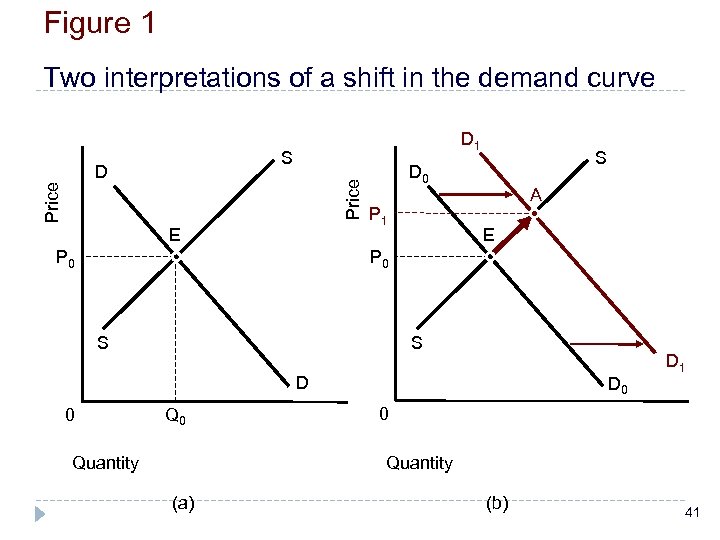
Figure 1 Two interpretations of a shift in the demand curve S Price D 1 E S D 0 P 1 A E P 0 S S D 0 Q 0 D 1 0 Quantity (a) (b) 41
Supply & Demand in Macroeconomics Inflation Sustained increase in price level Outward shift of aggregate demand curve Recession – period of time Total output – declines Production falls People lose jobs Inward shift of aggregate demand curve 42
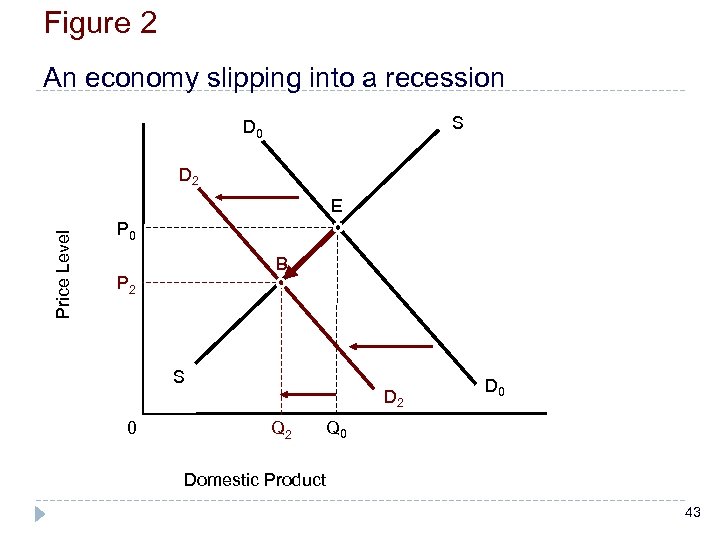
Figure 2 An economy slipping into a recession S D 0 D 2 Price Level E P 0 B P 2 S 0 D 2 Q 2 D 0 Q 0 Domestic Product 43
Supply & Demand in Macroeconomics Macroeconomists study Inflation Recession & unemployment (Business Cycles) Economic growth 44
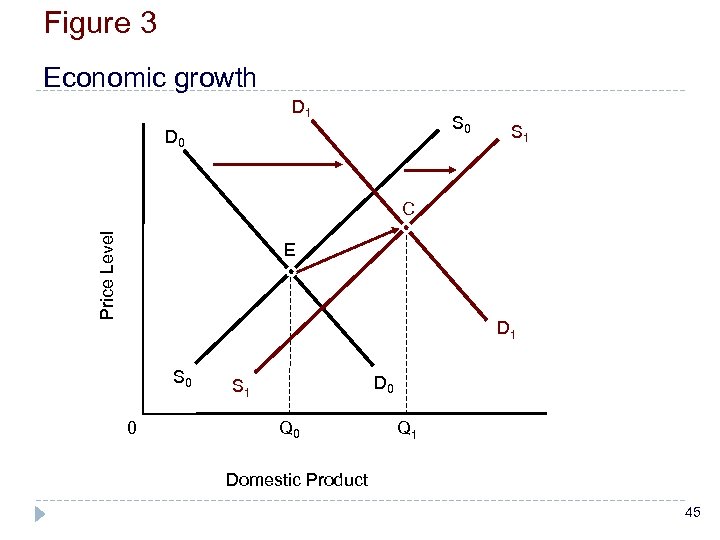
Figure 3 Economic growth D 1 S 0 D 0 S 1 Price Level C E D 1 S 0 0 D 0 S 1 Q 0 Q 1 Domestic Product 45
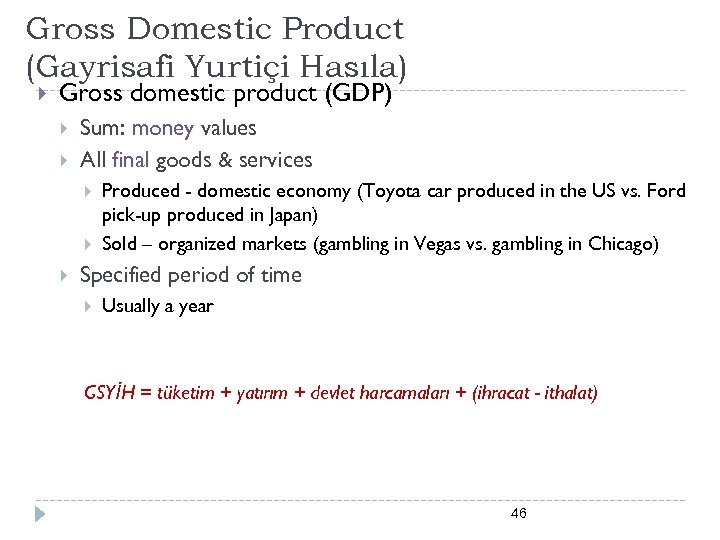
Gross Domestic Product (Gayrisafi Yurtiçi Hasıla) Gross domestic product (GDP) Sum: money values All final goods & services Produced - domestic economy (Toyota car produced in the US vs. Ford pick-up produced in Japan) Sold – organized markets (gambling in Vegas vs. gambling in Chicago) Specified period of time Usually a year GSYİH = tüketim + yatırım + devlet harcamaları + (ihracat - ithalat) 46
What Gets Counted in GDP? GDP - particular year Add up money value of things Goods & services Produced within the year Final goods & services Production: geographic boundaries of U. S. Organized markets 47
Gross Domestic Product Final goods and services Purchased by their ultimate users Intermediate good - purchased For resale For use in producing another good 48
Gross Domestic Product Limitations of GDP Not measure: nation’s economic well-being Includes only market activity Places no value on leisure Counted: “Bads” and “Goods” Housework, yard work, … Hurricane Katrina might increase GDP Ecological costs Not deducted from GDP Needed: “Green GDP” 49
The Economy on a Roller Coaster National economy Macroeconomic fluctuations Growth – with fluctuations Business cycles Real GDP per capita Ratio: real GDP divided by population 50
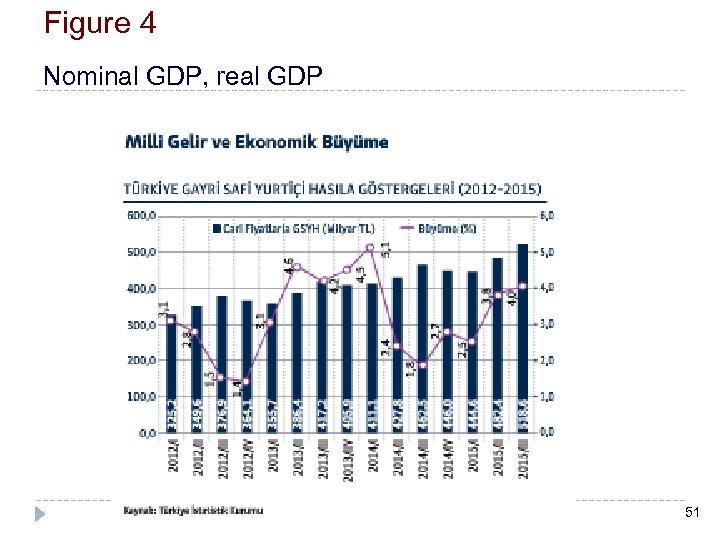
Figure 4 Nominal GDP, real GDP 51
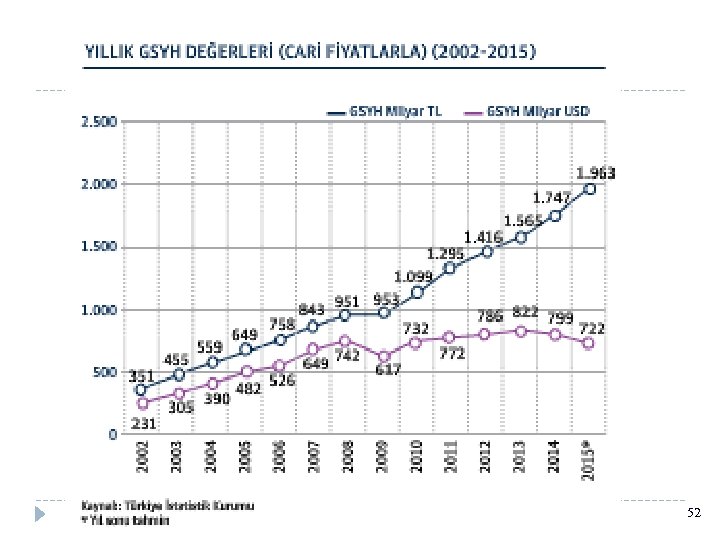
52
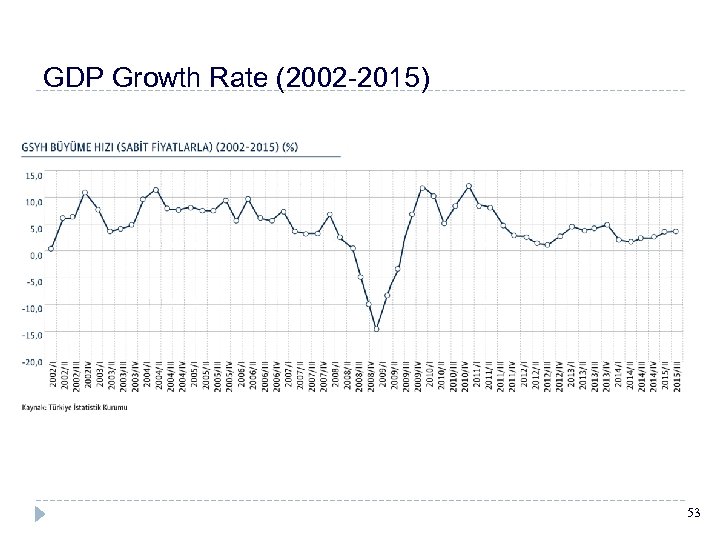
GDP Growth Rate (2002 -2015) 53
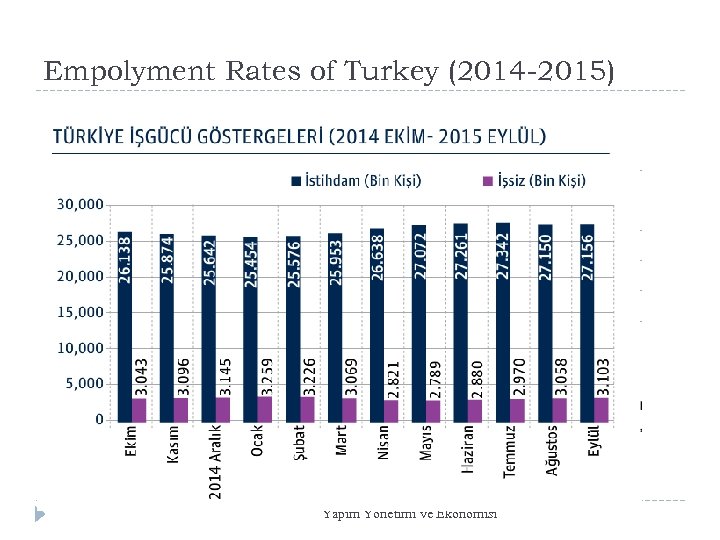
Empolyment Rates of Turkey (2014 -2015) Yapım Yönetimi ve Ekonomisi
Introduction to Macroeconomics 55 of 31 Microeconomists generally conclude that markets work well. Macroeconomists, however, observe that some important prices often seem “sticky. ” Sticky prices are prices that do not always adjust rapidly to maintain the equality between quantity supplied and quantity demanded.
Introduction to Macroeconomics 56 of 31 Macroeconomists often reflect on the microeconomic principles underlying macroeconomic analysis, or the microeconomic foundations of macroeconomics.
The Roots of Macroeconomics 57 of 31 The Great Depression was a period of severe economic contraction and high unemployment that began in 1929 and continued throughout the 1930 s.
The Roots of Macroeconomics 58 of 31 Classical economists applied microeconomic models, or “market clearing” models, to economy-wide problems. However, simple classical models failed to explain the prolonged existence of high unemployment during the Great Depression. This provided the impetus for the development of macroeconomics.
The Roots of Macroeconomics In 1936, John Maynard Keynes published The General Theory of Employment, Interest, and Money. Keynes believed governments could intervene in the economy and affect the level of output and employment. During periods of low private demand, the government can stimulate aggregate demand to lift the economy out of recession. 59 of 31
Recent Macroeconomic History Fine-tuning was the phrase used by Walter Heller to refer to the government’s role in regulating inflation and unemployment. The use of Keynesian policy to fine-tune the economy in the 1960 s, led to disillusionment in the 1970 s and early 1980 s. 60 of 31
Recent Macroeconomic History Stagflation occurs when the overall price level rises rapidly (inflation) during periods of recession or high and persistent unemploy ment (stagnation). (Stagflasyon, resesyon ile enflasyonun aynı anda yaşandığı addır. Bu durumda ekonomideki işsizlik oranı artarken fiyatlar da hızla yükselmektedir. ) 61 of 31
Macroeconomic Concerns Three of the major concerns of macroeconomics are: Inflation Output growth Unemployment 62 of 31
Inflation and Deflation 63 of 31 Inflation is an increase in the overall price level. Hyperinflation is a period of very rapid increases in the overall price level. Hyperinflations are rare, but have been used to study the costs and consequences of even moderate inflation. Deflation is a decrease in the overall price level. Prolonged periods of deflation can be just as damaging for the economy as sustained inflation.
Output Growth: Short Run and Long Run The business cycle is the cycle of shortterm ups and downs in the economy. The main measure of how an economy is doing is aggregate output: 64 of 31 Aggregate output (toplam çıkış) is the total quantity of goods and services produced in an economy in a given period.
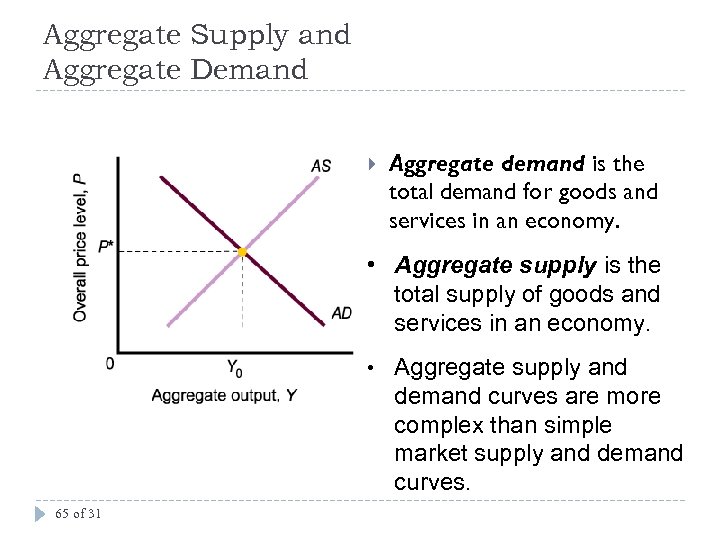
Aggregate Supply and Aggregate Demand Aggregate demand is the total demand for goods and services in an economy. • Aggregate supply is the total supply of goods and services in an economy. • Aggregate supply and demand curves are more complex than simple market supply and demand curves. 65 of 31
Output Growth: Short Run and Long Run 66 of 31 A recession is a period during which aggregate output declines. Two consecutive quarters of decrease in output signal a recession. A prolonged and deep recession becomes a depression. Policy makers attempt not only to smooth fluctuations in output during a business cycle but also to increase the growth rate of output in the long-run.
Unemployment The unemployment rate is the percentage of the labor force that is unemployed. The unemployment rate is a key indicator of the economy’s health. The existence of unemployment seems to imply that the aggregate labor market is not in equilibrium. Why do labor markets not clear when other markets do? 67 of 31
Government in the Macroeconomy There are three kinds of policy that the government has used to influence the macroeconomy: 1. 2. 3. 68 of 31 Fiscal policy (maliye politikası) Monetary policy (para politikası) Growth or supply-side policies (büyüme politikası)
Government in the Macroeconomy 69 of 31 Fiscal policy refers to government policies concerning taxes and spending. Monetary policy consists of tools used by the Federal Reserve to control the quantity of money in the economy. Growth policies are government policies that focus on stimulating aggregate supply instead of aggregate demand.
The Components of the Macroeconomy 70 of 31 The circular flow diagram shows the income received and payments made by each sector of the economy.
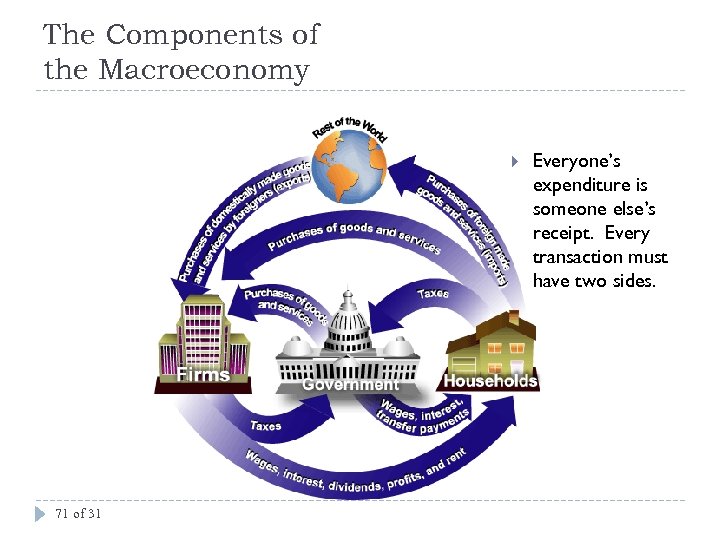
The Components of the Macroeconomy 71 of 31 Everyone’s expenditure is someone else’s receipt. Every transaction must have two sides.
The Components of the Macroeconomy 72 of 31 Transfer payments are payments made by the government to people who do not supply goods, services, or labor in exchange for these payments.
The Three Market Arenas Households, firms, the government, and the rest of the world all interact in three different market arenas: 1. 2. 3. 73 of 31 Goods-and-services market Labor market Money (financial) market
The Three Market Arenas Households and the government purchase goods and services (demand) from firms in the goods-and services market, and firms supply to the goods and services market. In the labor market, firms and government purchase (demand) labor from households (supply). The total supply of labor in the economy depends on the sum of decisions made by households. 74 of 31
The Three Market Arenas In the money market—sometimes called the financial market —households purchase stocks and bonds from firms. Households supply funds to this market in the expectation of earning income, and also demand (borrow) funds from this market. Firms, government, and the rest of the world also engage in borrowing and lending, coordinated by financial institutions. 75 of 31
Financial Instruments 76 of 31 Treasury bonds, notes, and bills are promissory notes issued by the federal government when it borrows money. Corporate bonds are promissory notes issued by corporations when they borrow money.
Financial Instruments Shares of stock are financial instruments that give to the holder a share in the firm’s ownership and therefore the right to share in the firm’s profits. 77 of 31 Dividends are the portion of a corporation’s profits that the firm pays out each period to its shareholders.
The Methodology of Macroeconomics Connections to microeconomics: 78 of 31 Macroeconomic behavior is the sum of all the microeconomic decisions made by individual households and firms. We cannot understand the former without some knowledge of the factors that influence the latter.
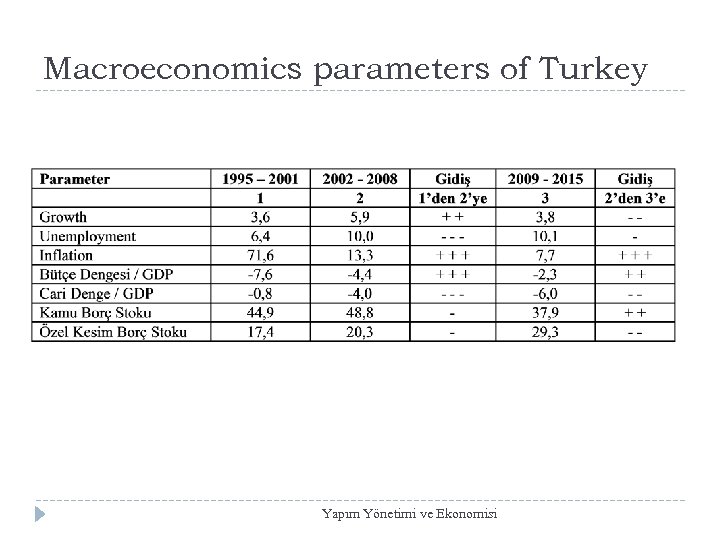
Macroeconomics parameters of Turkey Yapım Yönetimi ve Ekonomisi
Review Terms and Concepts aggregate behavior dividends microeconomics aggregate demand expansion or boom monetary policy aggregate output fine tuning recession aggregate supply fiscal policy shares of stock business cycle Great Depression stagflation circular flow hyperinflation sticky prices contraction, recession, or slump inflation supply-side policies macroeconomics transfer payments microeconomic foundations of macroeconomics Treasury bonds, notes, bills corporate bonds deflation depression 80 of 31 unemployment rate
Скачать презентацию Basic principles of economics Economics schools of thoughts
7c4a61349ae9c35f53ad312ddaaca514.ppt