 Скачать презентацию Basic Photography I Snapshots to Great shots
d335750e303cd47e7ed37c7ca4cc2a73.ppt
- Количество слайдов: 18



Basic Photography I “Snapshots to Great shots” © Pino. Domenico. Photo. com 2014
What makes a great photo? 1. Composition – – – Line / Shape / Perspective Pattern Texture Color Balance 2. Capturing the Decisive Moment • • You lose 100% of pictures you don’t shoot Sometimes you have to wait to be born (timing)
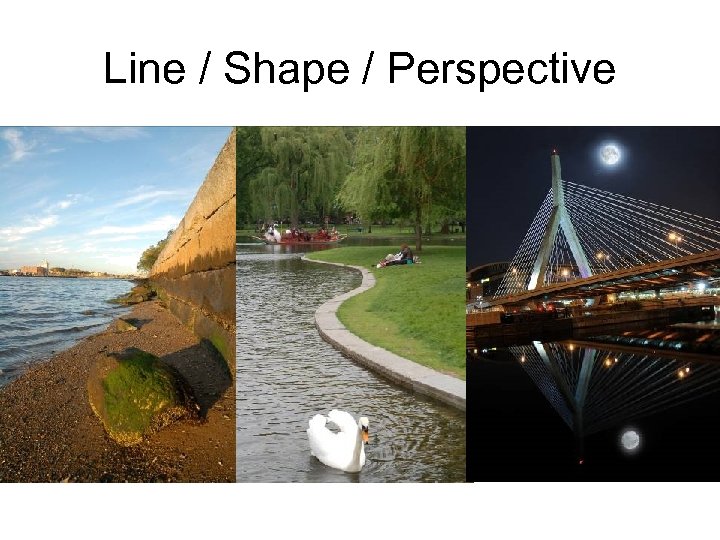
Line / Shape / Perspective
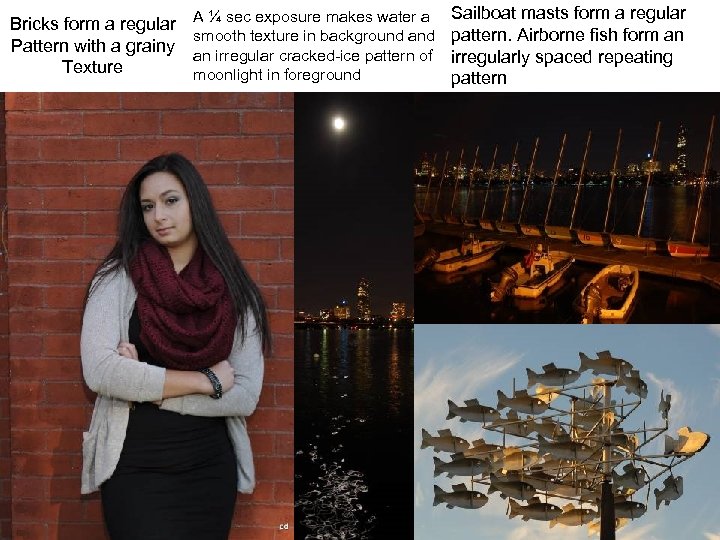
Bricks form a regular Pattern with a grainy Texture A ¼ sec exposure makes water a smooth texture in background an irregular cracked-ice pattern of moonlight in foreground Sailboat masts form a regular pattern. Airborne fish form an irregularly spaced repeating pattern
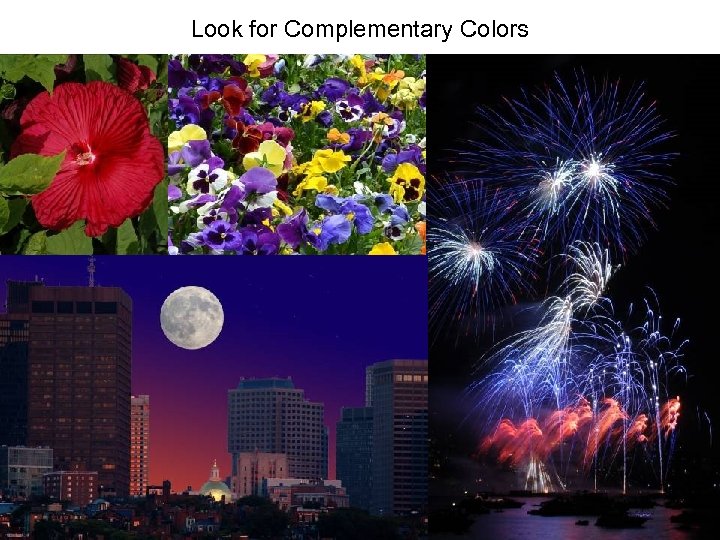
Look for Complementary Colors
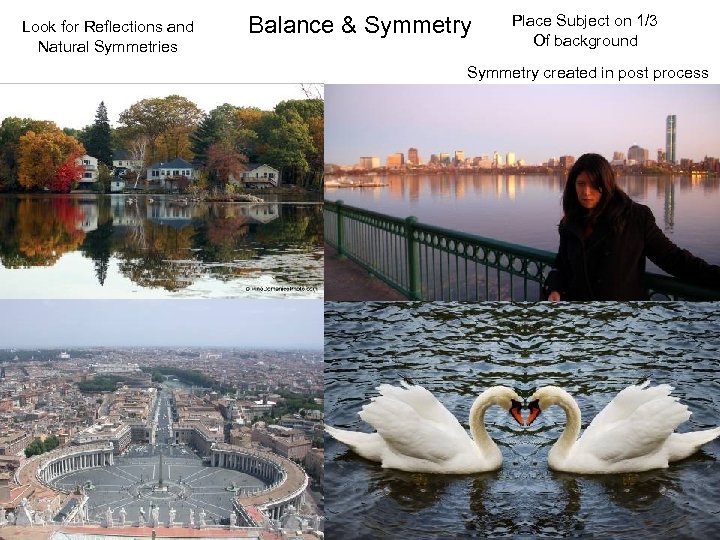
Look for Reflections and Natural Symmetries Balance & Symmetry Place Subject on 1/3 Of background Symmetry created in post process
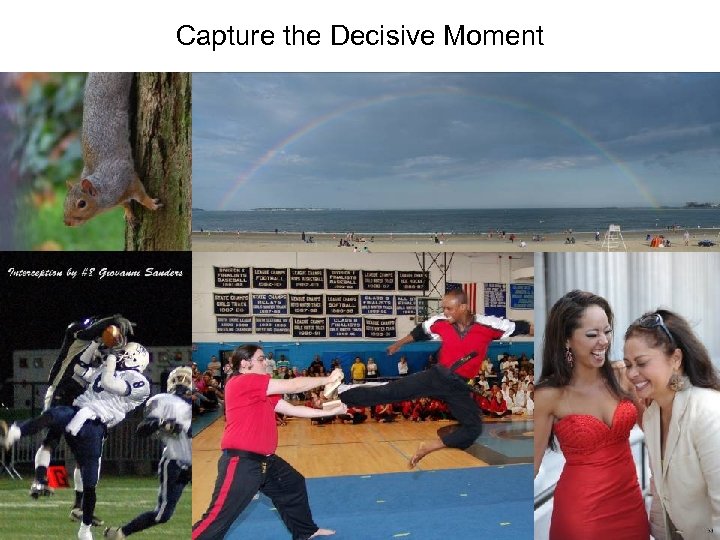
Capture the Decisive Moment
How do you know it’s a great shot? 1. You can feel it when you look at it. • Learn to think with your right-side brain 2. You can check to see what elements of composition it contains • Like a fine wine you can describe it’s attributes (just don’t discount how it makes you feel). 3. Everyone likes it • Rely on “The wisdom of crowds”
How do you take a great shot? • Manage the Scene – – Move around to see all the “angles” Place your subject on “one third” of the frame Find the right time for each right space Keep shooting! • Manage the Subject – Place your subject in the best setting in the area – Pose (and frame) your subject – Pay attention to the light – esp. faces . . . Is the frame well composed? Can you “feel” it?
Manage the Scene • It’s important to move around to “see” all the viewpoints – keep moving around • Is there a nearby spot where the light is best? • What’s in the background? Choose the best setting & lighting. • No objects sticking out of people’s head and sides (Wires, poles, branches, microphones, cars, boats, other heads? ) • Find the right place and time – Note passing locations (look for “Found Art”) – Scout locations in your spare time (like a Pro) • Get out on foot and look at the possibilities • Where will the light be at a particular time of day?
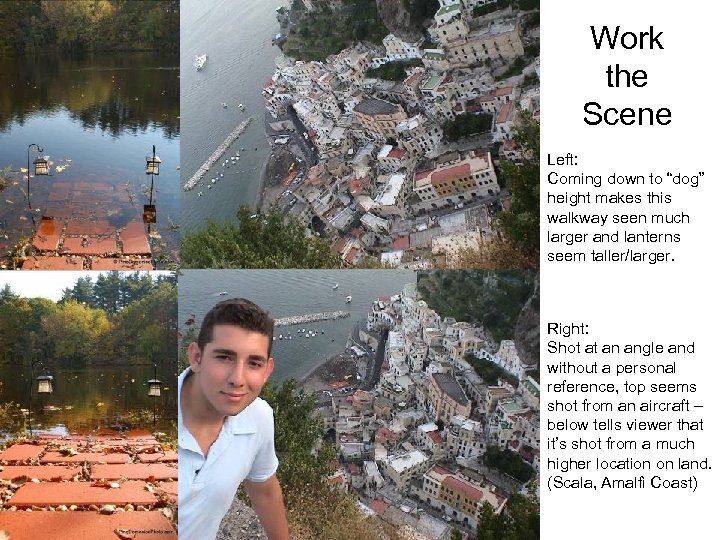
Work the Scene Left: Coming down to “dog” height makes this walkway seen much larger and lanterns seem taller/larger. Right: Shot at an angle and without a personal reference, top seems shot from an aircraft – below tells viewer that it’s shot from a much higher location on land. (Scala, Amalfi Coast)
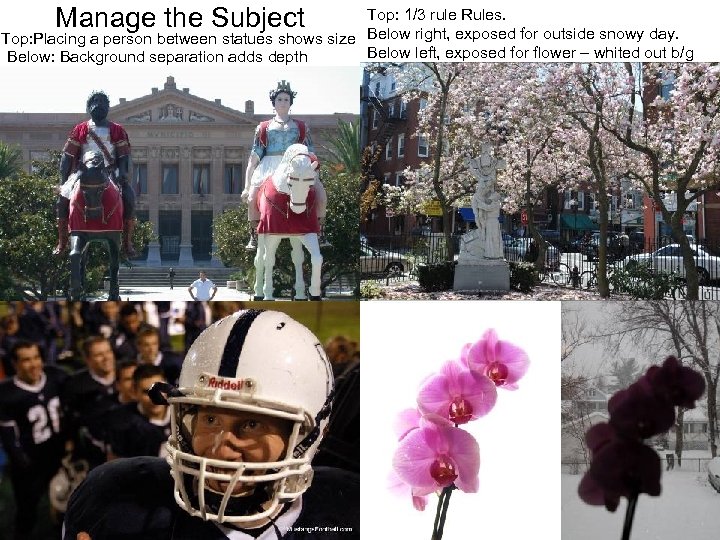
Manage the Subject Top: 1/3 rule Rules. Top: Placing a person between statues shows size Below right, exposed for outside snowy day. Below left, exposed for flower – whited out b/g Below: Background separation adds depth
Great Places for Portraits In the House 1. By the Window, from the side – “sculptured” 2. Window at your back – better lit Outside 1. Under a bridge or overhanging structure 2. Against textured background – bricks? 3. Touring • • One third rule Work the scene – be creative / novel
Some of My Favorite Places • Boston • • • By the Charles, Memorial Dr, from The Sonesta to Mass Ave Paul Revere Park – near City Sq, Charlestown (Best view of Zakim Bridge) Harborwalk – esp. Boston Harbor Hotel area Pier’s Park East Boston – great view of Boston harbor-scape Boston Public Gardens (incl. under bridge over pond!) Top of the Hub – Observation deck (place camera against glass to min. reflections) Commonwealth Ave – esp. in winter, with lights on trees Atlantic Ave – Waterfront area Libraries and Museums – Back of MFA , and across the street on foot bridge – Courtyard of Boston Public Library • Near Boston • • Winchester – {Family/kids candids} Stone Zoo, {Family Portraits} back of Winchester Library Medford {Portraits} – Fellsmere Park, Craddock Bridge (behind Brookline Bank, High St) Billerica {Autumn scenes} – Elsie Ave, off River St, Nutting Lake (Eastside) Middlesex Tpk. Chelsea – O'Malley Park, Admiral Hill – interesting view of Mystic Br. and industrial Boston
My Favorite Times • Magic Hour – 1 hr to/from Sunrise/Sunset – Also late afternoon & Early morning • Dusk – Blue Hour (right after Sunset) • Moon-face days: – Day before full Moon, at Sunset – Day after full Moon, at Sunrise • Moon-shine days – Day after full Moon at Dusk (over water)
About the Light • Overcast is most even light – no shadows . . . also not much contrast. . . (sometimes you want shadow) • Bluish (“cold” tones, color temp 5000°Kelvin+) – Daylight - Outside – Flash – Some LED lights and some car headlights • Reddish (“warm” tones, color temp 3000 -4500°K) – Incandescent Light – Inside (aka. Tungsten) • Greenish – Fluorescent and CFL (at any color temp) – Mercury street lights • Color Cast – an unwanted tint that affects the photo often result from camera setting or “mixed” color temps
Help From Your Camera • Use “Sports” scene when zooming (faster shutter) • Use a Tripod for “Fireworks” and night scenes • Use a Reflector, to avoid silhouetted faces against bright backgrounds (daytime). . . unless you have a powerful flash • Use HDR (Rich Tone) for high contrast scenes. . . if you have it • Use Higher ISO for dimly lit scenes (night scene setting) • Cell Phones(S 2 -5) have special features – investigate! • Metering, Panorama, “Smile”, Object removal. . . many more.
How to Pose people (First get rid of, or hide, any foreign objects) • Singles – Weight on rear leg & Flex the front knee – Women – if it bends, flex it (C and S curves), Hands on Hips? – Avoid cutting off near joints • Groups (2 -4, more, and many more) • • • Face to face and back to back / or / Double FTF*BTB / (w/ crossed arms? ) Symmetrical: 45 deg. Interleaved ////-\\ Casual: Ask them to Interact – rest on neighbor, whisper, etc. Stack larger groups: Standing. . . hands-on-knees. . . 1 st row kneel/sit Take a Good Look. . . Rearrange? (you must direct them one at a time) Take 3 -4 shots (tell them you will take several) Tell them to look at you (demand it), “ 3 -2 -1 -hold it” {&repeat} “Crazy” picture always LAST
Скачать презентацию Basic Photography I Snapshots to Great shots
d335750e303cd47e7ed37c7ca4cc2a73.ppt