 Скачать презентацию Basic Marketing Chapter 04 Supplementary Power Point
8ffd235a54cddecfd0efac026fcfda48.ppt
- Количество слайдов: 48



Basic Marketing – Chapter 04 Supplementary Power. Point Archive This is an archive of photos and exhibits from the text and additional graphics and exhibits as referenced in the Basic Marketing Multimedia Lecture Guides. See the Basic Marketing Multimedia Lecture Support Package for additional detail and teaching suggestions. For use only with Perreault/Cannon/Mc. Carthy. These images may not be redistributed or used for any other purpose without permission of the publisher, Mc. Graw. Hill/Irwin, The Mc. Graw-Hill Companies, Inc. Mc. Graw-Hill/Irwin Copyright © 2011 by The Mc. Graw-Hill Companies, Inc. All rights reserved.
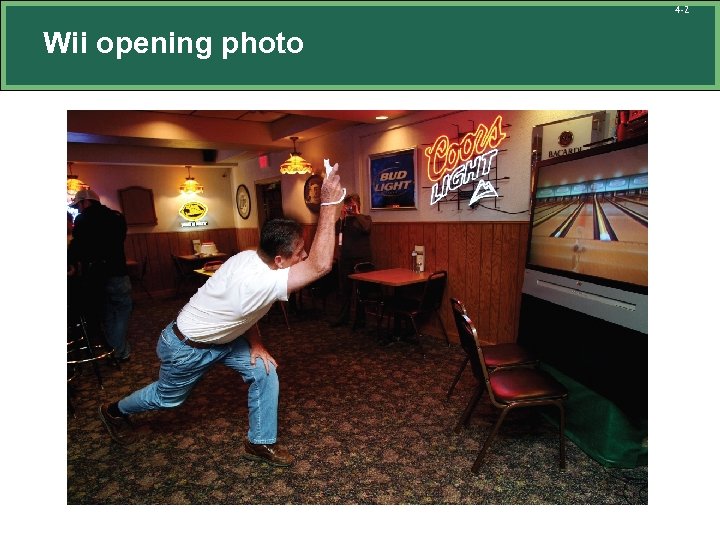
4 -2 Wii opening photo
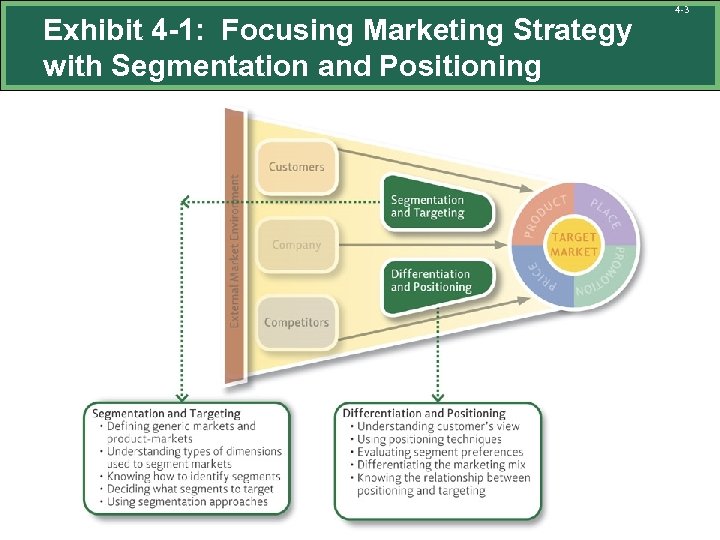
Exhibit 4 -1: Focusing Marketing Strategy with Segmentation and Positioning 4 -3
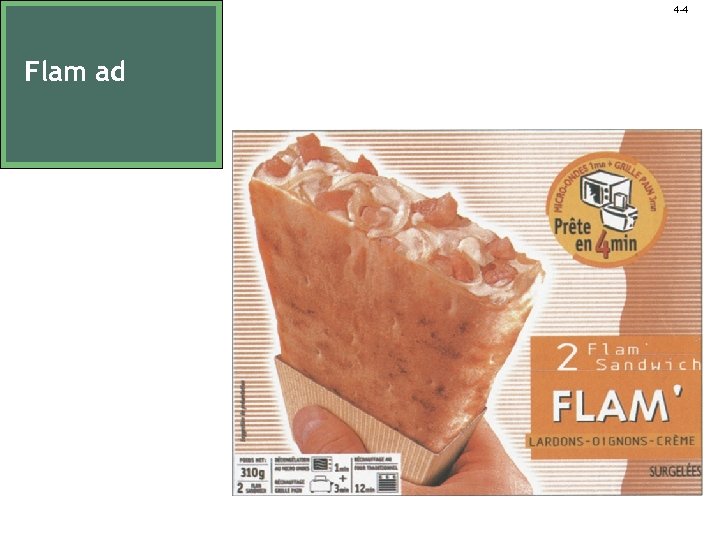
4 -4 Flam ad
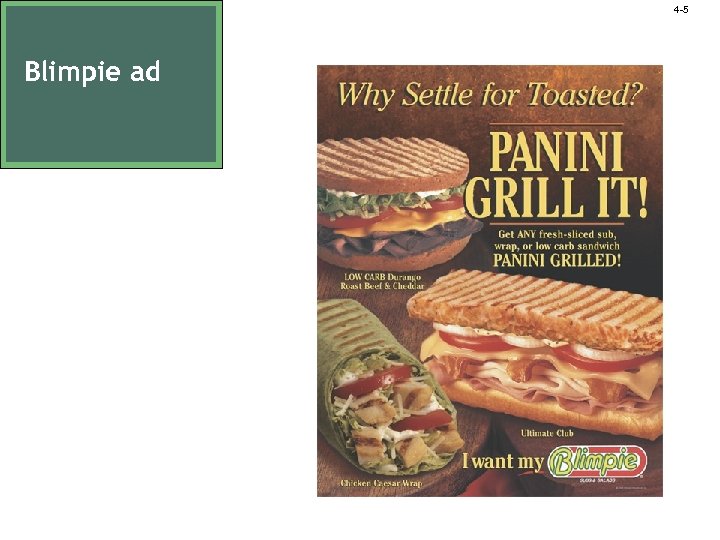
4 -5 Blimpie ad
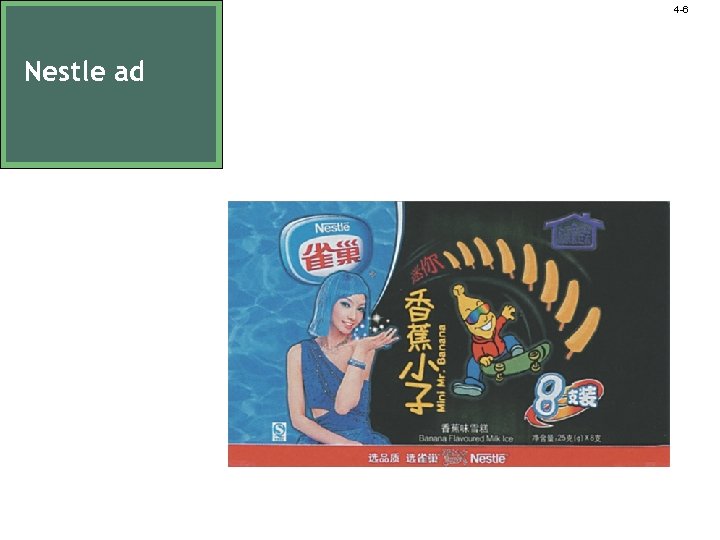
4 -6 Nestle ad
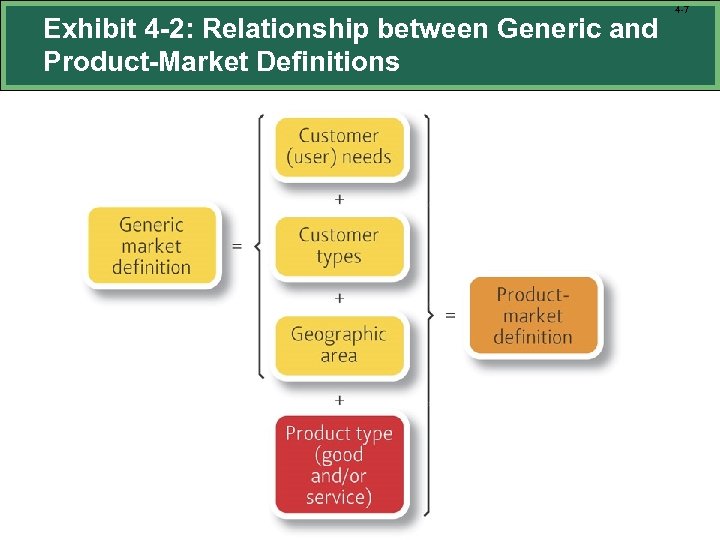
Exhibit 4 -2: Relationship between Generic and Product-Market Definitions 4 -7
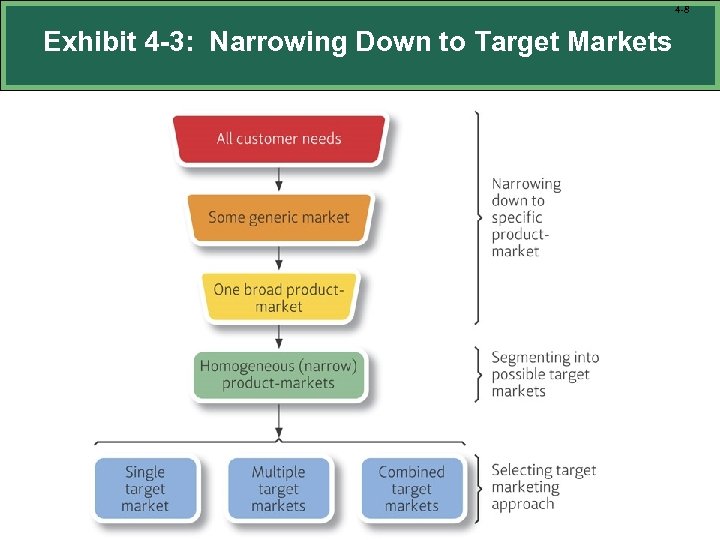
4 -8 Exhibit 4 -3: Narrowing Down to Target Markets
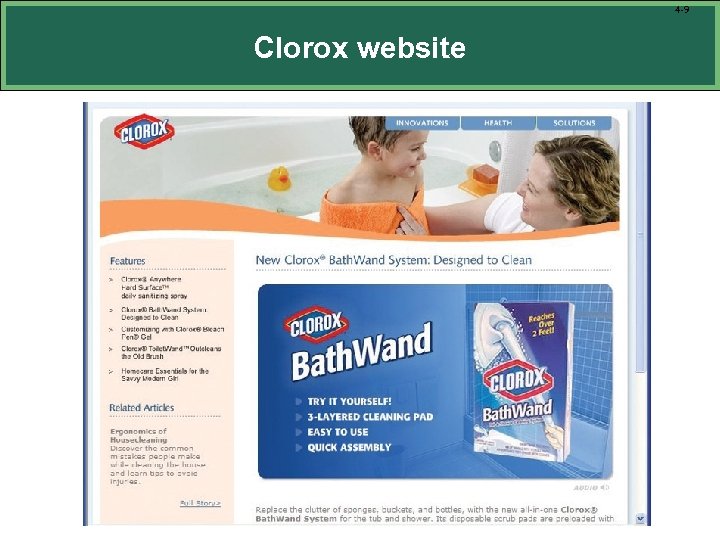
4 -9 Clorox website
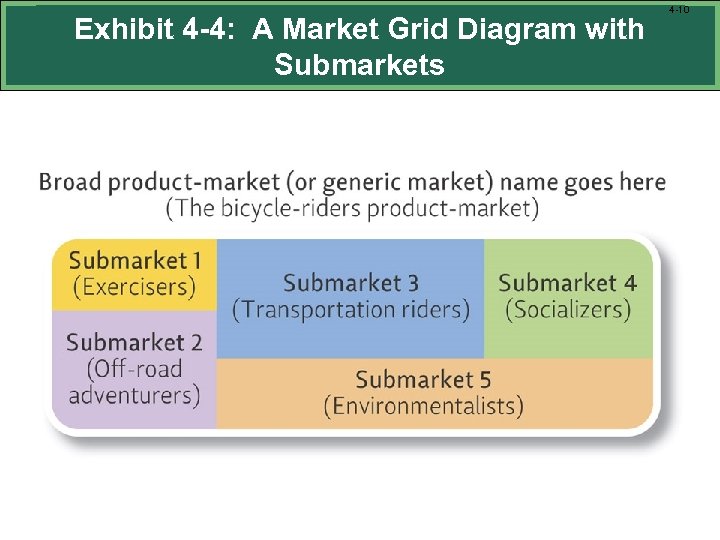
Exhibit 4 -4: A Market Grid Diagram with Submarkets 4 -10
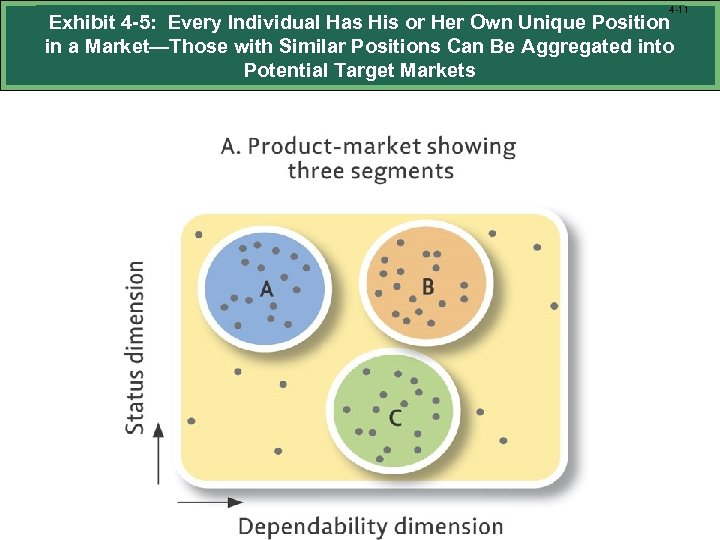
4 -11 Exhibit 4 -5: Every Individual Has His or Her Own Unique Position in a Market—Those with Similar Positions Can Be Aggregated into Potential Target Markets
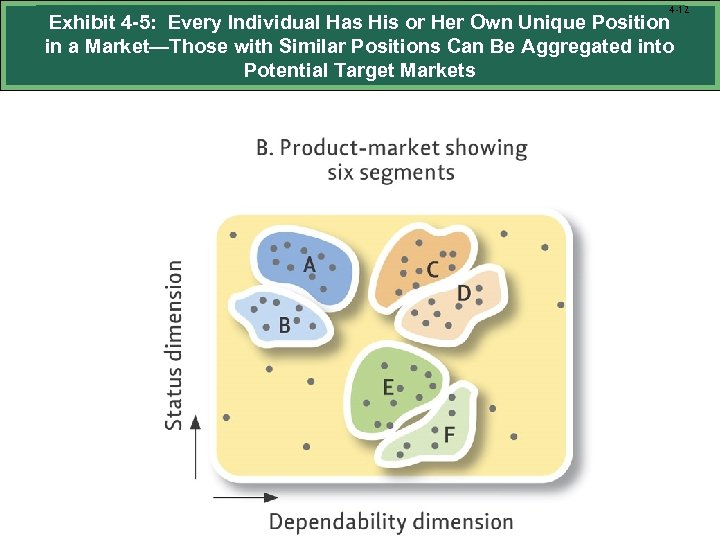
4 -12 Exhibit 4 -5: Every Individual Has His or Her Own Unique Position in a Market—Those with Similar Positions Can Be Aggregated into Potential Target Markets
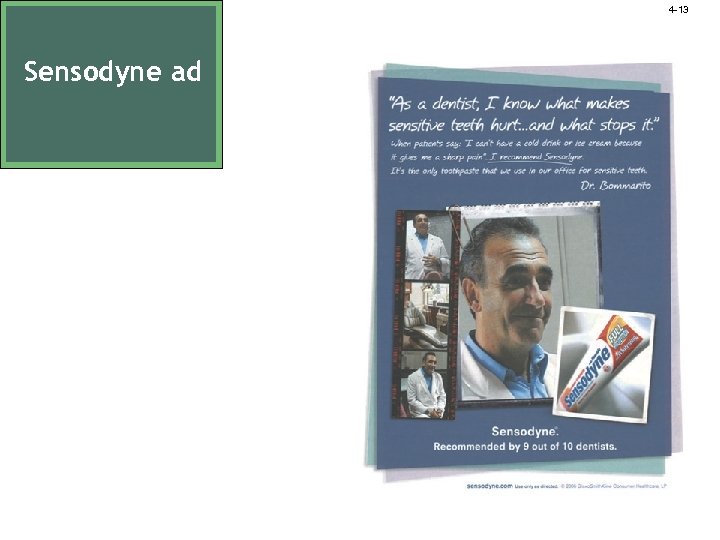
4 -13 Sensodyne ad
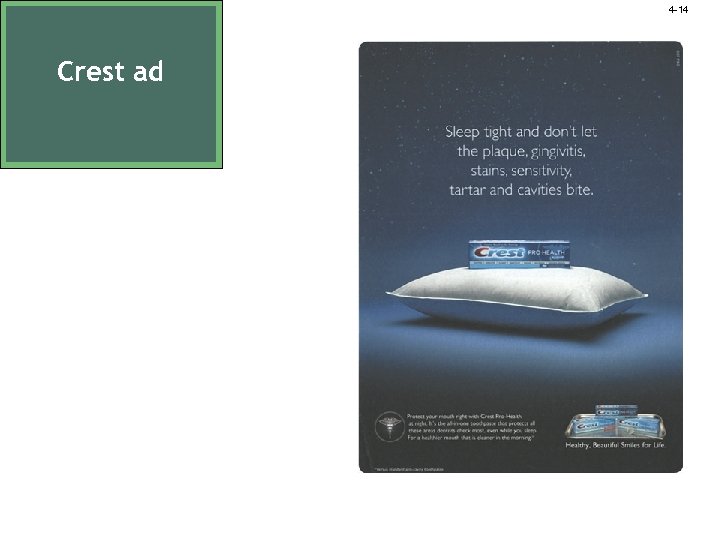
4 -14 Crest ad
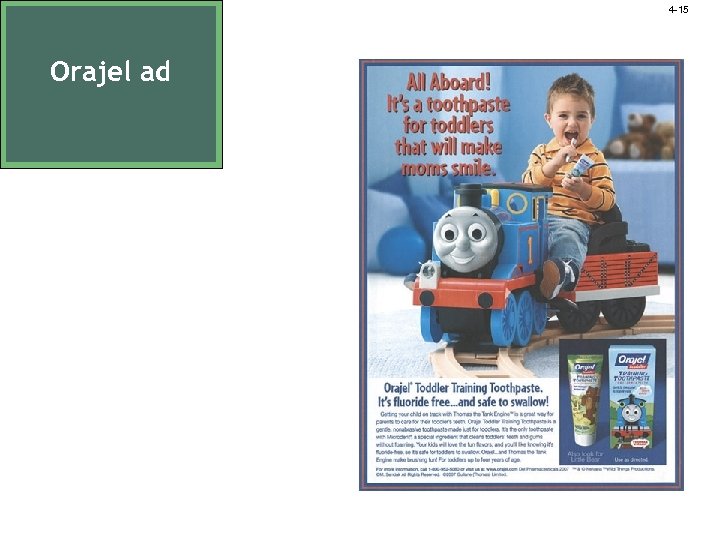
4 -15 Orajel ad
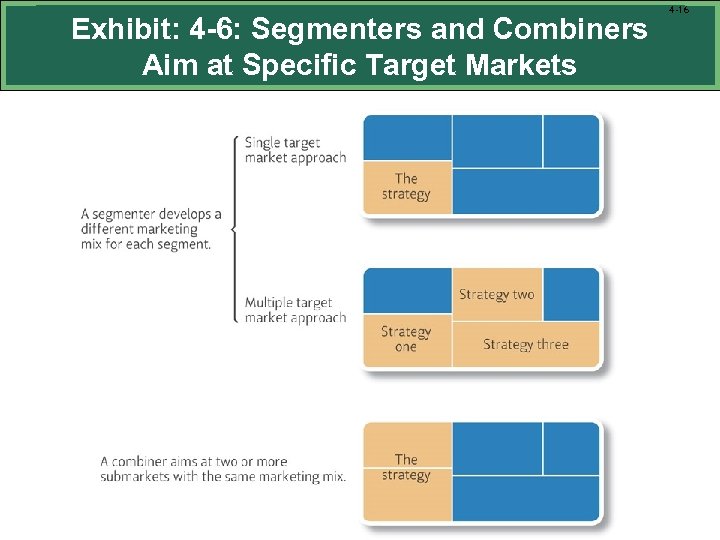
Exhibit: 4 -6: Segmenters and Combiners Aim at Specific Target Markets 4 -16
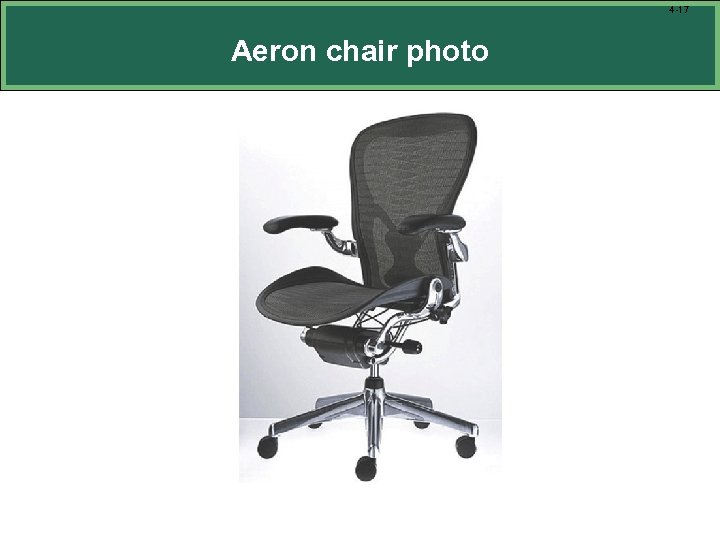
4 -17 Aeron chair photo
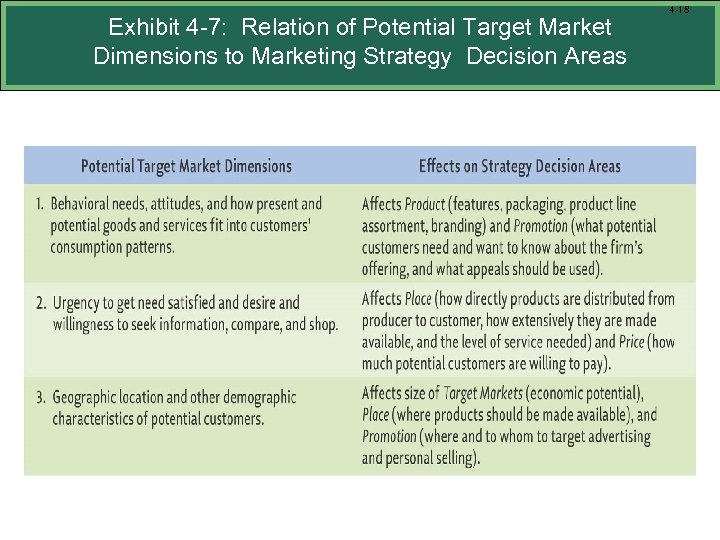
Exhibit 4 -7: Relation of Potential Target Market Dimensions to Marketing Strategy Decision Areas 4 -18
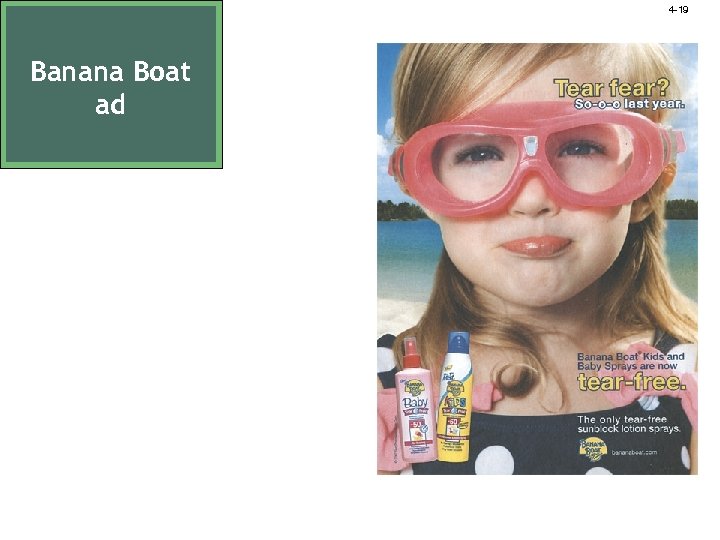
4 -19 Banana Boat ad
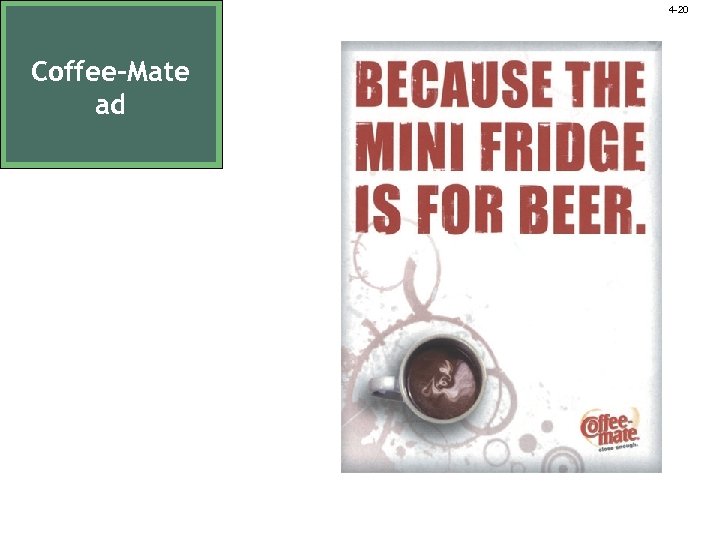
4 -20 Coffee-Mate ad
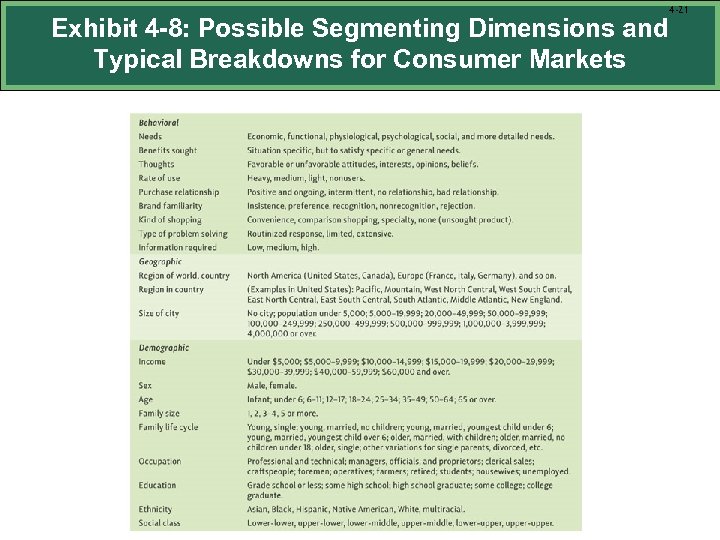
Exhibit 4 -8: Possible Segmenting Dimensions and Typical Breakdowns for Consumer Markets 4 -21
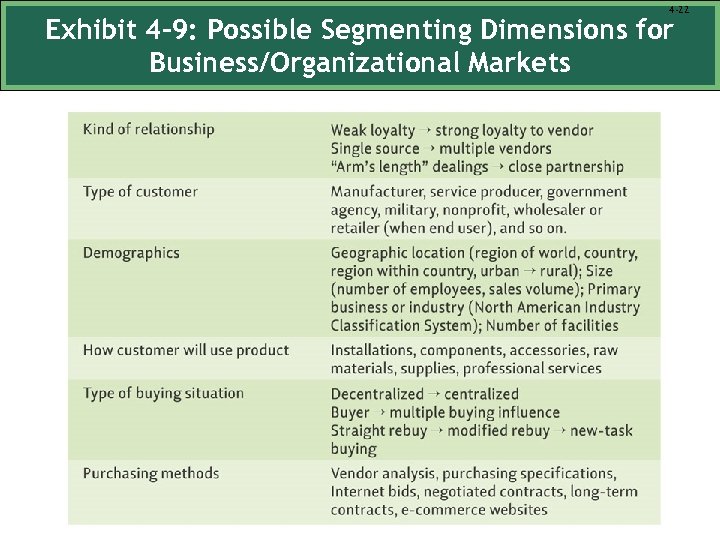
4 -22 Exhibit 4 -9: Possible Segmenting Dimensions for Business/Organizational Markets
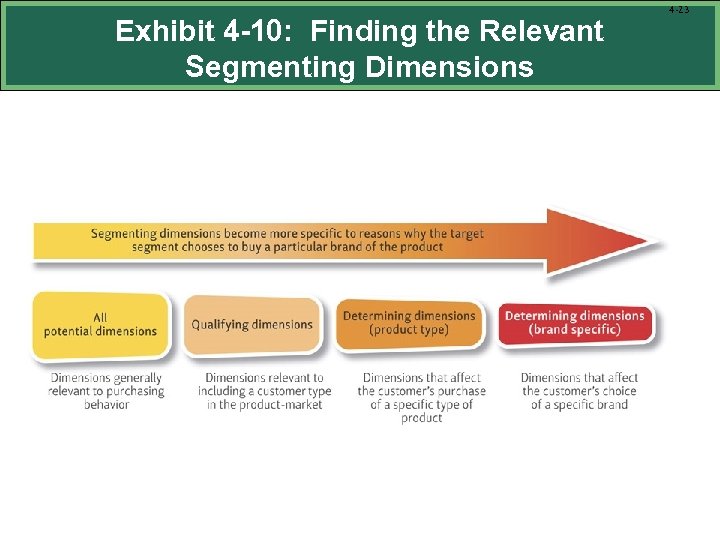
Exhibit 4 -10: Finding the Relevant Segmenting Dimensions 4 -23
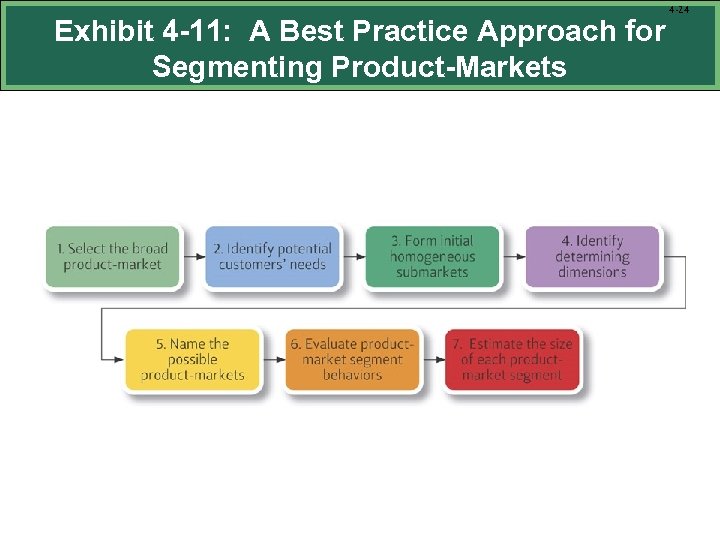
Exhibit 4 -11: A Best Practice Approach for Segmenting Product-Markets 4 -24

4 -25 Hilton Garden Inn ad
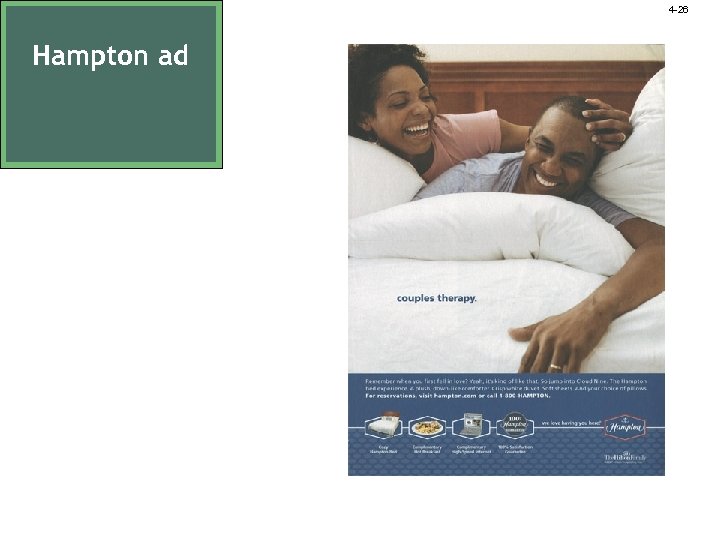
4 -26 Hampton ad
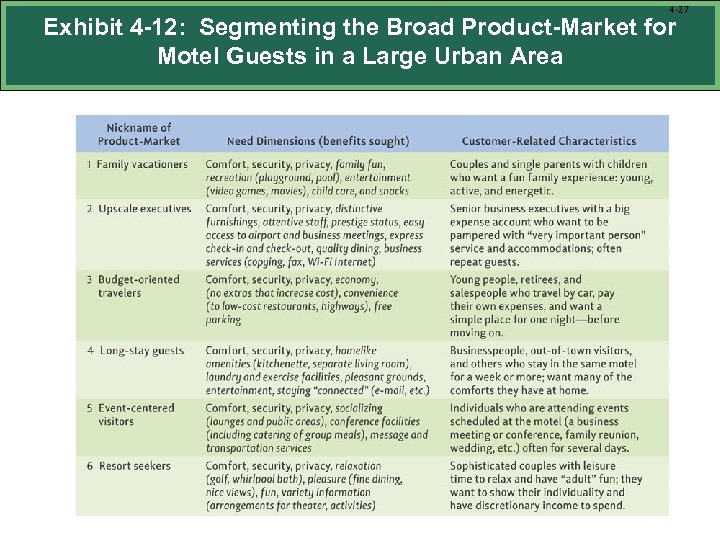
4 -27 Exhibit 4 -12: Segmenting the Broad Product-Market for Motel Guests in a Large Urban Area
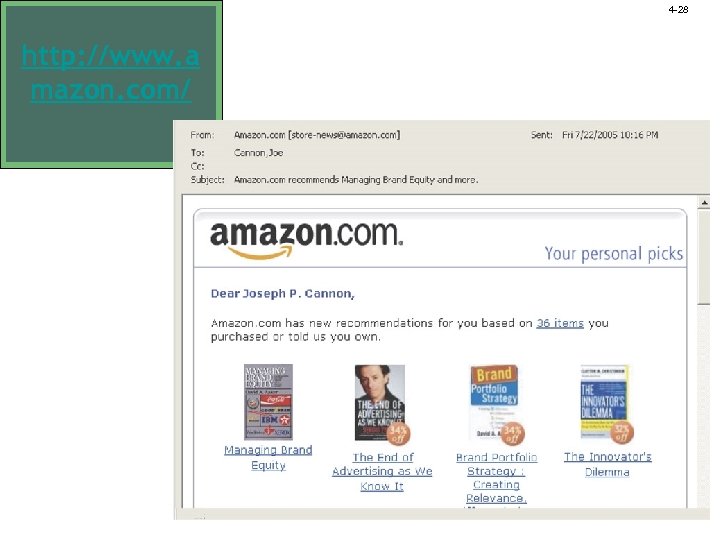
4 -28 http: //www. a mazon. com/
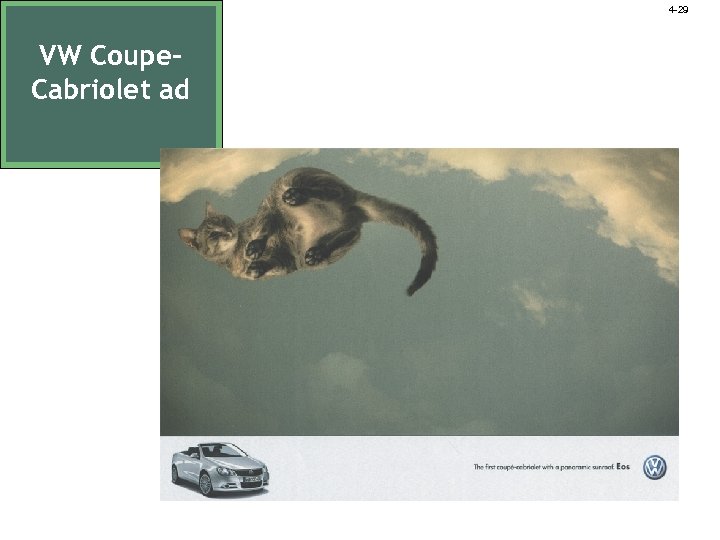
4 -29 VW Coupe. Cabriolet ad
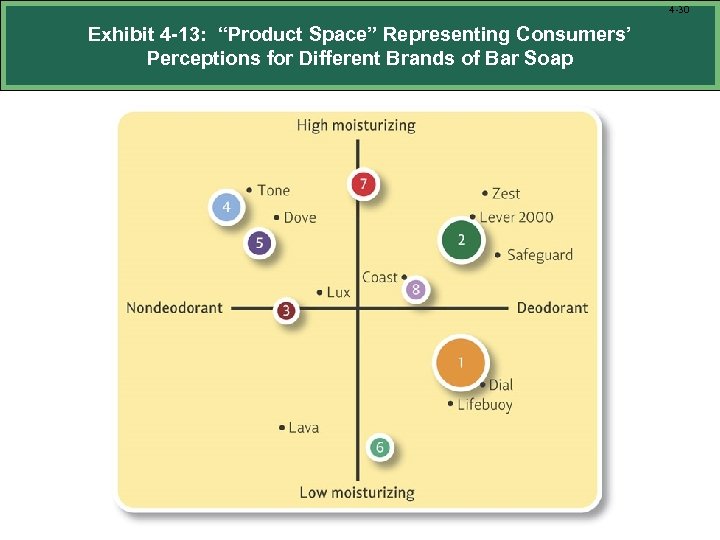
4 -30 Exhibit 4 -13: “Product Space” Representing Consumers’ Perceptions for Different Brands of Bar Soap
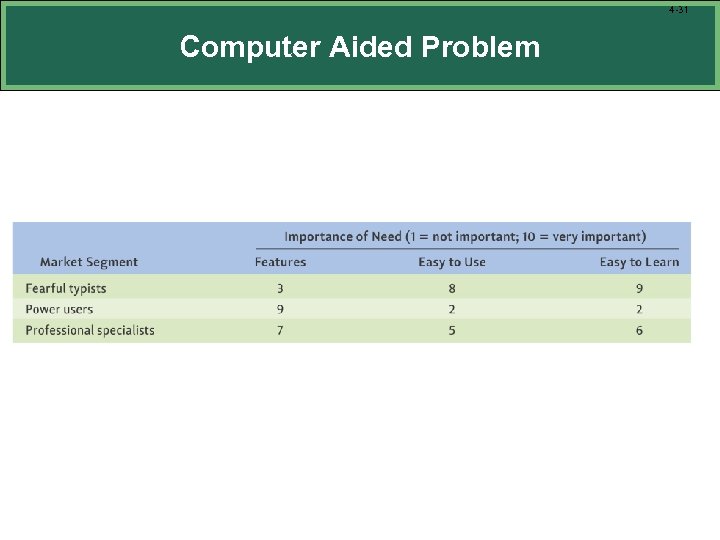
4 -31 Computer Aided Problem
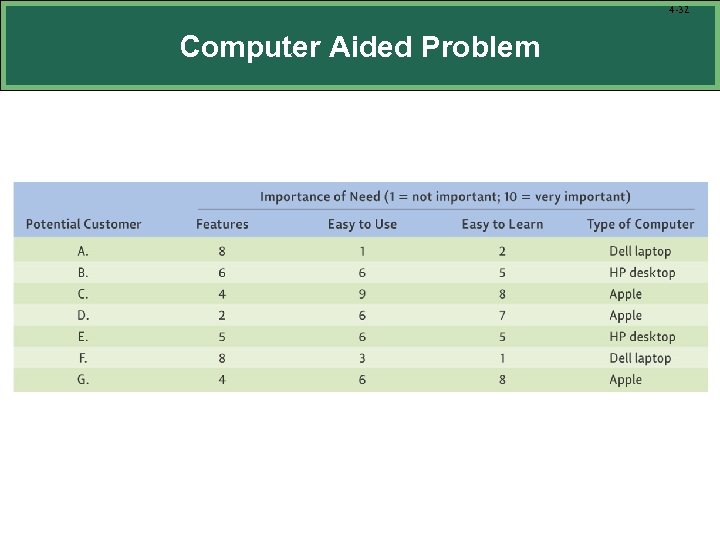
4 -32 Computer Aided Problem

4 -33 Family enjoying photos
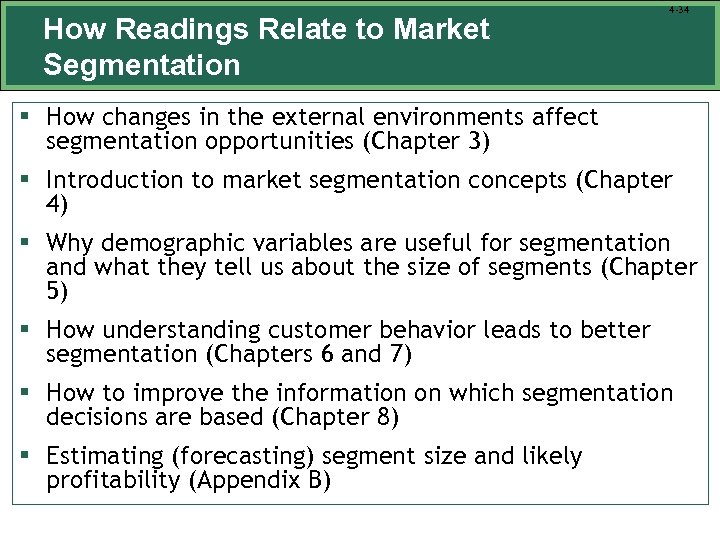
How Readings Relate to Market Segmentation 4 -34 § How changes in the external environments affect segmentation opportunities (Chapter 3) § Introduction to market segmentation concepts (Chapter 4) § Why demographic variables are useful for segmentation and what they tell us about the size of segments (Chapter 5) § How understanding customer behavior leads to better segmentation (Chapters 6 and 7) § How to improve the information on which segmentation decisions are based (Chapter 8) § Estimating (forecasting) segment size and likely profitability (Appendix B)
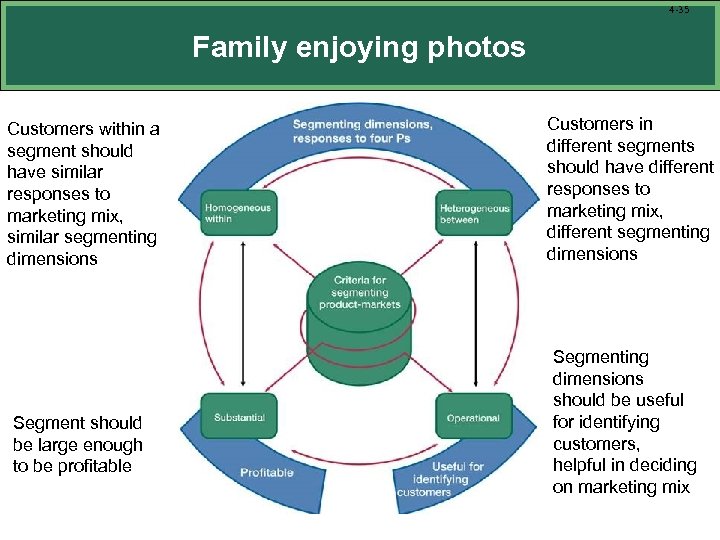
4 -35 Family enjoying photos Customers within a segment should have similar responses to marketing mix, similar segmenting dimensions Segment should be large enough to be profitable Customers in different segments should have different responses to marketing mix, different segmenting dimensions Segmenting dimensions should be useful for identifying customers, helpful in deciding on marketing mix
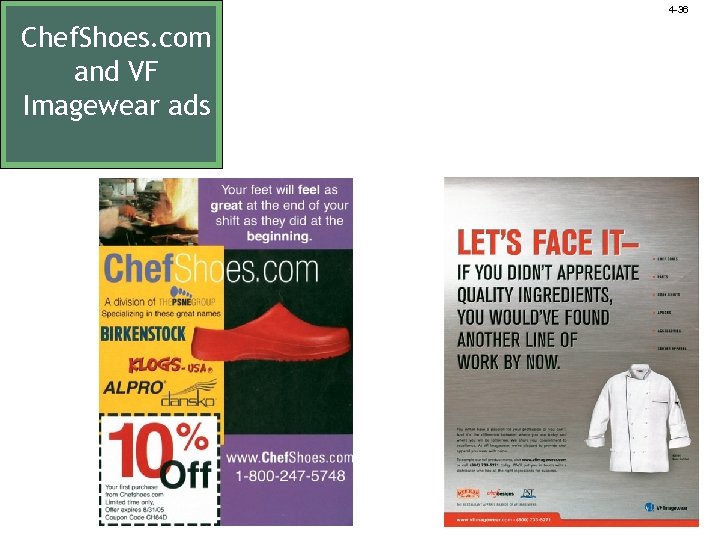
4 -36 Chef. Shoes. com and VF Imagewear ads
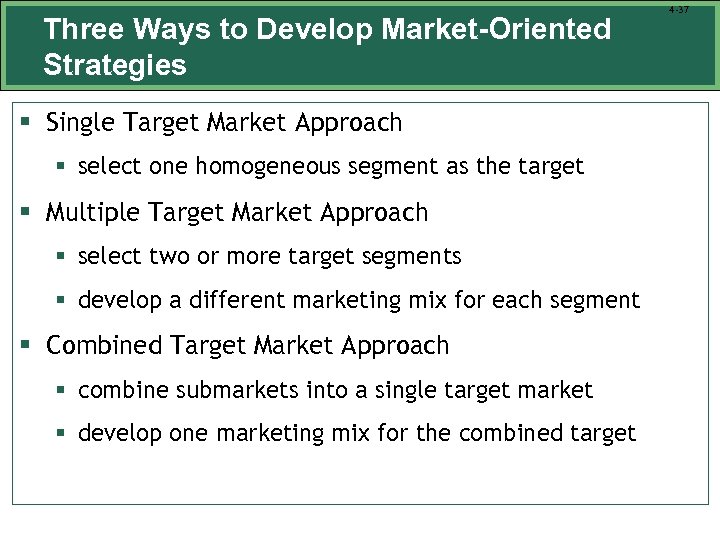
Three Ways to Develop Market-Oriented Strategies § Single Target Market Approach § select one homogeneous segment as the target § Multiple Target Market Approach § select two or more target segments § develop a different marketing mix for each segment § Combined Target Market Approach § combine submarkets into a single target market § develop one marketing mix for the combined target 4 -37
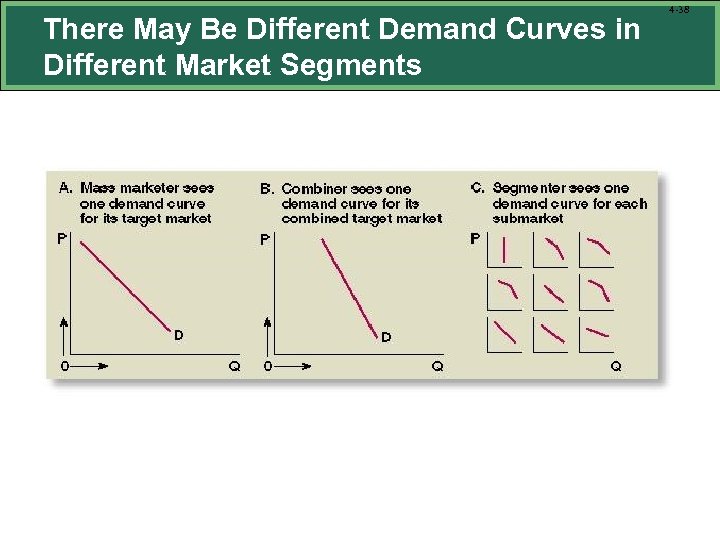
There May Be Different Demand Curves in Different Market Segments 4 -38
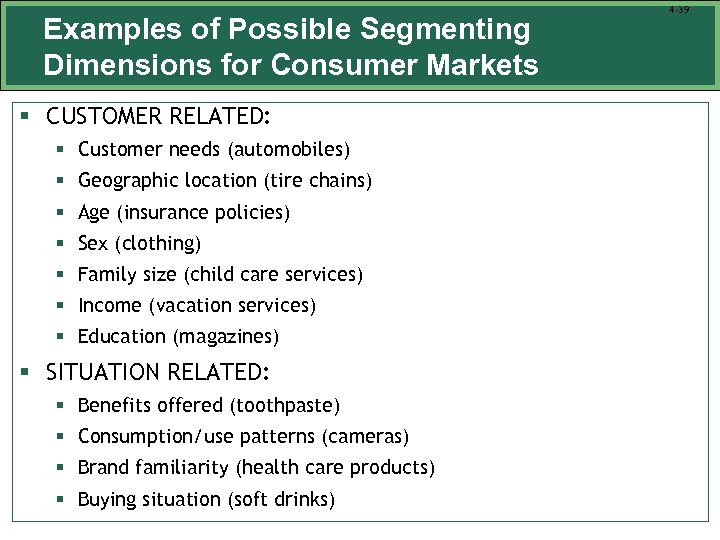
Examples of Possible Segmenting Dimensions for Consumer Markets § CUSTOMER RELATED: § Customer needs (automobiles) § Geographic location (tire chains) § Age (insurance policies) § Sex (clothing) § Family size (child care services) § Income (vacation services) § Education (magazines) § SITUATION RELATED: § Benefits offered (toothpaste) § Consumption/use patterns (cameras) § Brand familiarity (health care products) § Buying situation (soft drinks) 4 -39
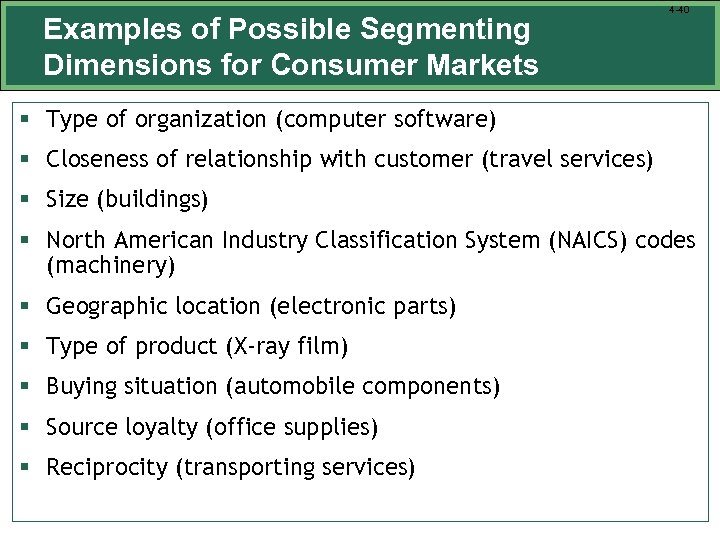
Examples of Possible Segmenting Dimensions for Consumer Markets 4 -40 § Type of organization (computer software) § Closeness of relationship with customer (travel services) § Size (buildings) § North American Industry Classification System (NAICS) codes (machinery) § Geographic location (electronic parts) § Type of product (X-ray film) § Buying situation (automobile components) § Source loyalty (office supplies) § Reciprocity (transporting services)
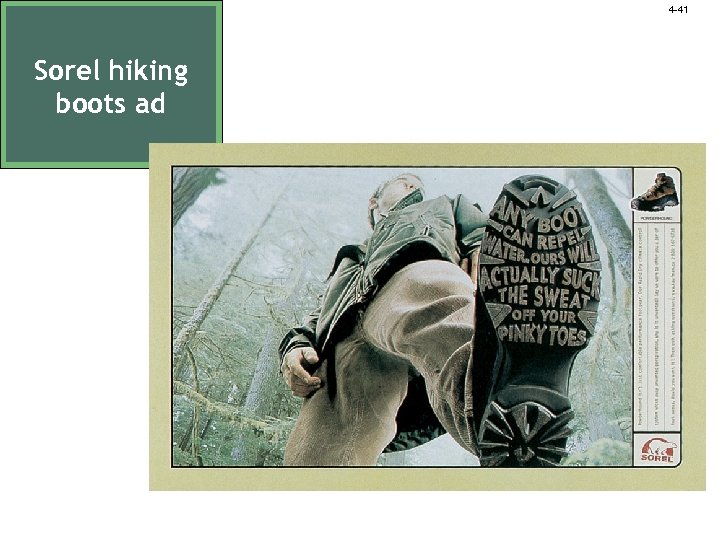
4 -41 Sorel hiking boots ad
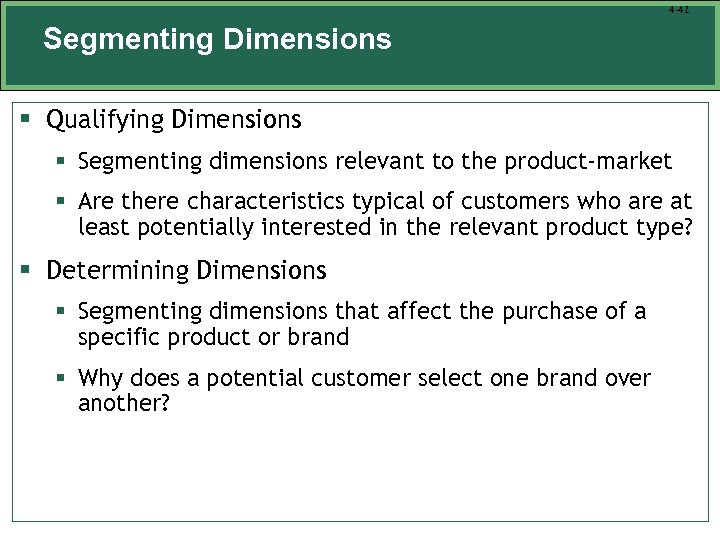
4 -42 Segmenting Dimensions § Qualifying Dimensions § Segmenting dimensions relevant to the product-market § Are there characteristics typical of customers who are at least potentially interested in the relevant product type? § Determining Dimensions § Segmenting dimensions that affect the purchase of a specific product or brand § Why does a potential customer select one brand over another?

4 -43 Radisson and Holiday Inn ads
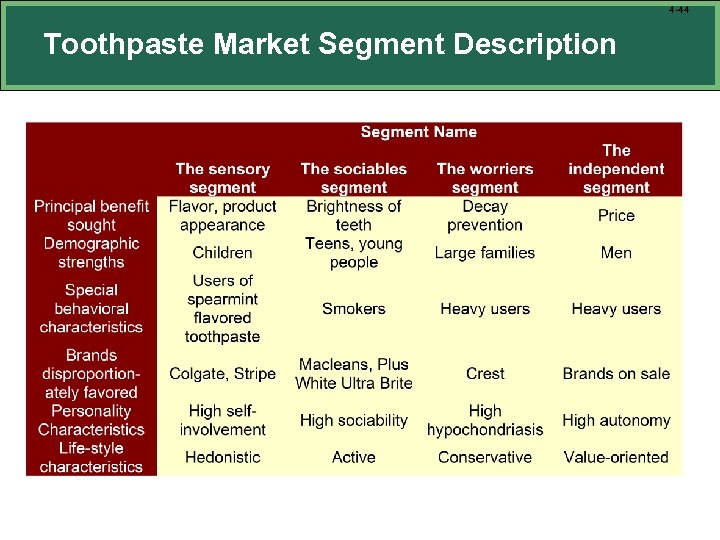
4 -44 Toothpaste Market Segment Description
4 -45 Customer Relationship Management (CRM) § With customer relationship management (CRM) approaches, the seller fine-tunes the marketing effort based on information from a detailed customer database § Database often includes information about customer characteristics, including past purchases and spending § Database may be used to select target customers for specific offer or promotion § Some examples § A customer who in the past has purchased shirts from L. L. Bean may be a good prospect for sweaters, and will receive a special targeted catalog or email. § A bank teller might suggest that a customer open a savings account or buy a certificate of deposit if the customer’s account balance is over $2000.
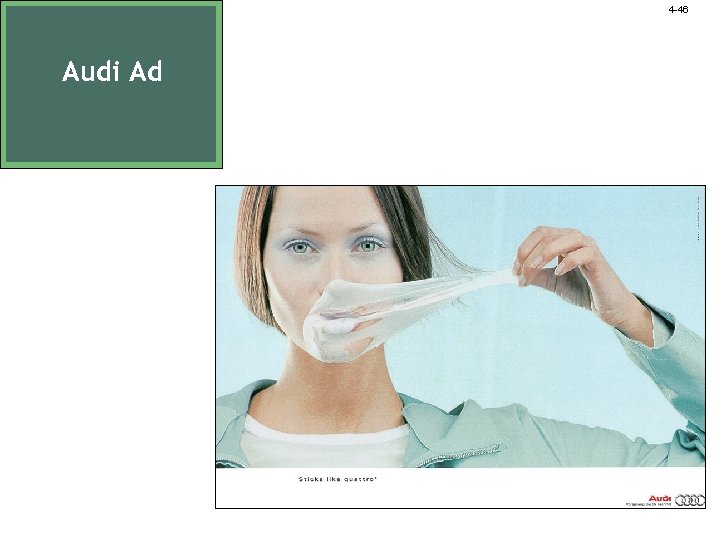
4 -46 Audi Ad
4 -47 Positioning and Differentiation § Positioning analysis is based on how (potential) customers think about a firm's current or potential offering § Positioning considers how customers think about competitors' offerings as well as the firm’s own offering § Positioning analysis identifies what kind of offering different segments see as ideal § Differentiation focuses on developing a marketing mix that target customers will see as distinct from competing mixes § Positioning and differentiation help with combining and segmenting, by revealing which segments view the market in similar (or dissimilar) ways
4 -48 Psychographic Segmentation © 2010 Mc. Graw-Hill Companies, Inc. , Mc. Graw-Hill/Irwin
Скачать презентацию Basic Marketing Chapter 04 Supplementary Power Point
8ffd235a54cddecfd0efac026fcfda48.ppt