 Скачать презентацию Basic Elements of a LTC Infection Control Program
4d26f579c533ea992341d0a7787f98cf.ppt
- Количество слайдов: 62



Basic Elements of a LTC Infection Control Program Teri Lee Dyke RN, MSN, CIC April 10, 2012
Today’s Topics Basic Elements of an Infection Control Program Long Term Care: F 441 “the facility must establish and Surveillance TB Control Programs Transmission-based Precautions Antibiotic Resistant Organisms New Updated Resources Disaster Preparedness Survey techniques maintain an infection control program designed to provide a safe, sanitary and comfortable environment and to help prevent the development and transmission of disease and infection”
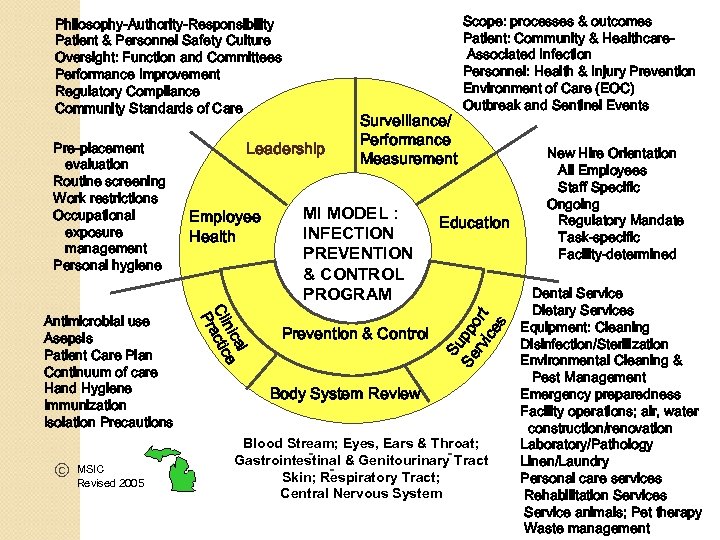
Pre-placement evaluation Routine screening Work restrictions Occupational exposure management Personal hygiene ã MSIC Revised 2005 Employee Health al nic e Cli ractic P Antimicrobial use Asepsis Patient Care Plan Continuum of care Hand Hygiene Immunization Isolation Precautions Leadership Surveillance/ Performance Measurement MI MODEL : INFECTION PREVENTION & CONTROL PROGRAM Prevention & Control Scope: processes & outcomes Patient: Community & Healthcare. Associated Infection Personnel: Health & Injury Prevention Environment of Care (EOC) Outbreak and Sentinel Events Education Su Sup Se ppo p rv ort ice rt s Philosophy-Authority-Responsibility Patient & Personnel Safety Culture Oversight: Function and Committees Performance Improvement Regulatory Compliance Community Standards of Care Body System Review Blood Stream; Eyes, Ears & Throat; Gastrointestinal & Genitourinary Tract Skin; Respiratory Tract; Central Nervous System New Hire Orientation All Employees Staff Specific Ongoing Regulatory Mandate Task-specific Facility-determined Dental Service Dietary Services Equipment: Cleaning Disinfection/Sterilization Environmental Cleaning & Pest Management Emergency preparedness Facility operations; air, water construction/renovation Laboratory/Pathology Linen/Laundry Personal care services Rehabilitation Services Service animals; Pet therapy Waste management
Basic Elements of an Infection Control Program Leadership ◦ Philosophy ◦ Authority ◦ Responsibility ◦ Over-site: Function and Committee ◦ Performance Improvement ◦ Regulatory Compliance/Community Standards of Care
Basic Elements of an Infection Control Program Surveillance ◦ Scope ◦ Patient care processes ◦ Patient outcomes ◦ Employee ◦ Outbreak/Sentinel Event Management ◦ Environment/Physical Plant
Basic Elements of an Infection Control Program Prevention and Control – Clinical ◦ Antimicrobial usage ◦ Aseptic technique ◦ Patient assessment and Care Plan ◦ Continuum of care ◦ Hand washing ◦ Immunization ◦ Standard Precautions and Isolation Precautions
Basic Elements of an Infection Control Program Prevention and Control – Body System ◦ Bloodstream Site and technique of insertion Type of catheter material used Hand hygiene and aseptic technique Skin antisepsis Catheter site care Catheter securement Use of antimicrobial/antiseptic
Basic Elements of an Infection Control Program Prevention and Control - Body Systems ◦ GU Continence and incontinence management Urinary catheter managementrestrict use Cleaning and disinfection of vaginal speculums
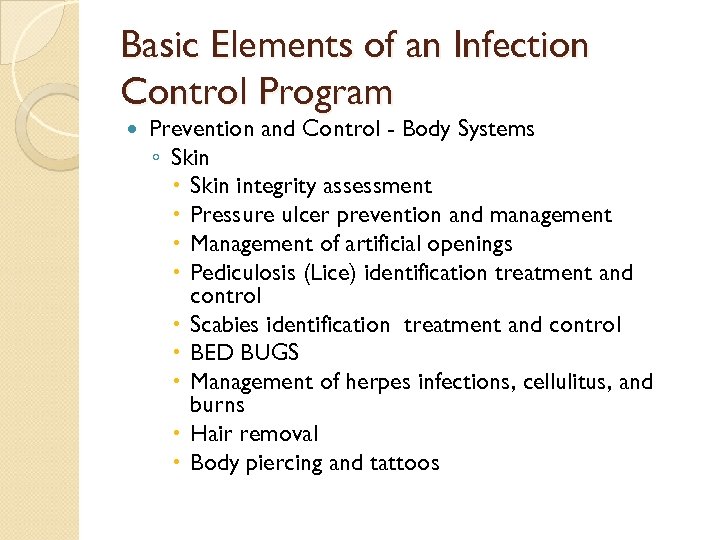
Basic Elements of an Infection Control Program Prevention and Control - Body Systems ◦ Skin integrity assessment Pressure ulcer prevention and management Management of artificial openings Pediculosis (Lice) identification treatment and control Scabies identification treatment and control BED BUGS Management of herpes infections, cellulitus, and burns Hair removal Body piercing and tattoos
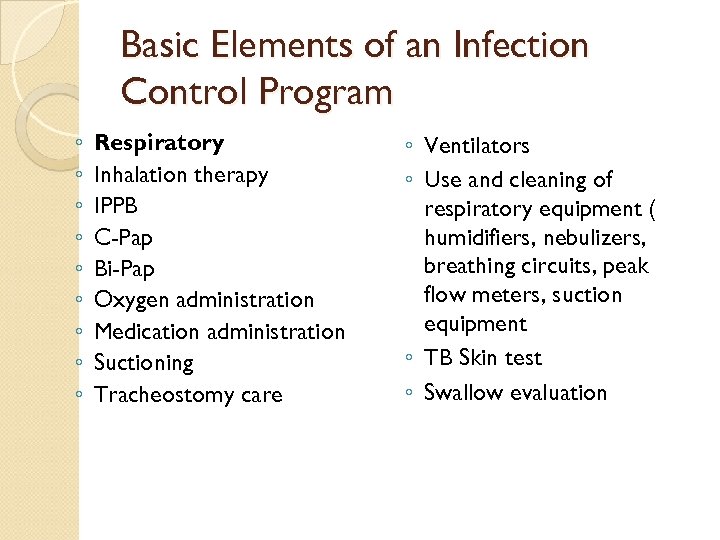
Basic Elements of an Infection Control Program ◦ ◦ ◦ ◦ ◦ Respiratory Inhalation therapy IPPB C-Pap Bi-Pap Oxygen administration Medication administration Suctioning Tracheostomy care ◦ Ventilators ◦ Use and cleaning of respiratory equipment ( humidifiers, nebulizers, breathing circuits, peak flow meters, suction equipment ◦ TB Skin test ◦ Swallow evaluation
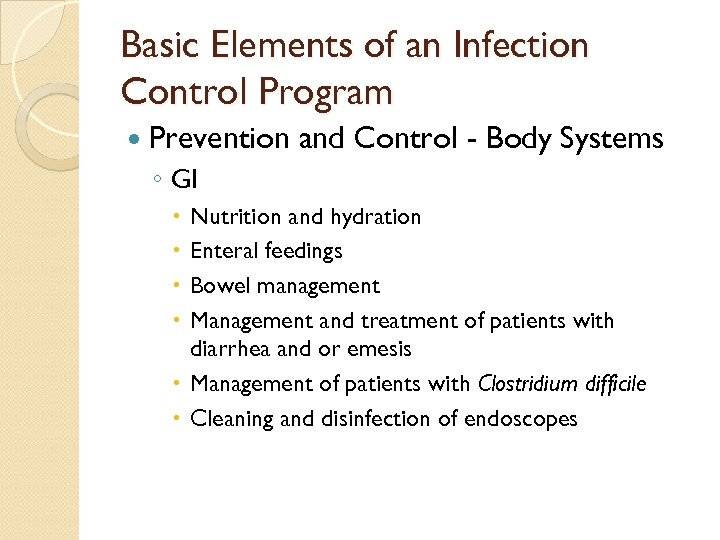
Basic Elements of an Infection Control Program Prevention and Control - Body Systems ◦ GI Nutrition and hydration Enteral feedings Bowel management Management and treatment of patients with diarrhea and or emesis Management of patients with Clostridium difficile Cleaning and disinfection of endoscopes
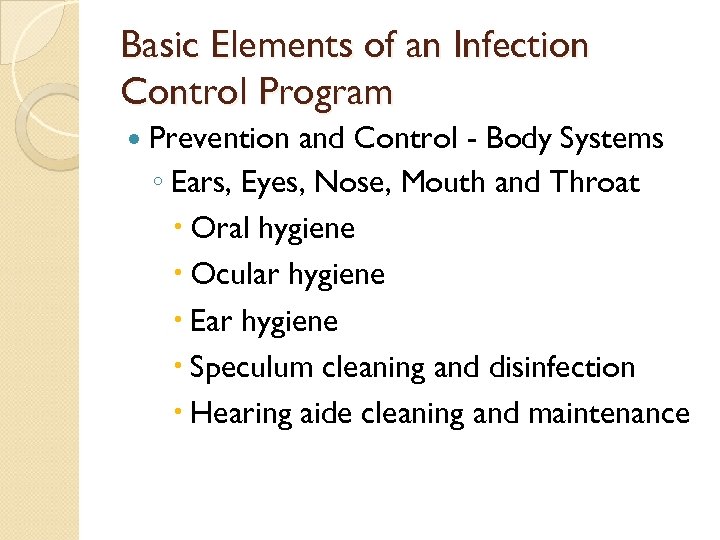
Basic Elements of an Infection Control Program Prevention and Control - Body Systems ◦ Ears, Eyes, Nose, Mouth and Throat Oral hygiene Ocular hygiene Ear hygiene Speculum cleaning and disinfection Hearing aide cleaning and maintenance
Basic Elements of an Infection Control Program Prevention and Control - Body Systems ◦ CNS Spinal Tap Management and treatment of a patient with known or suspected bacterial meningitis Management of patient with prion disease
Basic Elements of an Infection Control Program Prevention and Control - Body Systems ◦ Reproductive Conjugal visitation Speculum cleaning and disinfection Screening for sexually transmitted diseases
Basic Elements of an Infection Control Program Prevention and Control – Support Services ◦ Dental Services Disinfection and sterilization
Basic Elements of an Infection Control Program Prevention and Control – Support Services ◦ Sterilization, Disinfection and Cleaning Whirlpools bathing unit Thermometers Reusable instruments/equipment Reuse and reprocessing of items labeled for single-use Storage of clean and sterile items Use and monitoring of sterile processing Use and monitoring of High-level disinfection pasteurization
Basic Elements of an Infection Control Program Prevention and Control – Support Services ◦ Beauty and barber shop, hair, and nails Cleaning and disinfection of combs Brushes, razors, etc Linen management Nail care
Basic Elements of an Infection Control Program Prevention and Control – Support Services ◦ Linen/Laundry Clean and soiled linen management for facility and personal Handling Storage Transport Soiled linen processing If vendor used; monitor
Basic Elements of an Infection Control Program Prevention and Control – Support Services ◦ Laboratory/Pathology Services Specimen collection, storage and transport Reporting of abnormal results Reporting of antimicrobial sensitivity Antibiograms Use of waived testing Quality controls for testing
Basic Elements of an Infection Control Program Prevention and Control – Support Services ◦ Pest Management Evidence of an integrated pest management plan ◦ Construction and renovation Infection control approval Barrier/site evaluation
Basic Elements of an Infection Control Program Prevention and Control – Support Services ◦ Animals, birds, fish and plants Screening for health/temperament Screening residents for allergies and compatibility Caring for pets while in facility, (contracted? include protocols) Bite protocol, domestic and wild
Basic Elements of an Infection Control Program Prevention and Control – Support Services ◦ Podiatry Cleaning and disinfection of equipment ◦ Radiology Cleaning and disinfection of equipment ◦ Rehab services: occupational, physical and speech Cleaning and disinfection of equipment and whirlpools Wound management: debridement and wound care
Basic Elements of an Infection Control Program Prevention and Control – Support Services ◦ Waste management Medical waste management plan Waste separation Waste handing and transport Waste disposal Documentation
Basic Elements of an Infection Control Program Prevention and Control – Support Services Water supply Have a Disaster Plan for emergency water supply Disaster planning Evacuation Stockpile monitoring Alternate plans for hemodialysis
Basic Elements of an Infection Control Program Employee Health- inclusive of full-time, part-time, contingent/contracted employees, students and volunteers ◦ Bloodborne pathogens program ◦ Job descriptions include: Job essential job function Job-specific hazard exposure assessment Personal Protective Equipment requirement ◦ Policies for contracted employees and students to delineate facility responsibility
Basic Elements of an Infection Control Program Employee Health- ◦ Baseline health assessment ◦ Immunization for or documentation of immunity for measles, mumps, rubella, chickenpox, tetanus, hepatitis ◦ Influenza vaccination program ◦ Screening for latent TB, Mantoux method of TB skin testing using PPD two step method vs. quantiferon serology test TST among BCG recipients
Basic Elements of an Infection Control Program Employee Health◦ Annual/periodic Screening Health assessment Immunizations TB evaluation (TST, questionnaire)
Basic Elements of an Infection Control Program Employee Health◦ Work restrictions related to communicable disease Work-related exposure and return to work policies
Basic Elements of an Infection Control Program Employee Health◦ Post-exposure Management Identification, reporting, evaluation, and management of an exposure ( BBP, TB, meningitis, scabies) Treatment, consents and processes
Basic Elements of an Infection Control Program Employee Health ◦ Personal hygiene Dress code Personal hygiene Hand hygiene Artificial nails
Basic Elements of an Infection Control Program Education ◦ Employee upon hire Hand hygiene Dress code, personal hygiene Standard/Isolation precautions Immunizations Illness reporting/work restriction Exposure control plans Bloodborne infectious diseases Tuberculosis control plan Aseptic technique
Basic Elements of an Infection Control Program Education ◦ Employee (ongoing, annual, periodic) Change in regulatory standard Change in policy Non-compliance ◦ Patient, families, and visitors Hand hygiene Infection prevention Isolation procedures Procedure specific Antimicrobial resistance reduction
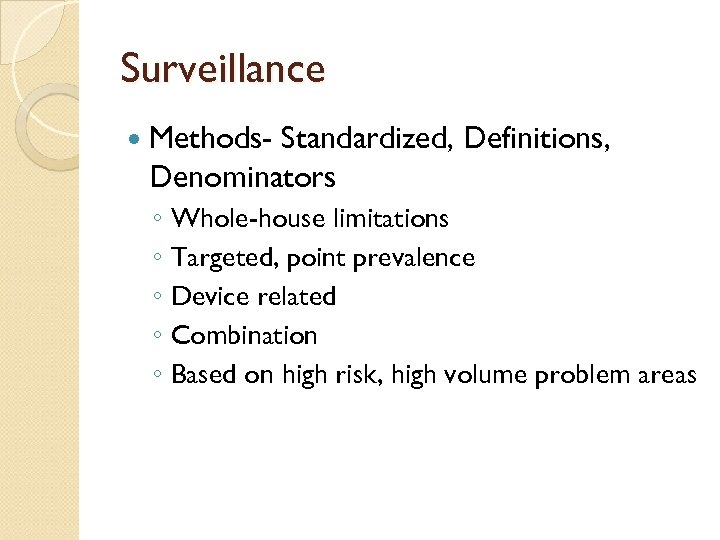
Surveillance Methods- Standardized, Definitions, Denominators ◦ Whole-house limitations ◦ Targeted, point prevalence ◦ Device related ◦ Combination ◦ Based on high risk, high volume problem areas
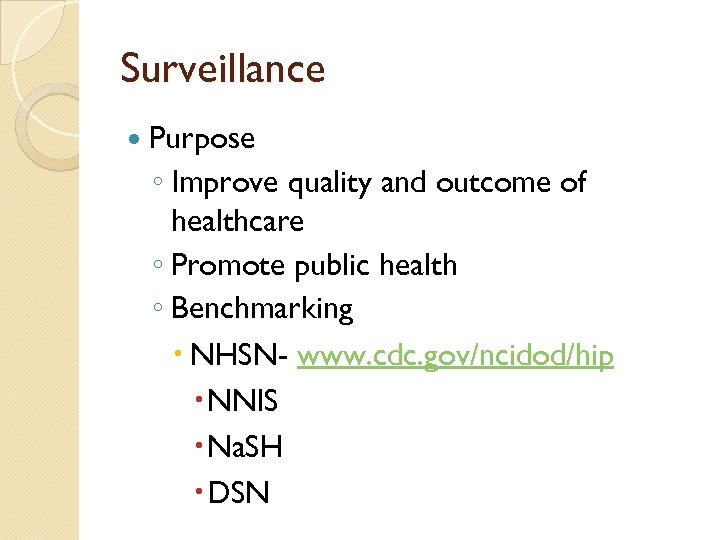
Surveillance Purpose ◦ Improve quality and outcome of healthcare ◦ Promote public health ◦ Benchmarking NHSN- www. cdc. gov/ncidod/hip NNIS Na. SH DSN
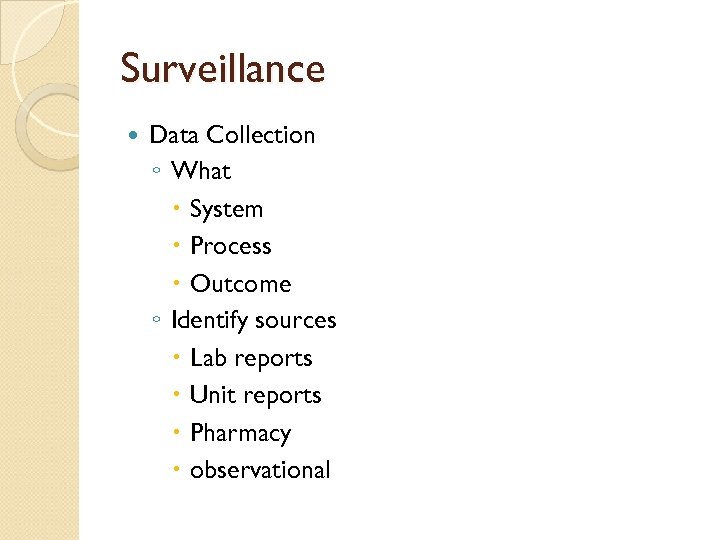
Surveillance Data Collection ◦ What System Process Outcome ◦ Identify sources Lab reports Unit reports Pharmacy observational
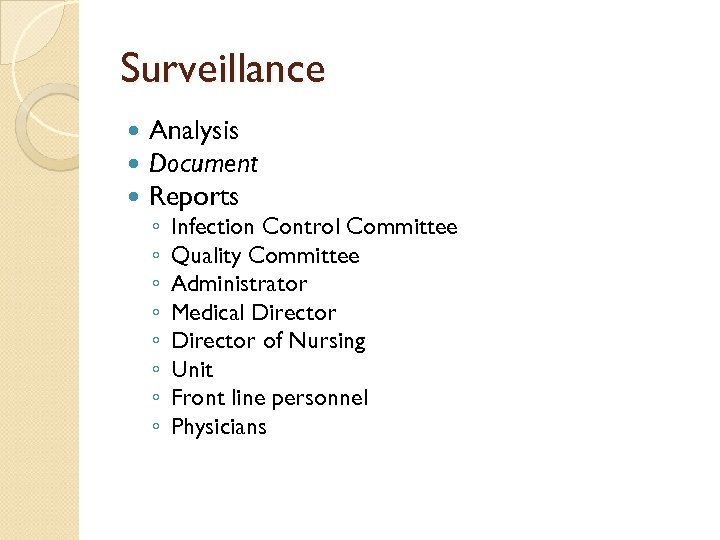
Surveillance Analysis Document Reports ◦ ◦ ◦ ◦ Infection Control Committee Quality Committee Administrator Medical Director of Nursing Unit Front line personnel Physicians
Surveillance Intervention of risk-reduction measure ◦ Documented Evaluate effectiveness of intervention Measure progress toward program goals See Websites: Healthcare Associated Infection Prevention ◦ http: //www. cdc. gov/HAI/stateplans/state-haiplans/mi. html (Michigan) ◦ http: //www. cdc. gov/hai/ (national) ◦ www. cdc. gov/hicpac
TB Control Program Oversight of the Program is assigned and reviewed at periodic (annual) intervals ◦ Surveillance ◦ Containment ◦ Assessment ◦ Education
TB Control Program Surveillance ◦ Diagnosis ◦ Case Reporting ◦ TB and HIV
TB Control Program Containment ◦ Early recognition ◦ Isolation or transfer ◦ Treatment of TB Disease ◦ Investigation of contacts ◦ Treatment of Latent TB Infection
TB Control Program Assessment ◦ % of staff and residents with positive TST ◦ % of tested with conversion from Neg. to Pos. ◦ TB Risk assessment http: //www. michigan. gov/documents/mdch/Gu idelines_Preventing_Transmission_2005_358921_7. p df ◦ TB Education and management http: //www. cdc. gov/tb/education/corecurr/ind ex. htm
TB Control Program Education ◦ Administrative Controls Policies for early recognition, isolation and treatment Two-step TST for patients Two-step TST for health care worker Interferon-gamma release (blood) assay- TB blood test (single test) ◦ Engineering Controls Negative pressure rooms with 6 -12 ACH Tested monthly/daily when in use
TB Control Program Education ◦ Respiratory Protection N-95 or PAPR- (powered air purifying respirator) When to use How to apply Fit check Fit test and medical evaluation ◦ MIOSHA (Licensing and Regulatory Affairs) http: //www. michigan. gov/documents/CIS_WSH_part 451_54075_7. pdf
Infection Control Precautions http: //www. cdc. gov/hicpac/ Hand Hygiene ◦ Written policy ◦ Hand washing facilities, alcohol-based hand sanitizer available ◦ When to use each Hand washing Anytime hands are visibly soiled After toileting
Infection Control Precautions Hand Hygiene Hand washing continued… After contact with body fluids, mucous membranes, and non -intact skin or dressing, provided hands are not visibly soiled Before and after contact with food, products for food preparation and before eating Following any contact with pets during animal assisted therapy or visitation and after contact with any pet care item Hand sanitizer Before any direct patient contact After contact with resident’s skin After contact with inanimate objects in the care environment
Infection Control Precautions Hand Hygiene Discourage use of artificial nails Educate patient family and volunteers Observe compliance/document/report
Infection Control Precautions Standard/Isolation Precautions- a two-tiered system Standard Precautions applies to all patients with or without recognized infectious agents assumes infectious agents are present in all non intact skin mucous membranes, blood, and body fluids (except sweat) therefore hand hygiene and use of personal protective equipment should be used consistently if contact with those fluids are likely
Infection Control Precautions Standard/Isolation Precautions- a two-tiered system ◦ Standard Precautions continued. . . PPE- gloves, gowns, mask, resuscitation device and eye/face protection Selection Availability Respiratory Hygiene/Cough Etiquette Source containment of respiratory tract pathogens ( i. e. SARS, influenza, avian influenza) Cover your cough with a tissue or use a regular surgical mask
Infection Control Precautions Standard/Isolation Precautions- a two-tiered system ◦ Isolation Precautions- to be used in addition to standard precautions (expanded? Precautions) Are based on the mode of transmission of the specific pathogen Apply to epidemiologic important agents or highly transmissible agents
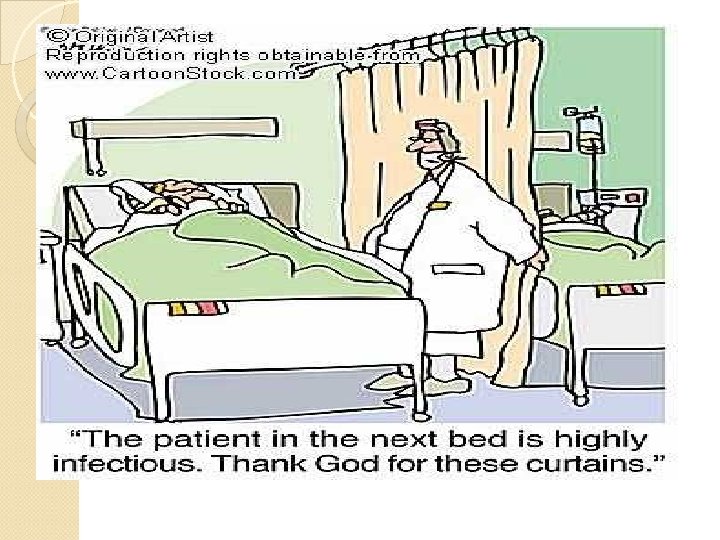
Infection Control Precautions Standard/Isolation Precautions- a two- tiered system ◦ Isolation Precautions Contact Private room or cohort Gown and gloves Masking if patient is coughing
Infection Control Precautions Standard/Isolation Precautions- a two-tiered system ◦ Isolation Precautions Droplet Surgical mask if within 3 feet Gown if splashing or spraying Protective Positive pressure Complete PPE
Infection Control Precautions Standard/Isolation Precautions- a two-tiered system ◦ Isolation Precautions Airborne Private room Negative pressure 6 -12 air changes per hour Door closed Apply N-95 before entering
Infection Control Precautions Standard/Isolation Precautions- a two-tiered system ◦ Isolation Precautions Helpful additions Alternative methods Discontinuing Surveillance/detection Monitoring adherence Rapid recognition
MDRO Multi-drug Resistant Organisms Prevention and Control Multiple Guidelines ◦ SHEA ◦ CDC ◦ MSIPC Minimum requirements ◦ Administrative ◦ Education ◦ Judicious antimicrobial use ◦ Surveillance ◦ Prevent transmission- infection control precautions ◦ Environmental measures
MDRO Multi-drug Resistant Organisms Prevention and Control Surveillance ◦ Establish a laboratory based system to detect and communicate evidence of MDROs in clinical isolates ◦ Prepare and monitor antimicrobial susceptibility reports and provide physicians with summary reports. If labs are outsourced, request local or regional aggregated susceptibility trends ◦ Notify infection control of novel resistance patterns, i. e. VISA, VRSA ◦ Identify specific MDROs for systematic monitoring, i. e. MRSA, VRE, CRE & C. Diff ◦ Determine prevalence and define frequency of MDRO that would trigger intensive MDRO control measures
Updated Resources Michigan Bed Bug Manual http: //www. michigan. gov/emergingdiseases/0, 16 07, 7 -186 --147759 --, 00. html Head Lice Manual – www. michigan. gov/documents/Final_Michigan_ Head_Lice_Manual_103750. 7. pdf Scabies Manual – www. michigan. gov/documents/BHS_NHM_Mic higan_Scabies_Prevention_and_Control_Manua l_131983_7. pdf
Updated Resources Norovirus cleaning guidelines – http: //www. michigan. gov/documents/mdch/Noroviru s. Environ. Cleaning_281018_7. pdf Guidelines for Preventing the Transmission of Mycobacterium tuberculosis in Health Care Settings, 2005 CDC Guideline for Isolation Precautions. Preventing Transmission of Infectious Agents in a Health-Care Setting, 2004 Revision http: //www. cdc. gov/tb/publications/guidelines/default. htm
Disaster Preparedness Plan ◦ SURVEILLANCE ◦ RESPONSE ◦ COMMUNICATIONS ◦ SECURITY ◦ EDUCATION Local/regional planning meetings Participate in community and regional disaster drills Long Term Care Disaster Planning Resources ◦ http: //www. michigan. gov/mdch/0, 1607, 7 -13254783_54826_56167 ---, 00. html http: //go. usa. gov/a. Om ◦ Emergency Preparedness Checklist. Centers for Medicare & Medicaid Services (CMS) https: //www. cms. gov/surveycertemergprep/download s/s&c_epchecklist_provider. pdf ◦ Michigan Department of Community Health, Office of Public Health Preparedness www. michigan. gov/ophp
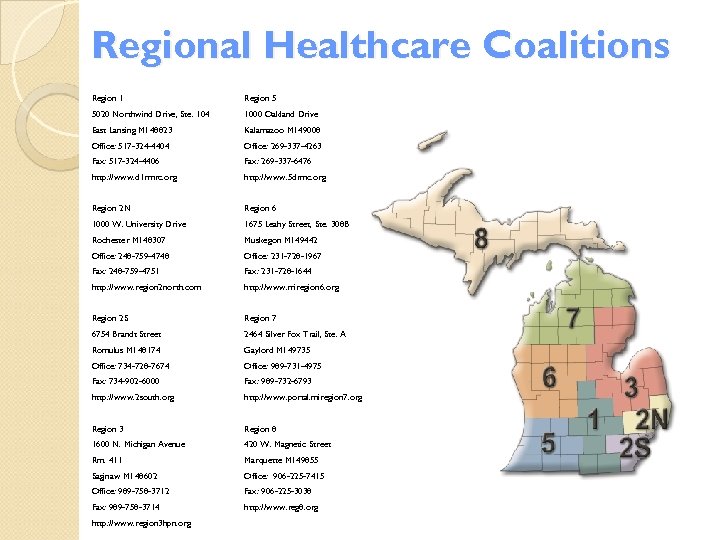
Regional Healthcare Coalitions Region 1 Region 5 5020 Northwind Drive, Ste. 104 1000 Oakland Drive East Lansing MI 48823 Kalamazoo MI 49008 Office: 517 -324 -4404 Office: 269 -337 -4263 Fax: 517 -324 -4406 Fax: 269 -337 -6476 http: //www. d 1 rmrc. org http: //www. 5 drmc. org Region 2 N Region 6 1000 W. University Drive 1675 Leahy Street, Ste. 308 B Rochester MI 48307 Muskegon MI 49442 Office: 248 -759 -4748 Office: 231 -728 -1967 Fax: 248 -759 -4751 Fax: 231 -728 -1644 http: //www. region 2 north. com http: //www. miregion 6. org Region 2 S Region 7 6754 Brandt Street 2464 Silver Fox Trail, Ste. A Romulus MI 48174 Gaylord MI 49735 Office: 734 -728 -7674 Office: 989 -731 -4975 Fax: 734 -902 -6000 Fax: 989 -732 -6793 http: //www. 2 south. org http: //www. portal. miregion 7. org Region 3 Region 8 1600 N. Michigan Avenue 420 W. Magnetic Street Rm. 411 Marquette MI 49855 Saginaw MI 48602 Office: 906 -225 -7415 Office: 989 -758 -3712 Fax: 906 -225 -3038 Fax: 989 -758 -3714 http: //www. reg 8. org http: //www. region 3 hpn. org
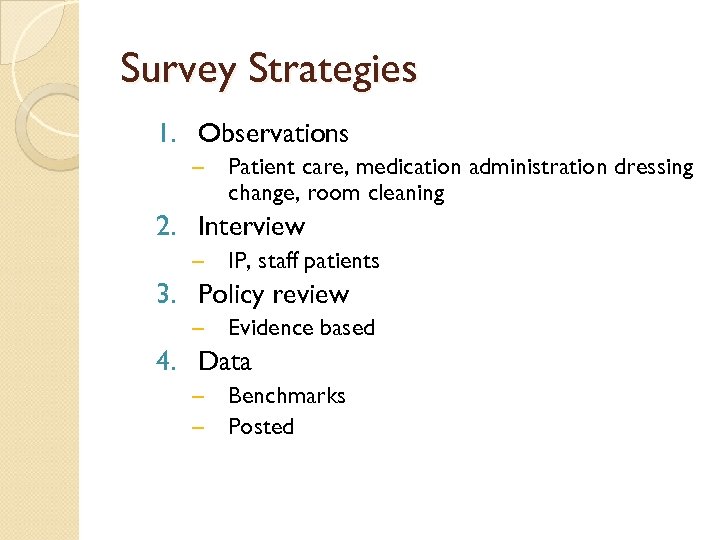
Survey Strategies 1. Observations – Patient care, medication administration dressing change, room cleaning 2. Interview – IP, staff patients 3. Policy review – Evidence based 4. Data – Benchmarks – Posted
In Conclusion. . . Teri Lee Dyke RN, MSN, CIC ◦ Dyket@michigan. gov
Скачать презентацию Basic Elements of a LTC Infection Control Program
4d26f579c533ea992341d0a7787f98cf.ppt