 Скачать презентацию Bases for Hope for Spinal Cord Injury Wise
a18a96bd4ea303c532320aadc4fce419.ppt
- Количество слайдов: 22



Bases for Hope for Spinal Cord Injury Wise Young, Ph. D MD W. M. Keck Center for Collaborative Neuroscience Rutgers University, Piscataway, New Jersey
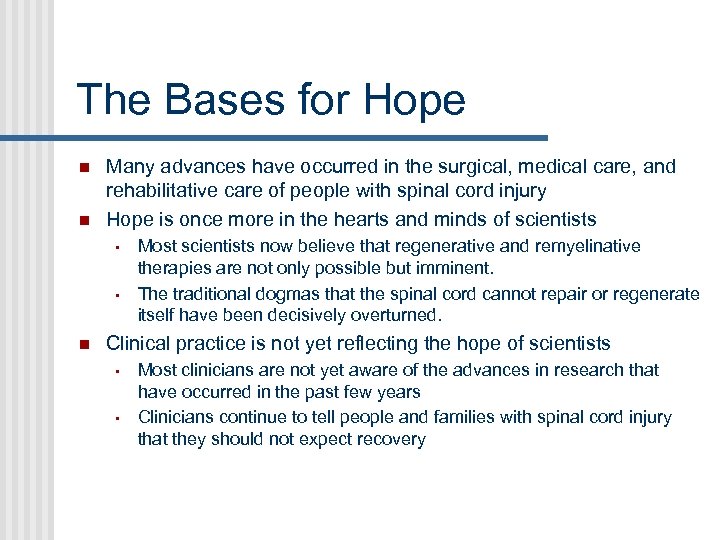
The Bases for Hope Many advances have occurred in the surgical, medical care, and rehabilitative care of people with spinal cord injury Hope is once more in the hearts and minds of scientists • • Most scientists now believe that regenerative and remyelinative therapies are not only possible but imminent. The traditional dogmas that the spinal cord cannot repair or regenerate itself have been decisively overturned. Clinical practice is not yet reflecting the hope of scientists • • Most clinicians are not yet aware of the advances in research that have occurred in the past few years Clinicians continue to tell people and families with spinal cord injury that they should not expect recovery
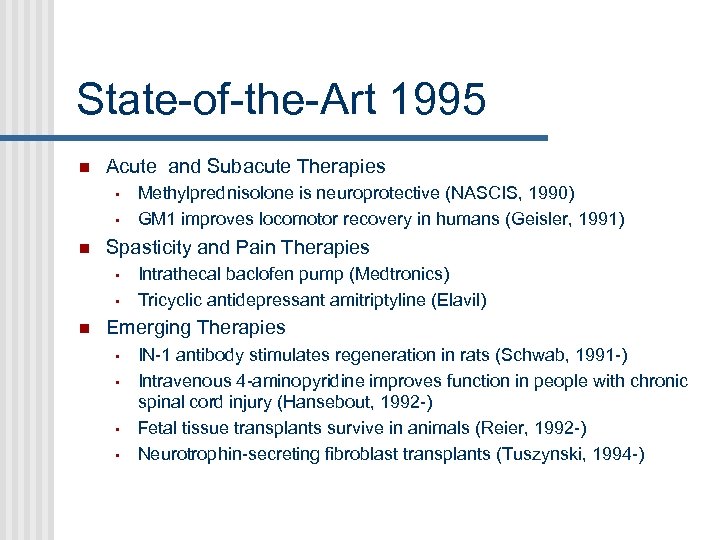
State-of-the-Art 1995 Acute and Subacute Therapies • • Spasticity and Pain Therapies • • Methylprednisolone is neuroprotective (NASCIS, 1990) GM 1 improves locomotor recovery in humans (Geisler, 1991) Intrathecal baclofen pump (Medtronics) Tricyclic antidepressant amitriptyline (Elavil) Emerging Therapies • • IN-1 antibody stimulates regeneration in rats (Schwab, 1991 -) Intravenous 4 -aminopyridine improves function in people with chronic spinal cord injury (Hansebout, 1992 -) Fetal tissue transplants survive in animals (Reier, 1992 -) Neurotrophin-secreting fibroblast transplants (Tuszynski, 1994 -)
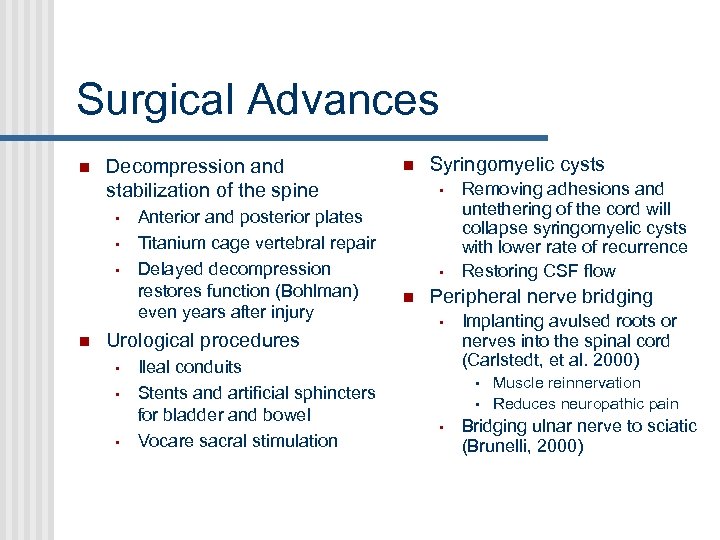
Surgical Advances Decompression and stabilization of the spine • • • Anterior and posterior plates Titanium cage vertebral repair Delayed decompression restores function (Bohlman) even years after injury Urological procedures • • • Ileal conduits Stents and artificial sphincters for bladder and bowel Vocare sacral stimulation Syringomyelic cysts • • Removing adhesions and untethering of the cord will collapse syringomyelic cysts with lower rate of recurrence Restoring CSF flow Peripheral nerve bridging • Implanting avulsed roots or nerves into the spinal cord (Carlstedt, et al. 2000) • • • Muscle reinnervation Reduces neuropathic pain Bridging ulnar nerve to sciatic (Brunelli, 2000)

Peripheral Nerve Bridging
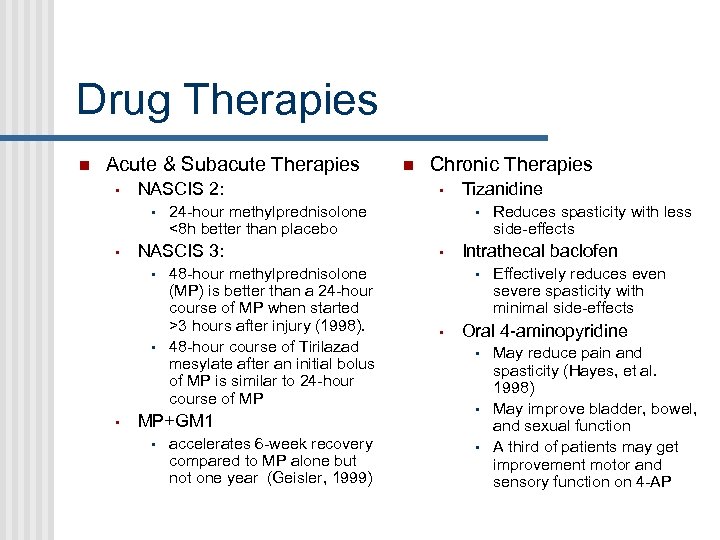
Drug Therapies Acute & Subacute Therapies • NASCIS 2: • • 48 -hour methylprednisolone (MP) is better than a 24 -hour course of MP when started >3 hours after injury (1998). 48 -hour course of Tirilazad mesylate after an initial bolus of MP is similar to 24 -hour course of MP MP+GM 1 • Chronic Therapies • 24 -hour methylprednisolone <8 h better than placebo NASCIS 3: • accelerates 6 -week recovery compared to MP alone but not one year (Geisler, 1999) Tizanidine • • Intrathecal baclofen • • Reduces spasticity with less side-effects Effectively reduces even severe spasticity with minimal side-effects Oral 4 -aminopyridine • • • May reduce pain and spasticity (Hayes, et al. 1998) May improve bladder, bowel, and sexual function A third of patients may get improvement motor and sensory function on 4 -AP
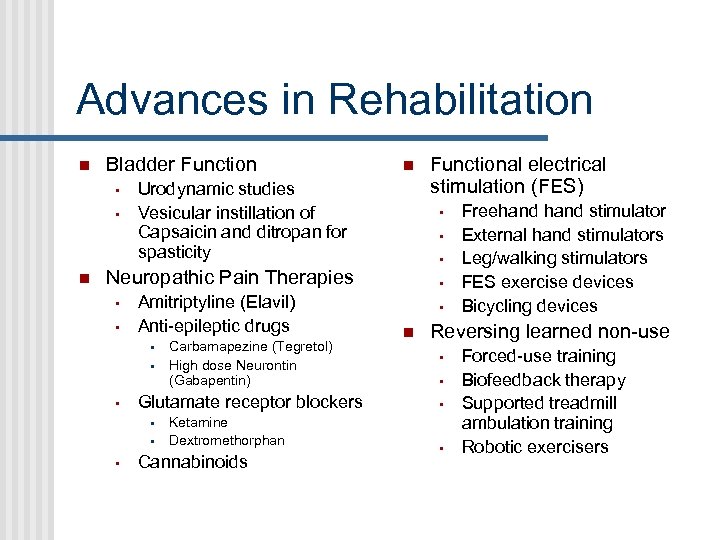
Advances in Rehabilitation Bladder Function • • Urodynamic studies Vesicular instillation of Capsaicin and ditropan for spasticity • • • Neuropathic Pain Therapies • • Amitriptyline (Elavil) Anti-epileptic drugs • • • Glutamate receptor blockers • • • Carbamapezine (Tegretol) High dose Neurontin (Gabapentin) Ketamine Dextromethorphan Cannabinoids Functional electrical stimulation (FES) • • Freehand stimulator External hand stimulators Leg/walking stimulators FES exercise devices Bicycling devices Reversing learned non-use • • Forced-use training Biofeedback therapy Supported treadmill ambulation training Robotic exercisers
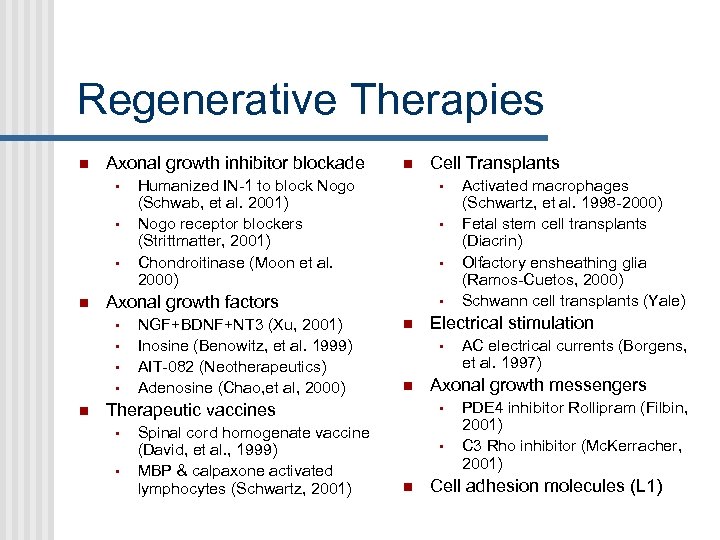
Regenerative Therapies Axonal growth inhibitor blockade • • • Humanized IN-1 to block Nogo (Schwab, et al. 2001) Nogo receptor blockers (Strittmatter, 2001) Chondroitinase (Moon et al. 2000) • • • NGF+BDNF+NT 3 (Xu, 2001) Inosine (Benowitz, et al. 1999) AIT-082 (Neotherapeutics) Adenosine (Chao, et al, 2000) • • • Spinal cord homogenate vaccine (David, et al. , 1999) MBP & calpaxone activated lymphocytes (Schwartz, 2001) AC electrical currents (Borgens, et al. 1997) Axonal growth messengers • • Activated macrophages (Schwartz, et al. 1998 -2000) Fetal stem cell transplants (Diacrin) Olfactory ensheathing glia (Ramos-Cuetos, 2000) Schwann cell transplants (Yale) Electrical stimulation • Therapeutic vaccines • Cell Transplants • Axonal growth factors • PDE 4 inhibitor Rollipram (Filbin, 2001) C 3 Rho inhibitor (Mc. Kerracher, 2001) Cell adhesion molecules (L 1)
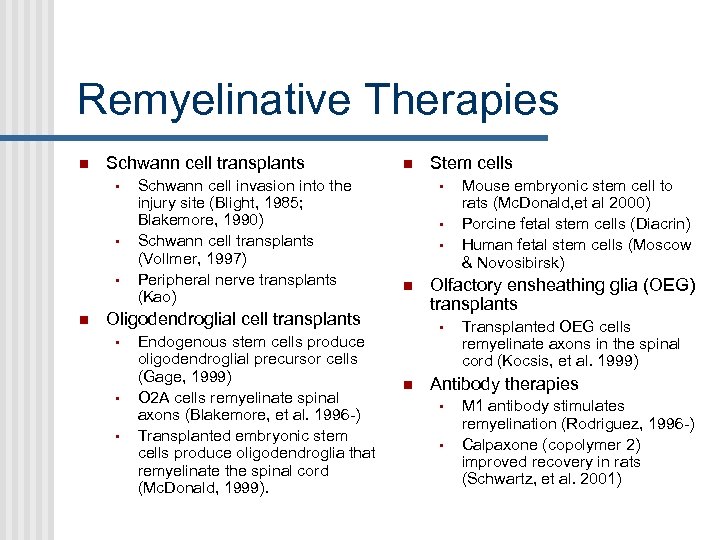
Remyelinative Therapies Schwann cell transplants • • • Schwann cell invasion into the injury site (Blight, 1985; Blakemore, 1990) Schwann cell transplants (Vollmer, 1997) Peripheral nerve transplants (Kao) • • • Oligodendroglial cell transplants • • • Endogenous stem cells produce oligodendroglial precursor cells (Gage, 1999) O 2 A cells remyelinate spinal axons (Blakemore, et al. 1996 -) Transplanted embryonic stem cells produce oligodendroglia that remyelinate the spinal cord (Mc. Donald, 1999). Stem cells Olfactory ensheathing glia (OEG) transplants • Mouse embryonic stem cell to rats (Mc. Donald, et al 2000) Porcine fetal stem cells (Diacrin) Human fetal stem cells (Moscow & Novosibirsk) Transplanted OEG cells remyelinate axons in the spinal cord (Kocsis, et al. 1999) Antibody therapies • • M 1 antibody stimulates remyelination (Rodriguez, 1996 -) Calpaxone (copolymer 2) improved recovery in rats (Schwartz, et al. 2001)
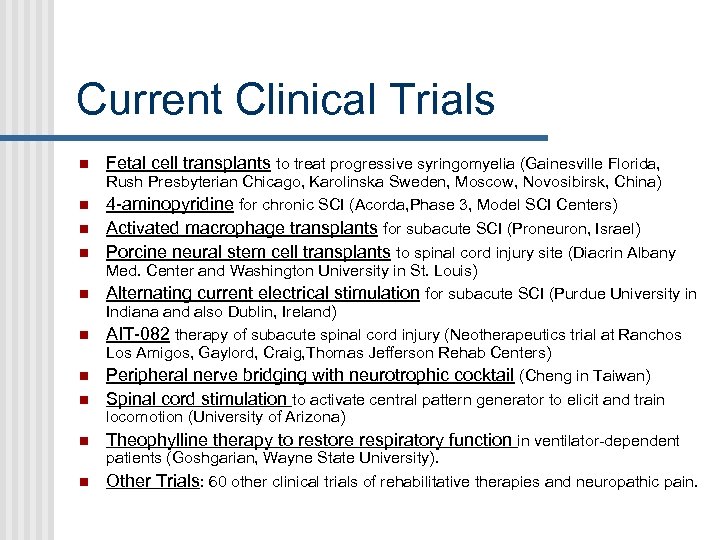
Current Clinical Trials Fetal cell transplants to treat progressive syringomyelia (Gainesville Florida, Rush Presbyterian Chicago, Karolinska Sweden, Moscow, Novosibirsk, China) 4 -aminopyridine for chronic SCI (Acorda, Phase 3, Model SCI Centers) Activated macrophage transplants for subacute SCI (Proneuron, Israel) Porcine neural stem cell transplants to spinal cord injury site (Diacrin Albany Med. Center and Washington University in St. Louis) Alternating current electrical stimulation for subacute SCI (Purdue University in Indiana and also Dublin, Ireland) AIT-082 therapy of subacute spinal cord injury (Neotherapeutics trial at Ranchos Los Amigos, Gaylord, Craig, Thomas Jefferson Rehab Centers) Peripheral nerve bridging with neurotrophic cocktail (Cheng in Taiwan) Spinal cord stimulation to activate central pattern generator to elicit and train locomotion (University of Arizona) Theophylline therapy to restore respiratory function in ventilator-dependent patients (Goshgarian, Wayne State University). Other Trials: 60 other clinical trials of rehabilitative therapies and neuropathic pain.
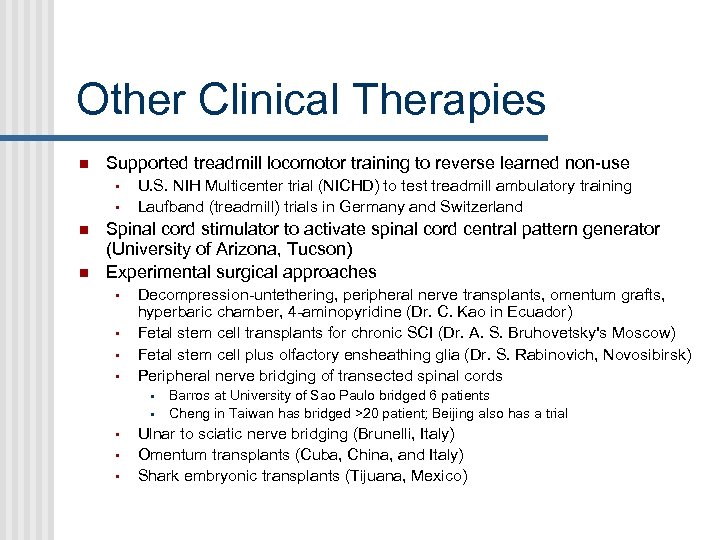
Other Clinical Therapies Supported treadmill locomotor training to reverse learned non-use • • U. S. NIH Multicenter trial (NICHD) to test treadmill ambulatory training Laufband (treadmill) trials in Germany and Switzerland Spinal cord stimulator to activate spinal cord central pattern generator (University of Arizona, Tucson) Experimental surgical approaches • • Decompression-untethering, peripheral nerve transplants, omentum grafts, hyperbaric chamber, 4 -aminopyridine (Dr. C. Kao in Ecuador) Fetal stem cell transplants for chronic SCI (Dr. A. S. Bruhovetsky's Moscow) Fetal stem cell plus olfactory ensheathing glia (Dr. S. Rabinovich, Novosibirsk) Peripheral nerve bridging of transected spinal cords • • • Barros at University of Sao Paulo bridged 6 patients Cheng in Taiwan has bridged >20 patient; Beijing also has a trial Ulnar to sciatic nerve bridging (Brunelli, Italy) Omentum transplants (Cuba, China, and Italy) Shark embryonic transplants (Tijuana, Mexico)
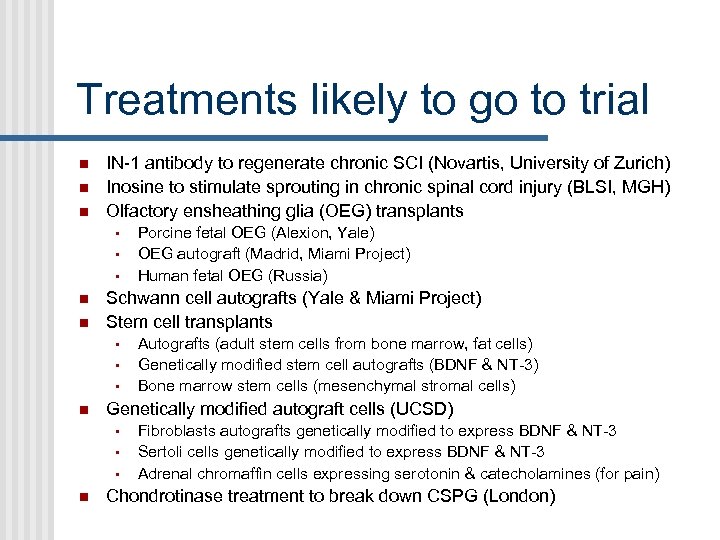
Treatments likely to go to trial IN-1 antibody to regenerate chronic SCI (Novartis, University of Zurich) Inosine to stimulate sprouting in chronic spinal cord injury (BLSI, MGH) Olfactory ensheathing glia (OEG) transplants • • • Schwann cell autografts (Yale & Miami Project) Stem cell transplants • • • Autografts (adult stem cells from bone marrow, fat cells) Genetically modified stem cell autografts (BDNF & NT-3) Bone marrow stem cells (mesenchymal stromal cells) Genetically modified autograft cells (UCSD) • • • Porcine fetal OEG (Alexion, Yale) OEG autograft (Madrid, Miami Project) Human fetal OEG (Russia) Fibroblasts autografts genetically modified to express BDNF & NT-3 Sertoli cells genetically modified to express BDNF & NT-3 Adrenal chromaffin cells expressing serotonin & catecholamines (for pain) Chondrotinase treatment to break down CSPG (London)
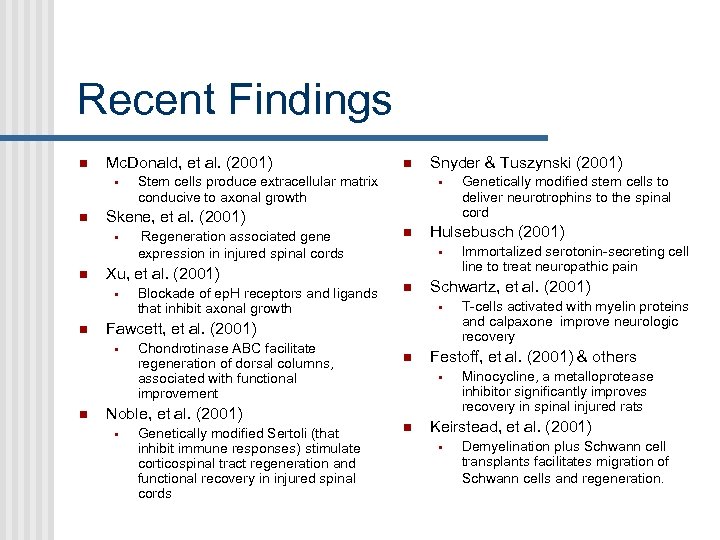
Recent Findings Mc. Donald, et al. (2001) • Blockade of ep. H receptors and ligands that inhibit axonal growth Snyder & Tuszynski (2001) • • Chondrotinase ABC facilitate regeneration of dorsal columns, associated with functional improvement Noble, et al. (2001) • Genetically modified Sertoli (that inhibit immune responses) stimulate corticospinal tract regeneration and functional recovery in injured spinal cords T-cells activated with myelin proteins and calpaxone improve neurologic recovery Festoff, et al. (2001) & others • Immortalized serotonin-secreting cell line to treat neuropathic pain Schwartz, et al. (2001) • Genetically modified stem cells to deliver neurotrophins to the spinal cord Hulsebusch (2001) Fawcett, et al. (2001) • Regeneration associated gene expression in injured spinal cords Xu, et al. (2001) • Stem cells produce extracellular matrix conducive to axonal growth Skene, et al. (2001) • Minocycline, a metalloprotease inhibitor significantly improves recovery in spinal injured rats Keirstead, et al. (2001) • Demyelination plus Schwann cell transplants facilitates migration of Schwann cells and regeneration.
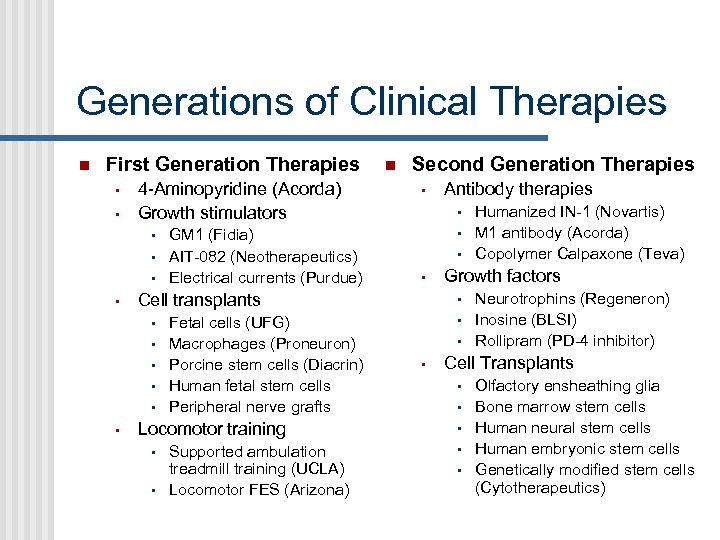
Generations of Clinical Therapies First Generation Therapies • • 4 -Aminopyridine (Acorda) Growth stimulators • • Second Generation Therapies • • • Fetal cells (UFG) Macrophages (Proneuron) Porcine stem cells (Diacrin) Human fetal stem cells Peripheral nerve grafts Locomotor training • • Supported ambulation treadmill training (UCLA) Locomotor FES (Arizona) Antibody therapies • • Cell transplants • • GM 1 (Fidia) AIT-082 (Neotherapeutics) Electrical currents (Purdue) Growth factors • • Humanized IN-1 (Novartis) M 1 antibody (Acorda) Copolymer Calpaxone (Teva) Neurotrophins (Regeneron) Inosine (BLSI) Rollipram (PD-4 inhibitor) Cell Transplants • • • Olfactory ensheathing glia Bone marrow stem cells Human neural stem cells Human embryonic stem cells Genetically modified stem cells (Cytotherapeutics)
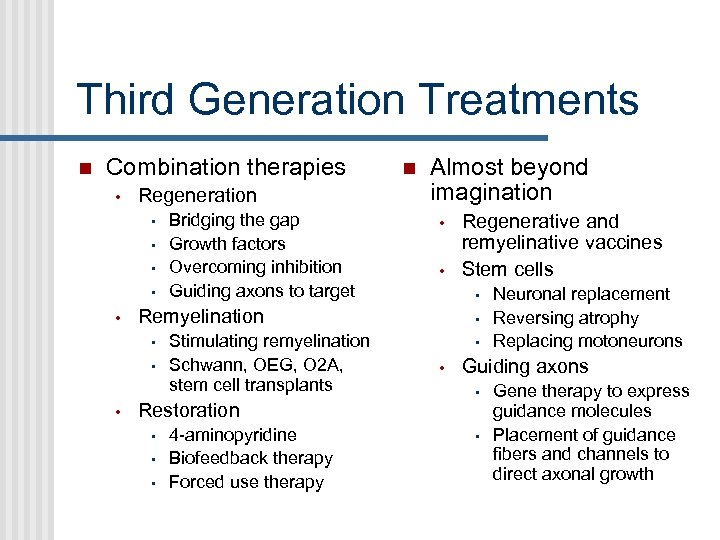
Third Generation Treatments Combination therapies • Regeneration • • • Almost beyond imagination • • • Stimulating remyelination Schwann, OEG, O 2 A, stem cell transplants Restoration • • • 4 -aminopyridine Biofeedback therapy Forced use therapy Regenerative and remyelinative vaccines Stem cells • Remyelination • • Bridging the gap Growth factors Overcoming inhibition Guiding axons to target • • • Neuronal replacement Reversing atrophy Replacing motoneurons Guiding axons • • Gene therapy to express guidance molecules Placement of guidance fibers and channels to direct axonal growth
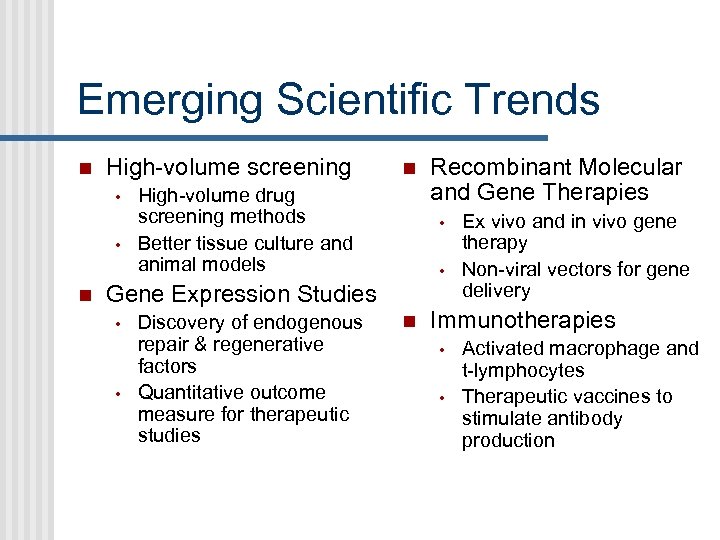
Emerging Scientific Trends High-volume screening • • High-volume drug screening methods Better tissue culture and animal models • • Gene Expression Studies • • Discovery of endogenous repair & regenerative factors Quantitative outcome measure for therapeutic studies Recombinant Molecular and Gene Therapies Ex vivo and in vivo gene therapy Non-viral vectors for gene delivery Immunotherapies • • Activated macrophage and t-lymphocytes Therapeutic vaccines to stimulate antibody production
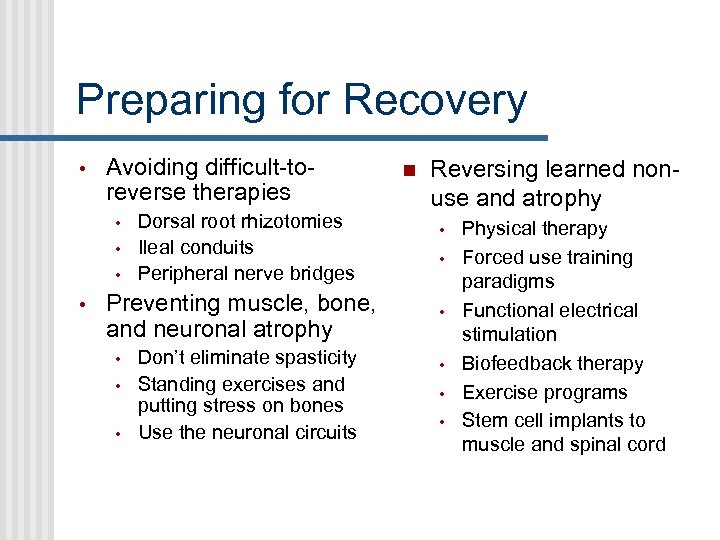
Preparing for Recovery • Avoiding difficult-toreverse therapies • • Dorsal root rhizotomies Ileal conduits Peripheral nerve bridges Preventing muscle, bone, and neuronal atrophy • • • Don’t eliminate spasticity Standing exercises and putting stress on bones Use the neuronal circuits Reversing learned nonuse and atrophy • • • Physical therapy Forced use training paradigms Functional electrical stimulation Biofeedback therapy Exercise programs Stem cell implants to muscle and spinal cord
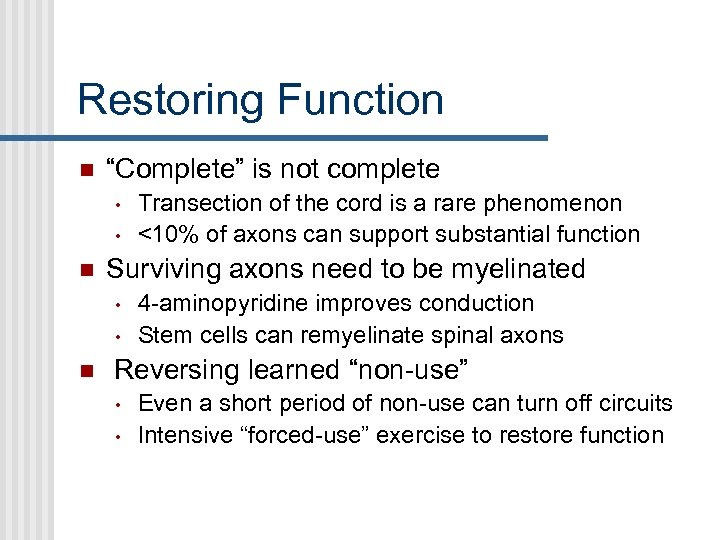
Restoring Function “Complete” is not complete • • Surviving axons need to be myelinated • • Transection of the cord is a rare phenomenon <10% of axons can support substantial function 4 -aminopyridine improves conduction Stem cells can remyelinate spinal axons Reversing learned “non-use” • • Even a short period of non-use can turn off circuits Intensive “forced-use” exercise to restore function
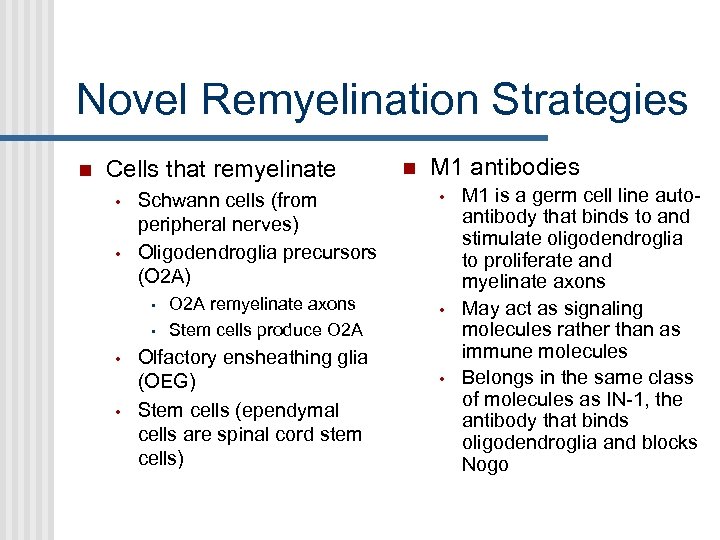
Novel Remyelination Strategies Cells that remyelinate • • Schwann cells (from peripheral nerves) Oligodendroglia precursors (O 2 A) • • O 2 A remyelinate axons Stem cells produce O 2 A Olfactory ensheathing glia (OEG) Stem cells (ependymal cells are spinal cord stem cells) M 1 antibodies • • • M 1 is a germ cell line autoantibody that binds to and stimulate oligodendroglia to proliferate and myelinate axons May act as signaling molecules rather than as immune molecules Belongs in the same class of molecules as IN-1, the antibody that binds oligodendroglia and blocks Nogo
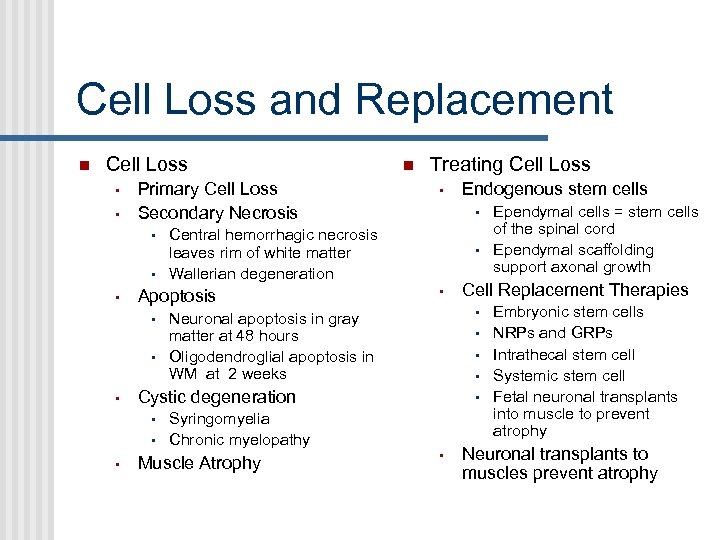
Cell Loss and Replacement Cell Loss • • Primary Cell Loss Secondary Necrosis • • • Muscle Atrophy • • • Ependymal cells = stem cells of the spinal cord Ependymal scaffolding support axonal growth Cell Replacement Therapies • Neuronal apoptosis in gray matter at 48 hours Oligodendroglial apoptosis in WM at 2 weeks Syringomyelia Chronic myelopathy Endogenous stem cells • Cystic degeneration • • Treating Cell Loss Central hemorrhagic necrosis leaves rim of white matter Wallerian degeneration Apoptosis • Embryonic stem cells NRPs and GRPs Intrathecal stem cell Systemic stem cell Fetal neuronal transplants into muscle to prevent atrophy Neuronal transplants to muscles prevent atrophy
Progenitor Cells Neurosphere Nestin stain BRDU stain
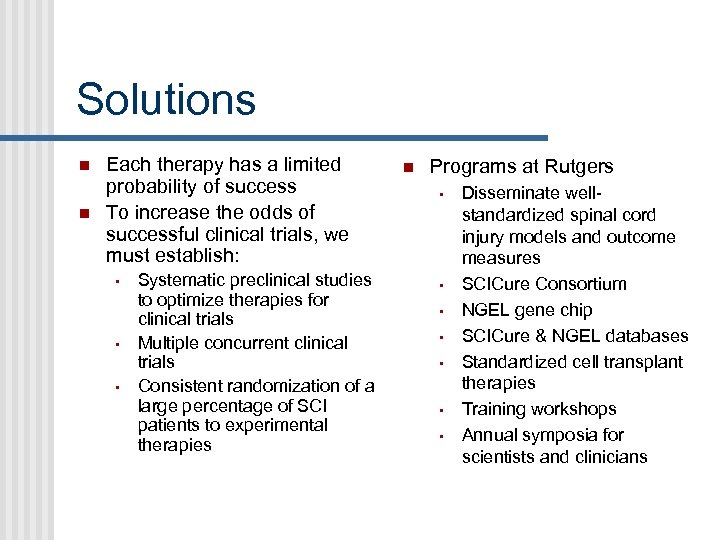
Solutions Each therapy has a limited probability of success To increase the odds of successful clinical trials, we must establish: • • • Systematic preclinical studies to optimize therapies for clinical trials Multiple concurrent clinical trials Consistent randomization of a large percentage of SCI patients to experimental therapies Programs at Rutgers • • Disseminate wellstandardized spinal cord injury models and outcome measures SCICure Consortium NGEL gene chip SCICure & NGEL databases Standardized cell transplant therapies Training workshops Annual symposia for scientists and clinicians
Скачать презентацию Bases for Hope for Spinal Cord Injury Wise
a18a96bd4ea303c532320aadc4fce419.ppt